
Tags

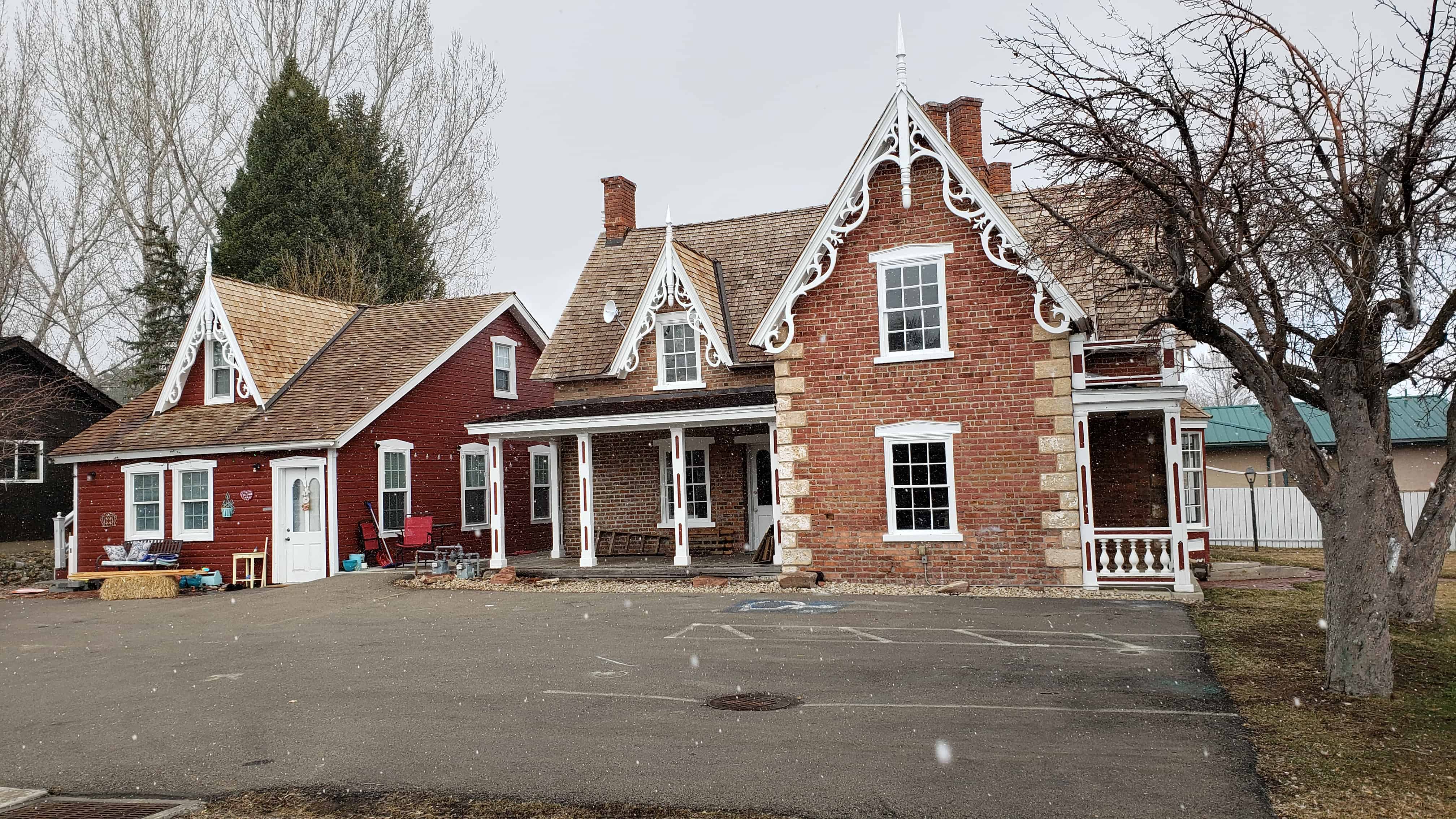
Constructed c. 1876, the George Bonner, Sr., House is one of seven houses contained in the Architecture of John Watkins Thematic Resource Nomination, having been designed and built by John Watkins, an accomplished early Utah builder. John Watkins’ work effectively illustrates the dynamic role the professional builder played in shaping Utah’s early architectural landscape. While it has been customary for historians to explain Utah architecture from the time of first settlement in 1847 up to about 1890 as the simple extension of eastern folk styles or the replication of popular pattern-book designs, John Watkins’ houses suggest a more generous appraisal. Slave to neither tradition nor pattern-book, Watkins found useful ideas in both, ideas that formed the basis of essentially new if nevertheless familiar designs. From two-room cottages to elaborate Gothic Revival houses to houses intended for multi-family polygamous living, Watkins drew upon his broad building experience to create not copies of other houses, but new ones designed to meet his client’s functional, aesthetic, and symbolic needs. This house is significant not only as an important example of the Gothic Revival style in early Utah, but also because it demonstrates Watkins’ ability to deftly manipulate basic picturesque design concepts. Drawing upon a set of ideas embodied in the basic cross-wing house form, Watkins was able to generate a rich variety of housing designs.
John Watkins was born in Maidsone, Kent, England in 1834. He received training in the building trade in his native England before joining the Church of Jesus Christ of Latter-day Saints and emigrating to Utah in 1855. Watkins’ skills were welcomed in the nascent Mormon towns of, first, Provo, and then Midway. In Provo, Watkins helped build the original LDS Tabernacle (1856).
George’s sons homes are across the street:
Located at 103 East Main Street in Midway, Utah and added to the National Register of Historic Places (#86001359) on June 17, 1986.
Related:

Constructed c. 1876, the George Bonner, Sr., House is one of seven houses contained in the ARCHITECTURE OF JOHN WATKINS THEMATIC RESOURCE NOMINATION, haying been designed and built by John Watkins, an accomplished early Utah builder. John Watkins’ work effectively illustrates the dynamic role the professional builder played in shaping Utah’s early architectural landscape. While it has been customary for historians to explain Utah architecture from the time of first settlement in 1847 up to about 1890 as the simple extension of eastern folk styles or the replication of popular pattern-book designs, John Watkins’ houses suggest a more generous appraisal. Slave to neither tradition nor pattern-book, Watkins found useful ideas in both, ideas that formed the basis of essentially new if nevertheless familiar designs. From two-room cottages to elaborate Gothic Revival houses to houses intended for multi -family polygamous living, Watkins drew upon his broad building experience to create not copies of other houses, but new ones designed to meet his client’s functional, aesthetic, and symbolic needs. This house is significant not only as an important example of the Gothic Revival style in early Utah, but also because it demonstrates Watkins’ ability to deftly manipulate basic picturesque design concepts. Drawing upon a set of ideas embodied in the basic cross-wing house form, Watkins was able to generate a a rich variety of housing designs.
John Watkins was born in Maidsone, Kent, Kingland in 1834. He received training in the building trade in his native England before joining the Church of Jesus Christ of Latter-day Saints and emigrating to Utah in 1855. Watkins’ skills were welcomed in the nascent Mormon towns of, first, Provo, and then Midway. In Provo, Watkins helped build the original LDS Tabernacle (1856) and the Opera House (1859) and after moving to Midway in the …. best and most significant examples of the Gothic Revival architectural style in the state of Utah.
George Bonner was born January 8, 1822, at Kiliver, Monaghan County, Ireland, to George and Ann Travers Bonner. He left his native land at the age of 14 and went to Scotland, where he married Margaret Edmundston on October 22, 1849. They were baptized into the Church of Jesus Christ of Latter-day Saints (Mormon Church) soon after their marriage, and in 1856 they sailed to America to gather with the Saints in Utah. After spending a few years in Pennsylvania where George worked in the coal mines, they reached Utah in 1861, settling in Wasatch County. George Bonner was probably one of the first settlers in Midway, Wasatch County, which was established in 1867 after the Black Hawk Indian War was peacefully resolved. It is unknown where Bonner*s first house was located in the town, perhaps on this same property.
Around 1876, Bonner hired John Watkins to design and construct this two-story Gothic Revival house. Watkins had built his own similarly styled house at 5 E. Main c. 1869, and Bonner apparently liked that house well enough to have his own house built in a similar style. Watkins also built houses for Bonner’s two sons, George Jr. and William, in 1877 on the corner lots across the street to the south from their father’s home. George and Margaret Bonner lived in this house from the time of its completion until their deaths in 1905 and 1920, respectively.
George Bonner was a farmer and for a time was involved in a commercial grocery business with his sons. Their first store was located in the west front room of this house until 1879, when a store was constructed on the corner across the street to the west. (This store was designed by John Watkins, but it has been altered to the point where it is no longer eligible for inclusion in this thematic nomination.)
One of the rooms in the house served at times as a hideout for John Watkins who, as a polygamist, was subject to capture and trial by federal officials. Since Watkins’ own house was not a safe place to hide when the officials were in town, the Bonners offered a room in their house for his use at any time. It was stocked with provisions and reading materials to sustain Watkins until it was once again safe for him to venture out. Either the west or east front room apparently served as the hideout, since they fit the description of the room as “a cheerful front room with an outside door with large windows looking onto the highway….”
This house remained in the Bonner family until 1970, when it was sold to Rulon M. Huntington. John Told purchased the house from the Huntingtons in 1985 and is currently in the process of renovation and restoration.
By the 1950s, however, very little of this elaborate garnishment remained. In fact, only the quoins and the window heads were left to suggest the decorative quality of the original design.
In 1985, working from historic photographs and early photographs of Watkins’ other Midway houses, the present owner began to refurbish the house. Plaster was removed from the exterior walls and chimneys, the asphalt roof was replaced with a wooden one, bargeboards and finials were carefully copied and remounted, and the original porches were painstakingly reconstructed. The large garage that was built on the rear of the house in 1974 was detached, exposing the original rear wall of the house. The garage, now a separate building, does not contribute to the significance of this property. The Bonner house today has regained much of its original appearance. This work, accomplished with the aid of ample documentation, does not adversely affect the historic integrity of the house.
Pingback: William Bonner House | JacobBarlow.com