
Tags

Joseph Adams House
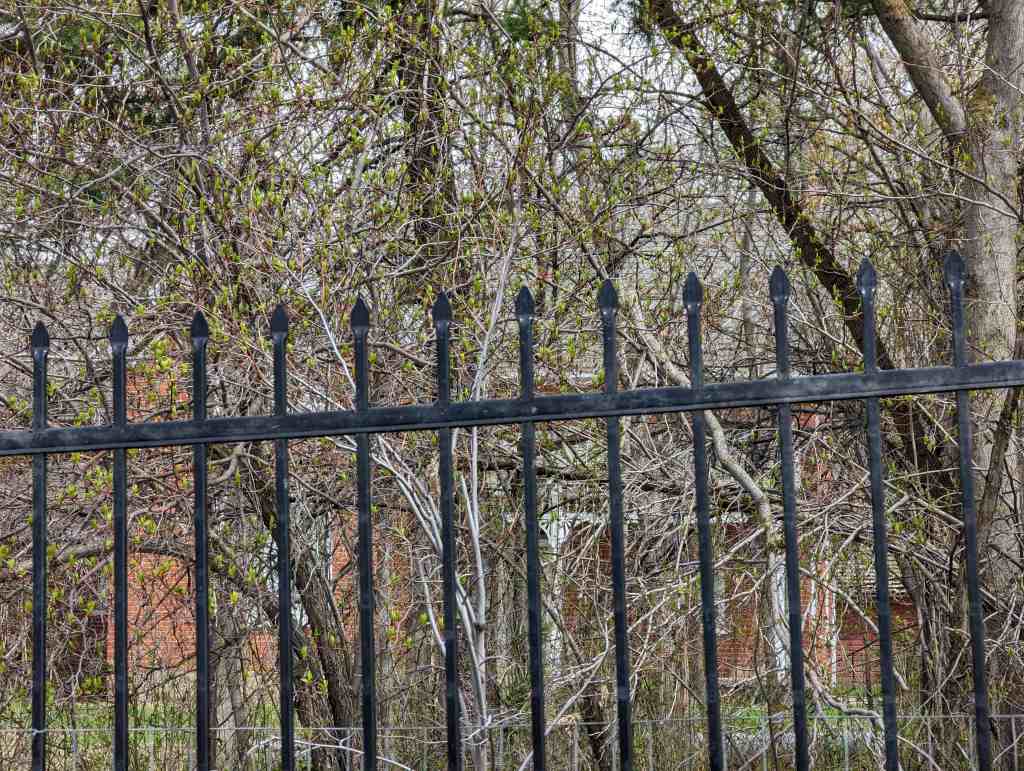
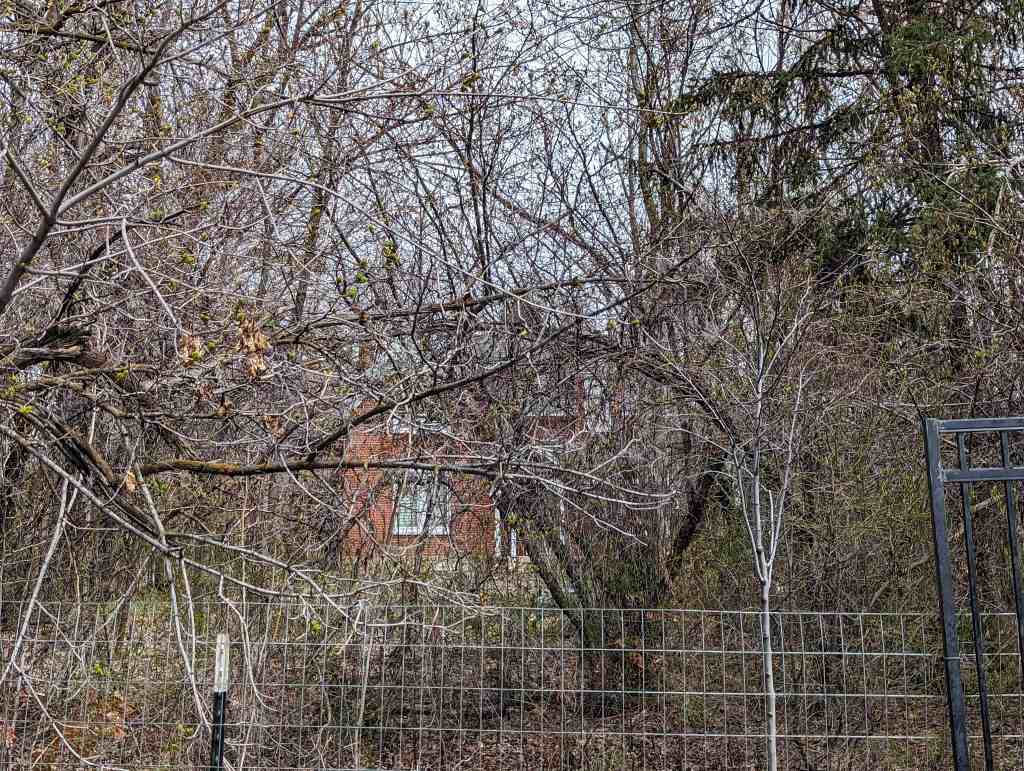
The Joseph Adams House is significant as one of the best remaining examples of the turn-of-the-century farm house in Utah’s Davis County. Located between the two large metropolitan areas of Salt Lake City and Ogden, Davis County became the garden spot of the Wasatch front as a considerable number of prosperous family farms were operated in the county; however, in the last few decades much of the farmland has been appropriated for housing subdivisions, schools, shopping centers, highways, and other urban structures. The Joseph Adams House and out buildings, located in a grove of trees and surrounded by pasture land, provides a glimpse of the by-gone rural-agricultural era of Davis County.
Located at 400 North Adamswood Road in Layton, Utah and added to the National Historic Register (#78002655) on February 17, 1978 (text on this page is mostly from that nomination form).
Related:

Joseph Samuel Adams was born at Quincy, Adams County, Illinois, September 19, 1841. Earlier his parents Elias and Malinda Railey Adams had joined the Church of Jesus Christ of Latter-day Saints and moved to Illinois to be with the main body of Mormons. Following the exodus from Illinois the Adams family moved to Mount Pisgah in May 1846 and remained there until 1850. In the spring of 1850 Elias Adams was released from his assignment at the Mount Pisgah way station and allowed to complete the journey to the Great Salt Lake Valley.
After their arrival in Salt Lake City, September 7, 1850, the Adams family immediately traveled north to the Kaysville settlement where Elias Adams claimed a parcel of land .approximately one by two miles.
Joseph Adams remained with his family in Kaysville until 1873 when he was called to serve as a colonizing missionary to northern Arizona. The mission proved a failure, and the group returned to Utah. However Joseph Adams left his mark in Arizona at House Rock Springs where his assessment of the mission, carved in stone, can still be read, “Joseph Adams from Kaysville to Arizona and busted June 4, A.D. 1873.”

Joseph returned to Kaysville and in February 1876 married Isabella “Belle” Smith. He purchased 80 acres of land from his father for 450 bushels of grain. In the spring of 1876 a large log house was constructed and several out buildings including the granary, cellar and wash house. The farm proved profitable and in 1889 Adams began construction of the present brick house. Brick for the house was made by Joseph Adams who had learned brick making from his father.
Joseph Adams died October 13, 1901. His wife “Belle” remained in the house until her death in 1944. Prior to that time his son Charles moved into the house and the property passed to him. Charles Adams died in 1966, and his wife, Minnie N. Adams, is the current owner. She has deeded the house and property to her son, Charles P. Adams, who has shown a strong commitment to the preservation of the house and property.

Of the original eighty-acre farm only six acres are included as the National Register property. The six acres include the following buildings: the house, constructed in 1889-1890; the wash house, constructed in 1876; the milk house, constructed c. 1900; the granary, buggy shed, and milking shed, constructed in 1876; and a garage, constructed c. 1920. Also on the property but not included in the nomination is a thresher shed constructed in 1959.
The Adams house is a good example of a basic “T” form, 2-story brick house (with a one-story shed addition), which uses Queen Anne style decorative elements without the variation in plan or massing characteristic of more elaborate Queen Anne buildings. The fine decorative detail, although limited to the front façade, makes for great visual interest. The first floor double two-over-two windows in the gable end framed by a brick arch, with a tracery pattern in the wood infill below the arch. The second floor windows above and the dormer window are set in raised brick corbelling. Both second story windows, one in the gable end and the dormer over the porch, are framed by raised corbelled brick.
The porch projects past the front of the house and is supported by six turned posts with bell and spindle fret work just below the porch roof line. The roof of the porch is broken by a projecting gable over the steps with a turned finial on the gable peak.
The wash house is approximately 10 feet by 14 feet. The log structure was constructed in 1876 for bathing and washing clothes.
The granary, located to the rear, southeast of the house, was constructed in 1876 and is built of wood on a stone foundation which comprises a cellar and is reached by an entry on the west side of the granary. The granary is reached by doors on the north.
Attached to the granary on the east is a buggy shed with three stalls which open to the north. Attached to the buggy shed to the east is the milking shed. It opens to the south. The milk house, a 4 foot by 6 foot wooden shed used to cool the milk is located approximately forty feet west of the granary.
The garage is located east of the house, approximately 120 feet and north of the granary approximately 60 feet. It is a wood frame structure.
The house and out buildings are surrounded by approximately four and a half acres of pasture land.



Pingback: Layton by Address | JacobBarlow.com
Pingback: John Henry Layton House | JacobBarlow.com