
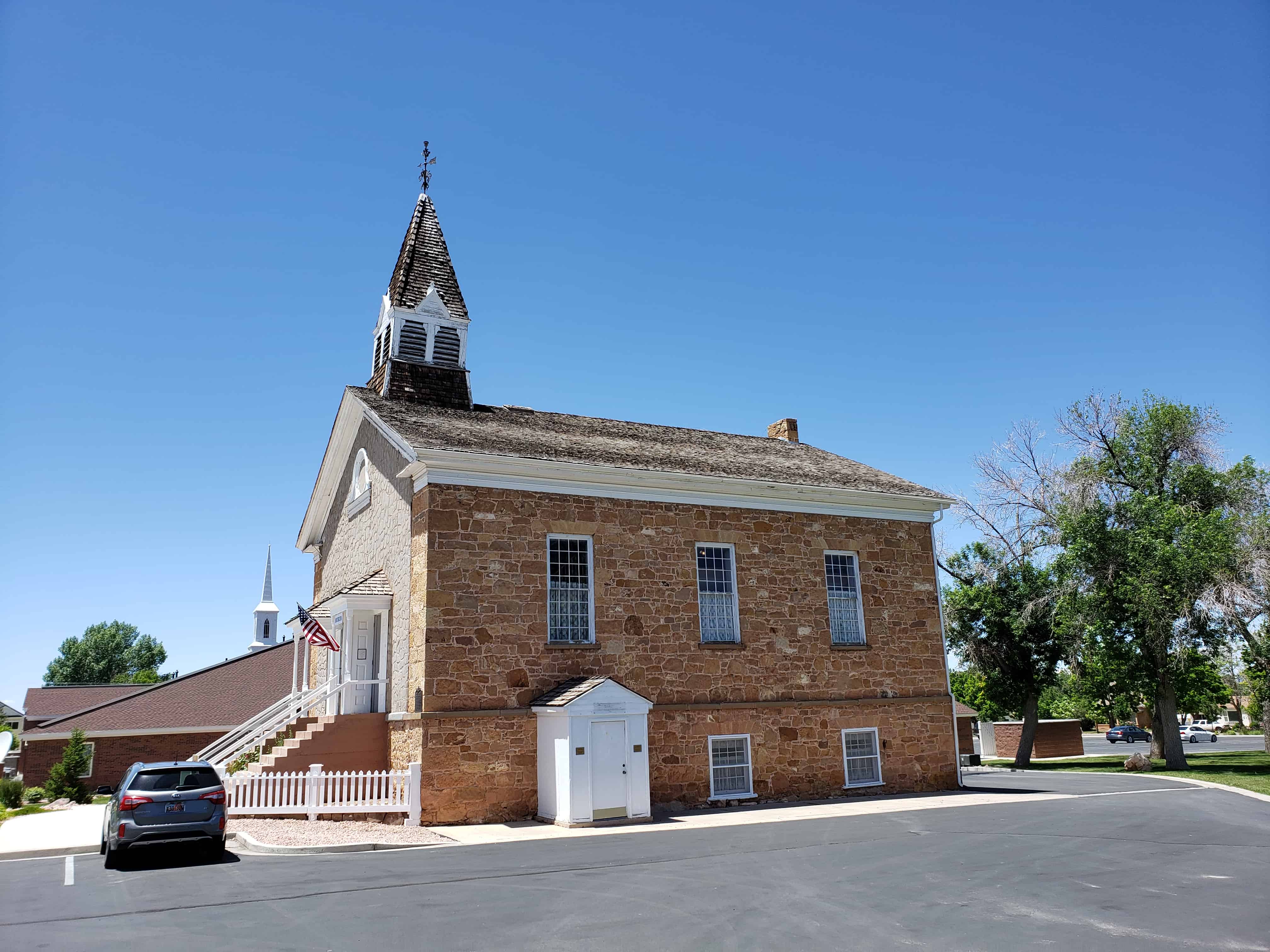
Parowan Meetinghouse
The Parowan Rock Church or meetinghouse is an important monument to the pioneering efforts of early colonists who settled Parowan in 1851 as part of the first phase of “the inner cordon of settlements” in the Mormon Kingdom. Intended to be a “center city” of Zion from which other settlements would expand, Parowan quickly established itself as one of the largest and most strategically important colonies in southern-central Utah. The rock meetinghouse, built between 1862 and 1866 as the first permanent house of worship, was appropriately impressive and large in scale, though modestly vernacular in style.
The Parowan Meetinghouse is located at 60 South 50 West in the middle of the block in Parowan, Utah and was added to the National Register of Historic Places (#76001818) on May 6, 1976.
Related:
- D.U.P. Relic Hall (historic marker on the meetinghouse)
- Pioneer Rock Church (historic marker about the meetinghouse)
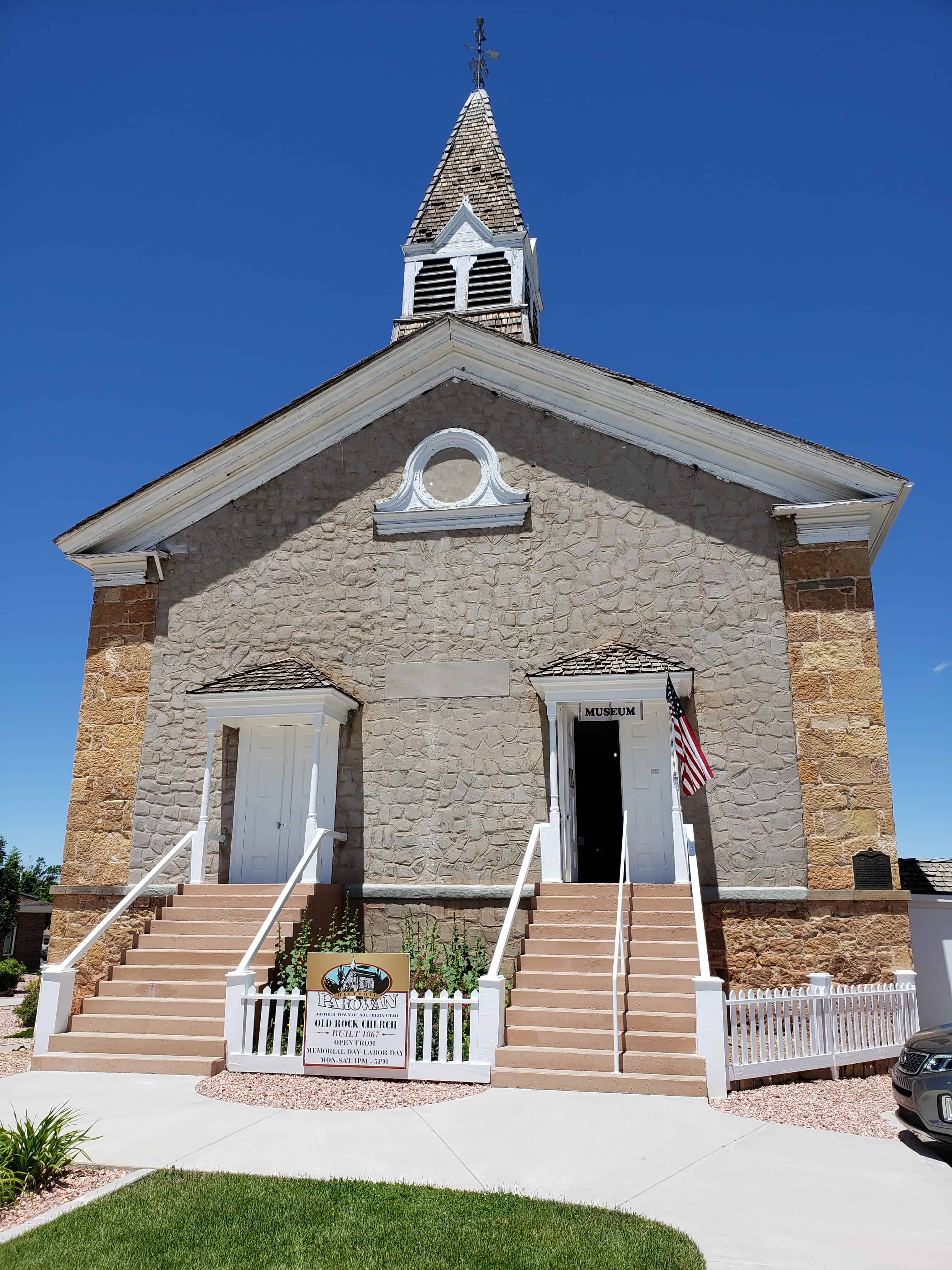
Parowan had one of the early Mormon “stakes” a large ecclesiastical unit composed of several “wards” or congregations. The Parowan meetinghouse thus became a “stake center” or tabernacle where frequent mass meetings of the combined local congregations were held. (The seating capacity of the chapel is 800, unusually large for this early date). In these regional meetings, decisions and plans were made which initiated the overall development of valleys in southern-central Utah.
The three architects-builders, Ebenezer Hanks, Edward Dalton and William A. Warren, were also prominent religious community leaders.
The architectural significance of the building derives from its being one of the best examples of Mormon pioneer vernacular architecture. The church’s split level plan, typical of early religious buildings, consisted of a chapel and gallery upstairs and six smaller classrooms downstairs. The separate entries for men and origins from Puritan New England. The overall architecture, women may reflect colonial however, is vernacular and the four walls are made of roof is simply gabled and Square window bays feature pieces of glass in pioneer a is without evidence of attempts at stylization. AM of an orange-brown sandstone laid in coursed rubble. The s adorned by a modest, curiously proportioned belfry. 16/16 windows indicative of the scarcity of larger times. The cornice is simply molded and boxed and has plain frieze.
Unused as a church for decades, a museum in the building. The local community, of pioneer the Daughters of the Utah community, as well as the Pioneers now maintain broader historical recognize the Parowan rock church as one of Utah’s best landmark symbols of life and culture.