
Tags

The Veterans Administration (V.A.) Hospital, built in 1932 with a 1939 addition, is significant in its role of providing medical and rehabilitation services for veterans of the United States armed forces. The main building was constructed in 1932 and the annex building in 1939, fulfilling plans that had begun in 1924 to build medical facilities in response to the needs of World War I veterans in the intermountain west region. This hospital provided services to veterans of the Spanish-American War, World War I, World War II, and the Korean War, and describes the involvement of the military in providing for those who participated in war. The V.A. Hospital influenced both direct and indirect federal revenues it provided for the community. The building of the hospital helped with easing unemployment in Salt Lake City during the Depression era. It also represents the medical influences and trends in the area between the period of significance, 1932-46. The association between the V.A. Hospital and the University of Utah Medical School beginning in 1946 provided facilities, equipment, and research funding for the school and allowed the V.A. Hospital to participate in main-stream medical research and education to provide veterans with the best medical care available.
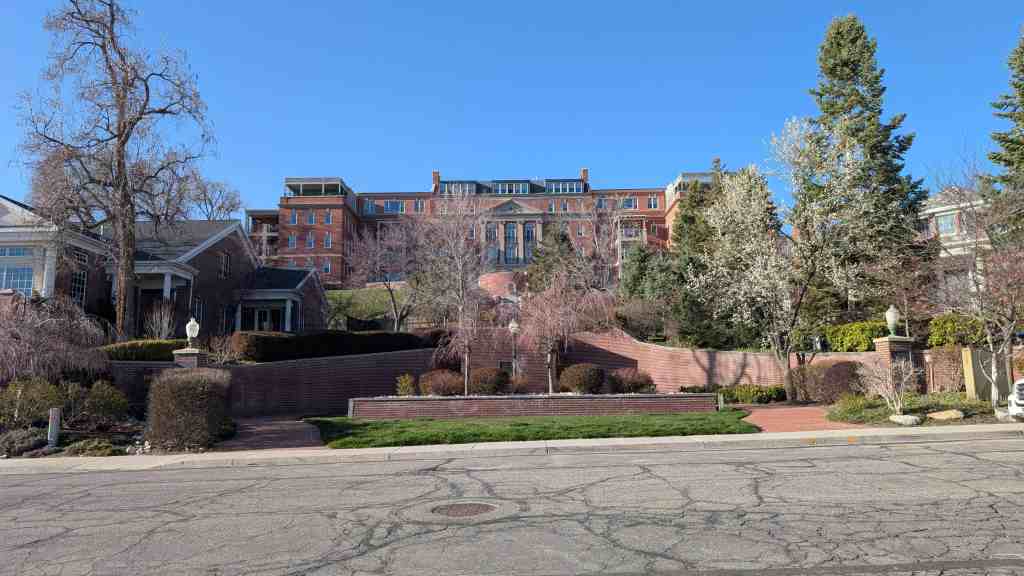
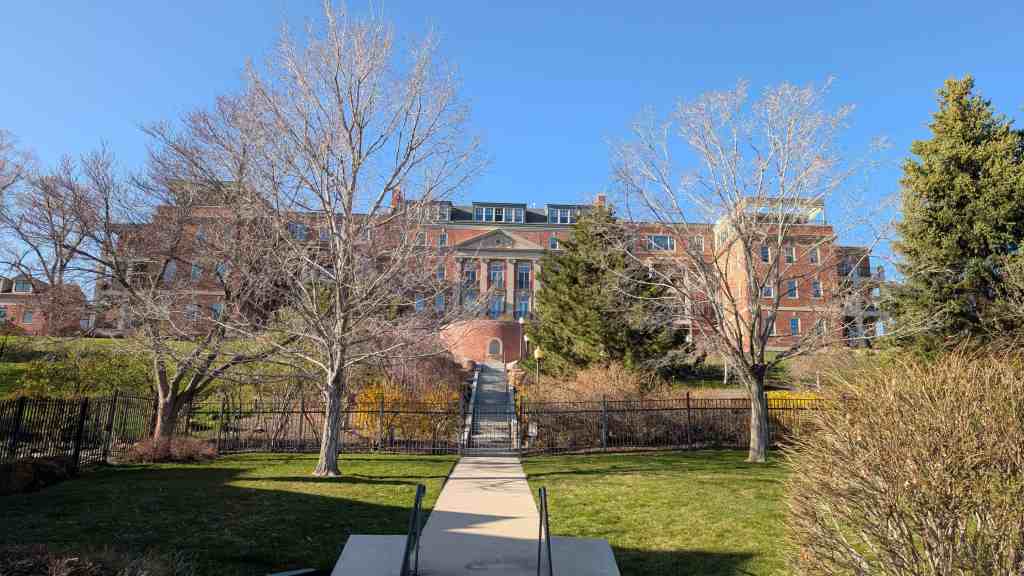
The former Veterans Hospital, now the Meridian Condos. Built in 1932 and located at 400 Capitol Park Avenue the Avenues district of Salt Lake City, Utah (also referred to as 401 12th Avenue) and added to the National Register of Historic Places (#96000630) on June 16, 1996.
Related:
- 364 Capitol Park Avenue
- Primary Children’s Hospital
- The old Veterans Hospital at 12th Ave and E St is now the Meridien Condos
- rachels_slc_history
Scenes filmed here:
- Ridgemont Federal Sanitarium (Halloween 4 filming location)
- The Stand
386 East Twelfth Avenue in the avenues in Salt Lake City, Utah

The Veterans Administration was created by Executive Order No. 5398 on July 21, 1930. It was a consolidation of the Bureau of Pensions, the U.S. Veterans Bureau, and the National Home for Disabled Volunteer Soldiers, and was charged with administering all laws relating to the relief of, and other benefits provided by law for, former members of military and naval forces, for veterans and dependents of deceased veterans of all who served in wars or during time of peace. Along with compensation and pensions, insurance, death and retirement benefits, it also managed hospitalization and domiciliary care for veterans of all wars. The V.A. hospital located at 401 E. Twelfth Avenue in Salt Lake City, Utah, was part of that health care delivery system, and served veterans of the U.S. military exclusively.
The hospital had been under consideration by the old Veterans Bureau as early as 1924. 2 By October 1930, it had been approved and an architect’s drawing of a site plan appeared in the Salt Lake Tribune* It included the main, recreation, patients, and utility buildings, as well as officers and nurses quarters removed from, but in proximity to, the complex of four primary structures. The main hospital, however, is the only building from the original plan that was actually built, and it was somewhat simplified from the original blueprints. However, the basic configuration, size, and classical detailing remained in the final design that was typical of other V.A. hospitals constructed in the post-World War I era.4 Standardized plans would allow for constructing the building with what was anticipated to be a relatively short period of time alleviating the need for such a facility in the region. Additionally, building the hospital was considered “a means of relieving the unemployment situation in Utah.
The federal government purchased three city blocks from the state of Utah and part of two blocks more from Salt Lake City and eight private interests. The hospital was accepted on June 10, 1932. On July 5, Oliver J. Hunter, a World War I veteran, was its first patient. Formal dedication exercises were held on July 24, 1932, Pioneer Day, a state holiday in Utah. On July 1, 1939, work began on the hospital annex. After moving administrative and recreational activities out of the main hospital in 1940, the facility’s capacity increased to 158 beds, or an emergency bed capacity of 202.
The V.A. Hospital admitted only veterans and dependents and, therefore, was never an integral part of the Salt Lake or Utah health care community. Major Salt Lake hospitals in operation at the time the V.A. facility opened in 1932 included Salt Lake St. Mark’s Hospital, organized in 1872 by the Episcopal Church, the Catholic Holy Cross Hospital founded in 1875, the L.D.S. Hospital (Church of Jesus Christ of Latter-day Saints) which opened in 1905, the L.D.S. Children’s Convalescent Hospital, the Salt Lake County General Hospital opened in 1912, and the Shriners Hospital for Crippled Children, opened in 1925. There was also a military hospital at Salt Lake’s Fort Douglas.
The outbreak of World War II put new demands on the V.A. hospital system nationally. “On March 24, 1943, Congress approved a Vocational Rehabilitation program for honorably discharged veterans of World War 2 suffering vocational handicap due to their service in the Armed Forces. As a result, rehabilitation became a major effort of the Salt Lake facility. In 1946, as part of a nation-wide plan to bring V.A. hospitals into the mainstream of medicine, research, and education, and to provide them with the best medical care each community affords,” the University of Utah medical school entered into a cooperative agreement with the V.A. to supervise medical activities at the Salt Lake Veterans hospital. Plans included a residency program at the V.A. for doctors in the services during World War II that may have had their training interrupted by the war, a program that was open until 1949, only to doctor-veterans. Additionally, it allowed the medical school to provide professional guidance and service to the hospital while the hospital afforded opportunities for the training of doctors. The University Medical School had been established in 1904 and first became a four-year program at the Salt Lake County Hospital in 1942. The federal contract with the V.A. greatly enhanced the medical school’s research capabilities.
World War II brought another major medical facility to Utah. On October 10, 1942, the U.S. Army opened the Bushnell Hospital in Brigham City, Utah, which operated through the war. It had 3000 beds, approximately fifteen times the number of beds at the Salt Lake V.A. Hospital.
The war also touched off major national hospital building program by the Veterans Administration. The March 3, 1946 Salt Lake Tribune carried an Associated Press article about the planned construction of 77 new hospitals, and the acquisition of several more that would increase the total number of permanent hospitals from 98 to 183. Salt Lake City was approved to receive a second V.A. facility – a rarity justified by the fact that it was the only city in the intermountain west with a medical school and a large enough corp of specialists to support it. 12 Work began on the second Salt Lake V.A. Hospital on a 270-acre site once part of the Fort Douglas Military reservation in 1950. It opened as a Neuropsychiatric and Tuberculosis hospital in 1952 with an original bed capacity of 546. It brought the total number of hospitals operated by the V.A. to 155.
The task of consolidating the two Salt Lake facilities took place over a number of years as the new hospital grew. Management of the two hospitals was combined in 1955. 13 Between 1952-62, Salt Lake was one of the few cities nationwide to operate two V.A. hospitals. In February, 1962, the 12th Ave. complex ceased to function as a hospital and patients were transferred to the Fort Douglas V.A. Hospital. It was used to house laboratories and various research facilities.
Several potential buyers considered the old V.A. hospital. The University of Utah made a tentative offer in September 1961. The Utah Public Welfare Commission made an official request for the property in October. In April, 1962 the Salt Lake City Board of Health rented the facility. The Veterans Administration declared the site “surplus” as of July 1, 1963. At that time V.A. experimental laboratories and the Health Department were using the building.
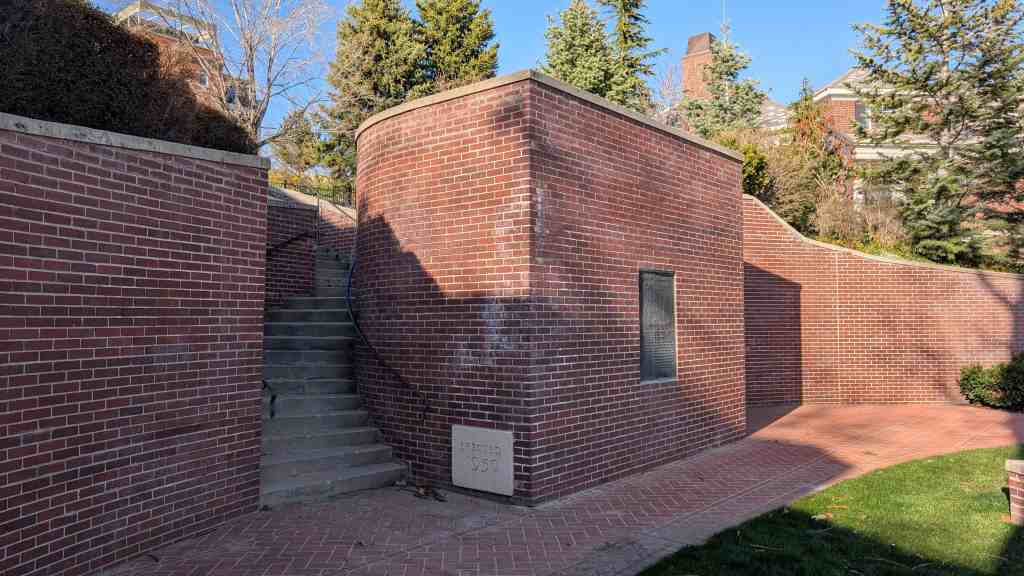
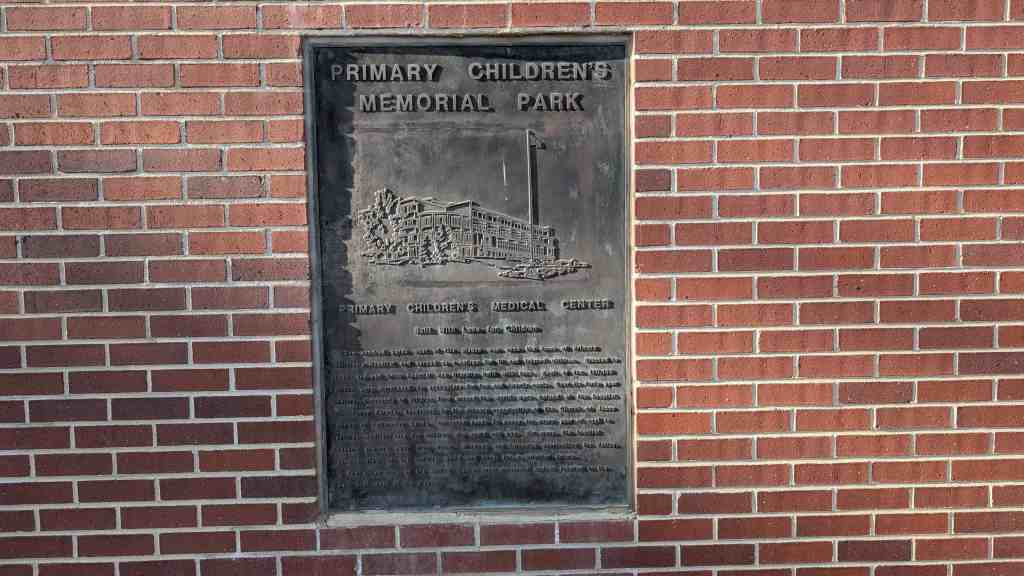
On Dec. 1, 1964, the U.S. General Services Administration transferred title of the old V.A. property to the Church of Jesus Christ of Latter-day Saints (LDS Church). The Church exchanged churchowned property valued at $763,400 and $25,000 cash for the property. The Church used part of the facility as an annex to its Primary Children’s Hospital. The buildings also housed some classes for the Church’s Brigham Young University Salt Lake Center.
The LDS Church sold the property on December, 17, 1987 to IHC Hospitals Inc., which subsumed Primary Children’s and a number of other Church owned facilities. When a new Primary Children’s Hospital was opened in April of 1990, the old V.A. Hospital was left vacant. On January 30, 1995, IHC sold the property to Park City Construction. The original 28 acres was subdivided and sold to developers, with Park City Construction retaining the 5.3 acres on which the hospital itself sits. Their intention is to retain the historic exterior as nearly as possible and remodel the interior into condominiums. The company offices are currently housed in the annex. The main building is vacant while the remodeling takes place. A small maintenance and repair shop building was part of the original hospital construction. It is located to the northeast of the hospital on a parcel now owned by the LDS Church and is scheduled for demolition.
The integrity of the Veterans Administration Hospital buildings has been maintained and they contribute to the historic qualities of the Avenues Historic District area. Current plans appear to provide for appropriate reuse of the buildings and safeguard their continued use.

Narrative Description
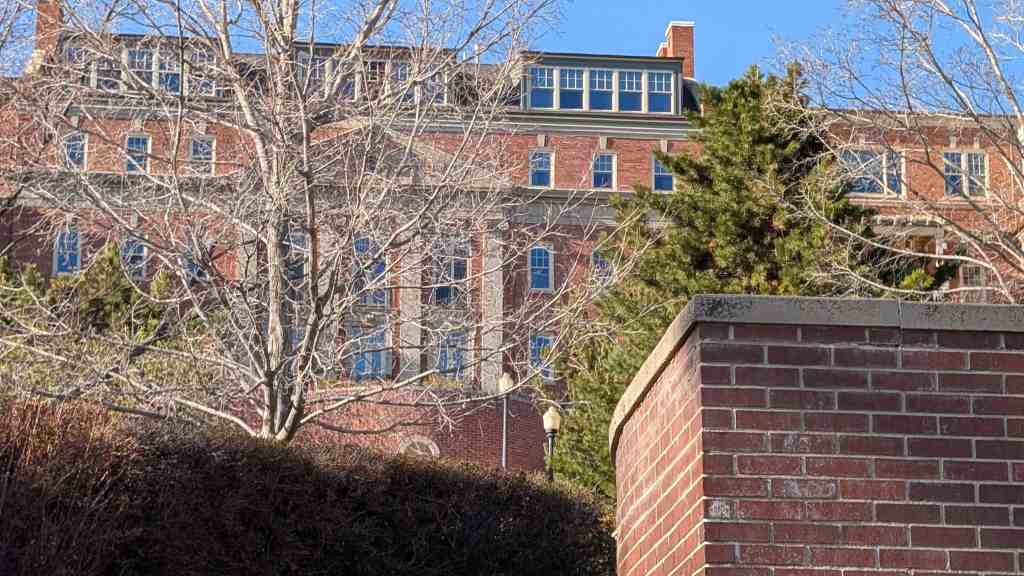
Constructed in 1932 and 1939, the Veterans Administration Hospital on Twelfth Avenue in Salt Lake City is a red brick neoclassical style complex that faces south. It is set back from the street on a steep hill, giving it a stately presence. The main building, constructed in 1932, has a gabled, five-and-a-half story central section with four-story cross wings extending east and west. It is attached in the rear (west side) to the smaller 1939 annex by a three-story L-shaped brick connector. There are two fairly minor exterior alterations to the main building. The wide, floor length windows on the third and fourth floor southeast and southwest corners have been bricked in, and the stairway leading to the second floor front entrance of the main building has been removed and replaced by a ground level entrance. The building retains most of its original integrity and contributes to the historic qualities of the area.
Subdued exterior classical details found on both buildings include symmetrical facades, pedimented entryways, circular windows with garland embellishments on the tympanum, keystones above the window openings, dentils, and Ionic pilasters. Twelve-over-twelve double-hung windows exist throughout the Veterans Hospital, incorporate central gable pediments. The roofs are gabled and the main building incorporated three dormers along the front. The four-story wings have flat roofs. The connector service wing has a flat roof. All roofs are asphalt.
The main building has a central corridor running the length of the building with single and double rooms and multiple-bed wards on each side. Changes include the bricking in of the large windows in the southeast and southwest corners of the third and fourth floors. Originally day porches, they were changed to rooms suitable for six-bed wards. The annex floor plan originally included large, open administrative and meeting spaces supported by pillars. These spaces have since been closed into small rooms. Some of these rooms now serve as offices for the current owner, Park City Construction. Ceilings in both buildings have been lowered. The overall integrity of the interior spaces remains good.
Just outside the present boundaries of the property to the northeast of the main hospital building is the only small outbuilding dating from the original construction period. It is a two-story brick maintenance and repair shop. Though historically part of the hospital property, it is currently part of another parcel and is scheduled for demolition.

Pingback: Salt Lake Sorted by Address | JacobBarlow.com