
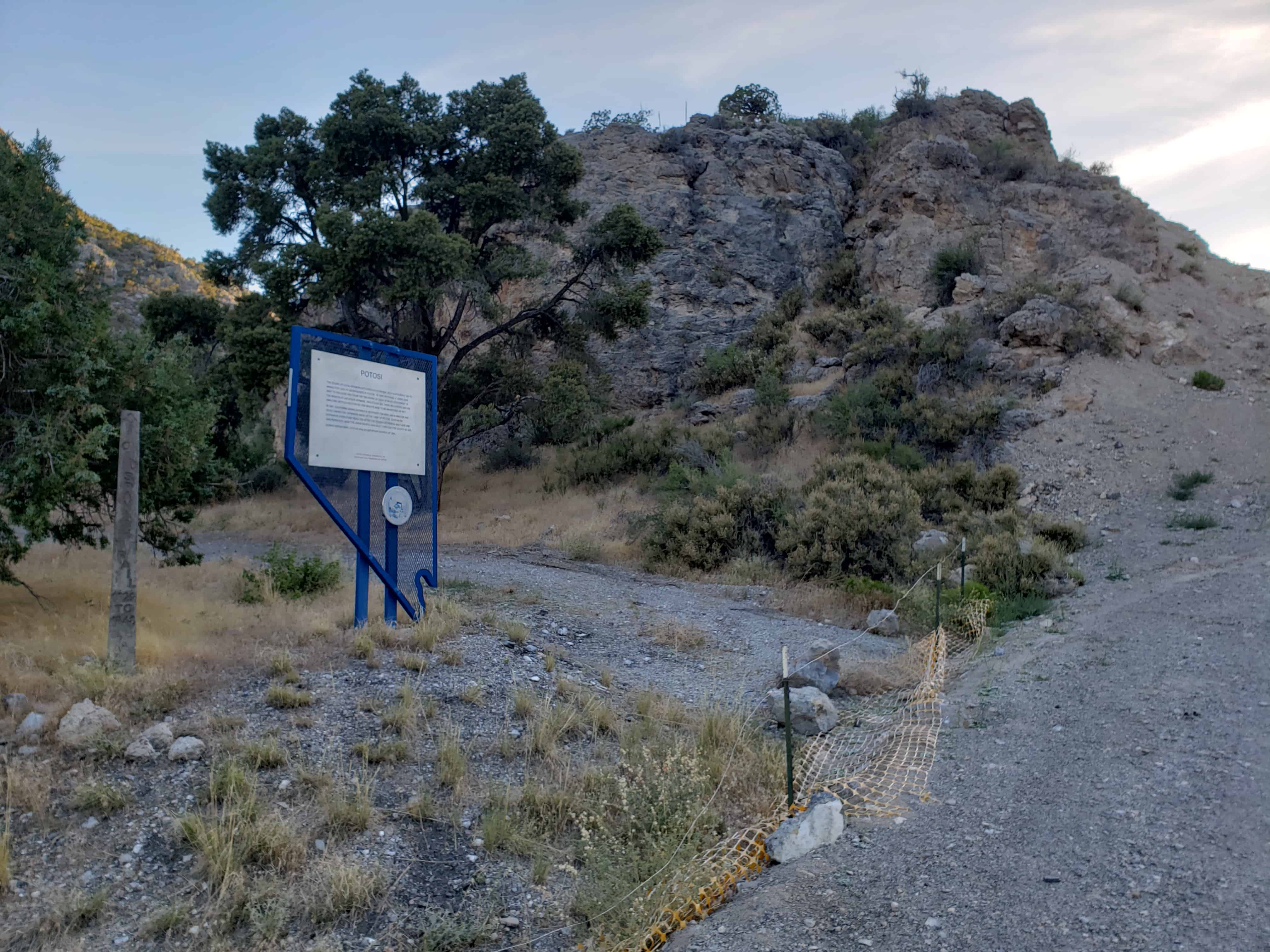
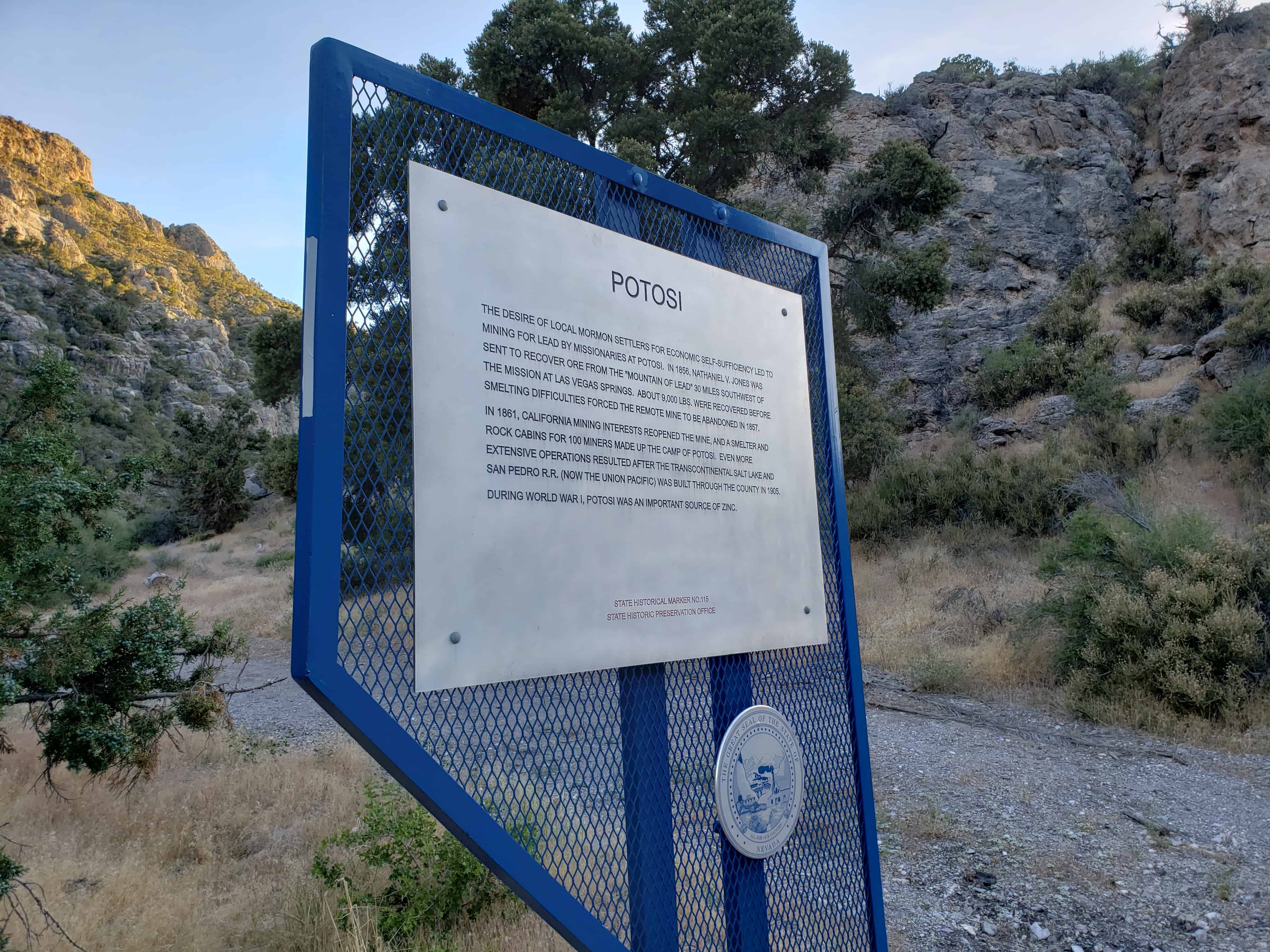
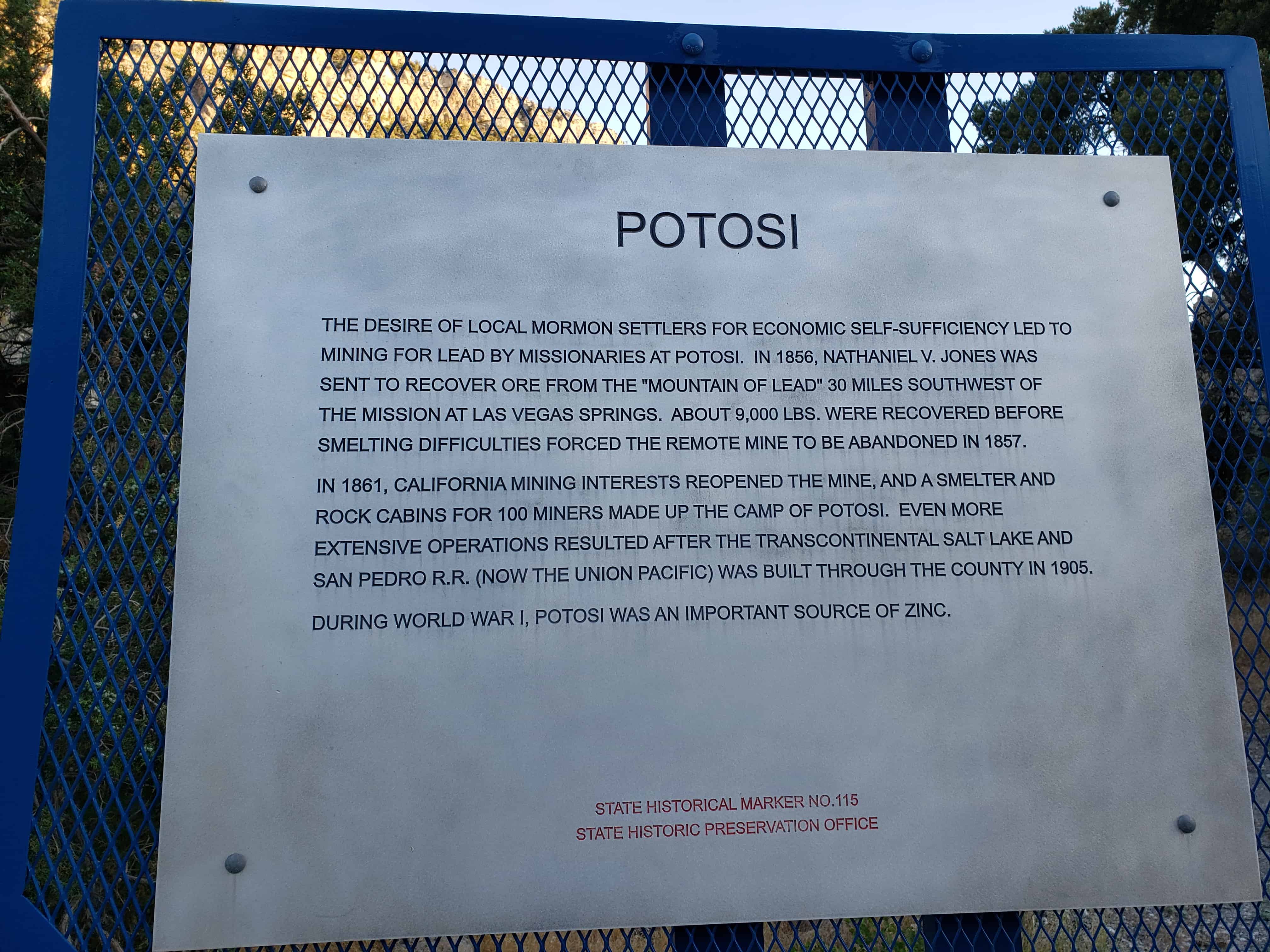
The desire of local Mormon settlers for economic self-sufficiency led to mining by missionaries for lead at Potosi. In 1858, Nathaniel V. Jones was sent to recover ore from the “mountain of lead” 30 miles southwest of the mission at Las Vegas Springs. About 9,000 lbs. were recovered before smelting difficulties forced the remote mine to be abandoned in 1857. Potosi became the first abandoned mine in Nevada.
In 1861, California mining interests reopened the mine, and a smelter and rock cabins for 100 miners made up the camp of Potosi. Even more extensive operations resulted after the transcontinental Salt Lake and San Pedro R.R. (now the union pacific) was built through the county in 1905.
During World War I, Potosi was an important source of zinc.
Nevada Historic Marker #115


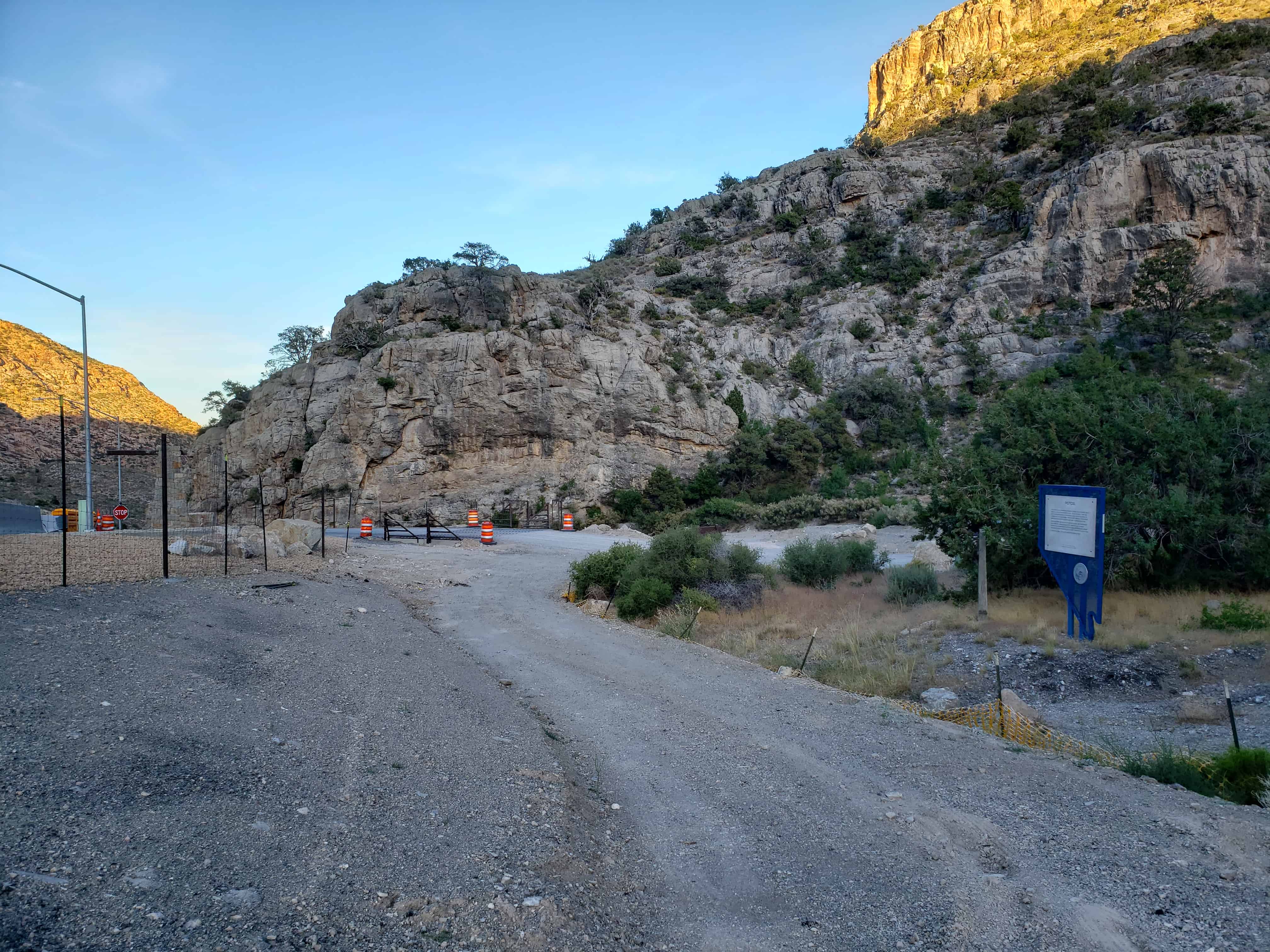

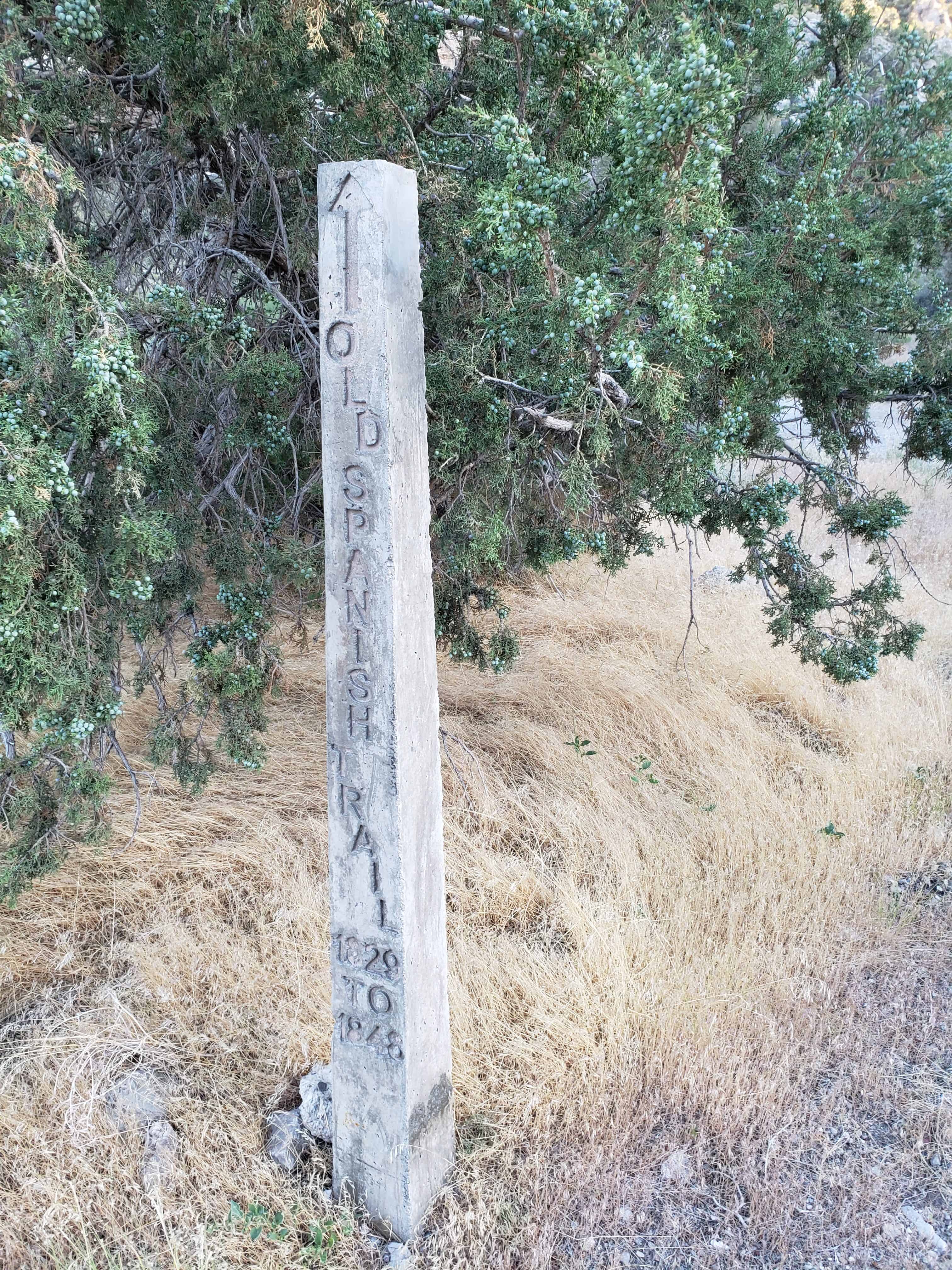

Potosi was added to the National Historic Register (#74001144) on November 13, 1974.
The Potosi lead-silver mine is probably the oldest lode mine in Nevada. The desire of the Mormon settlements f6r economic self-sufficiency led to prospecting by missionaries for lead. In April 1856, Nathaniel V. Jones was sent by Mormon leader, Brigham Young, to recover ore from the “mountain of lead” 30 road miles southwest of the church’s mission at Las Vegas Springs.
Wood was plentiful and running water was 12 miles away. A spring for camp purposes was located within 1 1/2 miles. On August 21, 1856, Jones started his lead mining operation. By the 10th of September a furnace had been built and smelting started. It was soon found that the material from which the furnace was constructed could not stand the blast. Jones, with the first wagon load of ore, set out to obtain supplies in Salt Lake City. He returned to the mine on December 9 and, beginning on Christmas Day, the new furnace began smelting ore.
Mining difficulties, however, beset them. The richer ore was soon gone and the poor grade, too flaky and brittle, was hard to process. Fuel was fast becoming scarce, as it was then necessary to haul wood a distance of seven miles to keep the furnace going. A shortage of provisions both for men and animal vas a constant problem and supplies had to be hauled 230 miles from Parowan and Cedar City, Utah.
Not more than a dozen loads of lead, or about 9,000 pounds, were recovered before processing difficulties forced the remote mining camp to be abandoned in January 1857. Potosi thus became the first abandoned mine in Nevada.
Briefly reopened from 1861-1863 as a source of silver, more extensive operations were made possible in 1905 by construction nearby of the Los Angeles, San Pedro and Salt Lake Railroad (now the Union Pacific).
Between the years 1913-1917 Potosi was Nevada’s largest zinc producer and during World War I it was an important source of :his product.
Activity by lessors in later years helped push Potosi production to an estimated $41.5 million. The mine at Potosi supplied lead, silver, zinc, and other valuable ores over more than a century of development.