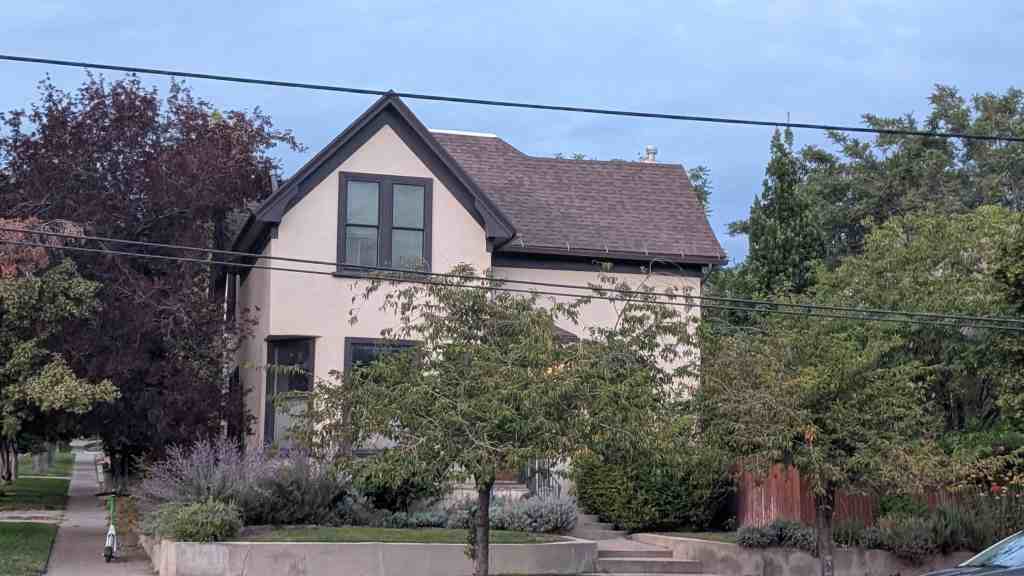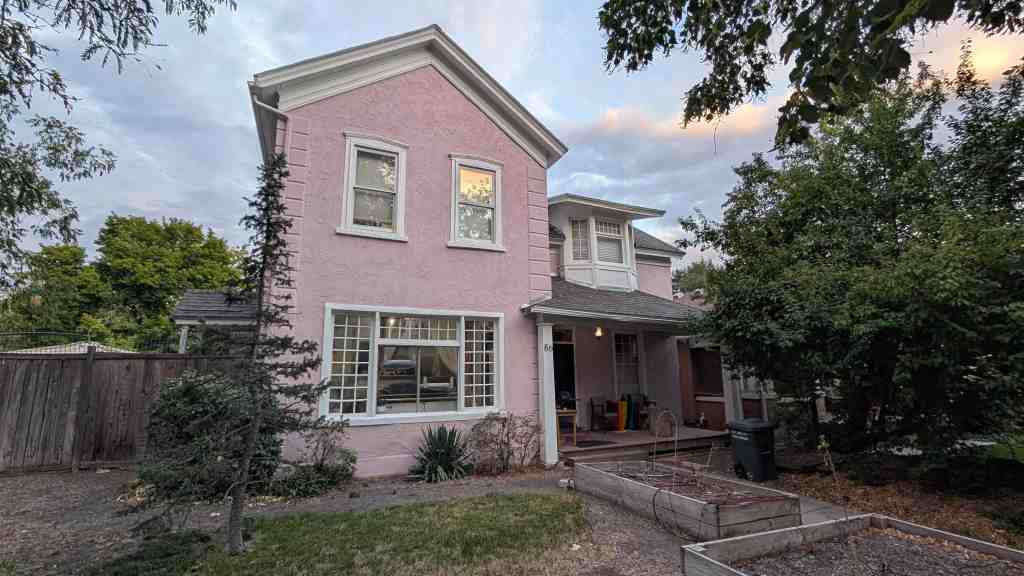
William H. McIntyre House

Tags

, , , ,

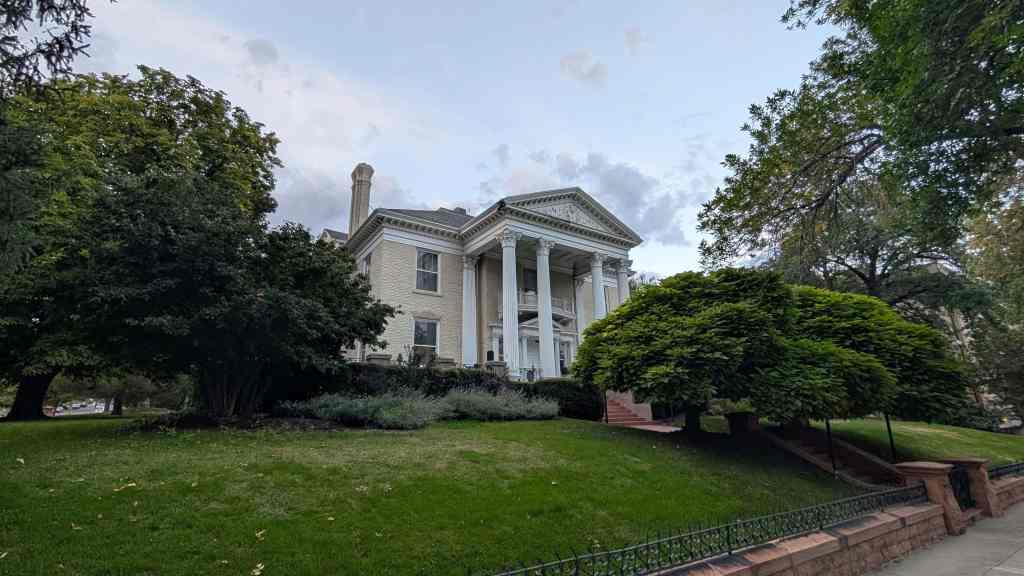
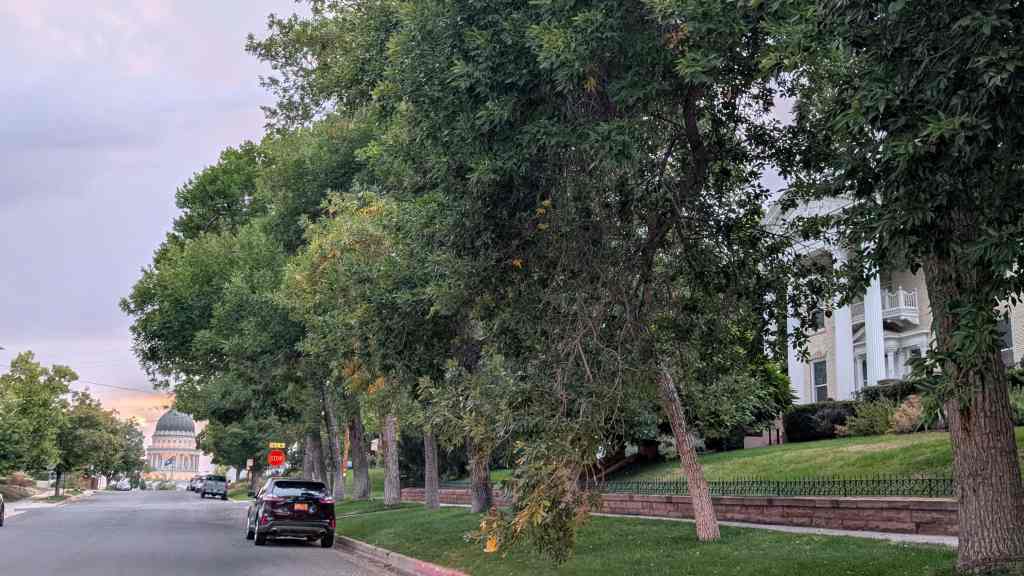
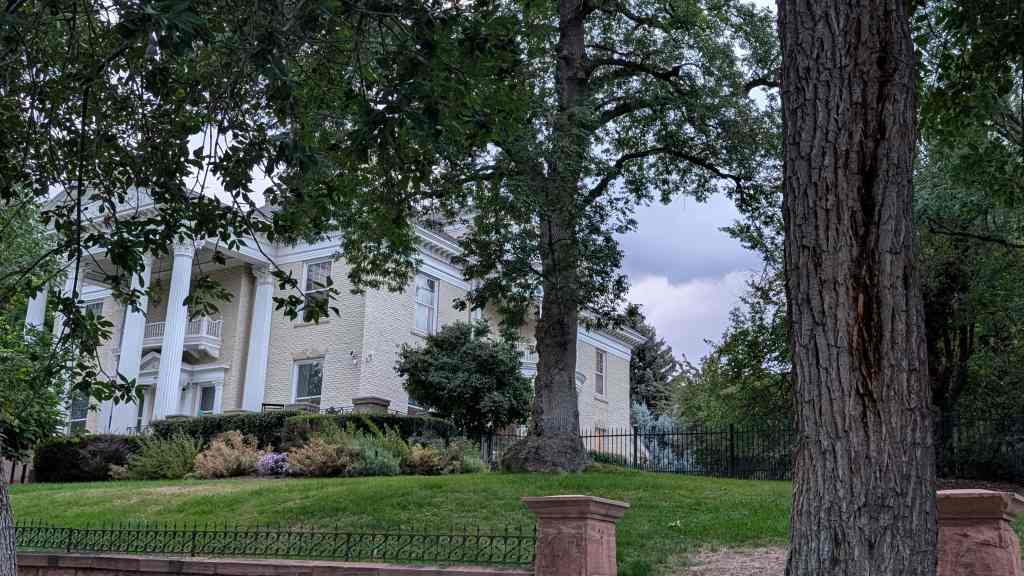
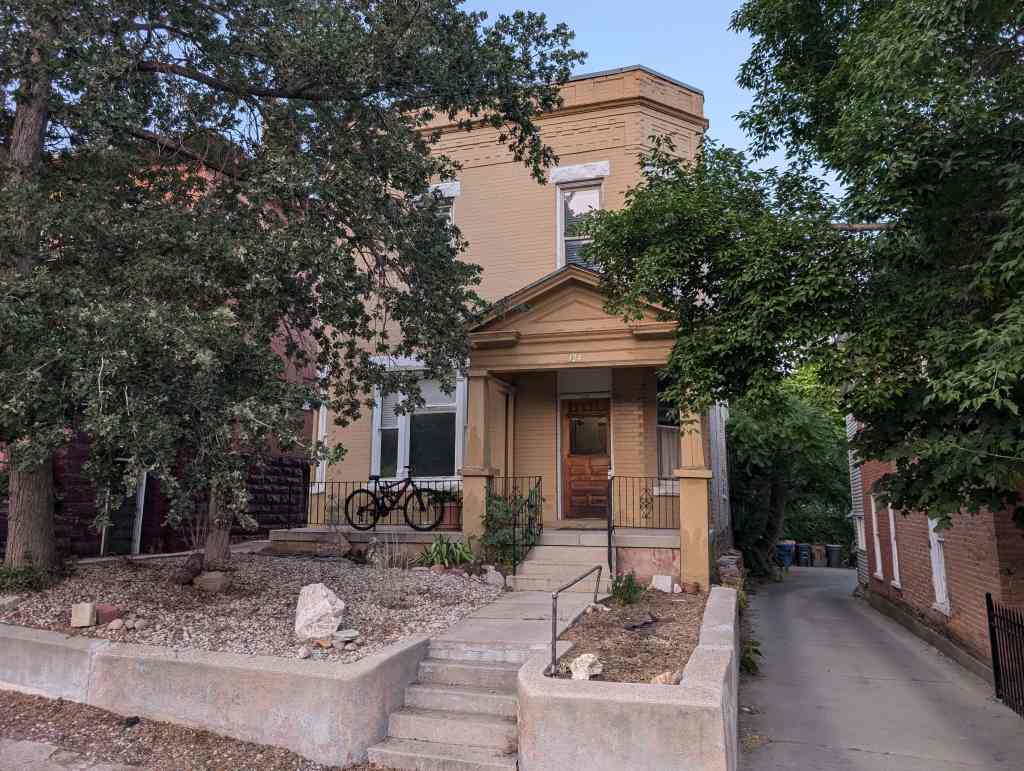
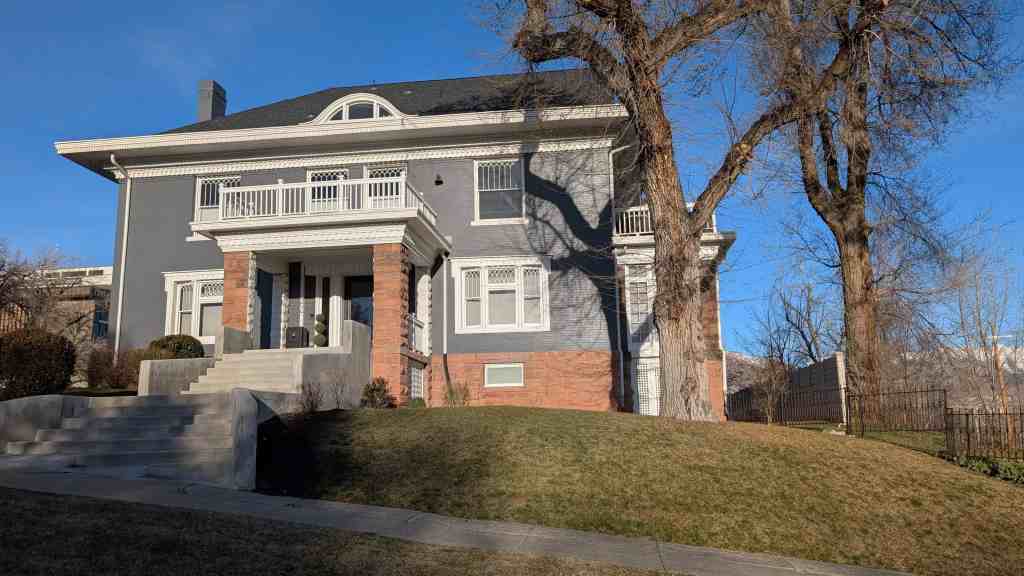
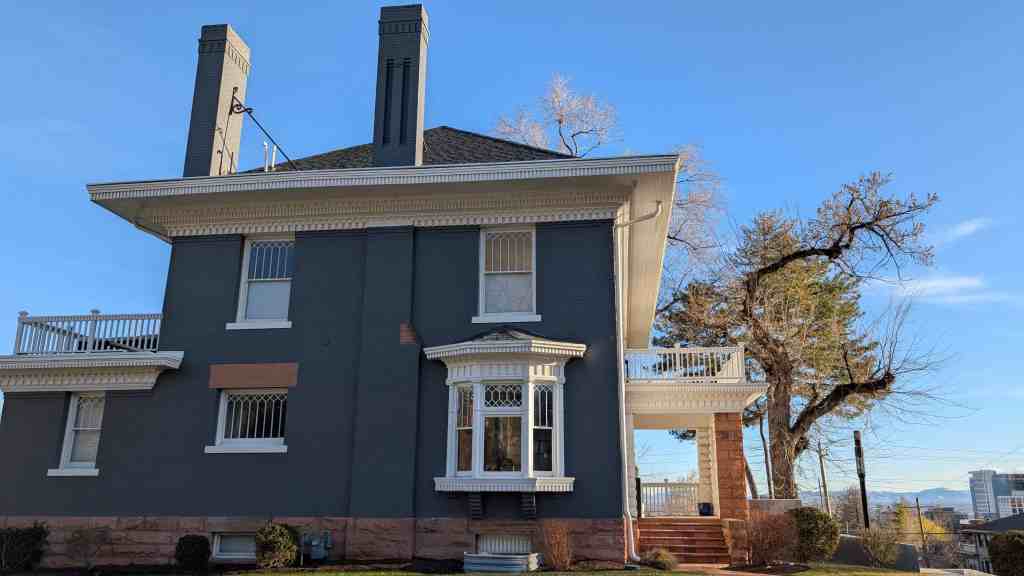
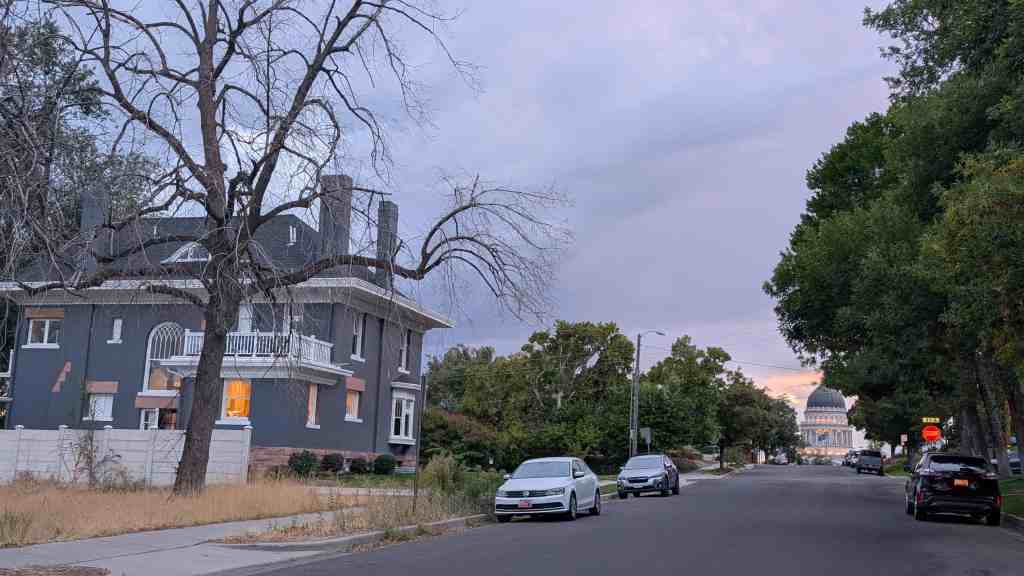
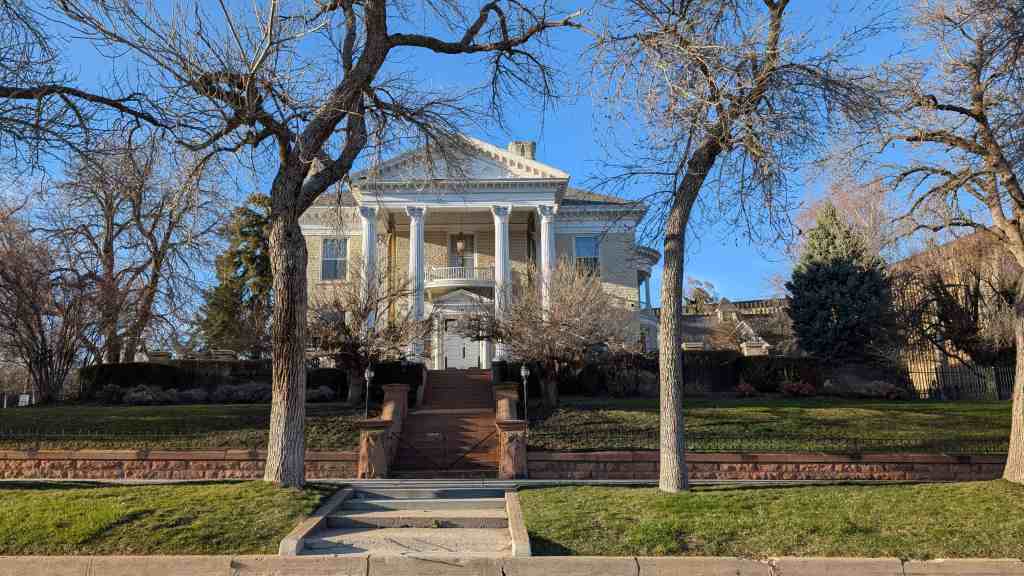
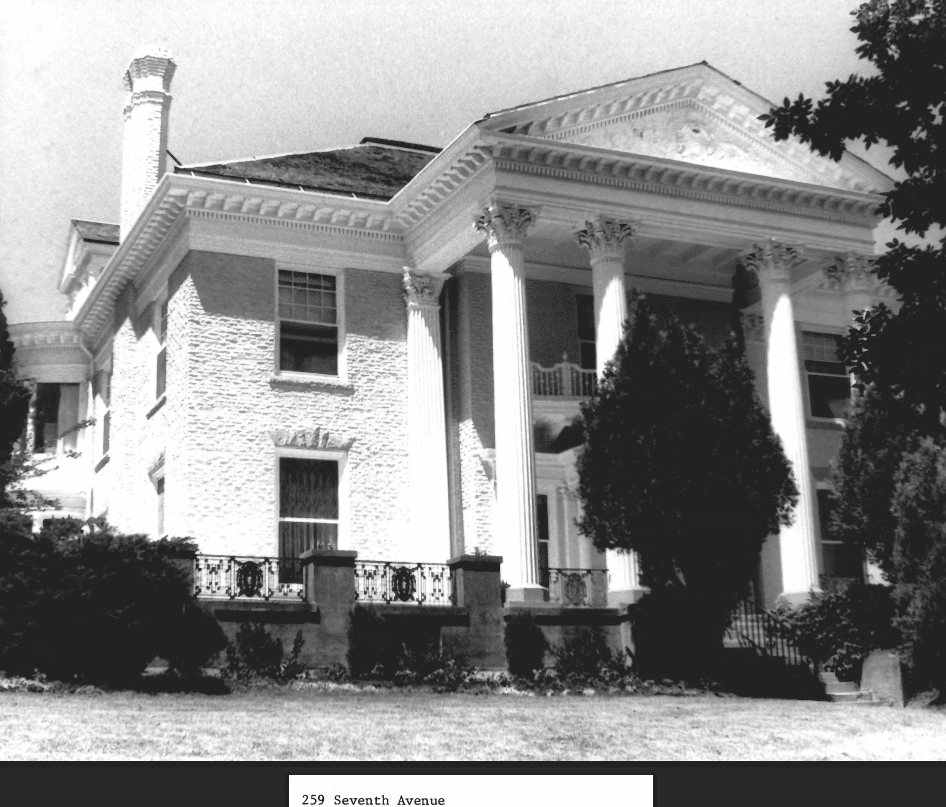
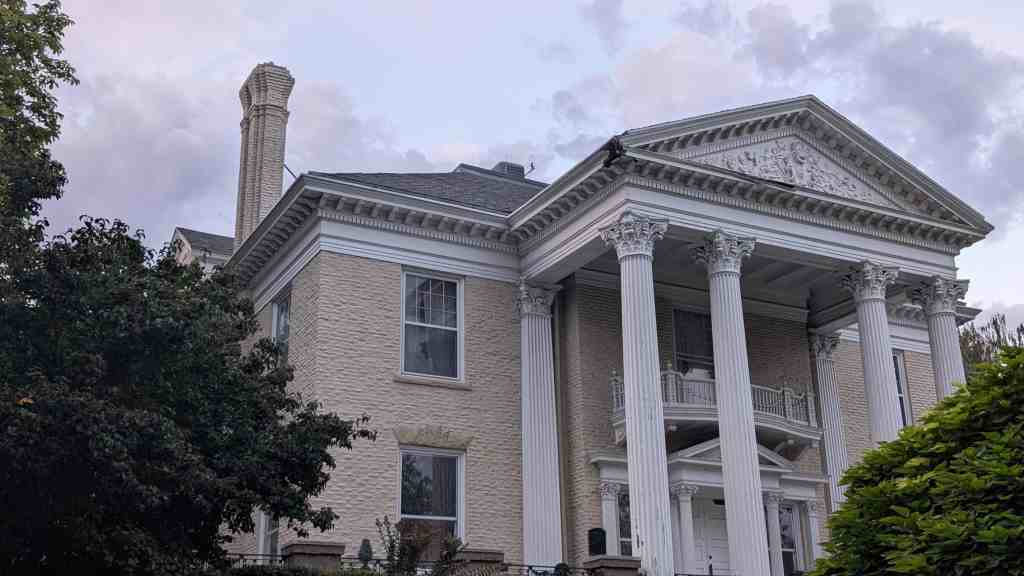
The McIntyre House, located at 259 East Seventh Avenue in The Avenues in Salt Lake City, Utah was added to the National Register of Historic Places (#78002677).

The property on which the McIntyre House sits was registered to C. J. Sandbech on June 27, 1874, as lot 2, Block 101, Plat D. The lot was purchased by Gill S. Peyton on January 26, 1894, for a price of $2,500.00.

The structure was designed by architect Fredrich Hale and was first inhabited in 1898 and was called Payton Hall. The property, house, and carriage house was sold to Henry w. Brown on July 18, 1900, for a price of $15,000.00.

William H. McIntyre acquired the house on December 5, 1901 for a price of $19,000.00 and the adjacent lot (Lot #2) for a price of $2,000.00. From this date on the structure has been known as the Mclntyre House.

Service connections are recorded as being made on April 17, 1906 and additional services and repairs were made August 8, 1910.

William H. Mclntyre died on August 20, 1926. Mrs. Phoebe McIntyre resided in the house until her death in 1945. William H. McIntyre came to Utah as a boy from Texas and his adventurous life was bound up with the development of the Utah cattle business. In later life Mr. McIntyre developed large holdings in Alberta, Canada, where he established the McIntyre Ranch but he retained many interests in Utah and spent his last years there; dying in Salt Lake City in 1926 at ‘the age of ‘seventy-eight.

He was born in Grimes County, Texas about forty miles, north of what is now the city of Houston, in the year 1848, the son of William McIntyre who was of Scotch-Irish descent.

William’s brother, Samuel, along with William traveled to Texas about 1870 to sell some property owned by, t;heir father. After the sell was completed they bought cattle and made the long trek back to Utah. In the spring of the next year, they sold the cattle for more than five times what they had paid. This gave them enough money to buy more cattle in Omaha and drive them to Utah. This partnership continued until sometime in the 1880s and gave the two brothers enough money to enter into several ventures, including the Mammoth Mine at Mammoth, Utah which then developed into a successful operation.

During the 1880s, William had hard times in the cattle business losing almost an entire herd in the winter of 1886-87. In 1891 to 1894 William began investigating the possibility of purchasing land and in 1894 he purchased a full section of land near Cardston in Alberta, Canada. Ranching began shortly after the purchase.

William H. McIntyre was married to Phoebe, Ogden Chase. She was the granddaughter of Isaac Chase, the first flour miller in Utah. Liberty Park was once the Isaac Chase farm, later passing to Brigham Young. Phoebe Chase was torn at the caretaker’s house which still stands on Liberty Park.
Mentioned in the national register’s nomination form:
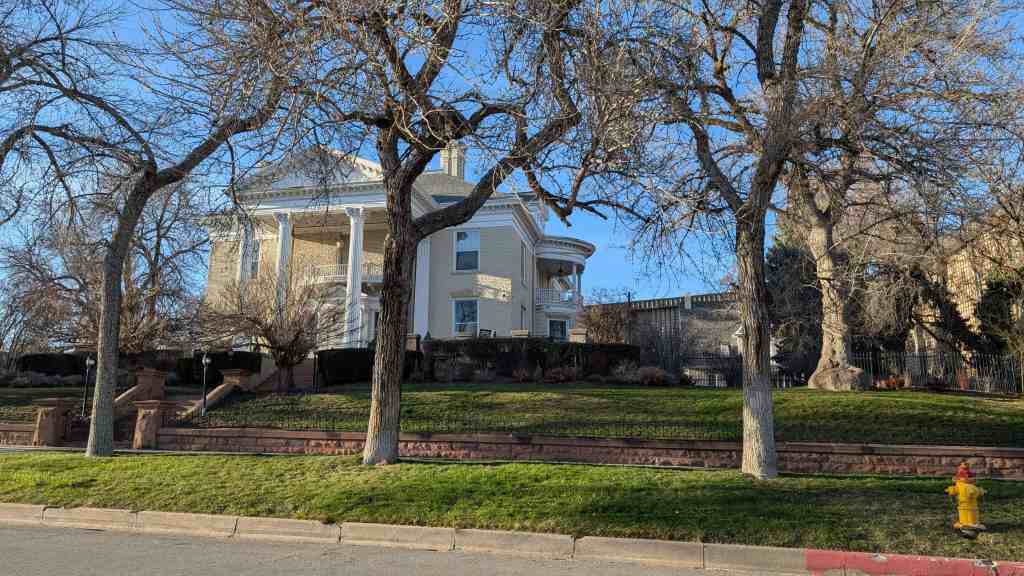
While they account for less than one percent of all residences, the very large, often architect-designed homes in the Eastlake, Queen Anne and Shingle styles, and later the Prairie and Craftsman styles greatly influence the visual character of the Avenues. Some of the state’s best examples of residential architectural styles were built there, including the William Barton house, 231 B Street, (vernacular/Gothic); the Jeremiah Beattie house, 30 J Street, (Eastlake); the David Murdock house, 73 G Street, (Queen Anne); the E.G. Coffin house, 1037 First Avenue, (Queen Anne); the N.H. Beeman house, 1007 First Avenue, (Shingle style); the Vto. Mclntyre house, 257 Seventh Avenue, (Classical Revival); the James Sharp house, 157 D Street, (Craftsman); and the W.E. Ware house, 1184 First Avenue, (Colonial Revival).
Arnold Friberg

Arnold Friberg
Historical Painter/Artist

Arnold Friberg was an American artist born on December 21, 1913, in Winnetka, Illinois, son of a Swedish father and a Norwegian mother. At the age of 3, Arnold moved to Arizona with his sister Gertrude and his parents. By age 7, young Friberg was already drawing original cartoons. At the age of seven, Friberg’s parents joined The Church of Latter-day Saints and Arnold was baptized a member at age eight. The Friberg’s were able to scrape together enough money to enroll Arnold in a correspondence course at the age of 10. While in Phoenix, Arizona, young Friberg often shared his drawings with the newspaper staff of the Arizona Republican. During his high school years, Arnold earned money by making signs for local businesses. After graduating from high school, he began his studies at the Chicago Academy of Fine Arts. He worked for various local printers doing commercial art while attending school for several years afterward. This included calendar work the Northwest Paper Company, for whom he created paintings of Mounties. He created more than 200 paintings depicting Mounties and he is the only American who was made an honorary member of the Royal Canadian mounted Police.

In 1940, Friberg moved to New York City and studied with Norman Rockwell under the artist Harvey Dunn at the Grand Central School of Art. With the outbreak of World War II, he left the Grand Central School of Art and joined the United States Army serving in the 86th Infantry division. He used his art skills in combat to draw maps.

Shortly after the end of the war, he set up shop in San Francisco, then he married Hedve Baxter. He made it big creating a series of paintings depicting Western scenes for a calendar company in 1948. He then moved to Utah in 1950 in order to begin teaching commercial art at the University of Utah. It was while teaching at the U of U that DeMille knew he had found his artist. This led the Fribergs to move to Hollywood in 1953.

Friberg’s most famous and popular patriotic work is his 1975 painting, “The Prayer at Valley Forge,” a depiction of George Washington praying at Valley Forge, the site of the camp of the American Continental Army over the winter of 1777-1778 during the American Revolutionary War. Friberg is also well known for his fifteen previsualization paintings for the Cecil B. DeMille film “The Ten Commandments,” used to promote the film worldwide. Friberg received a nomination for an Academy Award for these paintings.*

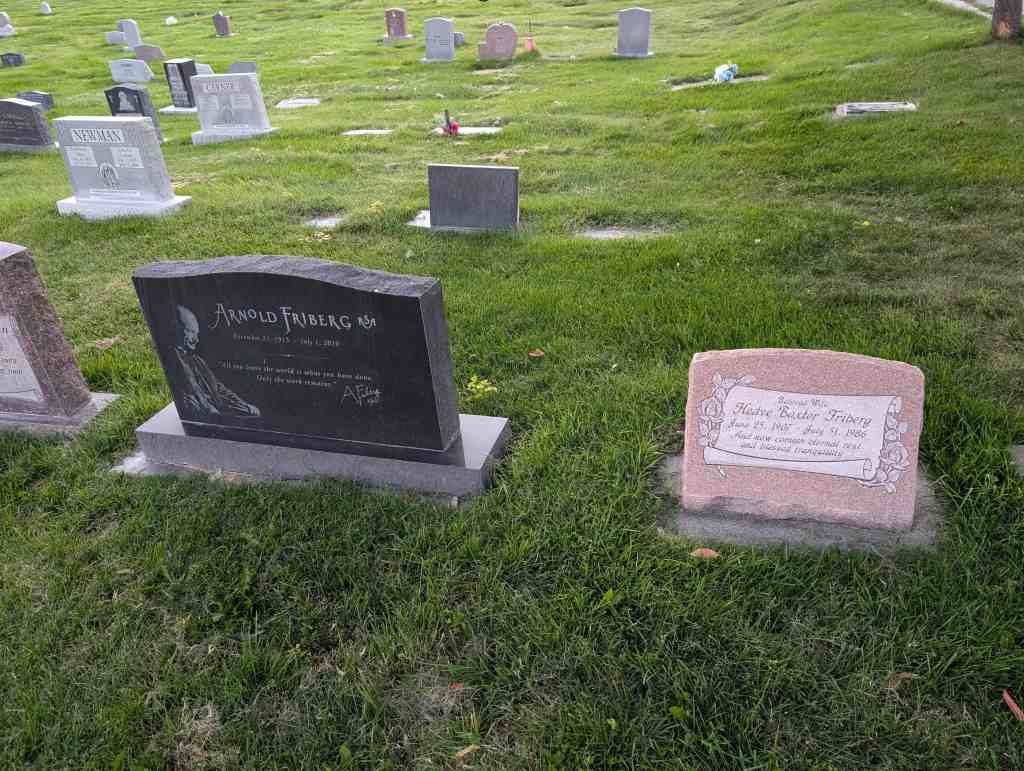
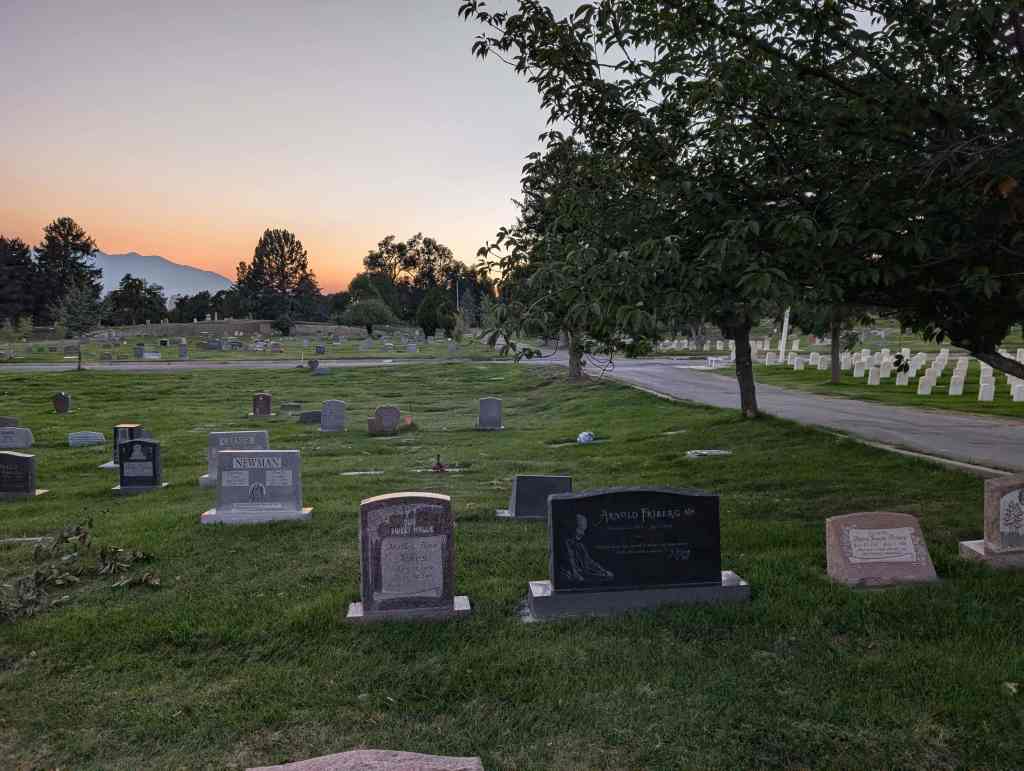
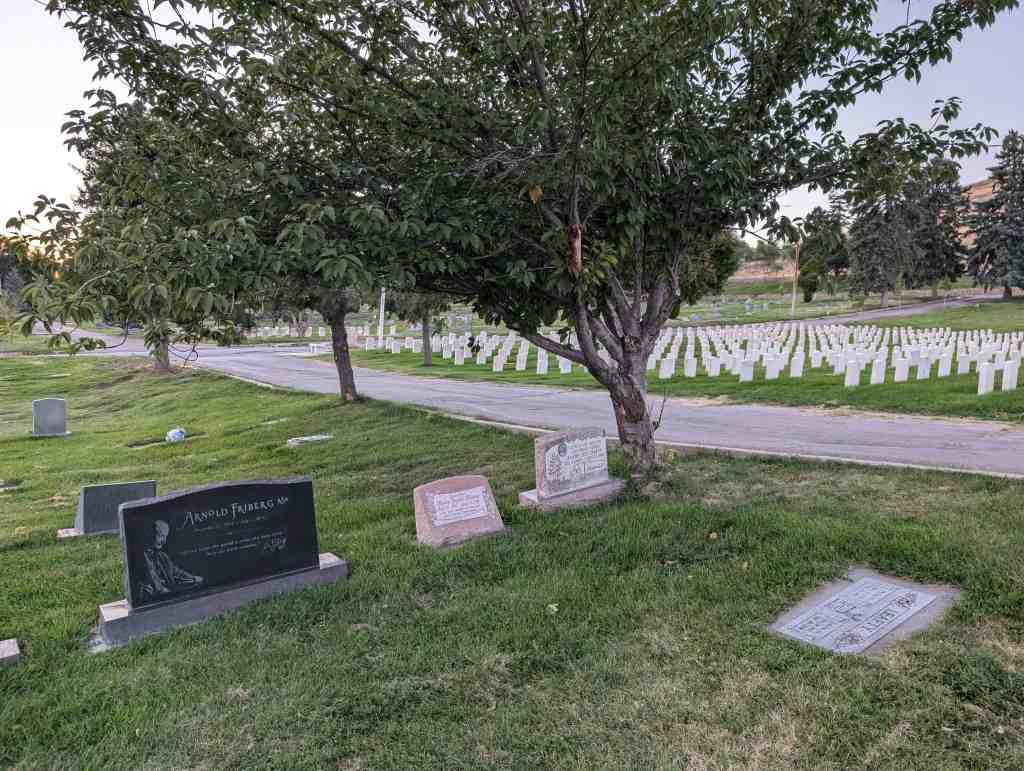
Arnold Friberg passed away July 1, 2010 at the age of 96 in Salt Lake City from complications of hip replacement surgery. You can find his gravesite in Plat X, Block 6, Lot 206, Grave 2 East in the Salt Lake Cemetery in Salt Lake City, Utah.

From findagrave:
Artist. A realist who specialized in historical and religious subjects, he is probably best remembered for his 1975 portrait of George Washington, “The Prayer at Valley Forge.” Raised in Arizona from age three, he was employed as a sign painter in his teens and then trained at the Chicago Academy of Fine Arts. Moving to New York City in 1940, he studied at the Grand Central School of Art, where his fellow students included Norman Rockwell. During World War II, Friberg served with the 86th Infantry in both Europe and in the Pacific. Following his military service he moved to California, working first in San Francisco as a calendar artist, then in Hollywood. He first gained notice when director, Cecil B. DeMille, commissioned him to create 15 “previsualization” paintings, upon which he based the production design for his film “The Ten Commandments” (1956). He went on to paint numerous advertising pictures for Chevrolet and other firms, while also depicting various events from “The Book of Mormon.” When called upon to portray George Washington at Valley Forge, he studied the General’s uniform at the Smithsonian and went to the Schuylkill River in winter in an attempt to feel what Washington might have felt. Today the now classic “The Prayer at Valley Forge” hangs at Mount Vernon. Over the years he painted about 300 scenes of the Royal Canadian Mounted Police, of which he was the only American to be made an honorary member. In the early 1990s he traveled to London to create portraits of Queen Elizabeth II and Prince Charles. He died at 96 from the complications of hip replacement surgery. Always referring to himself as an “illustrator” rather than as a “painter,” he said that his audience was “the guy down the street.”