

Thomas & Elizabeth Whitaker House
The original one-and-one-half-story stone portion of this house was built c1862-66 by Charles Duncan, a skilled Scottish stonemason known for building rock structures throughout Centerville and Farmington, and Thomas Whitaker, who did the carpentry work. Thomas was born in England in 1816. He and Elizabeth Mills, born in England in 1839, were married in 1858 by Mormon leader Brigham Young. In 1869 Thomas married Hannah Waddups, in keeping with the Mormon polygamous practices of the time. She lived here for three years before Thomas built her a house two blocks east. They had eight children.
Thomas was a carpenter, cabinetmaker, engraver, carver, tenor singer, violin player, and nurseryman. He also spoke several languages. Thomas and Elizabeth are believed to have been one of the first families in Utah to raise silkworms. Elizabeth spun the silk and made scarfs, neckties, vests, and socks. She also had talents in gardening, cooking, rug making, straw hat making, nursing, and midwifery. She had twelve children. Thomas died at age 70 in 1886 and Elizabeth at age 98 in 1937. The home was purchased in 1994 by the city and now serves as the Centerville Museum and Cultural Center.
Located at 168 North Main Street in Centerville, Utah and added to the National Register of Historic Places (#96000316) on March 28, 1996.
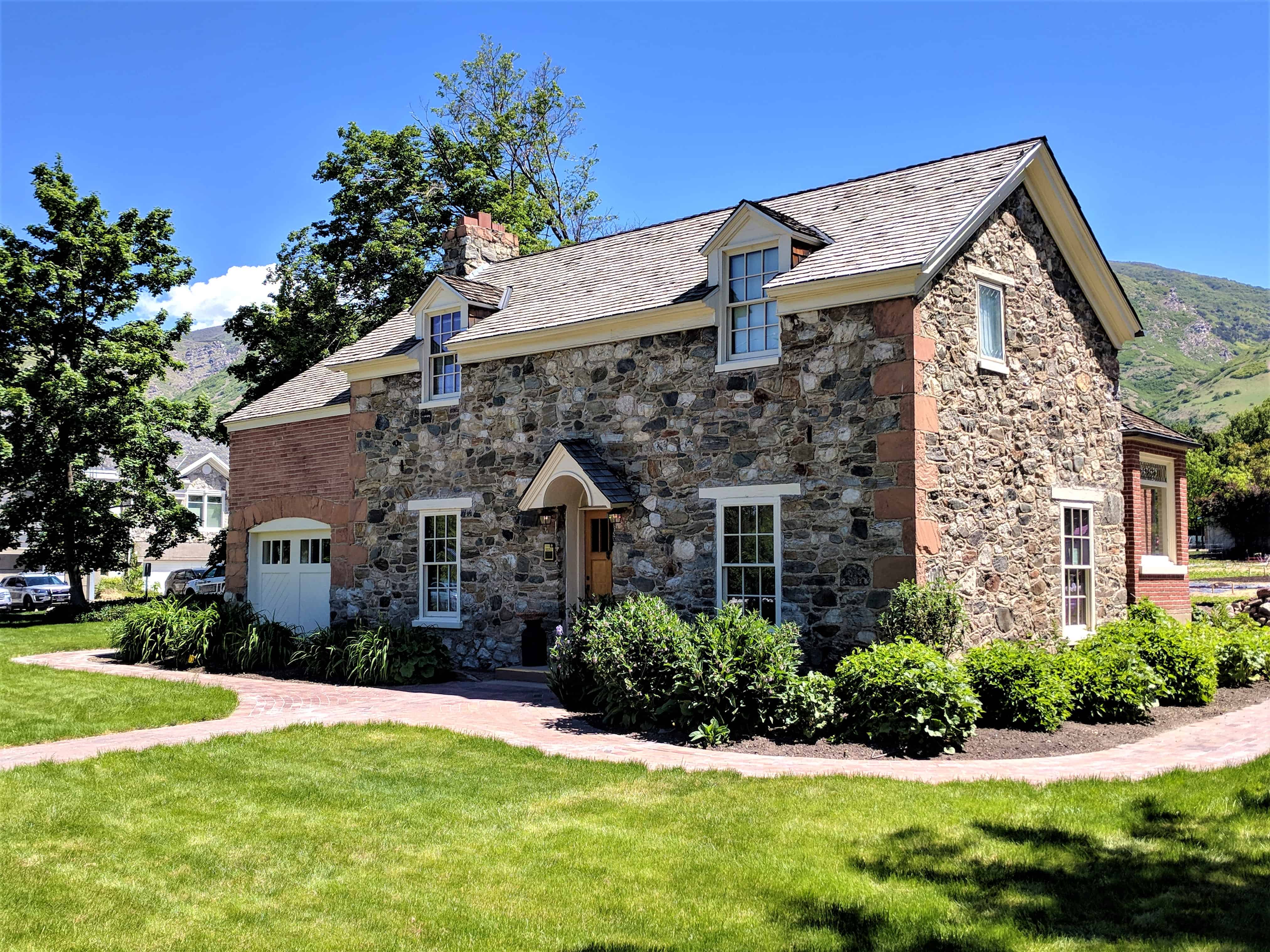
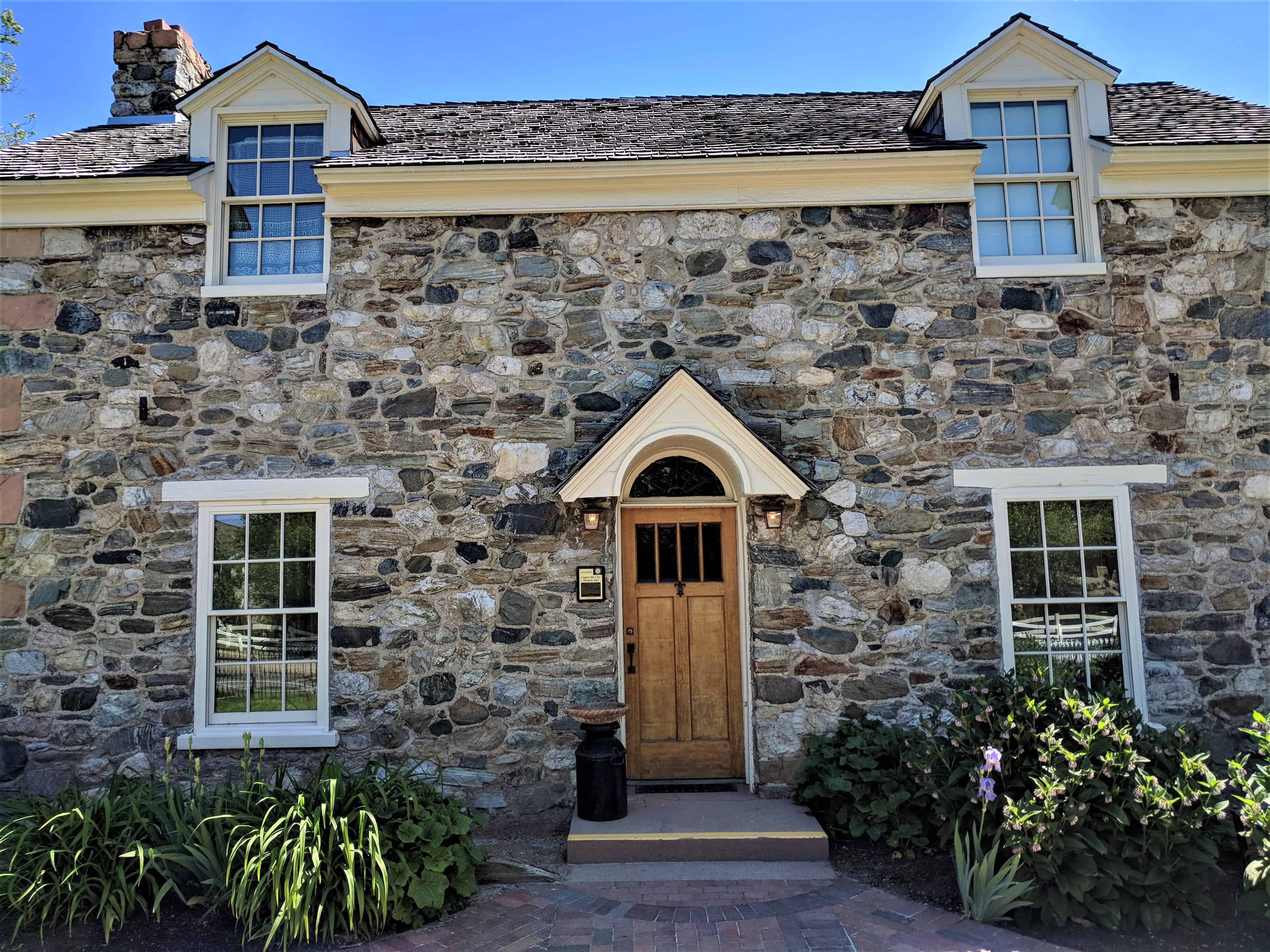
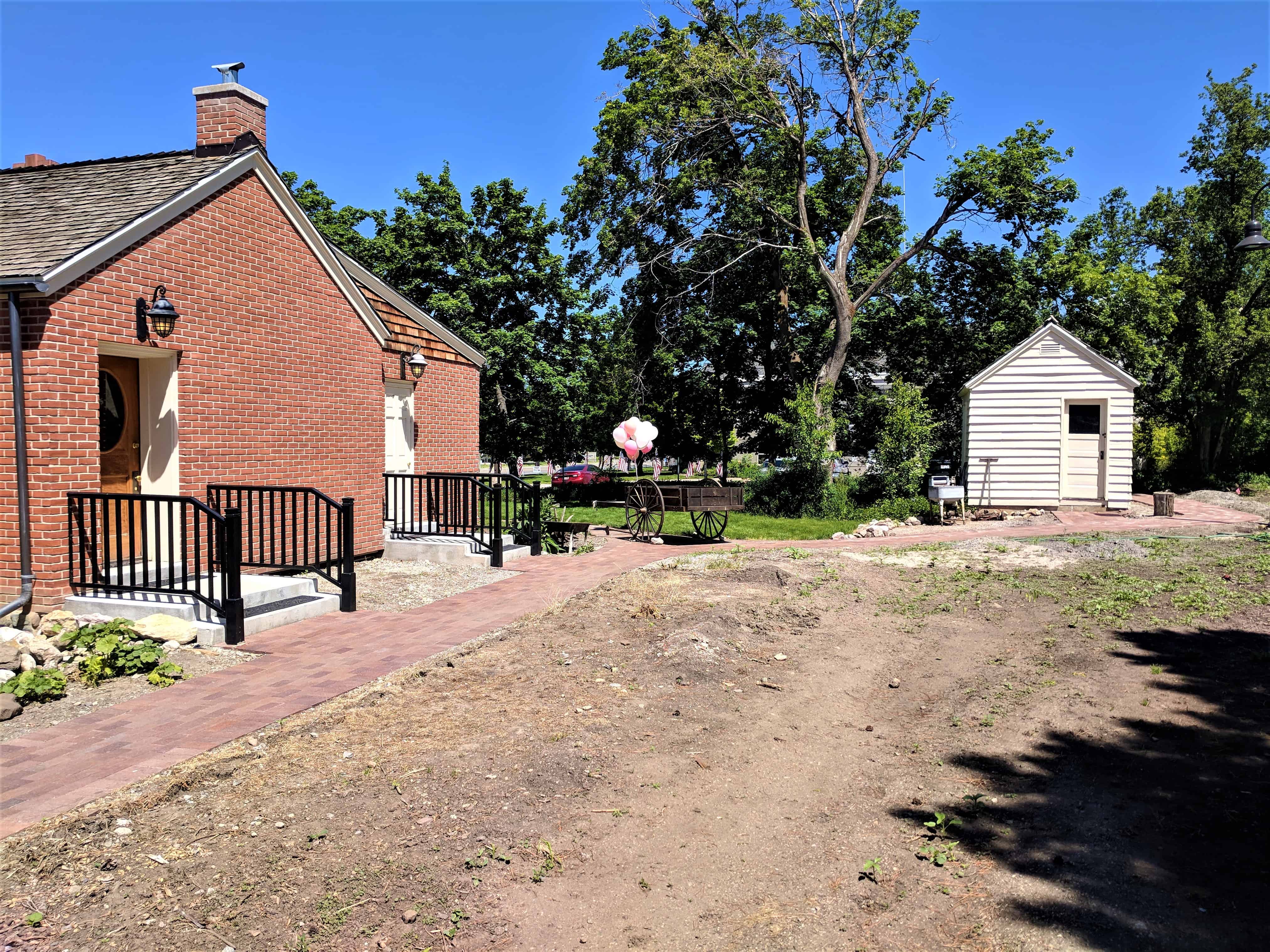
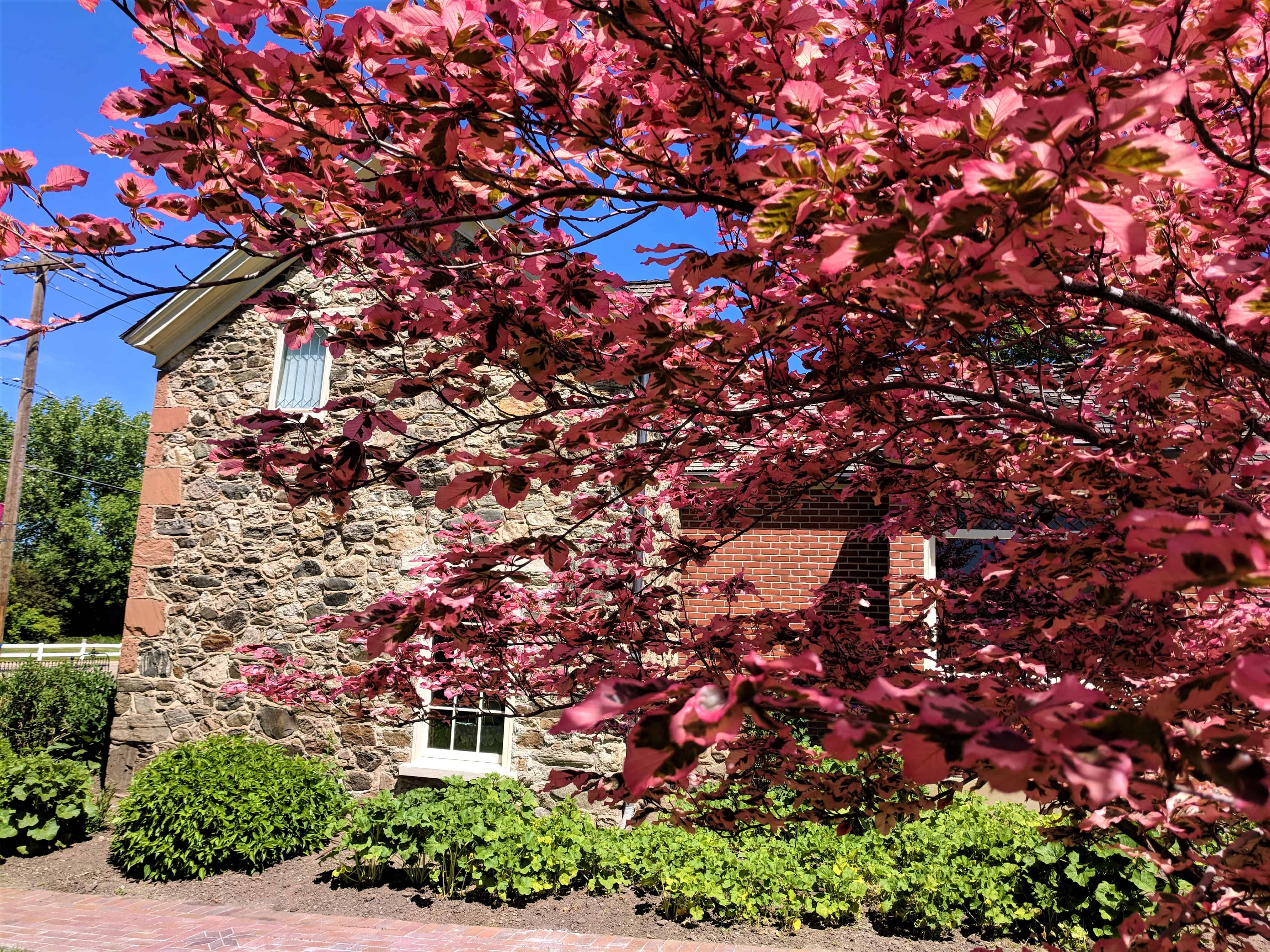
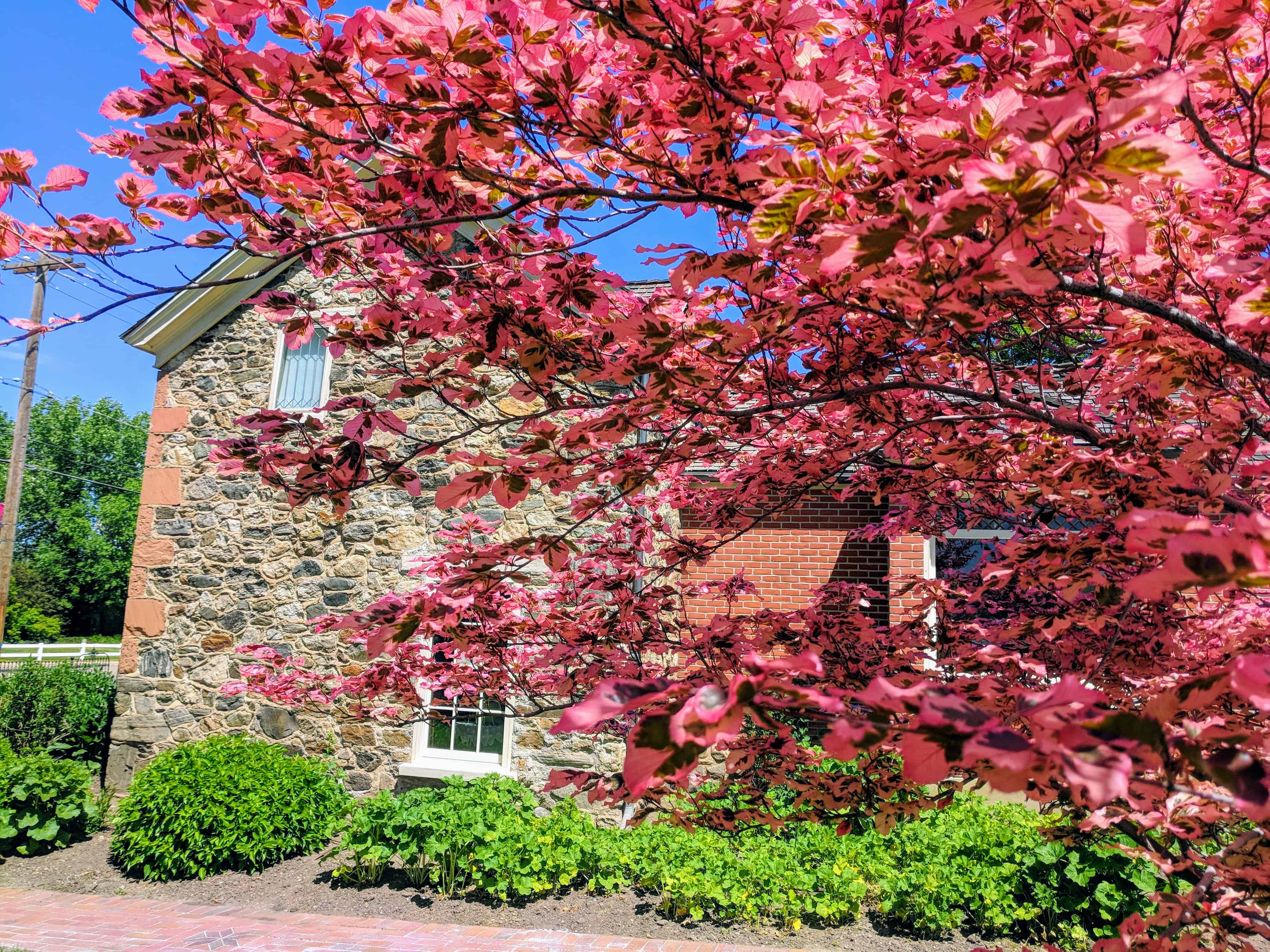
The Thomas and Elizabeth Mills Whitaker house, built c. 1862-66, is significant as a well-preserved example of the early stone vernacular architecture of Centerville, and as one of only eleven stone houses built in the 1860s. Stone houses in Utah were built in those locales where stone and masonry skills were available, primarily during the period from the 1860s to the 1880s. That period coincided with the second phase of construction technology in Utah, characterized by the emergence of skilled masons and carpenters who could construct larger, more permanent and more attractive buildings.4 The first phase, which began with the arrival of the Mormon pioneers in 1847, produced houses which were usually constructed by the owners themselves of readily available materials, such as logs, adobe bricks, and field stone. These houses were usually intended as only temporary or subsistence-level structures to be used only until the settlers were able to establish a dependable livelihood and could afford to construct larger and more permanent homes. The emergence of stone houses not only represents the growing prosperity of the people who had them built, but also demarcates the early phase from the later phase that began in the 1880s with the availability and extensive use of fired brick and the influence of nationally popular architectural styles and construction methods on the local building industry.5 The Whitaker house is typical of many of the stone houses built at that time both in Centerville and throughout the state with its symmetrical facade, rectangular shape, gable end chimney, and lack of ornamentation. It was probably built by Charles Duncan and his sons, the primary stone masons in the Centerville area. Most, if not all, of the approximately two dozen remaining stone houses in Centerville have been altered, some significantly, and although this house has undergone some alterations, it retains most of its original integrity.
Centerville is located at the base of the Wasatch Mountains approximately twelve miles north of Salt Lake City and consists of a small strip of land two miles wide and three and three-tenths miles long. The place was named Centerville because it was literally centered between Farmington and Bountiful. Mormon pioneers were the first settlers in the Centerville area beginning in 1848, one year after their arrival in Utah. Primarily farmers and herdsmen, the early settlers found the location suitable due to its good soil and the availability of water from several mountain streams. Their earliest homes were temporary log structures made from trees cut in the nearby canyons, but as the settlement became more established and permanent, adobe houses were constructed. Stone was used in the construction of some of the early structures, but it was not until the 1860s that it became a popular and important building material in Centerville and neighboring communities. Located along the base of the Wasatch Mountains, the towns of Farmington, Centerville, and Bountiful all used stone extensively in the construction of houses, mills, granaries, fences, and culverts. Stone was obtained from dry creek beds and the rock benchland. The stone houses built during the period from the 1860s through the 1880s were some of the largest and most permanent homes built in Centerville. Few of the log or adobe houses have survived, and only about two dozen stone buildings remain, most of which are located on the blocks of the old section of the city.
Thomas and Elizabeth Whitaker settled in Centerville just after they were married in 1858. They first lived in a one-room log cabin for approximately one-and-a-half years before Thomas began work on an adobe brick house. After living there for four years, during which time three children were born, Thomas began building a stone addition to accommodate the quickly growing family. The roof of the house was damaged, however, by a storm, and they began building a new house farther west and closer to the road, where Elizabeth had wanted the house to be all along.
According to Elizabeth’s biography, Charles Duncan and his sons were hired to construct this house about 1862. The house took approximately four years to build, and Thomas did the carpentry work.7 Most of the stone houses constructed in Centerville during the 1860s and 1870s are attributed to the Duncan family, who also built stone culverts, bridges and outbuildings. Charles Duncan was born in Dysart, Fifeshire, Scotland in 1823 and learned his stone cutting and masonry skills working in that country. After converting to Mormonism he and his family emigrated to the United States and arrived in Utah in 1853. He farmed an eleven-acre parcel of land but as his masonry skills became more appreciated he devoted more time to his construction business. He worked on the Salt Lake Temple for many years, and as local history states, he used granite left over from the temple construction for the quoins seen on many of his Centerville houses. The quoins on the Whitaker house however are sandstone chosen by Elizabeth who reportedly saved money from the sale of eggs to pay for the extra expense.
Thomas Whitaker was born in Rotherhithe, Surrey, England, in 1816. After being at sea for four years, he lived on the island of Tahiti and in 1837 married a woman named Tuana. She died of smallpox, however, soon after their marriage. While there, Thomas became guardian to the daughter, Annie, of a friend who also died of smallpox; eventually Annie lived with the Whitakers in Centerville beginning at about age 12. After losing his wife, Thomas moved on to New Zealand, where he married again — this time to the owner of a boarding house and saloon in San Francisco, Mary Ann Church. Upon returning to San Francisco with her he became acquainted with and converted to Mormonism. Mary Ann was uninterested in her husband’s new religion and went back to New Zealand. Thomas settled in Utah, was one of the early carpenters in Centerville, and also worked at farming. Thomas was also a pioneer nurseryman in Centerville.
Twenty-three years younger than Thomas, Elizabeth was born in 1839 on the Isle of Man, England. Her family converted to Mormonism about 1846 and sailed from Liverpool to New Orleans, eventually making their way to Nauvoo, Illinois, which was headquarters of the Mormon church at that time. Her father, John Mills, was a silver and tinsmith, and he was put to work making the pewter ornamentation for the L.D.S. temple at Nauvoo. After being forced to flee Nauvoo they made their way to Council Bluffs, where they made arrangements to travel to Utah with Captain Wilkie’s company, arriving in the Salt Lake Valley in 1852. She married William Oakden in 1855 but he drowned several months later in the Jordan River. Elizabeth took her infant son, William, and worked near Salt Lake for a family in which the husband had gone to England on a two-year Mormon mission. Eventually she moved into her uncle William’s household and it was here that she met Thomas. Elizabeth and Thomas were married by Brigham Young, LDS church leader, on March 17, 1858. In 1875, the Relief Society voted to sustain Elizabeth Whitaker with their means and influence to start a milliner business for the Society.
After bringing mulberry clippings from California to Utah in 1856, Thomas reportedly sent to England for silkworm eggs. The Whitakers are believed to have been the first family in Utah to raise silkworms. They raised the silkworms, spun the silk, and Elizabeth made a scarf necktie for Brigham Young,16 as reported in the Deseret News dated June 11, 1862:
A fine specimen of silk was presented to us a few days since by Mr. Whitaker, of Centerville, the production of his stock of silk worms, which are represented as doing as well as any were ever known to in silk producing countries.
Brigham Young was so enthusiastic that he encouraged silk production through the Relief Society, the women’s organization of the L.D.S. church and one of his wives, Zina Young, established the Deseret Silk Association in 1875 to promote silk manufacturing. In many accounts of pioneer women, however, it was not a popular endeavor and it died out by the turn of the century.
In 1869, after eleven years of marriage and six children, Thomas took another wife, Hannah Waddoups, in keeping with the Mormon polygamous practices of the time. This was a devastating blow to Elizabeth, as she had always abhorred polygamy and had exacted a promise from her husband when they married that he would not take more wives. Hannah moved into the Whitaker household, living with Elizabeth for about three years before Thomas built a house for Hannah two blocks east of the stone house. Hannah and Thomas had eight children and Elizabeth had six more by him. With the added financial strain of a second household, Elizabeth had to work more to bring in cash. She did an assortment of things, mainly nursing the sick, helping women through and after childbirth, and weaving carpets. Thomas moved to Ogden, where he found more carpentry work. He died on April 28, 1886, after collapsing on Main Street in Salt Lake because of a hernia. Elizabeth lived for over fifty more years.
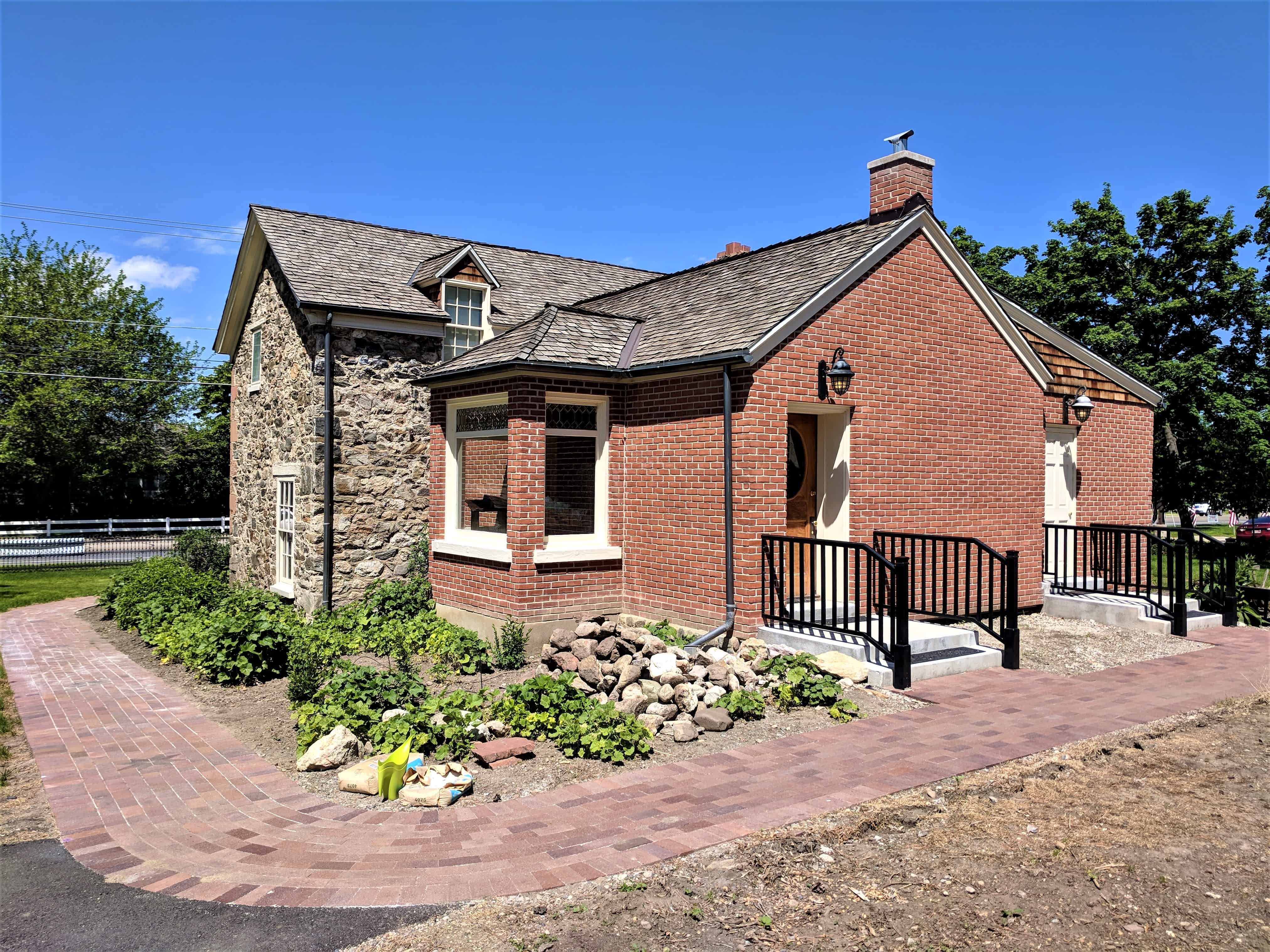
Thomas Whitaker deeded the property to his wife Elizabeth in 1885, who left it to one of their sons, Joseph James Whitaker. According to oral tradition, he and his wife, Florence, and their adopted daughter lived in the home prior to Elizabeth’s death (June 7, 1937), with Elizabeth living in a small house to the east and north of the original home (no longer standing). It is also believed that c.1910 he added the brick portions of the structure to the east and north sides of the stone house.
Joseph James Whitaker (1869-1954), their sixth child, acquired the house after the death of Elizabeth. He was a lawyer, having graduated from Cornell University School of Law and serving as a judge in Salt Lake as Salt Lake County assistant attorney. He and Florence Mosher were married in 1906 and lived in this house until Florence died in 1943. Joseph sold the house in 1944 and died at age 84 on March 2, 1954. Subsequent owners include Henry and Mary Baddley (1944-1954), Arthur Frederickson, an accountant for Union Pacific, and his wife Grace (1954- 1979); and Lyle and Helen Wright (1979-94). The City of Centerville purchased the house to be used for the Centerville Historic Preservation Commission and as a museum.
ARCHITECTURE
In many respects — symmetrical facade, rectangular massing, overall simplicity — the Whitaker house is similar to the remaining two dozen or so stone structures in Centerville. As a whole, they depict a period of construction (1860 to approximately 1880) that falls between initial Mormon settlement and the late 1880s when fired brick became available and nationally popular architectural styles began to influence local construction. The field stone at the base of the Wasatch Mountains to the east was used for houses, mills, granaries, fences and culverts in Centerville and the neighboring communities of Farmington and Bountiful. Stone was also used as a foundation material for Victorian Eclectic style homes constructed from the 1880s to about 1905, and can also be seen on several 1920s-era period revival homes in Centerville
The Classical stylistic elements of this house were popular in Utah between 1847-90 and carry over from eighteenth-century American Classicism. After the American Revolution, America was working to transform a collection of essentially local building traditions into a single national style based on a revival of Classical principles-geometrical composition and symmetrical balance. The Whitaker house employs the centrally placed door, rectangular facade, symmetrical fenestration pattern, flat-arched window heads, low-pitched gable roof of the simpler, and Georgian and Federal styles.
The other houses in Centerville that date from this period, are of stone construction, and are potentially eligible for, or listed on the National Register of Historic Places, include:
- 521 E 100 North
- 170 N 200 East, Ozias & Rachel Bennett Kilbourn House
- 193 N 200 East
- 271 S 200 East, Osmyn Merritt Deuel House (State Register)
- 20 N 300 East, Thomas Tingey House (National Register)
- 85 S 300 East, Young Men’s Hall
- 315 S 300 East, Brigham H. & Louisa Smith Roberts House
- 87 E 300 South
- 144 E 300 South, Nathan Bebe & Mary Ann Walton Cheney House
- 252 N 400 East, William Capener House (National Register)
- 445 N 400 East, Charles Duncan Estate (State Register)
- 269 E Center Street
- 129 N Main, William R. & Amelia Cherry Smith House (NR Eligible, Owner Objection)
- 1020 N Main Street, William Henry Streeper House
- 1644 N Main Street
- 390 E Porter Lane (400 S), Melvin Harley Randall House (National Register)
Alterations include simple one-story, frame, ship-lap additions that have achieved historical significance in their own right (87 E. 300 S.); 1960s brick additions on the front facade (520 N. 400 E.); and 1980s “faux folk” wrap-around porches (803 N. 400 E.). Although these additions are somewhat different from those of the Whitaker house, they nevertheless share some of the visual characteristics that help to describe Centerville’s growth.
The Whitaker house describes an important period of growth in Centerville. The original stone house shows the first firmly rooted, permanent phase of Centerville’s beginnings. The significance of the Whitaker house lies in its architecture as a good example of Classically inspired stone structure built by locally renown skilled masons of locally gathered rock.
Nice write up and great pictures!
Thank you! I appreciate that.
Elizabeth is (was) my Great Grandmother. I met her in 1937. She was quite remarkable and I appreciate how you included her in your article.
Wow that’s really cool, I bet you know some great stories.
Yes, my mother was raised in Centerville near Elizabeth. Mom’s father was Elizabeth’s son from Elizabeth’s first marriage to William Oakden. Elizabeth became a young widow, pregnant with my mother’s father, and it was sometime after that she married Thomas Whitaker.
The Whitaker museum has been redone since I visited it. The lady that used to show it had some great stories about her. I was disappointed to see in the museum video Elizabeth was barely mentioned.
Thank you!
Dear Alta, I would love to visit with you. My name is Diane Chamberlain and I am a great grand daughter of Elizabeth and Thomas. My mother was Virginia Parrish and her mother was Mary Alice Whitaker.
Very nice write up! Loved the photos and information. Thank you for mentioning the women in Thomas’ life and for remembering Elizabeth in the title. Afterall, she lived here much longer than he did. 🙂 Elizabeth is also my ancestor.
Thanks for stopping by, I love seeing that someone got some value out of this site.
What a delightful surprise! Imagine my delight to stumble across this when searching for my ancestors. Thank you so much. They were my great-great grandparents. I never met them, but my dad remembers her.
Thank you for your exploration of the house and the nice write-up of the family. The photos are lovely. Elizabeth and Thomas were my great grandparents as well. After serving as a docent in the museum for the past several years, I have learned so much these amazing people. It’s worth a visit. There is a self guided tour of the outside and grounds of the house. It begins at the big rock by the back door of the house and includes some history of Centerville as well. Museum open for tours on Tuesdays, 10:00, a.m.- 6:00 p.m.
Pingback: Centerville by Address | JacobBarlow.com