

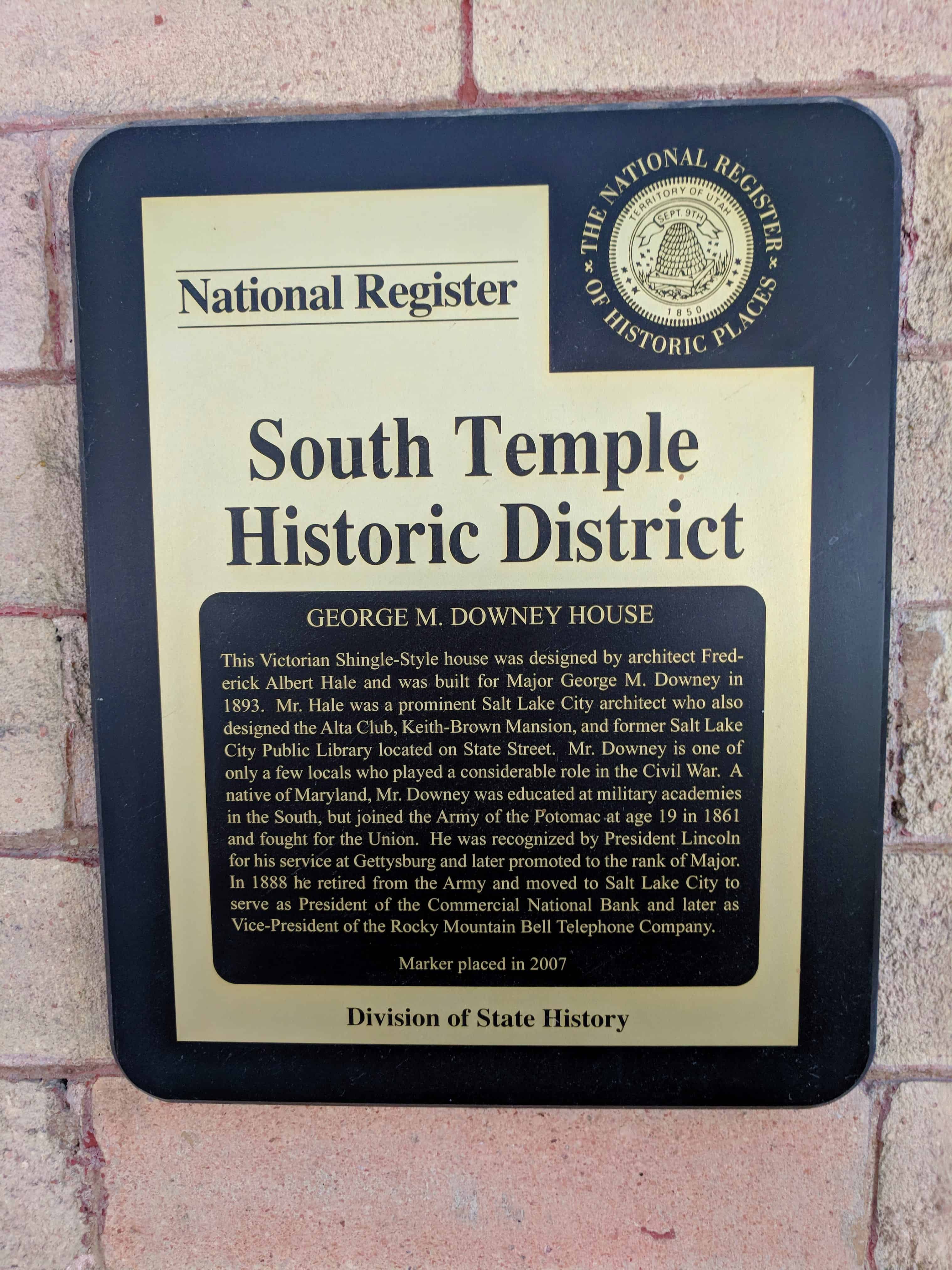
George M. Downey House.
This Victorian Shingle-Style house was designed by architect Frederick Albert Hale and was built for Major George M. Downey in 1893. Mr. Hale was a prominent Salt Lake City architect who also designed the Alta Club, Keith-Brown Mansion, and former Salt Lake City Public Library located on State Street. Mr. Downey is one of only a few locals who played a considerable role in the Civil War. A native of Maryland, Mr. Downey was educated at military academies in the South, but joined the Army of the Potomac at age 19 in 1861 and fought for the Union. He was recognized by President Lincoln for his service at Gettsburg and later promoted to the rank of Major. In 1888 he retired from the Army and moved to Salt Lake City to serve as President of the Commercial National Bank and later as Vice-President of the Rocky Mountain Bell Telephone Company.
Located in the South Temple Historic District in Salt Lake City, Utah.
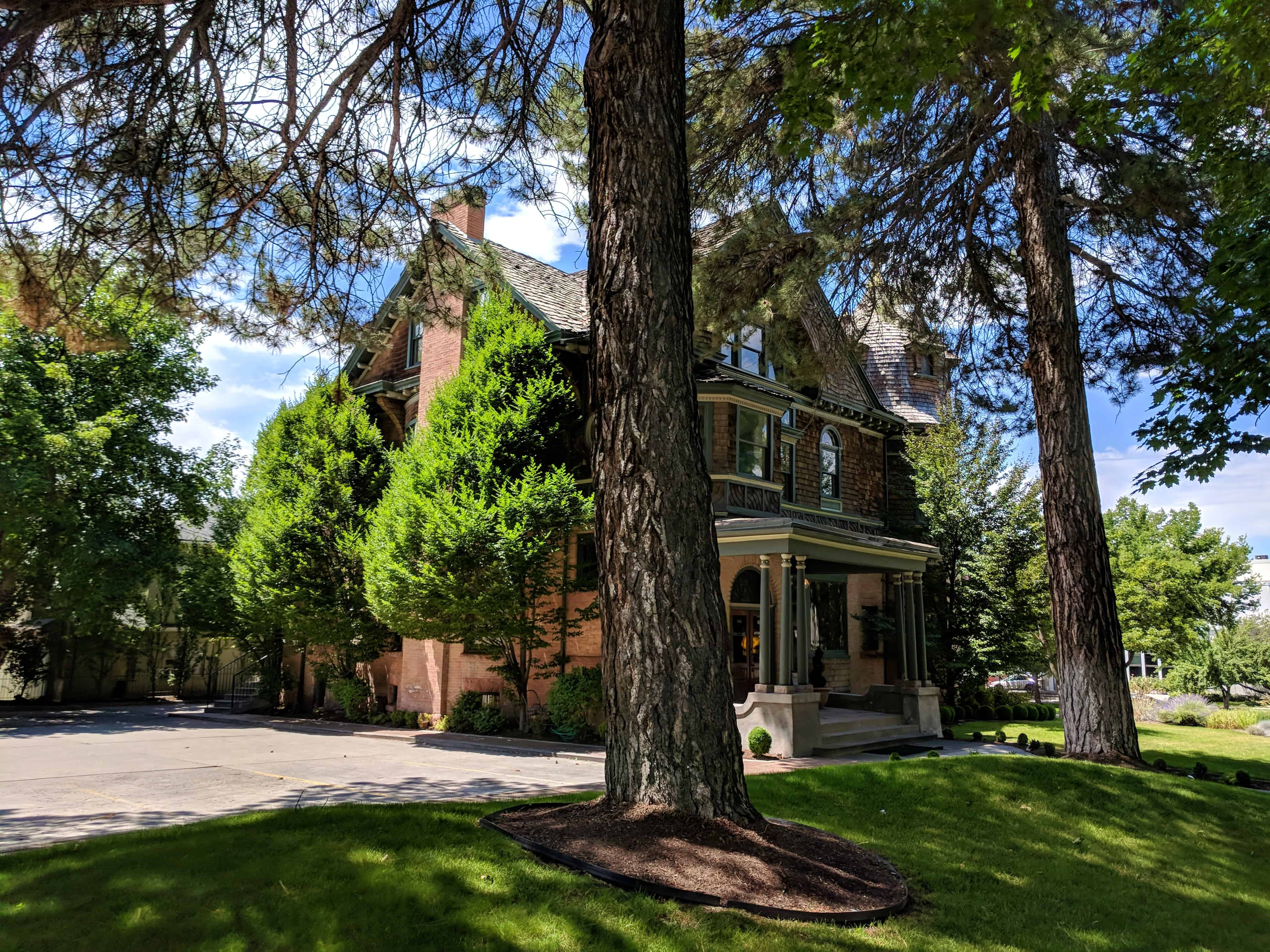

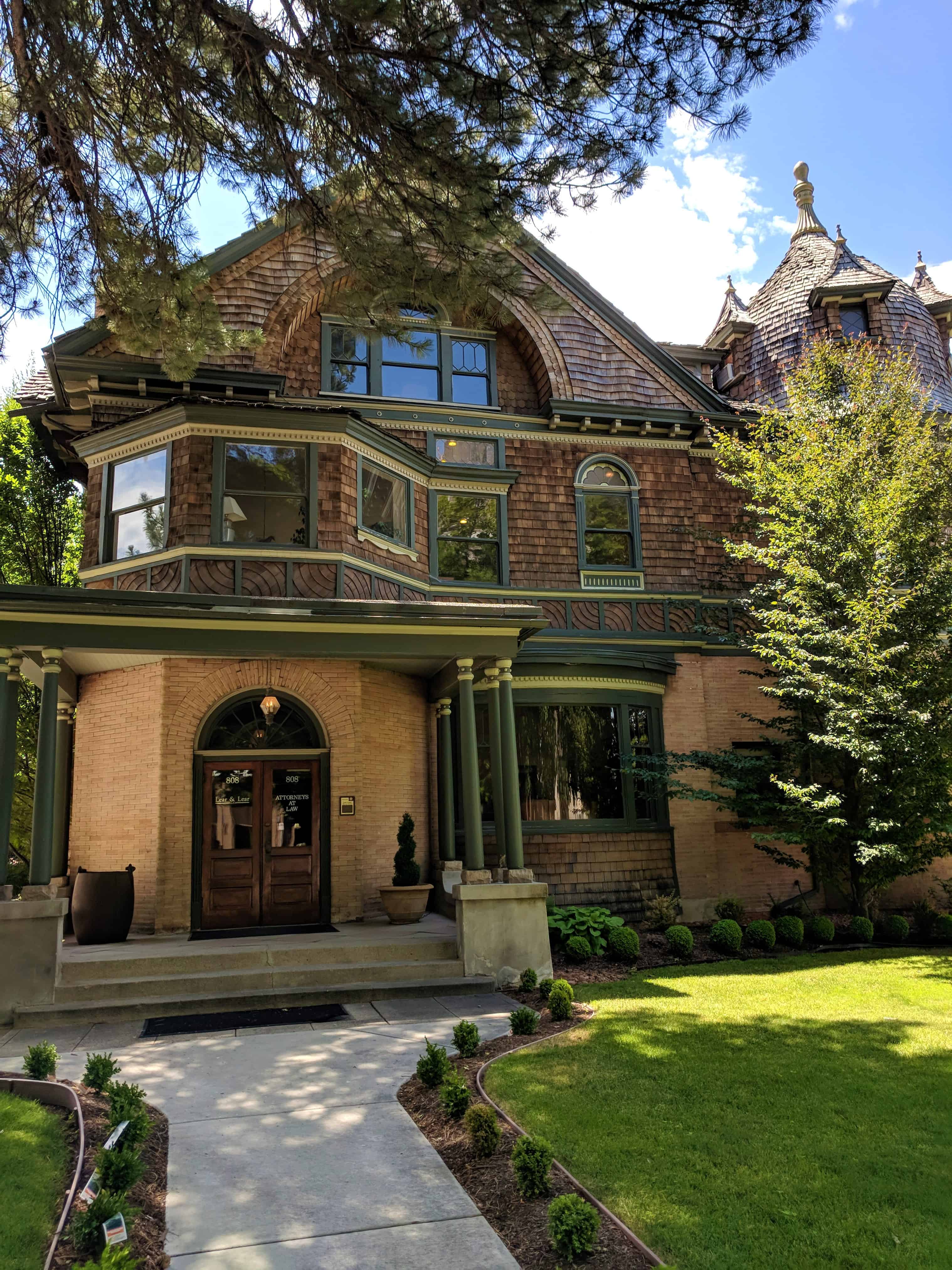

(from Preservation Utah’s walking tour)
George & Lizzie Downey House
808 E. South Temple 1893, Frederick A. Hale, SLC
The Downey House is a notable Utah example of Shingle style architecture. This style was popular in the 1880s and 1890s in Eastern seaside resorts. It is defined, as its name suggests, by exterior walls nearly covered in wood shingles. The upper stories of the Downey House are sheathed in shingles applied in three different patterns. The house’s prominent tower with a bellcast roof is also characteristic of this style. The large carriage house to the east, with its shingled second story, matches the style of the house.
The house was designed by Frederick A. Hale for Major George Downey and his wife, Lizzie. Hale is well known as the architect of the Alta Club, the Keith Mansion, and the Salt Lake Public Library (Hansen Planetarium). The Downeys moved to Salt Lake City in 1888 upon Major Downey’s retirement from a 28-year military career. Major Downey became president of the Commercial National Bank and was active in civic affairs.
The Downey House was converted to apartments in 1938 and, over the years, the building deteriorated. In 1974, the rundown home was renovated and adapted for office space. The sagging carriage house, one of a handful remaining on South Temple, was also renovated for offices.