Wendover Air Force Base

Tags

, , , , , , ,

Wendover Air Force Base

Related:

The Wendover Air Force Base is located in south Wendover, Utah and was added to the National Register of Historic Places (#75001827) on July 1, 1975. The following text is from the nomination form for the historic register:

The history of the base began in 1939 when the Air Corps commenced an extensive expansion program. High on the priority list v/ere adequate bombing and gunnery ranges.

By 1940 a site was located at Wendover. The Air Corps desired some 3,000,000 acres of land 90% of which was public domain. However, because of grazing commitments, the Interior Superintendent was willing to release only 1,500,000 acres. Livestock men in the area suggested that another site be selected or the area reduced in size. They estimated that use of the 1 1/2 million acres would “wipe out 100 outfits” of livestock men and cost the state about $1,500,000 annually.

Despite these objections, work began on the base in November 1940. Temporary barracks were constructed and two 150 x 7000′ runways with taxi strips and anchorage areas were graded and graveled. In May 1941, the areas were paved and more extensive construction began.

The first training unit arrived at Wendover April 6, 1942 and found the area ideal for bombing and gunnery practice. Because of the abundance of salt, obtainable from the nearby Bonneville Salt Flats, a city of salt was constructed near the mountains for bombing practice.

The historical significance of the base is its role as the training site for the 509th Group under the command of Colonel Paul W. Tibbets, Jr. It was Colonel Tibbets, flying his B-29, “The Enola Gay,” who dropped the atomic bombs on Hiroshima and Nagasaki in August 1945.

The 509th Group was organized December 17, 1944 and trained at Wendover until May of 1945 when it left for Tenian Island in the Marianas. During its stay at Wendover, the group was housed in a maximum security area. Information about the group’s mission was so restricted that even members of the 509th did not know the purpose of this training.

Although the bombing of Hiroshima and Nagasaki has been regarded by some people as a means too terrible even for use in world wide conflict, it did bring to an end the war with Japan. The crew of the u Enola Gay’ proved that an atomic bomb could be used under combat conditions. The threat of its future use served the United States as an important post war foreign policy tool. For its role in ushering in the Atomic Age, the Wendover Air Force Base deserves recognition.

Wendover Air Force Base is located just south of the town of Handover, Although presently unoccupied the base chapel, hospital, barracks, administration offices, hangars, and other buildings remain.

The fire station is still in use by the base caretakers–the base was closed by the Air Force in 1963. One runway is still in use for commercial and private air traffic into Wendover. The Air Central building serves as headquarters for this limited use of the base.

The barricaded area, where the crew of the Enola Gay was housed, remains on the south side of the base separated from the other buildings by the runways.

The buildings which do remain were built in the typical World war II temporary military use style. They are frame buildings and, since 1963, have deteriorated from lack of use.

At present the state of Utah is attempting to acquire the air base site. Several businesses have expressed an interest in using the air base buildings for offices and warehouses. The runway will continue to serve as Wendover’s airport.
154 W Center St

This building was built by Win. W. Ercanbrack, one of Provo’s most successful businessmen of the early 20th Century.

William W. Ercanbrack had been the president and manager of the New York Clothing Co., originally located on University Avenue. The company relocated by 1912 to 154 which had been the George Passey and Co. Dry goods store since 1903. When the New York Company went out of business in 1916, one of the slaesmen, Lorenzo A. Christiansen, opened his own men’s clothing store in the building. Ercanbrack went back to farming and wool growing – with which he did very well. In

1925 Ercanbrack and his son Sterling M. took over the clothing business from Christenson and opened Ercanbrack and Son – Men’s Ladies and Children’s Outfitters. About this time they built this building.

154 West Center Street in Provo, Utah

This two-story plus mezzanine brick building dominated the block in which it stands. The symmetrical tight structure has five long narrow windows on the upper floor. The next level of the façade was covered over with metal panels by the 1940s and has since been recovered with aluminum sheeting which extends onto the building to the west which has been made a part of this structure.

A metal overhang has replaced the former awning and the entrance has been reworked and rebricked in a different color from the original.

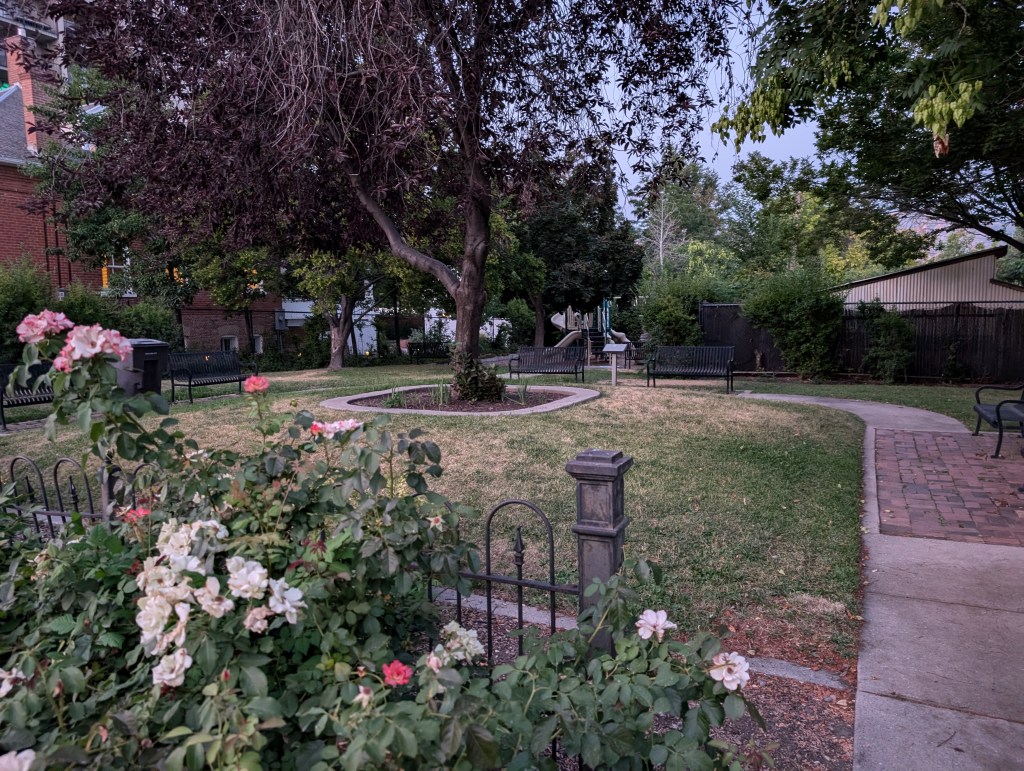
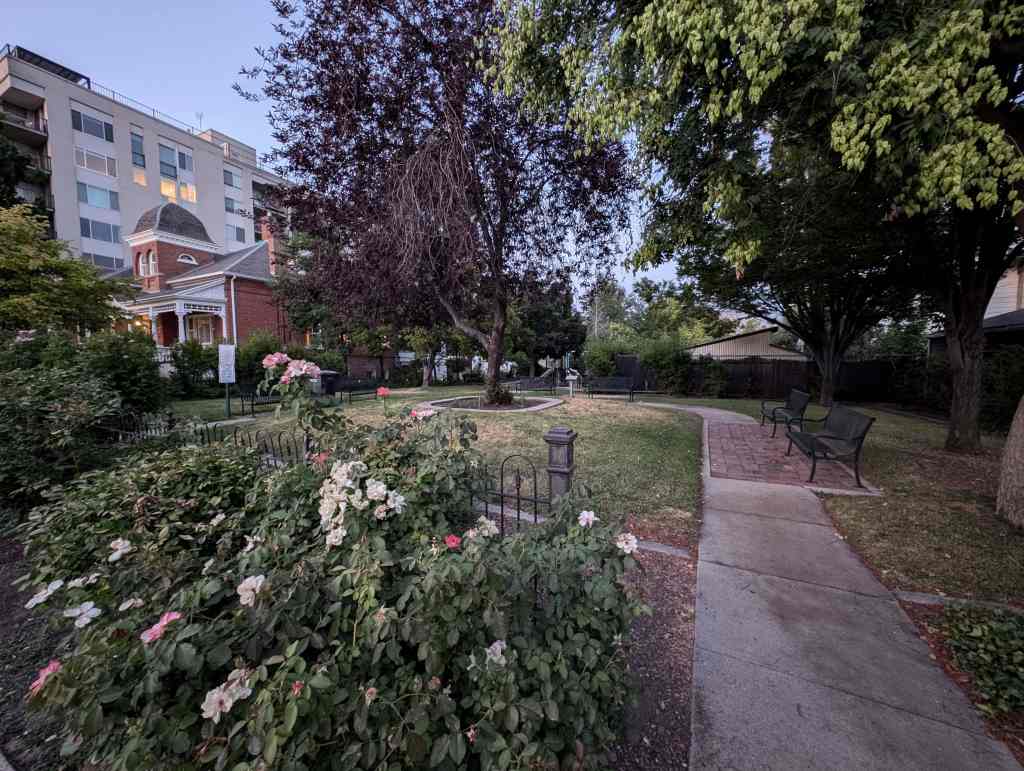
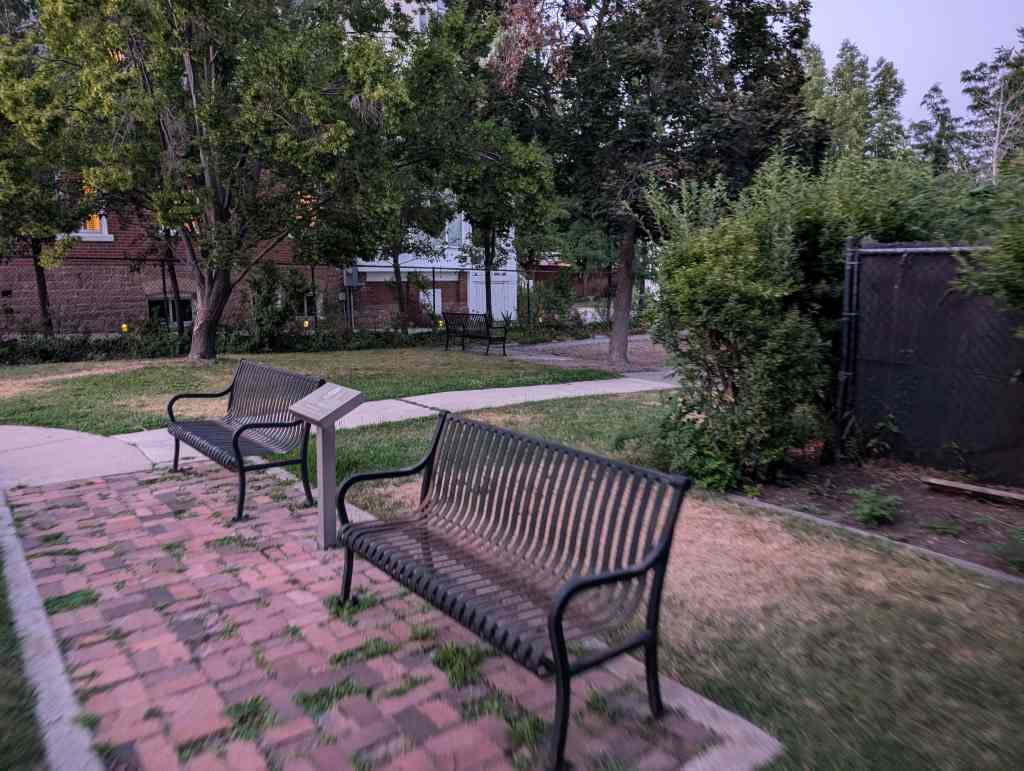
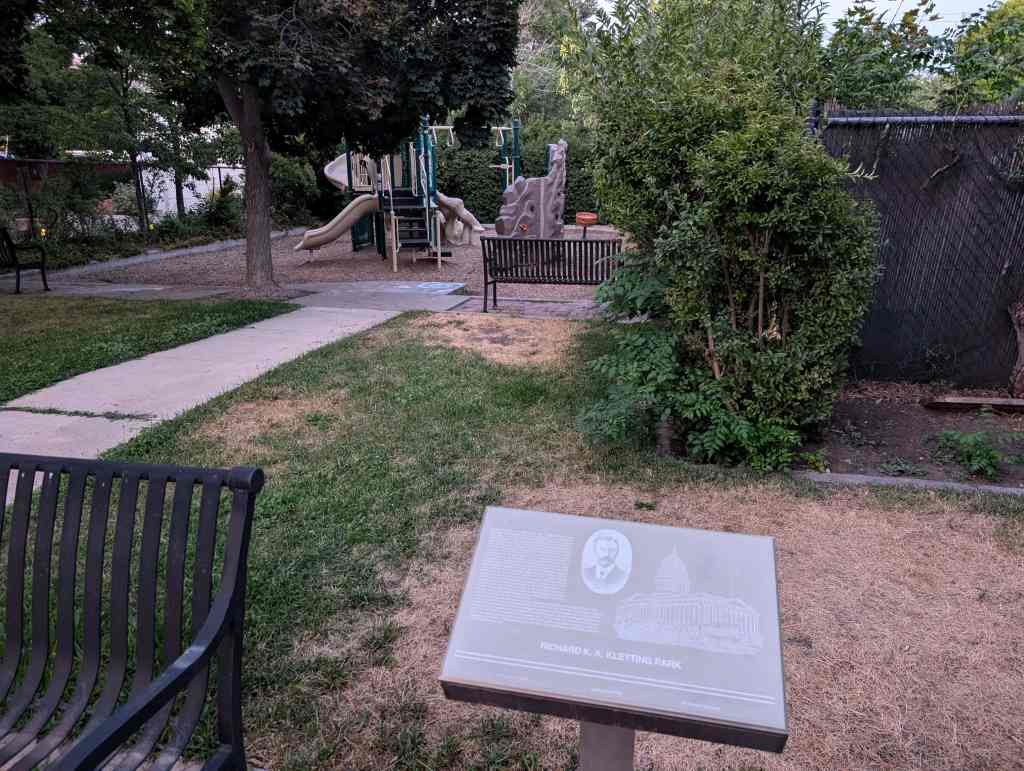
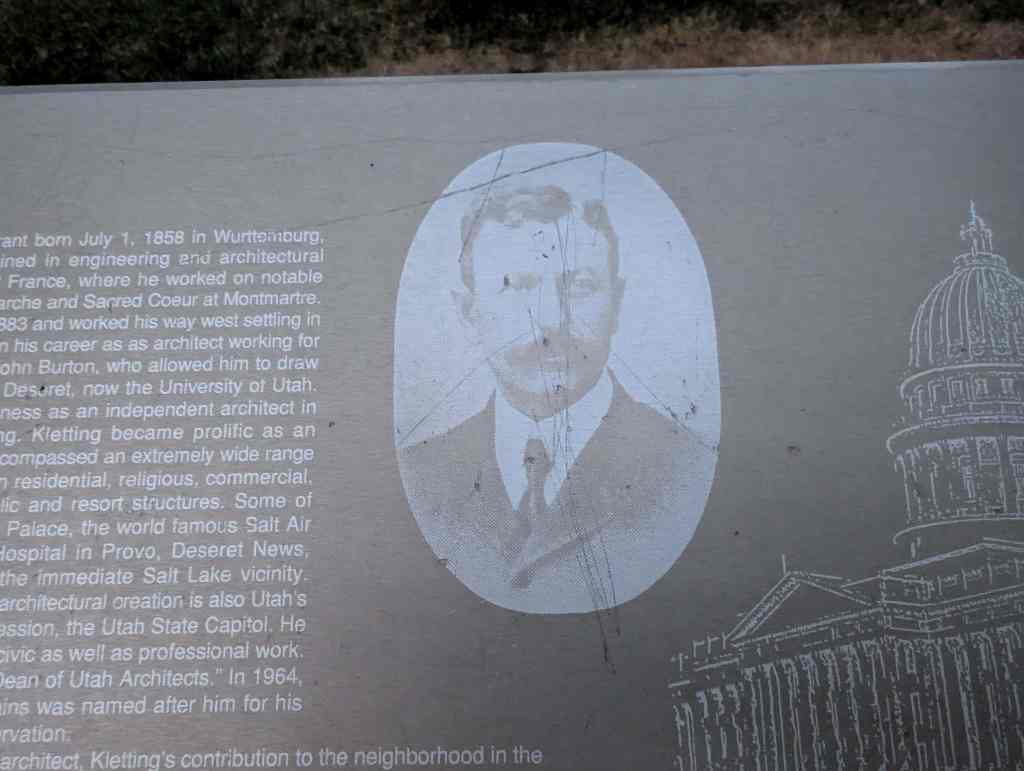
Richard K. A. Kletting Park

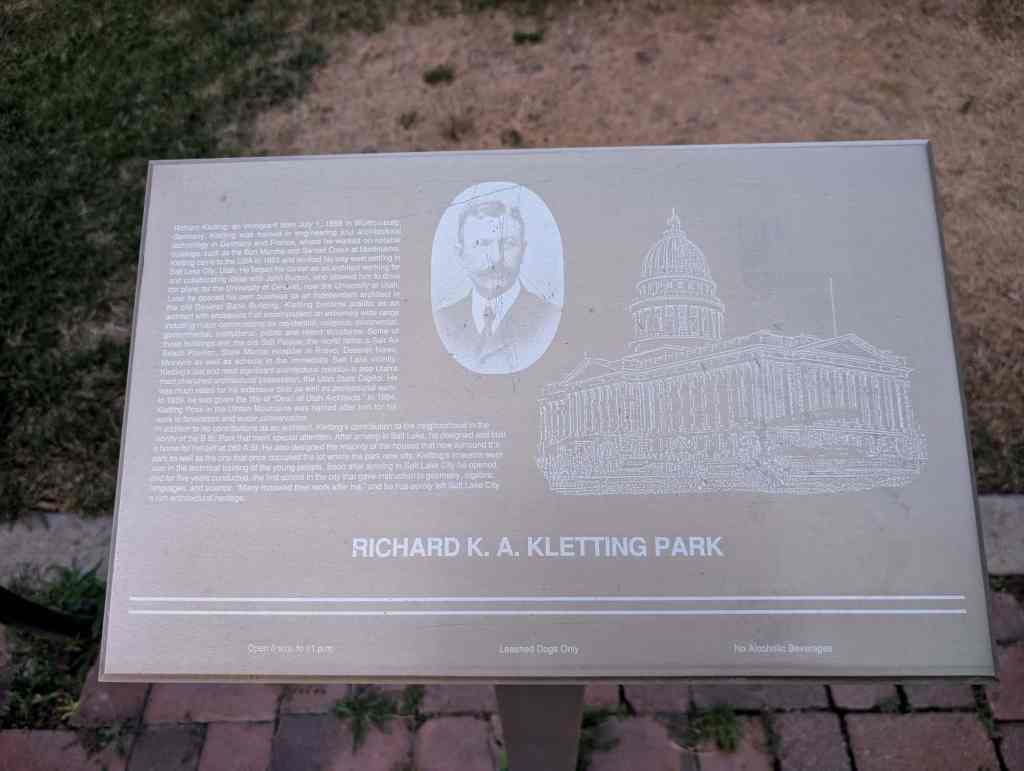
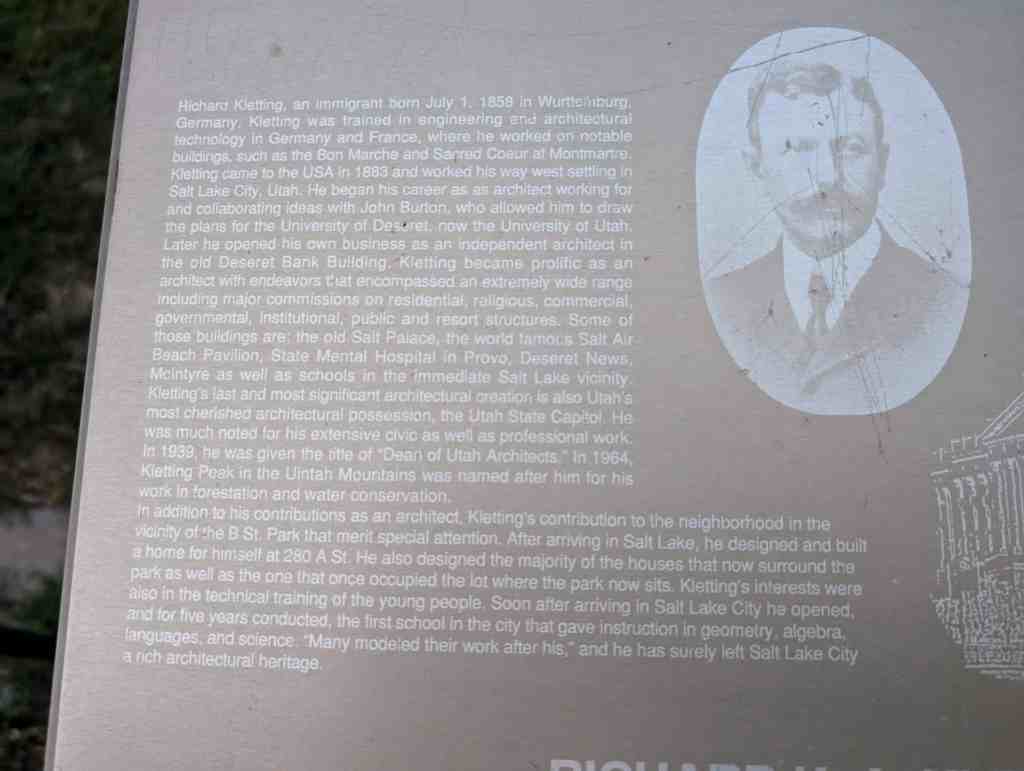
Richard Kletting, an immigrant born July 1, 1858 in Wurttemburg, Germany. Kletting was trained in engineering and architectural technology in Germany and France, where he worked on notable buildings, such as the Bon Marche and Sacred Coeur at Montmartre. Kletting came to the USA in 1883 and worked his way west settling in Salt Lake City, Utah. He began his career as as architect working for and collaborating ideas with John Burton, who allowed him to draw the plans for the University of Deseret, now the University of Utah. Later he opened his own business as an independent architect in the old Deseret Bank Building. Kletting became prolific as an architect with endeavors that encompassed an extremely wide range including major commissions on residential, religious, commercial, governmental, institutional, public and resort structures. Some of those buildings are: the old Salt Palace, the world famous Salt Air Beach Pavilion, State Mental Hospital in Provo, Deseret News, Mcintyre as well as schools in the immediate Salt Lake vicinity. Kletting’s last and most significant architectural creation is also Utah’s most cherished architectural possession, the Utah State Capitol. He was much noted for his extensive civic as well as professional work. In 1939, he was given the title of “Dean of Utah Architects.” In 1964, Kletting Peak in the Uintah Mountains was named after him for his work in forestation and water conservation.

In addition to his contributions as an architect, Kletting’s contribution to the neighborhood in the vicinity of the B St. Park that merit special attention. After arriving in Salt Lake, he designed and built a home for himself at 280 A St. He also designed the majority of the houses that now surround the park as well as the one that once occupied the lot where the park now sits. Kletting’s interests were also in the technical training of the young people. Soon after arriving in Salt Lake City he opened, and for five years conducted, the first school in the city that gave instruction in geometry, algebra, languages, and science. “Many modeled their work after his,” and he has surely left Salt Lake City a rich architectural heritage.

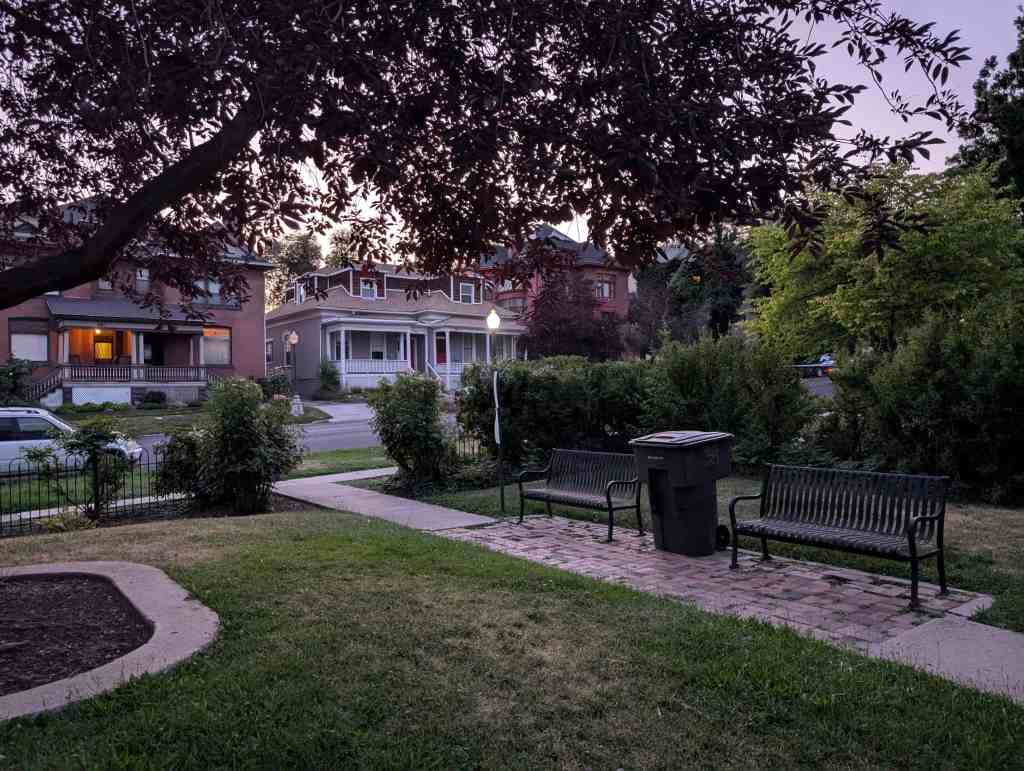
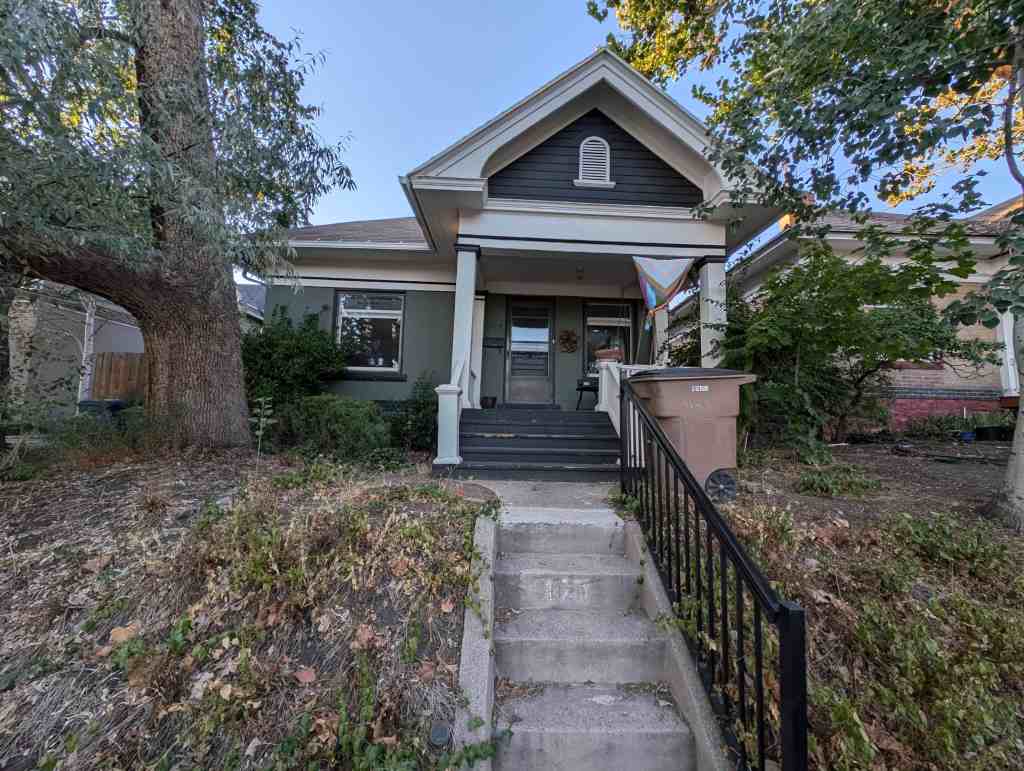
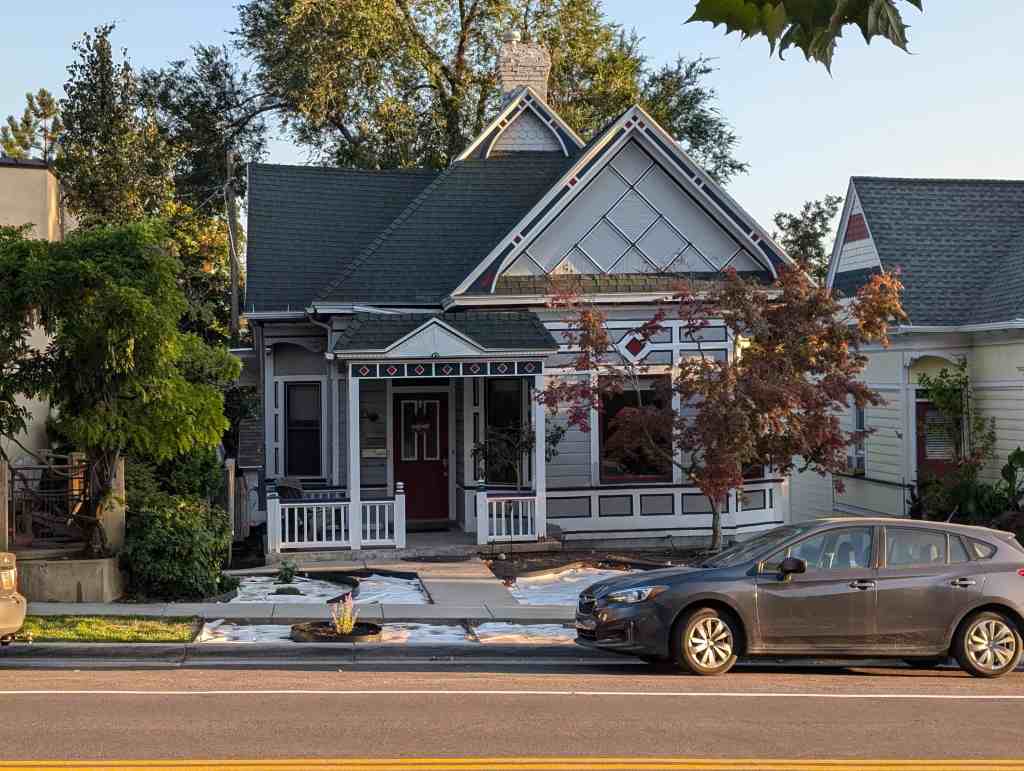
Many of his projects are nearby, including the John and Florence Evans Home next door and the Dr. William F. Beer Home across the street.

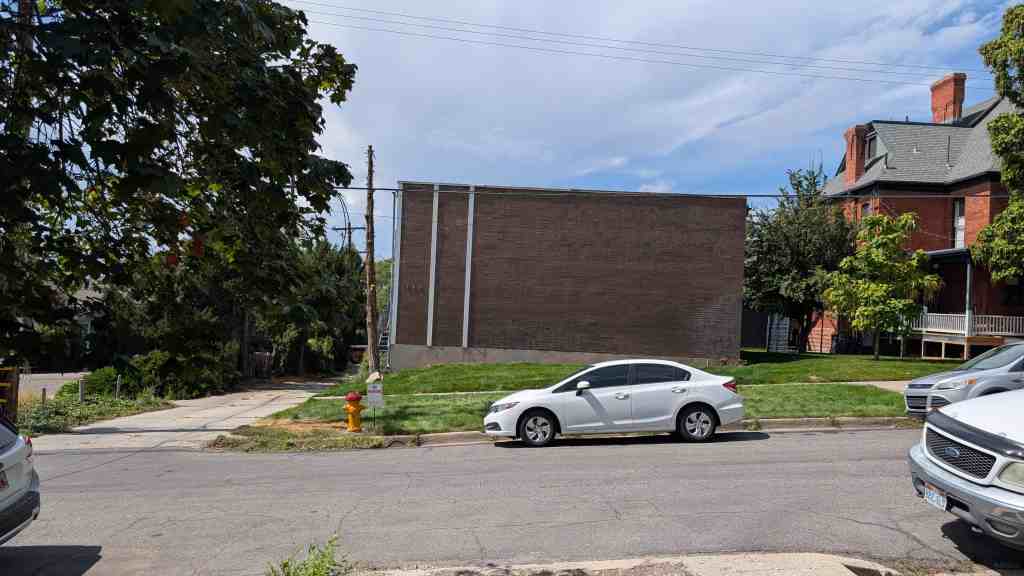
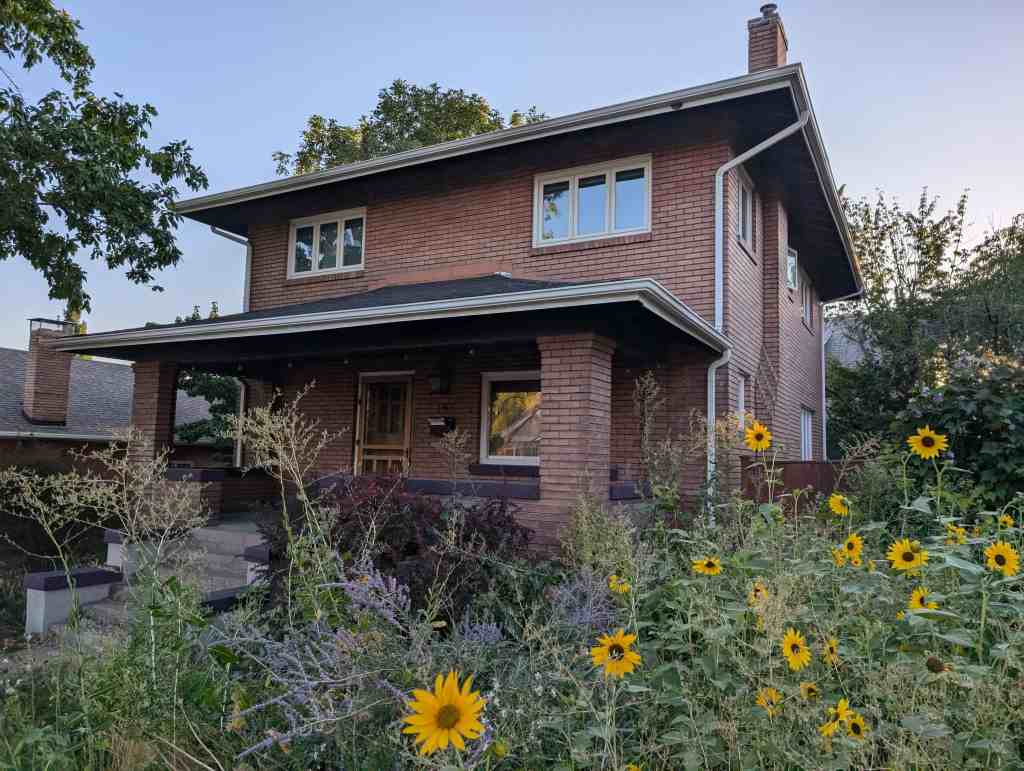
164 North B Street in The Avenues in Salt Lake City, Utah