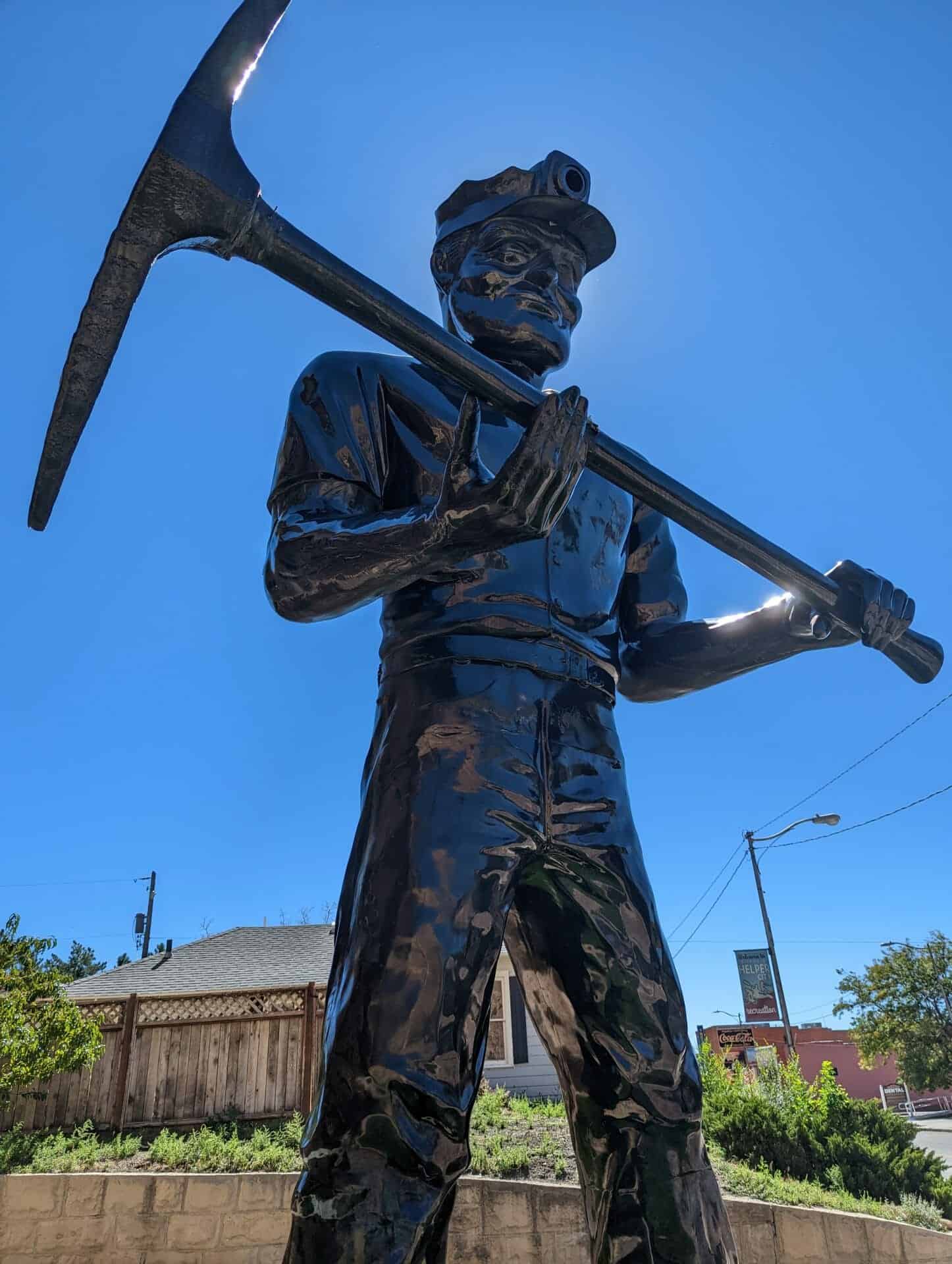
Big John was an original idea, born from the creativity and enthusiasm of Helper citizens, the Mayor and the City Council. In February of 1964, many of the movers and shakers of Helper decided the city needed a civic attraction. On February 27, 1964, the first meeting for the formation of a museum was held, where Councilman Al Veltri was appointed chairman. Things snowballed from there.
By March 12, 1964 the Western Mining Museum was on its way. It was discovered that a firm, – International Fiberglass in Venice, CA. – made large fiberglass figures for promotional purposes. The company was a fiberglass boat builder that had begun making tall advertising figures in 1963. With some discussion, the order went out and created the largest resident of Helper. Paul Bunyan became a miner.
Of course the miner still needed a name, but that didn’t take long. In 1961, the song of fame (the first was “16 Tons”) about mining won the best Country Song and Album of the Year. It was of of course “Big Bad John”. What other name was fitting for the 18 foot miner in Helper except “Big John.”
Big John is a proud symbol of pride for the mining industry. John also signifies the memory of all those who have given their lives in the local mines since the late 1890’s. John is the foundation of civic pride and strong work ethic for a unified community.
Stand was built from rails, spikes, and plates gathered from Castle Gate Mine Tram Way.
Built in 1937, the Helper Civic Auditorium was designed by Salt Lake City architects Carl W. Scott and George W. Welch. The building is an excellent example of Art Moderne style also known as “Streamline Moderne.” The style was popular in the 1930s particularly in public buildings. The auditorium features Art Moderne elements such as the flat roof emphasized by concrete coping and coursing, smooth masonry with curved corners, glass block, and pilasters with abstracted capitals.
The Helper Civic Auditorium is part of the Utah Public Works Administration (PWA) and Works Progress Administration (WPA) Buildings Thematic Nomination. The building is significant because it helps document the impact of New Deal programs in Utah during the Great Depression. The Helper Civic Auditorium was one of 226 buildings (two of which were auditoriums) constructed in Utah during the 1930s and early 1940s under the WPA and other New Deal programs. Of those 226 buildings, 130 are still standing. On a local level the construction of the building was a boost to Helper’s economy by providing much needed jobs and funds through the purchase of building materials.
Harding School was named after President Warren G. Harding. Classes started August 1925 with George Fox as the first principal. It was used as an elementary school until May 1968 when Principal James L. Jensen called classes to order for the last time. Price City purchased the property and converted the school into a fire station and multi-use center in 1968. It was torn down in 1983 to make way for the Price City Public Safety Building.
Dedicated July 14, 1984 By Utah Outpost Mountain Charlie Chapter No. 1850 E Clampus Vitus
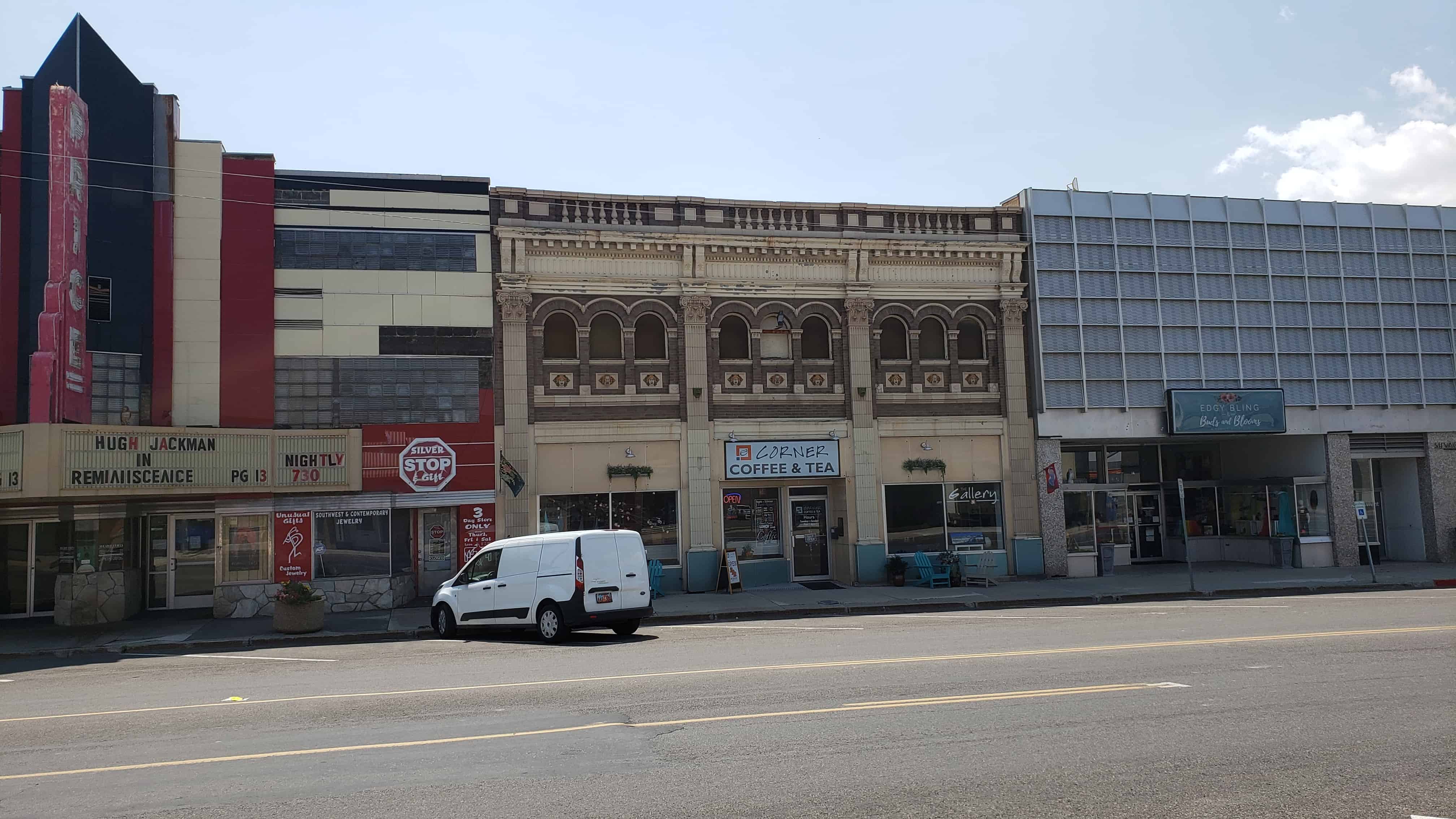
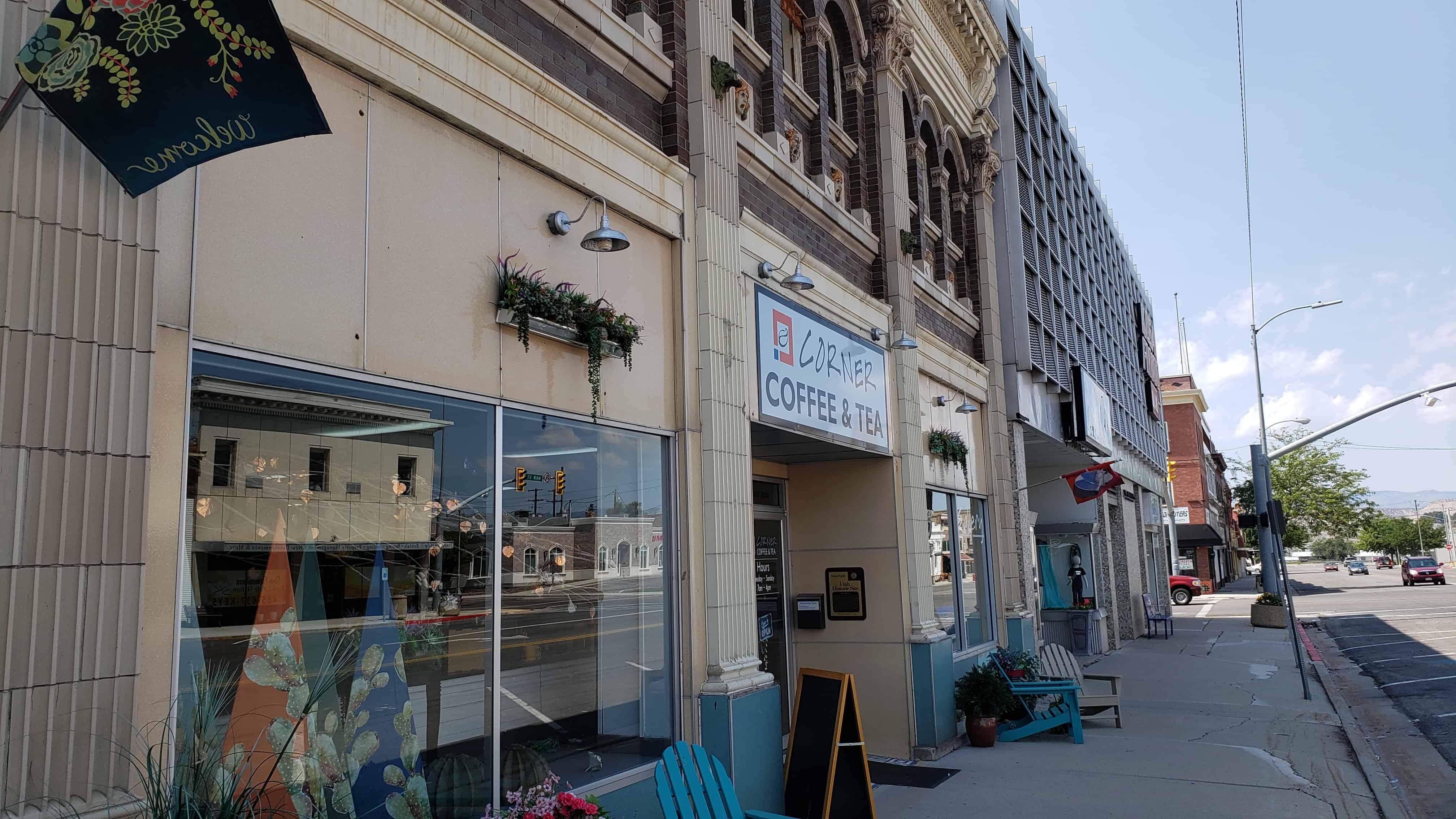
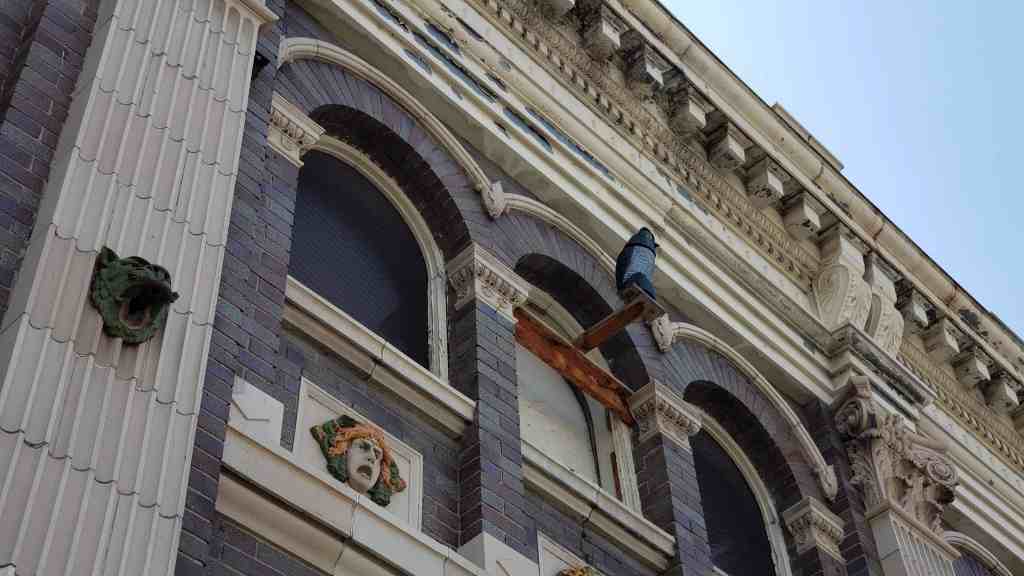
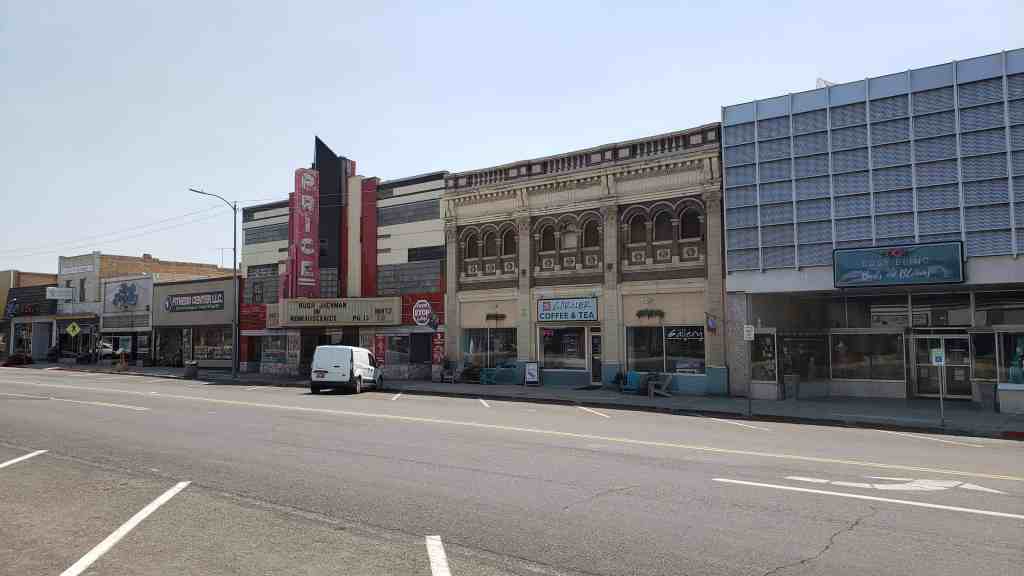
The Star Theater was built in 1923-24 for the Georgedes brothers: Pete, Angelo, Charlie, George and Harry. Natives of the Greek island of Mytelene, the Georgedes brothers immigrated to the United States and by the early 1920’s had become successful businessmen. The theater was designed by architect J. A. Headland of Salt Lake City. The architectural features, with Corinthian columns and second story masks representing figures from Greek Theater, reflect the Greek heritage of the original owners. In 1964, the building was acquired by Duane and LaVern Steele, and later acquired by Curtis Steele and Scott Sjostrom in 1985.
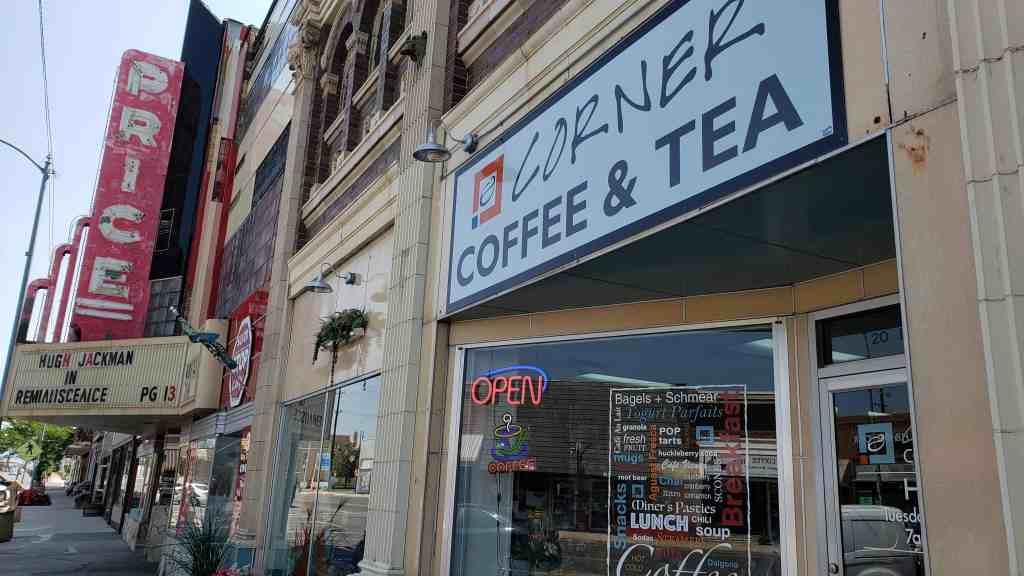
Located at 20 East Main Street in Price, Utah and listed on the National Register of Historic Places (#82004116). The text below is from the nomination form from when it was added to the register.
ent of Significance (in one paragraph) The Star Theatre built in 1923-24, is an extremely fine symbol of Greek immigrant success in America. The building’s facade contains many design elements derived directly from Greek theatrical tradition, and the solid construction and central location of the structure are emblematic of immigrant accomodation to new surroundings. In addition, the building is significant as an outstanding and well preserved example of the Classical Revival style in a small commercial building in Utah.
The Star Theatre, later called the Carbon Theatre and now Office Equipment was built in 1923-24 by the five Georgedes brothers: Pete, Angelo, Charlie, George and Harry. They took great pains to insure an attractive, substantial building for the beautification of Price and the hope of its future expansion. After purchase of the land from Frank Grosso et. al. in 1923, they concluded party wall and right-of-way agreements with P.O. Silvangi, whose building abuts on the right. They hired a Salt Lake architect, J.A. Headlund, to “furnish designs, plats, plans, specifications, drawing, and superintendence” for construction of the theatre for 4% of the cost of the building, which equaled $2,267.311 (This fee means that the building itself cost $56,682.75, exclusive of the land. Pete Georgedes estimated the entire cost of land, structure and equipment at $70,000, 2 a very substantial investment for a building at that time.) The Georgedes family retained possession of the theatre until 1964, when they sold it to the present owners, Duane W. and LaVern Steele, who converted the building to the present retail use.
The Star Theatre has retained many features that contributed to its permanence and attractiveness. First, the Georgedes Brothers insisted on a strong foundation and thick walls. In the early 1920’s Price was in the grip of Booster Fever, and the brothers reasoned that as Price grew, they could build another story on top of their theatre to expand its uses. However, this idea never materialized.
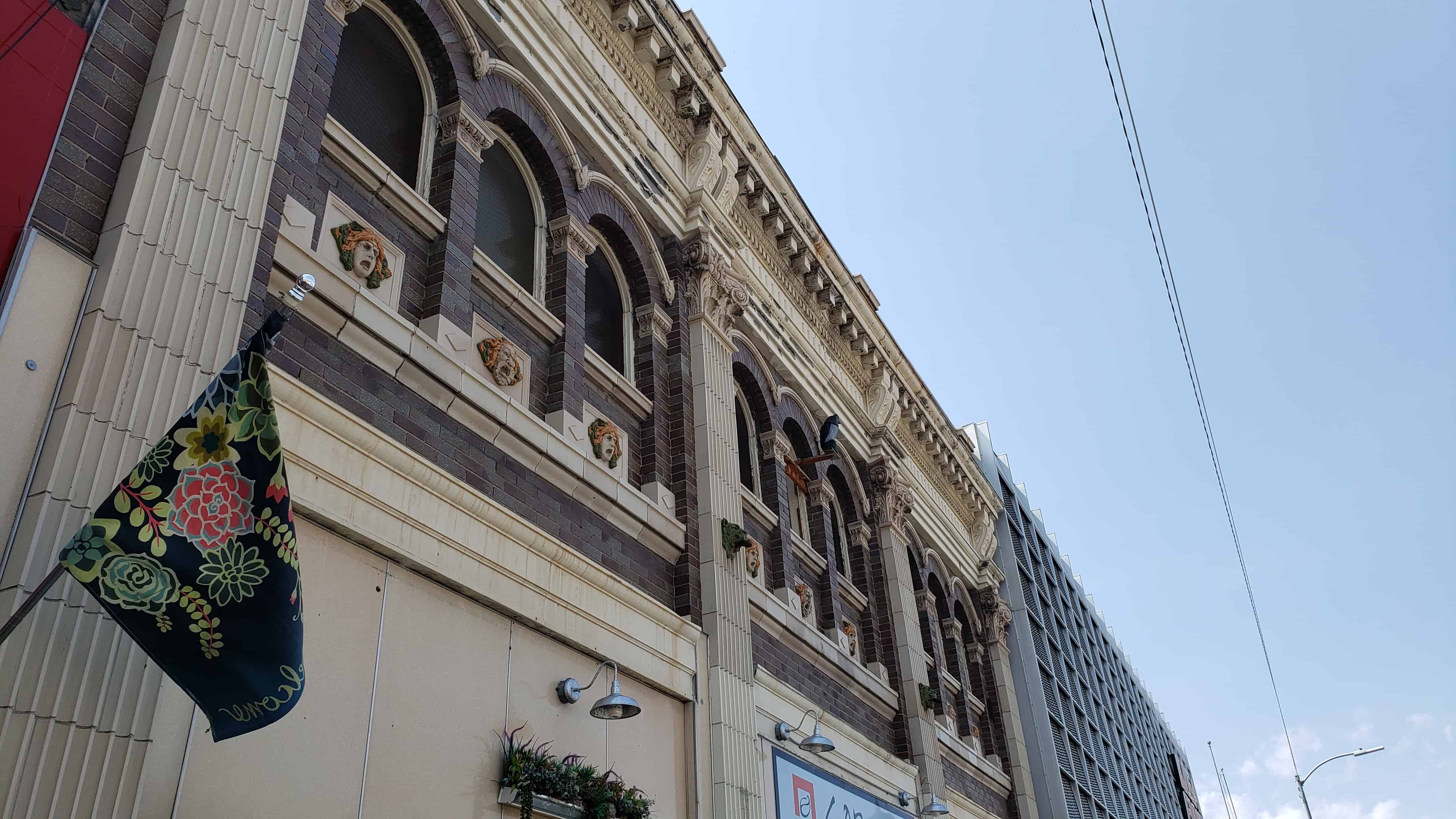
The theatre’s most outstanding feature, for which the Georgedes Brothers were directly responsible, is its impressive façade. As Greek immigrants less than two decades in America, the Georgedeses wanted an architectural style that reflected their homeland and its ancient theatrical tradition. They chose the Corinthian, the most ornate of the Greek architectural styles, for the columns on the front elevation. The masks on the second story represent muses, or figures from Greek theatre, from dramas they had seen performed in their homeland. One of the brothers, George, made several trips to Denver to oversee the actual production of the theatre façade. The elegant front elevation itself, with its direct connection to the ancient traditions of the land of its original owners, is reason enough for this building’s nomination to the National Register of Historic Places.
Even the name of the theatre was not idly chosen and revealed traditional Greek attitudes. The men consulted the Greek Orthodox priest, Father Smyrnopoulos, the leader of the immigrant Greek community. He suggested the name “Star”, as he said that everyone saw the stars in the sky so it was a name that would appeal to all people. 3 The sign for the theatre, already commissioned, was changed from “G.B.(Georgedes Brothers) Theatre” to “Star Theatre” and a lyre, another ancient Greek symbol, was added to the marquee.
In addition to its architectural features, the importance of the Star Theatre derives from its role in the life of eastern Utah. It was the second theatre to open in Price, providing increased recreational opportunities. From its inception the theatre was used both for moving pictures (originally silents, especially the popular cowboy films with William S. Hart or Tom Mix) and for live theatre productions. Two types of troupes performed in the original Star Theatre: traveling burlesque and theatrical companies and local thespians. The traveling companies were hired by the theatre’s manager; the building was let free of charge to local groups as a community service. The theatre was equipped for many types of live performances judging from the scenery purchased by the Georgedes Brothers. These included one fancy drop curtain and one pair of heavy drapes, scenery for a fancy parlor, a rustic kitchen, a garden, a light wood (as opposed to a dark wood), a modern street, one set of rocks, two sets of balustrades, foliage and other borders, in addition to the movie screen. ^ Many of these sets and the movie screen could be “flown,” ie. raised by a cable and pully system into the empty second-story space at the rear of the building above the stage. For this reason, the only second-story rooms were in the front of the theatre.
The Star Theatre, although owned by the Georgedes family, was managed by others. The Georgedeses first rented it to Mr. Littlejohn, who also ran the theatre in Helper. A later manager was Charles Huish, who renamed it the Carbon Theatre. When he died, Pete Georgedes’ daughter, Mary, and her husband, Joe Santi, took over the building’s management. They ran it until the building was sold, a second generation to be involved in the commercial success of this building.
The Star Theatre is a two-story flat roof brick building whose façade is an outstanding example of the Classical Revival style which was a common stylistic choice in twentieth century commercial architecture in the early decades of the twentieth century. Elements of that style include: fluted pilasters with Corinthian capitals; bands of round arch windows; an elaborate entablature with modillions on the cornice; egg and dart molding and dentils on the frieze and an architrave; and a parapet.
The façade is divided vertically into three bays by four fluted pilasters which have Corinthian capitals. Horizontally the building is further divided into three sections by floor, a broad cornice making up the third section. The first floor is unremarkable architecturally, consisting of show windows which probably reflect a major alteration made in 1964 when the theatre was changed to a commercial establishment. On the second story there are three round arch windows per bay accented with concrete moldings which contrast with the plum colored brick of the theatre. The piers of the window openings have capitals with egg and dart molding and simple bases. Cast masks which harken to the original purpose of the building are set into panels below each window. There is also a cast iron mask set into each of the two central pilasters at the second story level. The cornice of the building is divided into two sections: an elaborate variant of a Corinthian entablature; and a parapet with a blind balustrade. The entablature has an architrave with three fascia, a frieze ornamented by evenly spaced projecting vertical lines and capped by dentils and a band of egg and dart molding, and a cornice complete with modillions. The division of the façade by the Corinthian pilasters is continued in the entablature by monumental pairs of brackets which rest on the architrave above each capital.
The façade of the theatre above the ground floor appears to be unchanged except perhaps for the type of glass used in each of the round arch windows, and is well preserved.
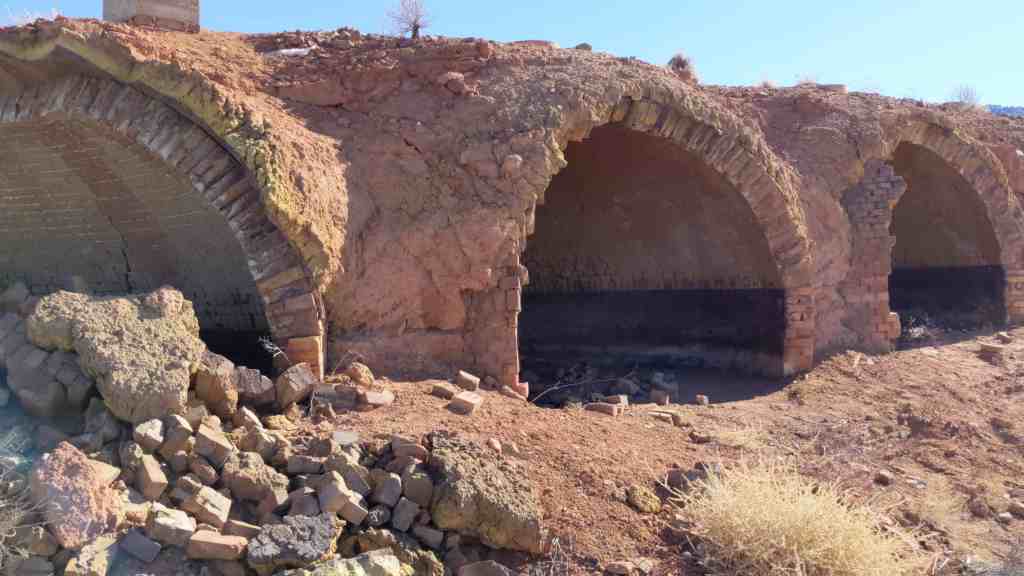
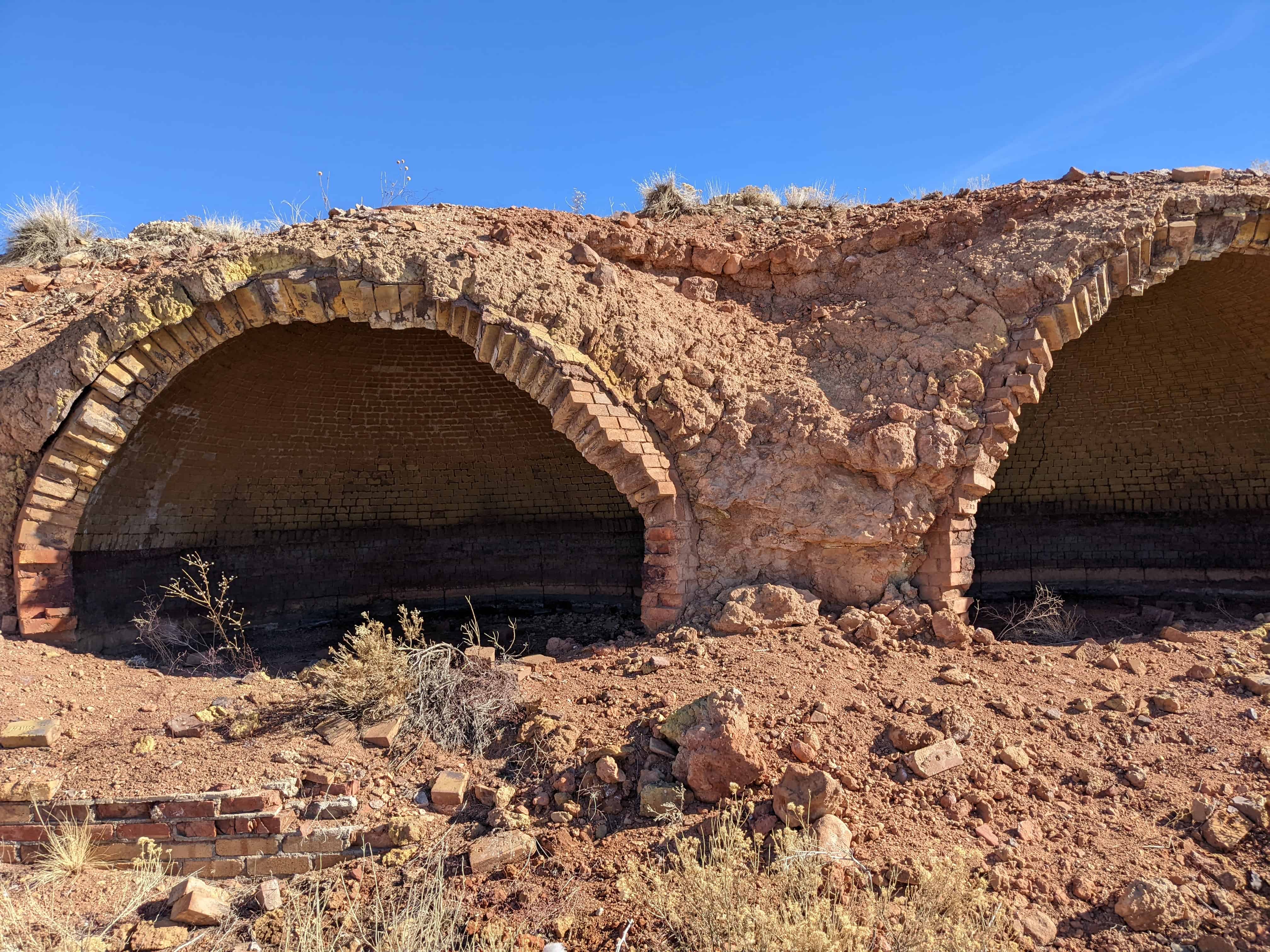
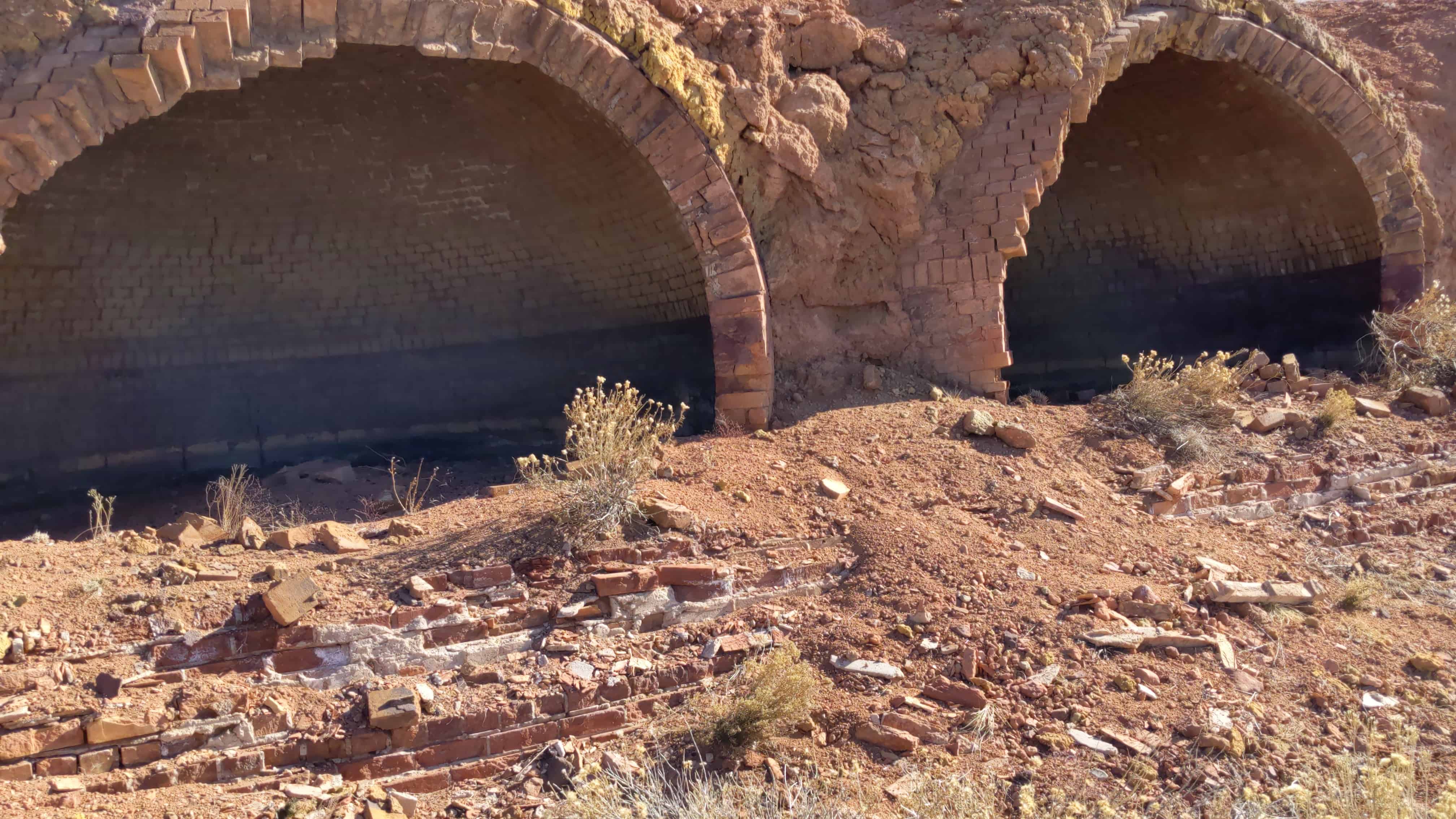
The coke ovens at Sunnyside were built in 1902 to process coke (a by-product of coal). During 1912 alone, these ovens produced 347,356 tons of coke and by 1919 this was the largest operation of its kind in the United States with 819 ovens.
Price Community Methodist Church Built in 1899, rededicated 100 years later in 1999. Grand Lodge F. & A. M. in Utah C. F. Jennings Commandry #6 Carbon Lodge #16 Joppa Lodge #26 10 North 200 East in Price, Utah
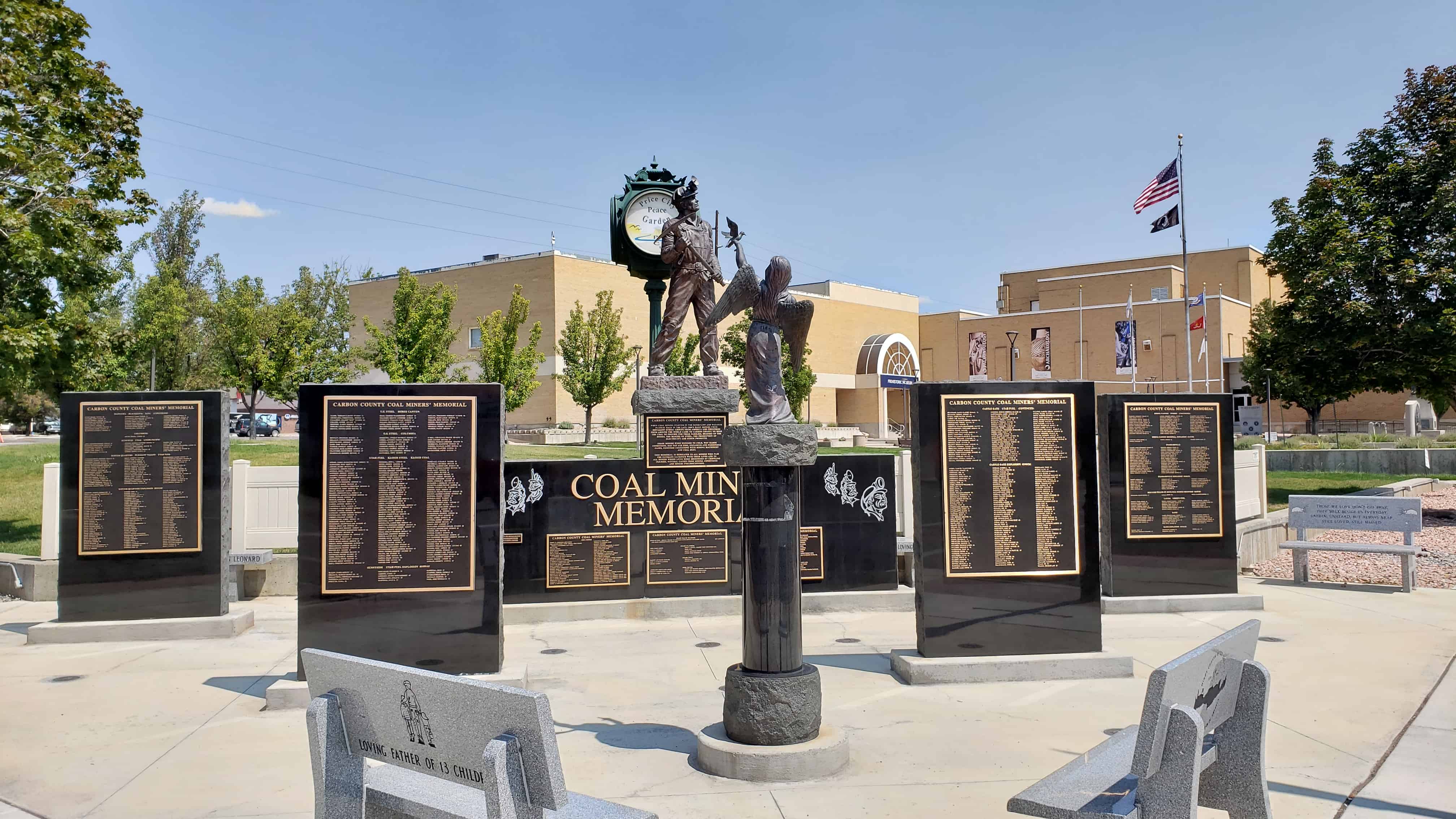
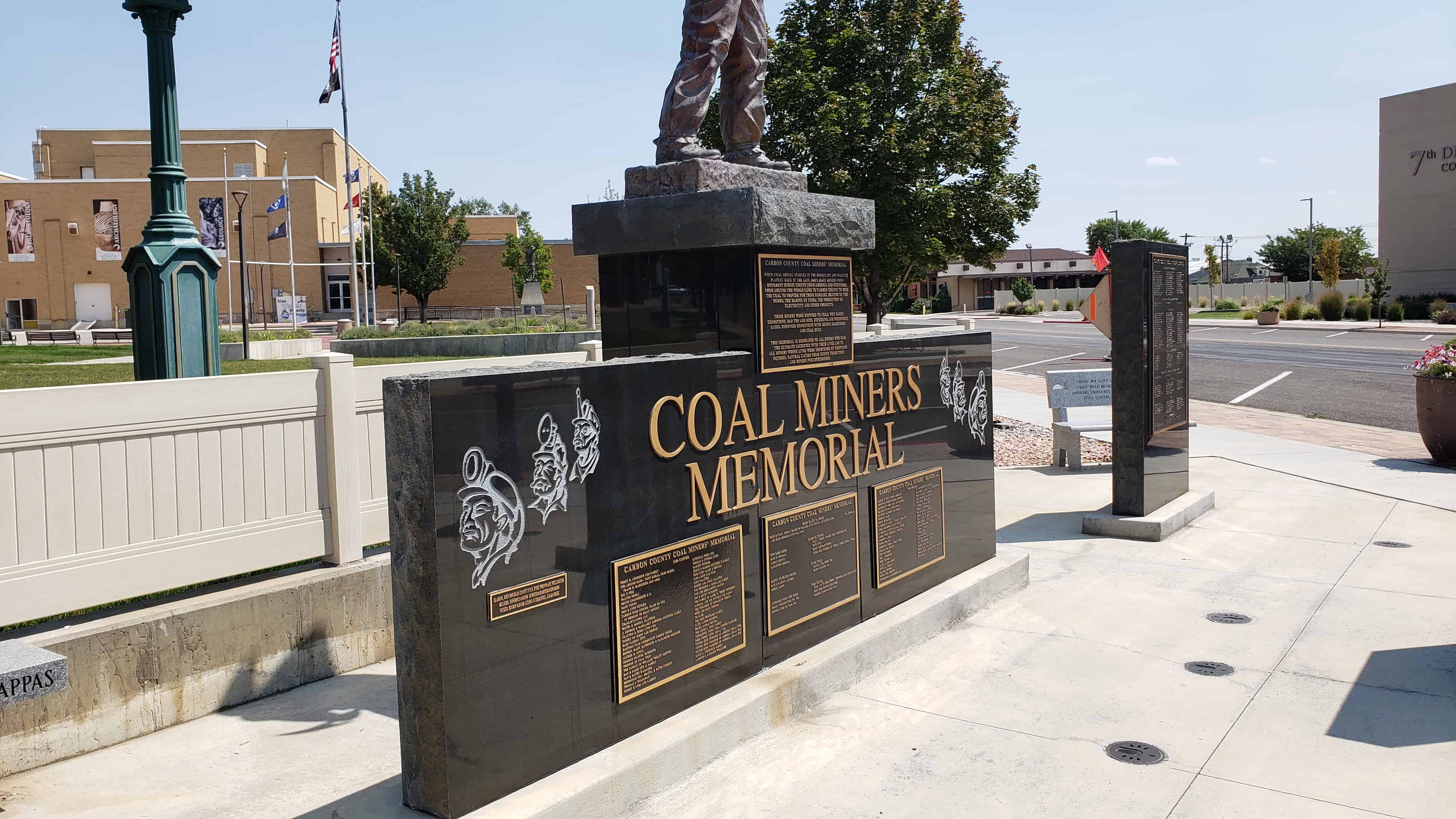
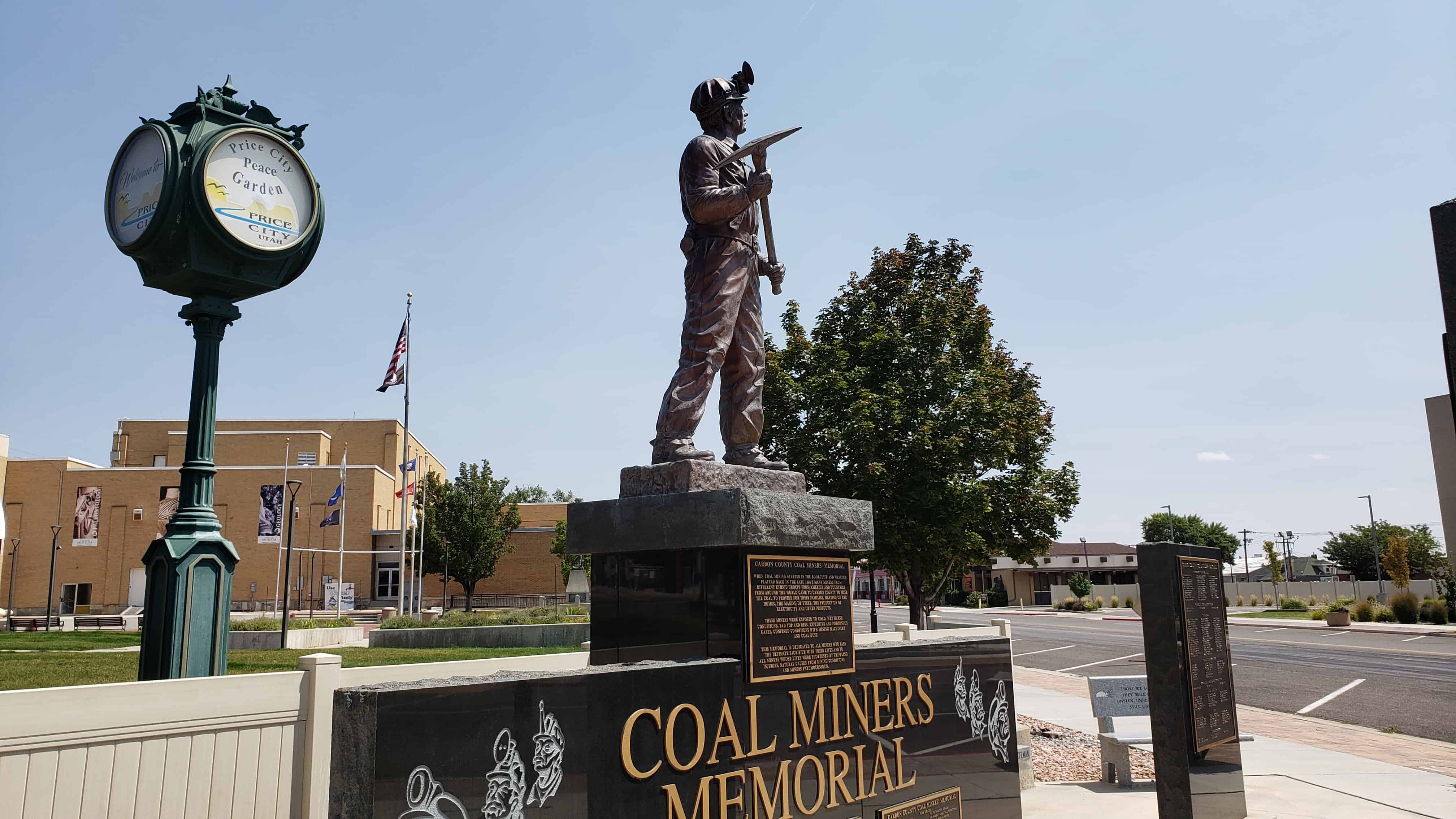
When coal mining started in the Bookcliff and Wasatch Plateau back in the late 1800’s many miners from different ethnic groups from America and countries from around the world came to Carbon County to mine the coal to provide for their families, heating of the homes, the making of steel, the production of electricity and other products.
These miners were exposed to cold, wet harsh conditions, bad top and ribs, explosive and poisonous gases, confined conditions with mining machinery and coal dust.
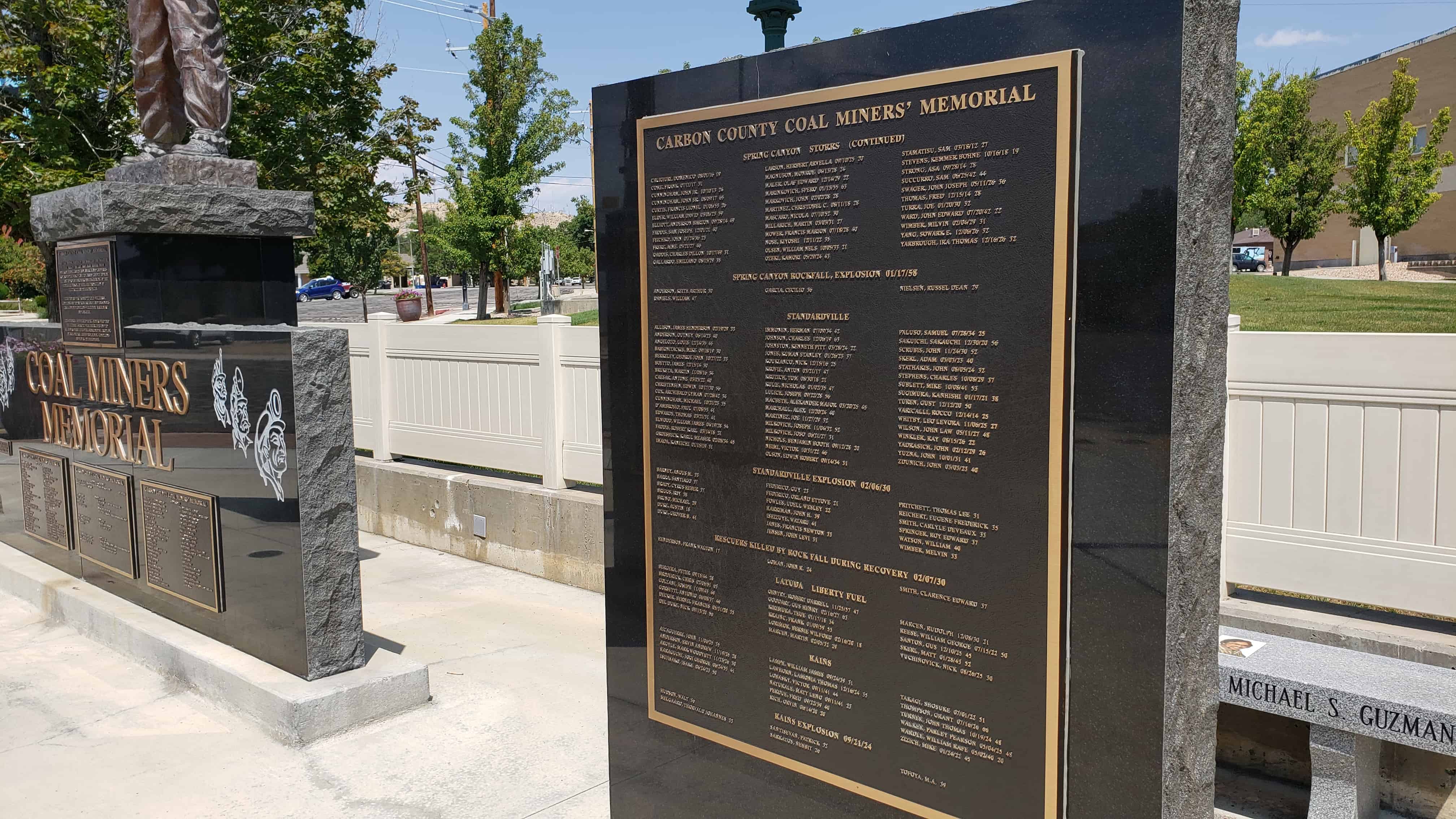
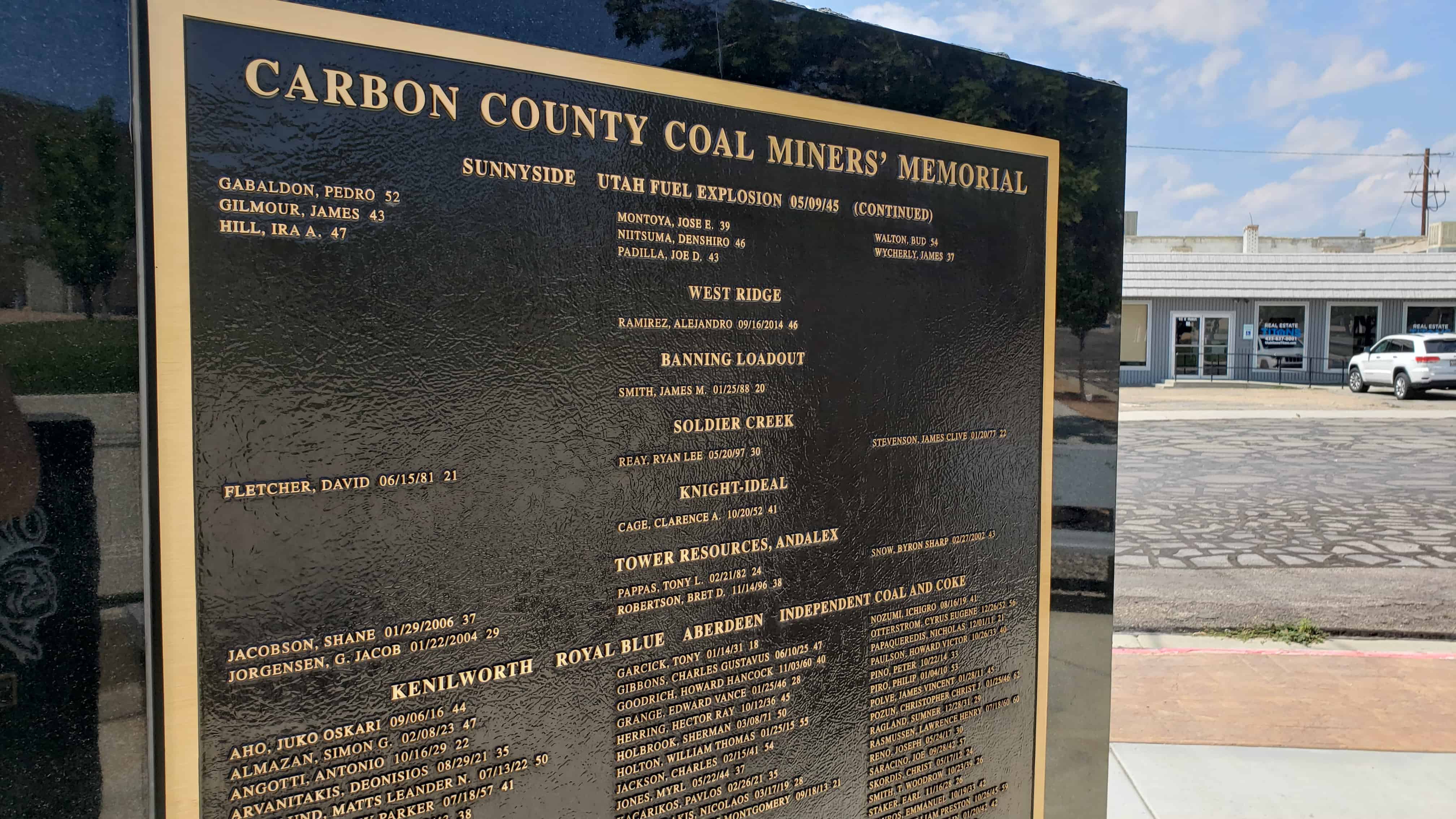
This memorial is dedicated to all miners who paid the ultimate sacrifice with their lives and to all miners whose lives were shortened by crippling injuries, natural causes from from conditions and miners pneumoconiosis.
This memorial is located at 2 North 100 East in Price, Utah.
Coal was discovered in the Gordon Creek area by Arthur E. Gibson who secured 1500 acres of land in 1908. The town was originally called Gibson, but was changed to Consumers in 1924. Large scale mining did not start until the 1920’s.
During the winter of 1921-1922 Gibson hired ten men to work the mine and during that time they were able to mine thirty-four coal car loads and deliver it to the Wildcat Rail siding by wagon. The Consumers mine was the first in Utah to use conveyor belts to haul coal rather than mine cars.
In 1927, Consumers was bought out by the Blue Blaze Coal Company. By the end of 1938 the Blue Blaze Coal Company was in receivership and the mine closed.
In 1939, MacGowan Coal Company bought the mine at auction. In October 1939 the mine was again sold, this time to the Hudson Coal Company.
By the early 1950’s Consumers has another ghost town. In Consumers history there were nine miners killed.
Coal was discovered in the area in 1908 and in 1921 the National Coal Company built a railroad line from Helper to this site. National shared a post office with Sweet and Consumers, nearby ghost towns.
Coal was discovered in 1908 by a man named Williamson. The property was developed by Fred Sweet. Coal shipments from the National Mine began in August of 1927. Fred Sweet resigned as president of the National Coal Company in January 1935. He was replaced by C. D. Craddock.
Operations at the National Mine were discontinued on July 23, 1938. The National Coal Company was sold under foreclosure on December 2, 1938 to the Reconstruction Finance Corp. The tipple, machinery and trackage were sold in March of 1940 to a salvage company. The steel was sold to Japan for $20.00 a ton.
In June of 1940, Carl Nyman of Price bought the coal rights for National. A new 540 foot long spur, was purchased from Utah Railway. It had a nine car capacity and was completed on November 9, 1940. The National Coal Company was purchased by the Hudson Coal Company in 1949.
The population of National peaked at 250 people at the end of World War II. By 1950 the town of National had become a ghost town.
Only 7 miners were killed in the history of National.*