• About JacobBarlow.com
  • Cemeteries in Utah
  • D.U.P. Markers
  • Doors
  • Exploring Utah Email List
  • Geocaching
  • Historic Marker Map
  • Links
  • Movie/TV Show Filming Locations
  • Oldest in Utah
  • Other Travels
  • Photos Then and Now
  • S.U.P. Markers
  • U.P.T.L.A. Markers
  • Utah Cities and Places.
  • Utah Homes for Sale
  • Utah Treasure Hunt

JacobBarlow.com

~ Exploring with Jacob Barlow

JacobBarlow.com

Tag Archives: City Creek Canyon Historic District

236 N Canyon Road

16 Thursday Dec 2021

Posted by Jacob Barlow in Uncategorized

≈ Leave a comment

Tags

City Creek Canyon Historic District

This 1903 two-story house combines the pioneer and house pattern book forms. It contributes to the character of the district. The owner, Vernee L. Halliday, was a businessman in Salt Lake City.

Halliday was born in England on February 10, 1852. He came to Utah and settled in Prove where he served as a member of the Utah Legislature and as Utah County Clerk. He lived In Salt Lake for forty years and was a member of the Ensign High Priest Quorum. He also served as a patriarch.

Halliday was the manager for the Viavi Company in Utah and Idaho. The Viavi Company manufactured medicines.

This two story house is a combination of pioneer and house pattern book forms. It has diamond-shaped and circular windows. There is a Greek Revival type cornice and frieze. The porch has a flat roof and the main roof is gabled.

236 N. Canyon Road, Salt Lake City.   (Just outside Memory Grove)

Related:

  • City Creek Canyon Historic District
  • 244 N Canyon Road

238 N Canyon Road

16 Thursday Dec 2021

Posted by Jacob Barlow in Uncategorized

≈ Leave a comment

Tags

City Creek Canyon Historic District

Because of the recent construction date, this is not contributory to the historic district.

238 N. Canyon Road, Salt Lake City.   (Just outside Memory Grove)

Related:

  • City Creek Canyon Historic District

244 N Canyon Road

16 Thursday Dec 2021

Posted by Jacob Barlow in Uncategorized

≈ Leave a comment

Tags

City Creek Canyon Historic District

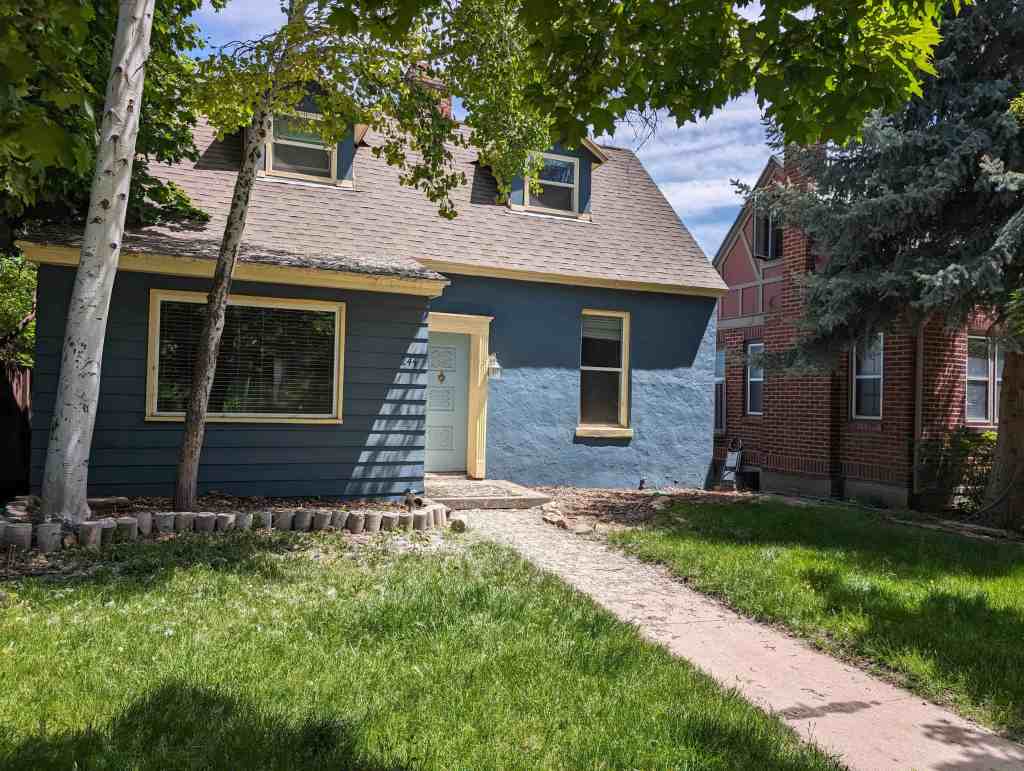
This 1899 pioneer vernacular house has been altered, but it still adds to the character of the district. This home was built by Vernee L. Halliday and was rented as two separate units to members of his family or the public.

The one story pioneer vernacular has stucco over adobe or brick. The roof is gabled. The plan is “T”. The porch and frame shed addition have changed the appearance.

244 N. Canyon Road, Salt Lake City.   (Just outside Memory Grove)

Related:

  • City Creek Canyon Historic District
  • 236 N Canyon Road

248 N Canyon Road

07 Tuesday Dec 2021

Posted by Jacob Barlow in Uncategorized

≈ Leave a comment

Tags

City Creek Canyon Historic District

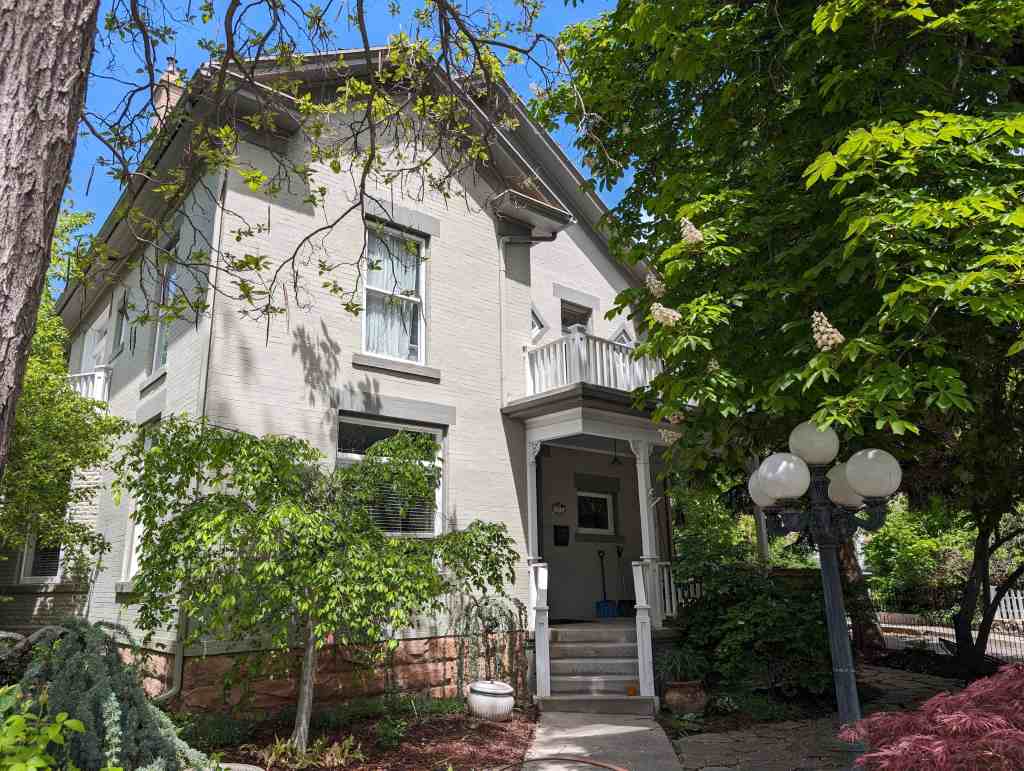
248 N. Canyon Road, Salt Lake City.   (Just outside Memory Grove)

A late pioneer Victorian style, this house was built in 1904. It is a good example of simplified Victorian and Cambridge styling and has a nice design in form and massing. -The owner,-John H. Coombs, was a Utah, educator.

John H. Coombs was born in Payson, Utah on March 21, 1877. He taught in Payson and was principal of the Pleasant Grove school before he came to Salt Lake In 1901. In Salt Lake, he was principal of the Lincoln and Lafayette Schools. In 1917, he became principal of Byrant Junior High School and in 1920 he became the principal of East High School.

This house Is a one and one-half story brick house. It is a late pioneer Victorian style. It has two Roman arched windows on the second floor and picture windows with leaded glass on the first floor. It has segmented bays and large side gable. The roof is gable-with hipped dormers. It is a good example of simplified Victorian and Cambridge with formal classical elements with undisciplined Victorian elements. It has a nice design In terms of forms and massing.

Related:

  • City Creek Canyon Historic District

260 N Canyon Road

07 Tuesday Dec 2021

Posted by Jacob Barlow in Uncategorized

≈ 1 Comment

Tags

City Creek Canyon Historic District

260 N. Canyon Road, Salt Lake City.   (Just outside Memory Grove)

This 1919 Prairie style bungalow is typical of the houses built in Salt Lake
during the period and contributes to the Historic District. The owner, Vern L. Halliday, was employed by Utah Power and Light Company.

Halliday was born February 13, 1889 in Pleasant Grove. He was a son of Joseph and Louisa Halliday. He attended the University of Utah. In 1913, he married Marqureite Snow, a daughter of Franklin Richards Snow.

Halliday worked as a timekeeper and recorder clerk 1909-1911. He also worked as chief clerk of the service department in Salt Lake and Logan, traveling auditor, general auditor and assistant treasurer.

One story Prairie style bungalow with hipped roof

Related:

  • City Creek Canyon Historic District

272 N Canyon Road

07 Tuesday Dec 2021

Posted by Jacob Barlow in Uncategorized

≈ Leave a comment

Tags

City Creek Canyon Historic District

272 N. Canyon Road, Salt Lake City.   (Just outside Memory Grove)

This 1919 Prairie Style .bungalow is one of the better small Prairie bungalows in the city. The owner, Charles I. Wolfe, was a manager of the Auto Sales Company.

One story prairie style bungalows with hipped roofs. There is careful detailing on especially the twin square brick porch piers. It is among the better small Prairie bungalows.

Related:

  • City Creek Canyon Historic District

278 N Canyon Road

07 Tuesday Dec 2021

Posted by Jacob Barlow in Uncategorized

≈ 1 Comment

Tags

City Creek Canyon Historic District

278 N. Canyon Road, Salt Lake City.   (Just outside Memory Grove)

This 1911 bungalow is typical of this style in Salt Lake and contributes to
the character of the historic district. The owner, George A. Sims, was a businessman in Salt Lake.

George A. Sims, a co-owner of the Salt Lake Transfer Company, was born in
Salt Lake City April 25, 1880. He married Neil Brockholt in 1904. After her
death, she married Ethel Anderson Jensen and then later Mary Islay McIntyre.

Sims was a member of the IDS church. He fulfilled a mission to Northwestern States and was involved in Boy Scouts and MIA work.

One and one-half story bungalow with a porch that is a natural extension of the roof. The porch is supported by pairs of square columns on brick piers. There is a large central dormer with three windows. The roof and dormer are hipped. The house is typical of the type of bungalow.

Related:

  • City Creek Canyon Historic District

282 N Canyon Road

07 Tuesday Dec 2021

Posted by Jacob Barlow in Uncategorized

≈ Leave a comment

Tags

City Creek Canyon Historic District

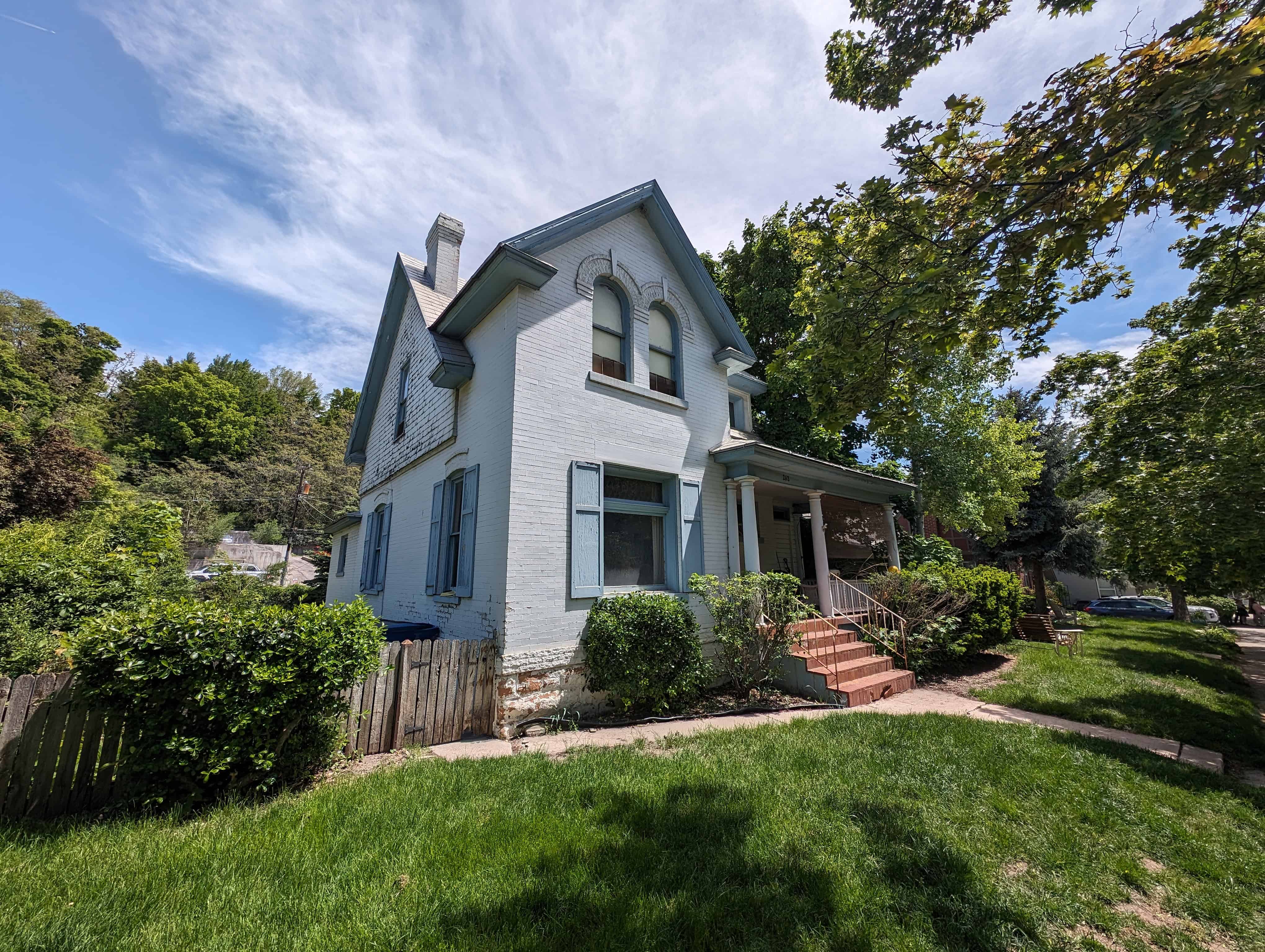
282 N. Canyon Road, Salt Lake City.   (Just outside Memory Grove)

This 1905 house follows the style used in the house pattern books at the time. It is a good example of the style. The owner, Valentine S. Snow, was a broker in mining and agricultural development.

Snow, a son of Franklin Richards Snow, was born in St. George on February 14, 1880 His family moved to Salt Lake when he was eight years old. As a young man, he worked with his father as cashier and secretary for Consolidated Wagon and Machine Company. He also helped develop the cantaloupe industry in Moapa Valley.

Snow was a member of the Salt Lake Stock Exchange for twenty-five years and for a few years was a member of the board of directors. He also helped develop mines in the Alta area. He was Secretary and Treasurer of Kimball Sign Company and a member of Snow and Cromar Stock Brokers.

Albert White had his own contracting firm and built or remodeled many homes and churches in Salt Lake.

This one and one-half story house originally had a wood columned and railed lattice and porch and balcony. There are dormers and a slanted bay. The front wall has a leaded glass transom -over the picture window7 and oval windows. The roof is gabled. It is a good small pattern book design.

Related:

  • City Creek Canyon Historic District

Preservation Utah‘s pamphlet from the 53rd Annual Historic Homes Tour of the City Creek Canyon Historic District on May 18, 2024 said this about the home:

In 1905, brothers Valentine and Frank Snow built matching houses, this one and the one to the north. Likely based on designs from pattern books, widely circulated at the time, this house’s style derives from a combination of Victorian elements-most notably its irregular (asymmetrical) shape, bay windows on the west and south, and leaded-glass transom above the west bay window-and Classical elements-most notably the columns framing its porch and the distinctive “oculus” (oval window). Valentine and Kate Snow settled in to raise a family of three children-Helen, Richard, and Louise-all of whom were born while the Snows lived here. In the early 1940s, the Snows converted the upstairs into an apartment. Valentine died in 1947, but Kate continued to live in the house until her death in 1974.

Ezra O. Best House

15 Wednesday Sep 2021

Posted by Jacob Barlow in Uncategorized

≈ Leave a comment

Tags

City Creek Canyon Historic District

This is a one-story Victorian cottage, probably of pattern-book design. It has
a low hip roof with flared edges. The walls have been stuccoed and there is a wooden Lean-to addition on the east side. There are recent additions on the west and south (front) sides.

Located at 163 4th Avenue in the City Creek Canyon Historic District of Salt Lake City, Utah.

City Creek Canyon Historic District

08 Wednesday Sep 2021

Posted by Jacob Barlow in Uncategorized

≈ 4 Comments

Tags

City Creek Canyon Historic District, Historic Districts

City Creek Canyon is significant as a large, open park area near the center of Salt Lake City. The first park in the city to take advantage of existing natural terrain, the park is defined by the edges of the shallow canyon, which separates the Capitol Hill area from the Avenues. The park documents the efforts of city improvement groups, part of a national movement that saw the organization of such federations as the American Civic Association/ devoted to the promotion of civic improvement and city planning. Part of the park includes Memory Grove, a memorial park created after World War I.

The district is listed on the National Register of Historic Places (#80003919)

Because of the strong geographic boundaries of the canyon, a small group of residences are popularly associated with the canyon area and are included in the historic district. Replacing earlier homes built in the area the houses were built in styles typical of the period from 1880 from 1920. They include residences of the families of Mornom apostles Erastus Snow and Parley P. Pratt, and several other prominent Mormon Church leaders.

In the 1860’s and 1870’s Brigham Young gave and sold sections of the area to members of his family and to his friends. Several of these people built houses in the lower section of the canyon mouth, probably because the canyon was wider at that point. The upper section of the canyon area remained undeveloped because it was narrower and more difficult to reach. P.J. Moran, a construction firm, and the city water works were developed in this area.

The city acquired the upper section of the canyon in 1902 when a Mrs. Young sold some property in the canyon to the city. That same year the city council passed a resolution suggesting that the canyon be made into a park because it was a natural site for recreation and there was no park in the area. The council also voted to ask the city engineer to straighten the channel of City Creek and build a sixty-six foot road between State Street and Canyon Road. The park would be called City Creek Park and it would be open for the use of the citizens of Salt Lake.

Although the city passed the resolution to create the park in 1902 and similar suggestions were made during the next few years, the first improvements were not made until 1914. At that time some trees were planted by the mayor. The major developments in the park did not come until after World War I, however. At that time the Service Star Legion, a group of women whose sons had served during World War I, asked the city if the area could be set aside as a memorial to those who died during the war. A similar park had been made in Baltimore in 1919 by the Legion. The city agreed to the proposal, and the area was dedicated as a manorial park in 1924. Since then a number of monuments have been added and it is now a memorial to all men and women who lost their lives in defense of their country.

South of Memory Grove there are two small green areas in the center of Canyon Road. Originally Canyon Road had been built in two sections, with one side on each side of the City Creek. In 1909 the city decided to put the creek underground to protect the water supply and to prevent accidental drownings in the creek. About that time the residents of the area petitioned the city to make the creek bed that was being filled in into park areas. By 1912 a small formal park had been completed on the strip between 3rd and 4th Avenue and a green area was constructed in the park area above 4th Avenue.

Today Memory Grove and the small Canyon Road parks are unique in Salt Lake City and very unusual for downtown settings in large cities. The parks are within a few blocks of the downtown shopping center, yet since they are set in the mouth of a canyon, they are isolated from the bustle of city life. People from all walks of life use the park to escape from their daily routines.

The district also contains fifty-two residences, of which there are six landmarks, thirty-five contributory and seven non-contributory houses.

In the 1860’s and 1870’s, Bri^iam Young started to divide his property in the area. Much of it went to his children who later sold it to Salt Lake residents. The first homes were built in the area in the 1880’s. In 1880 Helaman Pratt, a son of Parley P. Pratt, acquired some property from J.C. Kinsberry, who owned a mill in the area. Pratt built a house in the area that is still standing. In the early 1890’s Franklin Richards Snow, a son of Erastus Snow, bought the house. Snow was instrumental in forming the Consolidated Wagon and Machinery Company, a leading Salt Lake City business, and he later became an investment broker. His sons and sons-in-law were among those that built other houses in the Canyon Road Subdivision.

Snow was born in Salt Lake in 1854 and his family moved to St. George in 1862. In 1888 he cams to Salt Lake and started the Consolidated Implement Company with his brother George H. Snow. He served as secretary and treasurer of the company and the Consolidated Wagon and Machine Company. He later became an investment officer.

Snow was an active member of he Mormon Church. He was the first stake superintendent of religion classes and on the High Council. He was also a counselor to the stake president, Richard W. Young.

Later Pratt’s brothers, Mathoni and Parley P. Pratt, Jr. also built in the area. Mathoni built his house in 1887 and it is still standing. Qrson F. Whitney, an assistant LDS Church Historian, bishop, and Mormon Apostle, bought his home in 1905. Whitney is also remembered for his three volume History of Utah. Parley P. Pratt Jr. ‘s home has been replaced by an apartment building, but two small houses that his widow, Brigamenia, built are still standing.

Another pioneer who lived in the area was Erastus Snow, one of the first members of Brigham Young’s party to enter the Great Salt Lake Valley in 1847. Snow lived in St. George for most of his life. Erastus Snow was a polygamist and in 1888 he built the house on Canyon Road for his second wife, Minerva. Snow died in the house that same year.

One of the most unusual sites in the area is Ottinger Hall. The hall was built in 1900 by the Volunteer Fireman Association and is listed on the National Register.

The houses in the City Creek Cmypn Historic District are similar to the houses built in the Avenues and in Capitol Hill. The majority of them were built between 1880-1919 and are similar to the houses built in Salt Lake during that period.

The four houses that were built in the 1880s are mainly high pioneer and early Victorian style. The Minerva Snow house is a high style pioneer architectural plan while the Blair-Alt home which was built during the sane period of time represents early Victorian style. Five houses were added to the area during the 1890s. They are mainly vernacular with some elements of Italianate and Eastlake. The Hermann Anderson house is one of the best examples of Eastlake ornament in Salt Lake City.

The majority of the homes in the district were built between 1900-1920 which was the tine that Salt Lake was experiencing a great deal of growth. In the 1910s bungalows and pattern book houses were constructed. The six homes built in the 1920s were bungalows, influenced by Tudor and Prairie styles.

The City Creek Canyon Historic District is a large park area with a small residential section at the south end. The parks and the homes document an important era of city growth and civic improvement.

Sites in the City Creek Canyon Historic District

  • 170 Canyon Road – 1925
  • 172 Canyon Road – Boyce Home – 1922
  • 174 Canyon Road – 1967
  • 180 Canyon Road – 1939
  • 183 Canyon Road – Blair Home – 1888
  • 193 Canyon Road – 1941
  • 194-198 Canyon Road – Middaugh Home – 1923
  • 197 Canyon Road – 1938
  • 204 Canyon Road – 1904
  • 207 Canyon Road – Anderson House – 1892
  • 208 Canyon Road – Squires/Cobb House – 1903
  • 211 Canyon Road – Kimball House – 1904
  • 212 Canyon Road – 1906
  • 217 Canyon Road – Snow House – 1888
  • 218 Canyon Road – 1901
  • 220 Canyon Road – 1903
  • 224 Canyon Road – 1903
  • 225 Canyon Road – 1927
  • 226-228 Canyon Road – 1946-47
  • 230-230A Canyon Road – 1916
  • 231 Canyon Road – Walter Squires – 1905
  • 232-234 Canyon Road – 1939
  • 233 Canyon Road – Ottinger Hall – 1900
  • 236 Canyon Road – 1903
  • 238 Canyon Road – 1930
  • 244 Canyon Road – 1899
  • 248 Canyon Road – 1904
  • 252 Canyon Road – Pratt/Snow House – 1880
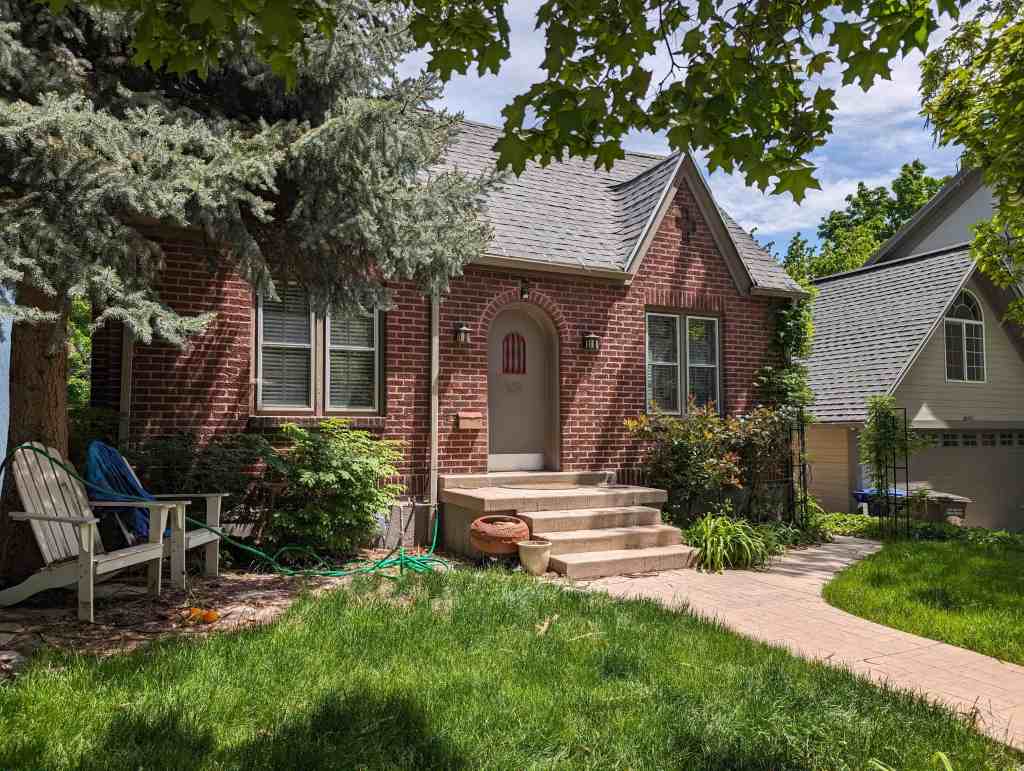
  • 260 Canyon Road – 1919
  • 266 Canyon Road – 1919 – Arthur L. Smith
  • 272 Canyon Road – 1919
  • 278 Canyon Road – 1911
  • 282 Canyon Road – 1905
  • 288 Canyon Road – Ralph Snow – 1905
  • 485 Canyon Road – Memory Grove – 1924
  • 181 Canyon Side – Nebeker House – 1924
  • 226 Spencer Court – 1911
  • 230-234 Spencer Court – Spencer Dplx – 1916
  • 238-240 Spencer Court – 1916
  • 142 3rd Ave
  • 114 4th Ave – Calder House – 1923
  • 116 4th Ave – Ross House – 1926
  • 121 4th Ave – Pratt House – 1897
  • 123 4th Ave – Pratt House – 1898
  • 125-127 4th Ave – 1940
  • 136 4th Avenue – Moyle house – 1923
  • 145 4th Avenue – 1903
  • 146 4th Avenue – 1969
  • 151 4th Avenue – Kimball House – 1902
  • 152 4th Avenue – Whitney House – 1903
  • 156 4th Avenue – Pyper House – 1903
  • 159-161 4th Avenue – Best House – 1907
  • 160 4th Avenue – Pratt/Whitney House – 1887
  • 163 4th Avenue – Ezra O. Best –
  • 165 4th Avenue – Best House – 1902

Preservation Utah‘s pamphlet from the 53rd Annual Historic Homes Tour of the City Creek Canyon Historic District on May 18, 2024 said this about the district:

In the early years of settlement, City Creek was an essential source of water for residents of Salt Lake City. However, City Creek was also subject to intense, destructive floods, and an aqueduct constructed in the late 1860s failed to control flooding, so in the early 1900s the creek was enclosed in a concrete pipe that ran under Canyon Road and still runs under North Temple Street today.

City Creek was also the source of power for various mills and a foundry. The most notable enterprise was Brigham Young’s Empire Mill located just north of the current site of Memorial House that served as the namesake for the canyon tract (basically, the entire canyon) that was deeded to Young in 1857 by the territorial legislature. For years, entry to the canyon was controlled through the Eagle Gate, and those desiring to enter were required to pay a toll.

In the 1870s, Brigham Young began apportioning land in City Creek Canyon to family and friends. But residential development happened slowly with the first homes not constructed until the 1880s. As late as 1900, only a handful of residents inhabited the canyon, perhaps due to the fact that floods still regularly raged down the canyon. But with the turn of the century and the construction of the pipeline, construction accelerated and by 1920 the number of houses had more than quadrupled. This same period saw the development of City Creek Park, the oval occupying the center of the neighborhood. By 1940, City Creek had been built out, and the neighborhood that you see today has changed little since.

The City Creek neighborhood is distinctive because of its setting-unlike that of any other in Salt Lake City-with houses crowding the canyon sides and clustered along the creek. Because of its unique character, City Creek was designated a historic district in 1980. But the canyon also provides a distinctive setting for the house on East Capitol Street. Sitting as it does along the canyon. rim, it faces the canyon and is as much of the canyon as it is of Capitol Hill. (In fact, until the late 1920s East Capitol Street was called West Canyon Road.) And the home on Third Avenue sits at the canyon mouth, where the canyon opens to the city, and for years would have been just steps away from the creek.

So this year’s tour is in many ways as much about setting as it is about the architecture of individual houses, about how a particular feature-in this case, a canyon-can inform the setting for individual houses and even an entire neighborhood.

← Older posts
Newer posts →

Follow Jacob

Follow Jacob

Come wander with me on Youtube.

Blog Stats

  • 2,107,159 hits

Social and Other Links

BarlowLinks.com

Recent Posts

  • Scout Monument
  • Provo High School Seminary Building
  • 821 E 100 S
  • 820 E 100 S
  • 817-819 E 100 S

Archives

Loading Comments...