This 1898-1899 house is an example of the High Victorian Italianate pattern book plan, it has been altered, but it still continues to the character of the area.
Margaret C. Moyle was a polygamist wife of James Moyle. He died in 1890. In 1898 she moved from the house next to her sister wife to this house. Maggie Moyle was born on the Isle of Man and came to Utah in 1868.
This house is a one-story, probably brick house. The siding has covered most of the house so it is hard to determine the style but it was probably High Victorian Italic-mate pattern book design. It has segmentally arched bays, a small gabled porch and simple moulded cornice. The roof is hipped. The house is an L shape.
This 1903 Victorian pattern book house is a good example of a style that was mass produced in Salt Lake.
Lafayette Whitney was a Salt Lake broker and LDS Church official. Whitney, a son of Horace and Mary Carter Whitney, was born in Salt Lake City on July 4, 1878. After he returned home from an LDS mission to Holland, he worked for Utah-Idaho Sugar. In 1913 he formed a brokerage firm with Don & Ray. Whitney was secretary-treasurer for the firm. He was also secretary of the Utah State Broker Association and nationally known food manufacturing broker.
Whitney was first counselor to Thomas A. Clawson, the bishop of the Eighteenth ward, for thirty-two years.
The house is a one story Victorian pattern book house. It has a slanted bay front with segmentally arched windows, fish-shingled gable, round columned porch, and brick chimneys. The roof is hipped and gabled. It is a good example of a mass-produced type of design.
This 1887 Victorian house is typical of the pattern book designs used during this period of time in Salt Lake. It is significant because Orson F. Whitney, Mormon apostle and Utah historian, lived here from 1905 to 1923. Whitney is best known for his three volume history of Utah.
Mathoni W. Pratt, the original owner, was the youngest son of Parley P. Pratt. He was the bishop of the Pratt Ward in Idaho. He lived in Salt Lake for forty years and worked as a salesman. During his later life, he moved to Los Angeles. In 1903-1904 Orson F. Whitney bought this house from Pratt. Whitney was a member of the Quorum of the Twelve Apostles. His obituary called him a “poet, philosopher, historian, orator, defender and protagonist of religion.”
Whitney was born in Salt Lake in 1855. He was the son of Horace K. Whitney. Orson F. Whitney served three missions for the LDS Church. He served a mission to the Eastern States from 1876-1878, a mission to Great Britain from 1881-1883, and a mission to Europe from 1921-1922 as mission president.
Whitney worked as city editor of the Deseret News. He also was an assistant Church historian. He was involved in city government serving as city treasurer and on the city council. He was the author of several biographies and histories including a three volume History of Utah. Whitney was the bishop of the Eighteenth Ward for twenty-eight years. In 1906, he was called to be an apostle, and he served in that capacity until his death in 1931. Whitney lived in this home until 1923.
Victorian house pattern design with original columned proch 2/2 windows, picture window with transom. Side bay window, hip roof, 1-shape plane, 1 1/2 story.
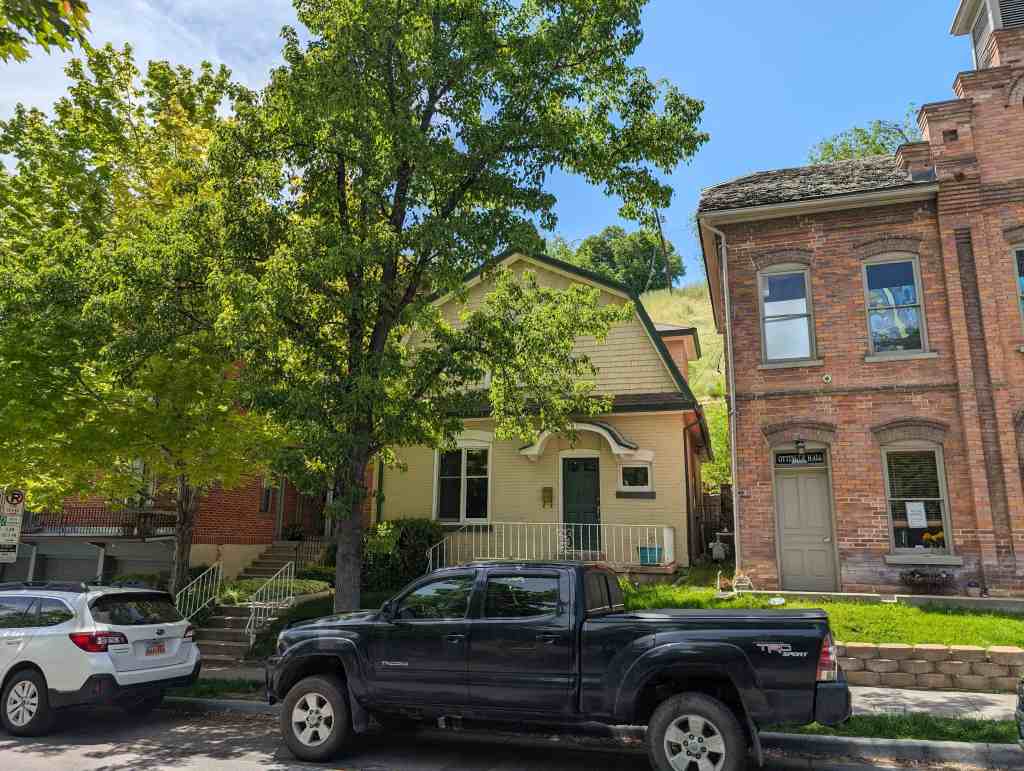
One and one-half story “Dutch” house plan with the first story of brick and the second story of frame. Gambrel roof.
Walter Squires, a Salt Lake barber, received this piece of property from the city in 1905. He probably rented the house after it was built. Later his daughter, the wife of John Raymond, lived in this house.
This 1905 Dutch style house was built as a rental unit by Walter Squires, a barber. It is typical of the house pattern plan houses that were built in Salt Lake City at the turn of the century.
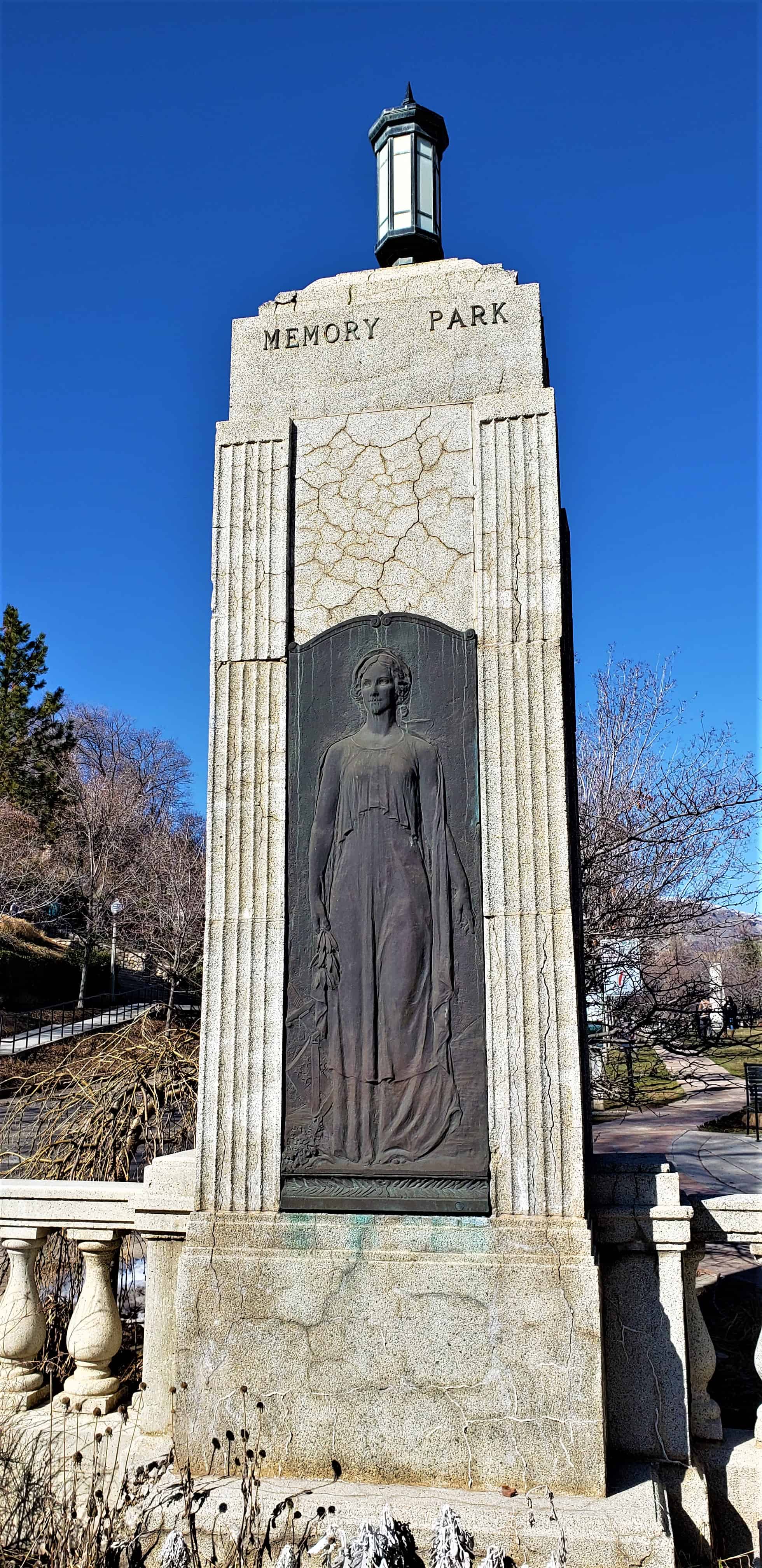
The area which now comprises Memory Grove Park was set aside as a city park in 1902. It wasn’t until the 1920s, however, that it was designated a memorial park to honor American soldiers. The women of the Salt Lake chapter of the Service Star Legion spearheaded this effort and are largely responsible for making the park the remarkable place that it is today.
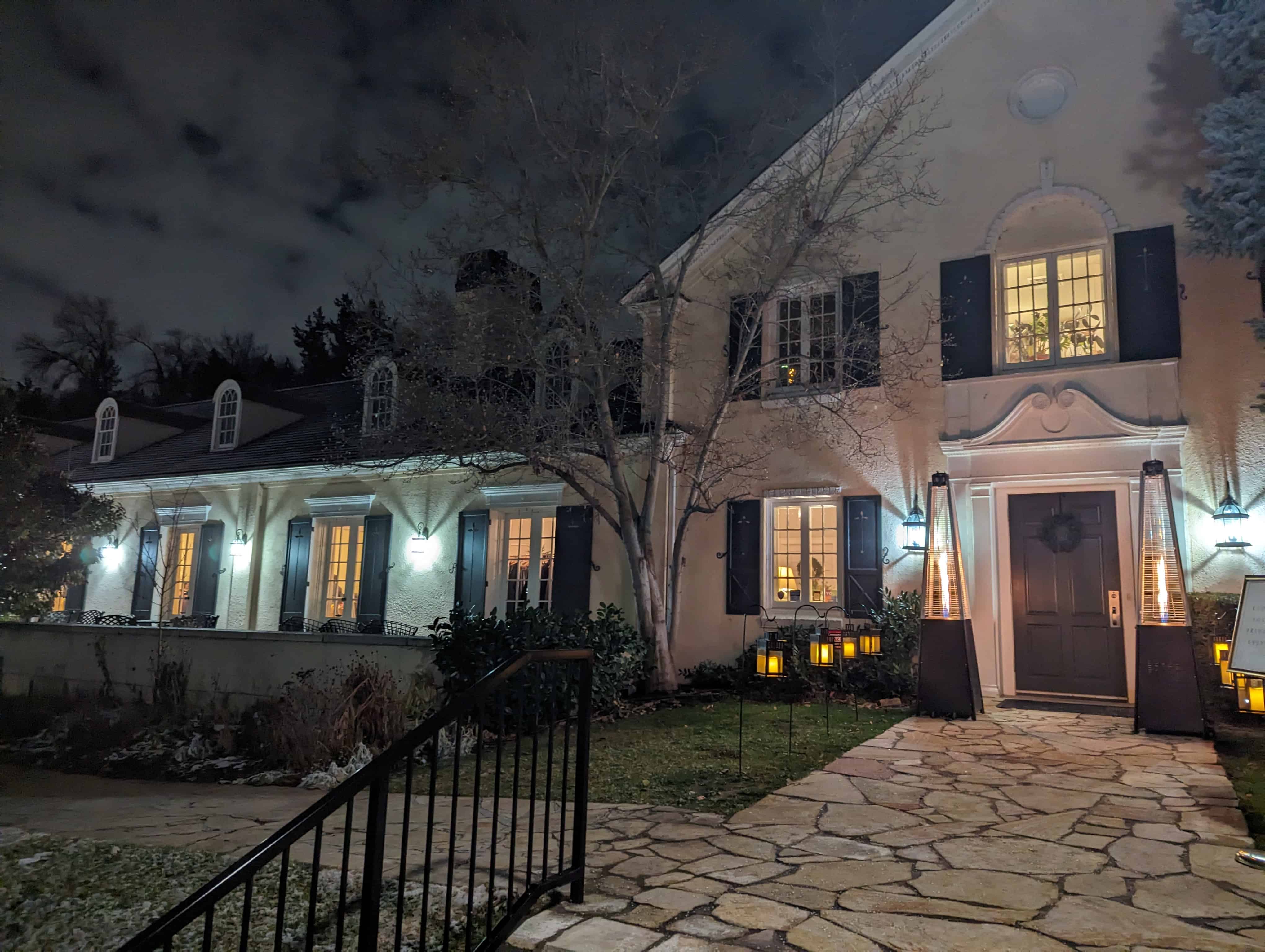
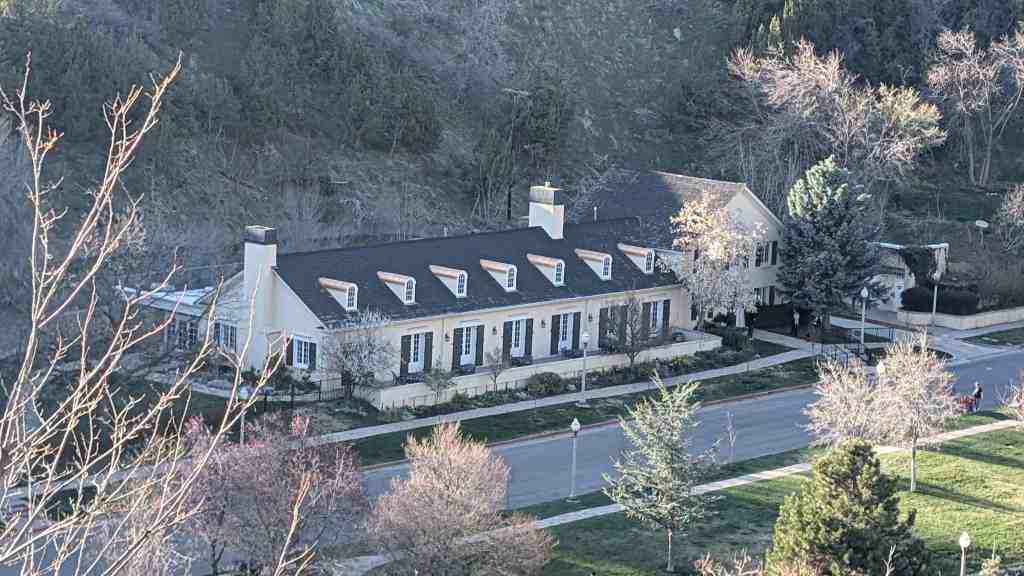
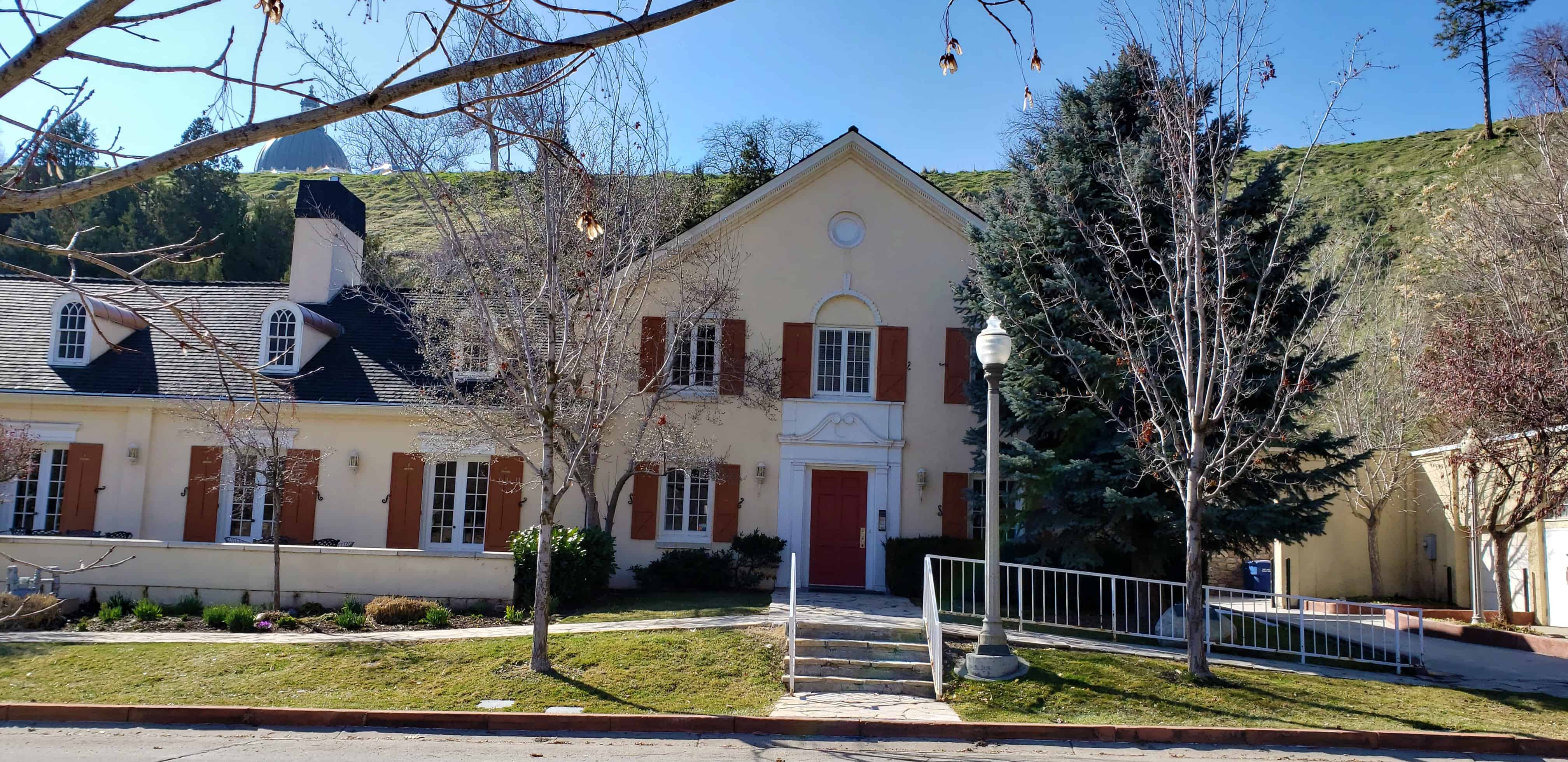
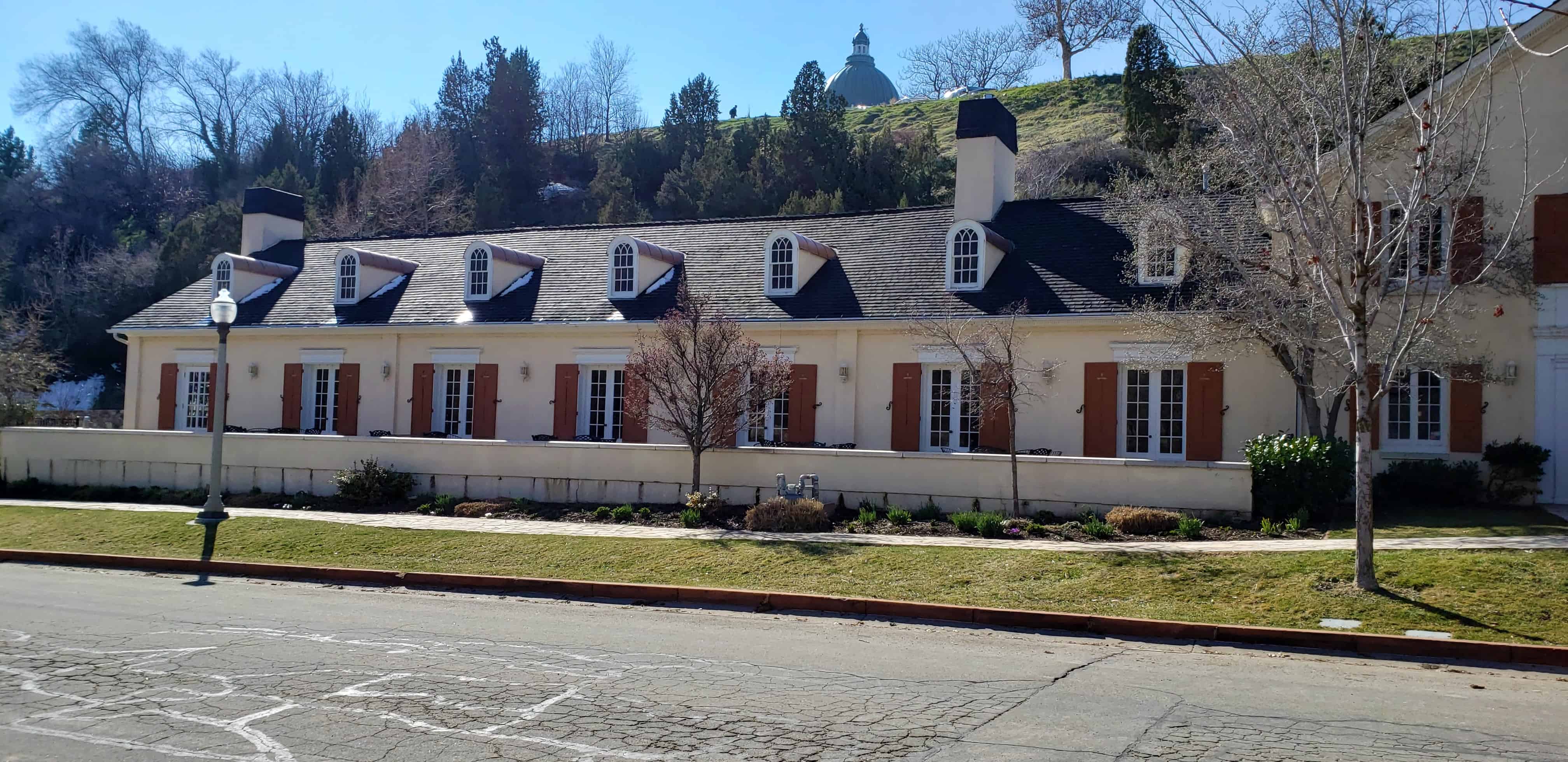
Memorial House was originally constructed circa 1890 as a stable and equipment storage shed. In 1926, Salt Lake City leased the building to the Service Star Legion and prominent Salt Lake architects Hyrum Pope and Harold Burton were hired to design a new facade with Georgian style. The brick walls were covered with stucco, six rounded dormers were added to the roof, and the stable doors on the east wall were turned into elegant French doors.
Under the management of the Service Star Legion, Memorial House became a popular setting for weddings, receptions, and luncheons. Over the course of the century, new features were added to improve the venue’s versatility for events. The garden room addition was constructed in 1953, and the patio on the east side was added in 1974. Sadly, after the Legion’s lease ended in 1984, the building stood vacant and unused for 10 years. Seeking a new home and hoping that Memorial House could once again play an active role in the community, Preservation Utah, a statewide 501(c)(3) nonprofit organization, raised funds for the renovation of the building in cooperation with Salt Lake City Corporation. In July of 1994, Preservation Utah re-opened the doors of Memorial House for public use and has continued to operate the building as a meeting, event, and reception center ever since.
Since 1994, Memorial House has been managed and operated by Preservation Utah, a nonprofit organization committed to preserving our state’s many noteworthy historic buildings. Proceeds from Memorial House’s rental fees go toward Preservation Utah’s diverse array of non-profit programs, all with the mission to keep the past alive, not only for preservation, but to inspire and provoke a more creative present and sustainable future. By hosting your event at Memorial House, you are directly contributing to the preservation of impressive historic places such as Memorial House itself.
Memorial House has a great staff of event professionals who take pride in their work and truly care about their clients’ experiences. Together with our esteemed list of preferred caterers and vendors, we strive to make your event memorable and are committed to exceeding your expectations. (from memorialhouse-utah.com )
The former stable building, currently remodeled into a meeting reception hall has a floor plan composed of two bays intersecting at right angles. A- one-story gable-roofed bay runs roughly north to south, intersecting a two-story gable roofed house running east and west On the west or rear of these structures is attached a lean-to shed roofed structure which runs the full length of the building. Entry to the structure is gained via a centrally located doorway placed in a three bay gable end facade of the two-story structure. The double door entry has classic decoration, rendered in wood. Having a broken scroll pediment which culminates with sweeping scrolls. Within the gap formed by the broken pediment is placed a hanging light fixture. The pediment is supported on either side of the recessed paneled doors by double engaged pilasters. Paneling runs from the pediment up to the base of the second story window sill. Windows in this bay are side hinged on the right and left each vertical sash eight lites, two lites wide. The central second level sash contains 12 lites and is hinged on the left. Above this window is a brick arch with keystone. All windows have wood shutters having a scroll saw cut vertical floral design cut into their upper panels with protruding diagonal cross bracing in the lower portions.
Above the arched central window in the upper portion of the gable end is a small bulls eye window. The gable end of the roof has a decorative cornice with return. A dentil course forms part of the moulding.
The north to south one-story bay has gently sloping gable roof with round topped dormers having six over six sashes. Seven dormers are set in alignment above seven double door openings with flat classic pediments. The south gable end of this bay has a central chimney. The rear lean-to structure currently houses a solarium-type meeting area. The building is constructed of load bearing brick walls stuccoed.
In 1926 the city waterworks turned an old barn that had been used as a stable and tool shed to the Service Star Legion to be used as a home for the organization. Hyrum D. Pope and Harold W. Burton, architects for the Church of Jesus Christ of Latter-day Saints, and Howard J. McKean, a Salt Lake contractor, donated their services to work on the home. In addition some of the lumber was given to the project. The house cost approximately $12,000; and of that, $10,000 was appropriated by the state. The Service Star Legion could use the building for their meetings and for other purposes approved by the House Committee.
There has been some remodeling on the house. In 1953 it was painted and a new heating plant and stairway added to the interior. An enclosed patio was added onto the rear of the building. The building was painted in 1976 as part of the Bicentennial program.
This graceful structure that now serves as a reception center began its life as a very different building. It was originally constructed in 1890 as a stable and equipment storage shed for contractor P.J. Moran. Even when Salt Lake City acquired the area that is now Memory Grove in 1902, the building remained utilitarian, serving as a barn, tool shed, and blacksmith shop for the city. In 1926, the character of the building underwent a dramatic change, as the Service Star Legion, which planned to use it to host veterans’ activities, leased it from Salt Lake City and hired the prominent Salt Lake architectural firm of Pope and Burton to transform it into a grand Georgian hall. The humble brick structure was covered in stucco; six rounded dormers were added to the roof; and the windows on the east wall were converted to French doors. The Legion occupied the building for nearly six decades, but when its lease ended the building sat vacant for nearly 10 years. Fortunately, the Utah Heritage Foundation (now Preservation Utah) stepped in. Partnering with Salt Lake City in the mid-1990s, the Foundation raised the funds to renovate the building and restore its beauty and purpose. It serves today as offices for Preservation Utah and as a distinctive venue for weddings and other events.
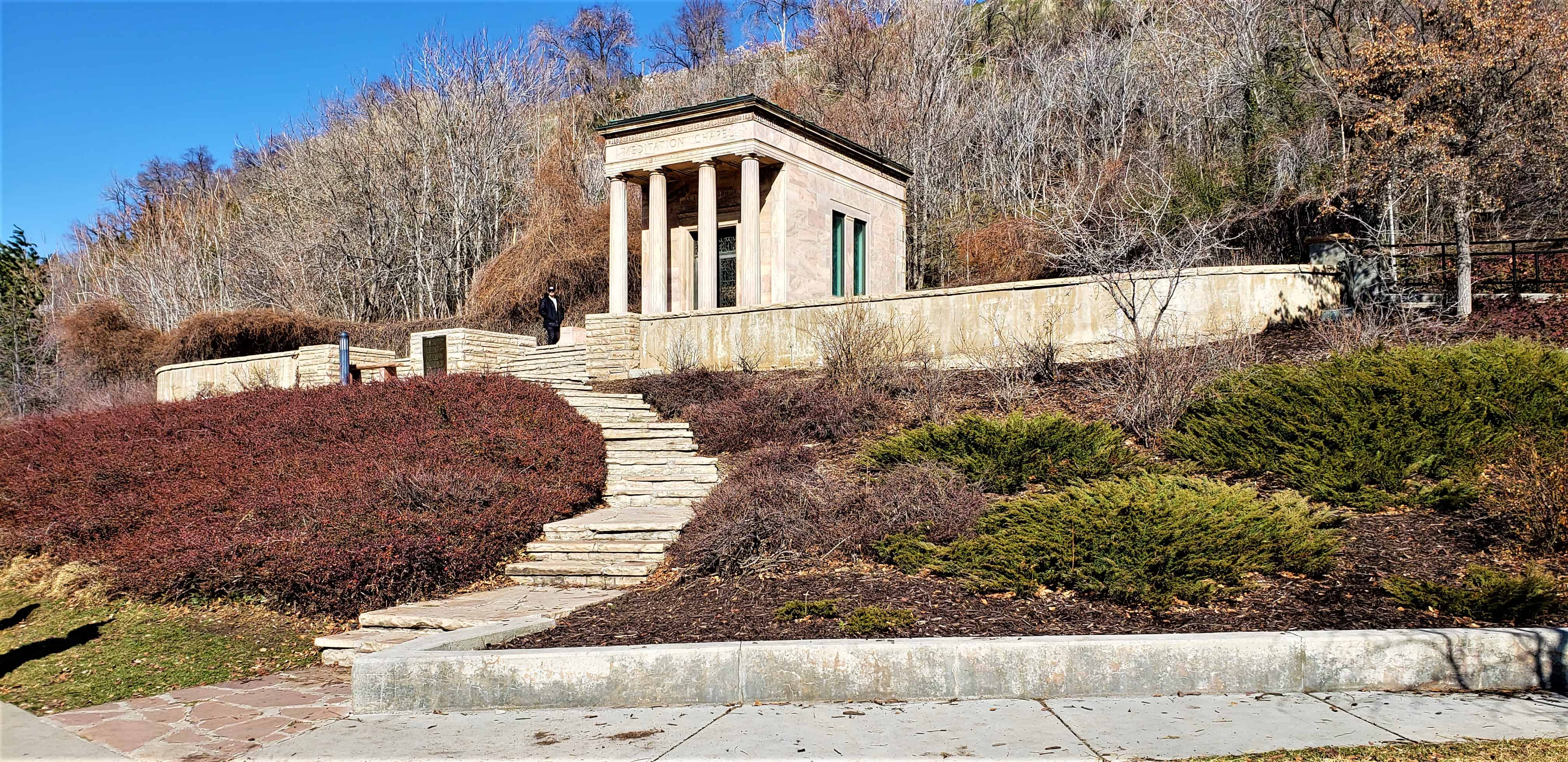
The circular classic styled memorial is composed of eight peripteral doric columns rendered in granite. The colonade supports a circular entablature composed of an architrave, wide frieze and cornice, above which is found a carved crown molding rendered in a floral motif. The entablature supports no dome allowing light to penetrate to the central interior of the monument via the round opening which the entablature forms. The colonade rests on a round three-stepped base of granite.
The central focal point of the monument is a centrally located octagonal shaft which supports an urn. Around the flat sides of the shaft are bronze plaques bearing the names of war dead. Radiating out from the base of the shaft Is a star form composed of random shapes of marble set into the floor.
1914-1918 In Grateful Remembrance of the Heroic Sons of Utah Who Gave Their Lives in the World War This Monument Erected A.D. 1932
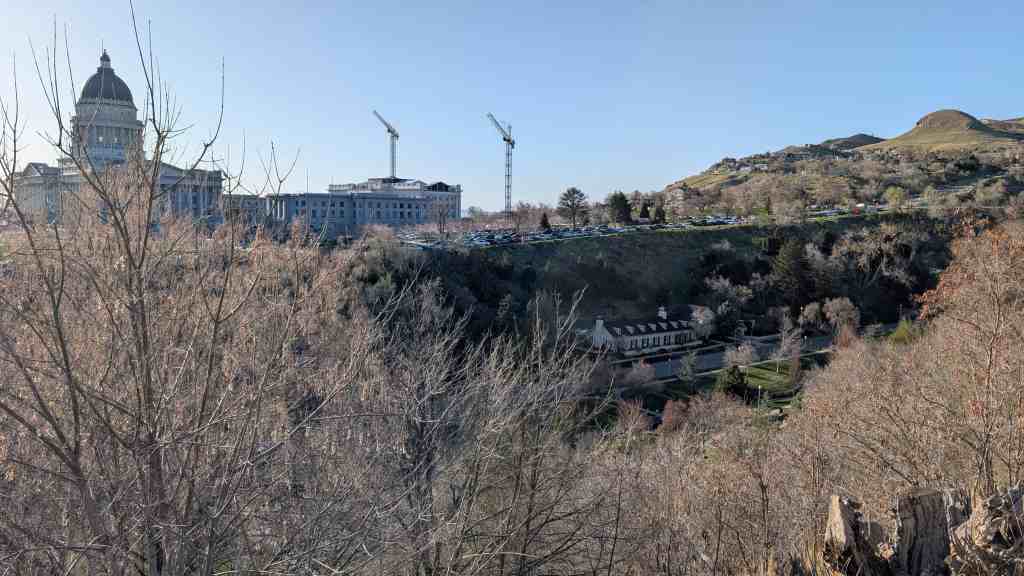
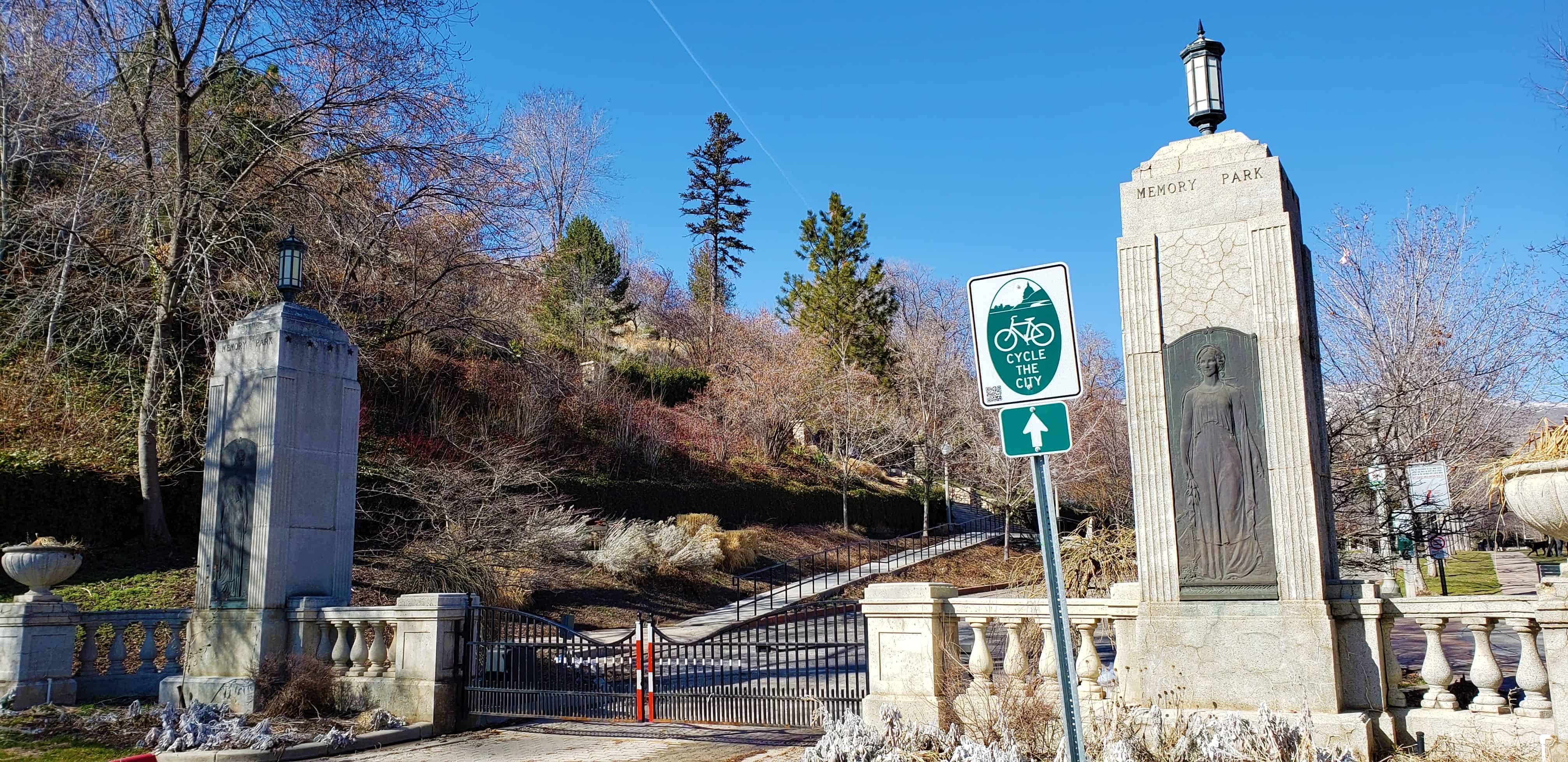
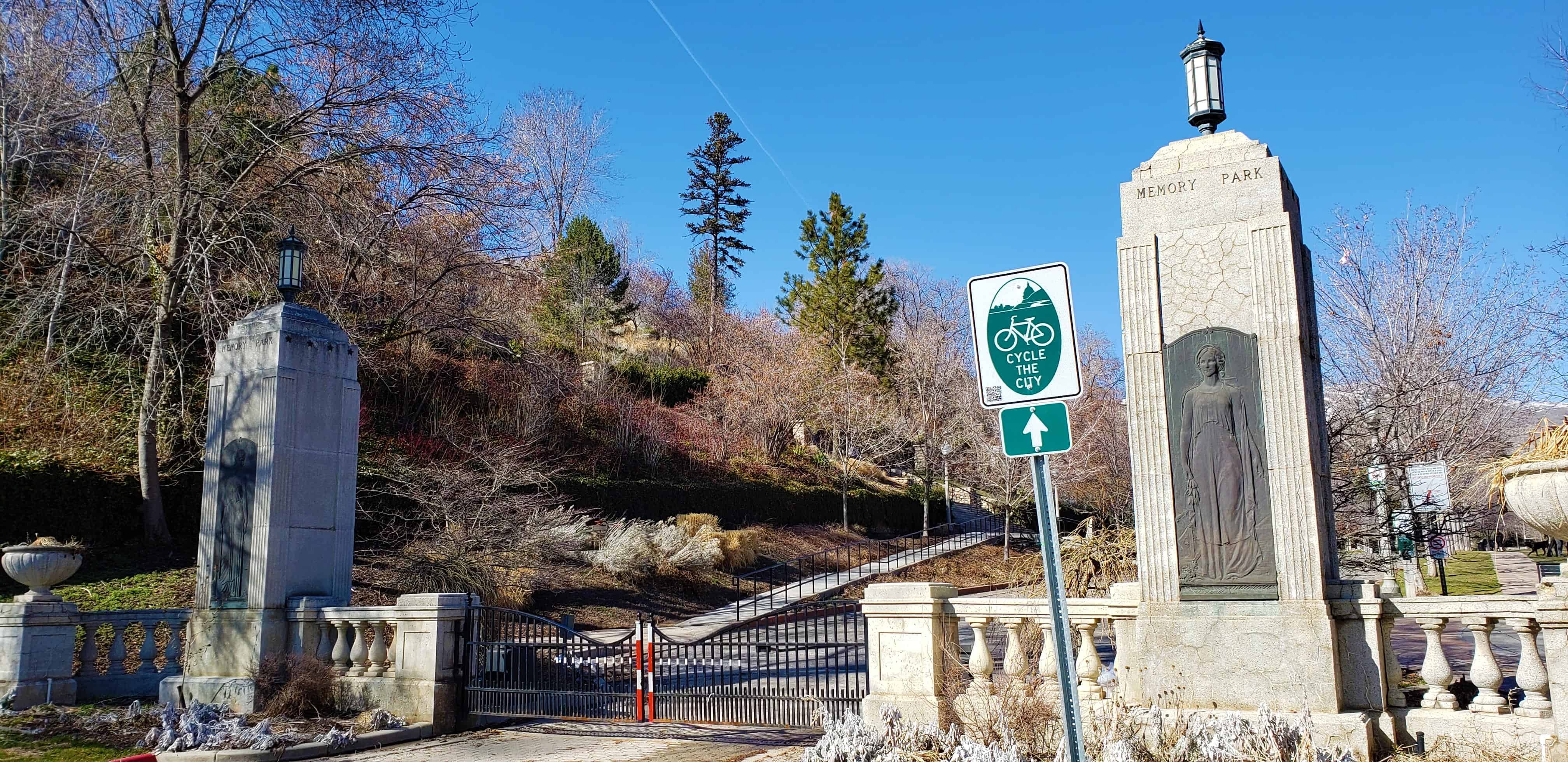
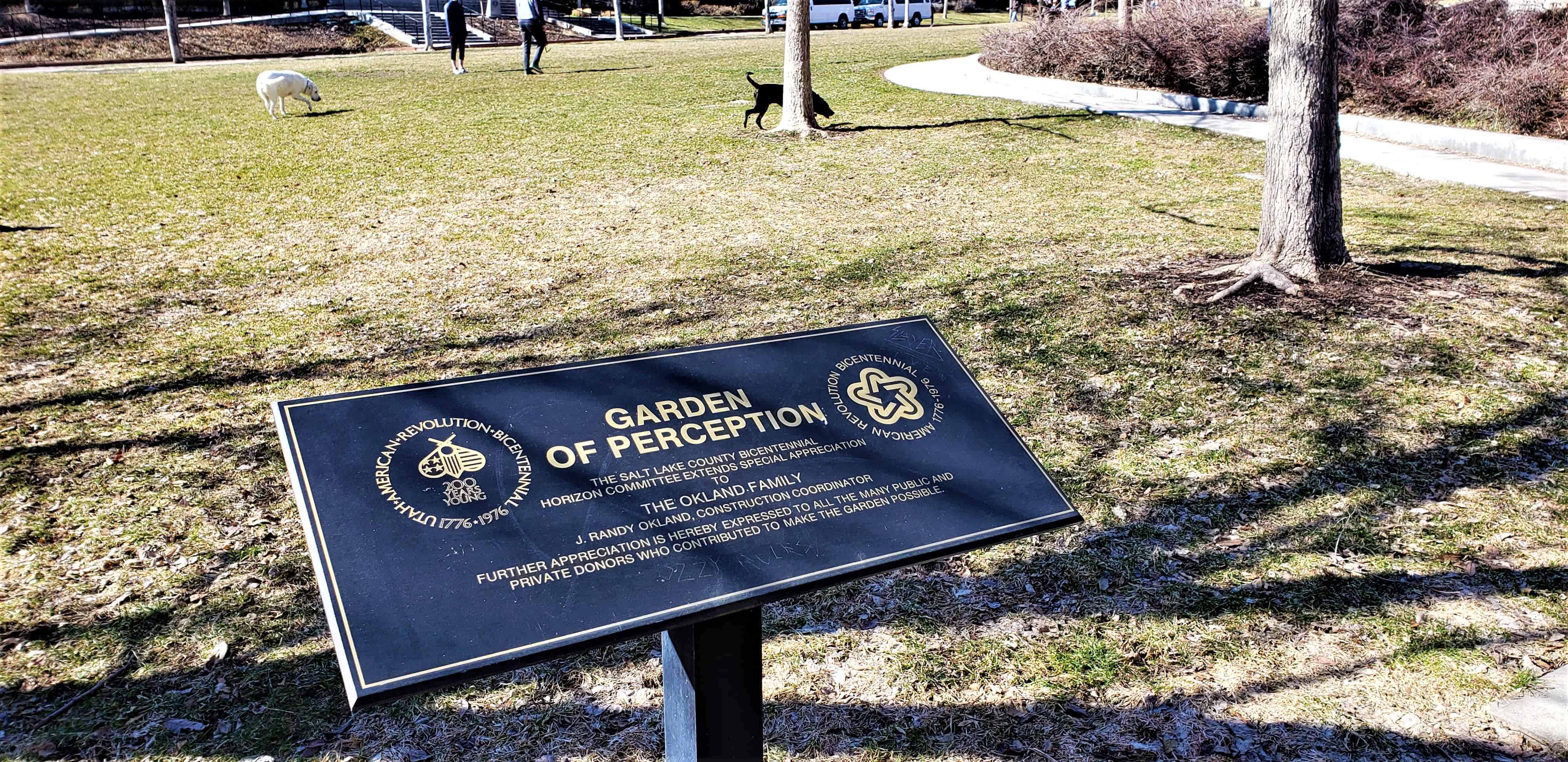
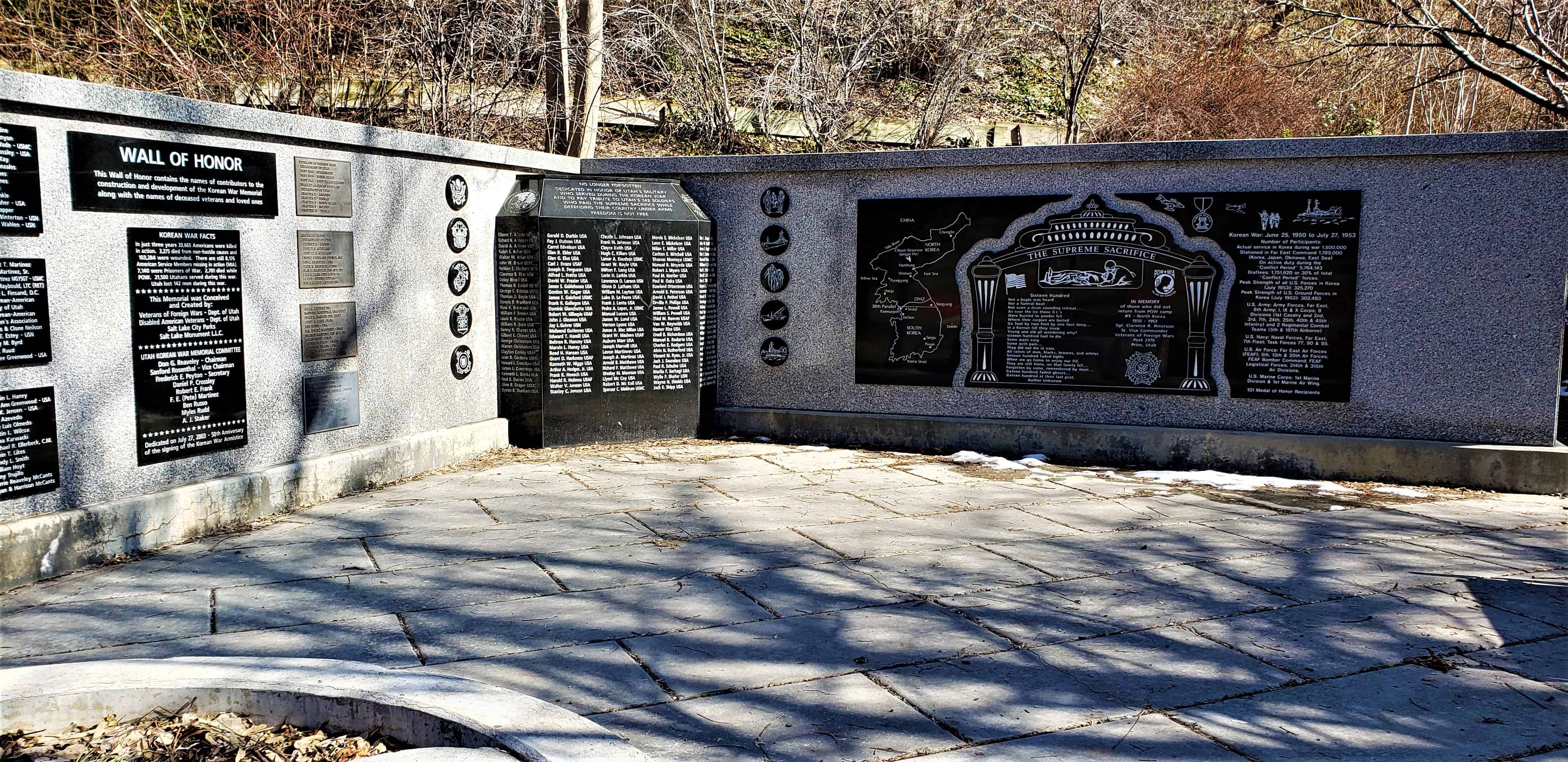
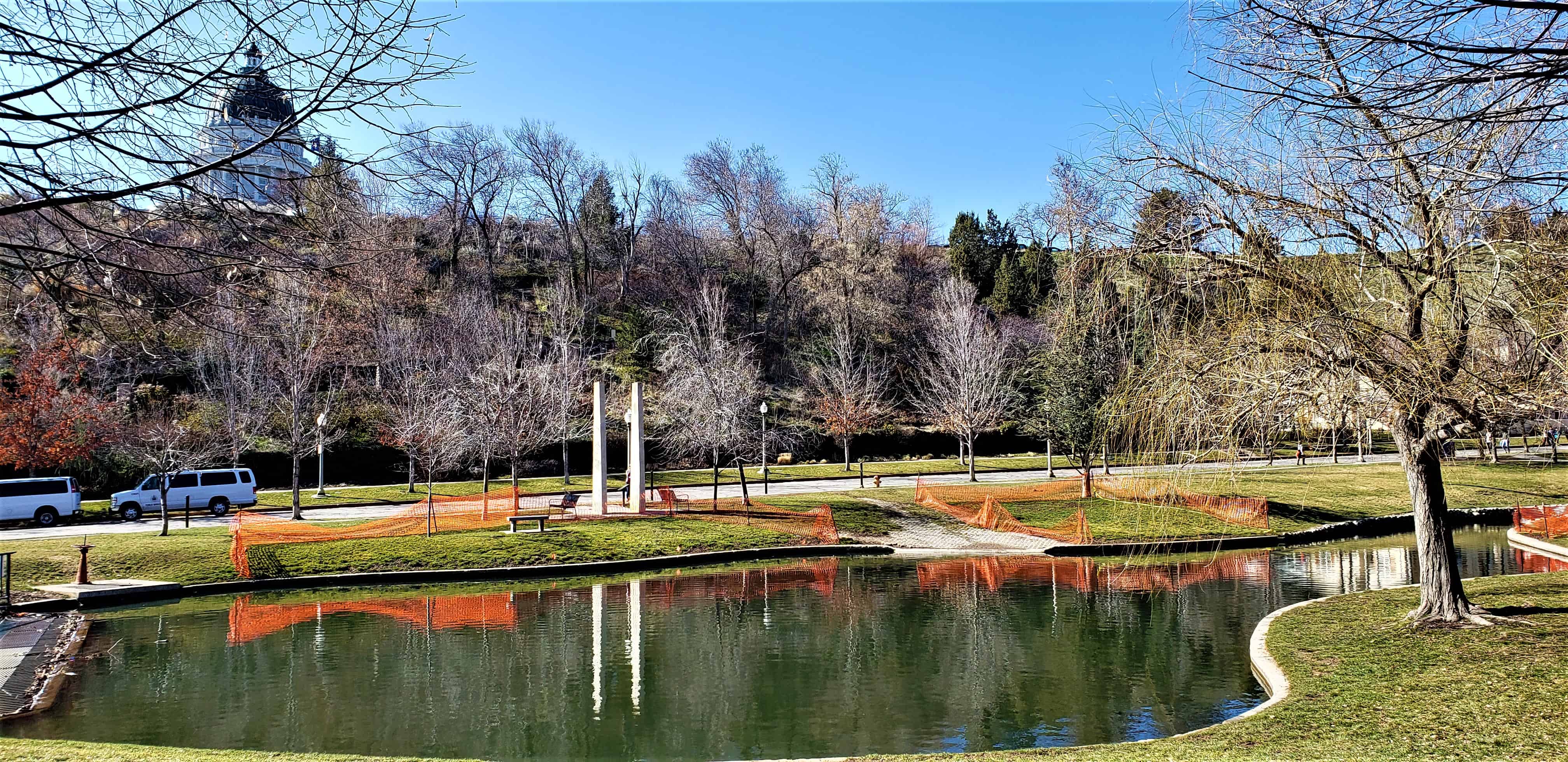
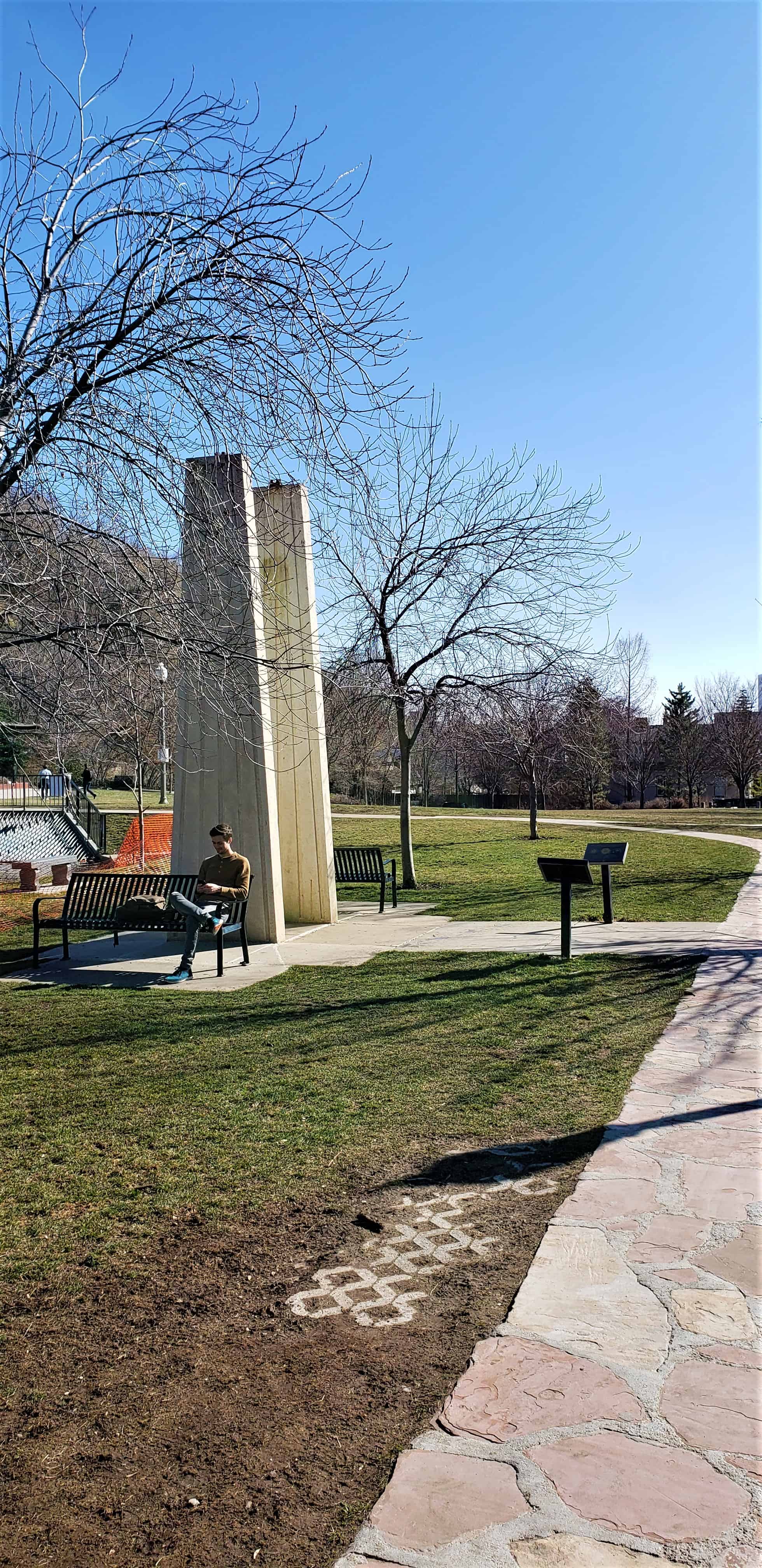
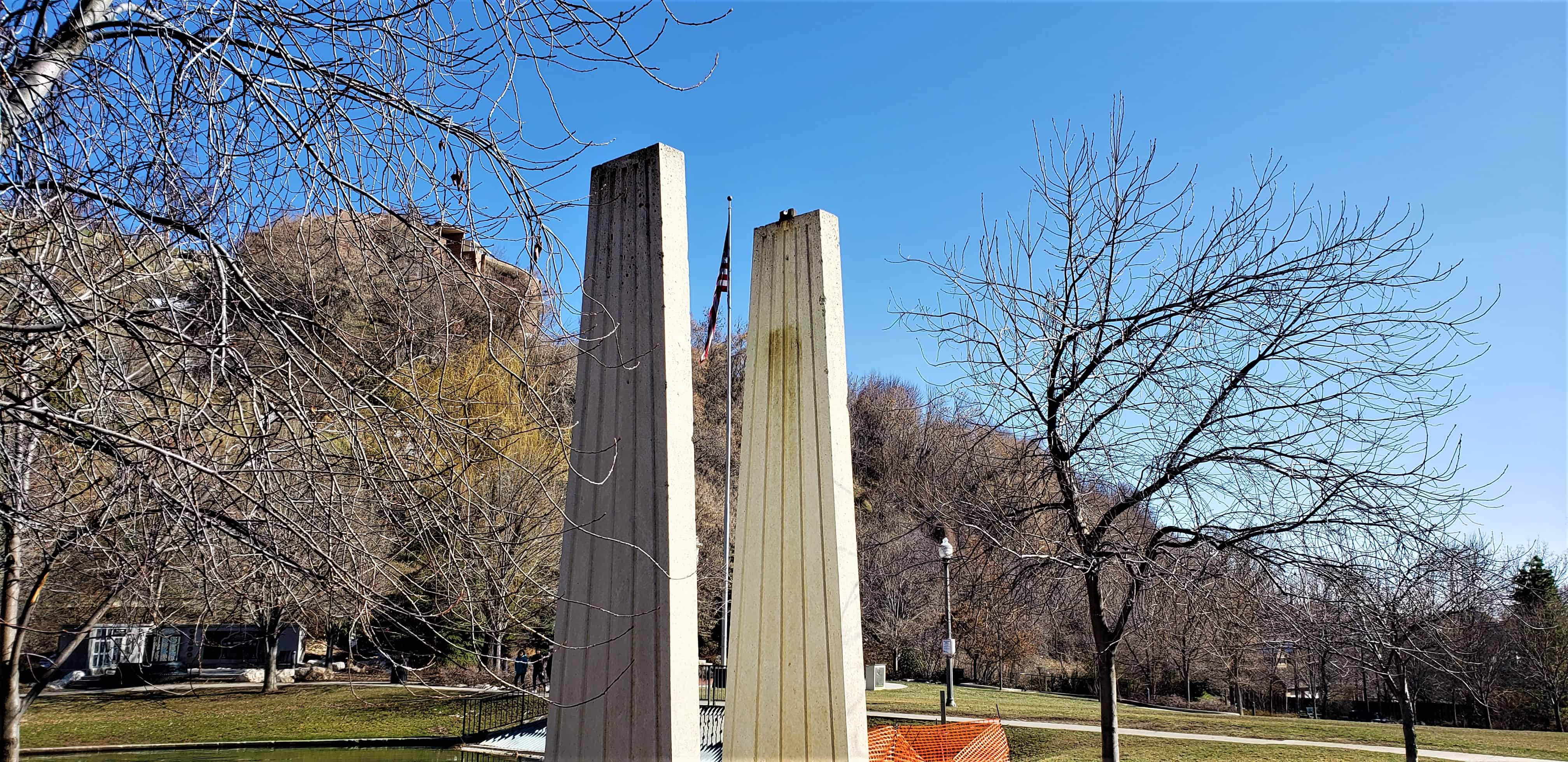
Memory Grove is a large park in Salt Lake City just below the State Capitol Building. It is popular for bringing dog to play, for walking/running, meditation and more.
It has many memorials for war veterans and more.
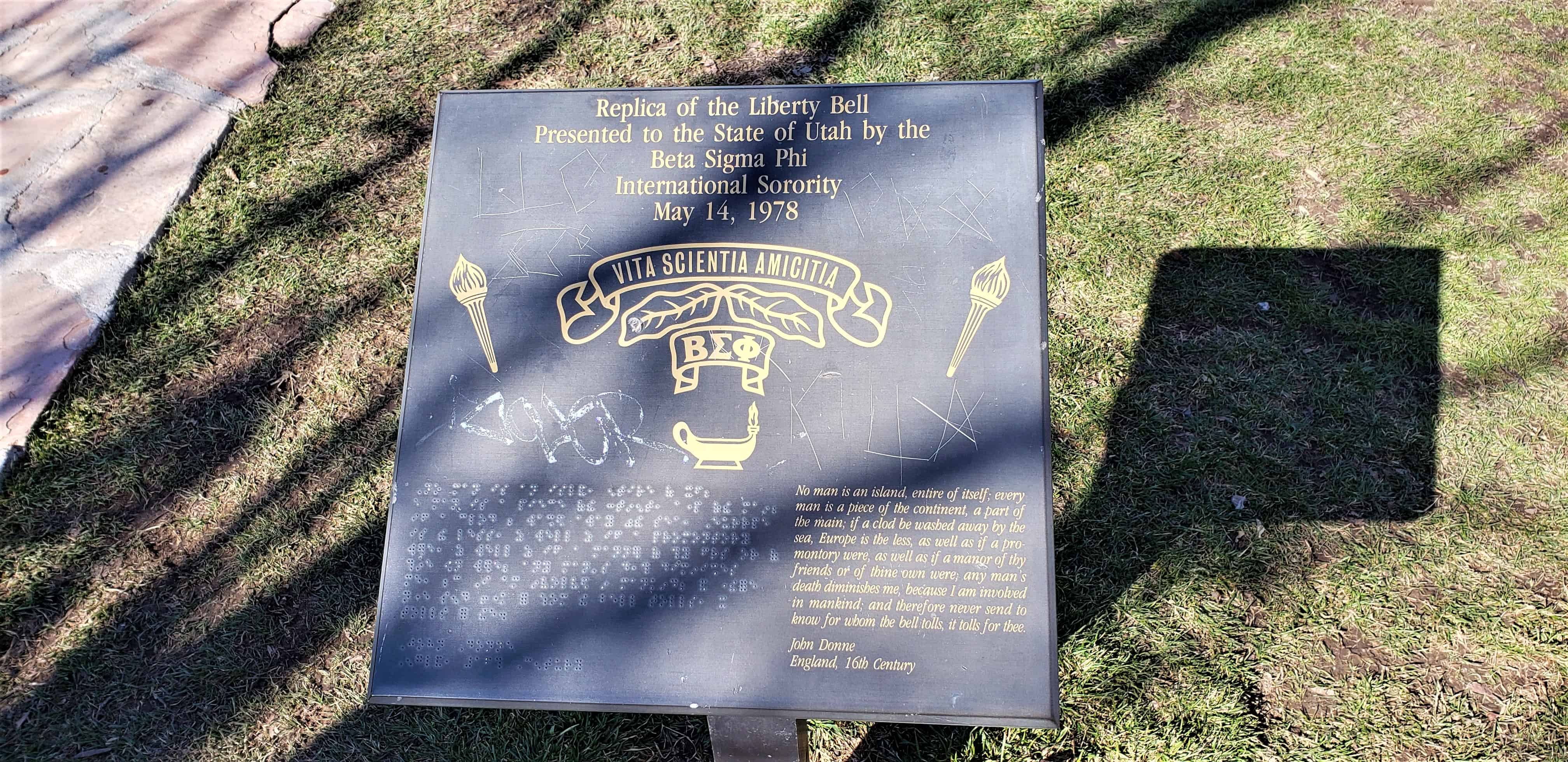
It has a replica of the liberty bell, a hiking trail, a pond, a creek and gorgeous views.
When the Mormon pioneers came to Utah, one of the first organized settlements was at the mouth of City Creek Canyon because there was a good water supply there. Later on one of the first grist mills built by Brigham Young, the Sudbury Flour Mill, was constructed there. The P.J. Morgan Construction Company and the city waterworks department also operated from this area. The first plans for a park were made in 1902 and in 1914 monies were allotted for the City Creek Canyon Park.
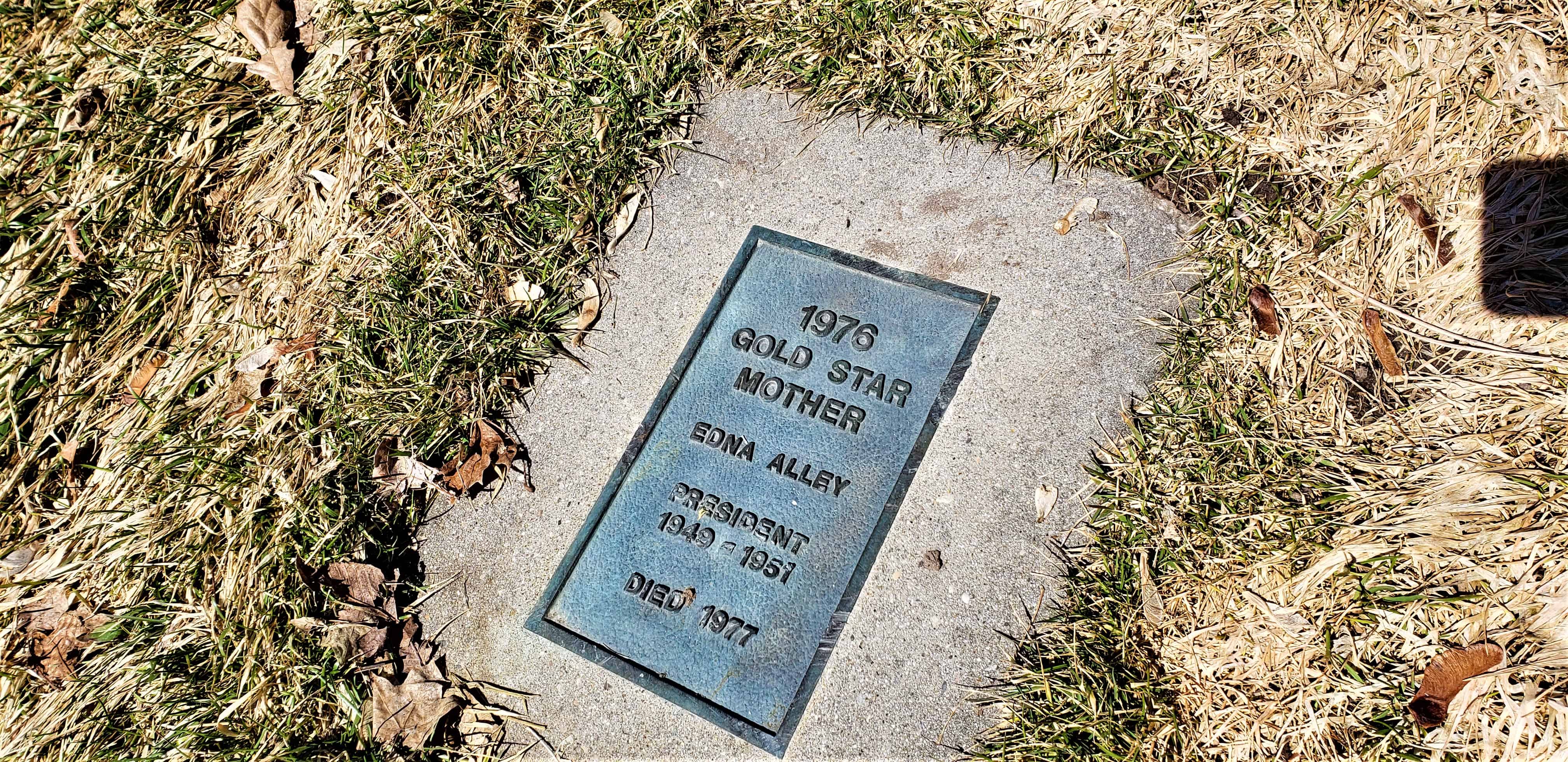
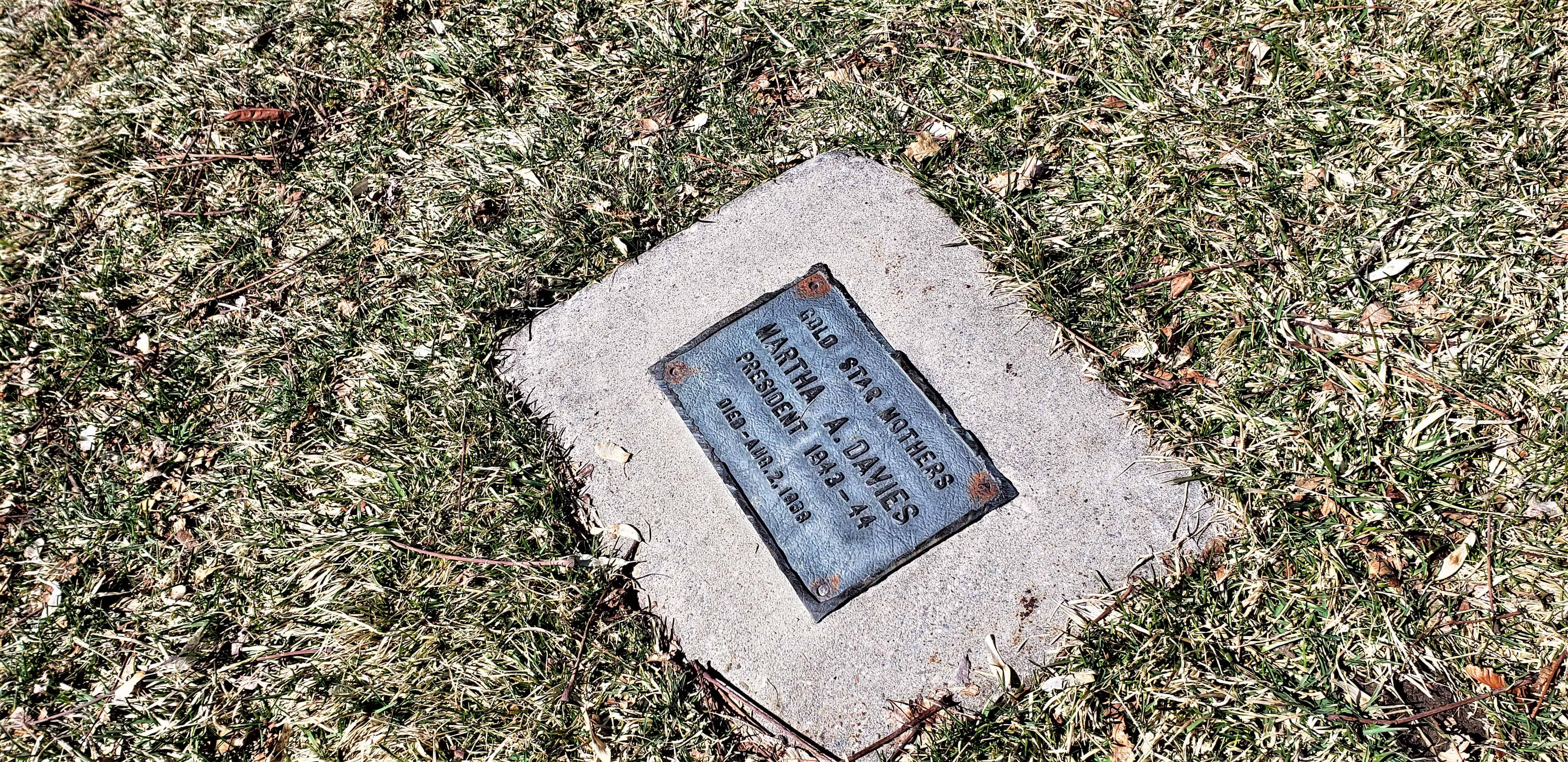
The Service Star Legion was organized after World War I as a patriotic organization for women who had blood relatives who served in the war. The first chapter was incorporated in 1920 in Maryland. At a convention in Baltimore in 1919, the first memory trees in honor of those who died during the war were planted in Draid Park. Following these events, chapters of Service Star Legion spread throughout the nation and similar “living memorial”‘ groves became a national project of the organization.
The Salt Lake Chapter was organized January 2, 1920, and at an April meeting, the Legion voted to ask the City Commission of the mouth of City Creek Canyon could be set apart for a memorial park. Mrs. Clesson S. Kinney, who had made the motion, was asked to be the chairman for the project. Mrs. E.G. Howard was also on the committee and played an important role in the development of the park. Her son, Captain James B. Austin, had died in World War 1. The City agreed to set aside twenty acres from the entrance to the canyon to the brick tank. The park was named City Creek and plans were made to plant trees on Arbor Day 1920.
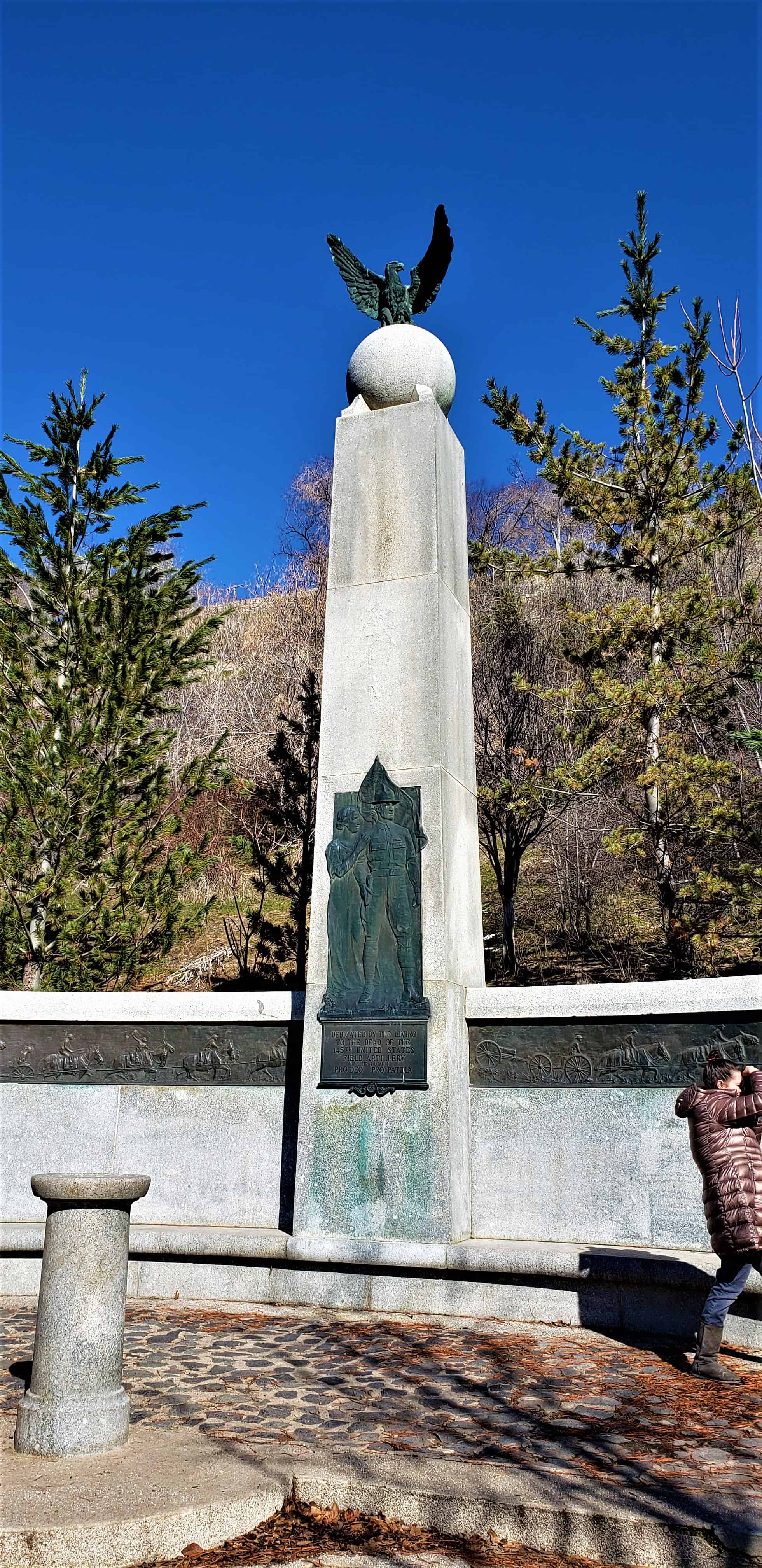
In 1924 the Gold Star Legion asked that the park be dedicated to the dead soldiers of World War I. It was dedicated as a memorial on June 27, 1924 at a national convention of the Service Star Legion. Mrs. E. O. Howard, chairman of the committee In charge of the park, unveiled a tablet engraved with the names of those approximately 700 men who died In the war. This monument set behind where the pagoda now stands. It was designed by Walter I. Cooper and constructed by H. W. Baum.
Utah played an important role in the service of the United States during World War I, The 21,000 men and 100 women served in the army, navy, marine corps and Red Cross. Utahns served in the 91st Division of the Wild West Division. The 362nd infantry in that division was called the Utah regiment. The 145 artillery was made up of men from the Utah National Guard or veterans of the Spanish .American War. Memory Grove was dedicated to the 665 men who died during the war.
Built in 1905, this 1-1/2 story house features a mixture of elements from the Victorian Eclectic and early Bungalow styles. It was originally constructed for local businessman Ralph Snow, who worked many years with his father and brothers for the Consolidated Wagon and Machinery company. The home retains its integrity and is a contributing resource within Salt Lake City’s City Creek Canyon National Historic District.
Built in 1905, this house follows the house pattern book style used during the 1900s. It is typical of its type and period and adds to the character of the district. The owner, Ralph Snow, was a businessman in Salt Lake. Ralph Snow worked with his brothers and father for Consolidated Wagon and Machinery. He was born in St. George in 1878. He was the son of Franklin R, and Lucy Simmons Snow. He was educated in Dixie and Salt Lake and worked all of his life for Consolidated Wagon and Machinery.
Hi is is a one and one-half story pattern book house. It has a slanted bay type front wall, There is a lead glass oval window and leaded glass transom. The water table is brick. It has a gabled roof and large dormers. The house is typical of its type” and period.
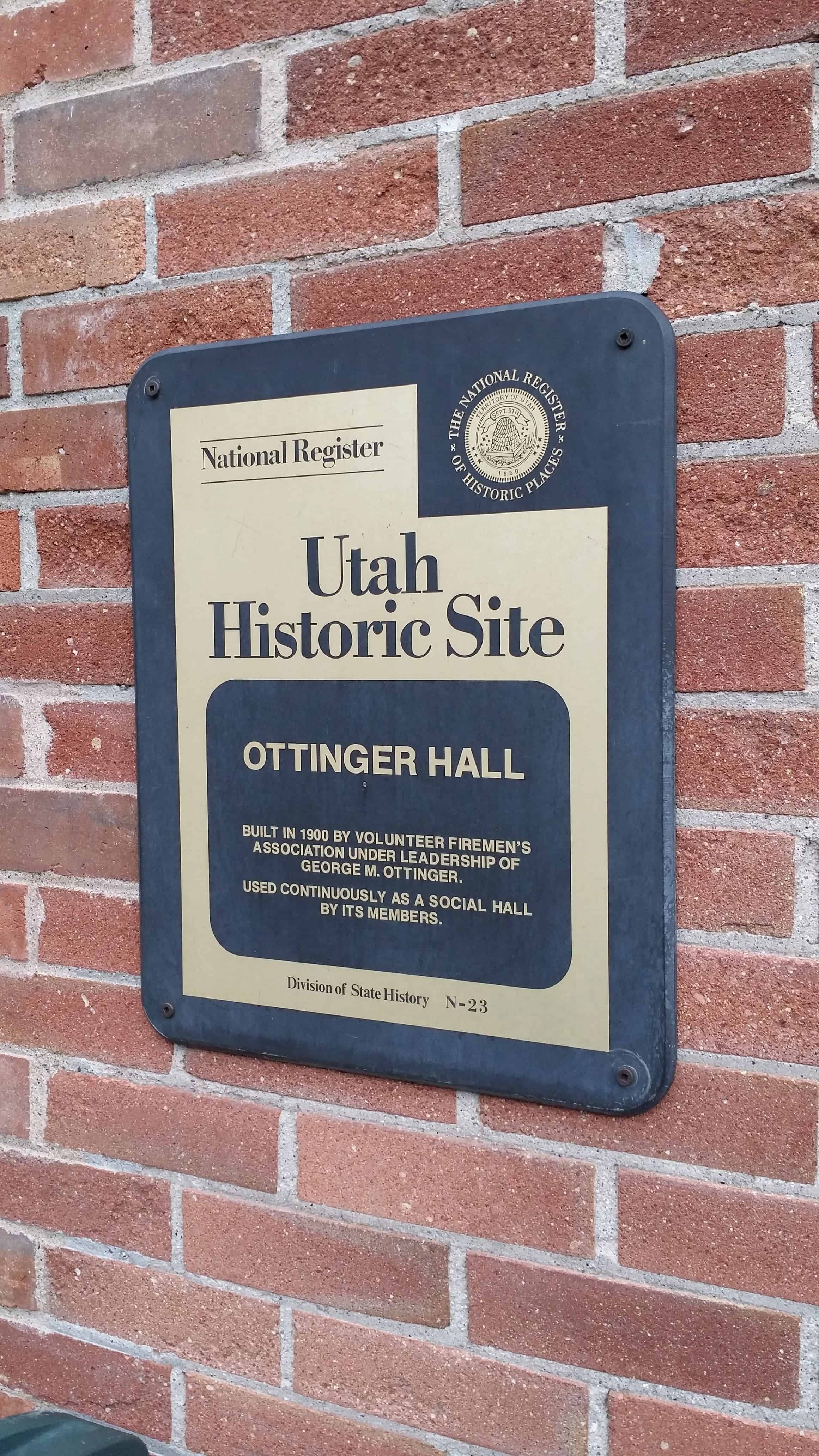
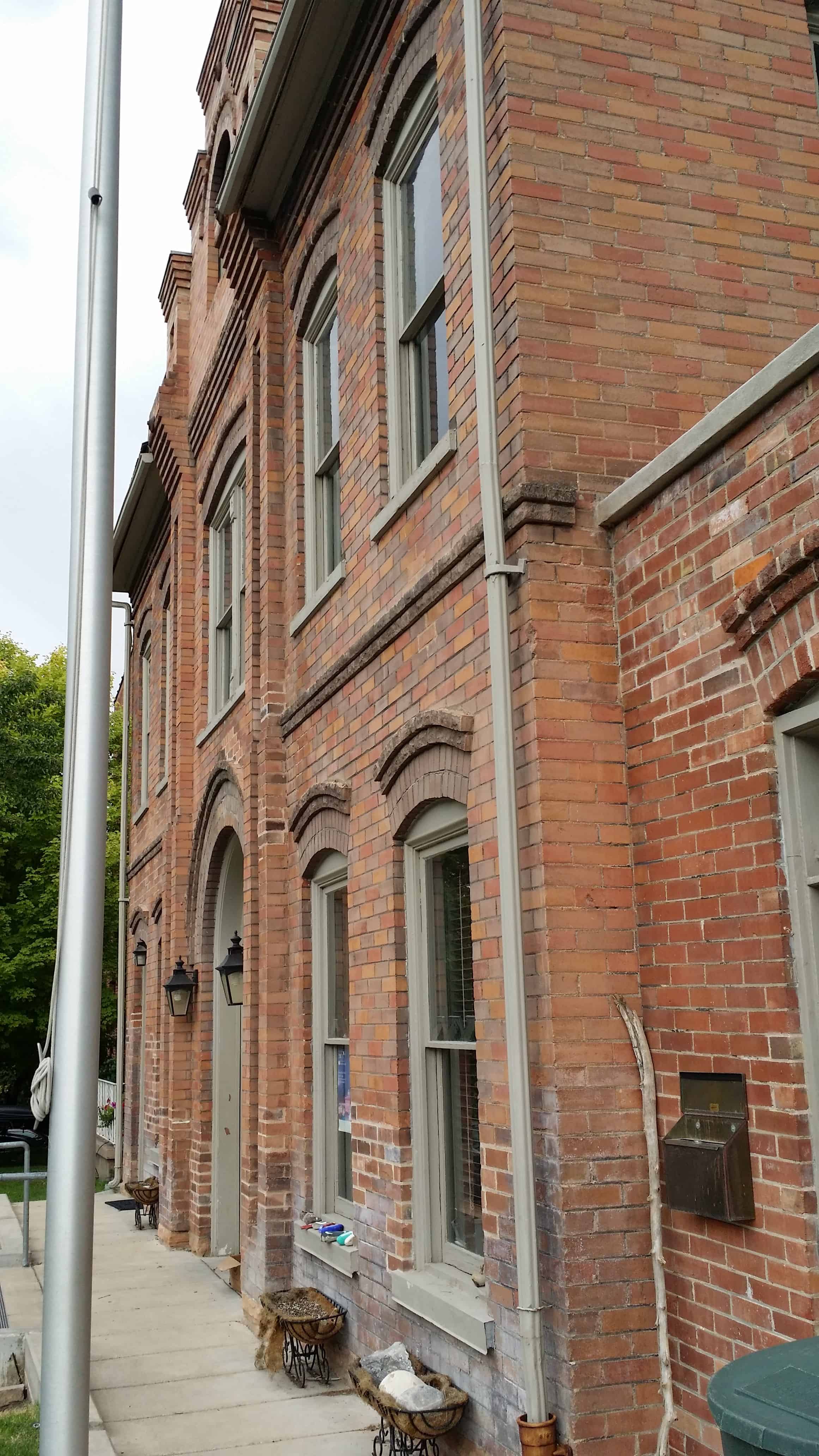
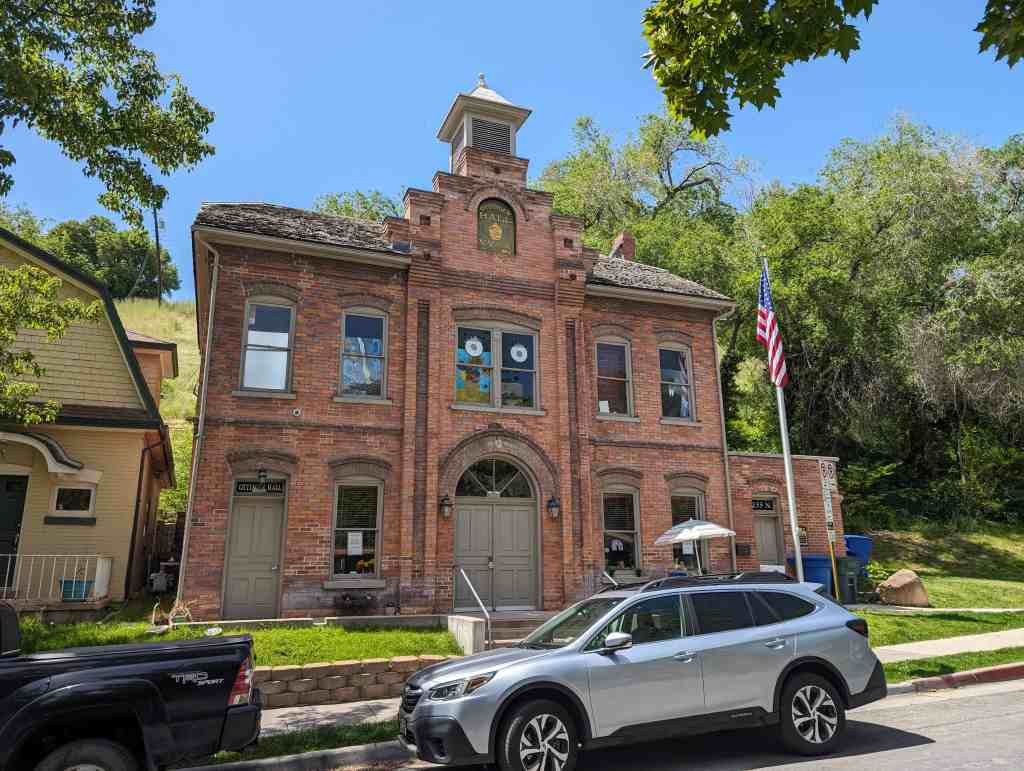
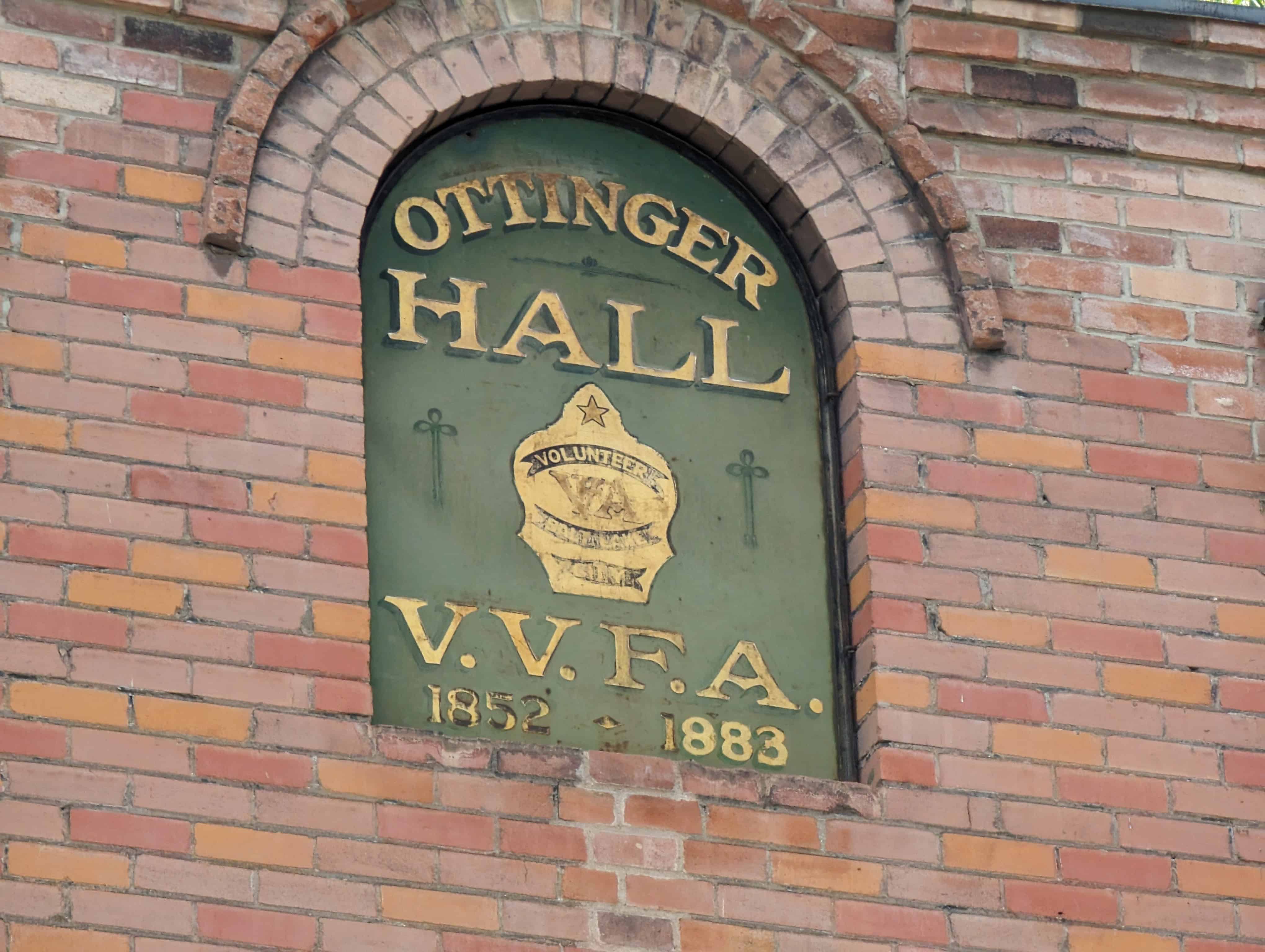
Ottinger Hall, a two-story brick structure, with a wood shingle roof, was dedicated February 22, 1900, It is rectangular in shape, originally about 27 feet by 39 feet, but with a lean-to kitchen added later to the north side, A bell tower centered on the roof houses the original bell, reputed to be Utah’s oldest. The architect for the building is unknown, but very probably it was designed by members of the Veterans Volunteer Firemen’s Association, who constructed it, Funds were raised through donation, labor, concerts and rummage sales by the members of the Association.
At present the structure is in fair condition only. The original construction was mediocre; however, there is no question about the stability and salvage potential. It houses many pioneer fire-fighting relics of importance, including the first fire engine built in Utah designed and constructed in 1853 under the direction of Jesse C. Little, the colony’s first “official” fire chief. Also, the building houses one of the “hose carts” brought west by Johns ton’s Army in 1858.
The building was constructed originally as a Social Hall for members of the Association and their families. Ft has been used for that purpose continuously. As a unit, the hall and its relics represent and present the story of the development of a fire-fighting department in Salt Lake City. Its preservation Is important to retaining and telling that story.
Ottinger Hall sits in the canyon of lovely City Creek, just a few hundred yards east of the Capitol Building. Its builders wanted a place to meet where they could mingle and pay homage to their proud firemen’s heritage. Today Memory Grove Park bounds it to the north.
Salt Lake City established a Volunteer fire department as early as 1850; however, its first fire chief, Jesse C, Little, was not appointed until 1853, He in turn was succeeded by John D. T. McAllister, Charles H. Doneldson and George M. Ottinger in 1876.
In 1860, a new organization established Deseret Engine Company number one (later changed to Eagle No. 1) and Deseret Hook and Ladder Company number one. Other volunteer companies were also added. The horse-drawn engines and volunteers were unable to handle a major fire in June 1883. Apparently, as a result of this, Salt Lake City elected to establish a paid fire department, beginning October 1, 1883. Its first chief was George M. Ottinger.
Under the leadership of Ottinger, the Veterans-Volunteer Firemen’s Association was organized in 1890. Ten years later they had their meeting and Social Hall, Ottinger remained president until his death in 1917. In 1912 the Ladies Auxiliary was organized.
Ottinger was not only a firefighter, but an artist of note, and especially appreciated by local people. His self portrait and other paintings hang in the hall today. He painted a sign displaying the volunteers’ slogan: “We aim to aid and work to save, n now at the hall.
Since Ottinger Hall contains both the tradition and paraphernalia of the Volunteer Firemen of early Salt Lake City,its preservation provides an important link between the past, for this extremely important development, and today’s urban society.(*)
Ottinger Hall was constructed in 1900 as a social hall for the Salt Lake City’s Veteran Volunteer Fireman’s Association. It is named after George M. Ottinger, the city’s first paid fire chief, who founded the VVFA in 1890 and served as its president until 1917.