Floy or Floy Station is a railroad siding, there is a ranch exit off I-70 between Green River and Crescent Junction where you can pull off and explore.


27 Wednesday Nov 2013
Posted in Uncategorized
Floy or Floy Station is a railroad siding, there is a ranch exit off I-70 between Green River and Crescent Junction where you can pull off and explore.
11 Monday Nov 2013
Posted in Uncategorized
Tags

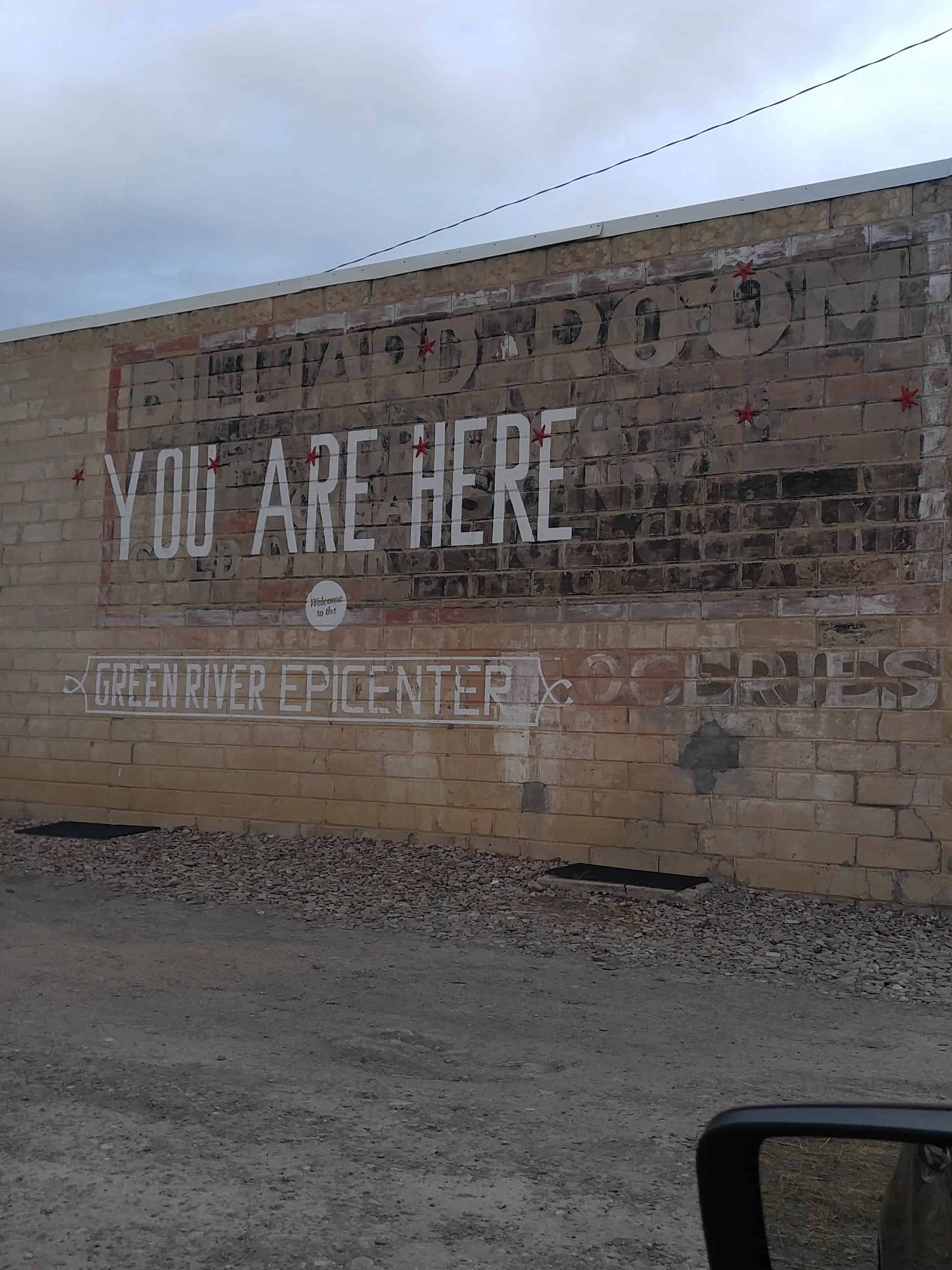
A makeshift settlement known as Blake City had been located at this site as early as 1879 along the newly established mail route connecting Salina, Utah, and Ouray, Colorado. The site of the settlement was at a favorable crossing of the Green River. In 1883 the Denver and Rio Grande Western Railroad established an east/west line along that route, helping ensure the existence of the settlement. The town took on the name Green River in 1895, but it was not until 1906 that the first town council was elected and a new townsite laid out. Green River was officially incorporated in 1910. This period of municipal growth corresponded with the local “Peach Boom,” during which the peach industry was introduced and thrived. Other community advances at that time were the construction of a two-story brick school in 1910, the erection of a metal-truss wagon bridge across the Green River in 1910, the establishment of a Mormon ward (congregation) in 1904, and the formation of a Presbyterian congregation in 1906 and the construction of their building in 1907.(*)
Related:


06 Wednesday Nov 2013
Posted in Uncategorized
Tags
The first organized attempt to conquer the swirling rapids and precipitous walled canyons of the Green and Colorado Rivers was made by Major John Wesley Powell, Civil War hero and explorer. Warned by Indians and mountaineers they would never return alive, Powell and 9 companions started from Green River Station, Wyoming Territory, on May 24, 1869, with 4 boats, instruments for making scientific observations, and provisions to last 10 months. For 97 days Powell and his men battled the elements, enduring tremendous deprivation and hardship. One man (Frank Goodman) left the company early in the journey, and 3 others (William Dunn, O.G. and Seneca Howland) later killed by Shivwits Indians, deserted near Grand Canyon, Arizona. On August 29, 1869, the 6 remaining men arrived at the junction of the Rio Virgin in southern Nevada, having navigated and charted over 900 miles of the river. In May, 1871, 2 years after his first river voyage, J.W. Powell again led an exploring party of 11 men in 3 boats down the Green and Colorado Rivers. Well into 1873 members of Powell’s party continued extensive and significant exploration and surveys of the region bordering the rivers traversed. The Powell Surveys are some of the most significant explorations achieved anywhere in the world.


The sign with the above information is located here: