• About JacobBarlow.com
  • Cemeteries in Utah
  • D.U.P. Markers
  • Doors
  • Exploring Utah Email List
  • Geocaching
  • Historic Marker Map
  • Links
  • Movie/TV Show Filming Locations
  • Oldest in Utah
  • Other Travels
  • Photos Then and Now
  • S.U.P. Markers
  • U.P.T.L.A. Markers
  • Utah Cities and Places.
  • Utah Homes for Sale
  • Utah Treasure Hunt

JacobBarlow.com

~ Exploring with Jacob Barlow

JacobBarlow.com

Tag Archives: Hall-parlor

Robert & Elizabeth Johnson Home

08 Friday Dec 2023

Posted by Jacob Barlow in Uncategorized

≈ Leave a comment

Tags

Hall-parlor, NRHP, oolite limestone

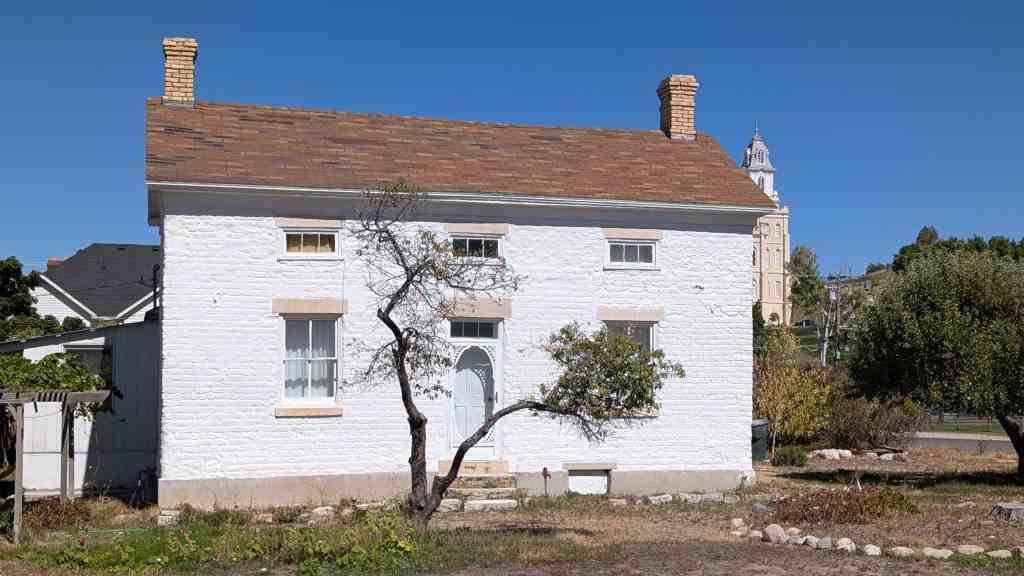
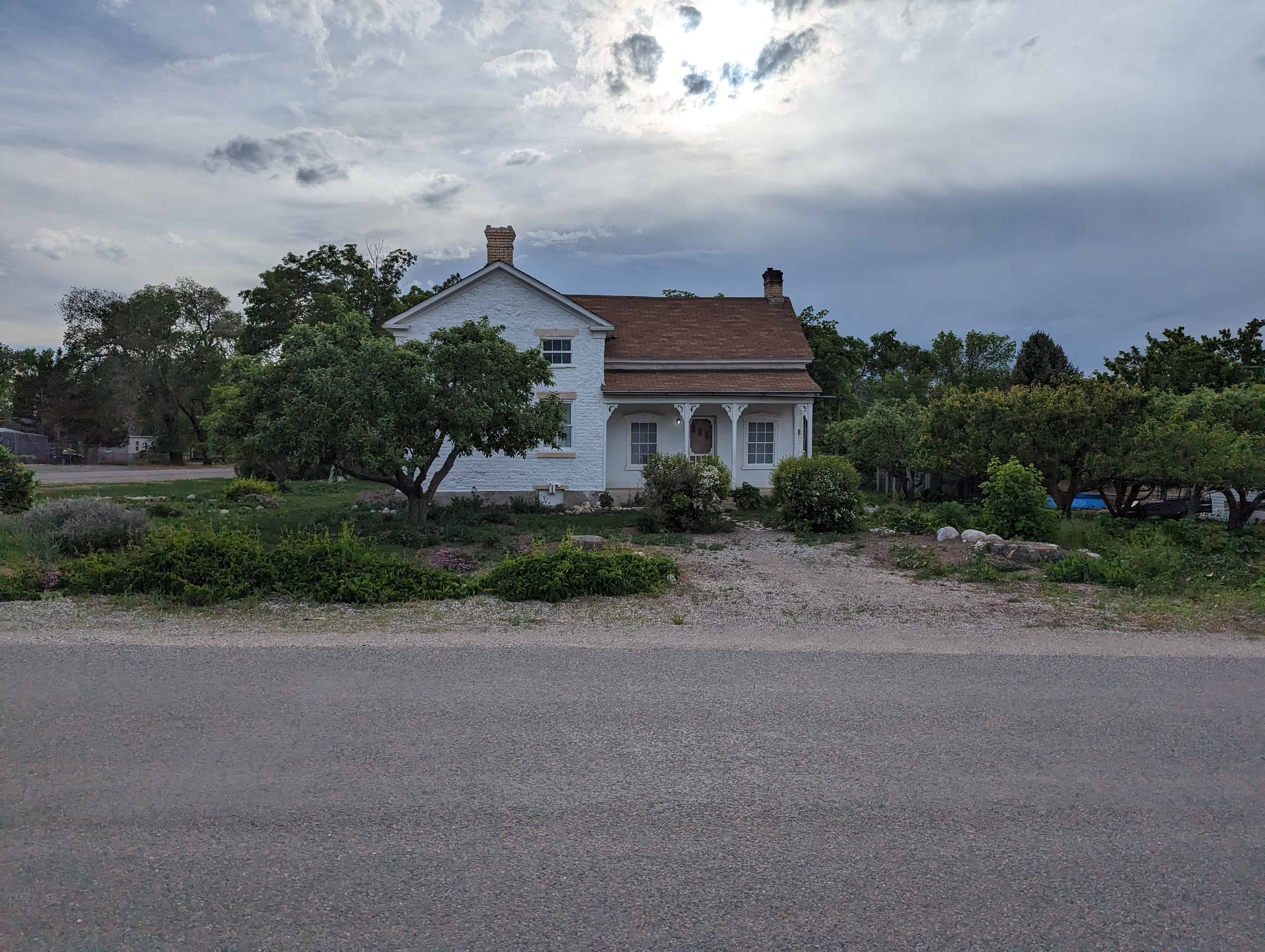
Robert & Elizabeth Johnson Home

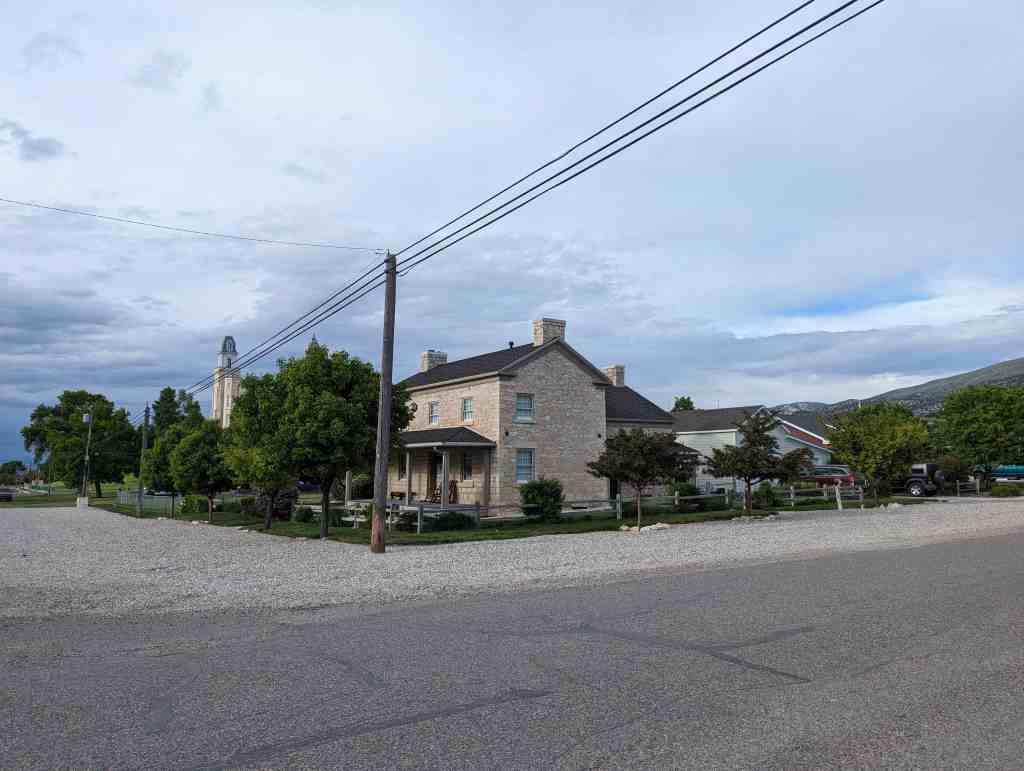
This two-story hall and parlor house, built by Robert Johnson in 1860, is significant as an example of early Sanpete Valley domestic vernacular design. Robert and wife Elizabeth, England natives and converts to the LDS Church, immigrated to Utah in 1853. By 1854 the Johnson’s were living in Manti and Robert was engaged in farming and adobe-making. By 1860, the year the home was built, Mr. Johnson had become a prosperous farmer. The Johnson family owned the property for several decades.
The Robert Johnson house is significant architecturally as an example of early Sanpete Valley domestic vernacular design. This two-story hall and parlor house, often termed an “I” house by folklife specialists, was a symbol of local economic and political achievement. Within the range of vernacular house types, there were serious economic divisions. The family of modest income might have a single room house, or a one-story two room hall and parlor house. Those more affluent would often choose this full two story type both for it s extra room and it s social status. The Robert Johnson house remains virtually unaltered and is one of the most striking monuments to early pioneer technology extant in Sanpete today. The house served to delimit one end of the economic spectrum in vernacular building and historically points to the basic discrepancy of wealth within the Mormon “village” community.

Robert Johnson, born in Chester, England in 1823, offers a nice illustration of the opportunities, both religious and economic, which the Church of Jesus Christ of Latter-day Saints offered it s converts. Johnson’s family was poor and as a youngster he was forced into factory work. Baptized into the Mormon Church, Johnson emigrated to Utah in 1853 with practically nothing. Living in Manti by 1854 Johnson engaged in making adobes and other odd jobs until he could secure a farm. By 1860 he could list himself as a prosperous farmer with holdings of about $750. Probably about 1860 he constructed the large stone house for his family. The house became a tribute to the American dream he shared with his fellow Mormon kingdom builders. The house belonged to the Johnsons until the 20th century when it was acquired by the Ernest Braithwaite family.


Located at 103 East 300 N in Manti, Utah and added to the National Historic Register (#80003949) on October 14, 1980.

The Robert Johnson house is a two-story stone “hall and parlor” folk/vernacular house type. There is a one story rear ‘T’ extension which was built as a part o£ the original house. The west two-story section is basically two-rooms over two-rooms with the south section the largest and containing the staircase. The stair’s are the open, banistered type and lead up directly behind the front door. A rear staircase, perhaps a later addition, runs up from the room in the rear. There are large fireplaces in each of the roans. The roof is gabled and stone internal wall chimneys are found at each end of the house.

The house is built of oolite limestone taken from the nearby “temple hill quarry”. The walls are coursed ashlar with the mortar incised to emphasize the geometric patterning of the stonework. The house has a symmetrical three-over-three opening façade. Lintels and sill s are cut stone and extra attention has been given to dressing the comer stones in order to highlight the quoins. Decorative details are sparse and relegated to single cornice and Greek revival gable returns.

The house remains in excellent condition and virtually unaltered externally. In the later 19th century a portion was added to the larger downstairs room to effect a central passageway.
Billings-Hougaard House

08 Friday Dec 2023

Posted by Jacob Barlow in Uncategorized

≈ Leave a comment

Tags

Hall-parlor

Billings-Hougaard House

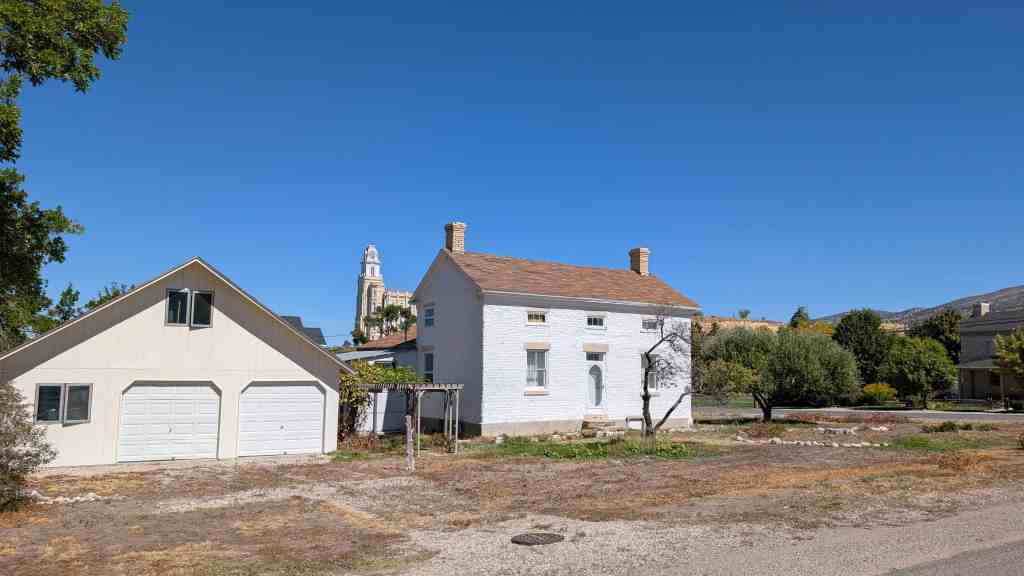
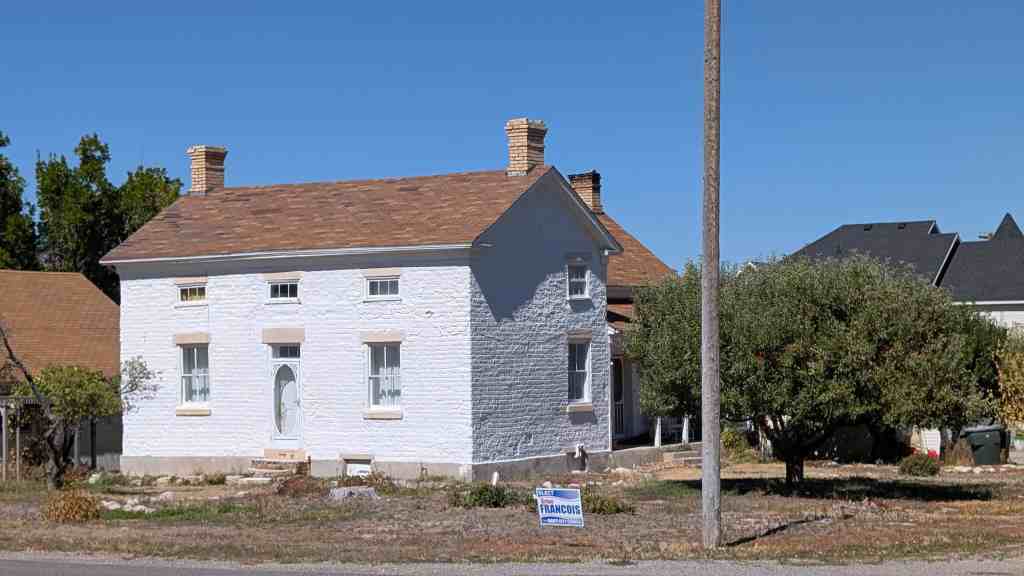
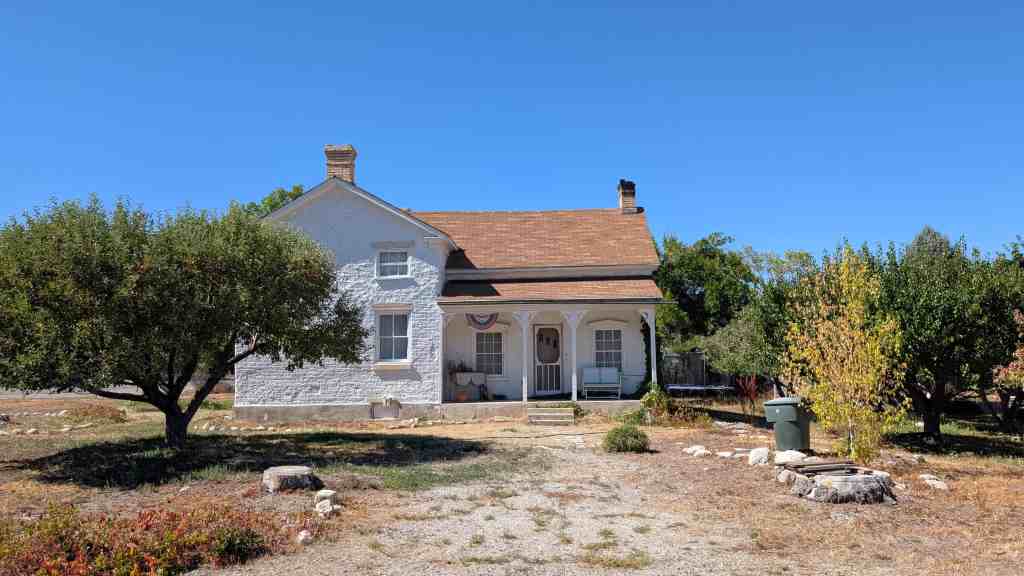
The Billings-Hougaard House is a folk/vernacular “hall and parlor” type house. The house faces south and measures about 30′ x 18′. It is 1-1/2 stories high with a basic two-room over two-room plan configuration. A one-story adobe rear ‘T’ extension can be found on the north side of the house. Frame porches were originally found on both sides of the rear ‘T’, however, now the west porch has been closed in to house a bathroom. The staircase to the upper story is located just behind the front door and rises from front to back rather sharply. This staircase is the older closet of “boxed” variety. A fireplace is located in the east front room and a stove flue in the west.

The Hougaard house (both the main house and the rear ‘T”) is constructed of very high quality adobe bricks. The adobes are laid up in a “common” bonding pattern and are unsheathed by plaster. There are only a few spots of weather deterioration and the adobes are in an overall excellent condition. The gable-end fireplaces are of a yellowish fired brick and are corbelled. Smooth cut limestone lintels and sill s are found on the lower façade windows. The upper windows, which are small half-windows contain only limestone lintels, the sills here are wood as they are on the side and rear openings.

The house has a rigidly symmetrical three bay façade. Greek Revival stylistic features predominate; the pitch of the roof is quite shallow, there are the half-height upper windows, and the slightly moulded cornice is returned on the gable ends.

The house has received only slight alterations: A cement foundation has been poured around the base probably to strengthen water damaged adobies and the west rear porch has been enclosed and plastered. Other than these rather minor instances, the Hougaard house remains in excellent historical condition.

(East side)


Located at 95 East 300 N in Manti, Utah and added to the National Historic Register (#80003948) on October 14, 1980.

The Billings-Hougaard house is architecturally significant as an excellent example of Utah folk/vernacular design and because it is one of the best surviving unsheathed adobe homes in the state.

Manti was initially settled by menbers of Church of Jesus Christ of Latter-day Saints in 1849.1 The town grew rapidly as church leaders channeled newly arriving converts to this Sanpete settlement. Indian hostilities in 1853-1856 period retarded growth, but by 1860 the community was well established with
many substantial and attractive homes being erected. The Billings-Hougaard House was probably constructed in the 1855-1860 period. A specific building date is hard to establish, but the house appears to have been initially constructed by Alfred Billings and it was only later that it was purchased by Rasmus Hougaard.

Alfred Billings the son of George Billings, was born in Geauga County, Ohio in1825. The family converted to Mormonism and came to Utah in 1848 and then was called to Manti in 1849. Alfred led the “Elk Mountain Mission” to Moab in 1855-56 and after returning to Manti for several years removed to Provo.
Billings owned this lot on block 97 (where the house stands) in the 1850’s. In 1855 when a communitarian impulse swept through the Mormon communities, Billings consecrated this lot to the LDS Church. Rasmus Hougaard, arriving from Denmark in 1863 bought the house from Billings.

Rasmus Hougaard (1806-1875) was a wealthy farmer from Virkel, Falster, Denmark. Hougaard was baptized into the Mormon Church in 1861 and because all new “saints” were to gather in Utah, or Zion, to prepare for the millennium, Hougaard emigrated with his family to Utah in 1862-1863. Hougaard was wealthy enough to financially support the passage of some 60 or 70 Danish LDS converts to Utah.

When the family arrived in Manti during the spring of 1863, Hougaard’s first thought was “to get a place to live and farmland to cultivate in order to make a living.” Hougaard immediately bought half of block 97 and 20 acres of land from Soren S. Christofferson. Later he acquired 30 more acres from Albert Smith & Jack Wood. John Hougaard, the second oldest son, recalled that his father “also bought two more little houses on the same block as the first. One of old Father Black who went to Dixie and another of Brother
Billings, we then owned the whole block number 97″. It seems likely that the last home purchased was that of Alfred Billings. No dates are given for the purchases, but Rasmus Hougaard shows up in the first courthouse land entry of 1869 as holding title to this lot.

Hougaard continued to work as a fanner and built a large rock bam and stable behind the adobe house (this barn complex stood until the early 1960’s). In 1864 Hougaard and his sons made adobies and constructed a kitchen on the back of the house. Rasmus died in 1875 and his son Louis Hougaard acquired the house in 1890 when the estate was settled. Most older residents today refer to the house as the “Louis Hougaard House”.

The “hall and parlor” house form is easily the most commonly encountered *folk/vernacular house in Utah. It is primarily an English form of the 16th and 17th centuries which became popular in the new American colonies. This two-room house diffused westward and became an essential feature of the
country carpenter’s building repertory by the mid-nineteenth century. In one, one-and-a-half and a full two-story form, this hall and parlor house can be found in all Utah communities. The Billings-Hougaard House, with its intriguing half-height upper windows and Greek revival proportions, is one of the finest examples of this ubiquitous type.

The Billings-Hougaard House is significant then primarily because of its architecture. In the context of the vernacular period of domestic house design in Utah, the house is representative of one extremely popular plan yet remains distinctive in it s own particular articulations of Greek Revival stylistic thinking. Adding further importance to this structure is the fact that it is one of the best surviving adobe homes in the Sanpete Valley and for that matter, the State of Utah. Adobe was, during 1850-1880 period, widely utilized by Mormon craftsmen because of its availability and low cost. Some adobe homes were plastered for practical and aesthetic reasons at the time of original construction. Yet most adobe homes were left unsheathed and suffered the ravages of wind and rain. Many deteriorated badly or were covered with plaster or aluminum siding in the mid-twentieth century so that today very few of the older, uncovered adobe structures remain. The Billings-Hougaard house then, is also significant as a rare example of well
preserved adobe technology.

Bottino Residence

11 Friday Nov 2022

Posted by Jacob Barlow in Uncategorized

≈ Leave a comment

Tags

Carbon County, Hall-parlor, Helper, NRHP, utah

Bottino Residence

This one-story vernacular (the common building style of a period or place) house was built in 1903 of hand-hewn stone laid in a random ashlar pattern. The original part of the building is a late example of a hall-parlor house type, which was common in Utah during the second half of the nineteenth century. The house was built by John Bottino and used as a rental property until 1944 when his son, Jim, acquired the property and lived here with his wife, Ida.

249 South 100 West in Helper, Utah

Follow Jacob

Follow Jacob

Blog Stats

  • 2,038,569 hits

Social and Other Links

BarlowLinks.com

Recent Posts

  • Spencer and Helen Isom “Home”
  • Shetlar Wagon
  • Pioneer Hay Barn, Manger, and Corral
  • Grain Reaper
  • Early Pioneer Granary and Home

Archives


Loading Comments...