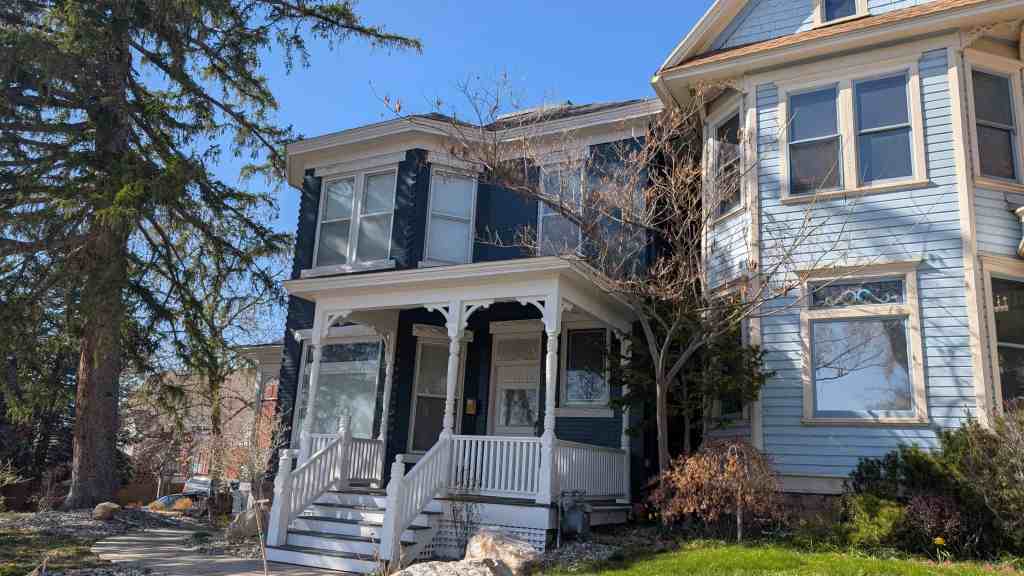
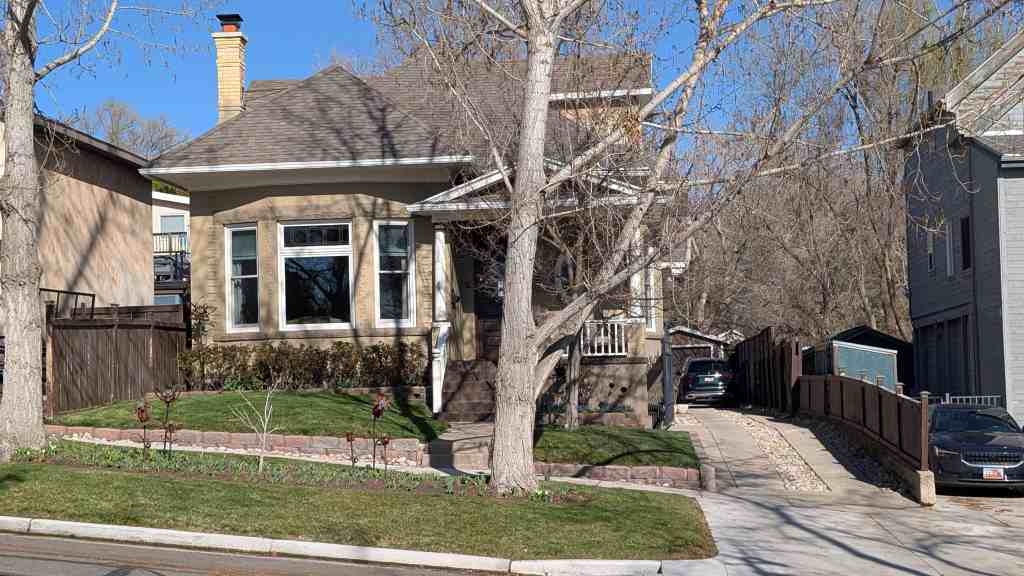
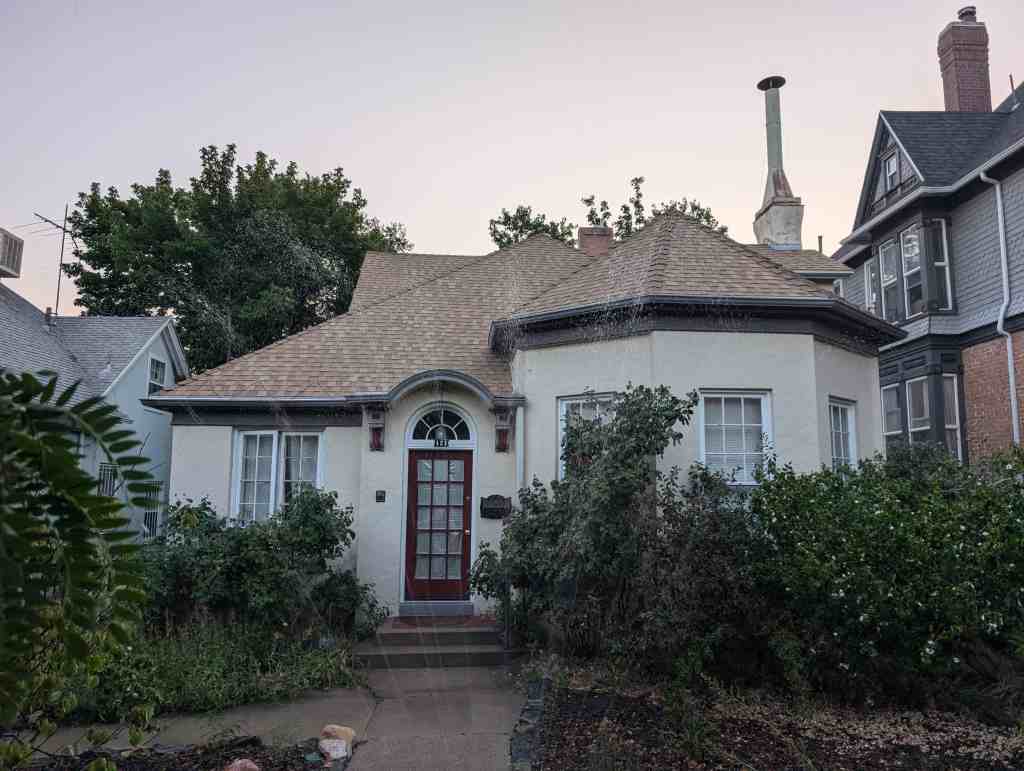
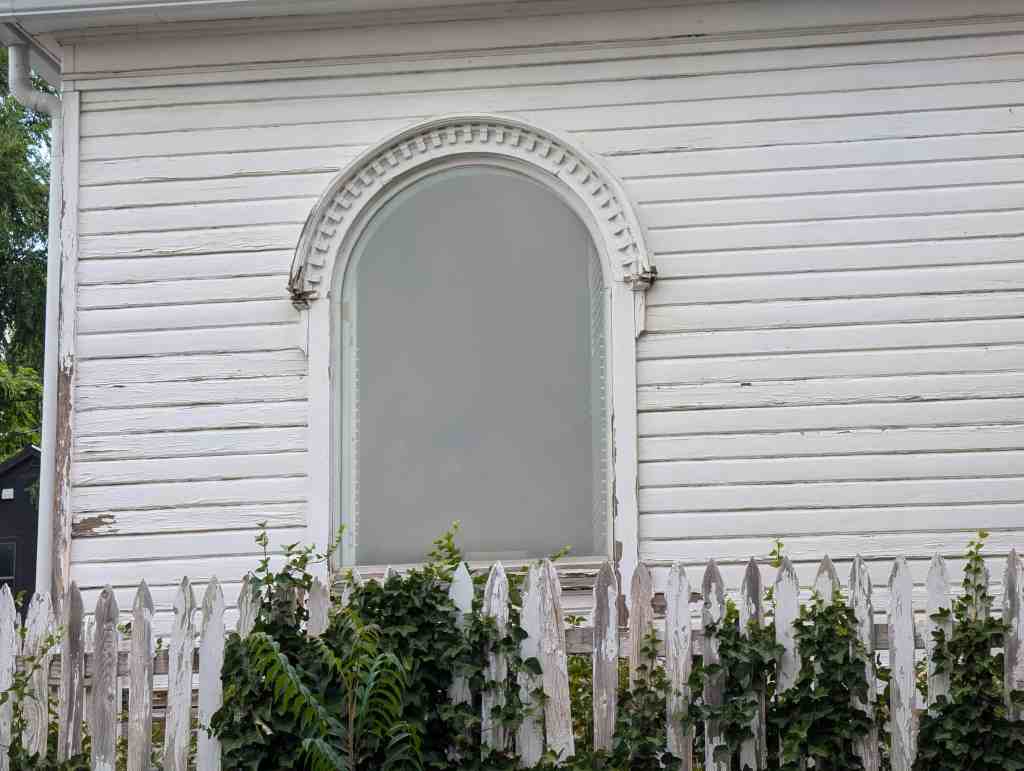
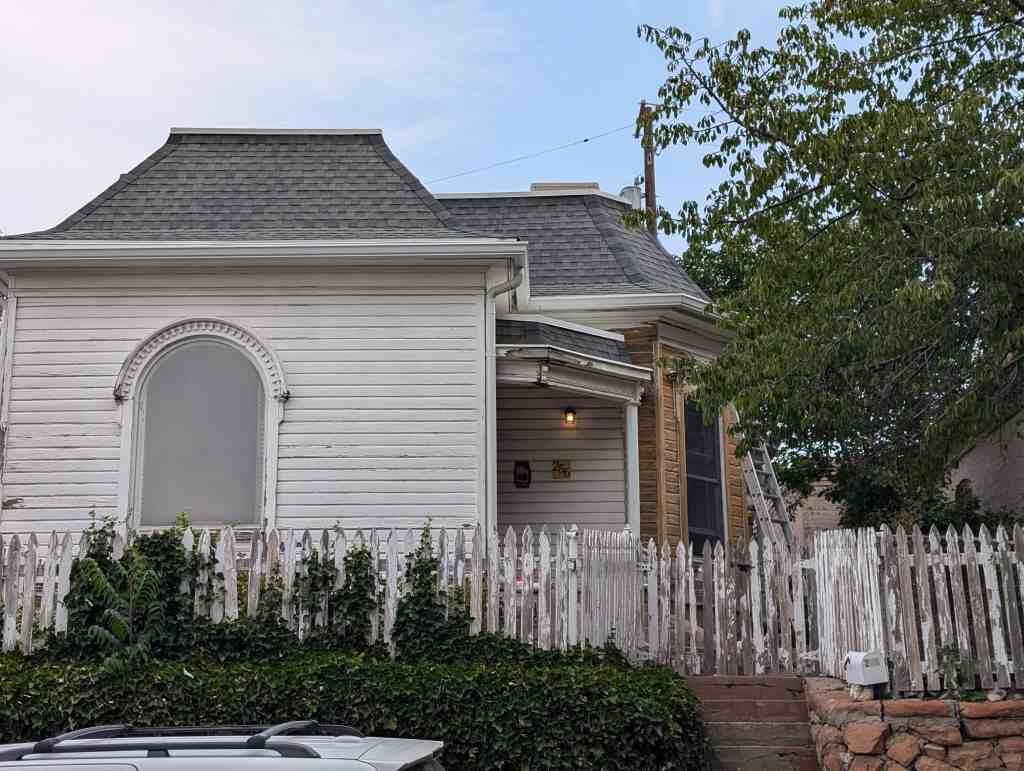
This two story Victorian Eclectic style house was built in 1892 for Elijah Griffith, a partner in a contracting firm. Griffith lived in the house only a short time, selling it to Patrick Gibbons, who was also a contractor and lived in the house until his death in 1914. The truncated hip roof, projecting front bay, leaded glass transoms and wood detailing, particularly on the porches, are characteristic of the style and contribute to the character of the historic district.
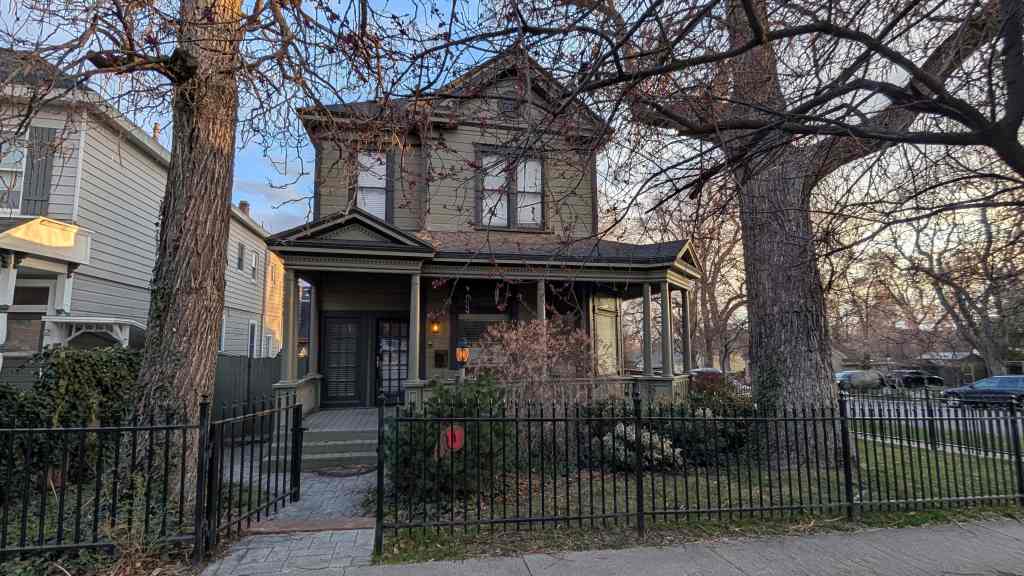
This home is one of two neighboring houses built in 1890 by Samuel Woolf, a Jewish merchant. His brother lived at 658 3rd Avenue. Ownership of the house changed several times between 1899 and 1924 when it was purchased by Mary E. Nuslein. She lived here until her death in the mid-1930s and the home remained in the Nuslein family until the late 1960s. This building is an excellent example of a two story frame Victorian eclectic style home.
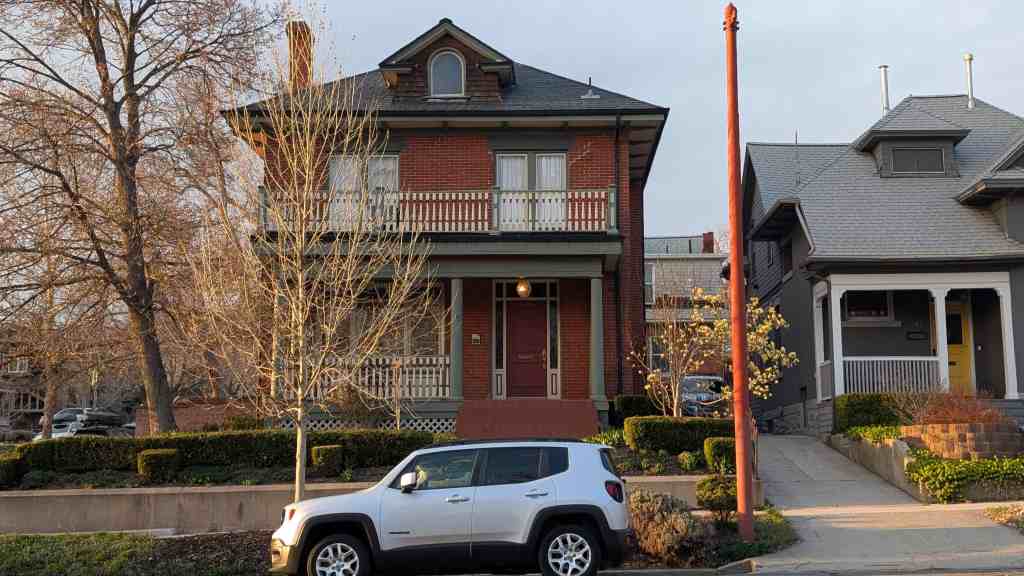
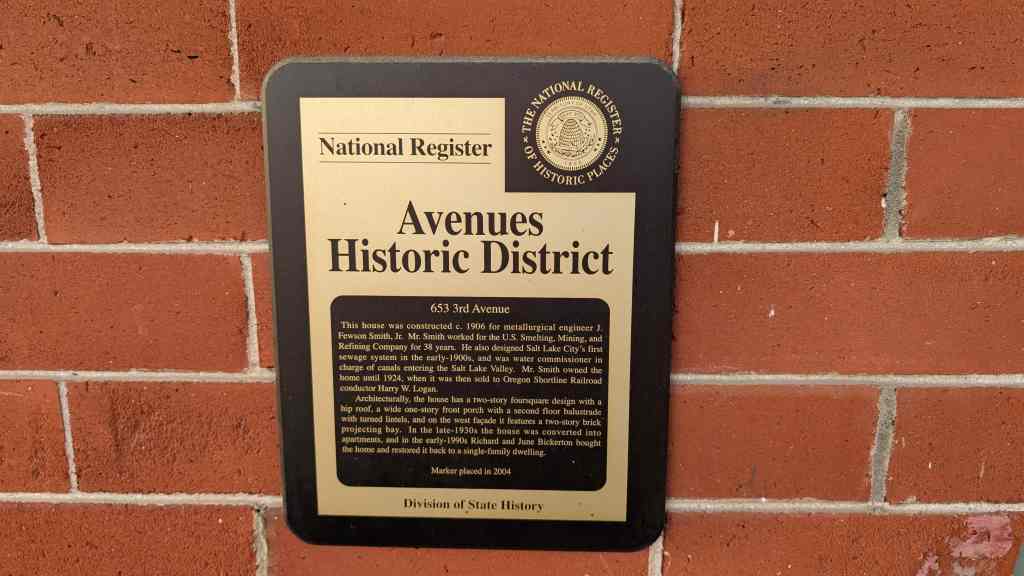
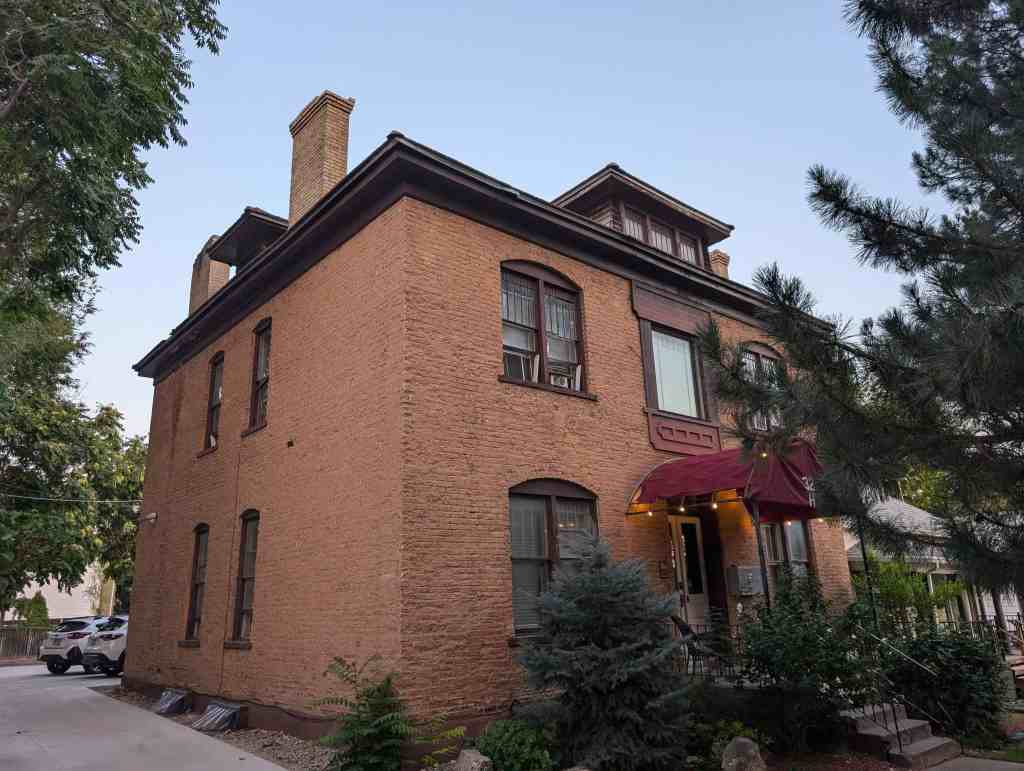
This house was constructed c. 1906 for metallurgical engineer J. Fewson Smith, Jr. Mr. Smith worked for the U.S. Smelting, Mining, and Refining Company for 38 years. He also designed Salt Lake City’s first sewage system in the early-1900s, and was water commissioner in charge of canals entering the Salt Lake Valley. Mr. Smith owned the home until 1924, when it was then sold to Oregon Shortline Railroad conductor Harry W. Logan.
Architecturally, the house has a two-story foursquare design with a hip roof, a wide one-story front porch with a second floor balustrade with turned lintels, and on the west façade it features a two-story brick projecting bay, In the late-1930s the house was converted into apartments, and in the early-1990s Richard and June Bickerton bought the home and restored it back to a single-family dwelling.
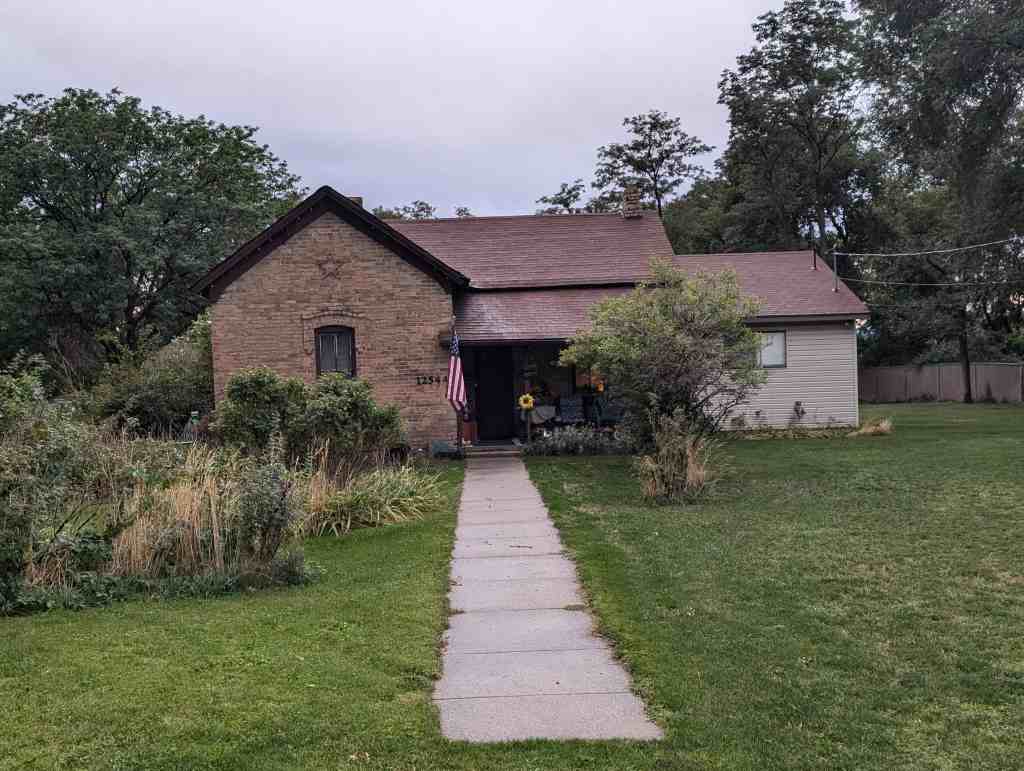
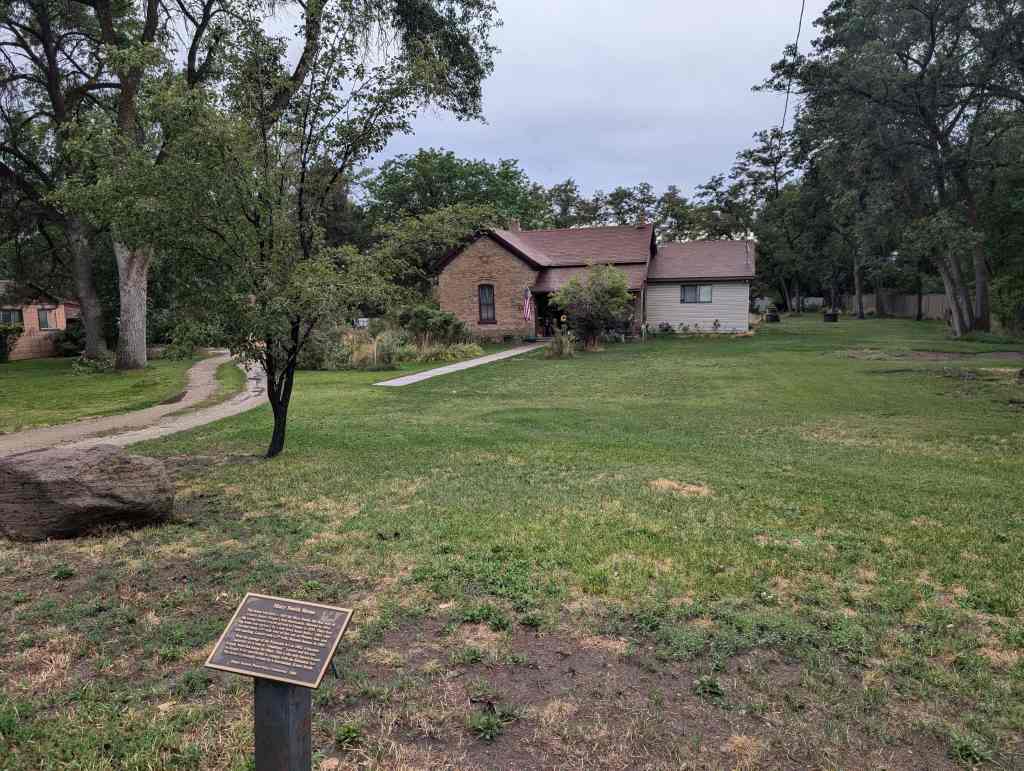
The Mary Smith House, a brick cross-wing Victorian, built c. 1883, is historically significant as one of the few houses in Draper built to accommodate a polygamous family and is the only known house in the community built specifically to comply with the 1882 Edmunds Act, which outlawed “cohabitation”. one man sharing his house with more than one wife. The Edmunds Act was one of the major steps taken by the federal government to force the Mormon Church into giving up polygamy. The house was likely built to protect Lauritz Smith, Mary’s husband, from prosecution. Mary, Lauritz’s first wife, moved into this house, while Hannah, the second wife, remained in the family home less than a quarter-mile away.
12423 South Relation Street (1565 East) in Draper, Utah
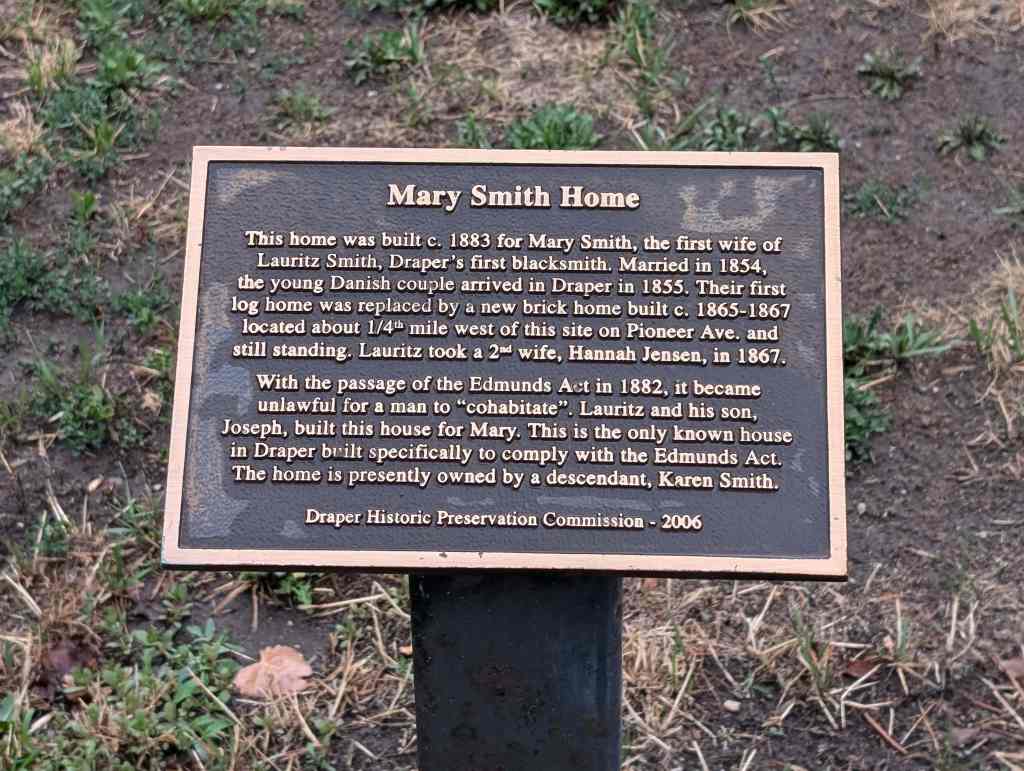
Mary Smith Home
This home was built c. 1883 for Mary Smith, the first wife of Lauritz Smith, Draper’s first blacksmith. Married in 1854, the young Danish couple arrived in Draper in 1855. Their first log home was replaced by a new brick home built c. 1865-1867 located about 1/4th mile west of this site on Pioneer Ave. and still standing. Lauritz took a 2nd wife, Hannah Jensen, in 1867.
With the passage of the Edmunds Act in 1882, it became unlawful for a man to “cohabitate”. Lauritz and his son, Joseph, built this house for Mary. This is the only known house in Draper built specifically to comply with the Edmunds Act. The home is presently owned by a descendant, Karen Smith.
This transitional bungalow with Victorian architectural details was constructed in 1903 for Charles and Alice Dangerfield. Charles was a tinsmith from England. Following his death in 1913, Alice lived here until about 1930, and rented the home until 1945. She then sold the house to Albert T. Shepherd who was a well-known violinist in Utah. Born in Paris, Idaho. Shepherd moved to Utah for early music training and was then accepted into the New England Conservatory of Music. He trained there for six years, receiving instruction from Felix Winternitx. Following his music training, Shepherd performed extensively in New York and throughout the Northeast. He then returned to Utah to become a music teacher. Shepherd married Alice Anderson in 1934. Alice was also an accomplished violinist, who taught music in Salt Lake City, Phoenix, Arizona, and Idaho. She played with the Salt Lake and Phoenix symphonies and for KSL Radio.
This one-and-one-half-story Victorian-eclectic house was constructed in 1887 for Dr. Ellen B. Ferguson. Ellen was the house physician at Deseret Hospital. She was also involved in the suffrage movement, organized the Women’s Democratic Club, and was the only female delegate to the 1896 Democratic National Convention. Also in 1896, Ellen became the first female deputy sheriff in the United States. In 1900, the year she moved to New York, she sold the house to Jane Robbins, a restaurateur who owned restaurants throughout Utah.
Constructed c. 1898, this two-story brick house has elements of the Foursquare type of architecture and features a hip roof with dormers, four chimneys, arched front door opening, and segmental arched windows. Although the original owner and builder are unknown, by 1900 the home was owned by Sereno B. Tuttle. Mr. Tuttle, a native of Ohio, came to Utah at the turn of the century and established a large real estate company, Tuttle Brothers. In 1909 he sold the house to Julius Rosenberg, a leader in Salt Lake City’s Jewish community and a prominent real estate investor in Utah and Idaho. In 1932 Mr. Rosenberg moved to another house in the Avenues and converted this into a rental.
Constructed in 1884, this Victorian cottage is fairly typical of residences built in Salt Lake City and other urban areas of the state during the late 19th century. The house form is a type known as a central block with projecting bays. The main portion of the house is augmented with one or more large bay windows. The property title suggests the house was constructed for James Fowler. Fowler, a convert to The Church of Jesus Christ of Latter-day Saints, immigrated from Yorkshire England in 1872. Fowler worked as a stone cutter for Watson Brothers, Elias Morris Sons Co., and also independently. Fowler’s first wife, Elizabeth died in 1901, and he married Sarah Dansey in 1904. The house was sold in 1903 to Lorenzo Snow, Jr., son of Church of Jesus Christ President, Lorenzo Snow.
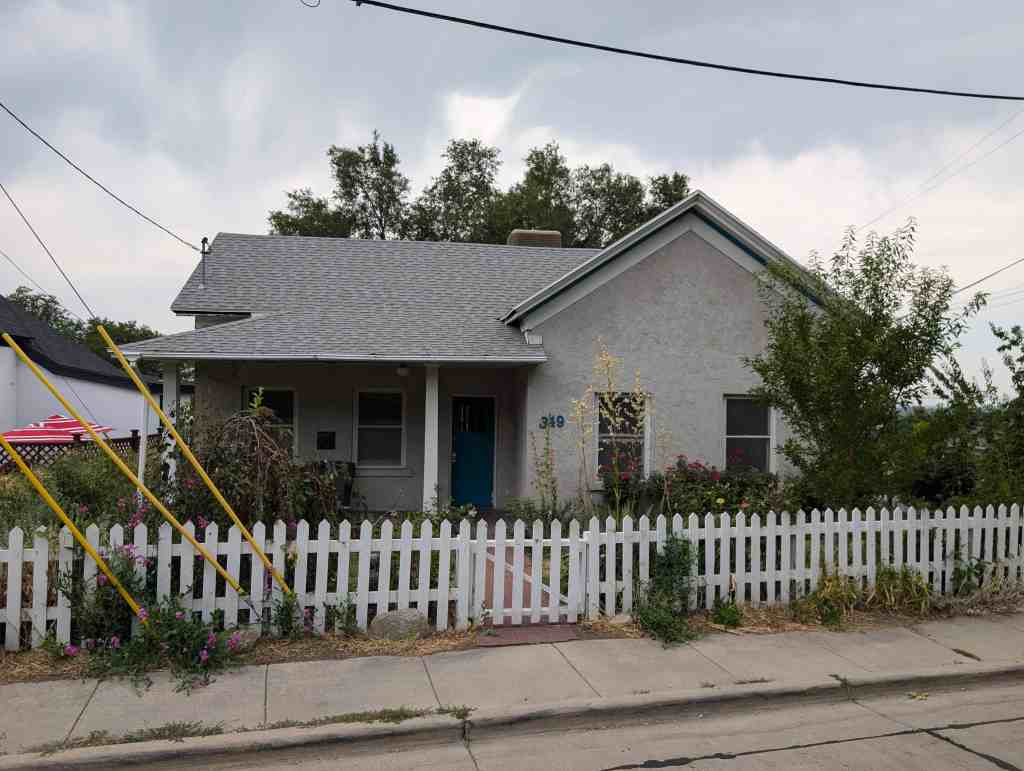
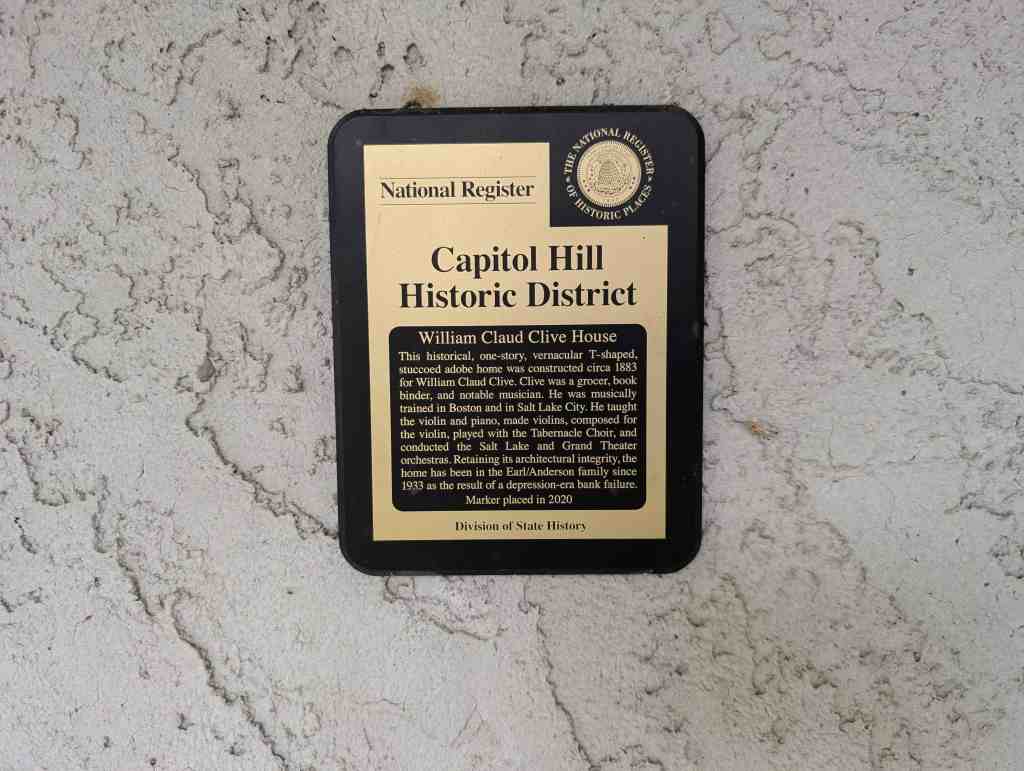
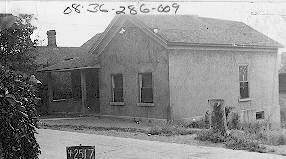
This historical, one-story, vernacular T-shaped, stuccoed adobe home was constructed circa 1883 for William Claud Clive. Clive was a grocer, book binder, and notable musician. He was musically trained in Boston and in Salt Lake City. He taught the violin and piano, made violins, composed for the violin, played with the Tabernacle Choir, and conducted the Salt Lake and Grand Theater orchestras. Retaining its architectural integrity, the home has been in the Earl/Anderson family since 1933 as the result of a depression-era bank failure.