
Tags
historic, Historic Homes, Manti, museums, NRHP, Sanpete County, utah
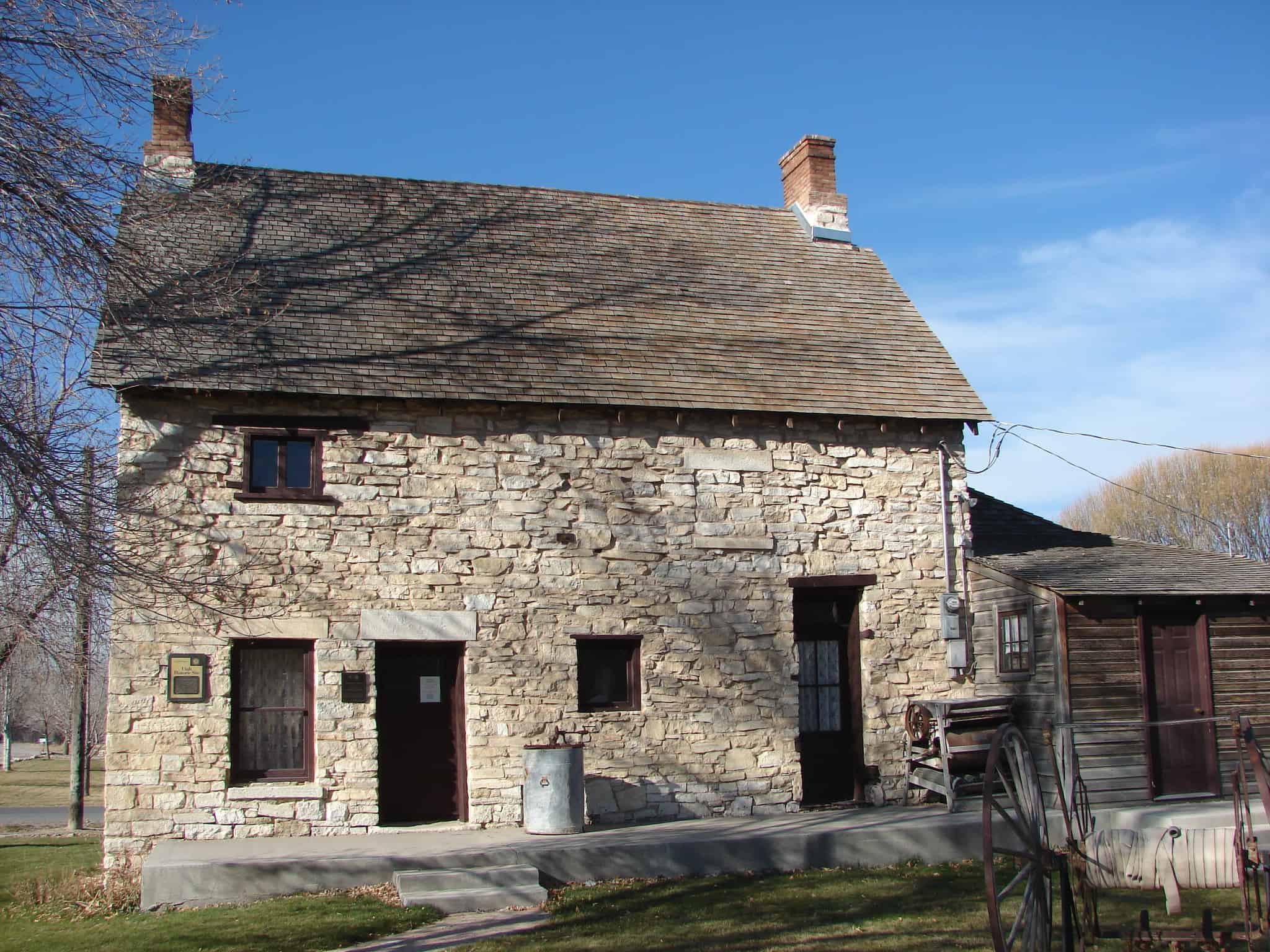
John Patten Jr. House
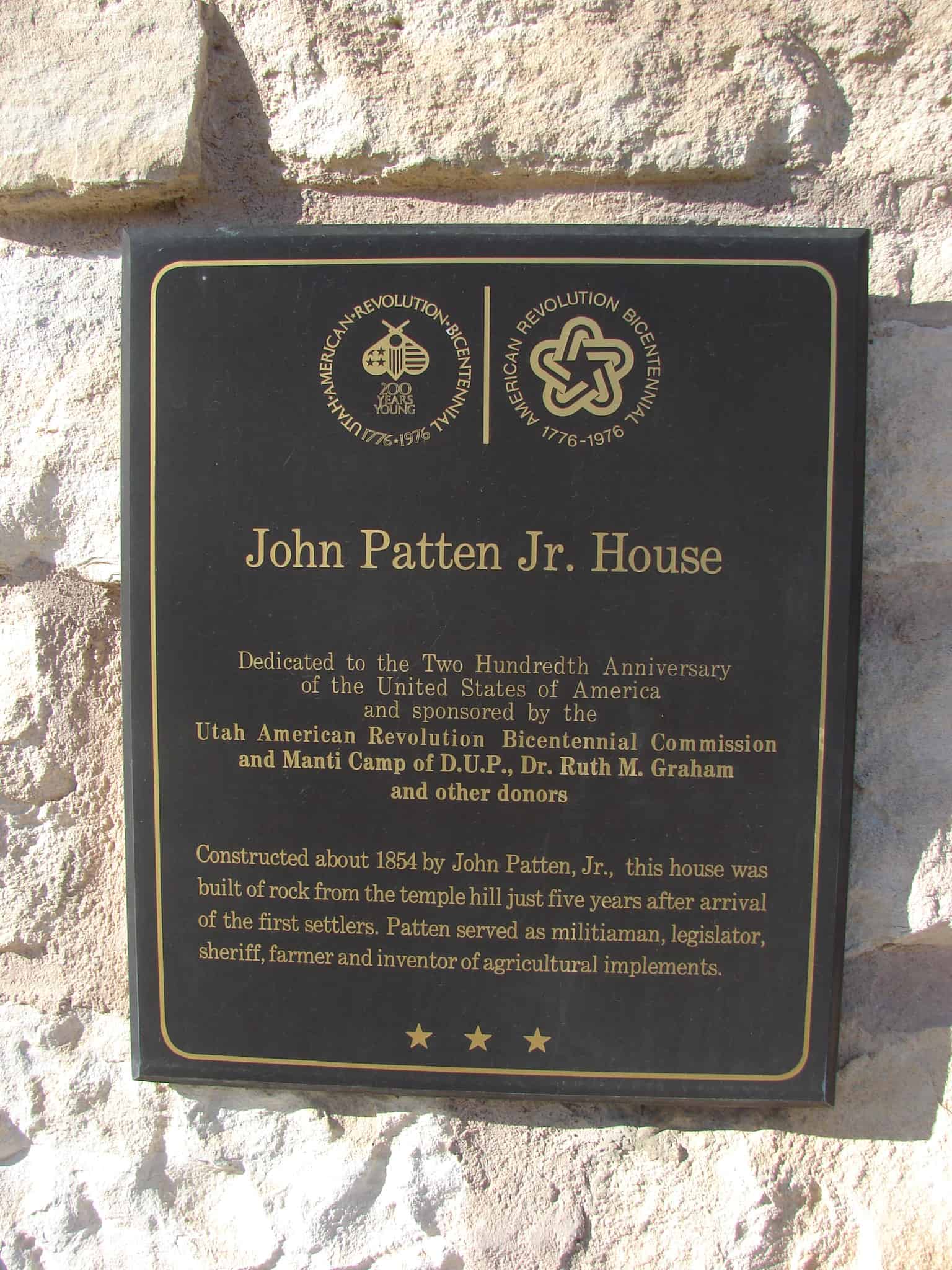
Dedicated to the Two Hundredth Anniversary
of the United States of America
and sponsored by the
Utah American Revolution Bicentennial Commission
and Manti Camp of D.U.P, Dr. Ruth M. Graham
and other donors
Constructed about 1854 by John Patton, Jr., this house was built of rock from the temple hill just five years after arrival of the first settlers. Patton served as militiaman, legislator, sheriff, farmer and inventor of agricultural implements.
The John Patten House was constructed c.1854 of limestone. John Patten came to Utah in 1850 and settled in Manti. He was active in community affairs serving as a representative to the Utah Territorial Legislature, Sheriff of Sanpete County and a member of the City Council. The vernacular style house is an excellent example of early pioneer stone construction in Utah. The house was acquired May 23, 1976 with the assistance of a grant from the Utah Bicentennial Commission and the help of Dr. Ruth Graham, a descendant of John Patten.

The John Patten House is located at 84 West 300 North in Manti, Utah and was added to the National Historic Register on (#77001315) August 22, 1977.
The two-story limestone home built by John Patten, Jr., c. 1854 is a well-preserved example of early vernacular Mormon architecture in Utah. Patten played a prominent role in the settlement of Manti, established in 1849 as one of the earliest of approximately 400 colonies in the “Mormon Corridor.”
John Patten was born in Fairplay, Green County, Indiana, June 20, 1825. His family was among the earliest converts to the Church of Jesus Christ of Latter-day Saints (Mormon Church). As John grew up, he experienced the many persecutions of the Mormons in Missouri and in 1839 was among those to sign a covenant of protection and removal, authored by Brigham Young in response to an order of extermination by General Clark of Missouri. Patten came to Utah in 18SO and located in Manti, one of Utah’s oldest cities, where he assisted in building the first fort in 1852. He took an active part in the Walker and Black Hawk wars and was one of three witnesses to receive a treaty of peace and deed to Sanpete County from Arapine, Chief of the Ute Indians, May, 1855. Patten was prominent in civic activities, serving as a representative to the Territorial Legislature, Sheriff of the county and member of the City Council. He was married in Manti to Candace Smith who later died, leaving two sons and three daughters. He was married again to Emily, a widow and sister of his first wife. She had three sons and two daughters.
Patten was a farmer by occupation. He built the Patten Reservoir and Patten Ditch, an irrigation system still in use which runs water to farmland five miles north of Manti. Somewhat of an inventor, Patten is credited with constructing the first “go-devil,” a device used to lay off furrows for irrigation flow in farm fields. As a sideline, he also tried to develop a “perpetual motion” machine.
John Patten built his two-story limestone home c. 1854 after living next to the oolitic limestone quarry for a few years. The vernacular style home represents the earliest and most primative form of stone masonry construction in pioneer Utah. The walls of the home were laid in coursed rubble using crude mud mortar, most of which has washed away. Local residents call this mode of construction “dry wall.” The two-overtwo plan with dirt floor cellar also documents a typical early Mormon pioneer plan type. Although some alterations and small additions of brick and wood have been made, the John Patten Home is basically well-preserved. The home was lived in continuously until 1975 when it became a museum for the Daughters of the Utah Pioneers.
Pingback: Manti, Utah | JacobBarlow.com