
Utah Heritage Trees
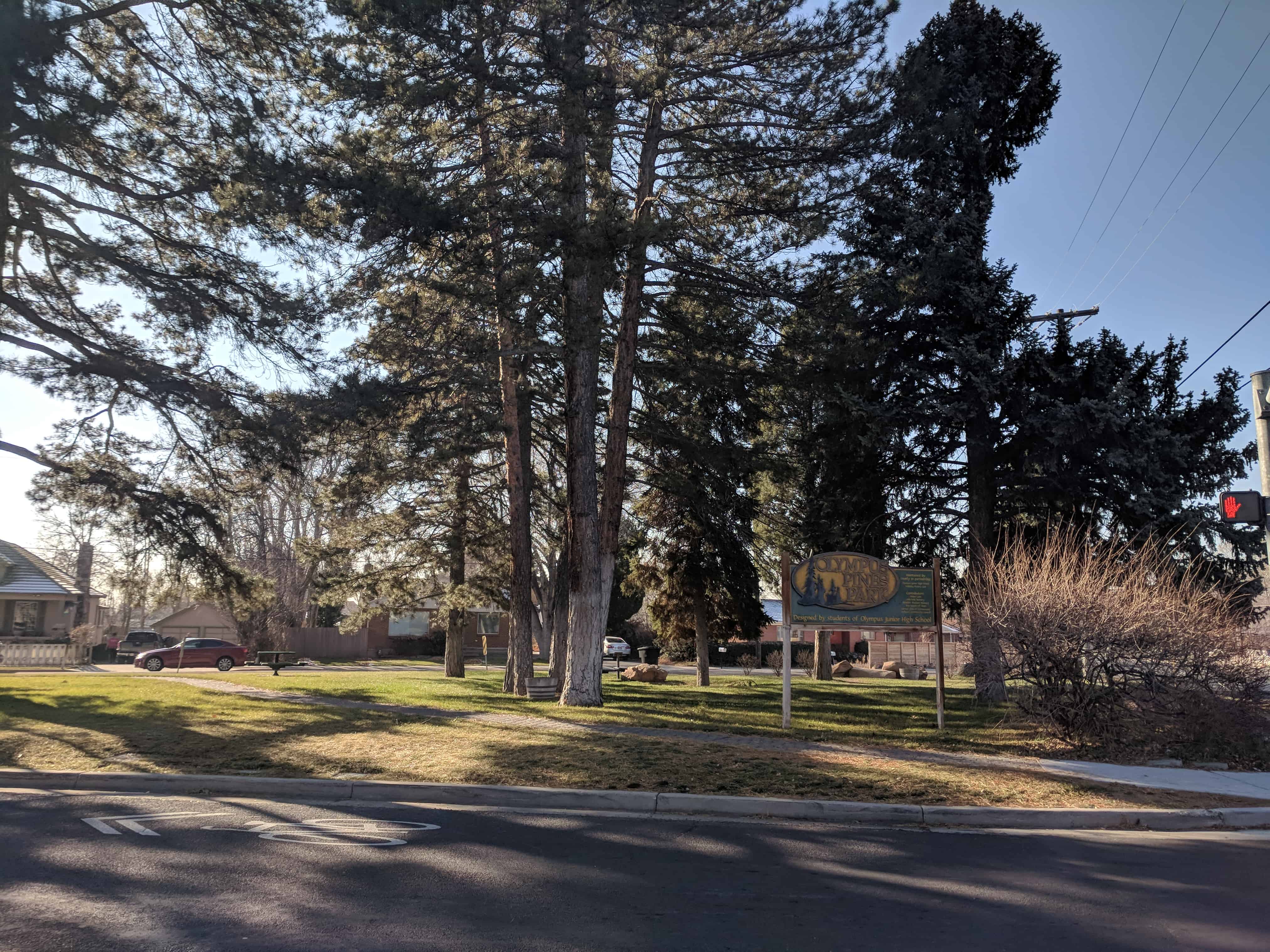
Largest Austrian Pines in United States
Dedicated by Olympus Jr High
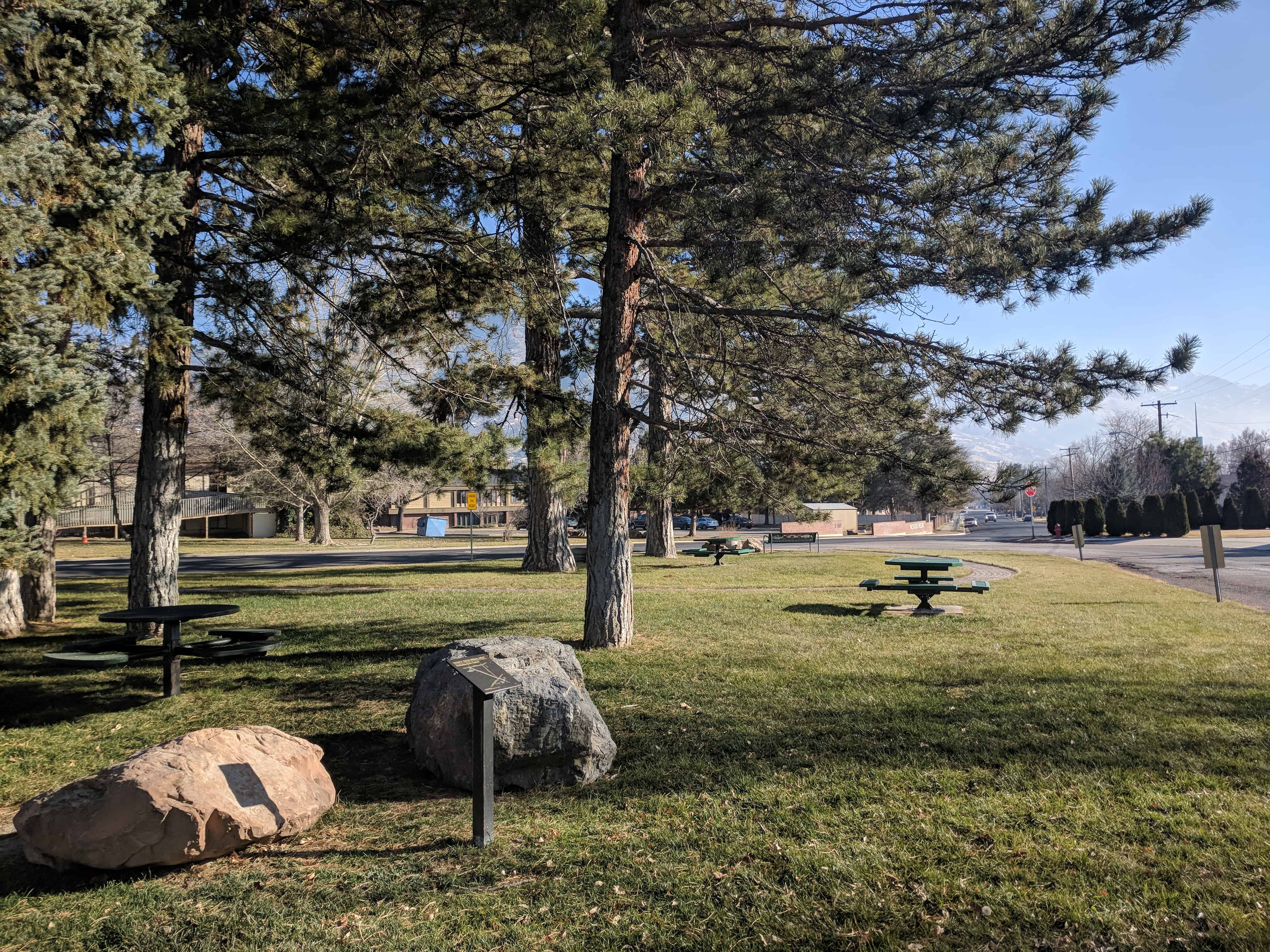
Located in Olympus Pines Park in Holladay.
May 1994




11 Monday Dec 2017
Posted in Uncategorized
Utah Heritage Trees
Largest Austrian Pines in United States
Dedicated by Olympus Jr High
Located in Olympus Pines Park in Holladay.
May 1994
11 Monday Dec 2017
Posted in Uncategorized
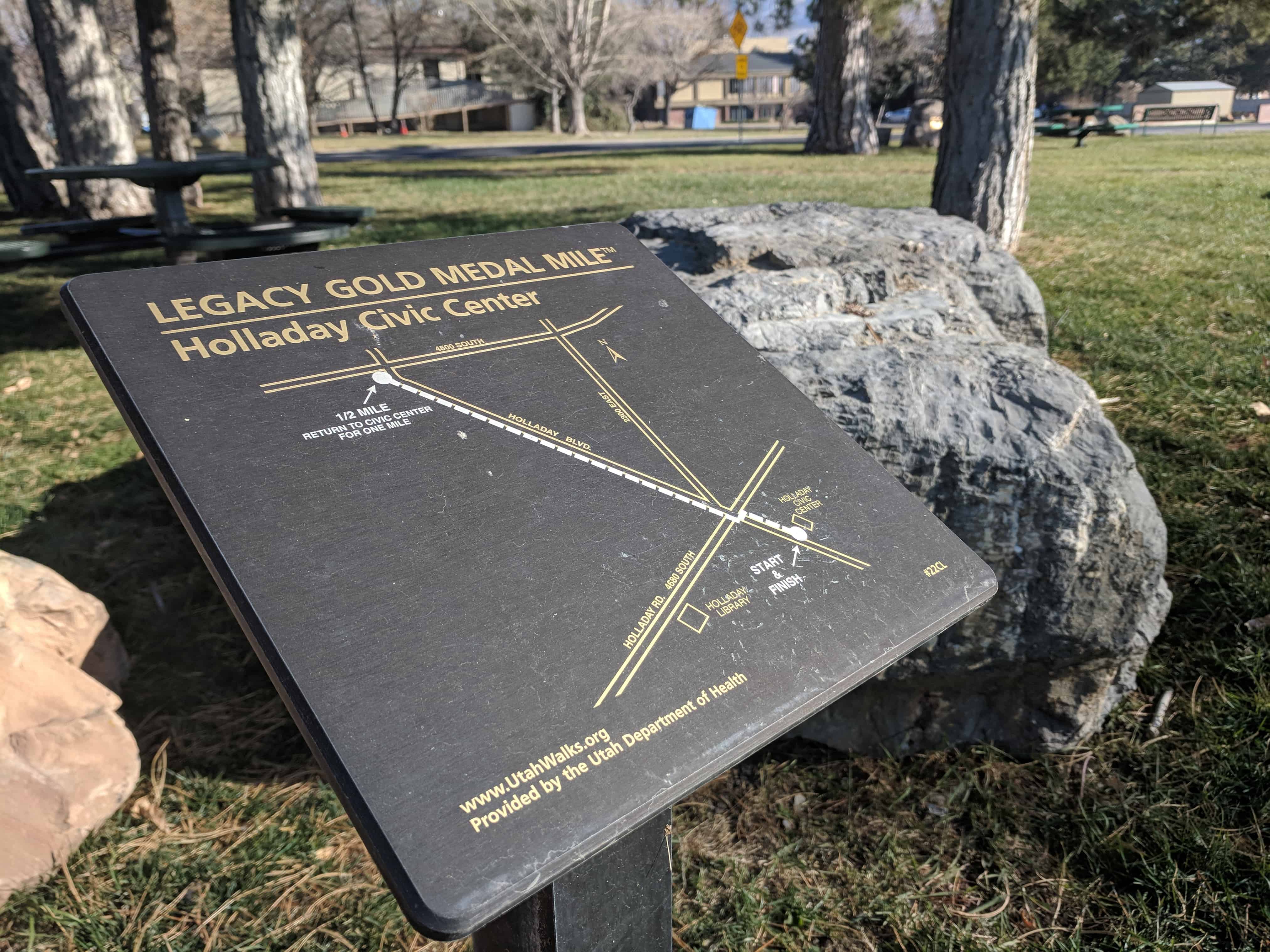
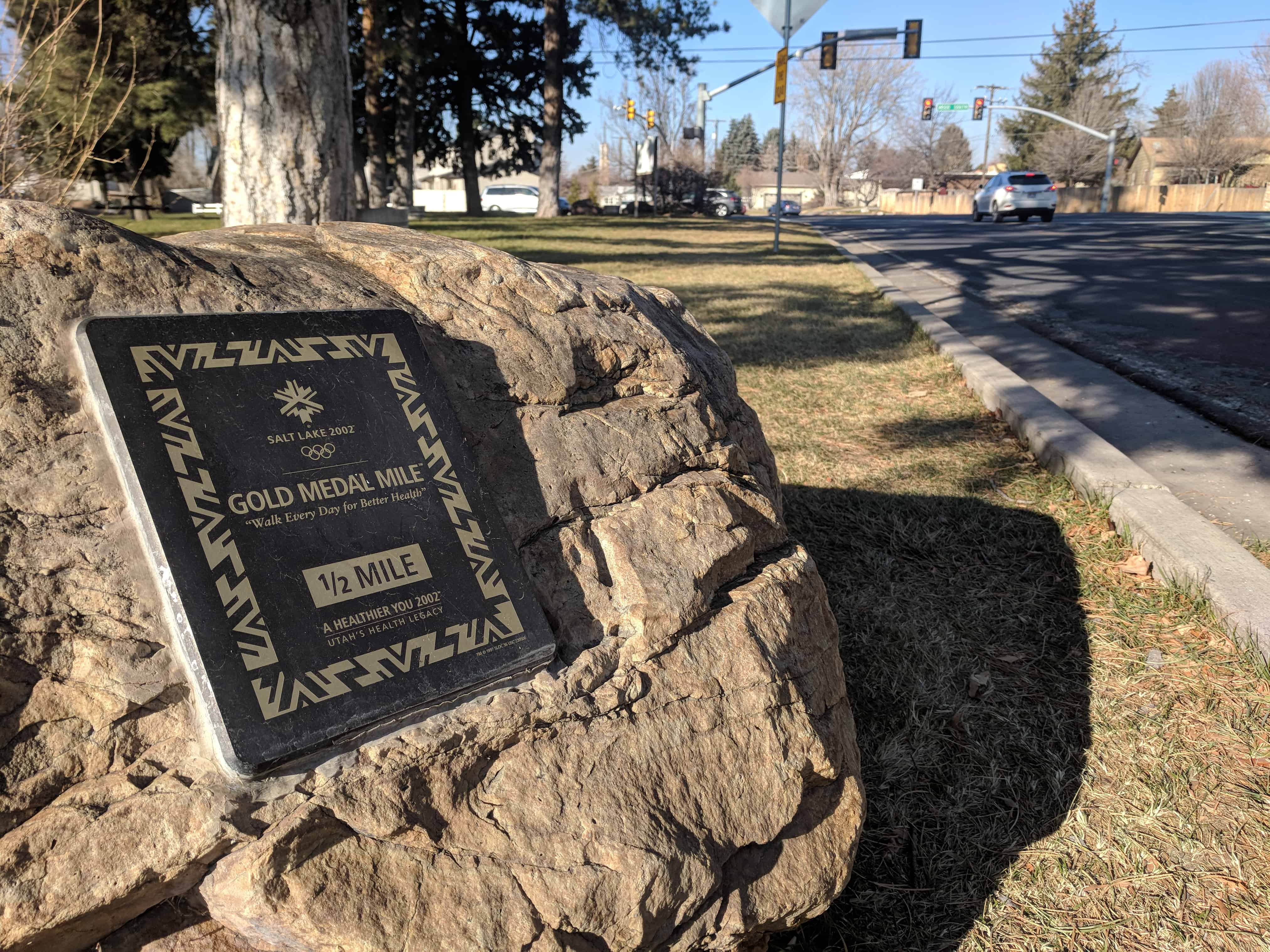
One of the Gold Medal Miles is located here in Olympus Pines Park in Holladay. For others on the list visit this page.
08 Friday Dec 2017
Posted in Uncategorized

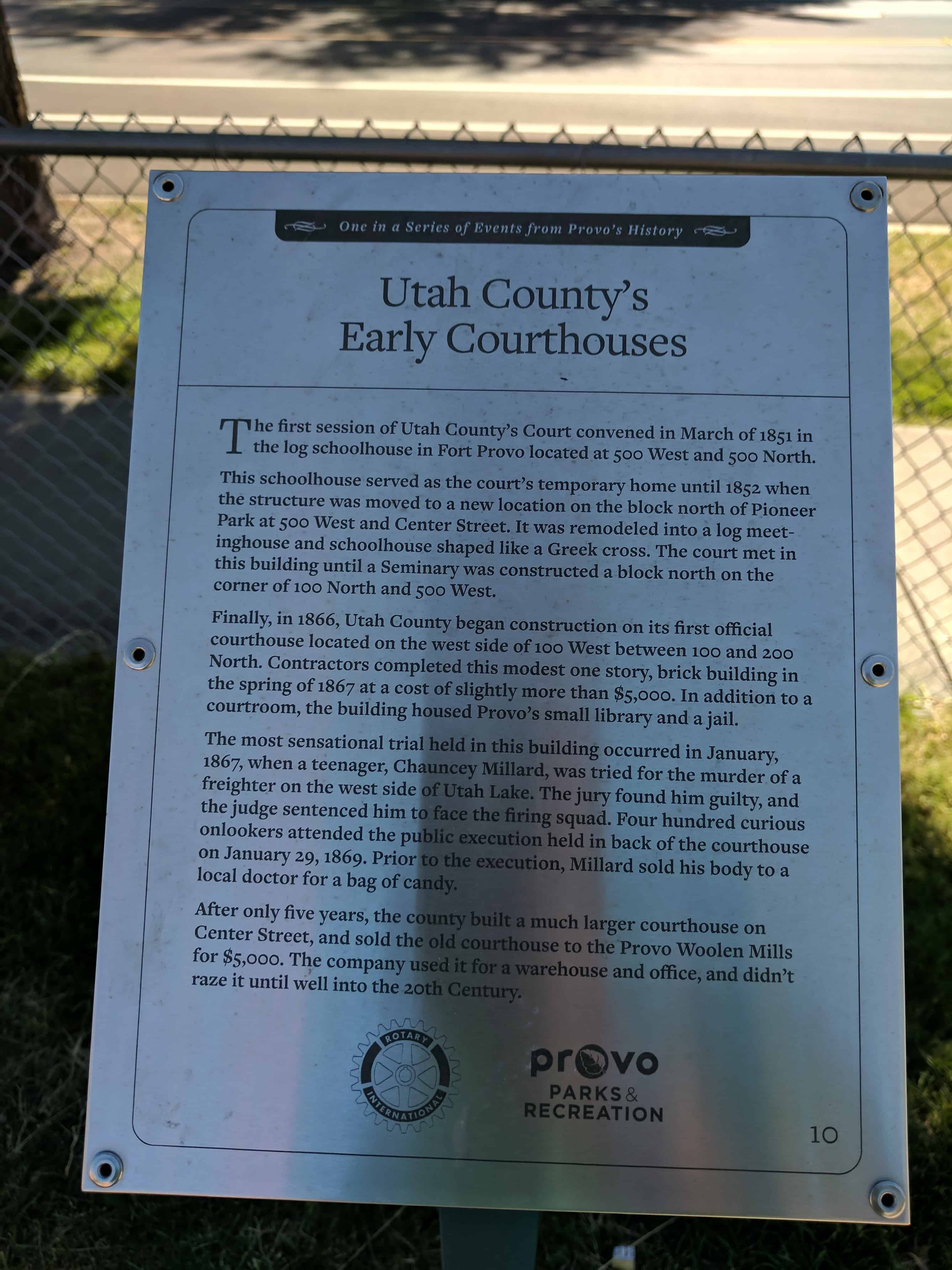
Utah County’s Early Courthouses.
The first session of Utah County’s Court convened in March of 1851 in the log schoolhouse in Fort Provo located at 500 West and 500 North.
This schoolhouse served as the court’s temporary home until 1852 when the structure was moved to a new location on the block north of Pioneer Park at 500 West and Center Street. It was remodeled into a log meetinghouse and schoolhouse shaped like a Greek cross. The court met in this building until a Seminary was constructed a block north on the corner of 100 North and 500 West.
Finally, in 1866, Utah County began construction of its first official courthouse located on the west side of 100 West between 100 and 200 North. Contractors completed this modest one story, brick building in the spring of 1867 at a cost of slightly more than $5,000. In addition to a courtroom, the building housed Provo’s small library and a jail.
The most sensational trial held in this building occured in January, 1867, when a teenager, Chauncey Millard, was tried for the murder of a freighter on the west side of Utah Lake. The jury found him guilty, and the judge sentenced him to face the firing squad. Four hundred curious onlookers attended the public execution, Millard sold his body to a local doctor for a bag of candy.
After only five years, the county built a much larger courthouse on Center Street, and sold the old courthouse to the Provo Woolen Mills for $5,000. The company used it for a warehouse and office and didn’t raze it until well into the 20th Century.
This is plaque #10 in the Series of Events from Provo’s History and is located in Maeser Park in Provo.
08 Friday Dec 2017
Posted in Uncategorized

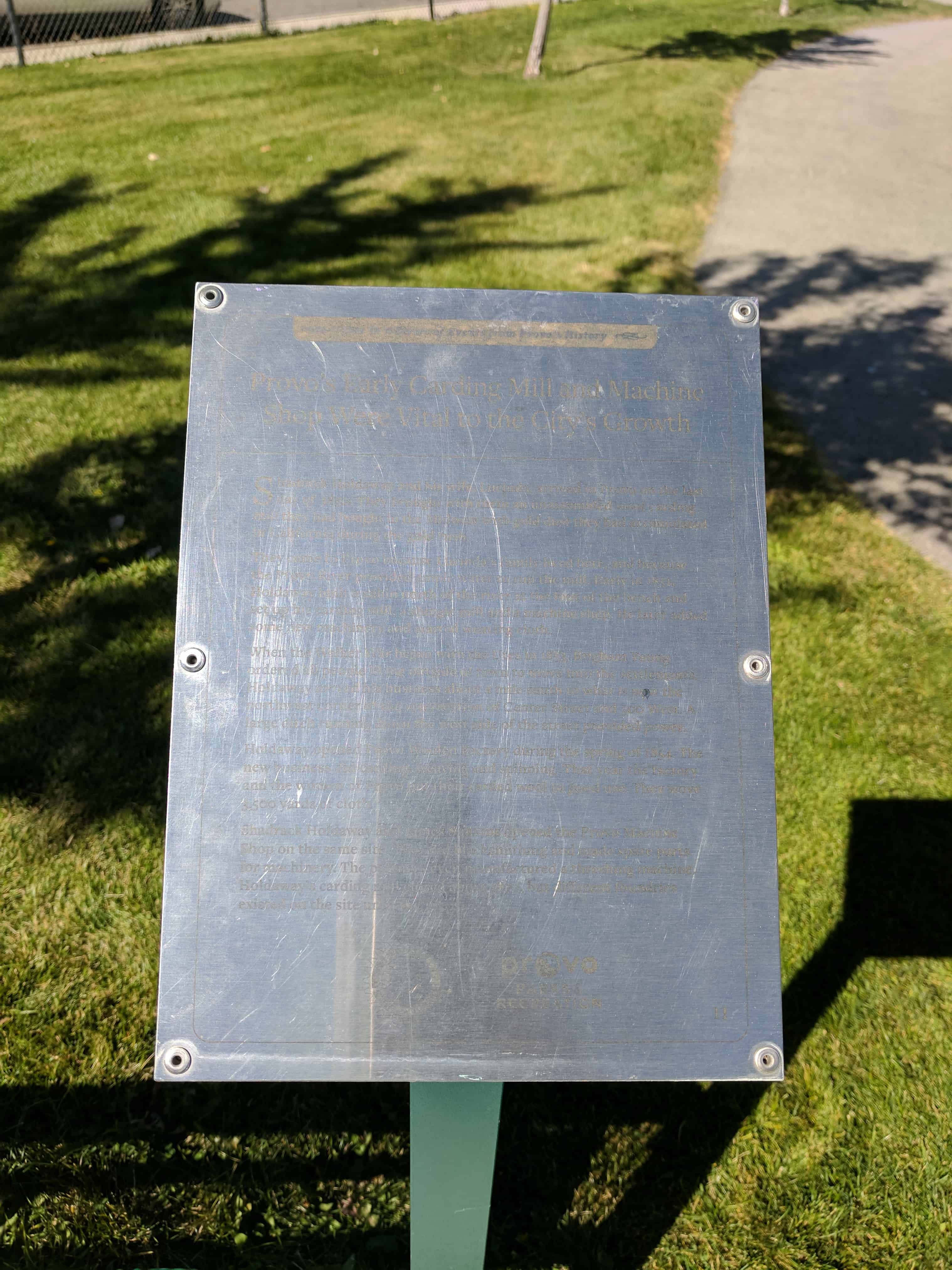
Provo’s Early Carding Mill and Machine Shop Were Vital to the City.
Shadrack Holdaway and his wife, Lucinda, arrived in Provo on the last day of 1850. They brought with them an unassembled wood carding mill they had bought in the Midwest with gold dust they had accumulated in California during the gold rush.
They came to Provo because Lucinda’s family lived here, and because the Provo River provided ample water to run the mill. Early in 1851, Holdaway build a cabin north of the river at the foot of the bench and set up his carding mill, a shingle mill and a machine shop. He later added some new machinery and started weaving cloth.
When the Walker War began with the Utes in 1853, Brigham Young ordered all people living outside of town to move into the settlements. Holdaway moved his business about a mile south to what is north the northwest corner of the intersection of Center Street and 500 West. A large ditch running down the west side of the street provided power.
Holdaway opened Provo Woolen Factory during the spring of 1854. The new business did carding, weaving and spinning. That tear the factory and the woman of Provo put their carded wool to good use. They wove 3,500 yards of cloth.
Shadrack Holdaway and James Simkins opened the Provo Machine Shop on the same site. They did blacksmithing and made spare parts for machinery. The partners even manufactured a threshing machine. Holdaway’s carding mill closed about 1870, but different foundries existed on the site until the 1950s.
This is plaque #11 in the Series of Events from Provo’s History and is located in Maeser Park in Provo.
08 Friday Dec 2017
Posted in Uncategorized

The Excelsior Flour Mill Was Crucial to Provo’s Early Settlers.
Early Provo’s grist mills ranked among the most important businesses in town. Farmers used wheat for money, and grist mills turned this form of money into something that could be eaten – flour.
In 1876, George Beebe (the father of Angus Beebe), who moved to Provo from Iowa, build the Excelsior, one of the city’s longest-lasting mills, on the northwest corner of the intersection of 500 North and 200 West. Beebe found and excellent market for his flour in Provo, Salt Lake City and Utah’s mining towns.
Water from the old mill race running down 200 West powered the new and improved machinery of the mill almost all year long. Sometimes for several months in the summer, the mill was forced to shut down because farmers used most of the water in the mill race.
In 1879, Beebe leased the Excelsior to John W. Hoover, who eventually bought it. From this tome on, townspeople frequently referred to the business as Hoover’s Mill. After John Hoover suffered a stroke in 1898, four of his sons operated the mill. They continually updated the machinery and successfully produced several types of flour and animal feed.
More than a half century of milling history came to an end early on the morning of February 11, 1930. About midnight, people loving near the mill detected an odor that smelled like burning rags. A fire was soon detected, which likely started from spontaneous combustion.
Although the entire Provo Fire Department fought the blaze with size hoses and chemicals, the frame building burned like tinder, and the flames entirely consumed it. Insurance only partially covered the loss, and the Hoovers did not rebuild the mill.
This is plaque #12 in the Series of Events from Provo’s History and is located in Maeser Park in Provo.

07 Thursday Dec 2017
Posted in Uncategorized

Nisson Park in Washington, Utah.
Willard O. Nisson Park opened in May of 1999. Serving as a gateway to the city with the magnificent water wheel feature, Nisson Park also has a covered pavilion, a playground area, basketball hoops, a shaded walking path with picnic tables, restrooms and a large playing field.
There are some historic plaques on the main sign with the water wheel with the following information:
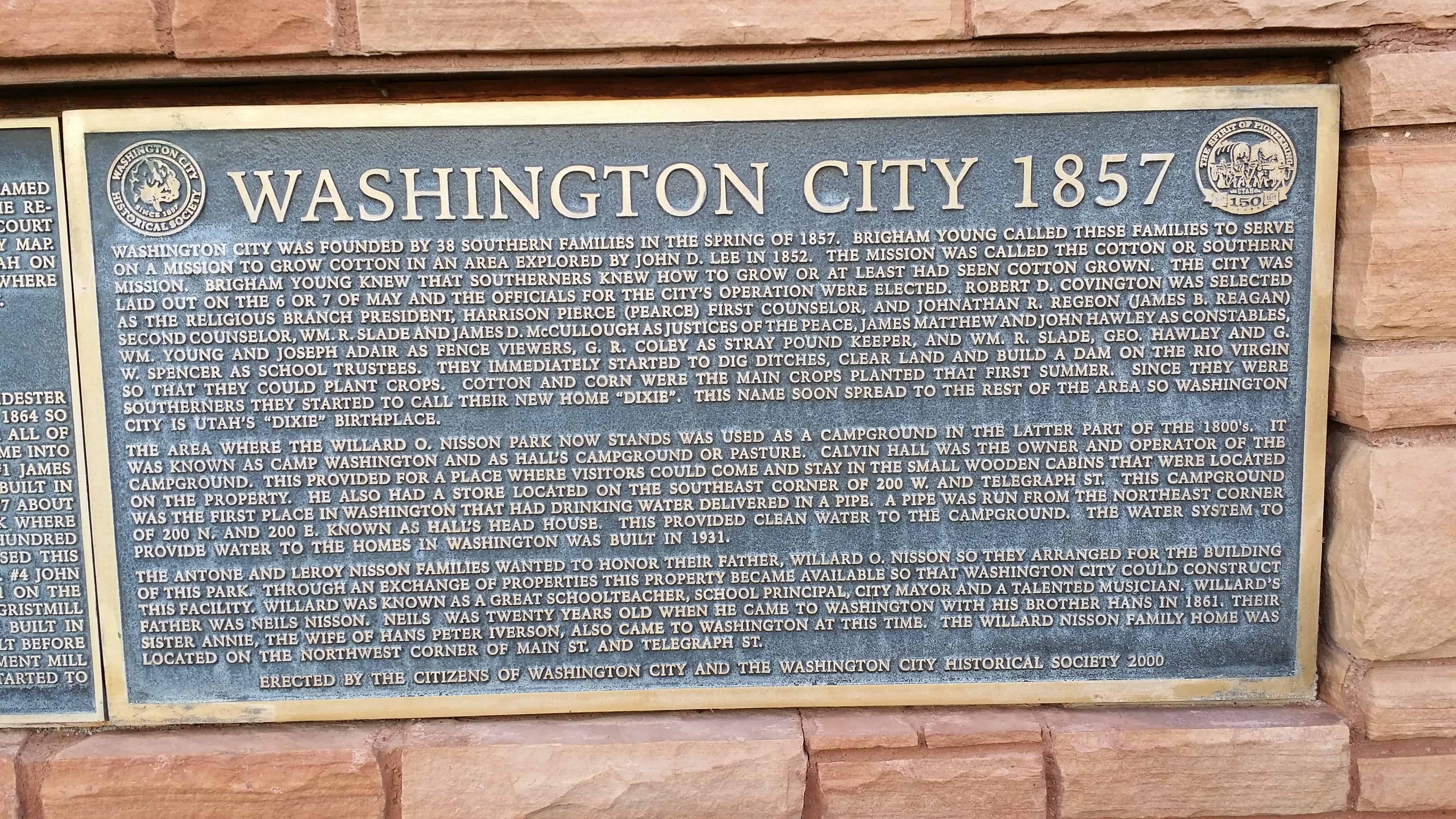
Washington City 1857
Washington City was founded by 38 southern families in the spring of 1857. Brigham Young called these families to serve on a mission to grow cotton in an area explored by John D. Lee in 1852. The mission was called the Cotton or Southern Mission. Brigham Young knew that southerners knew how to grow or at least had seen cotton grown. The city laid out on the 6 or 7 of May and the officials for the city’s operation were elected. Robert D. Covington was selected as the religious branch president, Harrison Pierce (Pearce) first counselor, and Jonathan R. Regeon (James B. Reagan) second counselor, Wm. R. Slade and James D. McCullough as Justices of the Peace, James Matthew and John Hawley as constables, Wm. Young and Joseph Adair as fence viewers, G.R.Coley was stray pound keeper, and Wm. R. Slade, Geo. Hawley and G.W. Spencer as school trustees. They immediately started to dig ditches, clear land and build a dam on the Rio Virgin so that they could plat crops. Cotton and corn were the main crops planted that first summer. Since they were Southerners they started to call thei new home “Dixie.” This name soon spread to the rest of the area so Washington City is Utah’s Dixie birthplace.
The area where the Willard O. Nisson park now stands was used as a campground in the latter part of the 1800’s. It was known as camp Washington and as Hall’s campground or pasture. Calvin Hall was the owner and operator of the campground. This provided for a place where visitors could come and stay in the small wooden cabins that were located on the property He also had a store located on the southeast corner of 200 W. and Telegraph St. This campground was the first place on Washington that had drinking water delivered in a pipe. A pipe was run from the northeast corner of 200 N. and 200 E. known as Hal’s Head House. This provided clean water to the campground. The water system to provide water to the homes in Washington was built in 1931.
The Antone and Leroy Nisson Families wanted to honor their father, Willard O. Nisson so they arranged for the building of this park. Through an exchange of properties, this property became available to that Washington City could construct this facility. Willard was known as a great schoolteacher, school principal, city mayor, and a talented musician. Willard’s sister Annie, the wife of Hans Peter Iverson, also came to Washington at this time. The Willard Nisson family home was located on the northwest corner of Main St. and Telegraph St.


Telegraph Street
When Washington was laid out in May, 1857, there was not a street named or located where Telegraph Street is today. It was not until the resurvey of January, 1873, ordered by Wm. Snow, Judge of the Probate Court dated December, 1872, that Telegraph Street was shown on a city map. The Telegraph was completed between St. George and Logan, Utah on January 10, 1867, and the wire for the telegraph was located about where Telegraph Street is today; therefore the name Telegraph Street.

Millcreek Mills
Machine Creek was the original name of Millcreek. John M. Chidester sold the water rights from Machine Creek to Brigham Young in 1864 so that the cotton factory could be built. It must have been after all of the mills were built along the creek that the name Millcreek came into existence. There were at least 8 mills built along the creek: #1 James Richey’s cotton gin was built in May, 1858. The first cotton gin built in the area. #2 Thomas W. Smith’s corn cracker mill was built in 1857 about halfway between Telegraph Street and the mouth of Millcreek where it enters the Rio Virgin. #3 Theodore Turley had a gristmill a few hundred yards below where the cotton factory is. John D. Lee purchased this mill and later sold it to Henry Barney of Grafton before 1860. #4 John D. Lee’s grist and lumber mill was finished Telegraph Street / Millcreek Mills Markers image. Click for full size. By Bill Kirchner, August 30, 2012 2. Telegraph Street / Millcreek Mills Markers in the fall of 1861 on the east side of the reek near the Turley’s mill site. #5 Snow’s gristmill on the west side of the creek opposite Jon D. Lee’s mill was built in 1866. #6 Hawley’s cane mill near the mouth of Millcreek was built before 1859. This mill was obtained by John D. Lee and his new replacement mill #7 was finished in September 1859. #8 The Cotton Factory was started to be built in 1865 and completely finished in 1870.

There is also a “Pioneer Cotton Mills” historic marker with the following text:
As early as 1851 cotton was raised in northern Utah. In 1855 it was cultivated on a small scale at Santa Clara, nine miles west of here. In 1864 the nearby communities had 140 acres under cultivation, and the product was said “to be equal in every way to that grown in Tennessee.” The first extensive manufacture of cotton cloth was begun in 1865 when a cooperative cotton factory, organized by Brigham Young, was established immediately south of this marker. Machinery was freighted from the Missouri River, more than 1300 miles away. Shortly after the opening of the factory, equipment to manufacture woolen cloth was also installed, the wool being provided from large flocks of sheep, also operated on a church cooperative basis. The cotton industry flourished surprisingly for a time, partly due to Civil War interference with planters in the south. Part of the raw product went to California and some was freighted to New York where it sold as high as $1.90 a pound. After the cotton industry revived in the south, following the close of the war, the industry in Utah was abandoned.

07 Thursday Dec 2017
Posted in Uncategorized
Tags

Edwin Whiting is actually my Great Great Great Great Grandfather. He has a lot of history in the Springville/Mapleton area where I grew up.
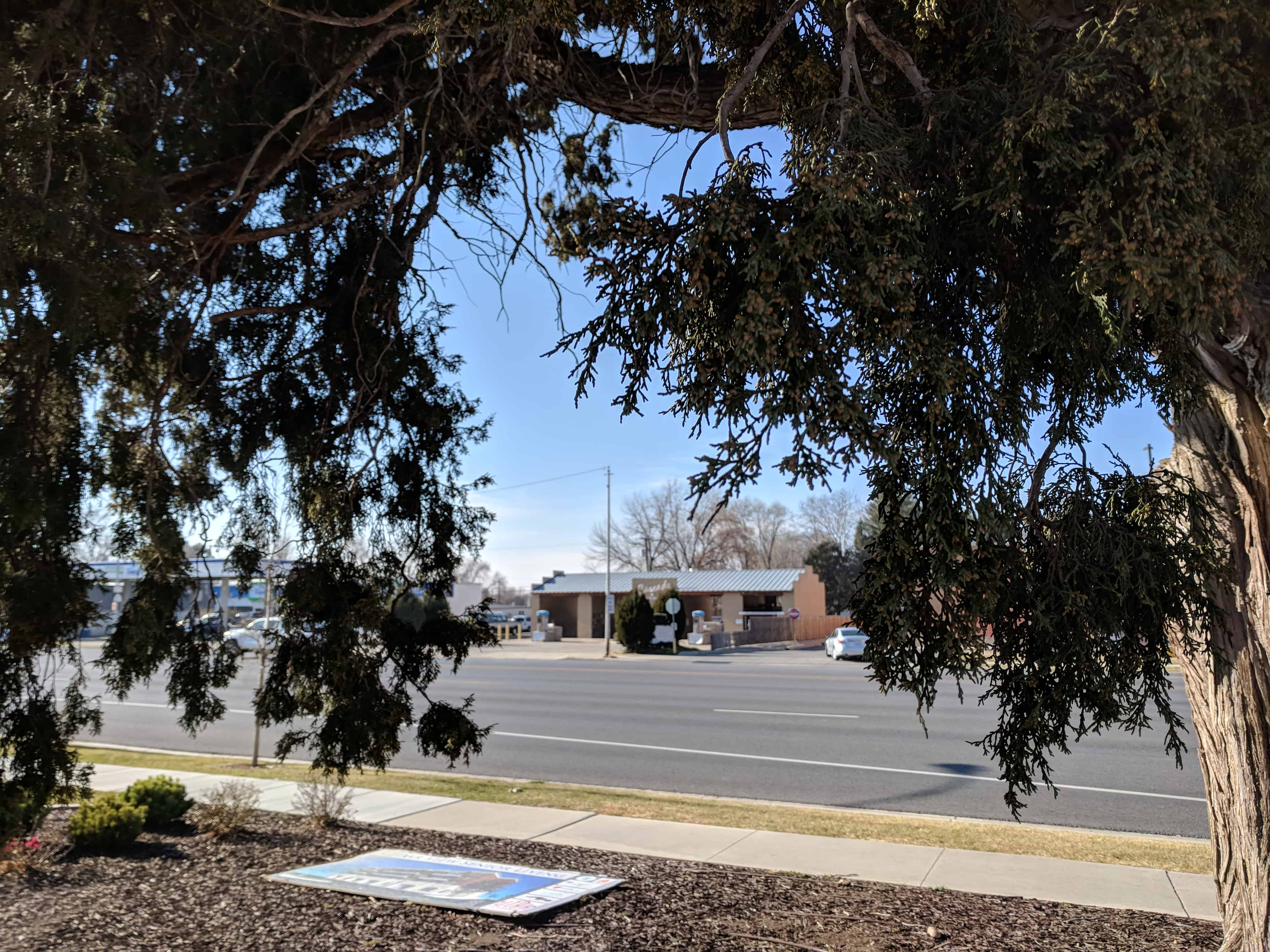
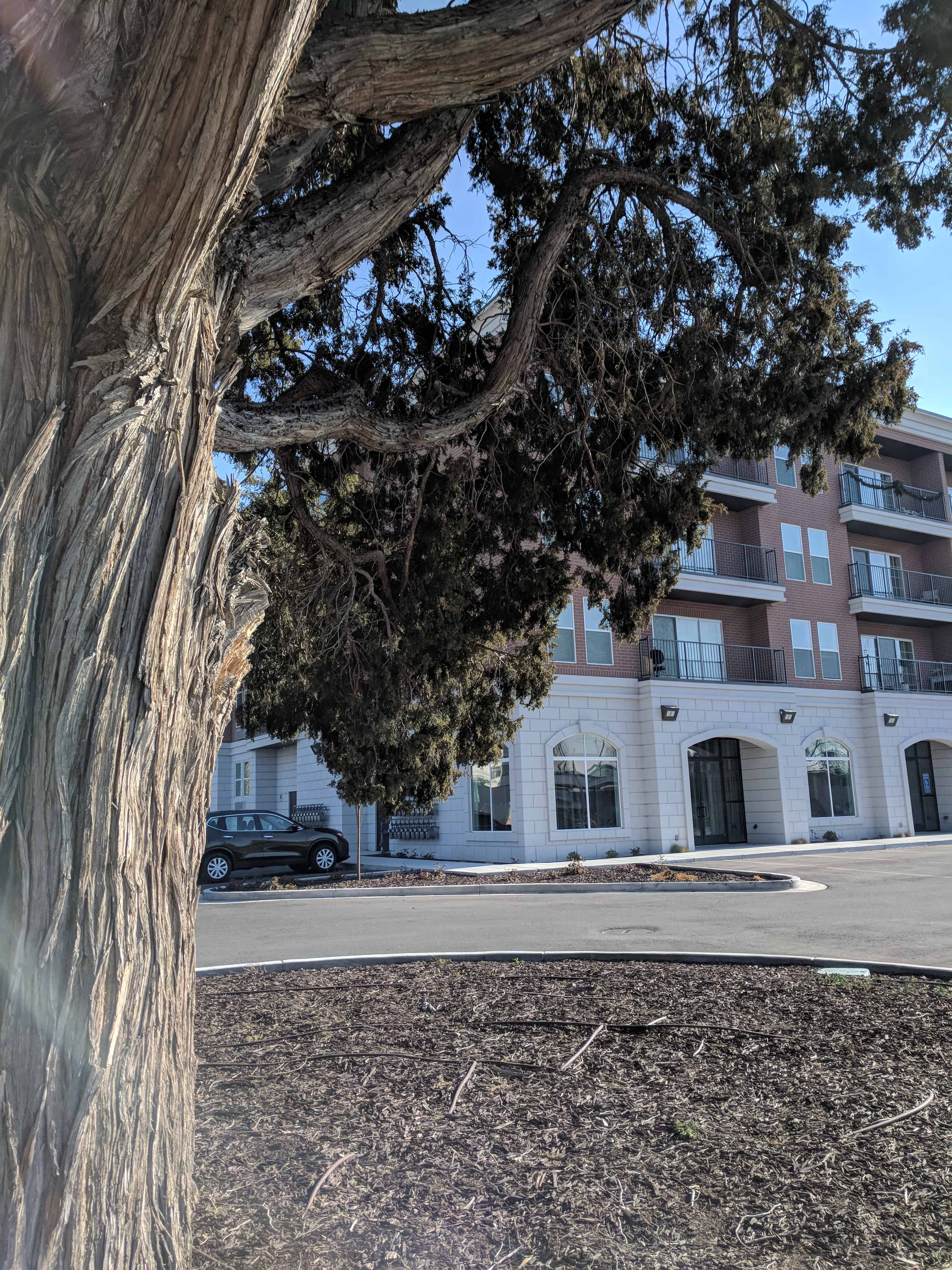
There is tree where one of his homes was located that he planted in 1861, see more info here.
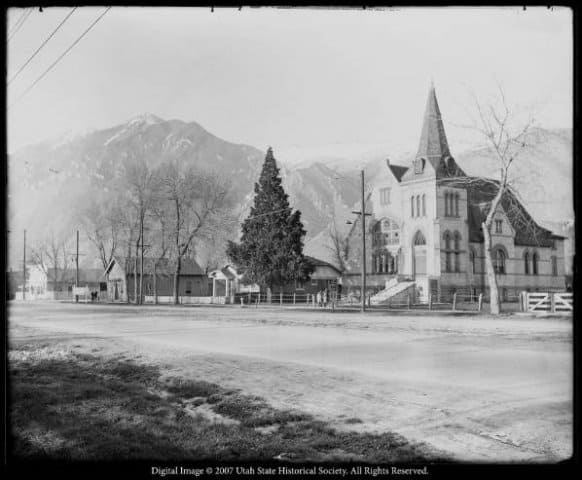
The “Big House” was later demolished and in 1913, the Church of Jesus Christ of Latter-day Saints built a chapel on the property. Extensive remodeling on the historic church building was completed in 1998 (see photo below) and the building was re-dedicated by Gordon B. Hinckley, then president of the Church. The building was extensively damaged by vandals in 2006, who set fire to the structure. It was demolished as a result. The juniper tree still stands (source).
Related:
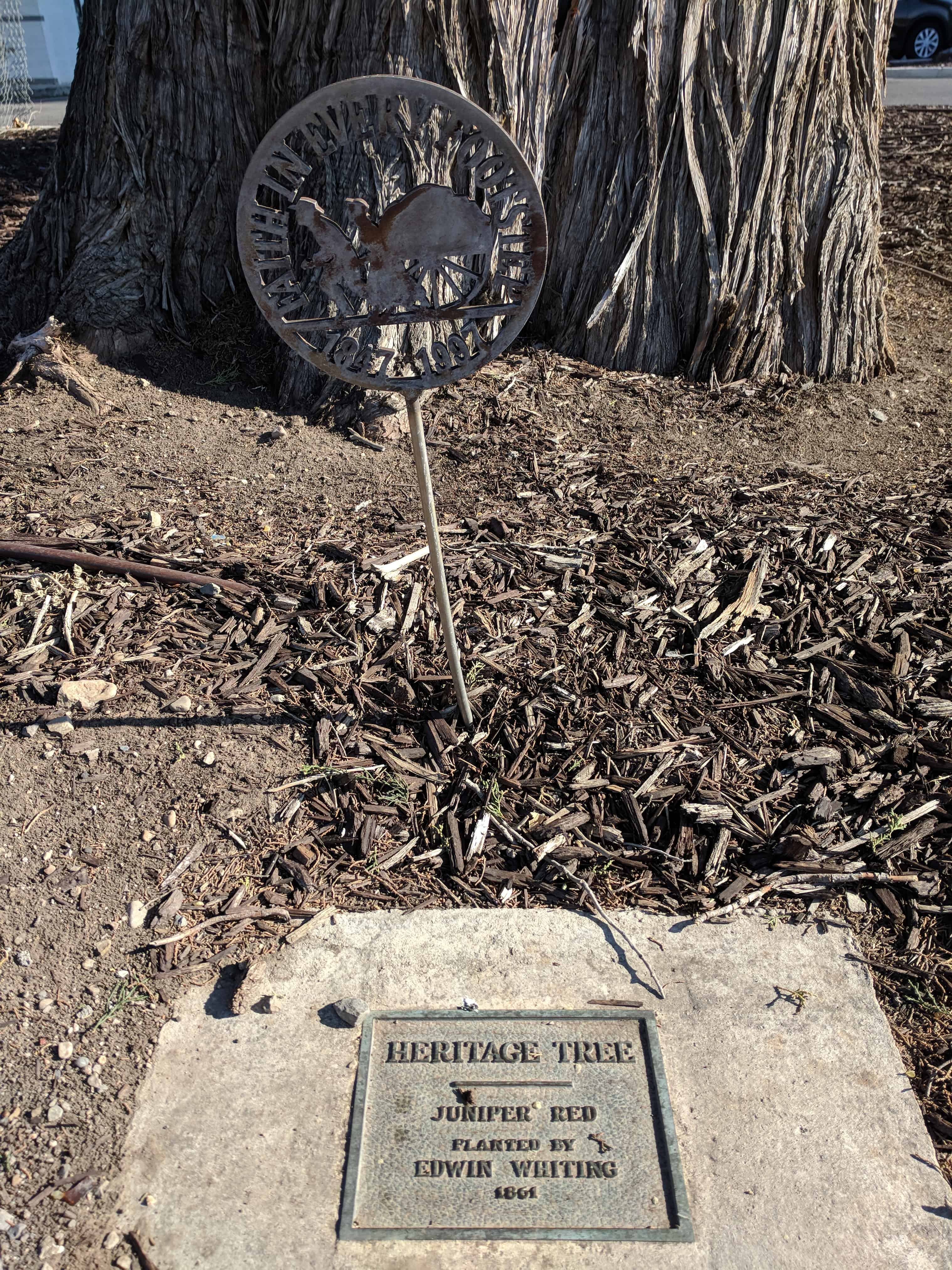
Below are photos from the tree and from his grave in the Springville Cemetery.
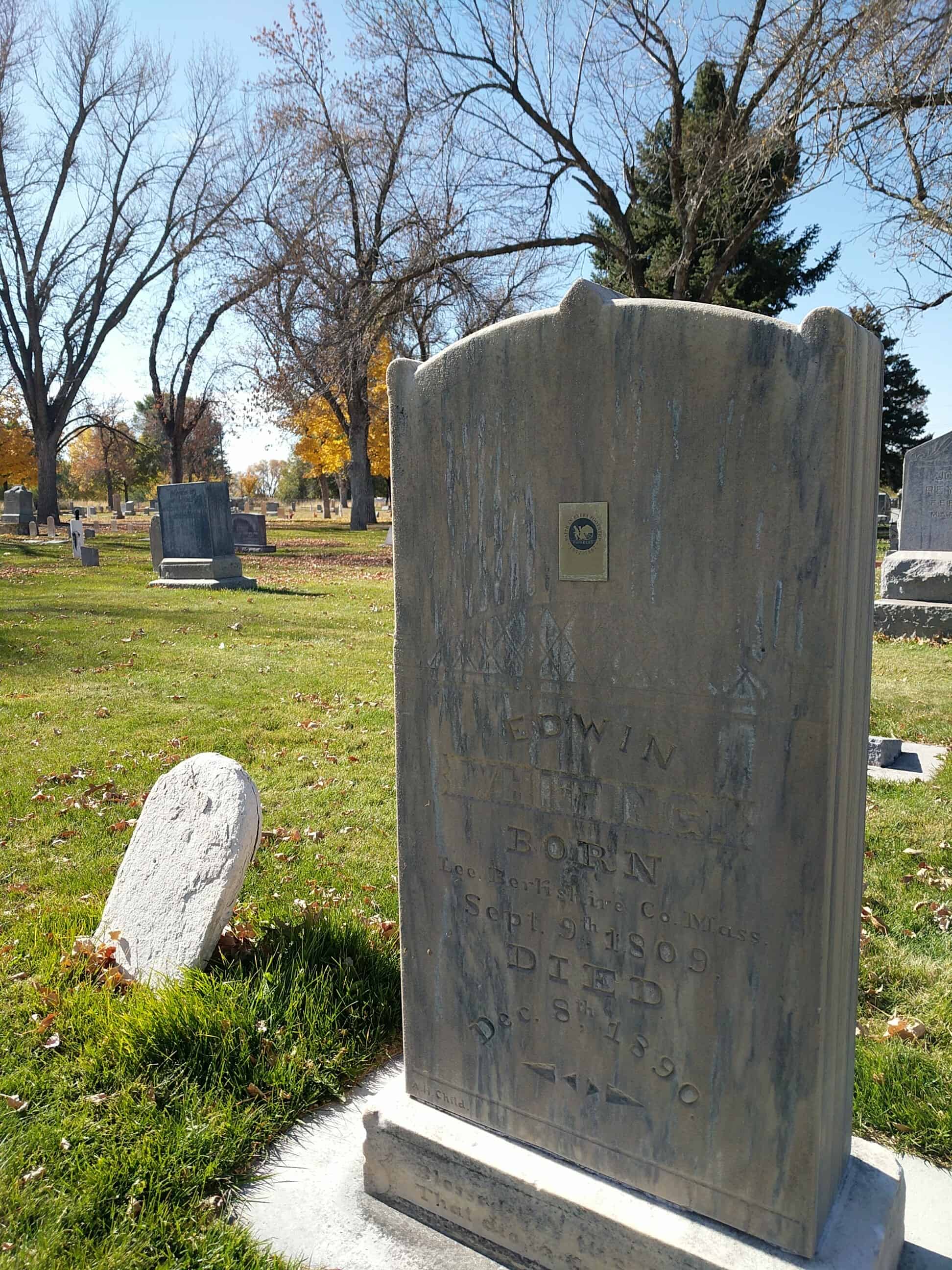


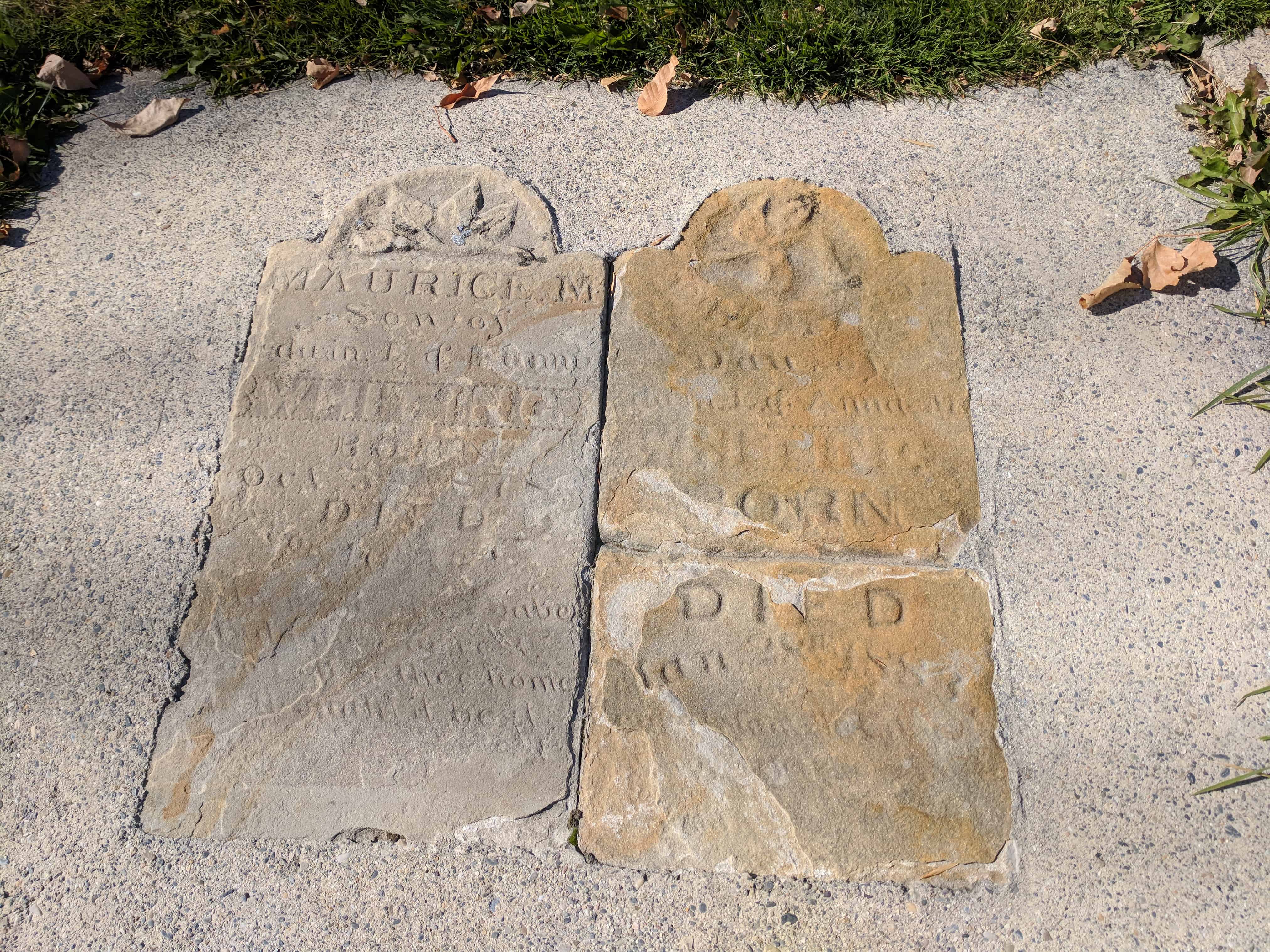
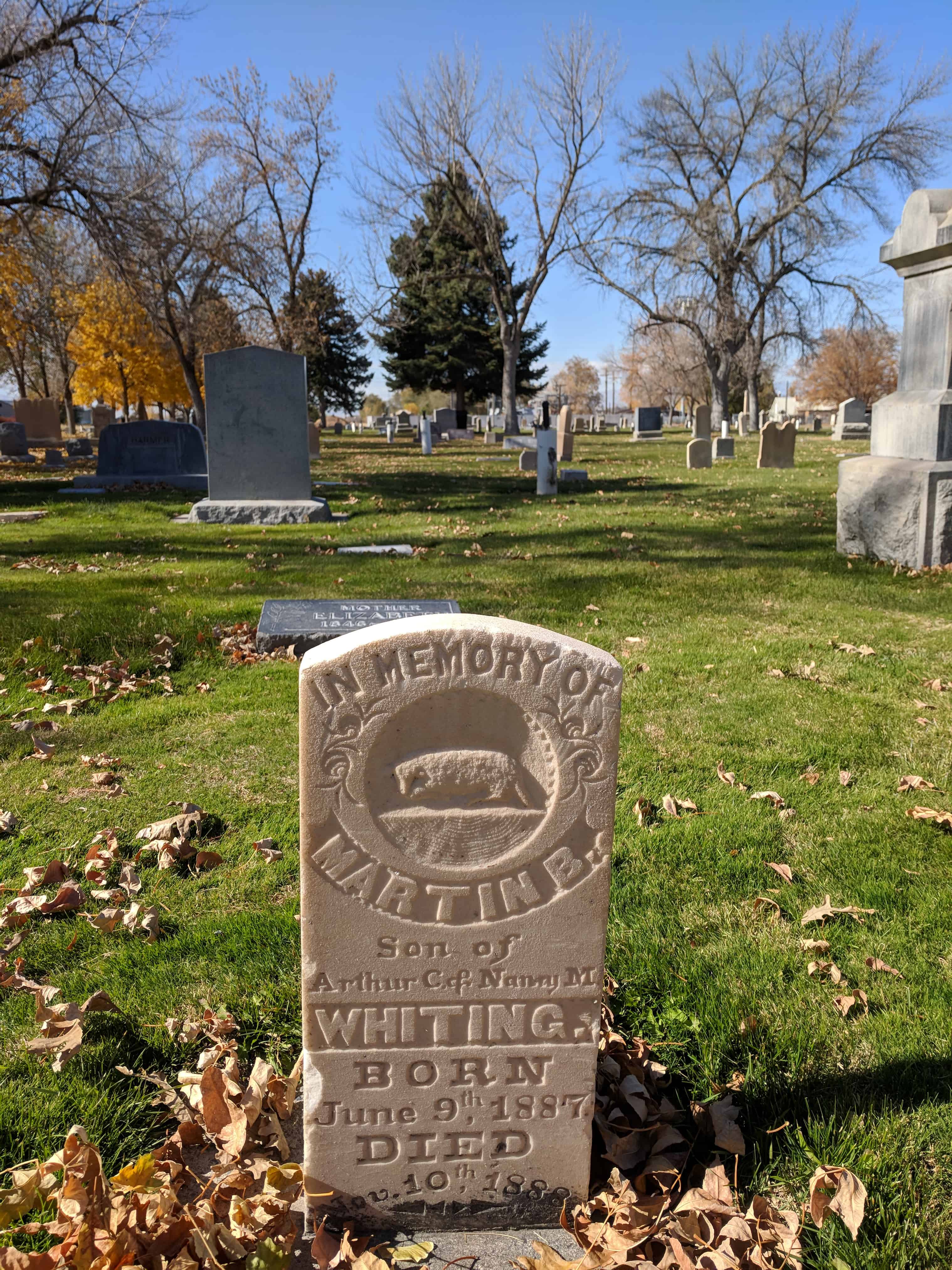
Edwin Whiting was born on September 9, 1809 and was the third child of 12 that were born to Elisha and Sally Hulett Whiting in Lee, Massachusetts. When he was six years old, his family moved to Nelson Portage County, Ohio, where they lived on the western frontier of the United States of America.
Edwin’s education was very limited, but he learned the “3 R’s;” and he wrote with a legible hand which was quite a feat for his time. He learned the chair-making trade from his father and his workmanship was excellent. In 1833 at the age of 24 he married Elizabeth Partridge Tillotson, an Ohio girl of French descent, who was a highly educated schoolteacher.
In 1837, the gospel of Jesus Christ was brought to the Whiting family. Edwin, his wife, his father and mother, and some of his siblings joined the Church of Jesus Christ of Latter-day Saints. They were baptized by Thomas Marsh in 1838. As early members of the Church, they soon joined the saints in Kirtland, Ohio. It was here that many trials began which took much faith in God to endure.
Forced to leave Ohio and all of their belongings, the saints fled to Far West, Missouri. There the Whiting family had just built a home for their family of four children when a mob, several thousand strong, ordered them out and burned everything to the ground. They fled again to join the saints in Lima in the Morley Branch, where Edwin was a counselor to Brother Morley.
For several years, the saints were happily building up the city of Nauvoo and the temple. Edwin was appointed Colonel in the Nauvoo Legion and continued to help build-up the Church.
Through authority and for a righteous purpose Edwin was called to enter the law of plural marriage. In 1845 he married Almira Meacham, and in the following year, 1846, he married Mary Elizabeth Cox. That same year he was called on a mission to Pennsylvania and was there at the time of the martyrdom of the Prophet Joseph Smith and his brother, Hyrum Smith. He soon returned home and took up arms with his brothers to protect his property and the lives of his family.
During the battle of Crooked River his brother Charles was killed. However, a greater trial was when several of his siblings did not feel that Brigham Young should lead the Church, so they followed a Mr. Cutler to Cleveland, Minnesota.
Now with his family and parents, he moved west to Mt. Pisgah (Talmedge), Iowa. There they prepared for the journey west. Cholera took the lives of his parents and a brother. In April 1849 Edwin, his family, and other families started westward in Brother Morley’s company. They fought Indians, suffered for a lack of food, and had their cattle stampeded. After reaching the Black Hills, a heavy snow came. Many cattle died. President Brigham Young sent teams and provisions to help them.
On October 28, 1849, they reached Salt Lake City, which looked like a “heaven of rest” to the travel-worn company. But their rest was of short duration and lasted only a few days. Edwin Whiting, the Morleys, and the Coxes were called to setting the San Pitch River which is now known as Manti. Again, they journeyed on. It took weeks to go from Salt Lake City because they had to build their own roads. Arriving on December 1, 1849, with little to eat, no feed for the cattle, no shelter, and cold weather upon them, they made dugouts on the south side of the hill where the Manti Temple now stands.
It became necessary to build a fort to protect themselves from the Indians who felt that the white man had stolen their land. The gates of the fort were locked while the men went to the fields with guns in hand. This developed into the Walker War, and Edwin was appointed Captain of the Militia.
Crops were poor, but they managed to survive and were a happy family in spite of their hardships. In 1854, Edwin was called to Ohio on a mission and was gone for two years. While he was away, grasshoppers came and ate everything they grew. They faced starvation, but miraculously where the crops had been, a patch of pigweeds grew; and they lived on that until the corn ripened in Utah county. This was a strange thing because the Indians said the pigweed had never grown there before. Interestingly enough, it has not grown there since which was a miracle blessing.
While he lived in Manti, Edwin was among the foremost men in religious and civic affairs in the community. He was a counselor to the Stake President and Mayor of the city from 1857- 1861. He was a member of the legislature for two terms and as before stated, he was Captain of the Militia in the Walker War.
After finding the climate of Manti unfavorable for raising fruit, Edwin was advised by President Brigham Young to try out his nursery in Springville. There he moved in 1861 and was able to plant and grow all varieties of fruit trees, vegetables, and flowers. Edwin transplanted many evergreen trees from the mountains in various places. One is still living by the old Courthouse in Provo, several are in the Springville City Park, and one large evergreen tree stands southwest of the Manti Temple and can be seen for many miles.
In Edwin’s later years he did a lot of temple work for his ancestry. He attended temples in Salt Lake City, Logan, and St. George. In 1881 he moved to St. George.
Edwin Whiting and his family lived the principles of the restored gospel. He was honest, charitable, and loved his wives and children. He died in Mapleton on December 9, 1890, at the age of 81 firm in his belief and testimony of the truthfulness of the gospel of Jesus Christ of Latter-day Saints.
Edwin’s testimony to his children: “My children, I have guarded the prophet Joseph Smith while he slept; I have guarded him while he walked the earth. I have felt the power of God in his life. I have seen the mantle of the Holy Ghost hover over him. I have received the witness that I know that he was and is a prophet of the living God; and I want you children, my family, to honor him and to honor each succeeding prophet following him because your security in the Kingdom of God and your security in the Church depends upon your full allegiance to the prophets on the earth. This testimony I leave with you, and I know that he was a prophet of the living God.”
Source:
07 Thursday Dec 2017
Posted in Uncategorized
Tags

Springville has plaques for some of the trees that were planted by pioneers around town. One of which is this Juniper Red, planted by Edwin Whiting in 1861.
Springville Heritage Trees:
Related posts:





07 Thursday Dec 2017
Posted in Uncategorized

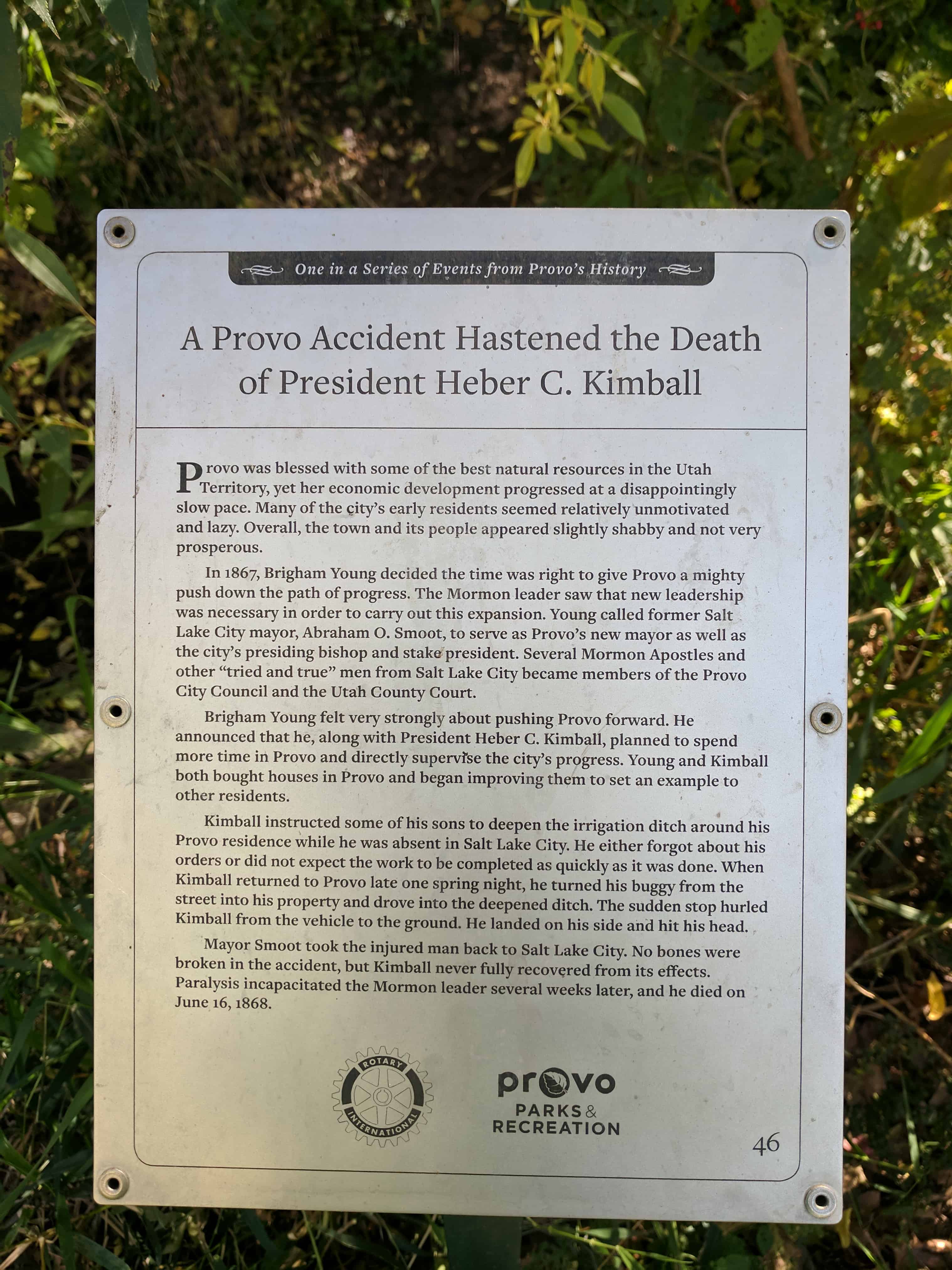
A Provo Accident Hastened the Death of President Heber C. Kimball.
Provo was blessed with some of the best natural resources in the Utah Territory, yet her economic development progressed at a disappointingly slow pace. Many of the city’s early residents seemed relatively unmotivated and lazy. Overall, the town and its people appeared slightly shabby and not very prosperous.
In 1867, Brigham Young decided the time was right to give Provo a mighty push down the path of progress. The Mormon leader saw that new leadership was necessary in order to carry out this expansion. Young called former Salt Lake City mayor, Abraham O. Smoot, to serve as Provo’s new mayor as well as the city’s presiding bishop and stake president. Several Mormon Apostles and other “tried and true” men from Salt Lake City became members of the Provo City Council and the Utah County Court.
Brigham Young felt very strongly about pushing Provo forward. He announced that he, along with President Heber C. Kimball, planned to spend more time in Provo and directly supervise the city’s progress. Young and Kimball both bought houses in Provo and began improving them to set an example to the other residents.
Kimball instructed some of his sons to deepen the irrigation ditch around his Provo residence while he was absent in Salt Lake City. He either forgot about his order or did not expect the work to be completed as quickly as it was done. When Kimball returned to Provo late one spring night, he turned his buggy from the street into his property and drove into the deepened ditch. The sudden stop hurled Kimball from the vehicle to the ground. He landed on his side and hit his head.
Mayor Smoot took the injured man back to Salt Lake City. No bones were broken in the accident, but Kimball never fully recovered from its effects. Paralysis incapacitated the Mormon leader several weeks later and he died on June 16, 1868.
This is plaque #46 in the Series of Events from Provo’s Historyand is located in Bicentennial Park in Provo.
07 Thursday Dec 2017
Posted in Uncategorized

Fish in Utah Lake and the Provo River Saved Utah’s Early Settlers from Starvation.
Commercial fishing ranked as one of early Utah’s important industries, and Utah lake’s sucker and trout provided food for Utah’s settlers in times of need.
During the spring of 1848, the new settlers of Salt Lake Valley met hunger face to face. Frost killed many of their young and tender crops, and Mormon crickets helped themselves to what was left. The hungry settlers turned to Utah lake for food and established the Eutaw Fishing Company. Its member caught fish in Utah Lake and took them to Salt Lake City to feed the hungry.
The abundance of fish in Utah Lake and the Provo River helped to attract settlers to Provo in 1849. Fishing companies caught fish, and peddlers sold a portion of them fresh either locally or in Salt Lake City. Many fishermen salted the rest of their catch and placed the fish in barrels to sell later.
In 1855 and 1856, swarms of grasshoppers invaded the Great Basin and destroyed crops. Fishing companies from LDS wards in Salt Lake City camped for weeks in Provo on the banks of the river and the lake. They caught fish and sent them home to help feed the hungry.
And for a third time in the first ten years of settlement, fish helped feed the colonists in 1858. During the move south from Salt Lake City, many evacuees camped near the river and lake. Some of them formed co-operative fishing companies, and the fish they caught helped feed members of the camp. Once again, fish provided a safety net for those in need. This important industry continued to provide food for Provo pioneers for many decades.
This is plaque #4 in the Series of Events from Provo’s History and is located in Bicentennial Park in Provo.
Related:
