
Tags
Catholic, Historic Churches, NRHP, park city, Schools, summit county, utah
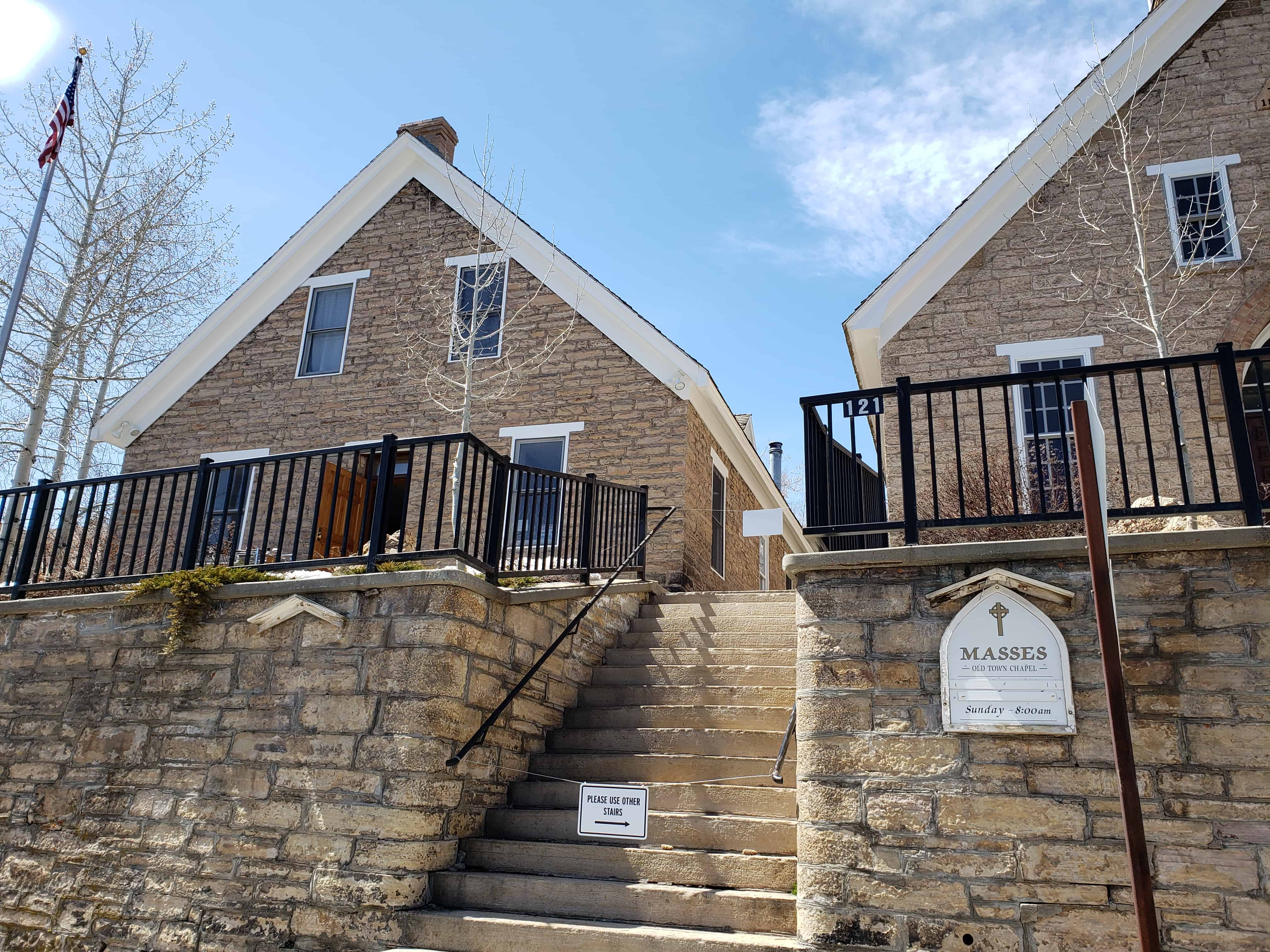
St. Mary of the Assumption Church and School
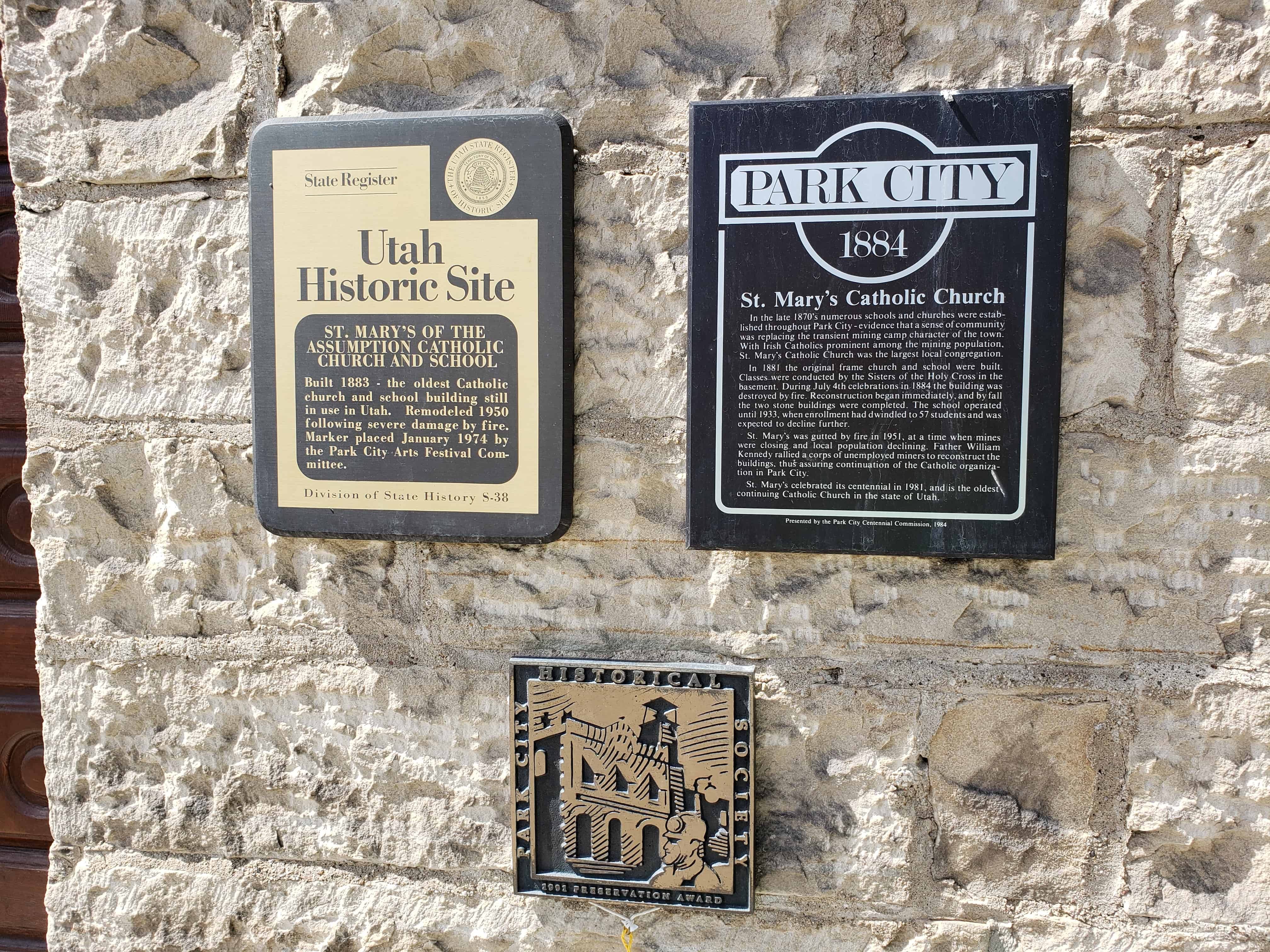
Built in 1883, this is the oldest Catholic church and school still in use in Utah. Remodeled in 1950 following severe damage by fire.
Located at 121 Park Avenue in Park City, Utah and added to the National Register of Historic Places (#79002512) on January 25, 1979.
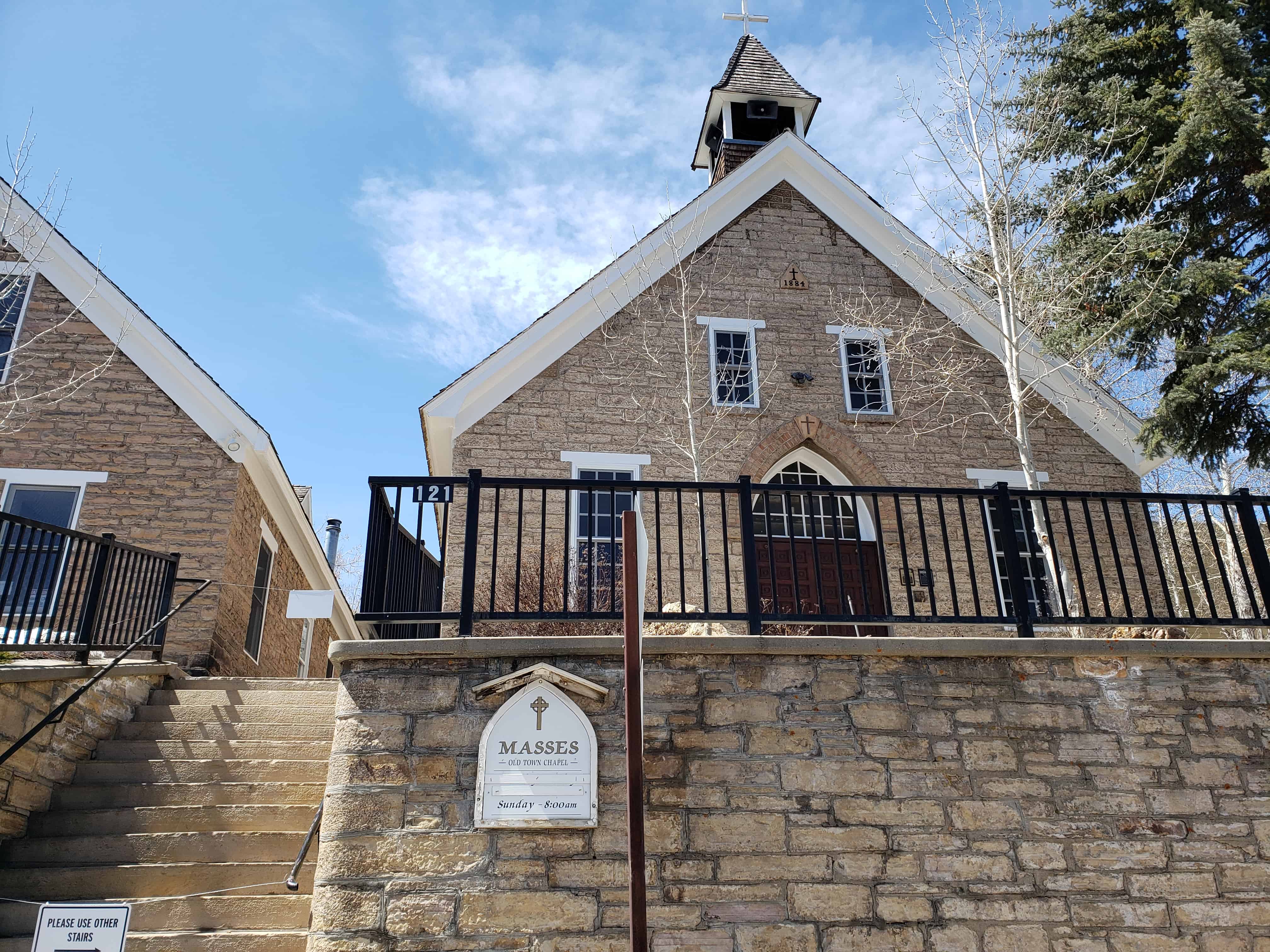
St Mary’s Catholic Church
In the late 1870’s numerous schools and churches were established through Park City – evidence that a sense of community was replacing the transient mining camp character of the town. With Irish Catholics prominent among the mining population, St. Mary’s Catholic Church was the largest local congregation.
In 1881 the original frame church and school were built. Classes were conducted by the Sisters of the Holy Cross in the basement. During July 4th celebrations in 1884 the building was destroyed by fire. Reconstruction began immediately, and by fall the two stone buildings were completed. The school operated until 1933, when enrollment had dwindled to 57 students and was expected to decline further.
St. Mary’s was gutted by fire in 1951, at a time when mines were closing and local population declining. Father William Kennedy rallied a corps of unemployed miners to reconstruct the buildings, thus assuring continuation of the Catholic organization in Park City.
St Mary’s celebrated its centennial in 1981, and is the oldest Catholic Church in the state of Utah.
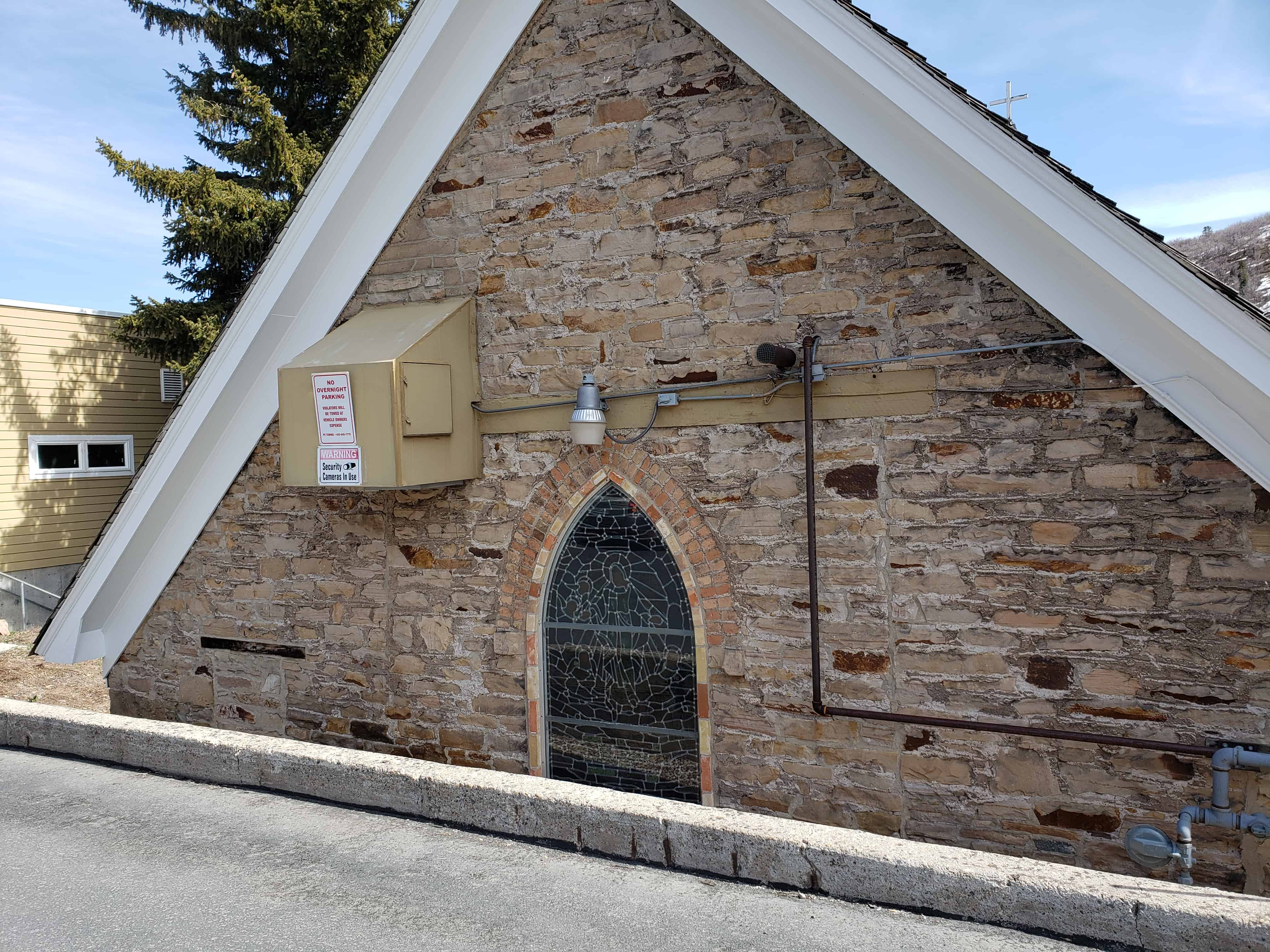
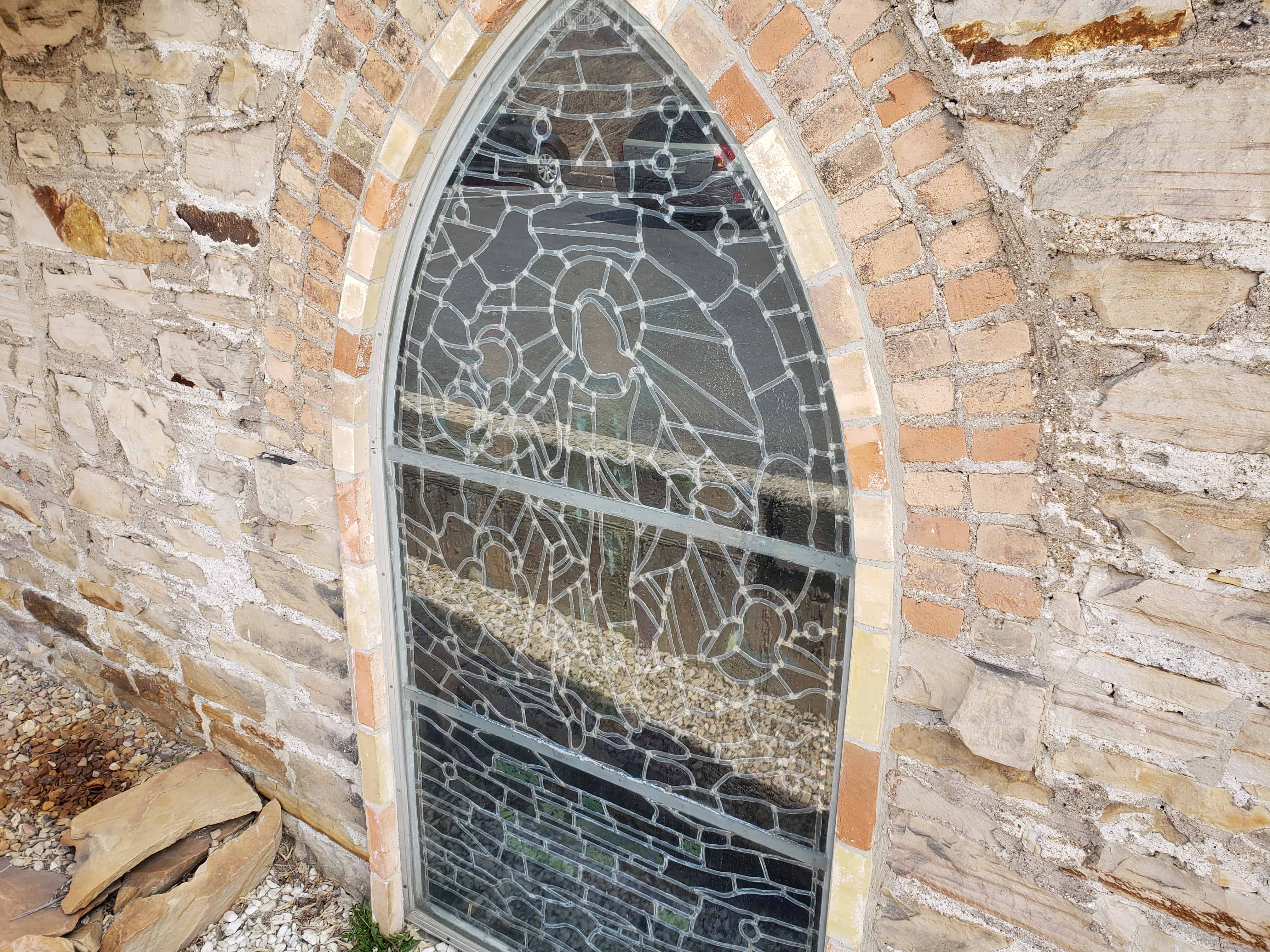
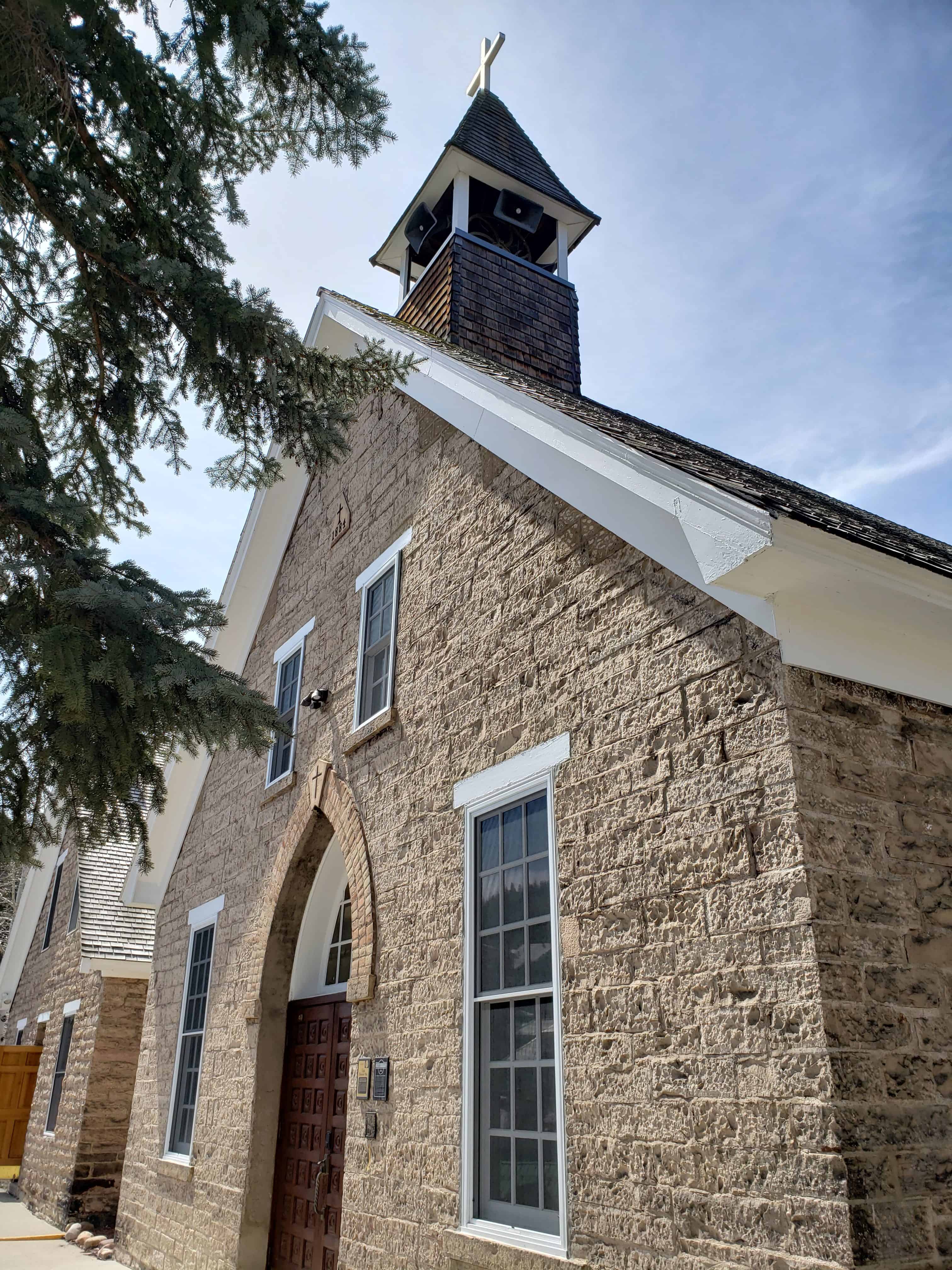
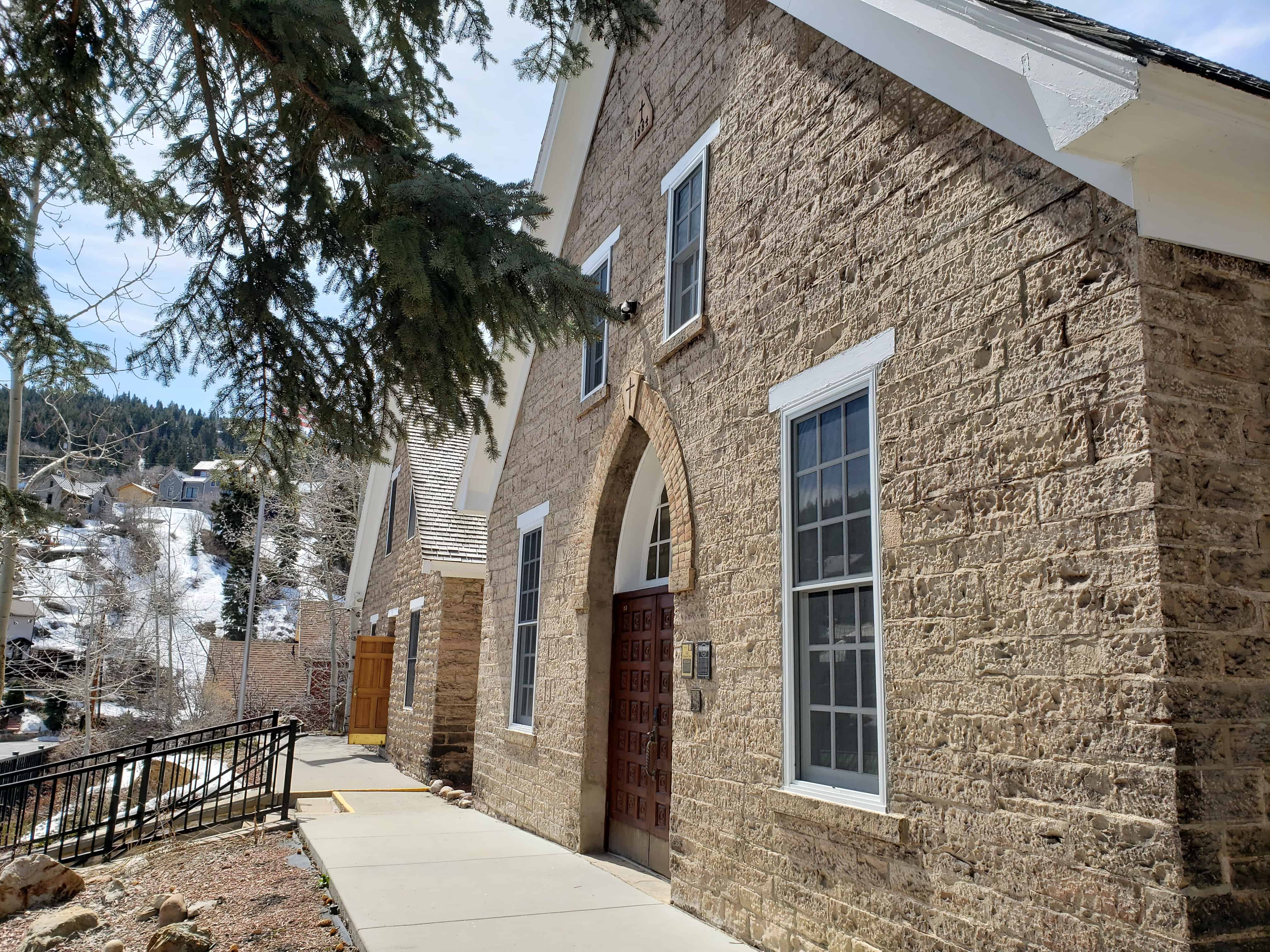
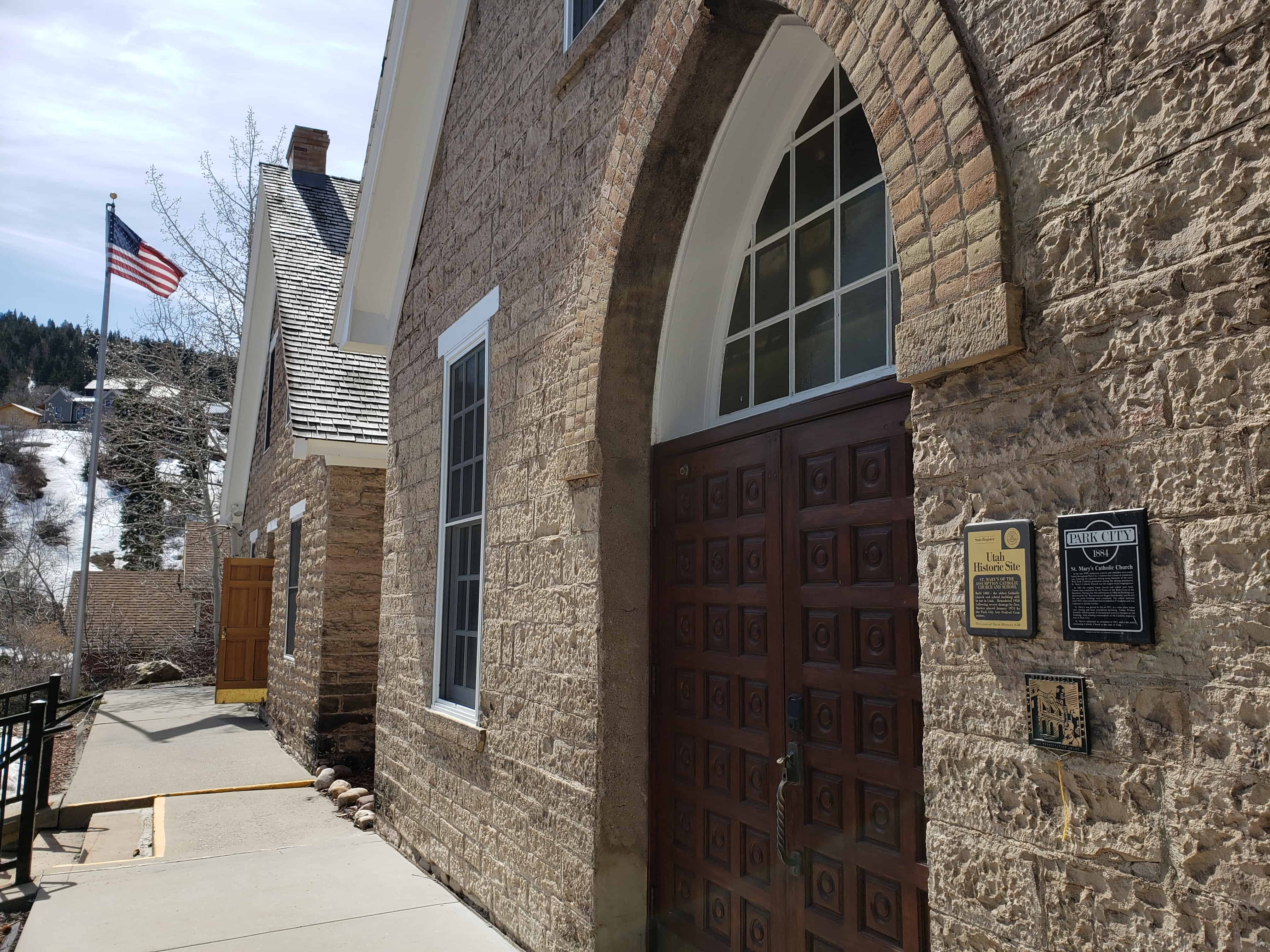
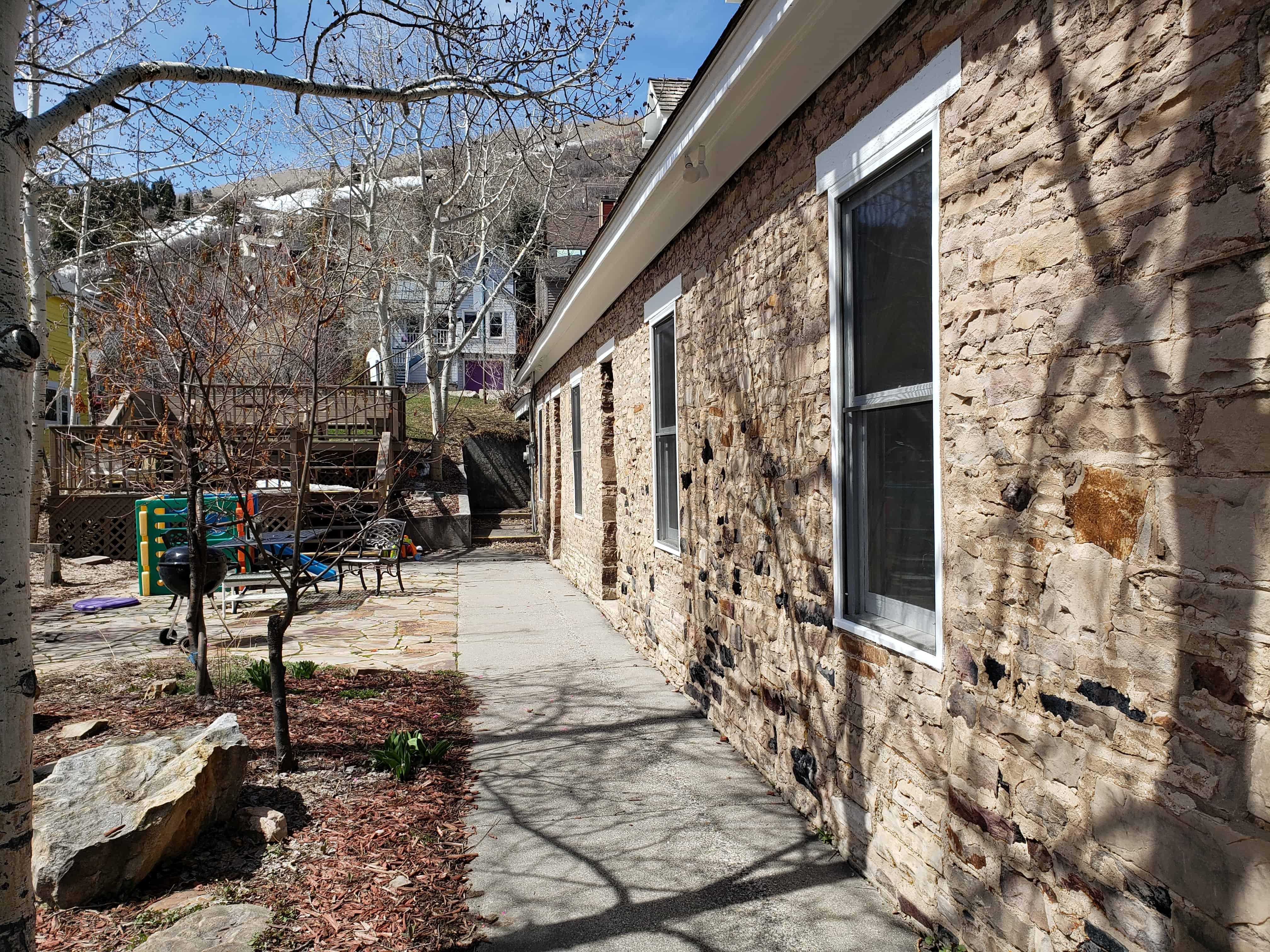
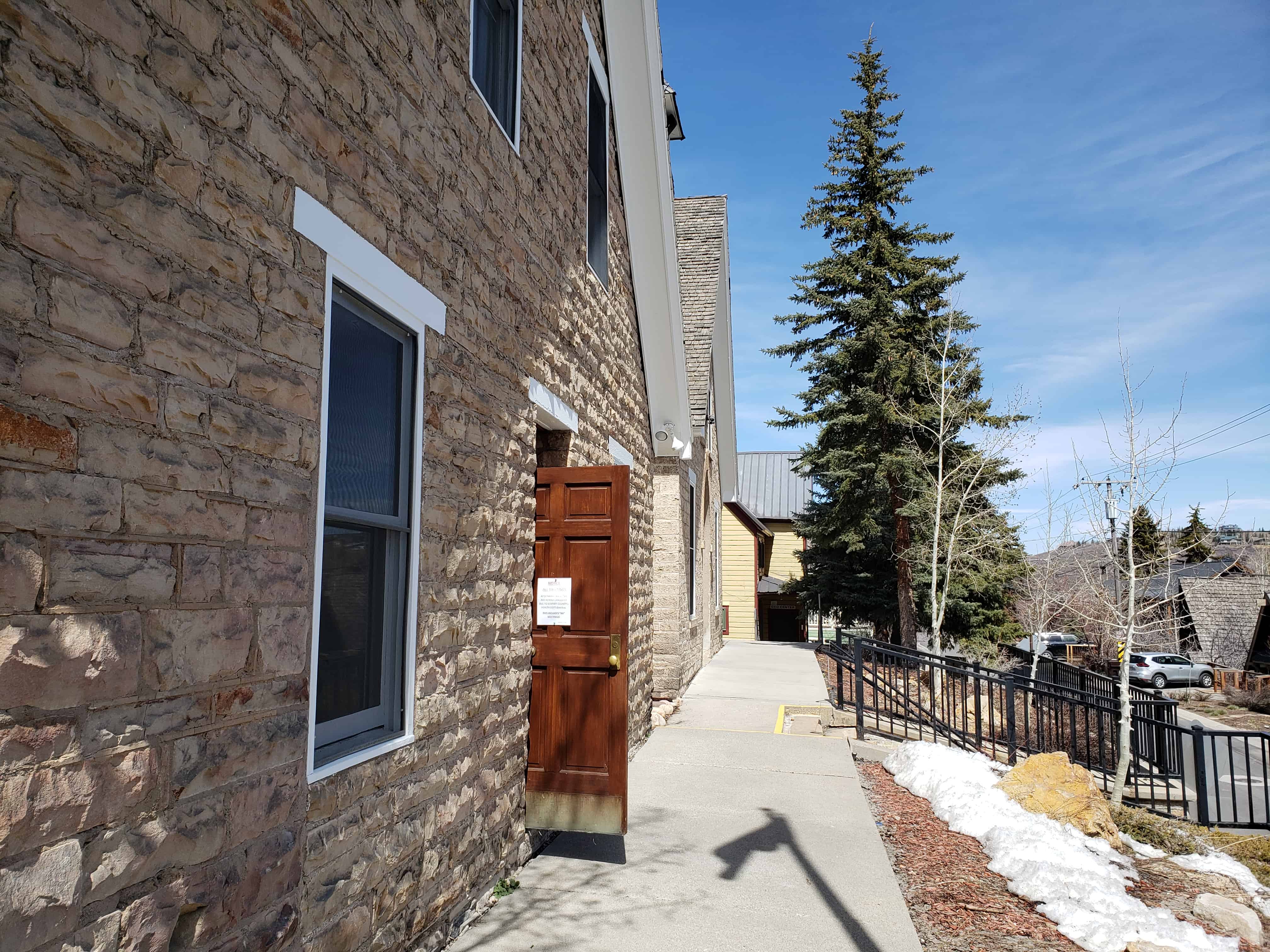
St. Mary’s is the oldest remaining Catholic Church in the state of Utah. The church and school, rebuilt in 1884 after a fire, represent both the successes of pioneer missionary efforts of the Catholic Church in Utah, as well as early educational endeavors in the mining town of Park City.
Catholic missionary work effectively began in the Utah area with the efforts of Father Lawrnece Scanlan. 1 In 1865 the Territory was placed under the jurisdiction of the Right Reverand Eugene O’ Cornell, Bishop of Marysville, California, with Father Edward Kelly appointed pastor. Kelly’s tenure was ephemeral since in October, 1866 Utah was transferred to the jurisdiction of the Rt. Reverand Joseph P. Machebeuf , Vicar Apostalic of Denver. After the appointment of several priests to the area, Scanlan came to Utah in 1873, and promptly began to establish missionary stations in a vast parish which included all of present-day Utah and a portion of Nevada.
Beginning in the late l860’s mining in Utah attracted numerous miners and entrepreneurs. Mining camps sprang up in many parts of Utah, and Irish Catholics were prominent among the mining population. Park City, Utah quickly attained the label of a “bonanza camp.” Located some thirty miles east of Salt Lake City, the camp, comprising mostly non-Mormons (Gentiles), was visited in 1873 by Scanlan, who made regular trips until 1878.
Mass was said in Simon’s Hall, the present site of the Claim jumper Hotel, and occasionally at Digman’s Hall. Father Denis Kiely aided Scanlan, and between the years of 1881 and 1881!-, Park City priests were Fathers Donohue, Tierney, and Blake.
These meeting places proved to be too small, therefore, in 1881 a frame church and school was erected upon a lot on the western slope of the canyon-Park City’s first church. Scanlan had asked the Sisters of the Holy Cross to open a school in Park City, and the request met with compliance. The necessity of both a church and school were viewed as important in fostering Catholicity. In 1882 Sisters Alexis, Martina, Aurea, and Joseph arrived in Park City from South Bend, Indiana, followed by Sister Elise, Superior. They taught school, which was attended by Catholic as well as Protestant children.
Amid the festivities of July 4, 1881, a fire destroyed the church and school. Reports circulated that the fire was the work of an arsonist, who had threatened to take revenge upon the townspeople. The fire began at about 8:00 p.m., near a door in the west end of the building. Firefighters experienced difficulty in laying a water line; thus, the structure was lost.
Park City’s Catholics quickly united and work commenced almost immediately on the erection of a new chiirch and school. By July 19, 1884 workers were in the process of construction, with reports stating that the two buildings were to be each 33 x 60 feet, with 10 foot walls, and iron roofs of a steep pitch. The two stone structures cost an estimated $10,000, and by fall school had begun.
St. Mary’s church still serves the Park City community. High scholarship was always equated with the elementary school, which maintained a regular curriculum as well as such classes as bookkeeping, and sewing and fancy needlework. The school’s excellence attracted both Catholic and non-Catholic students. In December, 1887, enrollment was listed at 145 students. Economic fluctuations caused student numbers to rise and fall, but in 1933 the school closed.
Park City’s St. Mary of the Assumption Church remains as the oldest intact, functioning Catholic Church in the state of Utah. The mining boom of the late nineteenth century accounted for much of the state’s early Catholic population. In addition, the missionary efforts of Lawrence Scanlan, later Salt Lake City’s first Bishop, are embodied in both the church and school. It is these structures which aid in the understanding of the link between mining and the “coming of the Gentiles” to Utah.
St. Mary of the Assumption School and Church are both rectangular, stone structures. The two-story school typifies the small annex school of pioneer Utah, while the church is one story with an attic, and also has window openings on the attic level of the facade. The buildings sit side by side and are connected at the rear. Both have limestone foundations, and are constructed of buff-colored limestone. Roofs are wood frame, steeply pitched, with wood cornices. At present, the school’s roof is covered with metal (originally tin), while the church roof is green asphalt shingles, which replaced a metal roof after a fire in 1950.
The school facade has one central entrance with a transom light. The windows through- out are two-over-two, double-hung wood frame; two windows flank the entrance door with two above on the second story level. In addition, two dormers exist on the south end, each with wood frame, two-over-two double hung windows.
A stone giothic arch, with a castle stone keystone adorning a cross, spans the central entrance of the church’s facade. On either side of the entry are? two nine-over-nine wood frame double-hung windows. Two window openings exist on the attic level, appearing as second story windows and symmetrical in appearance to those of the school. A stone marker, with a cross and engraved date of “1884”, is above the attic windows. A bell tower, topped with a cross, near the front of the roof, is much smaller and less ornate than the original.
The exterior of the buildings remains much the same; however, some door and window place- ments on the sides of the structures have changed throughout the years (evident in the Sanborn maps for 1889, 1900 and 1907).
A stone retaining wall that remains was added in front of the buildings between 1900 and 1907. Alterations and changes have occurred in the interiors. The building is still used as a church with the school occasionally used for missions and other events.
Pingback: Oldest Religious Buildings in Utah | JacobBarlow.com