Eureka Historic District
Eureka Historic District is one of Utah’s Historic Districts and is located in Eureka, Utah in Juab County and was added to the National Register of Historic Places (#79002514) on March 14, 1979.
CAPSULE HISTORIES OF COMMERCIAL AND INSTITOTIONAL STRUCTURES IN THE EUREKA HISTORIC DISTRICT
ST. PATRICK’S RECTORY (Old Sister’s Convent)
Construction: Approximately 1920-1923, by St. Patrick’s Parish.
Architect/Builder: Unknown
Function: Convent for Sisters of the Holy Cross who were teaching at St. Joseph’s School. The piano room served as a music room where many Eureka children learned to play piano. Now serves as the rectory, and sometimes a “retreat home” for various Catholic groups throughout the state.
Significance: The structure’s role in the functioning of the Catholic community in Tintic. Constructed largely from funds donated by the Fitch family; again, points to their influence and generosity. Interior is in fine condition, and music room etc. reflects the life style of nuns in a prosperous mining camp.
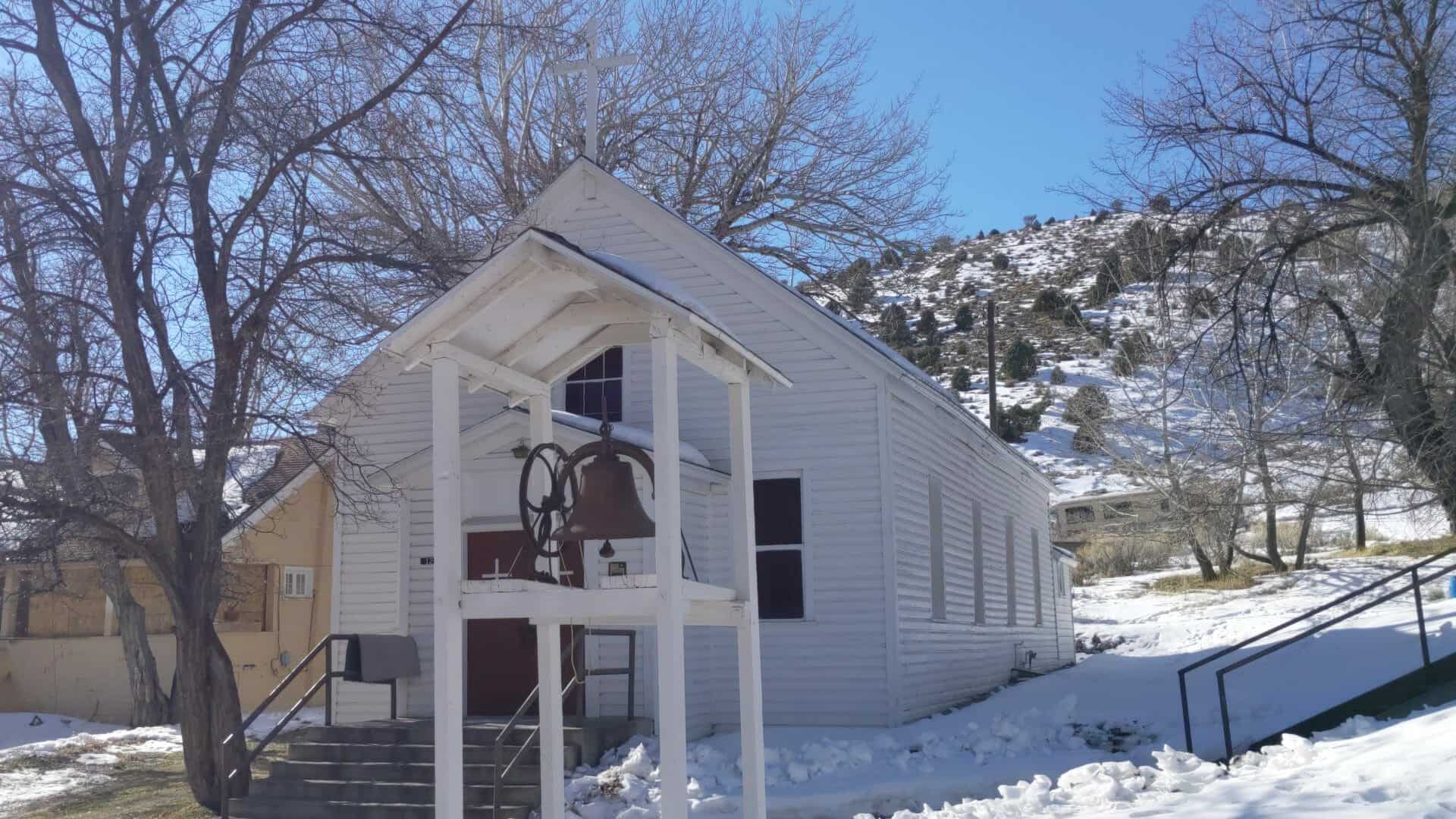
ST. PATRICK’S CATHOLIC CHURCH
Construction: November-December, 1885, under direction of Reverend Denis Keily.
Architect/Builder: Unknown. Cost about $3,000.00
Function: Catholic Church, and in 1886 a school.
Significance: Oldest “original” standing Catholic Church in Utah and illustrates Tintic’s settlement by the Irish. Also, signifies accomplishments of Utah’s Catholic missionary Reverend Lawrence Scanlan (later first Bishop).
Remarks: Fr. Scanlan came into Tintic in 1873, at Diamond, Silver City, and Eureka. In 1885 Fr. Denis Keily in Eureka and apparently selected site of present church and school. First services in the church were held on Christmas day 1885 (the building had been completed only the day before).
A school opened in the Church in Jaunary 1886, the pews having been designed so as to serve as desks. It apparently closed in October 1886. The St. Joseph School, which existed at the site of the current parking lot (north of the church) began in May 1891 and finished in August 1891. Sisters of the Holy Cross taught classes. It closed in the 1940s and was later torn down.
Original church bell in the possession of Carl Fields.
Owner: Catholic Church–Bishop of the Diocese of Salt Lake City.
“OLD” ST. PATRICK’S RECTORY (rented as family dwelling)
Construction: Ca. 1912 by the St. Patrick’s Parish.
Architect/Contractor: Walter J. Cooper, architect, with aid of William Jones, builder/contractor for the Chief Consolidated Mining Company.
Function: Living quarters for the resident priests. Currently rented as a family dwelling.
Significance: This structure was designed and built by Cooper and Jones, who were in the employ of the Chief Consolidated Mining Company. The Chief was run by the Walter Fitch family, Catholics; and this structure, together with the Sister’s home, illustrate the ties between the Fitches and Eureka ‘s Catholic Chruch. Also illustrated a stability of the church in Eureka.
Remarks: The bungalow- style structure has been somewhat altered on the exterior; evident in the south end of the open porch having been built-in to increase living space.
THE GATELY BUILDING, Fulleride Block
Construction: Ca. 1898 Architect/Contractor: Unknown
Function: Served primarily as a saloon and billiards hall, owned by John and James Gately. Apparently, the structure also contained offices in the northwest corner. For example, according to Sanborn maps, in 1898 the building also housed a barber and tailor shop; in 1908, “news” and “office” space. In 1930 Barchay and Feathers tone, brokers, occupied an office.
Initially the Fulleride Building. In 1960s the west end served as Castleton Appliance Company.
Significance: A comparative early structure built of stone, as is evident, and served as one of the most permanent saloons in the city. Remarks: Initially had a “brick-type” facade, prominent by 1908 wood, as is Exterior has remained much the same; interior in decay.
FIRST SECURITY BANK
Construction: 1909, by McCornick § Company, bankers. (W. S. McCormick)
Architect/Contractor: Unknown
Function: The building has always served as a bank- -McCornick § Company; Eureka Banking Company (ca. 1917); in 1960s Commercial Service Company; and presently First Security Bank.
Significance: Served as the bank in Tintic’s economic center, Eureka. In addition, erected by McCornick and Company of Salt Lake City, prominent mining town bankers.
Remarks: Facade now stucco and front windows have been shortened. The ornate door and hardware are of significance.
McCornick and Company moved their bank, fixtures and all, from Mercur to Eureka in 1898. The George Arthur Rice Bank, in Eureka, had folded in 1897. In 1918 Eureka Banking Company headed by Walter Fitch, President, and John Dern, Vice- President,
Owner: First Security Bank of Utah
STOTT BUILDING
Construction: 1899, by B. N. C. Stott, attorney
Architect/Contractor: Holmes & Watkins of Provo
Function: Commercial building on lower level, offices on upper floor.
Currently vacant.
Significance: Structure designed and built by Holmes & Watkins.
Contained indented entry flanked by two large
windows and “four ornate arched windows” (now unfortunately squared-off)
Owned by B. N. C. Stott, prominent local attorney.
Remarks: In 1960s owned by Maria Echevarrieta.
Owner: Glen and Lucille Knotts, c/o Chief Consolidated.
“OLD” TELEPHONE COMPANY OFFICE, BEAUTY PARLOR
Construction: 1903, by Rocky Mountain Telephone.
Archtiect/Contractor: Unknown
Function: Telephone company office. Now a beauty parlor.
Significance: Commercial structure, basically remaining the same on
the exterior.
JUAB COUNTY COURTHOUSE
Construction: 1891, by Juab County, Cost: $5,000.00
Architect/Contractor: Unknown
Function: Juab County Courthouse. Apparently served as City Hall until 1899, when the city built its own structure. Served as a jail for the county, and much of the time also for the city. Still functions as County Courthouse and City jail.
Significance: Early courthouse structure, signifying the local government recognition of Eureka as the center of the district; also the importance of the district itself.
Remarks: The structure was originally rock with a brick jail; now, entirely stucco. Photographs illustrate that the structure has been enlarged since the jail at the rear was originally smaller. Reports indicate that Adams § Sons, of Eureka, installed a new roof in 1904; and that in 1917 “improvements” (not specified) were made. In 1927 Sheriff Kaighn acquired new furnishings, linoleum
on floors, and new paint and paper.
SILVER CLUB
Construction: Ca. 1918
Architect/Contractor: Unknown
Function: Original function unknown. In 1920s served as U. S. Candy Kitchen, confectionary, owned by Peter Bampal and Peter Demos. Now a bar.
Significance: Period commercial building, constructed of brick. Still intact exterior.
Remarks: Demas and Bampal in business with Alex Zarvos (known locally as Alex Jarvis–who in 1923 purchased a “new Buick six” and made local news). Men also leased at mines, Chief Consolidated for one.
Owners: Robert and Ruth Rowley.
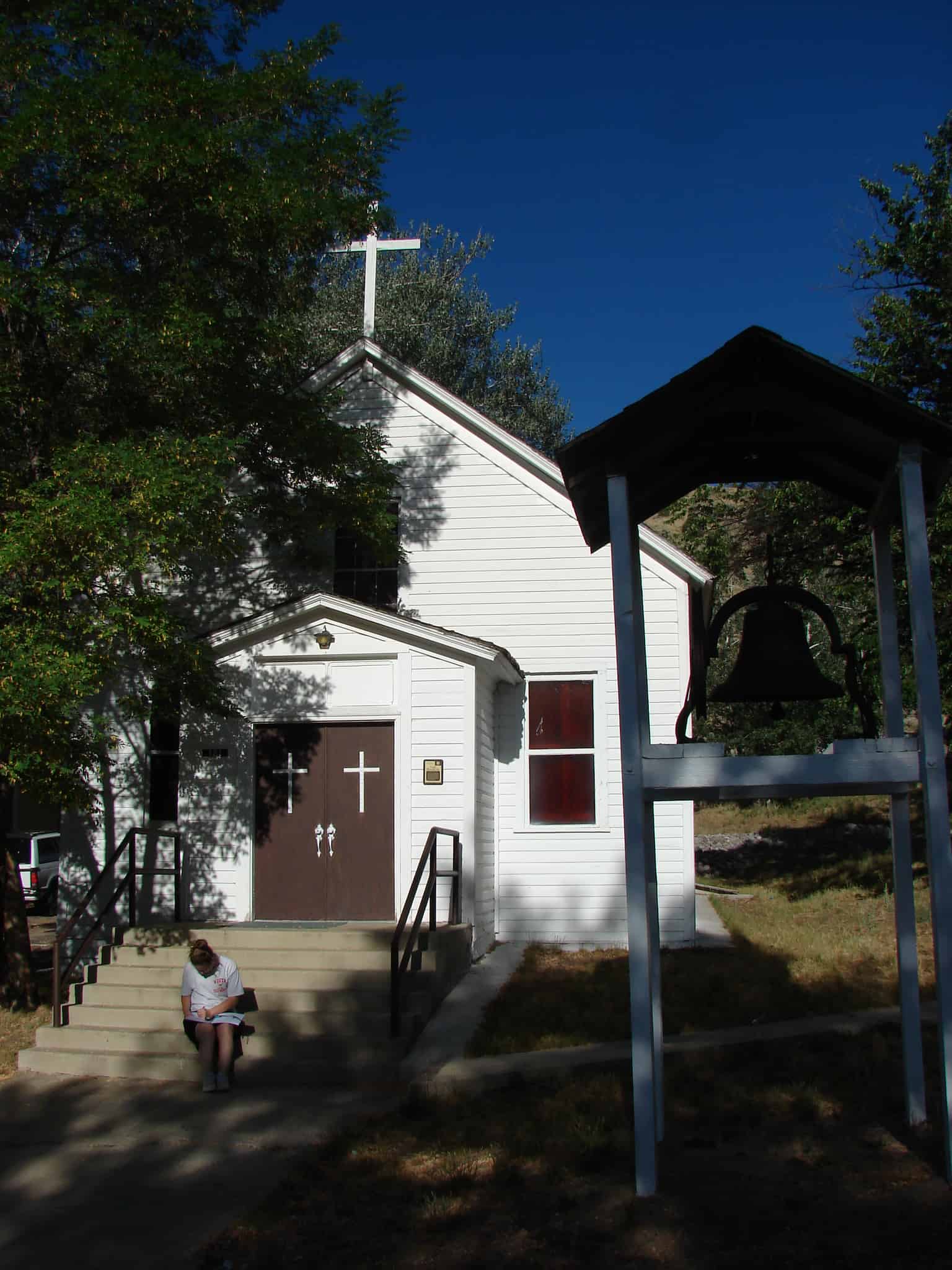 St. Patrick’s Catholic Church, built 1885, remains as one of the oldest Catholic Churches in Utah. Constructed under the direction of Reverend Denis Keily, the building represents both the importance of Irish settlement in Tintic as well as the early Catholic missionary efforts of Bishop Lawrence Scanlan. The church was listed in the National Register of Historic Places on March 14, 1979 as part of the