• About JacobBarlow.com
  • Cemeteries in Utah
  • D.U.P. Markers
  • Doors
  • Exploring Utah Email List
  • Geocaching
  • Historic Marker Map
  • Links
  • Movie/TV Show Filming Locations
  • Oldest in Utah
  • Other Travels
  • Photos Then and Now
  • S.U.P. Markers
  • U.P.T.L.A. Markers
  • Utah Cities and Places.
  • Utah Homes for Sale
  • Utah Treasure Hunt

JacobBarlow.com

~ Exploring with Jacob Barlow

JacobBarlow.com

Tag Archives: NRHP

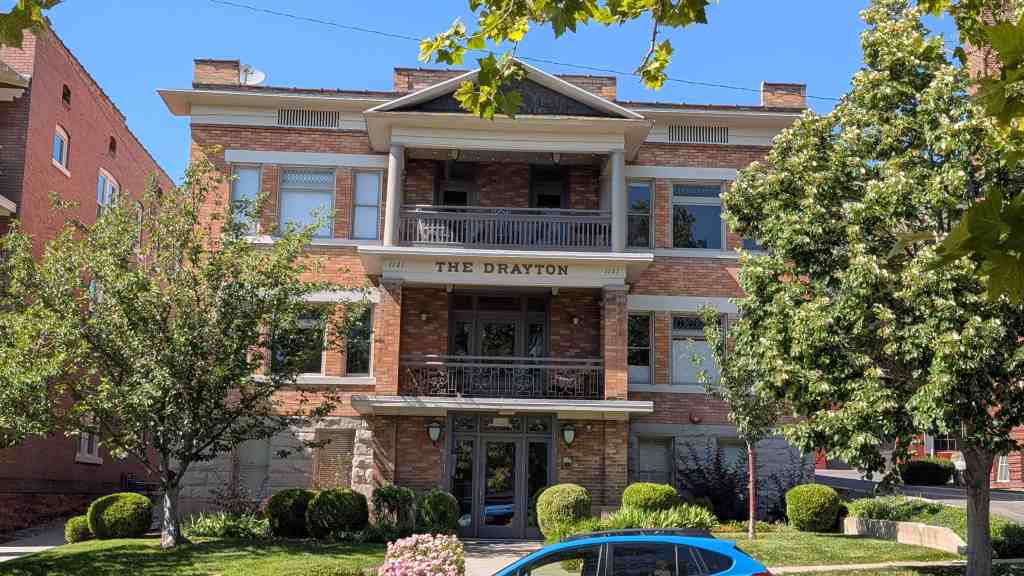
The Drayton Apartments

08 Friday Aug 2025

Posted by Jacob Barlow in Uncategorized

≈ Leave a comment

Tags

Avenues Historic District, historic, Historic Apartments, NRHP, Salt Lake City, Salt Lake County, utah


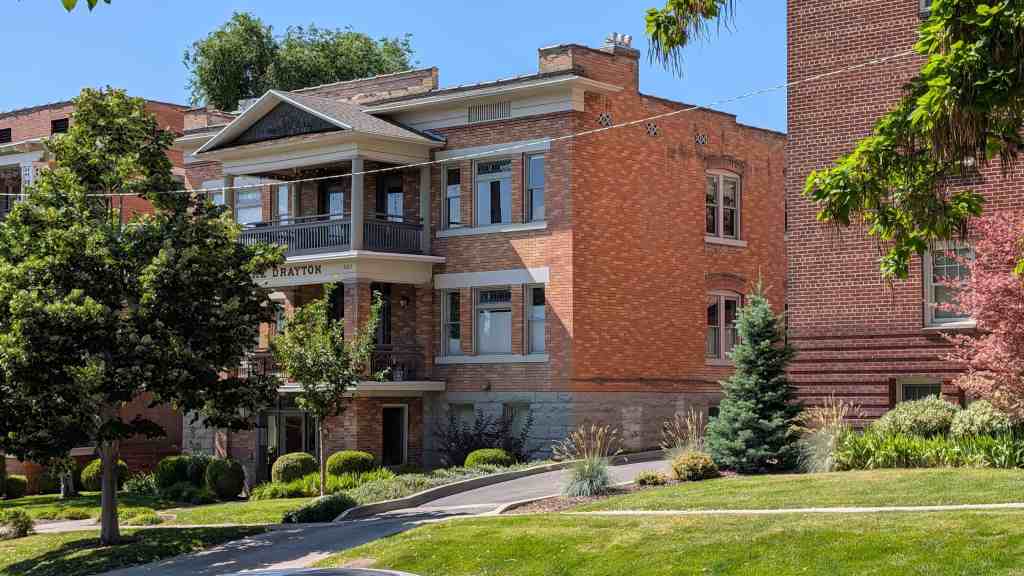
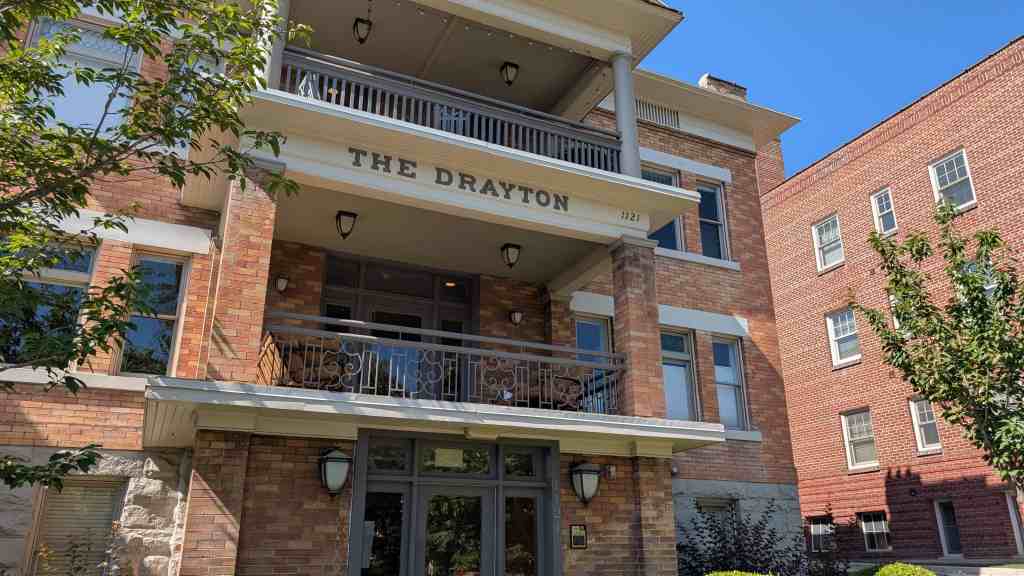
Constructed circa 1908, this three-story, brick apartment building was likely constructed by John H. Hilton and in 1916 was sold to Albert H. Walsh. Albert Walsh was the founder of the A.H. Walsh Plumbing Company. Mr. Walsh resided nearby at 1120 East 2nd Avenue and he owned the apartment building through 1950. The building was constructed at a time when an increasing number of multi-family structures were being built in the Avenues, transitioning away from single-family, owner-occupied residences. It features a prominent, centrally located pedimental bay for the front entry and large balconies.

1121 East First Avenue in The Avenues of Salt Lake City, Utah (technically 61 T Street is the parcel)

557 5th Avenue

07 Thursday Aug 2025

Posted by Jacob Barlow in Uncategorized

≈ Leave a comment

Tags

Avenues Historic District, NRHP

557 Fifth Avenue

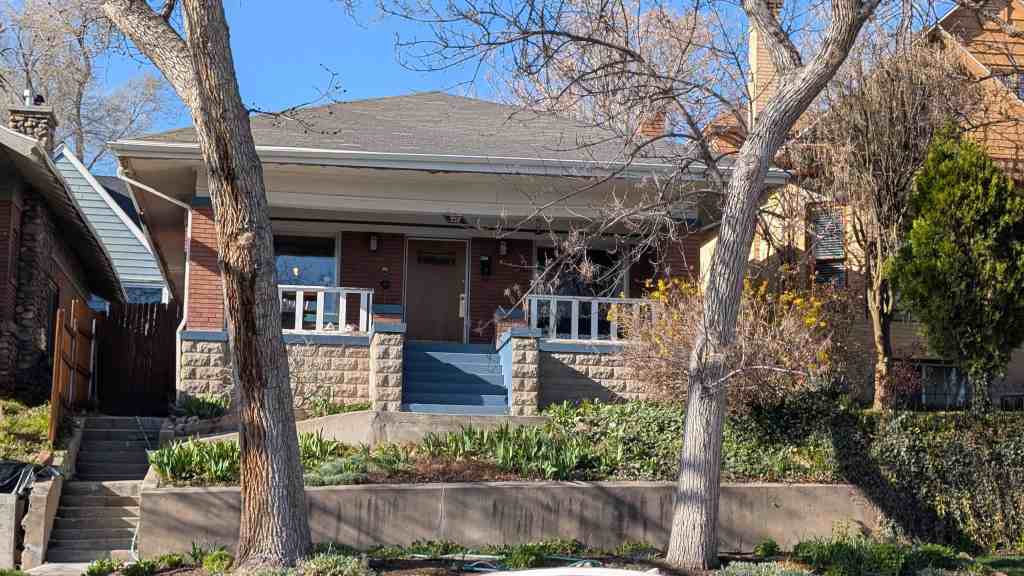
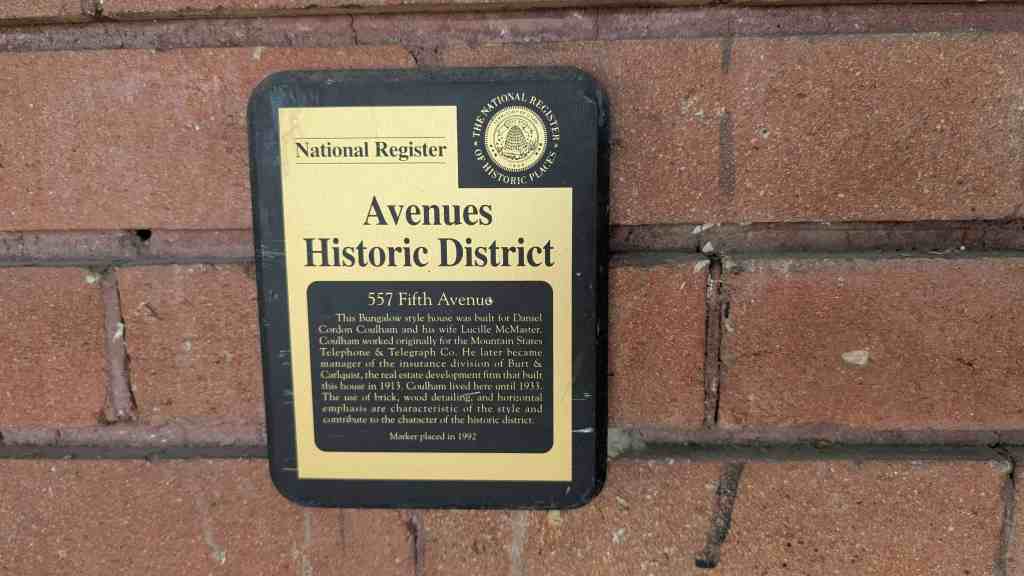
This Bungalow style house was built for Daniel Cordon Coulham and his wife Lucille McMaster. Coulham worked originally for the Mountain States. Telephone & Telegraph Co. He later became manager of the insurance division of Burt & Carlquist, the real estate development firm that built this house in 1913. Coulham lived here until 1933. The use of brick, wood detailing, and horizontal emphasis are characteristic of the style and contribute to the character of the historic district.

557 East Fifth Avenue in the avenues in Salt Lake City, Utah

1119 1st Avenue

06 Wednesday Aug 2025

Posted by Jacob Barlow in Uncategorized

≈ Leave a comment

Tags

Avenues Historic District, historic, Historic Apartments, NRHP, Salt Lake City, Salt Lake County, utah

1119 East 1st Avenue

Constructed circa 1913, this three-story, brick apartment building was constructed by Albert H. Walsh and named for his wife, Emma N. Walsh. Albert Walsh was the founder of the A.H. Walsh Plumbing Company. The building was built at a time when an increasing number of multi-family structures were being built in the Avenues, transitioning away from single-family, owner-occupied residences. Character defining features of the building include its centrally located stairs and central hallway, sandstone foundation, and its front porch with massive two-story Doric columns and decorative entablatures.

1119 East First Avenue in The Avenues of Salt Lake City, Utah

837 4th Avenue

11 Friday Jul 2025

Posted by Jacob Barlow in Uncategorized

≈ Leave a comment

Tags

Avenues Historic District, NRHP

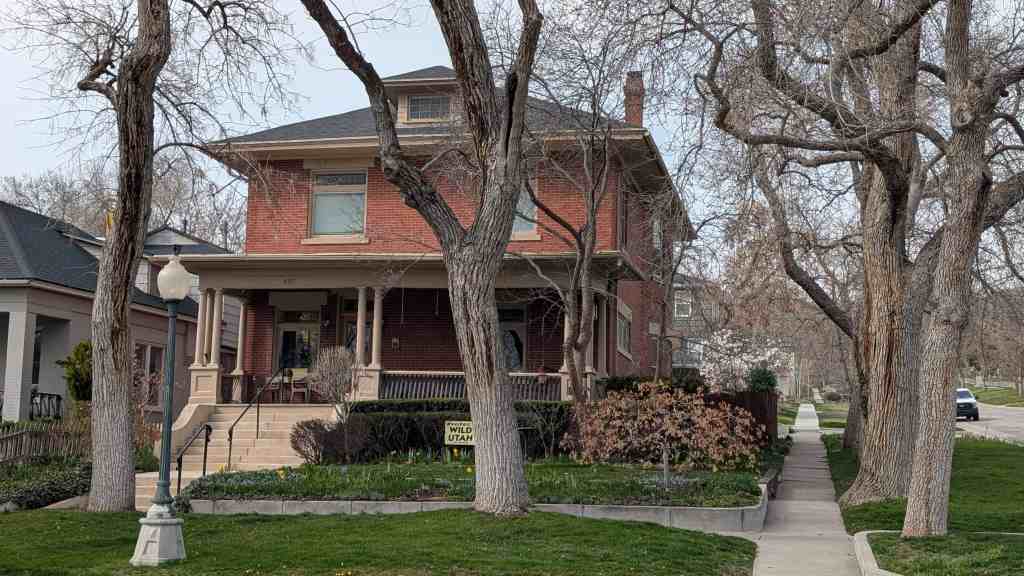
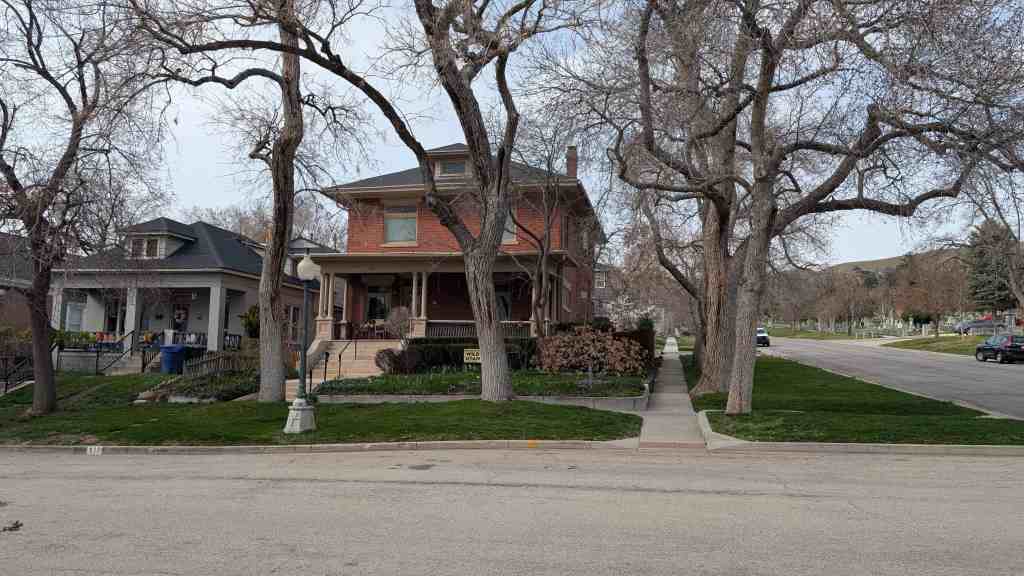
837 4th Avenue

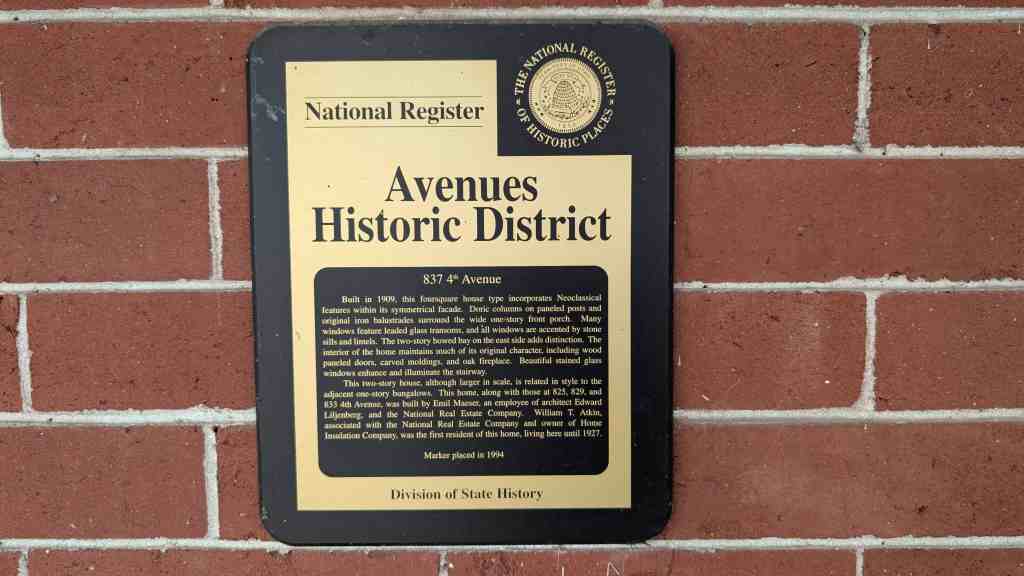
Built in 1909, this foursquare house type incorporates Neoclassical features within its symmetrical façade. Doric columns on paneled posts and original iron balustrades surround the wide one-story front porch. Many windows feature leaded glass transoms, and all windows are accented by stone sills and lintels. The two-story bowed bay on the east side adds distinction. The interior of the home maintains much of its original character, including wood paneled doors, carved moldings, and oak fireplace. Beautiful stained glass windows enhance and illuminate the stairway.

This two-story house, although larger in scale, is related in style to the adjacent one-story bungalows. This home, along with those at 825, 829, and 833 4th Avenue, was built by Emil Maeser, an employee of architect Edward Liljenberg, and the National Real Estate Company. William T. Atkin, associated with the National Real Estate Company and owner of Home Insulation Company, was the first resident of this home, living here until 1927.

837 East Fourth Avenue in the Avenues Historic District in Salt Lake City, Utah.

John Crook & Mary Giles Home

29 Sunday Jun 2025

Posted by Jacob Barlow in Uncategorized

≈ Leave a comment

Tags

NRHP

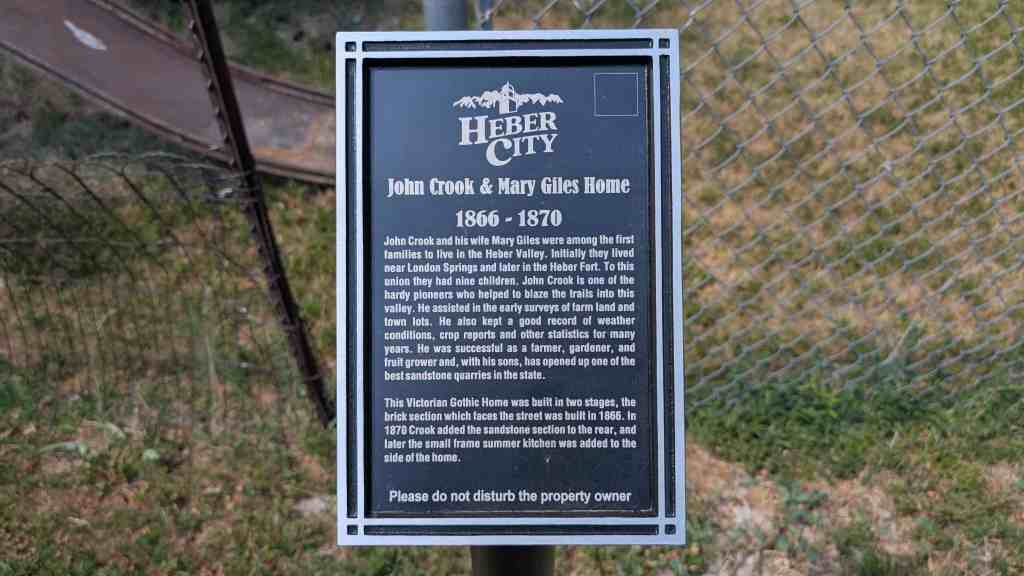
John Crook & Mary Giles Home
1866-1870

John Crook and his wife Mary Giles were among the first families to live in the Heber Valley. Initially they lived near London Springs and later in the Heber Fort. To this union they had nine children. John Crook is one of the hardy pioneers who helped to blaze the trails into this valley. He assisted in the early surveys of farm land and town lots. He also kept a good record of weather conditions, crop reports and other statistics for many years. He was successful as a farmer, gardener, and fruit grower and, with his sons, has opened up one of the best sandstone quarries in the state.

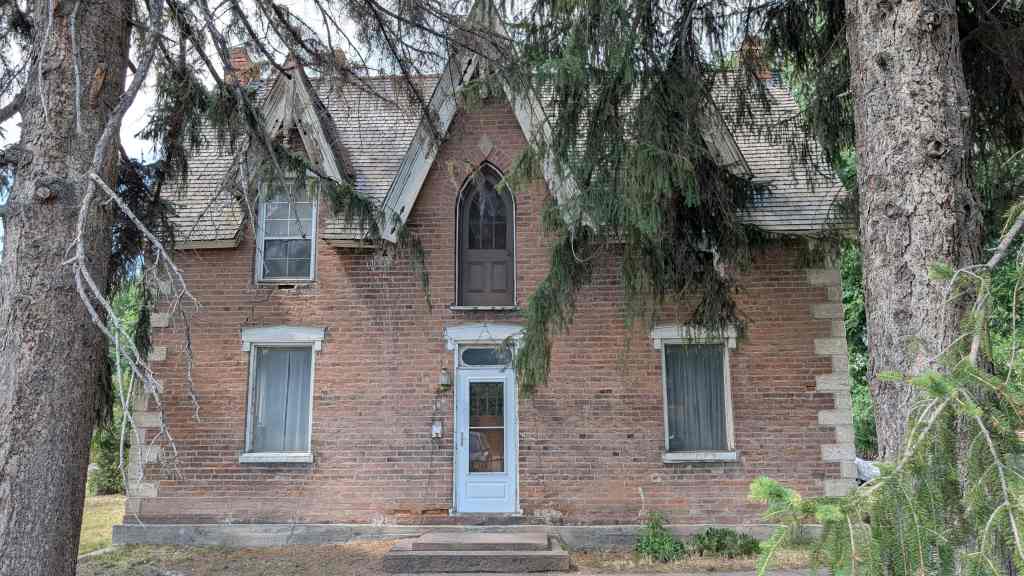
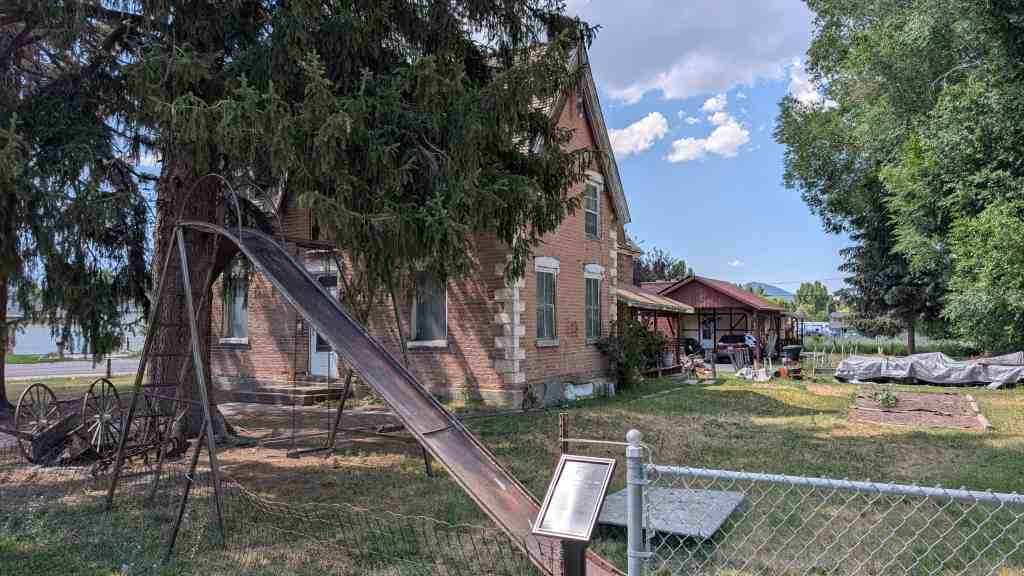
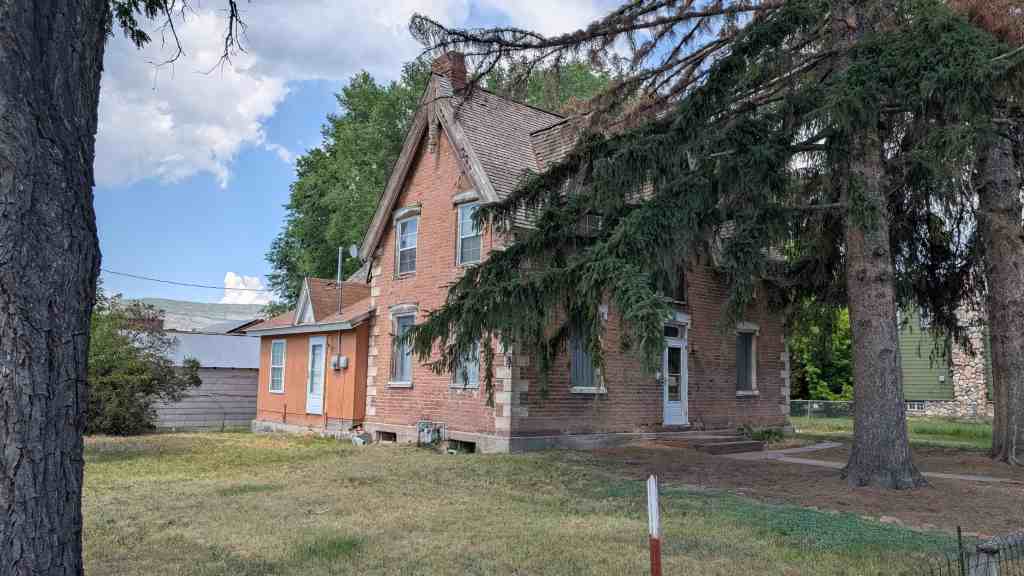
This Victorian Gothic Home was built in two stages, the brick section which faces the street was built in 1866. In 1870 Crook added the sandstone section to the rear, and later the small frame summer kitchen was added to the side of the home.

Part of the Historic Home Tour and located at 188 West 300 North in Heber City, Utah. The home was added to the National Register of Historic Places (#78002705) November 16, 1978

The following text is from the national register’s nomination form:

John Crook, one of the first settlers in Wasatch County, was the areas first historian and a leading church and businessman in Heber.

Crook was born October 11, 1831 in Trenton, Lancashire, England. After he joined the Church of Jesus Christ of Latter-day Saints, he decided to move to Utah. He originally settled in Provo. After the Provo Canyon Road was completed and Wasatch County was opened for settlement, he decided to move there. Crook was one of the first men to survey the area in 1858 and he was one of the original settlers in 1859. He and Thomas Rasband planted some of the first grain in the valley. Crook kept an extensive diary during this period of time and parts of it were later published in the Wasatch Wave, the local newspaper.

Crook continued to be involved in all aspects of Heber life. In 1866 he was an officer in the county militia which was organized to defend the valley in 1866. He was a farmer and stockman. He also worked closely in the development of business in the area. Crook opened a sandstone quarry in Center Creek and opera ted it for many years with his sons. Crook sold the stone to local residents to build schools, homes and churches. He also shipped it to Salt Lake and Provo to be used as sidewalks and foundations.

Crook was an active member of the Mormon Church. He was a choir director and an avid genealogist. He served as First Counselor to Bishop John Foreman of the Heber East Ward. He was a charter member of the Heber Dramatic Association and was an officer for a number of years.

During most of his life in Heber Crook was a volunteer weather observer for the United States Weather Service. He kept a careful log of daily temperatures and weather conditions.

Later in his life Crook traveled a great deal. He was a delegate t& several irrigation congresses. He delivered several trainloads of sheep to the Midwest. Crook died in Heber on March 31, 1921.

Crook was among the first settlers, who moved from the campsite to the city lots. His family lived in a covered wagon at first and then moved to a two-room adobe house inside the fort. After the family moved from the fort, they lived in a three-room log cabin.

According to family tradition, Crook built the brick part of the house that faces Third North, in 1866, The brick was manufactured at the Van Wagoner brick yards. In 1870 the section was added to the rear. Later a frame summer kitchen was also attached to the rear.

The house belonged to members of the Crook family until 1974, when it was sold to Brent E. Groth.

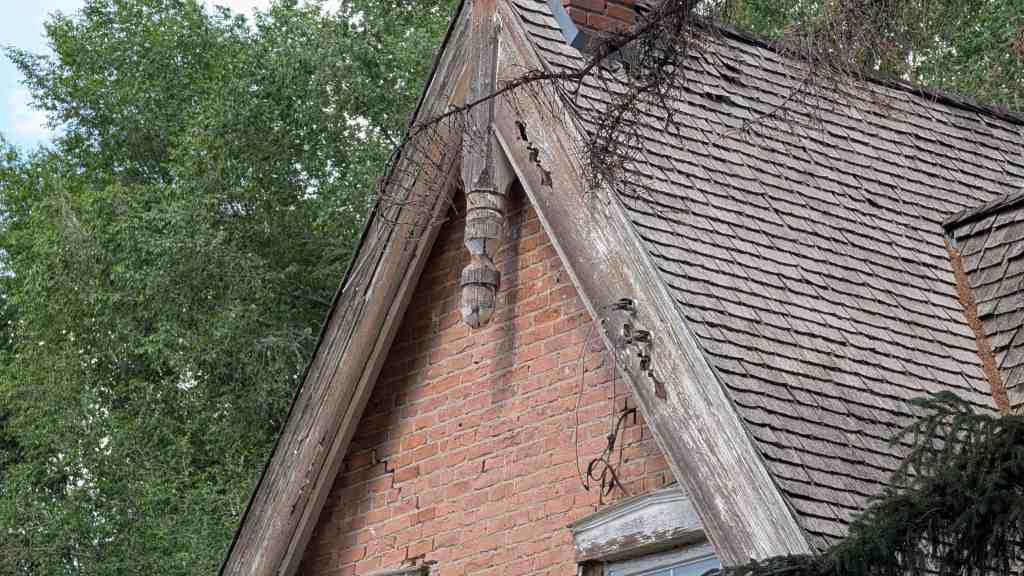
The Crook house is an example of a Gothic Revival cottage, similar to the Carpenter Gothic cottages popular in the East at the time, but rendered in brick instead of timber frame (a consequence of the Mormon preference for brick and stone?). The three steeply-raked dormer gables are decorated like the end gables with bargeboard trim. The pendants extending downward from the gable peaks were probably balanced originally by turned finals. The center gable is penetrated by a pointed arch door, with the door panels subdividing the door in the manner of a Gothic window. The entrance door, below the center gable, is topped by a shortened version of a Gothic hood mould, as are all the windows. The upper story windows are six-over-six, the lower two-over-two. The smooth ashlar quions at all four corners of the original house are not repeated in the stone addition.

John Murray Murdoch & Ann Steele

28 Saturday Jun 2025

Posted by Jacob Barlow in Uncategorized

≈ Leave a comment

Tags

NRHP

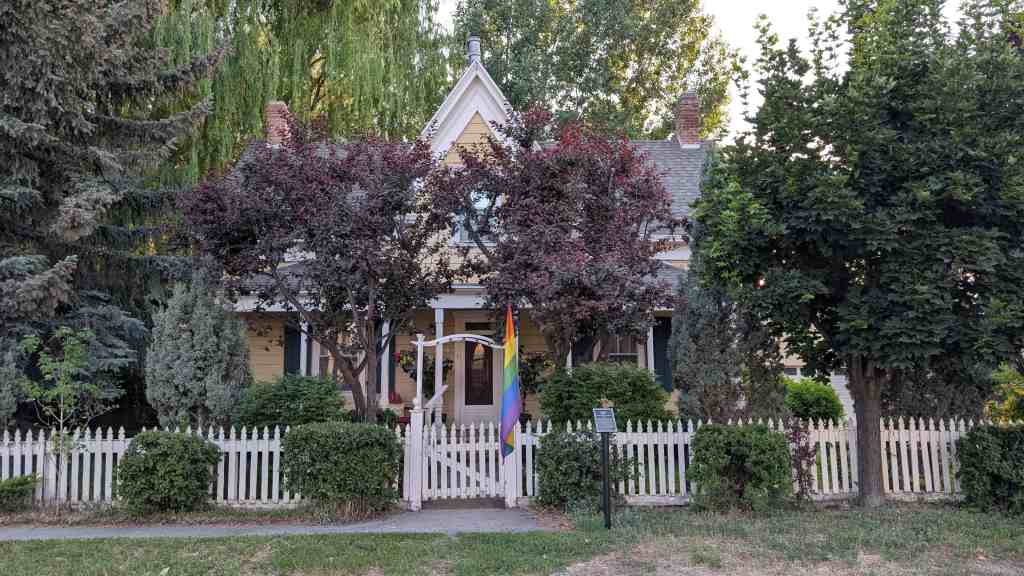
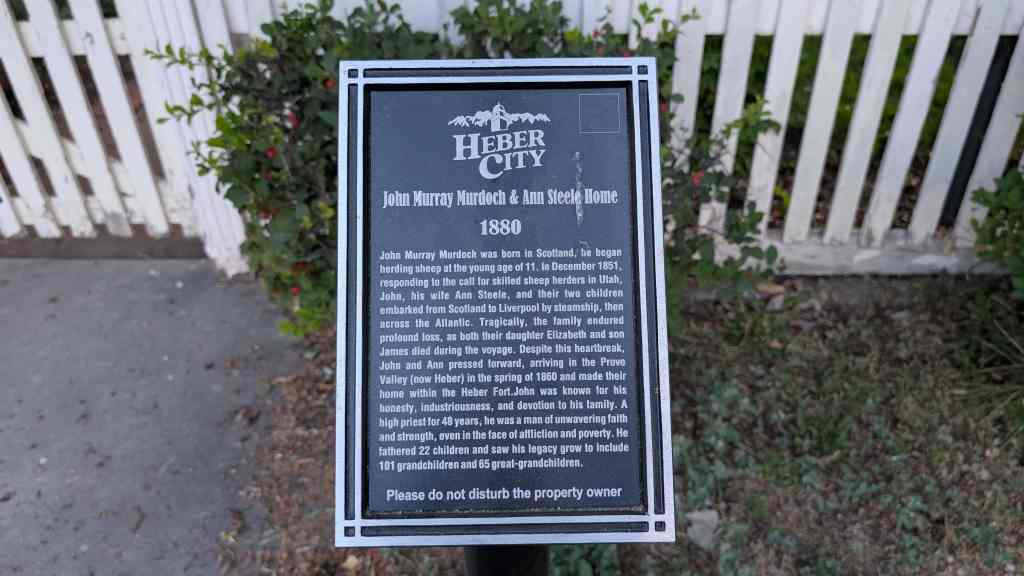
John Murray Murdoch & Ann Steele Home
1880

John Murray Murdoch was born in Scotland, he began herding sheep at the young age of 11. In December 1851, responding to the call for skilled sheep herders in Utah, John, his wife Ann Steele, and their two children embarked from Scotland to Liverpool by steamship, then across the Atlantic. Tragically, the family endured profound loss, as both their daughter Elizabeth and son James died during the voyage. Despite this heartbreak, John and Ann pressed forward, arriving in the Provo Valley (now Heber) in the spring of 1860 and made their home within the Heber Fort. John was known for his honesty, industriousness, and devotion to his family. A high priest for 48 years, he was a man of unwavering faith and strength, even in the face of affliction and poverty. He fathered 22 children and saw his legacy grow to include 101 grandchildren and 65 great-grandchildren.

Part of the Historic Home Tour and located at 261 North 400 West in Heber City, Utah, the home was added to the National Register of Historic Places (#80003985) on February 28, 1980.

John Murdoch’s home is significant as a symbol of the economic and social evolution of a Utah Mormon sheep rancher whose family moved from a dugout, to a log home, to this fine Victorian residence. The use of materials signify an intention by Murdoch to appear even more affluent than he had already become. The interesting allusion to stone created by the scored pine siding is a “dishonest” use of materials (as is the interior hand-grained woodwork) fully acceptable before the twentieth century. A contemporary showplace, the home was intended to be pretentious as evidenced by the awareness of current architectural trends in the design, in the size and scale of the home, and in the illusionistic use of materials.

John Murdoch had emigrated from Scotland in 1852, his passage paid by Brigham Young who had given instructions to an agent in Great Britain to secure “2 Scotch shepherds” for his estates. Murdoch’s involvement in the early woolen industry in Utah is discussed in The Peoples of Utah. After striking out on his own as a farmer in the Heber Valley, Murdoch grew quickly in financial status and rapidly became an important figure in local politics and government.

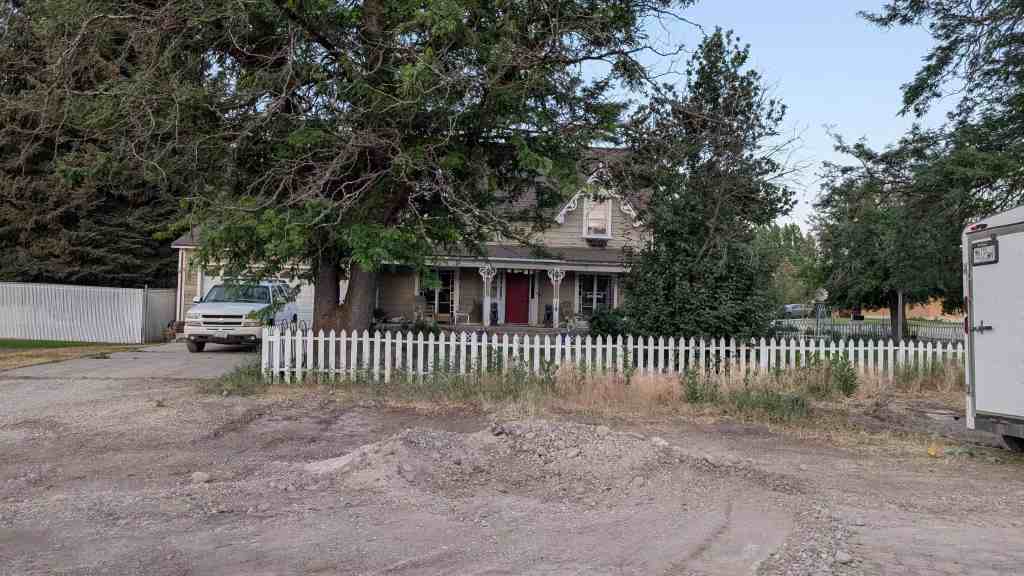
In 1880, John Murdoch built a substantial 1 1/2 story frame and adobe home in Heber City, Utah to replace the log and dugout home his family had occupied there since 1860.

The home is an asymmetrical, cross plan structure. Steep cross gables, the symmetrical main facade and hipped roof front porch with turned supports contribute to the Gothic Revival allusions.

Built on a fieldsone foundation, the home was constructed of frame with pine siding scored vertically every eighteen inches to give the appearance of stone. Adobe insulates the walls.

Exterior ornament includes a wide moulded cornice with gable end returns turned porch support, and moulded window sills and pedimental headers of a Classical flavor for the two over two double hung windows. The front door contains an oval light which is surrounded by carved floral motifs. Shutters are a later addition, as is the stone facing on the front porch floor. A picket fence of a fine milled motif marks the front yard boundary.

A rear, hipped porch, identical to the front porch configuration wraps around the back. A laundry room/bathroom encloses part of one side porch, though the siding has been made to match the original scored pine.

The interior arrangement on the first floor is a hall (dining room) and parlor with cental hall, and a rear kitchen. Upstairs are four bedrooms, one of which (in the south) has been divided to accommodate a second bathroom. Also upstairs is the secret space built into the home (ca post 1890) as a hiding place in the event of a polygamy raid.

Fine hand-graining is extant in the dining room and parlor on the first floor. Originally it had existed throughout the first floor rooms.

The present owners, Raiford and Camille French, are involved in a restoration of the home, intending to preserve the original character as much as possible

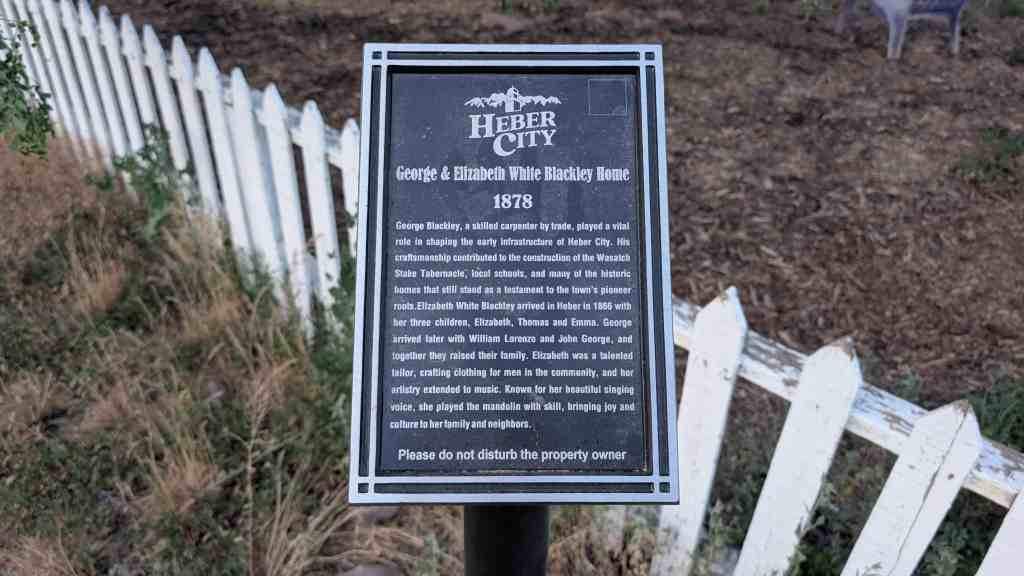
George & Elizabeth White Blackley Home

28 Saturday Jun 2025

Posted by Jacob Barlow in Uncategorized

≈ Leave a comment

Tags

NRHP

George & Elizabeth White Blackley Home
1878

George Blackley, a skilled carpenter by trade, played a vital role in shaping the early infrastructure of Heber City. His craftsmanship contributed to the construction of the Wasatch Stake Tabernacle, local schools, and many of the historic homes that still stand as a testament to the town’s pioneer roots. Elizabeth White Blackley arrived in Heber in 1866 with her three children, Elizabeth, Thomas and Emma. George arrived later with William Lorenzo and John George, and together they raised their family. Elizabeth was a talented tailor, crafting clothing for men in the community, and her artistry extended to music. Known for her beautiful singing voice, she played the mandolin with skill, bringing joy and culture to her family and neighbors.

Part of the Historic Home Tour and located at 105 East Center Street in Heber City, Utah, it was added to the National Register of Historic Places (#85001392) on June 27, 1985.

The George Blackley House, built in 1877-78, is architecturally significant as one of a very limited number of Carpenter Gothic houses in Utah. 1 Inspired by the pattern books of the mid-nineteenth century, particularly the published works of A. J. Davis and A. J. Downing, the Carpenter Gothic was characterized by local interpretation of picturesque religion science sculpture social/ humanitarian theater transportation other (specify) designs, often approximating a regional vernacular.2 Gothic revival elements are common in many of the early residences in Utah, in the form of projecting gables on standard house types and decorative jigsaw cut ornament. Because brick was the most readily available building material in Utah, however, there are very few examples of frame houses that reflect Gothic Revival influences. The Blackley House incorporates frame construction and Gothic Revival elements in a house that also displays characteristics of the local building tradition. It is an excellent example of the typical manifestation of the Carpenter Gothic style in Utah architecture.

George Blackley, a local carpenter and joiner, built this house in 1877-78 and lived there until his death in 1902. Born in England in 1830, he emigrated to the U.S. and Utah in 1869 after converting to Mormonism. During the course of his career as a carpenter, he helped construct numerous buildings in the Heber City area, including the stake tabernacle (LDS) and numerous other schools, churches, and residences. His wife, Elizabeth White Blackley, also a Mormon convert, came to Utah in 1866 with two of their children, while George stayed behind to earn money for his and their other children’s emigration. They settled in Heber City where George pursued his carpentry work and Elizabeth, in addition to raising their five children, worked as a tailor. She died in 1909. William L. (Lorry) Blackley, a son, took over the house and property after his parents’ deaths. The house remained in the Blackley family until 1937, when it was sold to Gray-Payne Realty, which probably used it as rental property. Lynn and LaPreel McKnight purchased the property in 1943 and it remained in their family until 1984.

Typical of most Mormon towns, Heber City is primarily a town of masonry buildings. The construction of frame houses in Utah was discouraged by both the scarcity of wood and by the pronouncements of Mormon church leaders, specifically Brigham Young, who favored the symbolic and structural permanence of masonry buildings. The use of wood on most houses in Mormon communities usually consisted of eave and porch decoration only. Due to abundant local timber resources in the Heber City area, however, there are a greater percentage of frame buildings in this town than are generally found in Utah communities, which are, for the most part, located in more arid, sparsely timbered regions. Other well-timbered regions, such as Cache Valley in northern Utah, also exhibit a greater number of frame buildings, as do the non Mormon mining towns which in face have very few masonry houses. The availability of lumber in Heber City provided a construction climate conducive to the use of the wood-frame Carpenter Gothic style, although it was never a popular style locally. The Black!ey House is the only identified example of a wood-frame Carpenter Gothic style house in Heber City.

202 I Street

26 Thursday Jun 2025

Posted by Jacob Barlow in Uncategorized

≈ Leave a comment

Tags

Avenues Historic District, NRHP

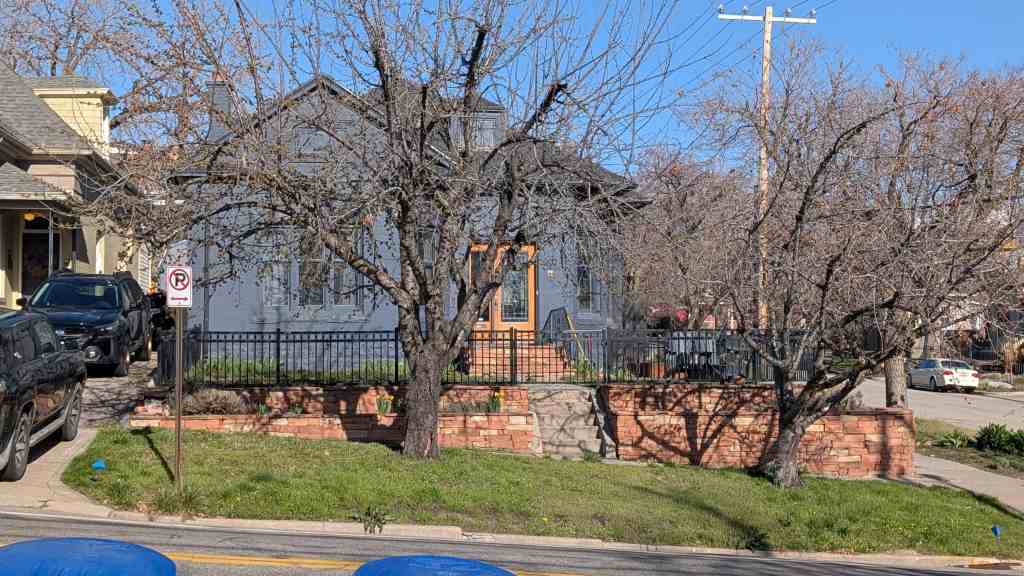
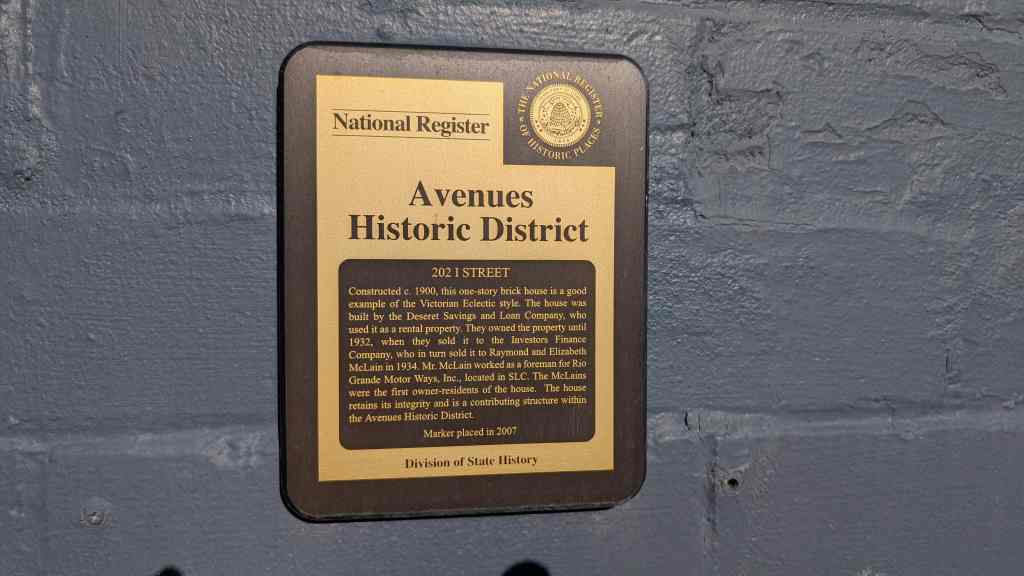
Constructed c. 1900, this one-story brick house is a good example of the Victorian Eclectic style. The house was built by the Deseret Savings and Loan Company, who used it as a rental property. They owned the property until 1932, when they sold it to the Investors Finance Company, who in turn sold it to Raymond and Elizabeth McLain in 1934. Mr. McLain worked as a foreman for Rio Grande Motor Ways, Inc., located in SLC. The McLains were the first owner-residents of the house. The house retains its integrity and is a contributing structure within the Avenues Historic District.

202 North I Street in the Avenues Historic District in Salt Lake City, Utah.

(from county records)

Bonneville Salt Flats Race Track

28 Wednesday May 2025

Posted by Jacob Barlow in Uncategorized

≈ Leave a comment

Tags

NRHP, Tooele County, utah

A part of the Great Salt Lake Desert, the Bonneville Salt Flats were formed by precipitated salt from Lake Bonneville, an ice-age lake which covered some 20,000 square miles of which the Great Salt Lake is the last remnant.

The text on this page is from the nomination form for the National Register of historic places, the race track was added to the register on December 18, 1975 (#75001826)

The raceway is just north of Interstate 1-80 and three miles ease of Wendover, Utah.

The racing area is approximately 13 miles and consists of hard salt sufficiently thick to support the heavy racing machines.

During most of the year the. racing area is either under water or too moist for racing. However, the dry Utah summer evaporates the moisture and by August and September the flats are ideal for racing. During this time a tent city of several thousand people springs up adjacent to the race area.

In 1939, Ab Jenkins enthusiastically described the quality of the Salt Flats in this manner:

“The salt beds are better than any of the existing board, brick , or cement tracks of the world because none of these is large enough. I made my first 24-hour run on the board track at Atlantic City, New Jersey in 1928, and know that on such a 1 1/2 mile circular course you can’t exceed 145 MPH because the centrifugal force would send the car over the bank unless the track were on a 90 degree grade. Another factor too, is that the pressure of the car may crash it through the timbers. Also, board tracks are seldom over 40 feet wide, which doesn’t give the driver much room to spin should he have trouble.

All of these handicaps are overcome on the salt, where there is plenty of room. The actual racing area on the flats measures about 10 by 15 miles. There would be an even larger area if it weren’.t for the dikes caused by the digging for potash on the beds during the War. [World War I]

Why are the slat beds better, then, than Daytona beach, Florida, where world racing marks were met until a few years ago? Daytona beach has a longer straightaway. It is 25 miles long. But Daytona Beach is only 100 to 200 feet wide. That doesn’t give much room to spin.

Yet, even though Daytona Beach were wider, it wouldn’t offer the safety of the salt. If your tire blows out, the rim of the wheel digs into the comparatively soft sand, and that means your car will likely go into a somersault…Never has a speed car overturned on the salt flats.

Then, too, the concrete-like salt has a cooling effect on tires which is found on no other track. However, because the salt is always a little moist, it does not furnish quite as much traction as does a dry dirt, board, or concrete track.”

There is presently concern that the nearby potash operations by the Kaiser Chemical Company are causing a deterioration of the salt flats as a raceway. Two conflicting conclusions were drawn from a study done in 1967. The Division of State Parks and Recreation is planning another geologic survey to investigate ways of preventing further deterioration.

William D. Rishel is credited with being the man who discovered the Salt Flats as an ideal speedway. In 1896, George Randolph Hearst had just started his New York Journal and felt it would be an exciting publicity stunt to send a message by bicycle from his San Francisco Examiner to his New York Journal. Rishel, then living in” Cheyenne, Wyoming, was hired by Hearst to blaze a bicycle trail from Cheyenne to Truckee, California. Accompanied by his friend C. A. Emise, Bill Rishel crossed the Salt Flats in twenty-two hours. However, their experience nearly rivaled that of the ill-fated Donner-Reed Party of 1846. In many places their bikes broke through the thin salt crust and they were forced to carry their mud-clogged bikes many miles. In addition, they ran out of drinking water and had to contend with sticky marshes and sweeping clouds of mosquitoes.

Rishel returned to the Salt Flats again in 1907. By this time he had envisioned the possibility of a highway across the flats and the opportunity for some racing. Rishel and two Salt Lake City businessmen, Frank Botterill and Wallace Bransford, started out for the Salt Flats in a four-cylinder Fierce-Arrow. As they neared the salt beds, they saw what they thought was a lake of water covering the flats. Discouraged, they returned to Salt Lake City. A short time later Rishel learned from some of the old timers that they had been fooled by a mirage.

Finally Rishel and his friend, Ferg Johnson, succeeded in driving Johnson’s Packard onto the Salt Flats via the railway ties. After driving on the smooth, flat salt beds, Rishel became fully convinced that they would make the world’s best speedway.

The following year, 1912, Rishel took A.L. Westgard, National Pathfinder for the National Trails Association, onto the salt flats and convinced the national automobile figure of the area’s potential for racing.

Westgard did not fulfill his role as a propagandist for the salt flats and it was up to local enthusiasts to seek other ways of publicizing the salt flats as a speedway.

In 1914, Ernie Morass, who had been barnstorming the country with a fleet of several racing cars, arrived in Utah. His fastest car, the Blitzen Benz s driven by Teddy Tezlaff, had set a worlds land speed record for the mile with a 140.87 MPH run at Daytona beach on April 23, 1913.

W.D. Rishel and other Salt Lake City businessmen arranged for an exhibition of the racing cars. They were able to secure the railroads help hauling the cars to the flats after one hundred railway tickets were sold. According to the stop watches of the timekeepers, lezlaff pushed the Dlitzen-Benz passed its earlier world record speed to 141.73 MPH. To the dismay of local promoters, both the American Automobile Association and the Automobile Club of America refused to acknowledge the new record.

In 1925, to commemorate the completion of 40 miles of highway constructed across the salt desert between Knolls and Handover, the Salt Lake City Rotary Club planned a special celebration. One of the events was a race between Ab Jenkins, a local racing enthusiast driving a Studebaker, and the special excursion train traveling from Salt Lake City to Wendover for the official ceremony, Jenkins won the race and in so doing became a stalwart convert to the possibilities of the Salt Flats for a speedway.

Ab Jenkins went on to set several records including the crosscountry record from New York to San Francisco, 76 hours in 1927; and the world’s stock car record of 82.5 MPH average on a board track at Atlantic City, .’Jew Jersey in 1928.

y in 1928. In 1932, Ab returned to Utah to prepare for an attempt at setting the world’s 24 hour record on the Salt Flats. Enlisting the help of the Utah State Road Commission to survey the course and some of his Utah friends, including W. D. Rishel of the Utah State Automobile Club and Gus P. Backman of the Chamber of Commerce, Jenkins set out to break the world’s record.

The course was marked off with four foot stakes placed every 100 feet and was lighted by 20 small oil flares. In describing the race Jenkins recorded:

…I remained at the wheel the full 24 hours without a relief driver. Though I stopped about 12 times to refill the gas tank, not once did I leave the seat of the car. The machine wasn’t equipped with plumbing either!

After I had driven a few hours, I was stone deaf. This, however, did not bother me so much as did other factors. The weather was ideal throughout the run, but the mirages on the salt drove me almost crazy. At night there was a bright moon. Shadows were cast over the sparkling salt. Sometimes they took the form of huge walls. I thought I was steering right into them. I could almost hear the sound of the crash.

On other occasions, the railway tracks on the beds some miles away would teasingly come off and on the course. Every once in a while the locomotive would seem to run across it, directly over my path. There was an airline beacon on a hill about ten miles from the course which seemed to change position every time I rounded the track.

Yes, the beds were like one big haunted house.

The Fierce-Arrow driven by Jenkins traveled 2,710 miles during the 24 hour period; however, the 112.92 MPH average was not officially recognized because it was not clocked by the American Automobile Association.

Christian and Jartina Orlob Home

26 Monday May 2025

Posted by Jacob Barlow in Uncategorized

≈ Leave a comment

Tags

Avenues Historic District, NRHP

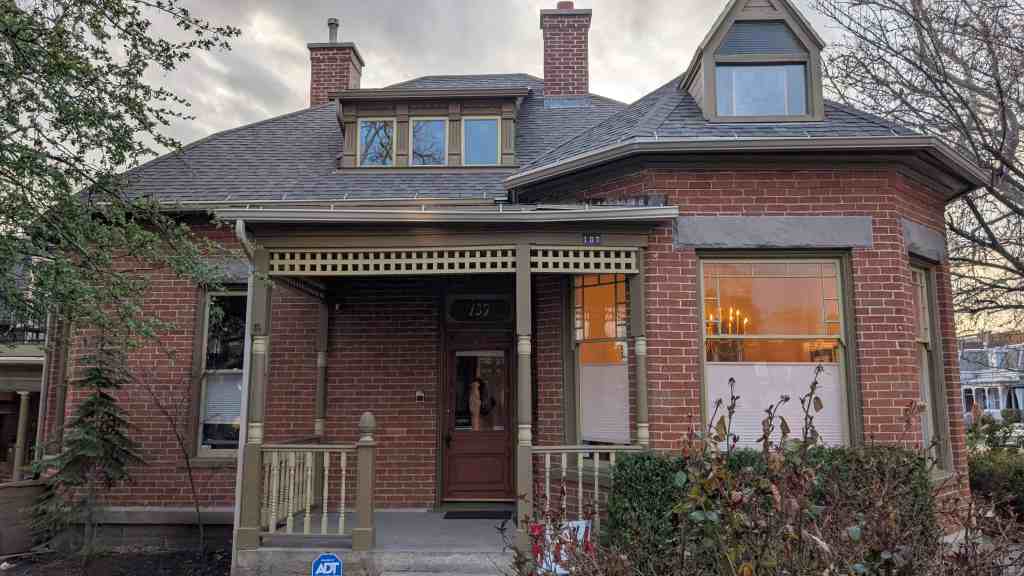
137 J Street

This one-and-one-half-story home is a good example of the Victorian eclectic style popular in Utah between 1885-1910 and characterized by the irregular plan, complex roof structure, and ornate moldings. The house was built in 1890 for Christian A.F. and Jartina Orlob at a cost of $4,000. Christian lived here until his death in the late 1920s and Jartina owned the house until the mid 1940s. Other members of the Orlob family lived at 133 I Street and 825 2nd Avenue.

137 North J Street in The Avenues of Salt Lake City, Utah

← Older posts
Newer posts →

Follow Jacob

Follow Jacob

Blog Stats

  • 2,060,855 hits

Social and Other Links

BarlowLinks.com

Recent Posts

  • Navajo Shadehouse Museum
  • Impossible Canyons
  • The Old Hurricane Bell
  • Goulds Shearing Corral
  • Morgan Union Pacific Depot

Archives

Loading Comments...