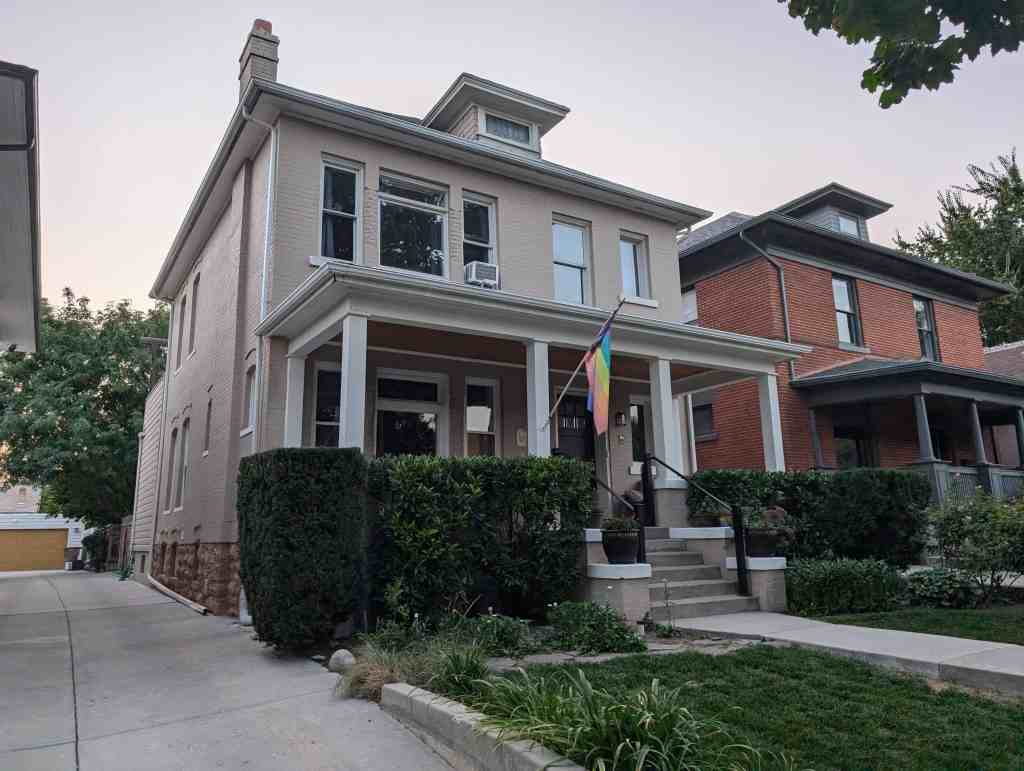
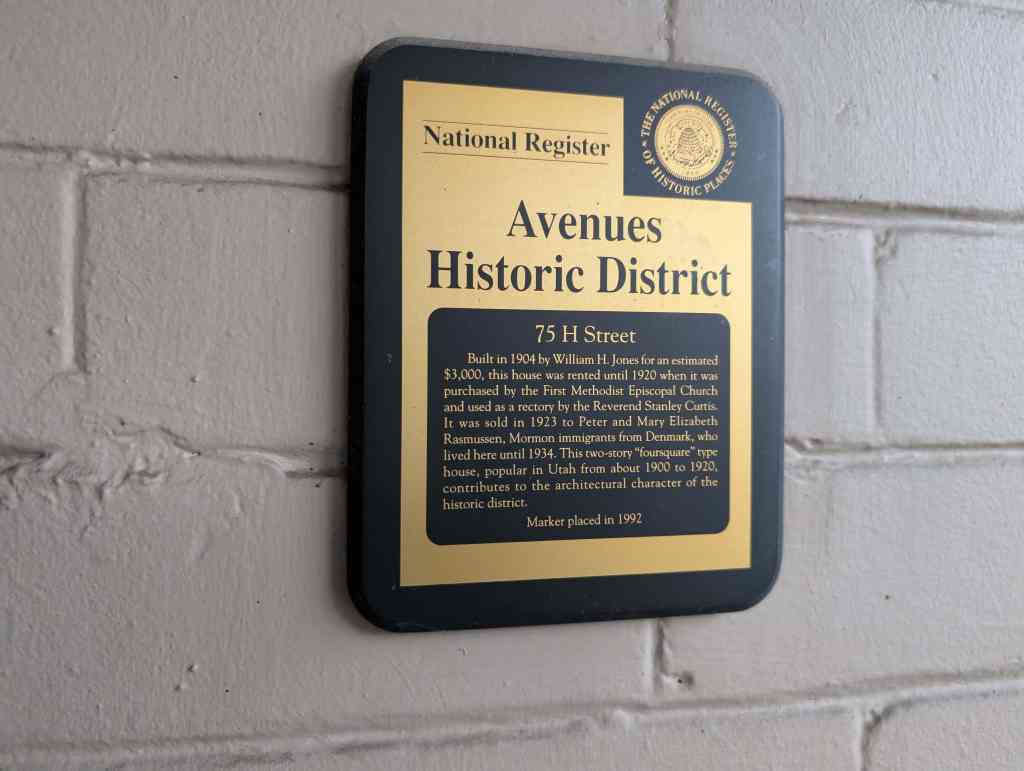
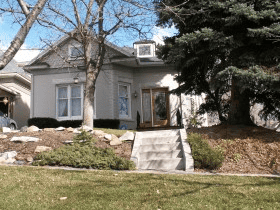
Built in 1904 by William H. Jones for an estimated $3,000, this house was rented until 1920 when it was purchased by the First Methodist Episcopal Church and used as a rectory by the Reverend Stanley Curtis. It was sold in 1923 to Peter and Mary Elizabeth Rasmussen, Mormon immigrants from Denmark, who lived here until 1934. This two-story “foursquare” type house, popular in Utah from about 1900 to 1920, contributes to the architectural character of the historic district.
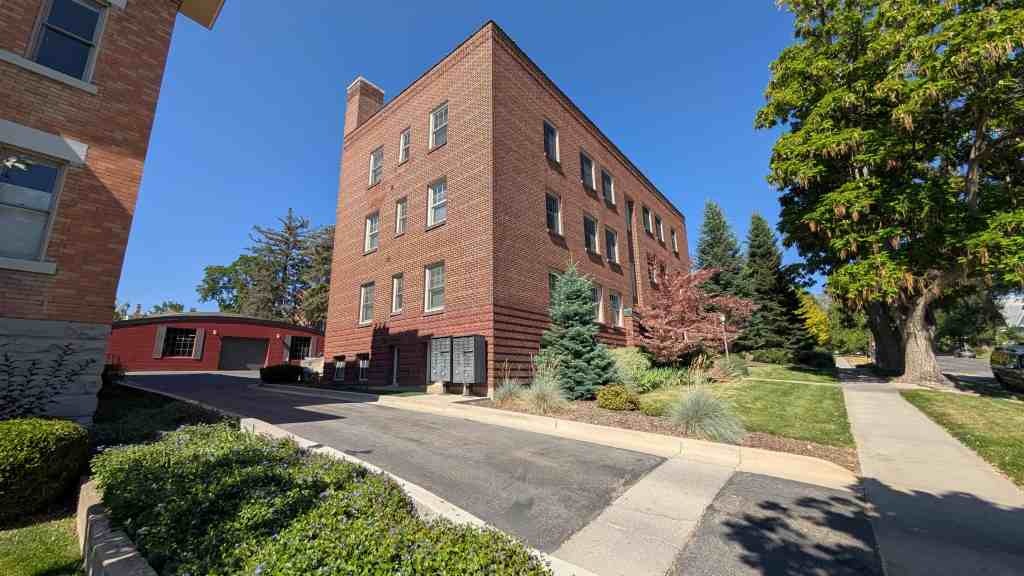
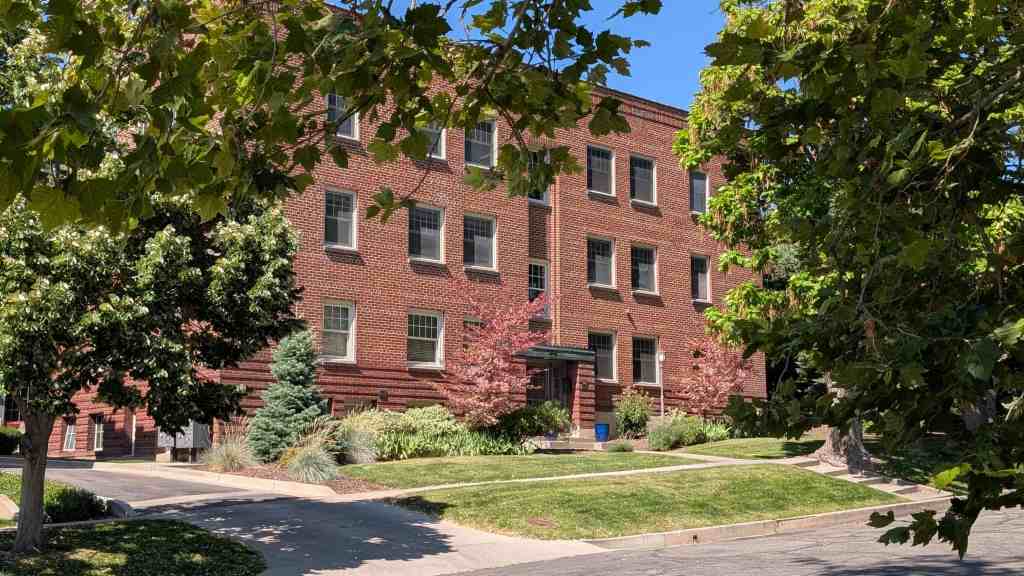
In 1938, Albert H. Walsh hired the Fullmer Bros. Construction Company to build this large, three-story brick apartment building, featuring 18 units. Albert Walsh was the founder of the A.H. Walsh Plumbing Company, and the company’s office building was located on the same block as the apartments. Mr. Walsh resided nearby at 1120 East 2nd Avenue. The apartment building retains its historic and architectural integrity and is a contributing resource within the Avenues Historic District.
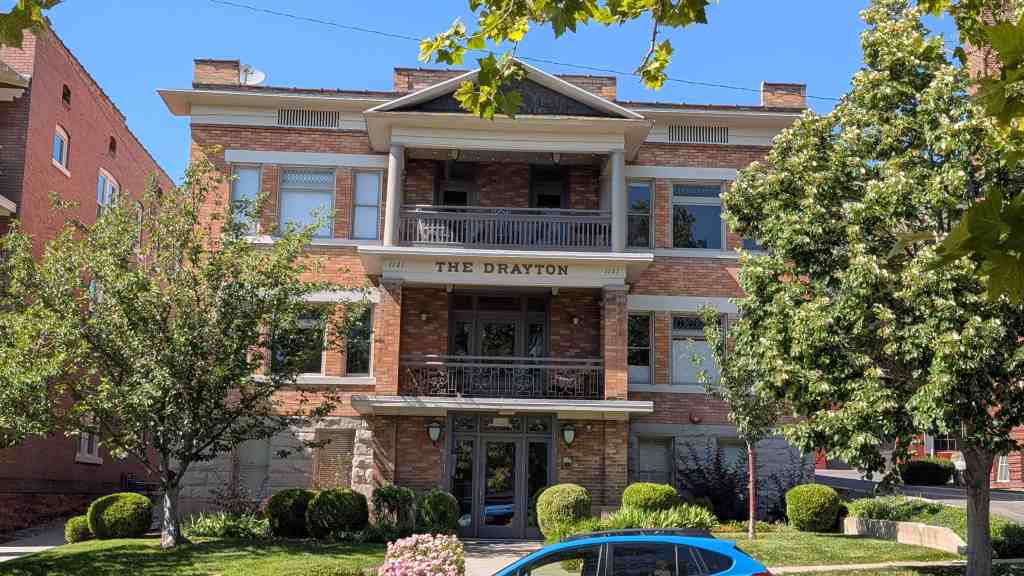
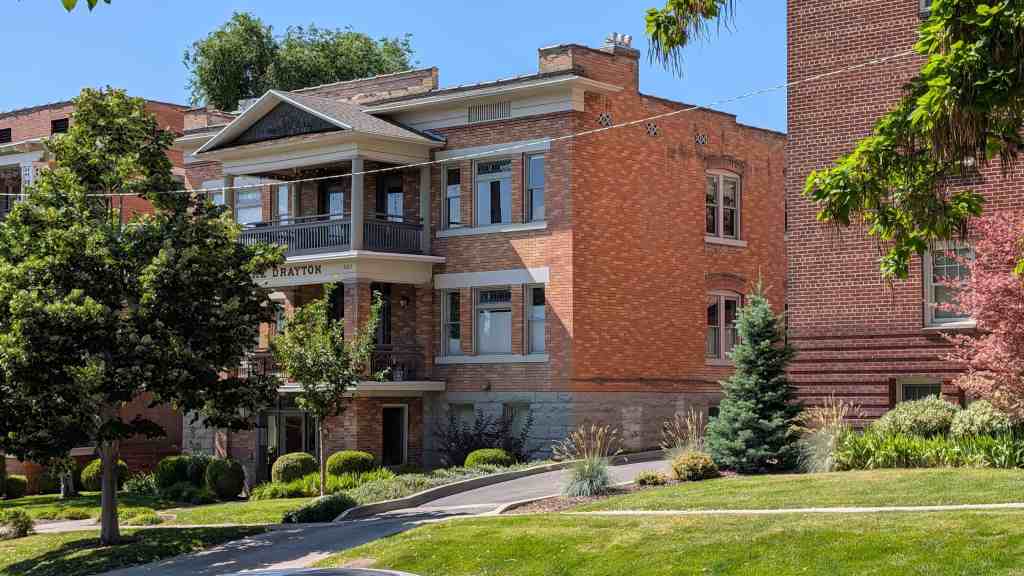
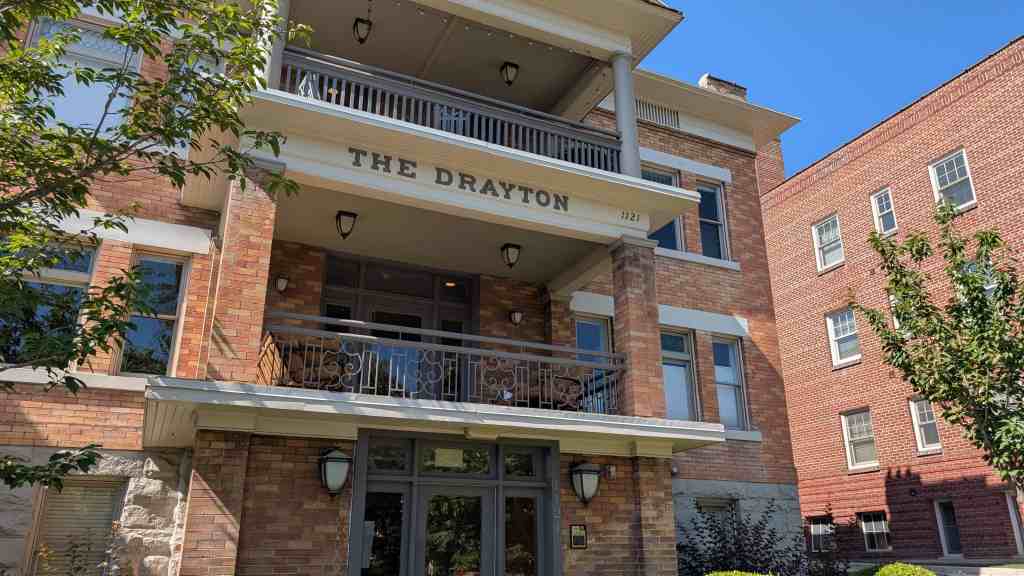
Constructed circa 1908, this three-story, brick apartment building was likely constructed by John H. Hilton and in 1916 was sold to Albert H. Walsh. Albert Walsh was the founder of the A.H. Walsh Plumbing Company. Mr. Walsh resided nearby at 1120 East 2nd Avenue and he owned the apartment building through 1950. The building was constructed at a time when an increasing number of multi-family structures were being built in the Avenues, transitioning away from single-family, owner-occupied residences. It features a prominent, centrally located pedimental bay for the front entry and large balconies.
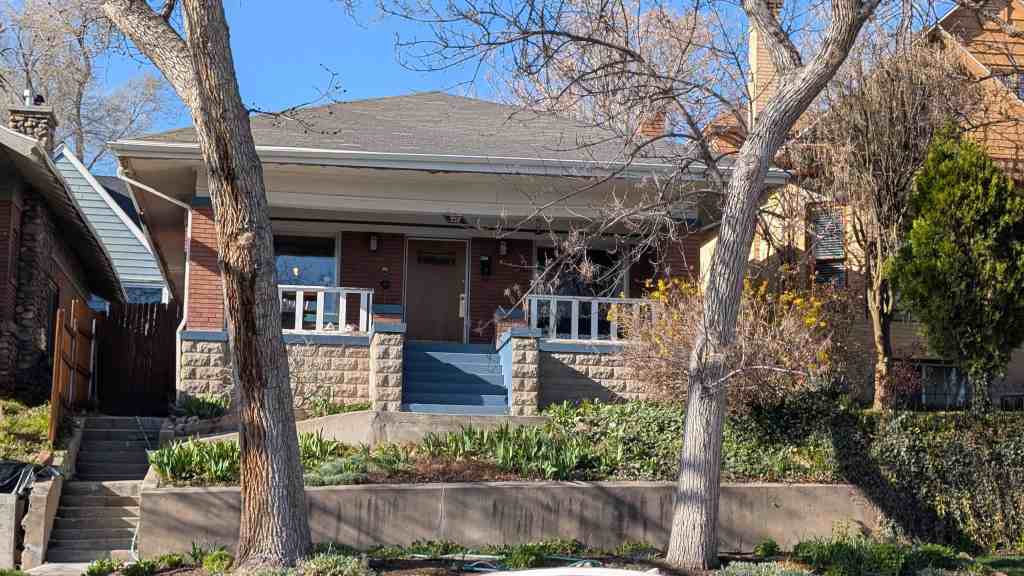
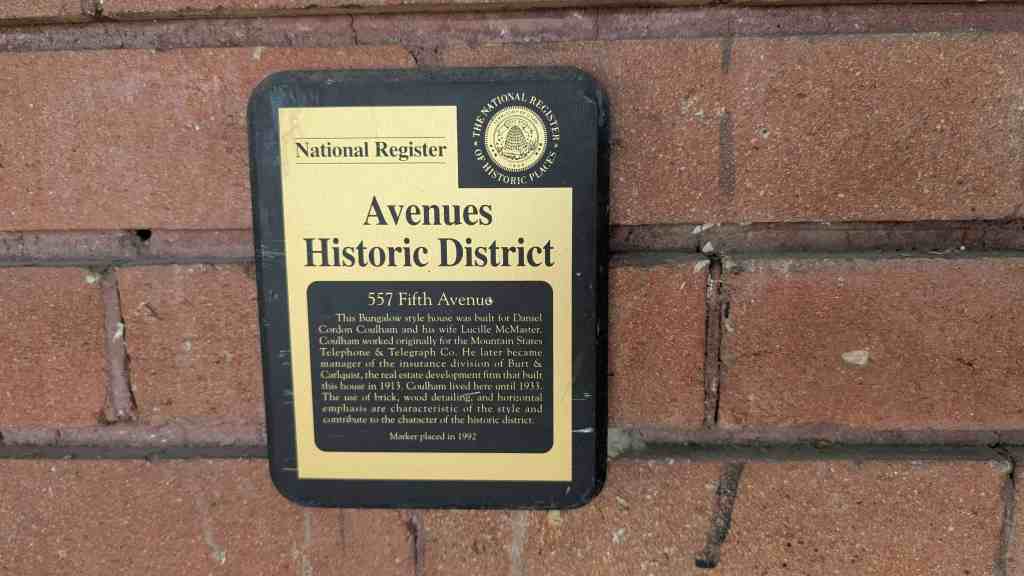
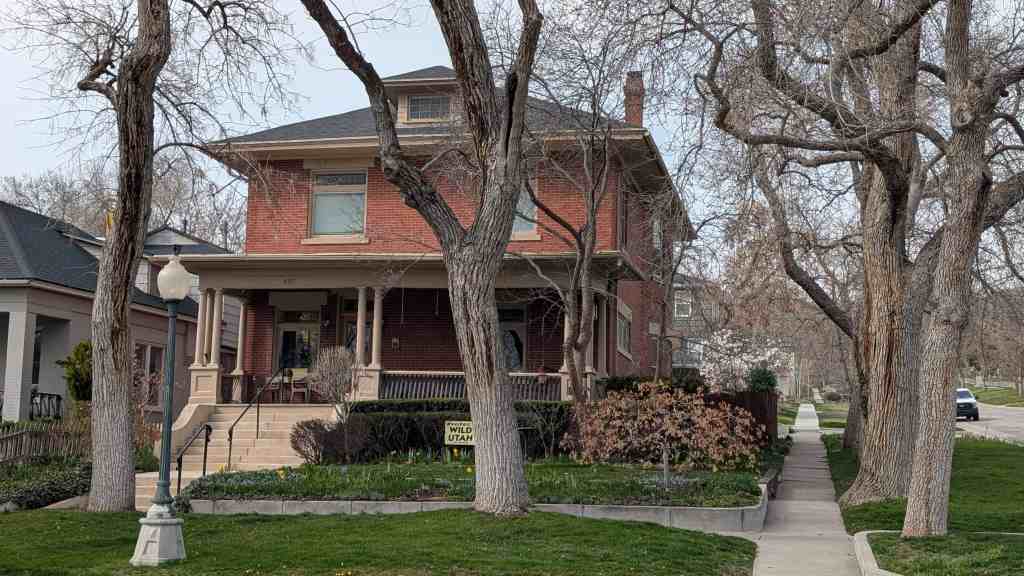
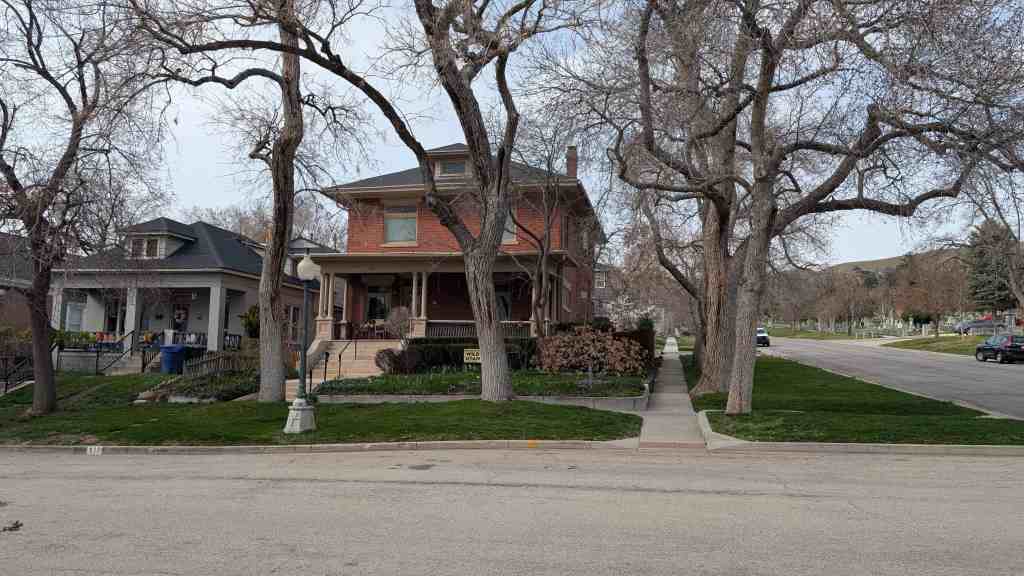
This Bungalow style house was built for Daniel Cordon Coulham and his wife Lucille McMaster. Coulham worked originally for the Mountain States. Telephone & Telegraph Co. He later became manager of the insurance division of Burt & Carlquist, the real estate development firm that built this house in 1913. Coulham lived here until 1933. The use of brick, wood detailing, and horizontal emphasis are characteristic of the style and contribute to the character of the historic district.
Constructed circa 1913, this three-story, brick apartment building was constructed by Albert H. Walsh and named for his wife, Emma N. Walsh. Albert Walsh was the founder of the A.H. Walsh Plumbing Company. The building was built at a time when an increasing number of multi-family structures were being built in the Avenues, transitioning away from single-family, owner-occupied residences. Character defining features of the building include its centrally located stairs and central hallway, sandstone foundation, and its front porch with massive two-story Doric columns and decorative entablatures.
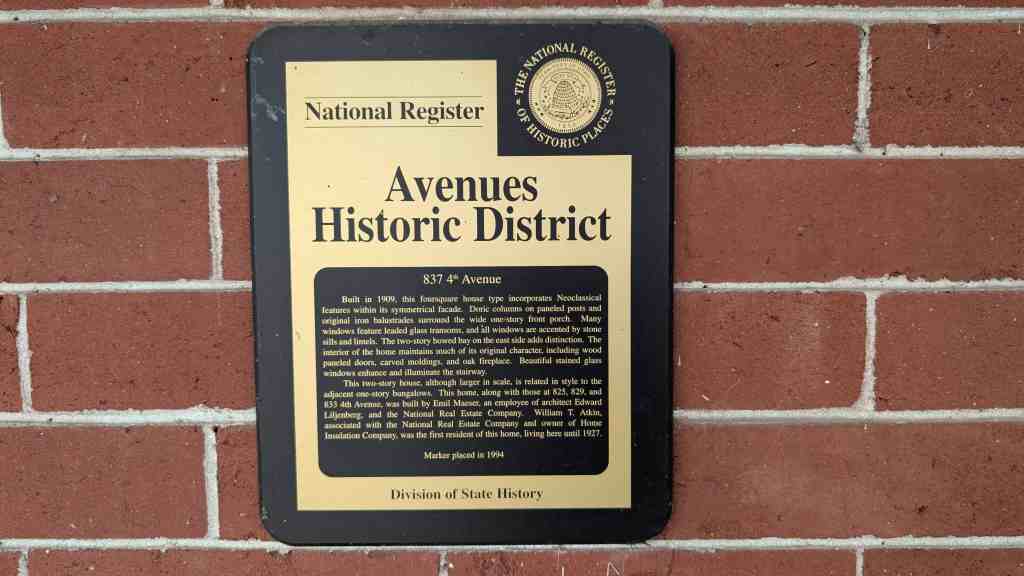
Built in 1909, this foursquare house type incorporates Neoclassical features within its symmetrical façade. Doric columns on paneled posts and original iron balustrades surround the wide one-story front porch. Many windows feature leaded glass transoms, and all windows are accented by stone sills and lintels. The two-story bowed bay on the east side adds distinction. The interior of the home maintains much of its original character, including wood paneled doors, carved moldings, and oak fireplace. Beautiful stained glass windows enhance and illuminate the stairway.
This two-story house, although larger in scale, is related in style to the adjacent one-story bungalows. This home, along with those at 825, 829, and 833 4th Avenue, was built by Emil Maeser, an employee of architect Edward Liljenberg, and the National Real Estate Company. William T. Atkin, associated with the National Real Estate Company and owner of Home Insulation Company, was the first resident of this home, living here until 1927.
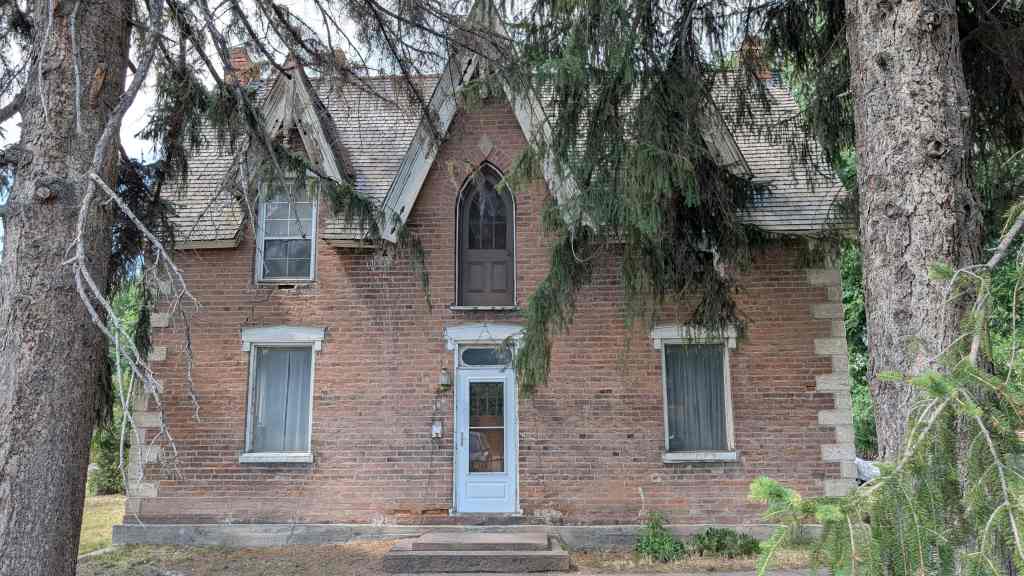
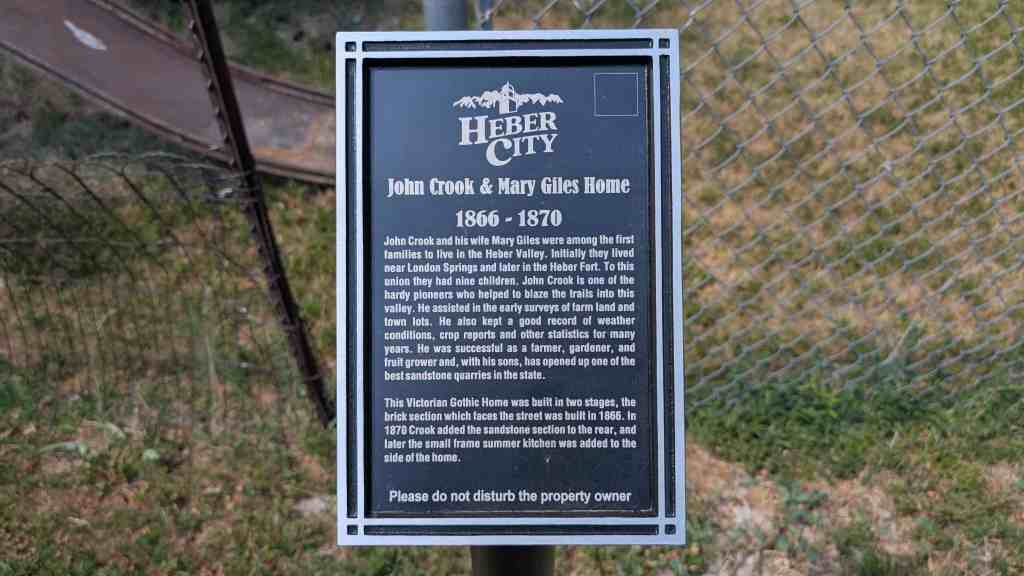
John Crook and his wife Mary Giles were among the first families to live in the Heber Valley. Initially they lived near London Springs and later in the Heber Fort. To this union they had nine children. John Crook is one of the hardy pioneers who helped to blaze the trails into this valley. He assisted in the early surveys of farm land and town lots. He also kept a good record of weather conditions, crop reports and other statistics for many years. He was successful as a farmer, gardener, and fruit grower and, with his sons, has opened up one of the best sandstone quarries in the state.
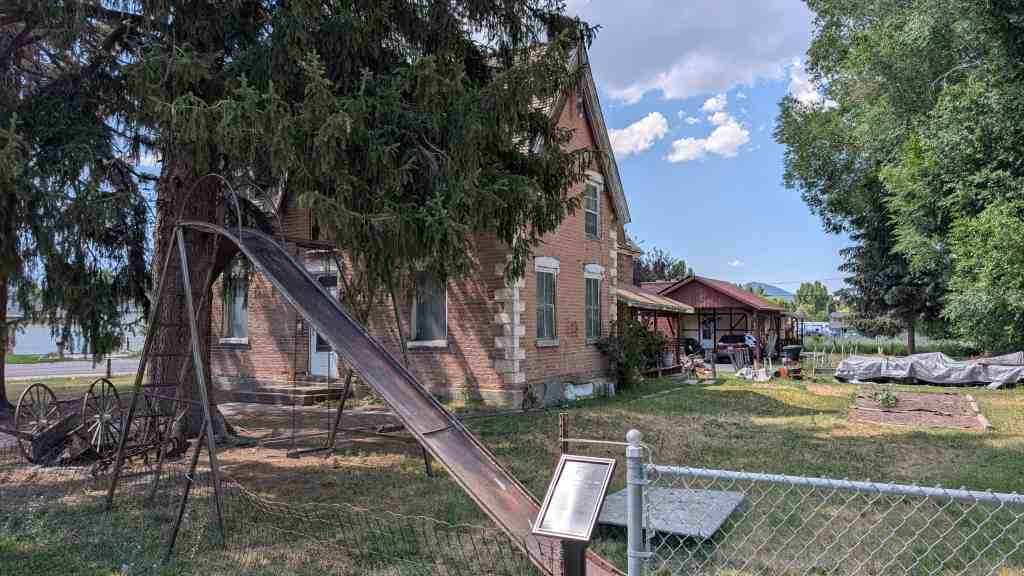
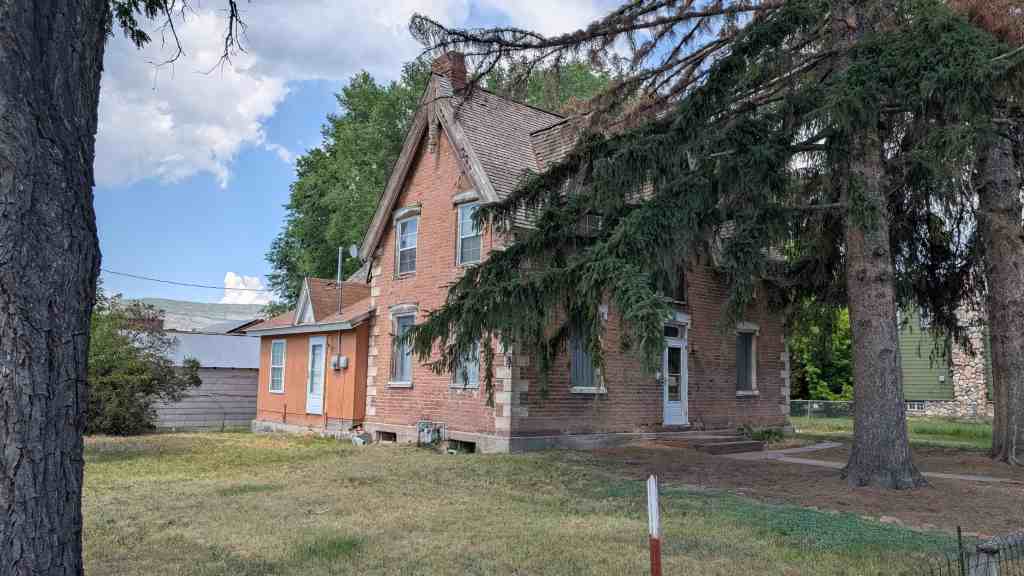
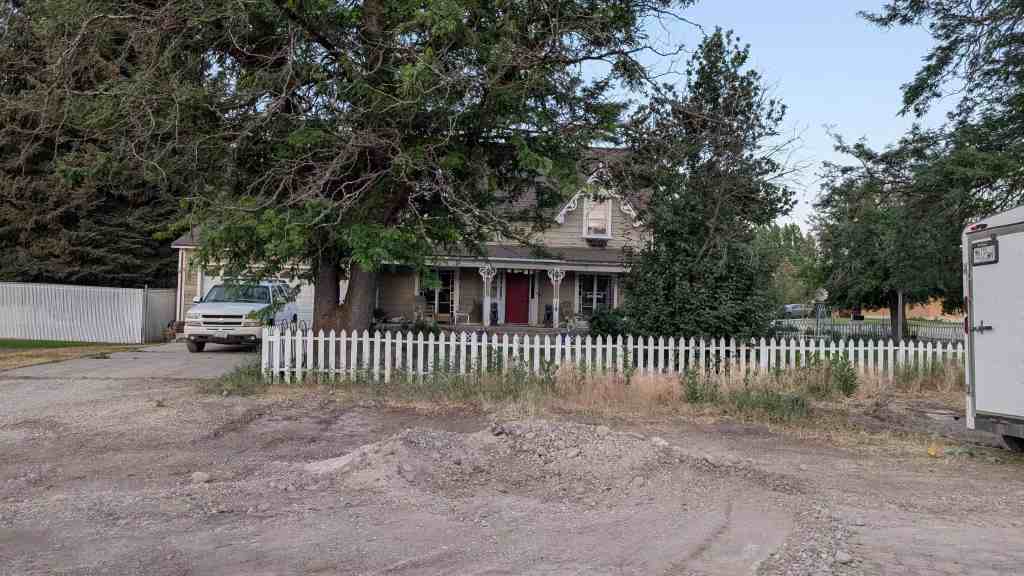
This Victorian Gothic Home was built in two stages, the brick section which faces the street was built in 1866. In 1870 Crook added the sandstone section to the rear, and later the small frame summer kitchen was added to the side of the home.
Part of the Historic Home Tour and located at 188 West 300 North in Heber City, Utah. The home was added to the National Register of Historic Places (#78002705) November 16, 1978
The following text is from the national register’s nomination form:
John Crook, one of the first settlers in Wasatch County, was the areas first historian and a leading church and businessman in Heber.
Crook was born October 11, 1831 in Trenton, Lancashire, England. After he joined the Church of Jesus Christ of Latter-day Saints, he decided to move to Utah. He originally settled in Provo. After the Provo Canyon Road was completed and Wasatch County was opened for settlement, he decided to move there. Crook was one of the first men to survey the area in 1858 and he was one of the original settlers in 1859. He and Thomas Rasband planted some of the first grain in the valley. Crook kept an extensive diary during this period of time and parts of it were later published in the Wasatch Wave, the local newspaper.
Crook continued to be involved in all aspects of Heber life. In 1866 he was an officer in the county militia which was organized to defend the valley in 1866. He was a farmer and stockman. He also worked closely in the development of business in the area. Crook opened a sandstone quarry in Center Creek and opera ted it for many years with his sons. Crook sold the stone to local residents to build schools, homes and churches. He also shipped it to Salt Lake and Provo to be used as sidewalks and foundations.
Crook was an active member of the Mormon Church. He was a choir director and an avid genealogist. He served as First Counselor to Bishop John Foreman of the Heber East Ward. He was a charter member of the Heber Dramatic Association and was an officer for a number of years.
During most of his life in Heber Crook was a volunteer weather observer for the United States Weather Service. He kept a careful log of daily temperatures and weather conditions.
Later in his life Crook traveled a great deal. He was a delegate t& several irrigation congresses. He delivered several trainloads of sheep to the Midwest. Crook died in Heber on March 31, 1921.
Crook was among the first settlers, who moved from the campsite to the city lots. His family lived in a covered wagon at first and then moved to a two-room adobe house inside the fort. After the family moved from the fort, they lived in a three-room log cabin.
According to family tradition, Crook built the brick part of the house that faces Third North, in 1866, The brick was manufactured at the Van Wagoner brick yards. In 1870 the section was added to the rear. Later a frame summer kitchen was also attached to the rear.
The house belonged to members of the Crook family until 1974, when it was sold to Brent E. Groth.
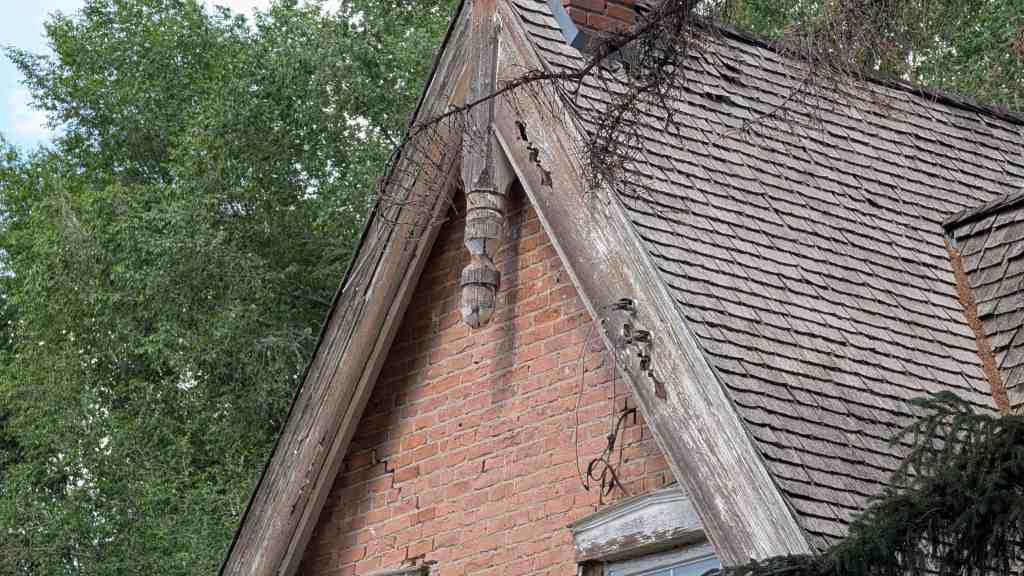
The Crook house is an example of a Gothic Revival cottage, similar to the Carpenter Gothic cottages popular in the East at the time, but rendered in brick instead of timber frame (a consequence of the Mormon preference for brick and stone?). The three steeply-raked dormer gables are decorated like the end gables with bargeboard trim. The pendants extending downward from the gable peaks were probably balanced originally by turned finals. The center gable is penetrated by a pointed arch door, with the door panels subdividing the door in the manner of a Gothic window. The entrance door, below the center gable, is topped by a shortened version of a Gothic hood mould, as are all the windows. The upper story windows are six-over-six, the lower two-over-two. The smooth ashlar quions at all four corners of the original house are not repeated in the stone addition.
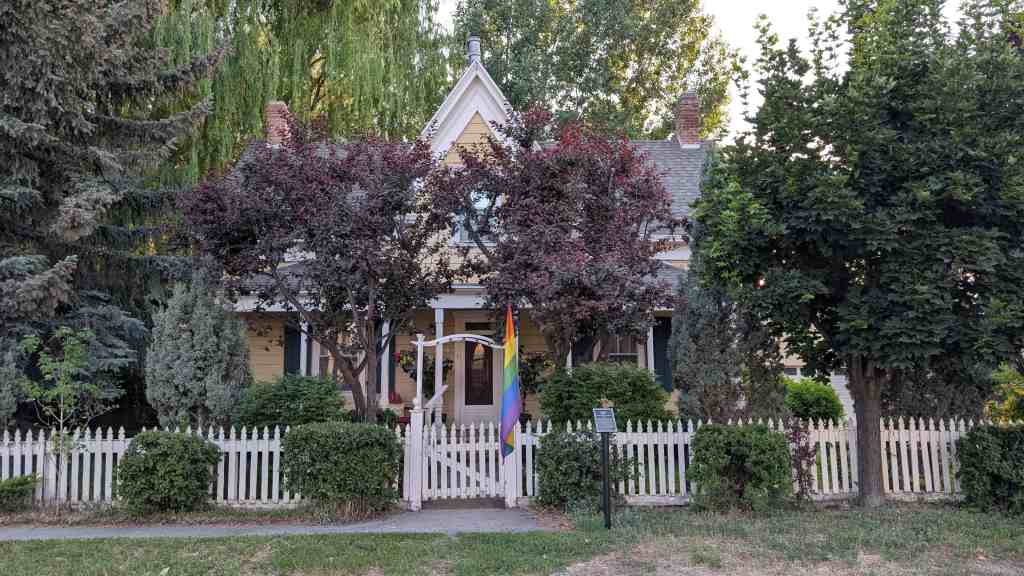
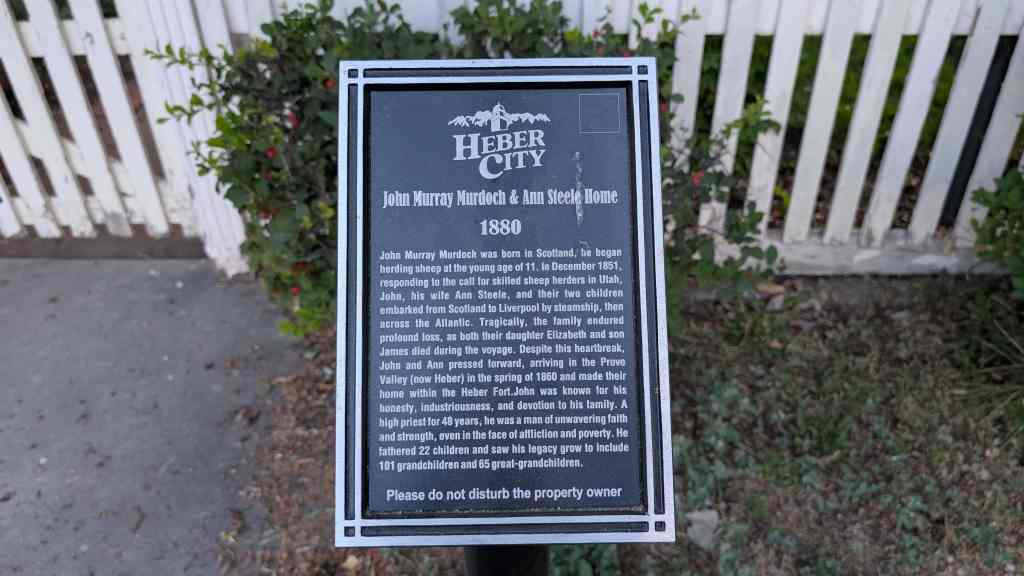
John Murray Murdoch was born in Scotland, he began herding sheep at the young age of 11. In December 1851, responding to the call for skilled sheep herders in Utah, John, his wife Ann Steele, and their two children embarked from Scotland to Liverpool by steamship, then across the Atlantic. Tragically, the family endured profound loss, as both their daughter Elizabeth and son James died during the voyage. Despite this heartbreak, John and Ann pressed forward, arriving in the Provo Valley (now Heber) in the spring of 1860 and made their home within the Heber Fort. John was known for his honesty, industriousness, and devotion to his family. A high priest for 48 years, he was a man of unwavering faith and strength, even in the face of affliction and poverty. He fathered 22 children and saw his legacy grow to include 101 grandchildren and 65 great-grandchildren.
Part of the Historic Home Tour and located at 261 North 400 West in Heber City, Utah, the home was added to the National Register of Historic Places (#80003985) on February 28, 1980.
John Murdoch’s home is significant as a symbol of the economic and social evolution of a Utah Mormon sheep rancher whose family moved from a dugout, to a log home, to this fine Victorian residence. The use of materials signify an intention by Murdoch to appear even more affluent than he had already become. The interesting allusion to stone created by the scored pine siding is a “dishonest” use of materials (as is the interior hand-grained woodwork) fully acceptable before the twentieth century. A contemporary showplace, the home was intended to be pretentious as evidenced by the awareness of current architectural trends in the design, in the size and scale of the home, and in the illusionistic use of materials.
John Murdoch had emigrated from Scotland in 1852, his passage paid by Brigham Young who had given instructions to an agent in Great Britain to secure “2 Scotch shepherds” for his estates. Murdoch’s involvement in the early woolen industry in Utah is discussed in The Peoples of Utah. After striking out on his own as a farmer in the Heber Valley, Murdoch grew quickly in financial status and rapidly became an important figure in local politics and government.
In 1880, John Murdoch built a substantial 1 1/2 story frame and adobe home in Heber City, Utah to replace the log and dugout home his family had occupied there since 1860.
The home is an asymmetrical, cross plan structure. Steep cross gables, the symmetrical main facade and hipped roof front porch with turned supports contribute to the Gothic Revival allusions.
Built on a fieldsone foundation, the home was constructed of frame with pine siding scored vertically every eighteen inches to give the appearance of stone. Adobe insulates the walls.
Exterior ornament includes a wide moulded cornice with gable end returns turned porch support, and moulded window sills and pedimental headers of a Classical flavor for the two over two double hung windows. The front door contains an oval light which is surrounded by carved floral motifs. Shutters are a later addition, as is the stone facing on the front porch floor. A picket fence of a fine milled motif marks the front yard boundary.
A rear, hipped porch, identical to the front porch configuration wraps around the back. A laundry room/bathroom encloses part of one side porch, though the siding has been made to match the original scored pine.
The interior arrangement on the first floor is a hall (dining room) and parlor with cental hall, and a rear kitchen. Upstairs are four bedrooms, one of which (in the south) has been divided to accommodate a second bathroom. Also upstairs is the secret space built into the home (ca post 1890) as a hiding place in the event of a polygamy raid.
Fine hand-graining is extant in the dining room and parlor on the first floor. Originally it had existed throughout the first floor rooms.
The present owners, Raiford and Camille French, are involved in a restoration of the home, intending to preserve the original character as much as possible
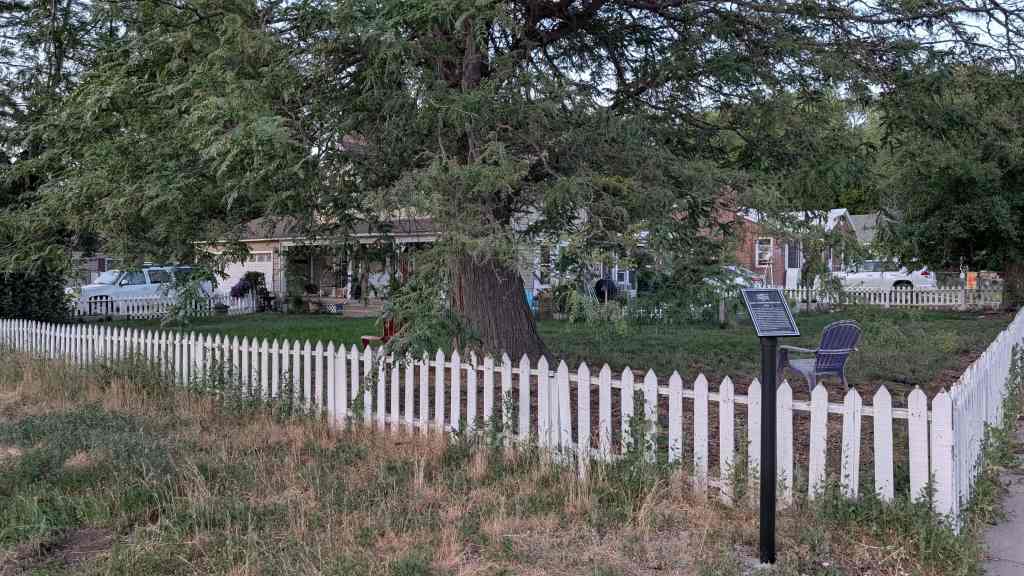
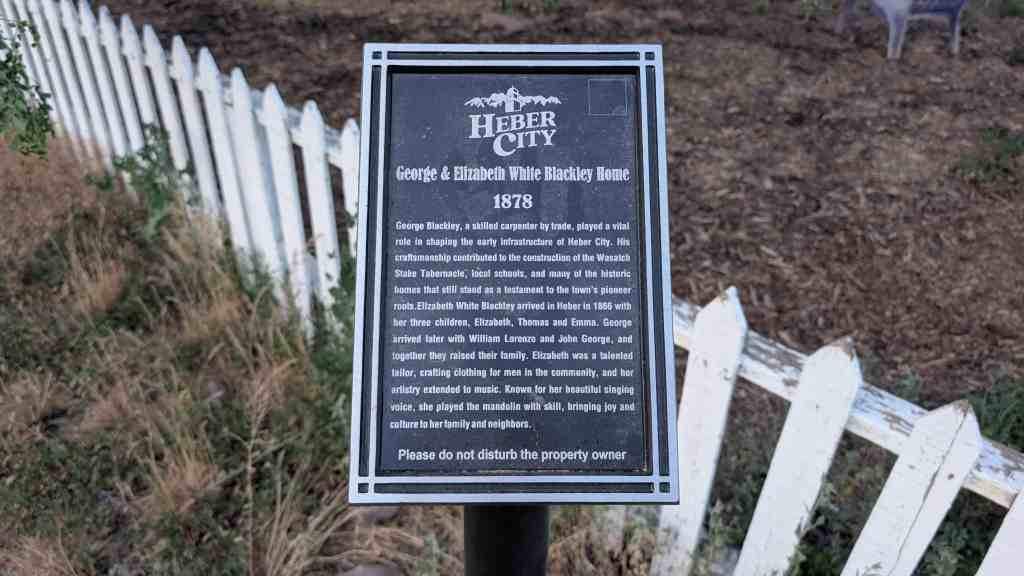
George Blackley, a skilled carpenter by trade, played a vital role in shaping the early infrastructure of Heber City. His craftsmanship contributed to the construction of the Wasatch Stake Tabernacle, local schools, and many of the historic homes that still stand as a testament to the town’s pioneer roots. Elizabeth White Blackley arrived in Heber in 1866 with her three children, Elizabeth, Thomas and Emma. George arrived later with William Lorenzo and John George, and together they raised their family. Elizabeth was a talented tailor, crafting clothing for men in the community, and her artistry extended to music. Known for her beautiful singing voice, she played the mandolin with skill, bringing joy and culture to her family and neighbors.
Part of the Historic Home Tour and located at 105 East Center Street in Heber City, Utah, it was added to the National Register of Historic Places (#85001392) on June 27, 1985.
The George Blackley House, built in 1877-78, is architecturally significant as one of a very limited number of Carpenter Gothic houses in Utah. 1 Inspired by the pattern books of the mid-nineteenth century, particularly the published works of A. J. Davis and A. J. Downing, the Carpenter Gothic was characterized by local interpretation of picturesque religion science sculpture social/ humanitarian theater transportation other (specify) designs, often approximating a regional vernacular.2 Gothic revival elements are common in many of the early residences in Utah, in the form of projecting gables on standard house types and decorative jigsaw cut ornament. Because brick was the most readily available building material in Utah, however, there are very few examples of frame houses that reflect Gothic Revival influences. The Blackley House incorporates frame construction and Gothic Revival elements in a house that also displays characteristics of the local building tradition. It is an excellent example of the typical manifestation of the Carpenter Gothic style in Utah architecture.
George Blackley, a local carpenter and joiner, built this house in 1877-78 and lived there until his death in 1902. Born in England in 1830, he emigrated to the U.S. and Utah in 1869 after converting to Mormonism. During the course of his career as a carpenter, he helped construct numerous buildings in the Heber City area, including the stake tabernacle (LDS) and numerous other schools, churches, and residences. His wife, Elizabeth White Blackley, also a Mormon convert, came to Utah in 1866 with two of their children, while George stayed behind to earn money for his and their other children’s emigration. They settled in Heber City where George pursued his carpentry work and Elizabeth, in addition to raising their five children, worked as a tailor. She died in 1909. William L. (Lorry) Blackley, a son, took over the house and property after his parents’ deaths. The house remained in the Blackley family until 1937, when it was sold to Gray-Payne Realty, which probably used it as rental property. Lynn and LaPreel McKnight purchased the property in 1943 and it remained in their family until 1984.
Typical of most Mormon towns, Heber City is primarily a town of masonry buildings. The construction of frame houses in Utah was discouraged by both the scarcity of wood and by the pronouncements of Mormon church leaders, specifically Brigham Young, who favored the symbolic and structural permanence of masonry buildings. The use of wood on most houses in Mormon communities usually consisted of eave and porch decoration only. Due to abundant local timber resources in the Heber City area, however, there are a greater percentage of frame buildings in this town than are generally found in Utah communities, which are, for the most part, located in more arid, sparsely timbered regions. Other well-timbered regions, such as Cache Valley in northern Utah, also exhibit a greater number of frame buildings, as do the non Mormon mining towns which in face have very few masonry houses. The availability of lumber in Heber City provided a construction climate conducive to the use of the wood-frame Carpenter Gothic style, although it was never a popular style locally. The Black!ey House is the only identified example of a wood-frame Carpenter Gothic style house in Heber City.
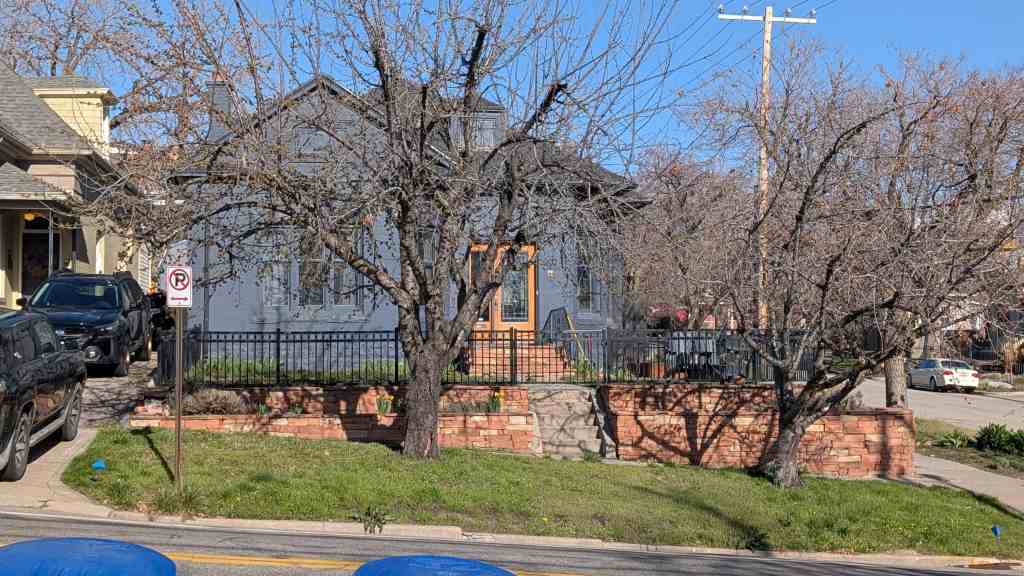
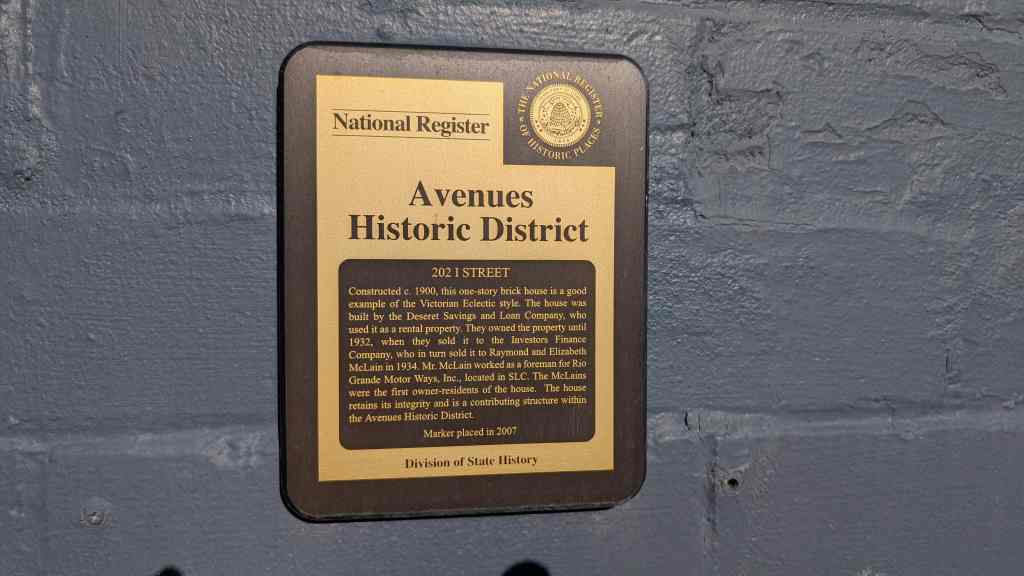
Constructed c. 1900, this one-story brick house is a good example of the Victorian Eclectic style. The house was built by the Deseret Savings and Loan Company, who used it as a rental property. They owned the property until 1932, when they sold it to the Investors Finance Company, who in turn sold it to Raymond and Elizabeth McLain in 1934. Mr. McLain worked as a foreman for Rio Grande Motor Ways, Inc., located in SLC. The McLains were the first owner-residents of the house. The house retains its integrity and is a contributing structure within the Avenues Historic District.