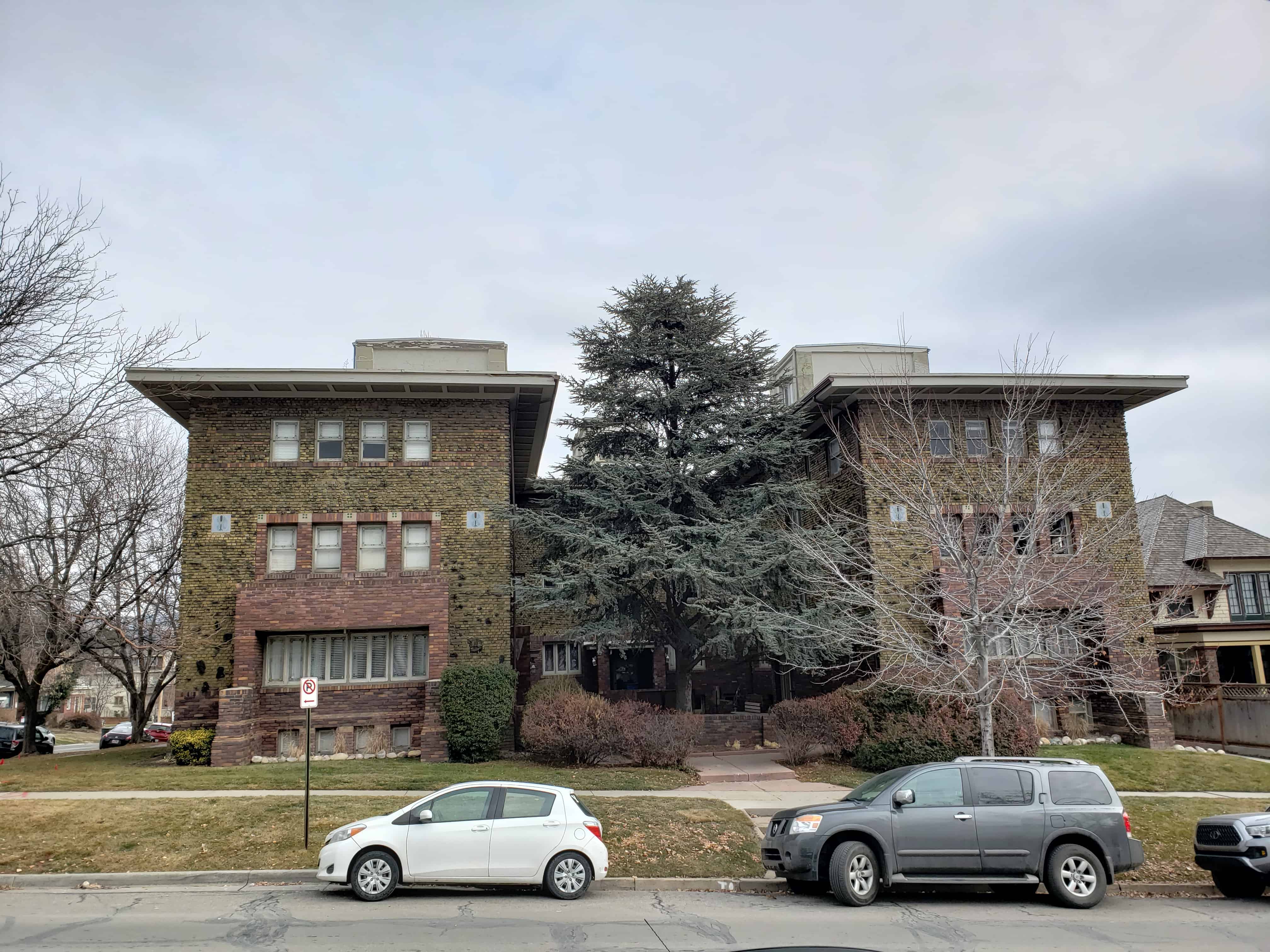
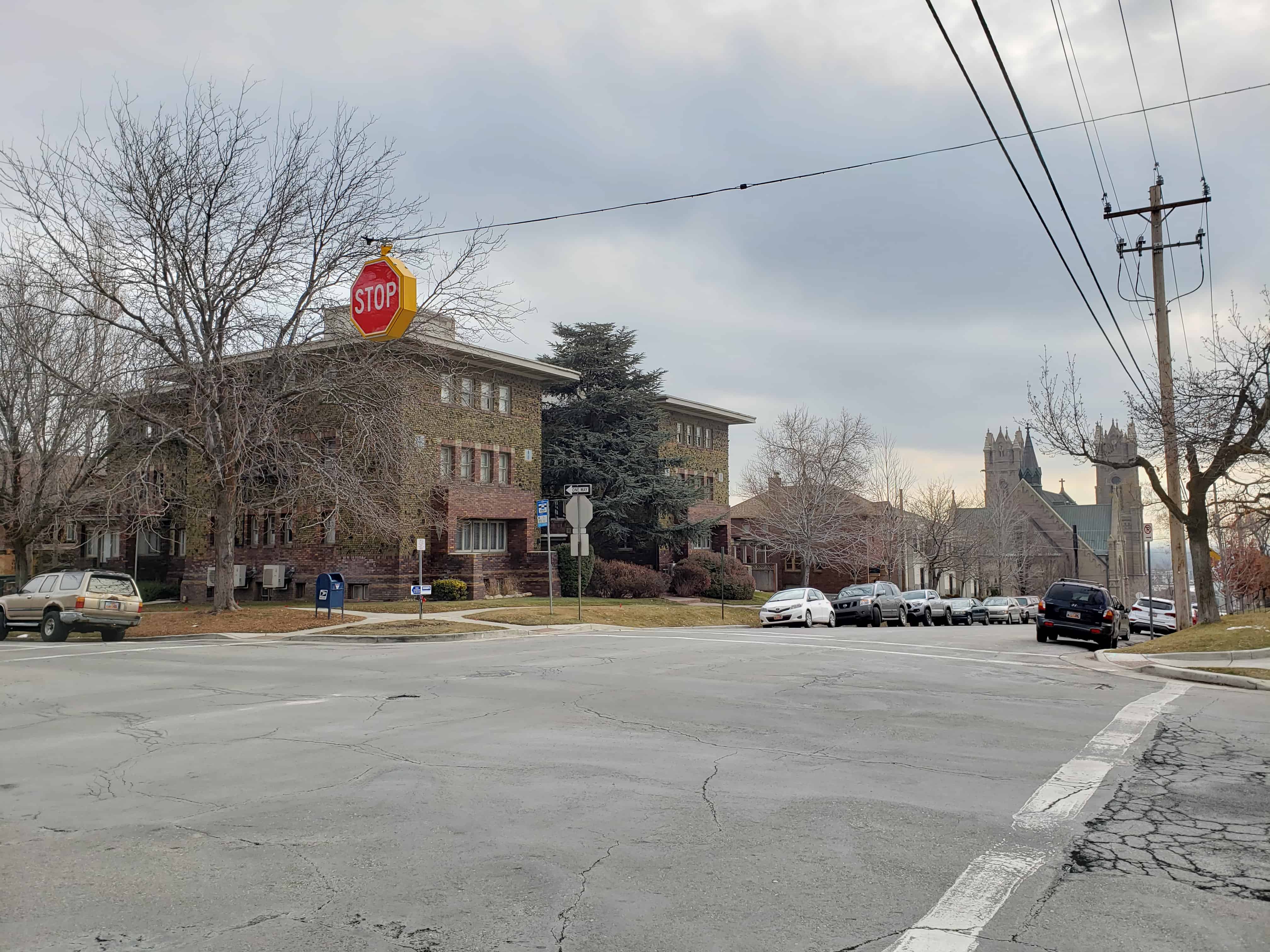
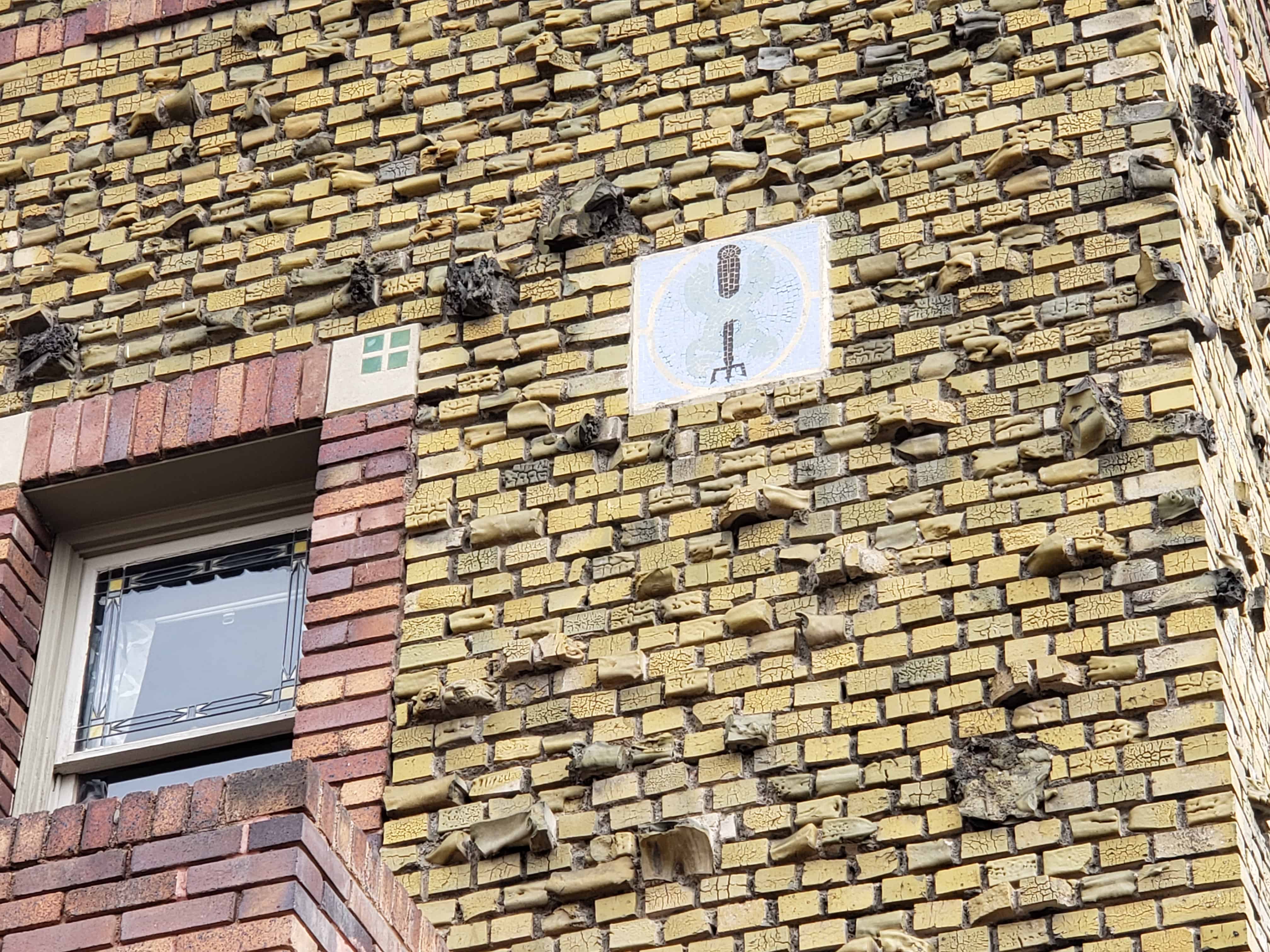
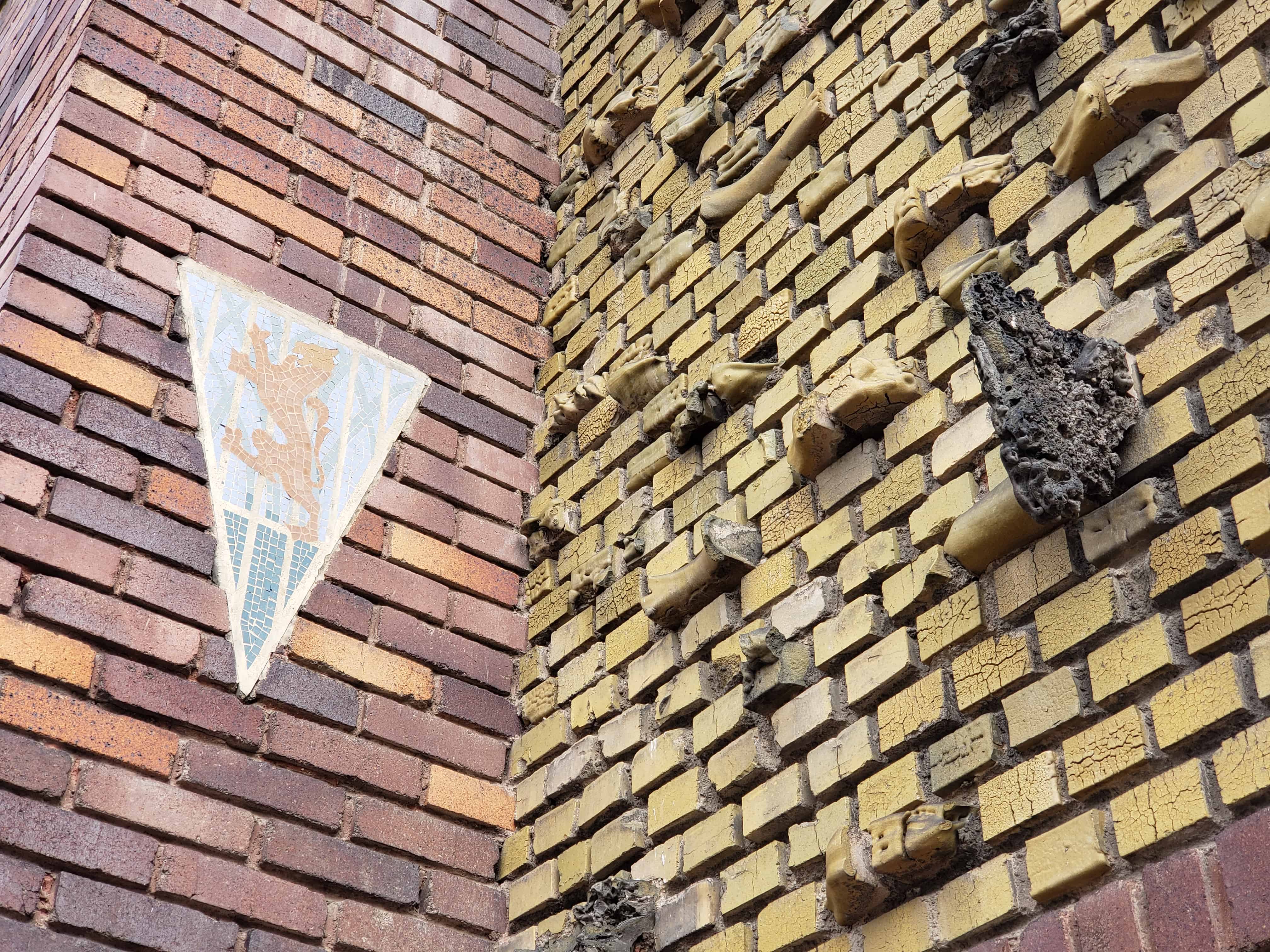
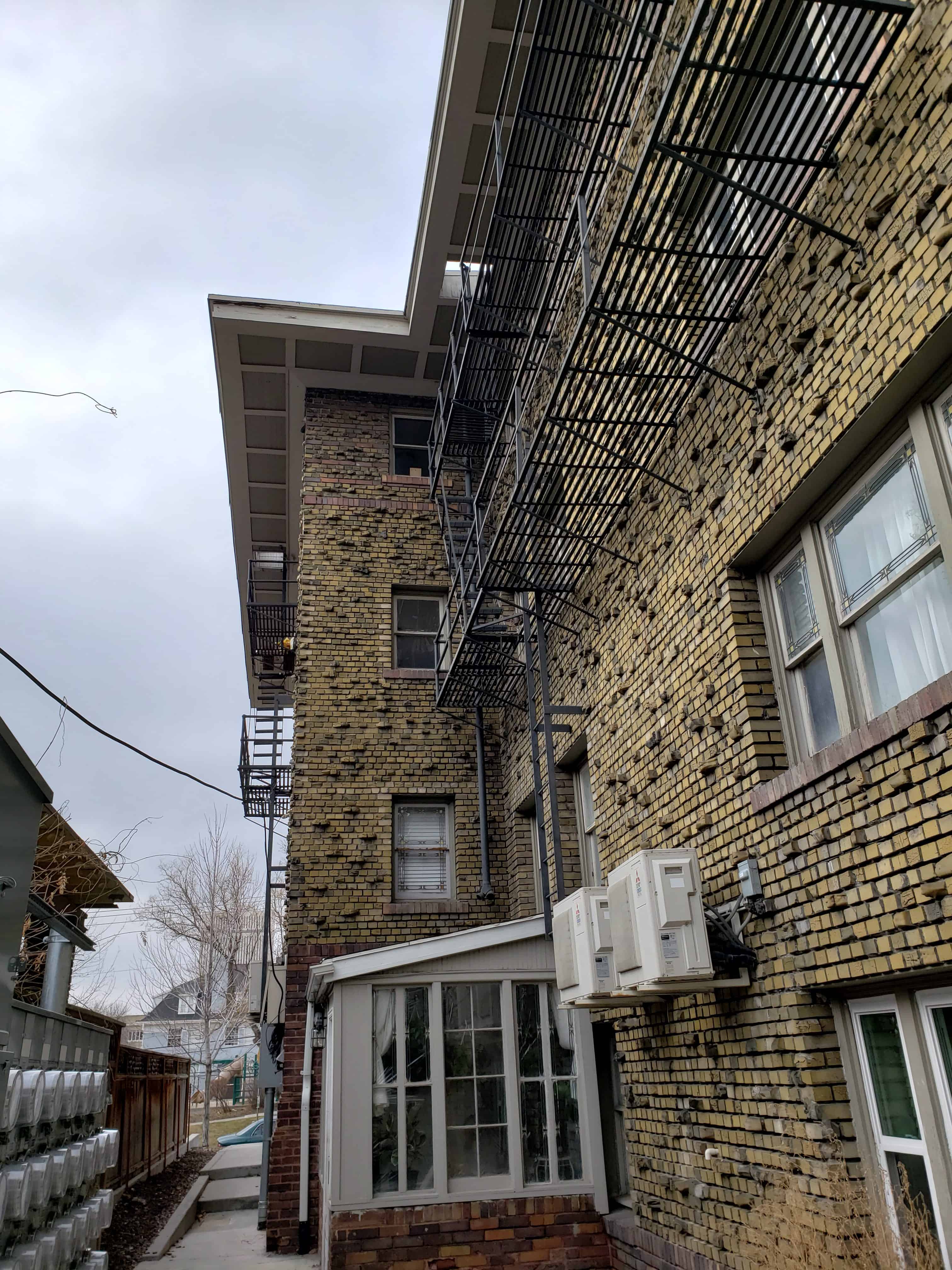
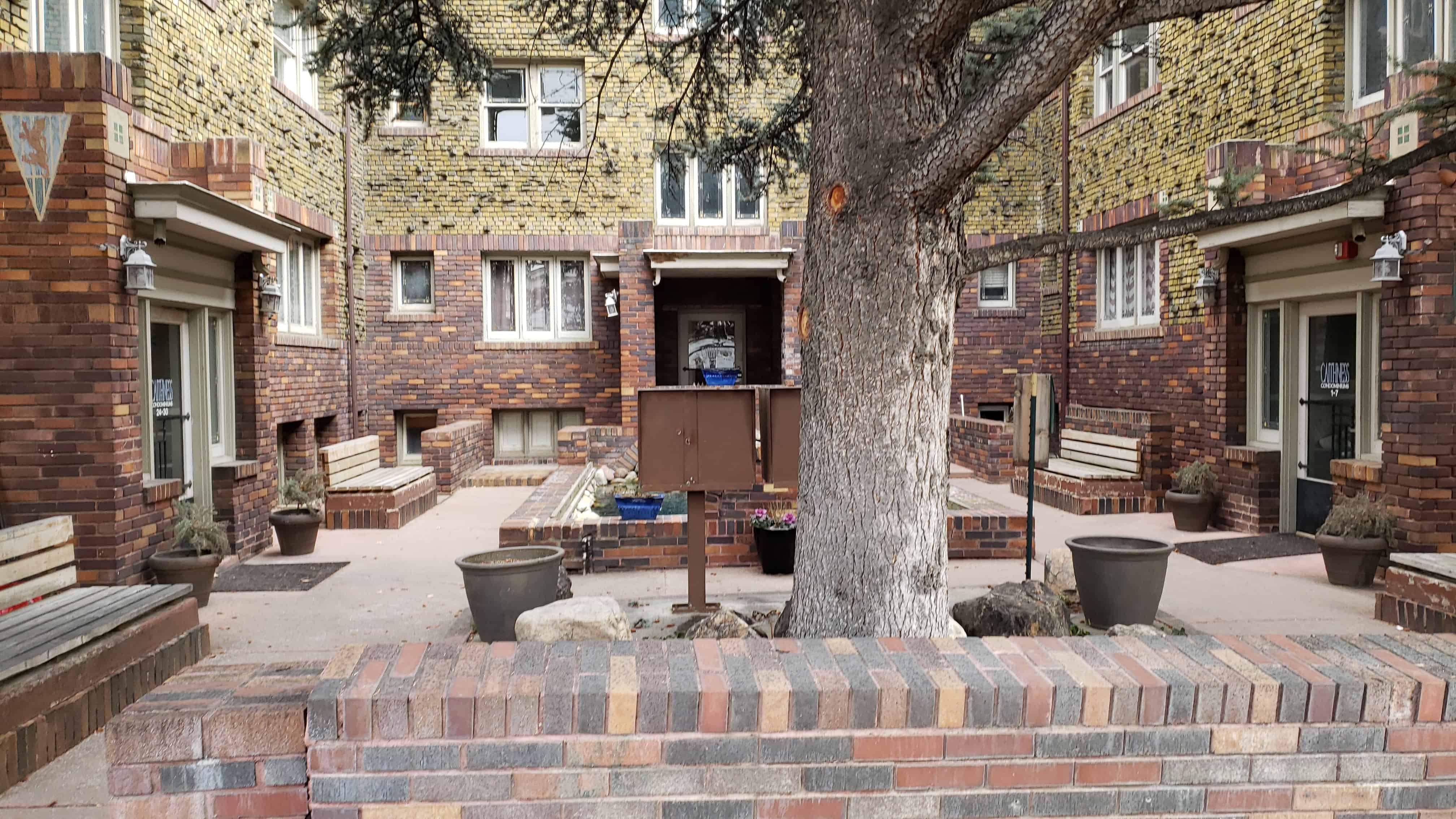
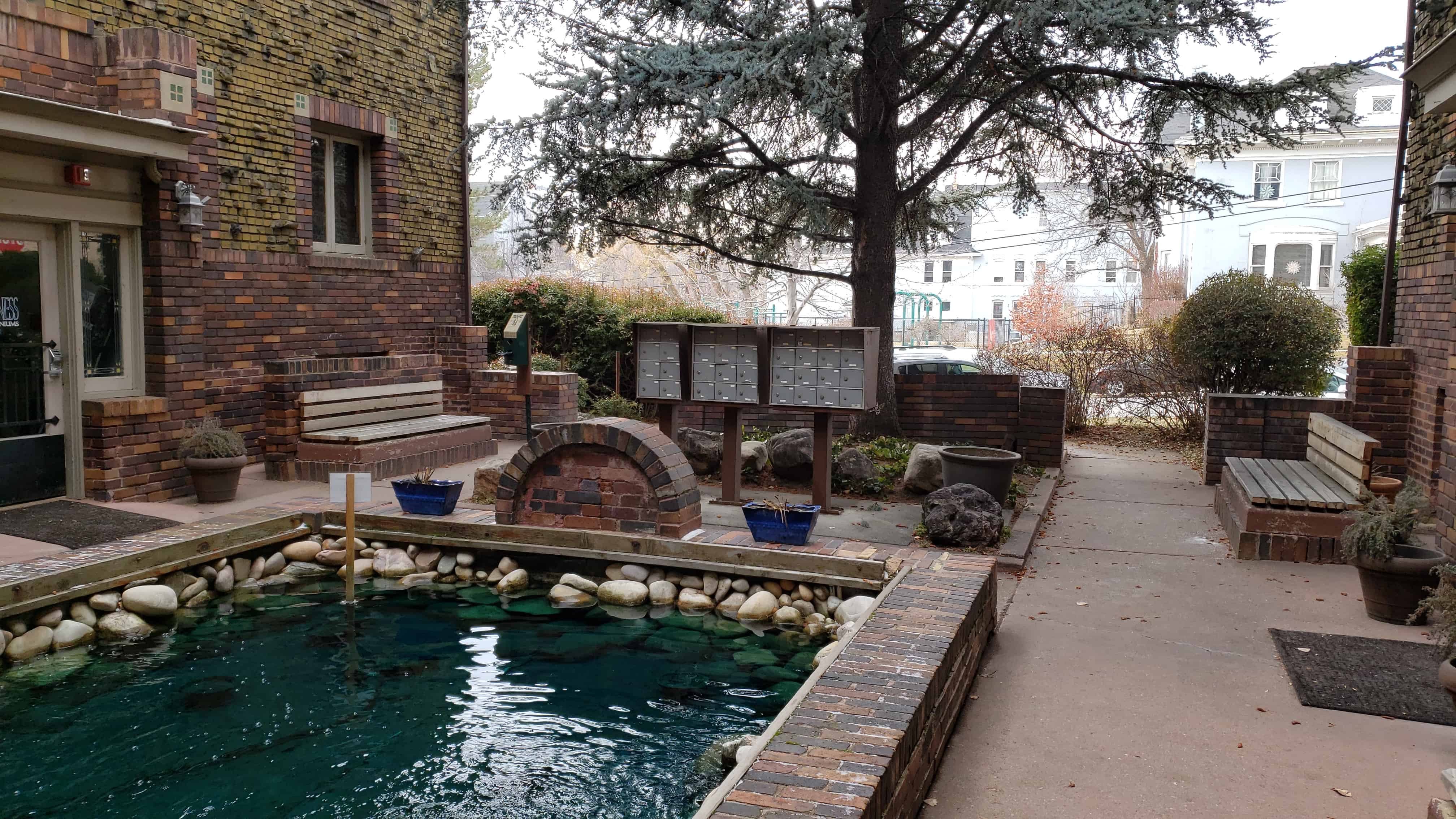
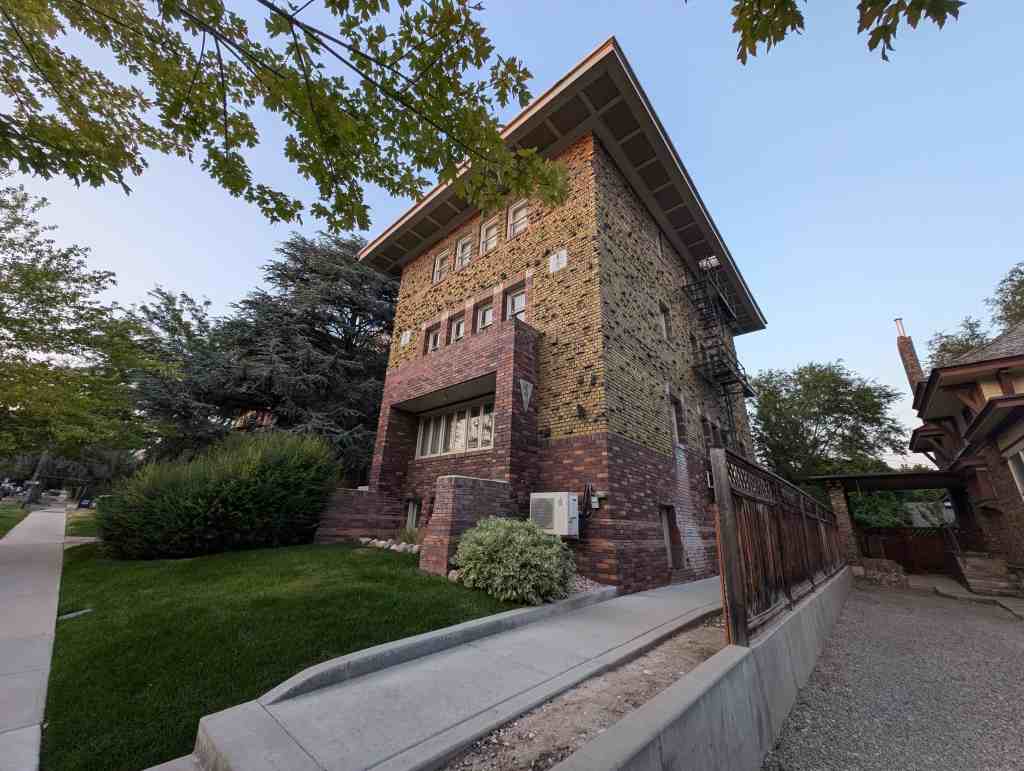
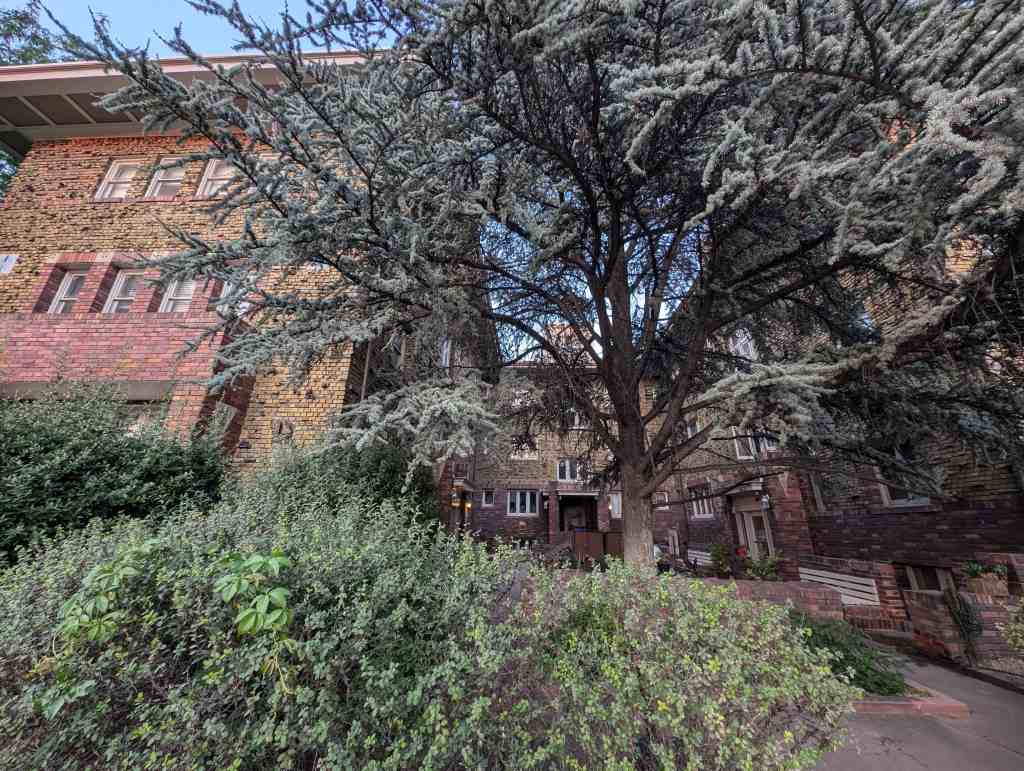
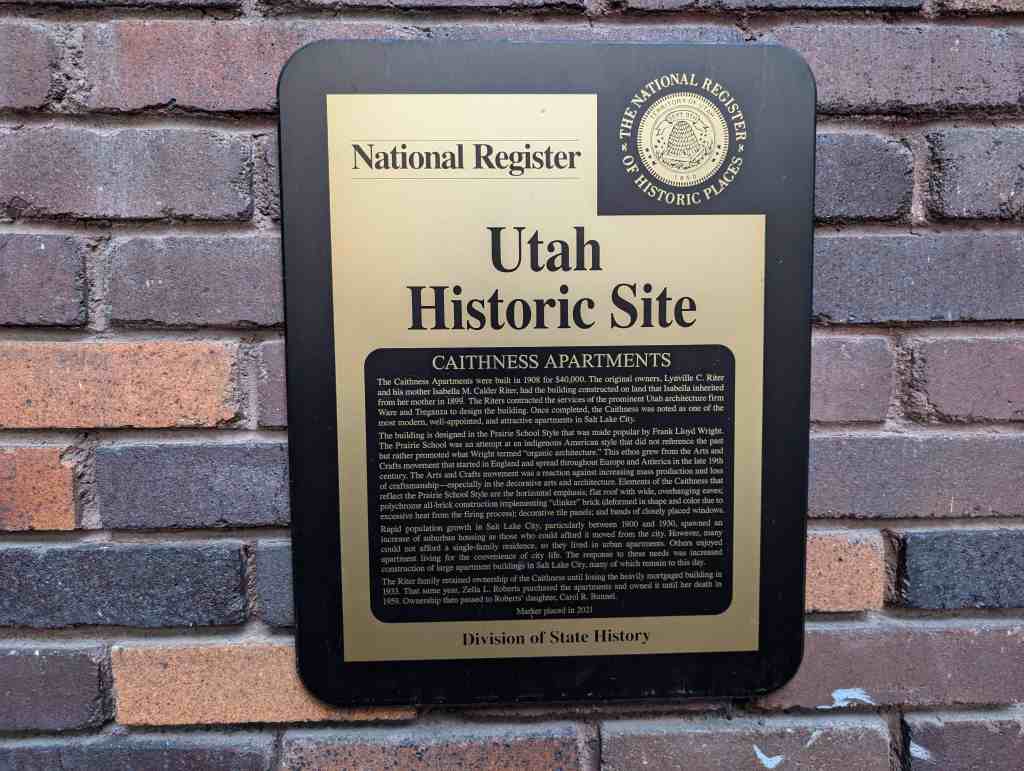
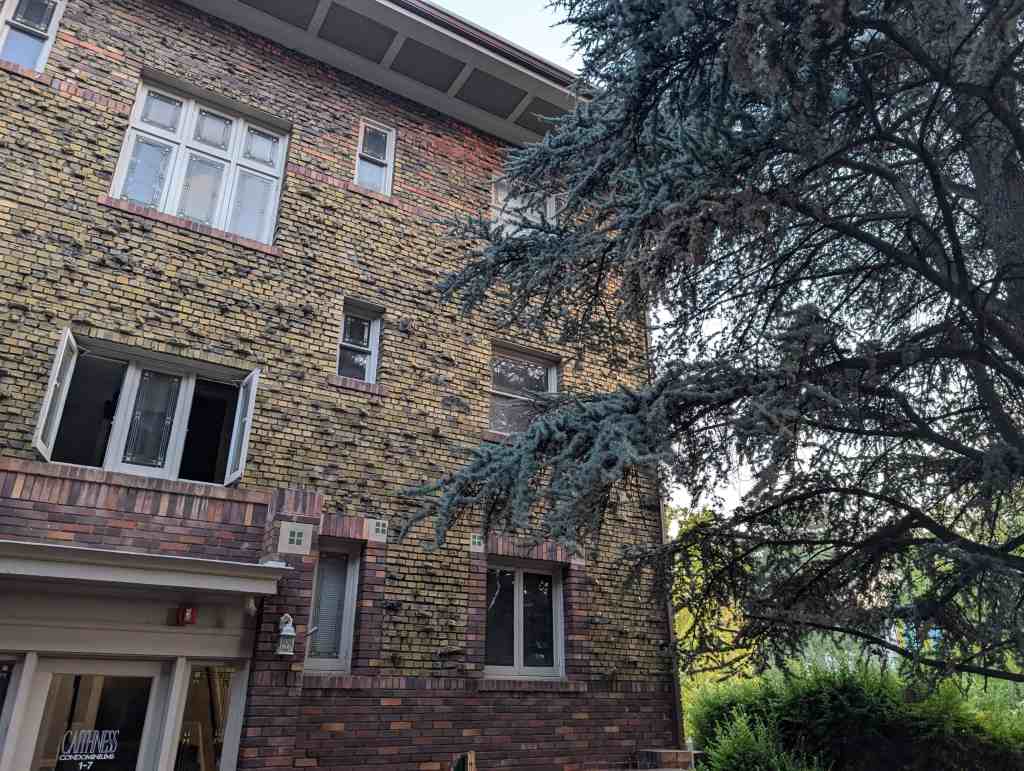
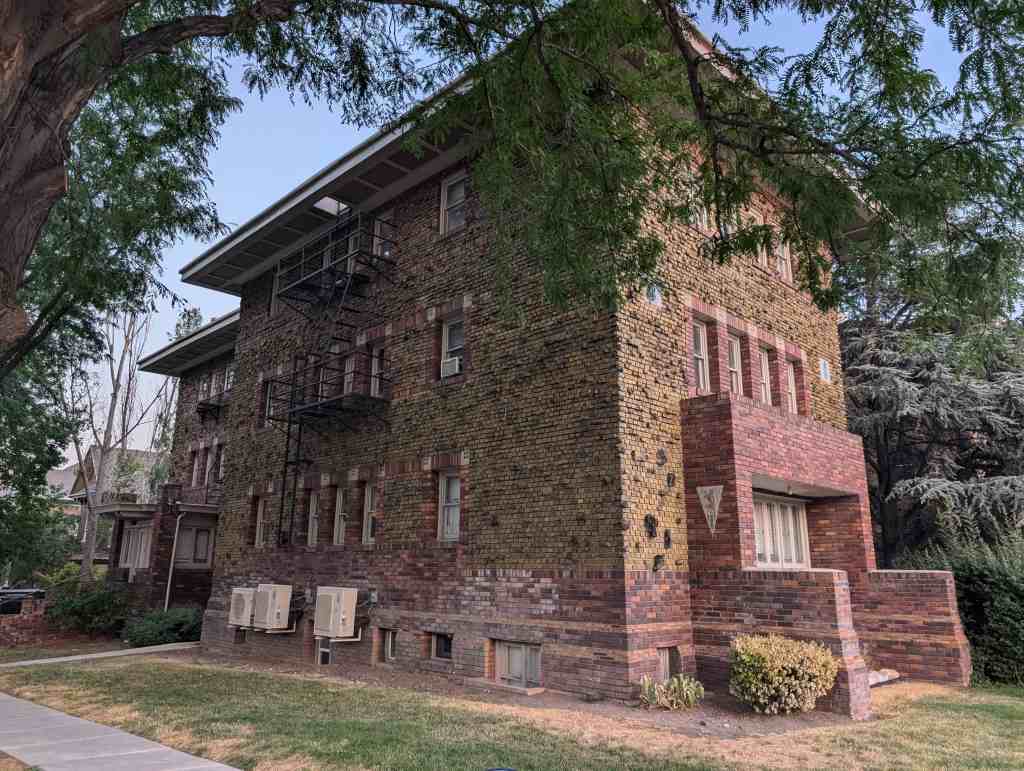
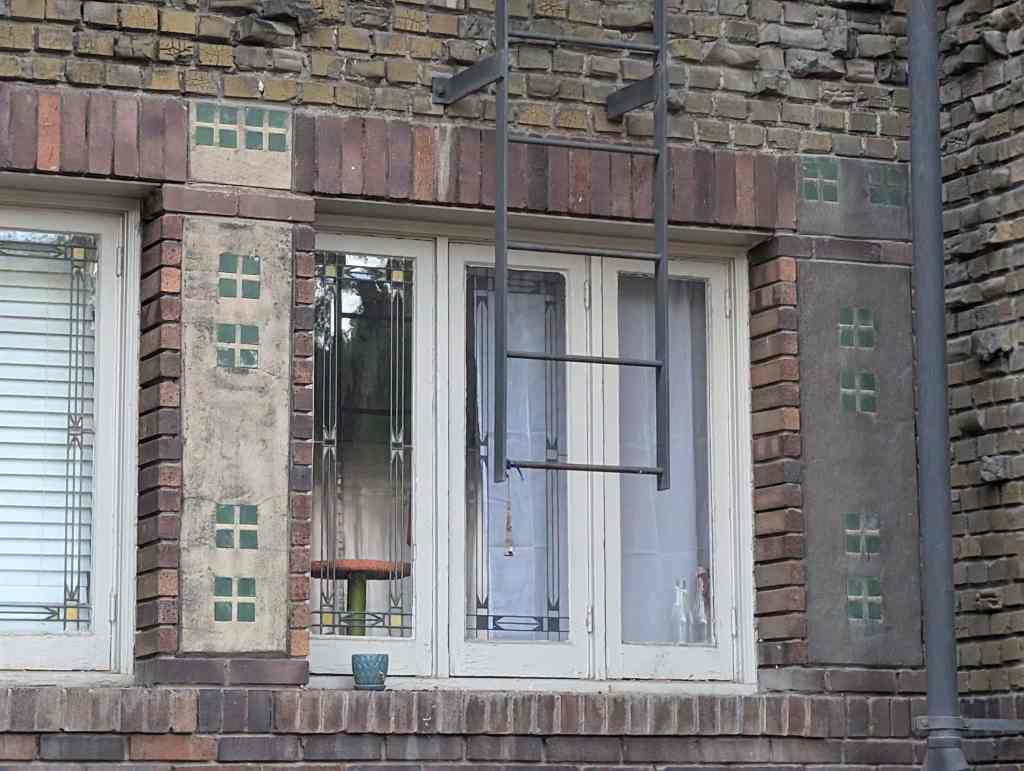
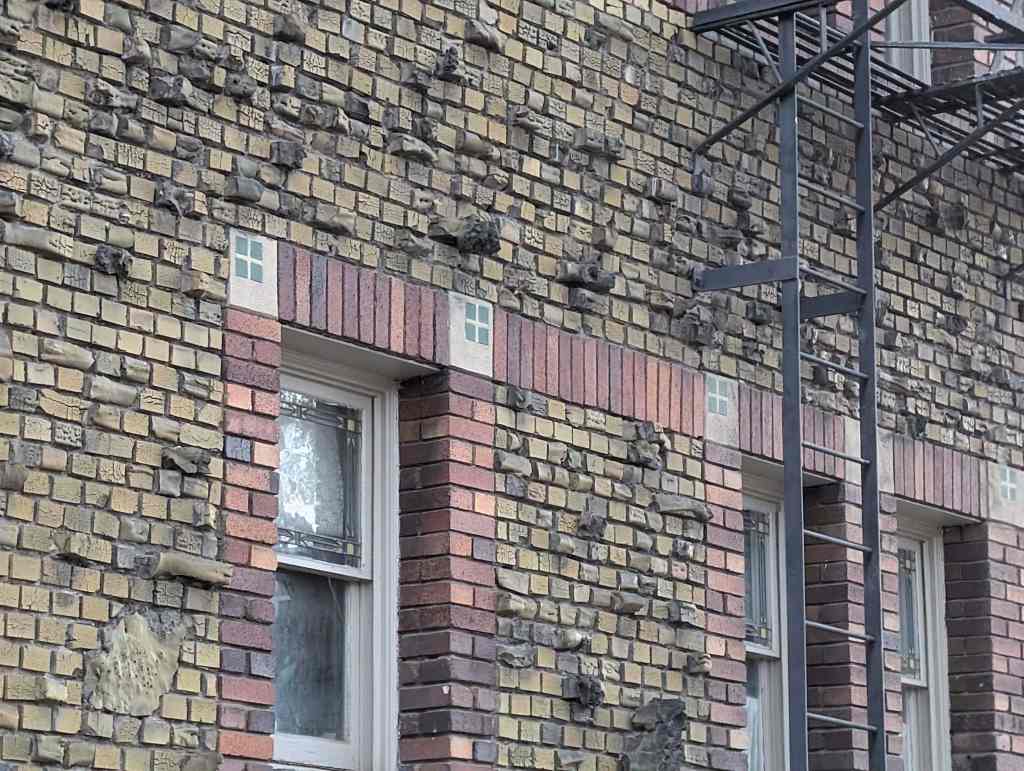
The Caithness (Riter) Apartments (now the Caithness Condominiums) were built in 1908 and are some of the many interesting apartments in Salt Lake City from that time frame.
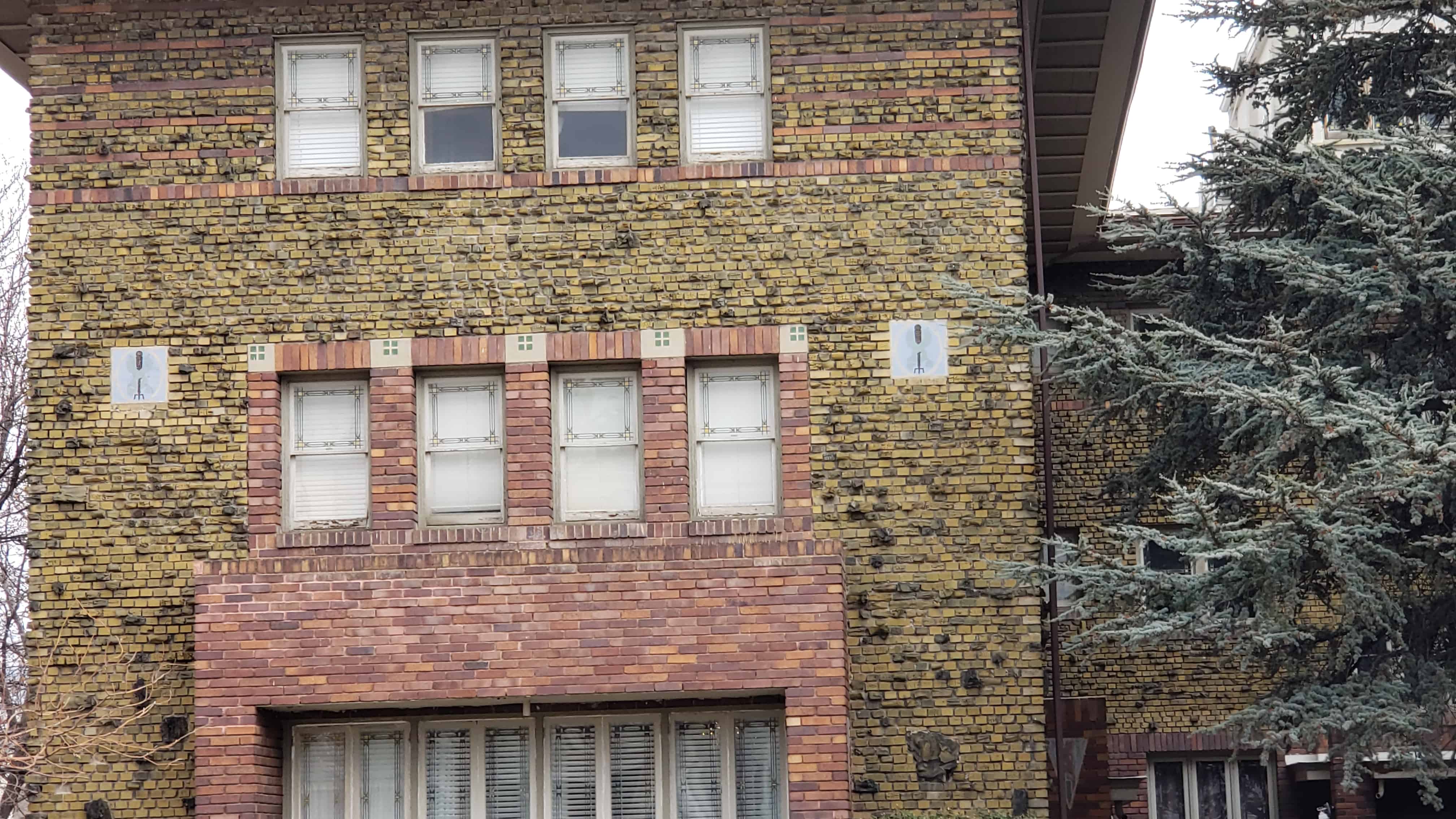
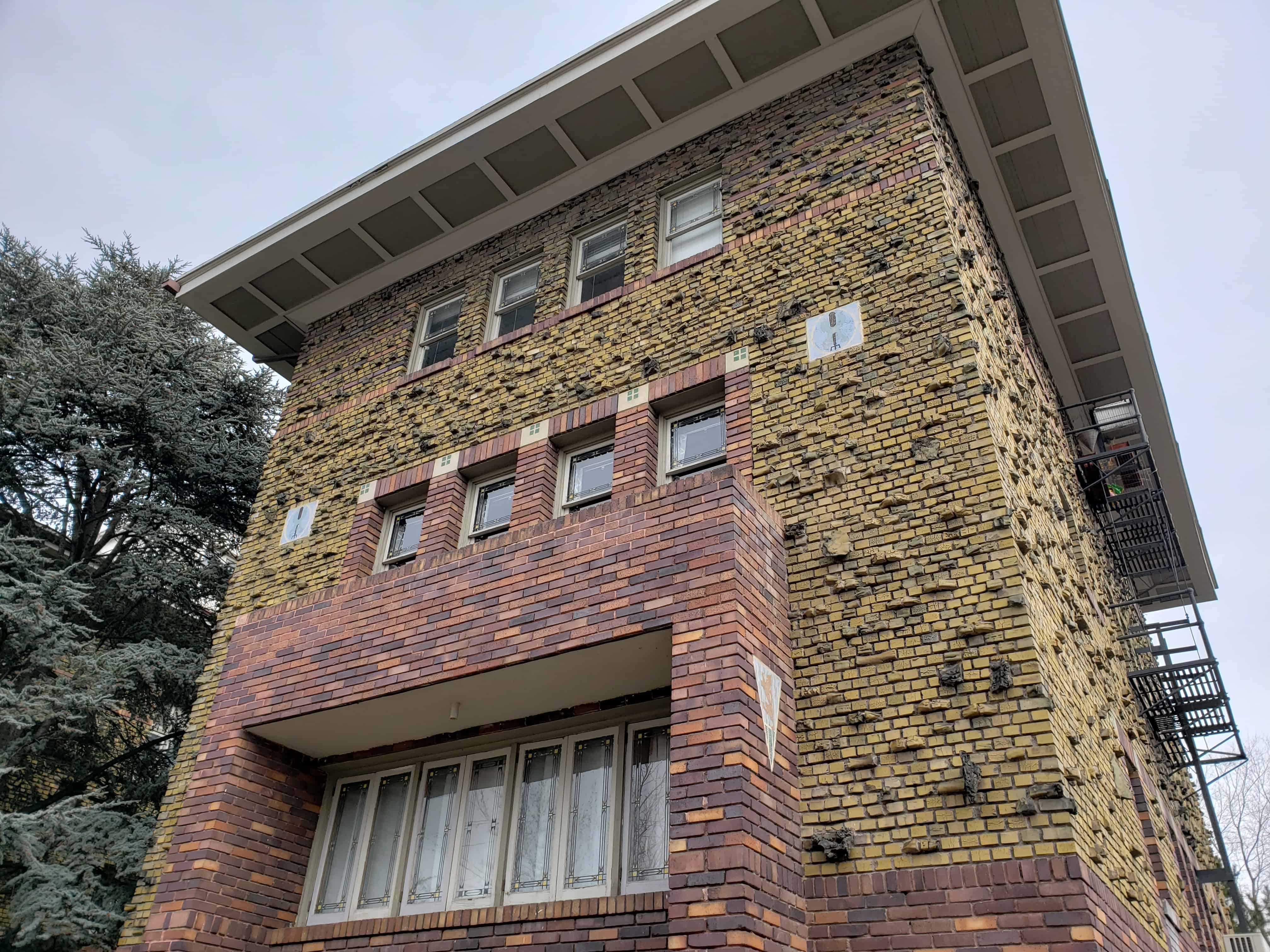
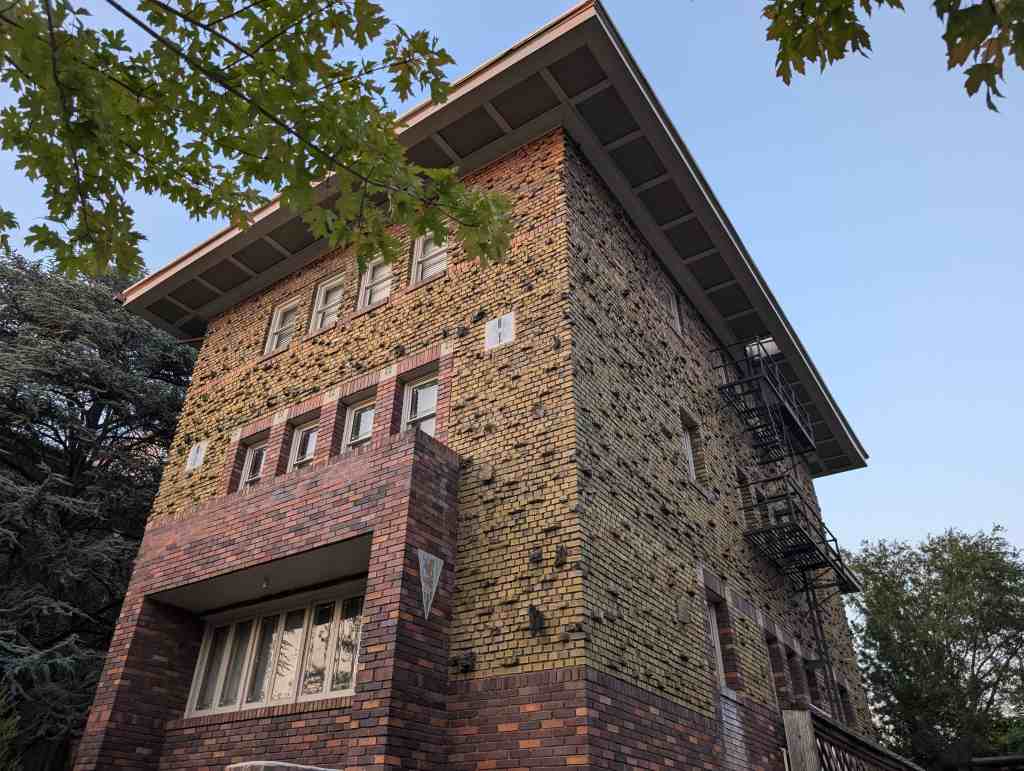
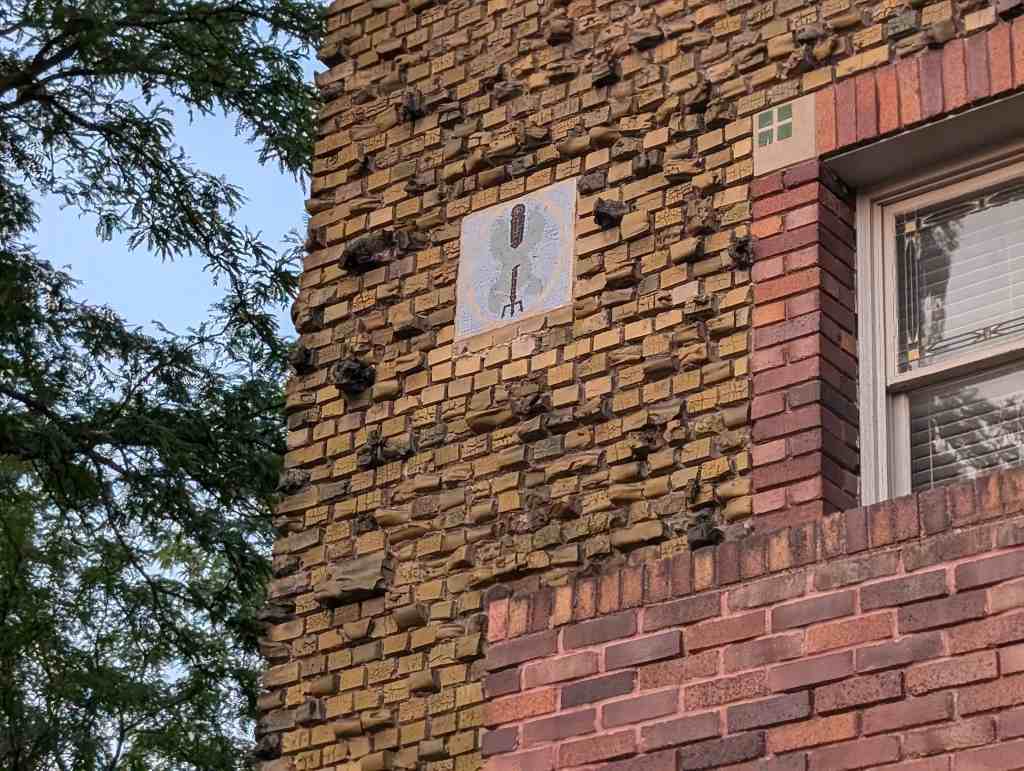
There are many interesting rocks protruding from the brick faces of the building, a resident told me that when they refaced the building and added those they had a problem with people rock climbing on the building.
The Caithness Apartments is one of only two apartment buildings in Salt Lake City known to have been designed by Ware and Treganza, one of the most prolific and prominent architectural firms in Utah during the early twentieth century. They designed many other residential buildings – – primarily houses, but also a few smaller multi-family dwellings. The other Ware and Treganza designed apartment is the Smith Apartments located at 228 S 300 E. Both the Caithness and the Smith are walk-up U-court type apartments, though the central court of the Smith is much narrower than that of the Caithness.
The Caithness Apartments were built in 1908 for $40,000. The original owners, Lynville C. Riter and his mother Isabella M. Calder Riter, had the building constructed on land that Isabella inherited from her mother in 1899. The Riters contracted the services of the prominent Utah architecture firm Ware and Treganza to design the building. Once completed, the Caithness was noted as one of the most modern, well-appointed, and attractive apartments in Salt Lake City.
The building is designed in the Prairie School Style that was made popular by Frank Lloyd Wright. The Prairie School was an attempt at an indigenous American style that did not reference the past but rather promoted what Wright termed “organic architecture.” This ethos grew from the Arts and Crafts movement that started in England and spread throughout Europe and America in the late 19th century. The Arts and Crafts movement was a reaction against increasing mass production and loss of craftsmanship-especially in the decorative arts and architecture. Elements of the Caithness that reflect the Prairie School Style are the horizontal emphasis; flat roof with wide, overhanging eaves; polychrome all-brick construction implementing “clinker” brick (deformed in shape and color due to excessive heat from the firing process); decorative tile panels; and bands of closely placed windows.
Rapid population growth in Salt Lake City, particularly between 1900 and 1930, spawned an increase of suburban housing as those who could afford it moved from the city. However, many could not afford a single-family residence, so they lived in urban apartments. Others enjoyed apartment living for the convenience of city life. The response to these needs was increased construction of large apartment buildings in Salt Lake City, many of which remain to this day.
The Riter family retained ownership of the Caithness until losing the heavily mortgaged building in 1933. That same year, Zella L. Roberts purchased the apartments and owned it until her death in 1959. Ownership then passed to Roberts’ daughter, Carol R. Bunnel.
The extreme western end was the last area to be developed in Spring Canyon in December of 1919. The Mutual Coal Company was organized and advertised the sale of stock thereby becoming the only mine in the canyon that was not privately owned. The name Mutual was chosen because it was organized as a cooperative with stockholders. Fred J. Leonard was the first president. The unusual ownership scheme promised shareholders they would receive their coal at a discount. The diversity of the shareholders grew along with the mine. As soon as weather permitted, in the spring of 1920, a tipple was built along with a surface tramway 600 feet long from the upper coal seam to the tipple. The mine had 3 seams of coal, one 8 feet thick between the other two and one 6.5 feet thick closest to the tipple.
The Mutual Mines consisted of Morton #1 opened by Thomas Lamp, the Morton #2 opened by Walter Drake and the Mutual #3 opened by Albert Shaw, in 1921 the Mutual store was built by Joe Pauagano and later sold to water and Helen Johnson. The store remained open until 1954 outliving the Mutual Mines by 16 years. Unlike the company towns in Spring Canyon and elsewhere, Mutual was different because it did not have its own school, instead sending their children to the school in Rains and it had a privately owned store, very unusual for that time.
Mutual was the last stop on the Spring Canyon Stage Line, local residents Joe & Bob Cormani, Peter Labori and Harry Eda operated the line and charged $1.50 for a round trip fare to Helper. The faire was high for the time but for many residents it was their only option. In the winter the snow was so deep that even residents who owned cars would use the stage line. The Mutual mines were closed in 1938 and the workings were taken over by the Carbon Coal Company in adjacent Rains. Miners from the nearby mines of Rains and Little Standard moved into some of the homes abandoned by the Mutual miners but as the coal boom died away after WWII so did the town of Mutual.*
In 1915 prominent mining engineer Leon Felix Rains convinced P. J. Quealy, a coal operator from Wyoming, to invest in the coal rich lands west of Standardville. Soon the Carbon Coal Company was organized and the land was purchased from the government. Mr. Rains served as president.
Rains had been a grand opera singer until he became interested in the coal industry. He first gained experience by selling coal in California. He then worked as the general manager for the Standard Coal Company from 1913 to 1914 before starting the Carbon Coal Company. The coal seam in the Rains mine was so thick (18 feet) the company had very little development work to do before shipping out its first load in November of 1915.
The coal camp that grew up around the mine took on the name of its president and the company built around 60 houses for its employees as well as a school, a boarding house, a bath house, a post office and a store.
By June of 1916 the Carbon Coal Company was shipping about 300 tons of coal per day on its own railroad spur built from the end of the line near Standardville. The Liberty Mine at Latuda also used the same spur. In 1919 the Denver & Rio Grande Railroad bought and operated the spur between Standardville and Rains. The mine continued to prosper until 1930 when a portion of the operations were shut down. In 1938 the Carbon Coal Company extended its underground workings into the adjacent and by then defunct Mutual Mine and prospered during the war years. After World War II the mine was sold. In late 1945 it was under the ownership of the Utah-Carbon Coal Company and in 1951 was operated by the Hi-Heat Coal Company. In 1958 the mine was shut down completely and the town was deserted. During its peak the mine produced about 1500-2000 tons of coal per day, employed about 200 men and the town was called home by about 500 residents.*
Latuda saw its first residents in 1914 when prospectors found coal in the area. The Liberty Fuel Mine opened in 1917 when Frank Latuda and Charles Picco bought the property and moved the portal closet to the canyon floor. 20 homes were built in 1918 and the town was named Liberty in honor of the mining company. The mine office was built in 1920. 35 homes were added in 1922. In 1923 the post office demanded the town name be changed because they were “overrun with towns named Liberty.” The residents renamed the town Latuda in honor of the mine owner. In its heyday Latuda’s population peaked around 400 and coal production reached 1600 tons per day. The decline in the coal market caused Liberty Fuel to shut down most of the operations in 1954. In 1966 the mine officially closed and by 1967 the last resident had moved out.
Frederic Sweet founded the town of Standardville in 1911. For 4 years everyone lived in tents. By 1914 railroad sidings were in place and 200 tons of coal a day were mined.
By 1917 the town had become a well planned community setting the standard for other mining towns, thus the name Standardville was adopted.
The town included many well layed out homes, steam heated apartments, general store, school, post office, barber shop, butcher shop, recreation hall, hospital and a bandstand. The restored bandstand is now located on Helper’s Main St. due east of this plaque.
On February 6, 1930 the mine exploded killing twenty miners and three rescuers.
During W. W. II the mine produced 2,000 tons of coal a day.
In the 1970’s Standardville closed it’s mine and slowly became a ghost town.*
The town of Spring Canyon, or Storrs as it was originally called, was the site of the first coal mine in Spring Canyon. A small mine was worked in Sowbelly Gulch by Teancum Pratt beginning in about 1895, then in 1912 “Uncle” Jesse Knight purchased the mine and hired George Storrs to develop the operation. By 1913 a railroad was completed from Helper, 60 stone houses, a store, hotel and hospital had been built for the miners and the mine was extracting coal. By 1914 the mine was producing about 1,000 tons per day. In 1924 the town was renamed Spring Canyon and sported a modern water and sewer system, heated swimming pool and tennis courts. By 1940 the Spring Canyon Mine was ranked as the fourth largest coal producer in the state. In 1947 the town reached its height when a population of over 1,000. In early 1970 the mine was completely closed, the last 37 miners were unemployed and the town was abandoned.*
Peerless, just 3 miles west of Helper, was the first mine developed in the Spring Canyon District. The property was purchased in 1916 by brothers William and Charles Sweet. They developed the coal operation including a gravity tramway and a tipple on the canyon floor.
In 1917 the Sweet brothers sold the property to the Peerless Coal Company organized by James Murdoch and Ezra Thompson. Robert Howard, a former mine inspector was the first superintendent. Coal production peaked during World War I at 2000 tons per day. At the end of the war, they had contracts to ship coal to Idaho, Washington, Oregon, the Hawaiian Islands and were producing 500 tons of coal per day. During the boom the coal produced paid for the project and cleared a bonded indebtedness of $400,000. By 1920 the mine was free from outstanding obligations.
At its peak the town of Peerless was home to around 300 people of which 150 were miners. It consisted of about 30 houses, a store, a school, the company mine office, a post office, a pool hall, and a clubhouse for company officials.
In July 1930 the Peerless Coal Company discontinued operations due to low production and high production costs. Peerless Coal Company declared bankruptcy the following year.
In August 1931, the mine was leased to former superintendent Robert Howard and Robert Turner. Utilizing new mining technology that reduced costs they began shipping coal in September of 1931. Less than a year later, in May of 1932, the mine was taken over by the Peerless Sales Company. Around 1938 coal mining activity began to decline and people began to move away. After World War II the mine operated sporadically, and few residents remained.
The mine closed in 1953, its assets were sold, and the last residents left.*