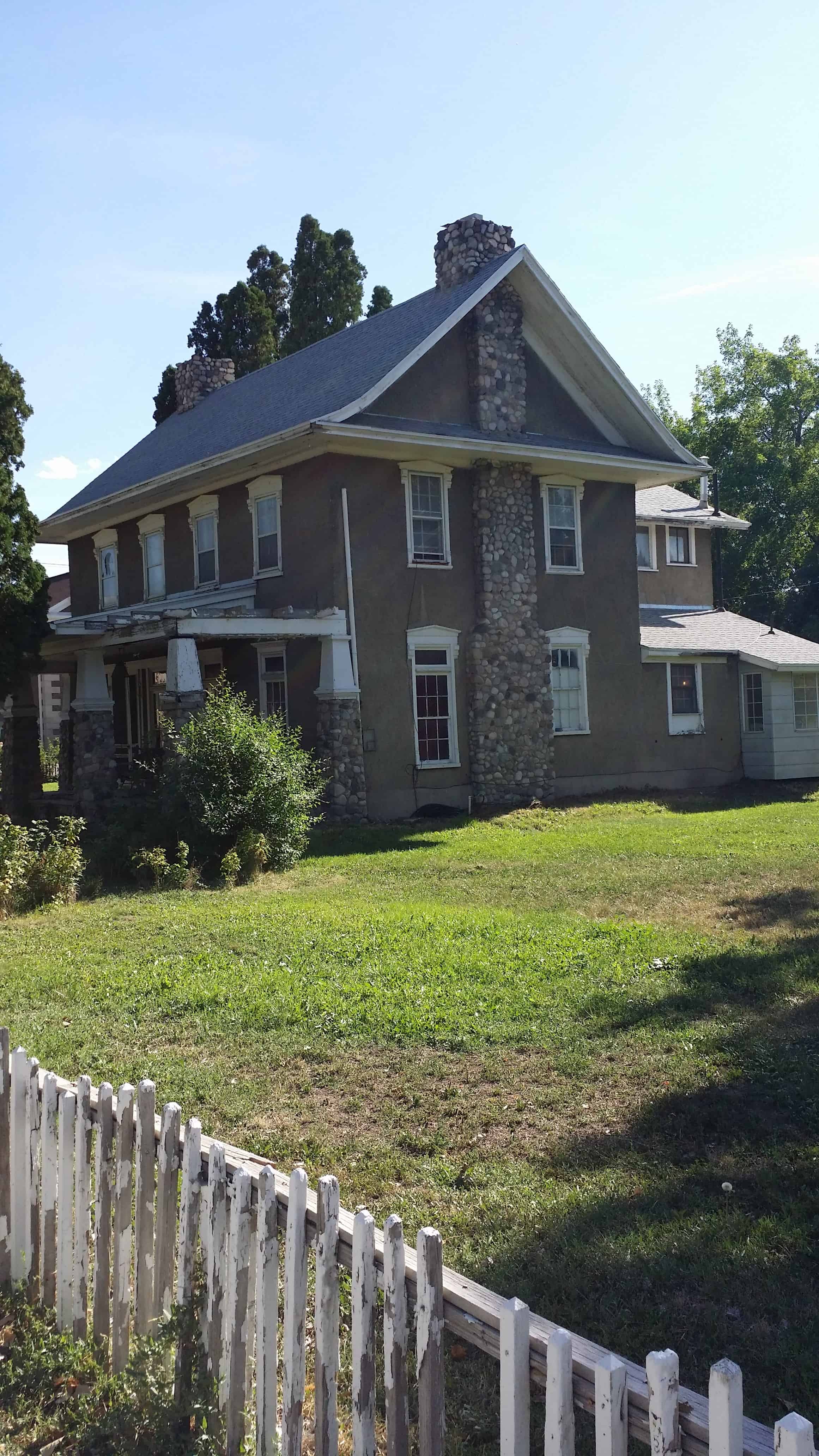
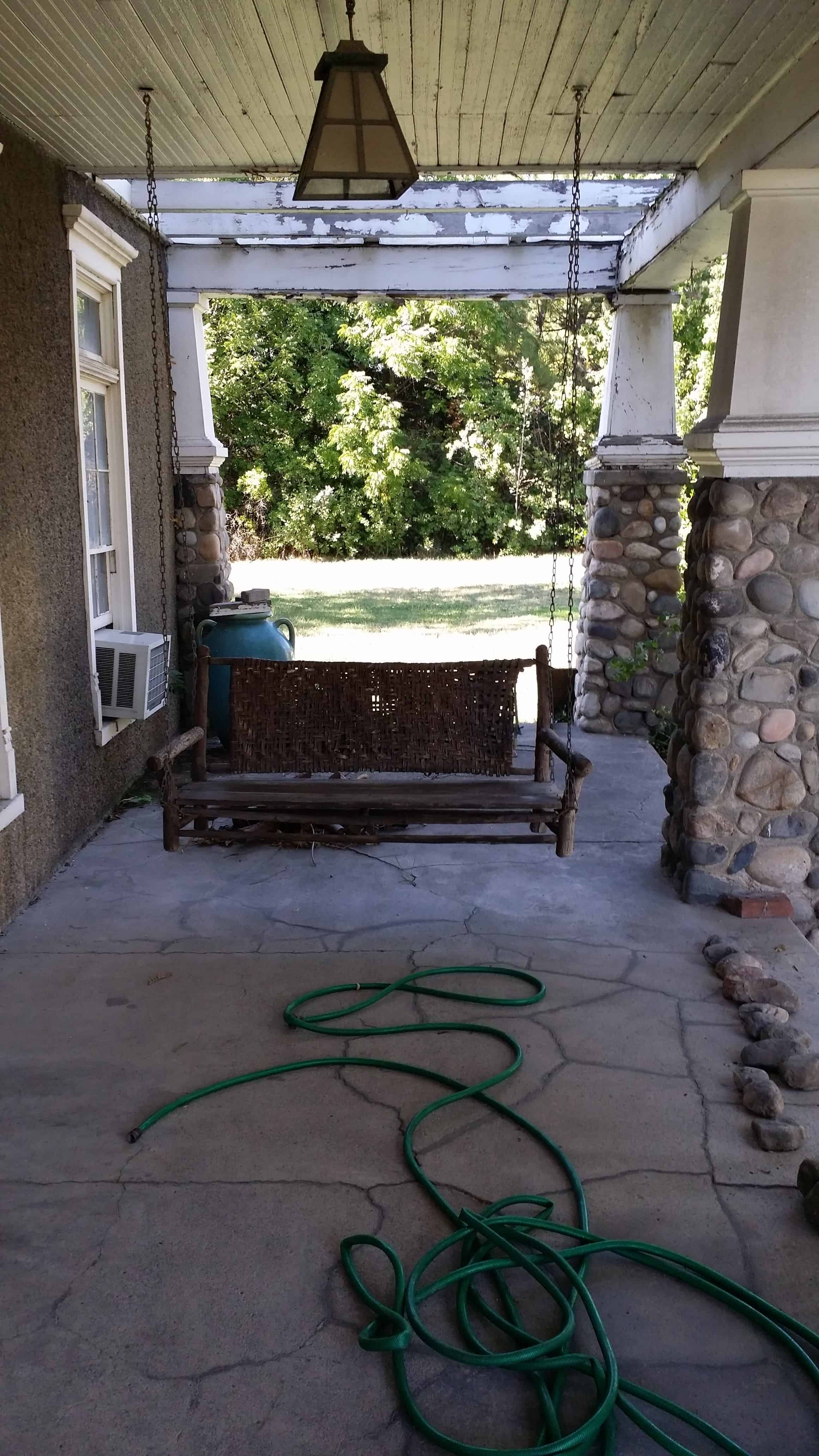
The Samuel Douglass House at 215 N. Main St. in Payson, Utah was built in 1874 (making it one of the oldest in Utah) and later substantially altered. It was updated to include Bungalow/craftsman architecture in 1912, and won a high school civics class award.
It was listed on the National Register of Historic Places in 1992. It is also a contributing building in the Payson Historic District, which was listed on the National Register in 2007.
Built in 1874 and expanded c. 1894 and 1912, the Samuel Douglass House is architecturally significant in Payson. It is an excellent local example of the vernacular interpretation of nineteenth-century Greek and Gothic Revival styles subsequently adapted to twentieth-century Bungalow and Arts and Crafts styles. The house is also significant for its unique, original floor plan, which remains easily discernible.
Samuel Douglass was born in 1850 in Salt Lake City, moving to the Peteetneet community in 1863. He followed his father in the general merchandise business and served in several civic positions. He married Emma Jane Dixon in 1874 and was recognized as a successful businessman and supporter of important civic projects such as the Strawberry Valley Project. His house was wired for electricity in 1897 and was also among the first in the community to have running water installed in 1902. The architectural changes made to the house in 1912 reflected growing optimism in the area and incorporated the latest Bungalow and Arts and Crafts styles.
This Historical Marker is mounted on the front of the house located at 47 E 300 North in Payson, Utah.
The Patten family came to Payson November, 1850. The house was built in 1876 by George Patten. It was restored in 1976 by a great, great, great grandson V.L. Barnett. From 1902 – 1907 it was Payson’s first hospital.
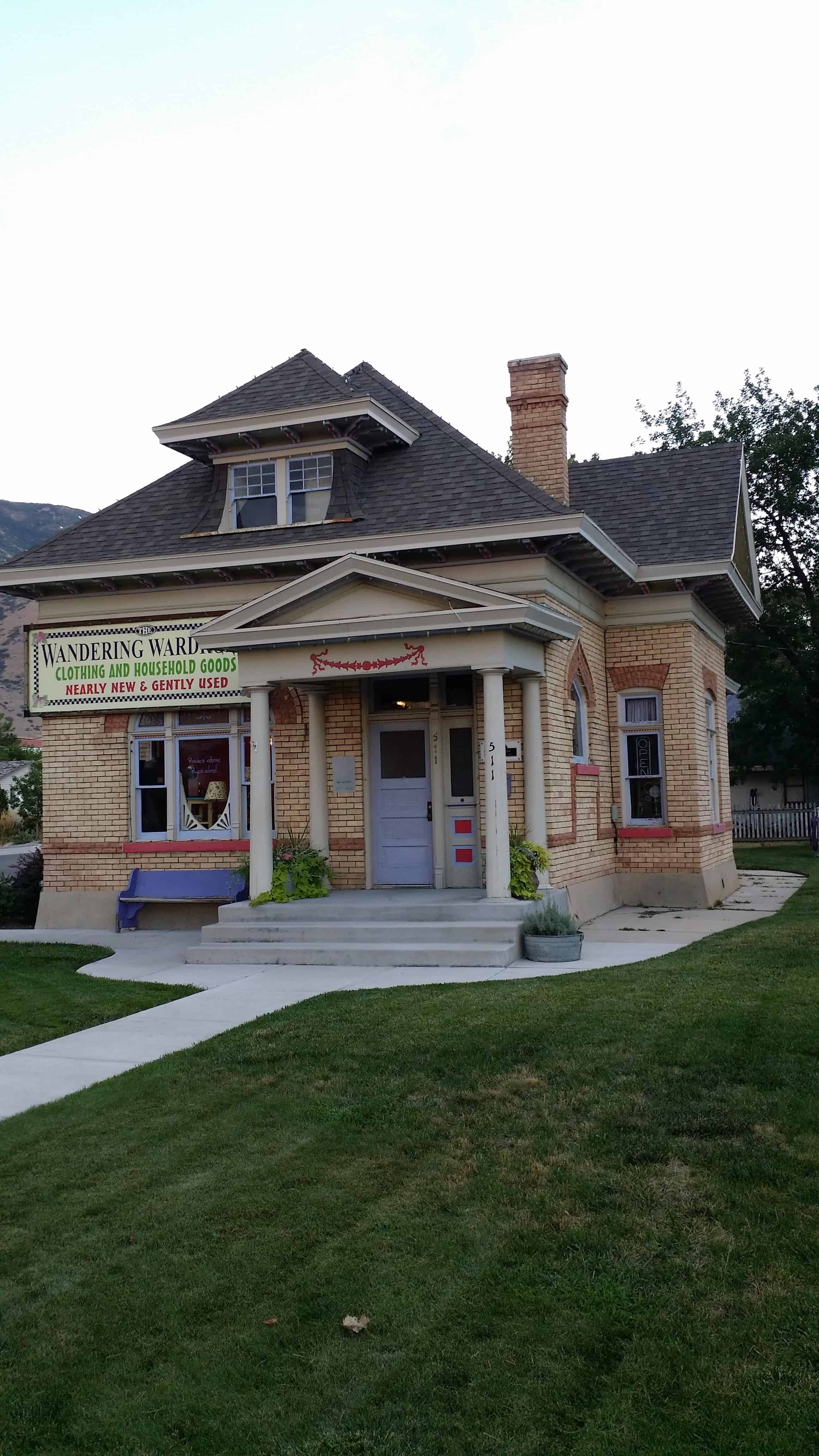
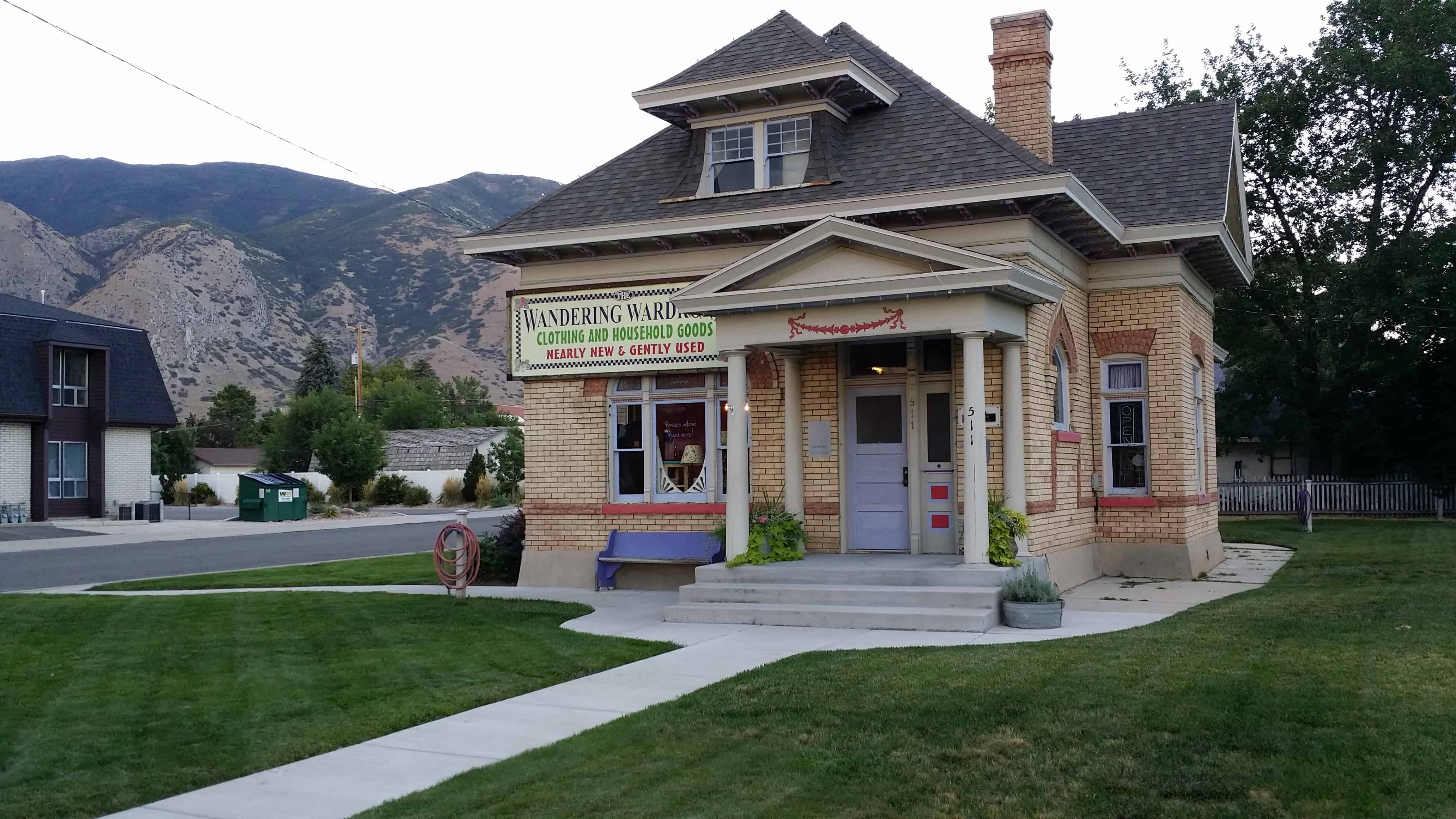
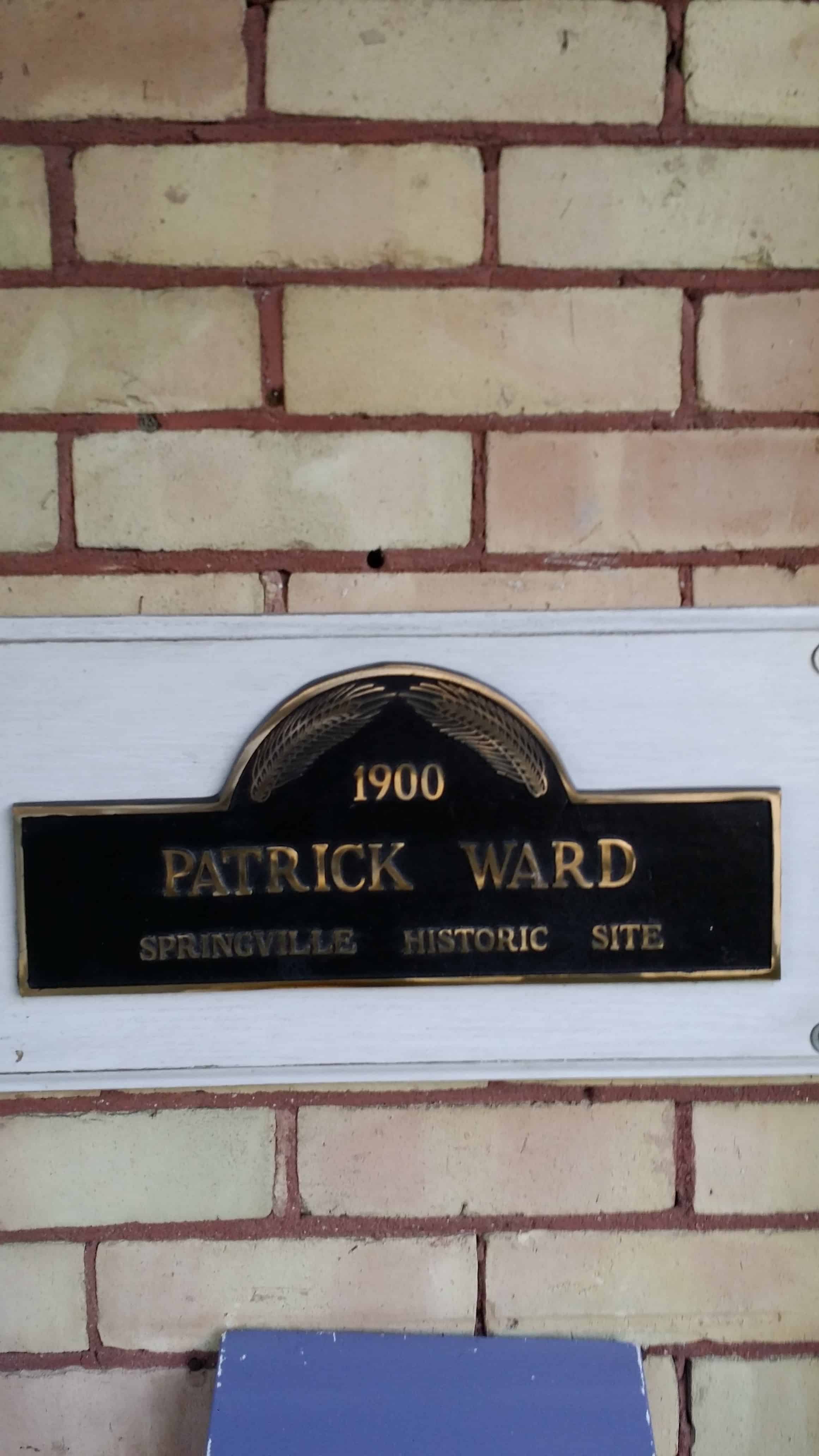
The Patrick Ward House is a gorgeous example of the quality of historic homes in Springville.
The Patrick L. and Rose O. Ward House at 511 S Main St. in Springville, Utah, United States, was built in 1900. It was listed on the National Register of Historic Places in 1998
It was home of Patrick L. Ward, station master and superintendent of the Denver and Rio Grande Railroad in Springville.
One of the oldest homes in Utah, the Wood-Harrison House at 310 S. 300 West in Springville, Utah was built in 1853 and expanded in 1877. It was listed on the National Register of Historic Places in 1983.
The original 1853 home was adobe, a one-story rectangular cabin-type house. By 1877 it had been sold and two-story house was added to the end of the original building, making it a hall-and-parlor I-house. This reflects general economic prosperity of the times. The house was identified in a 1981 architectural survey of Springville as being “the best known and more carefully documented residence reflecting this historical transition.”
The John T. Reynolds/Henry T. Reynolds, Jr., House, constructed in 1910, is significant as one of approximately six well-preserved houses in Springville which document the period of growth and prosperity of the town as it changed from a tranquil agrarian community to a thriving commercial center at the turn of the century. The wealth and prosperity that came to the town was the result of the success that several local construction companies experienced and is documented in the large homes built within the first decade after the turn of the century. The Reynolds House is one of the best preserved and more impressive examples of these homes. The Reynolds House is also architecturally significant as a local example of a transitional building which combines the irregular massing and some decorative features of the Victorian design with the proportions, roof pitch and decorative features of the Craftsman period. At the turn of the century it was quite common to combine Victorian Eclectic and classical features within a single design, but Victorian Eclectic and Craftsman combinations are rare in Utah. The Reynolds House is one of three houses of this type in Springville. The Reynolds House is also historically significant for its association with Henry T. Reynolds, Jr., a prominent local business and civic leader, who lived in the house for over 35 years.
The house was built in 1910 for John T. Reynolds. Lew Whitney was the architect and Ed Child did the brick work.2 John sold the house in 1919 to his nephew, Henry T. “Harry” Reynolds, Jr. The house was occupied by Harry and his family from 1919 until the death of his widow in 1983. The house was purchased in early 1985 by Allen and Marty Young, who have plans to convert the house into an art gallery.
John T. Reynolds was a contractor in Springville for a time, but in 1913-14 he was listed as the manager of H.T. Reynolds & Co., a local mercantile store owned by his brother, Henry T. Reynolds, Sr. John Taylor Reynolds was born in Springville on November 3, 1877, the last of eight children. His parents emigrated from Yorkshire, England, and his father was a tailor. John and his wife, Edith Berry Reynolds, moved to San Francisco soon after selling this house to his nephew in 1919. John died there in 1958.
Henry “Harry” Taylor Reynolds, Jr., was born July 23, 1888, in Springville to Rebecca Porter Reynolds and Henry Taylor Reynolds, Sr. Following in his father’s footsteps, he established himself as a prominent civic and business leader in Springville and Utah County. He served as vice-president and director of Utah Wholesale Grocery, president of Kolob Lumber Company, president of Associated General Contractors of Utah, and as partner, with his brother Ernest, in Reynolds Construction Company. Harry Reynolds also served a term as city councilman in Springville and as a national committeeman of the American Legion. He died in Springville September 4, 1955.
Reynolds Construction Company (also known for a time as Reynolds/Ely Construction Company) was one of several major construction companies based in Springville. Though only a small town of a few thousand people, Springville surpassed both Salt Lake City and Ogden, the largest cities in the state, as a center for the contract construction industry. The industry gained its start in Springville in the late 1870s when a number of local men became extensively involved in freighting. That activity, in turn, led to railroad construction. Many of those early construction firms have continued in operation up to the present, and the town is still regarded as a center of construction activity.
The success of the construction industry in Springville brought unprecedented economic growth to the community. This new-found wealth was reflected in the emergence of fine, large homes, such as the Reynolds House, that were built around the turn of the century. The Reynolds House is one of the most impressive houses of the period, and is one of the best preserved examples of the type built at that time.
The architect, Lewis Jothan Whitney, was born June 18, 1874, in Springville. He was the son of Leonard J. and Tryphena Perry Whitney. During his life in Springville he was active as an architect, and as a road, bridge and home contractor. Lew Whitney died in September 1954 of a heart ailment. Lew designed an built a number of homes in the Springville area and in southern Utah, though none besides this one have yet been specifically credited to him. The Roylance House, located one block east of the Reynolds House, was probably designed by Whitney, judging from its very similar appearance. It, however, has been extensively altered by a large addition when it was converted into a mortuary.
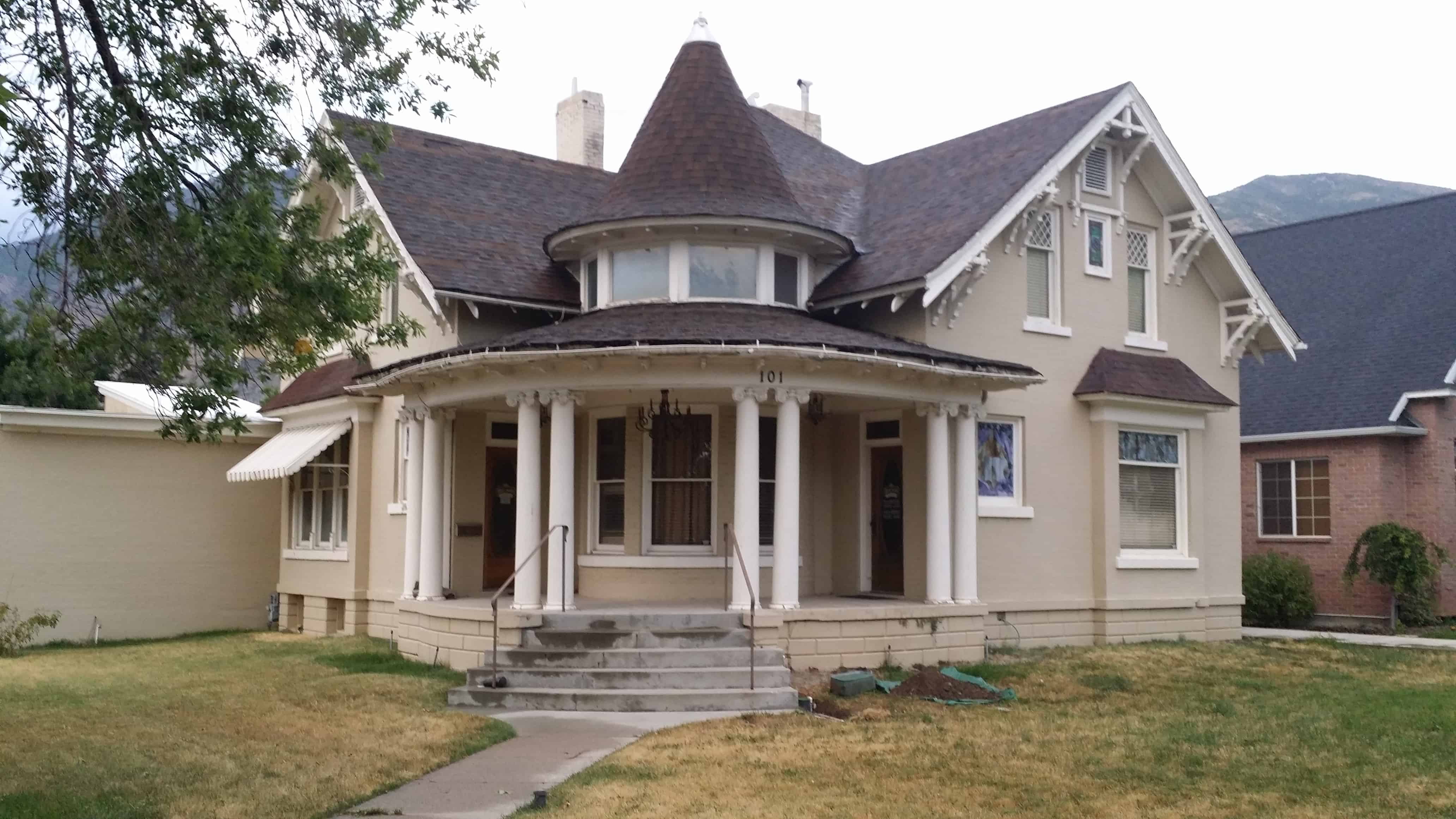
At 101 South 400 East in Springville is the Thomas E. Child Home, a beautiful classic. This home is located two houses south of the Richard Palfreyman Home.
The James P. and Lydia Strang House, at 293 E 400 N in Springville, Utah, was built in 1895. It was listed on the National Register of Historic Places in 1998.
The Milan Crandall Home is one of my very favorites in Springville. Located on the Southeast corner of 400 North and 100 East, I have had many people bring up this home when I tell them I’m from Springville.
The 1891 Yard-Groesbeck House is significant in the broad patterns of Springville history as an example of the larger, more substantially constructed homes built in Springville during the late nineteenth and early twentieth centuries. As detailed in the “Historic Resources of Springville City” Multiple Property Submittal, these buildings reflect the growing prosperity and sophistication that the arrival of the transcontinental railroad (in 1869) and other links to communities outside Utah brought to Springville. The first owner of the house, Edward J. Yard, was a lumber dealer in Springville. The later owners, Nicholas H. and Rhoda S. Groesbeck, were a prominent family in late nineteenth century Springville. Successful first in the mercantile business and then in mining, Nicholas H. Groesbeck bought a house in Springville commensurate with his station in the community. Contact with the outside world brought awareness of popular architectural styles to Springville. Buildings such as the Yard-Groesbeck House were the result of such awareness.
Springville City, in Utah County, Utah, was settled in September, 1850 by a company of pioneers of the Church of Jesus Christ of Latter-Day Saints (LDS or Mormon Church) led by Aaron Johnson. The colonizing families had crossed the plains during the summer as part of a train of 135 wagons captained by Johnson. Upon arriving in Utah, they were called by church leader Brigham Young to establish a permanent community on the banks of Hobble Creek, in Utah Valley. The suitability of the area for settlement and agriculture had been noted earlier by William Miller and James Mendenhall, who had traveled the length of Utah Valley during the winter of 1849.
The pioneering period of establishing Springville as a viable community was followed by an era of growth and diversification of industry and commerce. Promotion of the organized cooperative movement may have helped to initiate this new phase of development. The greatest impact, however, was brought by the railroad. Completion of the transcontinental rail line in 1869 ended Utah’s geographic isolation, linking the state to the products and markets of the entire nation. It made goods from the outside more readily available, created new markets for Utah-produced commodities, stimulated commerce and the development of new industries, and brought in more settlers together with more outside influences. The pioneer period, with its emphasis upon basic essentials of community survival, self-sufficiency, and cooperative group effort, was brought to a final close.
By the early 1900s, Springville had grown to a city of approximately 3,500. The 1911 R.L. Polk & Co. Directory shows Springville to have two banks, fourteen grading contractors, three hotels/rooming houses, one flour mill, one canning factory, and a municipal electric power plant. There were four general stores in operation: G.S. Wood Mercantile Co.; Deal Bros. & Mendenhall Co.; Packard Bros. & Co.; and IT. Reynolds & Co. Principals in the latter three firms also were prominent in the field of railroad contracting. Springville was served by two railroads: the Denver & Rio Grande Western, and the San Pedro, Los Angeles & Salt Lake Railroad of the Union Pacific system.
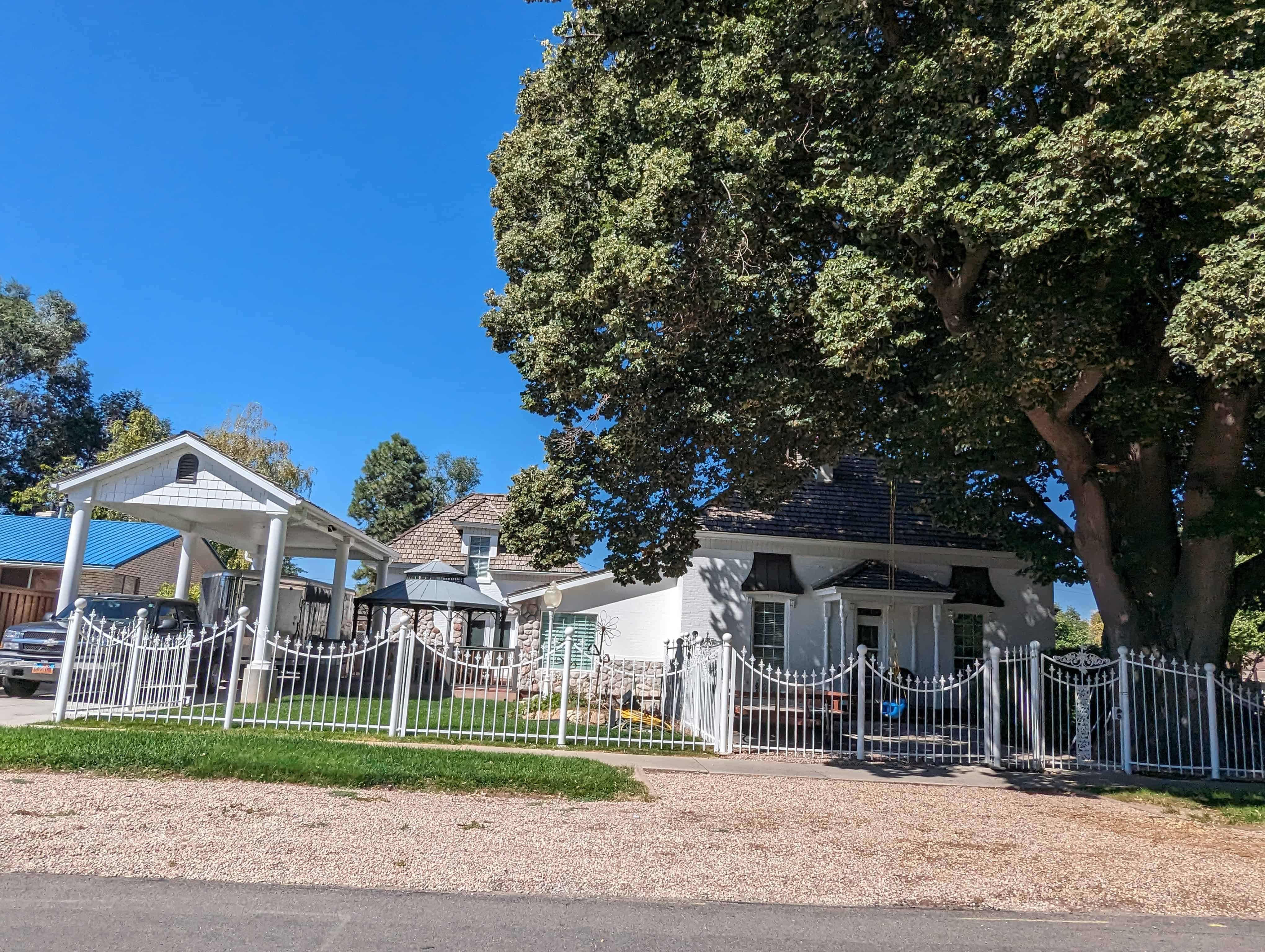
According to current owner Margaret B. Conover, 157 W. 200 South was built in 1891 by Edward J. Yard, who was a lumber dealer at the time.4 Mr. Yard reportedly operated his lumber business out of the home, with offices in the lower front rooms. He originally built the house as a single story dwelling, adding the second story at a later date. The home’s frame construction, an uncommon building material for substantial buildings of this time in Springville, is consistent with Mr. Yard’s profession. The arrangement of an additional front entrance on the front-facing cross gable of the house is also consistent with Mr. Yard using rooms of his house as his offices.
Official title records list Mr. Yard as actually owning the parcel on which 157 W. 200 South stands only for a brief period in 1892. Little information is available regarding James D. Davis and George W. Snow, each of whom briefly owned the property prior to its purchase by Mr. Yard. Initially, Edward J. Yard owned a large portion of Lot 3, subsequently selling off sections to Anna S. Ingalls in 1892, Nettie K. Groesbeck in 1895, and George P. Thompson in 1899.
Rhoda Sanderson Groesbeck was the first wife of Nicholas Harmon Groesbeck. She was born in England in 1846, to John and Rebecca Wood Sanderson. The family came to Utah in 1856 with the David H. Cannon company of Mormon immigrants and settled in Springville in 1861. Rhoda Sanderson and Nicholas H. Groesbeck were married in Springville on December 16,1892. Nicholas Harmon Groesbeck was born in Springfield, Illinois in 1842. He was the oldest child of Nicholas and Elizabeth Thompson Groesbeck. The family emigrated to Utah in the summer of 1856, settling in Salt Lake City.
In 1858, members of the Groesbeck family moved to Springville as part of the temporary migration of northern Utah Saints south to Utah County to escape the approaching Federal troops of General Albert Sydney Johnston’s Army. Nicholas Groesbeck (Sr.) opened a small dry goods store in some rooms of the old fort row. The business later moved into a building on Main Street and First South. Prior to coming to Utah, Groesbeck had been a prominent merchant and businessman of Springfield, Illinois. He subsequently established himself as a leading merchant, mining man and real estate investor in Salt Lake City.
Nicholas H. Groesbeck continued to live in Springville after the family’s return to Salt Lake City in 1858. In 1861, he built the Groesbeck Theater, of which he was owner and manager, on Main Street between Center and First South. He outfitted the theater with fixtures obtained from the army’s Camp Floyd (near Fairfield, in northern Utah County) theater, which closed down when troops returned east at the outbreak of the Civil War.
In 1863, Nicholas H. Groesbeck bought out his father’s interest in their Springville Mercantile business. When the cooperative movement was organized in 1868, he sold the business to the new co-op. The LDS Church’s cooperative economic system, adopted some years earlier by certain Utah communities, was significantly expanded during 1868. In that year, Zion’s Cooperative Mercantile Institution (Z.C.M.I.) was organized at Salt Lake City. The cooperative system had its basis in LDS church doctrine, and was encouraged by church leaders, most notably Lorenzo Snow. It espoused the principle of an independent, self-reliant society in which members would work for the common good rather than personal gain. The early success of Springville’s cooperative system was destined to be short-lived, however. As was the case in other Utah communities, the cooperative ideal fell victim to increasing competition from private concerns and the reluctance of the cooperative’s members to participate fully in the communitarian system.
Turning his attention to mining, Groesbeck joined with his father and brothers to develop the Flagstaff Mine, which became a major producer in the Little Cottonwood Mining District, outside of Salt Lake City. Groesbeck left Utah in 1871 to serve an LDS Church mission in Kentucky, Ohio and Illinois. Upon returning to the west, he purchased mining properties in Montana, which he then sold in 1876 to the Packard brothers of Springville. Taking the Packard Bros. Springville store as partial payment, he re-entered the mercantile business for several years until leaving on a second LDS Church mission, this time to New Zealand, in 1880. After returning from his second mission in 1882, Groesbeck, remained engaged in mining ventures and also entered the real estate business. His first of three wives, Rhoda Sanderson Groesbeck, resided at 157 W. 200 South until her death in 1932. During her life in Springville she was active in LDS Church and charity work, and was a member of the daughters of the Utah Pioneers. She and Nicholas H. were the parents of ten children, five of whom were surviving at the time of her death.
In 1935, Harrison and Margaret Bird Conover moved into 157 W. 200 South. Mrs. Conover is the granddaughter of Nicholas H. and Rhoda S. Groesbeck. Her parents were Martin W. and Mary Groesbeck Bird. Title abstracts show the Birds inherited the house in 1937. However, they appear not to have lived in the house. In 1939, the Conovers gained ownership of the property.
William Harrison Conover was a prominent publisher, state legislator and county official during his career. Born in 1907 in Provo, he married Margaret Bird in 1933. He was president of Art City Publishing in Springville from its founding in 1933 to 1983, publisher of the Sprinqville Herald newspaper from 1939-1967, and Utah County Assessor from 1967 until his death in 1983. He was a member of the Utah House of Representatives from 1957-1959. Mrs. Margaret Conover has continued to reside in the house since her husband’s death, as she has for over fifty years. The house has remained in the family through three generations of ownership spanning 96 years.