Tags
Jonah Phillips Home
21 Thursday Aug 2014
Posted in Uncategorized

21 Thursday Aug 2014
Posted in Uncategorized
Tags
21 Thursday Aug 2014
Posted in Uncategorized
Tags
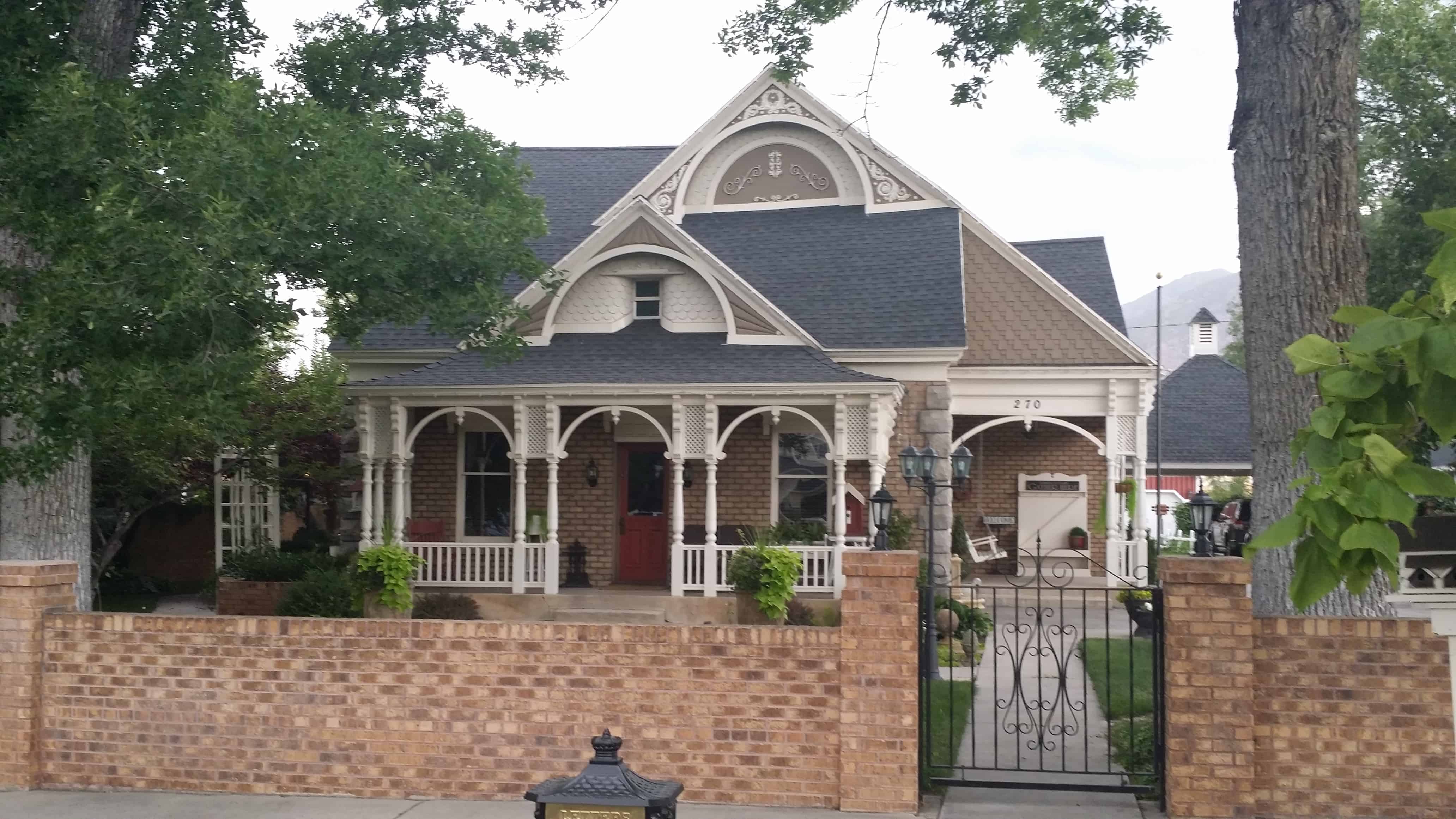
The Henry T. Reynolds, Sr.,and Rebecca Reynolds House, built c.1875 and c.1891 (nominated as part of the “Historic Resources of Springville City” Multiple Property Submittal), is significant in the broad patterns of Springville history as an example of the larger, more substantially constructed homes built in Springville during the late nineteenth and early twentieth centuries. These buildings reflect the growing prosperity and sophistication that the arrival of the transcontinental railroad (in 1869) and other links to communities outside Utah brought to Springville. The first owner, Henry T. Reynolds Sr., was one of the most prominent and successful citizens in Springville. As such, the Reynolds family was able to build a home commensurate with their station in the community. The earlier, simpler, more utilitarian building, was renovated c.1891 with Victorian Eclectic stylistic features. Contact with the outside world brought awareness of popular architectural styles, such as the new eclectic Victorian
styles exhibited on the Reynolds House, to Springville. Buildings such as this house were the result of such awareness.

The home at 270 West 200 South consists of an original brick hall parlor portion built with Classical stylistic influences, which was subsequently expanded with substantial Victorian style additions. The precise date of construction of the original portion is difficult to establish. It is constructed of brick, which was first produced locally during the 1860s but which did not attain widespread use until somewhat later. The hall-parlor plan and remaining Greek Revival stylistic elements indicate initial construction prior to the arrival of the picturesque styles in Utah. Evaluation of the construction materials, house type and original stylistic elements suggests that initial construction occurred between c.1870 and c.1880. The subsequent structural additions and application of Victorian Eclectic
decorative trim likely was undertaken c.1891.

The original hall-parlor house was first owned by either Joseph Allan, a pioneer blacksmith of Springville, or Loren Harmer, who purchased the property from Mr. Allan in 1876.6 Mr. Harmer was engaged in farming and gardening locally. In 1881 the property was purchased by George M. Nelson.
A carpenter by profession, Mr. Nelson conceivably could have been the original builder of 270 W. 200 S., although this implies a relatively late date of construction.

The principal owners of the home were Henry T. and Rebecca Reynolds, who acquired the property in It was during the Reynolds’ ownership that the major Victorian additions to the home were undertaken. Henry T. Reynolds, Sr. was among the most highly prominent of Springville’s early
citizens. He was born in Springville in 1860, a son of pioneer settlers Joseph D. and Elizabeth Taylor Reynolds. Upon graduating from Brigham Young University in 1880, Mr. Reynolds engaged in farming for several years but soon turned his attention to merchandising and other business enterprises. In 1882 he co-founded the H.T. Reynolds & Co. mercantile business, of which he became president and principal owner. The business quickly grew into one of the most prominent and successful mercantile concerns in the state. After locating initially in two smaller stores, Reynolds built the H.T. Reynolds & Co. commercial block on the corner of Main Street and 200 South in 1892. Said to have been the largest general store south of Salt Lake City, it remains the dominant building on Springville’s Main Street. Mr. Reynolds served as president of H.T. Reynolds & Co. into the 1920s.

Also active in various other business enterprises and community affairs, H.T. Reynolds, Sr. was a cofounder in 1891 of the Springville Banking Co., serving initially as vice president and later succeeding Romanzo A. Deal as president of the institution, holding that office from 1903 until close to the time of his death in 1929. A member of Springville’s corps of road construction contractors, Mr. Reynolds founded and headed the Reynolds-Ely Construction Co. The firm was a major builder of railroads in the western U.S., and carried on (as Reynolds-Ely Construction Co. and later as Reynolds Construction Co.) as a highway contracting concern through the 1930s into the 1940s, during which time it was headed by Reynolds’ sons Henry T., Jr. (Harry T.) and J. Ernest. Some sources indicate that H.T. Reynolds, Sr. first became involved to some degree in the contracting business even before he entered the mercantile field, working as an early builder of wagon roads and later of railroad grades.

Other business interests pursued by Mr. Reynolds included the Utah Wholesale Grocery Co., of which he was president, which carried on trade throughout Utah and other western states. He was vice president of the Springville-Mapleton Sugar Co., which built a beet sugar refinery near Springville c.1918. The company was one of only a few independent producers to operate in a region dominated by the Utah-Idaho Sugar Co. Springville-Mapleton Sugar Co. was turned over in 1928 to an investment company which then sold the operation to Utah-Idaho Sugar Co. in 1932.

Politically active throughout his life, Henry T. Reynolds, Sr. served on the Springville City council for 13 years. He held the office of mayor for two terms. At the state level he was a member of the Utah legislature, serving one term in each of its houses. Mr. Reynolds also occupied the office of Utah
County Commissioner for one term.

Henry married Rebecca (Reba) Porter in 1887, about two months after his acquisition of title to this house. Rebecca was born in Mt. Pleasant in 1866, the daughter of James B. and Mary Ann Porter. After her father died when she was seven years old, Rebecca moved to Springville with her family.
She converted to the Mormon church about one year later. Rebecca served as treasurer, teacher and president, and counselor of various auxiliaries associated with the local ward (parish). She and Henry had eight children.
In 1928, Mr. Reynolds was forced to move to California due to III health, at which time title to 270 W. 200 S. passed to Reynolds’ son, J. Ernest. The following year H.T. Reynolds, Sr. was able to return to Springville, where he died on September 23,1929.8 The family residence at that time was 109 North Main Street, where Rebecca continued to live (together with a daughter, Helen) following the death of Mr. Reynolds, and lived there until her death in 1958. The property at 109 N. Main St. was first purchased by H.T. Reynolds in August, 1925.
Available records do not indicate whether J. Ernest Reynolds resided at 270 W. 200 S. during his adult life, though he held title to the property for some 14 years. Directory records show him as residing in Provo after at least 1935. J. Ernest occupied the position of secretary-treasurer of Reynolds-Ely
Construction Co. He remained with the firm when it later became Reynolds Construction Co., and continued in the contracting business throughout his life until retiring in the early 1960s. During this time he made his residence in Provo, together with his wife, Ruth. For many years they lived at 357 N.
400 E. in Provo. Following Mr. Reynolds’ retirement, the family moved to 729 E. 2730 N. in Provo.
From 1942 until 1944, title to 270 W. 200 S. was held by Abbie Ashcraft. Directory records show that she and her husband, Don, took up residence in the home some years before that, perhaps renting from J. Ernest Reynolds. Don Ocean Ashcraft was born in Provo in 1874, a son of James E. and Lamina Fullmer Ashcraft. He married Abbie Wordsworth in 1698, and that same year embarked upon a career In railroading. For 36 years, until being retired in 1934, he was employed by the Denver & Rio Grande Railroad, being a locomotive engineer for 26 of his years with the company.
After residing initially at various Utah localities, the Ashcraft family settled in Springville in 1918. Between 1920 and 1935 Mr. Ashcraft and his four sons maintained a large farming operation near the city. Don Ashcraft died in 1940. Abbie Ashcraft, who had resided in Springville prior to marrying Mr. Ashcraft, remained in the community following her husband’s death. She hold title to 270 W. 200 S. between 1942 and 1944. at which time she sold the home to Arthur J. and Pearl L. Rich.
Prior to moving to Springville, Mr. Rich was employed as an engineer with Geneva Steel and had his family residence at 432 E. 600 N. in Provo. Available records do not provide occupational information for Mr. Rich during his time in Springville. He and his wife, Pearl, resided at 270 W. 200 S. into the 1960s. The home appears to have been vacant for a short time c, 1965, after which it was evidently rented to Ashel H. Tanner, a seminary teacher at Springville Junior High School. He occupied the home c. 1967 with his wife, Donna.
Between 1965 and 1969, title to 270 W. 200 S. was held by Donald I. and Esther B. Rich, who subsequently sold to James Ruel and De Ann J. Plowman. Mr. Plowman was involved in the auto repair business. The Plowmans resided at 270 W. 200 S. for only a short time before selling in 1970 to Bahe Billie, an Instructor at Brigham Young University, and his wife Florence. They likewise were resident only briefly.
Control of the property was acquired in 1974 by Brigham W. and Mary Mitchell, who resided in Orem. Directory records list 270 W. 200 S. as Vacant’ between 1972 and 1977. Title was next obtained c. 1977 by Bill and Delia Mitchell, who moved into the home and performed extensive restoration work on the interior, which had not fared well in the years that the house was vacant. The Mitchells were resident until about 1983.
270 W. 200 S. was subsequently rented briefly by Grant and Fran Roylance, c. 1985, then owned and occupied by Lynn and Signe Hale. The home was acquired by current owners Calvin and Linda McCausland in 1992.
Related Posts:


The home is old of Utah’s oldest.

21 Thursday Aug 2014
Posted in Uncategorized
Roy Newman was blinded and nearly killed when a stick of dynamite misfired in this mine in 1929. But the determined miner recovered and returned to work his mine alone – for another 45 years!
The belief that rich lead, zinc, and sliver ores lay deep in the mountain kept Roy working; he did encounter low-grade veins of oar. He drove 1,600 feet using only hand-held drills, a four-pound hammer, explosives, and his ingenuity.
Though blind, Roy could faintly detect light in the corner of one eye and he used this ability to keep the mine workings straight. Roy would set a carbide lamp in the middle of the track, several hundred feet from the mine’s working face. Then he would stand a pick, with its handle up, in the track a few feet from the face. Standing between the pick and the face, Roy moved his head back and forth until the pick block the light. Repeating this process, he was able to continually center and straighten the workings.
Roy lived alone in a cabin near the mine through the pleasant summers and long, harsh winters. With the help of friends and family, who kept him supplied with food and other basic needs, he maintained his optimism and persevered. “I like the challenge that Mother Nature presents the miner who searches for her secrets,” he said.

Blind Miner Of The Wasatch


21 Thursday Aug 2014
Posted in Uncategorized
Tags
Big Cottonwood Canyon, DUP, historic, Mining, Salt Lake City, Salt Lake County, Sandy, Silver Fork, utah

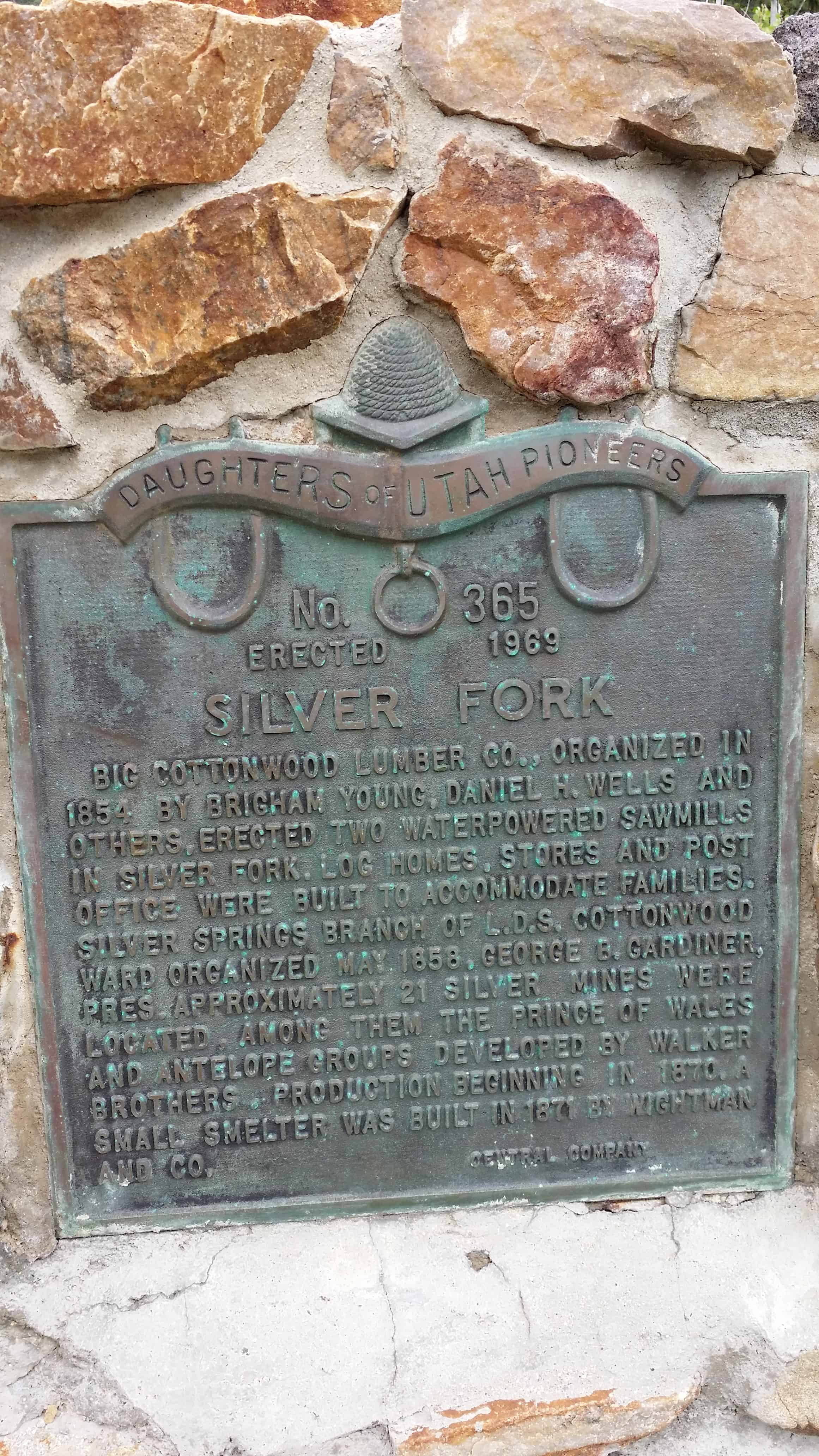
Big Cottonwood Lumber Co., organized in 1854 by Brigham Young, Daniel H. Wells and Others, erected two waterpowered sawmills In Silver Fork. Log homes, stores and post Office were built to accommodate families. Silver springs branch of the L.D.S. Cottonwood Ward organized may 1858, George b. Gardiner, Pres. Approximately 21 silver mines were Located. Among them, the prince of wales and antelope groups developed by Walker Brothers. Production beginning in 1870.
A small smelter was built in 1871 by Wightman And Co.
This D.U.P. Marker is located in Big Cottonwood Canyon.


Silver Fork is one of the last forks branching to the south in Big Cottonwood Canyon before reaching Brighton and Silver Lake. Silver Fork, the canyon, is today best known for the large concentration of summer homes and family cabins at its mouth that is Silver Fork, the town.
From the present day tree covered appearance you would hardly guess that this area began as a base for early logging operations. It would be more than 20 years before mining would play a part in the area’s history.
Logging began shortly after the arrival of the pioneers in 1847, by 1854 the Big Cottonwood Lumber Company was in operation with two saw mills and a shingle mill. The mills were located on the flats at the mouth of Silver Fork. A small community of log buildings quickly sprang up around the operation, all there to support the mills and lumbermen who worked them. In time the sawmills relocated and the town was partially abandoned.
By 1870, the one time logging camp became a mining camp. It didn’t take long for the flurry of activity in Little Cottonwood Canyon at Alta to spill over the ridge and into the tops of Silver and Honeycomb Forks. With that activity, and the rush that accompanied it, the town came to life, supporting the mines just as it had the loggers previously. A small smelter was constructed, another hotel, commercial buildings, and the once abandoned cabins, became homes again.
This second life of the town would be short lived, as the mining boom ended by the mid 1880’s. Some mining did take place after this time, but larger mills and smelters in the valley and improved transportation methods combined to set Silver Fork up for its second abandonment.
In 1893, the area was homesteaded by Joy Dunyon who ran sheep in the fork for many years. Around 1925, the Dunyon family who still owned the property, subdivided the land, and the present community of Silver Fork with its many summer homes and mountain cabins came to be.(1) The third life of the town has never ended, and the fork has been a hiking destination in the summer, and a back country skiing area in the winter. It is the skiing that may most directly affect the town and the futuer of Silver Fork.
A fourth life to the area may be in the works. Just this year (2010) Solitude Ski Resort made application to expand their ski resort operations into Silver Fork. At least a part of it. The original application that would have opened the entire fork, some 463 acres, was withdrawn or denied, depending on who you talk to. A second, smaller impact application was then submitted. This application would open 182 acres, pretty much the entire east face of the fork from the ridge with Honeycomb Fork down the slope to within 100 feet of SIlver Creek along its entire length.
If this access were granted, it would encompass almost all of the historic mining sites in Silver Fork, including the Prince of Wales, Wellington, and others. What remains may have to be “reclaimed” to make it safe for the rest of us. If the state does this work, it usually means destroying it. I hope that preservation would be mandated as a part of any permit, but that is a battle yet to be fought.
While that third life goes on, the fourth life being argued, the second life is the focus of this work; the mining boom. One of the earliest mines in the entire territory to have a steam compressor, the Wellington, is found in Silver Fork as well as the Prince of Wales, Antelope, Highland Chief, Boston Tunnel, Alta Tunnel, Star Tunnel, Warrior, Lucky Dutchman and more.
Silver Fork is also the access-way for a large branch fork to the east and south, Honeycomb Fork.
Silver Fork has no structures that remain standing from those early days, but there is hardware, some of it partially buried, but visible nonetheless. That which can be seen, shows the beauty and craftsmanship of those metal workers who designed and built the machinery of mining.(*)

20 Wednesday Aug 2014
Posted in Uncategorized
Tags
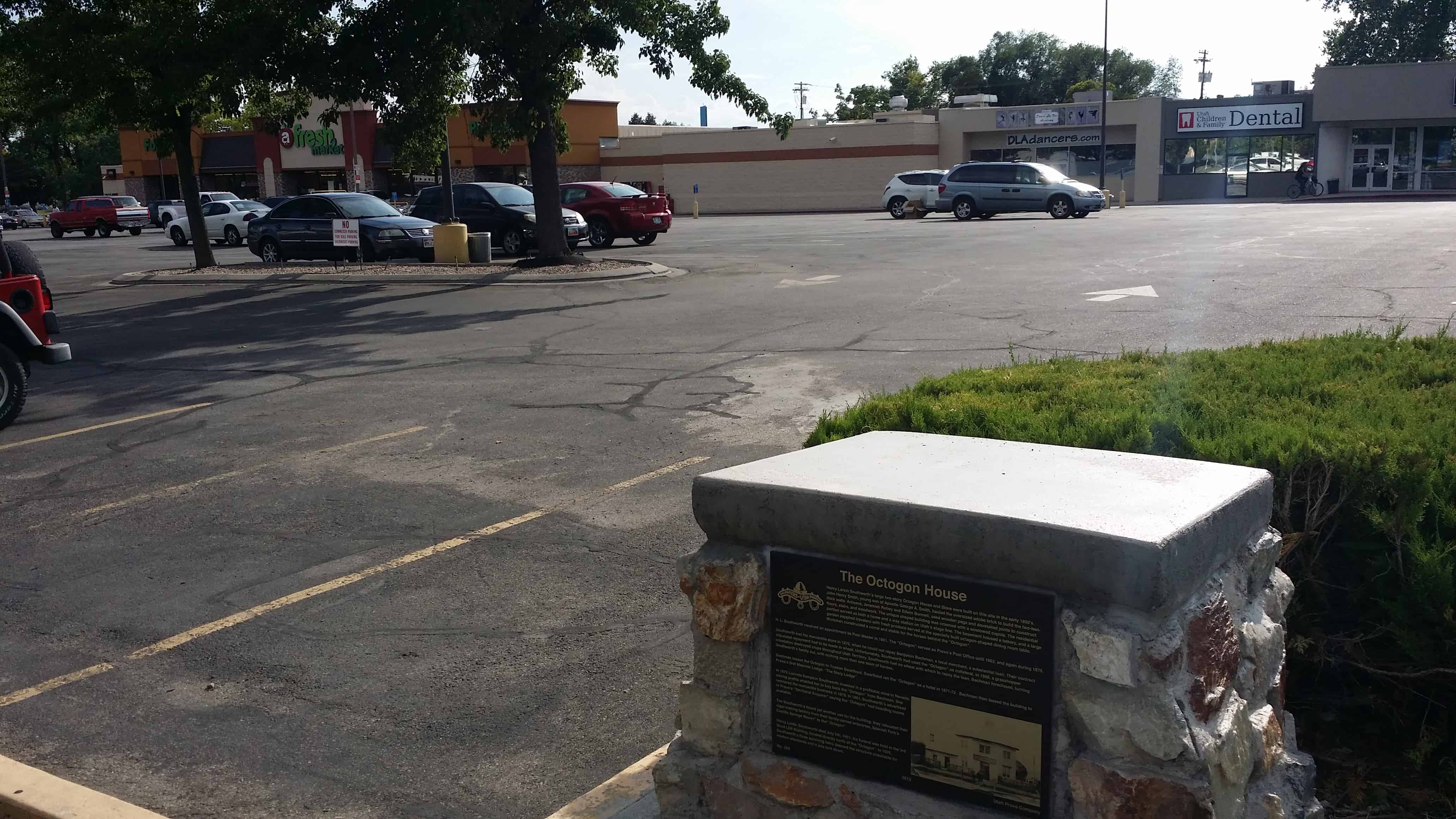
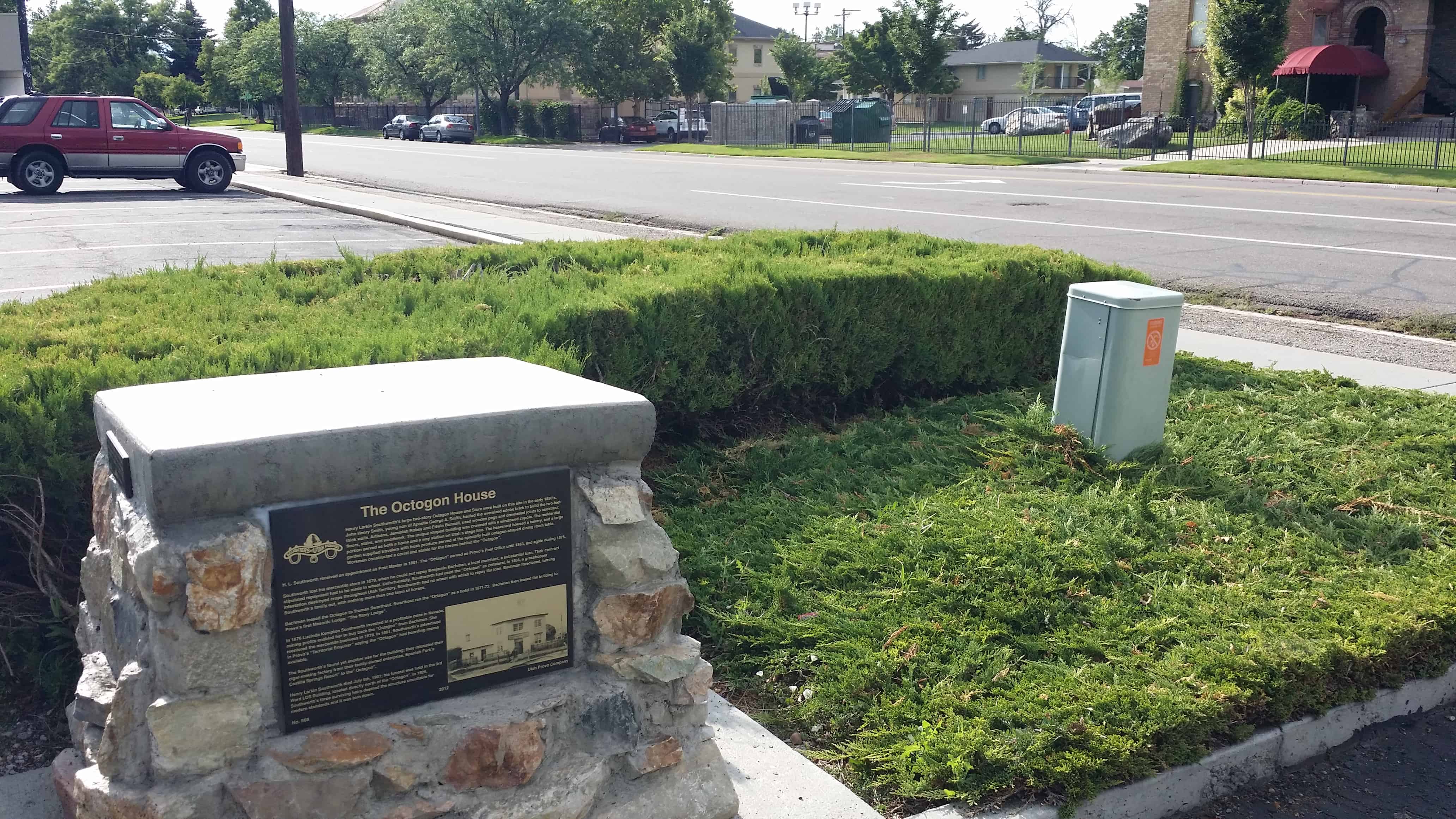
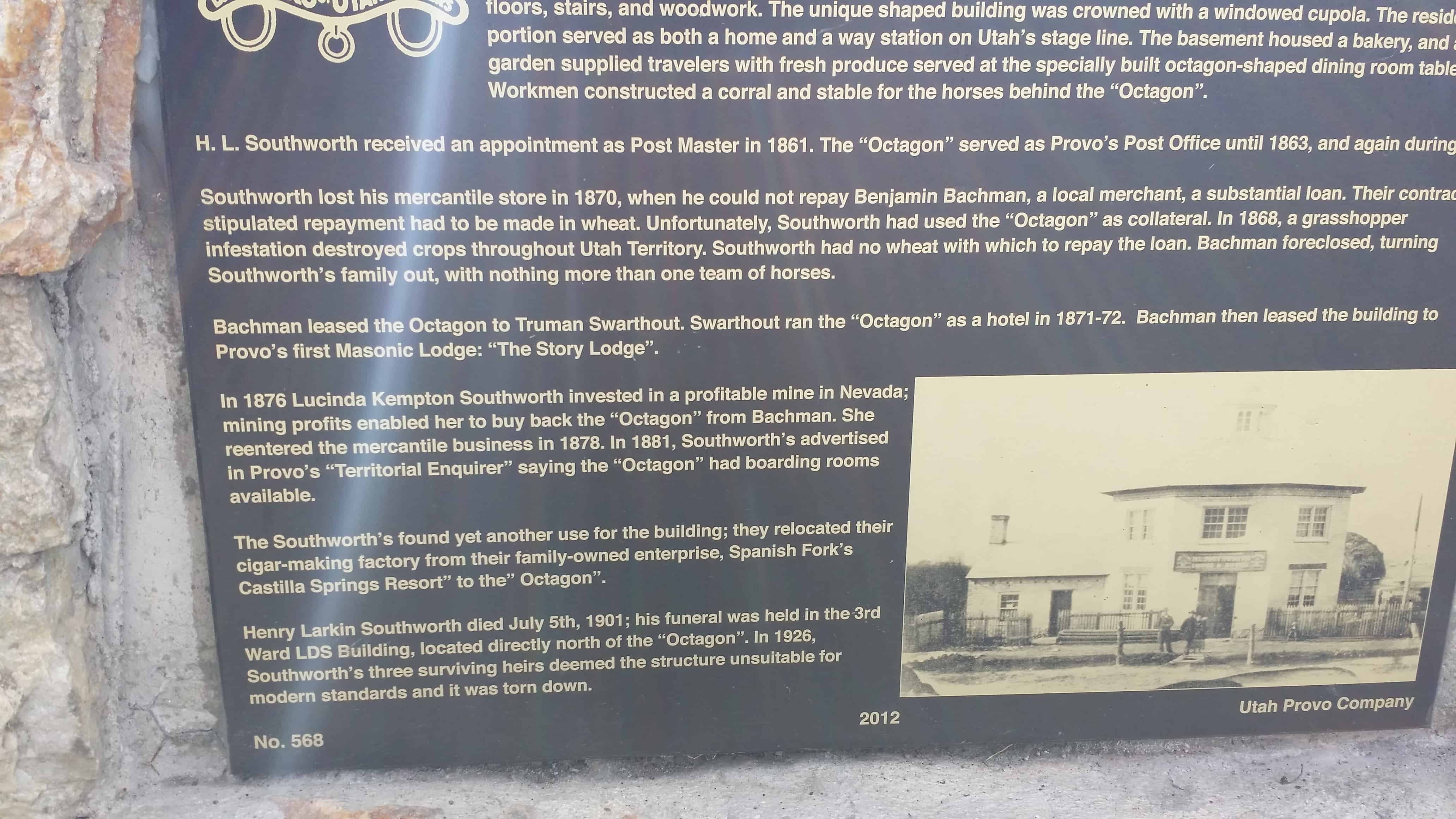
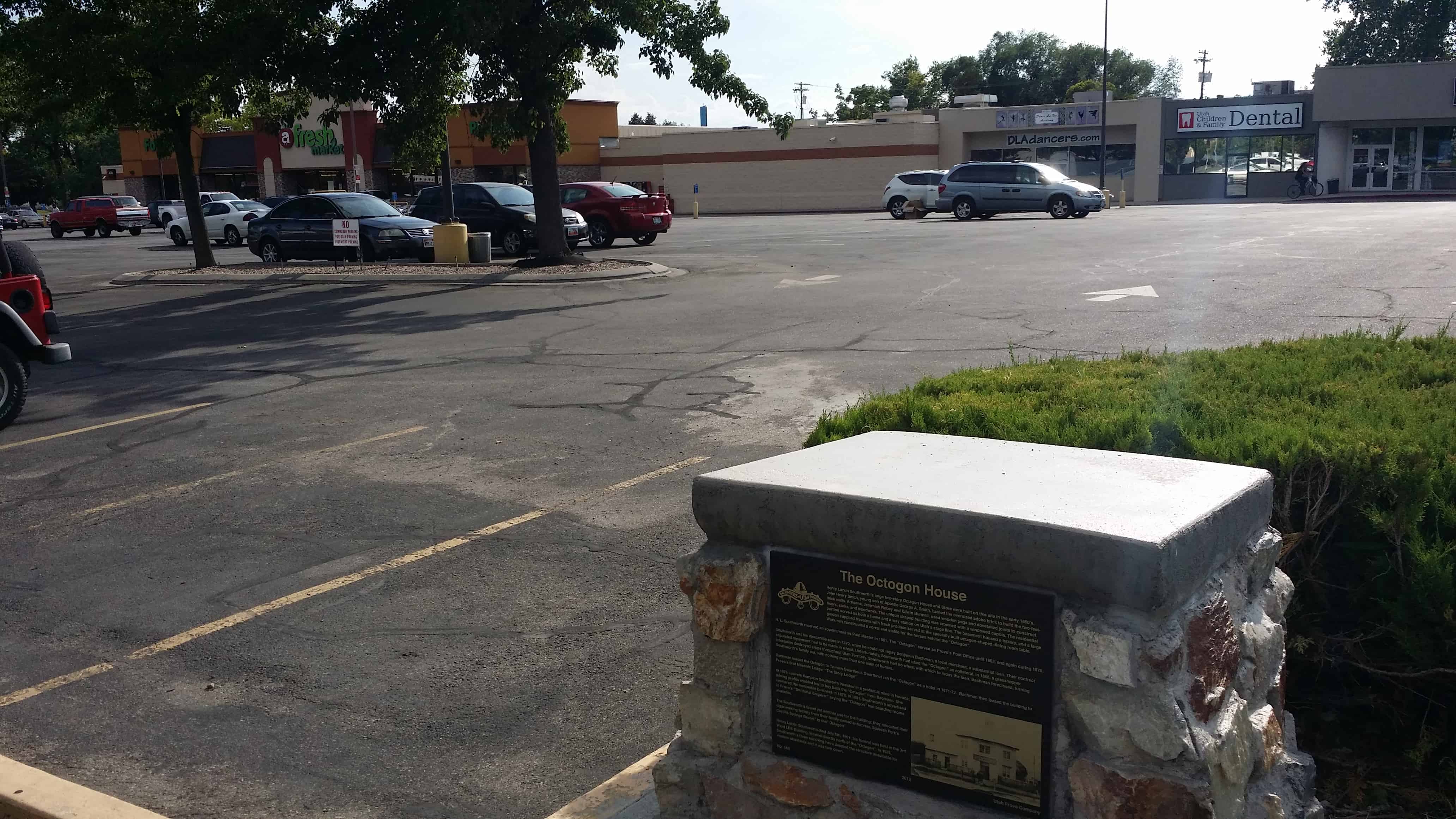
Henry Larkin Southworth’s large two-story Octagon House and Store were built on this site in the early 1850’s. John Henry Smith, young son of Apostle George A. Smith, hauled the oversized adobe brick to build the two-feet-thick walls. Artisans, Jeremiah Robey and Edwin Bunnell, used wooden pegs and dovetailed joined to construct floors, stairs, and woodwork. The unique shaped building was crowned with a windowed cupola. The residential portion served as both a home and a way station on Utah’s stage line. The basement housed a bakery, and a large garden supplied travelers with fresh produce served at the specially built octagon-shaped dining room table. Workmen constructed a corral and stable for the horses behind the “Octagon”.
H.L. Southworth received an appointment as Post Master in 1861. The “Octagon” served as Provo’s Post Office until 1863 and again during 1875.
Bachman leased the Octagon to Truman Swarthout. Swarthout ran the “Octagon” as a hotel in 1871-72. Bachman then leased the building to Provo’s first Masonic Lodge: “The Story Lodge”.
In 1876 Lucinda Kempton Southworth invested in a profitable mine in Nevada; mining profits enabled her to buy back the “Octagon” from Bachman. She reentered the mercantile business in 1878. In 1881, Southworth’s advertised in Provo‘s “Territorial Enquirer” saying the “Octagon” had boarding rooms available.
The Southworth’s found yet another use for the building; they relocated their cigar-making factory from their family-owned enterprise, Spanish Fork’s “Castilla Springs Resort” to the “Octagon”.
Henry Larkin Southworth died July 5th, 1901; his funeral was help in the 3rd Ward LDS Building, located directly north of the “Octagon”. In 1926, Southworth’s three surviving heirs deemed the structure unsuitable for modern standards and it was torn down.
This is Marker #568 of the DUP Markers.



19 Tuesday Aug 2014
Posted in Uncategorized
19 Tuesday Aug 2014
Posted in Uncategorized
19 Tuesday Aug 2014
Posted in Uncategorized

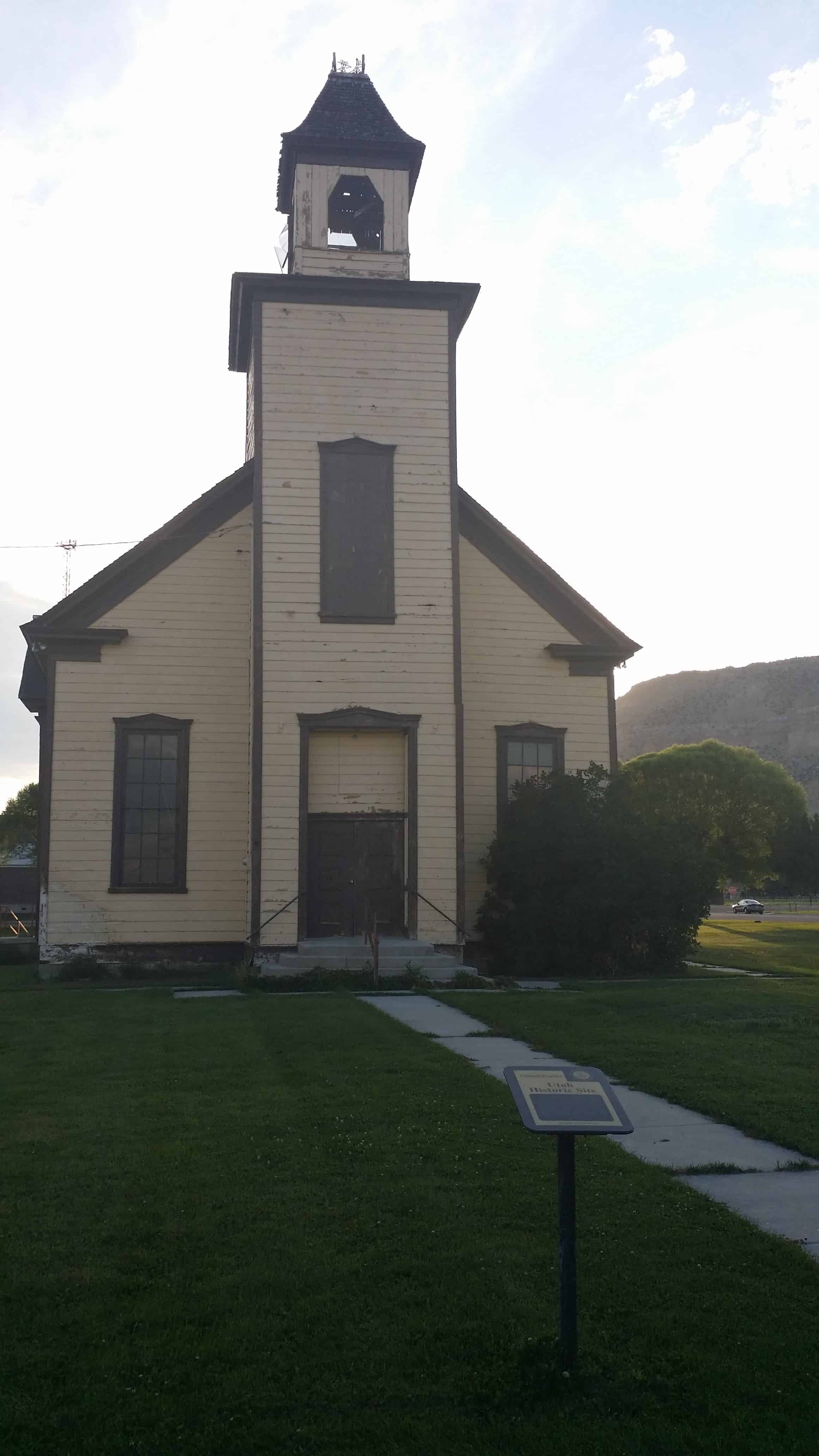
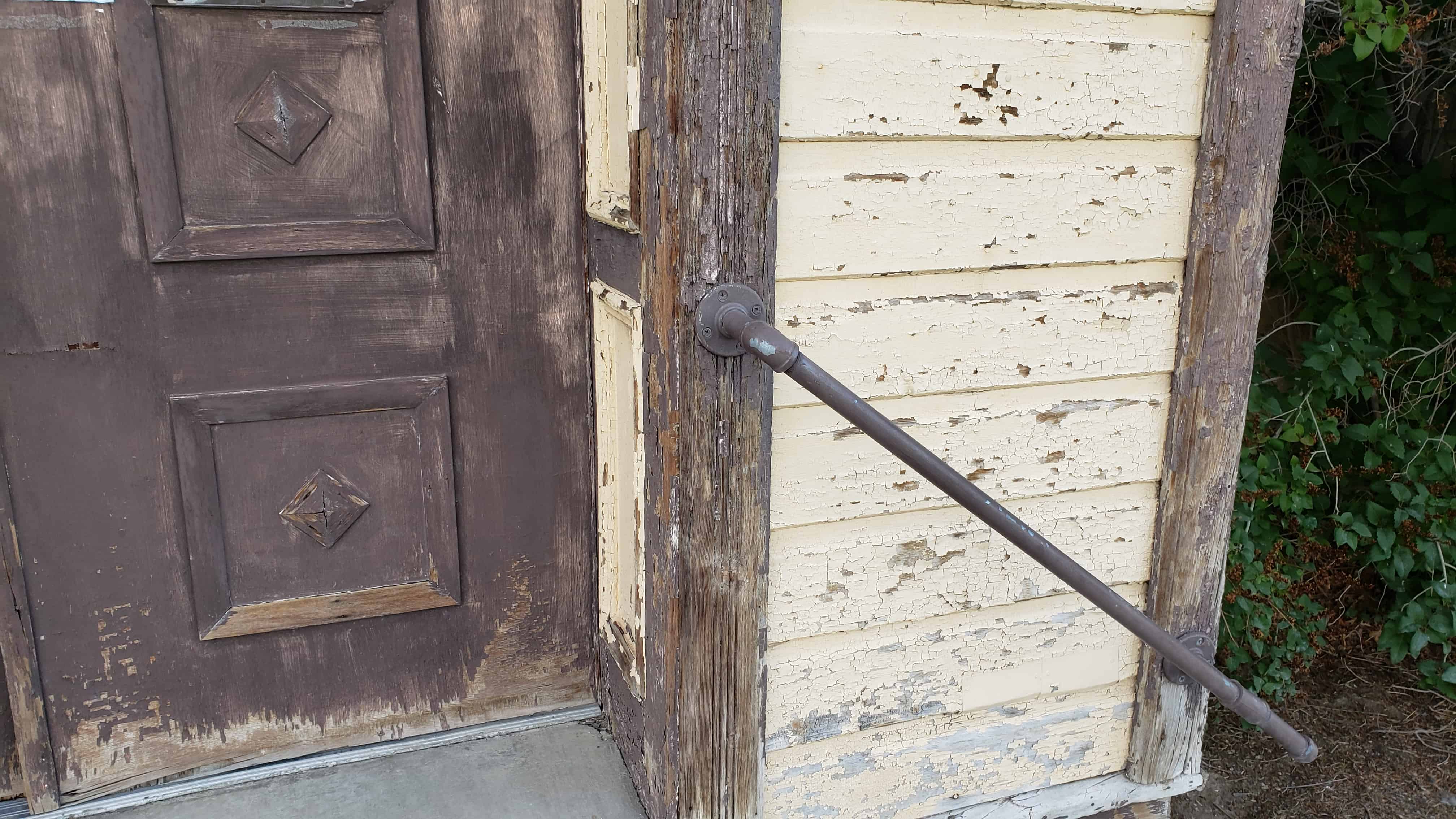
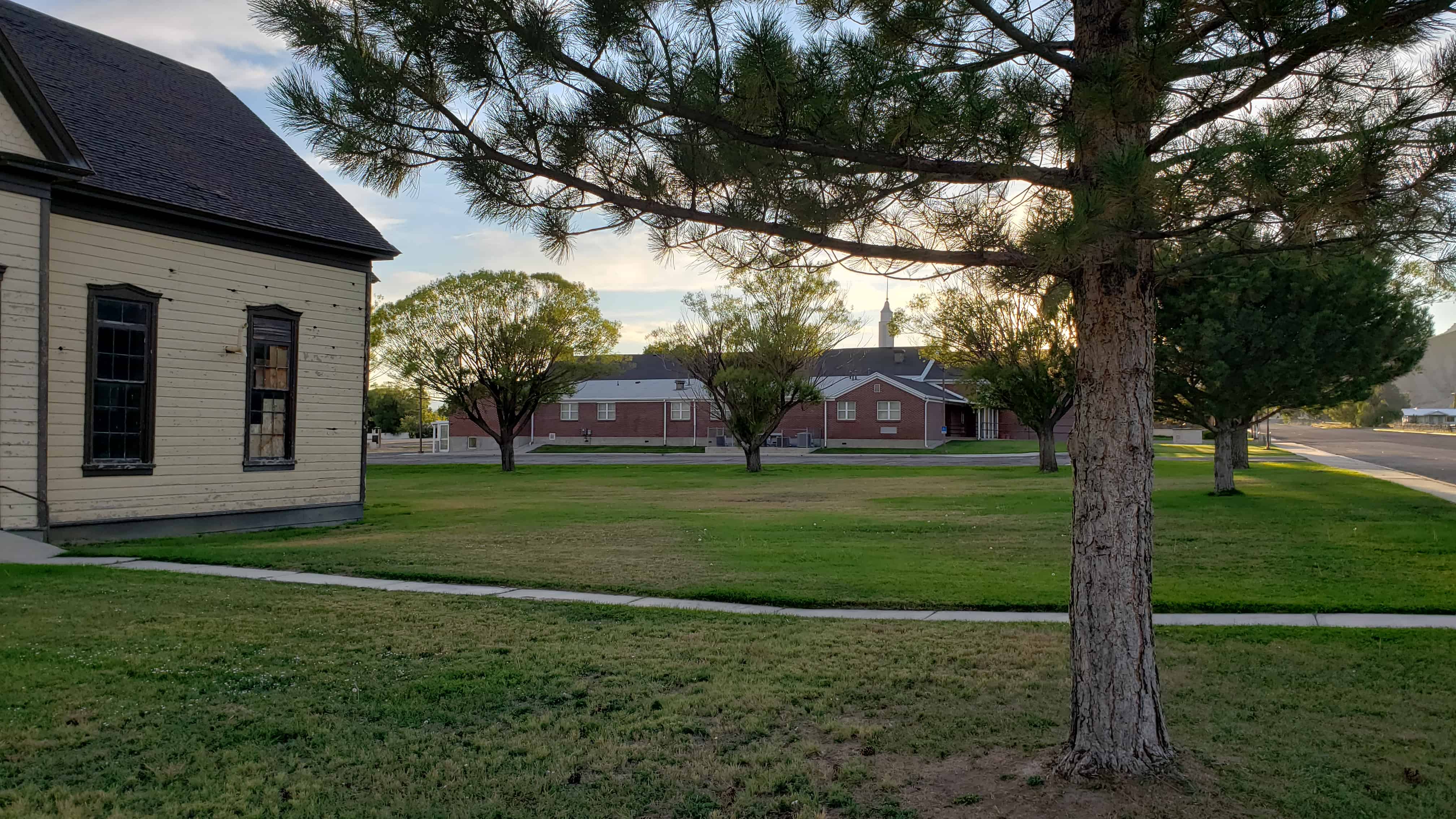
The Emery LDS Church, built 1898-1900, is the oldest remaining religious building in Emery County. The construction technique, a wood frame sheathed with clapboard and lined with adobe bricks, is distinctive and unusual for turn-of-century Mormon churches. The building’s Greek Revival style is reflected in the symmetrical principal façade, cornice returns, transoms, and pedimented window heads.
This church was constructed under the direction of Bishop Alonzo Brinkerhoff. Services were held in the chapel upon its completion in 1900; the dedication was July 17, 1902 by Apostle Rudger Clawson. The church served the town of Emery until 1956 when a multi-purpose chapel was dedicated. In 1967 the building was purchased by the city for use as a town meeting and recreation hall.
Related:
This chapel served the town of Emery until 1956 and is located at 85 North 100 East in Emery, Utah




15 Friday Aug 2014
Posted in Uncategorized
Tags
Castle Valley, DUP, Emery, Emery County, Ferron, historic, Historic Markers, utah
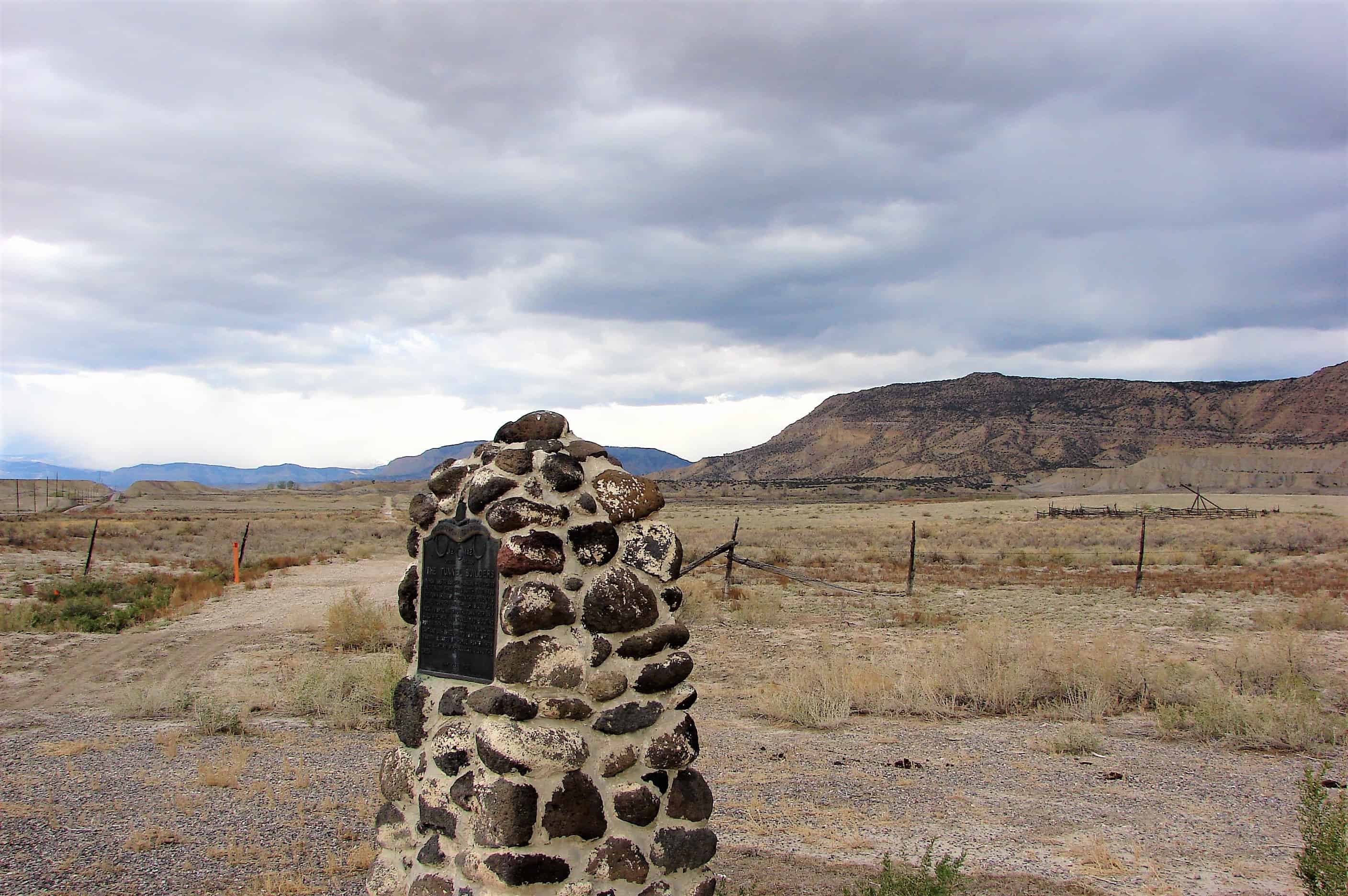
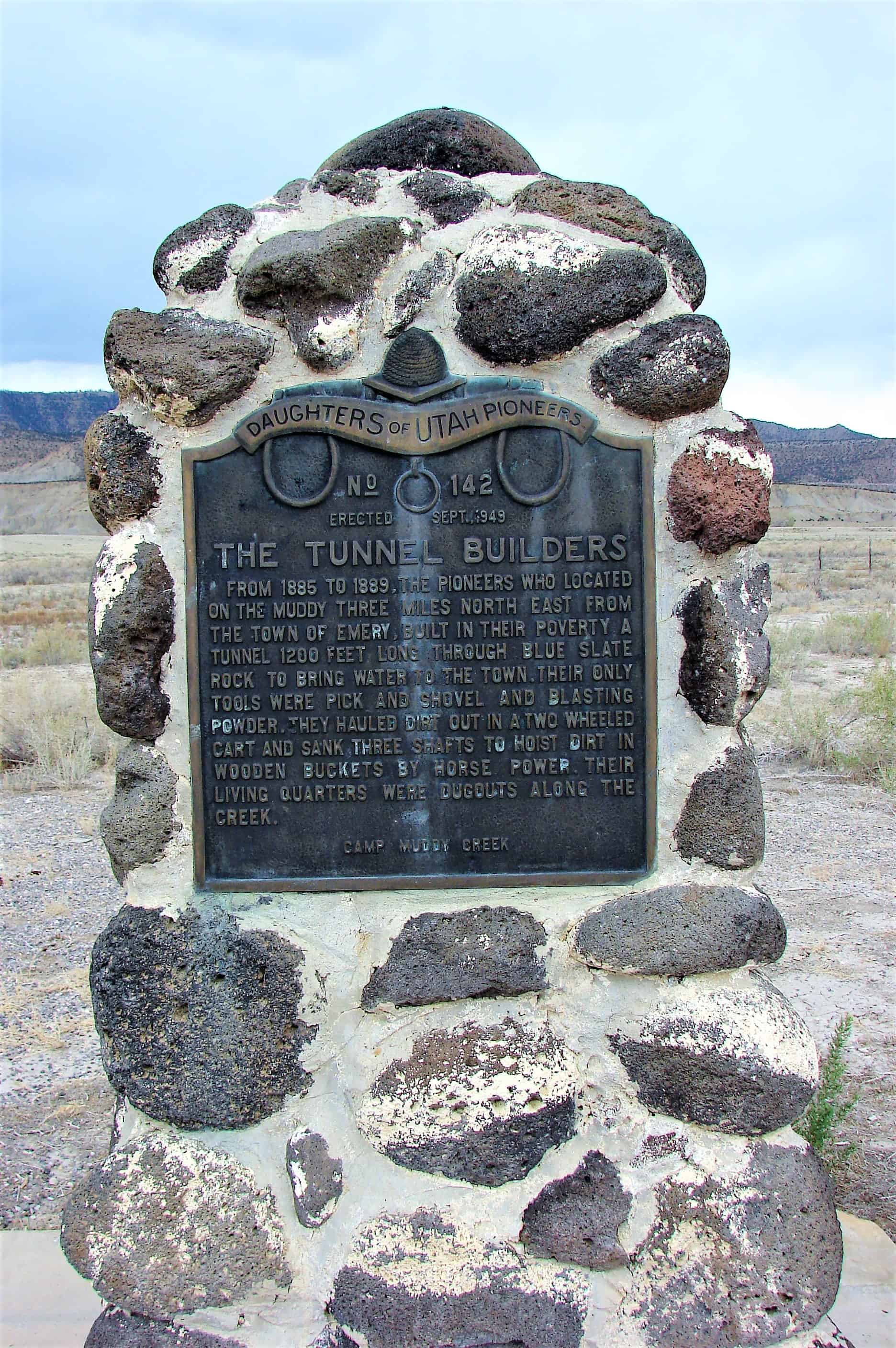
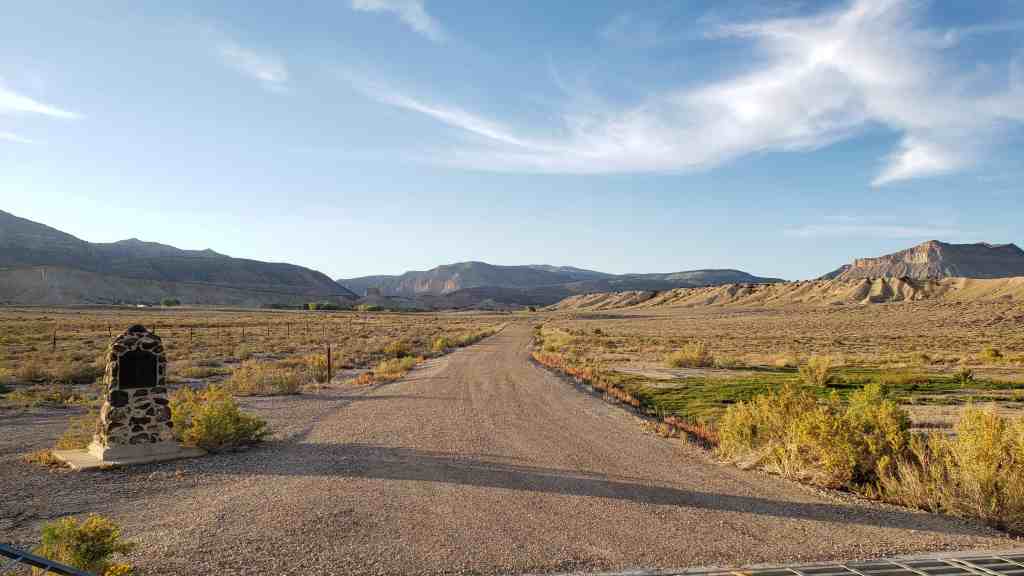
From 1885 to 1889, the pioneers who located on the Muddy three miles N.E. from the town of Emery built in their poverty, a tunnel 1200 feet long through blue slate rock to bring water to the town. Their only tools were pick and shovel and blasting powder. They hauled dirt out in a two wheeled cart and sank three shafts to hoist dirt in wooden buckets by horse power. Their living quarters were dugouts along the creek.
This is DUP Marker Number 142, see others here.


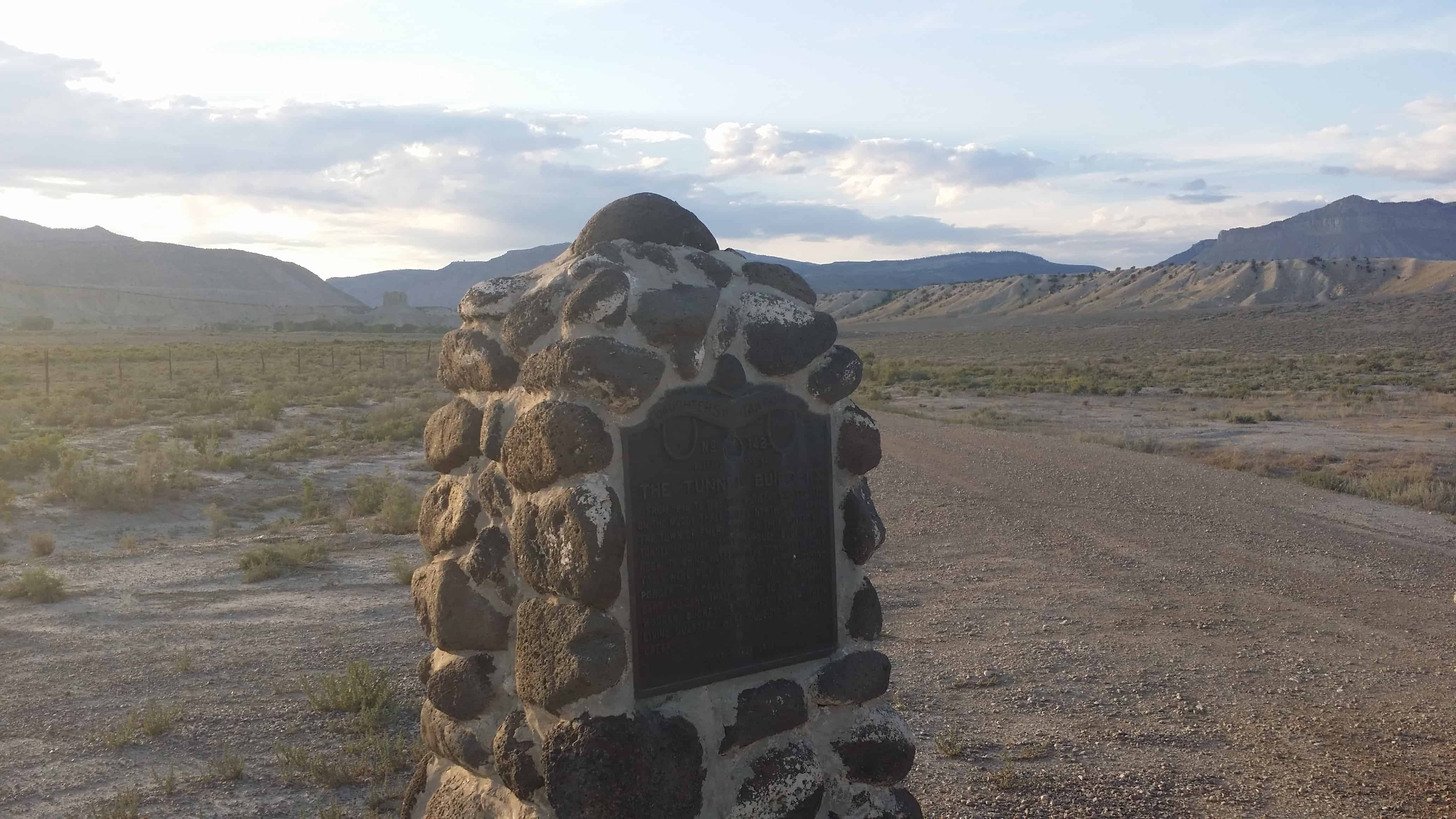
Revisit 2021:



15 Friday Aug 2014
Posted in Uncategorized
Tags

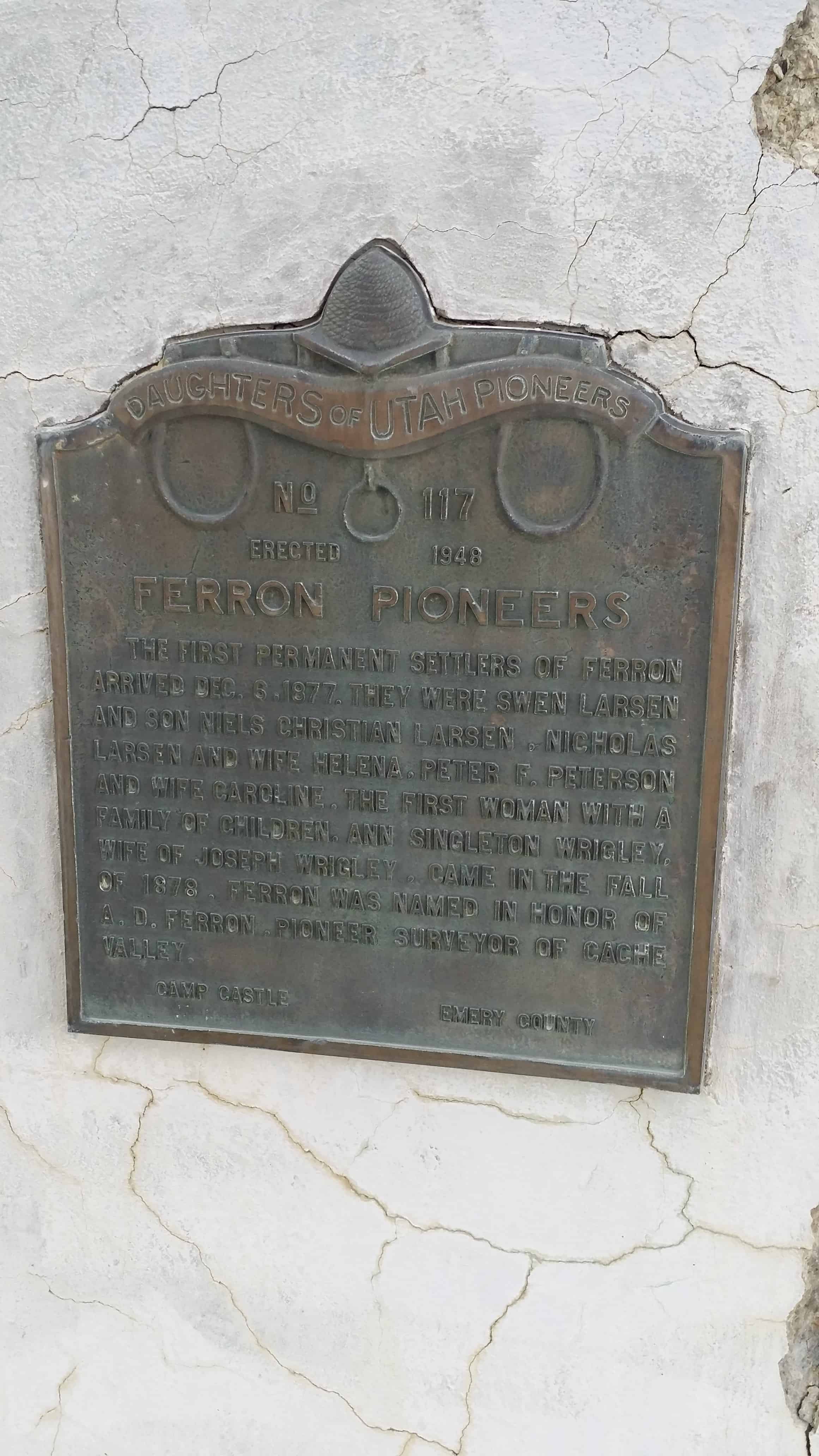
The first permanent settlers of Ferron arrived December 6, 1877. They were Swen Larsen and son, Niels Christian Larsen; Nicholas Larsen and wife Helena, Peter F. Peterson and wife, Caroline. The first woman with a family of children, Ann Singleton Wrigley, wife of Joseph Wrigley, came in the fall of 1878. Ferron was named in honor of A.D. Ferron, a pioneer surveyor of Cache Valley.
Located at 40 West 100 North in Ferron, Utah