• About JacobBarlow.com
  • Cemeteries in Utah
  • D.U.P. Markers
  • Doors
  • Exploring Utah Email List
  • Geocaching
  • Historic Marker Map
  • Links
  • Movie/TV Show Filming Locations
  • Oldest in Utah
  • Other Travels
  • Photos Then and Now
  • S.U.P. Markers
  • U.P.T.L.A. Markers
  • Utah Cities and Places.
  • Utah Homes for Sale
  • Utah Treasure Hunt

JacobBarlow.com

~ Exploring with Jacob Barlow

JacobBarlow.com

Tag Archives: Ferron

Five Generations of Huntsmans

30 Thursday Dec 2021

Posted by Jacob Barlow in Uncategorized

≈ Leave a comment

Tags

Emery County, Ferron, Historic Markers, utah

Five Generations of Huntsmans

Five generations of Huntsmans all lived on the land that you see.
Three homes were built and lives were spent, togetherness being the key.
George and Deby were first to settle, here close by the Molen Ditch.
Their children were added one at a time, making them very rich.
Cleon and Naone and Nila brought challenges, joys and the rest.
Living and learning the values set forth, always doing their best.

Parents of George and his sister, Mae, settled in a house next door.
Coming and living by grandkids insured life would not be a bore.
Their lives were all spent doing service for neighbors, church and the town.
If payment were had for all their deeds, there’d be many jewels for their crowns.
Cleon grew up and then married, bringing his Eva from Huntington.
She was a very hard worker; together they knew how to have fun.

Since grandparents, Hyrum and Emeline, lived their lives and passed on,
Cleon and Eva moved into their home when all the renters were gone.
At the CCC camp across the field, a boy named Paul took part.
He came visiting with others and made off with Naone’s heart.
For Nila, school ended and she moved on, up north to learn and grow
The next fifteen years worked and played and on weekends home she’d go.

Cleon’s three sons quickly joined them, but one, little Dennis, died soon.
Evan and Howard were good boys, often humming or whistling a tune.
Depression times were very difficult, working to make ends meet.
George gave some land to help his kids construct buildings on this street.
“Cleon’s Service Station” opened soon, pumping gas and making repairs.
Cleon was very good at this work, always doing more than his share.

And to Naone and Paul, her husband, also some land did George give.
A home they built for their fam’ly, just north on the hill they would live.
Cleon bought and sold farm equipment, a help to farmers in need.
This business was growing quickly, as cattle and pigs needed feed.
Evan married Leona; army service gave them time on their own.
Then back to Ferron and fam’ly to help share the load and not roam.

Soon Howard married Evelyn; college degrees they would obtain.
To Ferron a while, away for awhile and back to Ferron again.
Evan and his fam’ly lived in the home built to the north on the hill.
Then back to the west, across the street their family’s needs to fill.
Howard and fam’ly moved to the house build on the crest of the hill.
The corals on the south in use once again, a need they would fulfill.

Five generations of Huntsmans all lived on the land that you see.
Three homes were built and lives were spent, togetherness being the key.
Mothers and Fathers with standards high for children eager to learn,
Grandmas and Gramdpas glad to help out around almost every turn.
They say that it takes a large village, to raise a girl or boy,
But these honorable, valiant ancestors did it with great joy.

There were some maple syrup sandwiches given to fill the hole,
Or graham crackers and ‘cold cereal’ to fill everybody’s bowl.
There were paper scraps a plenty coming from “Cleon’s Service” trash.
No purchased toys or playthings could compare, NO! Not even cash.
As the youngest of these Huntsmans, we all want to give our thanks.
For the Heritage and mem’ries given, no higher could they rank.

This land that you see before you was lived on and thoroughly loved.
By the Huntsman Clan and their fam’lies; most now have gone on, above.
This land that you see before you was given to Ferron, their town,
To be their last act of service, giving up their beloved ground.
Enjoy your time as you visit here, the land that the Huntsmans did love.
Knowing they want you to do so, it’s a gift as they look from above.

Memories that you will make here will connect with this Huntsman land,
Over one hundred years of time and the five generations grand.

by EvaLynn Huntsman Holt, 2006


This historic marker was dedicated August 5, 2006 honoring the 100th Wedding Anniversary of George & Deby and the 75th Wedding Anniversary of Cleon and Eva and it is located at approximately 145 South State Street in Ferron, Utah.

Huntsmans living on this property ~ Service to Ferron & Emery County

  • Hyrum Ralsotn and Emeline (moved here late in life)

    Both were members of the Old Folks Group.

  • George Albert & Deborah Louisa Cox Huntsman (Married 1906)

    George was Water Master (several ditches, Secretary for Priesthood quorums & Ferron Canal & Reservoir Co., Ward Clerk for many years, Treasurer for Ferron Town, Meals and car parking space for the CCC boys, Janitor at the church.

    Deby was a member of the DUP, Town News reporter for 15 years, Secretary for the Red Cross (WWI), Old Folks Committee, Multiple church callings at the same time for 13 years, Secretary for the Relief Society for 21 years, President of the Relief Society, Ward Budget Secretary (required taking tickets at the picture shows 4 nights a week for 10 years)., Wallpapered in every existing home in town (during that period of time), Professional seamstress (including altering CCC boys pants to bell bottoms), Harmonica band member, Making & selling quilts (16 one year.)

  • Cleon and Eva Howard Huntsman (Married 1931)

    Cleon – Owner of Cleon’s Service garage and a Massey-Ferguson farm equipment dealership, Custom Combine Service, Sang in Ward Choir, Always the first to donate money for church and community causes.
    Eva – Held multiple church callings at the same time for almost entire life, including Primary President, Taught family history research & ward examiner for many years, Supervised the first Family History Center located in Ferron Stake Center for several years, Member of the Retired Seniors Volunteer Program.

  • Paul & Naone Huntsman Fletcher (Married 1935 moved to Layton, Utah 1959)

    Paul – Member of the CCC Camp F-11 which built the road to Ferron Reservoir, Contractor and homebuilder.
    Naone – Organist for every Church and community activity including the silent movies in the Greenhalgh Theater, Secretary for school, church and civic organizations, member of Harmonica band.

  • Nila Huntsman Mumm

    Commuted from SLC on weekends, holidays & as parents needed, 15 years. (Married 1957 and moved to Richland, Washington) Emery Co. Ration clerk (WWII), Multiple church callings at once (5 one year), Decorated Wedding cakes, Gold & Green Ball Queen (twice), Emery Co. Centennial chorus, Stage makeup for plays, attended 100% of all High School reunions (12), Assisted Deby with wallpapering and quilts, Member DUP.

  • Evan & Leona Spencer Huntsman (Married 1953)

    Evan – Worked with the farm machinery sales and repair with his father, Hauled Grade A and Grade B milk, Custom Hay hauling Service, Custom Combine Service, “Huntsman Feed & Supply” Company (hauled cattle feed etc.), Hauled Coal, Hauled Bricks, Janitors of the newly remolded Red Brick church on the hill, Varied Church positions.
    Leona – Janitor of Newly remodeled Church, Profession seamstress, Town News reporter, President of Primary, Secretary and teacher for ward and stake church organizations, Wrote and preformed comical readings at all ‘Annual Days’ and ‘Peach Days’ programs and many wedding receptions, etc.

  • Howard and Evelyn Peacock Huntsman (Married 1960)

    Howard – Taught Vocational Ag. at Emery High School, Managed ‘Cleon’s Service’, Sold raw mild from his dairy, Served in varied church callings.
    Evelyn – Emery County Home Extension Agent, Taught piano lessons over 30 years, Varied Church callings, Accompanying singers and singing in quartets, trios, and duets, Refereeing volleyball games and umpiring softball games, Member of DUP, Wrote “A Peach of a Place – A History of Ferron and Molen, Utah”.

This plaque is located in Ferron, Utah

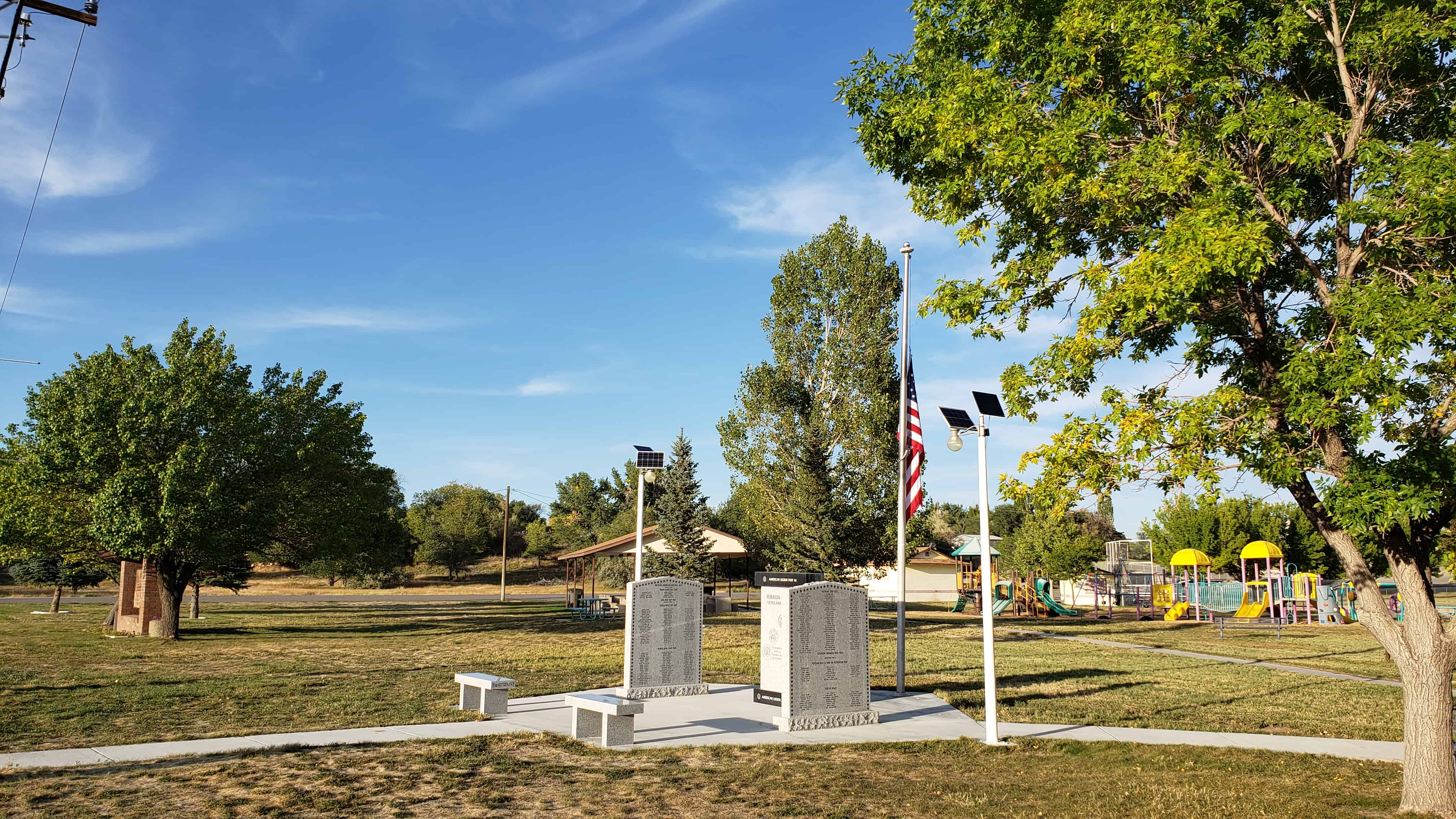
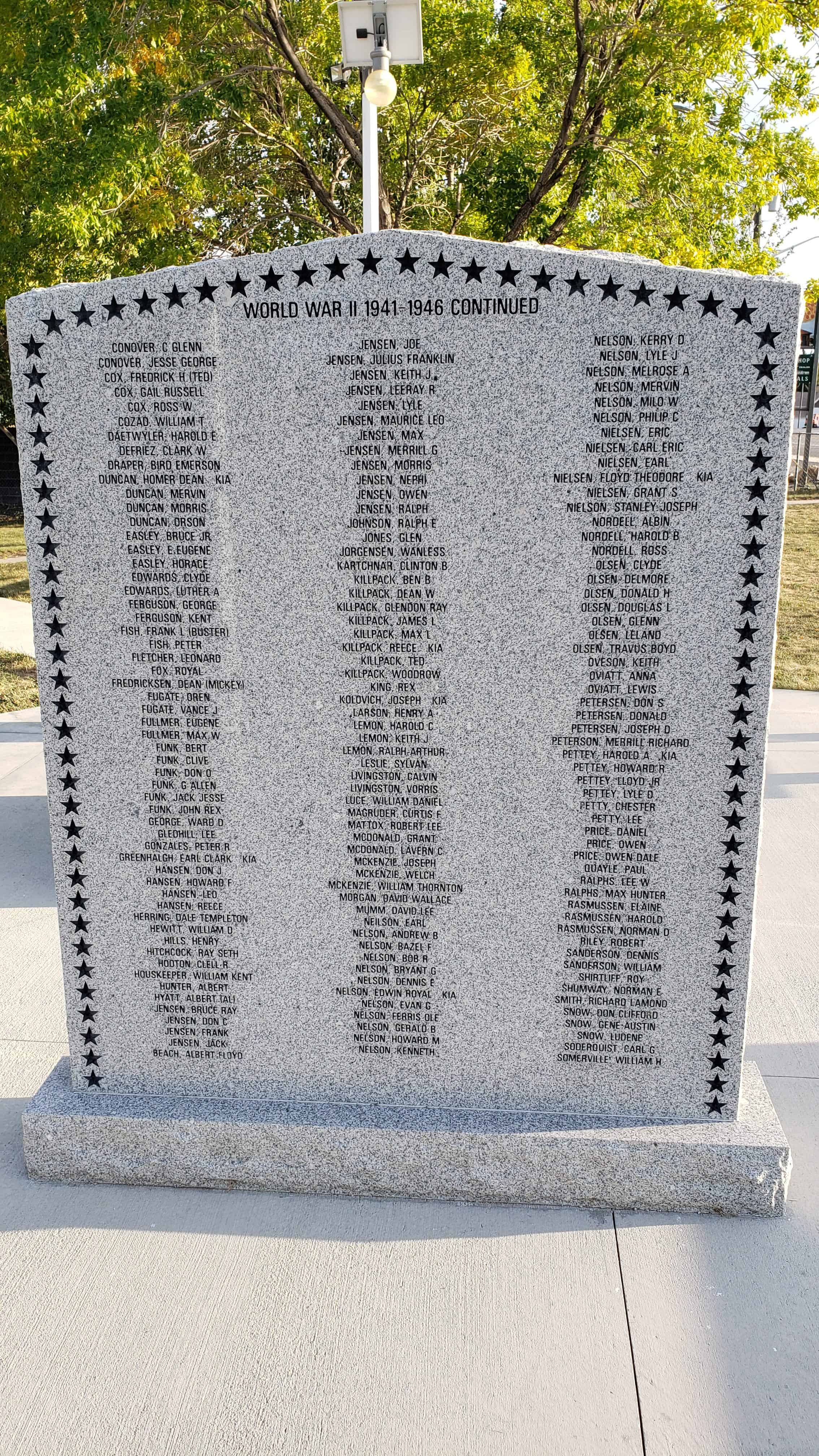
Ferron-Clawson Veterans Monument

17 Friday Dec 2021

Posted by Jacob Barlow in Uncategorized

≈ Leave a comment

Tags

Clawson, Emery County, Ferron, Memorials, utah, Veterans Memorials, War Memorials

Ferron-Clawson Veterans Monument

Located in Ferron City ParkĀ inĀ Ferron, Utah.

Ferron

17 Friday Dec 2021

Posted by Jacob Barlow in Uncategorized

≈ Leave a comment

Tags

Emery County, Ferron, Historic Markers, utah

Ferron – a historic marker in Ferron City Park in Ferron, Utah.

Ferron was incorporated on March 7, 1900, just 15 years after the first settlers came to Ferron Creek. Stores, saloons and other businesses wre being opened. A marshall was hired. The cemetery was laid out and roads maintained. Taxes were levied and Ferron joined the “modern” world.

Ferron City Park

17 Friday Dec 2021

Posted by Jacob Barlow in Uncategorized

≈ Leave a comment

Tags

Emery County, Ferron, Parks, utah

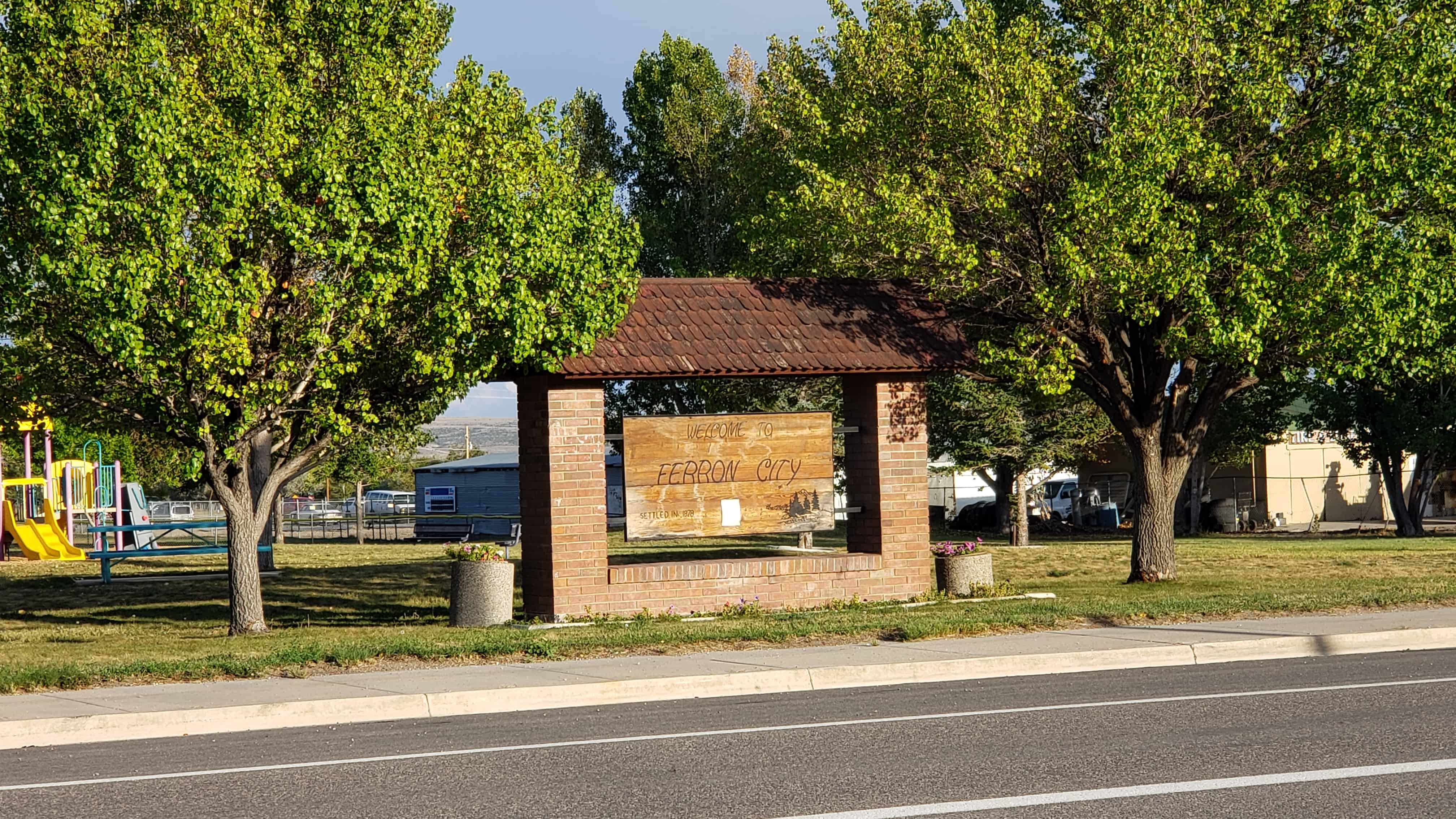
Ferron City Park in Ferron, Utah

Related:

  • Ferron (Historic Marker)
  • Ferron-Clawson Veterans Monument

Ferron Academy

25 Thursday Nov 2021

Posted by Jacob Barlow in Uncategorized

≈ 2 Comments

Tags

Emery County, Ferron, Historic Churches, NRHP, Presbyterian, Presbyterian Churches, Schools, utah, VFW Posts

Ferron Academy

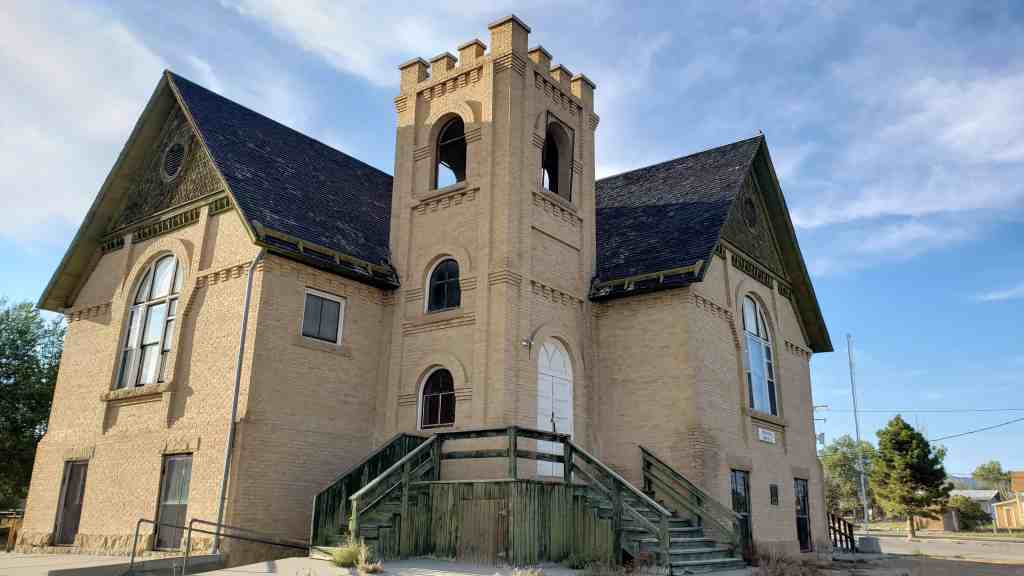
The Presbyterian Church entered Utah Territory and expanded rapidly between 1869 and 1883. Around 1911, they erected this building as the Ferron Wasatch Academy, one of forty such institutions in Utah. These private educational systems led to the establishment of higher education in Utah. It remained a church and school until 1942 when it was sold to the Ferron American Legion Post No. 42. It is in use today as a center for community activities.

Dedicated July 12, 1986 by Utah Outpost, Mount Charlie Chapter No. 1850, E Clampus Vitus.

Located at 165 North 300 West inĀ Ferron, Utah

Related:

  • NRHP #78002658

The Ferron Church and associated manse are representative of the missionary activity of the Presbyterians in predominantly Mormon regions of Utah. Since the primary emphasis of the Presbyterian missionary effort was their educational programs, the buildings are also representative of the important influence the non-Mormon church programs had upon the development of public education in the state. Although the architect of these buildings is unknown, the church is one of the best examples of Late Gothic Revival architecture in this portion of the state.

The Presbyterian denomination has traditionally placed heavy emphasis upon missionary activity. Presbyterian missionary work in Utah dates back to June 13, 1869, when Reverend Melanchton Hughs preached his first service in Corinne, Utah. The period from 1869 to 1883 is seen as a time of remarkable expansion for the Presbyterians in Utah.
On March 27, 1883, the Utah Presbytery reported “…33 stations with 41 buildings valued at $65,000. Sixty-six teachers were conducting schools with 1,789 enrolled There were about 350 members in the churches, with 13 ministers.”1 In 1905 Sherman H. Doyle wrote:

“Utah appeals with peculiar pathos to all interested in Christian missions. It is an ideal mission field. The people are there by the thousands. They are in ignorance, in superstition, and in irreligion. They are easily accessible in great numbers. No new tongue must be learned to preach the gospel to them. Their own best interests as well as those of our homes, of society, of our land, and of our church, demand their reclaim from the degrading superstitions of Mormonism. Can we resist such an appeal? Let us not even try; but rather in the spirit of the master let us be willing
to spend and be spent in winning the souls of these deluded thousands to his cross and his crown.”

The most effective and extensively utilized Presbyterian proselyting method was the establishment of church schools, especially for elementary age children. When the Presbyterians began their missionary work in Utah, public education was very limited. The schools established by the Presbyterians and other Protestant churches as well as by the Catholics were the only alternatives to LDS operated or oriented schools. By 1887, 50,000 children had been educated in Presbyterian schools.- Presbyterian elementary schools were eventually established in thirty-three Utah towns. Although Mount Pleasant Academy and Westminster College are all that remain in operation today of the once extensive Presbyterian educational system, it has been judged a success by the church primarily because it helped force the establishment of public schools in Utah.

The Perron mission is notable because it was one of the few church and school complexes built in Utah after the 1869-1883 expansion period and because it was built in an area where a public educational system was already established.

Local informants indicate that Presbyterian missionaries came to the Ferron area about the turn of the century and that church services and elementary school classes were held in a two story frame building which is no longer extant. On February 15, 1908, the First Presbyterian Church of Ferron purchased two lots of land for the construction of a church building and a manse (clergyman’s residence). On March 28, 1908, the Emery County Progress announced:

The excavation for the new (Presbyterian) building has been completed almost sufficient rock for a 12-foot wall is on the ground. The building will be 51 ft. x 60 ft., with two stories and will accommodate church, school and academy, as well as provide for reading room, gymnasium and other school features. It is hoped that the building will be ready for occupancy early in September.

But hopes that the church would be completed later that year were soon dashed. Shortage of funding dictated that the construction proceed at a slower pace than was originally planned. The primary builders were Tom Jones and Mac McKenzie, both Presbyterian missionaries sent to the Ferron area around the turn of the century. These men worked on a volunteer basis, constructing the building as funds permitted. In 1910, the land the church was being built upon was mortgaged to the Board of the Church Erection Fund for $1,000 to help finance the completion of the building.

By March of 1911, at least part of the building was ready for occupation. The church and school remained in operation until 1942, at which time the building was deeded over to the Ferron American Legion Post. During its 30 year life as a mission, the Presbyterian Church building provided not only religious services, but also elementary schooling for grades 1 through 8. If students wished to continue in the Presbyterian educational system, they could attend high school at Wasatch Academy at Mount Pleasant and college at Westminster College in Salt Lake City. Local informants recall that the church school had a good educational reputation and that during the early period, it provided the only free lending library in town.

The nearby manse (parson’s residence) or “Cottage” as it was locally known, was probably built in or shortly after 1908. The first floor served as a residence for the minister and his family, while the second floor housed the unmarried female missionary school teachers. At one time the cottage and the church were connected by a covered walkway. The cottage is presently a private residence owned by Joel Swapp.

Molen Homesite

16 Tuesday Nov 2021

Posted by Jacob Barlow in Uncategorized

≈ Leave a comment

Tags

Emery County, Ferron, Historic Markers, utah

The first brick home built in Ferron once sat approximately 100 feet northeast of this marker. Stone footings are all that remain of the former home of Mike and Eunice (Lowry) Molen, early settlers of Emery County. Three miles east on Molen Road is the small community of Molen, named for lands where Mike Molen grazed his cattle during Emery County’s early years. At one time, the town of Molen boasted a school, community center, and church. Molen reached its apex of 164 residents in 1900. Today only a few residents and a tidy cemetery, one mile to the east, remain.

Michael Molen and his wife Eunice Lowry

Eunice Lowry was born April 16, 1860, to John Lowry Jr. and Sarah Jane (Brown) Lowry of Manti, Utah. Eunice married Mike Molen in 1879. Ferron remained the family home until a few years after the tragic death of their 18-month-old son, Simpson Hazelton, in 1887. He drowned in the Molen ditch just south of this marker. Eunice went into a deep depression for several months. After recovering, Mike moved her and their 8 remaining children to Mapleton, Utah, and later to Idaho and Montana. Mike and Eunice are buried in Great Falls, Montana.

Michael Webster Molen was born January 15, 1842, in Bureau County, Illinois, to Jesse Molen and Laurany Huffaker. After converting to The Church of Jesus Christ of Latter-day Saints (Mormons), the large Molen family gathered with other church members at Nauvoo, Illinois. In 1846, anti-Mormons forced some 15,000 Mormons, including the Molens, from Nauvoo. After crossing Iowa, the Molens migrated west in 1847, reaching Utah with the Jedediah M. Grant wagon train company. Both parents died within two years of Mike’s 12th birthday.

While growing to manhood, Mike worked at a variety of frontier jobs, including work as a chore boy at Porter Rockwell’s stage station in Lehi, Utah. After working with cattle for several years, Mike developed a herd of his own in Sevier County. Around 1875, range land became scarce. Mike was among the many early settlers who came to graze his cattle on the vast range lands of Emery County. In Emery County, Mike served as a Bishop’s counselor, Justice of the Peace, and County Commissioner. He operated the first dry goods store in Ferron. In 1892 Mike disposed of his 3,300 head of cattle.

This historic marker was erected August 2, 2002 by The Molen Family Organization and it is located at approximately 135 South State Street in Ferron, Utah.

Samuel Singleton House

10 Wednesday Nov 2021

Posted by Jacob Barlow in Uncategorized

≈ 1 Comment

Tags

Castle Valley, Eastlake Cottage, Emery County, Ferron, Frame Eastlake Cottage, Historic Homes, NRHP, utah

The Samuel Singleton House is significant as one of the best preserved examples of a frame Eastlake Cottage in Southeastern Utah, a late-developing area of the state where few architecturally elaborate structures were built. Examples of full-blown Eastlake style occurred infrequently in Utah, which was still relatively isolated at the height of the style’s national popularity. Eastlake ornament on simpler cottages, like Samuel Singleton’s, was often removed later for want of maintenance. The Singleton house is also significant for its association with one of the area’s earliest and most prominent settlers. The house, constructed in 1896, symbolizes the transition from the Castle Valley frontier of the late 1870’s and 1880’s to a community society by 1900. Samuel Singleton, who arrived in Castle Valley in the 1870’s, played an important role in this transition which saw the evolution of housing from dugouts and log cabins, to more substantial brick and wood frame homes. The Samuel Singleton House, constructed in 1896 for one of the area’s most prominent livestockmen, merchants and businessmen, symbolizes the changes that occurred during the twenty-year period that Castle Valley and Ferron evolved from a livestock frontier to a permanent community.

Located at 320 South State Street in Ferron, Utah

Related:

  • NRHP #79002494

Southeastern Utah including the communities of Bluff, Moab and the Castle Valley settlements of Huntington, Castle Dale, Orangeville, and Ferron was the last large area of Utah to be settled by Mormons. The large area, located on the Colorado Plateau rather than the Great Basin, was separated from the earlier Mormon towns of Sanpete, Iron, and Washington Counties by the Wasatch Plateau. The miles of rugged canyons and deserts offered little promise of settlement and only hard work for the livestockmen who hoped to feed their animals on its land.

Nevertheless, by the mid 1870’s the need for new rangeland, primarily by livestockmen from Sanpete and Utah valleys, brought a small, but important number of herders and cattlemen into Castle Valley, many of whom stayed to make it their home. These herders were, for the most part, sons of first generation Mormons. They had grown up on the Mormon frontier and while there was no question of their loyalty to the Mormon Church, the frontier experience in Utah made their generation distinctly different from that of their fathers – most of whom had grown up in the East or England and Scandinavia. As young men, many of these second generation Mormons, spent many weeks in the wilderness herding cattle and sheep. Not visiting a community of church for long periods, they let their hair grow while their language and mannerisms took on the color and roughness of the cattlemen’s frontier.

This was the world of Samuel Singleton, born November 9, 1859, in American Fork, Utah, to John Singleton and Hannah Binns. John Singleton died in 1865 and Samuel Singleton was required at an early age to assume the duties of helping to support his family. As a consequence, Samuel received little formal schooling, but instead, as soon as he was old enough, began to work for various cattle and sheep men in the American Fork area. At the age of 14, he accepted a job with Billy Grant, a sheepman in the Salina Canyon area. He was offered $25 per month as a cook. He worked for Grant only a short time then took a job with Tom Simpers, a cattleman in the area. Saving most of his $25 a month wage, in a little over a year Samuel earned $300 which he gave to his mother to study obstetrics and children’s diseases under Dr. Pratt. According to family accounts, “This profession made her an independent individual and she became one of prominent women of American Fork”.

After providing his mother the $300, Samuel Singleton continued working with cattlemen in Castle Valley, but began taking his wages in cattle in order to build up his own herd. During this time, he married Clara Bill Lowey, January 17, 1884. They had first met in 1879 when Clara came from Manti to stay with her half-sister Eunice Molen, wife of Mike Molen, a Castle Valley cattleman.

Samuel Singleton’s success in the livestock business became the springboard to other local business ventures. Following the custom in other Mormon communities, church leaders in Ferron decided to open a cooperative store. The Ferron bishopric asked Samuel Singleton to organize the cooperative and travel to Salt Lake City to purchase $250
worth of goods for the store. The $250 was not sufficient to outfit the store and Singleton invested $1600 of his livestock earnings. The cooperative store was successful and Singleton continued as manager for several years until he purchased stock from other stockholders and became the owner of the store.

A roller mill was organized as a cooperative in 1897. Samuel Singleton was one of the principle stockholders of this establishment. A creamery was also needed in the area so he organized another stock company in about 1905 for the establishment of a creamery. In order to make this a more successful enterprise, he and another stockholder, William Killpack, went to Iowa and purchased a carload of Jersey cows which was sold to the dairymen of Ferron.

The Emery County bank was organized in 1906. Sam, an ardent supporter of the bank, was a stockholder and became vice-president; he later became the president and held this position until his death.

It was after he became a merchant the the Singleton House was constructed in 1896. The work was done by local craftsmen, Tom Jones and Will McKenzie were carpenters and Swain Ross the painter. The interior was lined with adobes from an older house in Ferron. Yellow was the original color and the house has not been painted any other color.

Samuel Singleton was also active in local politics running as Perron’s first Mayor after its incorporation in 1900 and as an Emery County Commissioner. He died July 5, 1929. The house remained in the possession of his widow, Clara Bell Singleton until May 1, 1955 when she sold it to her grandson and present owner, Samuel M. Singleton.

Samuel M. Singleton was born in Ferron and is currently (1979) Principal of the San Rafael Junior High School in Ferron. He has been involved in education in Emery County since 1948 teaching at South Emery High School in 1948 then 1952 to 1963 and at Emery County High School from 1963 to 1973 when he became Principal at San Rafael Junior High School. Mr. Singleton is active in the Singleton family organization and was the principal editor of A History of John Singleton of American Fork, Utah, and His Ancestors and Descendants. Mr. Singleton is currently committed to the preservation of the house and its retention by the Singleton family.

The Singleton House is a wood frame pattern book cottage. It is built following an H-plan, the least common of the “alphabet” play types common in early Utah. The front faƧade is composed of two projecting gabled bays, one hexagonal and one rectangular, connected by a sloped-roof porch. Although the porch balusters are gone, the turned porch columns and full-width spindle band remain. The gables over the bays are covered two-thirds in alternating plain and imbricate shingles, with the upper third in wood siding painted in a brick-like pattern. All of the front and side windows are one-over-one sash, with the upper sash done in round rich glass set in rectangular frames and Eastlake surrounds. Outside doors open from every room but one. The interior includes a cherrywood fireplace. The interior ceilings have been lowered from eleven to eight and a half feet.

Molen, Utah

30 Sunday Dec 2018

Posted by Jacob Barlow in Uncategorized

≈ 1 Comment

Tags

Emery County, Ferron, Molen, utah

ARP09 030

Molen, Utah

Molen became an outgrowth of Ferron in 1877 after Mike (Mitchell) Molen brought his cattle and horses into Castle Valley and settled on Ferron Creek. An earlier name for the settlement was Lower Ferron.

ARP09 029

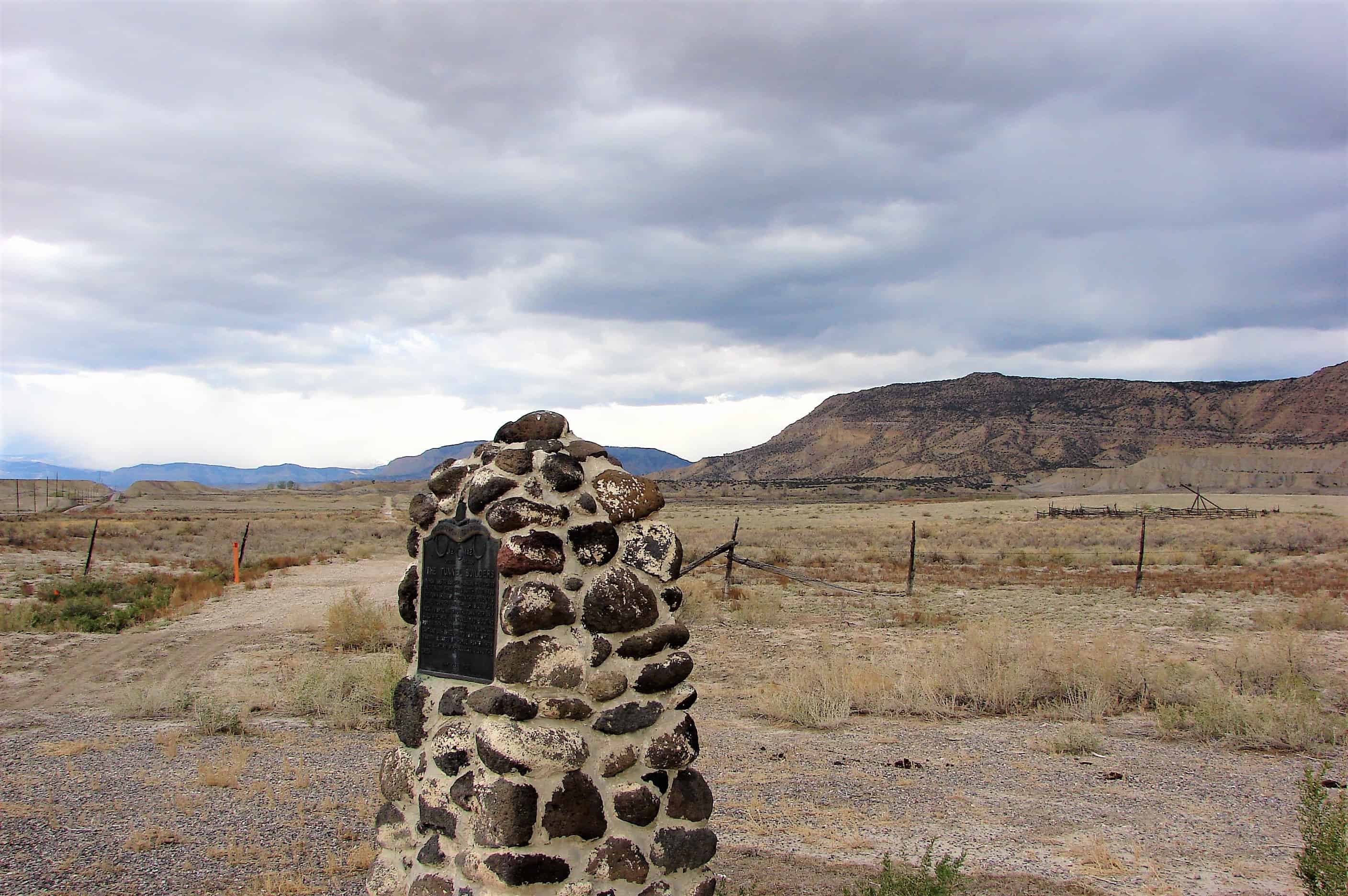
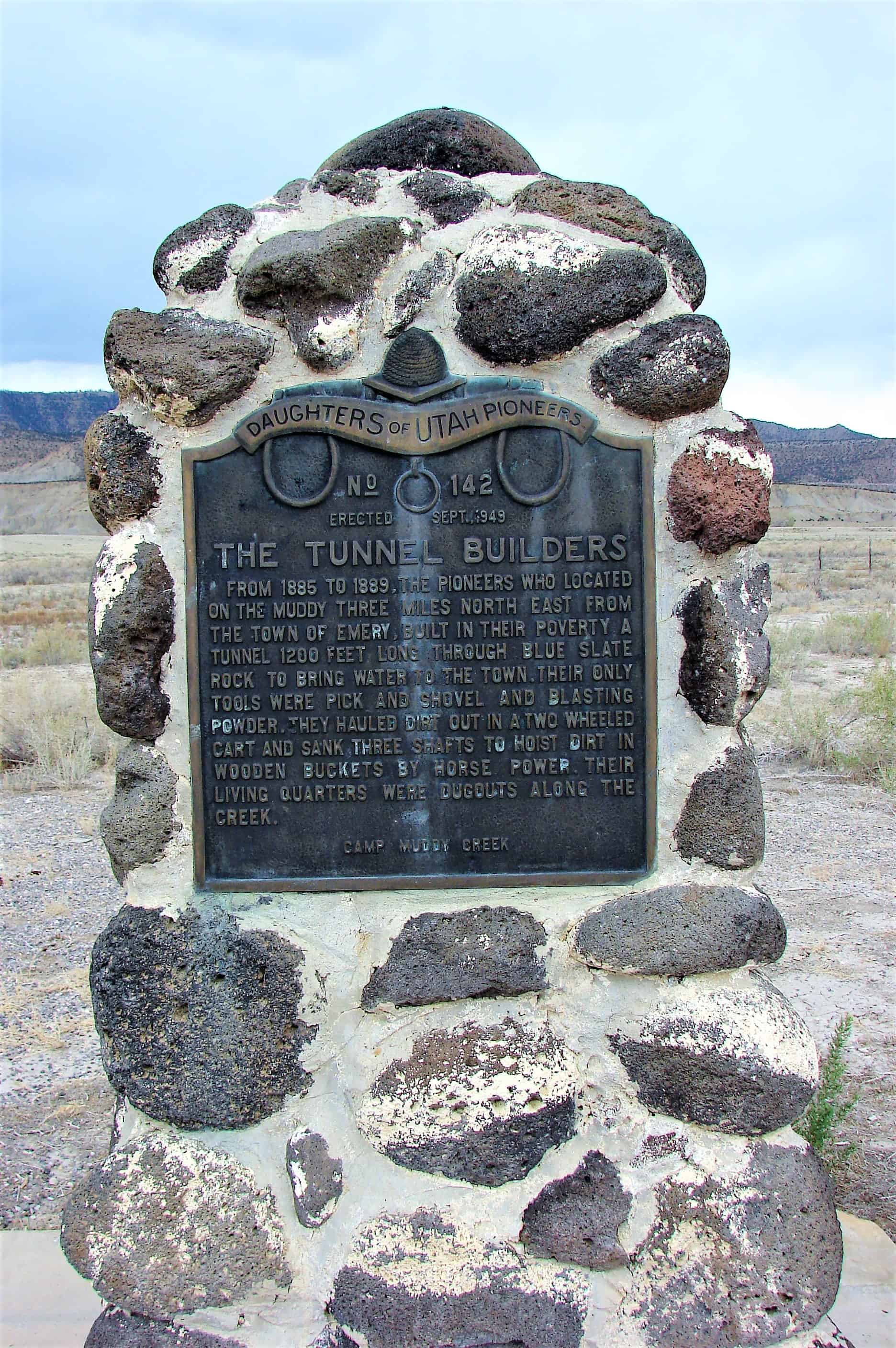
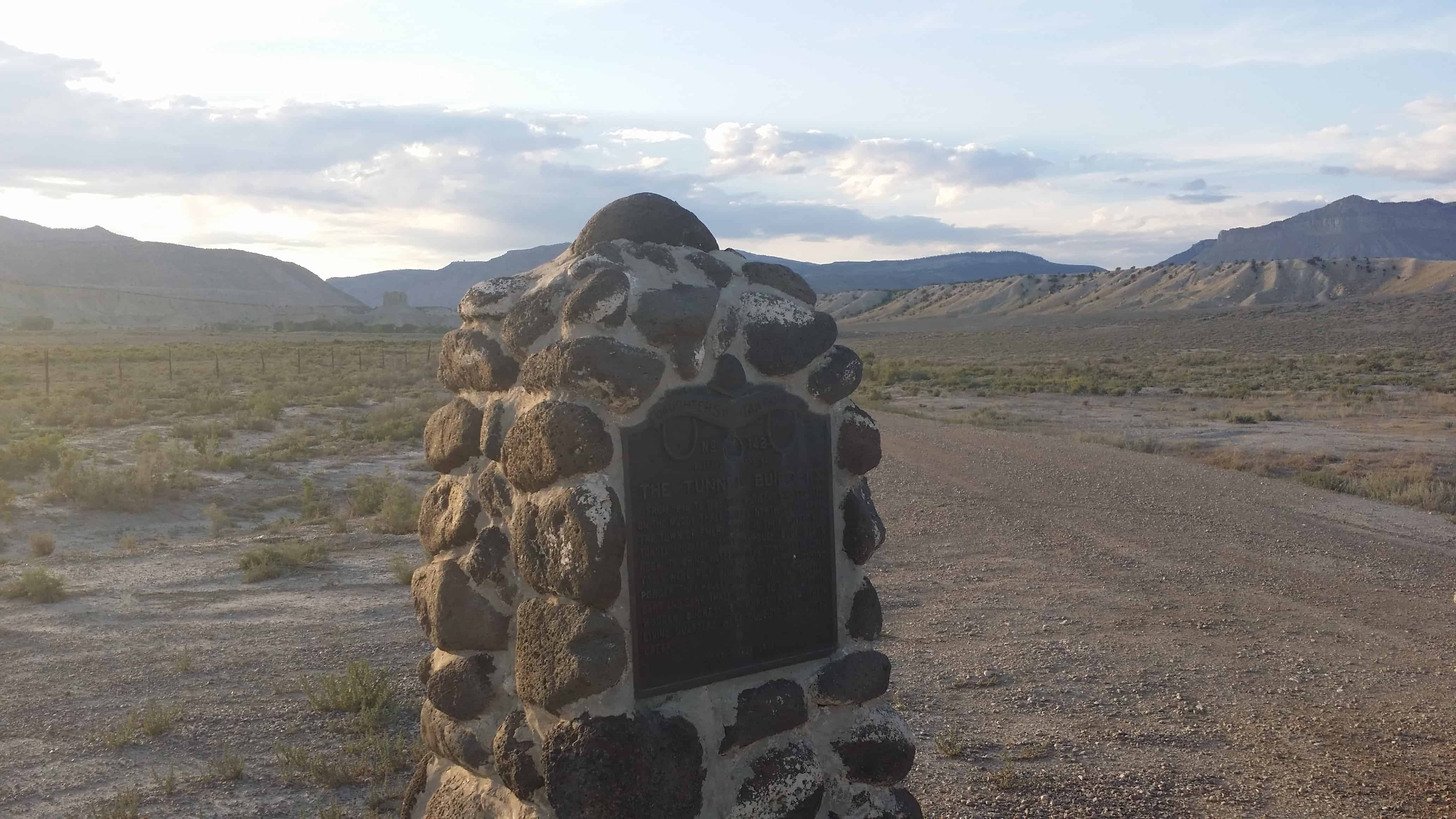
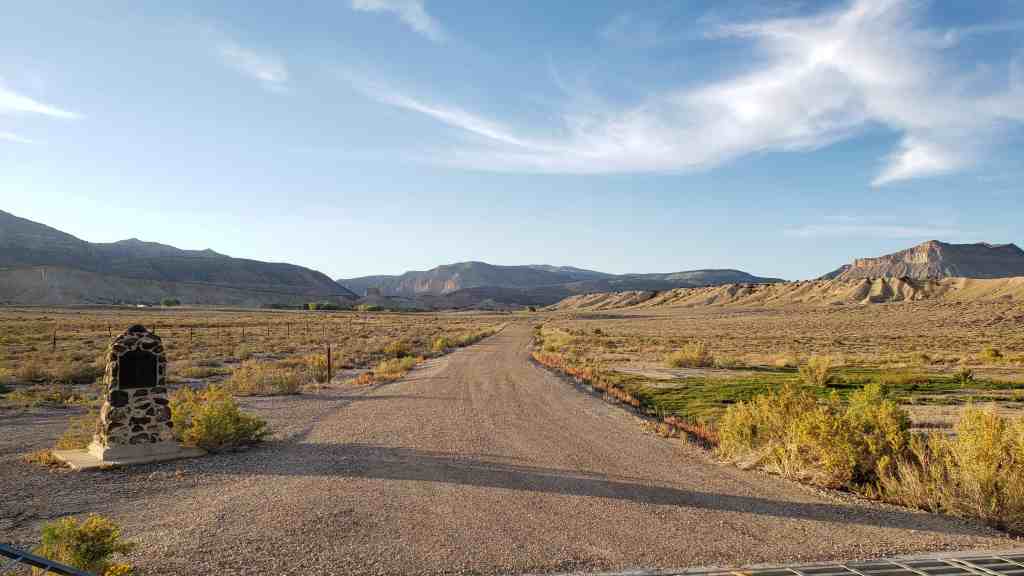
The Tunnel Builders

15 Friday Aug 2014

Posted by Jacob Barlow in Uncategorized

≈ Leave a comment

Tags

Castle Valley, DUP, Emery, Emery County, Ferron, historic, Historic Markers, utah

  • ARP09 032

From 1885 to 1889, the pioneers who located on the Muddy three miles N.E. from the town of Emery built in their poverty, a tunnel 1200 feet long through blue slate rock to bring water to the town. Their only tools were pick and shovel and blasting powder. They hauled dirt out in a two wheeled cart and sank three shafts to hoist dirt in wooden buckets by horse power. Their living quarters were dugouts along the creek.

This is DUP Marker Number 142, see others here.

  • ARP09 031
  • DUP # 142
    DUP # 142
  • 20140810_193540
  • 20140810_193549

Revisit 2021:

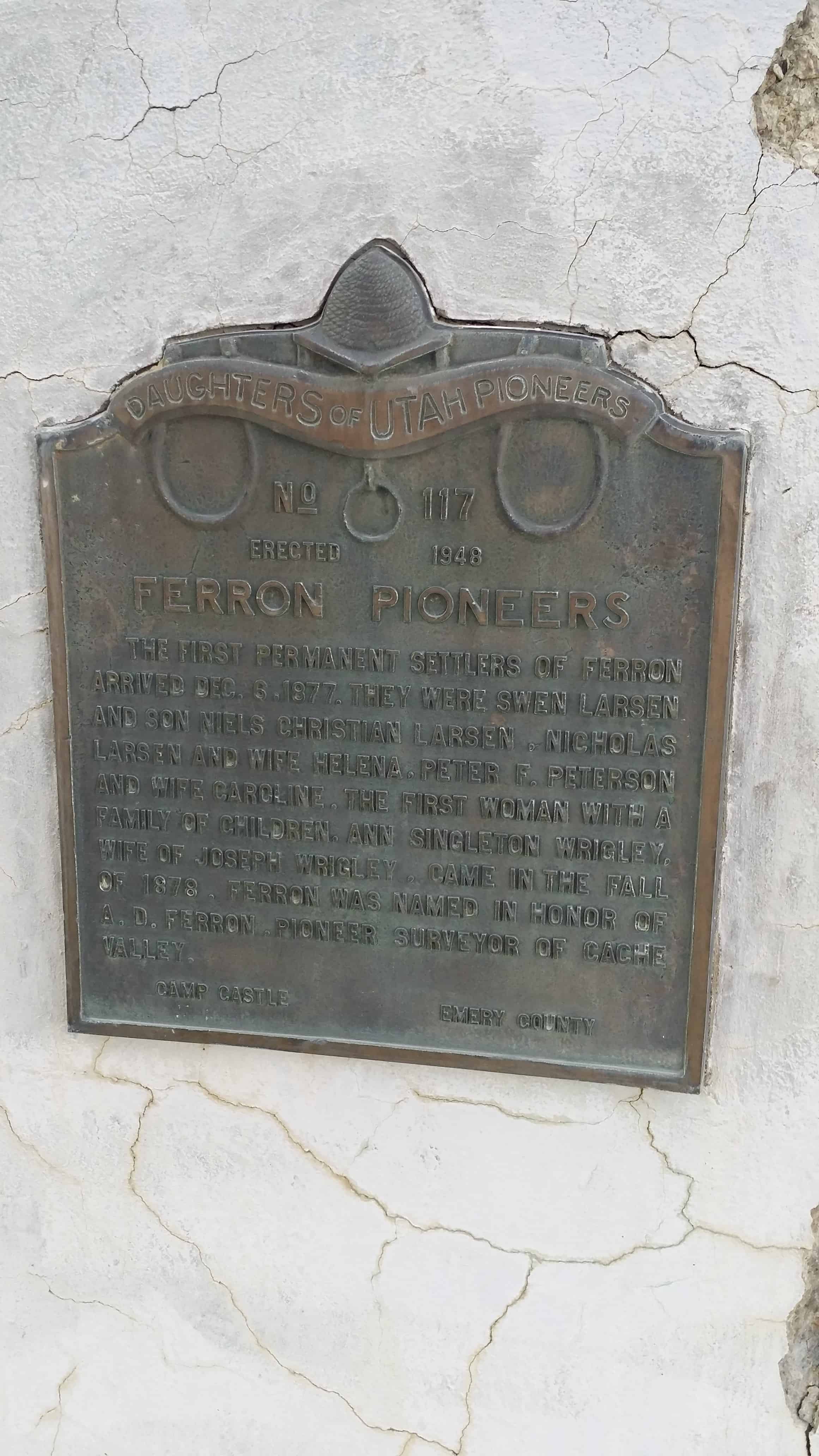
Ferron Pioneers

15 Friday Aug 2014

Posted by Jacob Barlow in Uncategorized

≈ Leave a comment

Tags

Castle Valley, DUP, Emery County, Ferron, historic, utah

The first permanent settlers of Ferron arrived December 6, 1877. They were Swen Larsen and son, Niels Christian Larsen; Nicholas Larsen and wife Helena, Peter F. Peterson and wife, Caroline. The first woman with a family of children, Ann Singleton Wrigley, wife of Joseph Wrigley, came in the fall of 1878. Ferron was named in honor of A.D. Ferron, a pioneer surveyor of Cache Valley.

Located at 40 West 100 North inĀ Ferron, Utah
  • DUP # 117
    DUP # 117
  • 20140810_190431
  • 20140810_190441
← Older posts

Follow Jacob

Follow Jacob

Blog Stats

  • 2,061,231 hits

Social and Other Links

BarlowLinks.com

Recent Posts

  • Navajo Shadehouse Museum
  • Impossible Canyons
  • The Old Hurricane Bell
  • Goulds Shearing Corral
  • Morgan Union Pacific Depot

Archives

Loading Comments...