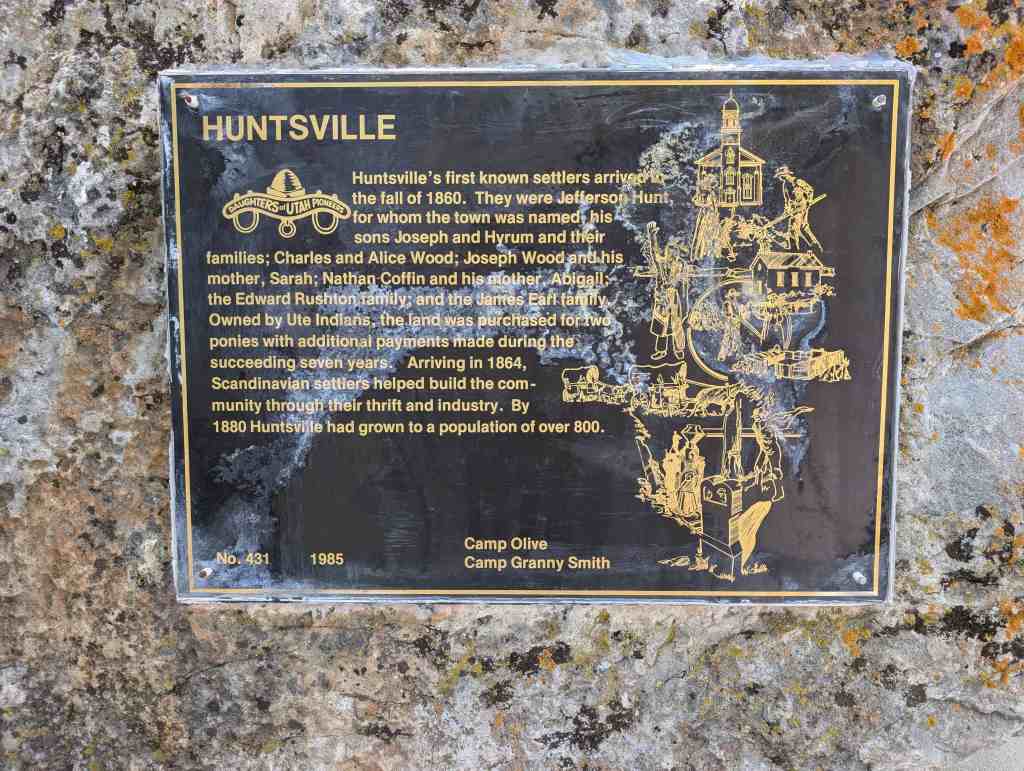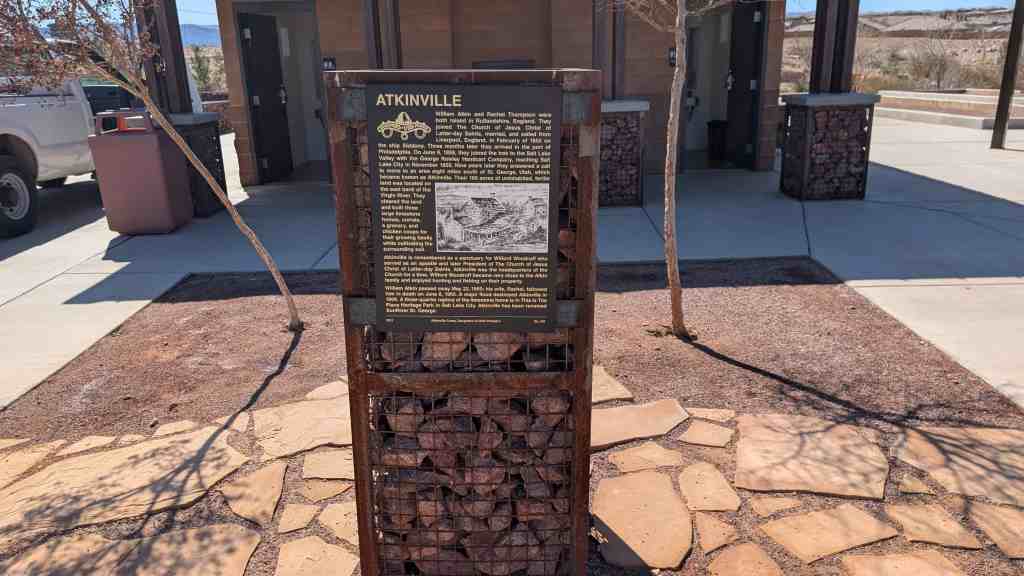
Huntsville’s first known settlers arrived the fall of 1860. They were Jefferson Hunt, for whom the town was named his sons Joseph and Hyrum and their families; Charles and Alice Wood; Joseph Wood and his mother, Sarah; Nathan Coffin and his mother, Abigail; the Edward Rushton family; and the James Earl family, Owned by Ute Indians, the land was purchased for two ponies with additional payments made during the succeeding seven years. Arriving in 1864, Scandinavian settlers helped build the community through their thrift and industry. By 1880 Huntsville had grown to a population of over 800.
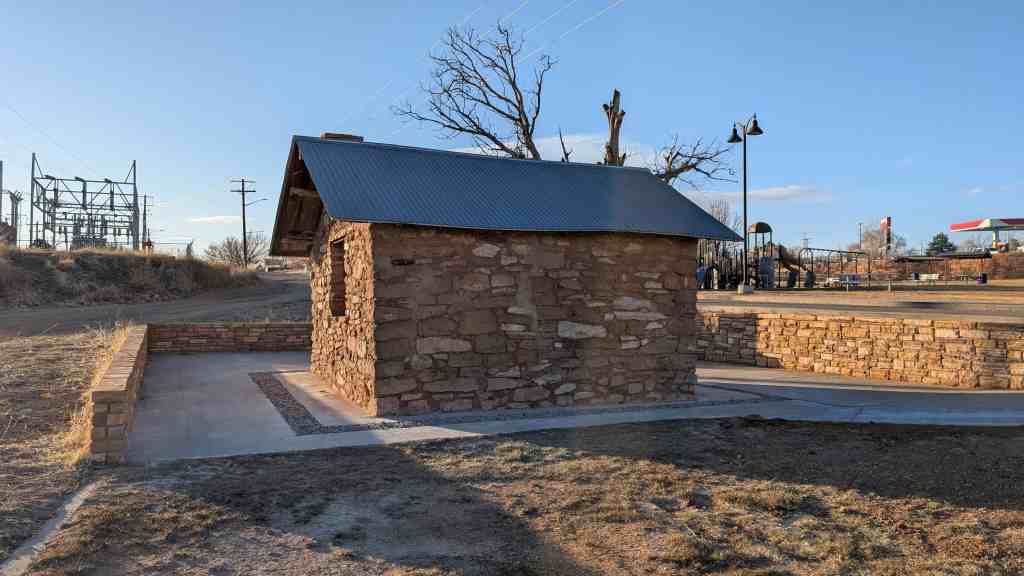
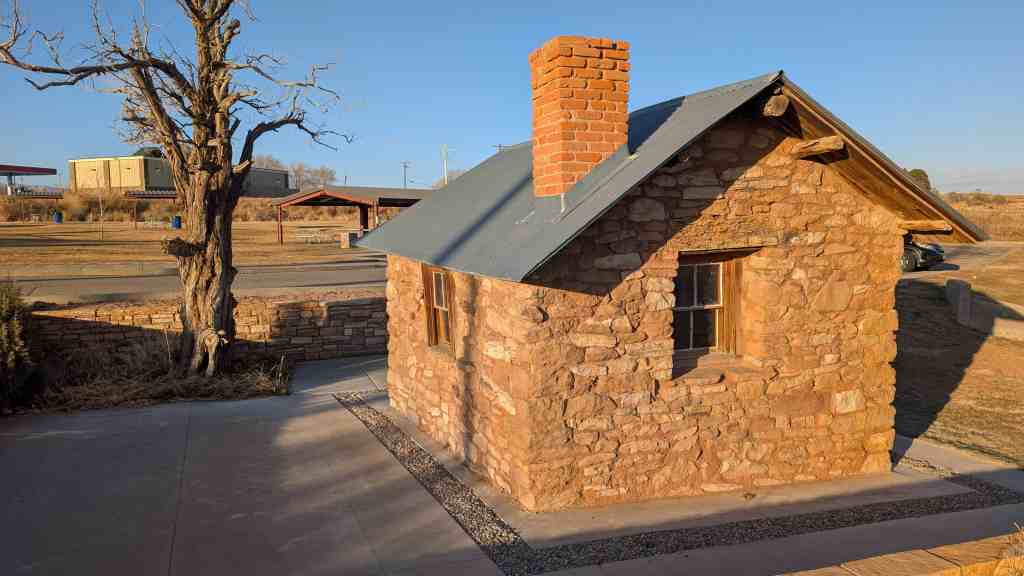
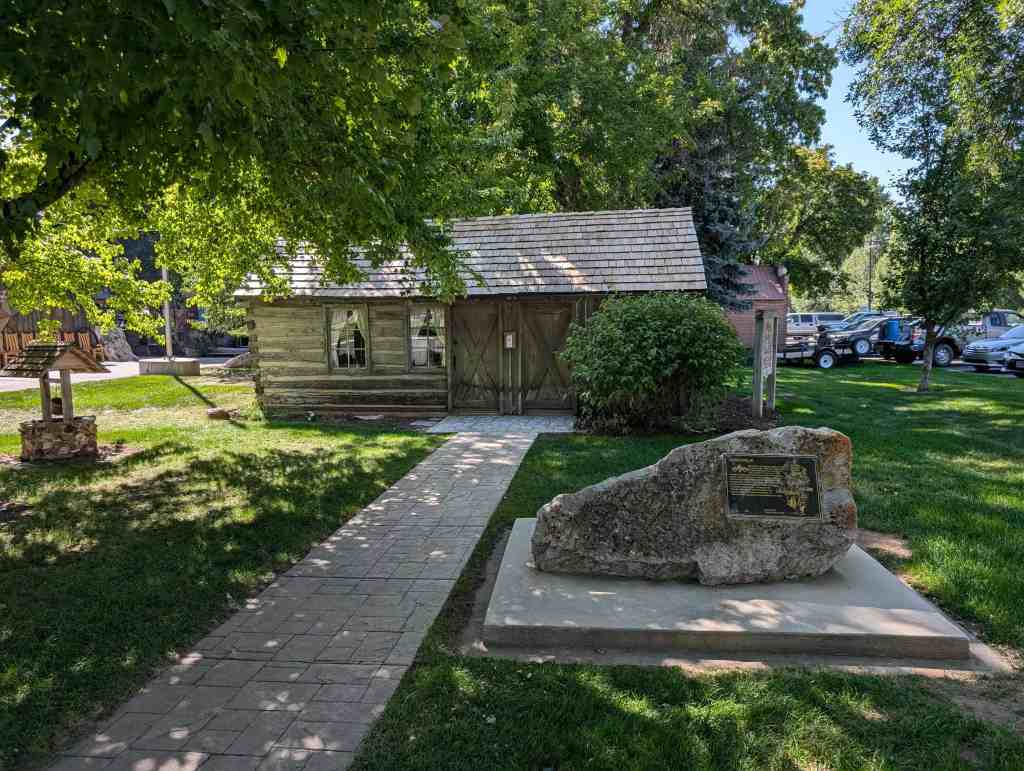
This is Daughters of Utah Pioneers historic marker #431, placed by the Camp Olive and Camp Granny Smith camps of the DUP in 1985 and located at the Robert F. Aldous Cabin at 205 South 7400 East in Huntsville, Utah
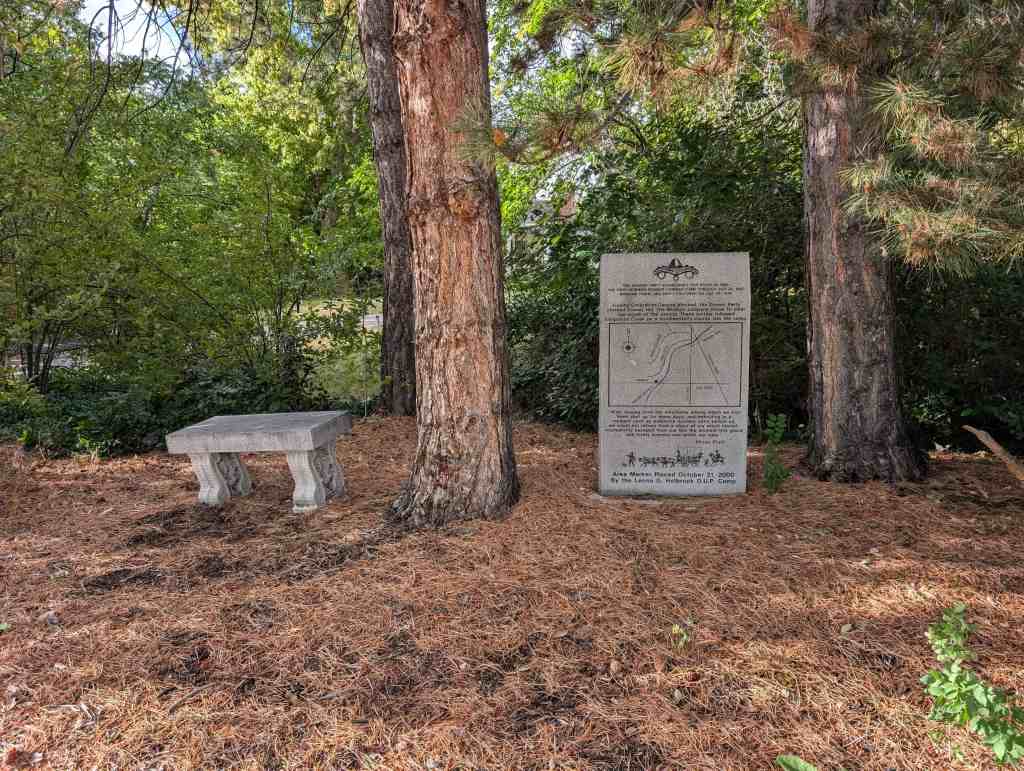
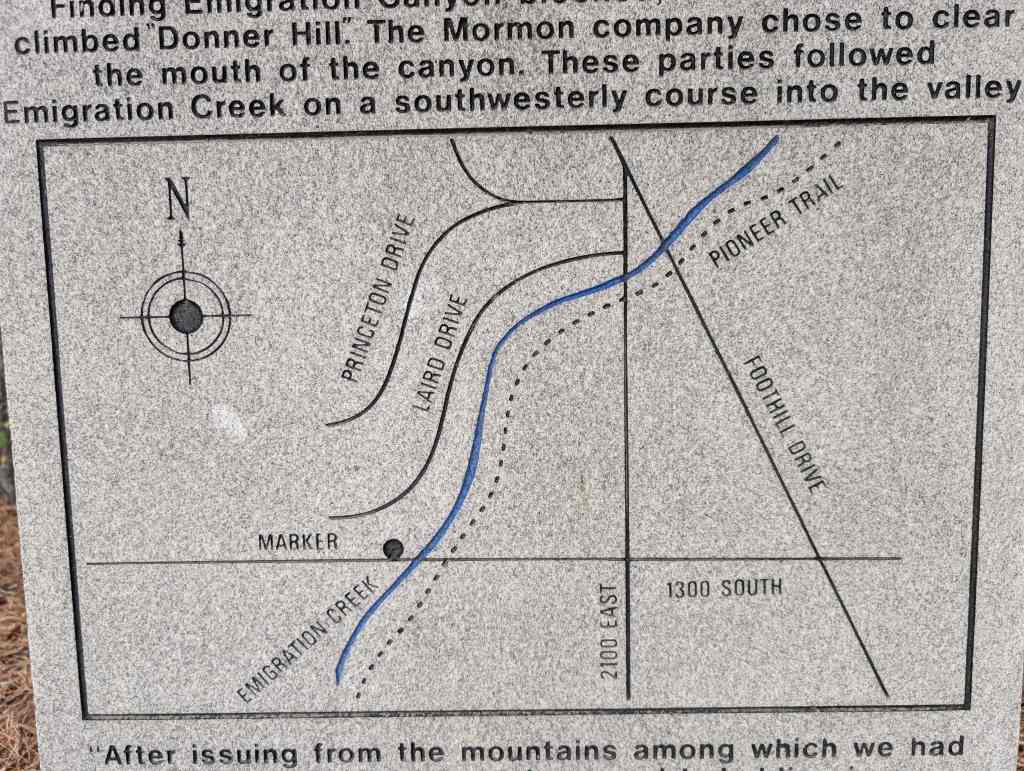
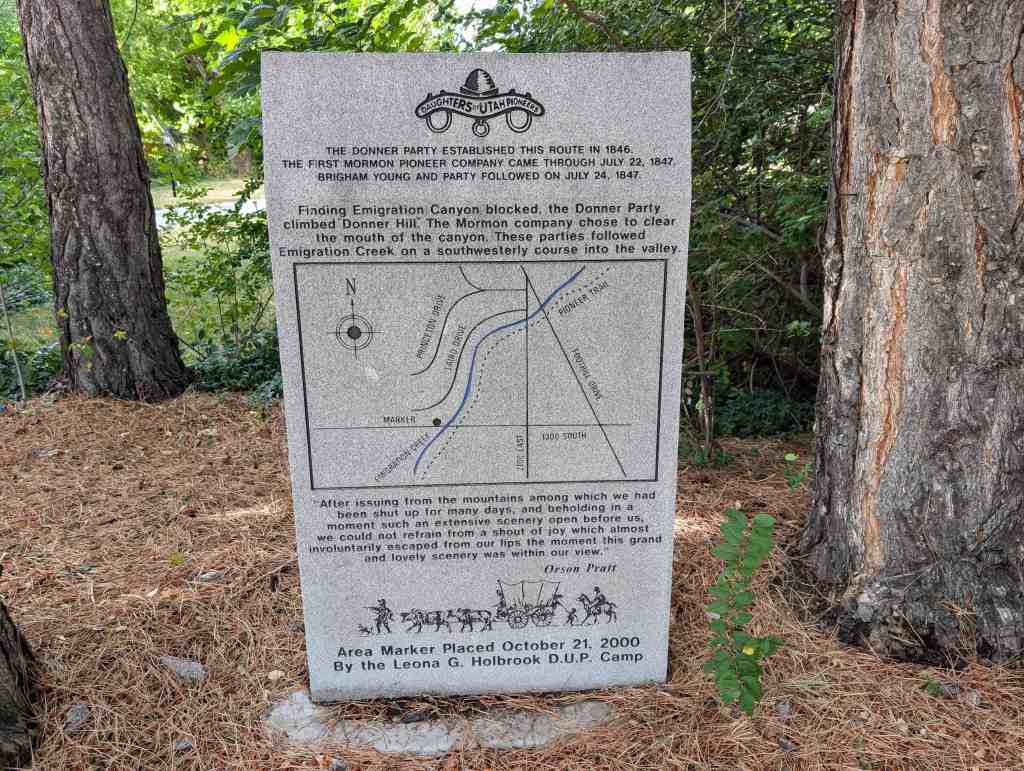
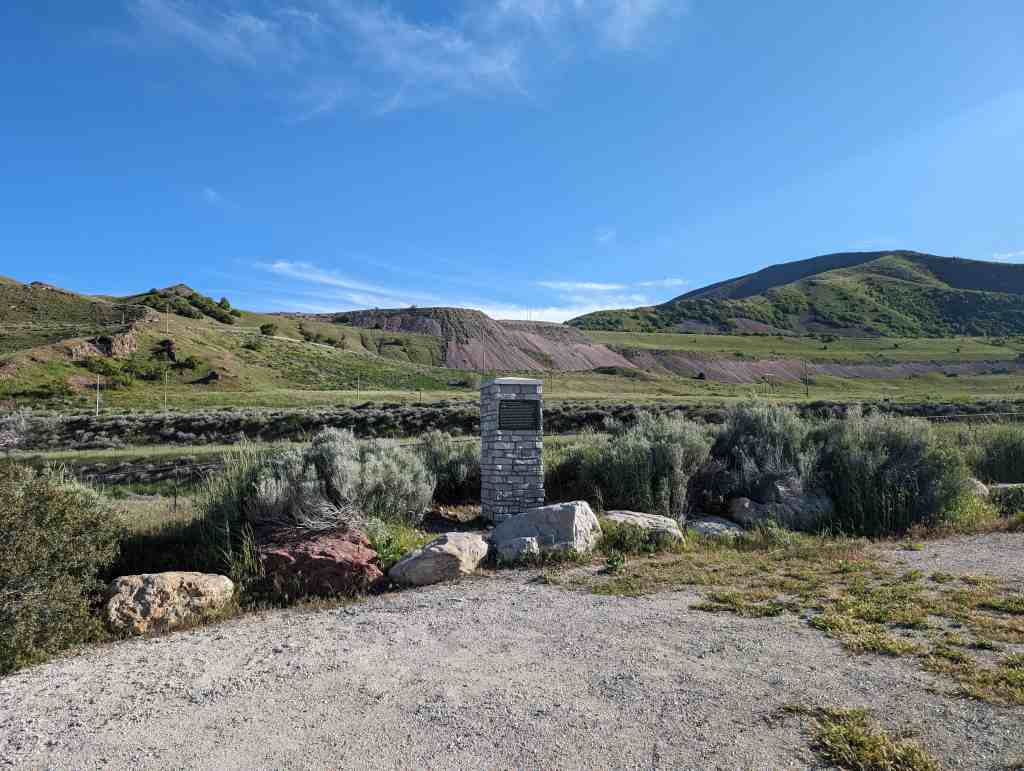
The Donner Party established this route in 1846. The first Mormon Pioneer Company came through July 22, 1847. Brigham Young and party followed on July 24, 1847.
Finding Emigration Canyon blocked, the Donner Party climbed Donner Hill. The Mormon company chose to clear the mouth of the canyon. These parties followed Emigration Creek on a southwesterly course into the valley.
“After issuing from the mountains among which we had been shut up for many days, and beholding in a moment such an extensive scenery open before us, we could not refrain from a shout of joy which almost involuntarily escaped from our lips the moment this grand and lovely scenery was within our view.” – Orson Pratt
Area Marker Placed October 21, 2000 By the Leona G. Holbrook D.U.P. Camp
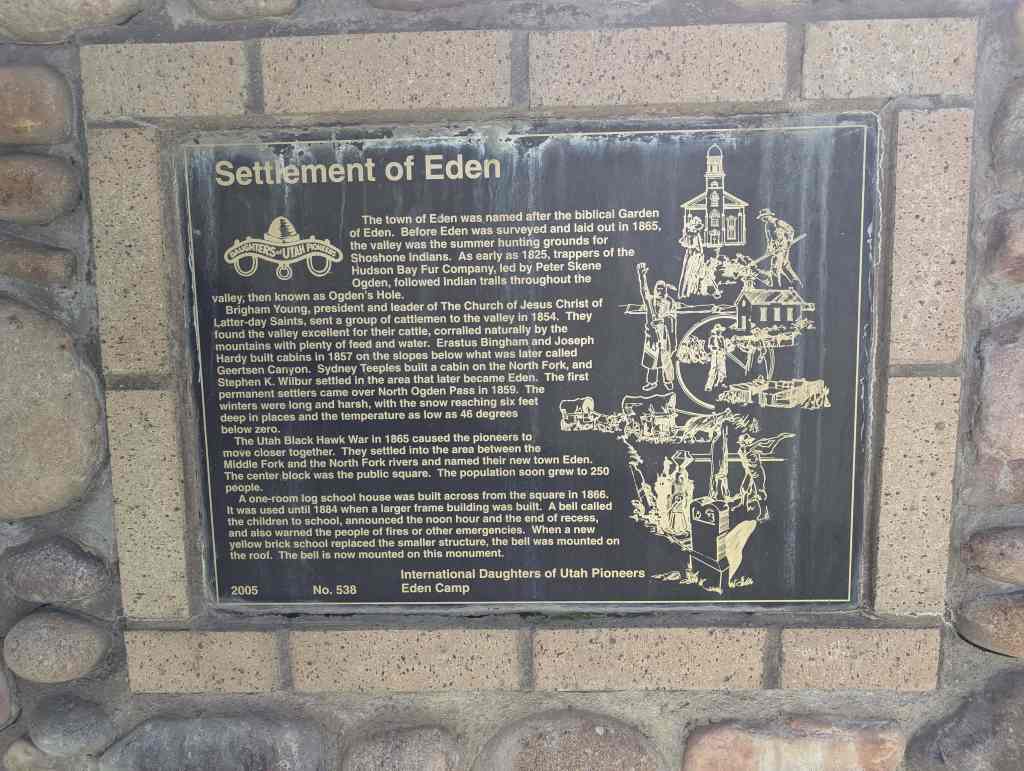
The town of Eden was named after the biblical Garden of Eden. Before Eden was surveyed and laid out in 1865, the valley was the summer hunting grounds for Shoshone Indians. As early as 1825, trappers of the Hudson Bay Fur Company, led by Peter Skene Ogden, followed Indian trails throughout the valley, then known as Ogden’s Hole.
Brigham Young, president and leader of The Church of Jesus Christ of Latter-day Saints, sent a group of cattlemen to the valley in 1854. They found the valley excellent for their cattle, corralled naturally by the mountains with plenty of feed and water. Erastus Bingham and Joseph Hardy built cabins in 1857 on the slopes below what was later called Geertsen Canyon. Sydney Teeples built a cabin on the North Fork, and Stephen K. Wilbur settled in the area that later became Eden. The first permanent settlers came over North Ogden Pass in 1859. The winters were long and harsh, with the snow reaching six feet deep in places and the temperature as low as 46 degrees below zero.
The Utah Black Hawk War in 1865 caused the pioneers to move closer together. They settled into the area between the Middle Fork and the North Fork rivers and named their new town Eden. The center block was the public square. The population soon grew to 250 people.
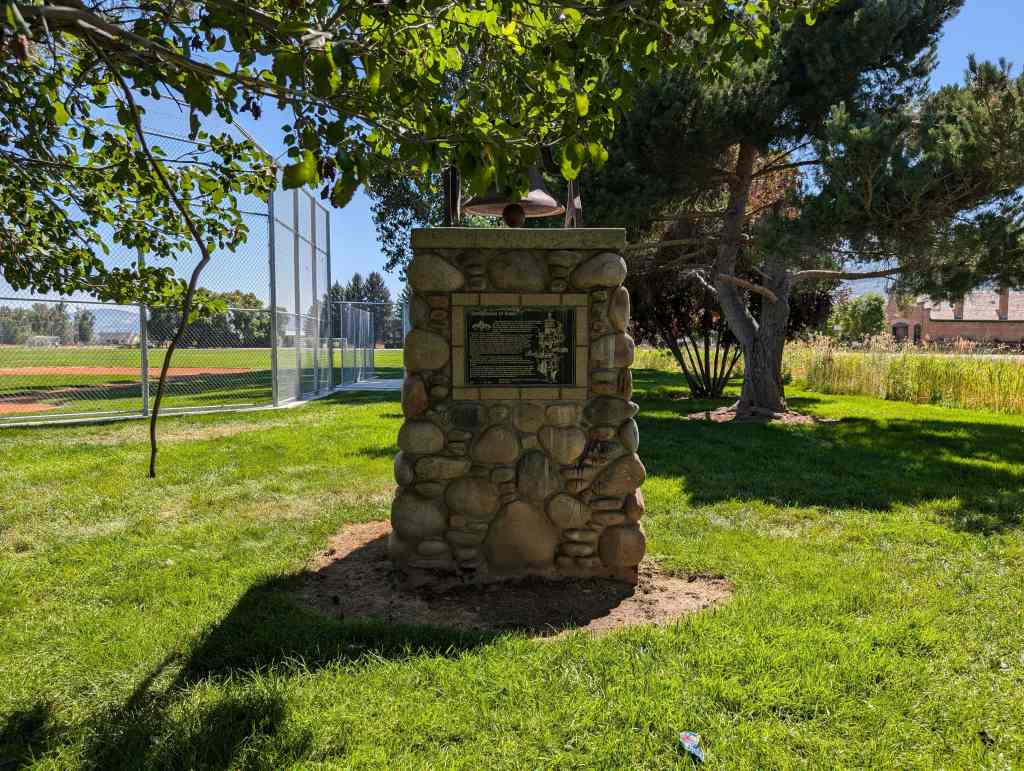
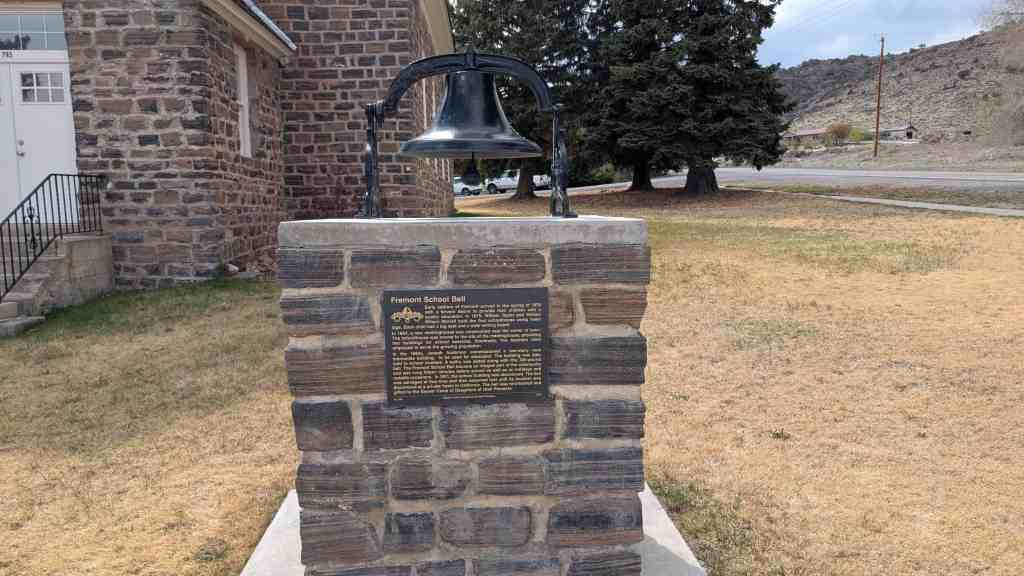
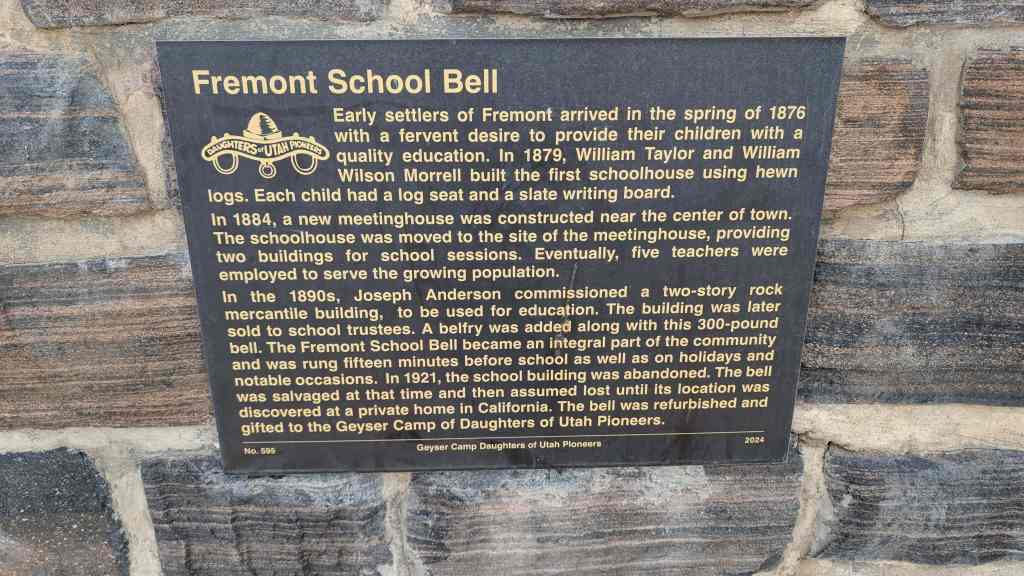
A one-room log school house was built across from the square in 1866. It was used until 1884 when a larger frame building was built. A bell called the children to school, announced the noon hour and the end of recess, and also warned the people of fires or other emergencies. When a new yellow brick school replaced the smaller structure, the bell was mounted on the roof. The bell is now mounted on this monument.
Daughters of Utah Pioneers historic marker #538, located in Eden Park at 5509 East 2200 North in Eden, Utah.
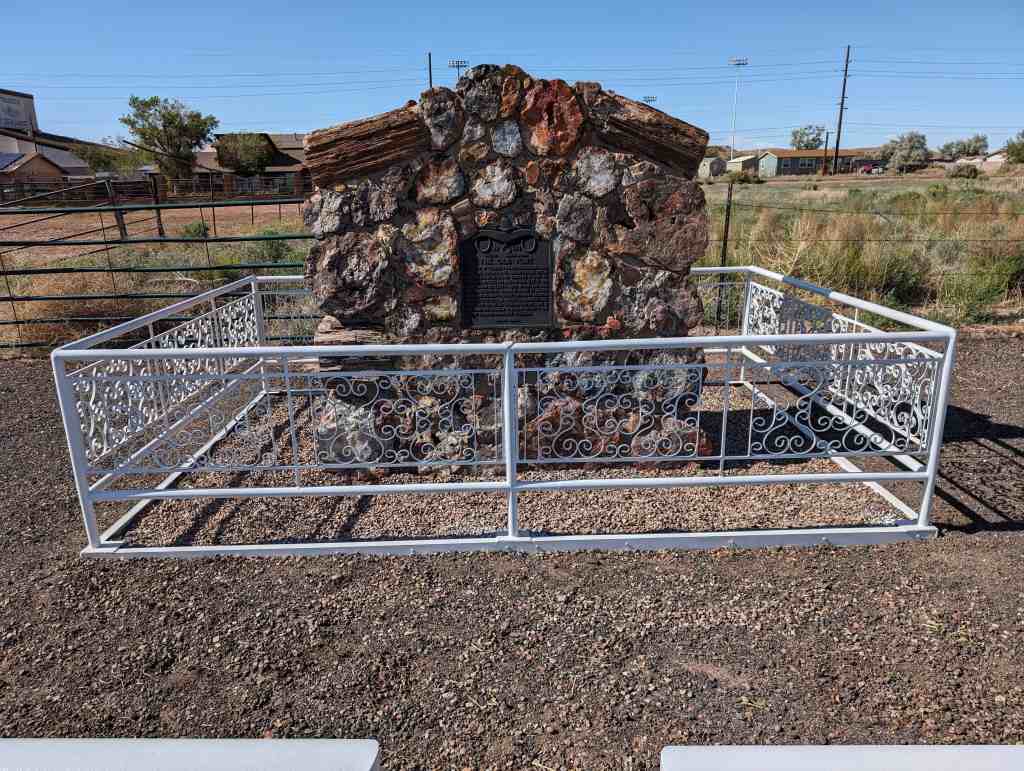
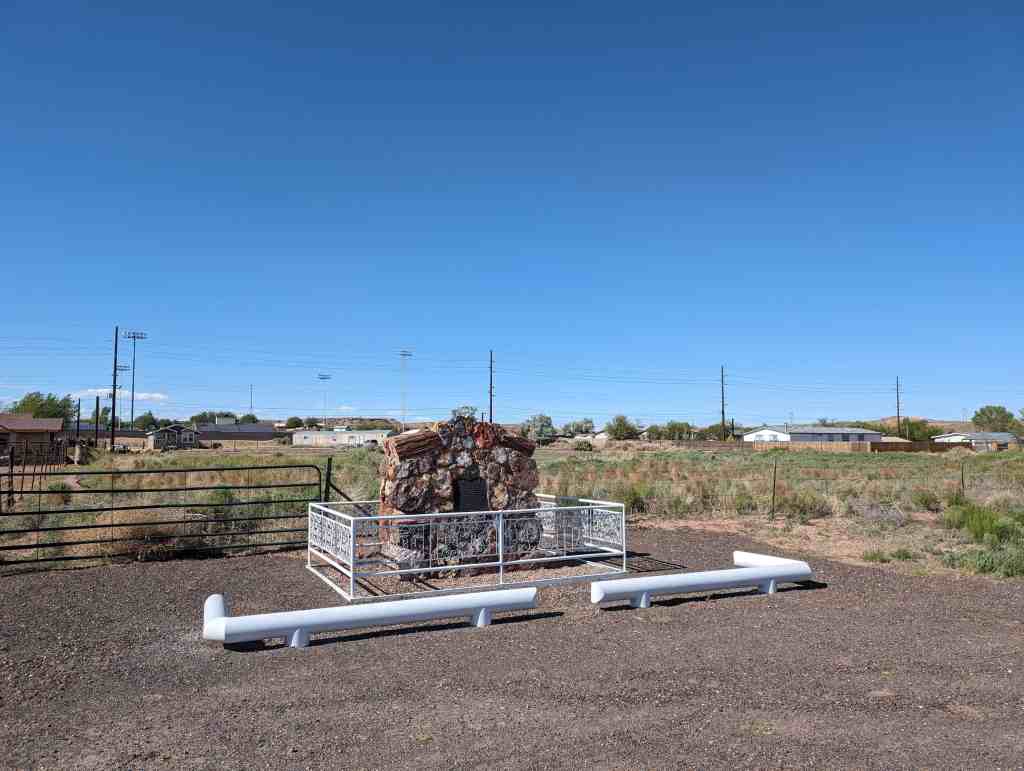
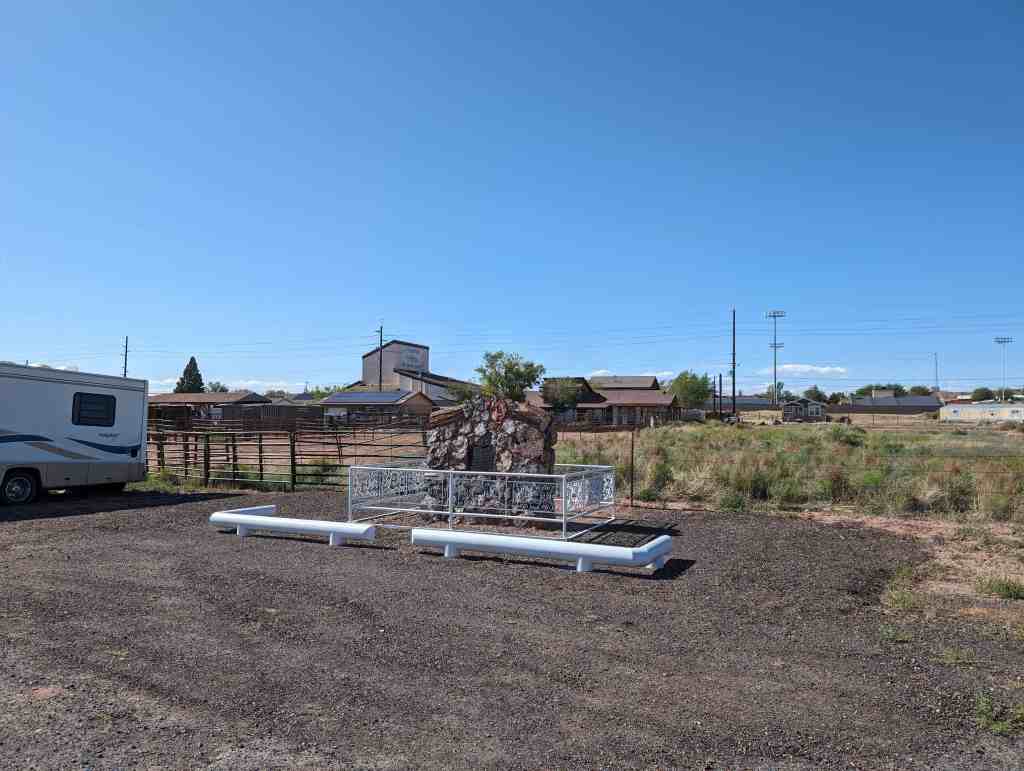
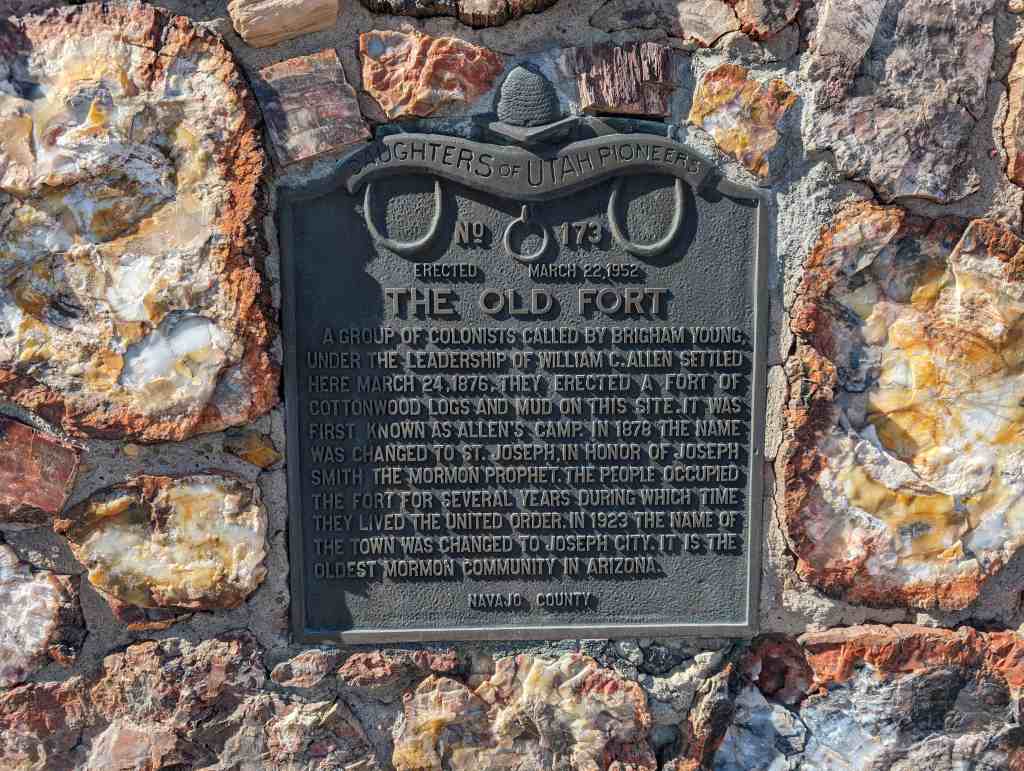
A group of colonists called by Brigham Young, under the leadership of William C. Allen settled here March 24, 1876. They erected a fort of cottonwood logs and mud on this site. It was first known as Allen’s Camp. In 1878 the name was changed to St. Joseph, in honor of Joseph Smith the Mormon Prophet. The people occupied the fort for several years during which time they lived the United Order. In 1923 the name of the town was changed to Joseph City. It is the oldest Mormon community in Arizona.
This is Daughters of Utah Pioneers historic marker #173. Erected on March 22, 1952 and located in Joseph City, Arizona.
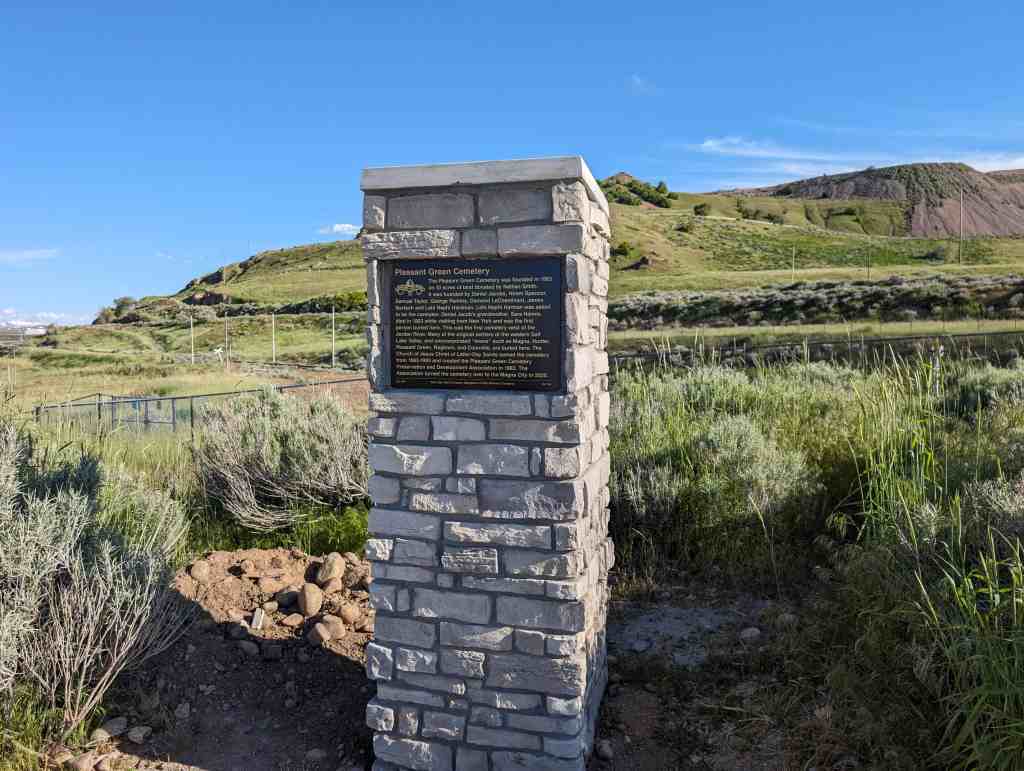
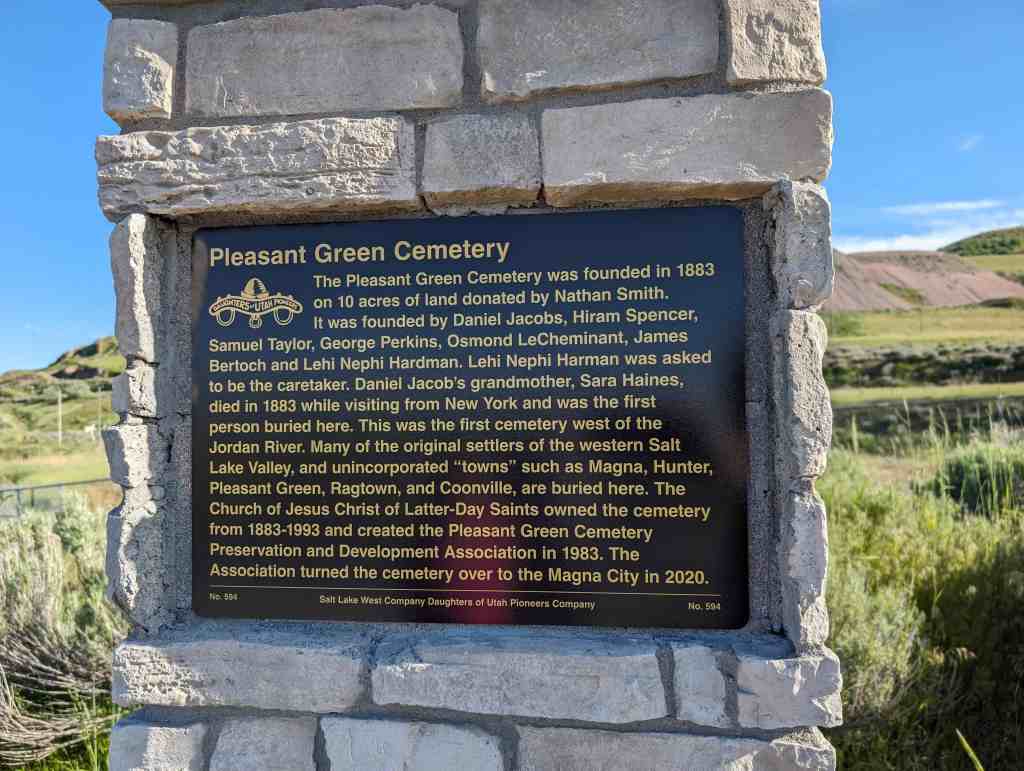
The Pleasant Green Cemetery was founded in 1883 on 10 acres of land donated by Nathan Smith. It was founded by Daniel Jacobs, Hiram Spencer, Samuel Taylor, George Perkins, Osmond LeCheminant, James Bertoch and Lehi Nephi Hardman. Lehi Nephi Harman was asked to be the caretaker. Daniel Jacob’s grandmother, Sara Haines, died in 1883 while visiting from New York and was the first person buried here. This was the first cemetery west of the Jordan River. Many of the original settlers of the western Salt Lake Valley, and unincorporated “towns” such as Magna, Hunter, Pleasant Green, Ragtown, and Coonville, are buried here. The Church of Jesus Christ of Latter-Day Saints owned the cemetery from 1883-1993 and created the Pleasant Green Cemetery Preservation and Development Association in 1983. The Association turned the cemetery over to Magna City in 2020.
Built in 1907, the Richmond Tithing Office is significant as one of 28 well preserved tithing buildings in Utah that were part of the successful “in kind” tithing system of The Church of Jesus Christ of Latter-day Saints (LDS or Mormon church) between the 1850s and about 1910. Tithing lots, which usually included an office and several auxiliary structures, were facilities for collecting, storing, and distributing the farm products that were donated as tithing by church members in the cash-poor agricultural communities throughout the state. Tithing offices were a vital part of almost every Mormon community, serving as local centers of trade, welfare assistance, and economic activity. They were also important as the basic units of the church-wide tithing network that was centered in Salt Lake City, This building is also significant as one of about ten tithing offices which, having been built according to standard plans issued from church headquarters, represent the first known instances of centralized building administration in the LDS church.
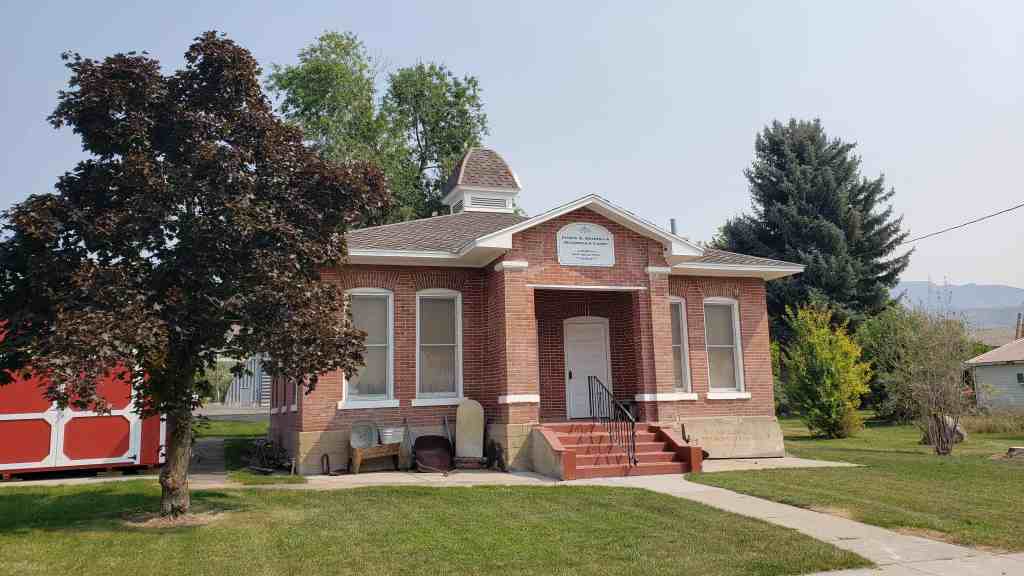
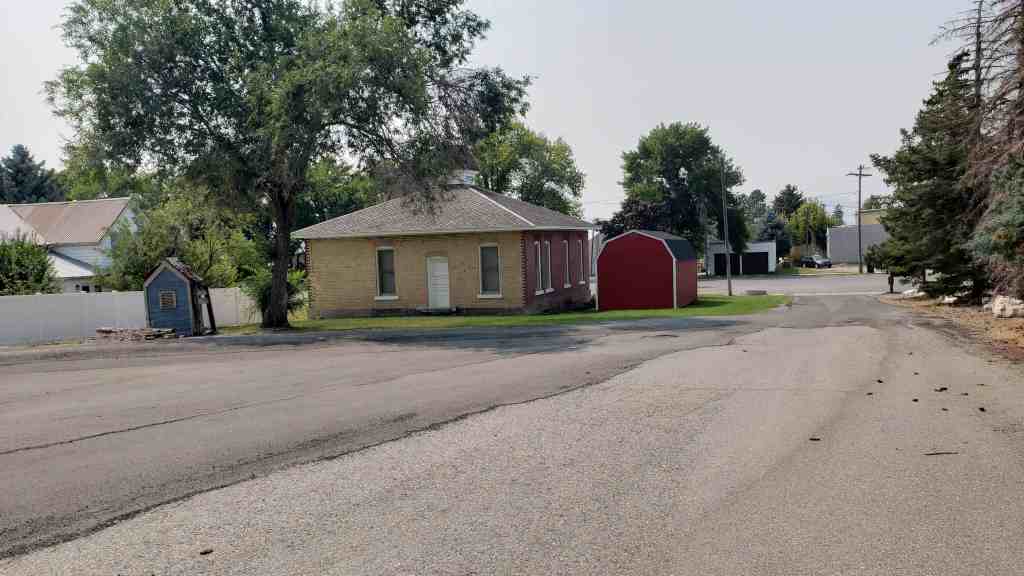
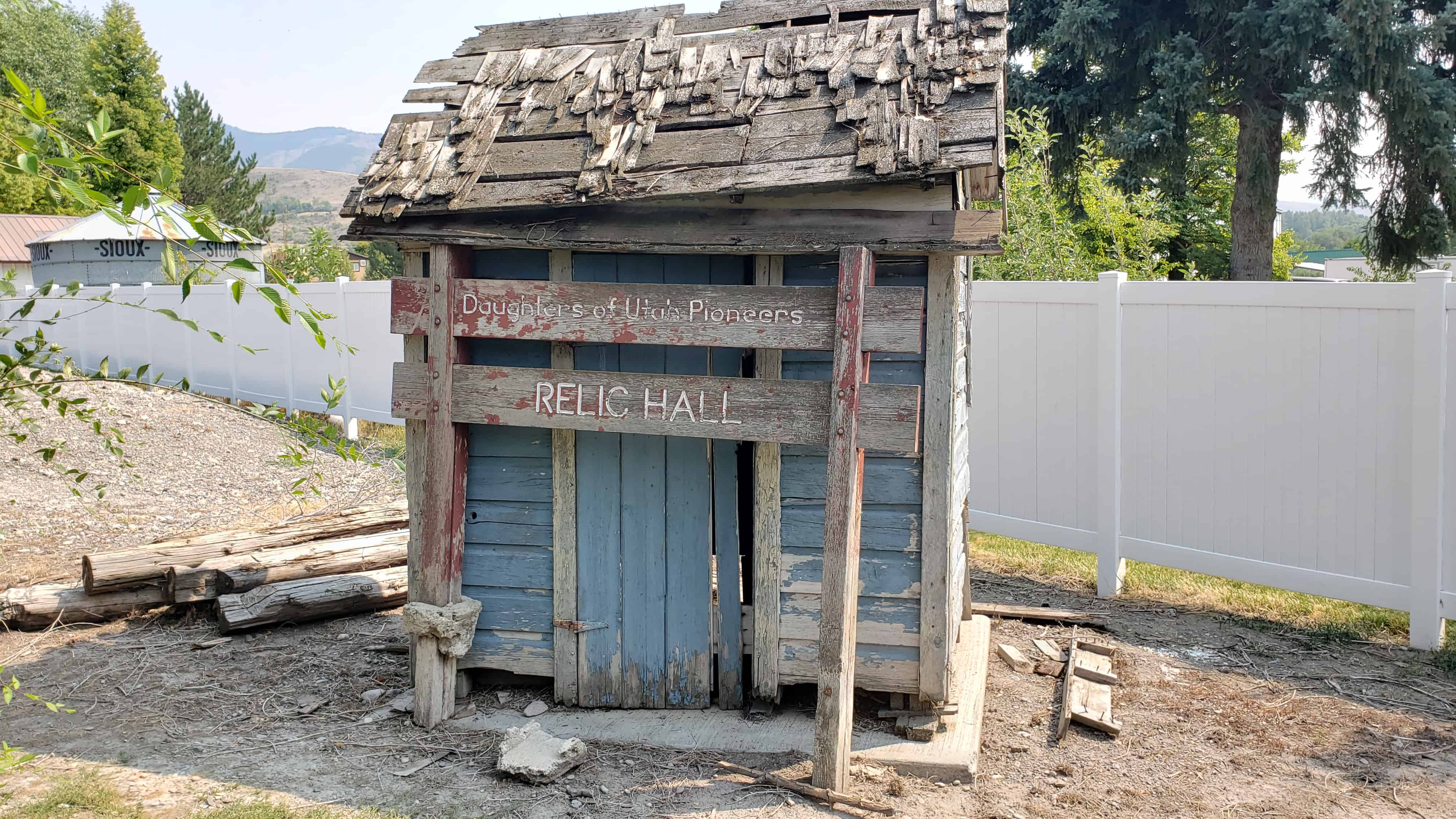
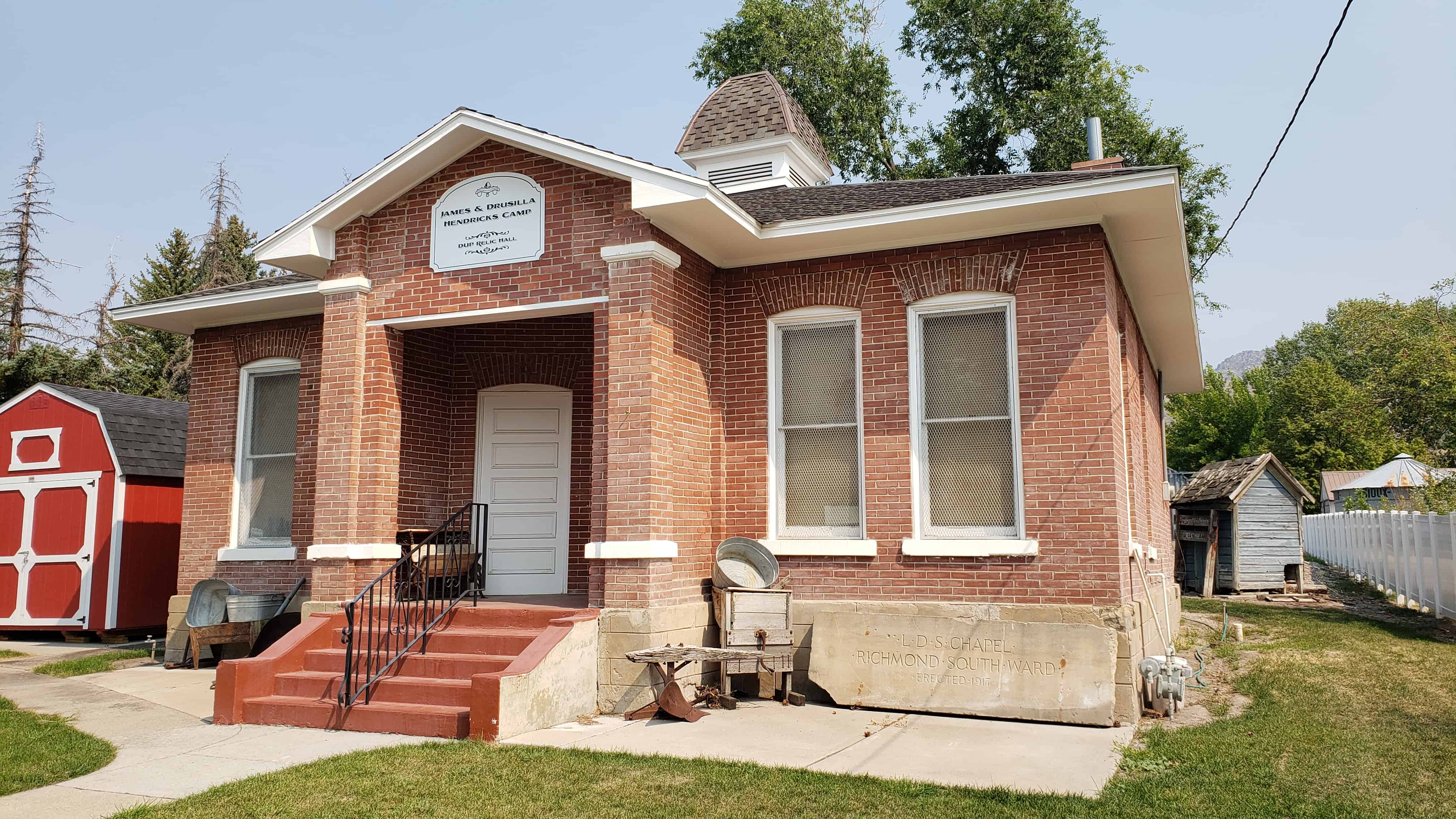
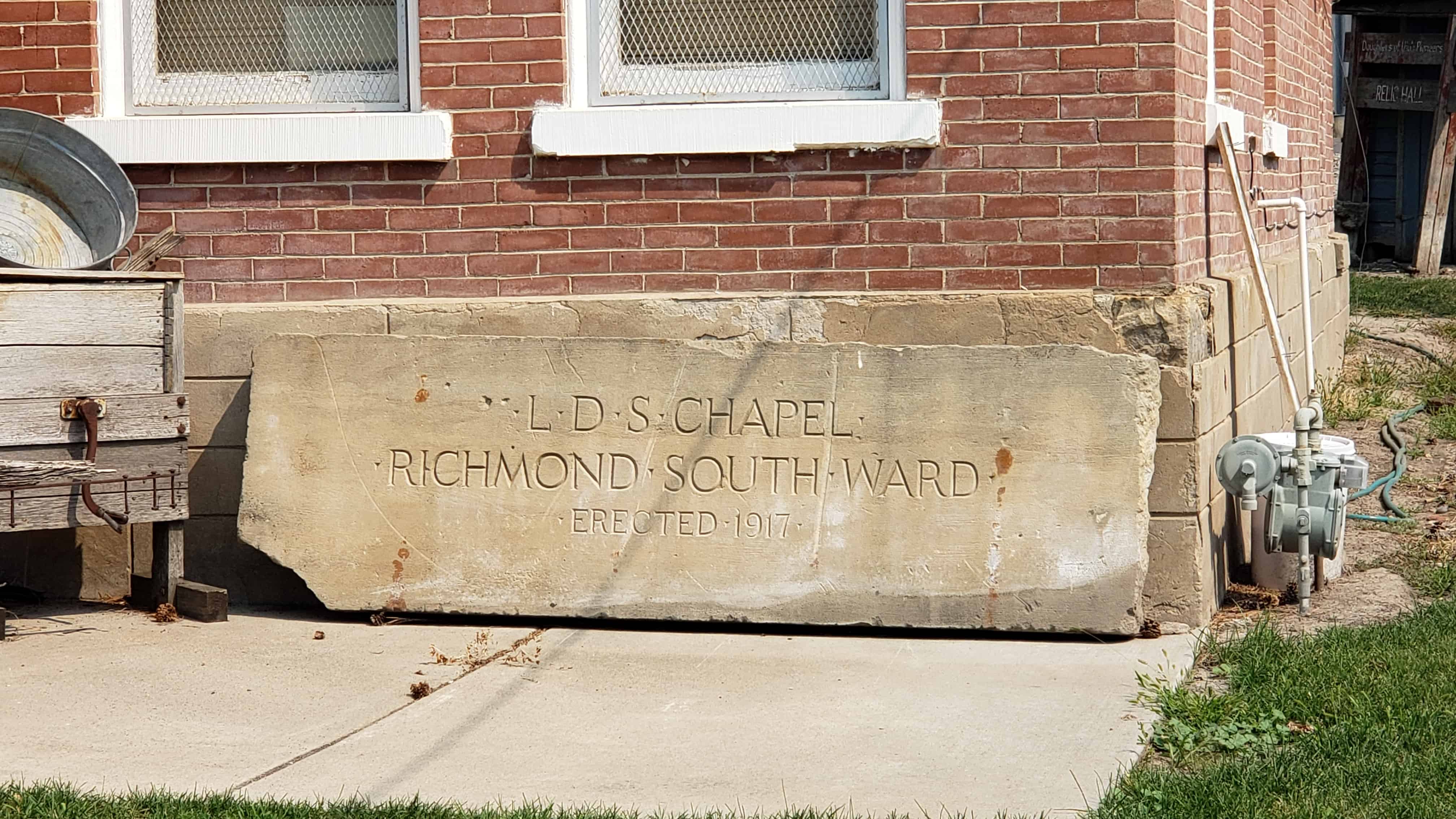
The Richmond Tithing Office is now the Richmond D.U.P. Relic Hall, James & Drusilla Hendricks Camp, located at 25 South State Street in Richmond, Utah. It was added to the National Historic Register (#85000256) on January 25, 1985.
In January 1907, Stake President Alma Merrill and Bishop Thomas H. Merrill of the Richmond Ward, submitted a request to the Presiding Bishopric of the LDS church for approval to construct a new tithing office which would also serve as offices for the stake presidency and a meeting place for the stake high council. Land for the new building was provided on the tithing lot in the center of town. Although plans for the building were provided by church headquarters in Salt Lake City, detailed instructions for constructing the building were not given. The Presiding Bishopric offered the following explanation for those omissions: “…regarding specifications for tithing office no. 3, will say, that no specifications were provided other than the bill of material listed on the plans, owing to the fact that the different stakes erect the office of the material at their disposal. ” A local builder, James Lewis Burnham, was reportedly hired to construct the tithing off ice, 3 which was completed by December 1907 or January 1908. In February 1908, Bishop Merrill applied to the Presiding Bishopric for help in furnishing the office. Construction of a fence around the new building and planting grass on the property were finishing touches to the new tithing office that were recommended by the stake clerk in June 1908, but it is unknown whether or not they were ever accomplished.
The design of the Richmond Tithing Office was one of at least three standard tithing office plans that were developed at church headquarters around 1905 and sent out to a number of wards in the state that requested to have a new tithing office built. Those plans were perhaps the first examples of what eventually became a policy with the church – developing standard building plans at church headquarters rather than having each ward generate its own. In addition to the Richmond Tithing Office, other tithing offices in the state that were built according to the plans of “tithing office no. 3” are those in Manti, Sandy, Panguitch, and Hyrum, all of which were built between about 1905 and 1910.
The Richmond Tithing Office was owned by the Richmond Ward of the LDS church until 1968, when it was sold to Richmond City. The city has allowed the local chapter of the Daughters of the Utah Pioneers to use the building as their relic hall.
The Richmond Tithing Office is a one story square red brick building with a pyramid roof, a coursed ashlar foundation, and a projecting gabled pavilion on the façade. It was designed from one of at least three standard plans which were created for tithing offices about 1905, two of which have been identified. The design of the Richmond Tithing Office has been identified as type No. 3, and is almost identical to the design of the Sandy, Manti and Panguitch Tithing Offices. It is also very similar to the Hyrum Tithing Office. The façade is symmetrically arranged with a gabled pavilion centered between pairs of one over one double hung sash windows. The pavilion has a flat arch opening. Above the opening is an inset rectangular panel above which is an enclosed semi -circular vent. Pilasters are attached to the corners of the pavilion. Two doors open off the pavilion, each set at an angle into the wall under the pavilion. The arrangement of openings on the other three sides of the building is irregular, but is very similar to that of other tithing offices of this type. Decorative elements include a wide frieze which wraps around the building below the cornice line. It consists of string courses of brick which project at different levels. Rock-faced brick highlights the relieving arches of the windows. A small domed cupola structure tops the building. The Richmond Tithing Office is unaltered, is in good condition, and therefore maintains its original integrity.
Before the close of 1885 the families of James Mitchell, A.T. Lawrence, Darius Allen, Joshua Adams, Felix, Heber, Frank and Ann Husband, Albert Christiansen and N.G. Mickelson settled here. Soon other followed. These settlers were organized into a branch of the L.D.S. church in 1893 and a log room built by George Steel served as the first school with Miss Wood as teacher. In Feb. 1895 in the home of Wm. Crandall, the Ward of Shelley was organized with John F. Shelley as bishop. Early pioneers made irrigation possible in this sector.
The above text is from the monument (Daughters of Utah Pioneers historic marker #216) located at 219 South Milton Avenue in Shelley, Idaho.
A few fur trappers, led by Andrew Henry, arrived along the Snake River in 1810. They built log shelters about five miles downstream from St. Anthony and established Henry’s Fort. Other trappers who spent time in the area included men from the Wilson Price Hunt Company and Richard “Beaver Dick” Leigh.
The first permanent settlers, brother William, Thomas and Andy McMinn, came from Corrine, Utah, in 1879. William settled near Henry’s Fort on the south side of the Snake River. Thomas and Andy settled on the north side. Several more men arrived in 1883 to claim land. They returned to Utah for the winter and brought families back in the spring.
The pioneers lived in tents and dugouts until cabins could be built. Crops were planted, and then most of the men went to work on the railroad that was being built from Idaho Falls, Idaho to Butte, Montana. The women and children were left to tend the cattle and crops. Mosquitoes were so thick they caused livestock to stampede. It sounded like rain when the mosquitoes hit the tents.
The area between the north and south forks of the Teton River was swampy. Ditches were dug to drain the water and were later used for irrigating the land.
On November 23, 1884, a meeting was held in the home of George P. Ward. A town site was chosen and named “Salem,” which means peace. A congregation of The Church of Jesus Christ of Latter-day Saints was organized. George H.B. Harris was sustained as Bishop.
Most of the land had been claimed by 1886. Two church houses were built and dedicated in 1885. One building was on Joseph Larsen’s farm in the north part of Salem and also served as a school. Joseph was the teacher. The other building was constructed on the town site. The town had two stores, a cheese factory and a saloon. Clem Ward, whose horse would swim rivers, delivered mail until a post office was established in 1893.
The above text is from the monument (Daughters of Utah Pioneers historic marker #545) located at3462 North Salem Road in Rexburg, Idaho.
In August 1903, Mark Austin negotiated the purchase of a section of land here, the south half to be used as this town site and the north half, about 1/2 mile northeast, to be used for a sugar beet factory for the Fremont County Sugar Company. By October 1903, E.H. Dyer had contracted to build the $750,000 factor. Early in 1904, the company signed an additional contract with Dyer providing for the erection of an auxiliary plant at Parker, bringing the total to nearly $1 million.
On December 8, 1903, President Joseph F. Smith, elected president of the company, laid the cornerstone of the factory which processed 35,000 tons of beets the next fall. The Church of Jesus Christ of Latter-day Saints sent 3 chemists from Germany to teach the people how to make sugar. Growing beets required very hard labor. Planting, cultivating, and digging were done with horses, but the difficult thinning, weeding, irrigating, toping, and loading were done by hand by the farmer and his family. In 1906 the company paid laborers and growers $3/4 million. The town grew and 20 businesses flourished here.
At the slicer in Parker, beet juice was extracted and pumped almost 6 miles away through a pipeline to the factory in Sugar City. The slicer was closed in 1913 because of difficulties incident to the extremely cold weather. Juice would freeze in the pipeline, and the water and beets would freeze in the flume.
Because of limitations of acreage and labor, the factory was closed in 1940 and 1941 but reopened for the last campaign in 1942. The factory was dismantled in 1947.
The above text is from the monument (Daughters of Utah Pioneers historic marker #525) located at Park Avenue and Center Street in Sugar City, Idaho.