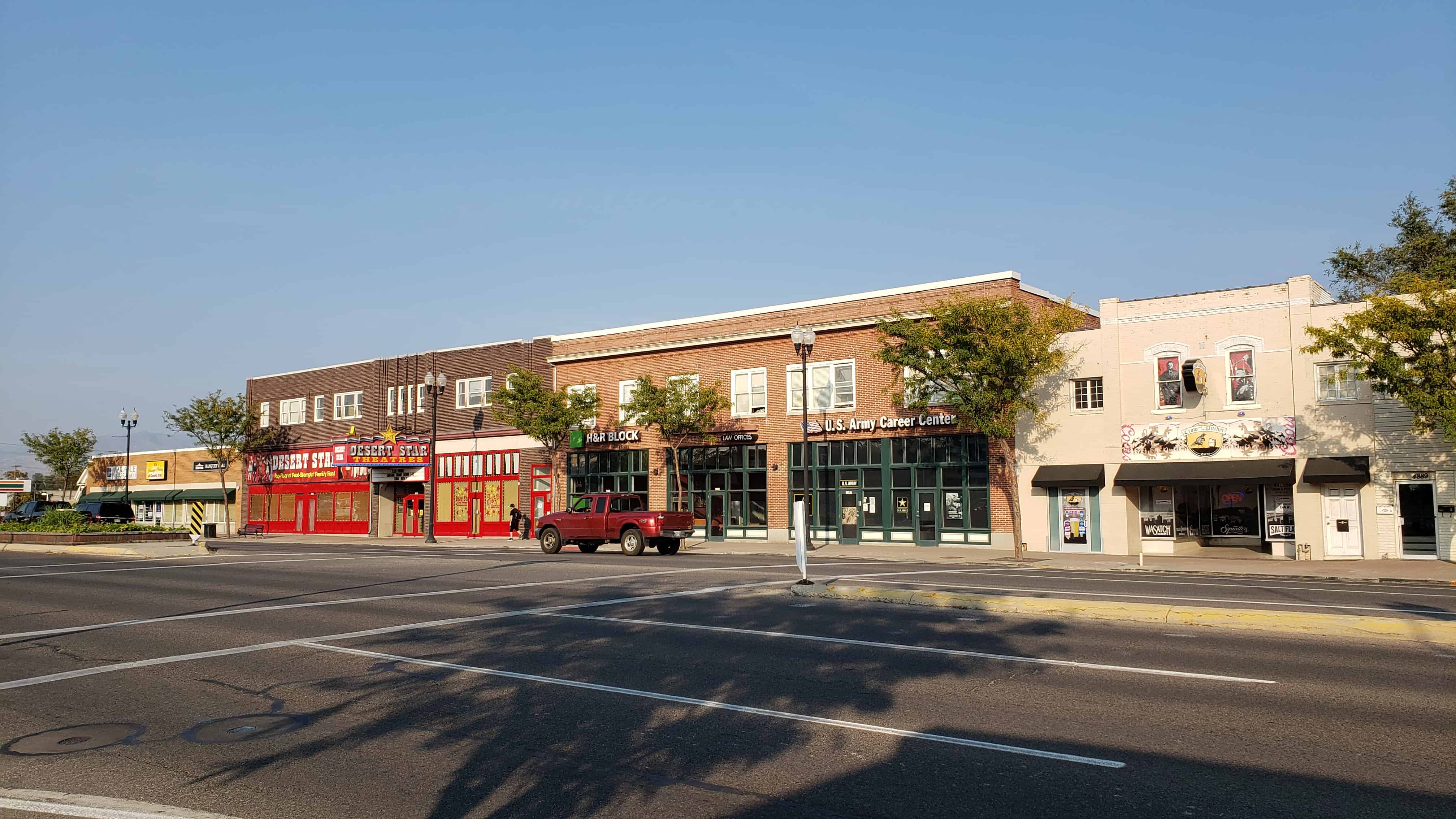
(*)Desert Star Theater is a dinner theater establishment in Murray, Utah. It started out as a small theater called the Gem, which showed silent movies with a piano for music. It was later closed down and demolished, but rebuilt and expanded into the Iris Theater by owner Tony Duvall. After his retirement, the Iris changed hands several times before being renamed the Vista.
The National Register of Historic Places, notes Iris Theater, Apartments and Commercial Building, built in 1930, is significant for its role in the urbanization of Murray City. With its combination of entertainment, retail, and residential space, the building represents an elaborate example of the multi-use commercial block common during the early twentieth-century development of the city’s commercial business district. The building was owned by the Duvall family who managed the theater while living in the apartments above the storefronts. The Iris building is also significant as the only commercial building in Murray built in the Art Deco style. Though not a particularly ornate example of the style, the building makes a distinctive contribution to the State Street frontage of the Murray Downtown Historic District. The building is in good condition and is a contributing historic resource of the city.
Devereaux House:
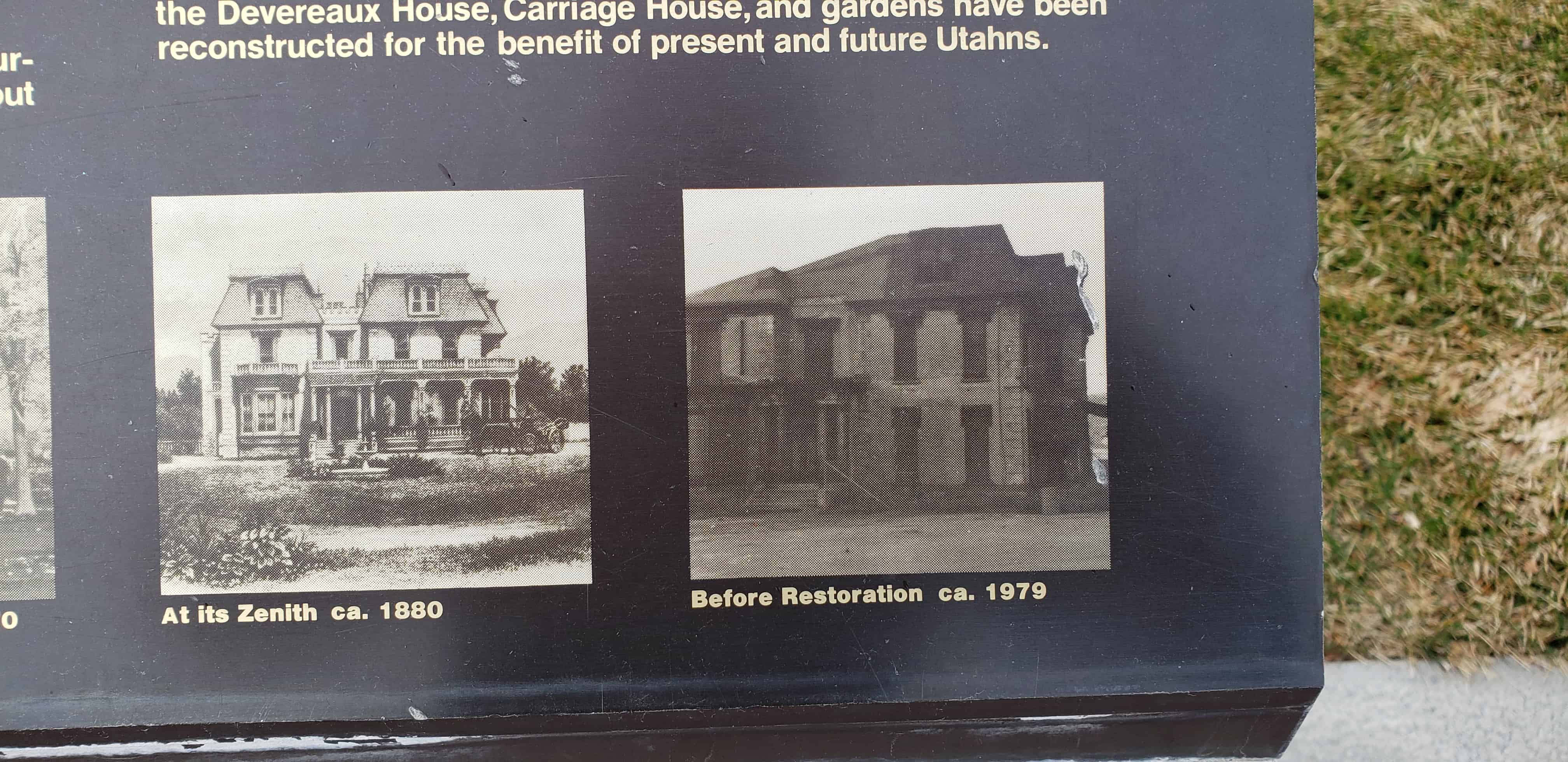
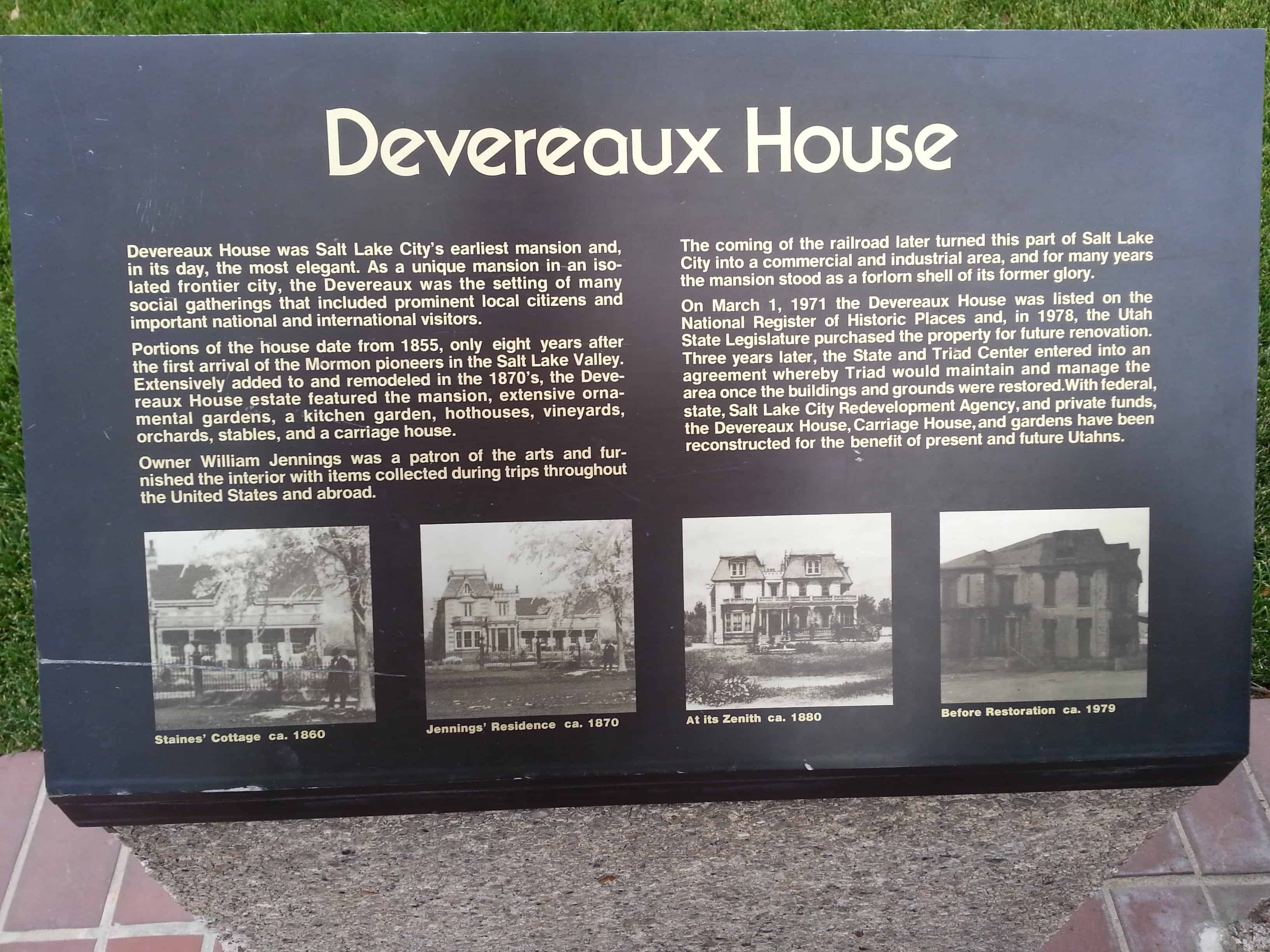
Devereaux House was Salt Lake City’s earliest mansion and, in its day, the most elegant. As a unique mansion in an isolated frontier city, the Devereaux was the setting of many social gatherings that included prominent local citizens and important national and international visitors.
Portions of the house date from 1855, only eight years after the first arrival of the Mormon pioneers in Salt Lake Valley. Extensively added to and remodeled in the 1870’s, the Devereaux House estate featured the mansion, extensive ornamental gardens, a kitchen garden, hothouses, vineyards, orchards, stables, and a carriage house.
Owner Willian Jennings was a patron of the arts and furnished the interior with items collected during trips throughout the United States and abroad.
The coming of the railroad later turned this part of Salt Lake City into a commercial and industrial area, and for many years the mansion stood as a forlorn shell of its former glory.
On March 1, 1971 the Devereaux House was listed on the National Register of Historic Places and, in 1978, the Utah State Legislature purchased the property for future renovation. Three years later, the State and Triad Center entered into an agreement whereby Triad would maintain and manage the area once the buildings and grounds were restored. With federal, state, Salt Lake City Redevelopment Agency, and private funds, the Devereaux House, Carriage House, and gardens have been reconstructed for the benefit of present and future Utahns.
William Staines and William Jennings:
Two men figure most prominently in the history of Devereaux House.
William Staines was the original occupant of this property. Staines was an English-born horticulturist whose dedication to his “mission to beautify Zion” helped establish the rich landscape tradition which has since characterized Salt Lake City.
A convert to the Mormon faith, Staines, arrived in Salt Lake City in 1847. He acquired the property in 1855 and developed a cottage-style home in the midst of extensive English gardens. He later served as superintendent of Brigham Young’s gardens.
William Jennings purchased the property in 1867 and developed the present Devereaux House, incorporating Staines’ original cottage in the expanded structure.
Jennings was also an English convert to the Mormon church. Arriving in Salt Lake City in 1852, he entered the mercantile business. Taking advantage of the business opportunities of a rapidly-growing regional center, Jennings branched out into freighting and banking, becoming Utah’s first millionaire. In 1864 he founded the Eagle Emporium, which was later sold to the Mormon church and became the forerunner of the present-day ZCMI department store. In 1882 Jennings was elected Mayor of Salt Lake City, serving one term.
A hospitable and gracious host, Jennings entertained the famous and influential of the day. Devereaux House was the scene of lavish dinners and accommodated such prominent guests as Presidents Ulysses S. Grant and Rutherford B. Hayes, and General William T. Sherman.
The “Devereaux” House lays claim to fame for two primary reasons. First of all, it was the first “mansion” in Salt Lake Valley, having been built by William Staines in 1857. Secondly, it was the center of early social life in Utah. Mr. Staines provided hospitality to such important dignitaries as General Thomas I. Kane who arrived in Salt Lake City in February, 1858, to arbitrate the “Mormon War.” Governor Cumming and his lady arrived in April and were received by Brigham Young at this house, where Cumming also assumed his position as governor of the Territory of Utah.
In 1865 Mr. Staines sold his home to Brigham Young’s oldest son, Joseph A., for $20,000, Young sold the property to William Jennings, a prominent Salt Lake City merchant, for $30,000 two years later. Jennings enlarged the property and changed the name to “Devereaux” in honor of the family estate at Yardley, near Birmingham, England.
William Jennings had two wives, Jane and Pricilla, who moved to the Devereaux House in 1867. When Pricilla died in 1871, Jane acted as mother not only to her own eleven but also to Pricilla’s fourteen; however, it appears only fourteen of the children were living in 1881. Jennings entertained royally in his home, not only the “creme de la creme” of Salt Lake Valley but also distinguished national figures as well. After the Civil War Mr. William Seward, Secretary of State, visited Utah and was a guest at the Devereaux Mansion with Brigham Young. Later General Philip H. Sheridan was sent to Utah to “insure federal authority.” His visit to the Jennings estate had a salutary impact for the Mormons, since Jennings was himself a polygamist.
In early October, 1875, President Ulysses S. Grant arrived in Utah and before leaving he and Mrs. Grant spent a few pleasant hours at Devereaux. Later, General William T. Sherman, accompanying President Rutherford B. Hayes, also spent time at the house. It was not uncommon for as many as 300 guests to be entertained at one time in the lovely home. Finally, other international dignitaries were occasional guests of the Jennings.
For people of early Salt Lake City, the Devereaux Mansion represented quality and affluence at its best. William Jennings became a very successful merchant, freighting goods to Utah and marketing them through his “Eagle Emporium.” After his death January 15, 1886, the home served as a residence for the Jennings family until about 1900, when it was sold to Aaron Keyser and Thomas Weir. Subsequently, it served several roles, including one as a clinic for rehabilitation of alcoholics (the Keely Institute).
During the depression, the J. J. Coan family lived in the mansion. Many of the treasures of the home have disappeared. However, fortunately, an authentic restoration is feasible. At present a committee consisting of representatives of the Junior League of Salt Lake City, the Utah Heritage Foundation, Salt Lake City Historic Buildings Advisory Committee, Women’s Architectural League, the Utah American Institute of Architects, the Board of State History, and the Utah State Historical Society, is developing a program for the complete restoration of this historic structure and its setting.
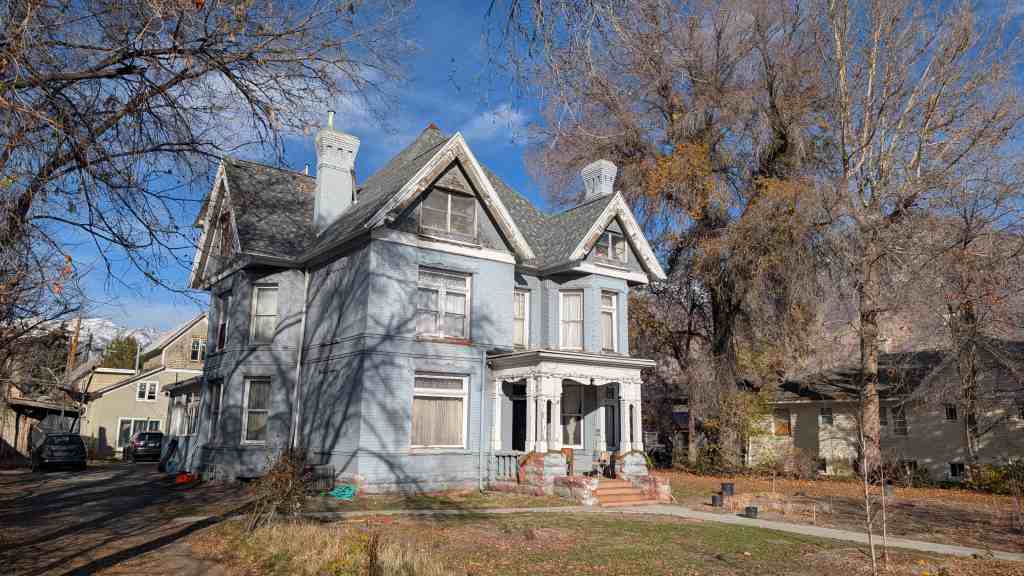
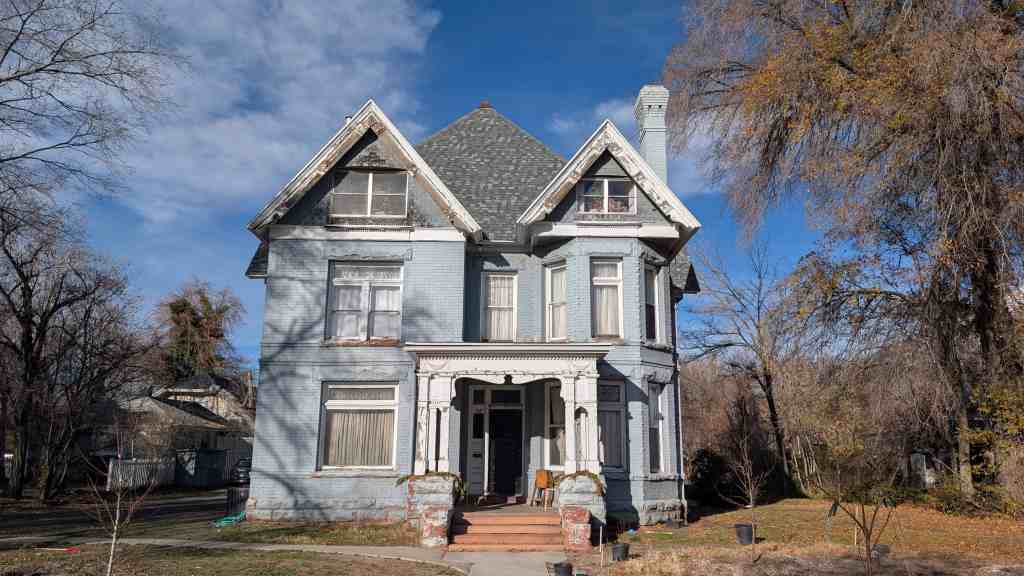
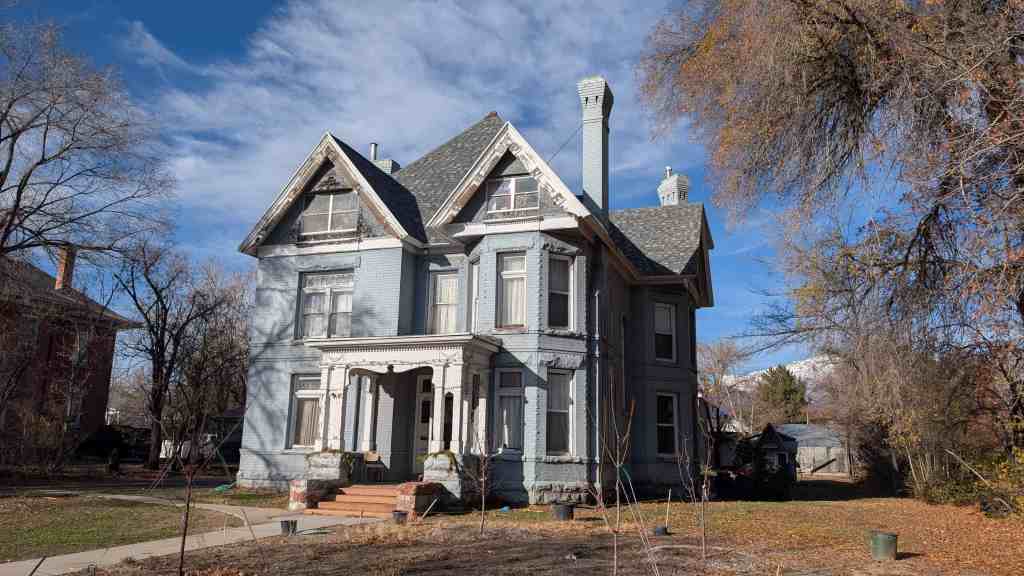
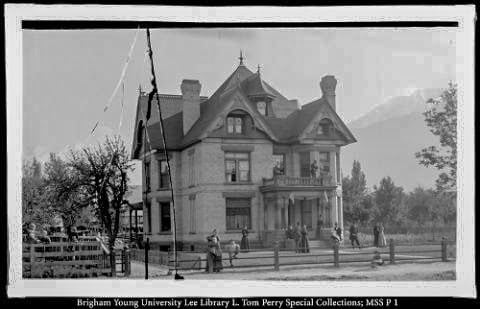
Dr. Samuel H. Allen relocated to Provo in 1892, and built his beautiful home using local workers and materials. For a few years, he also ran his medical office out of his home, but the office was moved to the Knight block after it was built. In 1903 Samuel R. Thurman bought the home from Allen. S. R. Thurman had previously been mayor to the city of Lehi prior to moving to Provo in 1882.
In 1882 he was elected the youngest member of the Utah House of Representatives, a position to which he was privileged to return for several election years in a row. Thurman was also politically involved as a member of the Utah Constitutional Convention of 1882, and as a chairman of the committee which drafted the first part of the Provo People’s Party in 1882. As national parties began to replace these local parties, Thurman, like many Mormons of that era, became a Democrat, as well as a judged on the Supreme Court of Utah. It was not long before Thurman sold the home to John W. Taylor.
John Taylor settled his third wife, Nellie Eva Todd, in this home, while his second wife, Nettie, lived at 287 East 200 North. John W. Taylor, the son of the third president of the LDS Church John Taylor, operated four farms in the area for income. In 1915, Taylor was excommunicated from the church, and his financial situation forced him to sell the home.
Taylor sold this house to Dr. David Westwood, who had become vice-president of the Provo General Hospital, Provo’s first hospital. Westwood used part of the home as his office. Later, his son John T., a dentist, and his family also lived in the home and shared an office (65 E 2nd N) with him. During the 1940s, the house was left vacant when the Westwood’s moved away. In 1952, Monroe and Shirley Paxman bought the home and have continued to live there since. The Samuel H. Allen House was designated a historic Provo City landmark on April 28, 1995.
According to its 1978 NRHP nomination, the home “is a good example of the architectural transition from the Queen Anne style to turn-of-the-century revival styles, which emphasized symmetry and classical detailing.”
Except for wide, curved horizontal and vertical brackets, the porch is classically detailed. This is one of the tallest and largest historic houses in Provo, and its two-story carriage may be the single largest building of its type. The heavy landscaping somewhat obscures the building’s massiveness. The single-family dwelling has four major projections, each gabled, extending from the rusticated stone lintels, ornamental porch and bargeboards, polychrome color scheme, and combination of square and slanted bay wings. In good condition and relatively unaltered, the house is architecturally significant, as is the monitor-form carriage house, the lower level bays of which has been filled with windows.