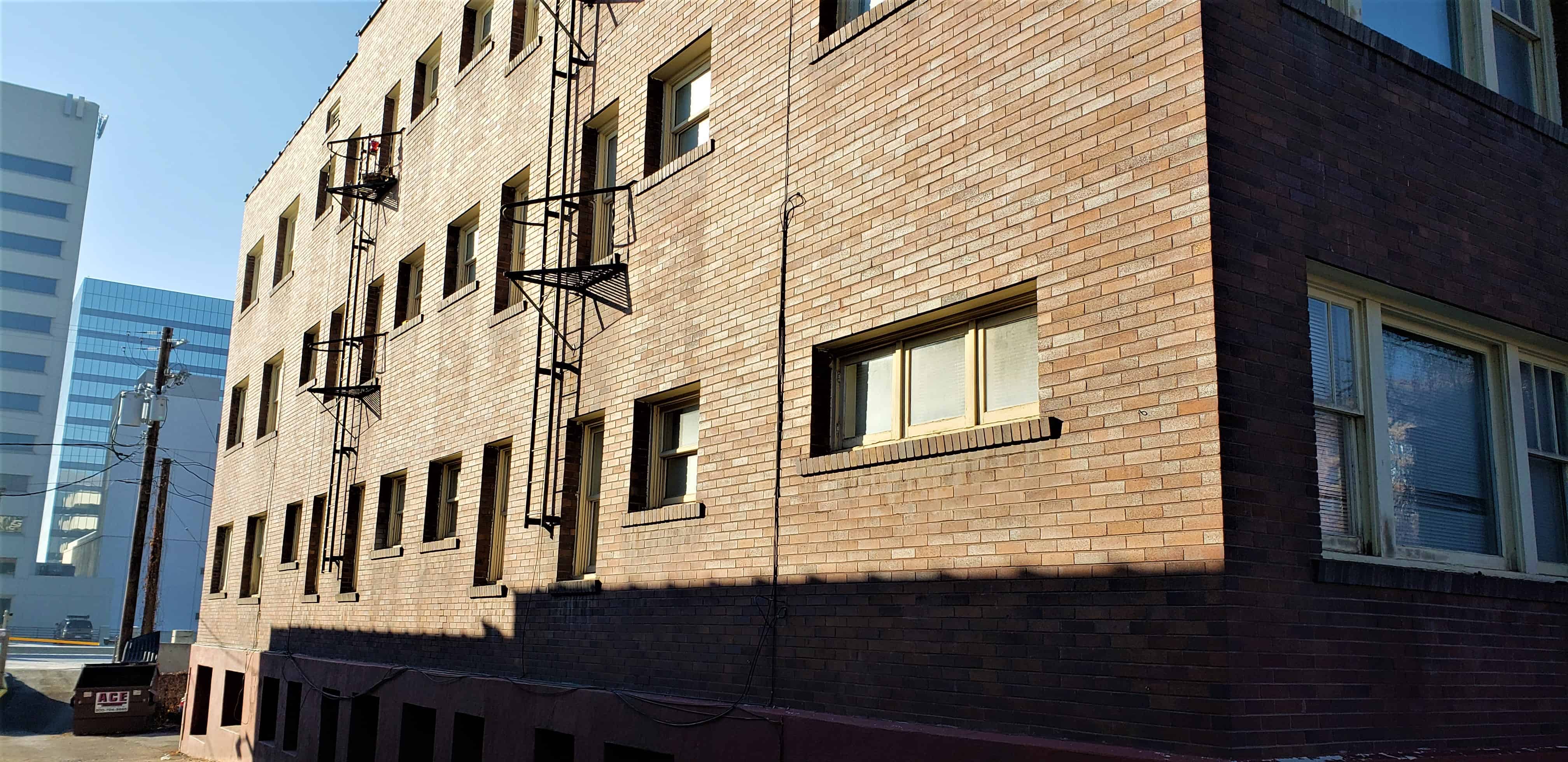
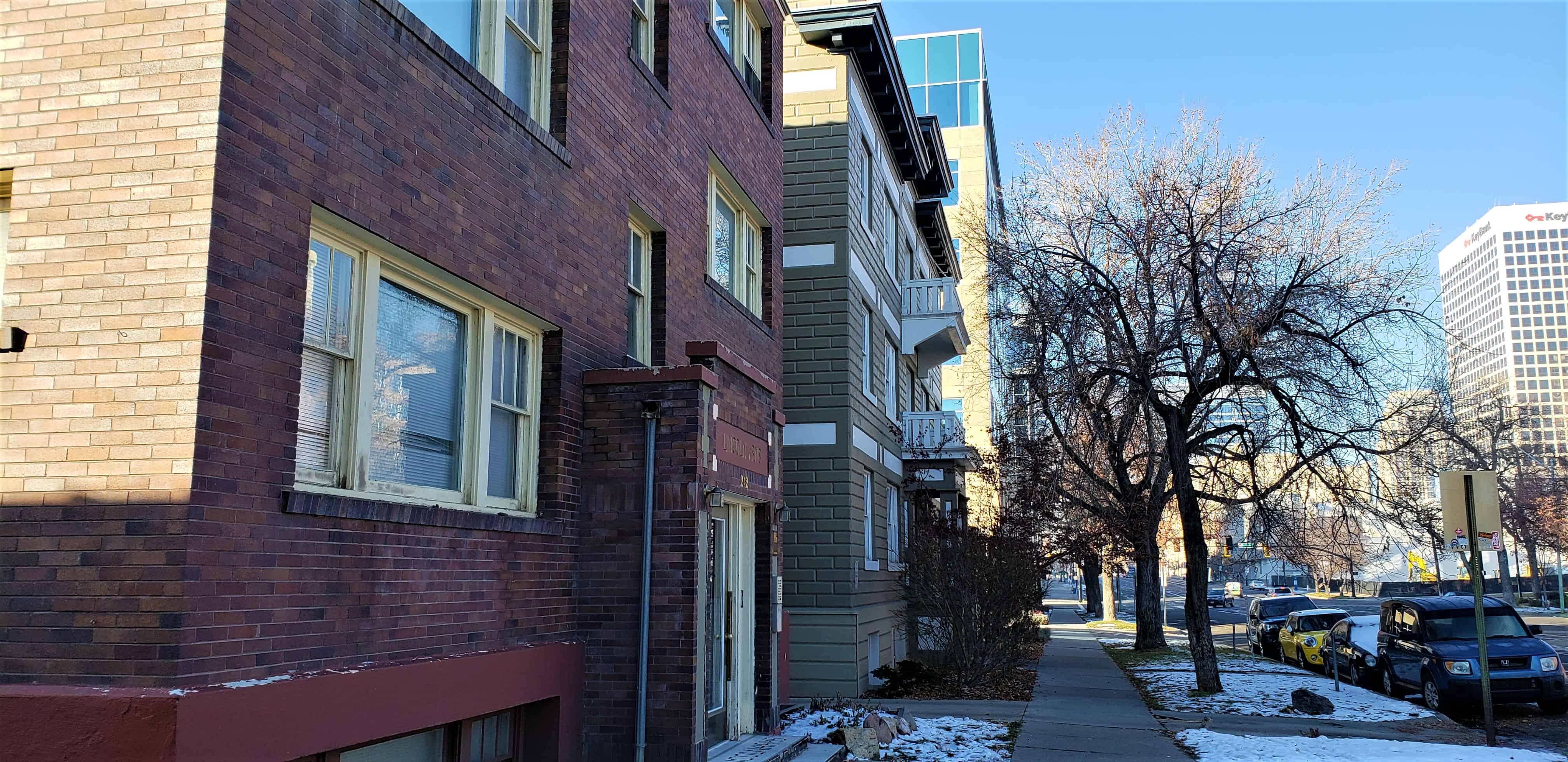
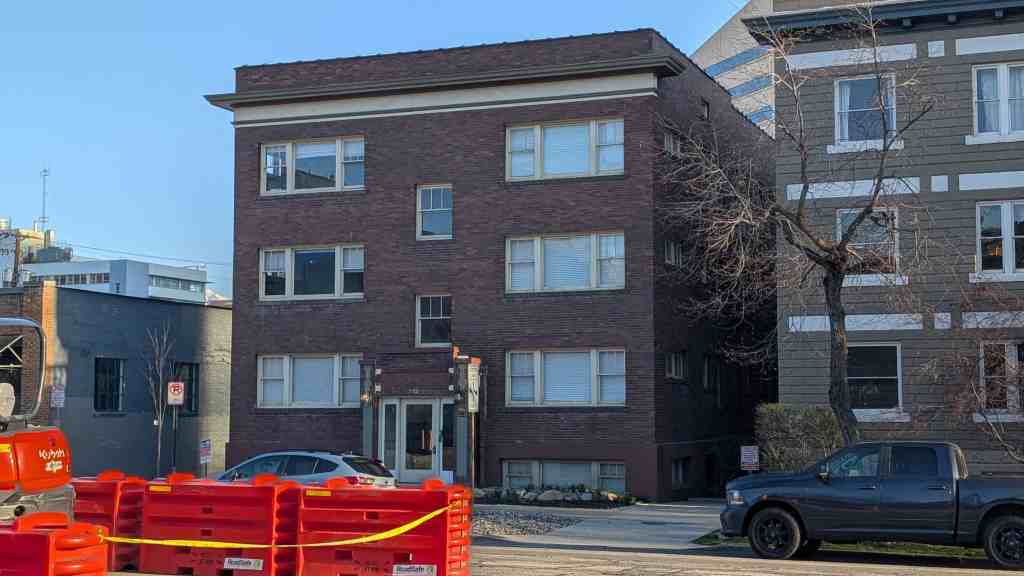
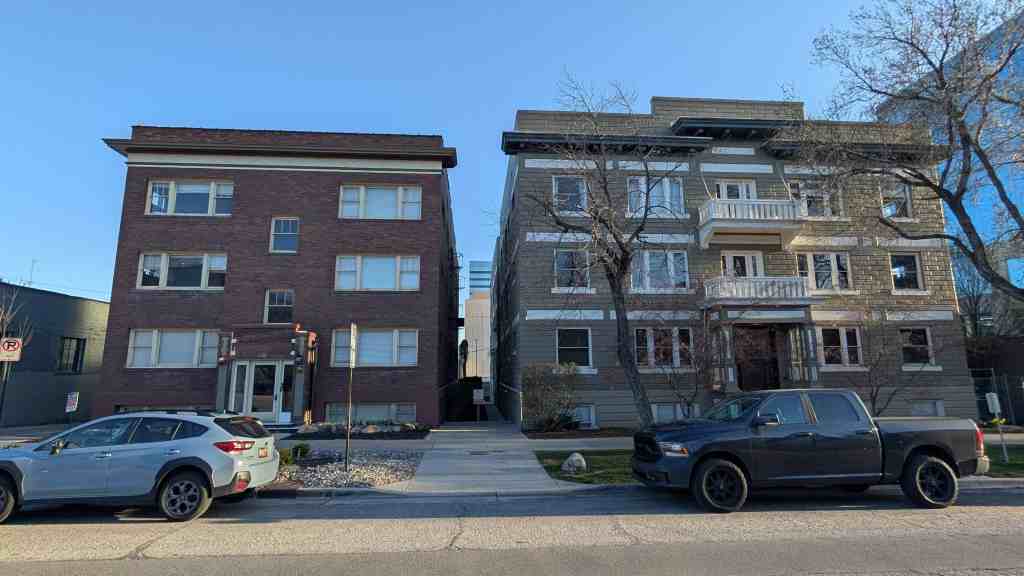
The Arches South Apartments / Carol-Jo Apartments, located at 156 West 200 North in Salt Lake, also at 205, 215, 221 N Quince St.
156 W 200 N
01 Tuesday Sep 2020
Posted in Uncategorized

01 Tuesday Sep 2020
Posted in Uncategorized
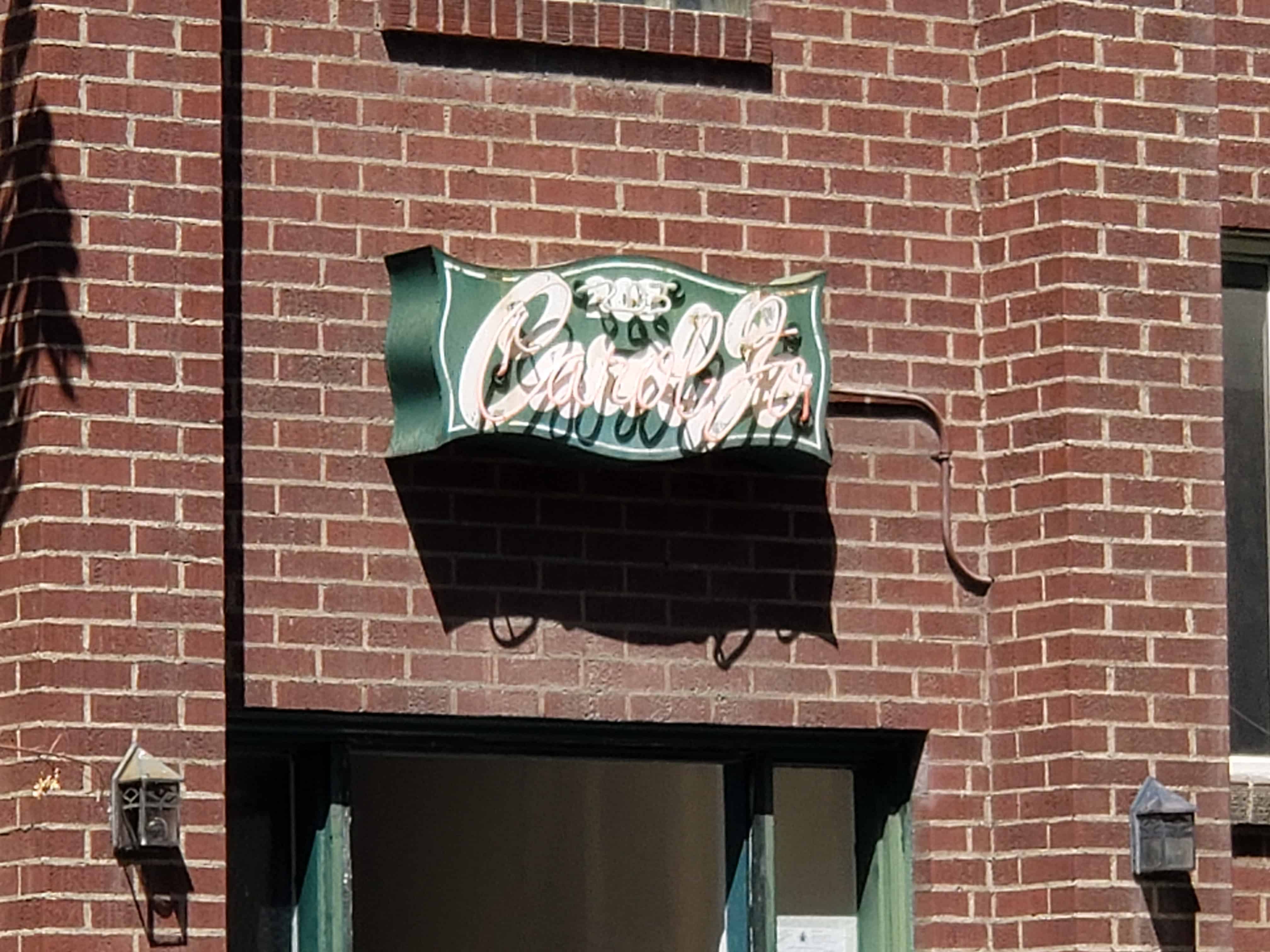
The Arches South Apartments / Carol-Jo Apartments, located at 156 West 200 North in Salt Lake, also at 205, 215, 221 N Quince St.



28 Thursday May 2020
Posted in Uncategorized

The Westcliff Apartments at 419 East 200 South in Salt Lake City were built in 1927.
Related Posts:


01 Friday May 2020
Posted in Uncategorized

The Ruby Apartments at 435 East 200 South in Salt Lake City were built in 1912.
Related Posts:


26 Wednesday Feb 2020
Posted in Uncategorized
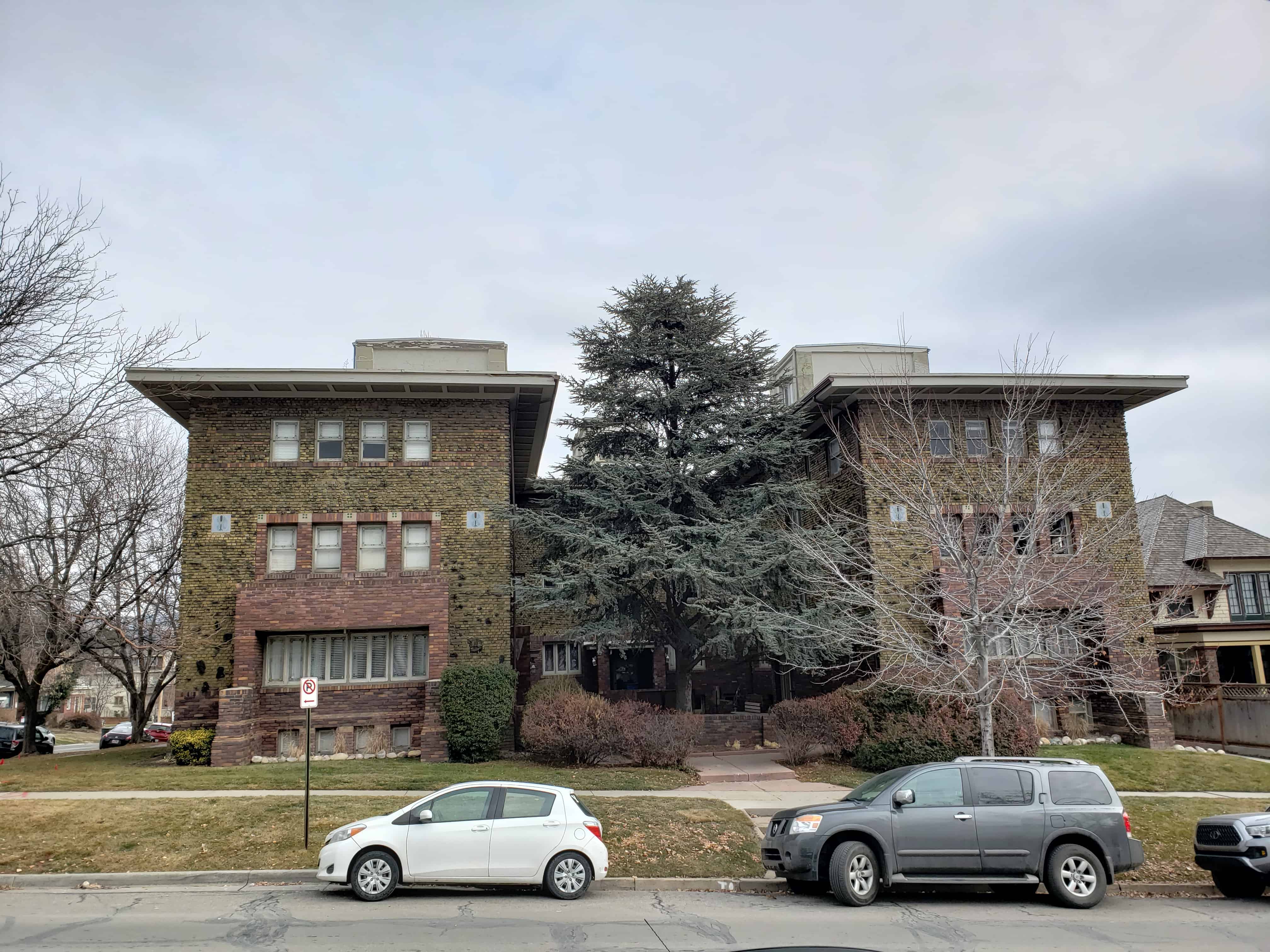

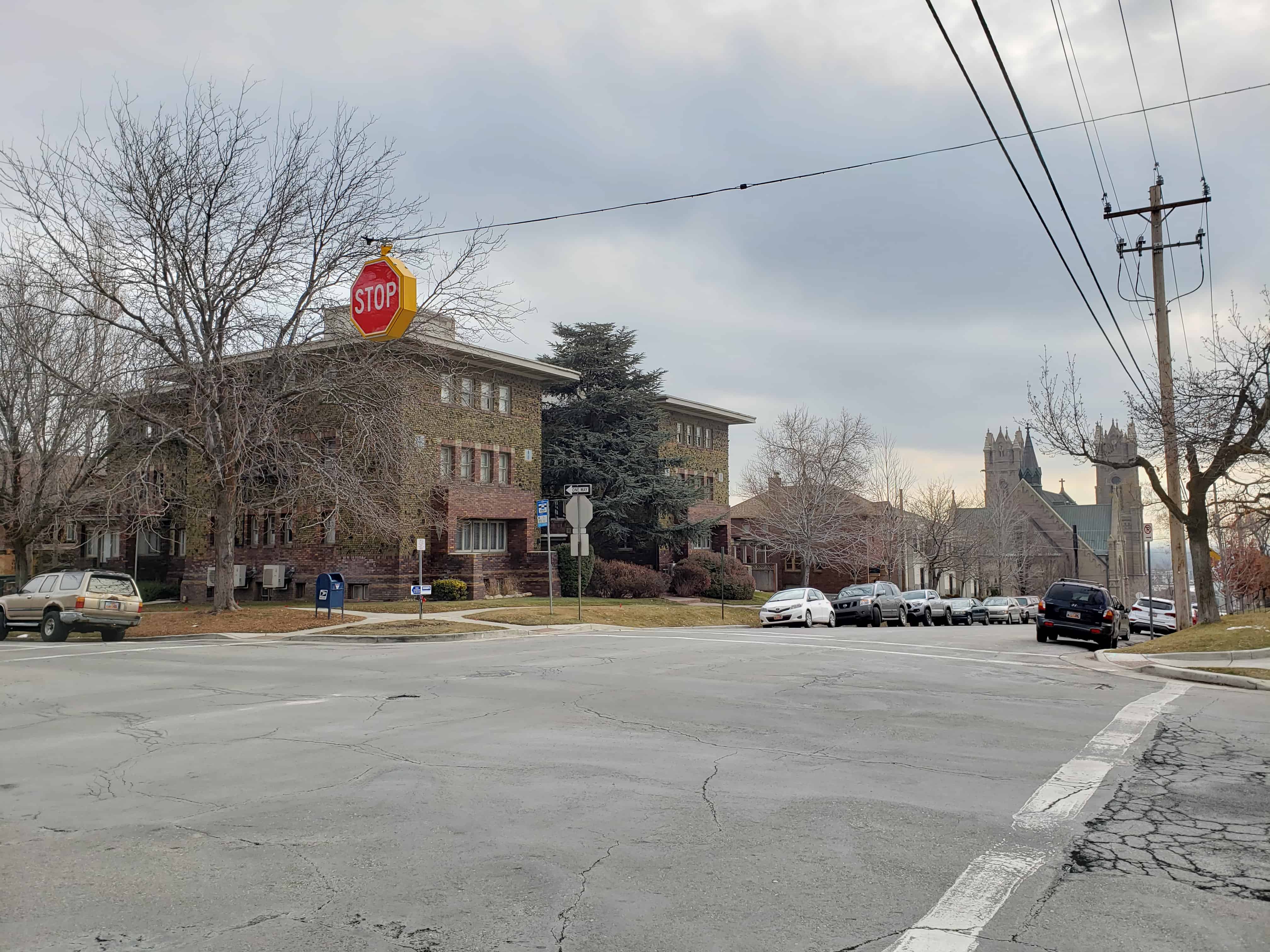
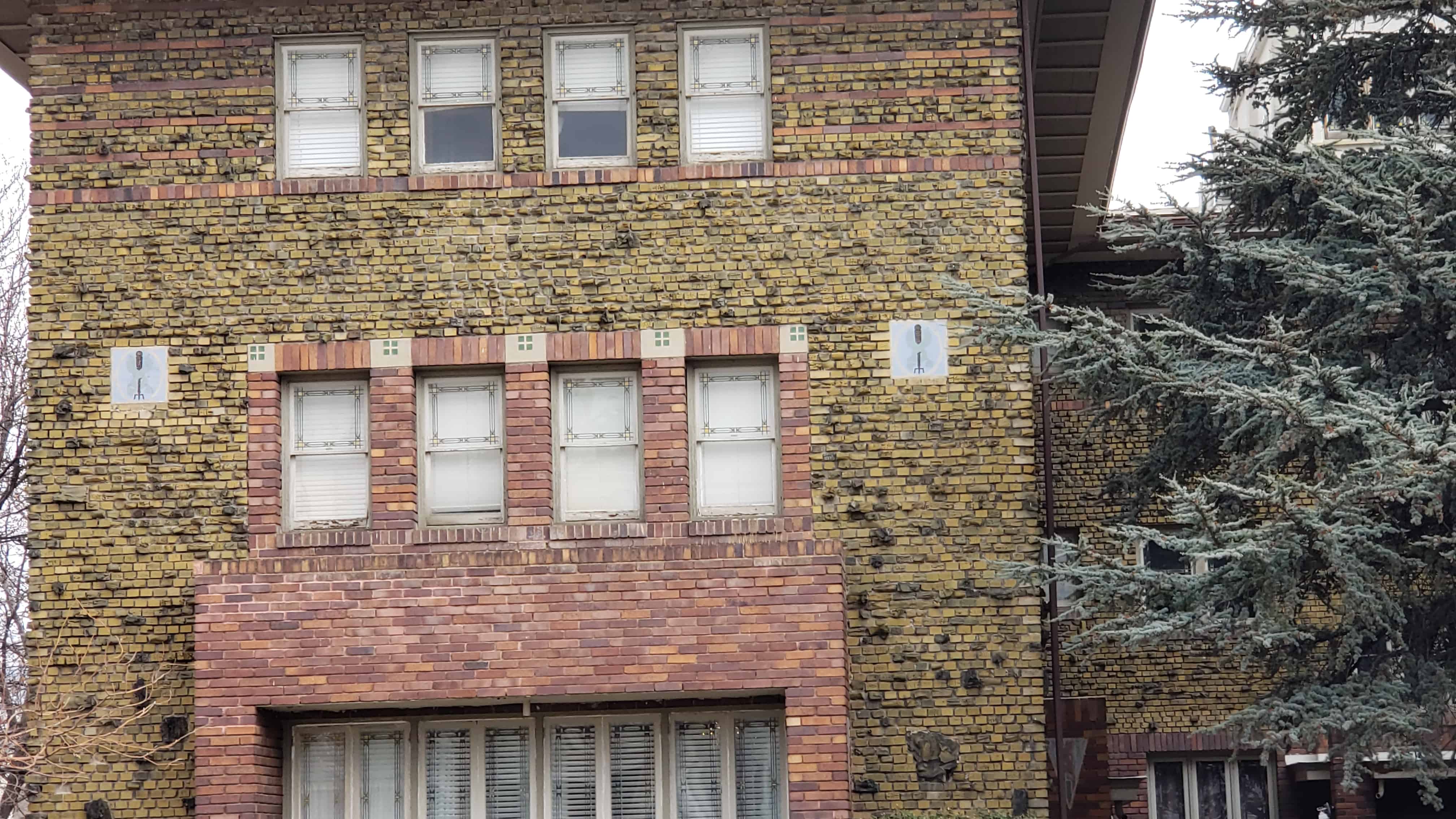
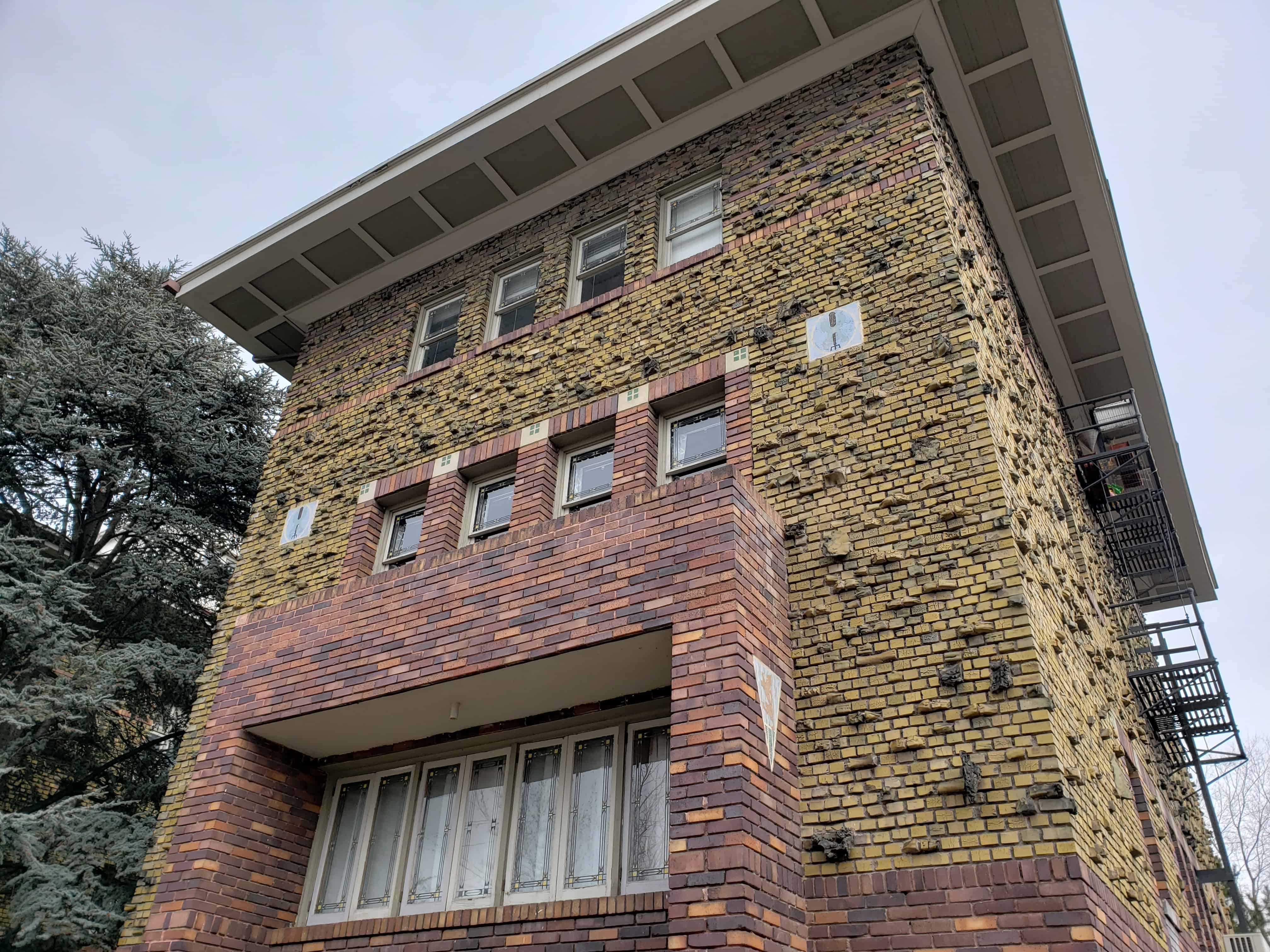
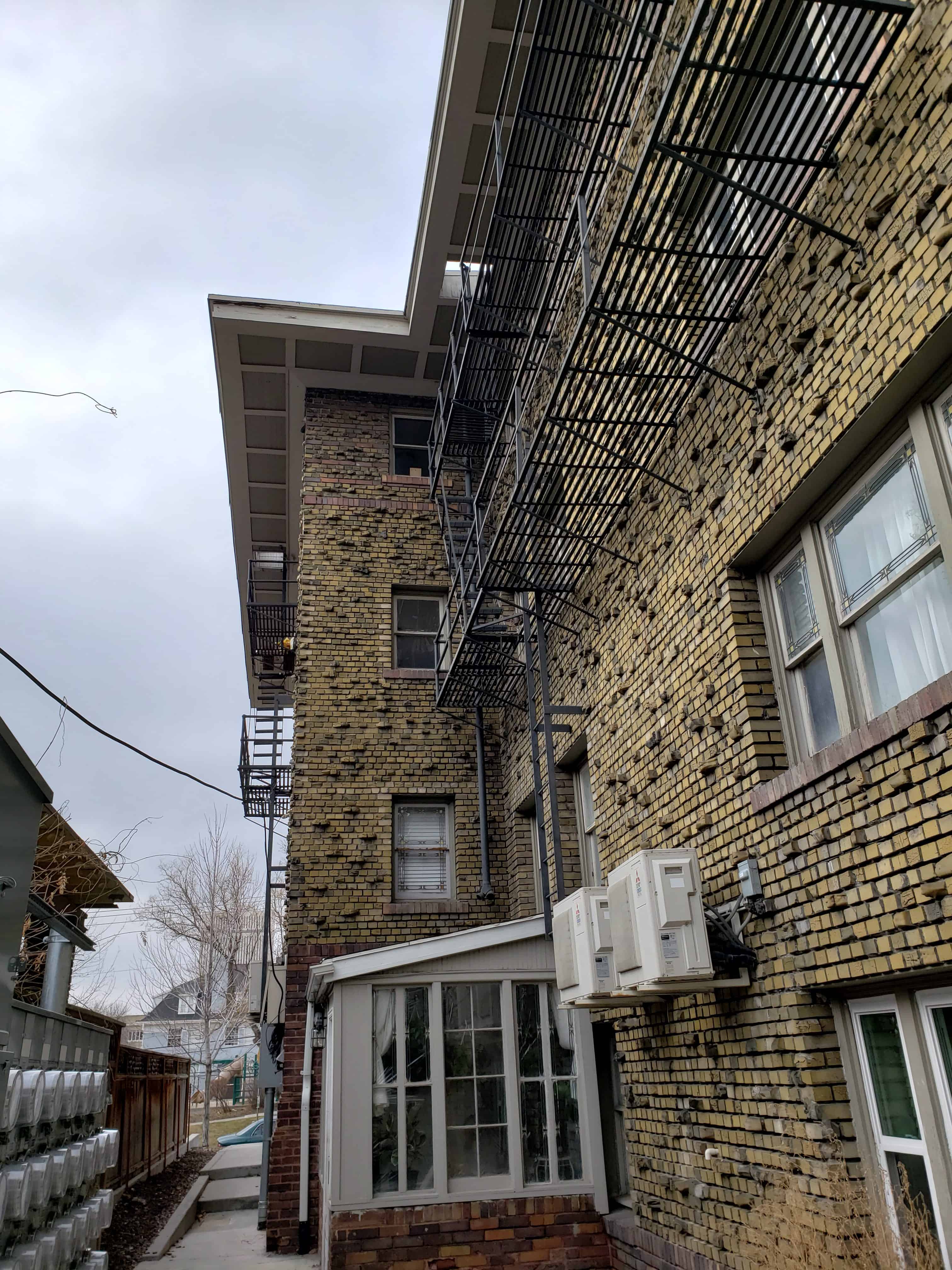
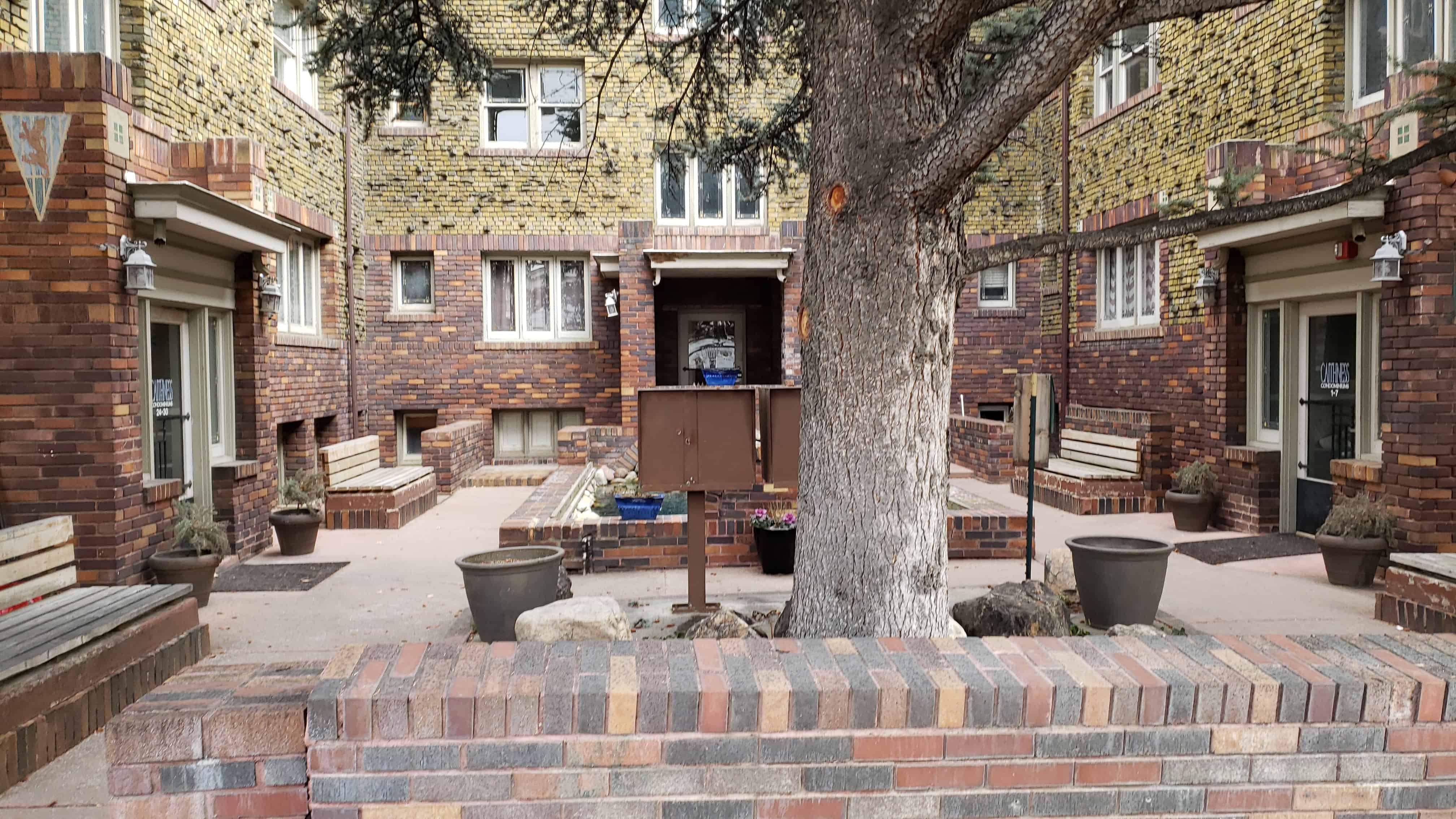
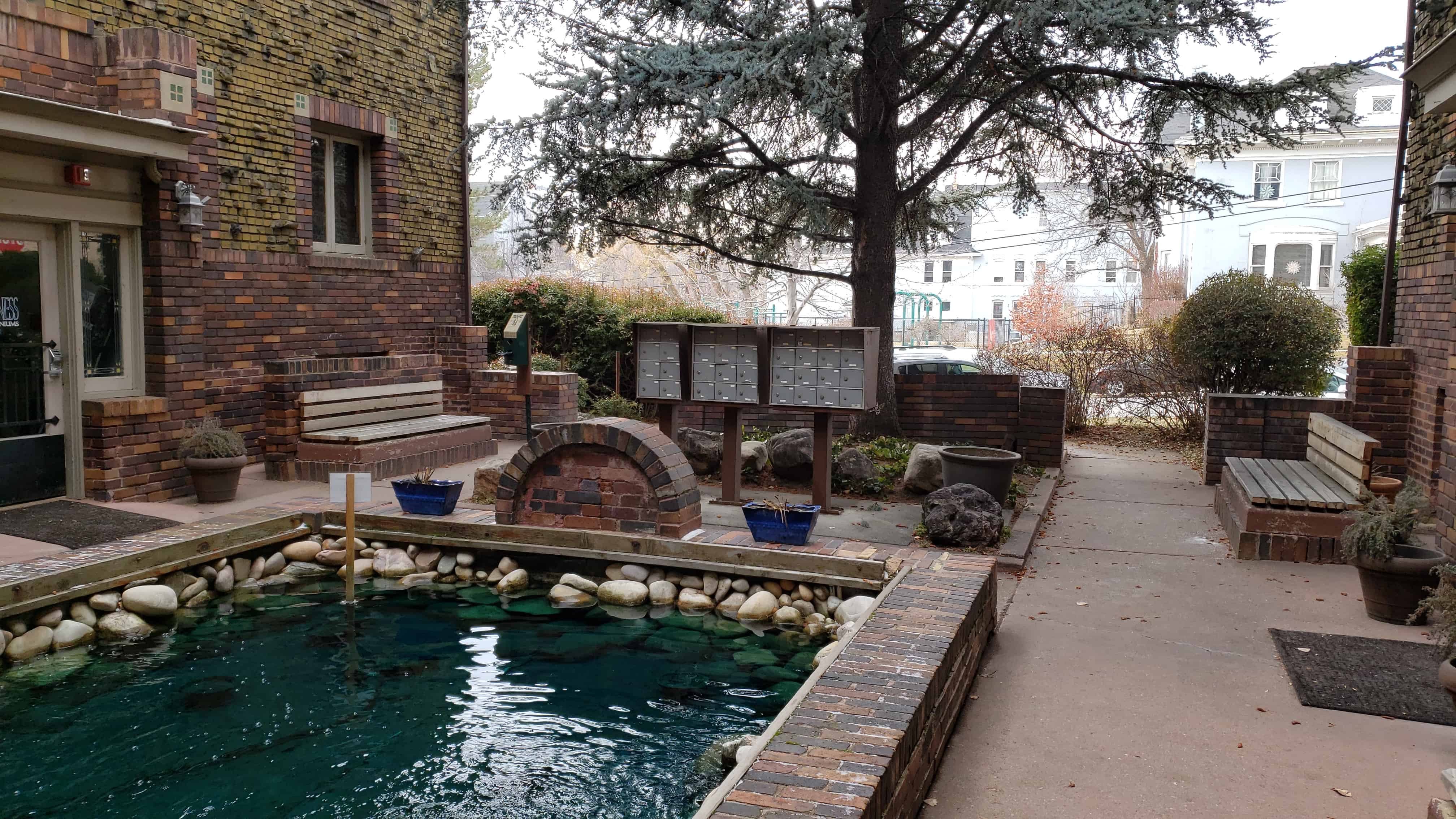
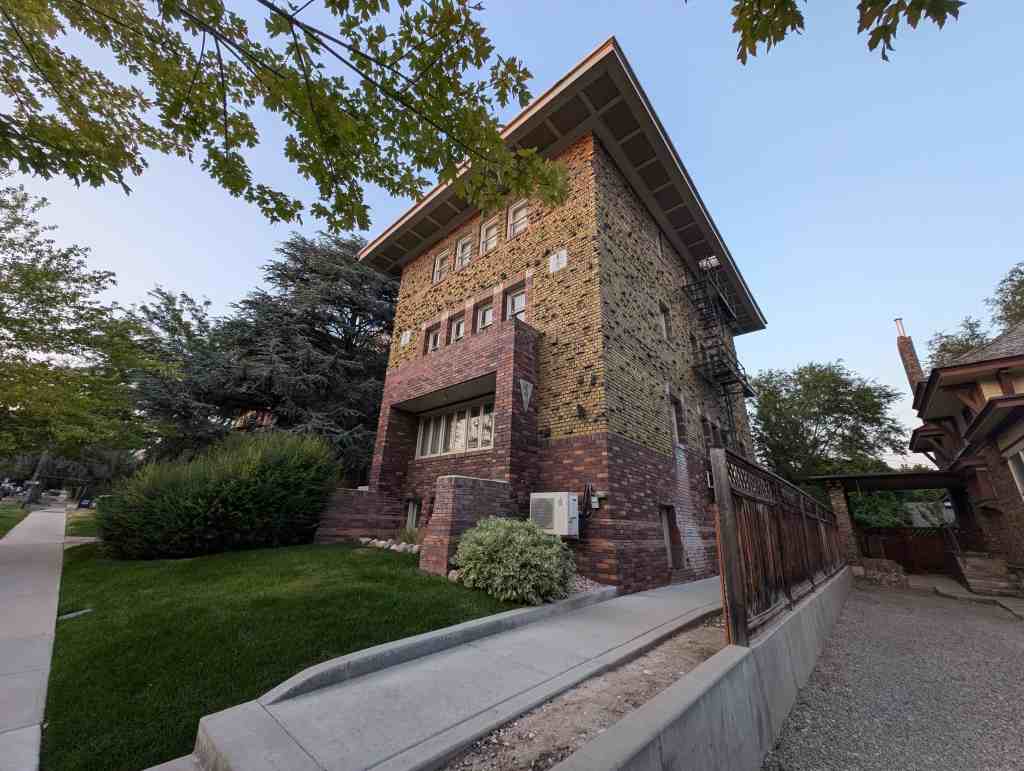
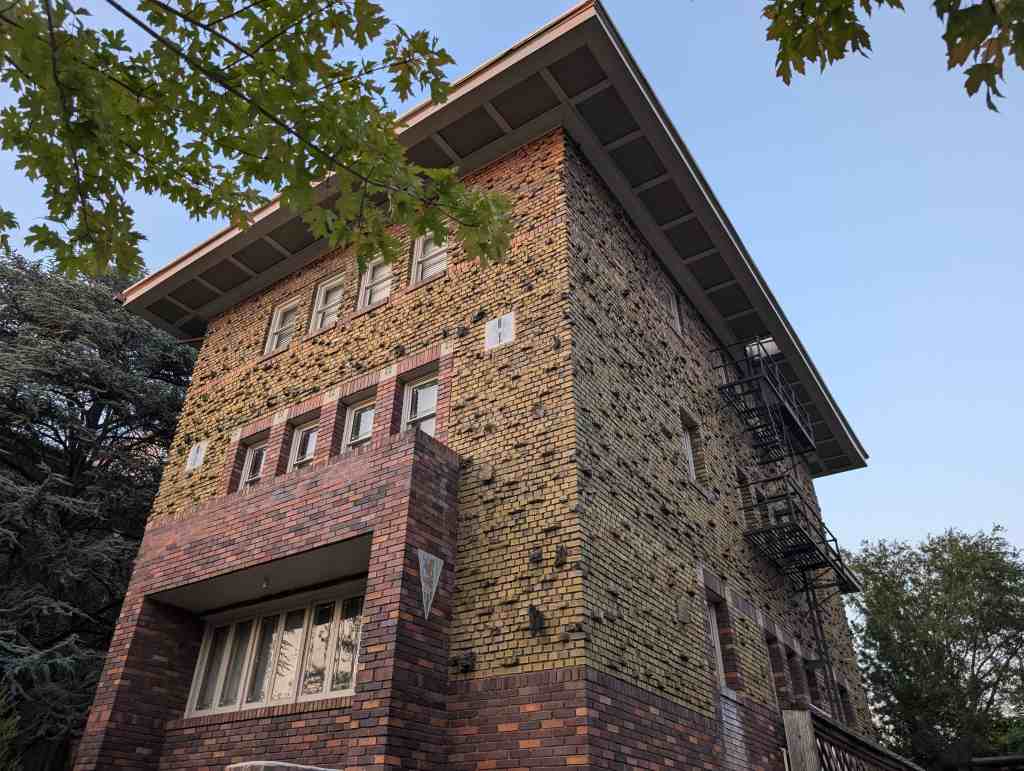
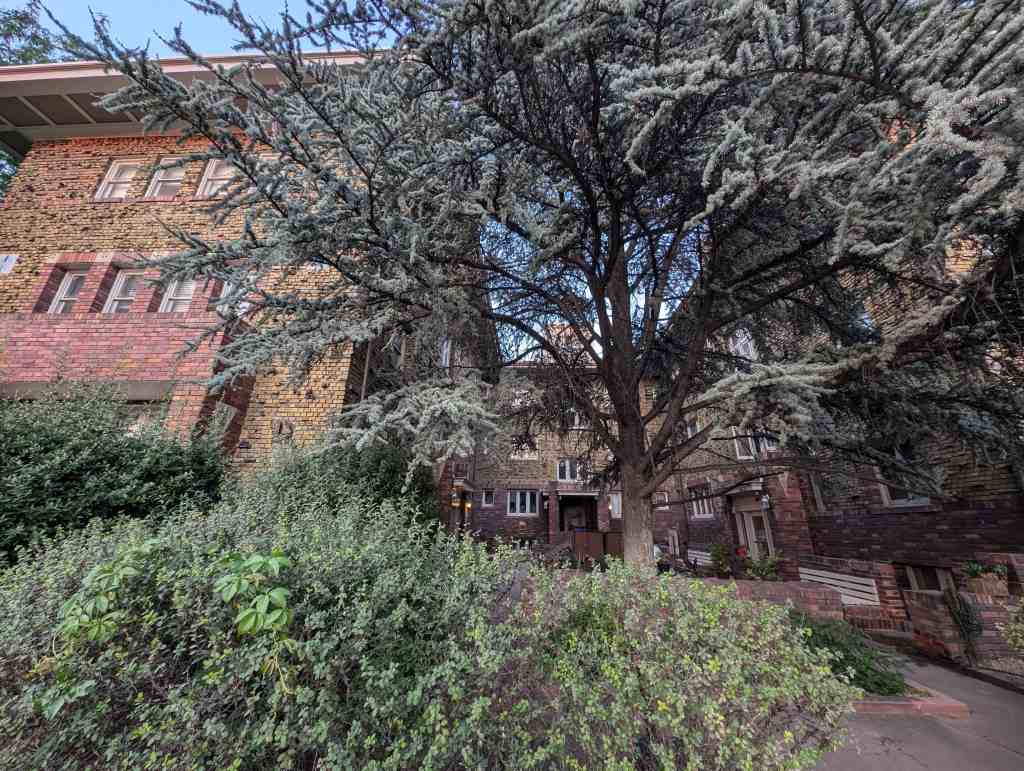
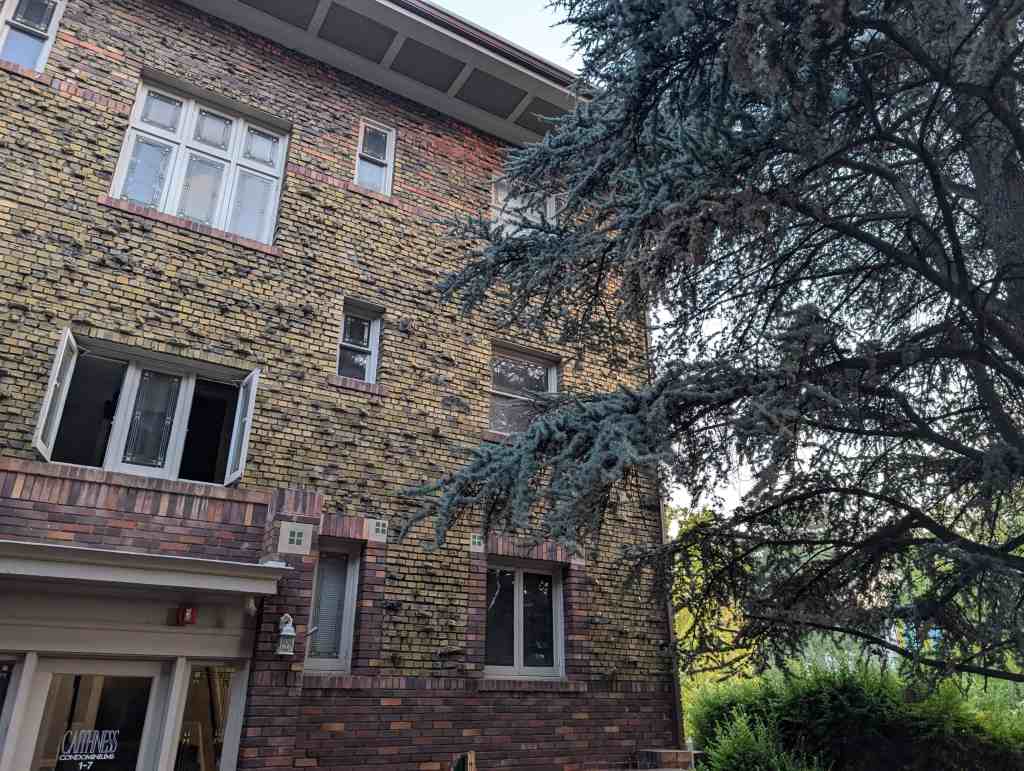
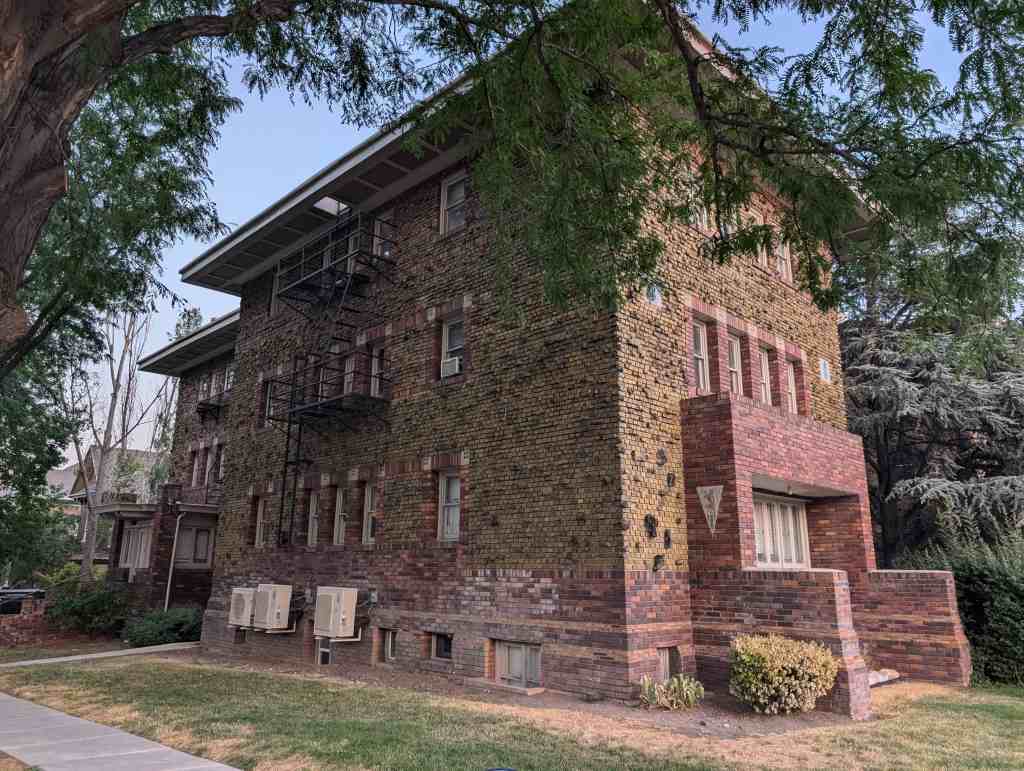
The Caithness (Riter) Apartments (now the Caithness Condominiums) were built in 1908 and are some of the many interesting apartments in Salt Lake City from that time frame.
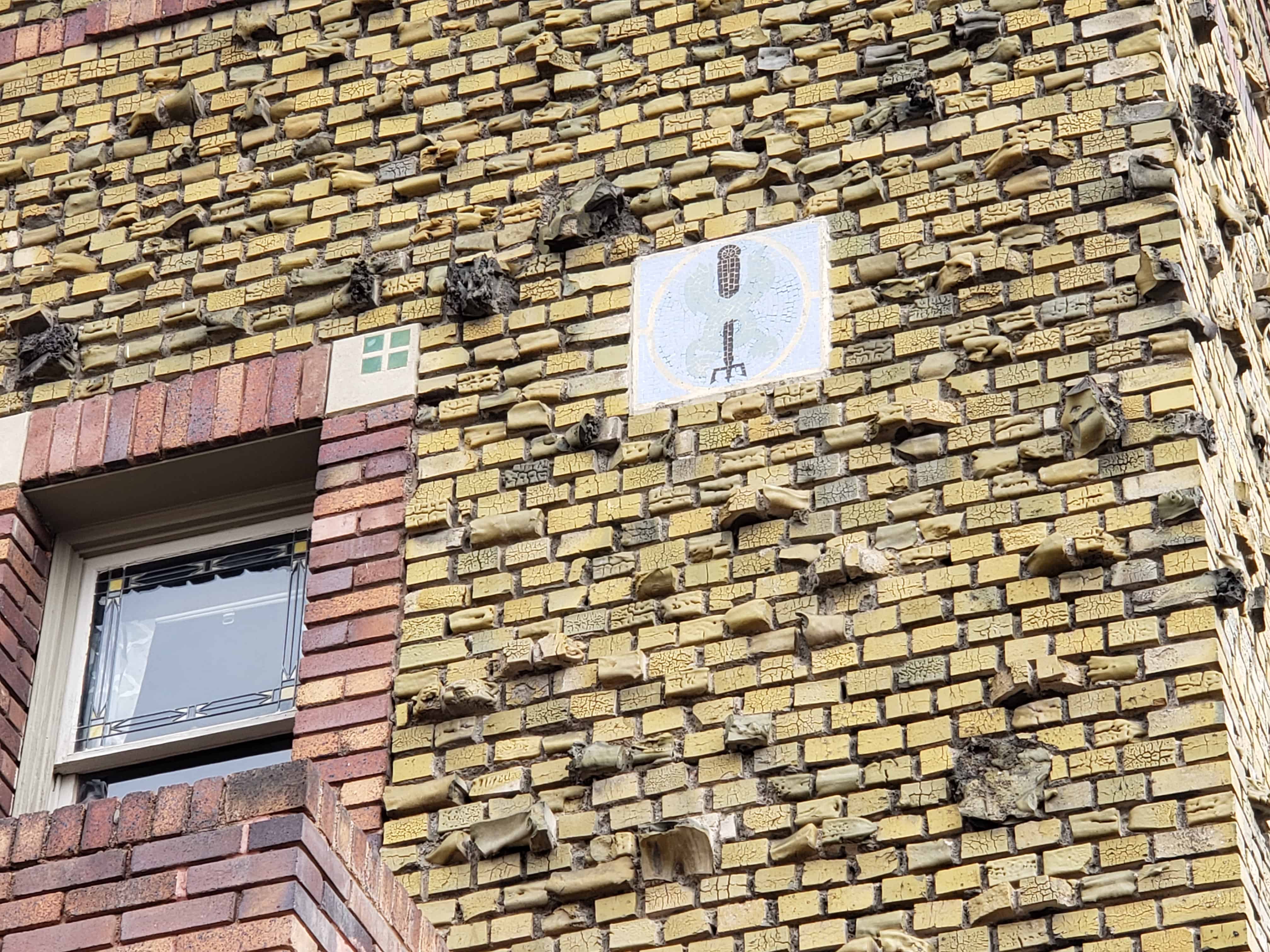
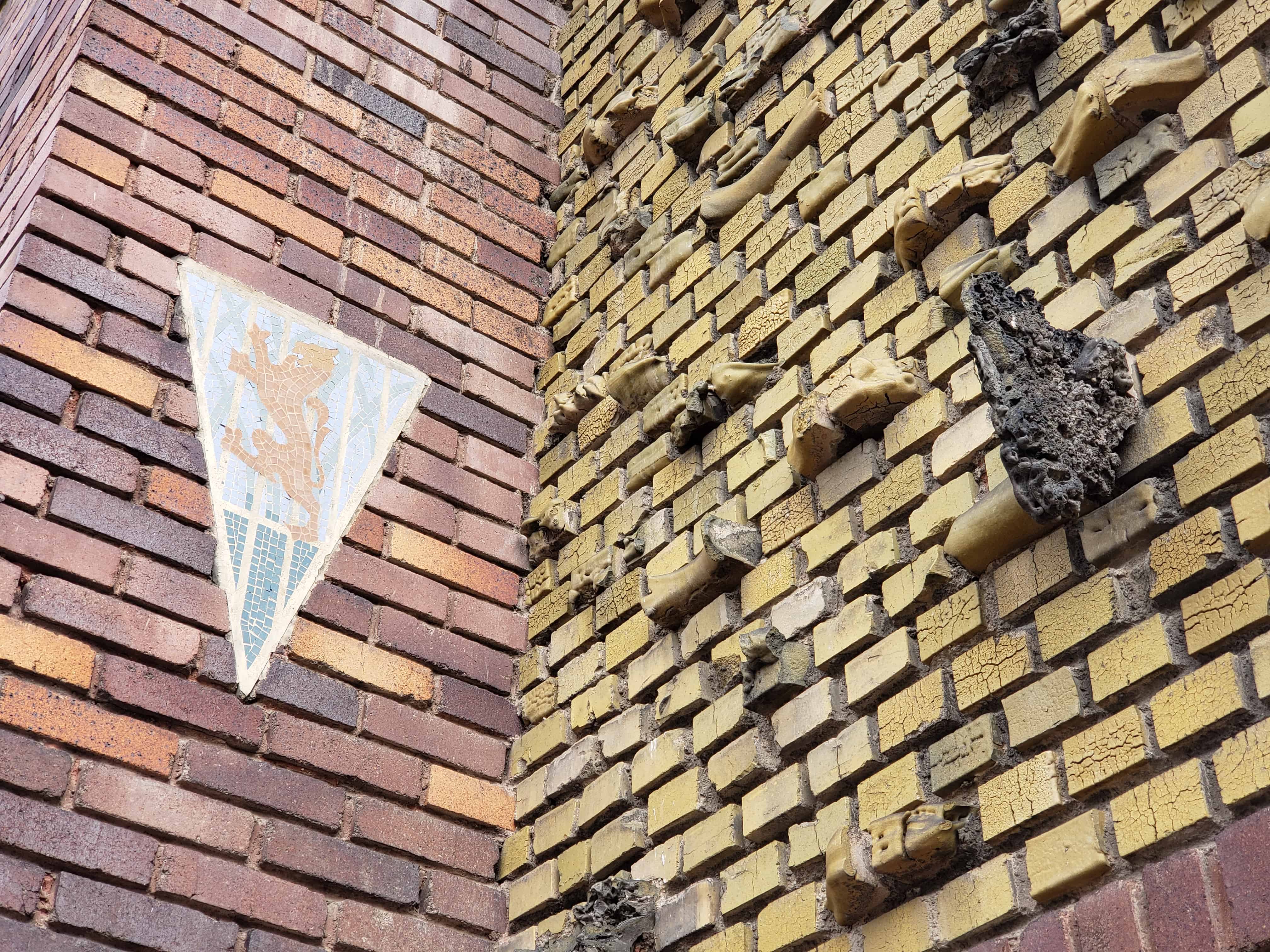
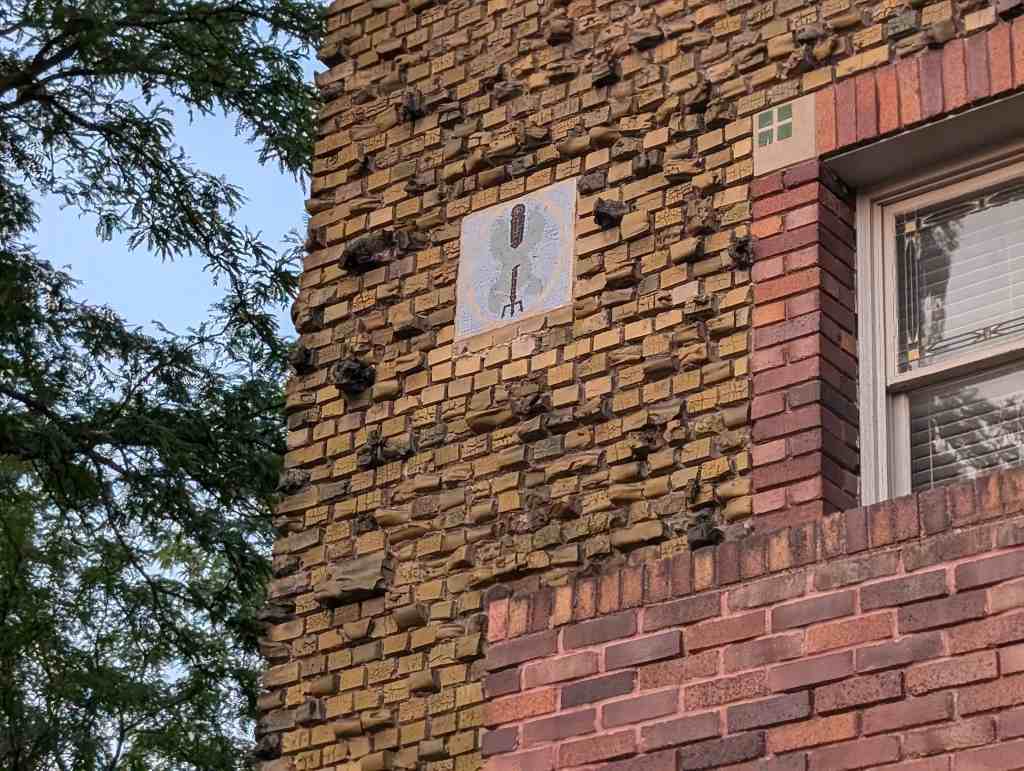
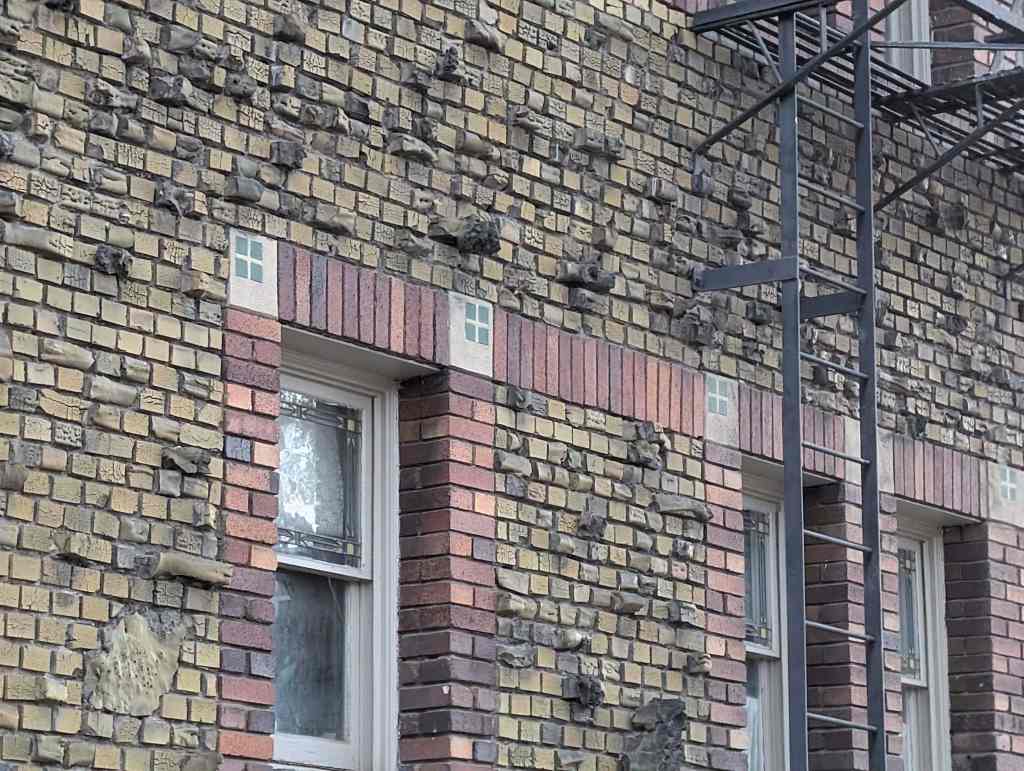
There are many interesting rocks protruding from the brick faces of the building, a resident told me that when they refaced the building and added those they had a problem with people rock climbing on the building.
The Caithness Apartments is one of only two apartment buildings in Salt Lake City known to have been designed by Ware and Treganza, one of the most prolific and prominent architectural firms in Utah during the early twentieth century. They designed many other residential buildings – – primarily houses, but also a few smaller multi-family dwellings. The other Ware and Treganza designed apartment is the Smith Apartments located at 228 S 300 E. Both the Caithness and the Smith are walk-up U-court type apartments, though the central court of the Smith is much narrower than that of the Caithness.
Located at 86 North B Street in The Avenues in Salt Lake City, Utah
Related Posts:
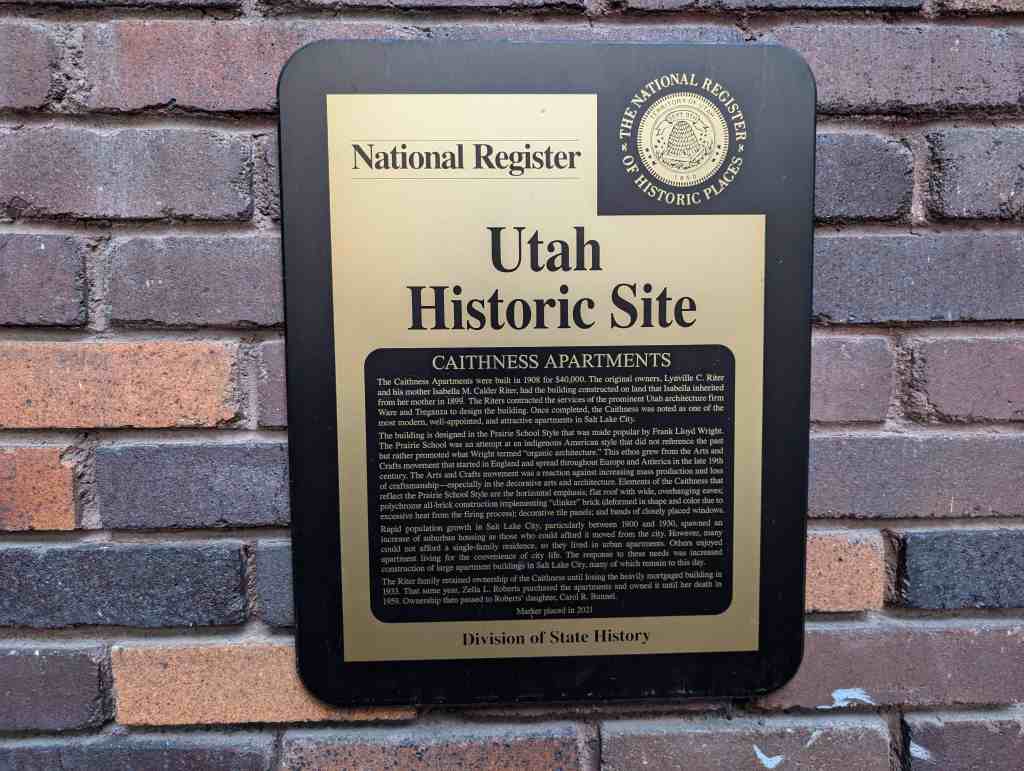
The Caithness Apartments were built in 1908 for $40,000. The original owners, Lynville C. Riter and his mother Isabella M. Calder Riter, had the building constructed on land that Isabella inherited from her mother in 1899. The Riters contracted the services of the prominent Utah architecture firm Ware and Treganza to design the building. Once completed, the Caithness was noted as one of the most modern, well-appointed, and attractive apartments in Salt Lake City.
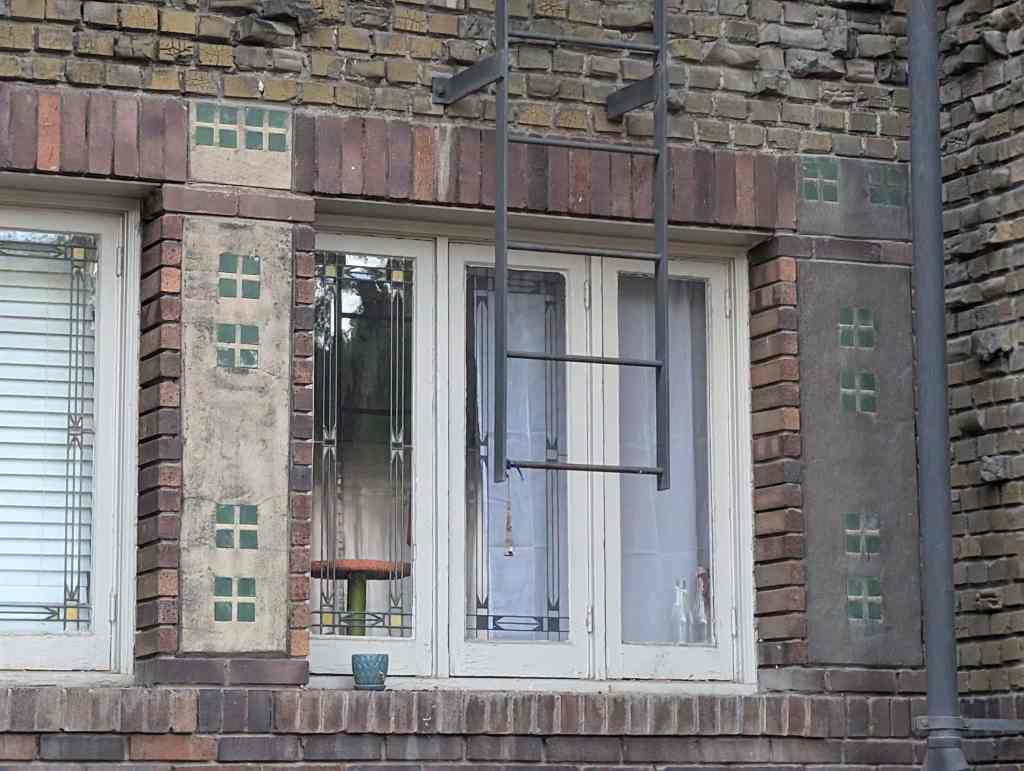
The building is designed in the Prairie School Style that was made popular by Frank Lloyd Wright. The Prairie School was an attempt at an indigenous American style that did not reference the past but rather promoted what Wright termed “organic architecture.” This ethos grew from the Arts and Crafts movement that started in England and spread throughout Europe and America in the late 19th century. The Arts and Crafts movement was a reaction against increasing mass production and loss of craftsmanship-especially in the decorative arts and architecture. Elements of the Caithness that reflect the Prairie School Style are the horizontal emphasis; flat roof with wide, overhanging eaves; polychrome all-brick construction implementing “clinker” brick (deformed in shape and color due to excessive heat from the firing process); decorative tile panels; and bands of closely placed windows.
Rapid population growth in Salt Lake City, particularly between 1900 and 1930, spawned an increase of suburban housing as those who could afford it moved from the city. However, many could not afford a single-family residence, so they lived in urban apartments. Others enjoyed apartment living for the convenience of city life. The response to these needs was increased construction of large apartment buildings in Salt Lake City, many of which remain to this day.
The Riter family retained ownership of the Caithness until losing the heavily mortgaged building in 1933. That same year, Zella L. Roberts purchased the apartments and owned it until her death in 1959. Ownership then passed to Roberts’ daughter, Carol R. Bunnel.







28 Saturday Dec 2019
Posted in Uncategorized

Cornell Apartments
101 South 600 East, Salt Lake City, Utah
Constructed in 1910, the Cornell Apartments is one of over 180 “urban apartments” built in Salt Lake City during the first three decades of the twentieth century, a period of unprecedented expansion and urbanization. Over 60 percent of those buildings are either listed or eligible for listing in the National Register. Urban apartments are significant under Criterion C as a distinct and important type of residential building in the city. Apartments are remarkably consistent with one another in terms of building plan, height, roof type, materials, and stylistic features. These and other characteristics mark them as a new and distinct type of early twentieth century residential building. Under Criterion A, urban apartments are significant for their association with the rapid urbanization of Salt Lake City during the 1890s-1930 period. The growth that took place during those decades spurred the construction of two opposing types of housing in the city: urban apartments and suburban homes. Suburban homes represent a rejection of urban conditions. Apartments, on the other hand, document the accommodation of builders and residents to the realities of crowded living conditions and high land values. They were a significant new housing option that emerged in response to the growth that transformed Salt Lake City into an urban center during the early twentieth century.
Constructed in 1910, the Cornell Apartments are a three-story brick building with a parapet roof, brick foundation, and modest Neo-Classical Revival/Colonial Revival styling. Ho significant alterations have been made to the building.
The Cornell is a variant of the “walk-up” type apartment building. The basic walk-up contains six units, is three stories in height, one apartment deep and two units in width across the façade. It has a central entrance/stairway with two apartments opening off each landing. That basic plan is doubled on the Cornell; in essence the building is two walk-up apartments with a common side wall. Thus, the building is a narrow rectangular building with its broad side facing the principal street. The façade is symmetrical except for the northernmost section, where there are no windows on either side of the porches- -the lot was simply too small to accommodate those two bays on the façade. Instead, the apartments there protrude to the rear in order to provide living space of comparable size with the other units in the building. There are projecting, three-story front porches with classical columns and pedimented roof. On the rear there are frame service porches connected by open walkways and stairs. Some of the windows in the service porches have been covered with plywood, but they are essentially unaltered.
The building permit for the Cornell Apartments was issued on July 15, 1910, to W.C.A. Vissing, one of the most active developers of apartment buildings in Salt Lake City during the pre-World War I period. The estimated cost of the 13-unit building was $25,000.
Vissing acquired this property in January 1910 from the Loraine Investment Company in exchange for the Arlington Apartments, located at 415 First Avenue.
As part of that deal he also obtained property at the corner of 800 East and 100 South where he built the Bernice Apartments in 1912.1 The Bernice and Cornell apartments are almost identical, though the Bernice has been altered in recent years.
Visaing owned this building for only a short time, selling it 1912 to Blanche Castleman for $32,000. The building changed hands four times over the ensuing decade before being purchased by Jacob Bergerman in 1923. It remained in the Bergerman family through at least 1934.
W.C.A. “Andy” Vissing constructed at least 20 major apartment buildings in Salt Lake City during his career. Born in Denmark in 1874, he emigrated to the U.S. and Salt Lake City at the age of fourteen. He started in the construction business as a young man and continued until his death in 1936. He is credited as “one of the first local apartment house builders.” He constructed some of the largest apartments in the city, including the Hillcrest, Buckingham, Fairmont and Commander apartments. The first apartments he is known to have constructed were the LaFrance Apartments in 1905. That was also the first of several apartment projects in which he was involved with Covey Investment Company, another major developer and owner of apartments in Salt Lake City. Vissing was primarily a contractor, not an apartment manager, so he usually sold his apartment buildings soon after completing them in order to finance the construction of new apartments.
Related Posts:


24 Monday Dec 2018
Posted in Uncategorized
Tags
Apartments, Historic Apartments, Historic Buildings, NRHP, Salt Lake City, Salt Lake County, utah

Historic Apartment Buildings in Salt Lake City.
I’ve really enjoyed some of the apartment buildings I come across in my exploration of Salt Lake City so I decided to start another list here.
General Downtown Area

Avenues Area
University Area

23 Sunday Dec 2018
Posted in Uncategorized
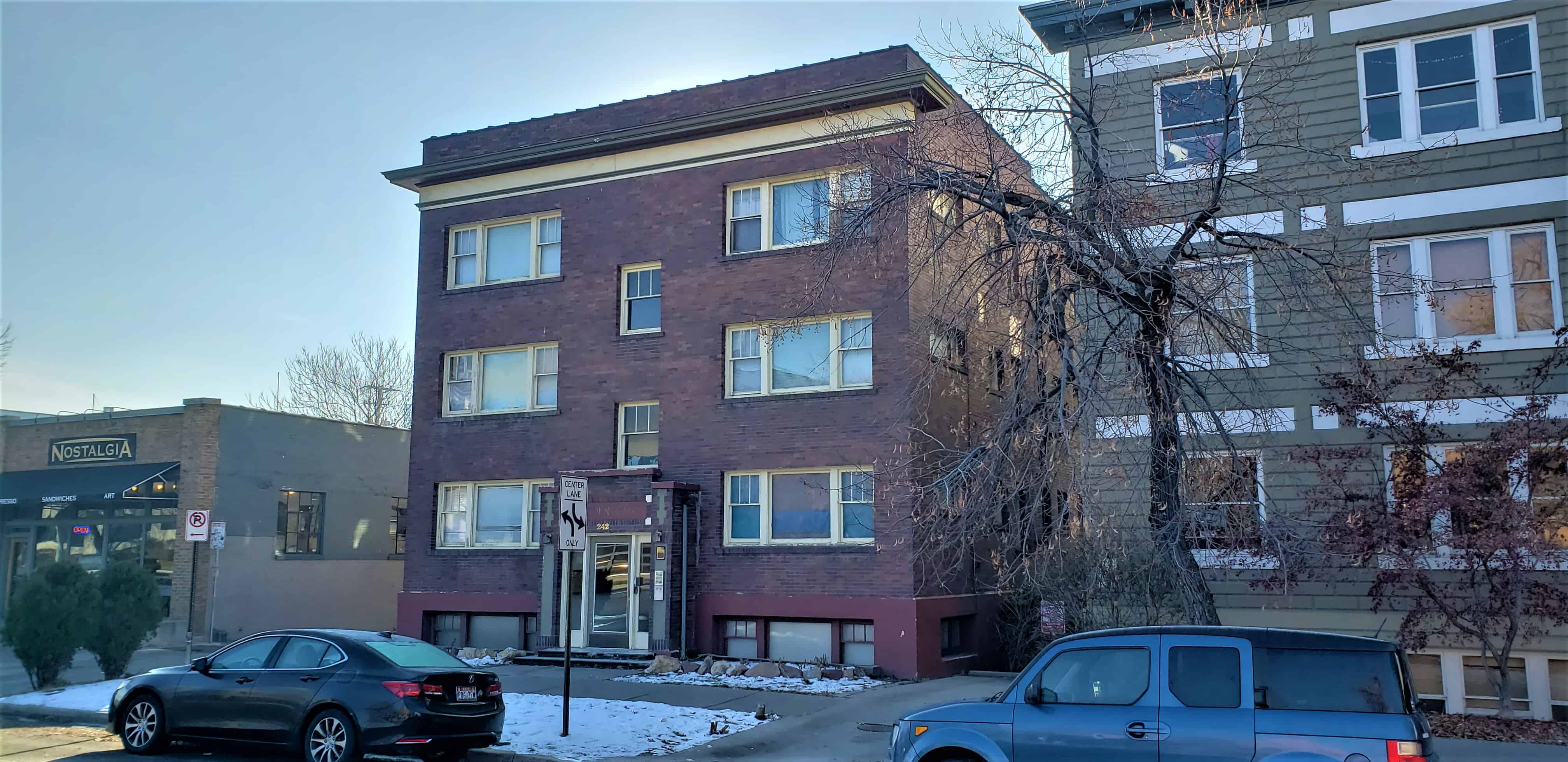
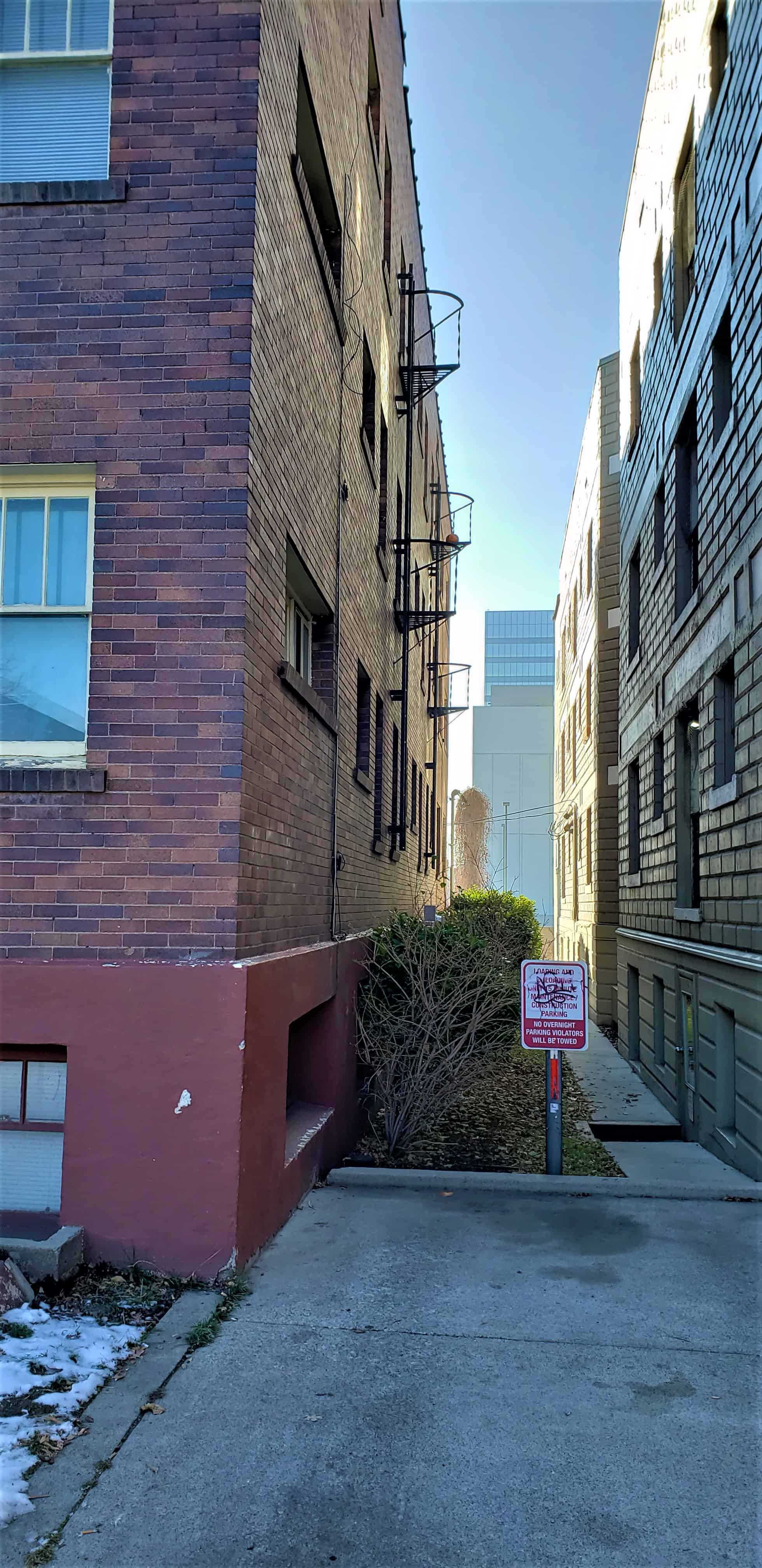
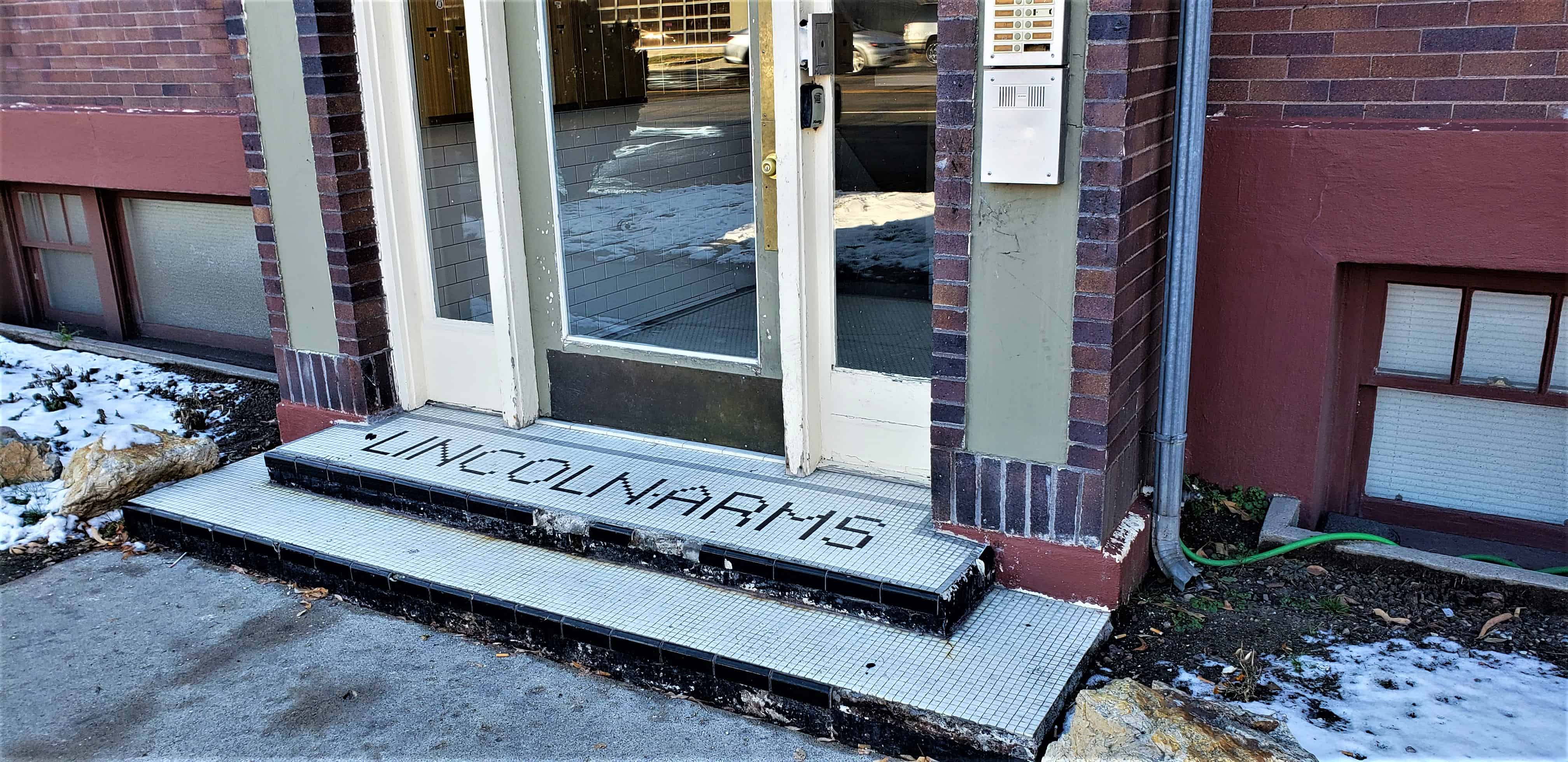
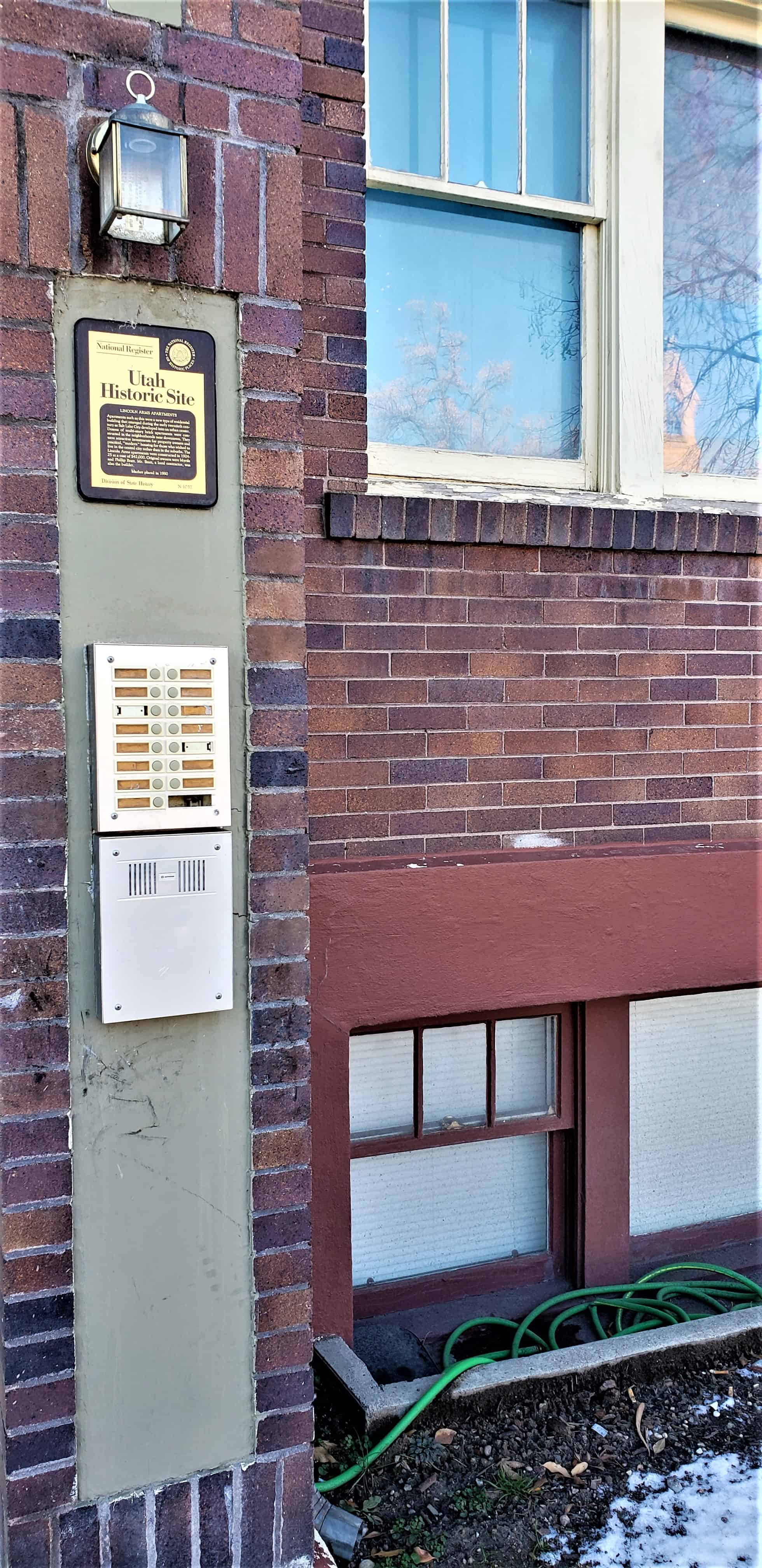
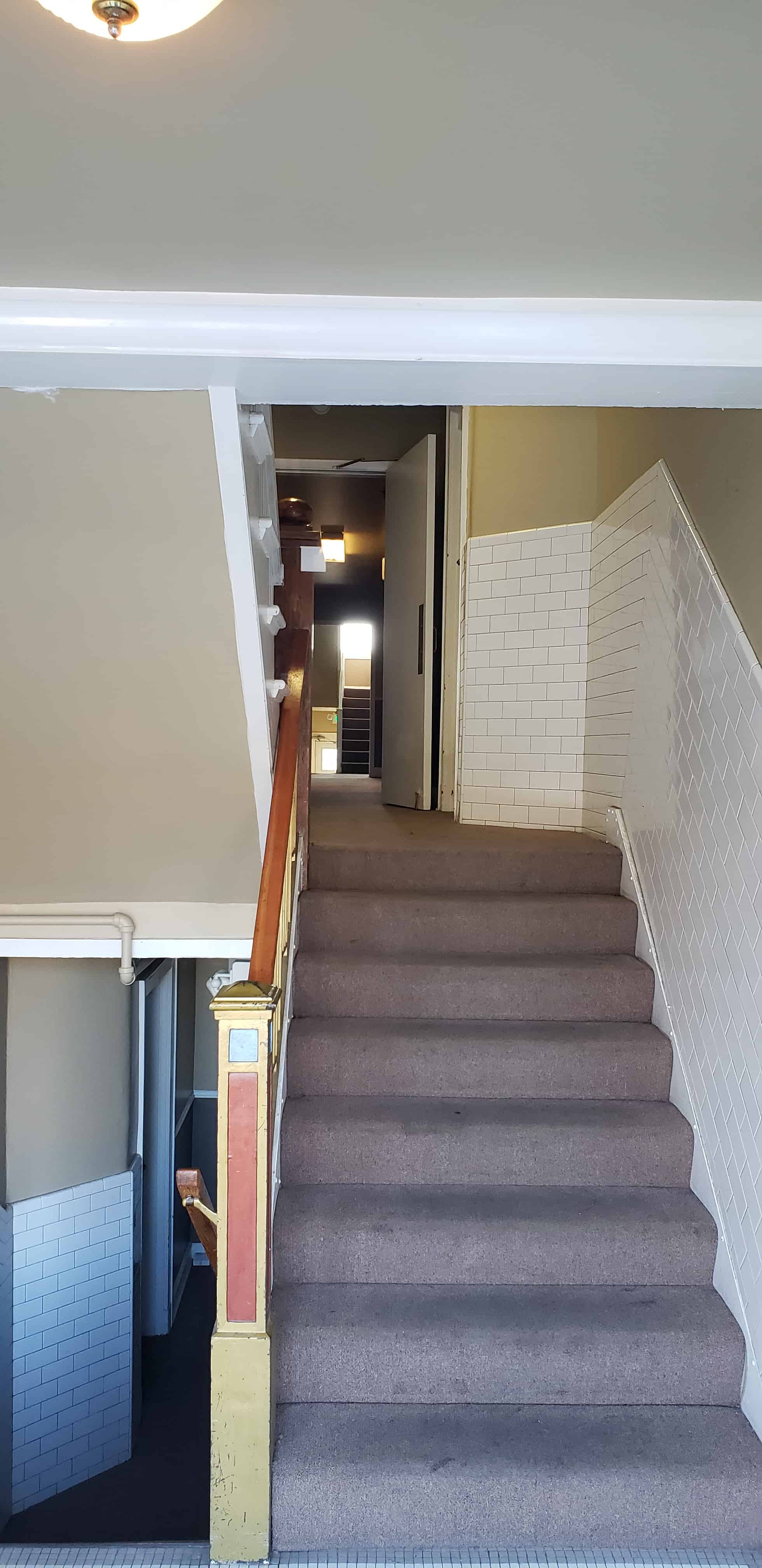
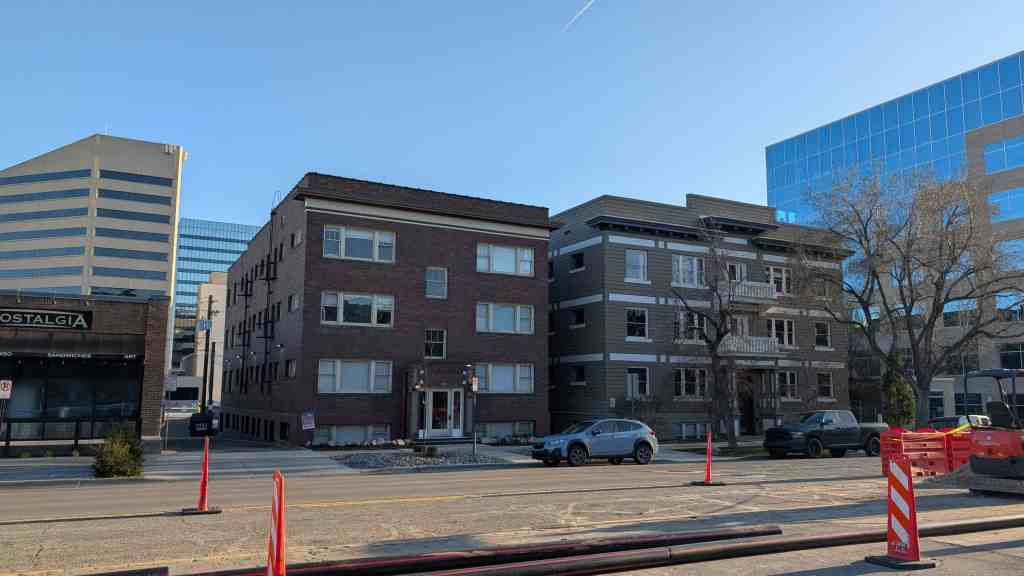
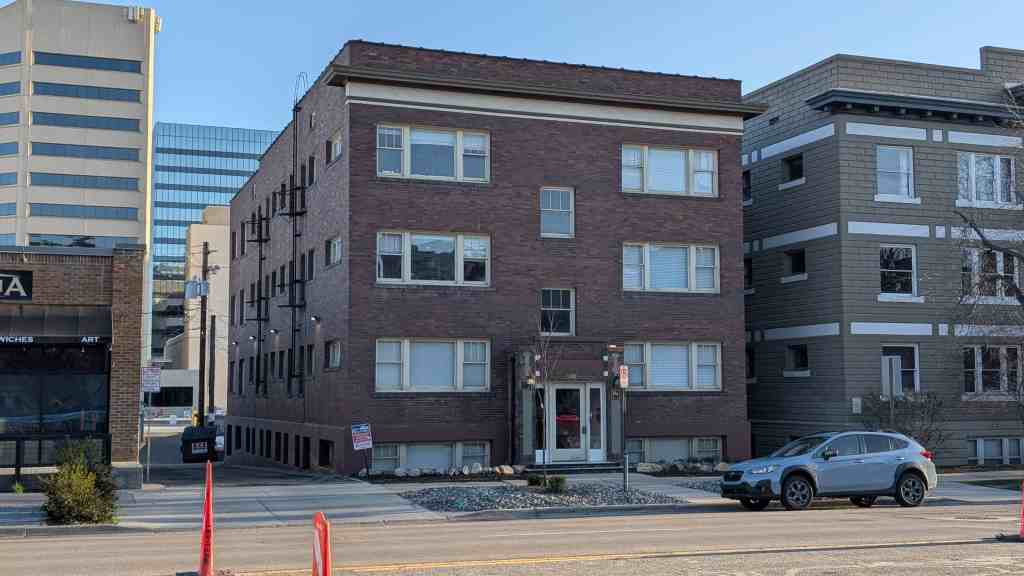
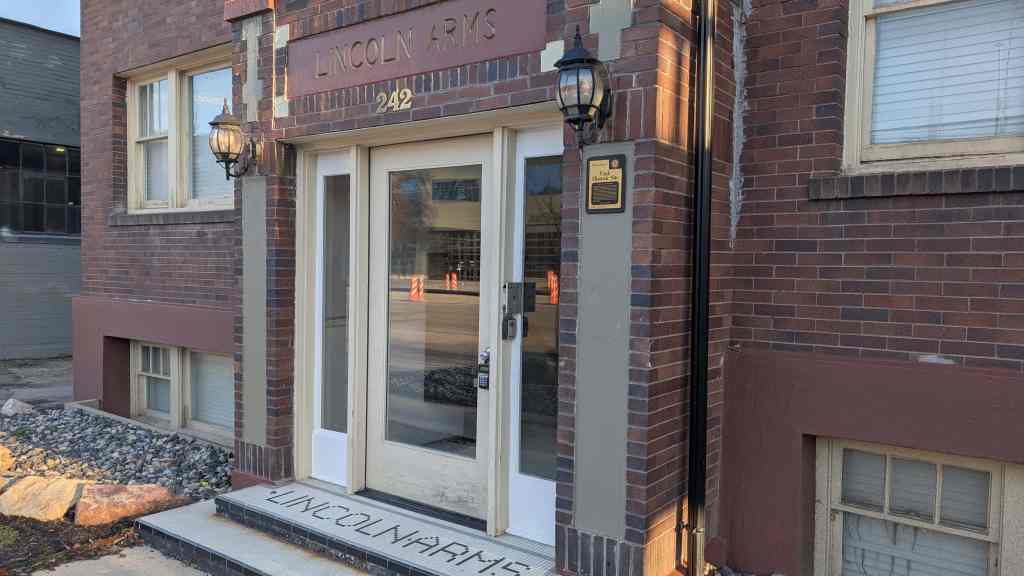
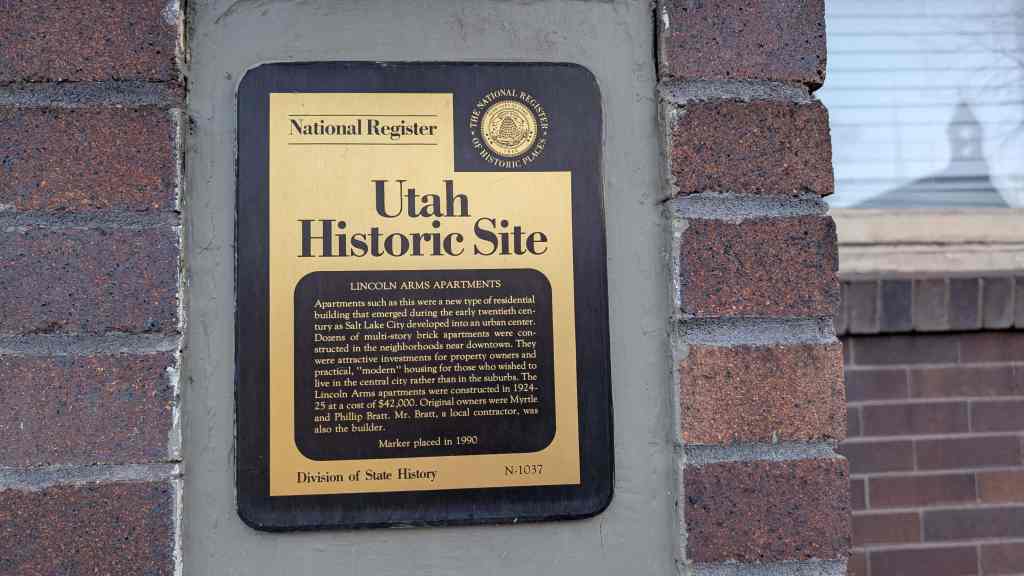
Lincoln Arms Apartments
Apartments such as this were a new type of residential building that emerged during the early 20th century as Salt Lake City developed into an urban center. Dozens of multi-story brick apartments were constructed in the neighborhoods near downtown. They were attractive investments for property owners and practical, “modern” housing for those who wished to live in the central city rather than in the suburbs. The Lincoln Arms Apartments were constructed in 1924-25 at a cost of $42,000. Original owners were Myrtle and Phillip Bratt. Mr. Bratt, a local contractor, was also the builder.
242 East 100 South in Salt Lake City, Utah
See other historic apartment building in Salt Lake City here.