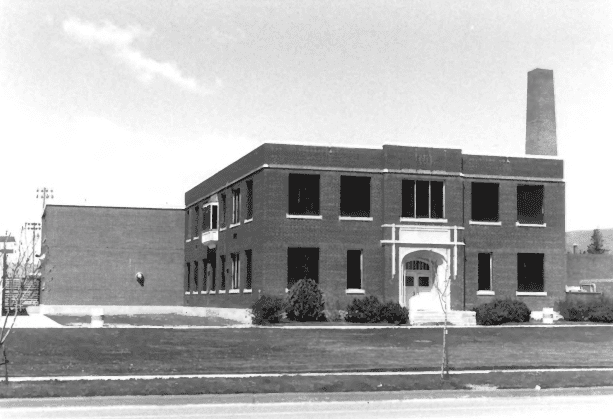
Built in 1935-36, the Bear River High School Science Building is part of o the Public Works Buildings Thematic Resources nomination and is significant because it helps document the impact of New Deal programs in Utah, which was one of the states that the Great Depression of the 1930s most severely affected. In 1933 Utah had an unemployment rate of 36 percent, the fourth highest in the country, and for the period 1932-1940 Utah’s unemployment rate averaged 25 percent. Because the depression hit Utah so hard, federal programs were extensive in the state. Overall, per capita federal spending in Utah during the 1930s was 9th among the 48 states, and the percentage of workers on federal work projects was far above the national average. Building programs were of great importance. During the 1930s virtually every public building constructed in Utah, including county courthouses, city halls, fire stations, national guard armories, public school buildings, and a variety of others, were built under federal programs by one of several agencies, including the Civil Works Administration (CWA), the Federal Emergency Relief Administration (FERA), the National Youth Administration (NYA), the Works Progress Administration (WPA), or the Public Works Administration (PWA), and almost without exception none of the buildings would have been built when they were without the assistance of the federal government.
The Bear River High School Science Building is located at 1450 South Main Street in Garland, Utah and added to the National Register of Historic Places (#85000797) on April 1, 1985.
The Bear River High School Science Building is one of 233 public works buildings identified in Utah that were built during the 1930s and early 1940s. Only 130 of the 233 buildings are known to remain today and retain their historic integrity. Of the 233 buildings, 107 of them were public school buildings; 55 of them remain. This was the only high school science building constructed. In Box Elder County a total of 7 buildings were constructed, 5 of which are known to be extant. Of the 7 originally built, 4 were public school buildings and 3 of the 4 remain.
onstruction of the Bear River High School Science Building was started in November of 1935 and completed in August 1936 in time for the opening of school. It originally housed the Bear River High School home economics department, the agricultural department, the biology department, the library, and a cafeteria.
Built in 1914, the Garland Carnegie Library is one of 23 Carnegie libraries in Utah and one of over 1,650 library buildings in the United States that were built by millionaire/philanthropist Andrew Carnegie. Carnegie donated the entire cost of the building on the condition that the town provide the land, books, librarian, and an annual maintenance budget. Although many small towns found it financially difficult to maintain their new libraries, much less improve their library services, Carnegie libraries were generally beneficial in the communities in which they were built. In addition to providing improved and expanded library services, Carnegie libraries established standards of library operation operation and building design which were used for many years in the construction of non-Carnegie libraries in other communities. The general contract for the building was awarded to the Newton Company of Ogden, Utah. Architects may have been Watkins and Birch, who designed the similarly-styled Carnegie library in Richmond. Watkins and Birch actively pursued Carnegie library design contracts throughout Utah and designed at least five that were built in Utah.
Located at 86 West Factory Street in Garland, Utah and added to the National Historic Register (#84000146) on October 25, 1984.
Built in 1914, the Garland Carnegie Library is significant as one of sixteen remaining Carnegie libraries of the twenty-three built in Utah. Thirteen of the sixteen library buildings maintain their original integrity and are included in the Carnegie Library Thematic Resource Nomination. In addition to making significant contributions to public education in their respective communities, these libraries are Utah’s representatives of the important nation-wide Carnegie library program, and they document its unparalleled effect in the establishment of community-supported, free public libraries in Utah.
The Garland Carnegie Library was built in 1914 with an $8,000 grant from millionaire/philanthropist Andrew Carnegie. Carnegie funded the construction of over 1650 library buildings in the U.S., 23 of which were built in Utah communities. The conditions upon which all Carnegie grants were given were that the recipient community donate the building site and provide an annual maintenance budget of at least 10% of the grant amount.
The groundwork for the establishment of a library in Garland began around 1908, when a number of citizens began to promote the idea of a library in the town and prompted the organization of the Garland Library Board. In January 1912, secretary of the board, R.L. Bush, acting on behalf of the city, applied to and received from Andrew Carnegie a grant for $8,000 for the erection of a library building. It was noted in the Salt Lake Tribune that Garland was the first city in Box Elder County to be honored by the gift of a Carnegie library.
Actual construction of the library building did not begin until the spring of 1914. The general contract was awarded to the Newton Company of Ogden, Utah, and the plumbing and heating contracts were given to the Blumenthal Company of Provo, Utah. The architect of the Garland Carnegie Library is unknown, but the building closely resembles the Carnegie library in Richmond, so it is possible that the architects of that building, Watkins & Birch, also designed this building, especially since they are known to have actively pursued Carnegie library design contracts and designed at least five that were built in Utah.
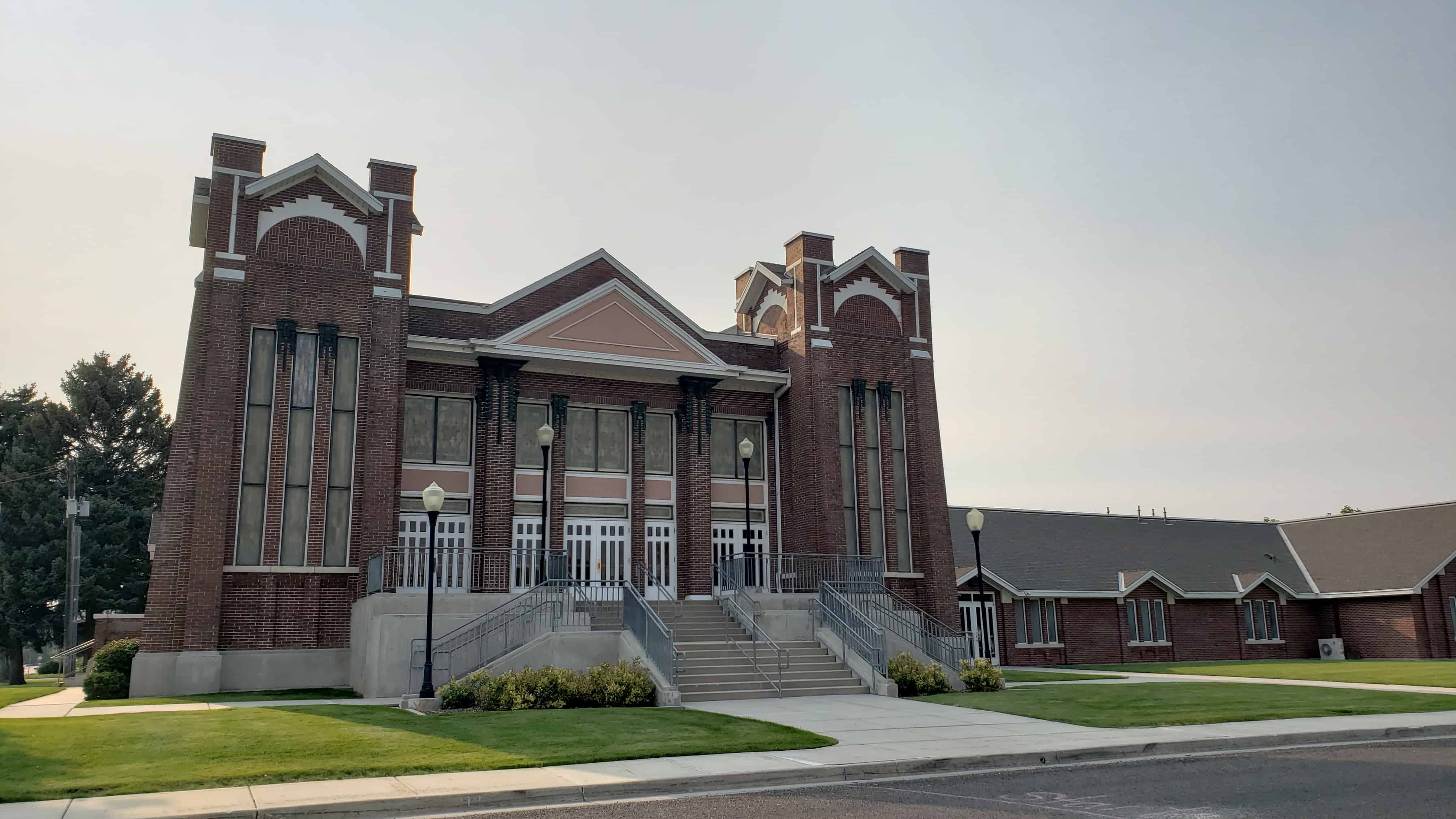
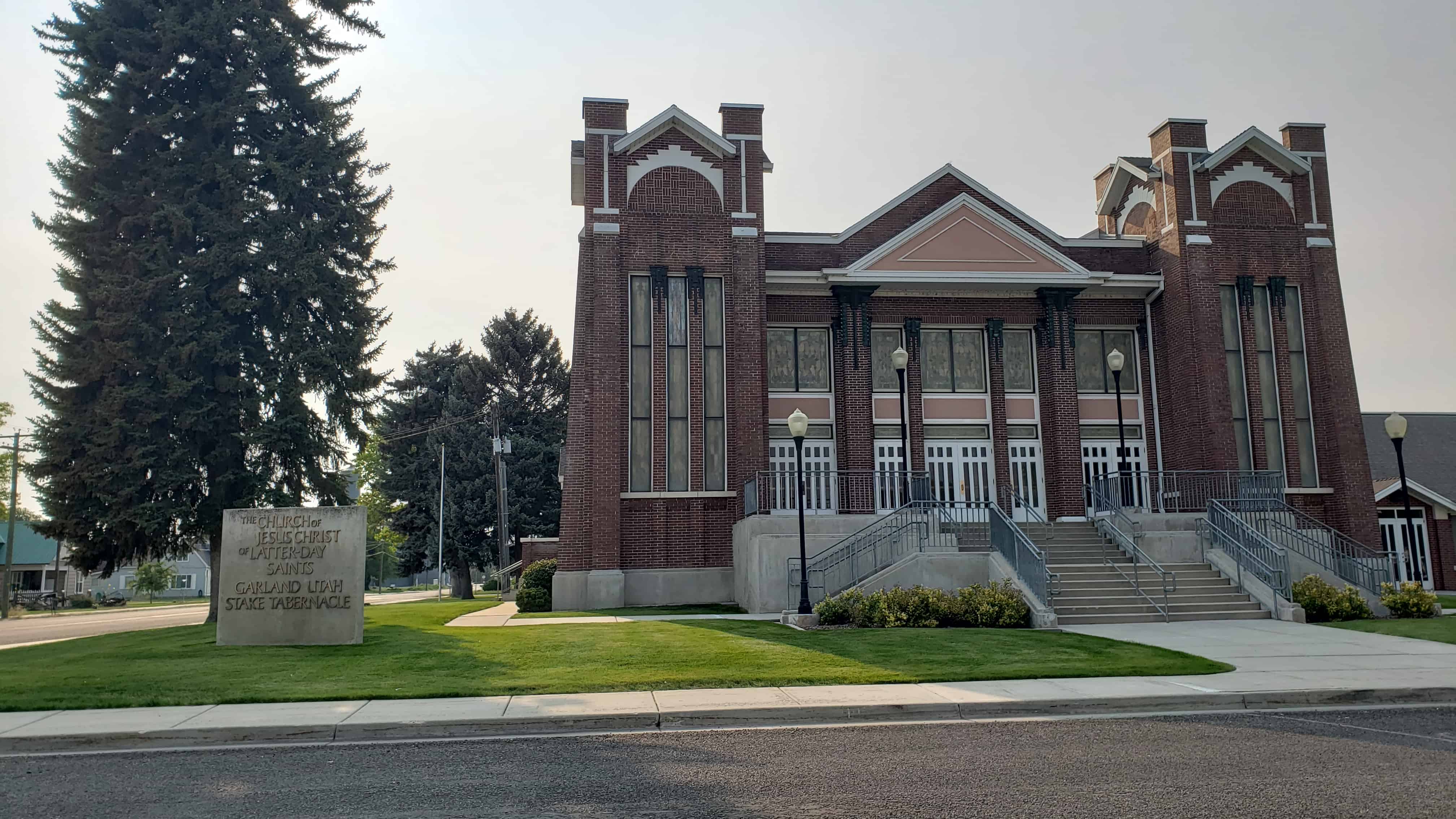
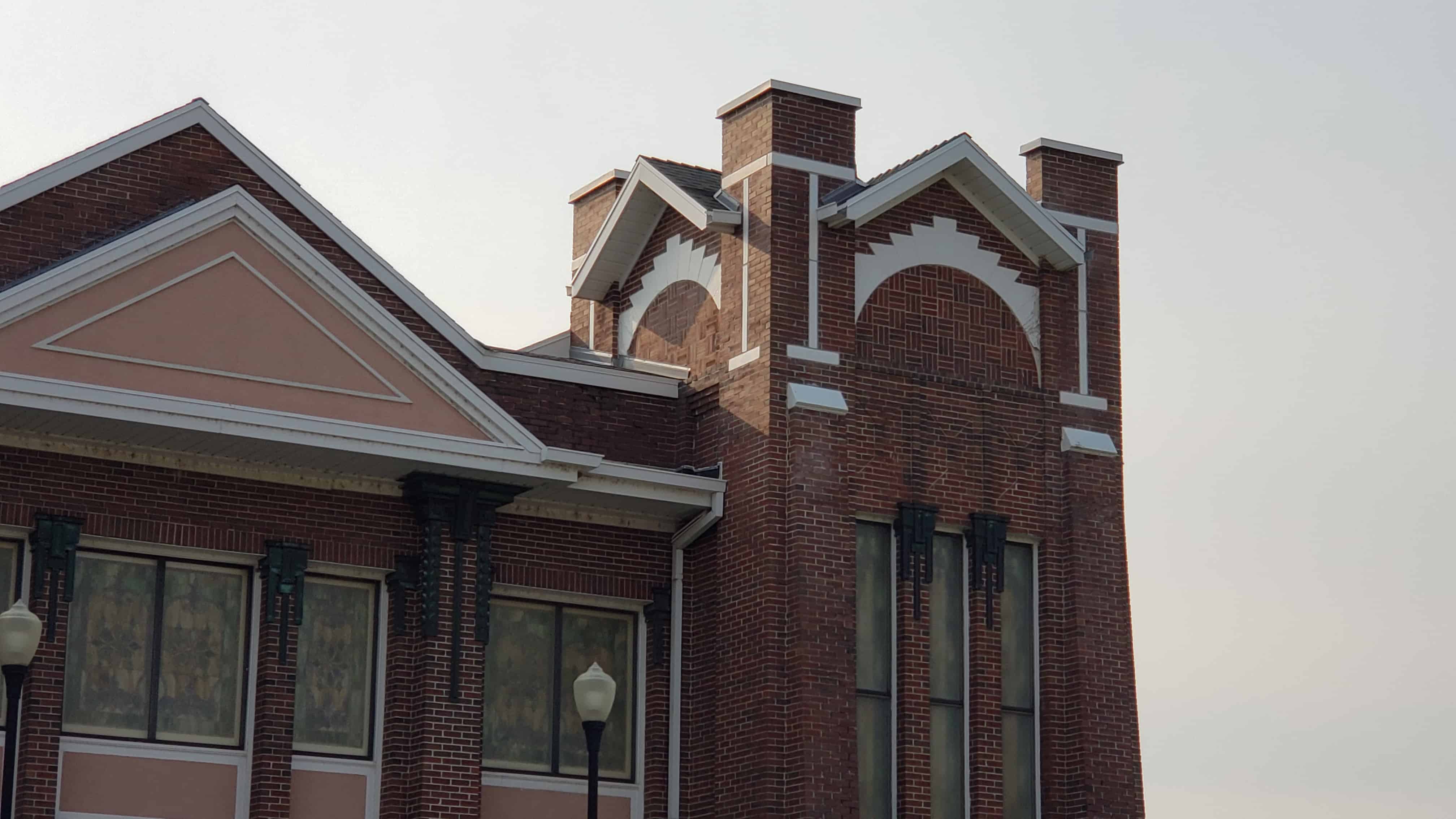
The Garland Carnegie Library was completed in November 1914 and dedicated on December 12, 1914. The dedication ceremony was postponed two weeks in order that it be held in connection with the dedication of the Bear River Stake Tabernacle (of the LDS church), which was built across the street to the west of the library. The library was dedicated on Saturday and the tabernacle on Sunday; both services were conducted in the new tabernacle. Speakers at the library dedication included Professor Howard R. Driggs of the University of Utah, and Epraim G. Gowans, state superintendent of public instruction. Mattie Strong was appointed librarian.
General maintenance expenditures of the new library building proved, at least for a time, to be a burden on the community. City officials felt that their old quarters (location unknown) had served them better than the large, expensive Carnegie library. However, the building has continued in use to the present as the city library.
The basic form of the Garland Carnegie Library is similar to that of many of Utah’s Carnegie libraries. It is a one story brick rectangular building with a raised basement and a flat roof. A simple Classical Revival decorative scheme distinguishes the exterior, consisting of: the symmetrical arrangement of the façade with a central pavilion; the raised basement; the balanced arrangement of pilasters around the building, each distinguished by a capital that is a variant of the Ionic capital; and the pronounced cornice with dentils on the frieze topped by a parapet.
The façade is divided into five bays by pilasters, and has a projecting entrance pavilion centered between pairs of window bays. The main door may be original, but it is set into a panel of glass window cubes which probably reflects a 1930s alteration (exact date unknown). Each of the windows is two panes wide topped by a transom that is divided into four small glass panes. The ends of the building are two bays wide, also defined by pilasters, and there are two oblong three part windows per end. The rear of the building, like the façade, is divided into five bays. The pilasters along that wall, however, have no capitals and there are no distinctive decorative features on that side of the building. There are small square windows in four of the five bays, and a long, narrow window set into the central bay. There is a second entrance into the library on the west side at the basement level.
The building is essentially unaltered, except for the change made to the main entrance. That change, however, is not significant, and does not affect the original integrity of the building.
Although the first settlers came to the Tremonton area in 1888, it remained largely uninhabited until just before 1900, when land agents started promoting the Bear River Valley as a place for Midwestern farmers to relocate. Small groups from Nebraska and Illinois began to arrive in 1898. These settlers were a diverse blend of Protestant faiths, in contrast to their mostly Mormon neighbors. Then an Apostolic Christian Church group came in 1901–1904. The main body was from Tremont, Illinois, joined by a few families from Ohio and Kansas. Mostly of German descent, this group was referred to as the “German colony”.
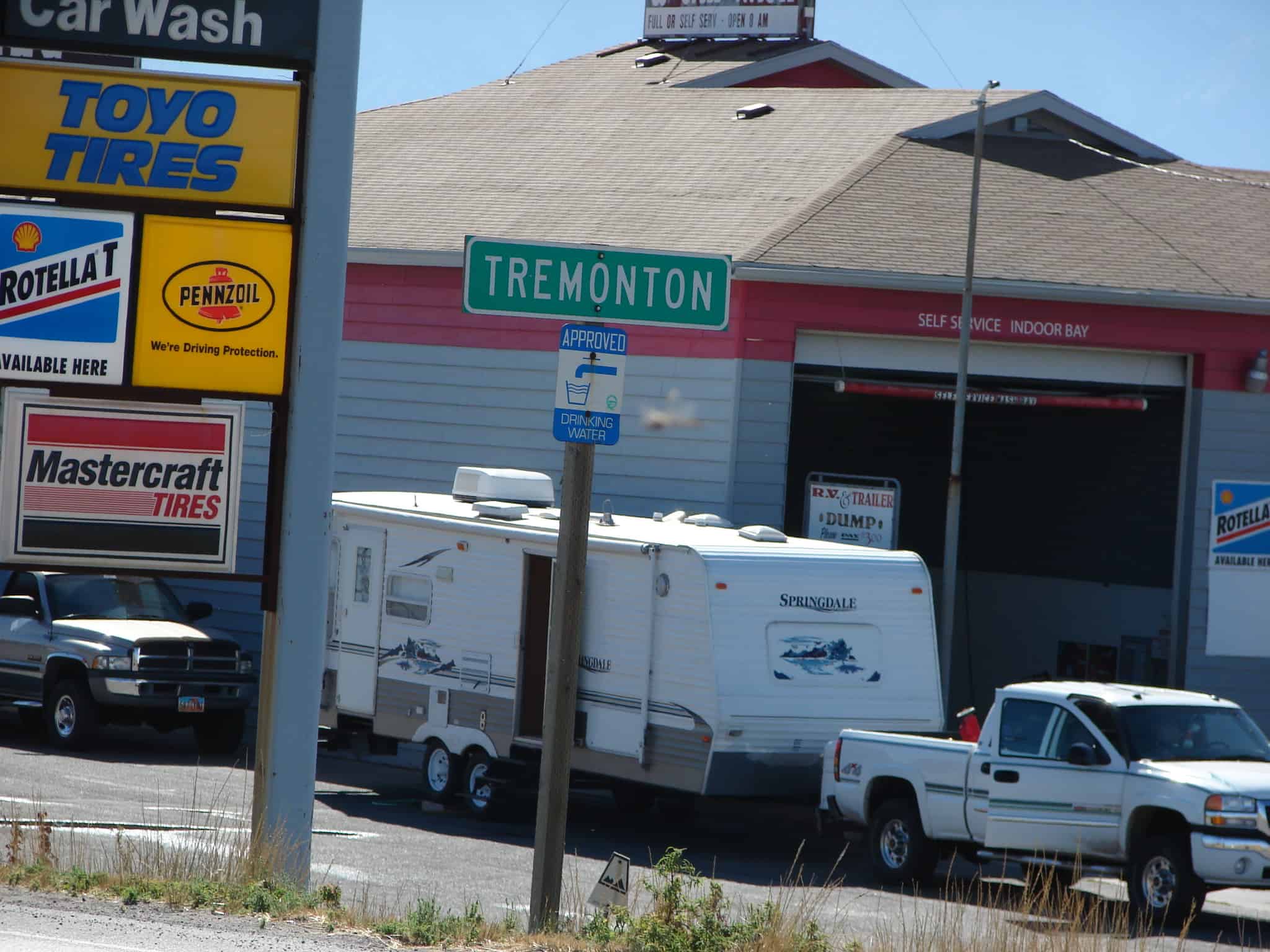
When a townsite was laid out in 1903, the new town was named “Tremont” at the request of the German colony. Within four years, the post office had it renamed “Tremonton” due to confusion with the central Utah town of Fremont. Around 1907 the congregation was caught up in a larger schism of the Apostolic Church. Some moved back to the Midwest, and the German colony came to an end. But the church left a permanent mark in the name of Tremonton, and a nearby cemetery filled with German names.