
Tags

The Great depression was extremely hard on Utah, federal agencies gave funding as part of the New Deal for projects to keep people working.
I’ve seen the number of new deal funded buildings/projects in Utah reported usually as 232 but also as 233 and 226 but personally I’ve counted 377.
Below are listed the WPA (Works Progress Administration), PWA (Public Works Administration), CCC (Civilian Conservation Corps) and other New Deal projects I’ve found and documented.
Projects in Utah – Sorted by County
Beaver County
- Beaver National Guard Armory
- Beaver City Post Office
- Beaver City Post Office Mural
- Beaver High School Shop
- Milford City Hall and Library
- Milford High School Shop and Gym
- Minersville City Hall
- Minersville Cemetery Improvements
Box Elder County
- Bear River High School Science Building
- Bear River Migratory Bird Refuge
- Box Elder High School Gym
- Brigham City Cemetery Improvements
- Garland National Guard Armory
- Plymouth School
- Bear River High School Farm Mech. Building
- Bear River High School Science Building
- Box Elder County Memorial Home
- Yost Recreation Hall
Cache County
- Adams Elementary School
- Benson Elementary School
- CCC Barracks at Tony Grove in Logan Canyon
- College Ward Elementary School
- Lewiston Community Building
- Lewiston Elementary School
- Logan High School Gym
- Logan Fish Hatchery Caretaker’s Residence
- Logan Municipal Slaughterhouse
- Logan National Guard Armory
- Mendon Elementary School
- North Cache High School Addition (Richmond)
- North Logan Recreation Center
- Richmond Community Center
- South Cache High School Addition in Hyrum
- Street Improvements in Hyrum
- Trenton Water Works
- USU Family Life Building
- USU Fieldhouse
- USU Girls’ Dormitory
- USU Home Economics/Commons Building
- USU Lund Hall
- USU Military Science Building
- USU – Old Main Hill Amphitheater
- USU Rural Arts Building
- Wilson Elementary School Addition
- Woodruff Elementary School
Carbon County
- Barrier Canyon Mural (in the USU Eastern Prehistoric Museum)
- Carbon Junior College Administration Bldg.
- Gordon Creek Bridge
- Hangar (Price)
- Helper Civic Auditorium
- Helper Junior High School Shop
- Helper Post Office
- Helper Post Office Mural
- Mead’s Wash Bridge (Price)
- Price Municipal Building
- Price Municipal Building Murals
- Carbon Junior College Industrial Arts Bldg.
- Columbia Recreation Hall
- Helper Junior High School
- Price City Airport Hangar
- Price Hospital
- Utah State University Eastern: Administration Building (demolished) (Price)
Daggett County
- Clay Basin Elementary School
- Bridgeport Elementary School
- Manns Campground in Manila
Davis County
- Clearfield Boy Scout Cabin
- Clearfield Recreation Center
- Davis County High School Brick Garage
- East Layton Water System
- Kaysville City Hall
- Layton Town Hall
- Syracuse Pump House
- Syracuse Recreation Center Cabin
Duchesne County
- Altamont High School
- Altamont High School Shop
- Duchesne High School
- Duchesne High School Shop
- Fort Duchesne Indian Hospital
- Fort Duchesne Nurses’ Building
- Fort Duchesne Doctor’s Quarters
- Hanna Elementary School
- Midview Dam in Myton
- Montwell Elementary School
- Moon Lake Project at Mountain Home
- Mt. Emmons Elementary School
- Myton Elementary School
- Roosevelt Municipal Building
- Roosevelt High School
- Tabiona High School Gym
- Talmage Elementary School
Emery County
- Castle Dale Boy Scout Cabin
- Castle Dale CCC Camp G-27
- Castle Dale High School Shop
- Emery County Courthouse
- Ferron High School Shop
- Green River Filtration Plant
- Huntington City Hall
- Huntington High School Shop
- San Rafael Bridge
Garfield County
- Boulder Elementary School
- Bryce Canyon Airport Hangar
- Bryce Canyon National Park
- Cabins
- Miscellaneous Improvements
- Rainbow Point
- Road Work
- South Campground
- Trail Work
- Capitol Reef National Park
- Escalante High School
- Hatch Elementary School
- Hell’s Backbone Road
- Panguitch High School
- Panguitch Jail
- Torrey-Boulder Road
- Widstoe Elementary
Grand County
- Arches National Park
- Grand County Courthouse
- Grand County Flood Control and Range Conservation
- Moab City Center (former School Building)
- Moab Elementary and Junior High School
- Moab Water and Sewer Systems
Iron County
- Iron County School Dist. Adm. Bid. and Aud.
- Cedar Breaks National Monument
- Cedar City High School
- Cedar City National Guard Armory
- Modena Elementary School
- Overlook Shelter on Brian Head Peak
- Paragonah City Hall
- SUSC Creamery Building
- SUSC Girls’ Dormitory
Juab County
- Callao CCC Camp
- Eureka School
- Juab High School Shop and Gym (Nephi)
- Nephi National Guard Armory
- Tintic Elementary School
- Tintic High School Shop

Kane County
- Kanab City Library
- Valley School (Orderville)
- Kanab Heritage Museum
- Kanab High School Shop
- Kanab City Jail
- Kane County Courthouse
- Navajo Lake Dike
- Soapstone CCC Camp in Kanab
Millard County
- Dam at Mormon Gap (between Garrison and Frisco)
- Fillmore City Hall
- Fillmore National Guard Armory
- Flowell Community Building
- Hinckley High School Gymnasium
- Millard High School Gym and Auditorium
- Scipio Town Hall
- Delta Civic Auditorium (Palomar)
- Delta High School Shop
- Fillmore Elementary School
- Leamington Elementary School
Morgan County
- Devil’s Slide Elementary School
- Morgan Elementary School
- Morgan High School Mechanical Arts Bldg.
- Morgan Middle School
- Morgan City Jail
Piute County
- Circleville Elementary School
Rich County
- Rich County Courthouse
- Randolph Elementary School
Salt Lake County
- Alta Ski Resort Lodges
- Arlington Elementary School in Murray
- Barrier Canyon Mural (in the Natural History Museum of Utah)
- Bingham High School Athletic Fields in Copperton
- Bonnyview School Addition and Remodeling in Murray
- Bonnyview School Grounds Development in Murray
- Camp W.G. Williams Historic Masonry Ditch
- Camp W.G. Williams Hostess House
- Campgrounds and Trails in Millcreek Canyon
- Capitol Murals (State Capitol Rotunda)
- CCC Camp at Big Cottonwood Canyon
- City and County Building Repairs from the 1934 Earthquake
- Drown Cabin Restoration in Midvale
- Forest Dale Golf Course Clubhouse
- Fort Douglas
- Fort Douglas: Barracks
- Fort Douglas: Bath House & other improvements
- Fort Douglas: CCC Warehouse & Stables
- Fort Douglas: NCO Quarters
- Fort Douglas: Officer Quarters
- Fort Douglas: Recreation Hall & Pool
- Granite High School Gym
- Highland Boy Elementary School
- Holladay Recreation Center
- Jordan School District Admin. Building
- Liberty School Improvements in Murray
- Little Cottonwood Canyon Road
- Little Cottonwood Creek Bridge (Little Cottonwood Canyon)
- Magna Fire Station
- Magna School
- Memory Grove Park
- Midvale Community Center (Old City Hall)
- Mill Creek Canyon Campgrounds and Trails
- Miller Park
- Monroe Elementary School
- Mural in Draper Park School
- Murray Municipal Power Building & Offices
- Murray City Center
- Murray Water Supply
- Salt Lake City Cemetery
- Salt Lake City International Airport
- Salt Lake County Library – Midvale
- Salt Lake School District Admin. Bldg.
- School District Administration Building (Jordan School District)
- Sherman School
- Storm Mountain Amphitheater ( Big Cottonwood Canyon)
- Storm Mountain Picnic Area ( Big Cottonwood Canyon)
- Sugarhouse Station Post Office (former)
- University of Utah
- University of Utah: Bureau of Mines Building
- University of Utah: Carlson Hall (demolished)
- University of Utah: Einar Nielsen Fieldhouse
- University of Utah: Thomas Library (Crocker Science Center)
- University of Utah: Seismograph Building (demolished)
- Utah Outdoor Camp (The Spruces) (Big Cottonwood Canyon)
- VA Hospital (former) Landscaping
- Wasatch Boulevard
Sanpete County
- Ephraim City Hall
- Ephraim High School Shop
- Ephraim High School Gym
- Ephraim Mechanical Arts Building
- Fairview City Hall
- Fountain Green Fish Hatchery
- Manti Elementary School
- Manti National Guard Armory
- Moroni High School Shop
- Moroni Mechanical Arts Building
- Mt. Pleasant City Hall
- Mt. Pleasant Mechanical Arts Building
- Mt. Pleasant National Guard Armory
- Sanpete County Courthouse
- Snow College Gym
- Snow Colldge Girls’ Dormitory
- Gunnison High School Shop
- Manti High School Shop
- Mt. Pleasant Comfort Station
- Snow College Vocational Arts Building
- WPA Library in the Sandstrom Building (Spring City)
San Juan County
- Blanding High School
- Monticello High School
- San Juan High School (former)
- Water System Development
Sevier County
- Elsinore Town Hall
- Monroe City Hall
- Richfield Junior High School
- Richfield High School Shop
- Salina CCC Camp F-32
- Salina City Hall and Library
- Boy Scout House (#1)
- Boy Scout House (#2)
- Central Elementary School (Richfield)
- Richfield City Hall
Summit County
- Coalville Elementary School
- Deer Valley Resort
- Kamas High School
- Marsac School / City Hall
- North Summit Grammar School (Coalville)
- Park City Municipal Building
- Park City High School Shop
- South Summit High School Gym
- South Summit High School Shop
- War Veteran’s Memorial Building (Park City)
- Woodland Grade School
Tooele County
- Tooele City Hall
- Tooele Post Office
Uintah County
- Avalon Grade School (Randlett)
- CCC Camps at the Uintah-Ouray Reservation
- CCC Reservoir
- Central Elementary School (Vernal)
- Dinosaur Quarry Expansion in Jensen
- Fairgrounds Grandstand (Vernal)
- Quarry Entrance Road Drainage Channel in Jensen
- Recreation Hall (Vernal)
- Vernal High School Shop
- Vernal Post Office
- Vernal CCC Camp
Utah County
- Alpine City Hall
- American Fork Training School (14 bldgs.) Elig., Part Doc. 5 dormitories, 2 parole cottages, superintendent’s residence, auditorium, custodial building, school building, dairy barn, employees building, shop building.
- American Fork Amphitheater
- Aspen Grove Improvements
- Camp Williams Hostess House (Officers’ Club)
- Castle Amphitheater
- Federal Building (Provo)
- Federal Building Mural (Provo)
- Franklin School (former) Addition (Provo)
- Harrington Elementary School North Addition
- Joaquin Elementary School (Provo)
- Mountain Contour Terracing
- Payson School
- Pioneer Museum (Provo)
- Pleasant Grove City Hall and Library
- Provo Carnegie Library (former) Expansion
- Provo Center Street Sidewalks
- Santaquin Junior High School
- Spanish Fork Fire Station
- Spanish Fork High School Gym
- Spanish Fork National Guard Armory
- Springville Museum of Art
- Springville High School Gymnasium
- Timpanogos Cave National Monument: Campgrounds
- Timpanogos Cave National Monument: Improvements
- Timpanogos Cave National Monument: Superintendent’s Residence
- Timpanogos Elementary School (Provo)
- Utah County Infirmary remodel
- Utah State Hospital Recreation Center
- Utah State Hospital Superintendent’s Residence
- Utah State Hospital Museum
- Wall at Quail Cove
Wasatch County
- Cloud Rim Girl Scout Lodge
- Heber City Library
- Heber Waterworks
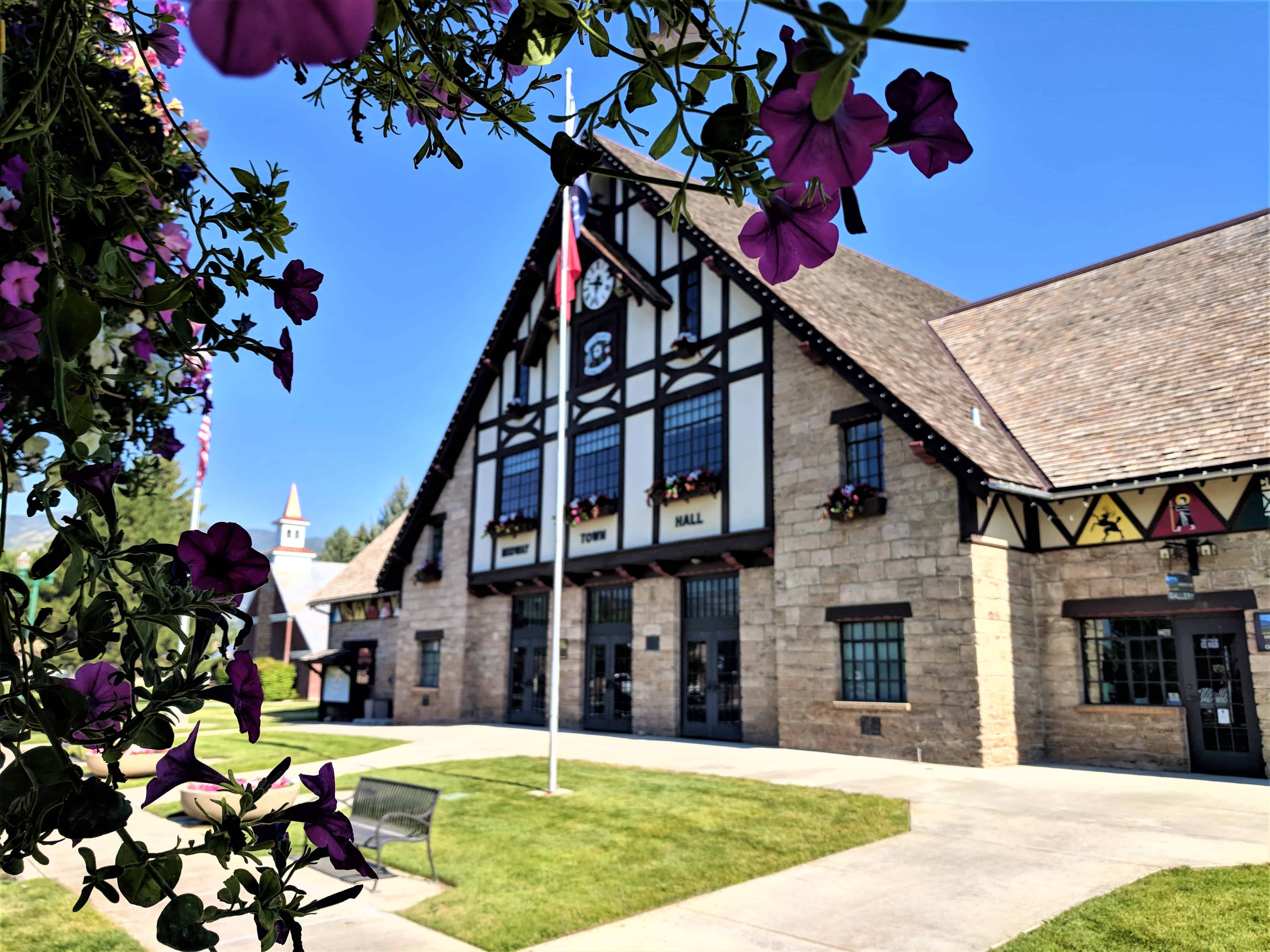
- Midway City Hall
- Midway Fish Hatchery
- Provo River Project (Wallsburg)
Washington County
- CCC Camp F-31 (Veyo)
- Dixie College Mechanical Arts Building
- Dixie College Vocational Arts Building
- Dixie High School Gymnasium and Auditorium
- Enterprise High School Gymnasium
- Hurricane City Library
- Hurricane High School
- Oak Grove Campground and CCC Camp in Leeds
- Pine Valley Canal
- Pine Valley CCC Camp F-17
- Pine Valley Desert Experimental Range Station
- Springdale Jail
- St. George Elementary School
- St. George Post Office
- St. George Water System
- Zion National Park
- Zion National Park: Bridge Abutments
- Zion National Park: Canyon Overlook Trail
- Zion National Park: East and South Entrance Signs
- Zion National Park: East Entrance Check-In
- Zion National Park: Great White Throne Overlook
- Zion National Park: Pine Creek Irrigation Canal
- Zion National Park: South Campground Amphitheater
- Zion National Park: Superintendent’s Residence
- Zion National Park: Trail Work and Roadwork
- Zion National Park: Virgin River Rip Rap
Wayne County
- Grover Elementary School
- Wayne County High School
- Wayne County Courthouse
Weber County
- El Monte Golf Course Clubhouse (Ogden)
- North Ogden Elementary School
- Ogden/Weber Municipal Building
- Ogden High School
- Ogden River Project
- School for Deaf & Blind – Boys’ Dormitory
- U.S. Forest Service Building
- Weber Junior College Mechanical Arts Bldg.
- Central Junior High School (Ogden)
- Huntsville High School Shop
- Loren Farr Park Restrooms (Ogden)
- Ogden Ordinance Depot
- Ogden Recreation Center
- Plain City School Gymnasium
- State Industrial School Improvements (Ogden)
- State Industrial School Trades Building
- Tuberculosis Sanitarium (Ogden)
- Wahlquist Elementary School
The text below is taken from the nomination form for the national historic register listing (#64000871):
The buildings included in the Public Works Buildings Thematic Resources nomination are significant because they help document the impact of New Deal programs in Utah, which was one of the states that the Great Depression of the 1930s most severely affected. In 1933 Utah had a unemployment rate of 36 percent, the fourth highest in the country, and for the period 1932-1940 Utah’s unemployment rate averaged 25 percent. Because the depression hit Utah so hard, federal programs were extensive in the state. Overall, per capita federal spending in Utah during the 1930s was 9th among the 48 states, and the percentage of workers on federal work projects was far above the national average. Building programs were of great importance. During the 1930s virtually every public buildings constructed in Utah, including County courthouses, city halls, fire stations, national guard armories, public school buildings, and a variety of others, were built under federal programs by one of several agencies, including the Civil Works Administration (CWA), the Federal Emergency Relief Administration (FERA), the National Youth Administration (MYA), the Works Progress Administration (WPA), or the Public Works Administration (PWA). Almost without exception none of the buildings would have been built when they were without the assistance of the federal government. Only 33 of the 130 potentially eligible public works buildings currently meet the 50-year requirement for National Register listing, therefore they are the only ones being nominated at this time. Nine public works buildings have previously been either listed in the National Register or determined eligible.
During the decade of the 1930s the United States experienced the most serious economic disaster in its history, and Utah was seriously affected. Every generation before 1930 had experienced a time of mass unemployment. Often it happened several times in one person’s lifetime. Usually the slide into the pit was steep and the climb out slow. But the depression that began in 1929 was different. It came harder and faster; it engulfed a larger part of the population; it 1 aster longer; and it did far more and far worse damage than any before or since. Men groped for superlatives to express the meaning and impact of the crisis. Writer Edmund Wilson compared it to an earthquake. Former governor of New York, Alfred E. Smith, said that the depression was equivalent to war, while Supreme Court Justice Louis D. Brandeis declared that it was worse than war. All agreed with Philip La Follette, governor, of Wisconsin, that “we are in the midst of the greatest domestic crisis since the Civil War.”
The chain reaction of unemployment spread slowly. At first those in marginal jobs were hit hardest while those in better jobs moved downward. In time, However, millions who had never been unemployed for any length of time were jobless and unable to find work. In 1929 3 million people in the United States were without work; by 1933 the total was 16 million. In 1939 10 million people were still unemployed. Based on a study of 31,159 jobless men, a Pennsylvania commission reported that the typical unemployed person in that state was 36 years old, native-born, physically fit, and with a good previous work record. A study in Utah found that people employed on Works Progress Administration (WPA) projects had essentially the same kinds of characteristics.
In Utah at the beginning of 1930 a total of 8,700 people out of a work force of 170,000 were unemployed. In 1931 unemployment in the state rose to over 36,000 and in 1932 it reached 61,500. That was 35 percent of the workforce, more than 1 of every 3 workers, and the fourth highest unemployment rate in the nation. Between 1932 and 1940 the unemployment rate never fell below 20 percent, and for the period as a whole it averaged 26 percent. Income per person fell sharply as a result of the decline in employment and the reduction in wages for those who had jobs. In 1929 annual per capita income in Utah was $537. By 1932 it had dropped to half that, $276, and in 1940 had risen to only $480. By March 1933 more than 161,000 people in Utah 32 percent of the population were receiving all or part of their food, clothing, shelter, and other necessities from government relief funds.
To some the solution seemed to be a return to the farm, but the economic dry rot of the 1930s afflicted the countryside as well as the city. Between 1929 and 1932 gross farm income in the United States fell by more than half, to a point lower than it had been for 40 years. Season after season individual farmers suffered from the miserably low prices they received for their products, and it made little difference whether they were Alabama cotton growers, Iowa hog farmers, Wisconsin dairy producers, California citrus ranchers, or Utah sheepmen. All of them considered themselves lucky if they could sell their products for enough to meet their costs of production. By 1932 the farm prices of crops in Utah had decreased to 60 percent of the 1926-1931 average and the price of livestock to 48 percent. Overall farm income had declined by 50 percent.
me had declined by 50 percent. Faced with a depression of unprecedented proportions, the people of the United States finally turned to the federal government for help. The problems of industrial capitalism had proven too heavy for individuals, private charities, or local governments to handle. The federal government responded with the New Deal, a barrage of government programs designed to provide relief and jobs, and also to reform the economic system in way that would prevent future depressions.
The Great Depression changed the American people’s conception of the proper role of government in the economy. Buffered and bewildered by the depression, Americans abandoned once and for all the doctrine of laissezfaire. The previous conviction had been that depressions were inevitable, natural disasters, like dust storms, that occurred periodically and about which nothing could be done. In 1931, for example, President Herbert Hoover criticized those who “have confidence that by some device we can legislate ourselves out of a world-wide depression. Such views are as accurate as the belief that we can exorcise a Caribbean hurricane.” Hoover’s views, however, were soon rejected. From the experience of the depression, people came to believe that something could and should be done when economic disaster struck and that the federal government was the one to do it.
Almost everything the federal government did during the depression era made inroads into the hitherto private preserves of business and the individual.
The federal government subsidized farmers, guaranteed bank deposits, provided unemployment compensation and social security payments, subsidized the arts and low-income housing, and assisted labor unions in organizing. Most of those new measures survived the period of the crisis to take their place as fundamental elements in the structure of American life. In fact, much of what is taken for granted today as the legitimate function of government and the social responsibility of business began only with the legislation of the 1930s.
Because the depression hit Utah so hard, federal programs in the state were extensive. Between 1933 and 1939 federal agencies spent nearly $300 million in federal assistance in Utah. That, to the total spent in many other states, was not a high absolute amount but it was 15 times more money than the amount of federal taxes that Utahns sent to Washington during the same period, and overall per capita federal spending in Utah was 9th among the 48 states. Utah, for example, ranked 1st in per capita expenditures from the Home Owners Loan Corporation, second in the amount of benefits per capita from the Social Security Administration, 5th in National Youth Administration (NYA) expenditures per capita, 8th in Federal Emergency Relief Administration (FERA) expenditures per capita, and 18th in Works Progress Administration (WPA) expenditures per capita.
Among the myriad of New Deal agencies established were ones that provided relief to individuals. It was of two kinds: direct relief, that is the provision of food, clothing, medical care, and other services and commodities; and work relief, that is employment on government public works projects for those people unable to find employment in the private sector.
There were 6 main agencies that provided work relief: the Civil Works Administration (CWA); the Federal Emergency Relief Administration (FERA); the Public Works Administration (PWA); the Works Progress Administration (WPA); the National Youth Administration (NYA); and the Civilian Conservation Corps (CCC). With the exception of the CCC, all of these agencies undertook the construction of new buildings (as well as the remodeling of old ones) as part of the work they carried out.
The CWA was the New Deal’s first work relief program. Established in November 1933, it lasted only 5 months but during that time employed more than 4 million people, undertook 400,000 projects nationwide, and spent $1 billion. It undertook a variety of projects including the construction or improvement of roads and highways, schools, parks, playgrounds, swimming pools, airports, waterways, in short the kind of construction projects that subsequent New Deal agencies would typically be involved in.
In Utah the CWA employed more than 20,000 people during its few months of existence and spent $5.2 million.
The FERA succeeded the CWA. It had both a works division and a direct relief division and was funded jointly by the federal government and by each individual state. In Utah a special session of the legislature in August 1933 established a 2 percent general sales tax to provide state funds for the FERA (known in Utah as the Utah Emergency Relief Administration, or UERA). It existed from the spring of 1934, when it succeeded the CWA, to the fall of 1935. During that time the federal government provided about 90 percent of its funding and the state of Utah about 10 percent.
To be eligible for funding a project had to be of “a public character and of economic or social benefit to the general public or to publicly-owned institutions.” Projects uncompleted by the CWA were taken over by the FERA and carried to completion and subsequent projects included the range that CWA projects had, from construction of public buildings to building water supply reservoirs.
With the establishment of the WPA in 1935 the projects of the FERA were transferred to it. The longest-lasting and most extensive New Deal relief program, in Utah and the rest of the nation, it continued until 1943. In addition to a construction or “Works” division, the WPA had a vast array of programs: art; music; writer’s; historical, cultural records surveys and inventories; adult education; recreation; library services, clerical assistance; public administration; surveys and investigations; clothing; commodity distribution; food preservation, gardening; school lunch; health; and child protection.
In Utah the Works Division undertook a variety of projects. It constructed nearly 5,000 miles of new roads and highways and repaired another 2,000 miles. It built or improved 13,700 bridges and culverts, 30 parks, 161 playgrounds and athletic fields, and 23 swimming pools. It built 421 new buildings or additions to existing buildings and remodeled or “improved” 746 more.
The peak of WPA employment in Utah was in the fall of 1936 when more than 17,000 Utahns were at work on WPA projects. Average WPA employment for the life of the agency was about 12,000.
The PWA was established in 1933 to stimulate industry and put men back to work by constructing public buildings, bridges, and other heavy and durable facilities and helping state and local governments in building their own public works. During most of the time it was in existence, from 1933 to 1939, projects were financed by a 45 percent grant from PWA funds with the remaining 55 percent of the cost supplied by the local applying agency. In some instances PWA not only advanced 45 percent of the cost by outright grant but loaned the applicant part of the remainder of the cost as well. During its lifetime the PWA spent more than $6 billion and employed 4 million people on over 34,000 projects. The estimate is that it built more than 70 percent of the new educational buildings in the United States during the 1930s and 35 percent of the hospitals and other public health facilities.
The NYA was established in 1935 to provide jobs for young people between the ages of 16 and 25 both in and out of school. From 1935 to 1939 the NYA program in Utah expended $540,000 of which about half was spent for work projects to employ out-of-school youth and the other half for jobs to employ high school and college students. Mainly high school students were employed in such jobs as clerical work for principals and teachers, supervision of playground activities, assistance in libraries and cafeterias, and repair of classroom equipment. College students worked in college offices, libraries, museums, assisted professors with research, graded papers, and were employed in the care and keeping of campus grounds. The NYA undertook only a small building program in Utah, mainly of modest buildings. Under it fewer than half a dozen new buildings were constructed and 2 or 3 that many old ones were remodeled.
The result of this activity by these federal agencies was for more than a decade, throughout the 1930s and into the 1940s, virtually every public building constructed in Utah was done so under federal government programs. Those buildings included a diverse group: college and university gymnasiums, dormitories, administration buildings, and classrooms; elementary and high school buildings; buildings for various state agencies including the School for the Deaf and Blind, the State Training School for retarded citizens, the State Tuberculosis Sanitarium, the State Industrial School, and the State Mental Hospital; National Guard Armories; county courthouses; city and town halls; civic auditoriums; community recreation centers; libraries; fire stations; police stations; and miscellaneous buildings such as a city golf course club house and girl and boy scout cabins.
The buildings included in this nomination are significant, then, because they document in a clear, even dramatic way the impact the Great Depression and the relief agencies of the New Deal had in Utah.
February 1986 – Following is a revised statement of significance that justifies the exceptional significance of the resources included in this thematic nomination.
The buildings included in the Public Works Buildings Thematic Resources nomination are significant because they help document the impact of New Deal programs in Utah, which was one of the states most severely affected by the Great Depression. In 1933 Utah had an unemployment rate of 36 percent, the fourth highest in the country, and for the period 1932-1940 Utah’s unemployment rate averaged 25 percent. Because the depression hit Utah so hard, federal programs were extensive in the state. Overall, per capita federal spending in Utah during the 1930s was 9th among the 48 states, and the percentage of workers on federal work projects was far above the national average. Building programs were of great importance. They offered not only temporary work relief, but also provided long-term benefits to the communities and the state in the form of improved public facilities, including county courthouses, city halls, libraries, national guard armories, public school buildings, and a variety of others. During the 1930s virtually every public building constructed in Utah was built under federal programs by one of several agencies, including the Civil Works Administration (CWA), the Federal Emergency Relief Administration (FERA), the National Youth Administration (NYA), the Works Progress Administration (WPA), or the Public Works Administration (PWA). Almost without exception none of the buildings would have been built when they were without the assistance of the federal government. Over 230 public works buildings were constructed in Utah between 1933 and 1943 as part of the federal relief effort. Oust over half of those buildings remain standing and well preserved, and though many of them are less than 50 years old they are considered eligible for listing in the National Register because of the exceptionally significant role of federal public works building projects in Utah’s history.
Pingback: Midvale City Hall | JacobBarlow.com
Pingback: Harrington Elementary School | JacobBarlow.com
Pingback: Carlson Hall | JacobBarlow.com
Pingback: Helper Main Post Office | JacobBarlow.com
Pingback: Fillmore Armory | JacobBarlow.com
Pingback: Emery County Court House | JacobBarlow.com