• About JacobBarlow.com
  • Cemeteries in Utah
  • D.U.P. Markers
  • Doors
  • Exploring Utah Email List
  • Geocaching
  • Historic Marker Map
  • Links
  • Movie/TV Show Filming Locations
  • Oldest in Utah
  • Other Travels
  • Photos Then and Now
  • S.U.P. Markers
  • U.P.T.L.A. Markers
  • Utah Cities and Places.
  • Utah Homes for Sale
  • Utah Treasure Hunt

JacobBarlow.com

~ Exploring with Jacob Barlow

JacobBarlow.com

Tag Archives: Historic Homes

Peter Johansen House

14 Thursday Aug 2014

Posted by Jacob Barlow in Uncategorized

≈ 1 Comment

Tags

Castle Dale, Emery County, Historic Homes, Mt. Pleasant, NRHP, Orangeville, utah

20140810_164828

Peter Johansen House

This one and a half story Victorian farm house was constructed in 1912 for Peter Johansen, builders were Charlie Jacobsen, carpenter, with Lois Christensen and Mill Peterson brick masons.  A cattle rancher, Peter Johansen was born May 14, 1861 in Mt. Pleasant, Utah and first came to Emery County as a herder for the Mt. Pleasant cooperative herd.

830 North Center Street in Castle Dale, Utah – added to the National Historic Register (#80003900) on March 19, 1980

20140810_164811

From the national historic register’s nomination form:

The Johansen home is one of the finest old houses in Castle Dale and remains in the family of the original owner. It was one of the most modern in town at the time of construction and had all the latest conveniences including gas, light, and a dumbwaiter between the pantry off the kitchen and the cellar under the house so food could be rapidly brought up for cooking or serving. The house was carefully planned by the owner’s wife, who made a cardboard model of the house showing each room in detail that was used as a sort of blueprint for building.

Several people helped to build the house. The head carpenter was Charlie Jacobsen of Mt. Pleasant, a cousin of Peter Johansen, the original owner. Charlie hired another carpenter, Charlie Jensen of Orangeville, to help on the job. Lars Christensen and Mill Peterson were the brick masons, using brick that had been specially shipped from Provo for this house. Their work required great precision for once they put up a wall using the wrong thickness of mortar, making the wall the wrong height. They had to tear the whole thing down and start over. Because of their effort to do the job right, however, the house has endured for generations without sagging, cracking or bulging.

Only the very finest materials were used to build this house. Peter Johansen ordered all the wood through his sister, Mina Miller of Huntington, and she obtained flooring, window casings, door casing etc. from back east. A man named Glair finished the woodwork by staining, varnishing and polishing it in place. The stained glass windows also came from back east, and may even have come originally from Italy. On the ground floor are two beautiful fireplaces, one in the dining room and one set into a corner of the front room. These have heavy cast iron fireplace surrounds with decorative designs on the covers. The covers can only be inserted after the grate is disassembled, so they fit tight to keep out drafts. The cover in the dining room shows a cowboy on his horse; the living room cover has a shield and bough design. The surrounds are in turn surrounded by glazed ceramic tile, also shipped from the east.

The original owner, Peter Johansen II, was a cattle rancher known throughout Castle Valley as “Pete Jo.” He was born on May 14, 1861, at Mt. Pleasant, Sanpete County, Utah. His parents were Danish converts to the Church of Jesus Christ of Latter-day Saints who had come to Utah in the mid-19th Century. Pete Jo grew up in Mt. Pleasant and got into the cattle business by tending the town herd. All the townsfolk put their stock into that herd and it was run over in Emery County during the summers. In the fall Pete Jo returned the cattle to Mt. Pleasant and each animal was claimed by its owner.

Pete Jo spent so much time in Emery County that he decided to settle there. In 1898 he took out a patent of 160 acres of land he was homesteading in Huntington Canyon. He farmed this land and raised livestock there. Although he had started with the Mt. Pleasant herd, he eventually acquired his own by first buying a heifer with his herding wages, then buying another and another until with purchase and natural increase he was able to establish his own herd. He then moved permanently to Emery County. He married Zora Elizabeth Cook of Huntington and they settled on the homestead during the summer, moving to Huntington town during the winter.

Huntington Canyon had always been one of the main trails for people coming over from Sanpete County. During the time that Pete Jo moved to Emery County, many other young Sanpete men were doing the same. The pressure of population on the land forced the move, and the final settlement call of Brigham Young in 1877 and 1878 encouraged many to come to Emery County. Like Pete Jo, several men were herders and had traveled the Huntington route, going up Pleasant Creek Canyon to the left fork of Huntington Canyon and then down into Castle Valley. Traffic between Emery and Sanpete County was frequent and actively benefitted Emery County settlement. Parts for the first Emery County grist mill were dragged by oxen through two feet of snow from Fountain Green, Sanpete County, in 1879. During the same winter several men from Emery County tramped to Manti through Salina Canyon to get Christmas gifts for the children of Castle Dale. (In those rough years the children could count on treats only once a year and no one wanted to disappoint them.) The year 1880 marked the first major settlement in Emery County, and the railroad completion through Price (then northern Emery County) in 1883 encouraged further settlement. In 1890, when Pete Jo became a permanent resident, the Emery population had grown to 5,076.

Conditions in Huntington did not prove ideal, and Pete Jo began looking elsewhere for a home. He planned to move to Oregon but the house deal fell through, so instead the family came to Castle Dale (about ten miles south of Huntington) in December, 1903. They moved into a newly constructed house on the Castle Dale townsite. which the family still owns. Pete Jo bought bench land from Richard C. Miller in 1909. Around 1911 they began construction on the present home which was completed and occupied by Pete Jo and his family in 1912. He was the first settler to build up on the bench away from town. While the men worked on constructing the new house, Pete’s wife, Zora, cooked all the meals at their house in town and brought it to the new homesite in buckets, walking the mile up the hill. Zora contributed a great deal to the house in her design for it, the cardboard model, and in her attention to the workmen’s welfare. Unfortunately she didn’t live very long to enjoy it, dying in July 1914 in the new house. Pete Jo later married Sophia Monsen Poulsen of Mt. Pleasant.

The Peter Johansen house was built on cattle. Pete Jo had brought his substantial herd to Castle Dale in 1903 and soon found both summer and winter pasture for them. He first bought summer grazing land up in Joe’s Valley, about 24 miles away. That land is now inundated by the Joe’s Valley Reservoir, but they also bought other land higher up where the family still runs cattle. Before the dam was built, Pete Jo raised hay and alfalfa in the flat mountain valley, his original grazing purchase. Slightly later he leased land from the Bureau of Land Management (BIM) down on Sinbad in the San Rafael Desert, 32 miles from Castle Dale. He ran his herds there during the winter, a practice followed by his son, Byron, and grandson Kirk, who still puts the cattle on the Sinbad range. In the fall they had to drive the cattle up to the railroad in Price to sell the beef which would be shipped over to the larger market in Denver. Pete Jo’s three sons, Eugene, Merrial and Byron, all had cattle in the family herd and they always sold together with their father who then doled out the money. Around 1929 Pete Jo also started raising sheep, an activity taken over by the second son, Merrial. The cattle was sometimes kept at the 40 acres behind the Johansen home in Castle Dale. Especially in the winter, which can hit hard on Sinbad, the weak cows and those about to calve were brought to the Castle Dale spread where they could be more easily tended. Generally the men would stay in Castle Dale throughout the year, riding out to check on the herds as often as the weather demanded.

Pete Jo used horses extensively in his work, and was the first to introduce the Hamiltonian, an excellent breed of riding horse, to the Castle Dale area. He also had teams of Percherons and Clysdales to plow the land behind the house where he planted his crops.

Through hard labor and family cooperation, several kinds of crops were grown on the 40 acres in Castle Dale. Hay was the main crop, but the family also raised grains, vegetables and had an orchard which still produces succulent apples for all the relations. When Pete Jo bought the property there was a huge wash through the middle of the field behind the house. Pete Jo and his boys dug out all the surface rocks on the rest of the farm and dumped them into the wash. They filled it in and built a fence at the bottom. As years went by the mud settled out of the water carried down the wash and began to fill up the low land at the bottom, submerging the fence. This process was repeated for several seasons, and now there are four or five fences on top of each other at the bottom of the wash.

In spite of his involvement with the farm and the herd, Pete Jo had time for other work in the community. He was a charitable person who took the time to bring flour and beef to the widows and orphans of Castle Dale. He was also a good businessman, holding stock in the Castle Dale Co-op and serving on the board of directors of the Emery County Bank. When he died on August 10, 1936, the community lost both a leader and a friend.

The Johansen property went to his children and the youngest son, Byron, moved into the house with his family. Byron built the smaller log cabin that still stands behind the house and constructed another one on the Sinbad range, where he also made ponds for the cattle. The second log building behind the Johansen home has been there since the house was constructed. It was originally used as a granary at the Johansen house on the Castle Dale townsite. Harnesses and other equipment were kept in the second story, and on the ground floor were several grain bins where different kinds of grain were stored. During the construction of the new home the old granary was moved to its present site by wagon. The wagon box was removed and the building put on the wheels with the reach connecting them. The team was hooked up, it was dragged intact to its current location and set on a foundation of flat stones laid out behind the house. The workmen then had a sturdy building for a home.

Most of the house has changed very little since construction. Electricity and running water were put in soon after they came to Castle Dale and the old gas generator in the basement was removed. At that time a bathroom was added. The upstairs has been slightly remodeled to include another bathroom and small kitchen, but the main structure of the house and the outside appearance remain unchanged. Byron’s widow, Delia Peterson Johansen, now lives alone in the house while her son Kirk manages the farm and the herd. This house and farm will remain in the family for the foreseeable future and will continue as a tangible reminder of generations of hard-won prosperity in rural Utah.

The Peter Johansen House is a large one-and-a-half story Victorian farm house built of brick on a poured concrete foundation. It incorporates components ordered from catalogs and design elements inspired by architectural pattern books of the period in a design created by Zora Johansen, the owner’s wife, who used a cardboard model to plan the house. Around the house are old cottonwood trees and to the rear there are two log outbuildings.

The house is composed of a main hip-roofed block with four projecting gable-roofed bays, one on each side. There are two brick chimneys with corbelled caps, one at the peak of the main roof, the other at the ridgeline of the rear gabled bay. A cornice with modillion brackets runs under the eaves and forms large returns at the gable ends of the bays. The (west) front and rear bays extend farther out from the main block of the house than do the shallow side bays.

Walls of the house are built of brick shipped from Provo, Utah, over 100 miles north. Window openings have stone sills and lintels. The windows and door units are said to have been obtained from “back east,” probably ordered by catalog from an eastern U.S. mill work firm, a common practice in the period. Most of the windows are double-hung one-over-one pane, though the first story windows in the front and south side bays are large fixed units with stained glass transoms. On the north side on the house, near the front, is a small rectangular stained glass window that lights the interior entry hall.

At the northwest corner of the house, next to the front bay, is the two-story front porch. Its first level has three doric col urns supporting a wooden cornice with modillion brackets. Two transomed doors, one in the main block of the house, the other in the north side of the bay, open onto the first story. The upper level of the porch is smaller. It is entered from a second story doorway that slices through the cornice and lower part of the roof of the house. The doorway is sheltered by a steep-gabled pedimented roof that projects from the main hip roof, supported by two wooden doric columns. There are wooden balustrades on both levels of the front porch. There is also a one-story southeast side porch with doric columns, now enclosed.

To the northeast of the house are two one-story gable-roofed log outbuildings. The closer of the pair is an old granary originally built in Castledale a mile away and hauled to this site to provide housing for workmen during construction of the main house. It is built of squared logs with half-dovetail notching. The front (west) façade has a symmetrical window-door-window arrangement. On the south side is a rough open stair leading to an upper entrance in the novelty-sided gable end. The roof is wood shingled.

The other log structure was built in 1936 or 1937 by Byron Johansen, son of the original owner, when he took over the house. It is constructed of logs hewn fiat on the top and bottom to fit tightly together, but left rounded on the exposed sides. They are assembled by means of square notching. There is a door opening in the front (east) façade and a window in the south façade. Gable ends have vertical plank siding above the top of the log walls, and the roof is covered with wood shingles.

John Patrick Home

12 Tuesday Aug 2014

Posted by Jacob Barlow in Uncategorized

≈ 2 Comments

Tags

Historic Homes, NRHP, Springville, utah, utah county

190 N 300 E - Springville
The John Patrick Home, built in 1871.
190 North 300 East in Springville, Utah
2014-08-11 18.53.18

Related Posts:

  • Historic Homes in Springville
  • Springville, Utah

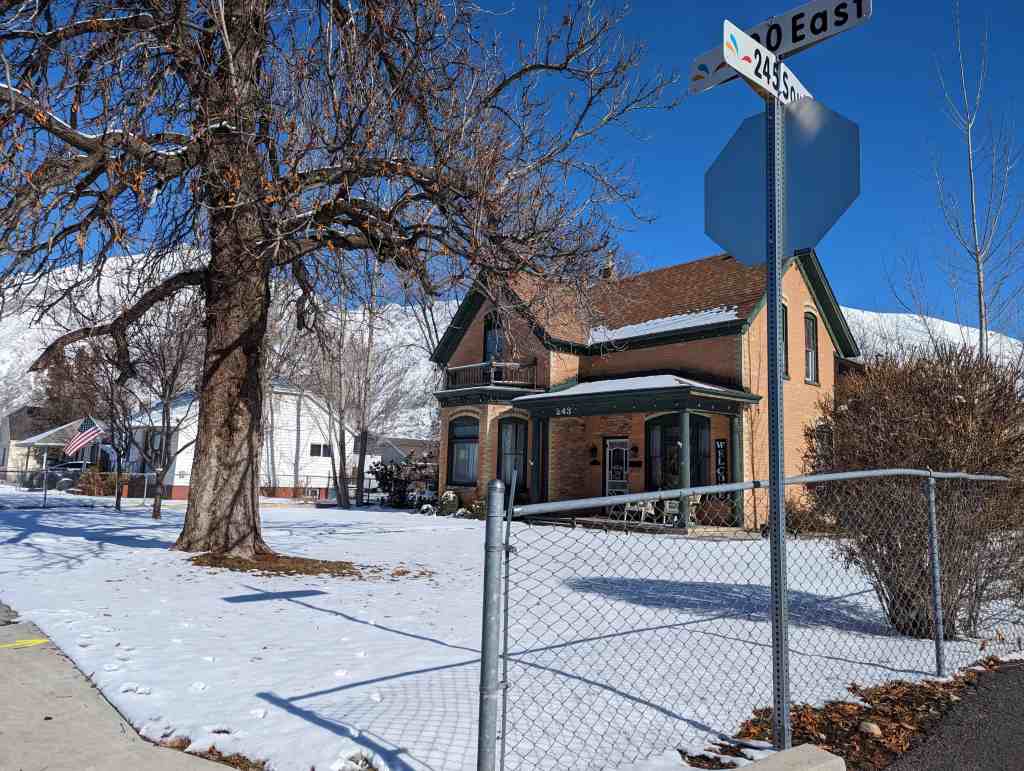
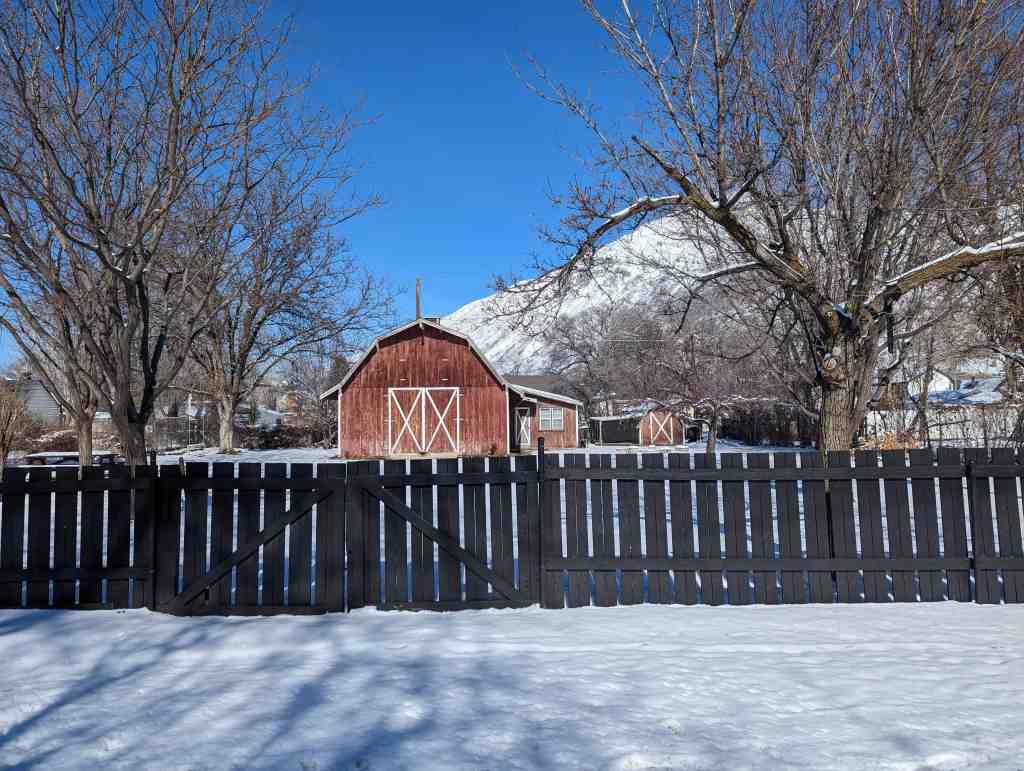
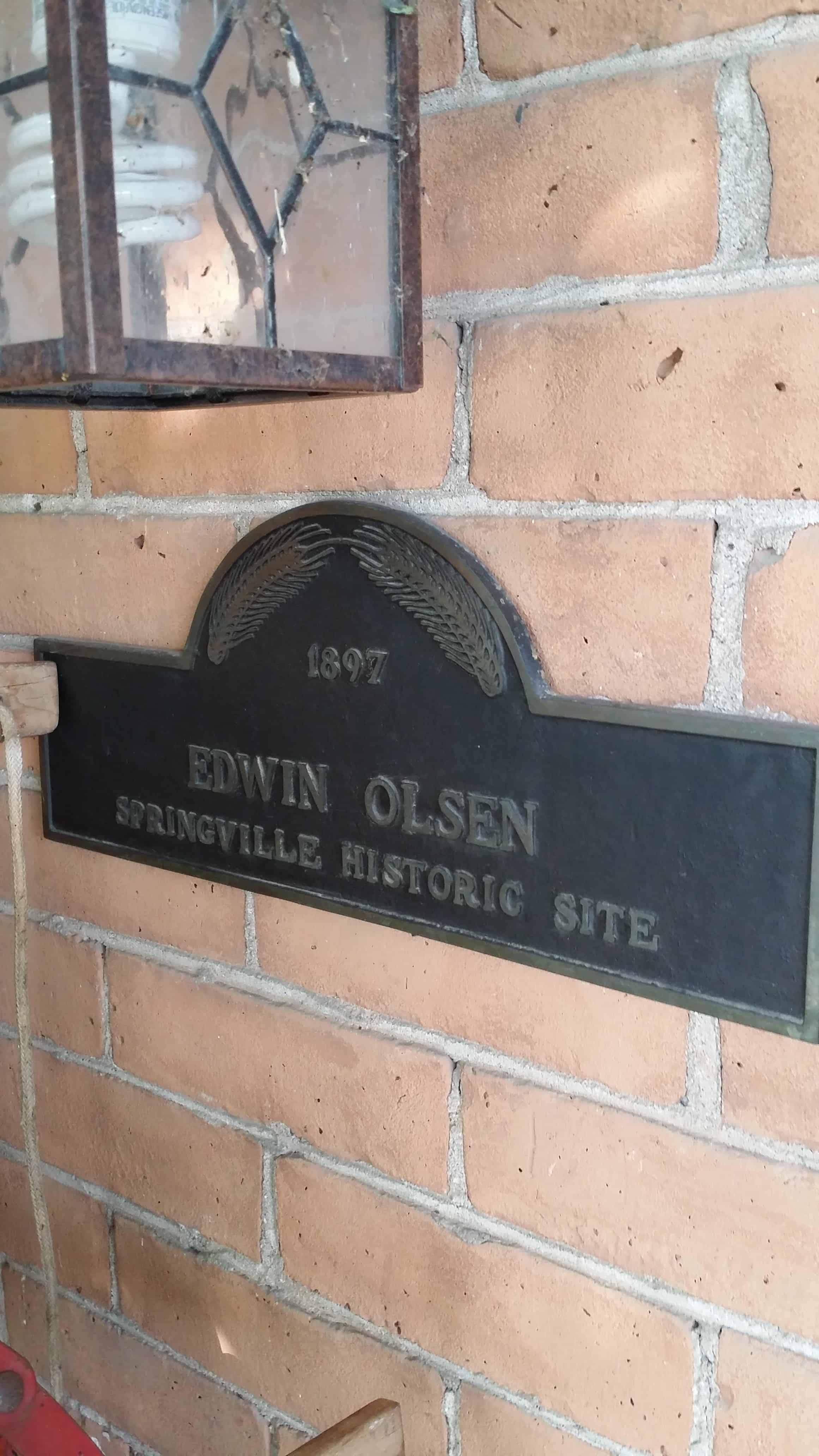
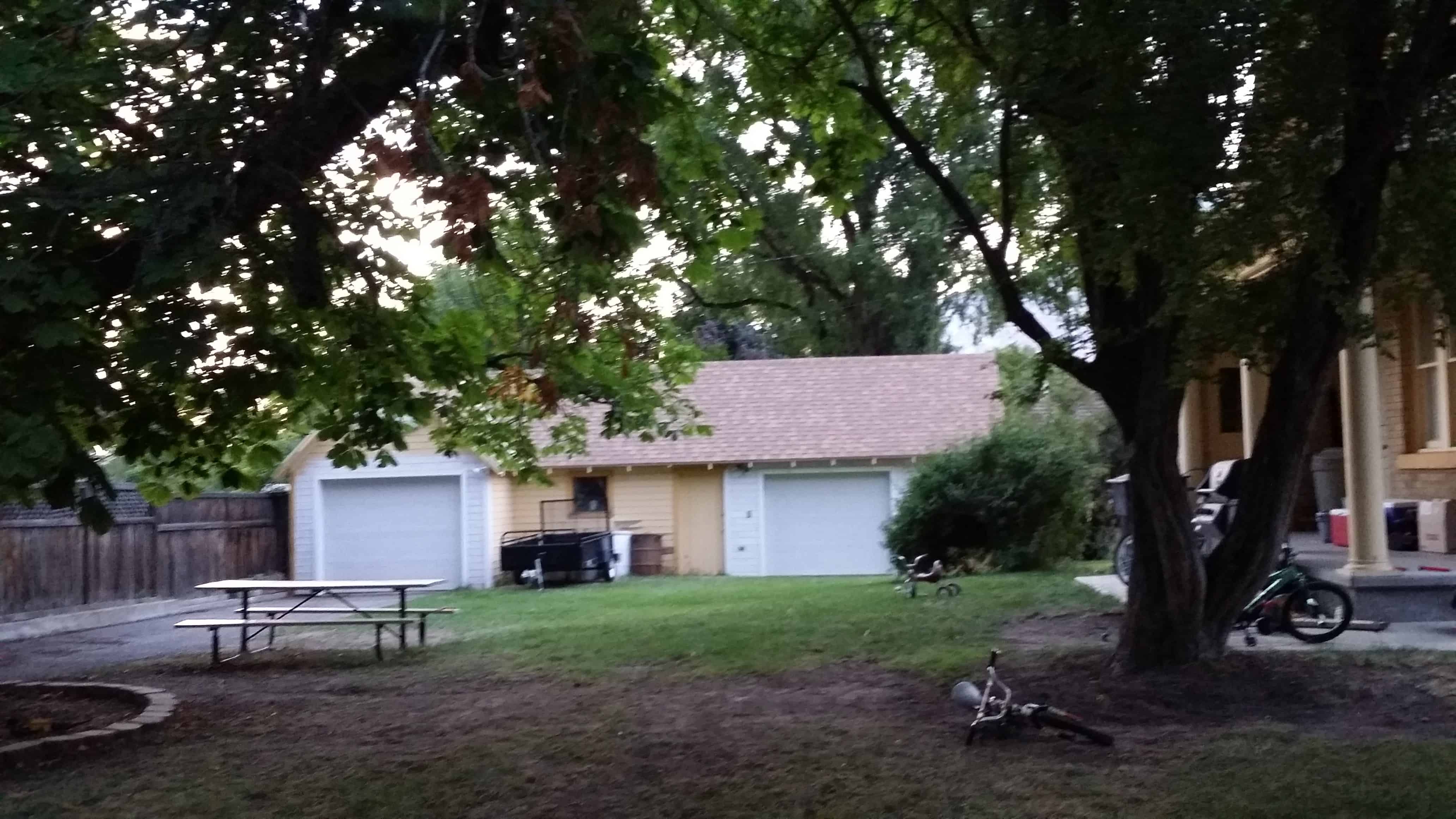
Edwin Olsen Home – 1897

12 Tuesday Aug 2014

Posted by Jacob Barlow in Uncategorized

≈ 1 Comment

Tags

Historic Homes, Springville, utah, utah county

243 South 400 East in Springville, Utah

243 S 400 E - Springville
2014-08-11 18.43.53

Milan and Margaret Packard House

12 Tuesday Aug 2014

Posted by Jacob Barlow in Uncategorized

≈ 2 Comments

Tags

Historic Homes, NRHP, Springville, utah, utah county

2014-08-11-20-16-24

The Milan and Margaret Packard House at 110 W 100 S in Springville, Utah was built in 1908. It was listed on the National Register of Historic Places in 1998.

It was built of fired brick.

See this page for some info on the railroad founded by Milan.

2014-08-11-20-16-29

2014-08-11-20-16-56

2014-08-11-20-16-58

Ami and Amanda Oakley House

12 Tuesday Aug 2014

Posted by Jacob Barlow in Uncategorized

≈ 1 Comment

Tags

Historic Homes, NRHP, Springville, utah, utah county

The Ami and Amanda Oakley House at 219 E 400 N in Springville, Utah was built in 1895. It was listed on the National Register of Historic Places (NRHP) in 1998.

It is built of fired brick, and, according to its NRHP nomination “is an excellent example of the high quality craftsmanship and design available in Springville near the turn of the [20th] century.”

2014-08-11 20.09.04 2014-08-11 20.09.36

T.R. Kelly House

12 Tuesday Aug 2014

Posted by Jacob Barlow in Uncategorized

≈ 1 Comment

Tags

Historic Homes, NRHP, Springville, utah, utah county

The T. R. Kelly House, constructed in 1903-4, is significant as one of only
six houses in Springville, as identified in an extensive survey of Springville
in 1981, which maintain their original integrity and document the period of
growth and prosperity of the town as it changed from an agrarian economy to a thriving commercial center at the turn of the century. The wealth and
prosperity that came to the-community through the success throughout the
intermountain west of several local construction companies is documented in the large homes built at ( the turn of the century in Springville, of which the Kelly House is one of the more impressive and best preserved examples.
Additionally, it is the best example among Springville houses which reflects a popular trend at the turn of the century, of the combination of the massing of the late Victorian period, with a plan and decorative features reflecting Classical Revival influences.
Related Posts:

  • NRHP # 83003972
  • Springville, Utah
  164 W. 200 South, Springville
164 W. 200 South, Springville

Springville was established in 1850 as a fanning community by a group of
Mormons chosen by Brigham Young. A scarcity of water in the early years,
however, forced many of the settlers to seek other, non-agricultural
occupations. Freighting to the mines in Nevada became an important source of income for many of the men in the town, and it provided them with experience in managing teams and materials, which proved to be useful skills in their future contracting enterprises.
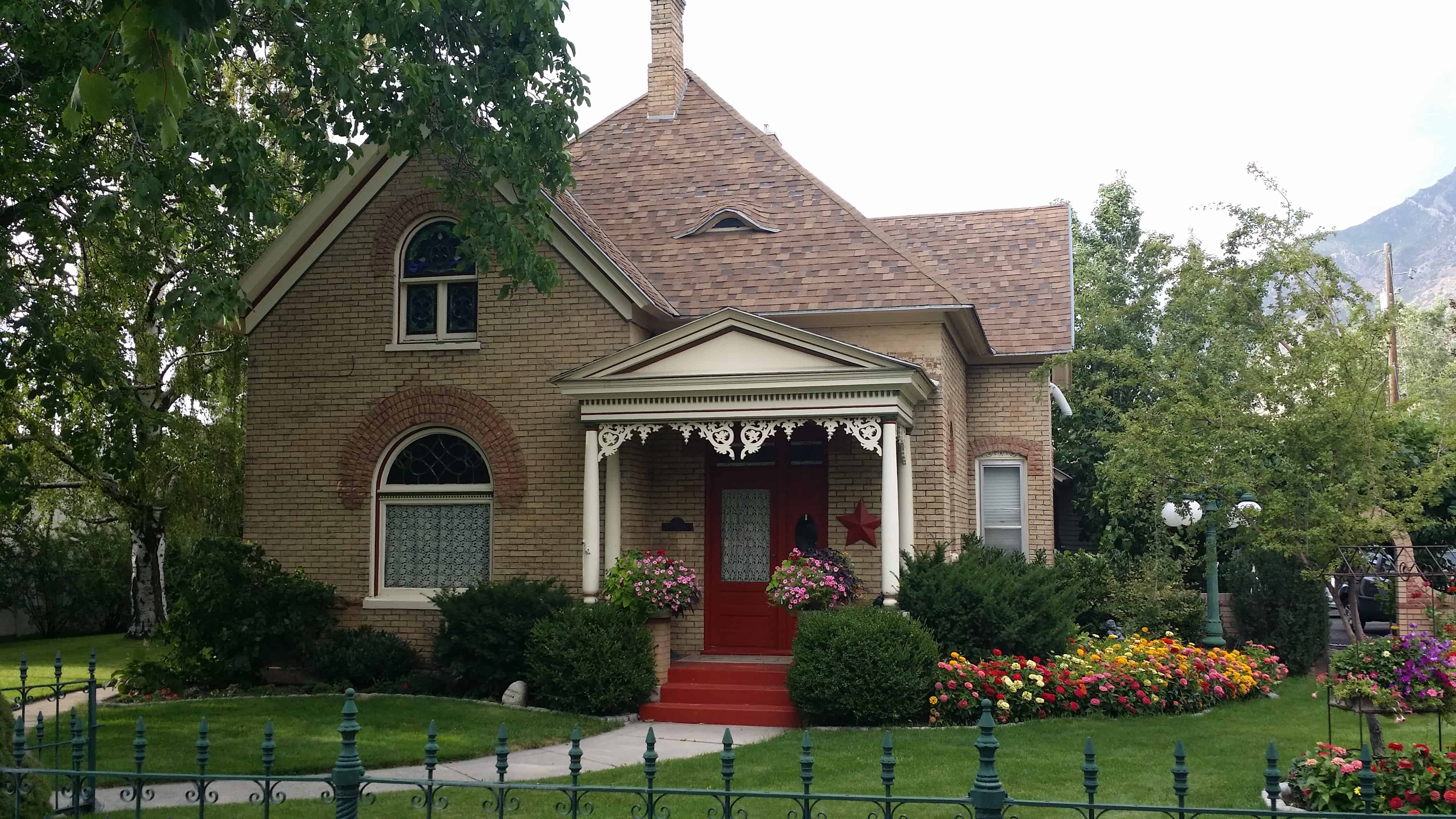
The first, Sprinville-based construction operation of note was undertaken in the late 1870s by Milan Packard, a local businessman, who proposed to build a narrow gauge railway from Springville to the rich coal deposits at Schofield, about sixty miles southeast of Springville. Although cash was in short supply to pay the work crews, Packard was able to obtain their services by offering them credit at his mercantile store. The men on the crews were mostly Springville men, and the skills which they had obtained through their freighting experiences helped to make the project a success. This initial contract launched several of these local men into the railroad construction business, which was a booming industry throughout the territory and the west up through the turn of the century. Though possessing a population of only a few thousand people, Springville surpassed both Salt Lake City and Ogden as a center for the contract construction industry, 1 apparently due to the early establishment and success of construction firms in the town. As railroad construction waned, most of these firms became involved in the construction of highways and irrigation canals. Many of them have continued in operation up to the present, and the town is still regarded as a center of construction activity.

The T. R. Kelly House, built in 1903-4, is a large two story brick house. It
reflects a major change in Springville’s architectural development. Prior to
the late 1800s traditional house types were built and repeated, with
individual variations, throughout the town. Victorian influences were
evidenced primarily in decorative detailing attached to traditional forms. By 1900, however, the influence of outside sources, such as pattern books and mail order house catalogs, was beginning to be felt. The Kelly House,
although unique in Springville and Utah, has a scale, design elements, and
decorative elements which link it to numerous other houses in Utah that were built about the same time. The widespread appearance of common types and elements has been attributed to a common, readily available source, the pattern book. The Kelly House, because on the one hand it reflects the popular trend of the time, the use of books for house designs, and on the other hand, because it is a unique type among the types that were built and repeated, reflects the owner’s desire to be up to date according to the method of design, but also expresses his concurrent wish to have a house that would stand apart from others and express his own individuality.

Formally the Kelly House reflects the influence of the late Victorian period,
and the direction that Utah architecture was to take in the first decades of
the twentieth century. The irregular massing, combining a hip and pyramid
roof with a major gable roof projection on the east side, a minor gable roof
projection on the west side, identical corner turrets with bell cast conical
roofs, and a substantial two story open porch on the facade, immediately
indicate that the Kelly House is a product of Victorian taste. The combination of tan brick for the bulk of the house, with red brick for accent
as lintels and in the decorative panels of the porch and the chimney, and the crowning of the tower roofs with pinnacles, provide variety of texture and color, reinforcing that initial impression. The plan for the house, however, is not as irregular as is characteristic of Victorian designs. It is a box which is broken at the front corners by turrets, and by a projecting bay under the east gable projection. The original house included a one story
rectangular wing attached to the rear to which a modern addition was attached in 1981. The layout of the interior spaces too is more regular than one would expect to find in a Victorian house. The room divisions, although not symmetrical, do essentially divide the house into quarters (see plan). There are also decorative elements which bespeak of other influences which could explain the dichotomy that one finds in the Kelly House. The classical pediment which projects from the hip roof on the facade, the Tuscan columns that frame the entrance porch, and the wide entablature with dentils on the frieze that wraps around the upper edge of the house and the front porch, in addition to the tightening up of the plan, document the popularity of Classical Revival elements that permeated the realm of domestic architecture in the first decade of the twentieth century.

The Kelly House was renovated in 1981, but it closely resembles its original
appearance. The front door is set off center under the deep front porch, and
is flanked by a stained glass rectangular window panel. The original door and sidelight were replaced in the 1930s, and in the 1981 remodeling were again replaced by a door with a long oval glass pane framed by pilasters. The oval glass door is in keeping with the Victorian flavor of the house, and the pilasters complement the classical decorative elements. The openings onto the second story porch originally included a door centered between two double hung sash windows. They were replaced in 1981 by French doors, but because the arrangement of openings is the same, with the doors centered between side window panels, the change does not dramatically affect the original integrity of the building. The balustrade of that porch was replaced with an exact replica of the original. A door on the west side of the building was expanded, and French doors added, but other than that change, and the ones previously mentioned, the openings of the main block of the house are original. There are three long, narrow, double hung sash windows set into each turret. The same type of window was used in the east bay, except for the central panel which is a large single pane window and transom.

A long, one story addition was attached to the rear of the house in 1981 to
enlarge the space of the original block. Brick was matched as well as roofing material so that the new wing is not intrusive. The glass green house attached to the east side of the original one story rear wing, is the only part of the structure that is visible from the road. It, however, is of a
small scale, and is partially masked by a brick fence of tan brick with red
brick decorative panels that match the brickwork of the house. The garage
located at the northwest corner of the house was built in the 1930s, and was
also remodeled in 1981. Every effort was made to visually link the garage to
the house. Fan-type windows in the garage doors complement the classical
decorative scheme. The brick and paint have been carefully matched with that of the original building.

Major alterations to the interior of the house were made in the 1930s. The
original living room doors were replaced by arched doorways, pot belly stoves were removed and replaced by fireplaces, lighting fixtures were changed. More changes were made in 1981 including the addition of new lighting fixtures, the removal of a wall on the second story to enlarge the master bedroom to include a dressing room and bathroom, and the raising of the master bedroom ceiling. These changes, however, are not reflected on the exterior of the building, and have been made so that much of the original character of the interior of the house has been preserved.

The success of the construction industry in Springville brought unprecedented economic growth to the community and supported the development of local retail businesses. This new-found wealth was reflected in the emergence of fine, large homes, such as the Kelly house, that were built at the turn of the century. The Kelly House is one of the most impressive houses of the period, and is the best preserved extant example of the type built at that time.

Thomas Rollo Kelly was the son of Joseph and Elizabeth Patter Kelly, pioneers who settled in Springville, Utah in 1853. Joseph Kelly and his family lived on a ranch in the Hobble Creek Canyon area overlooking the town of Springville. After World War II the Kelly Ranch was sold to Springville City and converted into Kelly’s Grove, a popular recreation area and the Hobble Creek Golf Course. The Kelly family is listed as among the prominent families of the Springville area.

Thomas (T. R.) Kelly became a school teacher, businessman, and pharmacist in Springville. In 1903-04 he was listed as owner and manager of the Springville Drug Company, located on Depot Street (Second South). During that same 1903-04 period Kelly built his residence, also located on Depot Street, where he and his wife Ella and family resided until 1914. Depot Street served as a main thoroughfare leading to the interurban train station.

Located in such a conspicuous setting, the T. R. Kelly house, with its dual
turrets, proved a “show place” in the Springville community. The Kelly
residence represents a period in local history when Mormons were beginning to join the mainstream of American life. Although architecturally unique, its design was more than likely drawn from a popular pattern book of the time. It, in addition to several other Springville buildings of the same period, therefore documents not only the influx of nationally popular influences to Springville, but also attests to the receptivity and desire of the residents of the community to accept forms and building methods that had become acceptable and desirable nationwide.

Upon the death of Ella Kelly in 1914, Thomas moved from Springville. The
house then passed to about seven different owners, before being purchased in 1980 by Janis and Brent Haymond.

Another post I found here:
Thomas Kelly settled in the Hobble Creek area of Springville in 1853.  His family was a notable one in the area of Springville.  Kelly later became a school teacher and operated a few of the business in downtown Springville.  Kelly met and married Ella and in 1903 began to build his home on Depot Street (200 South).  Depot Street was the main street from downtown to the train station.  The house is built in the Victorian Style (for more information about his specific design, click here) and is especially notable since it is different than many of the houses that were being built at the time.  Kelly used a book for house design to incorporate a unique design to his new house.  In 1914, Ella died and Kelly moved from Springville.

After Kelly’s departure from Springville, the house passed through several owners.  In the 1930’s it went through a little remodeling, which included the construction of a car garage.  In 1980 it was once again purchased and underwent a large renovation in 1981.  This included the complete back addition to the house.  In December of 1983 it was added to the National Register of Historic Places.

Mont and Harriet Johnson House

12 Tuesday Aug 2014

Posted by Jacob Barlow in Uncategorized

≈ 4 Comments

Tags

Historic Homes, NRHP, Springville, utah, utah county

  • 2014-08-11 19.56.16

The Mont and Harriet Johnson House at 153 E 400 N in Springville, Utah is a Late Victorian style house built in 1901. It was listed on the National Register of Historic Places in 1998. The listing included three contributing buildings.

It was built for Mont Johnson, a successful farmer who was prominent in Springville, who in fact was serving as mayor during 1900 to 1902, while the house was built. He later served as treasurer of Utah County. This house was grander than most previous buildings in the city, and was made of fired brick.

  • 153 E 400 N, Springville
    153 E 400 N, Springville

John Hafen House

12 Tuesday Aug 2014

Posted by Jacob Barlow in Uncategorized

≈ 1 Comment

Tags

Historic Homes, NRHP, Springville, utah, utah county

2014-08-11 19.36.56

The Hafen Home, built c. 1900, was designed by Alberto O. Treganza in the Swiss Chalet style, as a studio and residence for the artist John Hafen (1856-1910). Born in Switzerland, Hafen emigrated to Utah in 1862 with his parents. He struggled for financial success as an artist and became particularly well know for his landscape paintings. He was sent by the Mormon Church to Paris to study art so he could paint murals in the LDS temples. He was instrumental in founding the Springville Museum of Art in 1903.

The John Hafen House, at 1002 S. Main St. in Springville, Utah.

2014-08-11 19.36.04

The John Hafen house, built in about 1900, is significant as being the home of John Hafen; a prominent Mormon pioneer artist. John Hafen played an important role in producing works of art for the Mormon Church and also works which brought him recognition throughout the state of Utah, and various additional areas of the country. Hafen is known for his beautiful landscape paintings. When settlers first came into the Salt Lake and Utah Valleys, they were faced with both an environmental desert, and a cultural desert. John Hafen was one artist who helped turn a vast and barren area into a place of beauty and culture. His talents and contributions brought him recognition in many parts of
country.

It was listed on the National Register of Historic Places (#82004182) in 1982.

John Hafen was born in Canton, Thurgan, Switzerland on March 22, 1856. His father, a landscape gardener, was Johann Hafen. His mother was Anna Elizabeth Ruesi, the daughter of an artist. The Hafen family came to the United States
when John was six years old and they settled in Utah in 1862.

Although John Hafen had a great love for art, and he showed his interest very early in life, his career as a painter got off to a slow start. Once married, and with a family, he found it difficult to make a living through his art. He therefore tried many different ways of supporting himself and his family, among which was making historic photograph enlargements. His life was dominated by struggle and hardship, and he never did make a significant profit from his work

Nevertheless, his work became well known, and though not financially, in every other way he was a successful painter. For many years his work was commissioned by the Mormon Church. In 1890 he ws sent on a mission by the church
for the purpose of studying art in Europe. In return for this, he painted some murals for the temples of the church.

Upon Hafen’s return from Europe, he was awarded a $300.00 prize from Utah Art Institute for his work. He received the prize again, several years later. He received much recognition in his home state.

Still, the artist’s work did not stay within the realm of the Mormon Church, or even in the state of Utah. Finding it hard to work only in Utah, Hafen worked in Monterey, California as well. 5 His works were exhibited in Paris, the Chicago Art Institute, Philadelphia, Saint Louis, and Indiana. In 1908 he won a prize at the Illinois State Fair for the best landscape. He was credited for starting an artists colony in Brown County Indiana, and was also instrumental in helping to found the Springville Art Gallery.

Although John Hafen’s work as an artist was a struggle for him, financial difficulty did not inhibit his love of art. On the mission of art he wrote:
The influence of art is so powerful in shaping our lives for a high appreciation of the creations of our God that we cannot afford to neglect an acquaintance with it. We should be as eager for its companionship as we are eager for chairs to sit upon or for food to sustain our lives, for it has as important a mission in shaping our character and in conducing to our happiness as anything that we term necessities. Life is incomplete without it. A religious life is not an ideal religious life without art.

John Hafen was both artistic and religious, and his statement reflects his faith and determination with which he approached his life and work. His hard work began to bear fruit towards the end of his life, as he started to receive
more money for his painting. Tragically, Hafen died during the peak of his career, in 1910. He was fifty-four years old.

1002 S Main, Springville
2014-08-11 19.35.37
2014-08-11 19.35.43
2014-08-11 19.35.46

Frederick and Della Dunn House

12 Tuesday Aug 2014

Posted by Jacob Barlow in Uncategorized

≈ 2 Comments

Tags

Historic Homes, NRHP, Springville, utah, utah county

This period revival cottage was constructed c. 1929 for Frederick and Della Dunn by Claude Ashworth, it is one of only three buildings in Springville designed primarily in the Spanish Colonial Revival Style.

145 N. Main St. Springville

145 N. Main St. Springville

11


Roe A. and Louise R. Deal House

12 Tuesday Aug 2014

Posted by Jacob Barlow in Uncategorized

≈ Leave a comment

Tags

Historic Homes, NRHP, Springville, utah, utah county

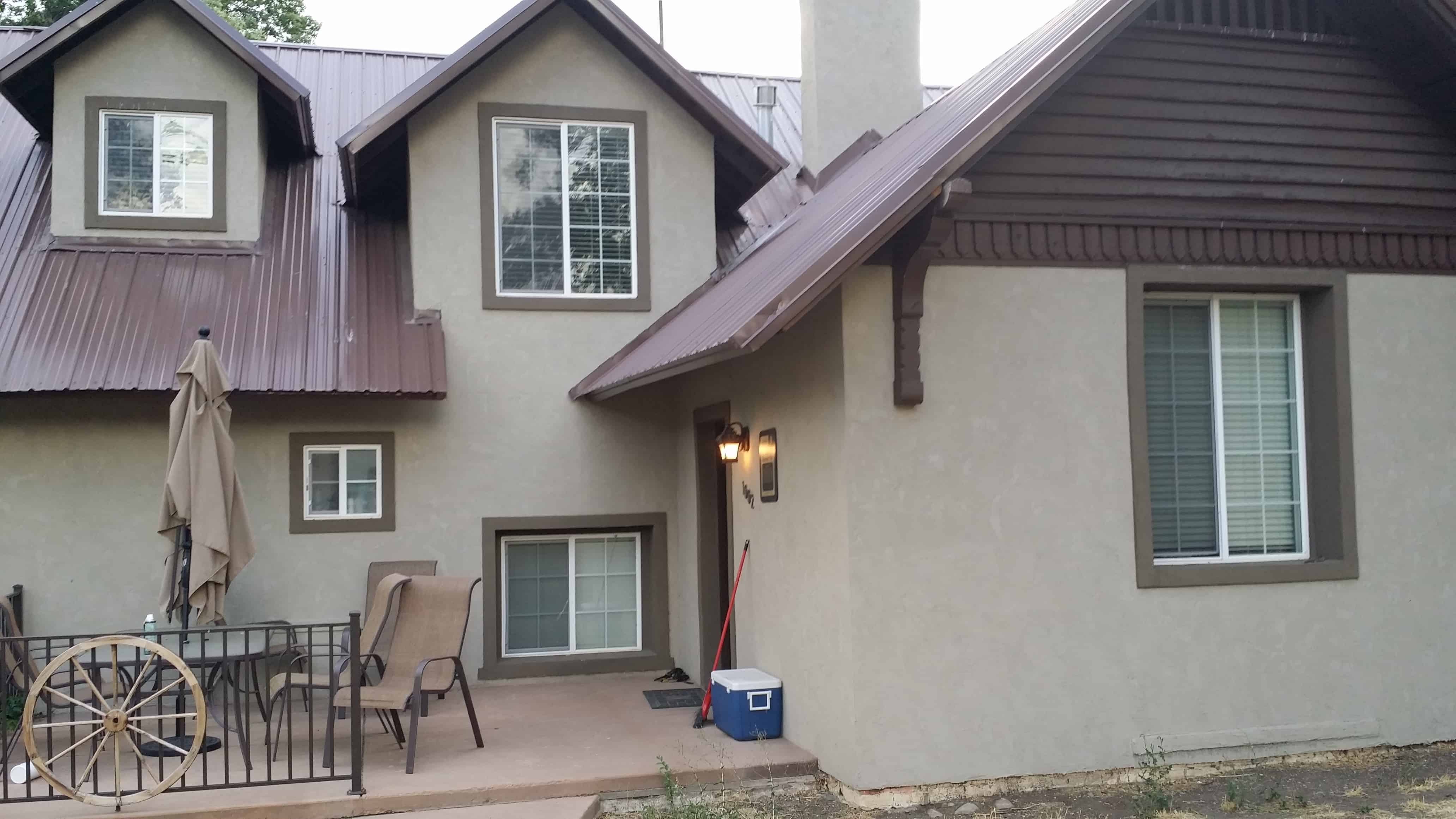
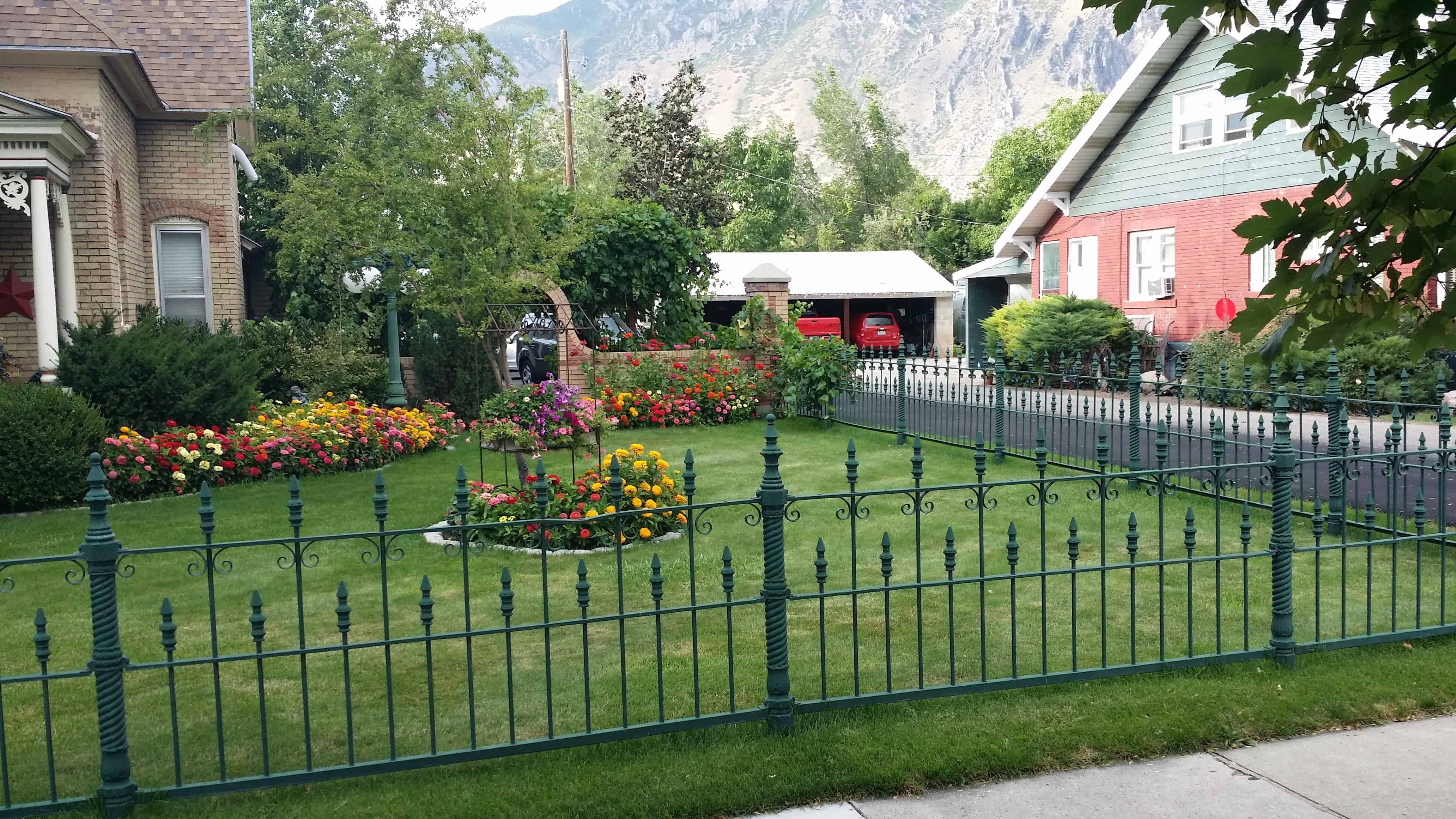
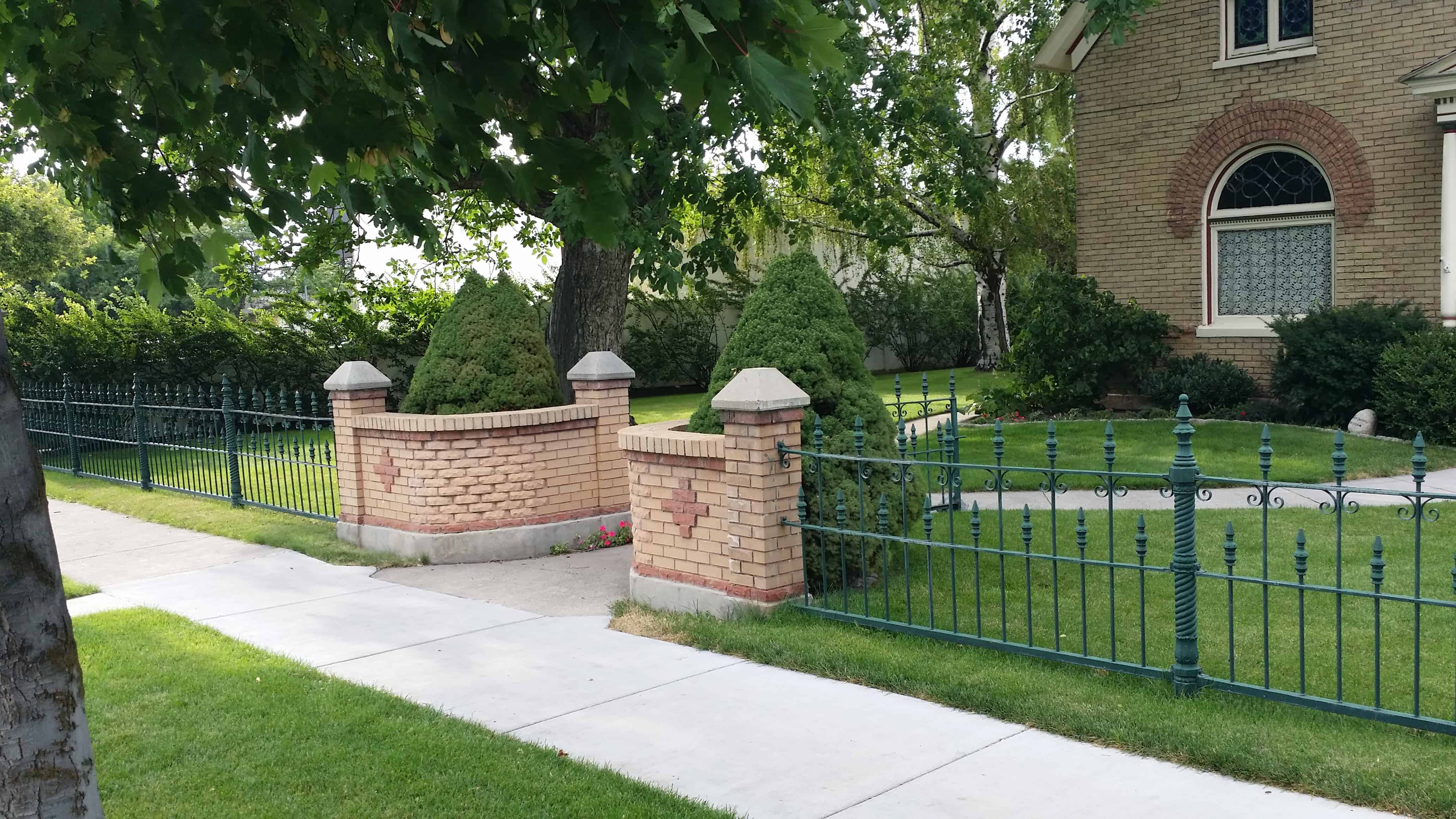
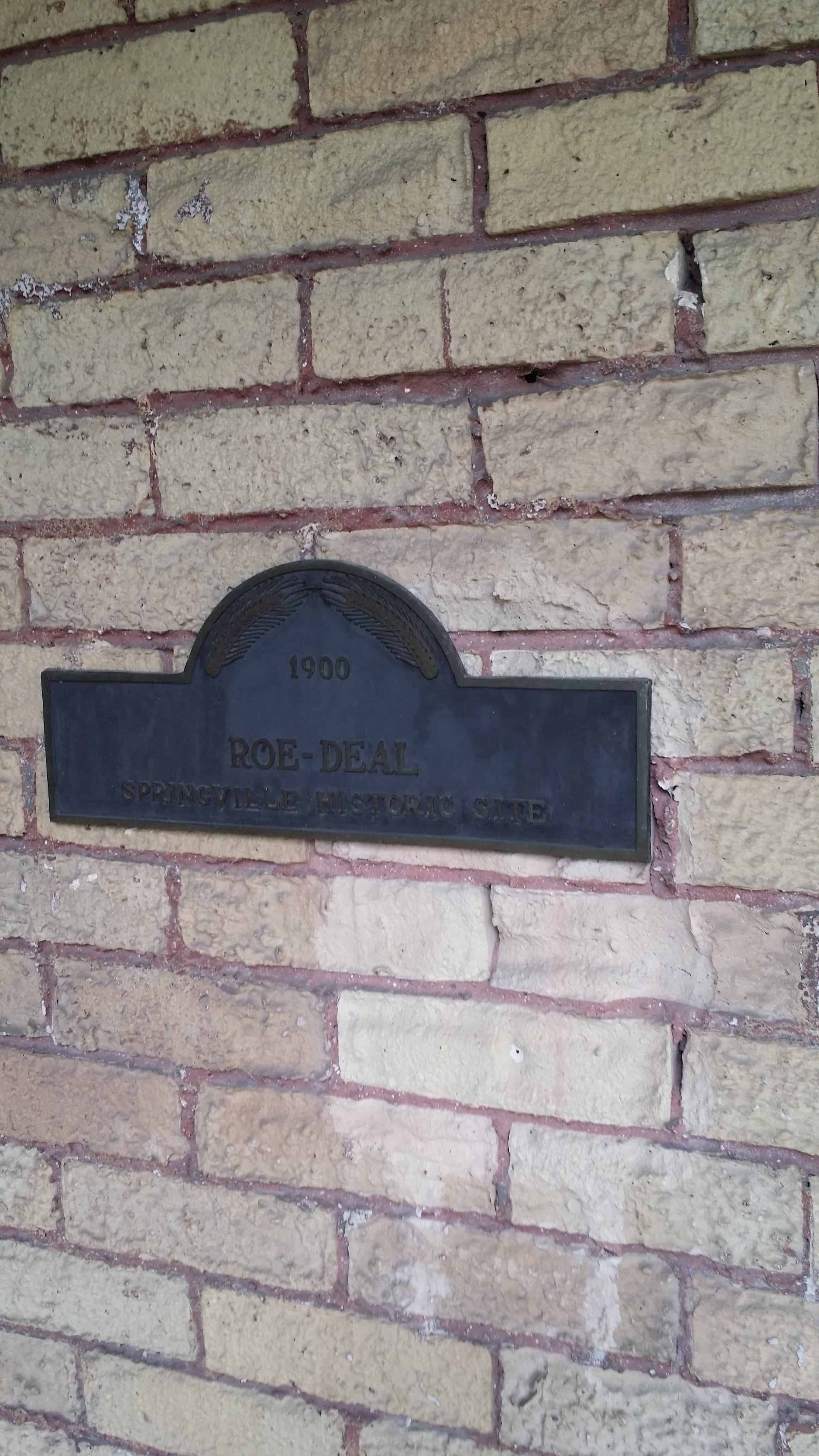
The Roe A. and Louise R. Deal House is an historic house in Springville, Utah, United States. The house was added to the U.S. National Register of Historic Places in 1998. Along with eleven other properties, the Deal House was nominated to the National Register via the Springville Multiple Property Submission

The NRHP nomination for the house argues that it “is significant in the broad patterns of Springville history as an example of the larger, more substantially constructed homes built during the late nineteenth and early twentieth centuries”, and that it demonstrates the development in Springville of awareness of popular architectural styles elsewhere.

39 E 200 N, Springville

39 E 200 N, Springville

2014-08-11 18.24.21 2014-08-11 18.24.25 2014-08-11 18.24.27 2014-08-11 18.24.30

← Older posts
Newer posts →

Follow Jacob

Follow Jacob

Blog Stats

  • 2,069,610 hits

Social and Other Links

BarlowLinks.com

Recent Posts

  • Nellie C. Bailey House
  • The James and Manomas Andrus House
  • Jesse W. Crosby Home
  • The Heinrich Gubler Home
  • The Temple Quarry

Archives

Loading Comments...