Tags
Gold Strike Canyon-Sugarloaf Mountain Traditional Cultural Property
The Gold Strike Canyon-Sugarloaf Mountain Traditional Cultural Property was added to the National Register of Historic Places (#04000935) on September 4, 2004.

01 Wednesday Oct 2025
Posted in Uncategorized
Tags
Gold Strike Canyon-Sugarloaf Mountain Traditional Cultural Property
The Gold Strike Canyon-Sugarloaf Mountain Traditional Cultural Property was added to the National Register of Historic Places (#04000935) on September 4, 2004.
01 Wednesday Oct 2025
Posted in Uncategorized
01 Wednesday Oct 2025
Posted in Uncategorized
Tags
Spirit Mountain
Spirit Mountain was added to the National Register of Historic Places (#99001083) on September 8, 1999.
01 Wednesday Oct 2025
Posted in Uncategorized
Tags
Camp Lee Canyon
Camp Lee Canyon was added to the National Register of Historic Places (#96001561) on January 16, 1997.
30 Tuesday Sep 2025
Posted in Uncategorized
Tags
Homestake Mine
The Homestake Mine is located in Clark County, Nevada and was added to the National Register of Historic Places (#85001601) on July 17, 1985.
30 Tuesday Sep 2025
Posted in Uncategorized
Tags
Grapevine Canyon Petroglyphs (AZ:F:14:98 ASM)
The Grapevine Canyon Petroglyphs are located in the Christmas Tree Pass area outside of Laughlin, Nevada and were added to the National Register of Historic Places (#84000799) on December 15, 1984.
29 Monday Sep 2025
Posted in Uncategorized
Boulder City Historic District
The Boulder City Historic District is in Boulder City, roughly bounded by the Government Center and Watertank hill on the north, the railroad spur and Date Street on the west, New Mexico and Fifth Street on the South and Avenues B, F and L on the east – it was added to the National Register of Historic Places (#83001107) on August 19, 1983. The text below is from the national register’s nomination form.
The Boulder City Historic District is significant for its historic associations with the Boulder Canyon Project, the nation’s first large-scale, multi-purpose reclamation effort, and the turning point for a new era in the history of Federal reclamation programs and policies. As the town created to house over four thousand construction workers in the harsh Nevada desert, Boulder City was a significant integral part of the successful completion of Hoover Dam and the Boulder Canyon Project.
Constructed at the outset of the Great Depression, Boulder City was conceived by the Federal government as an ideal town, a model city, to which the American people could look for hope of a better future, and subsequently became the first federal effort to construct New Towns in American history.
The Boulder City Historic District holds national significance for its place in the history of American City Planning as the first fully-developed experiment in new town planning as promoted by the Community Planning Movement, a movement which is recognized as the force which most influenced contemporary community planning practices.
The Boulder City Historic District is significant as well for its architectural integrity and ability to convey associations with the events and people that made direct contributions, to the creation of the city plan, its construction and development, and its continued role as a permanent city and successful new town.
The Bureau of Reclamation and the Boulder Canyon Project
The United States Reclamation Service was created by Secretary of the Interior E. A. Hitchcock following the passage of the Newlands-Hansbrough Reclamation Act on June 17, 1902. The event marked the beginning of unprecedented participation by the Federal Government in the reclamation and settlement of arid lands in the Western United States The programs and policies of the Reclamation Act were based on the belief that not only was the National government obligated to dispose of these vast public lands to settlers who would build homes and farms, but that the government was equally obligated to bring the necessary water to within their reach. Dams, reservoirs, and mainline canals needed to assist the homesteaders to subdue the desert should be built by the federal government.
Company Residential Properties; Power Operators Field Operations Properties; Institutional, Public and Semi-Public Properties; Commercial Properties; and Private Residential Properties.
Within each category, resources are grouped by association if they were built as a single construction effort. Individually-built properties of the same category are discussed as well. Commercial Properties and Private Residential Properties are divided into two groups: Pre-1942 construction efforts and Post-1942 construction efforts, Each category description contains an inventory listing of resources within each group as well as the individually-built properties, and includes a discussion of the resources architectural integrity and context. Properties are referenced by an inventory number and street address, which correspond to the district map and individual inventory forms, Historic property names are used wherever possible. In most cases, names associated with residential properties reference only the occupants of the building during the first two years of its existence.
28 Sunday Sep 2025
Posted in Uncategorized
Tags
Brownstone Canyon Archeological District
The Brownstone Canyon Archeological District was added to the National Register of Historic Places (#82003212) on September 22, 1982.
27 Saturday Sep 2025
Posted in Uncategorized
Tule Springs Archeological Site
Related:
The Tule Springs Archeological Site was added to the National Register of Historic Places (#79001461) on April 20, 1979. It is now the site of Floyd Lamb Park in Las Vegas, Nevada.
26 Monday May 2025
Posted in Uncategorized
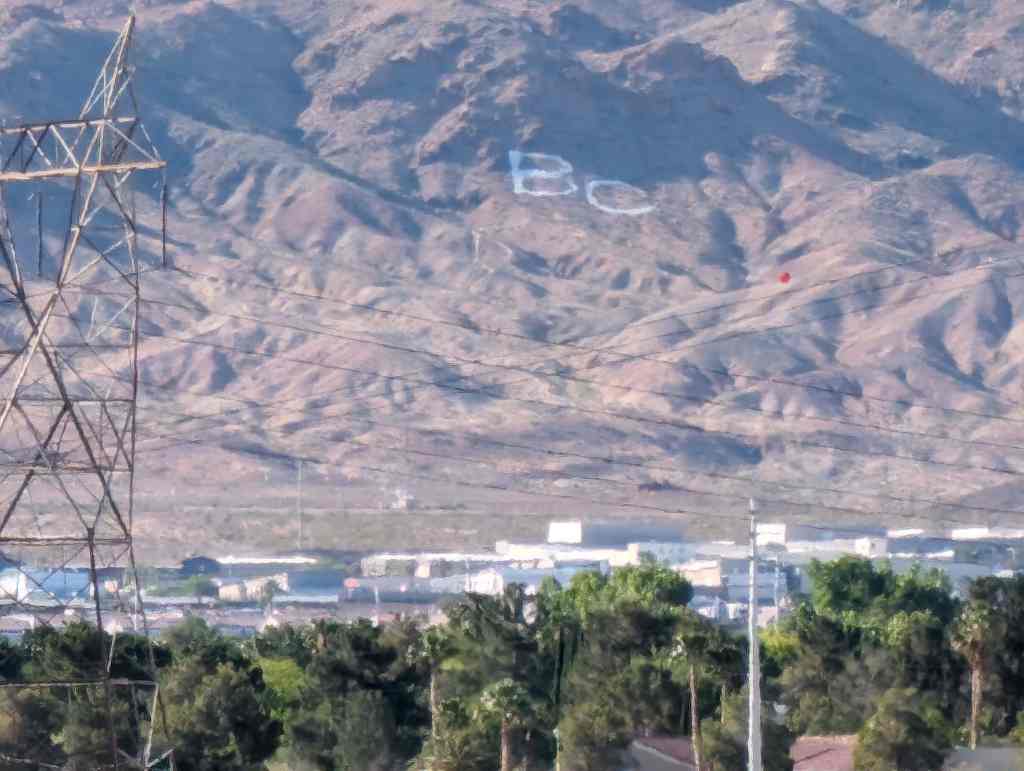
BC – Boulder City Hillside Letters
One of the collection of Hillside Letters. This one above Boulder City, Nevada.
