• About JacobBarlow.com
  • Cemeteries in Utah
  • D.U.P. Markers
  • Doors
  • Exploring Utah Email List
  • Geocaching
  • Historic Marker Map
  • Links
  • Movie/TV Show Filming Locations
  • Oldest in Utah
  • Other Travels
  • Photos Then and Now
  • S.U.P. Markers
  • U.P.T.L.A. Markers
  • Utah Cities and Places.
  • Utah Homes for Sale
  • Utah Treasure Hunt

JacobBarlow.com

~ Exploring with Jacob Barlow

JacobBarlow.com

Tag Archives: NRHP

Ezra Thompson and Mary Stevenson Clark House

19 Tuesday Dec 2023

Posted by Jacob Barlow in Uncategorized

≈ Leave a comment

Tags

Clark Lane National Historic District, Davis County, Farmington, Historic Homes, NRHP, utah

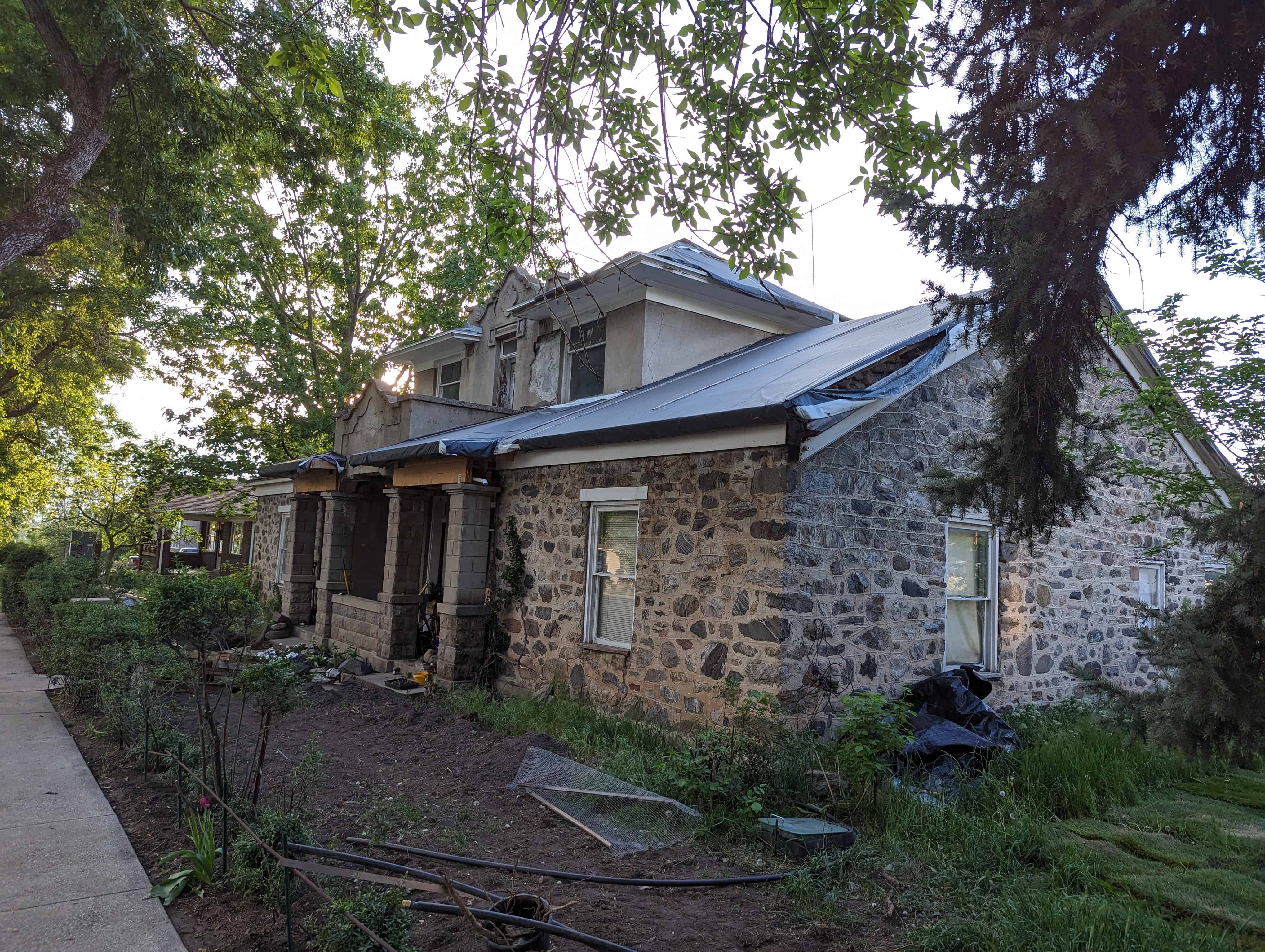
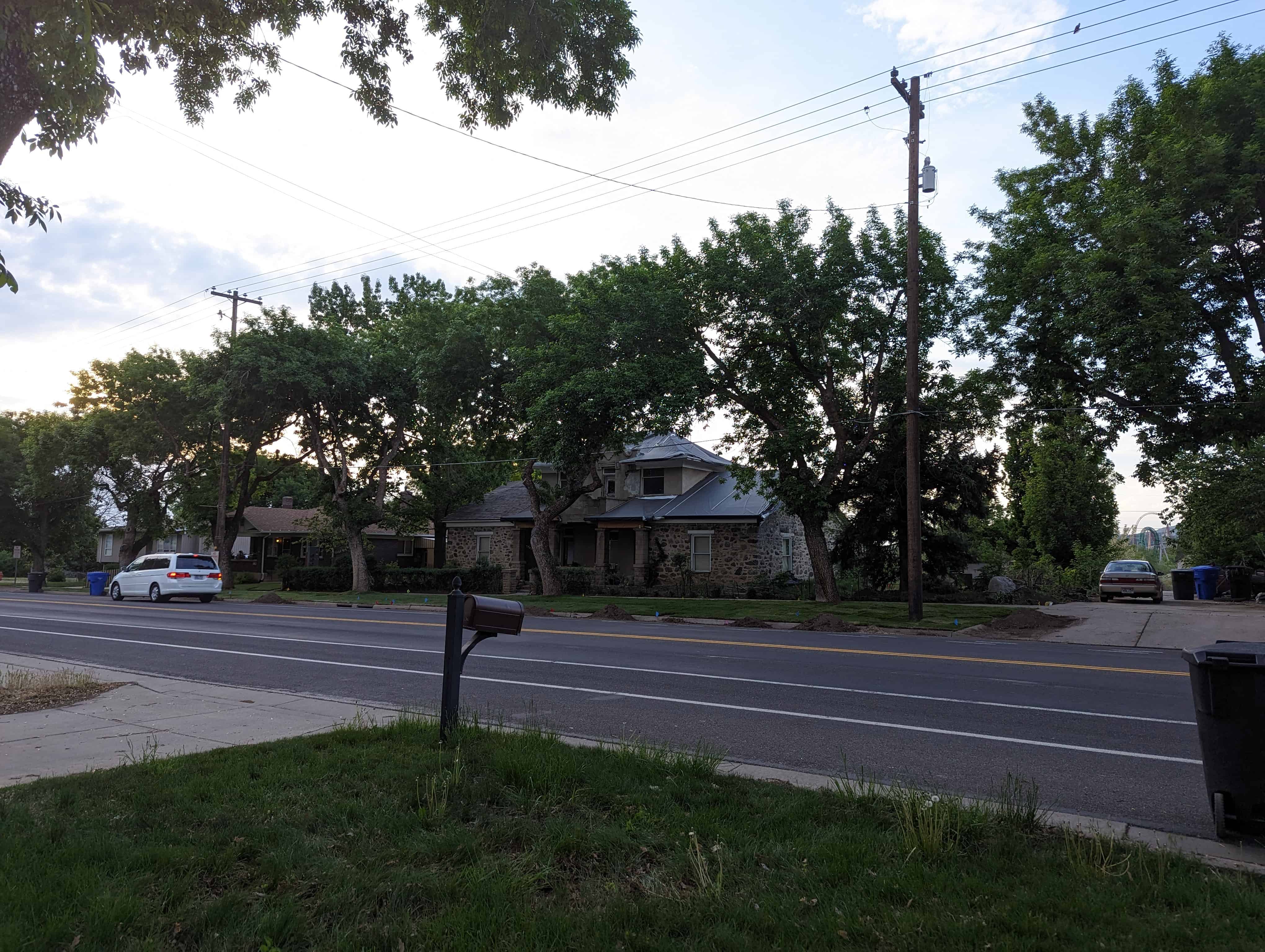
Ezra Thompson and Mary Stevenson Clark House

Devoted to the L.D.S. Church, Ezra Thompson Clark helped to establish three colonies, one in Bear Lake, Idaho; one in Iron County, Utah and one in Nevada. He also built the Grist Mill in Morgan, a flour mill and molasses mill and filled five preaching missions. He possessed many fine horses and could supply teams and carriages for transportation for the church. He provided teams of black oxen to help bring immigrants from the Missouri River to Utah and provided two teams of oxen and a wagon to carry the great granite blocks from Cottonwood Canyon for the Salt Lake Temple. He often furnished teams and wagons for church authorities in their trips through Northern Utah and Idaho. Often the President of the Church and the apostles were at this house where they were put up when passing through the area.*

Ezra Thompson Clark was a farmer of consumate skill and experience. When arriving in Farmington in 1848, he was given 35 acres by Brigham Young, which he saw grow to 700 acres before he died. He raised sugar cane, cattle, hay and grain. He had the first swarm of bees in Farmington. He founded the Davis County bank and was elected its first president in 1891. He was the Davis County treasurer and kept the county funds in a safe in his house.

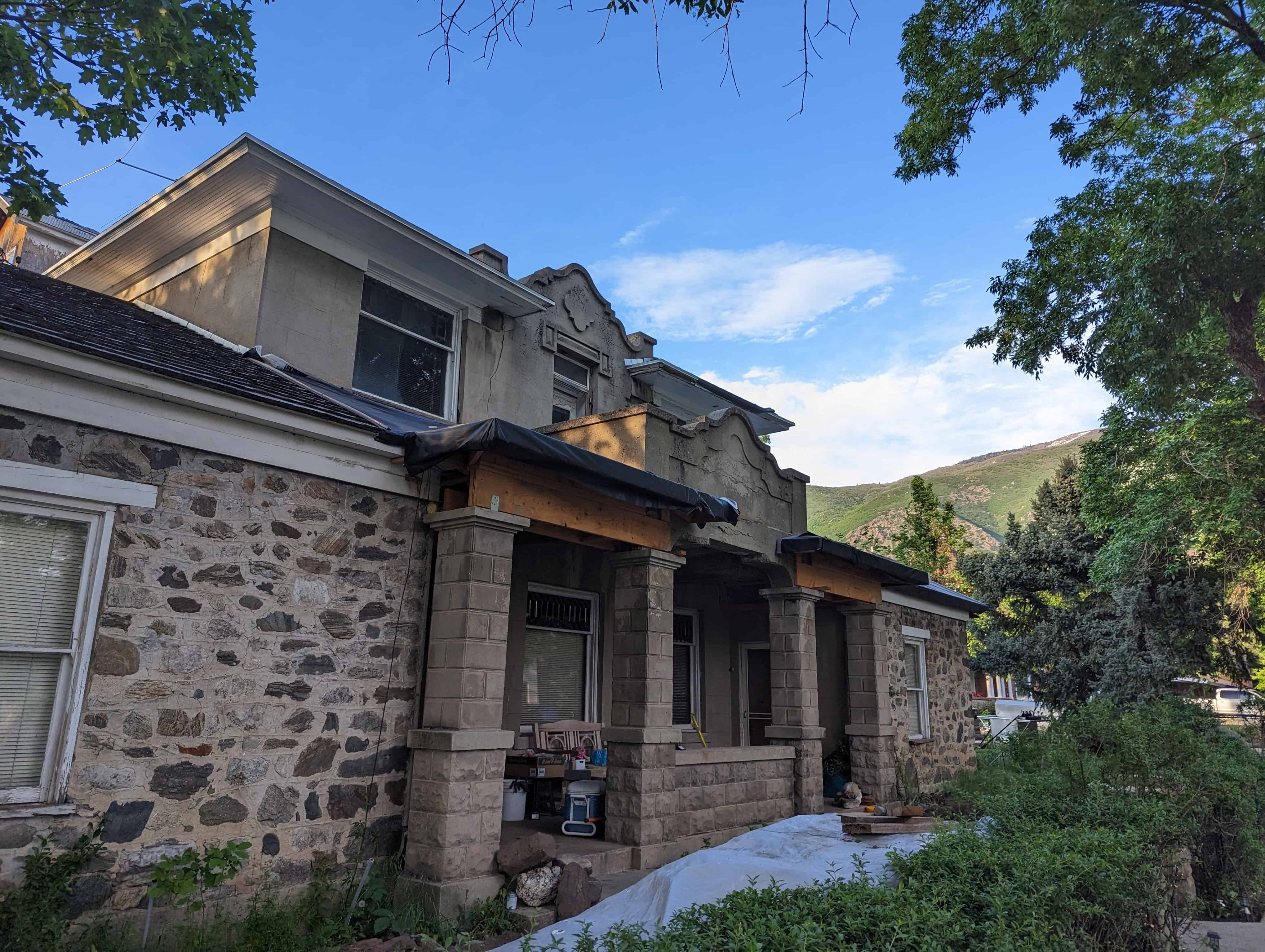
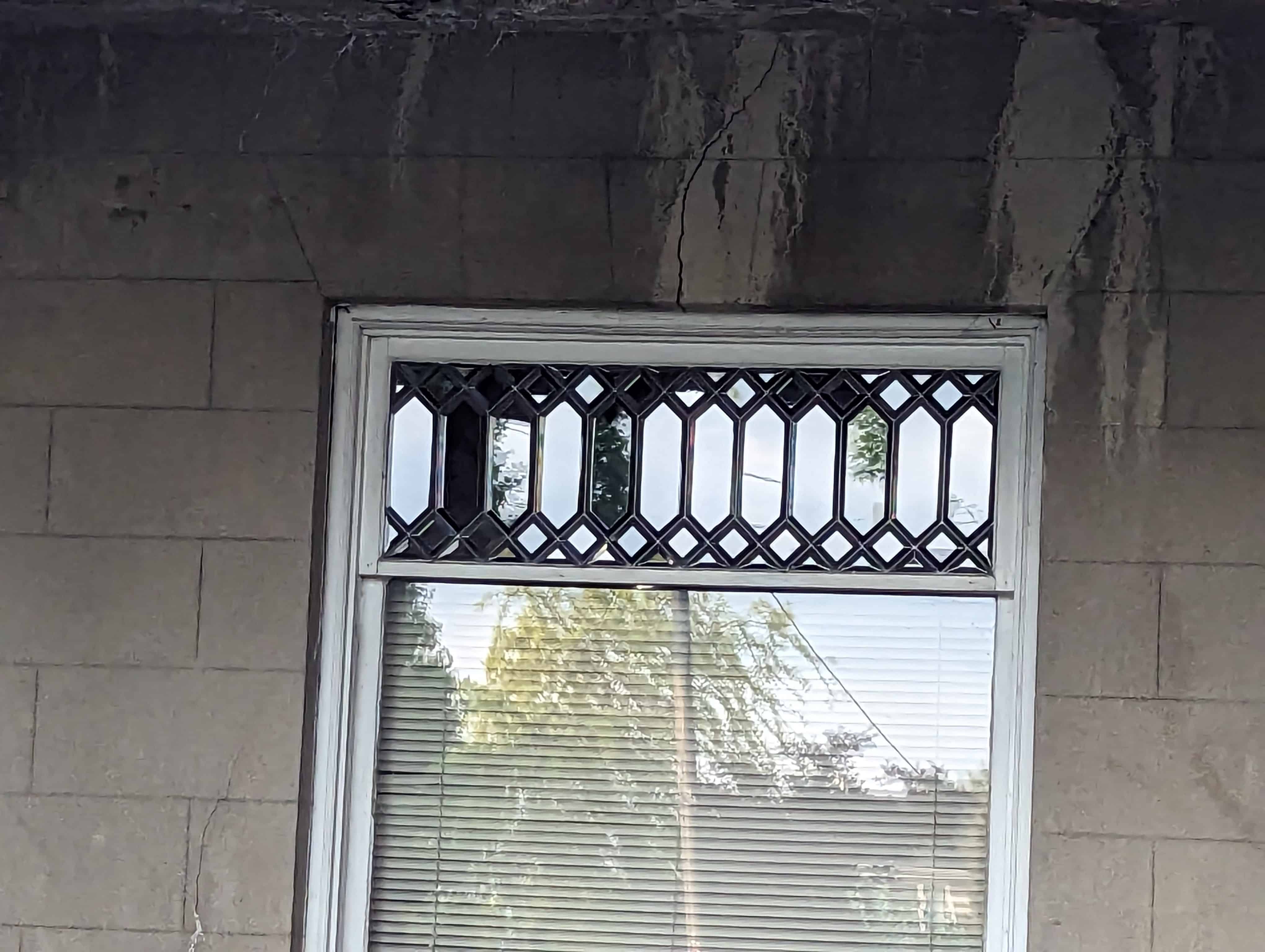
Built in 1856, this house has undergone a series of alterations throughout its existence. The original adobe structure was a two-story, single pile, side passage plan with a gable roof parallel to the street. The side passage plan in this form is not common in Farmington. The first alteration to the original structure, dating from 1857, consists of a one-story wing which was added to the west side of the original two story structure. The east wing was added in 1867. These wings, built with native field stone laid in a random rubble pattern, were placed to create a symmetrical massing on the main façade. The wings were staggered in front of the original main façade, thus creating a recessed entry which was covered by a wooden porch and balcony. Each wing was covered by a gable roof proportioned similar to the saltbox roof type. The next alteration consists of a major remodeling which occurred in 1914. In order to update its style and function, the original central portion was transformed to create a Mission Revival style house. Emanating from California, this style employed, among other elements, the use of plain stucco walls, curvilinear gables, and arcades, all of which are found in this example. The main porch is formed by four concrete block columns which support a hip roof which is features a curvilinear parapet which in turn forms the railing of a balcony. The upper roof, which was changed from a gable to a hip, is also graced by a curvilinear gable which complements the lower gable. Other 1914 alterations include the enlargement of window openings on the main and upper floors, and the addition of space at the rear of the house on both the main and upper levels. Windows on the main façade consist of large, fixed panels with decorative leaded art glass transoms on the main floor and single hung with decorative transoms on the upper level. No major alterations of the principle facades visible from the street have been executed since the completion of the 1914 remodel.

368 West State Street in Farmington, Utah in the Clark Lane National Historic District.

East Entrance Checking Station

19 Tuesday Dec 2023

Posted by Jacob Barlow in Uncategorized

≈ Leave a comment

Tags

CCC, Kane County, NRHP, utah, Zion National Park

East Entrance Checking Station

The East Entrance Checking Station was constructed in 1935 at a cost of $1,000. It was built by enrollees from CCC Camp NP-2, stationed at Zion, of rock quarried at the Zion Stone Quarry. It has served as the entrance station singe the Park Service first developed the East Entrance, four years after the completion of the Zion-Mt. Carmel Highway.

Located in Kane County, Utah and in Zion National Park and added to the National Historic Register (#86003711) on February 14, 1987.

East Entrance Residence

19 Tuesday Dec 2023

Posted by Jacob Barlow in Uncategorized

≈ Leave a comment

Tags

Kane County, NRHP, utah, Zion National Park

East Entrance Residence

This residence was built by the Park Service in 1934 to serve as a ranger’s residence at the East Entrance. The four-room dwelling cost $6,874 to construct. The residence was a Public Works Project, designed by the Western Division Branch of Plans and Desig.

Located in Kane County, Utah and in Zion National Park and added to the National Historic Register (#86003712) on February 14, 1987.

East Entrance Sign

19 Tuesday Dec 2023

Posted by Jacob Barlow in Uncategorized

≈ Leave a comment

Tags

CCC, Kane County, NRHP, utah, Zion National Park

East Entrance Sign

The East Entrance sign was built by enrollees of Camp NP-2, stationed at Zion, in 1935. A year earlier, the East Checking Station had been constructed. These two structures marked the east entrance to Zion National Park, which had been accessible from the east since the completion of the Zion-Mt. Carmel Highway in 1930.

Located in Kane County, Utah and in Zion National Park and added to the National Historic Register (#86003710) on July 7, 1987.

Harvest Scene Pictograph

19 Tuesday Dec 2023

Posted by Jacob Barlow in Uncategorized

≈ Leave a comment

Tags

NRHP, Pictographs, utah, Wayne County

Harvest Scene Pictograph

The Harvest Scene Pictograph site is located in Wayne County, Utah in Canyonlands National Park and was added to the National Historic Register (#75000241) on April 1, 1975.

Grotto Camping Ground South Comfort Station

19 Tuesday Dec 2023

Posted by Jacob Barlow in Uncategorized

≈ Leave a comment

Tags

NRHP, utah, Washington County, Zion National Park

Grotto Camping Ground South Comfort Station

This comfort station, the more southern of the two in the Grotto Picnic Area, is the oldest extant comfort station in the Park. Built at an original cost of $1,500 one year after the Grotto Residence was built, it was remodeled in 1959 by Park maintenance crews. Like the nearby residence, it is an excellent example of the massive, heavily rusticated style found in structures built in Zion in the 1920s.

The Grotto Camping Ground South Comfort Station is located in Zion National Park in Washington County, Utah and was added to the National Historic Register (#86003704) on February 14, 1987.

Hyrum Don Carlos Clark & Ann Eliza Porter Clark House

18 Monday Dec 2023

Posted by Jacob Barlow in Uncategorized

≈ Leave a comment

Tags

Clark Lane National Historic District, Davis County, Farmington, Historic Homes, NRHP, utah

Hyrum Don Carlos Clark & Ann Eliza Porter Clark House

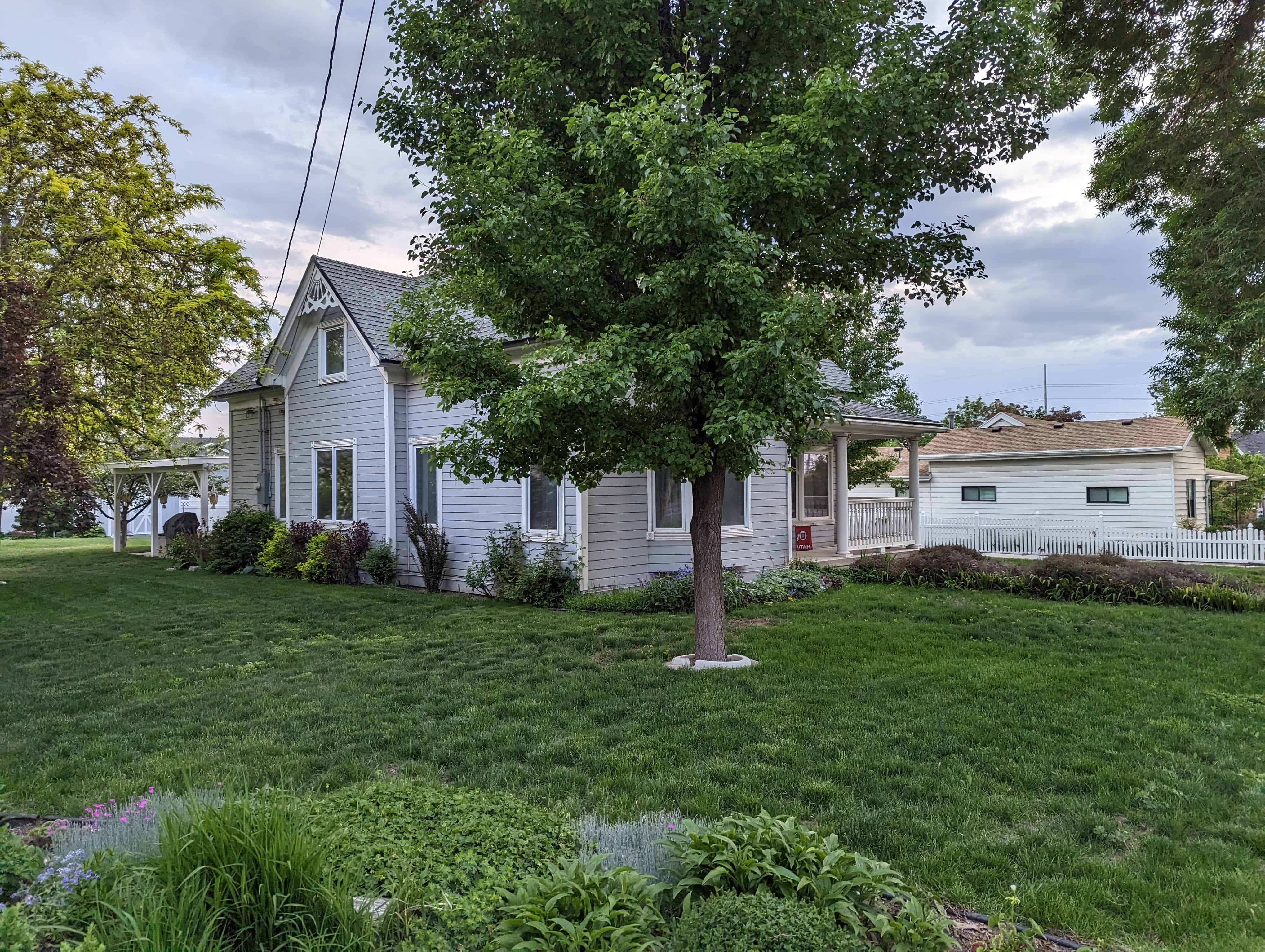
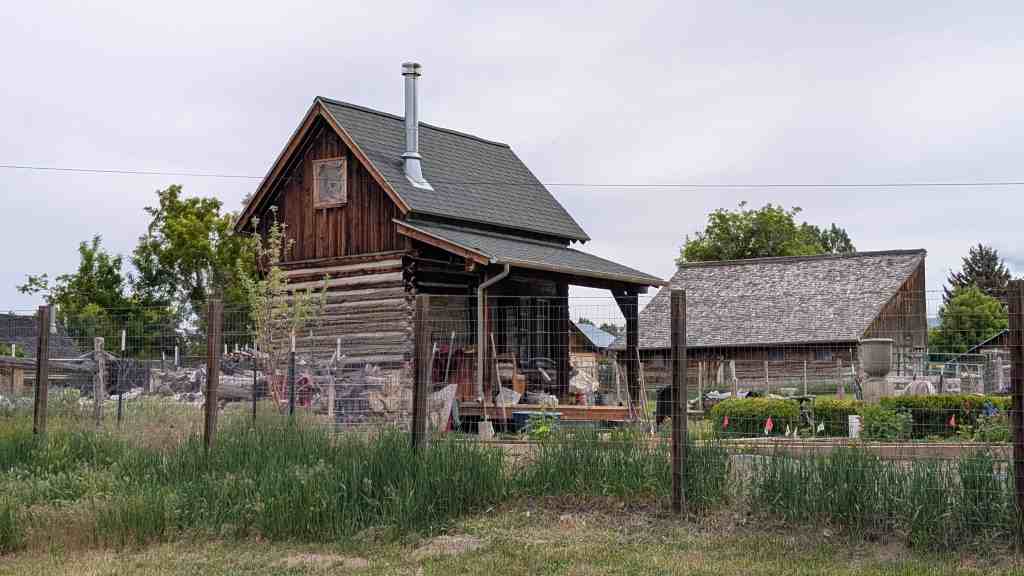
Wood-framed buildings of this age and older are very rare in Farmington, since nearly all historic buildings here were built of masonry. Hyrum Don Carlos Clark left Farmington in 1880 to seek his fortune, first in Idaho and then in the Star Valley of Wyoming. His wife, Ann Eliza Porter Clark, found the winters in Wyoming too rigorous and her health suffered. In 1908 Hyrum built this house, close by his family, for her. Victorian cottages such as this one became the basic middle-class house in the late 19th century. This simple “T” cottage is also evidence of the continued popularity of the cross-wing plan throughout the state of Utah at that time.

367 West State Street in Farmington, Utah in the Clark Lane National Historic District.
Joseph Smith Clark Home

17 Sunday Dec 2023

Posted by Jacob Barlow in Uncategorized

≈ Leave a comment

Tags

Clark Lane National Historic District, Davis County, Farmington, Historic Homes, NRHP, utah

Joseph Smith Clark Home

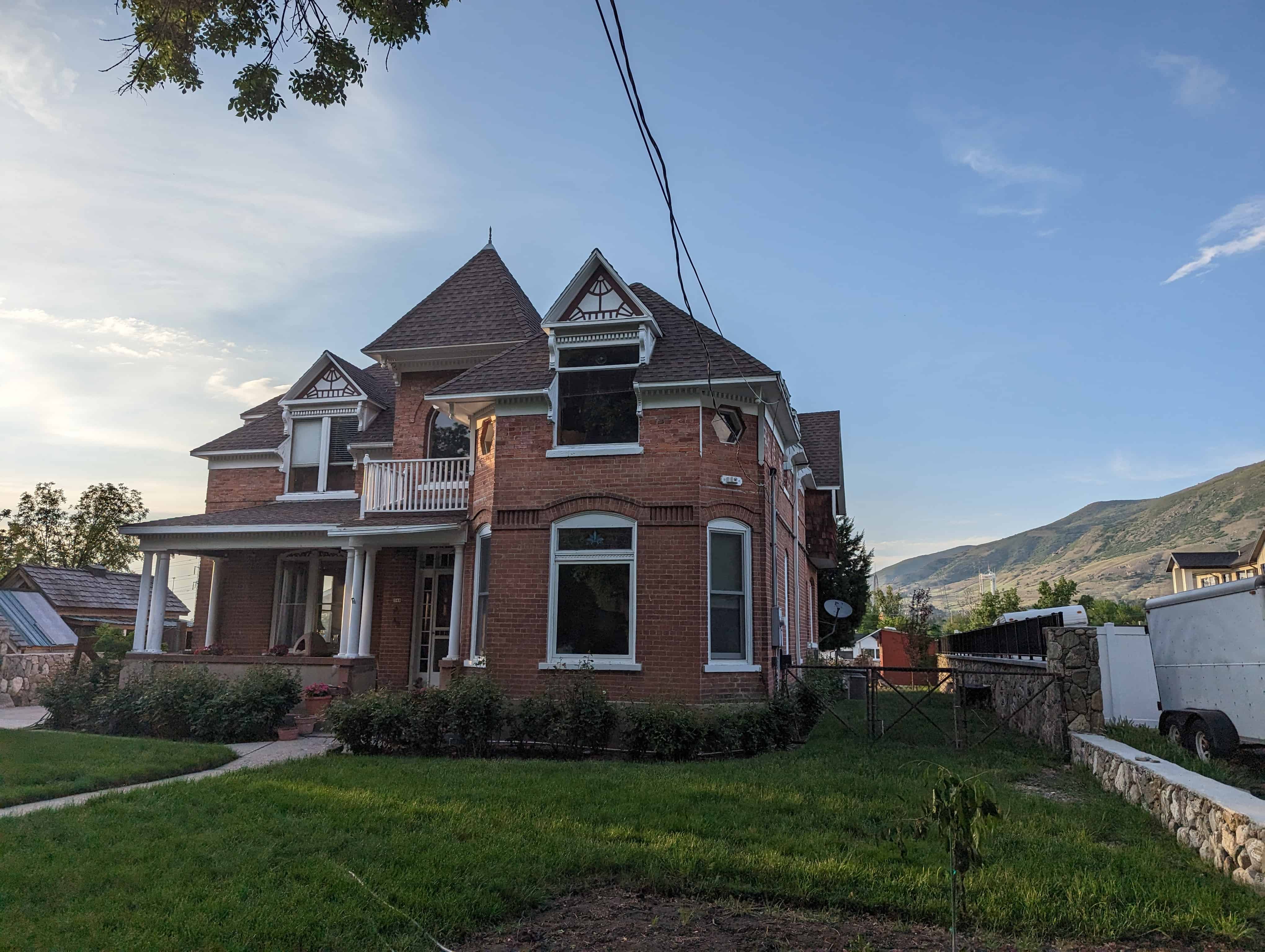
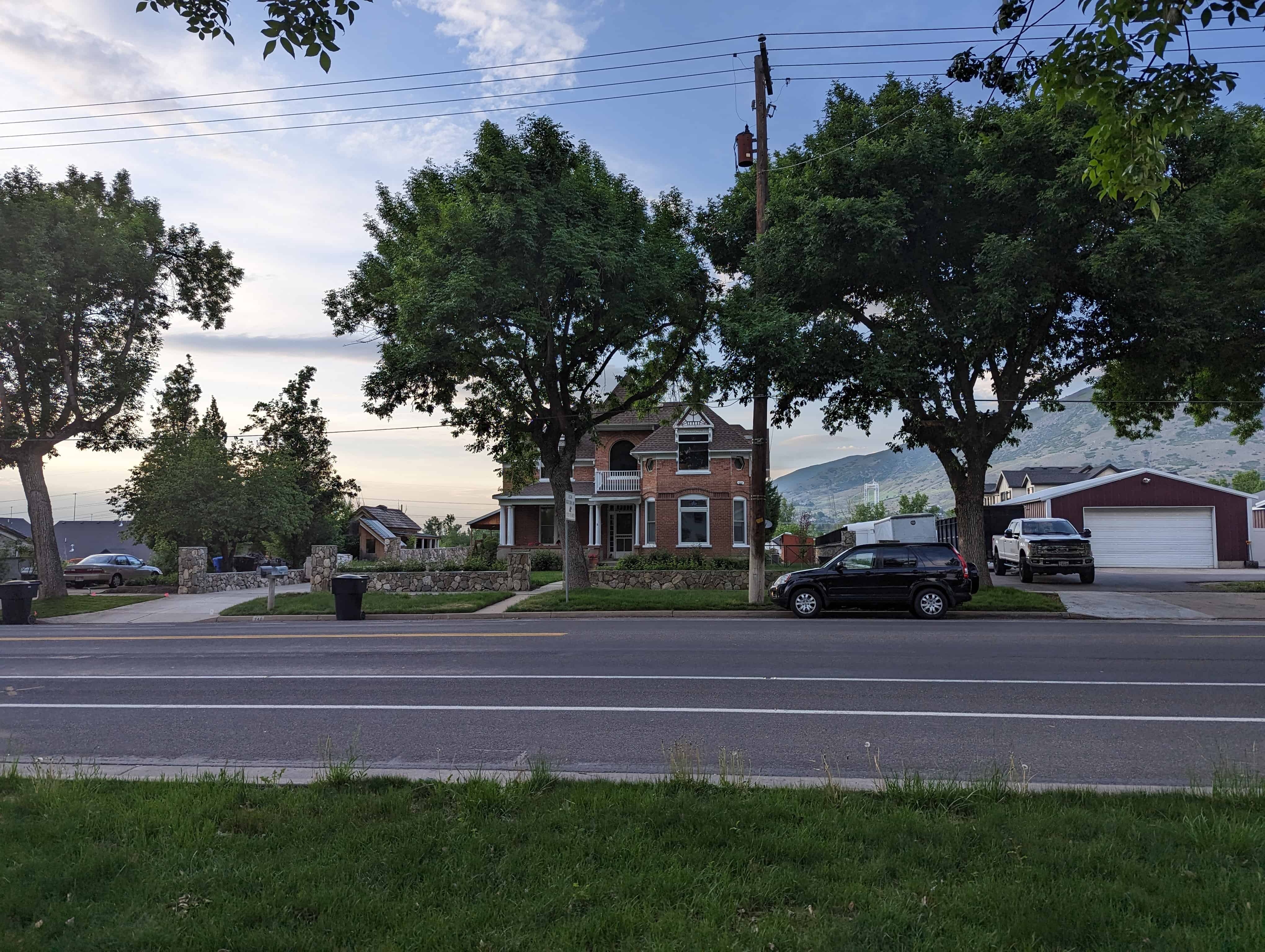
This house was built by Joseph Smith Clark, the son of Ezra Thompson and Mary Stevenson Clark. He went with his father and others to Bear Lake, Idaho in 1870 in response to a call from Brigham Young. There he helped survey and locate the town of Georgetown, to which he moved in 1876 and where he lived for 15 years. The Georgetown ranch was a source of beef cattle and dairy products for his father’s family, which followed the patriarchal order of family ownership in common; great herds of cattle frequently moved between Georgetown and Farmington under Joseph’s direction.*

In 1891 he moved back to Farmington where he was a member of the Farmington City Council, president of North Cottonwood Irrigation Co., and president of David County Bank. He was also commissioner for appraisal of inheritance taxes for Davis County and appraiser of damages to farm lands for Intermountain Smelter Co.

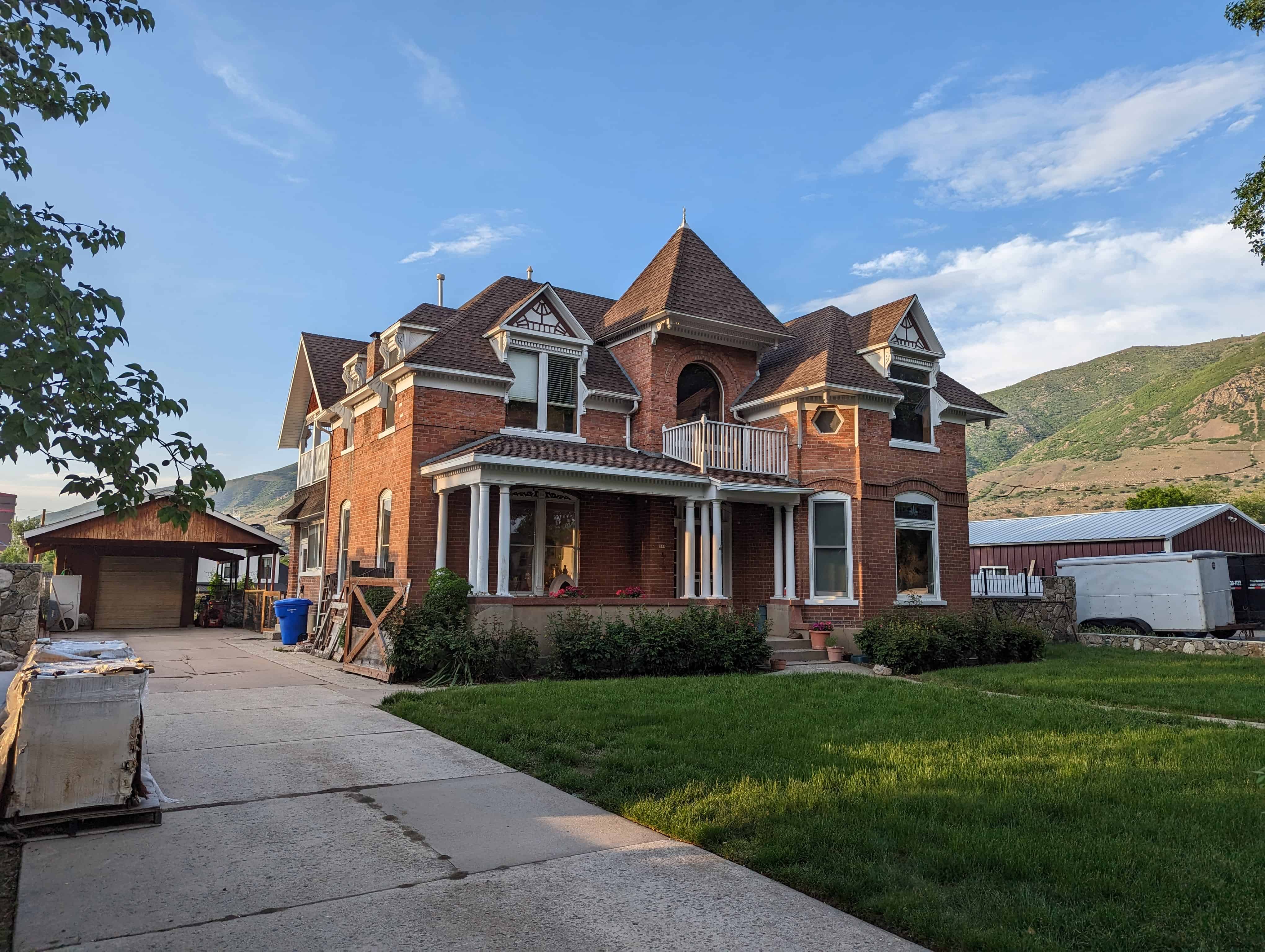
Built in 1895, the design of this one and a half story brick crosswing house, which has been influenced by the Queen Anne style, is the most elaborate of the district. Among the elements used to further enrich the Victorian design found on adjacent residences is an engaged corner tower at the junction of the projecting and flanking wings which form the main entry to the house. Capped by a steeply pitched pyramidal hip roof, the tower formed the centerpiece of a richly elaborated silhouette created by the tower, ornate dormers, and a tall decorative brick chimney. The tower was elaborated by an arched opening which opened onto an upper floor porch with a turned wood balustrade. The original main hip roof, which was punctuated by a continuous decorative sheet metal ridge cap, was pierced by two gable dormers on the main façade and two hip dormers on each side elevation. The dormers were embellished with carved inset panels, dentiled cornices, and scroll-cut brackets. The roof was detailed with a wide frieze and spindled corner brackets at the canted corners of the projecting wing. The original hip roof porch was supported by full height Tuscan columns. The exterior brick walls, which rest on a stone foundation, were pierced by one-over-one double-hung windows, paired in several locations, and by a fixed window with a leaded and stained glass transom in the main floor parlor. The window openings are articulated by segmental arched heads formed by soldier courses and projecting header courses. In 1919, the original upper floor and roof were destroyed by fire. The tower was removed and the roof was rebuilt with a bungalowstyle hip roof which excluded the dormers. In 1979, a restoration was undertaken whereby the 1917 roof was removed and replaced by the current construction which was based on historic photographs. The tower, porch, roof, and dormers were rebuilt to reflect the original massing, and original detailing.

340 West State Street in Farmington, Utah in the Clark Lane National Historic District.

Susan Leggett Clark House

16 Saturday Dec 2023

Posted by Jacob Barlow in Uncategorized

≈ Leave a comment

Tags

Clark Lane National Historic District, Davis County, Farmington, Historic Homes, NRHP, Porch Spandrels, utah

Susan Leggett Clark House

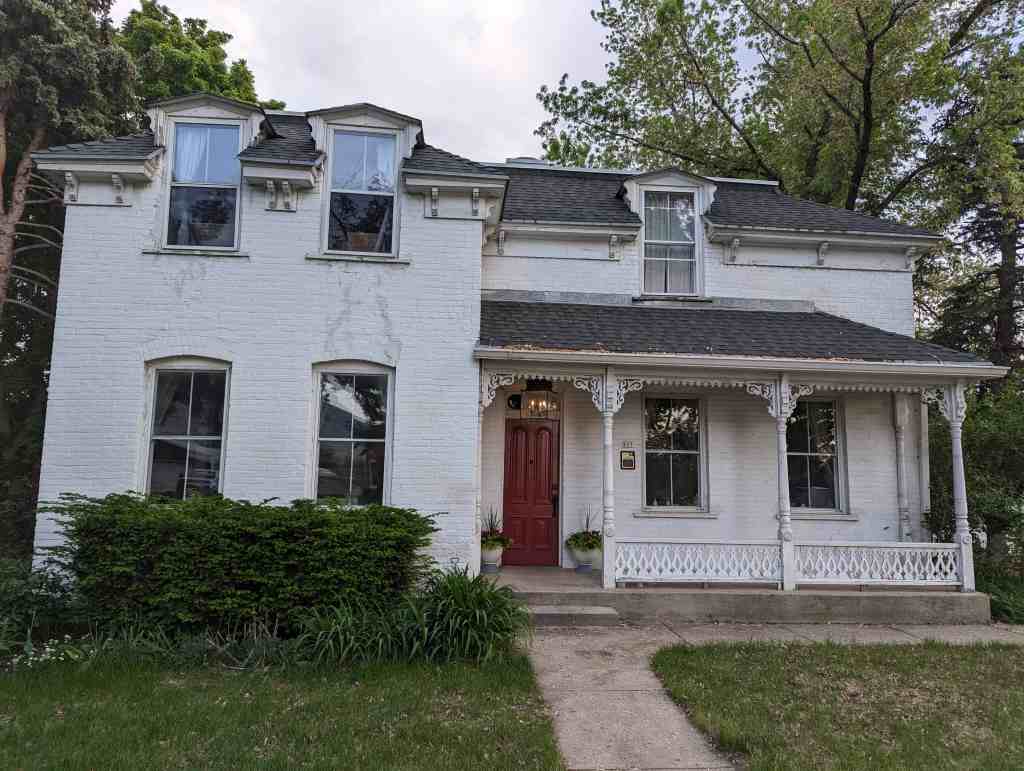
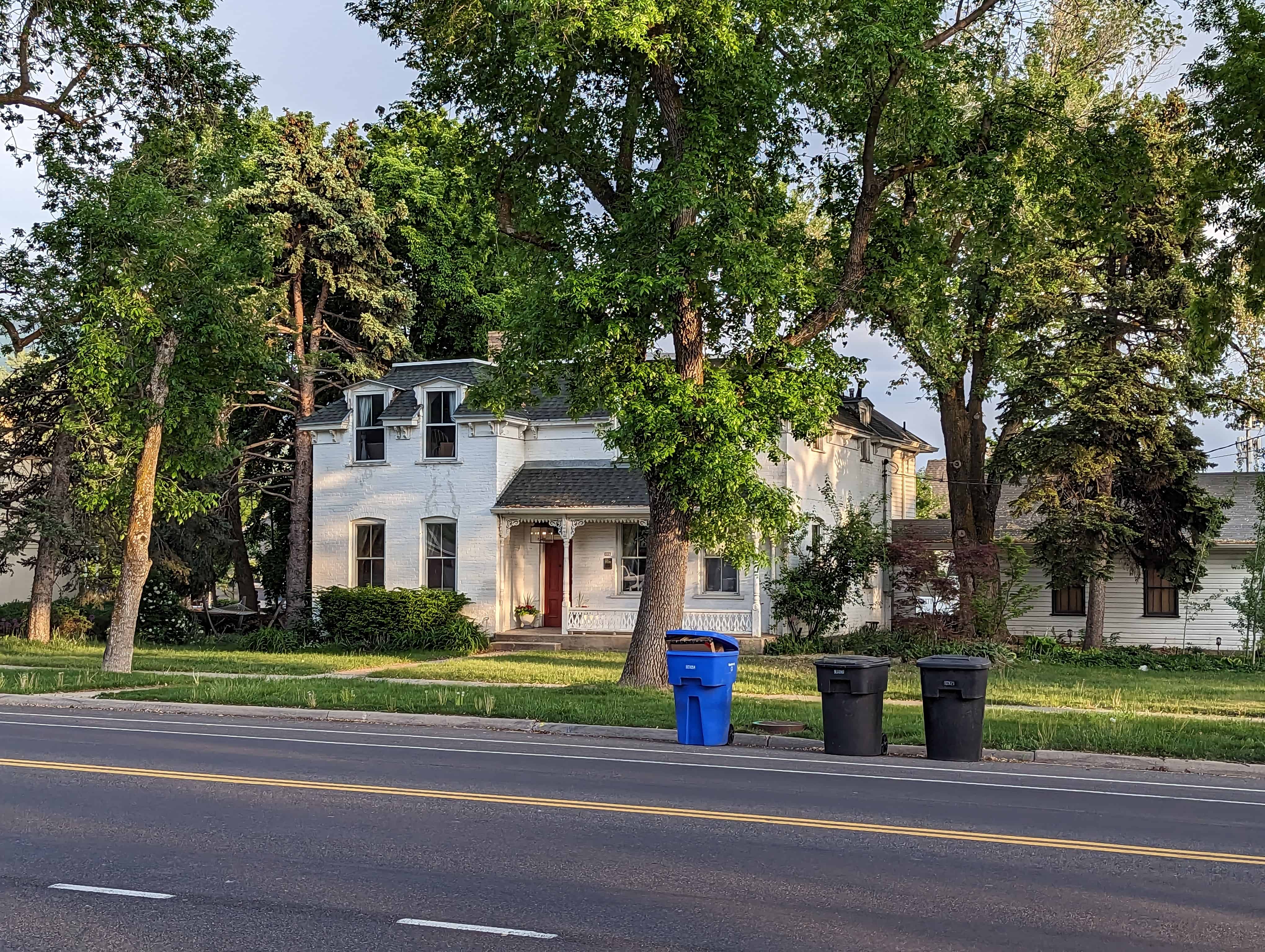
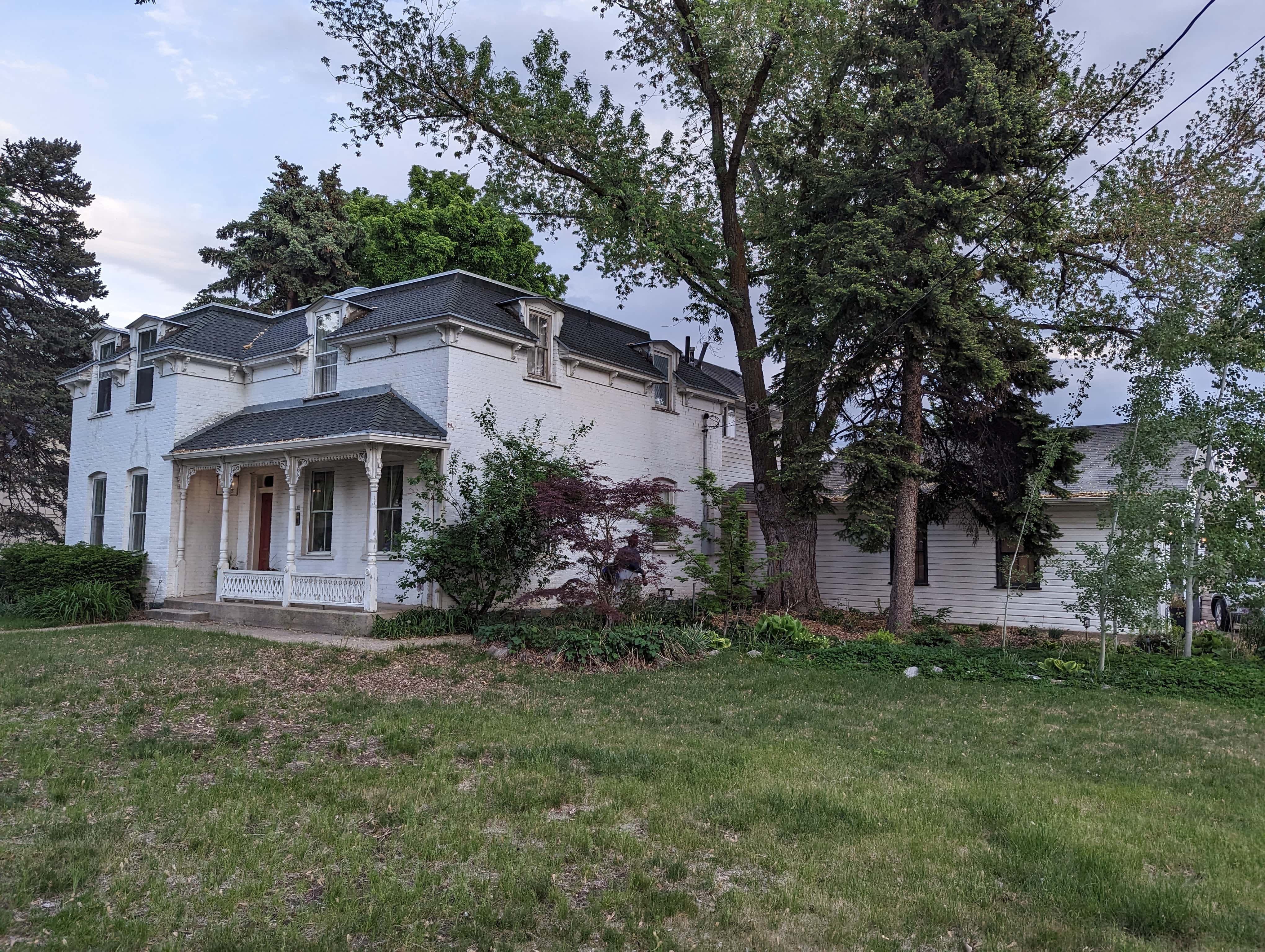
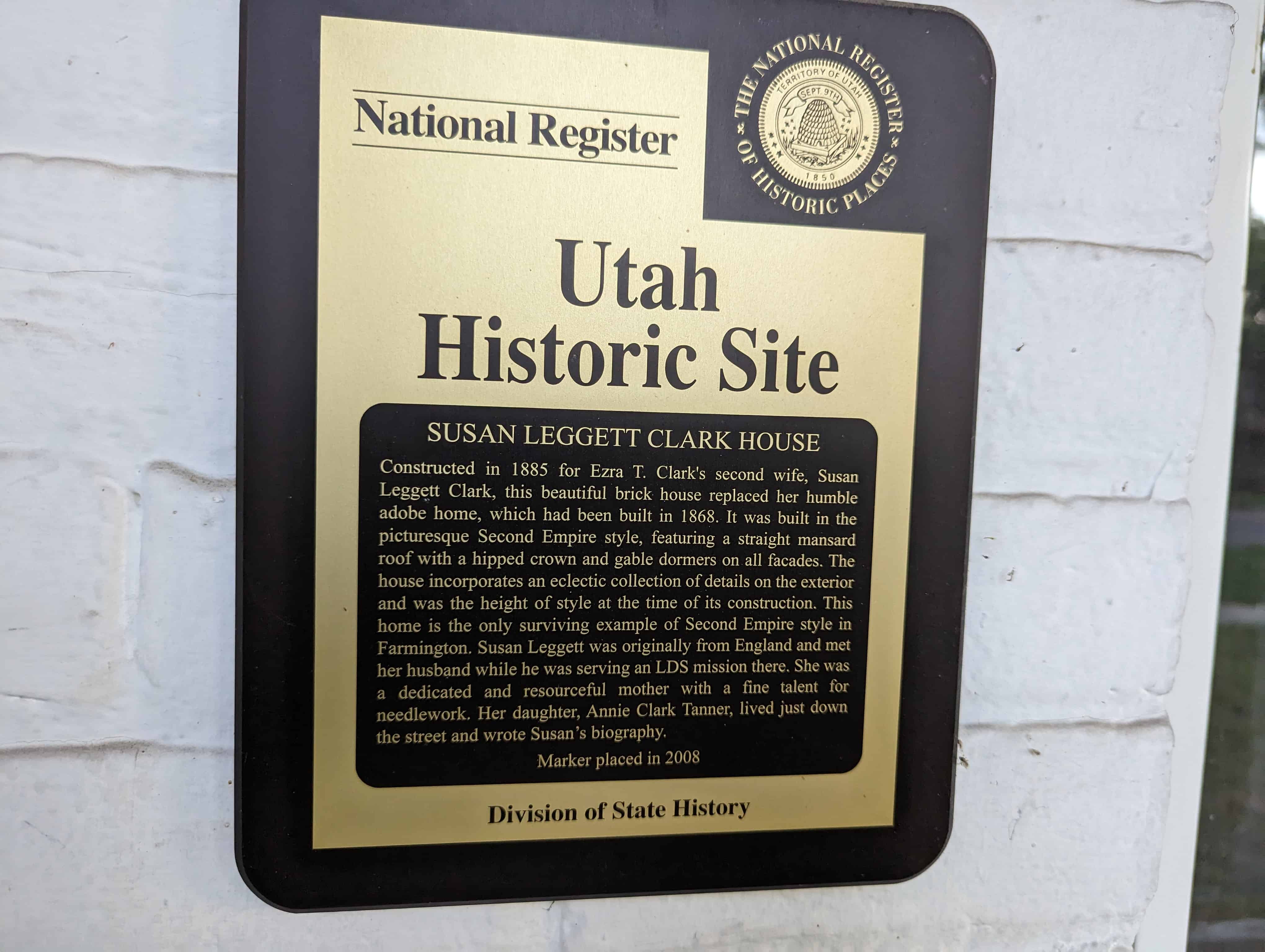
Constructed in 1885 for Ezra T. Clark’s second wife, Susan Leggett Clark, this beautiful brick house replaced her humble adobe home, which had been built in 1868. It was built in the picturesque Second Empire style, featuring a straight mansard roof with a hipped crown and gable dormers on all facades. The house incorporates an eclectic collection of details on the exterior and was the height of style at the time of its construction. This home is the only surviving example of Second Empire style in Farmington. Susan Leggett was originally from England and met her husband while he was serving an LDS mission there. She was a dedicated and resourceful mother with a fine talent for needlework. Her daughter, Annie Clark Tanner, lived just down the street and wrote Susan’s biography.

335 West State Street in Farmington, Utah in the Clark Lane National Historic District.
Peter Hansen House

16 Saturday Dec 2023

Posted by Jacob Barlow in Uncategorized

≈ 1 Comment

Tags

Historic Homes, NRHP, Sanpete County, Spring City, Spring City Historic District, utah

Peter Hansen House

This house was constructed c. 1898 by Peter Hansen on land that he had purchased from Peter M. Olsen. In 1901 the property was sold to Isaac P. Allred. Reid H. Allred, a well-known citizen in Central Utah, raised his family and died in this home. In addition to the wood-frame vernacular dwelling, the property also features a historic barn. The property retains its historic integrity and is a contributing resource within the Spring City Historic District.
Located at 94 West 100 North in Spring City, Utah.

← Older posts
Newer posts →

Follow Jacob

Follow Jacob

Blog Stats

  • 2,025,767 hits

Social and Other Links

BarlowLinks.com

Recent Posts

  • Goulding’s Trading Post
  • Kyle’s Apartment – American Murderer Filming Location
  • Oljato Trading Post
  • Our Lady of Lourdes Catholic Church
  • Dale’s Sinclair Service Station

Archives


Loading Comments...