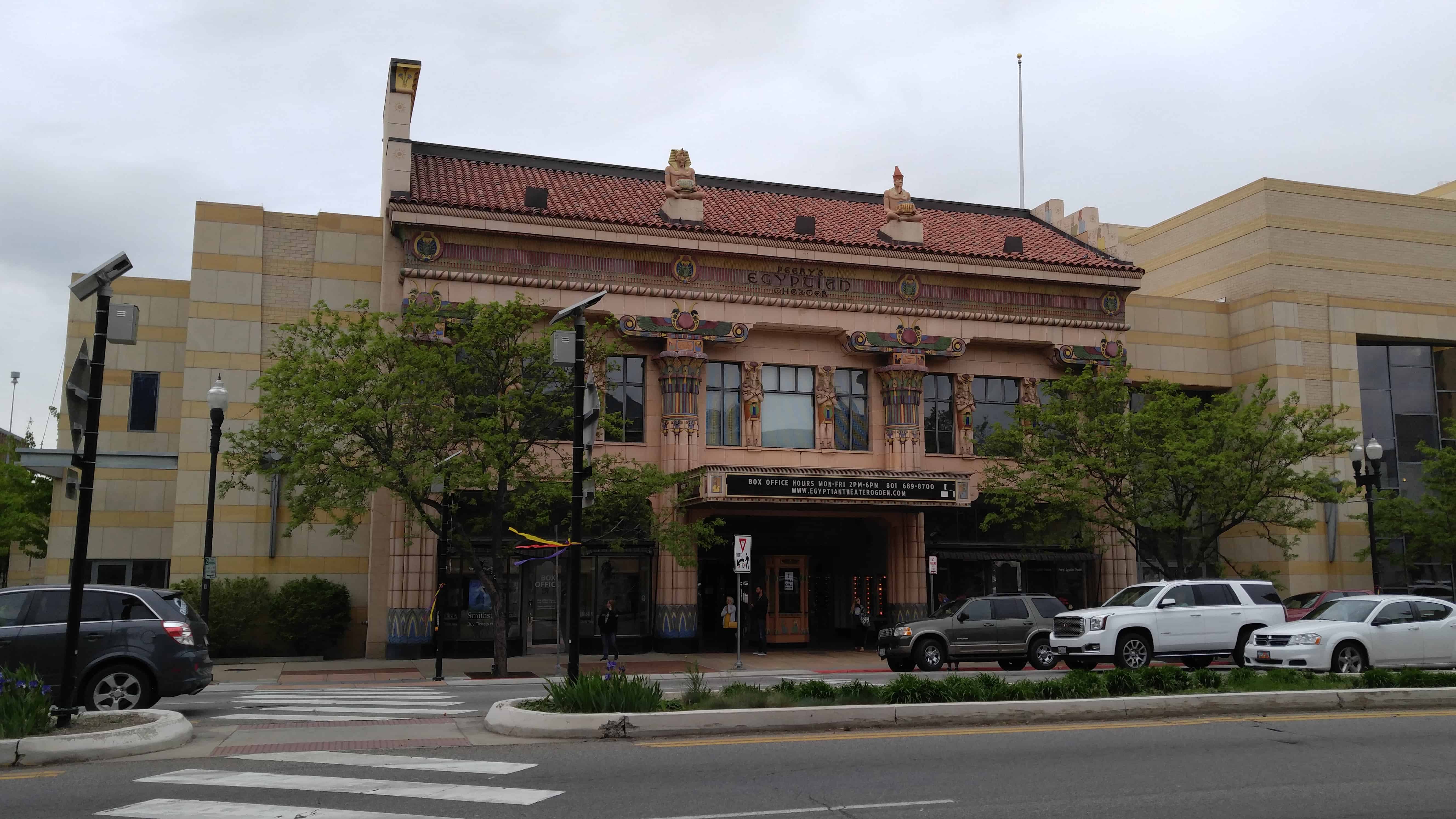
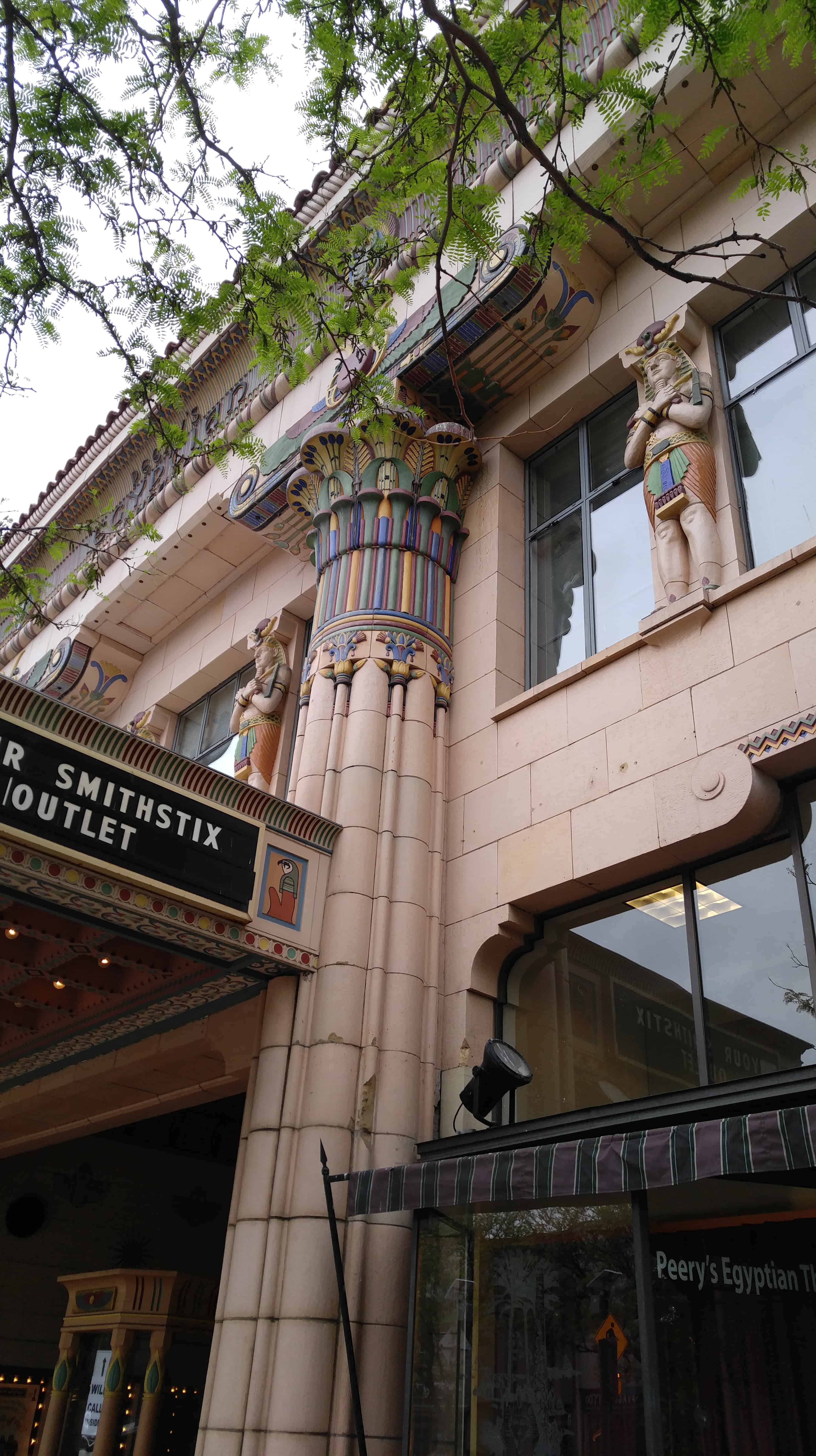
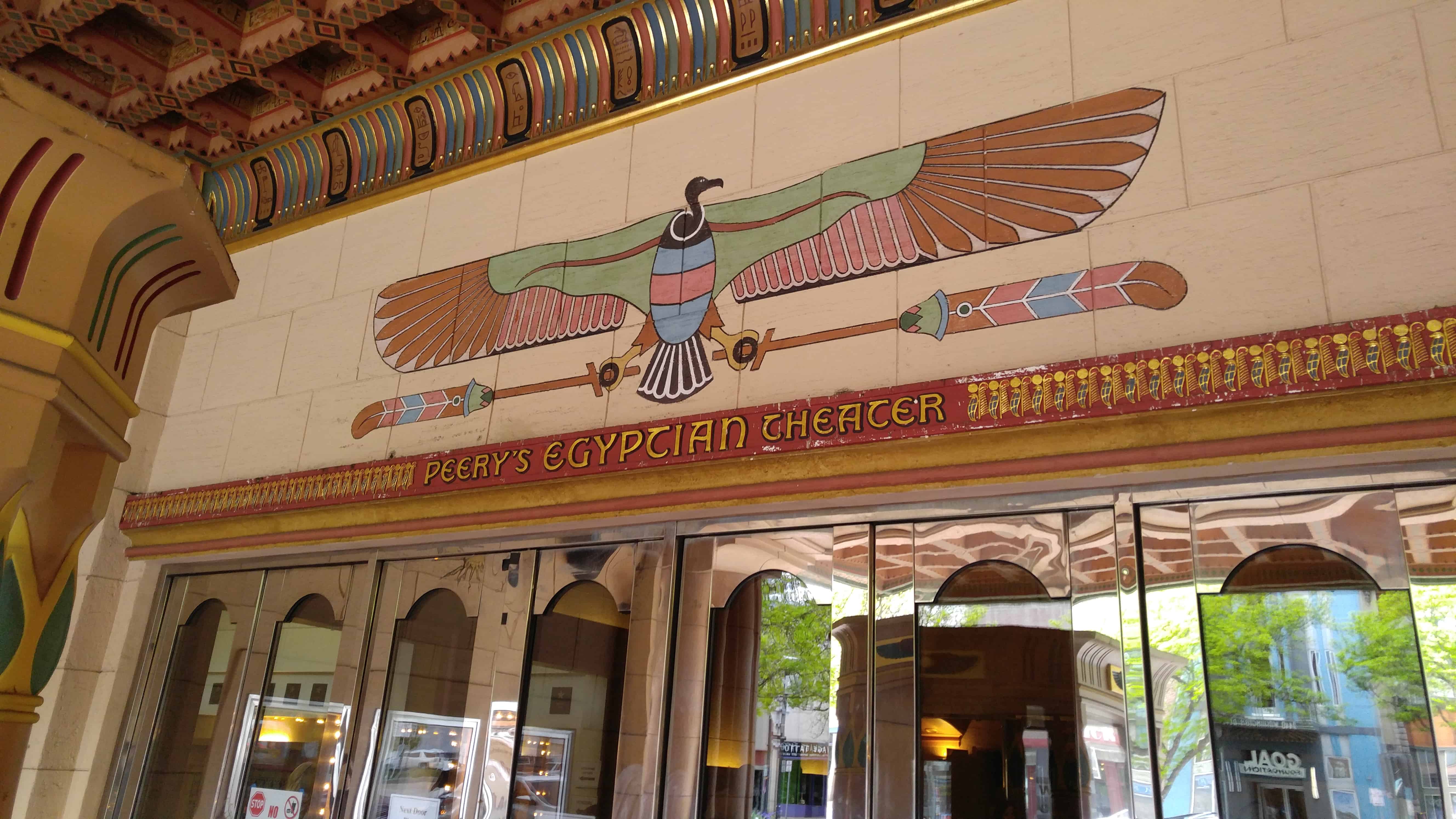
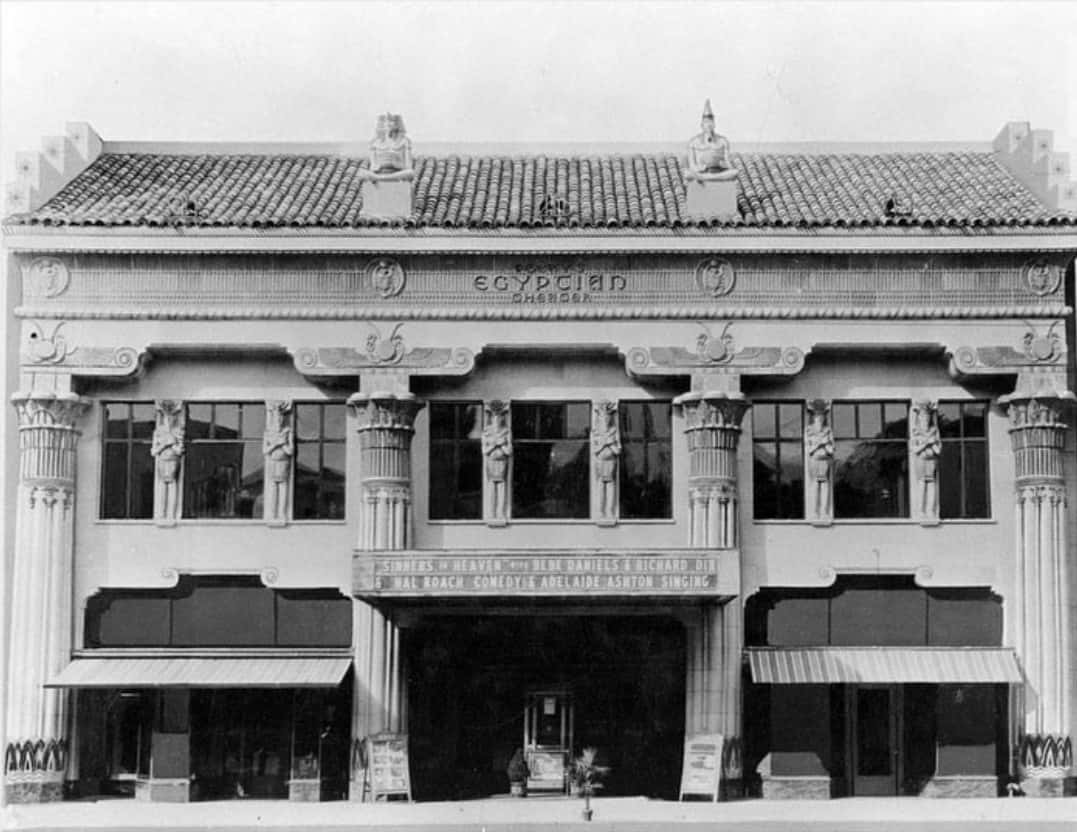
Peery’s Egyptian Theater was built after the fiery demise of the Arlington Hotel in 1923. Harman and Louis Peery devised a plan to build a grand theater, “The Showplace of the West”. The architectural firm of Hodgson & McClenahan, notable for many important Wasatch Front landmarks, was hired for the task. They took cues from many of the most famous western theaters, including Grauman’s Egyptian Theatre in Hollywood, and settled upon an Egyptian-themed showhouse.
Construction began in 1923 on the cleared area left from the Arlington Hotel, and incidentally, the location of the Peerys’ first Ogden home. Ten months passed, and on July 3, 1924, the Egyptian opened. The first feature played at the new theater was Zane Grey’s Wanderer of the Wasteland. This “natural color” silent film was accompanied by the Mighty Wurlitzer, the Egyptian’s famous pipe organ.
The first “talking picture” was In Old Arizona, shown in 1929. This downgraded the role of the house pipe organ, which was occasionally used during intermissions and other programs. In 1960, the organ was removed and put into storage.
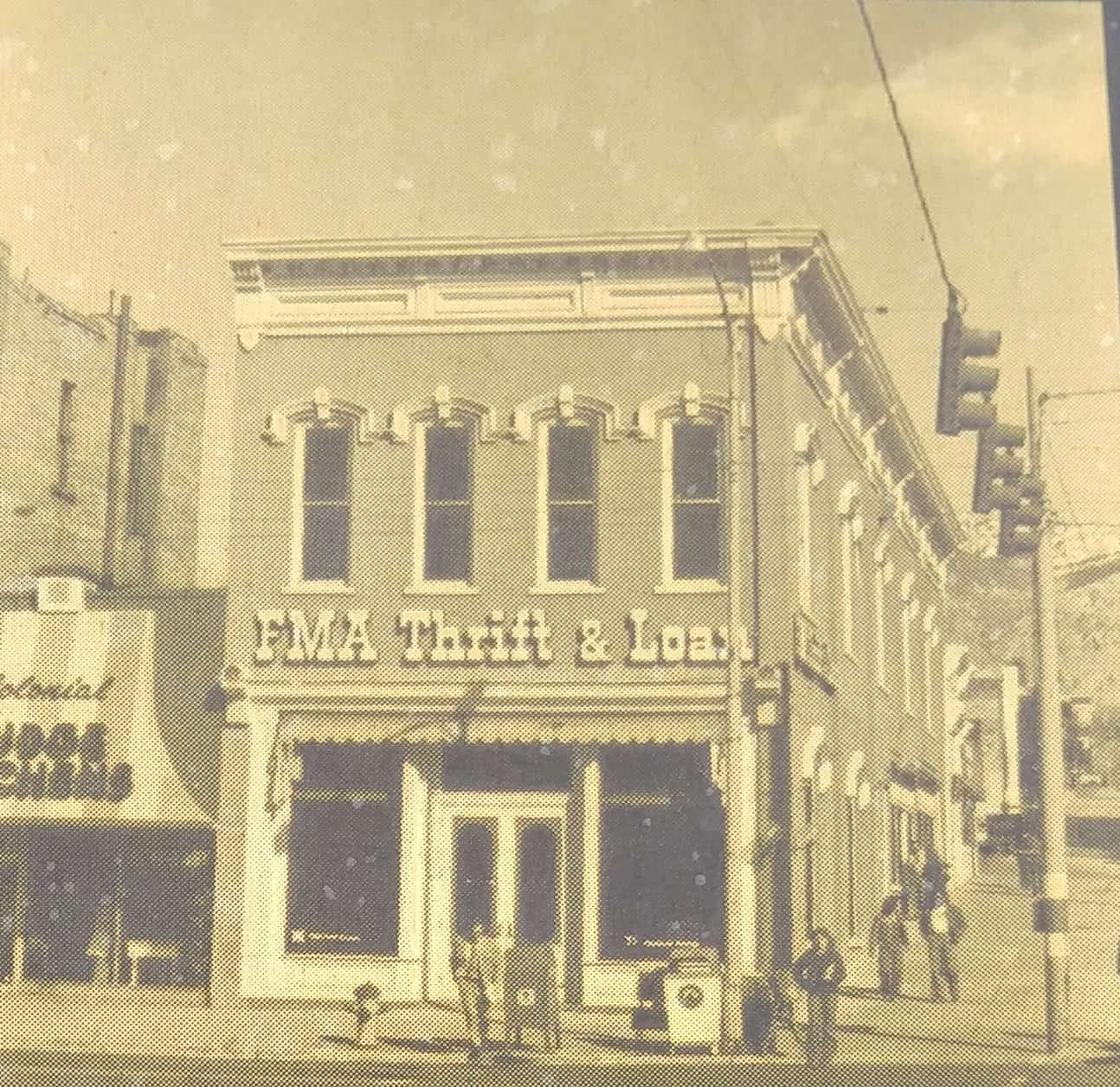
For over 100 years, the Kay Block (a.k.a. Kay Building) served as the home of many retail and professional businesses at this site, Ogden’s most prominent intersection. The building was constructed circa 1883 for Ogden businessman David Kay, and occupied this site until the construction of the Ogden City Centre Building began in 1989.
Kay received title to the property in 1883 from David H. Peery for a reported $3,125. The earliest business located in the building was Kay’s produce and commission store known as “David Kay Wholesale Groceries”. Kay shipped produce to Montana, Idaho, Wyoming, Nebraska, Colorado and California. Later occupants of the building included severa real estate offices, fire insurance agencies, and starting in 1905, several drug stores which operated here through the 1940s.
The building type was a “one-part commercial block” which included Italianate architectural elements such as a bracketed cornice and round arch windows with decorative, eyebrow window heads. The Italianate style was popular into the 1880s in Utah’s architectural tradition.
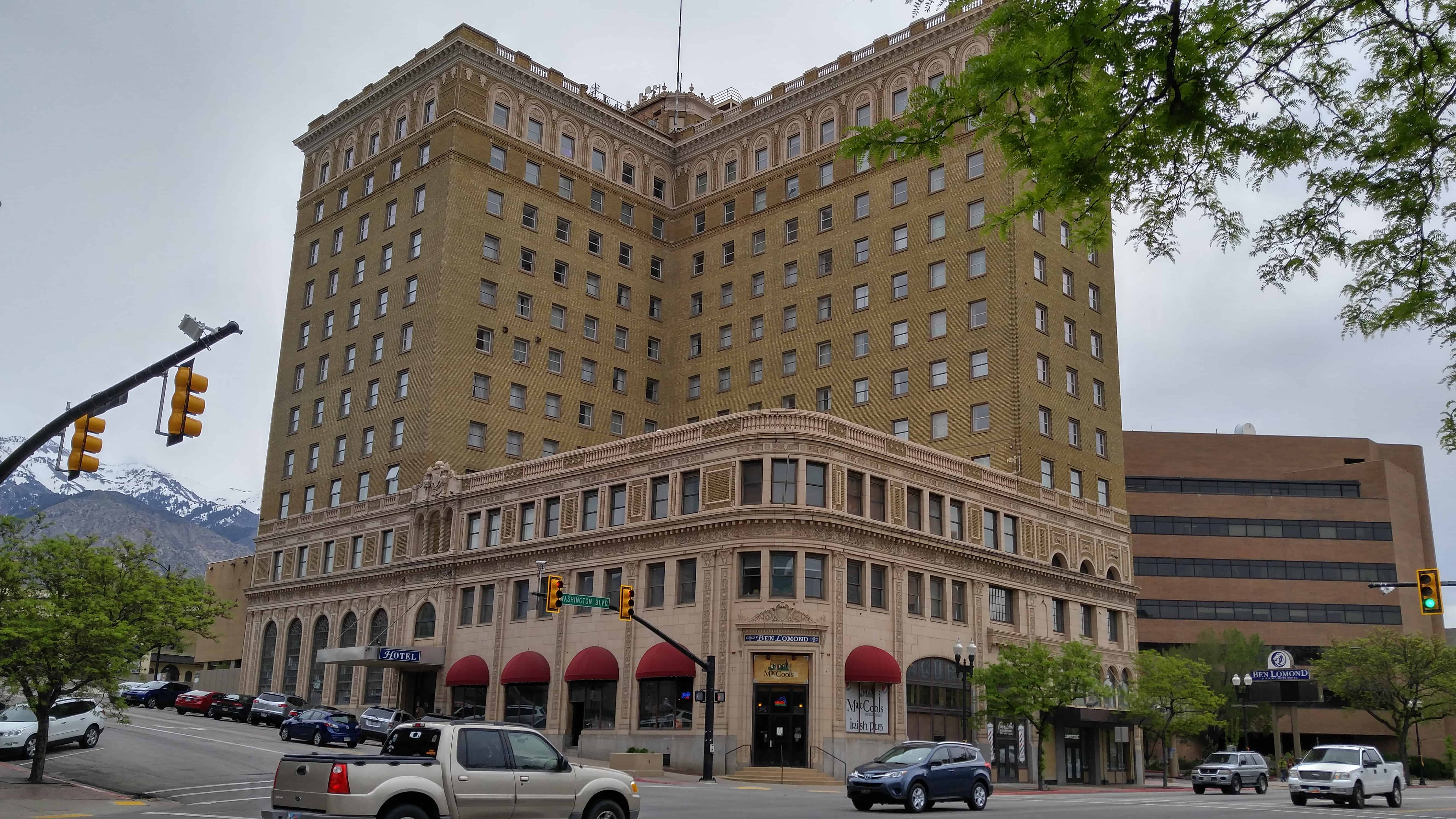
Constructed in 1927, the Bigelow/Ben Lomond Hotel is both architecturally and historically significant. Architecturally, it is an excellent and rare example of the Italian Renaissance Revival style in Utah, which was popular in America in the 1920s but seldom employed in Utah. The building is also the most notable example of the hotel type in Ogden. No other hotel in the history of the city has exceeded the Bigelow/Ben Lomond in size (number of rooms), height or elegance. The hotel is also a significant work of the Ogden/Salt Lake City architectural firm of Hodgson and McClenahan. That firm designed a number of architectural landmarks in Ogden, ranging from the Egyptian Revival style Peery’s Egyptian Theatre to three major Art Deco buildings- Ogden High School, the City and County Building, and the Regional Forest Service Building–to several Prairie School houses in the Eccles Avenue Historic District (all National Register properties). The Italian Renaissance Revival style Bigelow/Ben Lomond Hotel is yet another example of their architectural versatility and proficiency. The hotel is historically significant for its association with Ogden City’s 1920s era of growth. This building, the tallest and most lavishly designed structure in the city, symbolizes that period of optimism and economic development.
Located at 2510 South Washington Blvd in Ogden, Utah and added to the National Historic Register (#90000637) on April 19, 1990.
The Bigelow ranks as one of the three most architecturally significant hotels built in Utah’s historic period. The others, the Hotel Utah (built 1909-11 with 500 rooms) and the Newhouse Hotel (built 1911-14 with 400 rooms), both in the state’s capitol, Salt Lake City, have been converted to a new use and razed, respectively. Of the “Big 3” grand hotels from Utah’s 1900-1920s “boom” era only the Bigelow retains its original commercial and residential uses. Like the Hotel Utah, it also retains much of its architectural integrity.
At the time of the Bigelow Hotel’s construction, Ogden was Utah’s second largest city with a population of 45,000. Its growth prior to 1900 depended on its importance as a railroad and agricultural center. Nineteenth-century visitors to Ogden were accommodated in several small hotels, the largest of which was the Reed Hotel, a five story brick and stone structure built in 1891 on the site later to be occupied by the Bigelow Hotel. Considered to be one of the finest hotels in the West at the time, the Reed Hotel came into the hands of H. C. Bigelow and his Ogden State Bank in 1916. It was his son, prominent businessman and conservationist, A. P. Bigelow, who determined in 1926 to raze the Reed and replace it with a modern, “fireproof,” first-class hotel.
Illinois born, University of Wisconsin-educated, A. P. Bigelow was co-founder and president of the Ogden State Bank (housed in the hotel) and the Bigelow Hotel. He was associated with a large number of major industrial, business, fish, game, and water conservation enterprises in Utah. He served as president of such groups as Utah Power and Light Co., Utah Taxpayer’s Association, Weber River Water Users Association, among others.
The construction of the Bigelow Hotel in 1927 culminated a 25-year period of considerable growth and expansion in Ogden. Perhaps more than any other building, the Bigelow, still the city’s highest building, symbolized the high water mark in Ogden’s development, a zenith which ended with the depression of 1929-36 and which has never been approached in Ogden since.
Following the completion of the trans-continental railroad at Promontory (northwest of Ogden) in 1869, Ogden became the region’s leading railroad center. Called the “Junction City,” Ogden at one time hosted as many as eight railroad companies, including the Union Pacific, Southern Pacific, Denver & Rio Grande, Oregon Shortline, Utah Central and Bamberger lines. In the early twentieth century, Ogden established itself as the Intermountain West’s leader in manufacturing, jobbing, commerce, and transportation. Important secondary industries included livestock and agriculture, tourism and conventions, and government agencies. Paralleling this growth was a building boom which affected all building types, especially hotel construction.
Despite the construction of several small-to-medium sized hotels and apartments in the early twentieth century, the mid-1920s brought a community demand for a single grand hotel and convention center “to further the city’s industrial and commercial prosperity.” Built at a period of peak capital influx, the Bigelow reflects the community’s economic optimism, it sense of civic opulence, and its fervid booster spirit.
In 1926, self-described “Boosting Circles” and A. P. Bigelow came to an agreement to construct a community-backed luxury hotel to be operated by Bigelow. Within months a new corporation with 300 stockholders and a board of directors consisting of leading business figures was formed.
The Ogden/Salt Lake City architectural firm of Hodgson and McClenahan was commissioned to prepare construction documents for the hotel. The city’s most prolific architects, the firm designed several impressive structures which would eventually be listed on the National Register of Historic Places.
Within a year the impressive structure was complete, and its exuberantly and voluptuously eclectic style was a monument to the taste and business mentality of the time. Visitors were to be overwhelmed by the sophistication of Ogden’*’s showplace, which included a coffee shop in the Arabian style, a ballroom that incorporated features from a palace in Florence and a meeting room for businessmen’s clubs done in the “atmosphere of old Spain.” The English Room was done completely in old paneling, and is an adaptation of a room in Bromley Castle, England. The Shakespeare Room, with its fine murals, was intended to be the cultural highlight, “One can almost hear the screeching of the witches in ‘Macbeth’ when he looks upon the walls of the Shakespeare Room, so excellent is the work of Le Conte Stewart, Utah artist. (The Le Conte Stewart murals are now in the possession of the North Davis Art Society.) The Georgian Room, with its Adamesque ornamentation, and strategically located across the mezzanine from a “splendid” ladies rest room, was “as feminine as one could imagine a room to be.”
Ogden considered its new premier hotel “a fit home for presidents, kings, and emperors.” There was no doubt that the Bigelow as a serious competitor with the Hotel Utah in Salt Lake City for the title of the state’s leading hotel. In 1927, the hotel was briefly the center of national attention during a convention of Western Democrats which resulted in the creation of a Western States “Smith for President” association. This signaled to national Democratic leaders the existence of a national constituency for Alfred E. Smith and was instrumental in the selection of Smith as Democratic standard bearer in the 1928 presidential election.
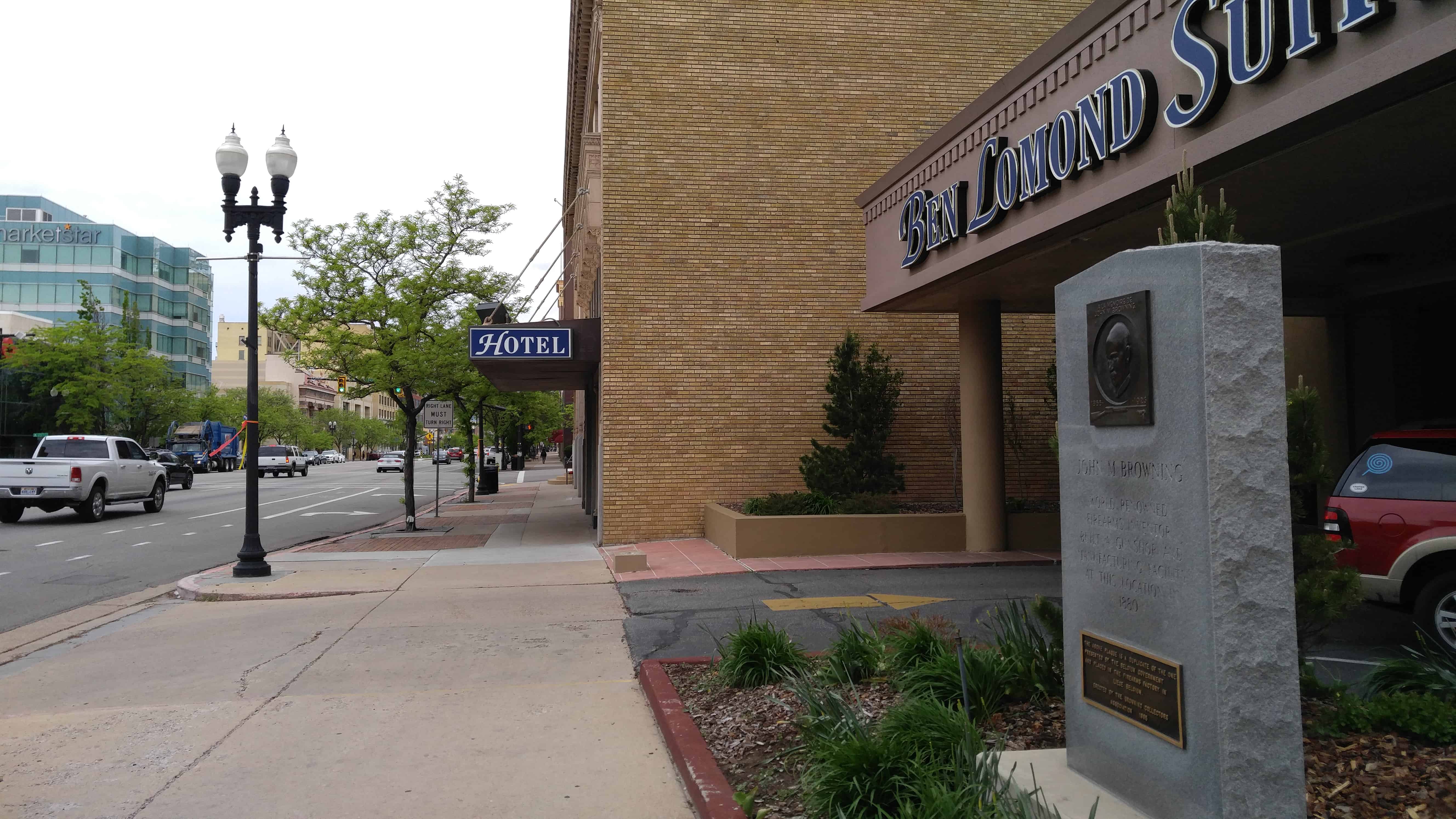
In 1933, the name of the hotel was changed to the Ben Lomond when the property was acquired by Marriner S. Eccles, shortly to become Roosevelt’s Secretary of the Treasury. After passing through the hands of various corporations representing Eccles family interest, the hotel was acquired in 1965 by Woodbury Corporation of Salt Lake City. Subsequently, in 1977, it was acquired by Weber County to house administrative services. In the mid~1980s, the hotel was obtained and rehabilitated by Ben Lomond Suites, Ltd., and Ogden company.
The hotel’s period of significance extends from its construction in 1927 through the first change of ownership in 1933. At that time the name was changed to the Ben Lomond Hotel, under which it operated for over 40 years. Though the hotel is still an architectural landmark in the city and is still playing a significant role in the central business district, its historical period of significance is best defined by its date of construction (1927) and the transition to its more permanent identity as the Ben Lomond Hotel in 1933.
The architectural firm of Hodgson and McClenahan was the premier architectural firm in Ogden during the early decades of the twentieth century and was prominent on a statewide and regional basis as well. Leslie S. Hodgson, born in Utah in 1879, learned the building trades from his father then received architectural training from two of Utah’s most prominent architects, Richard Kletting and Samuel S. Dallas, both of Salt Lake City. Hodgson gained his architect’s license in 1904, then in 1905 worked for several months in the San Diego, California, office of Hebbard and Gill. He returned to Utah in 1906 and established an architectural partnership with Julius A. Smith in Ogden. That partnership dissolved in 1910. Leslie Hodgson and Myrl McCLenahan formed their partnership in 1919, though McClenahan had worked for Hodgson previously, beginning in 1912. The partnership lasted until McClenahan’s death in 1940.
Hodson and McClenahan produced some of Ogden’s finest and most diverse architecture. Hodgson designed a number of Prairie School style houses in the Eccles Avenue subdivision (National Register historic district) in the 1910s. The firm designed the elaborate Egyptian Revival style Peery’s Egyptian Theatre in 1927, which was the same time they were working on the Italian Renaissance Revival style Bigelow Hotel. In the 1930s came three excellent examples of the Art Deco style the Regional Forest Service Building, Ogden High School, and the City and County Building all located in Ogden and all listed in the National Register. These three buildings are the finest examples of the Art Deco style in Utah. The firm also designed a number of other public buildings and schools in Utah and the Intermountain West. However, their best work, among which the Bigelow/Ben Lomond Hotel can be counted, was done in Ogden.
The Bigelow/Ben Lomond Hotel, constructed in 1927 and extensively renovated in the 1980s, is a three-part commercial block with a four-story rectangular base, nine-story upper ell and a two-story tower at the nexus of the ell. The hotel was built with a reinforced concrete skeletal frame infilled with hollow clay tile and veneered with pressed brick. Designed in Early 20th Century Revival styling of an eclectic Italian Renaissance mode, the exterior featured ornamental terra cotta along the four-story façade of the base, the upper story of the ell and the tower. The flat roofs were trimmed with ballustrades on parapet walls. Window types varied from the fixed, round and segmentally-arched storefronts at the street level, to double-hung sash windows in tall, flat-arched bays in the upper eleven stories. While the north and west elevations (facing 25th Street and Washington Blvd., respectively) were highly ornamented, the south and east “rear” elevations were plain, consisting only of rectangular window bays in unrelieved brick walls.
The hotel’s floor plan was arranged to provide 350 guest rooms in the ell, plus dining space for 1000 seats, ballrooms, meeting and display rooms, lounges, restrooms, retail shops and a bank, all located in the four-story base. Support functions such as kitchens, food storage, laundry, and mechanical areas were located in the basement. The two-story tower was designed as a penthouse residence for the Bigelow family.
The interior of the hotel featured an eclectic variety of exotic decors, especially in the public spaces. The Coffee Shop was decorated in an Arabian mode while the main ballroom exhibited Roman motifs. A smaller ballroom was called the Spanish Room because of its Mediterranean furnishings. One dining room had Japanese decor, while the ladies parlor relied on a Georgian theme and Adamesque detail. The English Room displayed rich oak paneling and the Shakespeare Room was lined with hand-painted mural. Ornamental plasterwork and terra cotta existed throughout the interior. A period interest in luxury, sophistication, variety and exotic cultures was clearly apparent.
The exterior of the Bigelow/Ben Lomond Hotel retains its overall architectural integrity. Some adverse alterations of street-level commercial windows in the 1970s were remedied by more compatible modifications during a major renovation in the 1980s. Deteriorated windows were replaced with units of similar design and materials. Flags and canvas awnings were placed over the street-level, arched windows and two new metal canopies were installed on either side of the southwest corner of the hotel. Narrow, vertical stair towers that extend to the full height of the building were attached to both the south and east elevations. Both have plain stuccoed exteriors.
The interior public spaces in the four-story base remain intact, although the bank space has been re-partitioned and the main lobby has had its shops and reception areas modified. Much of the interior has been repainted and many of the original light fixtures are not longer extant. The eleven floors in the ell have experienced significant floor plan changes to accommodate fewer but larger living units and offices. This renovation was part of a certified tax project.
A three-story motel addition was attached to the east side of the building c. 1957. It is an ell-shaped, flat-roofed, brick and concrete structure with ground-level parking beneath two stories of motel units. Though its utilitarian design does not complement the hotel, it does not significantly detract from it either. The motel is located on the least visible of the hotel’s facades, the east side or rear, and the open court formed by the ell faces away from the hotel. There is no interior connection between the hotel and the motel section, though the motel functioned as an annex to the hotel (and still does).
A low, two-level parking garage was built adjacent to the southeast corner of the hotel in the early 1960s. This garage, which obscures none of the original elevations, is a non-contributing building on the property.
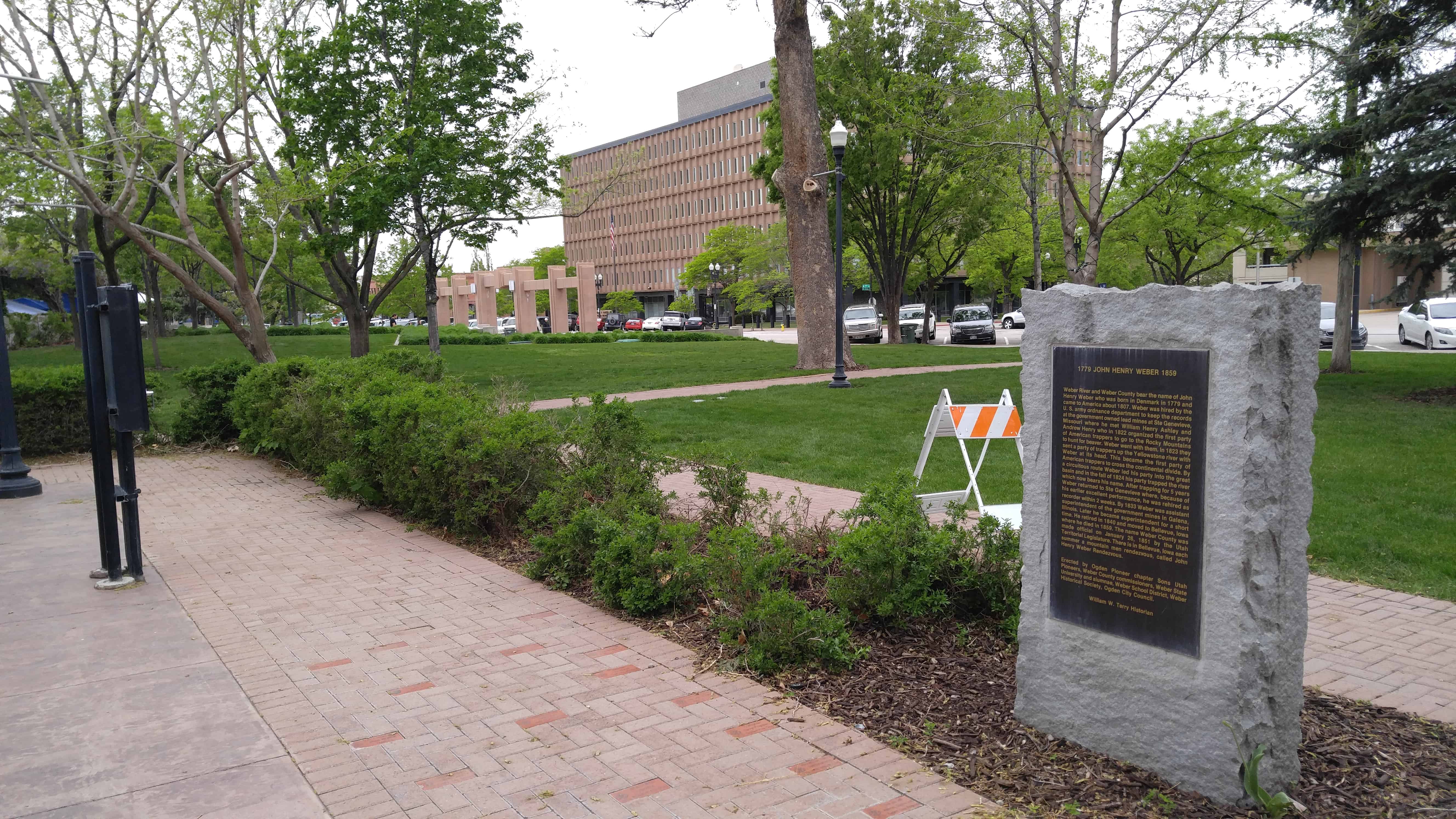
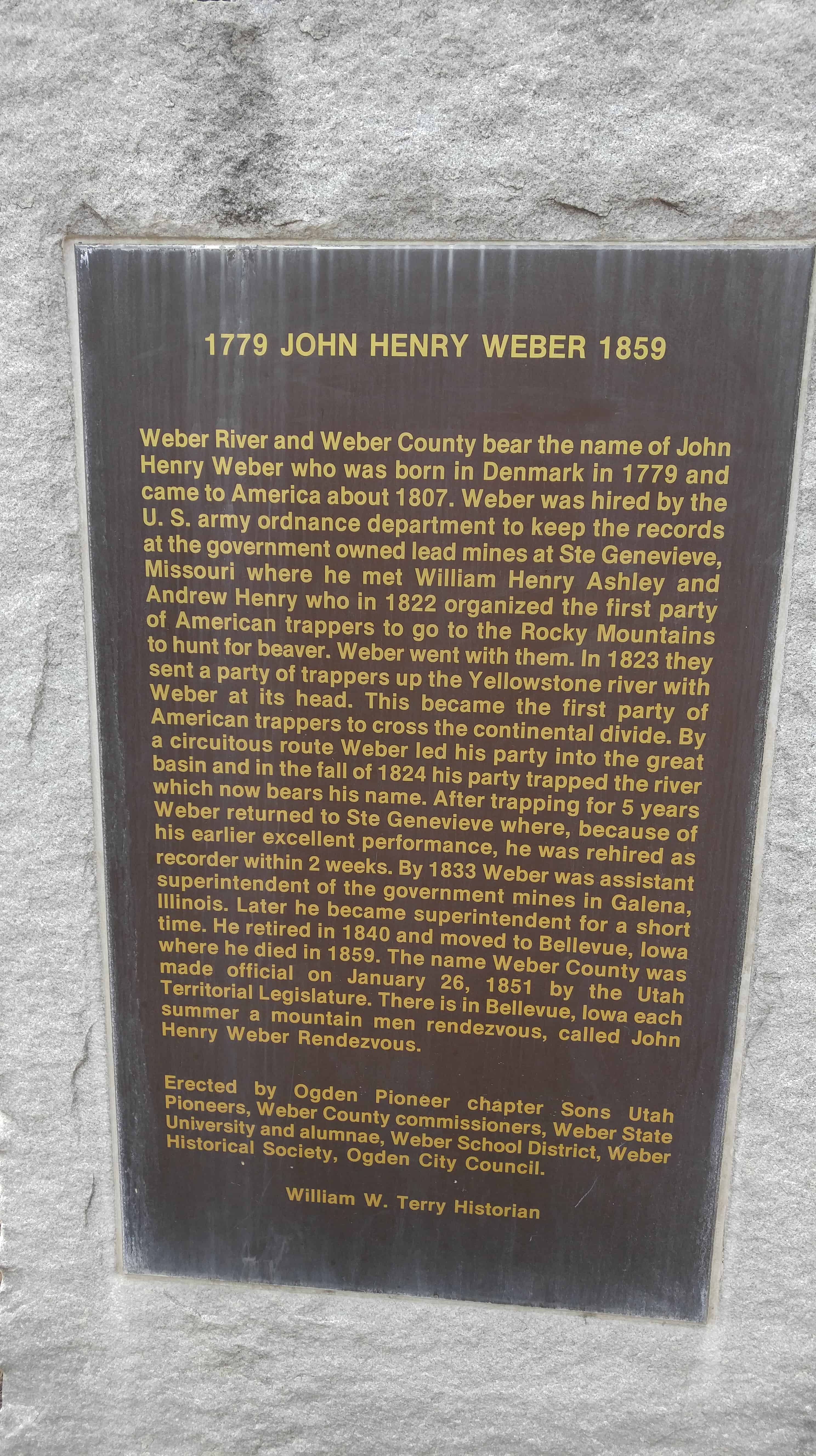
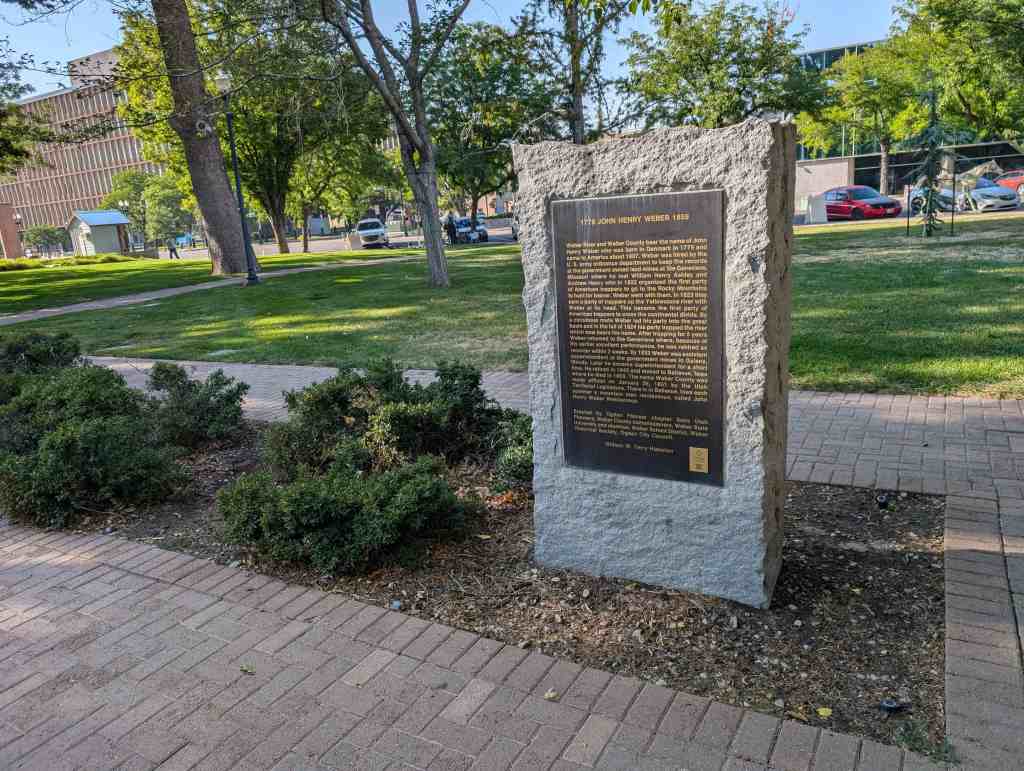
Weber River and Weber County bear the name of John Henry Weber who was born in Denmark in 1779 and came to America about 1807. Weber was hired by the U.S. army ordnance (sic) department to keep the records at the government owned lead mines at Ste Genevieve, Missouri where he met William Henry Ashley and Andrew Henry who in 1822 organized the first party of American trappers to go to the Rocky Mountains to hunt for beaver. Weber went with them. In 1823 they sent a party of trappers up the Yellowstone river with Weber at its head. This became the first party of American trappers to cross the continental divide. By a circuitous route Weber led his party into the great basin and in the fall of 1824 his party trapped the river which now bears his name. After trapping for 5 years Weber returned to Ste Genevieve where, because of his earlier excellent performance, he was rehired as recorder within 2 weeks. By 1833 Weber was assistant superintendent of the government mines in Galena, Illinois. Later he became superintendent for a short time. He retired in 1840 and moved to Bellevue, Iowa where he died in 1859. The name Weber County was made official on January 26, 1851 by the Utah Territorial Legislature. There is in Bellevue, Iowa each summer a mountain men rendezvous, called John Henry Weber Rendezvous.
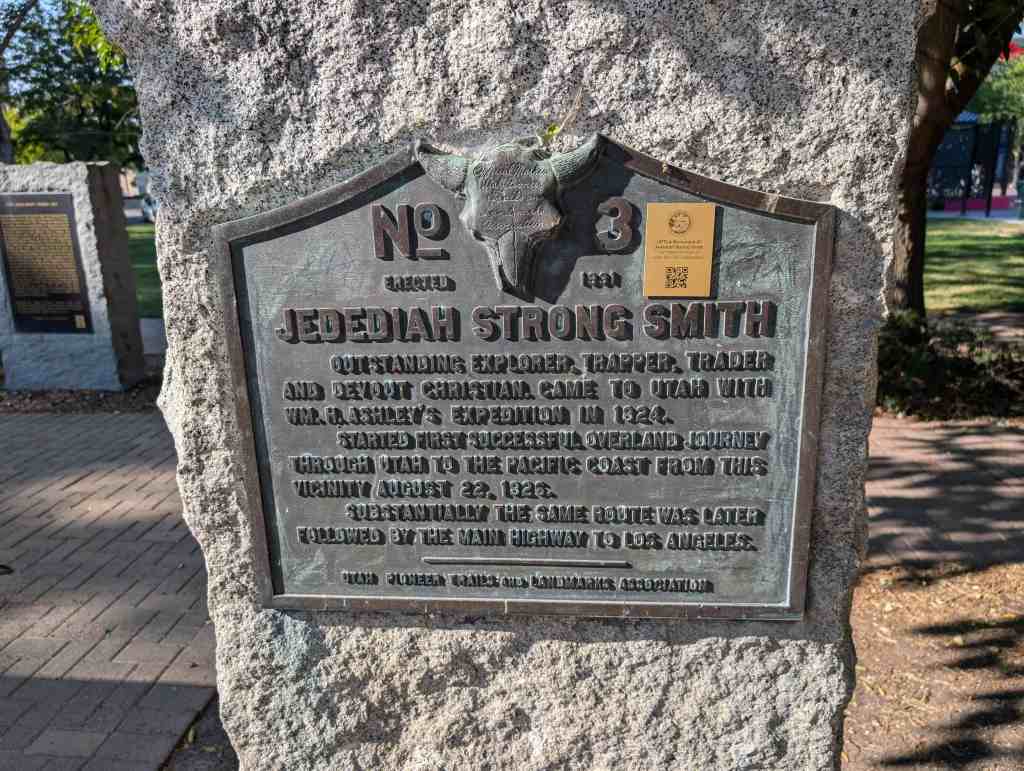
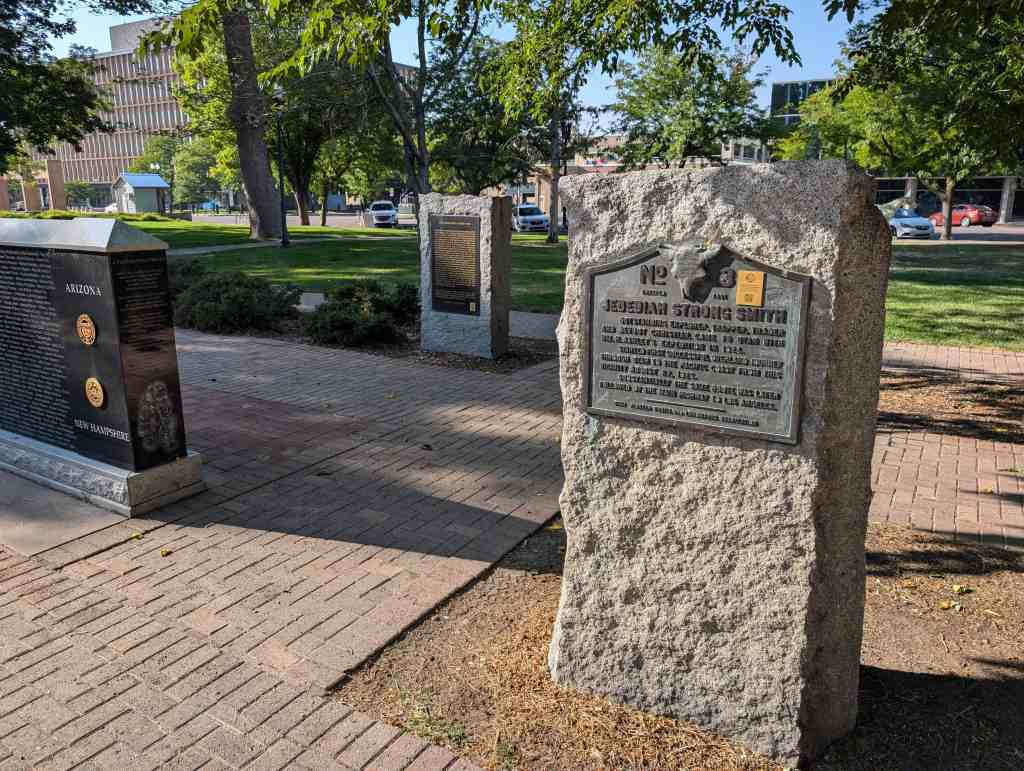
Outstanding explorer, trapper, trader and devout Christian. Came to Utah with Wm. H Ashley’s expedition in 1824.
Started first successful overland journey through Utah to the Pacific Coast from this vicinity August 22, 1826. Substantially the same route was later followed by the main Highway to Los Angeles.
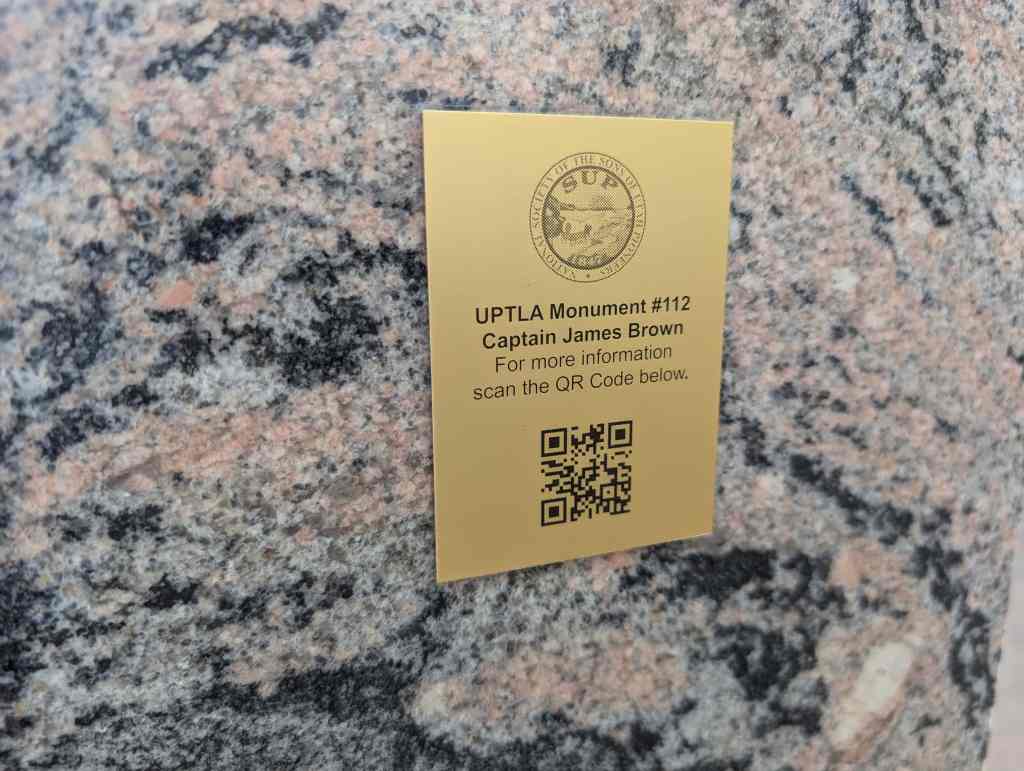
#112 – Captain James Brown Captain James Brown, pioneer, soldier and one of the founders of Ogden, enlisted in the Mormon Battalion of the U.S. Army in the Mexican War, July 18, 1846, at Council Bluffs, Iowa, and was made Captain of Company C. Longest march of Infantry ever recorded, at Santa Fe, Captain Brown was placed in charge of the sick detachment and ordered to Pueblo where they spent the winter of 1846-47 with a group of converts to the Church of Jesus Christ of Latter-Day Saints enroute from Mississippi to the Salt Lake Valley.
In the spring he marched his men by way of Fort Laramie and the South Pas arriving in the Valley July 23, 1847, closely following Brigham Young and the Mormon Pioneers.
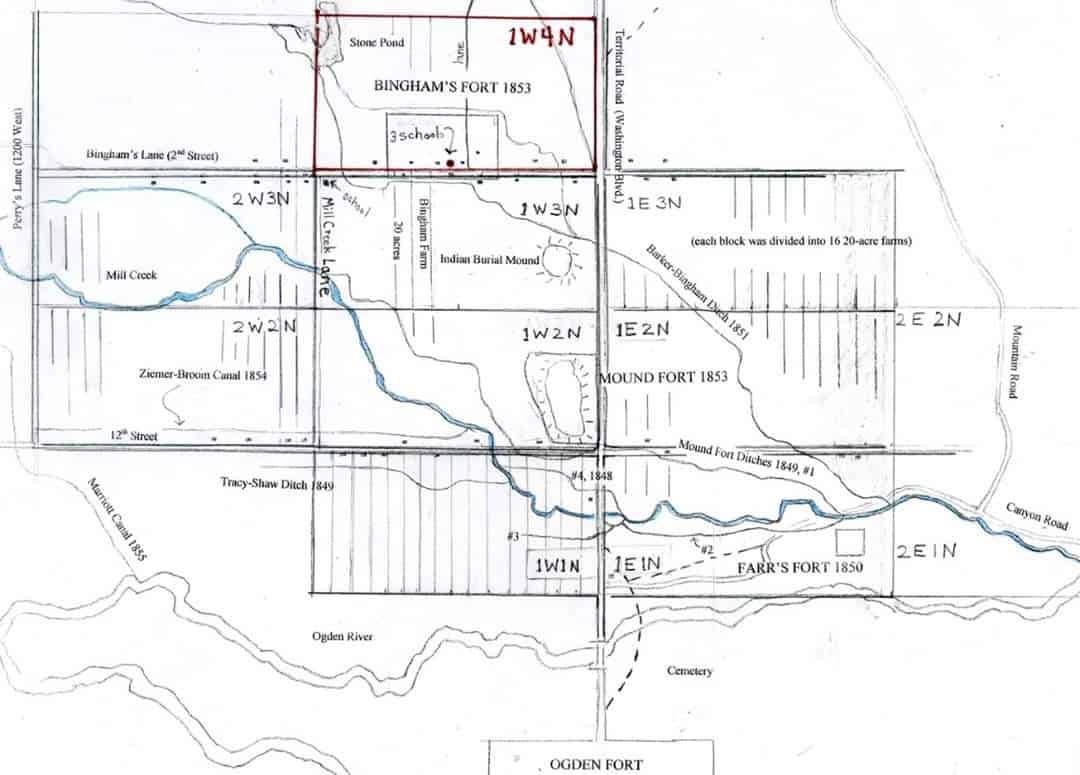
Early in August he left by way of Fort Hall for California to collect the Army pay due members of the Battalion. Returning late in 1847, he stopped at the Fort of Miles Goodyear, a trapper, located near the junction of the Ogden and Weber Rivers. From Goodyear he purchased for $3,000 all of the land now comprising Weber County together with some livestock and the Fort.
the land was conveyed to Captain Brown in a Mexican Land Grant, this entire area being at that time a part of Mexico. In January 1848, he settled here with his family and began the colonization of Brownsville, late Ogden. He was born September 30, 1801, and died September 30, 1863.
This monument erected by descendants of Captain James Brown, Citizens of Weber County and the Utah Pioneer Trails and Landmarks Association.