Tags

The T. R. Kelly House, constructed in 1903-4, is significant as one of only
six houses in Springville, as identified in an extensive survey of Springville
in 1981, which maintain their original integrity and document the period of
growth and prosperity of the town as it changed from an agrarian economy to a thriving commercial center at the turn of the century. The wealth and
prosperity that came to the-community through the success throughout the
intermountain west of several local construction companies is documented in the large homes built at ( the turn of the century in Springville, of which the Kelly House is one of the more impressive and best preserved examples.
Additionally, it is the best example among Springville houses which reflects a popular trend at the turn of the century, of the combination of the massing of the late Victorian period, with a plan and decorative features reflecting Classical Revival influences.
Related Posts:
- NRHP # 83003972
- Springville, Utah


Springville was established in 1850 as a fanning community by a group of
Mormons chosen by Brigham Young. A scarcity of water in the early years,
however, forced many of the settlers to seek other, non-agricultural
occupations. Freighting to the mines in Nevada became an important source of income for many of the men in the town, and it provided them with experience in managing teams and materials, which proved to be useful skills in their future contracting enterprises.
The first, Sprinville-based construction operation of note was undertaken in the late 1870s by Milan Packard, a local businessman, who proposed to build a narrow gauge railway from Springville to the rich coal deposits at Schofield, about sixty miles southeast of Springville. Although cash was in short supply to pay the work crews, Packard was able to obtain their services by offering them credit at his mercantile store. The men on the crews were mostly Springville men, and the skills which they had obtained through their freighting experiences helped to make the project a success. This initial contract launched several of these local men into the railroad construction business, which was a booming industry throughout the territory and the west up through the turn of the century. Though possessing a population of only a few thousand people, Springville surpassed both Salt Lake City and Ogden as a center for the contract construction industry, 1 apparently due to the early establishment and success of construction firms in the town. As railroad construction waned, most of these firms became involved in the construction of highways and irrigation canals. Many of them have continued in operation up to the present, and the town is still regarded as a center of construction activity.

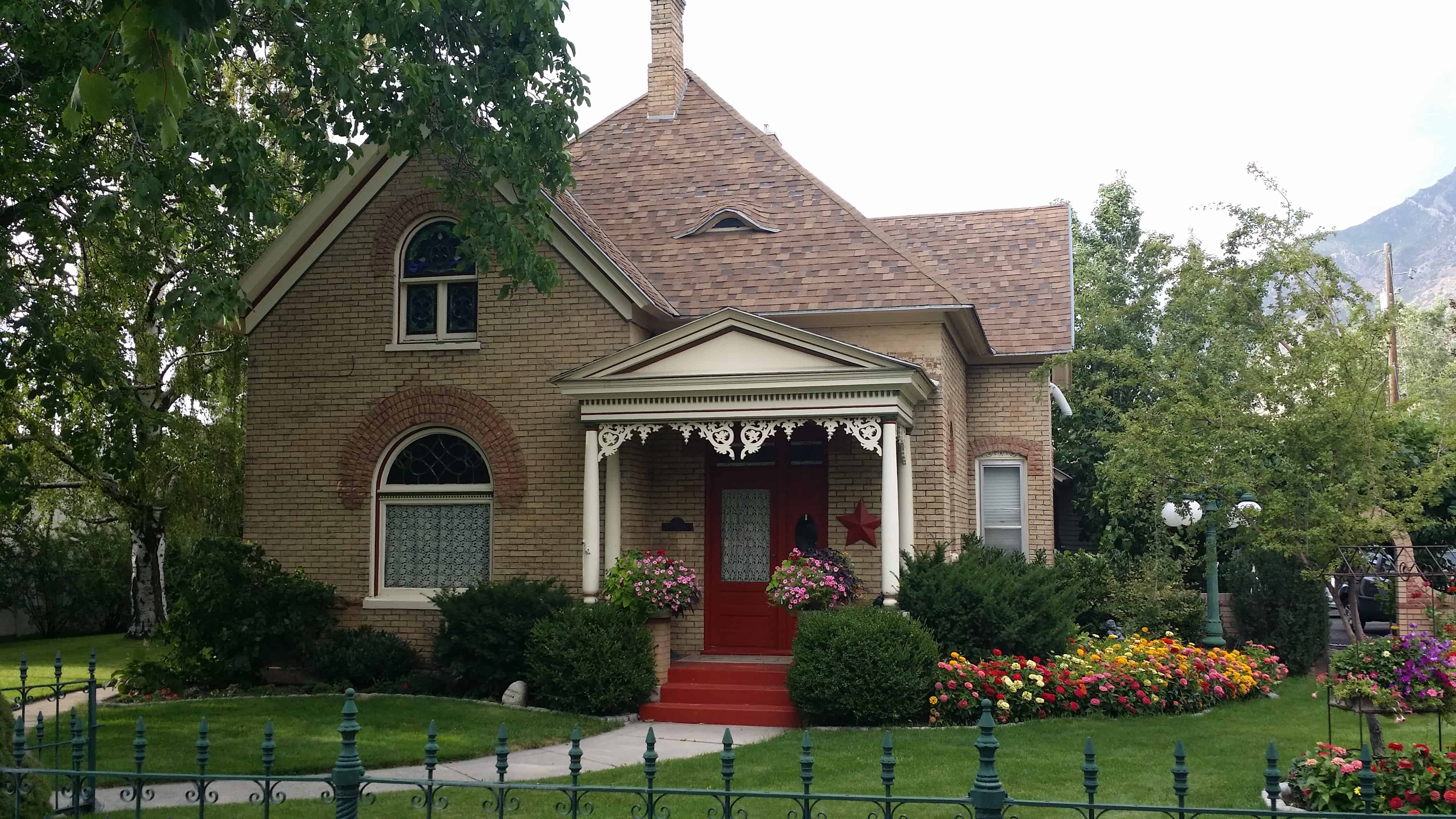
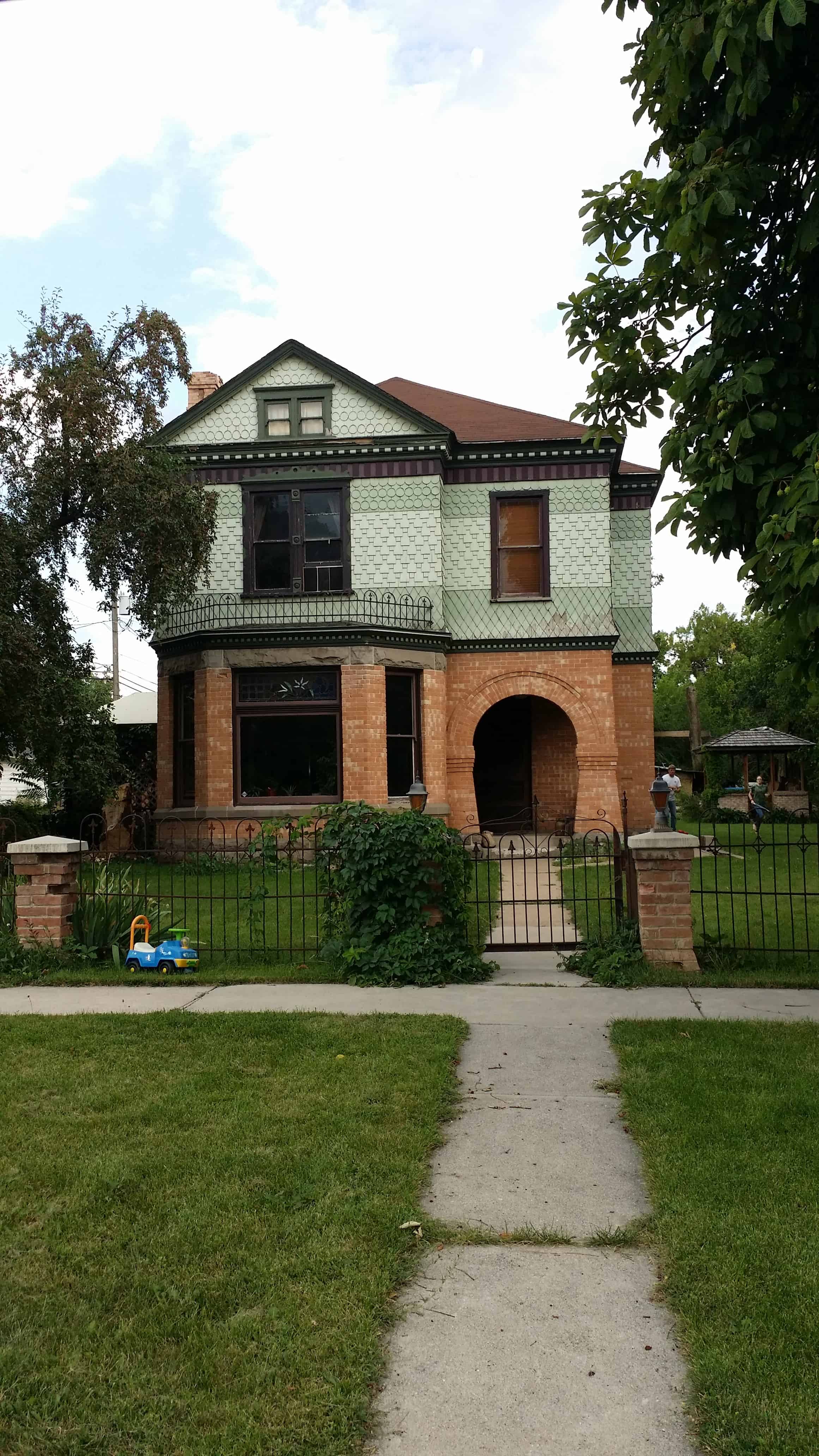
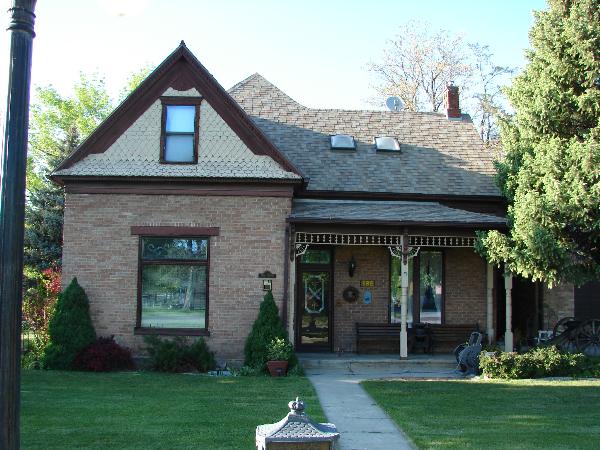
The T. R. Kelly House, built in 1903-4, is a large two story brick house. It
reflects a major change in Springville’s architectural development. Prior to
the late 1800s traditional house types were built and repeated, with
individual variations, throughout the town. Victorian influences were
evidenced primarily in decorative detailing attached to traditional forms. By 1900, however, the influence of outside sources, such as pattern books and mail order house catalogs, was beginning to be felt. The Kelly House,
although unique in Springville and Utah, has a scale, design elements, and
decorative elements which link it to numerous other houses in Utah that were built about the same time. The widespread appearance of common types and elements has been attributed to a common, readily available source, the pattern book. The Kelly House, because on the one hand it reflects the popular trend of the time, the use of books for house designs, and on the other hand, because it is a unique type among the types that were built and repeated, reflects the owner’s desire to be up to date according to the method of design, but also expresses his concurrent wish to have a house that would stand apart from others and express his own individuality.
Formally the Kelly House reflects the influence of the late Victorian period,
and the direction that Utah architecture was to take in the first decades of
the twentieth century. The irregular massing, combining a hip and pyramid
roof with a major gable roof projection on the east side, a minor gable roof
projection on the west side, identical corner turrets with bell cast conical
roofs, and a substantial two story open porch on the facade, immediately
indicate that the Kelly House is a product of Victorian taste. The combination of tan brick for the bulk of the house, with red brick for accent
as lintels and in the decorative panels of the porch and the chimney, and the crowning of the tower roofs with pinnacles, provide variety of texture and color, reinforcing that initial impression. The plan for the house, however, is not as irregular as is characteristic of Victorian designs. It is a box which is broken at the front corners by turrets, and by a projecting bay under the east gable projection. The original house included a one story
rectangular wing attached to the rear to which a modern addition was attached in 1981. The layout of the interior spaces too is more regular than one would expect to find in a Victorian house. The room divisions, although not symmetrical, do essentially divide the house into quarters (see plan). There are also decorative elements which bespeak of other influences which could explain the dichotomy that one finds in the Kelly House. The classical pediment which projects from the hip roof on the facade, the Tuscan columns that frame the entrance porch, and the wide entablature with dentils on the frieze that wraps around the upper edge of the house and the front porch, in addition to the tightening up of the plan, document the popularity of Classical Revival elements that permeated the realm of domestic architecture in the first decade of the twentieth century.

The Kelly House was renovated in 1981, but it closely resembles its original
appearance. The front door is set off center under the deep front porch, and
is flanked by a stained glass rectangular window panel. The original door and sidelight were replaced in the 1930s, and in the 1981 remodeling were again replaced by a door with a long oval glass pane framed by pilasters. The oval glass door is in keeping with the Victorian flavor of the house, and the pilasters complement the classical decorative elements. The openings onto the second story porch originally included a door centered between two double hung sash windows. They were replaced in 1981 by French doors, but because the arrangement of openings is the same, with the doors centered between side window panels, the change does not dramatically affect the original integrity of the building. The balustrade of that porch was replaced with an exact replica of the original. A door on the west side of the building was expanded, and French doors added, but other than that change, and the ones previously mentioned, the openings of the main block of the house are original. There are three long, narrow, double hung sash windows set into each turret. The same type of window was used in the east bay, except for the central panel which is a large single pane window and transom.
A long, one story addition was attached to the rear of the house in 1981 to
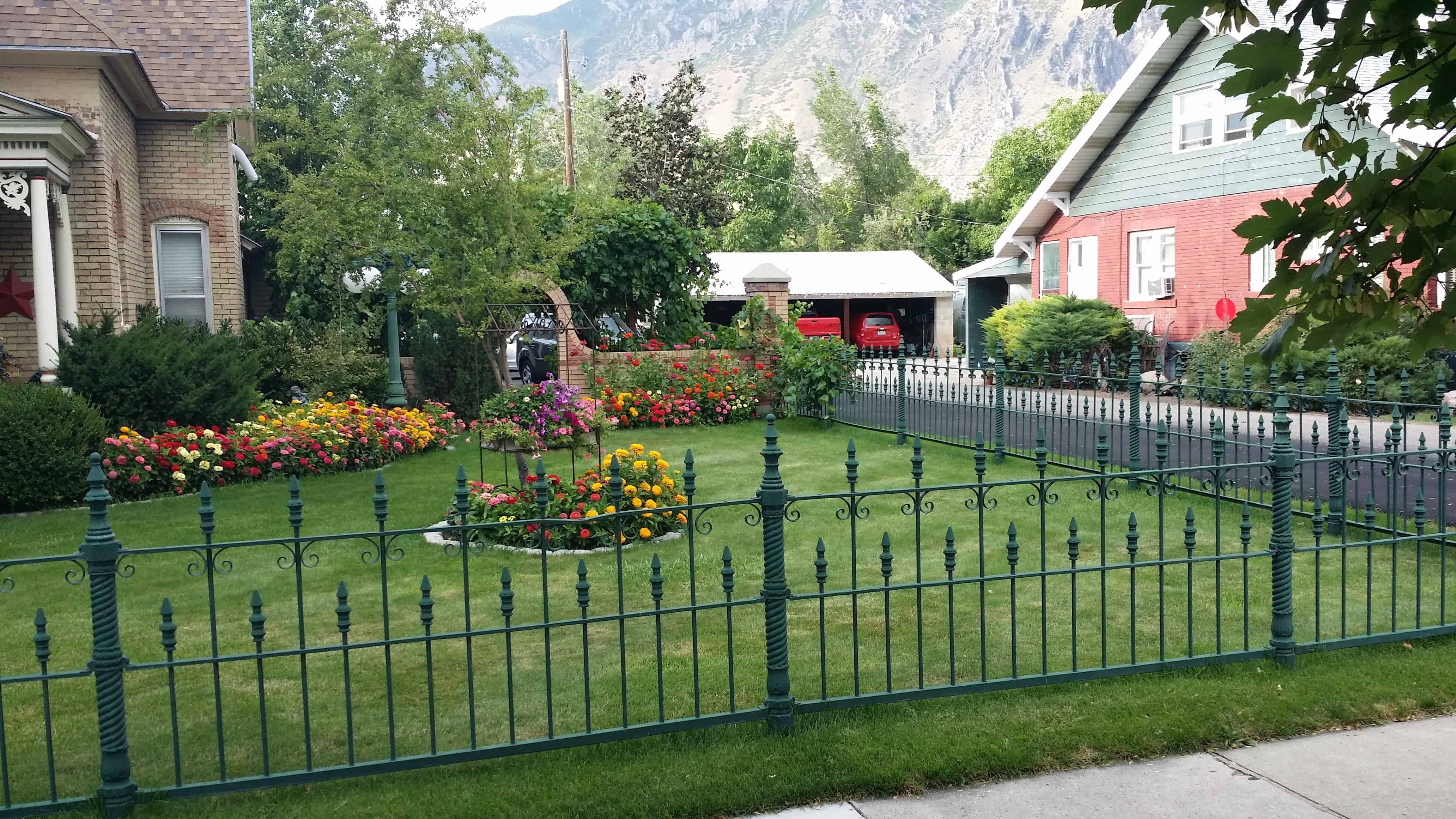
enlarge the space of the original block. Brick was matched as well as roofing material so that the new wing is not intrusive. The glass green house attached to the east side of the original one story rear wing, is the only part of the structure that is visible from the road. It, however, is of a
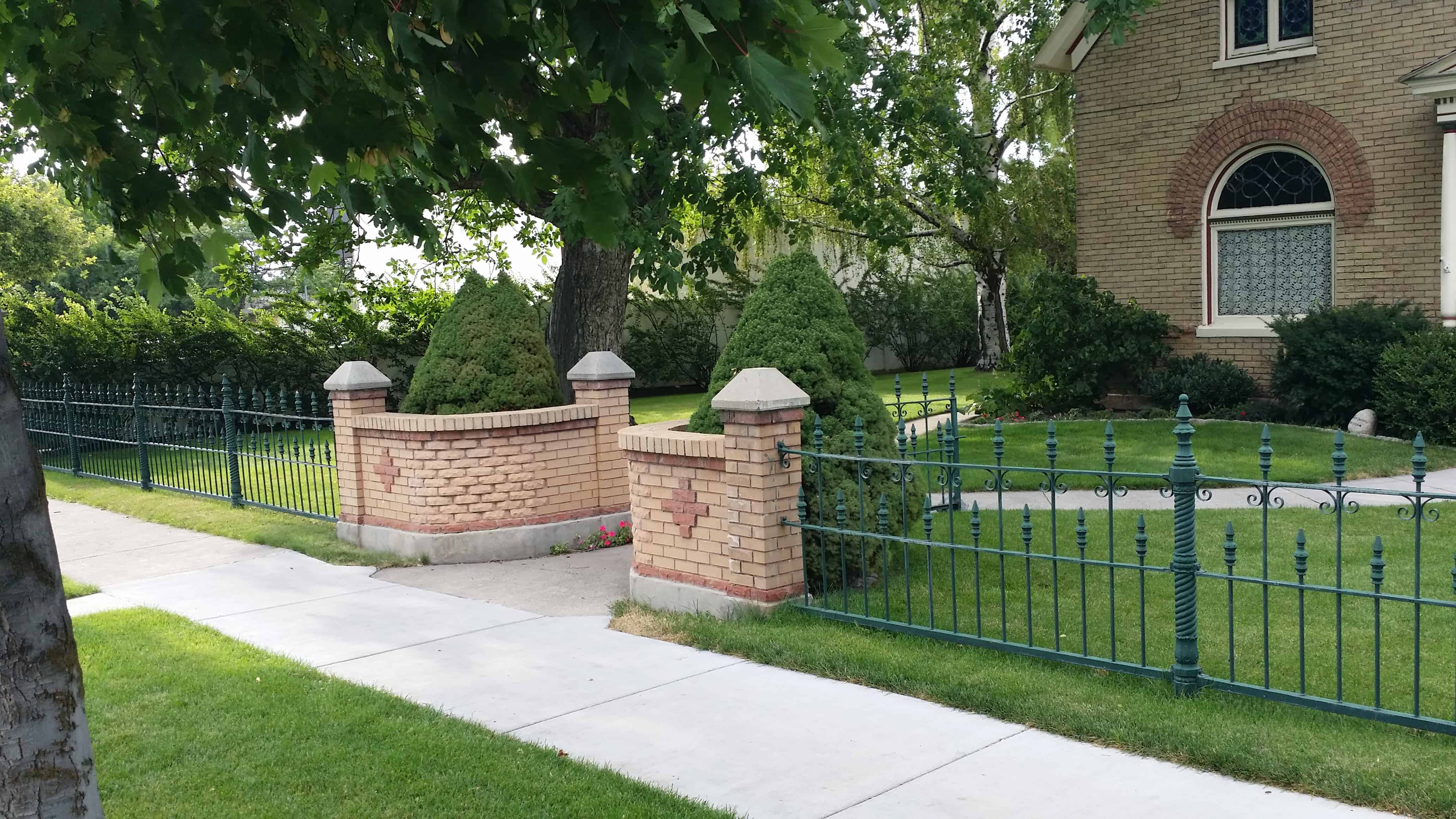
small scale, and is partially masked by a brick fence of tan brick with red
brick decorative panels that match the brickwork of the house. The garage
located at the northwest corner of the house was built in the 1930s, and was
also remodeled in 1981. Every effort was made to visually link the garage to
the house. Fan-type windows in the garage doors complement the classical
decorative scheme. The brick and paint have been carefully matched with that of the original building.
Major alterations to the interior of the house were made in the 1930s. The
original living room doors were replaced by arched doorways, pot belly stoves were removed and replaced by fireplaces, lighting fixtures were changed. More changes were made in 1981 including the addition of new lighting fixtures, the removal of a wall on the second story to enlarge the master bedroom to include a dressing room and bathroom, and the raising of the master bedroom ceiling. These changes, however, are not reflected on the exterior of the building, and have been made so that much of the original character of the interior of the house has been preserved.

The success of the construction industry in Springville brought unprecedented economic growth to the community and supported the development of local retail businesses. This new-found wealth was reflected in the emergence of fine, large homes, such as the Kelly house, that were built at the turn of the century. The Kelly House is one of the most impressive houses of the period, and is the best preserved extant example of the type built at that time.
Thomas Rollo Kelly was the son of Joseph and Elizabeth Patter Kelly, pioneers who settled in Springville, Utah in 1853. Joseph Kelly and his family lived on a ranch in the Hobble Creek Canyon area overlooking the town of Springville. After World War II the Kelly Ranch was sold to Springville City and converted into Kelly’s Grove, a popular recreation area and the Hobble Creek Golf Course. The Kelly family is listed as among the prominent families of the Springville area.

Thomas (T. R.) Kelly became a school teacher, businessman, and pharmacist in Springville. In 1903-04 he was listed as owner and manager of the Springville Drug Company, located on Depot Street (Second South). During that same 1903-04 period Kelly built his residence, also located on Depot Street, where he and his wife Ella and family resided until 1914. Depot Street served as a main thoroughfare leading to the interurban train station.

Located in such a conspicuous setting, the T. R. Kelly house, with its dual
turrets, proved a “show place” in the Springville community. The Kelly
residence represents a period in local history when Mormons were beginning to join the mainstream of American life. Although architecturally unique, its design was more than likely drawn from a popular pattern book of the time. It, in addition to several other Springville buildings of the same period, therefore documents not only the influx of nationally popular influences to Springville, but also attests to the receptivity and desire of the residents of the community to accept forms and building methods that had become acceptable and desirable nationwide.

Upon the death of Ella Kelly in 1914, Thomas moved from Springville. The
house then passed to about seven different owners, before being purchased in 1980 by Janis and Brent Haymond.

Another post I found here:
Thomas Kelly settled in the Hobble Creek area of Springville in 1853. His family was a notable one in the area of Springville. Kelly later became a school teacher and operated a few of the business in downtown Springville. Kelly met and married Ella and in 1903 began to build his home on Depot Street (200 South). Depot Street was the main street from downtown to the train station. The house is built in the Victorian Style (for more information about his specific design, click here) and is especially notable since it is different than many of the houses that were being built at the time. Kelly used a book for house design to incorporate a unique design to his new house. In 1914, Ella died and Kelly moved from Springville.
After Kelly’s departure from Springville, the house passed through several owners. In the 1930’s it went through a little remodeling, which included the construction of a car garage. In 1980 it was once again purchased and underwent a large renovation in 1981. This included the complete back addition to the house. In December of 1983 it was added to the National Register of Historic Places.