This Building was constructed in 1890 as the retail furniture store of James Caffrey and Samuel Davis, partners in the firm Caffrey & Davis ( “Furniture, Carpets, and Wallpaper”), operating here until 1907, when it was purchased by Walter and Herbert Robinson. They, together with their brothers, formed the Robinson Brothers Music Co., which sold furniture and “musical merchandise.” In 1921, the building was purchased by Laura Senior. The Senior family added the rear addition with the second story and operated a confectionary, cafe, hotel, and billiard hall.
Through most of the 1930s, the Senior Hotel was one of three hotels operating in Springville. Following Laura’s death, title passed in 1931 to her son, Oliver, who lived here with his second wife, Priscilla, and his children, Max and Jaqueline. Max, Oliver’s son by his first marriage, worked as hotel clerk and later manager. The hotel and associated tourist court ( behind this building ) continued to be a family owned and operated venture through the 1960s, closing in the 1980s, after which the building sat vacant. In May 1995 Bradley and Elizabeth Petersen purchased the building and began an extensive restoration project to preserve and return it to use.
Located at 296 South Main Street in Springville, Utah
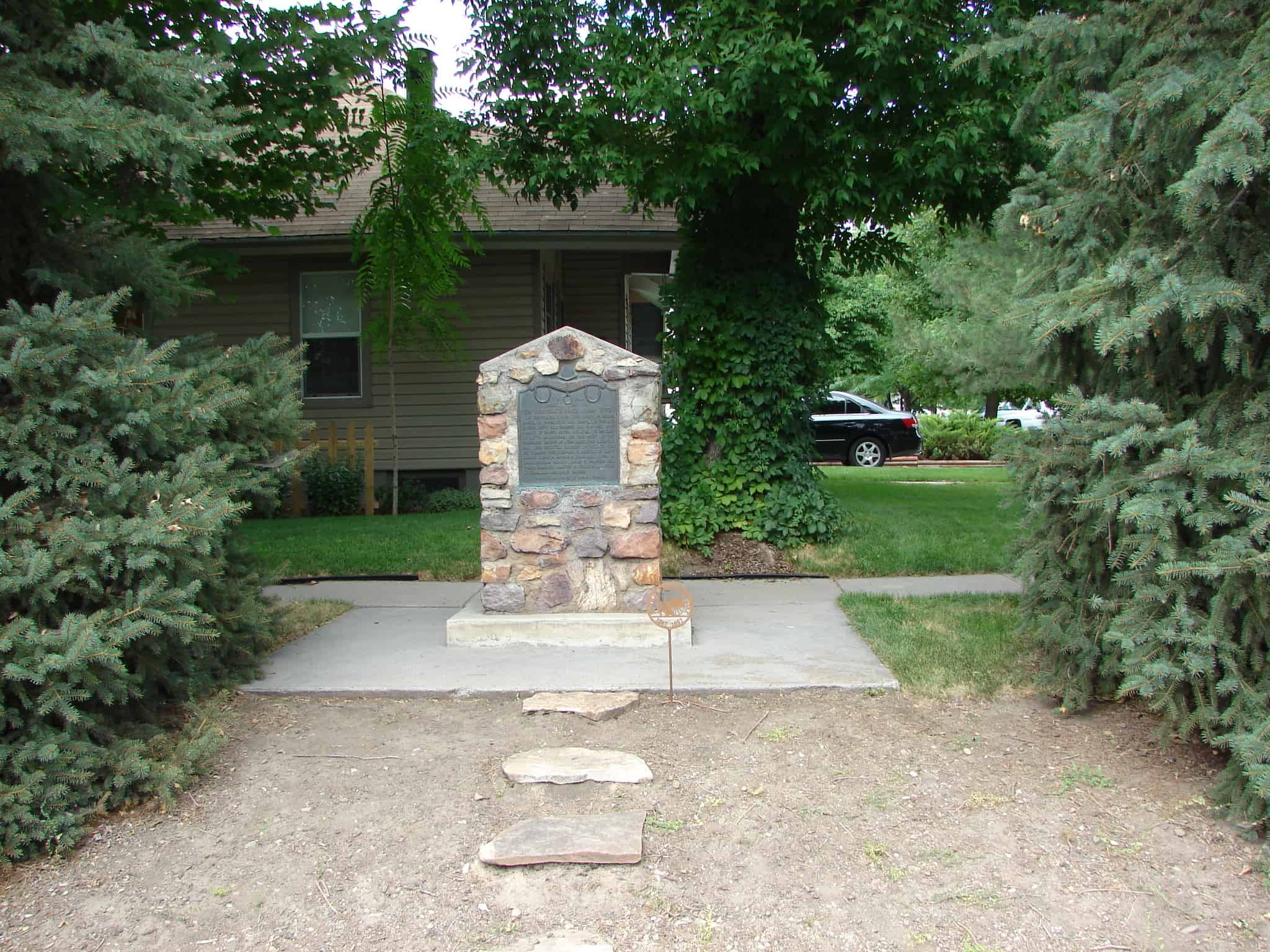
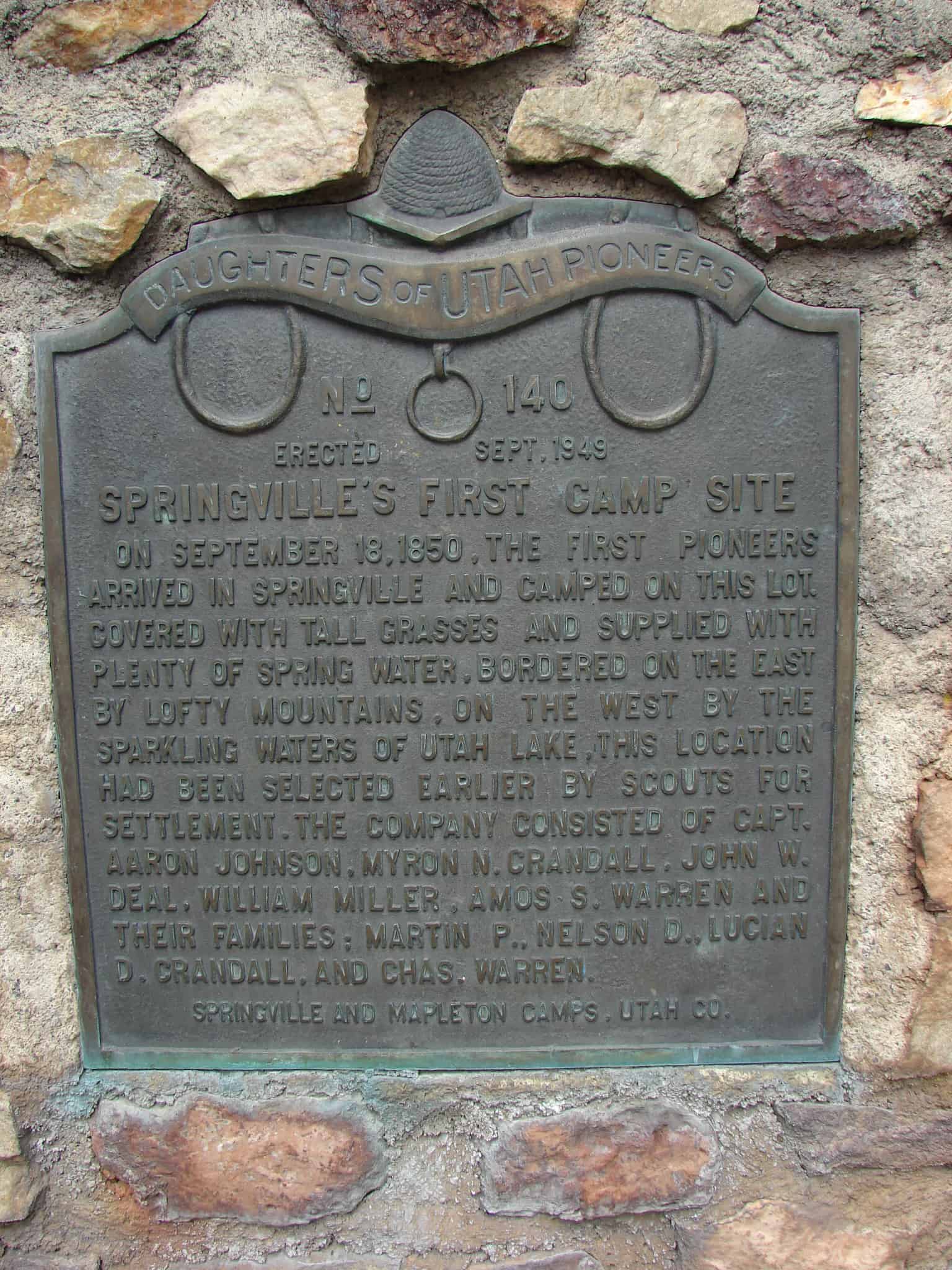
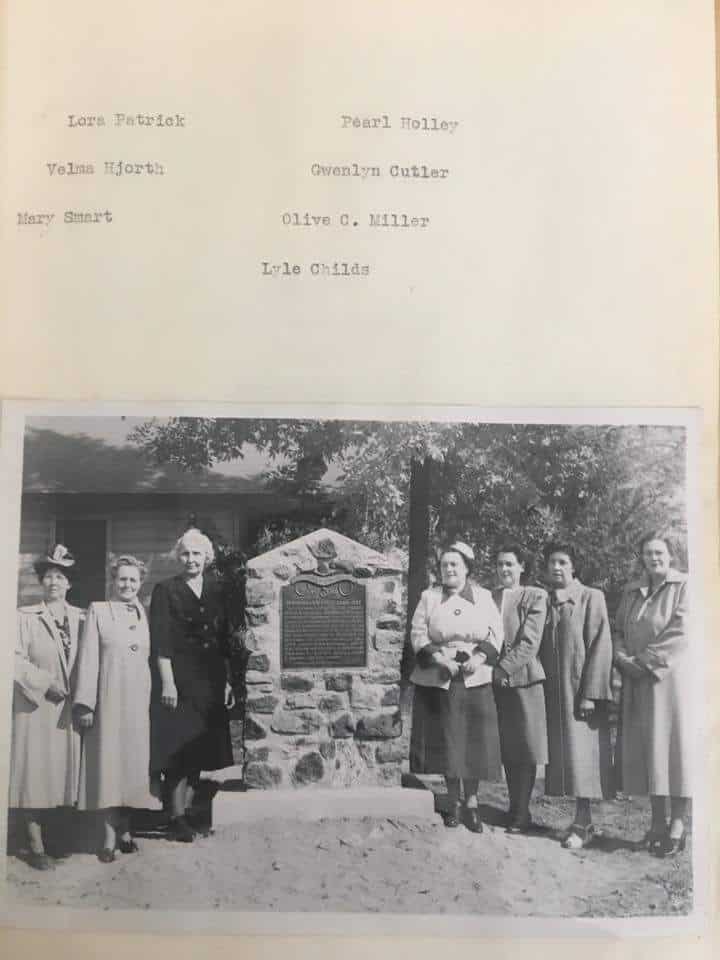
On September 18, 1850, the first pioneers arrived in Springville and camped on this lot. Covered with tall grasses and supplied with plenty of spring water, bordered on the east by lofty mountains, on the west by the sparkling waters of Utah Lake, this location had been selected earlier by scouts for settlement. The company consisted of Capt. Aaron Johnson, Myron N. Crandall, John W. Deal, William Miller, Amos S. Warren and their families: Martin P., Nelson D., Lucian D. Crandall, and Chas. Warren.
Check out all of the historic markers placed by the Daughters of Utah Pioneers at JacobBarlow. com/dup
I stopped by a Springville historic home at 380 N 200 W today.
I met the home owner (Marilyn Davis) when I stopped to take a few pictures, she informed me that she had been looking into the original owners and it wasn’t what the plaque near the front door said, (Evan Pier Brinton) his name was actually Evans Piersol Brinton.
Joseph and Elizabeth Potter Kelly, Springville Pioneers of 1852, homesteaded 160 acres in Hobble Creek Canyon which remained in the Kelly family for 79 years (three generations). This was an old Ute Indian camping ground, and here the Pioneer Kellys lived and died. Their home was known for its hospitality. Joseph Kelly died here in 1885 and his wife in 1904. “They lived in the house by the side of the road and were friends to man”.
Living in Brookside myself, it was cool to see this article about the history of it. I’ve been talking to a lot of the old timers myself as well lately.
As World War II was ending, soldiers were returning home to marry their sweethearts and find a home. In Springville, the Brookside subdivision was ready to welcome 163 homeowners looking for a small, economical new house.
“Brookside subdivision was the first subdivision in Springville,” said Ireata Hansen, 77, a Brookside resident. “I remember when I came to visit my mother’s Aunt Harriett and we went to look at her daughter Jean’s new home. I was about 12, and we went over in the winter time when there were just a few homes and no roads or sidewalks yet. Some of the houses had two bedrooms and some had three. There was an unfinished basement.”
Years later, she happily returned as a homeowner to Brookside with her own young family with some help from a local realtor.
“We were renting a basement and our kids were always sick because the walls were so damp. Mr. Frazier asked us if we’d like to buy a house. We didn’t even have the $300 for the down payment, but he lent us that at $10 a month. We had a house payment of $70 a month and I remember wondering how we would make it when we had been paying $45 in rent,” Hansen recalled.
One of her first vivid memories after moving into their home in 1960 was the first Halloween.
“I was not prepared for the cars lined up bumper to bumper in our neighborhood,” Hansen said. “We must have had 400 kids come to our door for trick-or-treat. Back then we made cookies or popcorn balls and we soon ran out. After that I never baked. I gave out apples or candy.”
Juanita Mower, 88, lives two doors down from the Hansen family. She was born in Springville in 1925 and met her husband Eugene after WWII.
“Eugene came home from the service after four years and went down to Carbon County to work in the coal mines to make some money. He came back up to Springville and got a job as a house painter. He was later the greens keeper at Hobble Creek Golf Course,” said Mower. “It was a great place to raise our family of boys. They had so many good friends and if I needed to have them come home I’d just step out on the porch and whistle.”
Della Wood, 92, moved into Brookside in March of 1950. She and her husband paid $7,900 for their home. She mentioned that the houses hadn’t been selling well in Brookside in the early years until the Strong family built homes for all of their children and soldiers came home looking for affordable housing.
“My husband Don had gotten out of the service and was working at Pacific Pipe,” she said. “I said let’s take a ride over to Brookside again and look at those homes. We walked in and it felt like home. One other couple had owned it before us, so we were the second family to live there. We moved in right about when Brookside school was built, they were building a chapel and Don’s Market was just down the street where Reams is now. Brookside was a cul-de-sac then, before they put the road through at 800 East and we were a very close neighborhood. I knew who lived in every house.”
Utah’s first lady, Jeanette Snelson Herbert, grew up in Brookside subdivision. Her mother, Bonnie Snelson, still lives in the family home purchased in 1956 for $8,700. The Snelsons came to Springville looking for a home when Herbert’s father became the manager of the local JC Penney store.
Bonnie Snelson smiled as she remembered how an uncle who was a realtor discouraged them from buying a house in Brookside.
“My husband’s uncle told us Brookside was nothing but an incubator — a bunch of people with a bunch of kids,” said Snelson. “I knew it was the perfect place for us. We had four children and one on the way. We had to do some renovating since a houseful of boys had lived there and shot up the walls with their BB guns. These houses were plaster so we had to replaster and paint.”
The Snelson family, like most of the families in Brookside, remodeled and expanded their homes as the years went by. Homeowners added garages, built fences and made improvements as the decades passed.
“When we first moved in we had a big octopus furnace that burned coal. There was a coal room in the basement and we later turned that into a bedroom for two of our children. One October morning my husband asked me if I’d like a family room for Christmas so we jumped up out of bed and went outside to mark it out with a flashlight. Since he worked until late at night, when I said I wanted a fireplace he told me I’d have to build it. We filled the back of our station wagon with rocks and I went over to Della’s and borrowed her sledgehammer and got to work.”
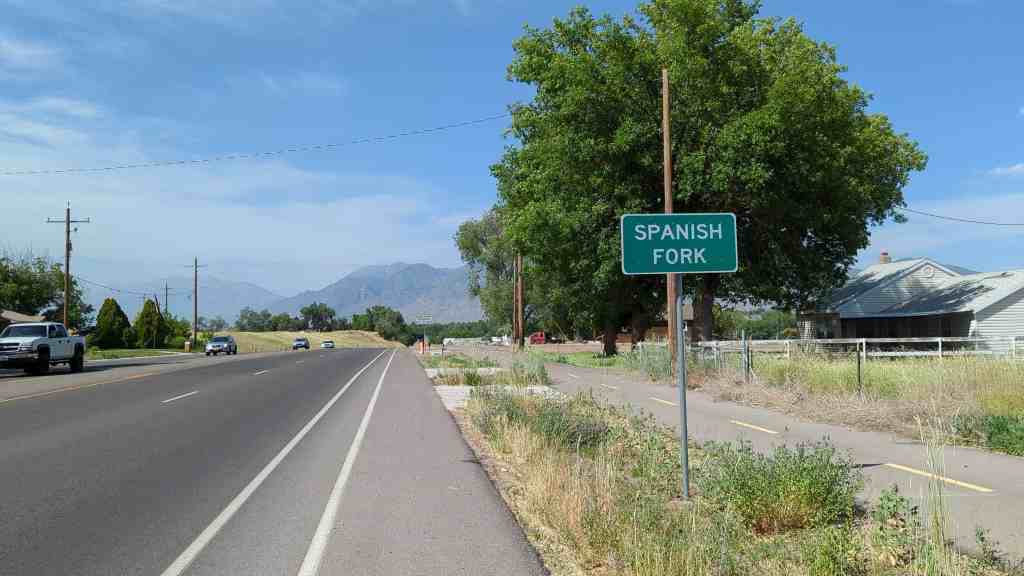
Spanish Fork is eight miles south of Provo on I-15 and the Spanish Fork River. Spanish Fork was an out-growth of Palmyra, Located to the northwest. As the community developed, Palmyra diminished and eventually became a suburb of Spanish Fork. In the early days, both settlements existed with one fort, Fort St. Luke. Spanish Fork received its name from the adjacent river, which was named by the 1776 Dominguez-Escalante expeditions.
In January 1849, Oliver B. Huntington, Barney Ward and Joseph Matthews entered Utah Valley on an Indian trading expedition. They camped on the banks of a stream near the present site of Springville. That night, the bell-horse slipped her hobbles and led the traders horse band to the mouth of Maple Canyon where Huntington tracked them down, recovered them, and took the horses back to their campsite. The traders named the stream Hobble Creek.
Hobble Creek Canyon is a place I spent a lot of my time growing up, the mouth of the canyon is in Springville/Mapleton and it goes up past the Reservoir, Golf Course and parks. The canyon splits and right fork goes up and over the mountain down into Diamond Fork Canyon, it’s a nice road Left fork goes to many cabins and eventually to Wallsburg but it’s a really rough road.
In February 1997, the Hobble Creek Parkway Committee submitted the trail proposal. In January of 1998 they received the grant confirmation for $55,000. With help from the Forest Service, Utah Division of Wildlife Resources, Utah County, and Springville City, construction began in August 2001, and was completed in November of the same year. Asphalt was laid in the Spring of 2002.
Fish in Hobble Creek
Fish that can be found in Hobble Creek are cutthroat trout, brown trout, and a few rainbow trout. Cutthroats are the only native species. Stocking of rainbows, and all other fish in Hobble Creek has been discontinued because they are now self-sustaining and are reproducing naturally.
Wildlife in Hobble Creek Canyon
As you stand here and take in the beauty of this place, the first thing you might notice is the sound of water running over the rocks in Hobble Creek, or maybe a breeze or wind in the trees. If you look and listen, depending on the time of year, you could hear the song of a robin, junco, meadowlark, or gold finch. The calls of kingfishers and chuckers are heard high on the mountainsides. The sharp bark of a squirrel echoes down the canyon. Although you might not see these animals, they are here along with a host of others, including: humming birds, magpies, quail, mule deer, elk, coyotes, black bears, red fox, beavers, flying squirrels, cougars, lizards, water snakes, rattlesnakes, garter snakes, deer mice, voles, skunks, raccoons, muskrats, and weasels.
I love Little Rock Canyon, it is located at the north end of Springville, Utah. The canyon is covered with slick rockslides and gorgeous cliffs, there are a few caves and mines as well.
If you want to hike up the canyon there is a trail that goes up the South side, if you’re looking for the caves/mines go up the bottom of the canyon and towards the North side.
On May 5th, 2013 we hiked up to “Rabbit Ears” to celebrate my birthday, I hadn’t been there in a long time. Here’s a picture of Brady entering, and another of the “ears.”
This sign, located in Payson says: “You are a fool for fighting your best friends, for we are the best and the only friends that you have in the world” wrote Brigham Young to the Ute Indian Chief Walkara in 1853, after the latter had engaged the settlers of Utah in their first major Indian war. Angered because the whites had put an end to the Indian slave trade in the territory and had encroached upon their lands, the redmen found a pretext for beginning hostilities at Springville, July 17, 1853, when an Indian, while beating his squaw, was killed by a white man. The following day Alexander Keele, a guard at Payson, was shot by Indians and the war was on. The policy of the white defenders was one of vigilant watch and limited offensive warfare. However, before Governor Brigham Young led a peace mission into Walkara’s camp in May 1854 that ended the conflict, 20 whites had been killed including the U.S. Government surveyor Captain John W. Gunnison, who was massacred with 7 of his men near the present site of Hinckley, Utah.
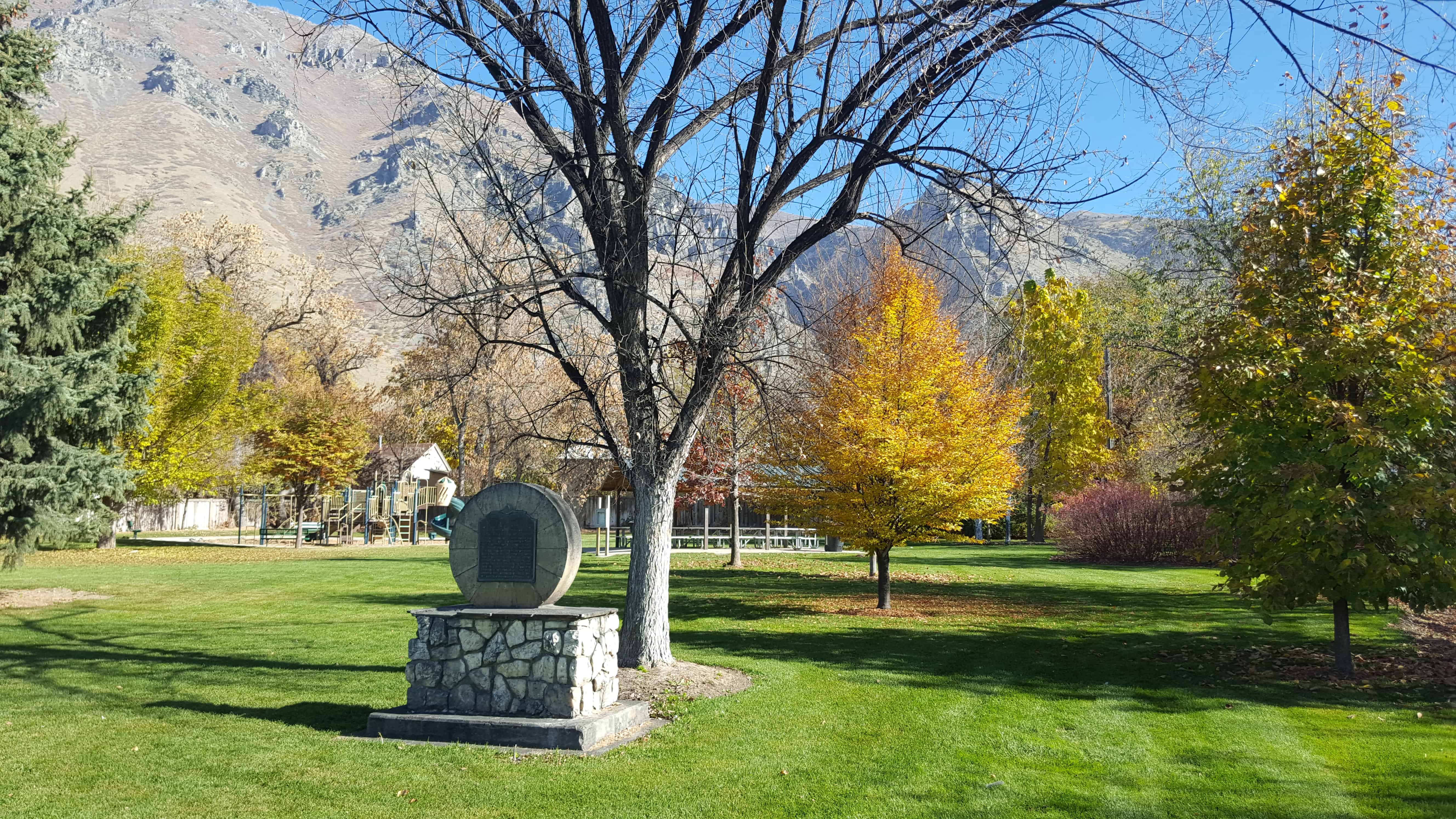
First Mills in Utah County (present day Springville in Heritage Park) Jacob Houtz, James Porter and Edward Hall built and operated a flour mill near here (1851). Norton Jacobs, the first miller, made and installed the machinery. In 1860 Jacob Houtz and William Bringhurst built a woolen mill one third mile northwest. In 1863, with the aid of William Jackson Stewart, cotton looms were installed. Cotton from Dixie was used. The mill was sold to James Whitehead in 1880, who changed it to a woolen mill and operated until destroyed by fire in 1914.