• About JacobBarlow.com
  • Cemeteries in Utah
  • D.U.P. Markers
  • Doors
  • Exploring Utah Email List
  • Geocaching
  • Historic Marker Map
  • Links
  • Movie/TV Show Filming Locations
  • Oldest in Utah
  • Other Travels
  • Photos Then and Now
  • S.U.P. Markers
  • U.P.T.L.A. Markers
  • Utah Cities and Places.
  • Utah Homes for Sale
  • Utah Treasure Hunt

JacobBarlow.com

~ Exploring with Jacob Barlow

JacobBarlow.com

Tag Archives: Wyoming

Burning Wagons

20 Tuesday Mar 2018

Posted by Jacob Barlow in Uncategorized

≈ Leave a comment

Tags

Historic Markers, Sweetwater County, The Utah War, Wyoming, Wyoming Historic Markers

2018-01-05 15.03.43

Brigham Young sent the Utah Militia, also known as the Nauvoo Legion, to harass the Federal troops and delay their approach. In the early hours of October 4th, Major Lot Smith of the Utah Militia and 40 men captured and burned two supply trains, totaling 52 wagons, west of here near the Green River.

The next day Smith and his men struck again near where you are now standing. Militiaman Newton Tuttle, wrote in his journal:

“Mond 5 We went on to the Sandy got breakfast then we went up to the road & found 24 waggons we burnt 22 of them & took 7 mules and 2 saddles we then went off from the road …”.

Wagonmaster Lewis Simpson led the supply train and ever since the wagon burning episode this little valley has been called Simpson’s Hollow.

Wagon train owners Russell, Majors, and Waddell valued the damage at more than $85,000. The only casualty of both wagon incidents was when one of Lot Smith’s men who was wounded by Smith when his pistol discharged accidentally.

The loss of three months rations and livestock, as well as an early, bitter winter stalled the army at Fort Bridger. The severe weather kept the militia and the army apart. During this lull in action, intermediary Thomas Kane negotiated a peaceful settlement of the conflict. In the spring of 1858, the army peacefully entered Salt Lake City and Alfred Cumming was installed as Utah Territorial Governor.

There are four historic markers here:

  • Burning Wagons
  • Simpson’s Hollow
  • Simpson’s Hollow
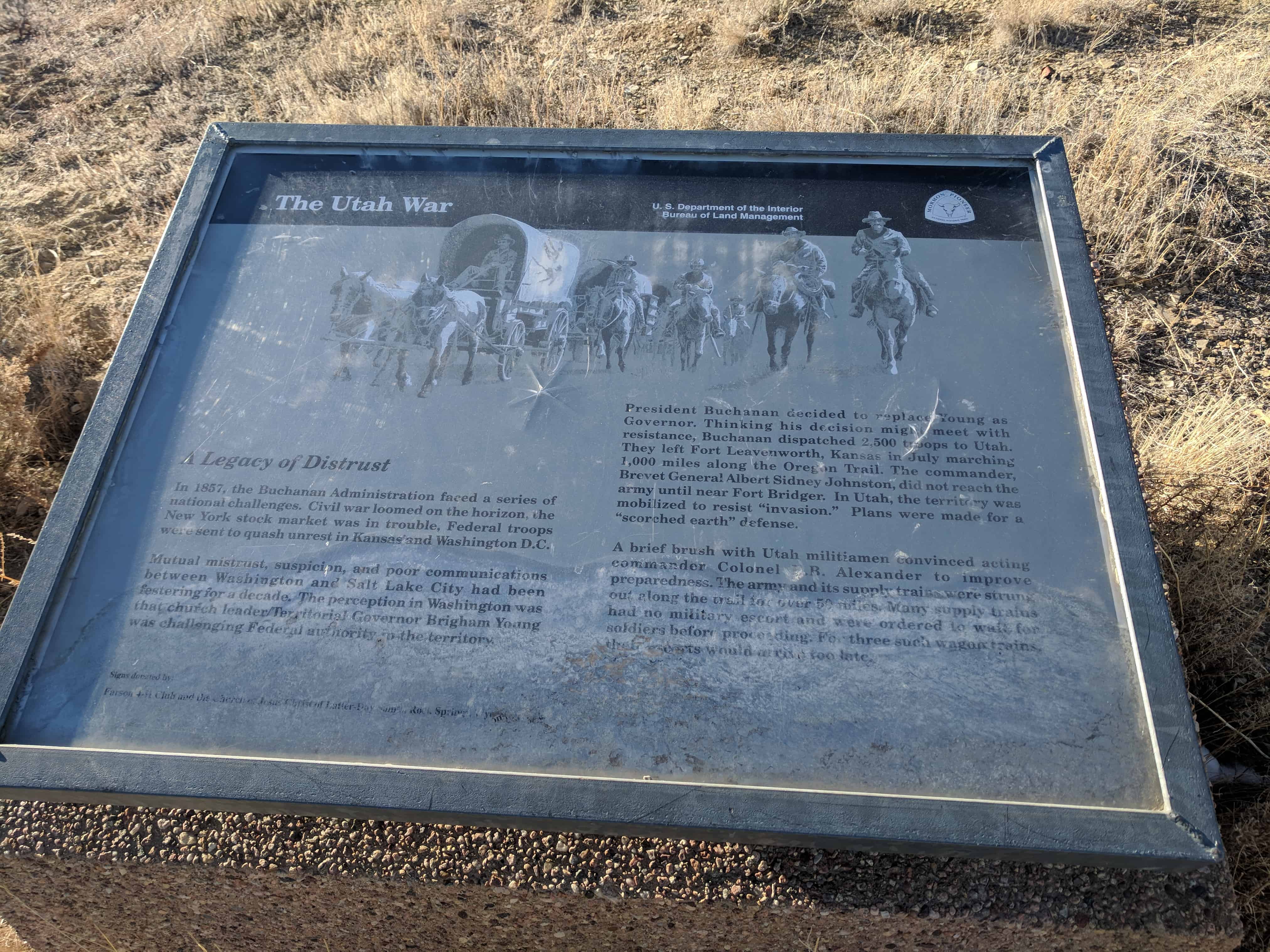
  • The Utah War

2018-01-05 15.04.13

2018-01-05 15.05.05

2018-01-05 15.05.09

The Utah War

20 Tuesday Mar 2018

Posted by Jacob Barlow in Uncategorized

≈ Leave a comment

Tags

Historic Markers, Sweetwater County, The Utah War, Wyoming, Wyoming Historic Markers

2018-01-05 15.03.43

A Legacy of Distrust

In 1857, the Buchanan Administration faced a series of national challenges. Civil war loomed on the horizon, the New York stock market was in trouble, Federal troops were sent to quash unrest in Kansas and Washington D.C.

Mutual mistrust, suspicion, and poor communications between Washington and Salt Lake City had been festering for a decade. The perception in Washington was that church leader / Territorial Governor Brigham Young was challenging Federal authority in the territory.

President Buchanan decided to replace Young as Governor. Thinking his decision might meet with resistance, Buchanan dispatched 2,500 troops to Utah. They left Fort Leavenworth, Kansas in July marching 1,000 miles along the Oregon Trail. The commander, Brevet General Albert Sidney Johnston, did not reach the army until near Fort Bridger. In Utah, the territory was mobilized to resist “invasion.” Plans were made for a “scorched earth” defense.

A brief brush with Utah militiamen convinced acting commander Colonel F.B. Alexander to improve preparedness. The army and its supply trains were strung out along the trail for over 50 miles. Many supply trains had no military escort and were ordered to wait for soldiers before proceeding. For three such wagon trains, their escorts would arrive too late.

There are four historic markers here:

  • Burning Wagons
  • Simpson’s Hollow
  • Simpson’s Hollow
  • The Utah War

2018-01-05 15.04.06

2018-01-05 15.05.05

2018-01-05 15.05.09

California/Mormon/Oregon/Pony Express Trail.

The Big Sandy River

14 Wednesday Mar 2018

Posted by Jacob Barlow in Uncategorized

≈ 1 Comment

Tags

Farson, Historic Markers, Wyoming, Wyoming Historic Markers

  • 2018-01-05 14.52.25

The Big Sandy River

Long before the Oregon/California westward migration, animals instinctively stopped at the Big Sandy River during their migration process. With South Pass just 35 miles east, the river was also a natural East-West pathway for man.

The pathway, in combination with the river, made the area a stopping place for Native Americans and later explorers, including the Mountain Men. With the advent of travel to Oregon, California, and Utah, it also became a stop for wagon trains on this part of the Oregon/California/Utah trial. The Donner party encamped here on July 24, 1846 having made its fateful decision to try a new shortcut to California beyond Fort Bridger. Seven miles east of here, on June 28, 1847, the first Mormon wagon train with the Prophet Brigham Young met with frontiersman Jim Bridger on the Little Sandy River. The next day, the Mormons rested at the Big Sandy before pushing on to reach the Green River that same day.

By 1858, the Big Sandy Mail Station had developed as a site for mail service between the Missouri River and Salt Lake City. The Central Overland California & Pike’s Peak Express Company, which operated the Pony Express, made the mail station one of the original stops for its famed Pony Express and Overland Stage service. The Pony Express started on April 3, 1860 and operated 19½ months, only to be replaced by the Transcontinental Telegraph service whose telegraph line came through at this location.

Other notable travelers like Horace Greeley, Sir Richard Burton, Samuel Clemens (Mark Twain), and tens of thousands of trail emigrants used this pathway traveling either East or West, but mainly West.

This historic marker is located in the same highway pullout as Little Sandy Crossing and is right around the corner from the Big Sandy Pony Express Station in Farson, Wyoming.

2018-01-05 14.52.29

To all pioneer who passed this way to win and hold the west

10 Saturday Mar 2018

Posted by Jacob Barlow in Uncategorized

≈ Leave a comment

Tags

Sublette County, Wyoming, Wyoming Historic Markers

2018-01-05 14.40.30

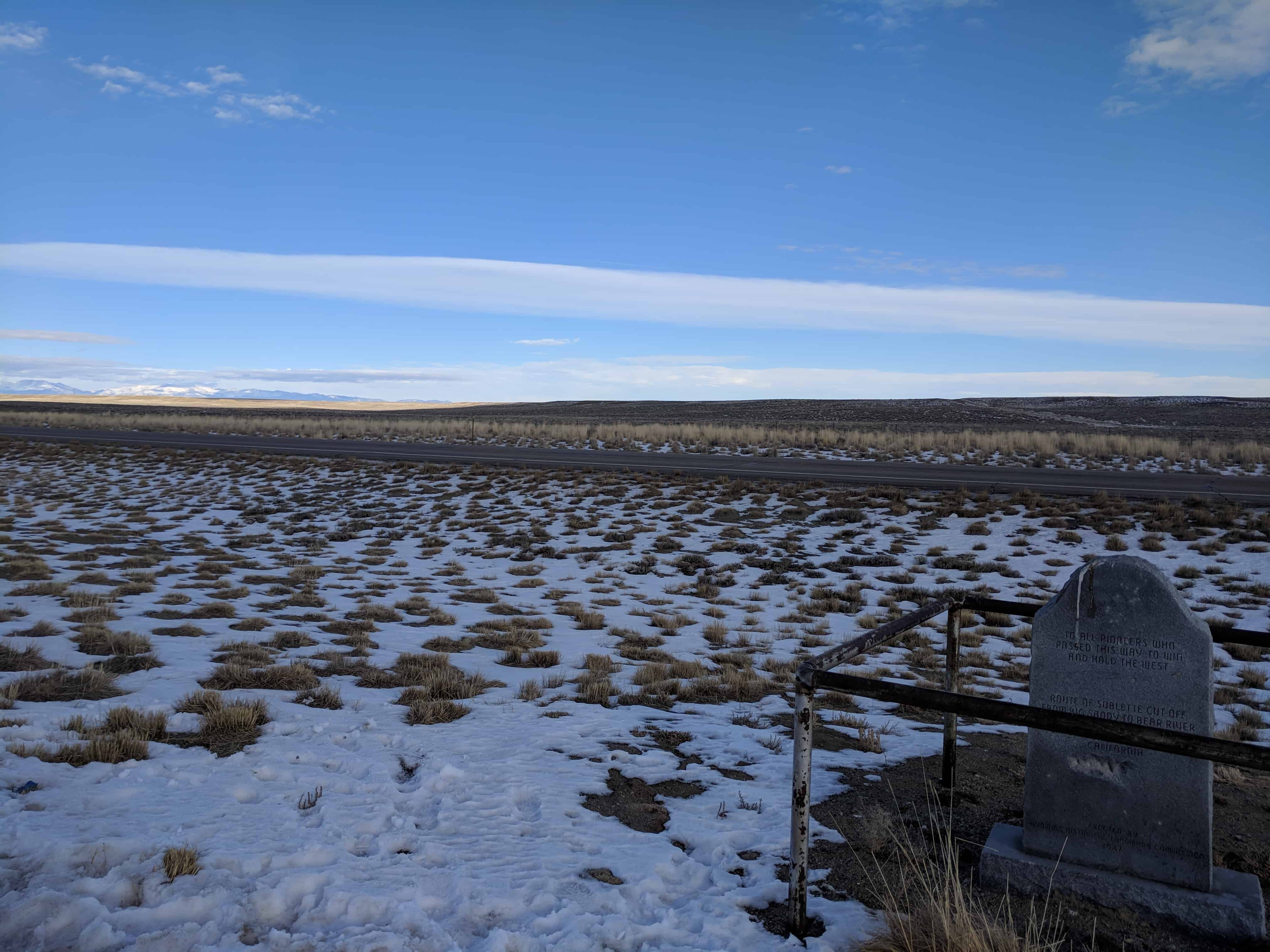
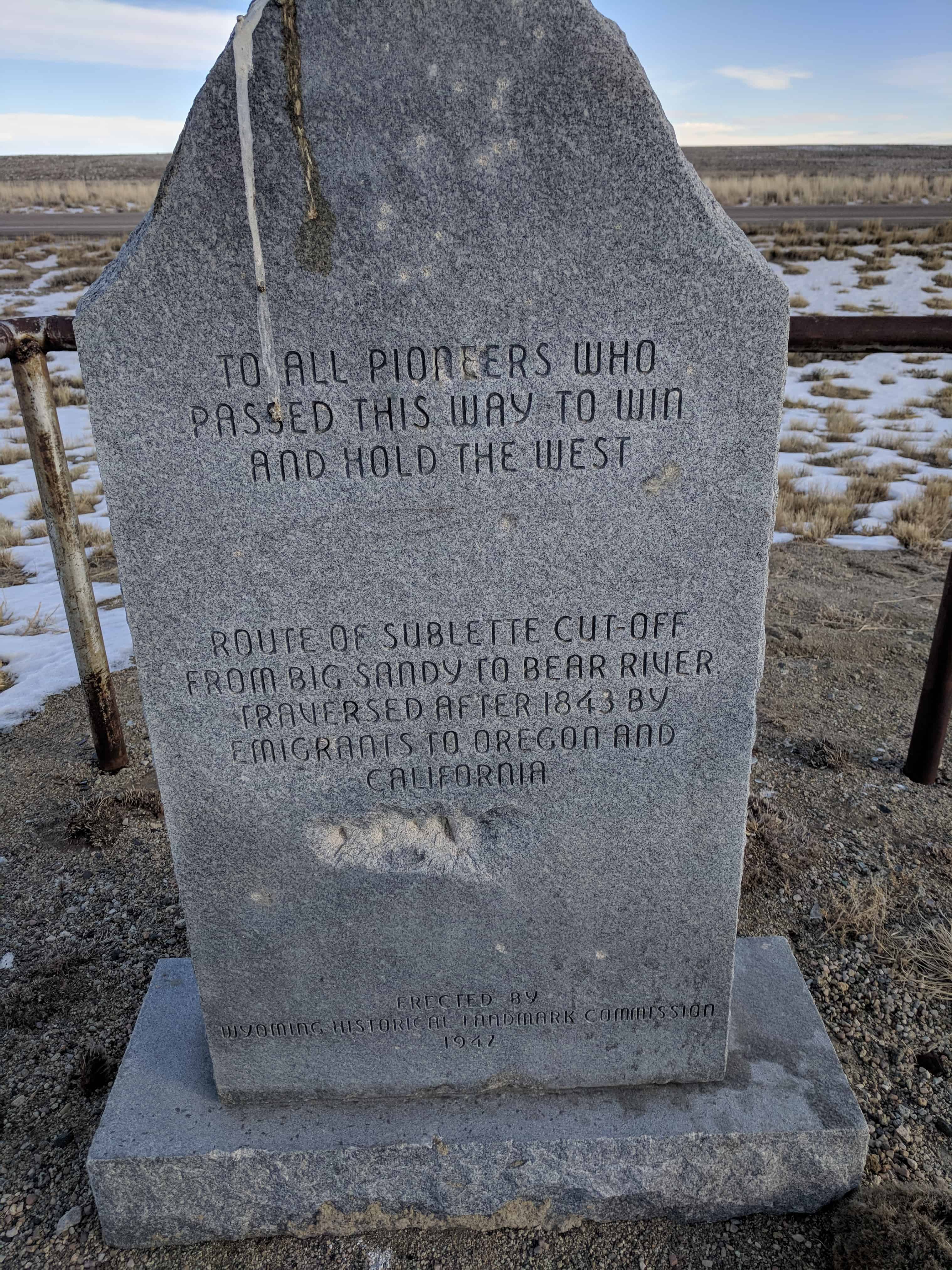
To all pioneer who passed this way to win and hold the west.

Route of Sublette cut-off from Big Sandy to Bear River. Traversed after 1843 by emigrants to Oregon and California.

2018-01-05 14.40.36

Pronghorn Antelope and the High Cold Desert

08 Thursday Mar 2018

Posted by Jacob Barlow in Uncategorized

≈ 1 Comment

Tags

Wyoming, Wyoming Historic Markers

2018-01-05 14.32.45

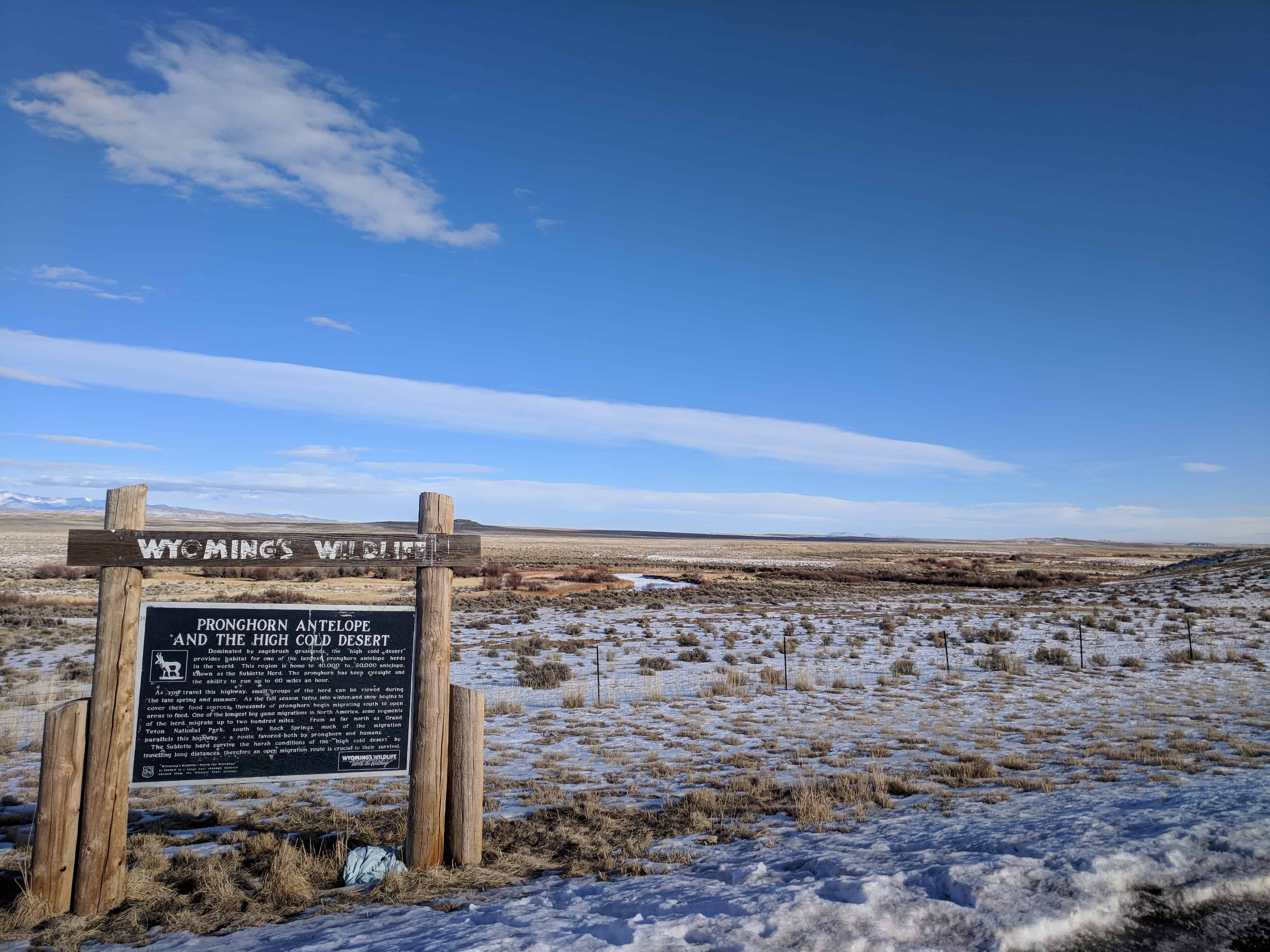
Pronghorn Antelope and the High Cold Desert

Dominated by sagebrush grasslands, the “high cold desert” provides habitat for one of the largest pronghorn antelope herds in the world. This region is home to 40,000 to 60,000 antelope, known as the Sublette Herd. The pronghorn has keen eyesight and the ability to run up to 60 miles an hour.

As you travel this highway, small groups of the herd can be viewed during the late spring and summer. As the fall season turns into winter and snow begins to cover their food sources, thousands of pronghorn begin migrating south to open areas to feed. One of the longest big game migrations in North America, some segments of the herd migrate up to two hundred miles. From as far north as Grand Teton National Park, south to Rock Springs, much of the migration parallels this highway – a route favored both by pronghorn and humans.

The Sublette herd survive the harsh conditions of the “high cold desert” by travelling long distances, therefore an open migration route is crucial to their survival.

Other sites about Wyoming Wildlife here.

2018-01-05 14.32.54

Osprey

07 Wednesday Mar 2018

Posted by Jacob Barlow in Uncategorized

≈ 1 Comment

Tags

Wyoming

2018-01-05 13.53.05

Osprey

This Wyoming Wildlife sign is located on the east side of US Highway 191 south of Pinedale, Wyoming.

The power pole near the highway has supported an osprey nest for many years. Ospreys normally build their nests (eyries) on top of large columns of rock or in trees with broken tops. Utah Power and Light Company built this nest site by adding an extension and platform to an existing pole. This provides the birds a safer place to nest and prevents powerline damage due to falling nesting material. Other such devices have been constructed within several miles of this location.

Osprey nests are generally constructed of large sticks, driftwood, grasses and bark. Ospreys lay 2 to 4 cream-colored eggs with brown to lavender blotches. Eggs are generally laid in May and hatch in approximately 28 days. About eight weeks after hatch, the young take their first extended flights.

Throughout the summer the adults can be observed bringing fish to the young at the nest. Fish are the primary food of the osprey, and are the reason they are commonly referred to as “fish hawks”. Ospreys dive from 20 to 100 feet in the air and almost completely submerge in their attempt to catch fish, then take it back to a tree perch or the nest for their meal.

While ospreys are generally more tolerant of disturbance than other raptors, they will defend their nest from any intruders. It is important to maintain a reasonable distance from the nest to avoid too much disturbance that could cause the birds to abandon their eggs or young.

2018-01-05 13.53.13

Wyoming Wildlife

07 Wednesday Mar 2018

Posted by Jacob Barlow in Uncategorized

≈ 3 Comments

Tags

Wyoming

2018-01-05 13.53.05

Wyoming Wildlife

A series of signs along the highways in Wyoming.

  • Wyoming’s Wildlife
  • Osprey
  • Pronghorn Antelope and the High Cold Desert


Half Moon Lake

08 Thursday Feb 2018

Posted by Jacob Barlow in Uncategorized

≈ Leave a comment

Tags

Lakes, Pinedale, Sublette County, Wyoming

2018-01-05 12.53.46

2018-05-31 12.31.58

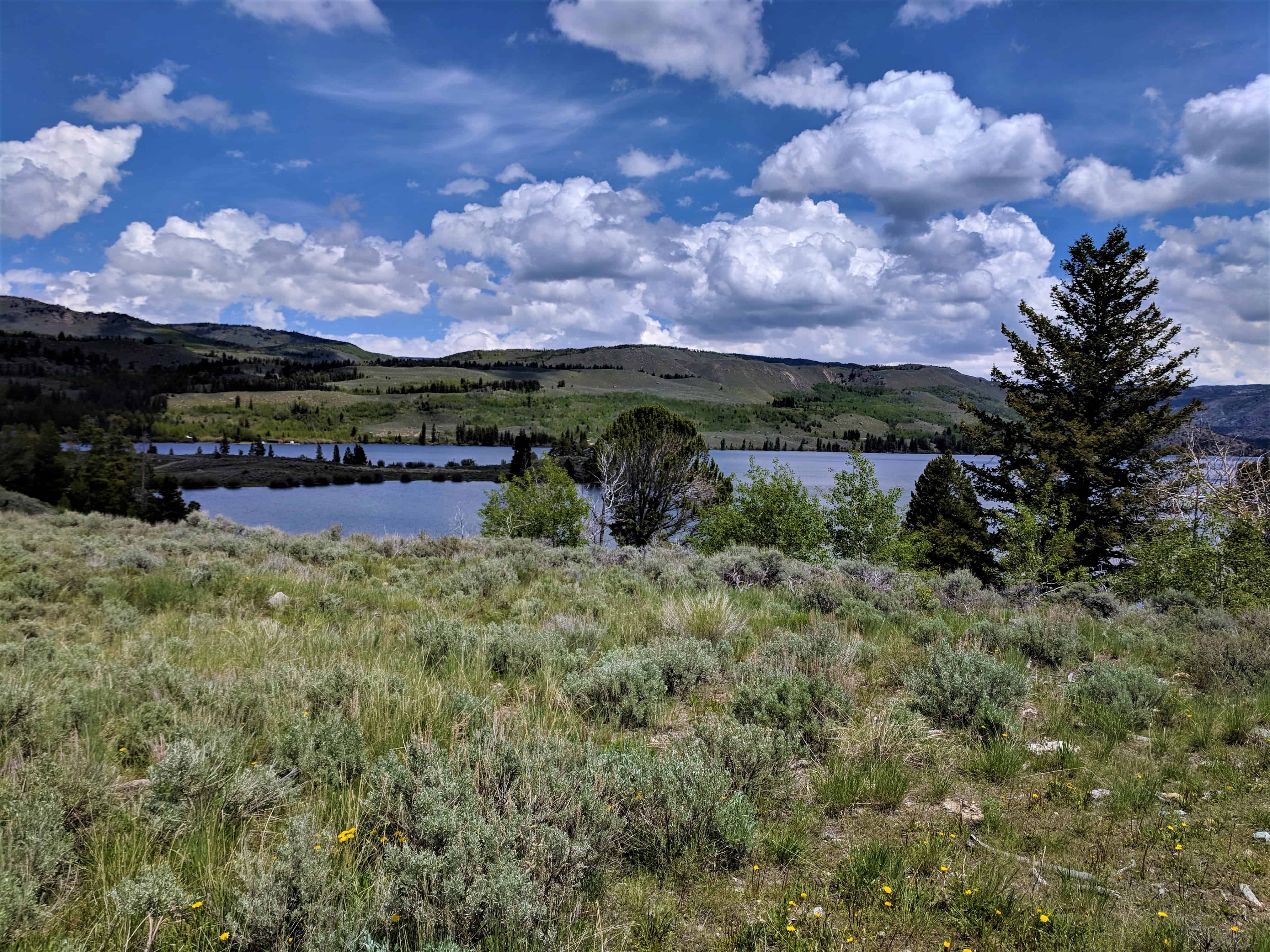
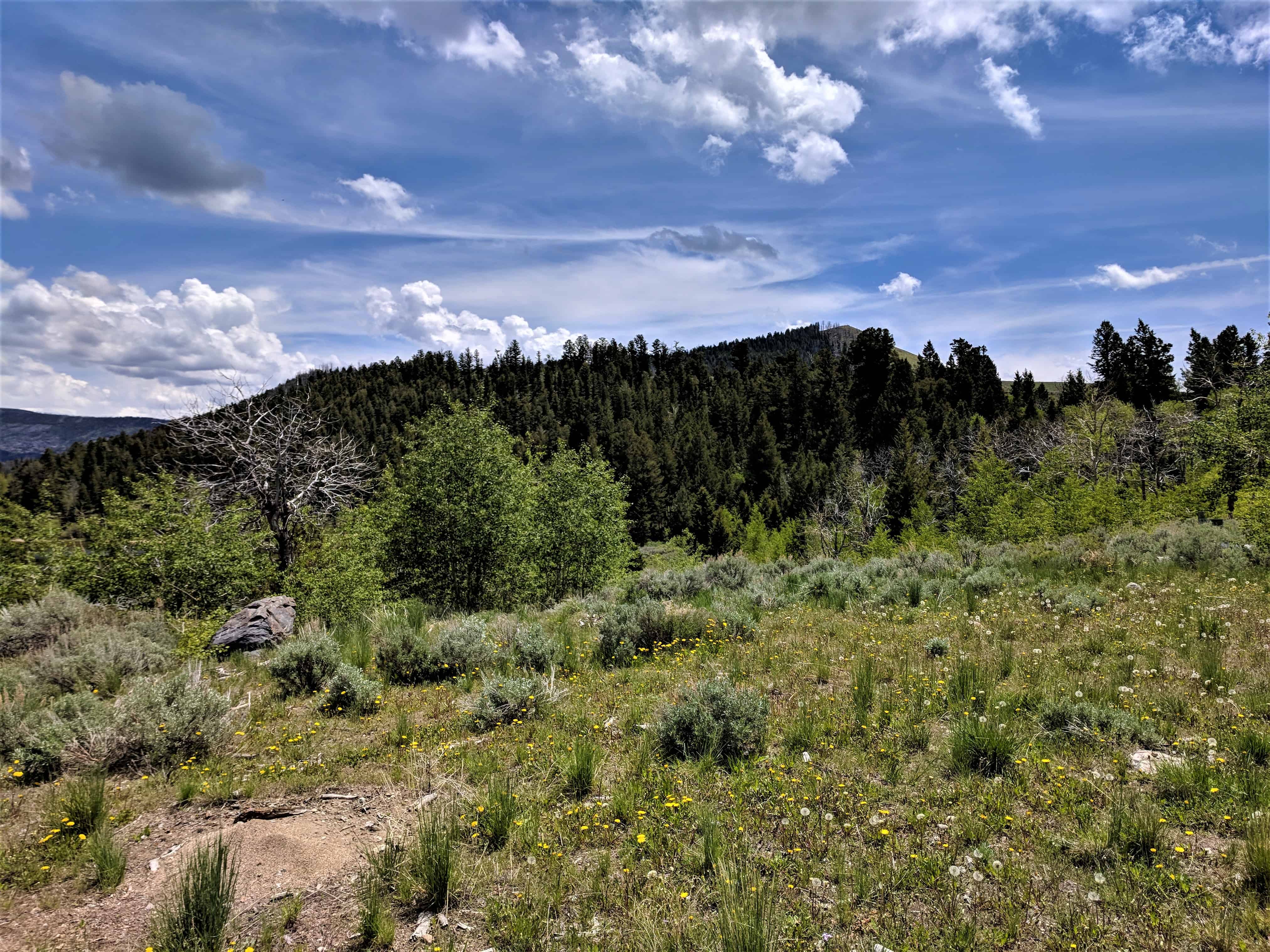
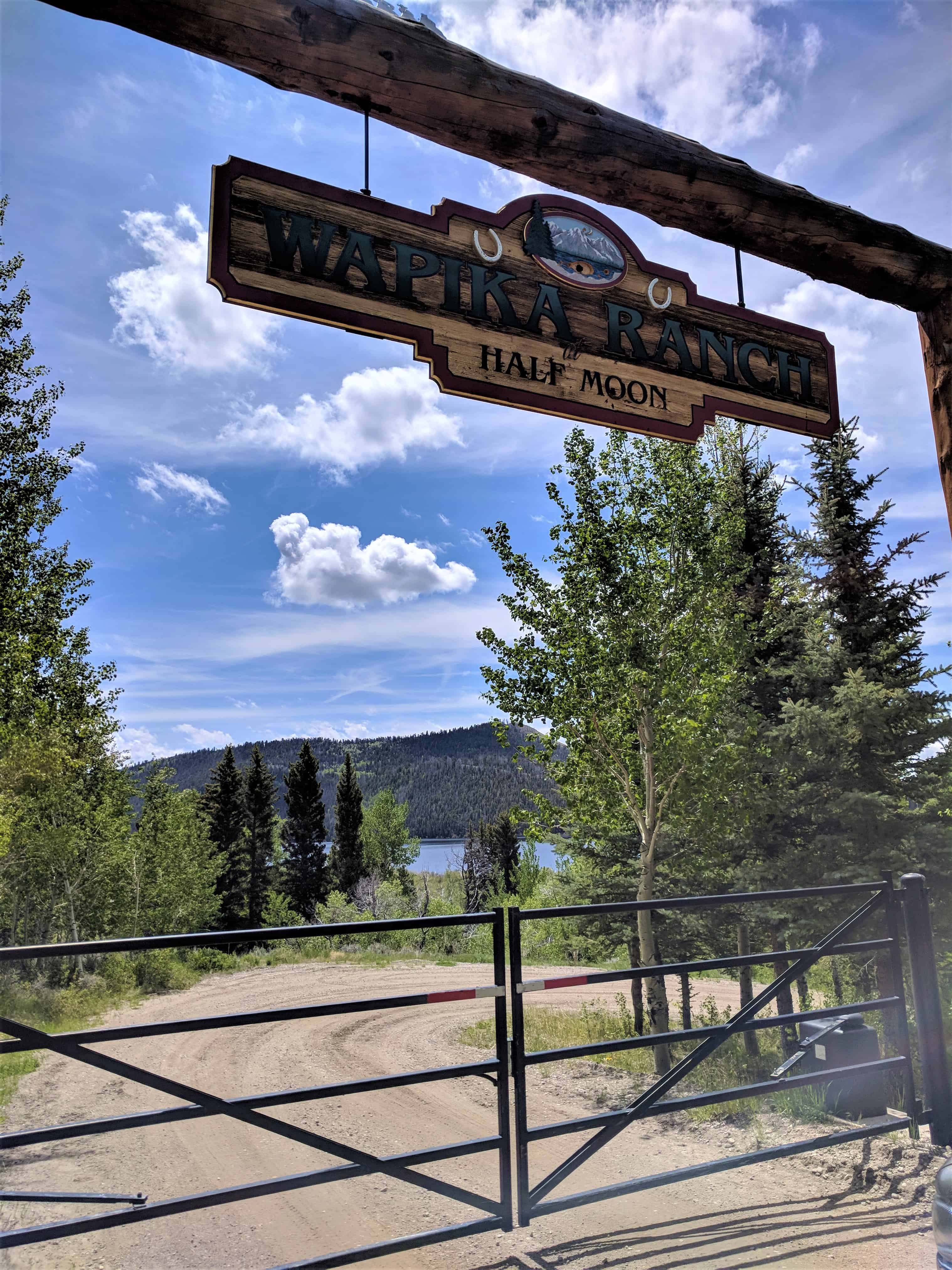
Above Pinedale, Wyoming is Half Moon Lake, a gorgeous lake with great scenery all around.

2018-05-31 12.29.46

2018-05-31 13.08.48

2018-05-31 13.08.50

2018-05-31 11.57.14

2018-01-05 12.53.50

2018-01-05 12.52.02

2018-01-05 12.37.38

2018-01-05 11.18.55

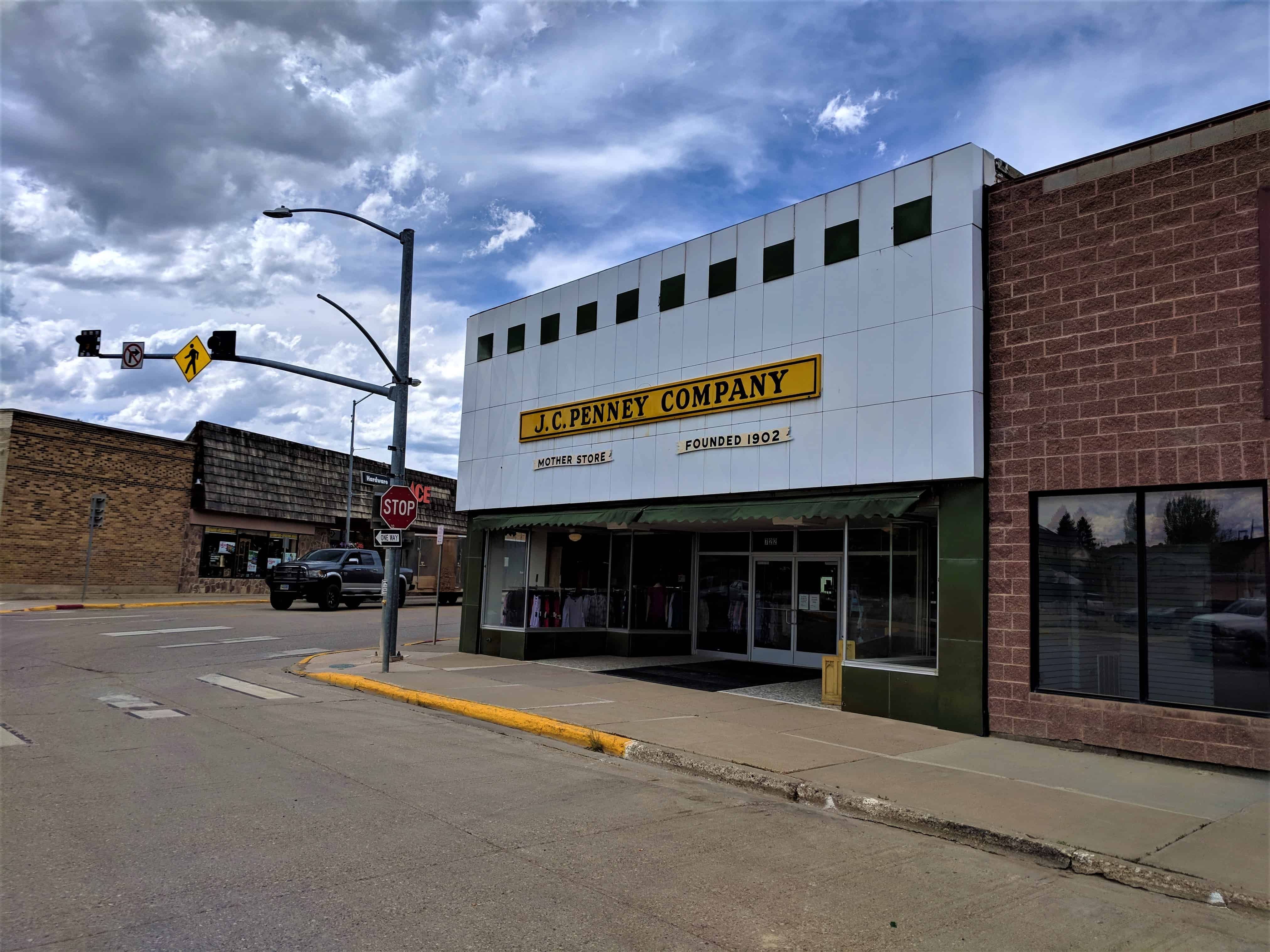
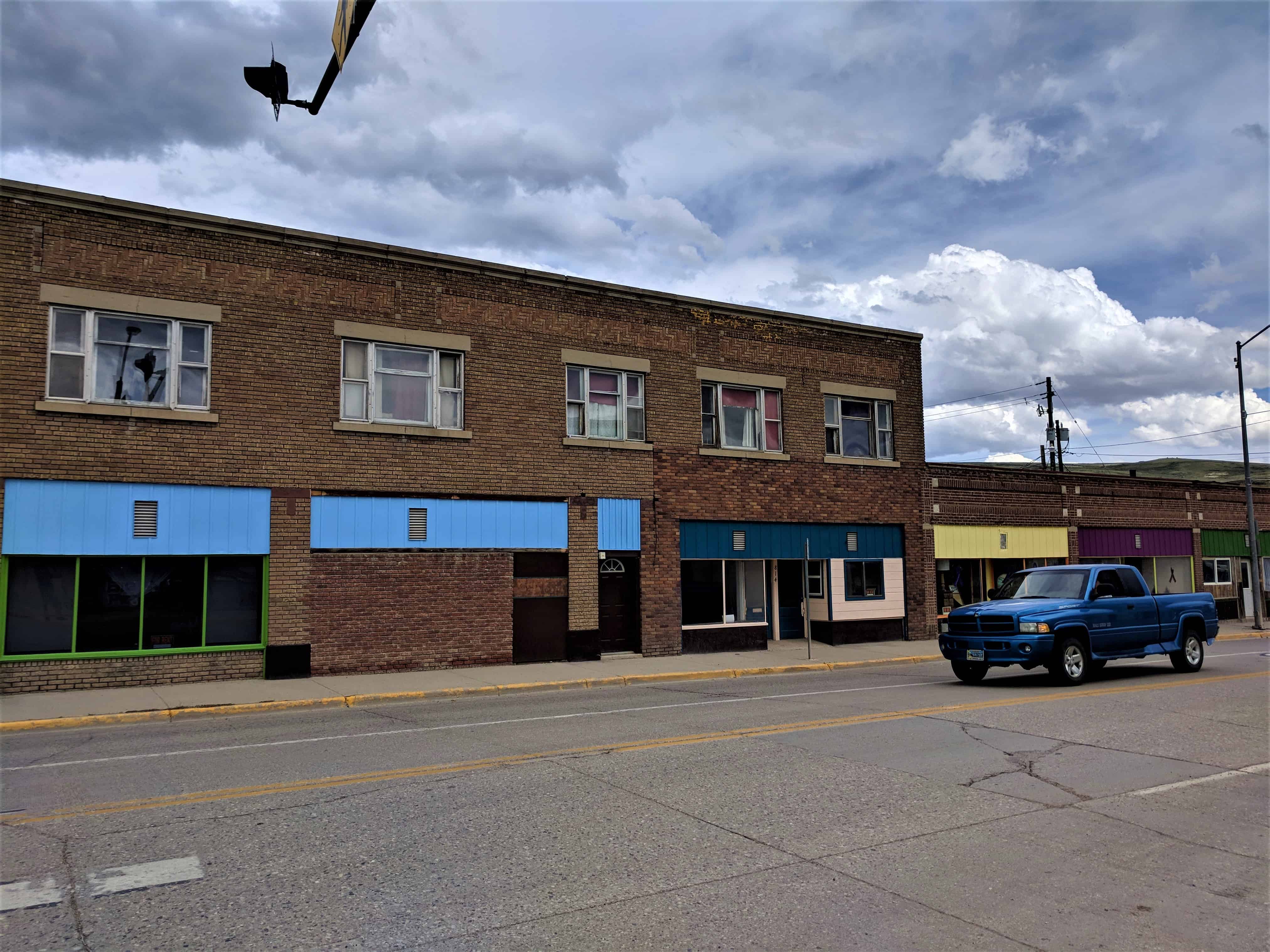
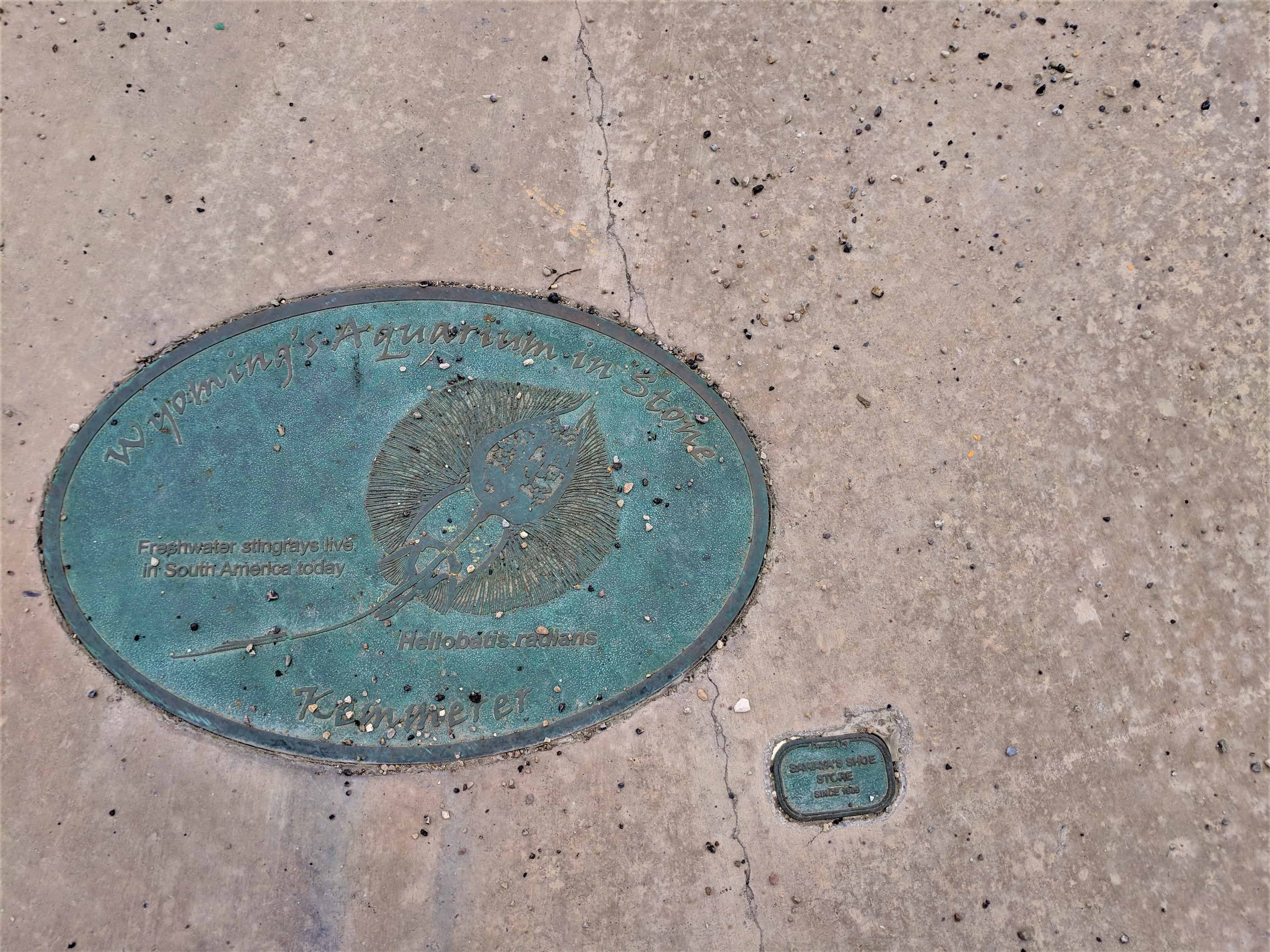
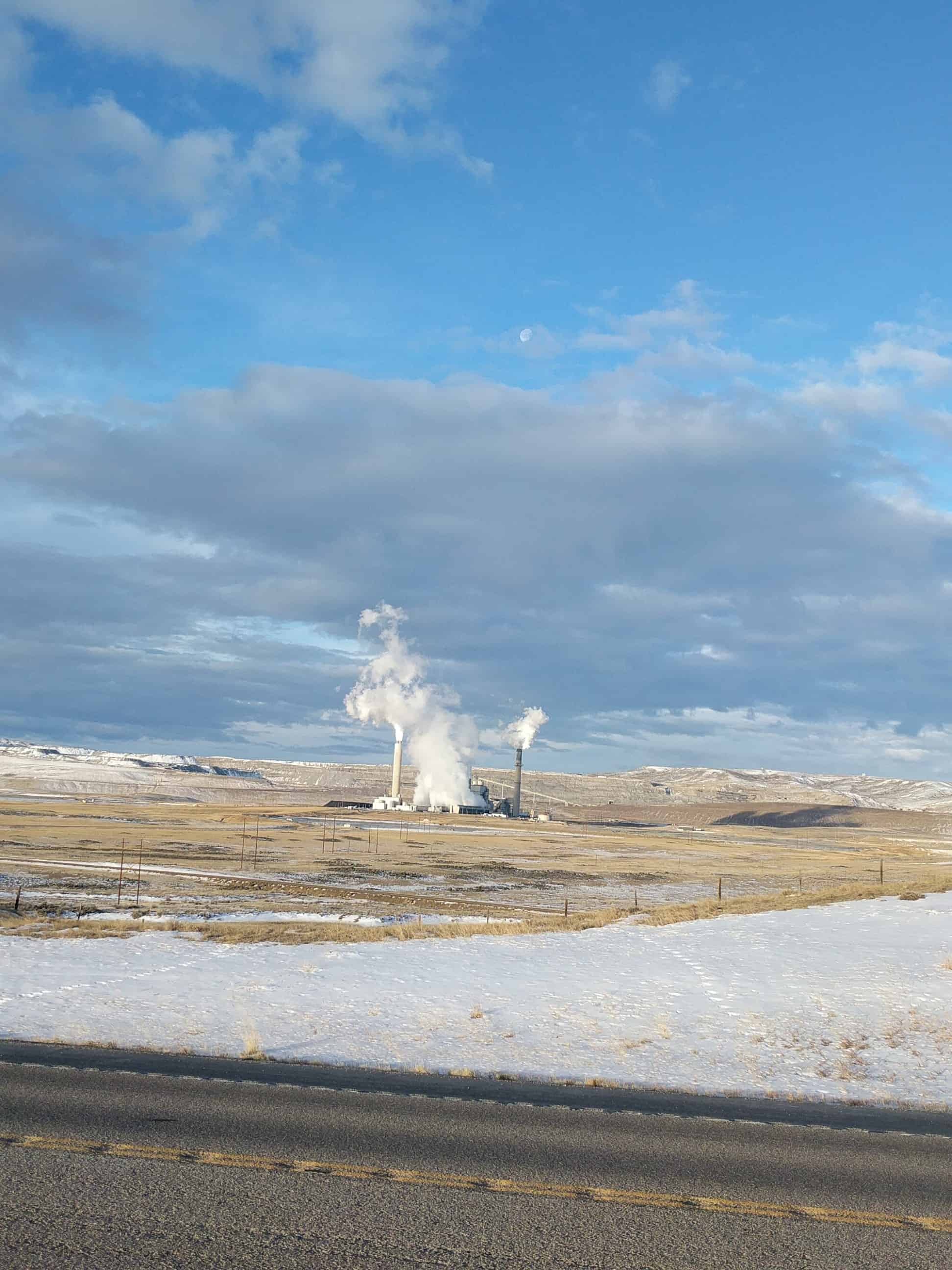
Kemmerer, Wyoming

30 Tuesday Jan 2018

Posted by Jacob Barlow in Uncategorized

≈ 2 Comments

Tags

Kemmerer, Lincoln County, Wyoming

2018-05-31 15.44.52

2018-05-31 15.46.09

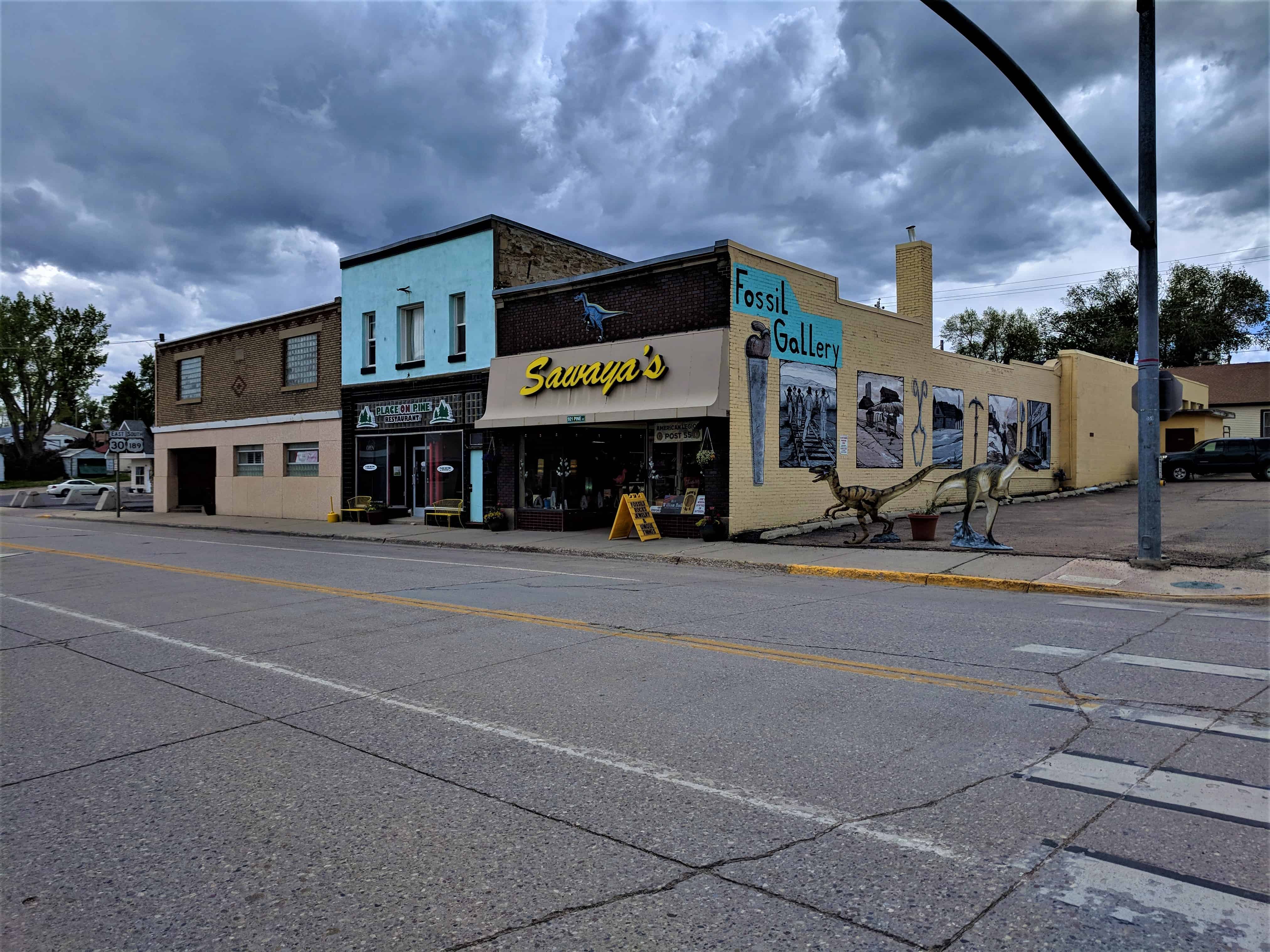
Kemmerer, Wyoming is the largest city in and the county seat of Lincoln County.

Related posts:

  • First JCPenney Store
  • Triangle Park

2018-05-31 15.42.40

2018-05-31 15.46.35

2018-05-31 15.46.39

2018-05-31 15.46.48

2018-05-31 15.48.51

2018-05-31 15.51.18

2018-01-05 08.45.33

Mormons in Star Valley

30 Monday Oct 2017

Posted by Jacob Barlow in Uncategorized

≈ 1 Comment

Tags

Afton, LDS Church, Lincoln County, Wyoming

c1b5bdbb-825a-4662-985a-c3ef663314d2

First Mormons of record in the valley were 40 emigrants, miners from England, employed in 1858 by F.W. Lander to work on the Lander Cut-Off of the Pacific Wagon Road. By 1870 Church cattle were summer pastured in the valley. In 1879 the Church directed the colonization of the valley. In August 1880 apostles Moses Thatcher and Charles C. Rich renamed Salt River Valley to Star Valley and dedicated it for settlement by organizing a branch of the Bear Lake Stake with Charles Drake Cazier as president with 21 members in 5 households in the valley. 1880 census shows 45 persons in the valley. 1900 census shows 2,219. In 1892 the Star Valley Stake was formed with 7 Wards. The rock meeting house in Auburn was built in the winter of 1889 and the tabernacle in Afton in 1905. In the Church of Jesus Christ of Latter Day Saints Sesquicentennial year 1997 there exists the Afton and Thayne Stakes. There are 15 wards including Smoot, Osmond, Fairview, Salt River, Afton 1st, 2nd, 3rd, and 4th, Grover, Auburn, Bedford, Thayne 1st and 2nd, Freedom and Etna/Alpine, with a combined membership of 6,214. Welcome to Star Valley.

bb4e5e4d-884c-41e1-b55b-f400dce86507

← Older posts
Newer posts →

Follow Jacob

Follow Jacob

Come wander with me on Youtube.

Blog Stats

  • 2,098,266 hits

Social and Other Links

BarlowLinks.com

Recent Posts

  • Scout Monument
  • Provo High School Seminary Building
  • 821 E 100 S
  • 820 E 100 S
  • 817-819 E 100 S

Archives

Loading Comments...