Tags
Co-op, Ephraim, NRHP, oolite limestone, Sanpete County, utah, ZCMI

Ephraim Co-op Building
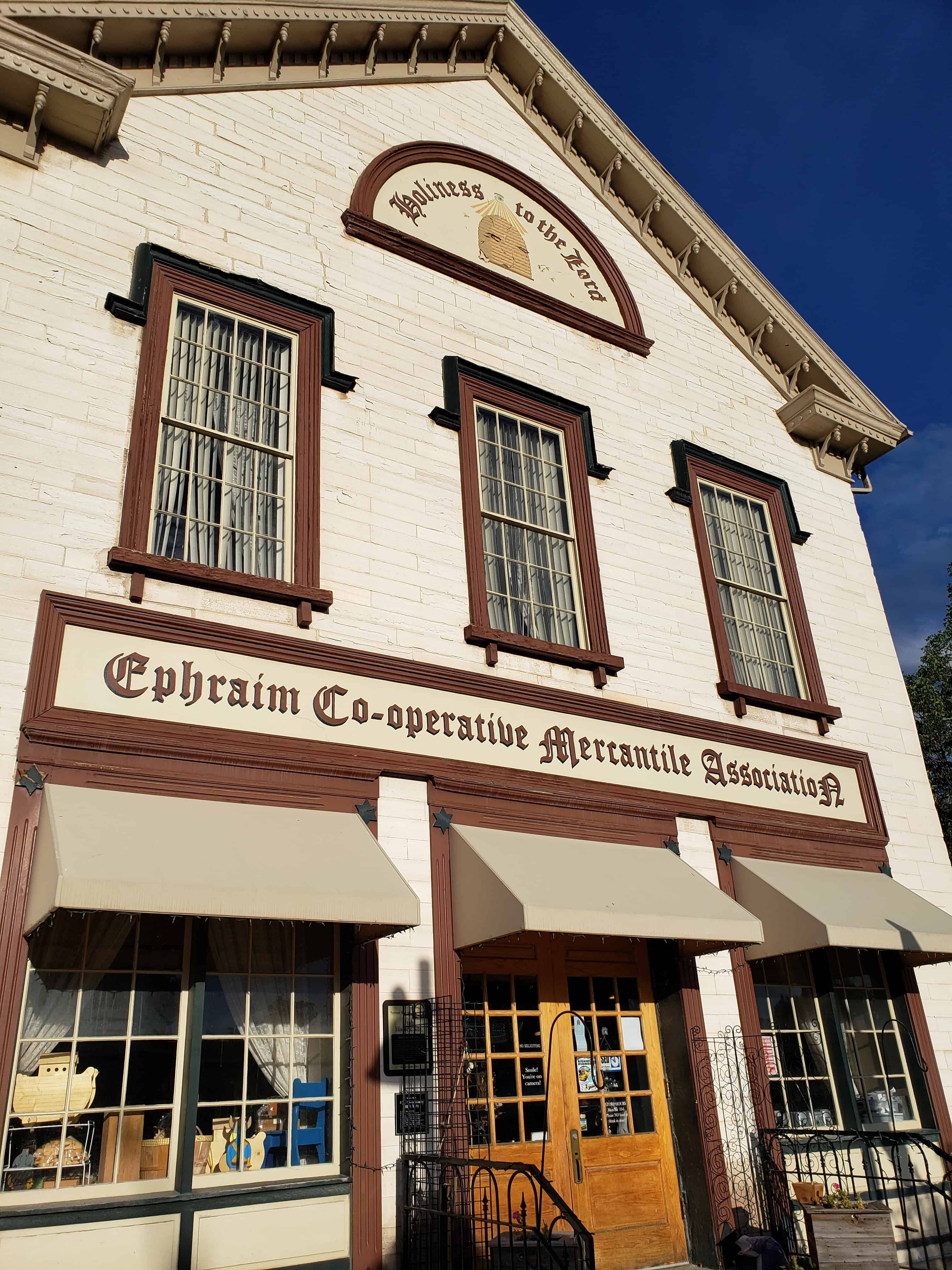
Constructed in 1871-72 of local oolitic limestone, this Greek Revival style building is one of the remaining examples of the more than 120 cooperative mercantiles that were established by the LDS church between 1868 and 1878. The first floor was a strong part of Ephraim’s economy beginning as a co-op, then as a United Order store, later used for farm implement sales, a car repair garage, and finally as part of Ephraim Roller Mill when a new addition connected it to the Relief Society granary to the south. That use continued into the 1950s, then, after decades of neglect, the building was restored in 1989-90. The second floor also served many purposes including a social hall, theater, Relief Society hall, and the first home of Sanpete Stake Academy, predecessor of Snow College when it began in 1888.
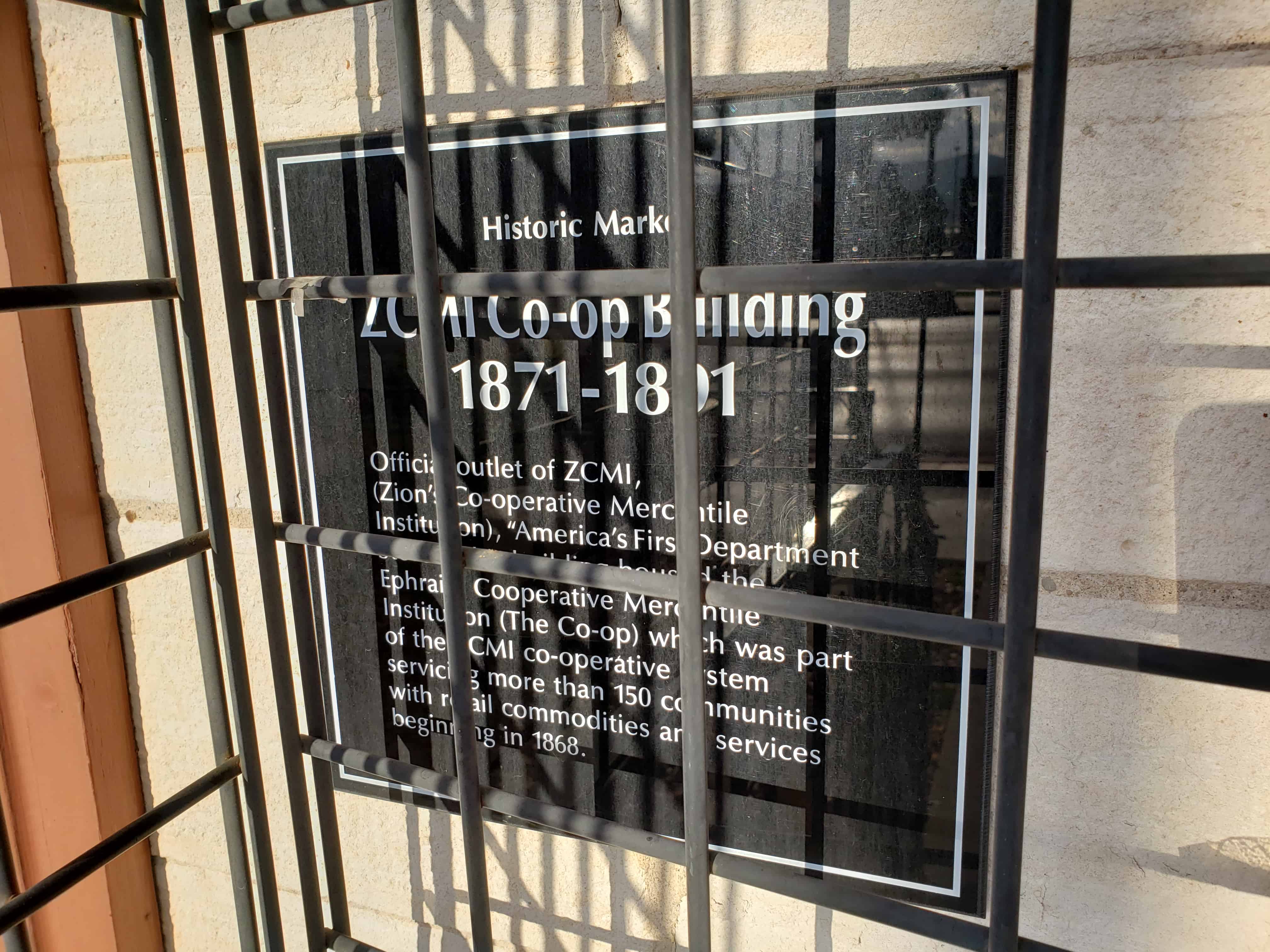
ZCMI Co-Op Building
1871-1891
Official outlet of ZCMI (Zion’s Co-operative Mercantile Institution), “America’s First Department Store”. This building housed the Ephraim Cooperative Mercantile Institution (The Cop-op) which was part of the ZCMI co-operative system servicing more than 150 communities in the intermountain area with retail commodities and services beginning in 1868.
Related Posts:
The Ephraim United Order Cooperative Building is located at 96 North Main Street in Ephraim, Utah and was added to the National Historic Register (#73001862) March 20, 1973.
In the late 1860’s Mormon communities were faced with the challenge of an ever increasing number of “gentile merchants” settling in Zion. The coming of the railroad in 1869 threatened to enslave the Mormons with an economic bondage that had not been possible before. In response to these challenges church officials developed plans which culminated in the cooperative movement. The basic philosophy of this movement was that Latter-day Saints should not trade with “outsiders” but instead with local cooperative establishments which would be supplied by a “Parent Institution.”
The first step in the cooperative movement was the organization of the Parent Store in Salt Lake City, Zion’s Co-operative Mercantile Institution, on October 24, 1868. Within the next ten years more than 150 local cooperatives were founded.
Perhaps the best remaining example of a local cooperative store is the old Ephraim United Order Go-operative Building. Construction on the building began in 1871 and was completed in 1872. The building was constructed of Sanpete oolitic limestone and its front had two distinguishing features which branded it as a co-op store. The name “Ephraim U. O. Mercantile Institution” and a beehive encircled by the words, “Holiness to the Lord.” Signs for the parent establishment in Salt Lake City contained the inscription “Holiness to the Lord.” Nearly all of the local co-op stores used the name “Cooperative Mercantile Institution” in association with the name of the location.
The cooperative movement, as symbolized by the Ephraim Cooperative Building, was an important part of the Mormon story. According to Leonard Arrington, prominent Mormon historian, “Cooperation, it was believed, would increase production, cut down costs, and make possible a superior organization of resources. It was also calculated to heighten the spirit of unity and ‘temporal oneness’ of the Saints and promote the kind of brotherhood without which the Kingdom could not be built.” (Leonard Arrington, Great Basin Kingdom, p. 309.)
The cooperative store occupied the first floor of the two-story structure. The second floor was constructed as a recreation hall and as a Relief Society meeting hall. Dances and parties were held in the second story. The building became not only an economic but also a social center for the community.
In 1888 plans were made for the establishment of the Sanpete Stake Academy. Funds were not available for the construction of a building and so the Relief Society Hall above the Co-op store was secured. Furniture and equipment were purchased and on November 5, 1888 the Sanpete Stake Academy was opened. The hall was used by the Sanpete Stake Academy until about 1900. In 1902 the name Sanpete Stake Academy was changed to the Snow Academy. This was in turn changed to Snow Normal College in 1917. As the first home of the school which be came Snow College, the old Co-operative Building is also of important historical significance.