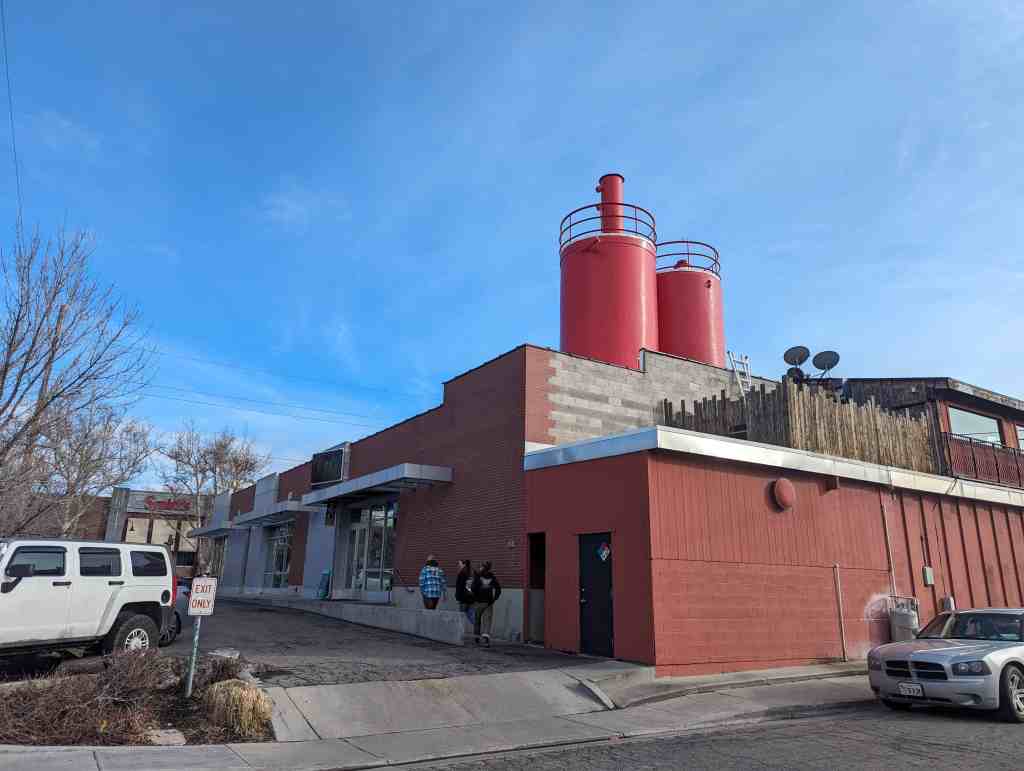
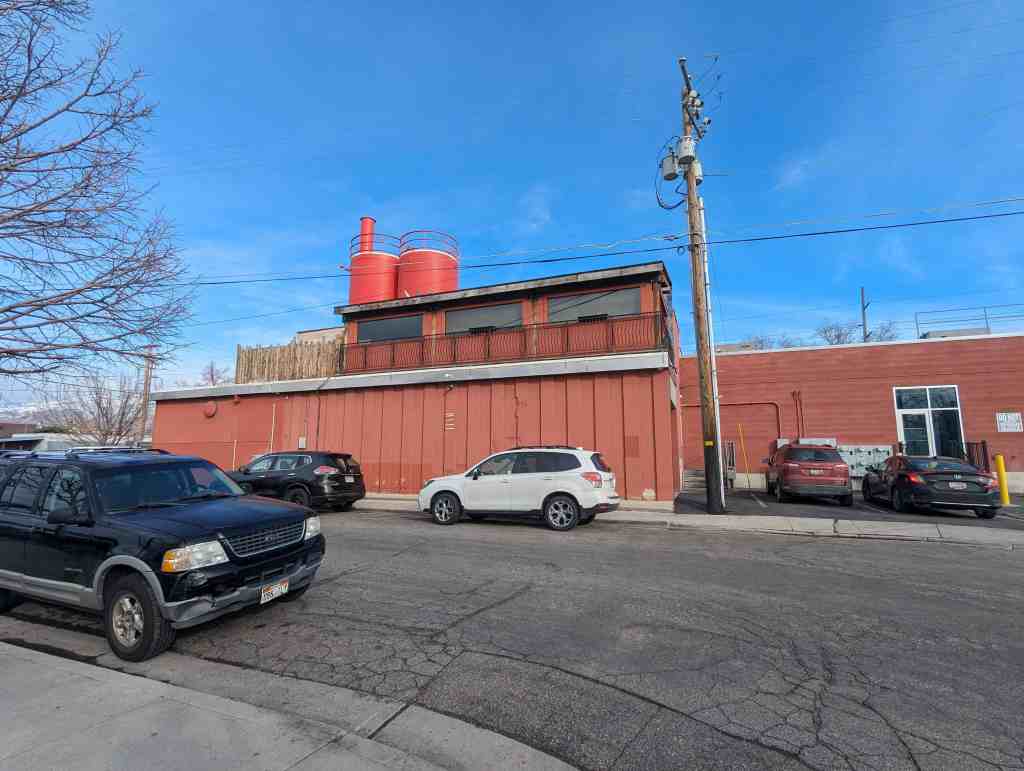
2148 S 900 E
11 Wednesday Dec 2024
Posted in Uncategorized

11 Wednesday Dec 2024
Posted in Uncategorized
10 Tuesday Dec 2024
Posted in Uncategorized
Jenner-Griffiths House
10 North 300 East in Beaver, Utah
10 Tuesday Dec 2024
Posted in Uncategorized
William Barton House
295 North 300 East in Beaver, Utah
10 Tuesday Dec 2024
Posted in Uncategorized
James Whitaker House
395 North 300 East in Beaver, Utah
10 Tuesday Dec 2024
Posted in Uncategorized
Henry M. Tanner House
400 North 300 East in Beaver, Utah
10 Tuesday Dec 2024
Posted in Uncategorized

170 North Main Street in Kaysville, Utah
08 Sunday Dec 2024
Posted in Uncategorized
Tags
Price Main Street Historic District is a historic district covering Main Street from 100 West to approximately 215 East.
Related:
The text below is from the nomination form (#08000383) to the National Historic Register.
The City of Price is the county seat of Carbon County in east-central Utah, and is approximately 120 miles southeast of Salt Lake City. The Price Main Street Historic District, with a period of significance dating from 1910 to 1960, contains the greatest concentration of commercial buildings in the city and is the de facto commercial center for both Carbon and Emery counties. In addition, the City of Price is a key regional transportation hub, with the Denver & Rio Grande Western (now merged with the Union Pacific Railroad), US Highway 6 and State Highway 10 all converging in town. Due to its geographic location and influx of immigrants, early development in Price did not follow the pattern established by the early LDS (Mormon) colonies, principally along the Wasatch Front. Consequently, Price is unique in Utah for its early association with the railroad and coal industries and for its sectarian history.
The town of Price did not develop as most early Utah communities had; its growth was not due to an influx of Mormon settlers but was largely the result of industrial development in the region, specifically from the coal and railroad industries. The arrival of European immigrants, especially from Greece and Italy, accounted for much of the community’s early population growth. The earliest commercial district in Price, representing the early period of settlement and growth, from 1877 to 1910, was centered on the railroad yards at the west end of town. The Main Street Historic District began to develop as businesses moved away from the railroad district and concentrated to the east along Main Street, from 200 West to 100 East. These later businesses were often owned or managed by immigrant settlers, and to the present day many of the Main Street buildings and businesses bear the names of their immigrant founders, such as Silvagni, Oliveto, and Georgides.
The Price Main Street Historic District is a concentration of historic buildings on Main Street that are representative of the commercial prosperity and growth that characterized the town of Price through the first half of the 20th century. The district is bounded by 100 West and 200 East, and also includes the United Methodist Church at the northeast corner of Main Street and 200 East. The Price Municipal Building and the Carbon County Courthouse, together with the United Methodist Church , define the eastern end of an otherwise largely commercial district. West of 100 West the early commercial buildings have either been demolished or no longer retain their integrity; East of 200 East the concentration of commercial buildings is far less than the concentration within the district boundaries and includes few buildings from the historic period. The streets immediately north and south of Main Street never experienced the kind of commercial growth that sets apart Main Street. The district boundaries, therefore, include the two blocks with the largest concentration of extant historic commercial buildings in Price, together with the two most substantial public buildings, and an historic church.
Period of Significance 1910-1960
No buildings from the earliest period of development remain on Main Street (1877-1909). Some of these early buildings were destroyed by fire; others were demolished to make way for the structures that we see today. The Period of Significance ( 1910-1960) began with rapid growth and development on Main Street. Although it was destroyed by fire in 1965, the Savoy Hotel, constructed in 1910 at the southwest corner of 100 West and Main Street was representative of this rapid growth. The years from 1910 to about 1915 also saw the construction of many other extant buildings within the district (historic names are given if known):
These 20 buildings account for nearly one-half of the buildings within the district that date from the period of significance.
Based on the Utah SHPO criteria, of the 46 buildings within the district ~ the Price Main Street Historic District contains 28 contributing resources ( 60 percent) and 18 noncontributing resources ( 40 percent). Of the contributing resources, three are individually listed in the National Register. These are:
individual building s within the district consist mainly of a variety of commercial structures, from boarding houses and hotels with ground-floor business or retail space to single-story commercial blocks. The district includes three non-commercial buildings: the United Methodist Church , Carbon County Courthouse , and Price Municipal Building (City Hall), all three of which are significant, contributing resources within the district.
As exterior “windshield” visual survey results only, RLS criteria address the age and historic integrity of the Main Street façade, and do not address other criteria such as structural condition or integrity of historic interiors. A number of resources that date from the period of significance have been remodeled, such as the Silvagni Building , con structed about 1915. The existing aluminum “skin” was applied c. 1960 and has gained significance in its own right. Similarly, exterior alterations such as those on the Elk Theater (Crown Theater) date from the period of significance such that these buildings represent very different styles and dates of construction, yet still retain integrity as examples of the perpetual adaptation of commercial buildings with regard to use and style. The district includes only one out-of-period intrusions, the building at 6 W. Main.
Survey results indicate a variety of styles and periods of construction, from late 19th century varieties to mid- 20th century styles. A handful of earlier buildings show elements of late Victorian eclectic styles, with decorative brickwork , decorative trim and deep, classically adorned cornices. The most common style in the district is also eclectic: early 20th century commercial style with varying degrees of decorative elements and vernacular interpretations of popular styles of the day. These buildings may include Prairie Style influences, Arts and Crafts and/or Art Nouveau influences, or other fanciful or eclectic details However, only where a given style is dominant has the building been indicated as having a given style. The relevant periods , approximate dates of construction and architectural styles include those shown below, have the number of contributing resource s within the district representative of each period /date/style (approximate dates are indicative of the buildings within the district and not necessarily representative of the style itself). A few representative buildings of each style are shown below. Those that are both stylistically significant and retain their historic character are indicated with an asterisk(*):
Victorian Period, Beaux Arts Style:
Victorian Period, Eclectic/Commercial Style:
Revival Period, English Tudor Style:
Revival Period, Italian Renaissance Style:
Revival Period, Spanish Colonial Revival Style:
20th Century Period, Commercial/Eclectic Style:
Modern Period, Art Deco Style:
Modern Period, WPA Moderne Style:
Post WWII Period, Other/undifined Style:
Late 20th Century Period, Other/undifined Style:
As indicated above, the Price Main Street Historic District also includes a number of altered, non-contributing resources (17) and one out-of-period building (1).
The estimated date of construction of the earliest building from the period of significance, at 5 East Main Street, is 1910. The earliest buildings with actual documented dates of construction include the Paternoster Building, 5 West Main (1912), Eko Theater, 34 West Main (1912), and the Parker & Weeter Block, 85 West Main (1913).
While 1910 is an estimate for the building at 5 East Main, this year is nonetheless chosen as the beginning date for the period of significance. Additionally, in December, 1910, a successful election was held to upgrade Price’s standing to a third class city. Thus, 1910 was a symbolic end to the period of early settlement and growth that began in 1877 and also heralded the establishment of Price as the comn1ercial center of a larger region.
Narrative Statement of Significance
The Price Main Street Historic District is locally significant under criterion A, and ”is associated with events that have made a significant contribution to broad patterns of our history.” The historic resources within the Price Main Street Historic District represent a period of local economic growth and prosperity that paralleled the expansion of the region’s coal and railroad industries. As described below, under criterion A, the development of Utah’s coal and railroad industries and their relationship to the growth of the city of Price are a significant regional and national historical development of which Price’s Main Street commercial district is an integral part.
The District is also architecturally significant under criterion C. Of the forty six (46) buildings within the district boundaries, twenty eighty (28), or 60 percent, are contributing. At least a dozen of the extant buildings are important examples of distinct architectural periods and styles, including the three that are already listed in the National Register: Price Municipal Building/Price City Hall, listing number 78002652 (2/17/1978); Star Theatre, listing number 82004]] 6 (8/9/1982); Parker & Weeter Block/Mahleres-Siampenos Building, listing number 82004115 (3/9/1982). In addition, under criterion C, the physical development of Price’s Main Street and the types and styles of individual buildings within the district embody the spirit of growth and prosperity that were largely a consequence of the region’s growth and industrial development.
The period from 1910 to 1960 is chosen as the period of significance. Not only is 1910 the estimated date of the earliest building in the district, it was also the date of the establishment of Price as a third class city that commenced a couple of decades of rapid growth, as represented by the commercial buildings on Main Street. This period also saw relatively consistent prosperity for Price, even as other communities in the region suffered through economic downturns such as the Great Depression. Not until the decline of the coal mining industry and railroad traffic in the early 1960s did Price experience any significant corresponding economic decline. This period ended with the construction of the most significant “modern” building within the district, the Carbon County Courthouse, constructed 1958-60.
The commercial sector of Main Street included within the historic district boundaries is the best representation of the growth, both commercially and architecturally, of Price during the early to mid twentieth century. The character and setting of the district retain a high degree of integrity and contribute to the history of Price.
Price Early Settlement and Growth: 1877-1910
The first permanent Anglo settlers in the Great Basin region of the Intermountain West were members of the Church of Jesus Christ of Latter-day Saints (LDS, or Mormons), who first arrived in the valley of the Great Salt Lake in July of 1847. The early leaders and members of the church considered this region their “Zion” and began organized colonization efforts immediately after their arrival. The first settlements were founded along the north-south corridor of the Wasatch Front, but soon communities were established in regions in the central and southern areas of the territory, as well.
As a largely agrarian culture, the LDS settlers preferred areas that were well-watered and advantageous for raising food crops and livestock. The Wasatch Front and central valleys of the territory, such as the Sanpete and Sevier valleys, met these criteria, and early settlements were established in these fertile areas. “Missions” or settlements were also established in less favorable environments, such as the desert southwest comer of the territory and the Uinta Basin to the east, but not until the 1870’s did Mormon pioneers begin settling eastern Utah in relatively large numbers. By the time of the death of the LDS prophet and colonizer Brigham Young, in 1877, the more fertile parts of the territory had been colonized, and the systematic pattern of settlement established by Brigham Young had largely run its course.
For territory residents or later immigrants seeking land or less-crowded conditions than the earlier settlements afforded, opportunities existed mainly in the less-favored regions, and thus it was that some of these adventurous individuals settled in the Price River Valley, beginning in 1877. In contrast to the well-planned grid-like town planning of the earlier Mormon communities, early Price-area residents settled along the Price River, where water could be readily obtained for crops. Within only two years, however, the completion of the first railroad in Carbon County altered the character of the region, and instead of an isolated farming community, Price quickly became a planned community with regular streets, and rapidly rose to also become the dominant commercial center in the area.
The discovery of coal in the mountains north, east and west of Price prompted the construction of the first railroads in the region. The Utah and Pleasant Valley Railroad, organized in 1875 and completed in 1879, connected Utah Valley with Pleasant Valley, northwest of Price. In 1881, the Denver & Rio Grande Western Railroad proposed to construct a line through the area to connect Denver with Salt Lake and Ogden. Consequently, the D&RGW purchased the Utah and Pleasant Valley Railroad, and in May, 1883 arrived in Price with much fanfare. The railroad made the extraction and transportation of coal from the region commercially viable, and Castle Valley Junction, as Price was then known, experienced its first economic boom as an important regional transportation hub. The railroad and coal-mining industries significantly shaped the development of Price as a community, from the early settlement years into the latter half of the 20th century.
With the coal mines and railroad came immigrants from many countries, particularly Italy and Greece. While most lived and worked in the mining towns, or “coal camps,” some became merchants and businessmen and established themselves in Price. Early immigrants also included a number of French, who were mainly sheepherders and wool growers. The business district was the center of activity for railroad workers, coal miners, and other transient inhabitants, most of whom were not Mormons, while the more permanent residents tended to be Morn1on fanners and ranchers. However, the two groups learned very early to tolerate one another, and cooperation became a hallmark of Mormon and non-Mormon relations in Price.
Another early influence in the commercial development of Price was the freighting, or “forwarding” business, as Price residents called it. In 1886 a road through Nine Mile Canyon east of Price was completed, connecting the town to Fort Duchesne, about 60 miles to the northeast, and the lucrative hauling of freight between Price and the Fort began. Prior to 1886 only four general merchandising businesses were known in Price, while by 1888 town businesses included two contractors, four mercantile or general merchandising establishments, a blacksmith, a hotel, two saloons, a butcher, a baker and a restaurant.
Early commercial activities in Price in essence created two distinct communities. The industrial and business district was centered on the railroad yards and depot at the west end of town and also included hotels and saloons, while four blocks to the east were the church, school and town government buildings. As commercial and business activity increased, business interests began to expand west from the railroad district to the east along Main Street, toward the civic and religious center near 200 East. Sanborn insurance maps clearly show this pattern of growth. In 1908 commercial interests were clustered on either side of the railroad tracks and the densest grouping of buildings occurred on Main Street between 100 and 200 West. By 1924 wall-to-wall commercial buildings had been extended along Main Street almost as far as 100 East.
Price residents organized in 1892 to create a town government. By then, the population of Price had grown to 245, with businesses that included an attorney, a bank, two blacksmiths, a butcher, three hotels, two saloons, a livery and stable, four mercantile businesses, and a publisher.
Price was clearly becoming the dominant commercial center in the region, and shortly after the organization of the town, residents tried to have the Emery County seat moved from Castle Dale to Price. Although this attempt failed, the effort helped persuade residents that they should separate themselves from Emery County. With a more diverse population and a very different economy in the northern po11ion of the county, the proposal seemed to make sense, although residents in some communities, sucl1 as Huntington, opposed the plan. Subsequently, petitions were circulated among the communities in the northern part of Emery County to convince the territorial legislature to create a new county. In spite of some opposition, the petition was finally delivered to the legislature, which enacted a bill on February 17, 1894 to create the new county. Territorial Governor Caleb B. West signed the bill into law on March 8, and Carbon County officially came into being, with Price as the new county seat.
As noted above, early business establishments were largely clustered around the railroad depot and yards. In 1892 these included the Mathis Hotel, the Oasis Saloon, the Emery County Mercantile Institution, Price Trading Company and tl1e D.J. Williams General Merchandise. Early Main Street businesses were also located near the railroad, mostly between 100 West and 200 West. By 1908 these included a saloon, office, grocer, printer, cobbler, barber, and the Price Cooperative Mercantile Institution on the north side of the street, and a saloon, general store, drugstore, restaurant. barber and billiards on the south side. The Price Cooperative Mercantile Institution had relocated to Main Street, in 1906, from a building nearer to the railroad. Its relocation was indicative of the growing tendency for businesses during this period to locate on Main Street rather than in the railroad district. The J C. Weeter Lumber Company, located on the opposite corner of 100 West and Main Street, a bank across the street from it to the north and the Price Cooperative Mercantile Institution anchored what was then the east end of the Main Street business district. Three blocks away, at the northwest corner of 200 East and Main Street was the City Hall.
The growing importance of the community and the substantial business and retail activity “downtown” led to improvements in the construction and maintenance of streets, sidewalks, utilities and other community services. Street were at first graded, and then graveled to accommodate horses, wagons, and a gr wing number of automobiles. The 1912-1913 Polk Business Directory predicted that Price would soon have paved streets. By October, 1910, the town had even constructed its own electric power plant, and had extended electric service to both businesses and residences, a major undertaking for a town of only 1,000 residents.
The progressive spirit demonstrated by the settlers and early residents of Price was firmly established in the developing community, and its residents determined to become a third class city. (Third class cities could assess more taxes and could also provide more services.) An election was held in December, 1910, and the measure to change Price’s status easily passed. Price’s residents celebrated its new standing on March 24, 1911.
Main Street Period of Significance: 1910-1960
ln the early years of the period of significance, building construction, especially along Main Street, continued to increase. Although no longer existing, 1910 saw the construction of the Price Commercial and Savings Bank and the First National Bank, both on the north side of Main Street near 100 West. The following year, the Miles Building was completed, and one of the early merchants near the railroad, Louis Lowenstein, relocated to a new business building and hotel, the Savoy, at the southwest comer of 100 West and Main Street. These, too, have since been demolished. Other important Main Street businesses established during this period of growth included the Eastern Utah Telephone Company. Established in 1905, the telephone company constructed its new building in about 1912. On the southeast comer of Carbon Avenue and Main Street, Pietro Silvagni constructed a substantial office building, in 1913. Across the street to the west, the Paternoster Building, consisting of a drugstore and hotel, was constructed, about 1916. All three of these early buildings still exist as contributing resources within the district. Besides the new banks, stores, hotels and office buildings, new businesses also included amusement and entertainment establishments. such as the Eko Theater, at 32 West Main Street, built in 1912 and still standing.
Main Street expansion was not limited to business growth, alone. At the east end of Main Street, near the city hall, the LDS Church built a new tabernacle at 100 East and Main Street; the Methodist Church constructed a new church building across the street east of City Hall; and, a new County Courthouse was built, across the street to the south of the tabernacle. All of this construction had been completed by 1914. 1914 also saw the establishment of a chamber of commerce, organized by about 40 businessmen. Membership applications soon reached nearly one hundred.
The first automobile took to the highway in the United States in 1893. Within just twenty years, even in remote Utah there was a growing need for improved roads to handle automobile traffic. In 1913 the Utah legislature authorized the construction of the Midland Trail, a new highway intended to extend west from the Colorado state line through Cisco and Green River, thence north through Price, Colton, Spanish Fork and Salt Lake City, and finally extend to Brigham City and around the north end of the Great Salt Lake to Nevada. This road was completed through Price the following year. As the railroad had a generation earlier, this automobile link to the north and other regional communities to the south and west enhanced Price’s significance and economic control in the area.
The First World War seems to have barely slowed the consistent and continued growth of Price and its Main Street business district . The 1918-1919 Polk Directory reported a population of 2,000, and noted Price’s importance as “the center of a large livestock, coal mining, agricultural and fruit raising section.” The Directory also provides a glimpse at the cultural diversity for which Price had become known. Surnames in the directory include “foreign-sounding” names (at least to the more established Mormon and Protestant settlers with northeastern U.S., British, and Scandinavian ancestry) such as Bonacci, Broeker, Dragates, Grosso, Klapaki, Kopf, Nakagawa, Pappas, Viglia, Yukawa, and numerous others. Many of these immigrants bad become managers of local businesses or business owners themselves.
By the mid 1920s, Price’s Main Street could boast additional banks and numerous small business buildings. 1924 Sanborn maps show that commercial buildings bad been completed along Main Street to 100 East, with few empty lots in between. The Polk Directory of the same year complemented Price’s business community: “Because Price is the commercial center for a vast territory the business section would do credit to a town of more than twice its size in population.” The Directory also noted that Price had ‘”three good banks… sixteen hotels and a number of practically all kinds of retail business firms.” Buildings of note completed during this time include the Redd Building, at 21 West Main, which John Redd completed in 1921 then leased to the J.C. Penney Company for its first location in Price, and the national-register-listed Star Theatre, built by Angelo, Peter and George Georgides in 1923, which was a popular venue for vaudeville, music, lectures and motion pictures.
The economic collapse of the late 1920s and the Great Depression both had a great impact on Carbon County and Price. As the economic center of the region, Price business, perhaps suffered less, but all were affected. Workers who did not lose their jobs often had their wages and/or hours reduced, anyway, and the effect rippled through the business community. For Price businesses, the result was often a merger of like companies. Businesses that survived this way included the Redd Motor Company, which acquired the Chevrolet Motor Agency in 1928, and the two local newspapers, the Sun and News Advocate, which together became the Sun Advocate, in 1932. In 1932 the Carbon Bank of Price and Emery Bank of Castle Dale also merged, and the bank in Price took over all business of the two for both Emery and Carbon counties. (None of these buildings still exists.)
Even through the Depression, some Price businesses prospered, largely due to its economic dominance of the region. Construction of some private and public projects also helped alleviate the effects of the Depression on the local economy. The most significant of these projects was the replacement of the aging city hall building at the northeast corner of 200 East and Main Street with a new facility, the Price Municipal Building (Price City Hall–individually listed in the National Register). The Work Projects Administration (WPA) funded about one half of the projected cost of $200,000. In November of 1938 the city’s offices moved into the new building and the mayor and city council held their first meeting there. The project also included a new auditorium attached to City Hall, which was completed in February, 1939, and a new gymnasium, finished some time later.
World War II brought new prosperity to Price. Because of the increased need for coal to help fuel the war effort, output at the region’s mines increased, and of course, so did railroad traffic. Improvements in local roads and regional highways contributed to a corresponding increase in automobile traffic, which also brought new business to Price. In 1941 the increased automobile traffic led to the installation or a new semaphore at Carbon Avenue and Main Street, with caution lights at a number of lesser intersections.
Perhaps the most significant change during the war and immediately afterward was the construction of new businesses on the blocks west of the tabernacle and county courthouse as the few remaining empty lots were filled in. The largest of these was a new J.C. Penney store, at 78 East Main Street, Opened in 1947. Some newer buildings replaced older structures, such as the new First National Bank at100 West and Main Street, also completed after the war.
The years after World War II through the end of the historic period also saw the period of greatest economic prosperity for Price. The post-war economic expansion benefited Price, and Main Street thrived. The eastward expansion of the Main Street business district that began during the community’s early years continued, with some businesses also being constructed east of the historic district. Prosperous miners in the area, among others, continued to bring their business to Price, and its importance as the dominant regional commercial/retail/business center was reinforced.
In addition to some new construction, many Main Street businesses changed hands or were otherwise remodeled during this prosperous era. As Ronald Watt recounts:
“From 1948 to 1965 the Price commercial district continued to expand eastward along Main Street. The First National Bank reconstructed its building on the corner of Main and First West. The Eastern Utah Electric Company remodeled its store, forcing Ross Boyack, who had a small shop within it, to move his men’s clothing store to another location. He purchased a lot on Main Street between Carbon Avenue and First East and built a new store that would serve Price for almost half a century. In 1950 the Mahleres and Siampenos block [national-register-listed Parker & Weeter Block] and the Larcher building (which included Houston Furniture, the Price Hotel, and the Walnut Bar) were also remodeled. The old Utah Theater building was thoroughly remodeled both inside and out with new lighting, ventilation, and heating systems. It reopened as the Crown Theater. Mode-O-Day opened a women’s apparel shop on Main Street, and in November 1954 a Brigham City man, Max A. Creer, held a grand opening for Sonoma’s, another women’s clothing store. The J.C. Penney store also remodeled, adding a basement level.” [Of the building cited, the Eastern Utah Electric Cmpany, Mahleres and Siarnpenos Block, Crown Theater and J.C. Penney’s are all extant, contributing resources in the Price Main Street Historic District.]
Besides J.C. Penney’s, other national chains found homes in Price. Both Safeway and Woolworth opened stores in Price, with Woolworth’s opening in 1958 at 100 East and Main Street, and Safeway on Carbon Avenue, one block north of the historic district.
As if to mark the end of the historic period, in 1958 the original county courthouse, completed in 1912, was demolished to make way for a new county complex. Its replacement had been contemplated since the end of the war, but not until 1958 did construction begin on a new building on the site of the original. The new building was completed in 1960, retains its character as a contributing resource, and marks the end of the period of significance for the historic district.
Economic Decline and Recovery: 1961 – Present
In the early 1960s, the fortunes of Price, its residents, and its Main Street district began to decline with the closure of many of the region’s mines. The economic engine that had largely driven Price’s prosperity for 80 years slowed and Main Street businesses suffered. At first, mine closures related more to the accessibility of the coal and/or the economic viability of the mining operations, but this was also combined with a general recession. With the loss of jobs, the population of Price declined by about 4,000 persons. The low point for the community occurred during the middle of the decade, punctuated by the unrelated destruction of the Savoy Hotel, by fire in 1965. During this time, the opening of small industries in Price took up some of the slack so that the declining prosperity was not a death-blow for Main Street.
Concerted efforts by Price’s political and business leaders during the latter half of the 1960s and later were rewarded with additional industries and businesses locating in Price. The energy crisis of the early 1970s also brought resurgence in the coal industry and an increase in mining jobs. However, a trend also began to construct new buildings away from Main Street, as it .vas considered cheaper to build new than to rehabilitate Main Street’s older structures. A mini boom during the 1970s saw the construction of shopping centers and businesses both east and west of town. By 1980 the perception was clear: Main Street was dying and “redevelopment” would be needed to save it from certain death. In the early 1980s the City of Price organized a redevelopment agency to cover an area that included the historic district. A number of Main Street businesses <wailed themselves of the incentives offered by the redevelopment agency to renovate.
Beginning in the 1980s and continuing today, another trend to affect Main Street merchants was the construction of “big box” businesses, mostly east of town. These included a K-Mart, a Smith’s grocery center, and a Wal-Mart “Super Store.” On Main Street, specialty stores and boutiques, in particular, have seemed to successfully survive this new challenge, but even J. C. Penney’s on Main Street continues to serve the community, in spite of the competition.
Today, Price continues in its place as the largest and most important community in both Carbon and Emery Counties. In the years since the period of significance it has weathered considerable economic downturns, but its significance in the region’s history, both past and future, is assured. The Main Street Historic District exemplifies the spirit of cooperation, independence and progress that have characterized the community since its founding.
08 Sunday Dec 2024
Posted in Uncategorized
Tags
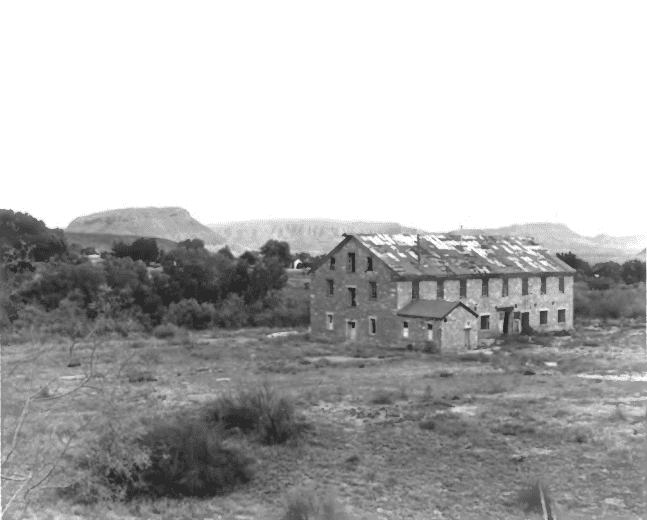
The Washington Cotton Factory was added to the National Historic Register (#71000864) on April 16, 1971 and was located at 385 West Telegraph Street in Washington, Utah. Daughters of Utah Pioneers historic marker #213 talks about it as well. The text below is from the national register nomination form.

Basic to an understanding of early Utah history is an awareness of the Mormon hope for economic independence and the “mission call.” With early explorations into Utah’s southwest, which discovered the mild climate of the valleys of the Virgin River, a major tributary to the Colorado River the agricultural implications became obvious.
By 1854 an Indian Mission had been established on the Santa Clara River. With cotton seed obtained from Nancy Anderson at Parowan, Angus Hardy, Jacob Hamblin and others planted and grew cotton successfully. Colonists moved south to grow cotton between 1856 and i860. An experimental farm was established at Tonaquint (near Bloomington) in 1858. Washington was settled by “Southerners” led by Bishop Robert D. Covington a year earlier. However, although several thousand pounds were grown during these experimental years, not until the fall of 1861 did Brigham Young call 300 families to the Cotton Mission, the Civil War opened this second phase.
With the erratic Virgin River to supply water for irrigation, the settlers suffered extremely. Floods destroyed dams, leaving no water for partially grown crops. No cotton meant no trade, even for foodstuffs. By 1864 about 74,000 pounds of lint had been sent east to markets. As Young wanted economic independence, he located a factory in “Dixie” to support and encourage the missionaries. “Joseph Birch managed this mill. Brigham sold his factory after five years (1870) to the Rio Virgin Manufacturing Company for $44,000; however, most of this debt was cancelled, since the factory was having such a difficult time.
During this second period, the “Saints” were organized into the “United Order,” a communal economic system. “Orders” from Brigham City on the north and Orderville on the east, sent people to Dixie to grow and process their cotton. Only with the boom of Silver Reef did any real economic relief come to the cotton missionaries, and then mainly to those who grew produce for market at the mines. This diversion, however, slighted the factory’s needs for raw cotton. By 1877, new farms were opened on the lower Virgin River at Bunkerville and Mesquite, Nevada. The St. Thomas area was resettled in the 1880’s and also raised cotton for the factory. Its impact was widespread. Its product and script were used extensively.
Finally, in 1890, Thomas Judd, an important southern Utah merchant, leased the factory and operated it profitably for a few years. By 1898, it was again idle, A few brief attempts at reactivation followed until 1910, when some machinery was sold. In 1914, the rest was scrapped. Since that time, the old mill has served primarily as a warehouse and a haunted house for Halloween dances.
The old cotton factory became the heart of the Cotton Mission. It remains its symbol today. In trying to meet the Saints’ needs for cotton goods under extreme conditions, the L.D.S. Church leaders employed both the “mission call” and the “United Order.” Success was limited. After the Civil War and the coming of the transcontinental rail road, competition from the American “Dixie” increased. The factory’s survival until the turn of the century owes much to the dedication of the cotton missionaries.
On a site originally selected for a mill by James Richy and Benjamin F, Pendleton, Brigham Young and the Dixie settlers constructed their cotton factory.
The large sandstone structure was .begun in1865, with Appleton Harmon assigned as superintendent of construction, Elijah and Elisha Averett, stone masons, and John P. Chidester, chief carpenter. August Mackelsprang and Hyrum Walker supplied lumber from Cedar Mountain. One story was completed and machinery in operation by January 1867. Later, because of expanded demand, including processing of woolen goods, two additional stories were added. By 1870 the enlarged factory was in use.
Located on Mill Creek, west of Washington, central to the cotton producing region, the factory used the water from springs feeding the stream, which was stored in a reservoir west of the mill. Fourteen hours of storage plus the stream flow, would operate the factory for ten hours. At peak production, the factory was capable of producing 500 yards of cloth per day and employed scores of local people. Their production included cotton batts mattresses, quilts, blankets, jeans, denims, broadcloth, flannels and gingham. Problems plagued the factory a supply of cotton and wool, a balanced operation, and lack of a market.
The factory has been empty for years. Fortunately, the roof has been in generally good repair until the last few years. The structure is sound, modified very little and in need of a new roof. It awaits preservation interest, which is now appearing. Its restoration is vitally important to telling this facet of Utah and Mormon history.
07 Saturday Dec 2024
Posted in Uncategorized
Tags
Wildhorse Canyon Obsidian Quarry / Milford Obsidian Quarry
The Wildhorse Canyon Obsidian Quarry is significant for several reasons. First, it is the only obsidian flow in Utah, presently known, which has been extensively used prehistorically as a source of raw materials. Recent studies (Condie and Blaxland 1970) of trace element distributions in obsidian artifacts from Hogup and Danger Caves and from the Wildhorse Canyon Obsidian flows do indicate that the prehistoric groups who inhabited these caves for 8000 to 10,000 years were not utilizing Wildhorse Canyon obsidian; instead, they evidently utilized two other sources. At this time, however, the location of these other quarries is completely unknown. There are also obsidian flows in western Utah that apparently were never used aboriginally as quarries, or at least there is no evidence thus far for such use. Thus, the Wildhorse Canyon. Obsidian Quarry offers the only opportunity within this region for the study of one particularly important aspect of prehistoric cultural systems: the procurement of raw materials for the manufacture of tools necessary in all aspects of daily life. The extremely large quantity of lithic material (in the form of blanks, preforms, debitage, cores, etc.) at the quarry itself, as well as at the numerous camp and manufacturing sites which surround the quarry, is still present, in situ, for such analysis.
The Wildhorse Canyon Obsidian Quarry is also the only quarry site in western Utah whose material has been definitely traced to specific archeological sites some distance away from the quarry location itself. The most important of these sites, and the ones which have been subjected to the most intensive archeological investigation, are four large agricultural Fremont villages located in the Parowan Valley, These sites (Parowan, Paragonah, Median Village, and Evans Mound) are dated A.D. 900(?) to 1300, and thus furnish evidence for the intensive use of the Wildhorse Canyon Obsidian Quarry by one particular culture for this particular time period. Analysis of the obsidian material recovered from these sites has furnished important information on the logistics and method of procurement of obsidian from the quarry.
“No large obsidian cores have been reported from excavations at Parowan or Paragonah and none were recovered from Median Village or the Evans Mound. This suggests that most of the knapping process was conducted near the obsidian source to minimize the bulk of the transported materials. The numerous chipping stations within a mile or two of Wildhorse Canyon (Rudy, 1953) lend support to this interpretation.” (Berry 1972:156-157).
As noted in the previous section, there is reason to believe that the quarry was the source of raw materials for a considerably larger area and longer time span that that represented by the agricultural Fremont groups of the Parowan Valley. The number of recent studies on source areas (e.g. Jack 1971) and on the usefulness of dating obsidian directly through hydration rates (Findlow, Bennett, Ericson and De Atley 1975) can only be an indication of the enormous quantity of information that can be extracted from the scientific study of what is apparently the major obsidian quarry in western Utah–the Wildhorse Obsidian Quarry.
The text above is from the nomination form from when this site was added to the National Historic Register (May 13, 1976). (#76001810)
07 Saturday Dec 2024
Posted in Uncategorized
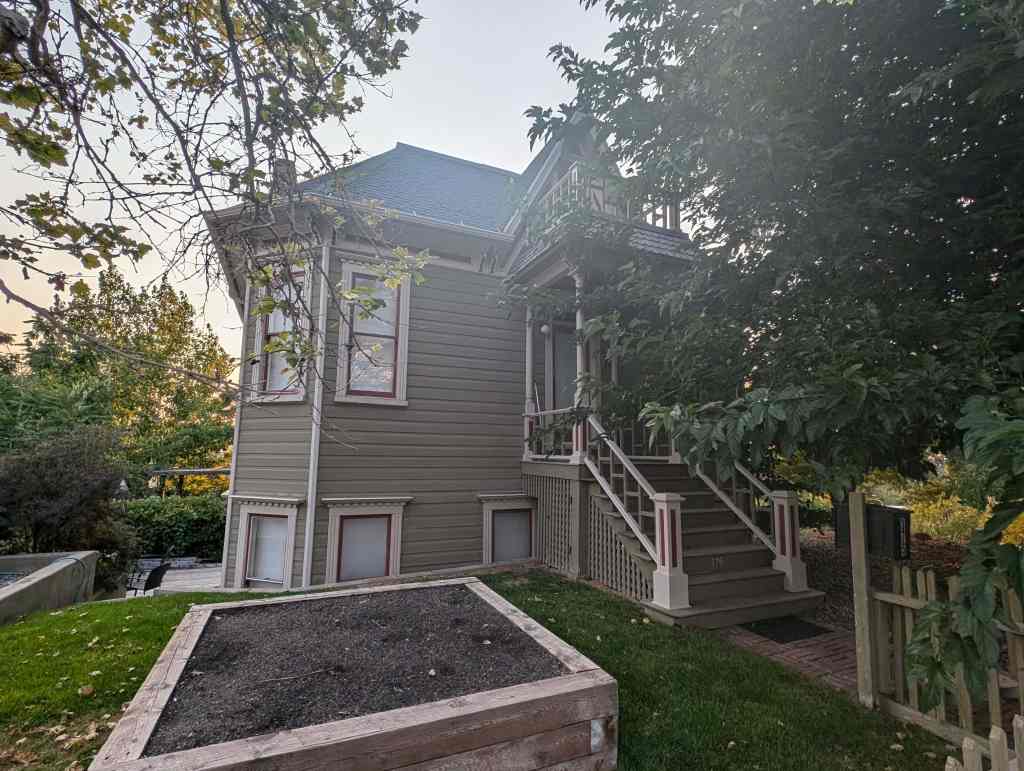
This unique little home was built in 1887 for Neils C. Christensen, a convert from Denmark. The two-story home with a raised basement level was constructed of frame and shiplap siding over a sandstone foundation. The plan is symmetrical and rectangular with chamfered comers and a steep cross gable centered on the hipped roof of the main façade. Under the eaves is a wide molded cornice with decorative brackets that reflect the Gothic Revival influence. The window headers have massive dentils. The original front porch has been replaced.
Christensen worked as a harnessmaker, a mason and mining man. He became superintendent of the Leonora Mine in Beaver, Utah. He lost this home in a sheriff’s sale after having lived in it only six years.
One of the early Revolving Fund houses, the Christensen home was purchased in 1974. Historic easements which guarantee future preservation were placed on the building before it was resold.
The above text is from Preservation Utah‘s Historic Buildings on Capitol Hill Self-Guided Tour. The home is located at 375 Quince Street in the Capitol Hill Historic District in Salt Lake City, Utah