• About JacobBarlow.com
  • Cemeteries in Utah
  • D.U.P. Markers
  • Doors
  • Exploring Utah Email List
  • Geocaching
  • Historic Marker Map
  • Links
  • Movie/TV Show Filming Locations
  • Oldest in Utah
  • Other Travels
  • Photos Then and Now
  • S.U.P. Markers
  • U.P.T.L.A. Markers
  • Utah Cities and Places.
  • Utah Homes for Sale
  • Utah Treasure Hunt

JacobBarlow.com

~ Exploring with Jacob Barlow

JacobBarlow.com

Tag Archives: Capitol Hill Historic District

Charles P. Brooks Home

09 Saturday Oct 2021

Posted by Jacob Barlow in Uncategorized

≈ Leave a comment

Tags

Capitol Hill Historic District

Charles C. and Millicent Godbe Brooks purchased this property from Charles and Emma o Smith in 1888. Two years later a 2 1/2 story, 16 room, brick and stone home was erected at a cost of $10,000. Mr. Brooks, born in 1851 in New York, came west to Utah to practice his skills as a mining engineer. In Salt Lake he formed a partnership with R.H. Browre who also happened to be a close friend of Senator Thomas Kearns.

Charles’ association with many of the more successful mining enterprises
in Utah brought Brooks into contact with the progressive elements of the city. His skills were recognized and employed. He was appointed the United States Deputy Mineral Surveyor for Utah. From 1888 to 1891 he was employed to survey the county’s sewer system. The next two years were spent as County Surveyor and from 1905 to 1912 Charles sat on the S.L. County Board of Public Works. He died in Salt Lake in 1918.

Millicent Godbe Brooks was the daughter of William Godbe, the founder of the Godbeite movement in Mormonism, and Mary Hampton Godbe who lived with the Brooks first at 204 North Main and then at 214 North State. Anthony H. Godbe, a brother of Millicent, also lived at both addresses. In 1897 the Brooks moved up the hill to 214 after selling the home to Glen and Libbie Miller. Glen was the United States Marshall in Utah.

Joseph Geoghegan, a successful merchandise broker and purchasing agent for U&I and Amalgamated Sugar, bought the home in 1904. As a prominent Republican he was chosen to serve as Adjutant General under Governor John C. Cutler. He died in 1916. Elizabeth Vidovich Geoghegan continued to live in the home until the early 1930’s when she had it remodeled into apartments. In 1935 the rental complex was sold to Wilford Brimley who sold it in 1937 to Julian V. Siegal. The latter maintained ownership through 1940.

This is a three and one half story Queen Anne which is asymmetrically designed. The house has a cross gable main floor. The ground floor is made of stone, the second floor is of brick, and the upper levels are of frame and shingles. The porch is classically detailed and a circular tower is located on the southwest corner of the building. There are eclectic details in the upper levels and turnings and moldings in the balcony area.

Located at 204 North State Street in the Capitol Hill Historic District in Salt Lake City, Utah
Willard T. Cannon Home

09 Saturday Oct 2021

Posted by Jacob Barlow in Uncategorized

≈ Leave a comment

Tags

Capitol Hill Historic District

Willard Telle and Caroline Y. Cannon purchased this portion of the John R. Park estate from Lorenzo Price Jr., in 1917. The next year they had a home erected on the property. Willard, a son of George Q. Cannon, followed in his father’s footsteps into the business world of Salt Lake. After attending the university of Utah and M.I.T. in Mass, he returned to Utah where he became president and general manager of the Utah-Idaho Sugar Company. Willard died in 1938. The home was sold to Mildred and Walter J. Holman who maintained ownership through 1940.

This is a one and one half Tudor Revival house with a basement. The plan of the house is asymmetrical. The multiple gabled roof has pseudo half timbering. The casement windows have leaded glass lights. – Diana Johnson

Located at 180 North State Street in the Capitol Hill Historic District in Salt Lake City, Utah
Kestler Apartments (268)

09 Saturday Oct 2021

Posted by Jacob Barlow in Uncategorized

≈ 1 Comment

Tags

Capitol Hill Historic District

Alonzo P. Kestler purchased both of these properties from Andrew Howat, president of Houston Real Estate Investment Company, in 1909. With financing from the Ashten-Jenkins Company, Alonzo completed the first structure (at 268) in 1913 and the second (at 264) in 1915. In 1926 the entire complex was sold to John Praggastis and Katinia Karelus. John apparently gained control of the property as he was listed as sole owner in 1940.

Located at 264 North State Street in the Capitol Hill Historic District in Salt Lake City, Utah

This three story apartment is symmetrically arranged and has a flat roof. Four pilasters form portico with the roof and cover the balconies. There are wrought iron balustrades and stairs. – D. Diana Johnson

Edwin Gallachers Home

09 Saturday Oct 2021

Posted by Jacob Barlow in Uncategorized

≈ 1 Comment

Tags

Capitol Hill Historic District

Edwin and Agnes Snow Gallacher purchased this property in the spring of 1925. That o summer they contracted H.J. McKean Inc. to build a one-story brick residence for $12,000. The new structure replaced the older home of John R. Park which having been built in 1873 was torn down sometime in the early 1900’s

Edwin was a retired U.S. Army sergeant who after serving in the Mexican Campaign of 1914 and World War I, returned to Salt Lake. His marriage to Agnes Snow, the daughter of financier, Ashby Snow, resulted in his association with the Utah Portland Cement Company and the Saltair Beach Company. Edwin died in 1934 at the age of 39. His wife continued to own the home through 1940.

This is a one and one half story Tudor Revival house with a multiple gable roof. Some gables are clipped and the gabled areas have pseudo half-timbering. The casement windows have leaded glass lights. – Diana Johnson

Located at 170 North State Street in the Capitol Hill Historic District in Salt Lake City, Utah
John Henry Bailey Sr. Home

09 Saturday Oct 2021

Posted by Jacob Barlow in Uncategorized

≈ Leave a comment

Tags

Capitol Hill Historic District

In 1906 Sophia A.N. Bailey acquired title to this property for $2450. The house was apparently built during that year as Sophia’s husband John Henry Bailey is listed as the resident owner starting in 1907. John Henry Bailey was born in Bradford, England in 1850 to John and Elizabeth Bailey. At 18 months of age he left England with his parents bound for America. By the time he was two John’s family had reached Salt Lake City where he spent the remainder of his 81 years. As a young man Bailey helped his father organize the Bailey and Sons Co., the first seed firm in Salt Lake City. Before long he had distinguished himself as the first man to ship alfalfa seed out of Utah. Bailey married Sophia A. Needham in 1872; she died in 1930 just one year before his own death. Mr. Bailey died December 4, 1931. The Baileys lived here until their deaths.

In 1932 one of John Henry’s sons Bert N. Bailey, is listed as resident. In 1933
John Henry Bailey Jr., a lawyer, became the owner and apparently rented the house.

Subsequent residents:
1933-1934 Julius C. Anderson
1934-1938 John H. Bailey Jr.
1939 vacant
1940 to at least 1943, Mrs. C. Harris

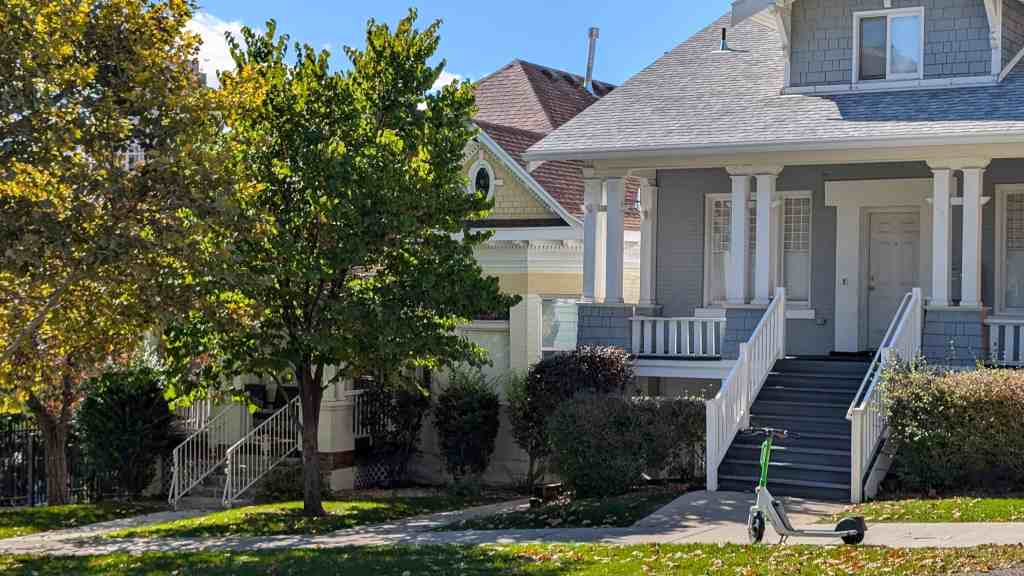
This is a two-story cube shaped house with a hip roof flared at the eaves, and a front center dormer window. There are three wooden front bay windows with leaded glass transoms and upper sash. The one-story front porch has a second floor balustrade and square columns with ionic capitals. The base of the porch and the house foundation are stone. There is a south side two-story carved bay window, and on both sides are a pair of chimneys with corbelled banding at the top. The house is similar to #169 next door built two years earlier, probably by the same developer.

Located at 163 North State Street in the Capitol Hill Historic District in Salt Lake City, Utah
Ashby Snow Home

07 Thursday Oct 2021

Posted by Jacob Barlow in Uncategorized

≈ Leave a comment

Tags

Capitol Hill Historic District

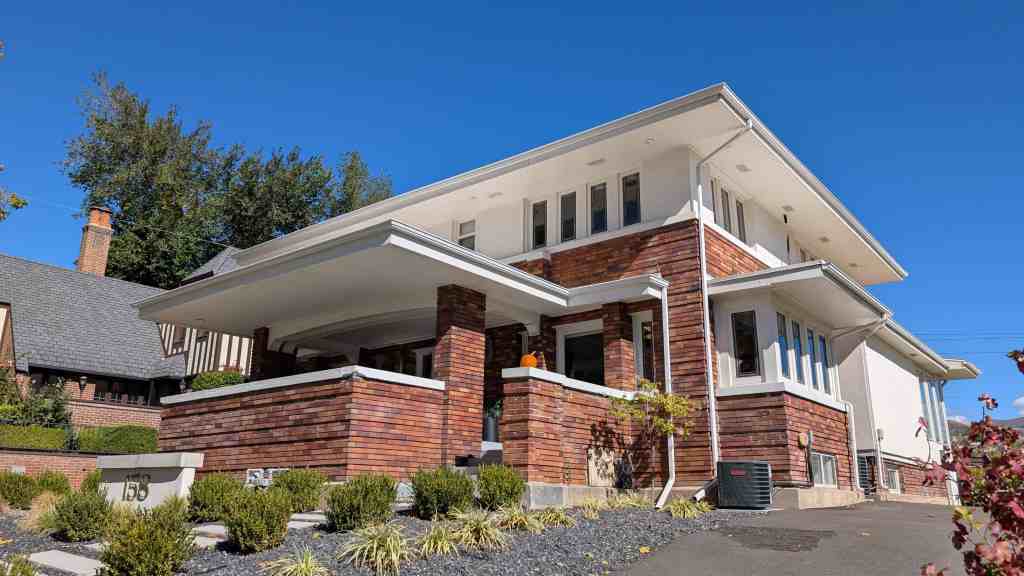
Ashby and Elizabeth Pymm Snow had a home built on this property in 1910, three years after purchasing the land from Samuel W. Stewart, administrator for the John R. Park Estate. Ashby, born 1867 in St. George, Utah, was a son of the Apostle Erastus Snow. As a young man he was appointed to direct the local co-op and shortly thereafter he left Utah to attend law school at Ann Arbor, Michigan.

On returning to Salt Lake, he formed a partnership with General Richard W. Young. His successful association with numerous Utah enterprises, i.e: Utah Portland Cement, ZCMI, Hotel Utah, U & I Sugar, Saltair Beach, and Utah Savings and Trust, made Ashby a prominent Utah financier. In 1926 he ran as a Democrat, against Reed Smoot for a seat in the U.S. Senate. In 1937 Ashby died at the age of 69.

His son, Erastus P. Snow, born in 1891, assumed ownership of the’ home in 1931 and maintained it through 1940. Erastus, like his father was a prominent Utah businessman. He died in 1953.

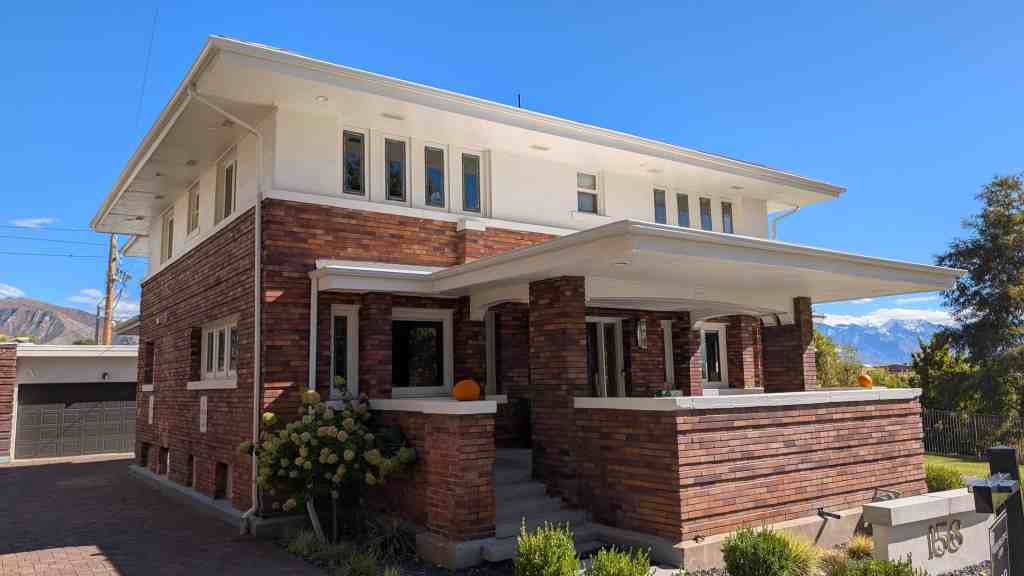
This is a large two-story Prairie style home on a double lot. It has strong horizontal lines characteristic of the style. There is a truncated hip roof with broad eaves. The second floor is stuccoed with horizontal bands of casement windows and there are more casement windows on the dark brick first floor. All windows have leaded glass border decoration in the manner of Frank Lloyd Wright. There is a south one-story bay window and a projecting front porch with two main brick piers and four slim metal columns that cause the flat roof to appear to float. The brick railing wall with its concrete cap further emphasizes the buildings horizontality.

The text above is from Capitol Hill Historic District national register nomination form, the The text below is from Preservation Utah‘s Historic Buildings on Capitol Hill Self-Guided Tour. The home is located at 158 North State Street in Salt Lake City, Utah.

The influence of Frank Lloyd Wright is evidenced in the large two-story Prairie style home built by Ashby Snow in 1909. At that time, Utah was a leader in the western United States in adopting this new progressive architectural form.

In contrast to the vertical lines that are dominant through most of the Capitol Hill District, the brick and stucco house has strong horizontal characteristics. A truncated hipped roof with broad eaves is pitched above a band of casement windows on the second floor. All of the windows contain beautiful leaded glass border decorations. The projecting front porch has two main brick piers and four slim metal columns that give the flat roof the appearance of floating.

Snow was a native Utahn, born in St. George and a son of LDS Apostle Erastus Snow. He attended law school at Ann Arbor, Michigan, and then returned to associate himself with numerous successful enterprises including Utah Portland Cement, ZCMI, Hotel Utah, U &. I Sugar, Saltair Beach, the Salt Lake, Garfield and Western Railway and Utah Savings and Trust.

A son, Erastus P. Snow, assumed ownership of the home in 1931. He added a large swimming pool with underground dressing rooms on the south portion of the double lot.

William Bernard Dougall Jr. Home

07 Thursday Oct 2021

Posted by Jacob Barlow in Uncategorized

≈ 1 Comment

Tags

Capitol Hill Historic District

The original owner of this house was William Bernard Dougall Jr. Dougall was born on May 7, 1869 and died April 10, 1906. Dougall lived most of his life in Salt Lake with his parents, William B. Dougall St and Maria Young Dougall, at 49 North State Street (now demolished). His mother was a daughter of LDS church president Brigham Young.

Although a building permit was not found, research indicates that the house was built about 1904. City directories list Mr. Dougall as the resident here in 1906 which is the year he died. During his life Dougall had been manager of the Deseret Telegraph Co., a staff member at the Deseret News, editor of the Millennial Star and at the time of his death he was in the insurance business. Dougall was survived by his wife, Harriet Richards Dougall, the daughter of Morgan Dougall, and his three children Maria, Grant and Alice.

Mrs. Dougall and her children continued to live here through 1931 when city directories list a second resident at this address, Mr. Joseph E. Richards. Apparently the house was remodeled to include an apartment at this time. In 1935 Mr. George H. Slink is listed as resident. Slink, a cobbler at Broadway Shoe Rebuilders, married Dougall’s daughter Alice. By 1940 Maria Dougall is listed as resident owner. SLC tax records show Grant Dougall “et al” as the current owners indicating that the house has been in the same nuclear family since its construction at the beginning of the century.

This is a 1 1/2 story Victorian home with prominent exterior wood decorations. The main block of the house is hip roofed with a front dormer window that has an elaborate swans-neck pediment and carving. There is also a front gable over a three sided brick bay window. The gable has modillions, dentil molding, and an oval window, The larger front windows in the bay or under the porch both have leaded glass transoms. There is a small gable with a carved panel on the porch. The porch cornice has dentil molding and brackets beneath the gable. It is supported by paired ionic columns on posts.

The text above is from Capitol Hill Historic District national register nomination form, the The text below is from Preservation Utah‘s Historic Buildings on Capitol Hill Self-Guided Tour. The home is located at 145 North State Street in Salt Lake City, Utah.

A decorative highlight of this Victorian Eclectic home built for William B. Dougall is the prominent exterior wood trim. Featured is an elaborate swan’s neck pediment and carving on the front dormer window and a gable with modillions, dentil molding and an oval window. Transoms in the large bay window under the porch are of leaded glass and paired Ionic columns support the porch cornice.

Dougall, a grandson of Brigham Young, was born in 1869. He was a manager of the Deseret Telegraph Company, a staff member of the DESERET NEWS and editor of the MILLENNIAL STAR. At the time of his death at the age of 37, he was engaged in the insurance business.

The Dougall home is one of few in the area that has been owned by the same family since its construction in 1904. Although William only lived in the house two years, his wife and three children resided there until 1931. Grant Dougall is the present owner. The house has been remodelled to include an apartment.

Robert Bowman Home

07 Thursday Oct 2021

Posted by Jacob Barlow in Uncategorized

≈ Leave a comment

Tags

Capitol Hill Historic District

This house was built in 1879 for Robert Bowman and apparently significantly expanded in 1895-1896. Evidence of title, directory, structure, and “1879” set into the front wall of the house support these conclusions. Bowman was one of a number of employees of Watson Brothers, stonemasons, to buy a building site on lot 3 of this block. Bowman was a stonecutter, foreman and engineer for Watson Brothers. He and his wife Barbara occupied the house until 1904 when it was sold. Little is readily known of Bowman or his wife , a daughter of James Watson his employer.

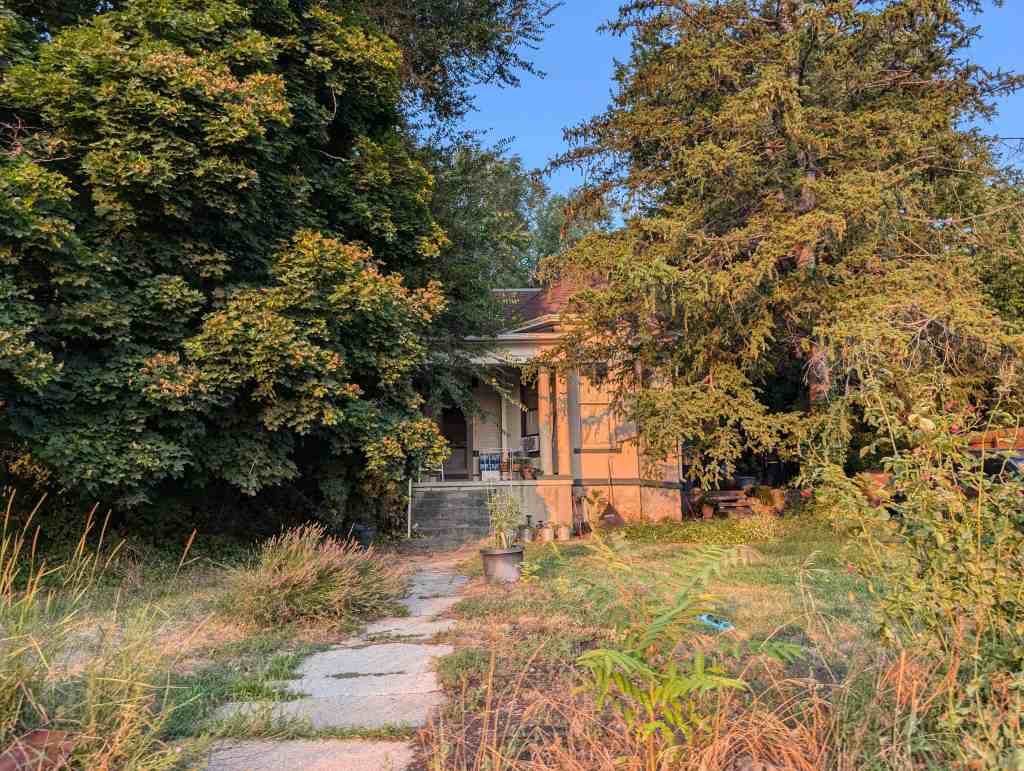
This is a single story home of asymmetrical plan. Apparently completed in two phases, the oldest part dates from 1879, as indicated by the date plaque in the front gable. This front older bay displays quoins, a molded, bracket cornice and two double hung windows with massive, elaborate Italianate stone headers. A hipped, bay in the northwest corner is part of the Victorian addition of 1895-1896 which includes also an identical hipped bay in the rear. This three-sided hipped bay has large segmental window insets with incised floral motifs and a molded cornice. A central porch and indented entrance area displays Tuscan supports.

Since Robert Bowman was employed as a stonemason, it is conceivable that the masonry headers in the older portion, which are out of proportion for the small scale of the home, were products available to him through his work.

Located at 434 Quince Street in the Capitol Hill Historic District in Salt Lake City, Utah
William Morrow Home

07 Thursday Oct 2021

Posted by Jacob Barlow in Uncategorized

≈ 1 Comment

Tags

Capitol Hill Historic District

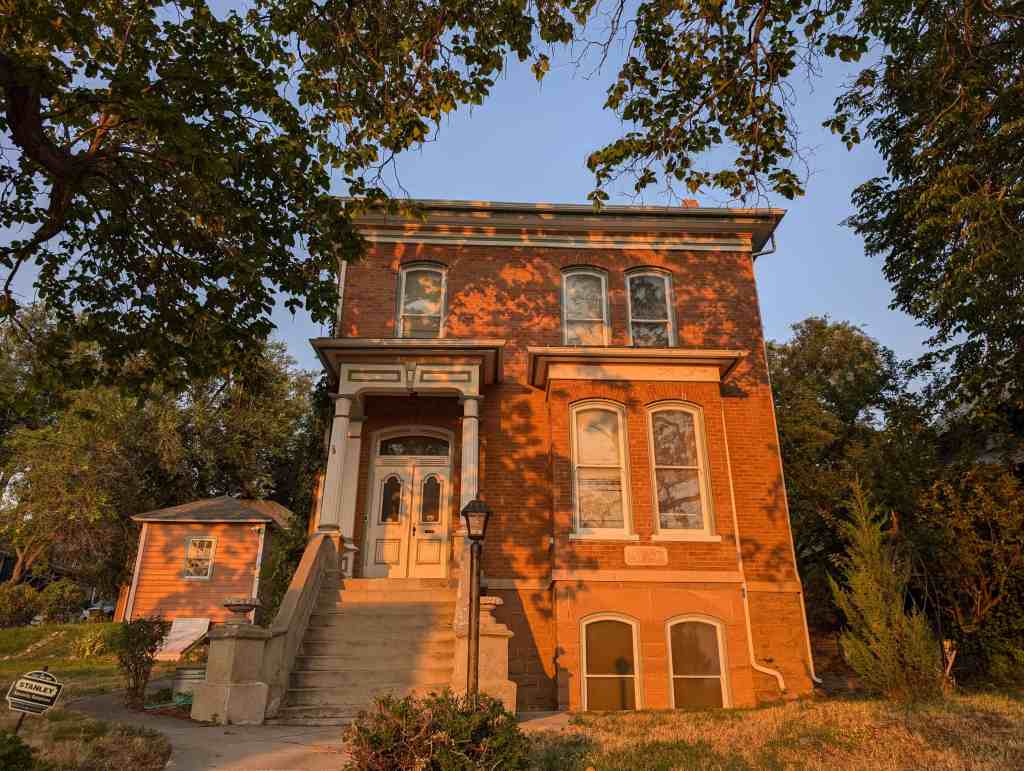
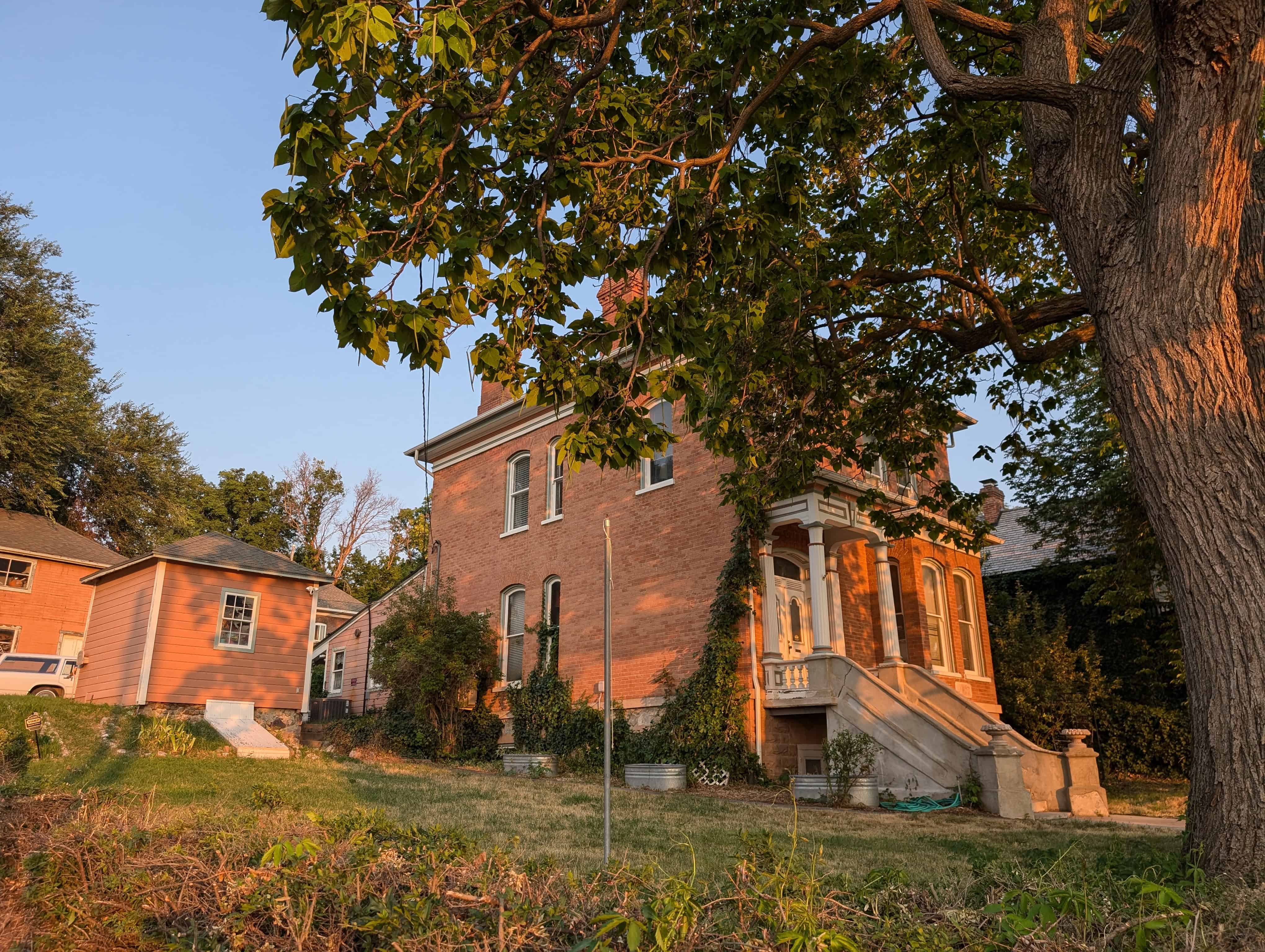
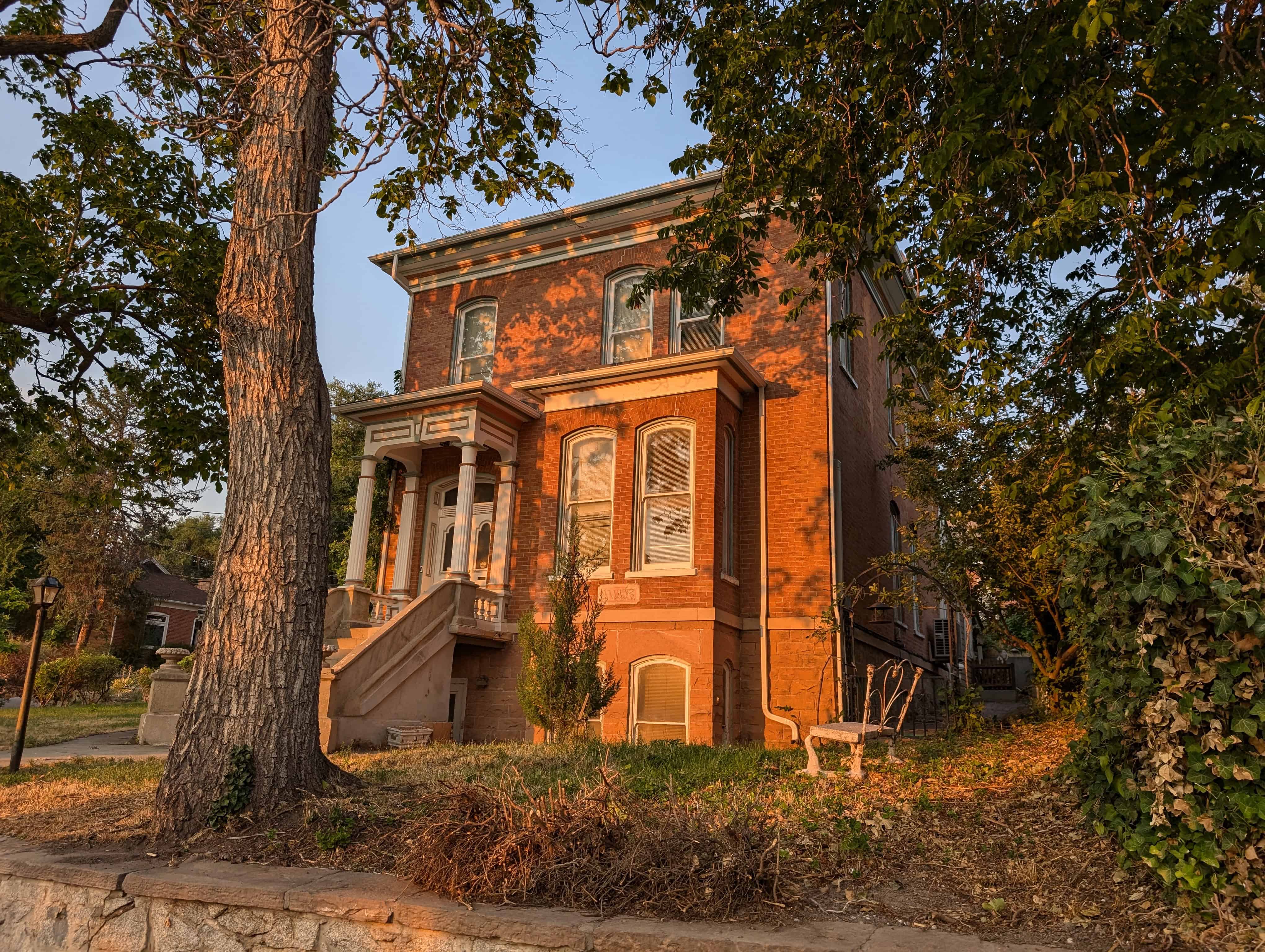
This house was built about 1868 by William Morrow. Morrow was born about 1836 and was a “painter and pioneer of Utah”. Upon the death of his wife Mary about 1884 the house was sold to John W. Taylor. Taylor, son of John Taylor, president of the LDS Church was chosen as an Apostle the same year. Active in church affairs, he was excommunicated during the polygamy controversy but was reinstated in 1965.

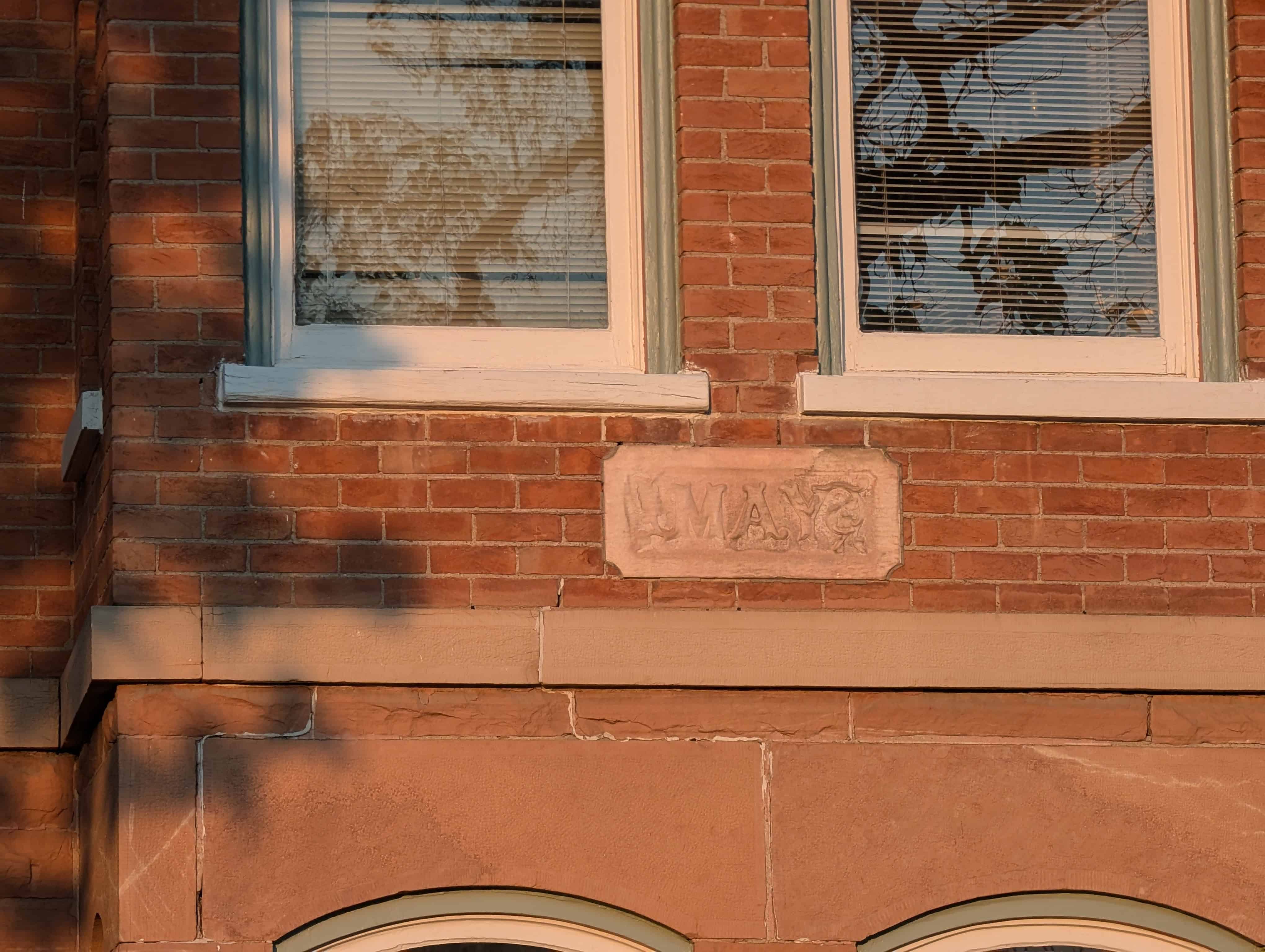
‘May” appearing on a plaque on the front is the name of one of Taylor’s wives who lived here.

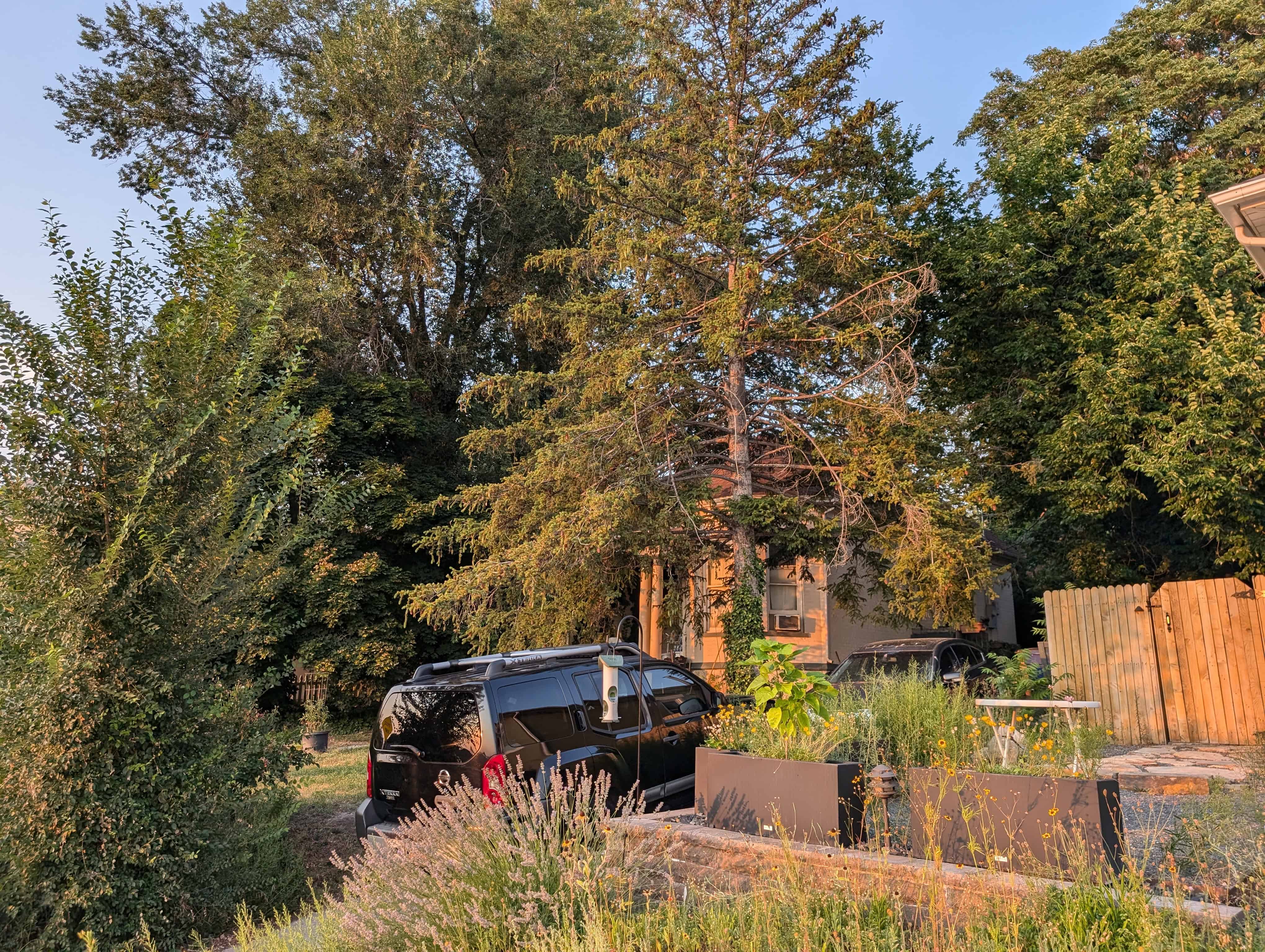
This important Victorian home alludes to the Italianate style in its design. It
is a two story home of rectangular plan, with hipped roof. A fine, wide moulded cornice and elaborately corbelled chimneys are exhibited. Double hung sash windows with segmental relieving arches were used. The fixed transoms conform to the shape of the relieving arch.

A flat roofed entrance porch shelters the entrance. Double doors share a segmentally curved transom. Porch ornament is classically derived of an Italianate-Mannerist nature. A one story flat-roofed, rectangular bay is located to the south of the entrance porch.

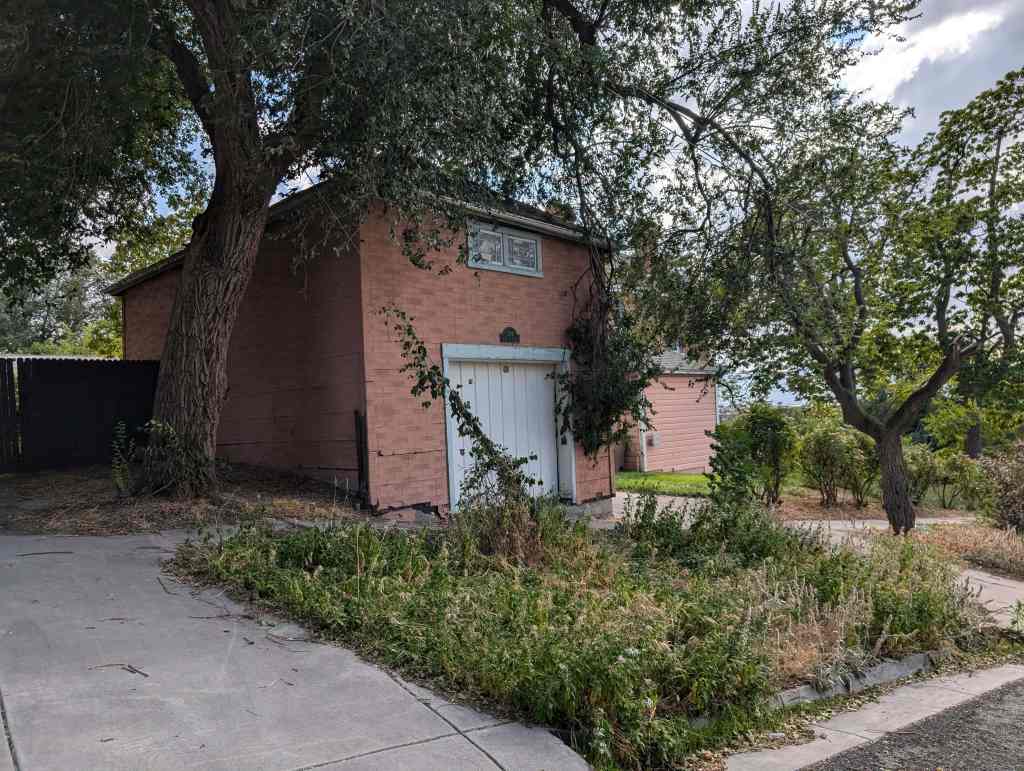
Frame extensions in the rear include a porch and lean-to. A detached, one story frame and ship lap, hipped roof structure is located to the northeast of the house and may have been the summer kitchen.

Located at 390 Quince Street in the Capitol Hill Historic District in Salt Lake City, Utah
Following is a list of the 11 documented extant examples of the Italianate Box house in Utah and the status of each house with regard to listing in the National Register.

  • William Morrow Home ( 390 Quince Street in the Capitol Hill Historic District in Salt Lake City, Utah)
  • Jonathan C. and Eliza K. Royle House (635 East 100 South in Salt Lake City, Utah)
  • Frederick A.E. Meyer House (929 East 200 South in Salt Lake City, Utah.)
  • Albert H. Kelly House (418 South 200 West in Salt Lake City, Utah)
  • Charles R. Snelgrove House (744 South West Temple in Salt Lake City, Utah)
  • George Q. Cannon House (1354 South 1000 West in Salt Lake City, Utah)
  • George Q Cannon House (1494 South 1000 West in Salt Lake City, Utah)
  • George Q Cannon House (1134 West Indiana Ave in Salt Lake City, Utah)
  • Joseph E. Smith House (615 East First Avenue in The Avenues in Salt Lake City, Utah)
  • John C. Sharp House (Vernon, Utah)
  • John T. Rich House (275 West Clark Street in Grantsville, Utah)

Of eight documented extant examples of the Italianate, two story box type house in Utah, the Meyer House is one of the oldest, and is the most architecturally distinctive, a fact borne out by its recording in 1968 by the Historic American Building Survey. It is one of three such Italianate houses which is eligible for nomination to the National Register. The William Morrow House, 390 Quince Street, the oldest example of the type, was listed in the National Register in 1982 as part of the Capitol Hill Historic District, Salt Lake City. Other Utah examples of the Italianate style listed in the National Register include: the Charles R. Savage House, 80 D Street (cross-wing type), and the Howe C. Wallace House, 474 Second Avenue (cottage type), in the Avenues Historic District, Salt Lake City; the Lewis S. Hills House, 126 South 200 West (cross-wing type), Salt Lake City; and the David McDonald House, 4659 Highland Drive (cross-wing type), Salt Lake City.

(county records)

August W. Carlson Home

07 Thursday Oct 2021

Posted by Jacob Barlow in Uncategorized

≈ Leave a comment

Tags

Capitol Hill Historic District

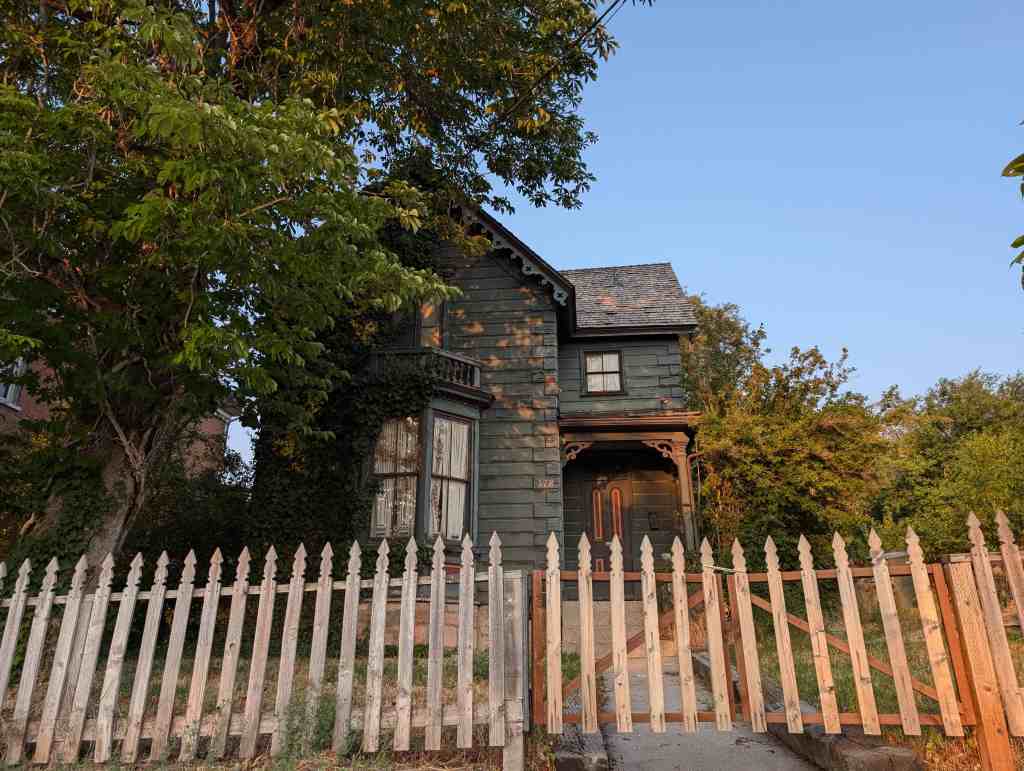
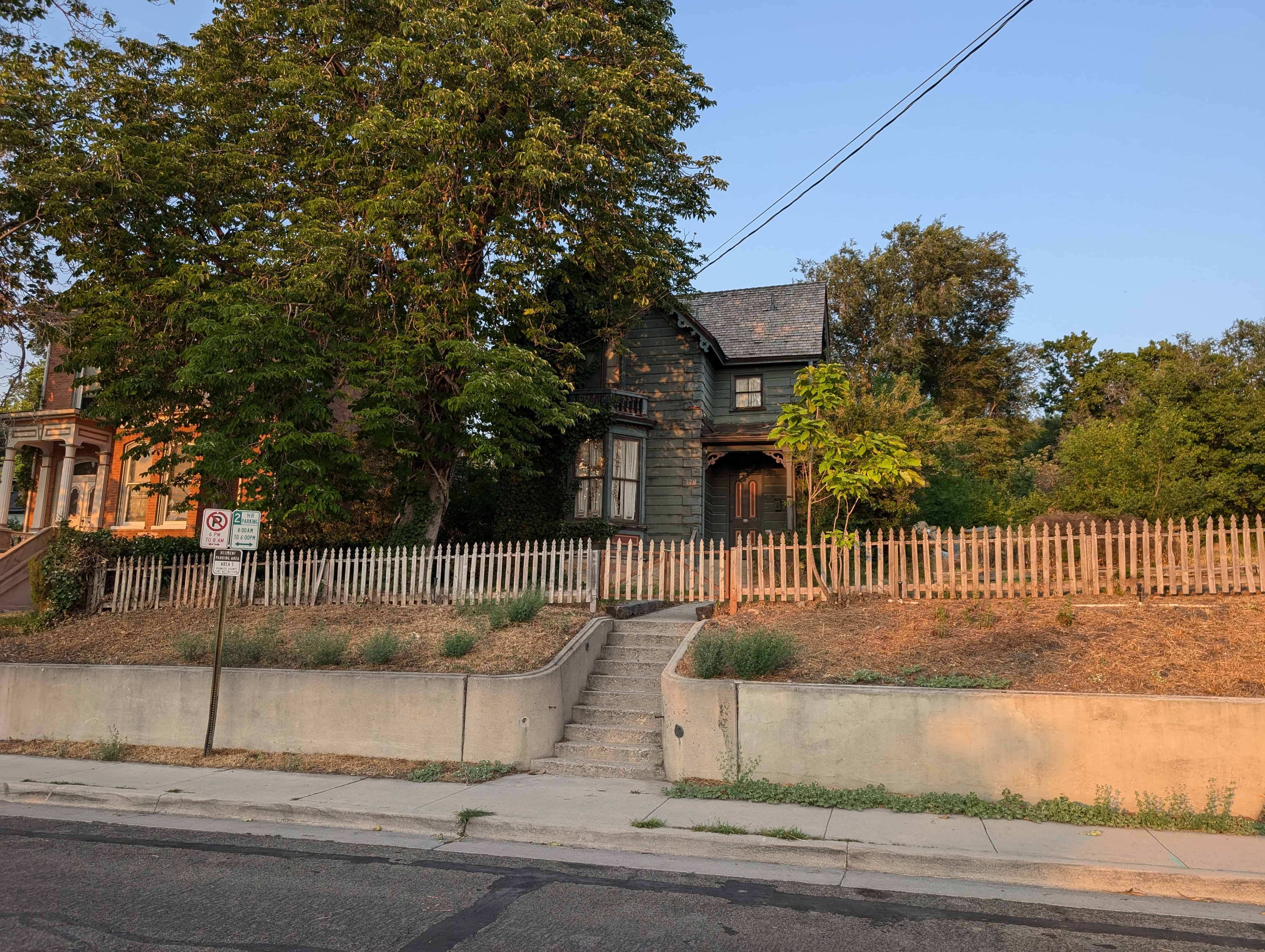
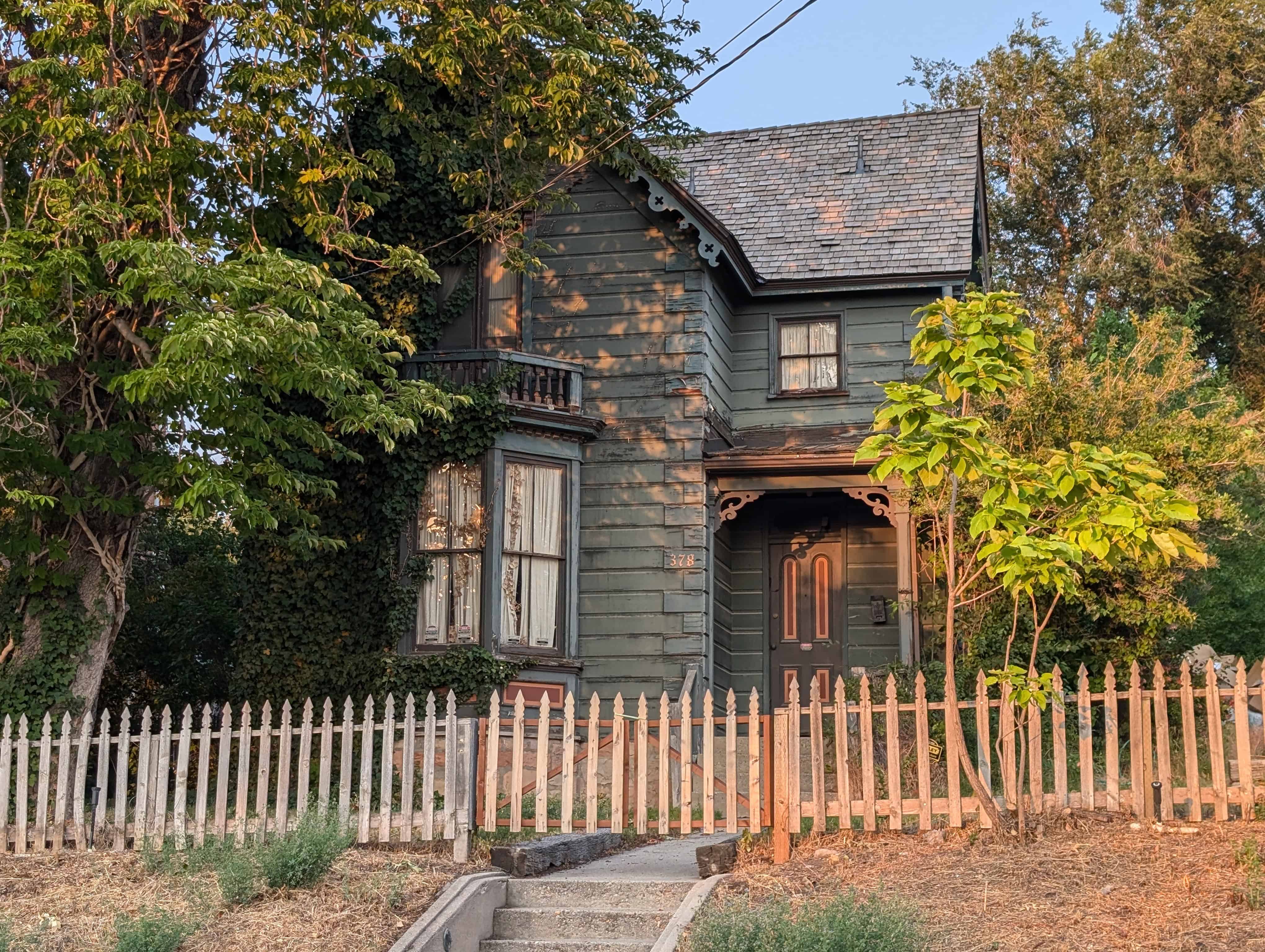
August Wilhelm Carlson built this house about 1872-73. He was born in Kariskrona, Blekinge, Sweden, August 23, 1844 and came to Salt Lake in 1871. He married Priscilla Spencer in April 22, 1872; they had no children. First employed by ZCMI he ultimately became treasurer. He was also a director of Deseret National Bank and the State Bank of Utah, director of Zions Benefit Building Society, a regent of the University of Utah, city councilman, and official of the IDS Church. He served a mission to Copenhagen, 1877-80. His widow occupied the house until her own death in 1934.

This house built about 1874 was the first house on Capitol Hill to be built in the Carpenters Gothic Style. It is a two-story, basically square house. In front there is a bay with three windows in the two-over-two pattern. Above this there is a small balcony with small turned columns. A french door leads from the second story out onto this balcony and it is surmounted by a peaked lintel. The front porch has a flat roof supported by carved brackets and plain columns. The front door is of panelled wood. There is a window above the porch on the second floor.

Located at 378 Quince Street in the Capitol Hill Historic District in Salt Lake City, Utah
← Older posts
Newer posts →

Follow Jacob

Follow Jacob

Come wander with me on Youtube.

Blog Stats

  • 2,087,695 hits

Social and Other Links

BarlowLinks.com

Recent Posts

  • Provo High School Seminary Building
  • 821 E 100 S
  • 820 E 100 S
  • 817-819 E 100 S
  • 814 E 100 S

Archives

Loading Comments...