• About JacobBarlow.com
  • Cemeteries in Utah
  • D.U.P. Markers
  • Doors
  • Exploring Utah Email List
  • Geocaching
  • Historic Marker Map
  • Links
  • Movie/TV Show Filming Locations
  • Oldest in Utah
  • Other Travels
  • Photos Then and Now
  • S.U.P. Markers
  • U.P.T.L.A. Markers
  • Utah Cities and Places.
  • Utah Homes for Sale
  • Utah Treasure Hunt

JacobBarlow.com

~ Exploring with Jacob Barlow

JacobBarlow.com

Tag Archives: Capitol Hill Historic District

John Platts Home

05 Tuesday Oct 2021

Posted by Jacob Barlow in Uncategorized

≈ Leave a comment

Tags

Capitol Hill Historic District

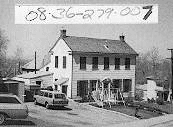
John Platts came to Salt Lake from England in 1854. Church records show that he was a member of the local ward, #19 of the LDS Church in 1855. According to family tradition, he chose this site as the best available for a peach orchard to surround his house built in 1858. He did not receive title to the land until 1874, however, the first year in which the city directory locates him at this or any site. At this time he was employed as a stone mason as were several of his sons. His widow, Emily, and several sons lived in the house after his death about 1890.

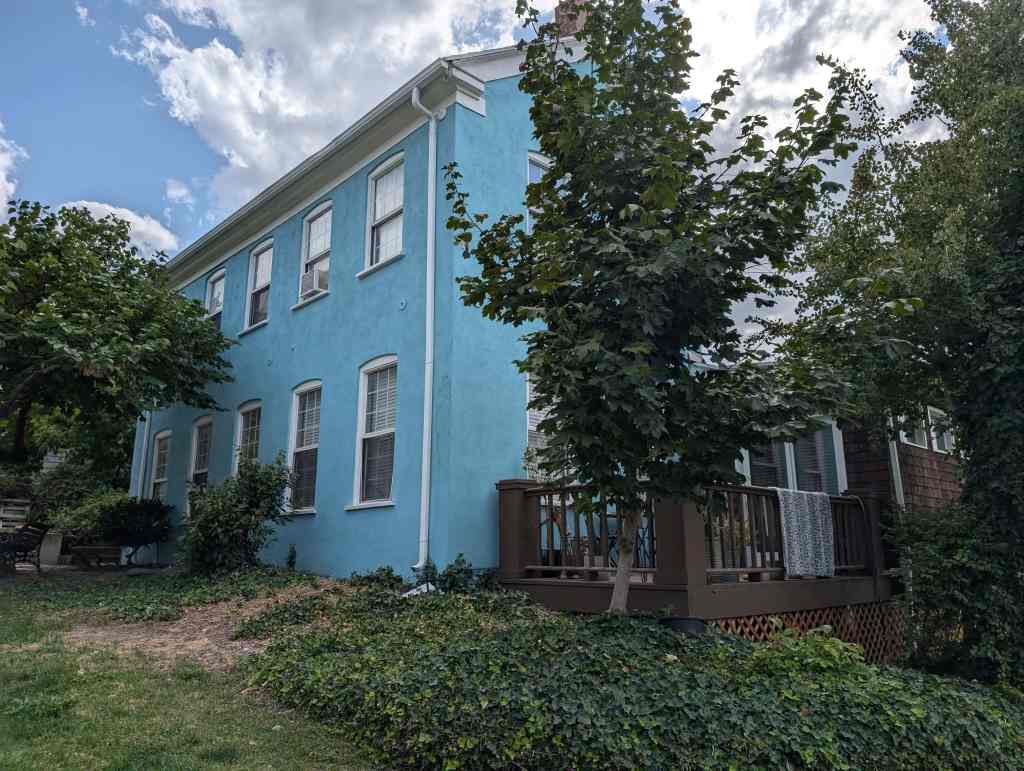
The John Platts home is an early vernacular Utah dwelling. The structure evolved from a rectangular plan of hall and parlor or central hall configuration to an ell plan with several extensions. Reminiscent of Georgian/Federal styles in its symmetry the oldest part of the home is two full stories in height. Fieldstone with dressed sandstone quoins comprises the first story of this portion, while the upper story is brick. A chimney is located at each adobe end.

The main rear extension is also brick. A side/rear entrance has a shed roof porch roof supported by square posts with decorative molding. Windows are a two over two, double hung sash type.

This home is an early example of substantial domestic architecture in Utah.
Though unpretentious, it nevertheless must have been impressive compared to many contemporary dwellings of the period. The home exhibits a transition in architectural thinking. The early Federal style organization was updated to a later, modified temple design by the extension with side/rear entrance and porch.

John Platts House is one of the earliest pioneer homes in the Salt Lake Valley still standing today. The house was constructed in the vernacular style, quite common among pioneer homes. John Platts was his own architect and builder. The home was originally a single story, “I”-form pioneer home, built of common fieldstone. The original interior was composed of two large rooms. The windows are a simple rectangular shape and the doors and windows have plain lintels made from wood. A second story was added to the house after 1860, when Utah red brick was first fired at Bingham Brick Works. About the same time a second story addition was built, a clapboard attachment was added in the rear of the house. The medium pitched roof, which was originally wooden shingle, was later covered with, asphalt shingle.

Located at 364 Quince Street in the Capitol Hill Historic District in Salt Lake City, Utah.
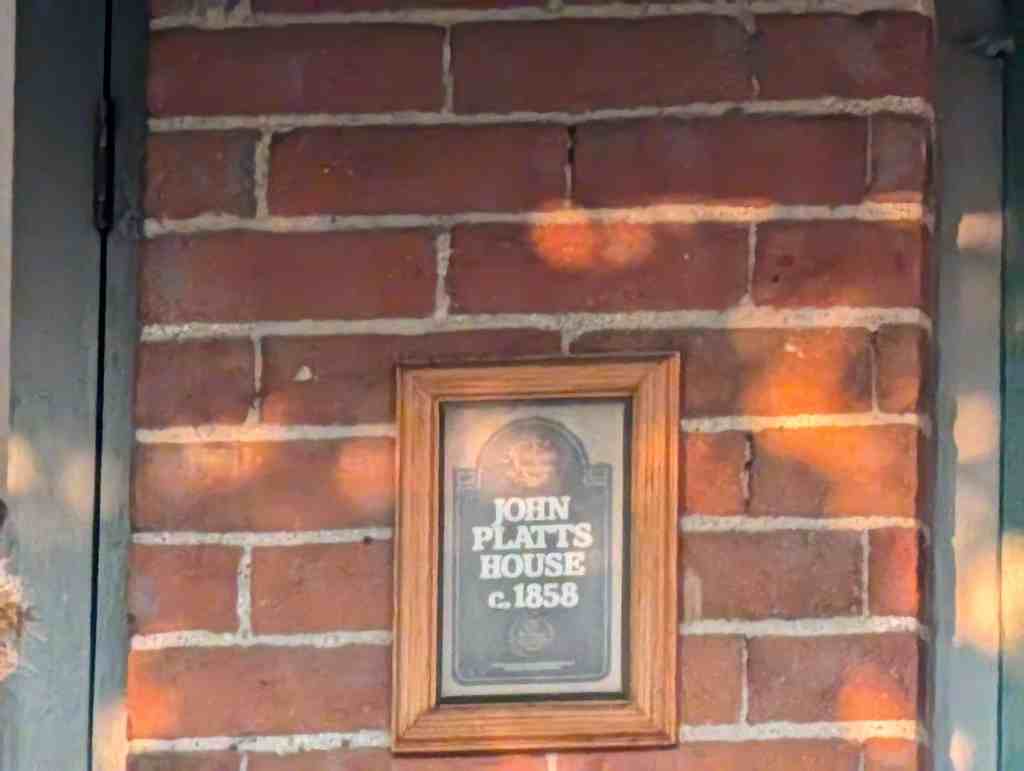
The John Platts House was added to the National Register of Historic Places (#72001259) on August 25, 1972.

This home is a good example of a pioneer home and is located in one of Utah’s most historic areas (Just three blocks from the famed Mormon Temple Square) The Capitol Hill Awareness Team has received preliminary approval from Model Cities for funds to plan the area, (which includes the Platts Home) as an historic district. The area already has two National Landmarks, four National Register Places, and five State Register Sites.

Mr. Platts came to the valley from England in 1854. He (according to family tradition) chose this site as the best peach-growing area available at the time, It is said he paid his tithing in prize peaches from the orchard which surrounded the present home. The date of construction was c. 1858. Church records show he was a member of the 19th Ward, L.D.S. Church in that area in 1855.
Thomas Quayle Home

05 Tuesday Oct 2021

Posted by Jacob Barlow in Uncategorized

≈ 1 Comment

Tags

Capitol Hill Historic District

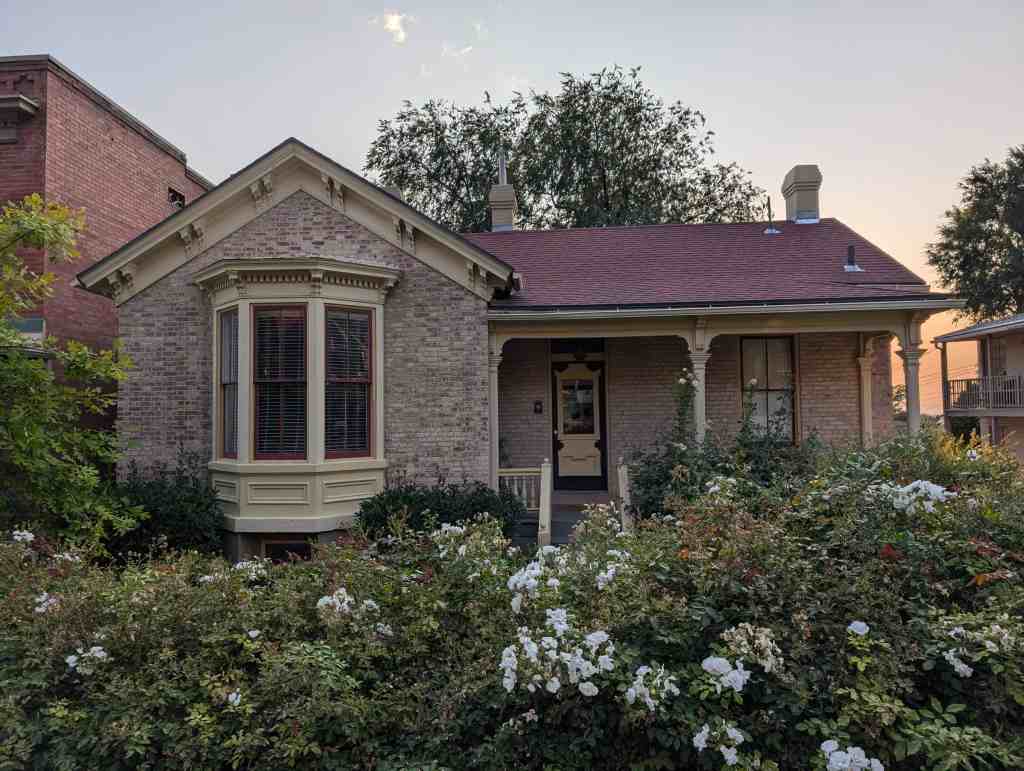
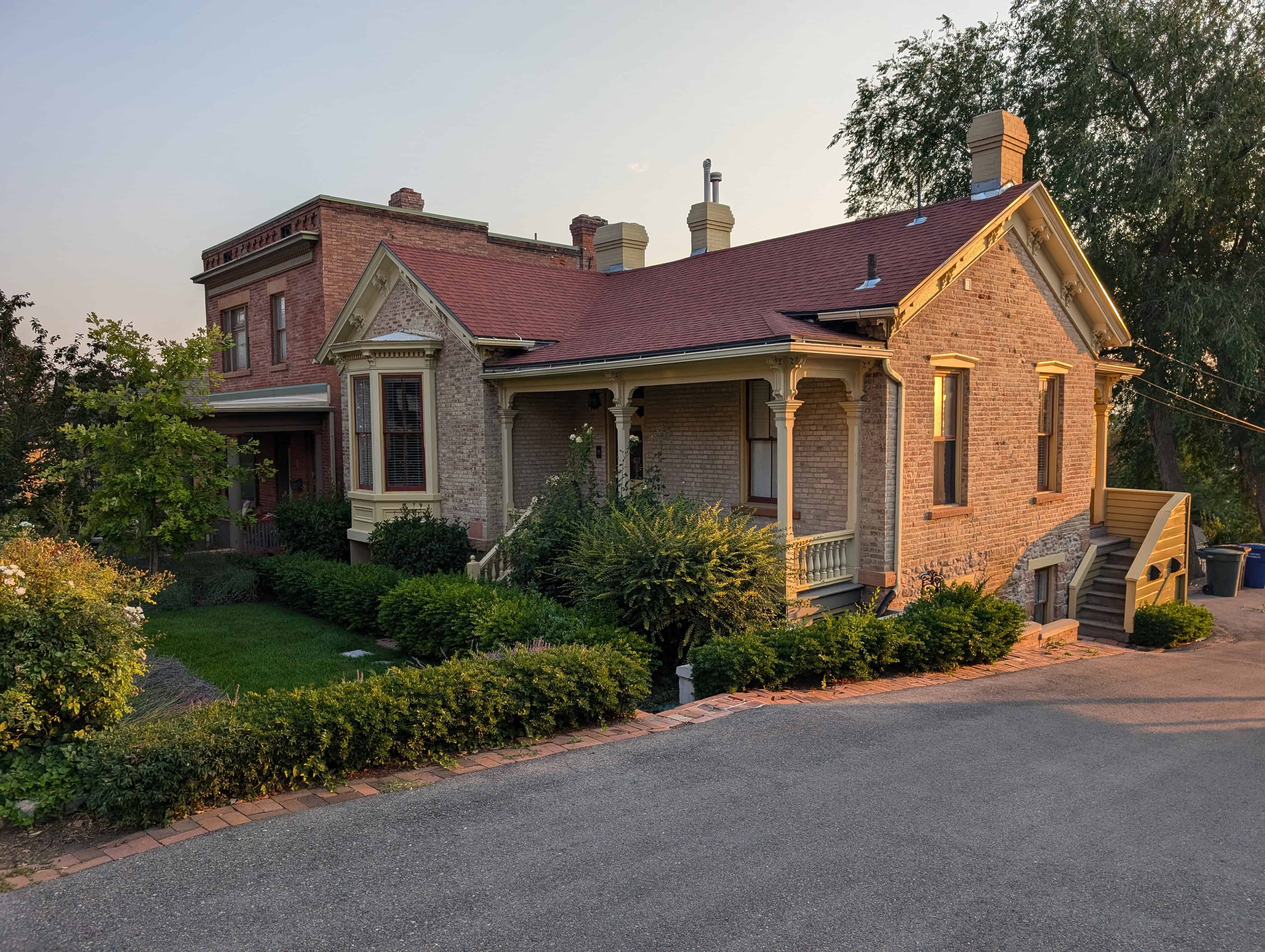
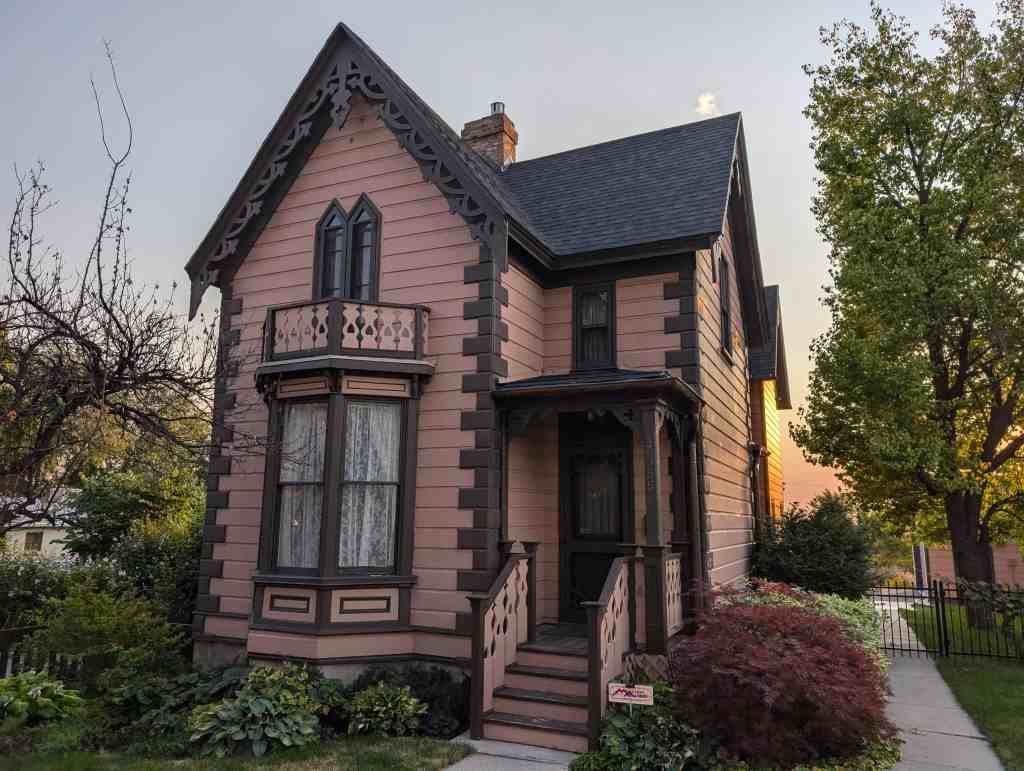
The 1 1/2 story Thomas Quayle House was moved to its present location in October of 1975. An important extant example of the Carpenter’s Gothic Style, it has been restored for use as the Utah Heritage Foundation Headquarters, and is entirely compatible with the architectural flavor of the neighborhood. The steep gables, corner wood quoins, decorative bargeboard and Eastlakian porch treatment contribute to the Carpenter’s Gothic character. – Diana Johnson

According to information provided by the Utah Heritage Foundation, this home was built about 1884 by Thomas Quayle. His parents were converted to the L.D.S. Church while residing in the Isle of Man. Thomas had been born here in 1835. The family came to America in 1841, settling in Nauvoo. They came to Utah in September, 1847, with the John Taylor company. Thomas and his brother, John went to California to mine for gold.

While in California they became involved in freighting goods from Sacramento to the mines. They continued their freighting business when they returned to Utah. Thomas died June 1920, in Salt Lake. This house was moved to its present site in 1975. It was originally located at 163 West 4th South.

Located at 355 Quince Street in the Capitol Hill Historic District in Salt Lake City, Utah

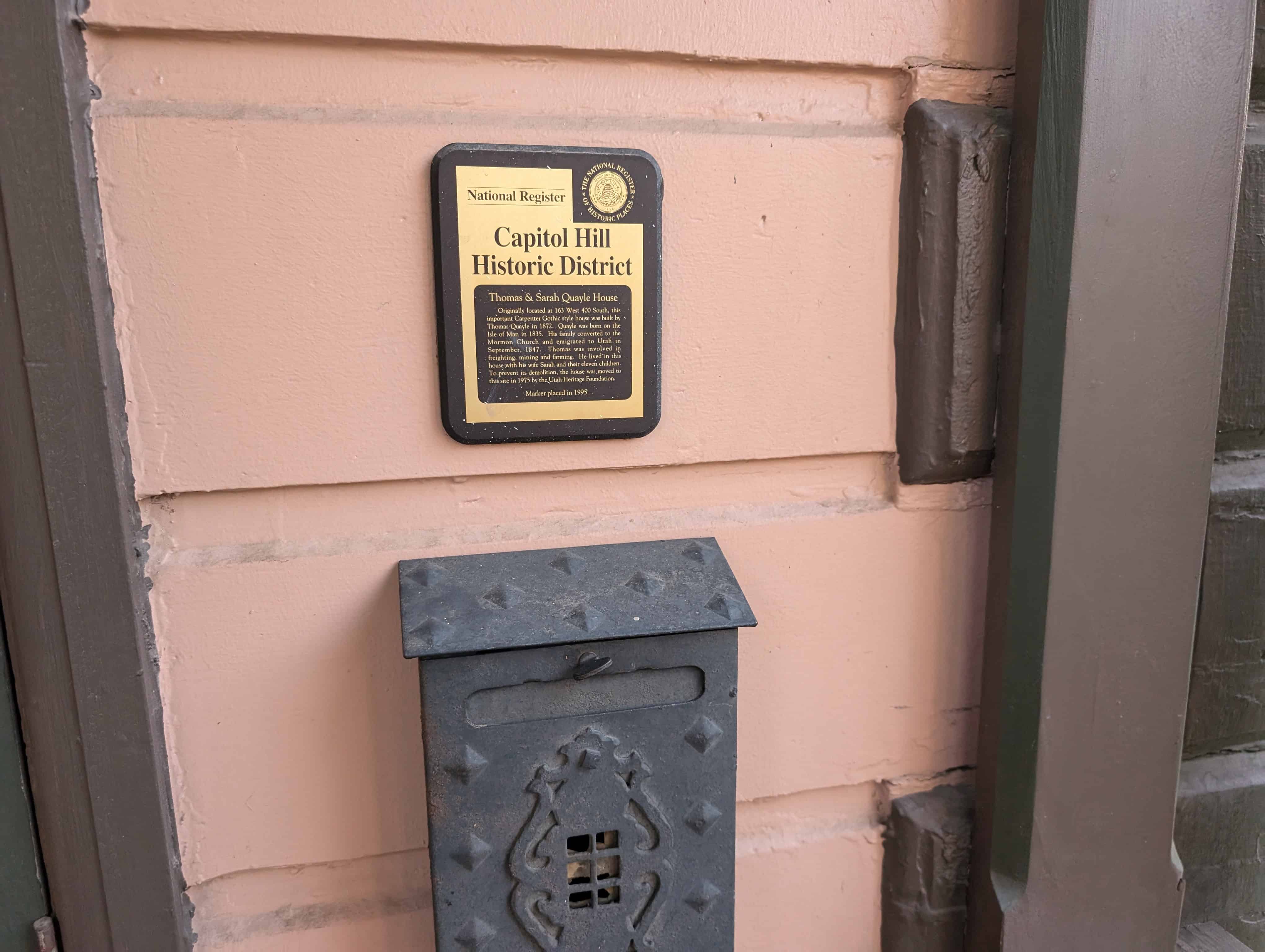
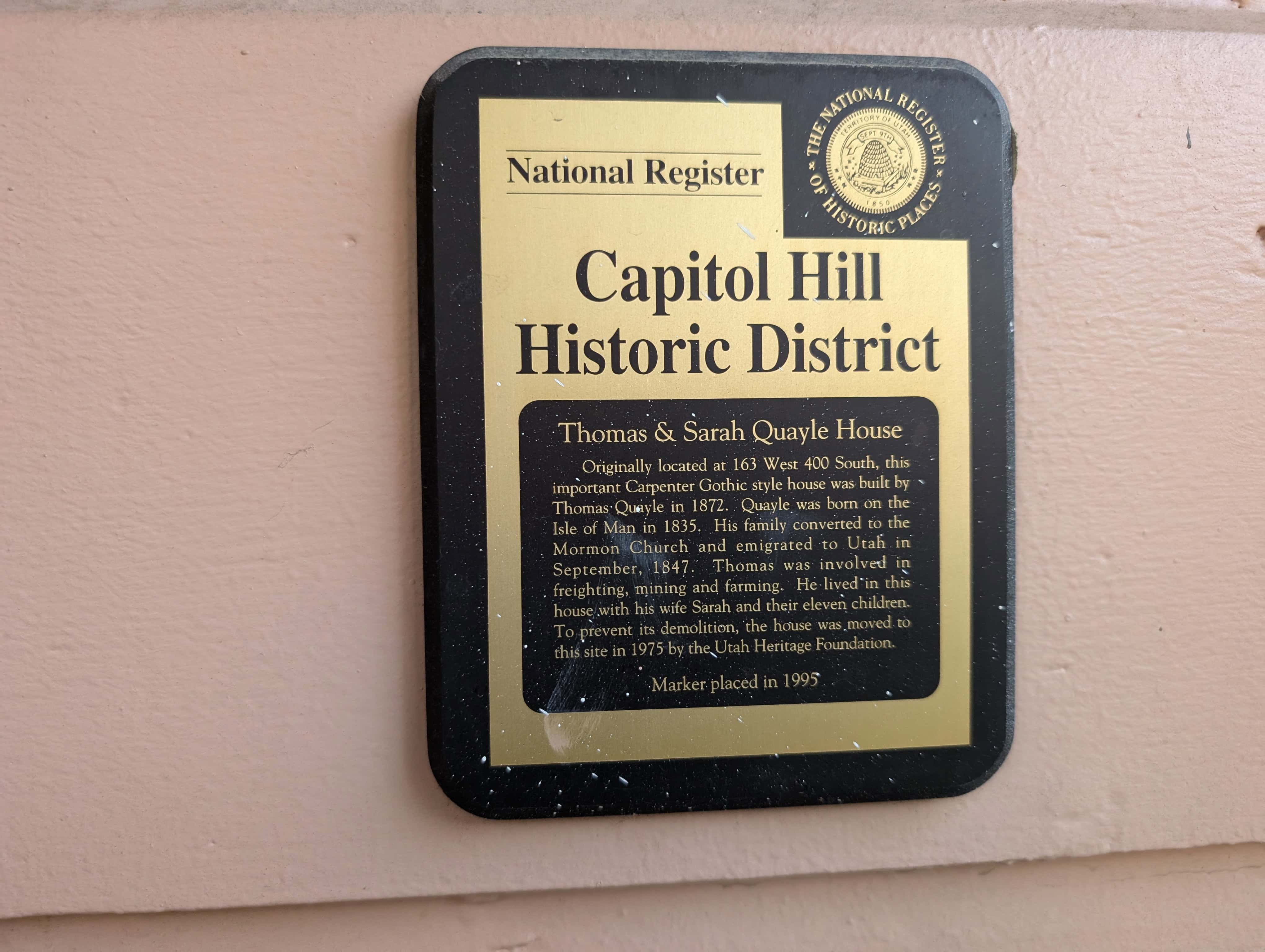
Thomas & Sarah Quayle House

Originally located at 163 West 400 South, this important Carpenter Gothic style house was built by Thomas Quayle in 1872. Quayle was born on the Isle of Man in 1835. His family converted to the Mormon Church and emigrated to Utah in September, 1847. Thomas was involved in freighting, mining and farming. He lived in this house with his wife Sarah and their eleven children. To prevent its demolition, the house was moved to this site in 1975 by the Utah Heritage Foundation.

James Watson Home

05 Tuesday Oct 2021

Posted by Jacob Barlow in Uncategorized

≈ Leave a comment

Tags

Capitol Hill Historic District

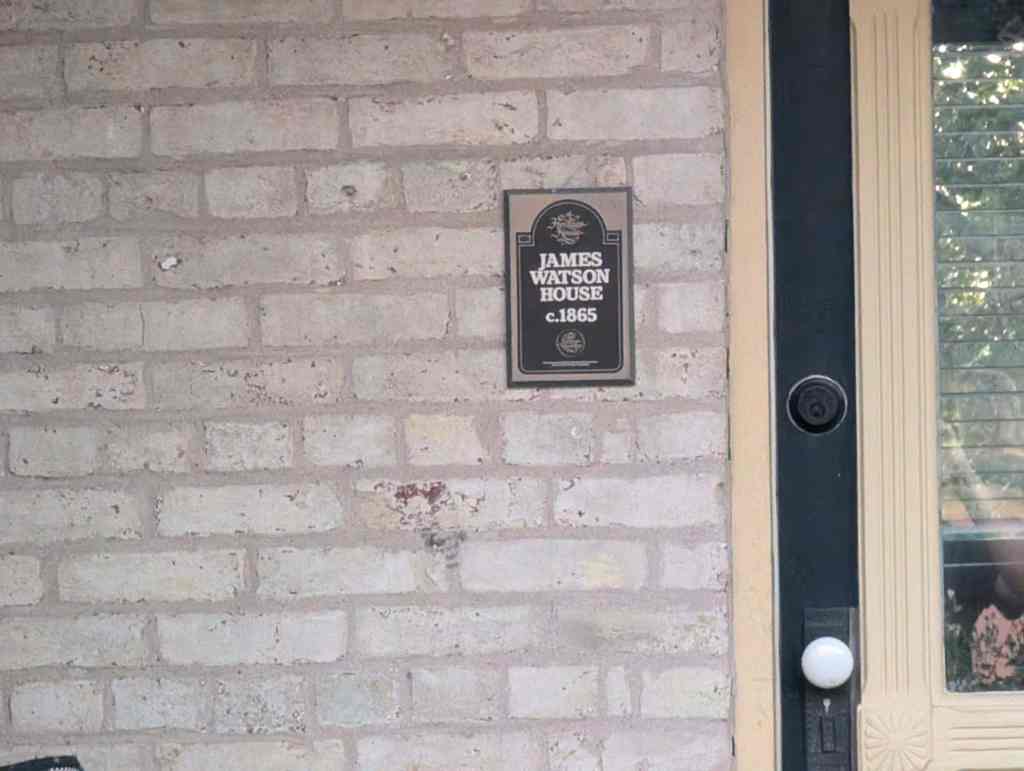
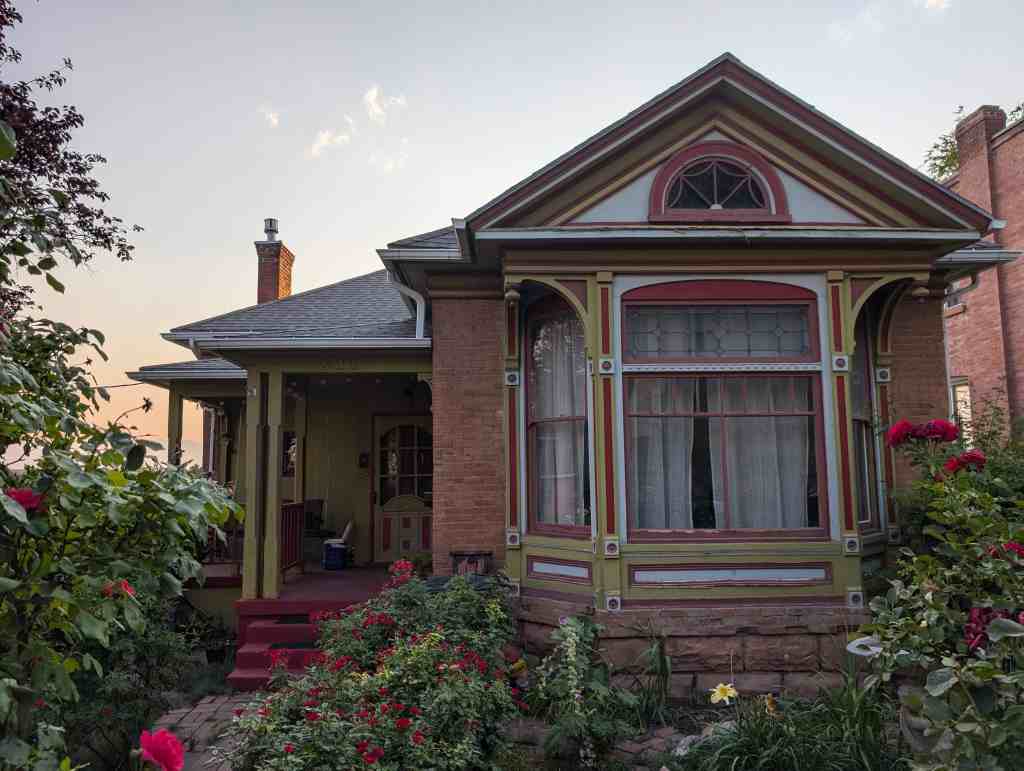
Originally probably a vernacular “T” plan house, this single story house with basement was updated during the Victorian period to include an oriel on the front bay in the Italianate style, and ornamental porch elements. – Diana Johnson

This house was built by 1866 when James Watson is listed in residence there. Watson was born June 6, 1833, at Low Walker-on-Tyne. He became a convert to the LDS Church in 1856 and in 1863 after preaching for a number of years, emigrated to Utah. He was a founder of Watson Brothers, masons and contractors. This firm built many major buildings in Salt Lake, including the Hooper Eldredge Block, the ZCMI shoe factory and a part of the main structure of ZCMI. He was bishop of the nineteenth ward in the 1880’s. He and his wife, Mary Gibson Watson, occupied this house until his death in 1893. A cornerstone apparently giving the date of construction has been defaced beyond legibility.

Located at 335 Quince Street in the Capitol Hill Historic District in Salt Lake City, Utah

Joseph M. Watson Home

05 Tuesday Oct 2021

Posted by Jacob Barlow in Uncategorized

≈ 1 Comment

Tags

Capitol Hill Historic District

One story vernacular “rectangular cabin” house type with cable end chimneys and a three opening symmetrical facade. Porch hood is a later addition. Rear extension in a “lean-to” shed style plus several other additions. Structure has moulded cornice and window surrounds.

The original, adobe, portion of this house was built at least as early as 1866
to when the city directory lists James and Joseph Watson in residence there. Joseph Watson received a quit-claim deed to the property from Heber C. Kimball, dated 1867 and recorded in 1872.

Joseph Watson was born in Blagden, Northumberland, England, July 7, 1840. James was born at Low Walker-on-Tyne, June 6, 1833. James was baptized in 1856 and baptized Joseph in 1857. Joseph emigrated to Utah the same year and began work as a mason. His brother, after preaching in England came in 1863 and together they founded Watson Brothers, builders and contractors.

Watson Brothers constructed many of the important buildings of the city, including the Hooper-Eldridge Block, the ZCMI Shoe Factory, and part of the main building of ZCMI. James served as Bishop of the 19th Ward from 1882 until his death in 1889.

Joseph was elected to the city council in 1893 and 1895 but died before he could begin his second term.

Located at 334 Quince Street in the Capitol Hill Historic District in Salt Lake City, Utah

William Asper Home

05 Tuesday Oct 2021

Posted by Jacob Barlow in Uncategorized

≈ Leave a comment

Tags

Capitol Hill Historic District

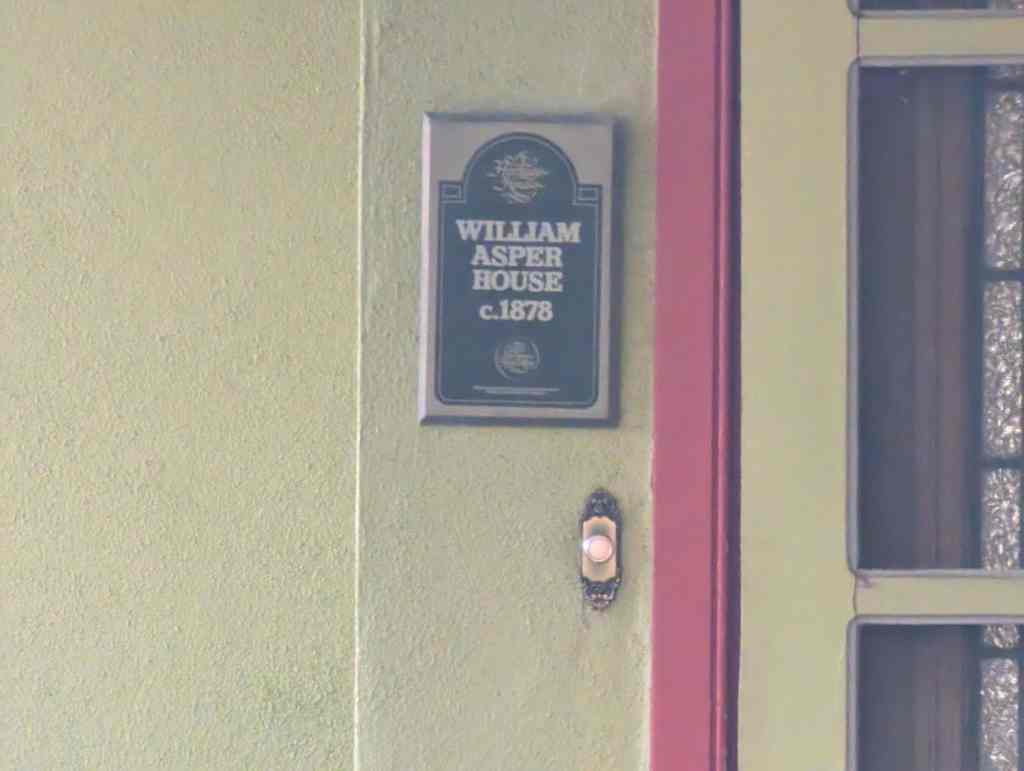
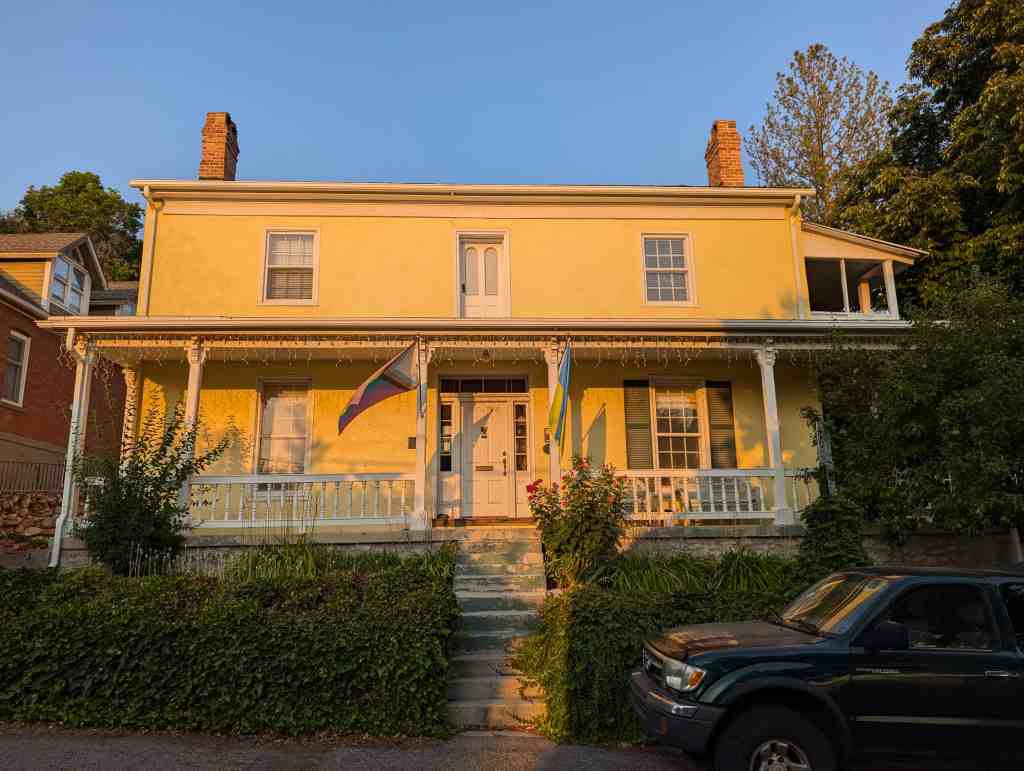
This is a one-story house with basement. A gabled bay projects in front from the hipped roof bay of the central mass. In this gable area is a semi-circular window. The molded cornice is extant. The porch configuration is not original but compatible. – Diana Johnson

Evidence of title and directories suggests this house was built in the late 1870’s for William Asper. Asper was born April 15, 1836 at Newville, Cumberland County, Pennsylvania. A convert to the LDS Church, he came to Salt Lake in 1861 where he worked as a carpenter before becoming a founder of Asper, Noall & Co., lumber and planning mill. He held a succession of high offices within the LDS Church, including president of the quorum of the Salt Lake Stake. In 1881-1883 he served a mission to the U.S. South and was president of a conference there. He was married to Mary E., who died in 1914 and apparently to Adelaide Adelia Wilcox and Rebecca Jane Noall as well. He occupied this house with his wife Rebecca at the time of his death in 1910. In 1935 title passed to a son, Mathew N. Asper, who held it through 1940.

Located at 325 Quince Street in the Capitol Hill Historic District in Salt Lake City, Utah

Robert C. Newson Home

30 Thursday Sep 2021

Posted by Jacob Barlow in Uncategorized

≈ Leave a comment

Tags

Capitol Hill Historic District

A one-story home with a full basement exhibiting a multi-hipped roof and irregular rectangular plan. Windows have decorative segmental insets. The hipped roof side porch has Eastlake decorative elements. – Diana Johnson

This small Victorian cottage is typical of the single-family dwellings being erected in the Capitol Hill Historic District during the late nineteenth century. Several cottage patterns recur in the area, the long, flat-roofed, almost “Italianate” design being particularly popular. The Newson house is an excellent and well maintained (restored 1980) example of this type.

This house was built in 1890 for Robert C. Newson. Newson was born July 1, 1845 in Ipswich, Suffolk, England. He married Mary Ann Bradlough in England and emigrated in 1873 to Utah. Here he married Augusta Frederickson. A member of the LDS Church, he was employed as a packer by ZCMI for nearly thirty years. Newson made a brick addition to the house in 1910, where he lived until his death in 1912. After his death the house passed to George Robert Newson. In 1931 Edna Newson Gillett sold the house to R.D. Demarest, who held it through 1940.

Located at 317 Quince Street in the Capitol Hill Historic District in Salt Lake City, Utah

Richard Vaughn Morris Home

30 Thursday Sep 2021

Posted by Jacob Barlow in Uncategorized

≈ Leave a comment

Tags

Capitol Hill Historic District

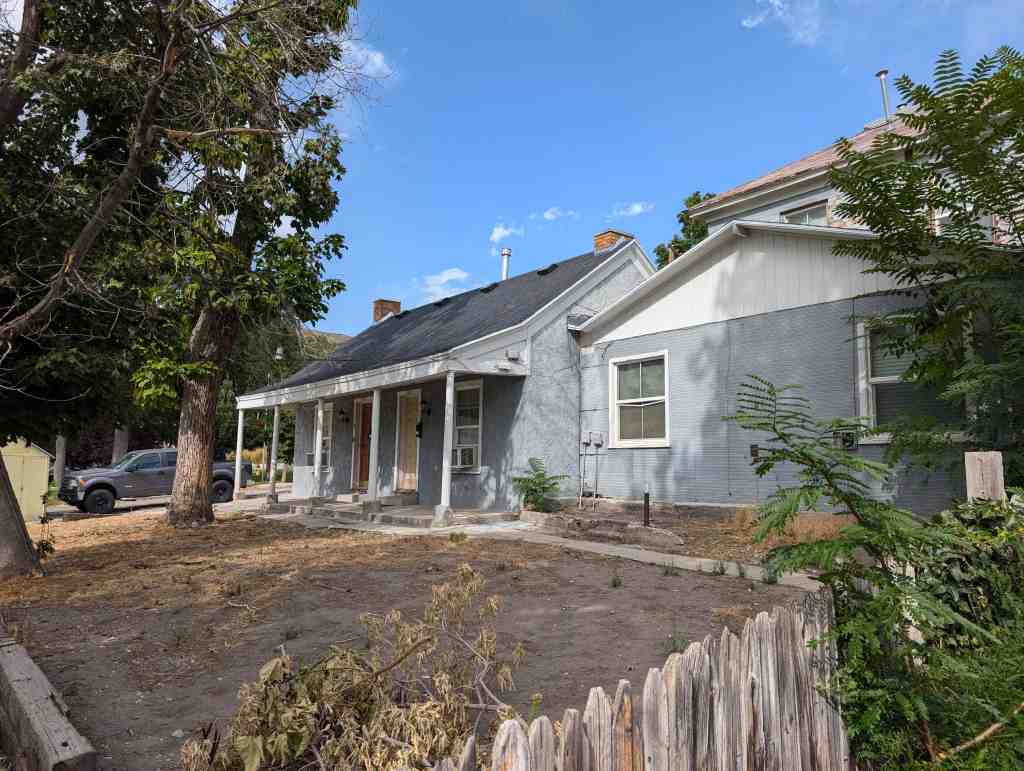
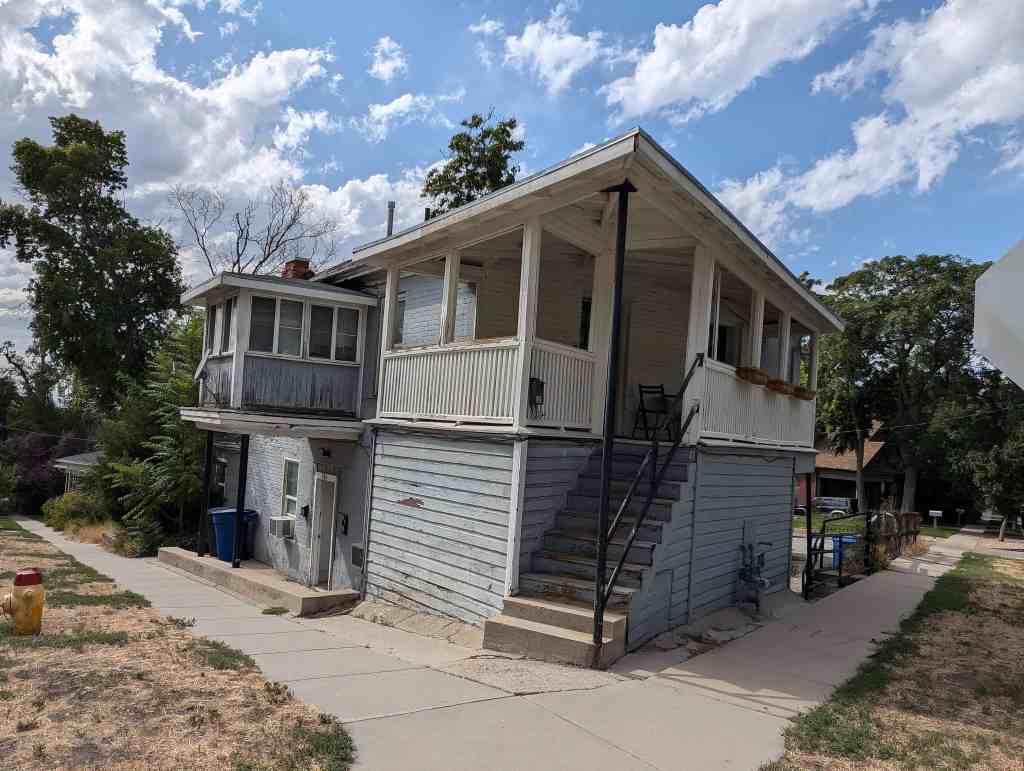
A two-story structure with gable roof. Rear lean-to creates nearly a saltbox configuration. Main façade piercing is a three over three arrangement and includes a second story door. The main entrance is treated in a classical manner with sidelights and transom light. The moulded cornice is also a classical motif. Chimneys are located at gable ends. The porch has square supports with Victorian brackets. Balustrade with turned balusters may be later. A second story porch at side is a later modification. Nine over nine double hung sash windows may be a part of the current preservation program.

This house was built for Richard Vaughn Morris, sometime between 1861 and 1866 but no later than 1866. Morris received title to all of lot 3 in 1861 and the first city directory of 1867 lists him in residence on Quince Street between 2nd North and Apricot.

Morris was born September 23, 1830 in Abergele, Denbigshire, North Wales to John and Barbara Morris. A frail child, he was sent at thirteen to England apprenticed to a lawyer. In 1849 he was baptized into the LDS Church by his brother Elias. In 1850 he left a law office in Liverpool to become secretary to William S. Phillips, head of the LDS Church in Wales. In 1855 he emigrated to Utah.

He was a member of the Nauvoo Legion Cavalry, served in two Indian wars and the Morrisite War, obtaining the rank of lieutenant. He was assistant government assessor and collector of internal revenue under General A.L. Chetlain, secretary to Congressional Delegate William H. Hooper in 1870, secretary of the Deseret Telegraph Company, President of the Utah Soap Factory, and auditor of the Utah Central Railroad.

Utah Soap Factory, and auditor of the Utah Central Railroad. From 1873 to 1875 he filled a mission to England. He served as president of the Birmingham Conference, and returned with 300 converts.

Morris married Hannah Phillips in England by whom he had three sons. Following her death he married Lavinca Robins who emigrated with him. He took a second wife, Harriet Cecilia Jones, May 16, 1868, by whom he had eight children. They adapted an Indian child as well. The house at 132-134 W 300 N was built in 1889 by Harriet, widowed when Morris died March 12, 1882.

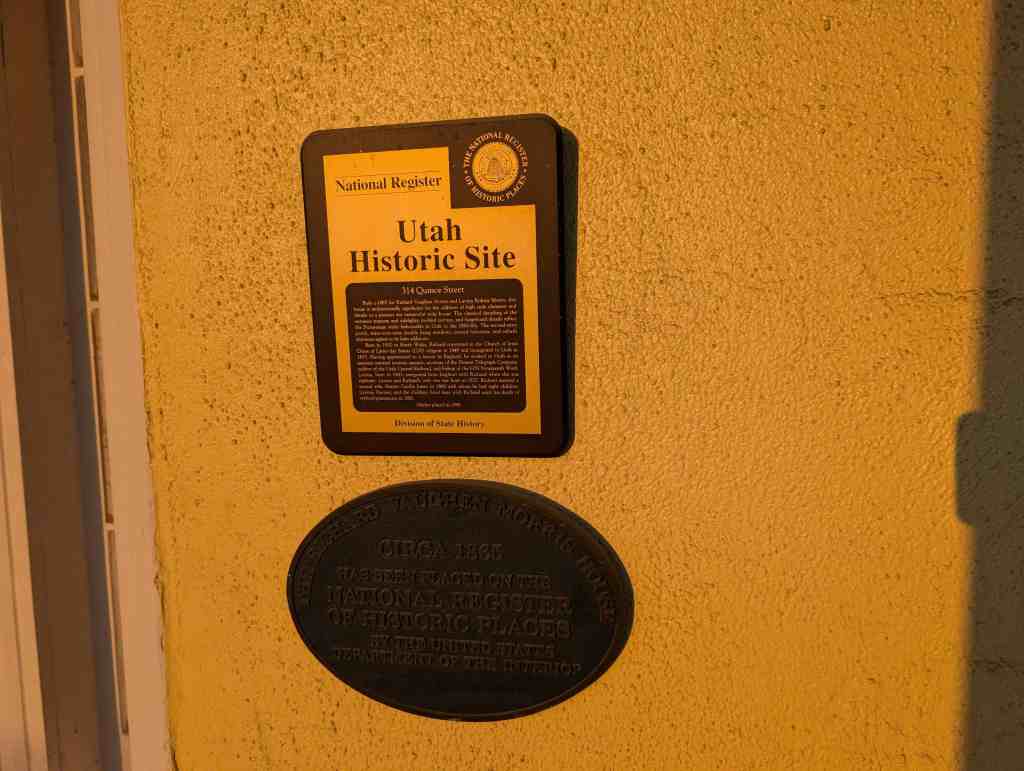
Located at 314 Quince Street in the Capitol Hill Historic District in Salt Lake City, Utah

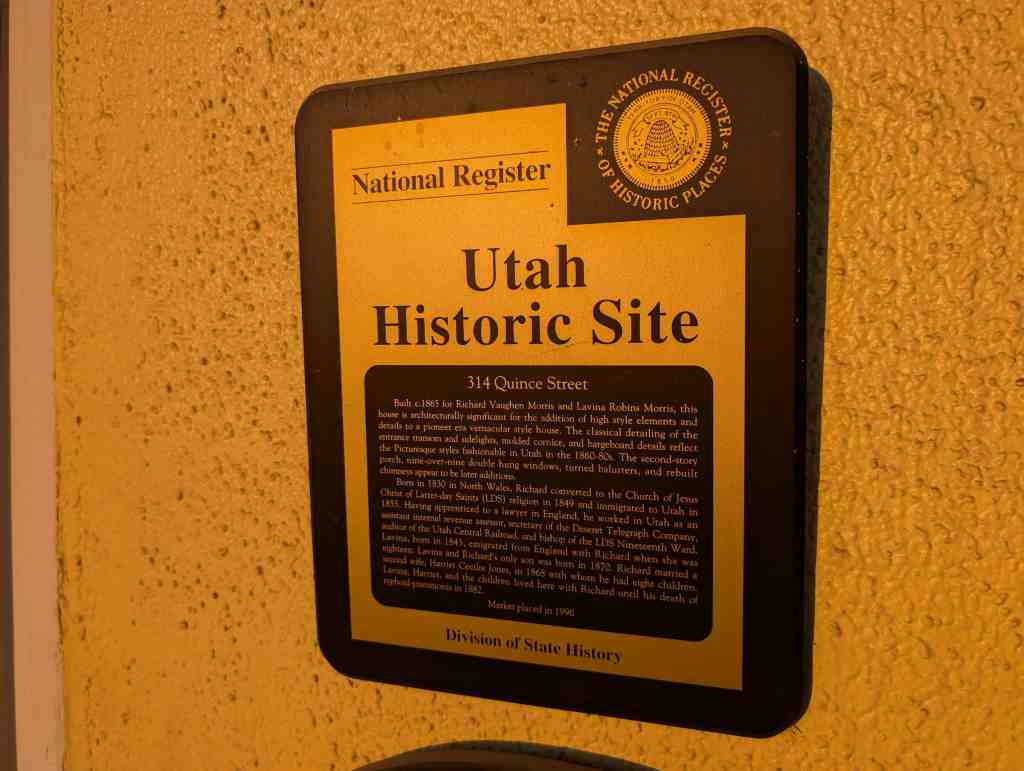
314 Quince Street

Built c.1865 for Richard Vaughen Morris and Lavina Robins Morris, this house is architecturally significant for the addition of high style elements and details to a pioneer era vernacular style house. The classical detailing of the entrance transom and sidelights, molded cornice, and bargeboard details reflect the Picturesque styles fashionable in Utah in the 1860-80s. The second-story porch, nine-over-nine double hung windows, turned balusters, and rebuilt chimneys appear to be later additions.

Born in 1830 in North Wales, Richard converted to the Church of Jesus Christ of Latter-day Saints (LDS) religion in 1849 and immigrated to Utah in 1855. Having apprenticed to a lawyer in England, he worked in Utah as an assistant internal revenue assessor, secretary of the Deseret Telegraph Company, auditor of the Utah Central Railroad, and bishop of the LDS Nineteenth Ward. Lavina, born in 1843, emigrated from England with Richard when she was eighteen. Lavina and Richard’s only son was born in 1870. Richard married a second wife, Harriet Cecilia Jones, in 1868 with whom he had eight children. Lavina, Harriet, and the children lived here with Richard until his death of typhoid-pneumonia in 1882.

Joseph Dean Home

18 Saturday Sep 2021

Posted by Jacob Barlow in Uncategorized

≈ Leave a comment

Tags

Capitol Hill Historic District

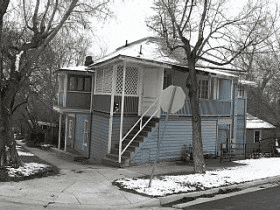
Built in several phases during the nineteenth century, this structure consists of two adjoining vernacular dwellings (built successively), and later extensions (probably dating in the 1890’s) located at the corner of Main St and Fourth North St.

The earliest structure (facing west) is a vernacular, double pen style frame and stucco home of one story. It exhibits a rectangular plan with rear shed roof lean-to, symmetrical façade piercing and end chimneys. The front porch overhand of shed roof type has unusually narrow Tuscan supports. Windows are a six-over-six double hung sash type.

The adjoining two story brick structure has a double hipped roof, and a hall and parlor plan arrangement. Extensive modifications have been made to convert the structures to multiple family dwellings. Additions to the corner area, and an enclosed balcony centered on the primary façade of the two story portion are part of the alteration scheme.

Evidence of title and directory suggests the oldest part of this structure was built about 1873 for Joseph Dean. The style, massing, materials and siting suggest that the one story portion in the rear, facing west, away from Main Street, was the first structure. The vernacular style of the two story brick portion facing 500 N suggest that it was probably added in the 1880’s. The existence of the newer portion by 1892 at the latest is suggested by a directory entry listing Mrs. Amelia Deans address as “rear 77 Peach” (emphasis added).

Dean worked as a carpenter, being employed in the 1890’s in building the Salt Lake Temple. His wife Amelia, two daughters, Emily and Kate both teachers, and apparently a son William John, machinist, and carpenter lived in the house at one time or another in the 1880’s and 1890’s. With the exception of two small porches, front and rear, the house had come to its present appearance by 1898. The house remained in the family through 1940.

Located at 501 North Main Street in the Capitol Hill Historic District in Salt Lake City, Utah

(county records)

Paul E. B. Hammer Home

18 Saturday Sep 2021

Posted by Jacob Barlow in Uncategorized

≈ 3 Comments

Tags

Capitol Hill Historic District

This is a two-story home with a central hall type plan. It is one room deep and two rooms wide with a hall, and has a one story shed extension to the west rear. Chimneys are at the gable ends. Facade piercing follows a “five-over-five” symmetrical pattern. Windows are double hung sash types, six lights over six. Shutters and siding are later modifications.

Some part of this house may have been built by 1879 when the city directory shows Paul E.B. Hammer, a painter, in residence there. Hammer bought the property for $600 and resold it the same year for $650, both modest sums. Caroline C.P. Conley, widow of Solomon Conley, bought the house in 1879. She is listed as physician and surgeon in midwifery, practicing and in residence there, in 1884. Thereafter she lived elsewhere.

The house had apparently been brought to its present configuration by 1890, when Mrs. Conley was able to borrow several thousand dollars against it to finance the construction of four houses to the west on 4th North.

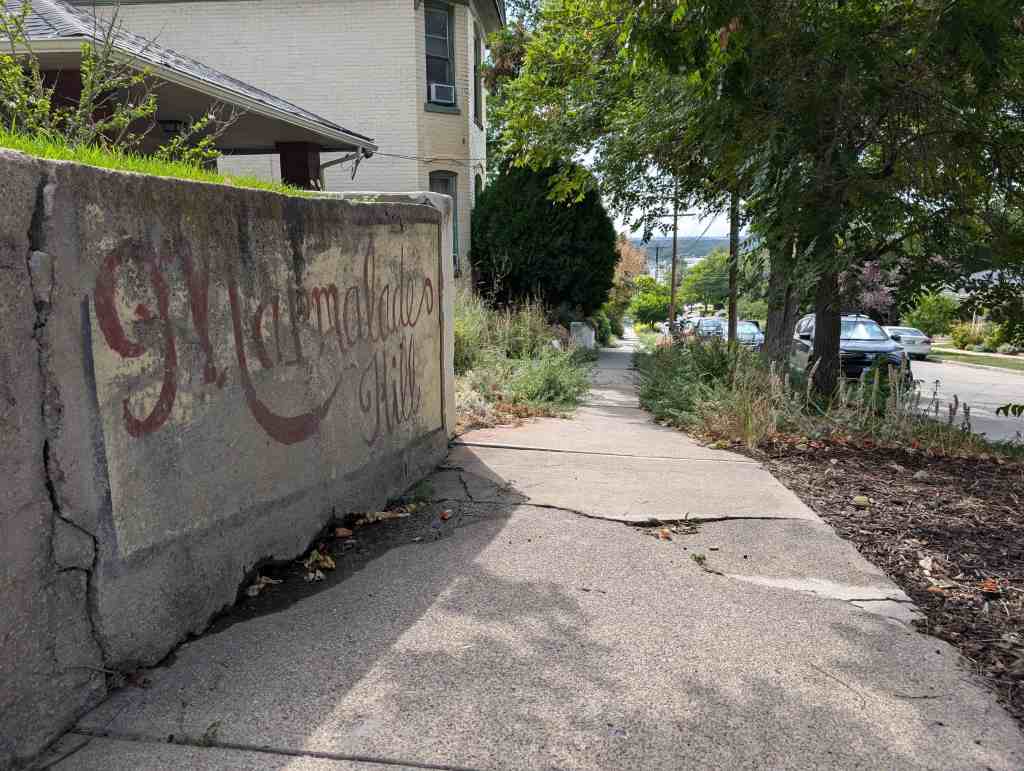
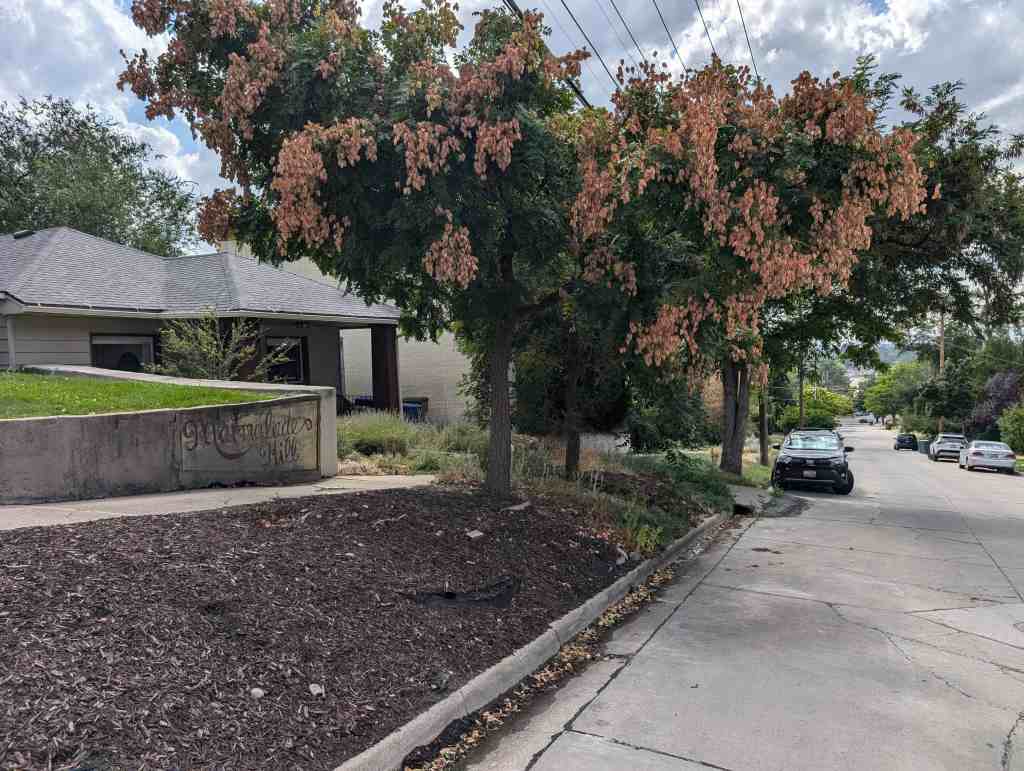
Marmalade Hill

Located at 469 North Main Street in the Capitol Hill Historic District in Salt Lake City, Utah

(county records)

William R. Calderwood Home

18 Saturday Sep 2021

Posted by Jacob Barlow in Uncategorized

≈ 1 Comment

Tags

Capitol Hill Historic District

This is a large brick two-story “box” type house which has a square plan and hipped roof. The decorative details on the house are exceptional: a full length two story porch spans the facade and contains intricate wood railing work; the porch frige is dentiled; a hipped dormer also has a dentiled frieze and stylized bracketing which is continued on the eaves of main roof; the upstairs windows are bay and the windows are dormer and the transom lights on the first floor have diamond-shaped panes.

This house was built in 1910 for William R. Calderwood. Calderwood was born g April 12, 1866 in Coalville, Utah to Alexander Calderwood and Margaret Salmon. He married Emily Dean. He was a physician and surgeon. He died in 1960.

Located at 321 North Main Street in the Capitol Hill Historic District in Salt Lake City, Utah

← Older posts
Newer posts →

Follow Jacob

Follow Jacob

Come wander with me on Youtube.

Blog Stats

  • 2,087,723 hits

Social and Other Links

BarlowLinks.com

Recent Posts

  • Provo High School Seminary Building
  • 821 E 100 S
  • 820 E 100 S
  • 817-819 E 100 S
  • 814 E 100 S

Archives

Loading Comments...