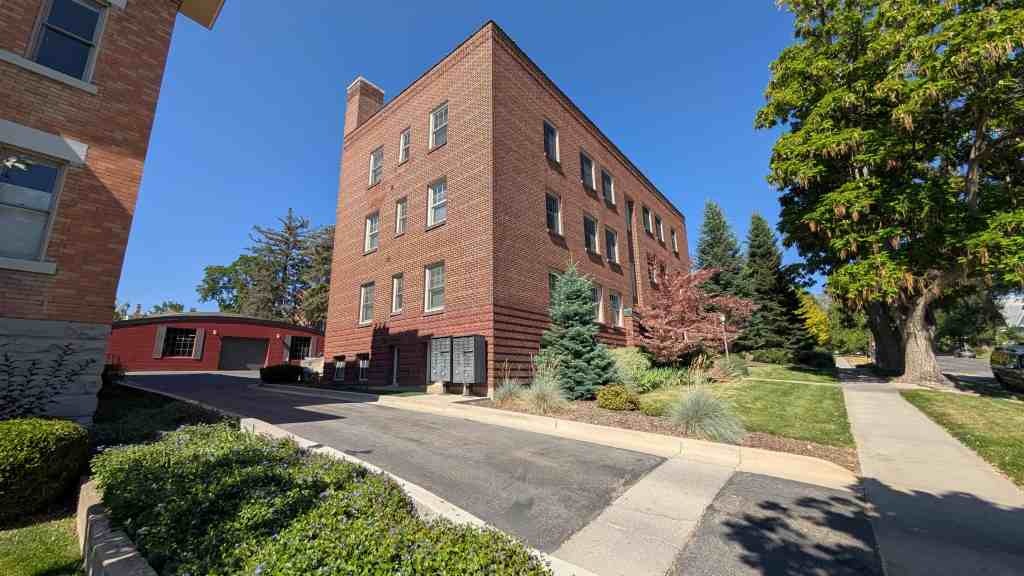
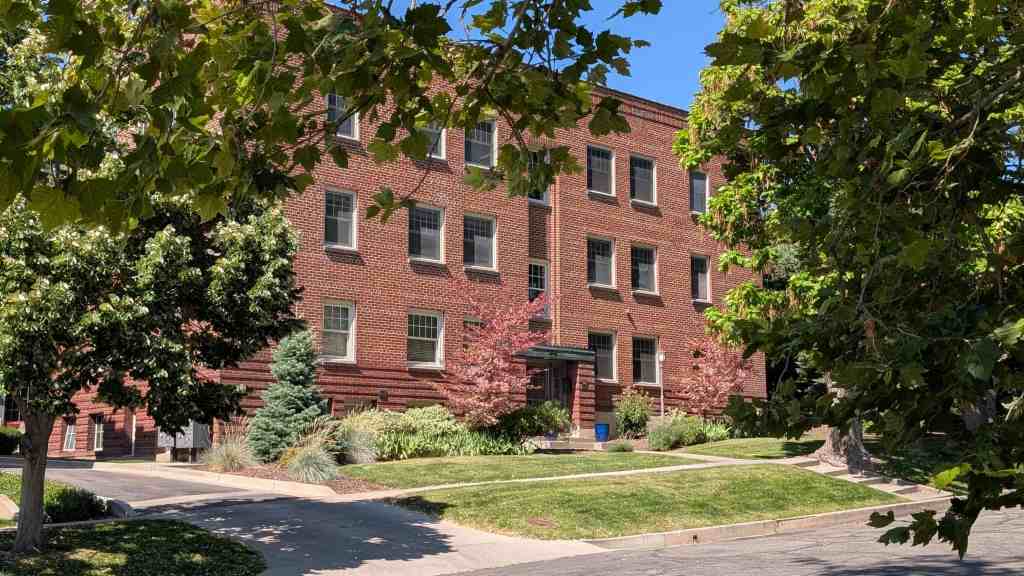
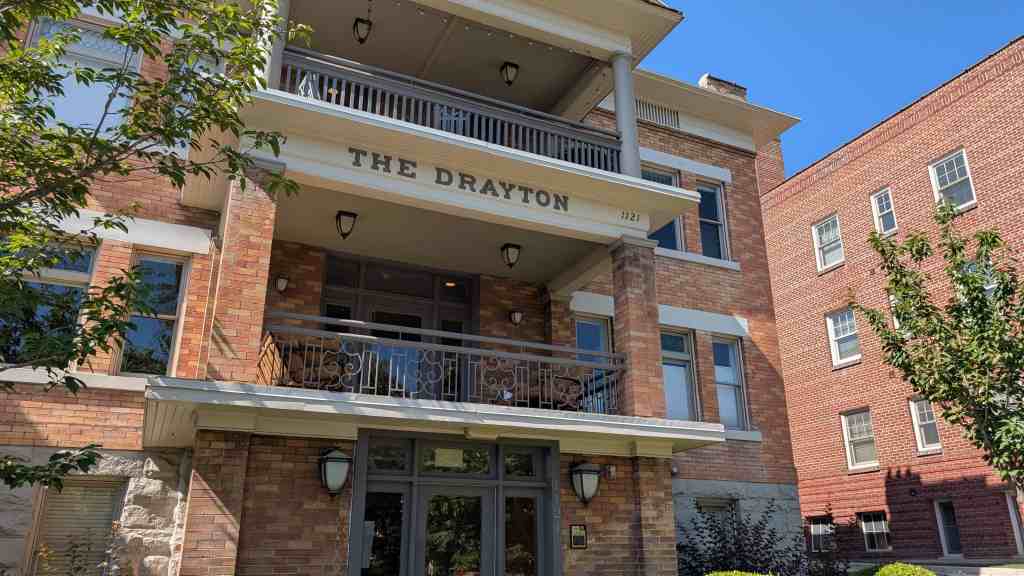
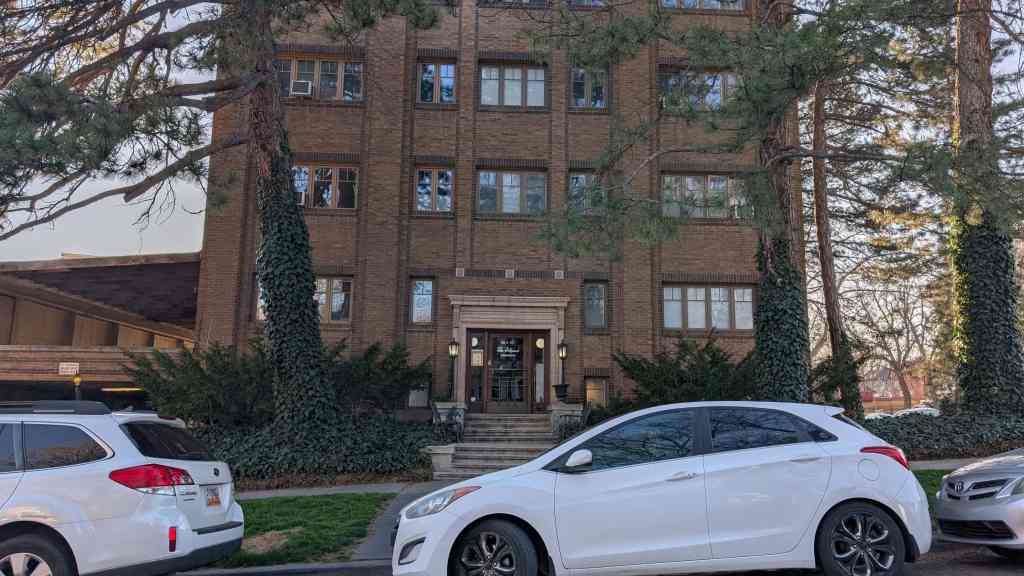
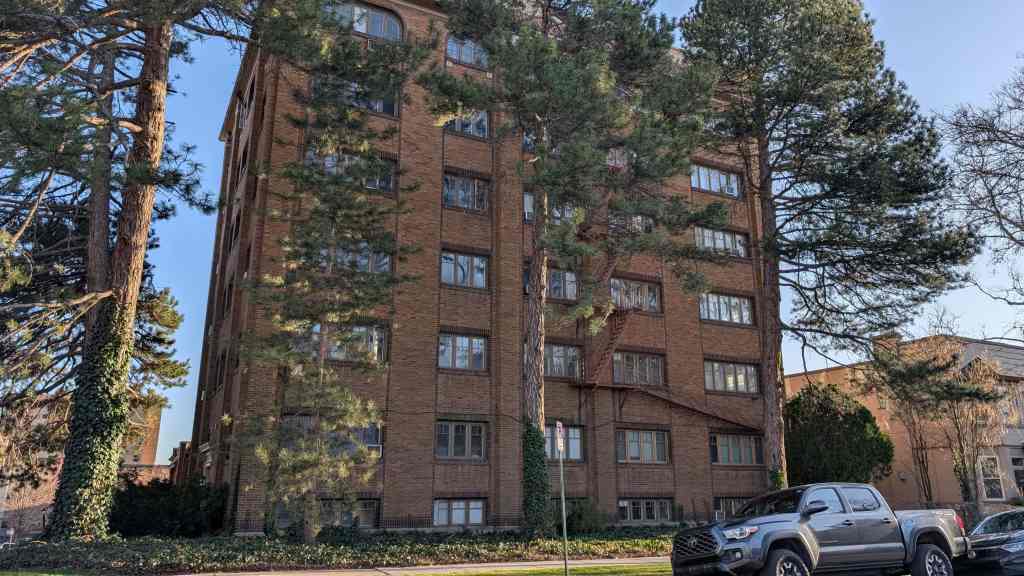
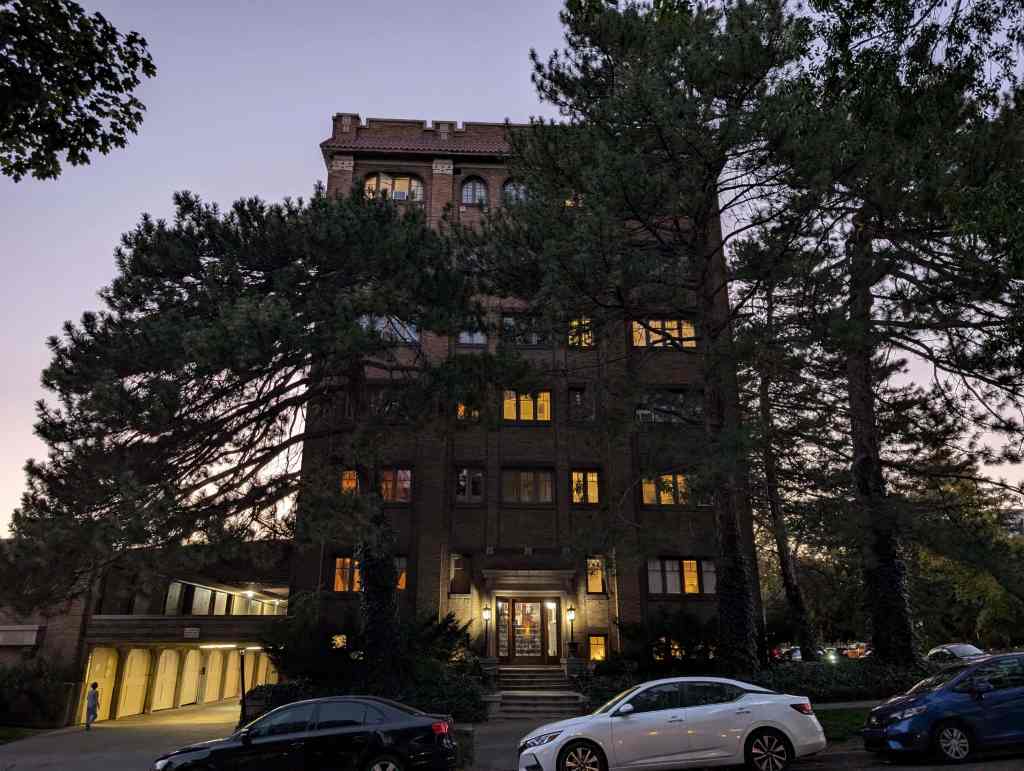
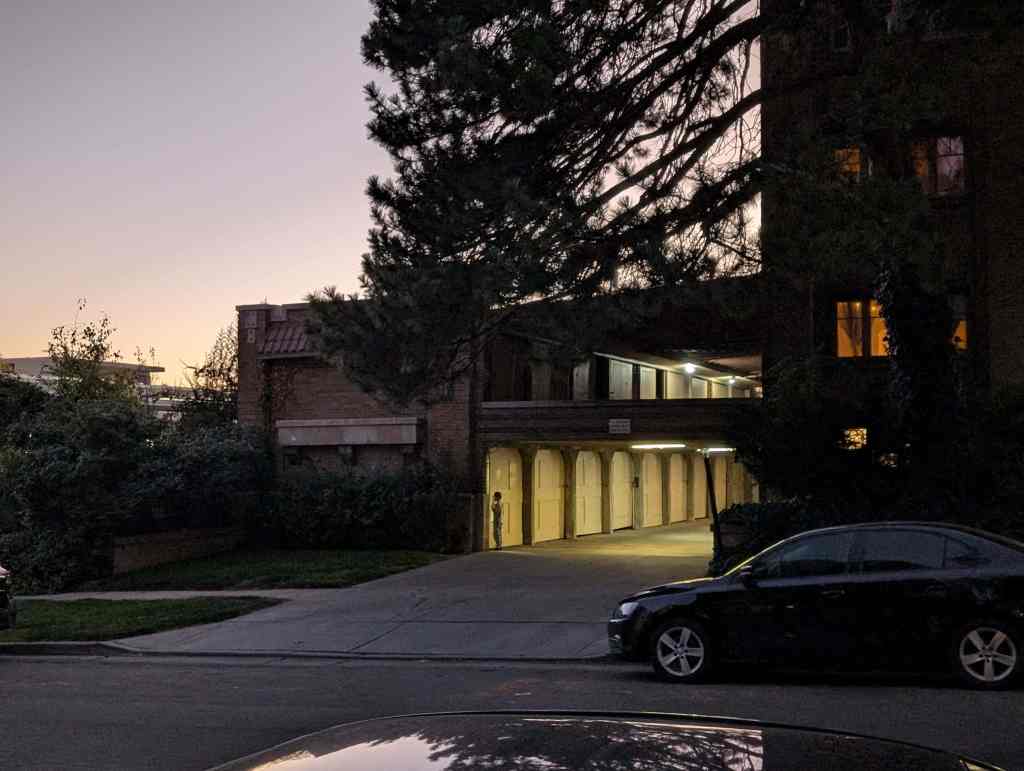
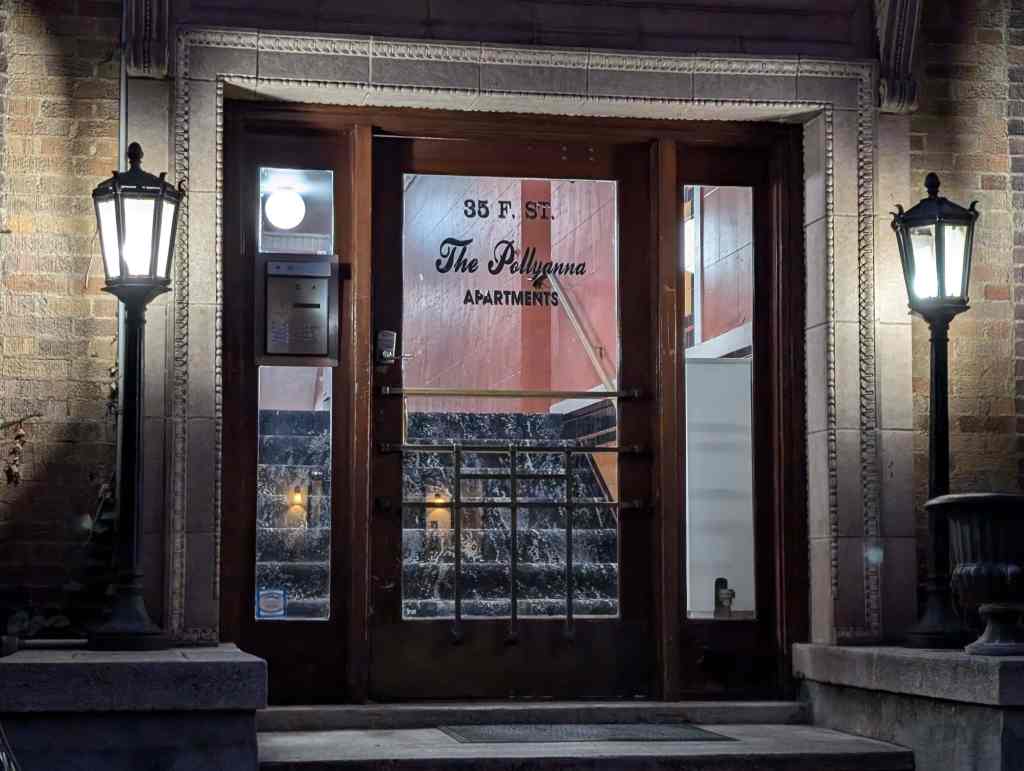
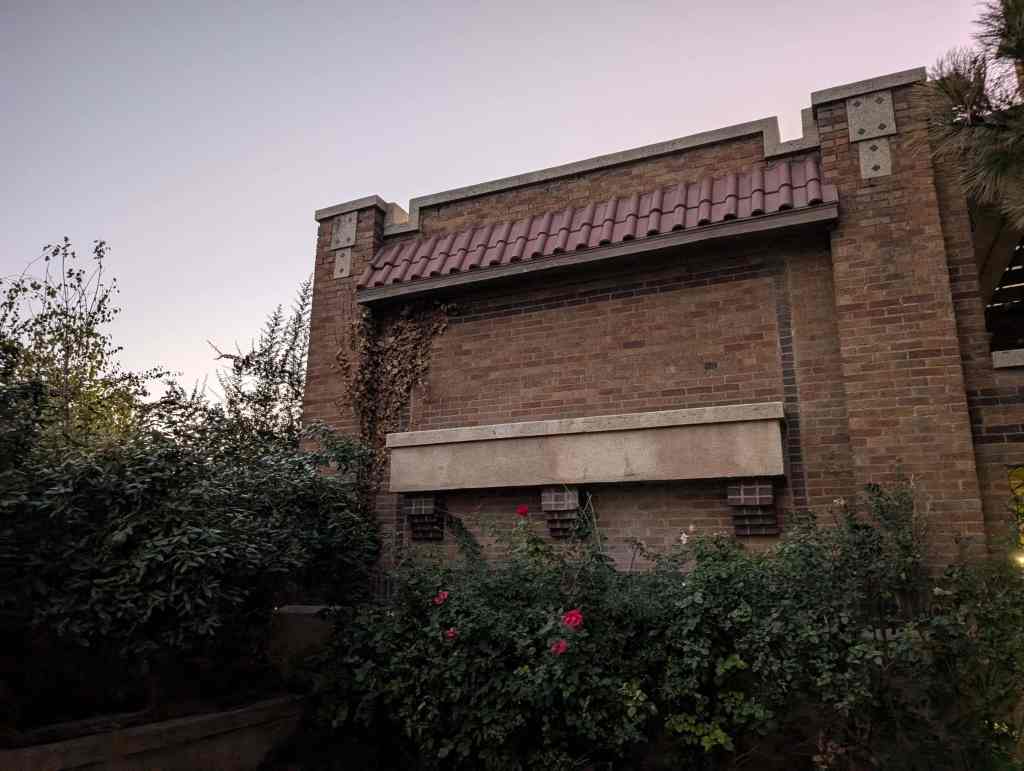
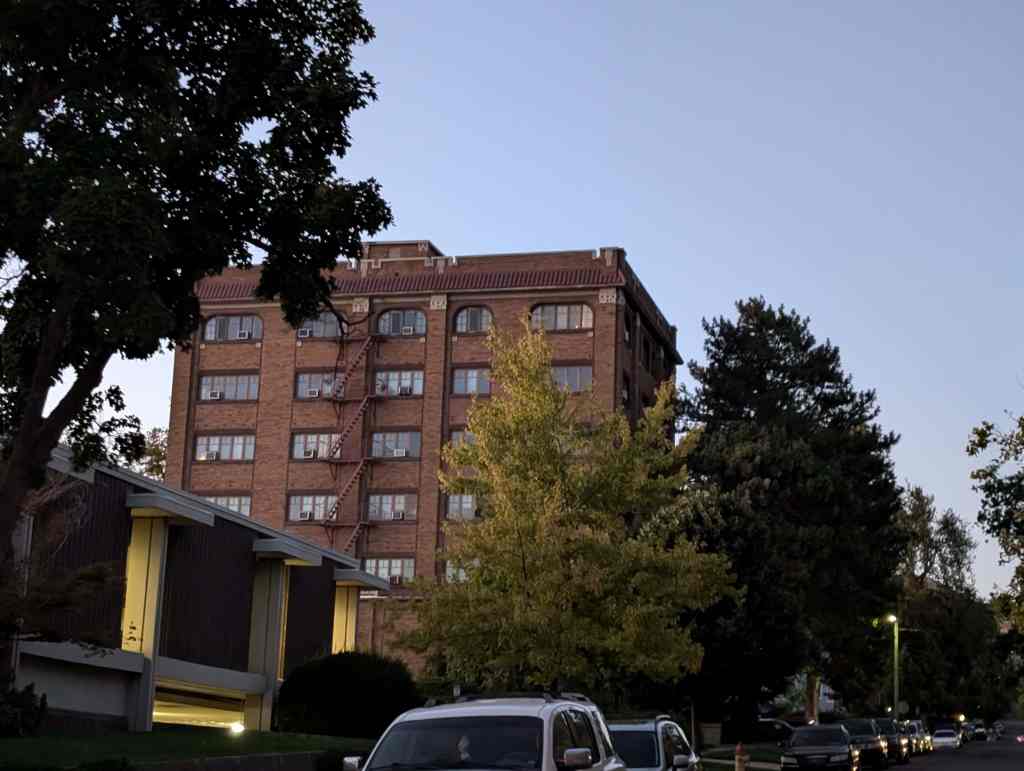
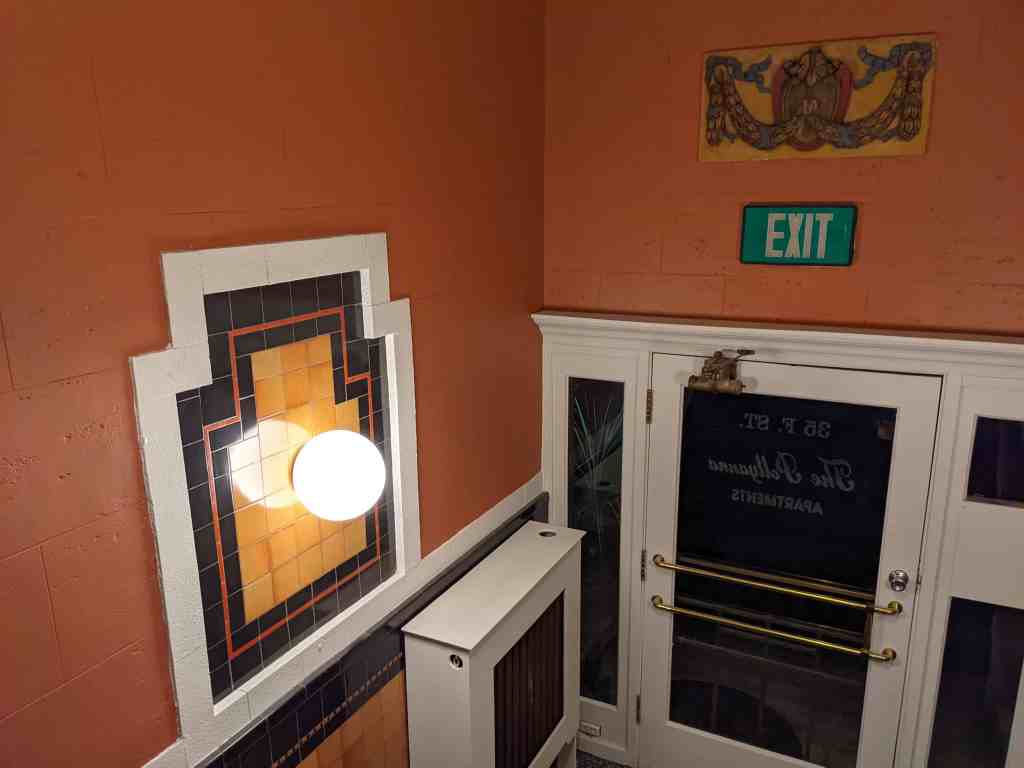
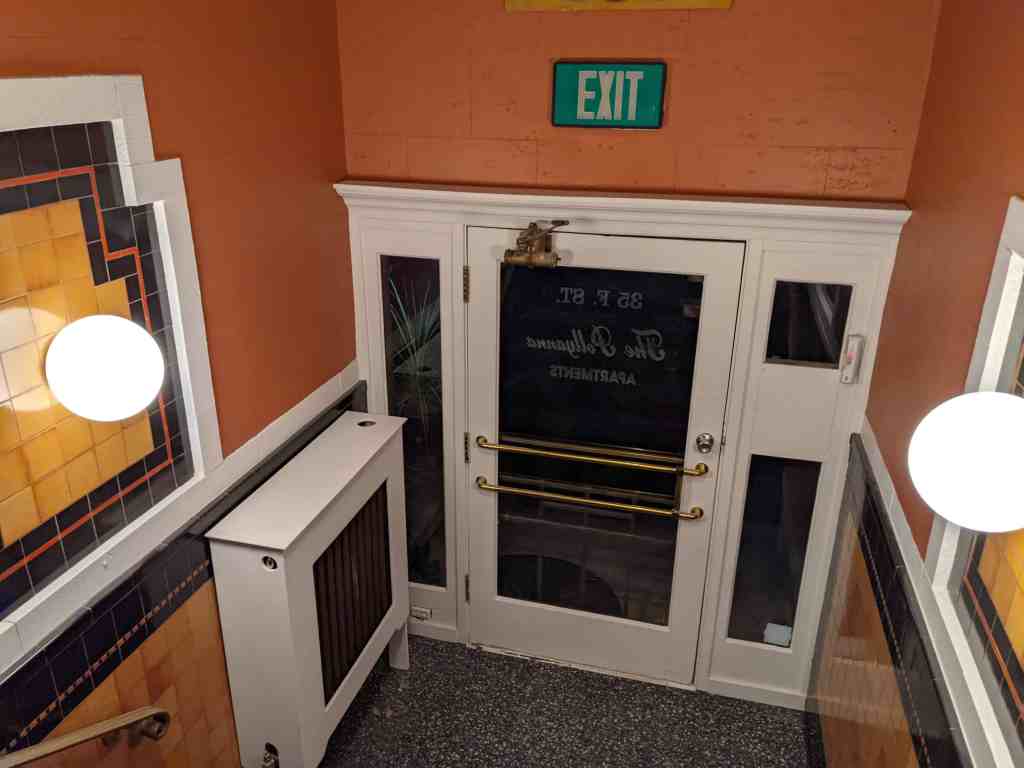
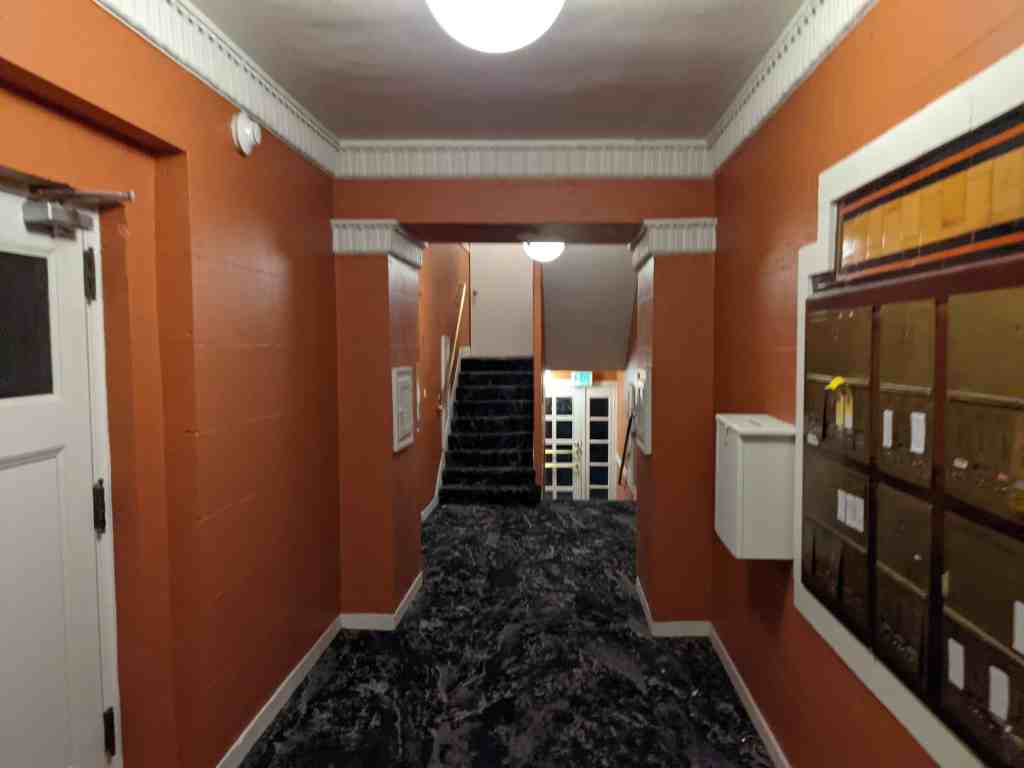
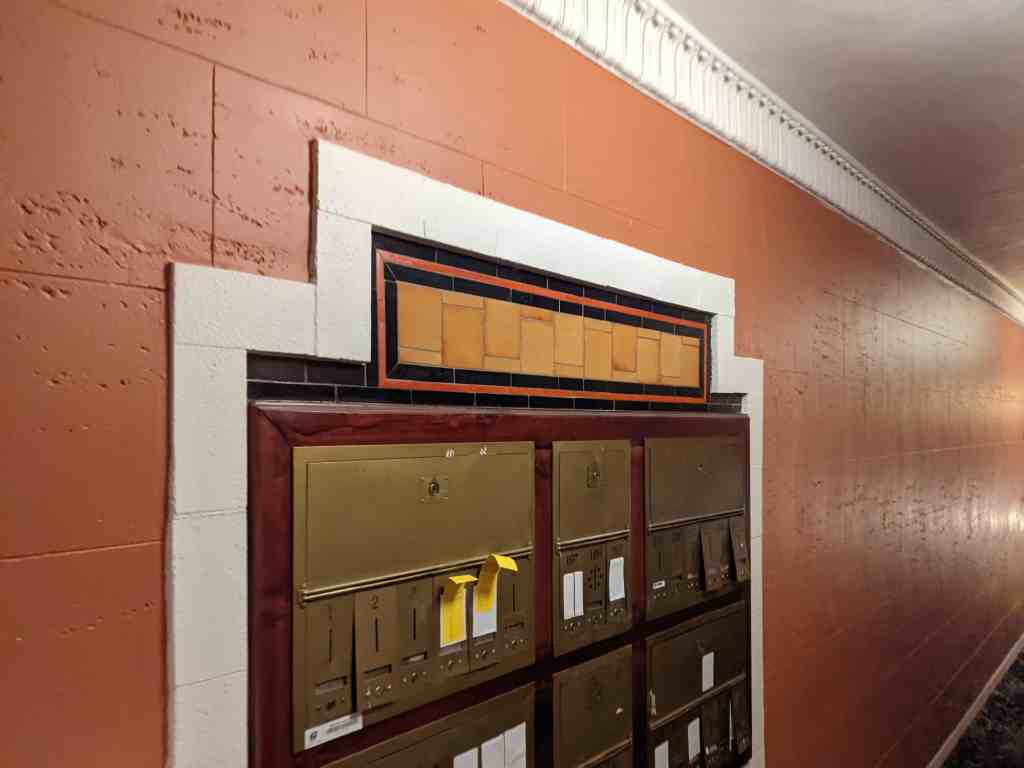
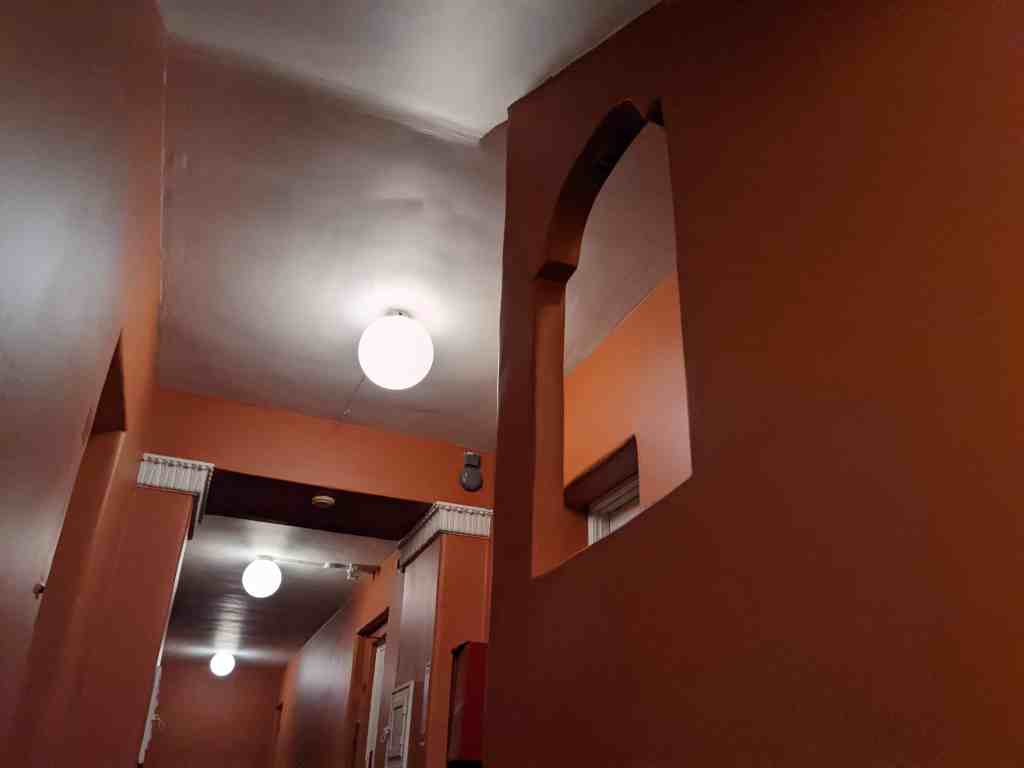
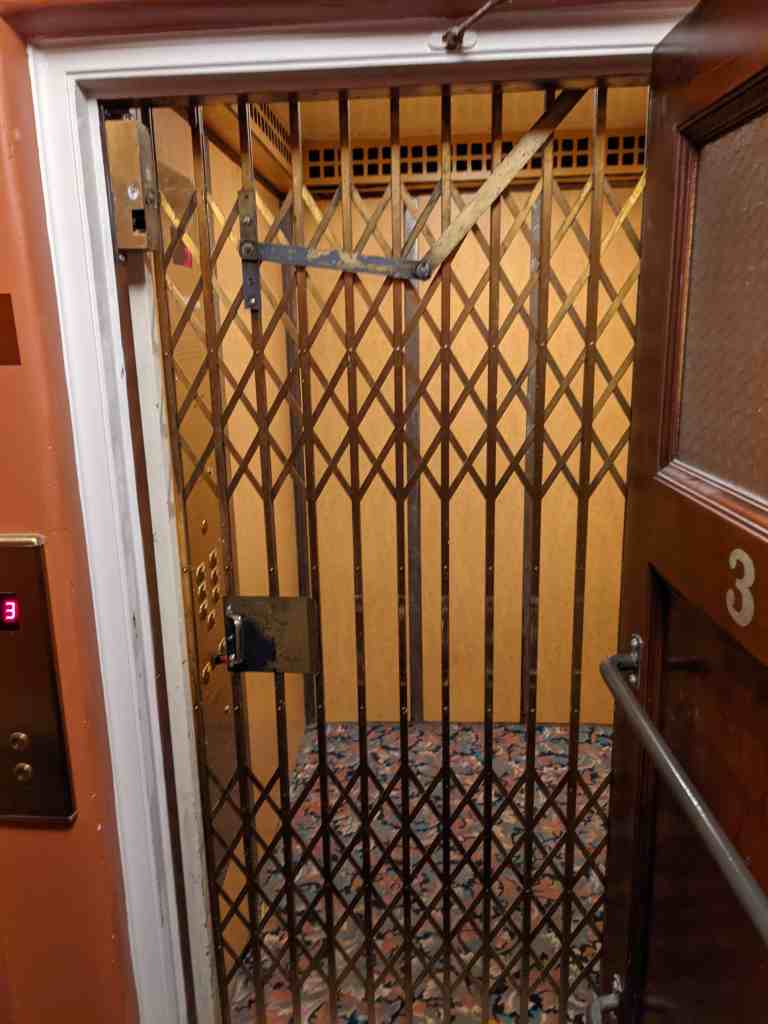
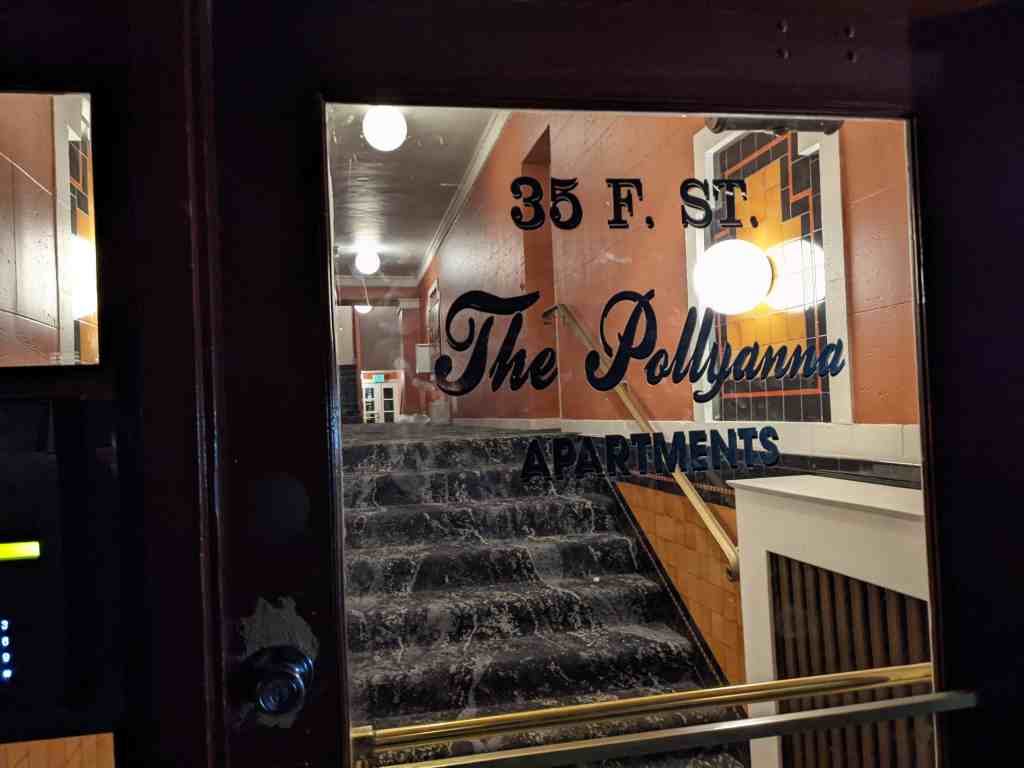
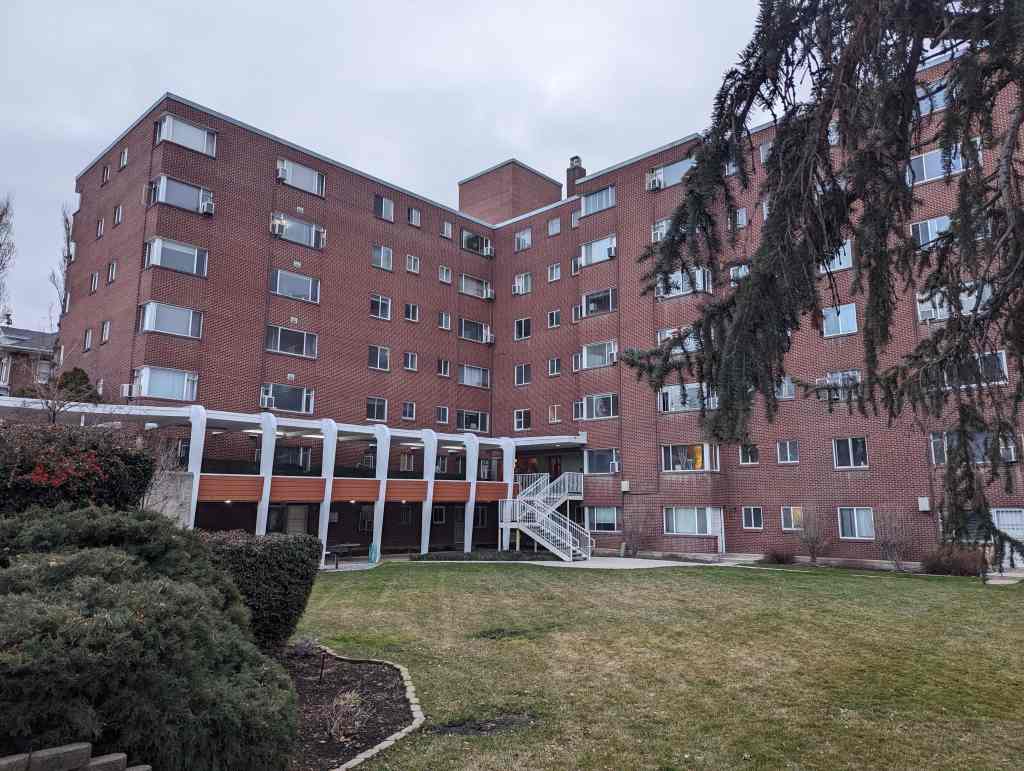
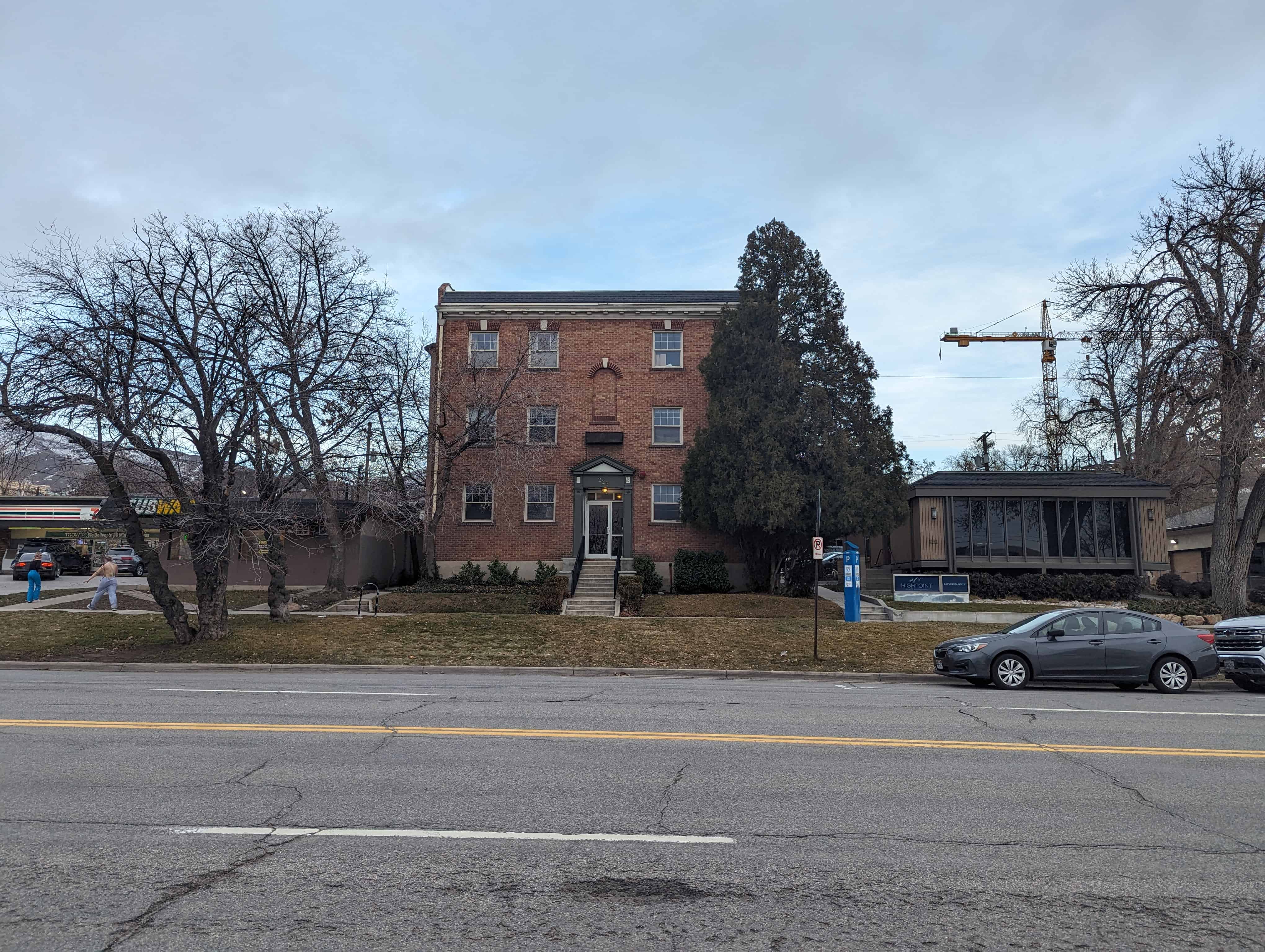
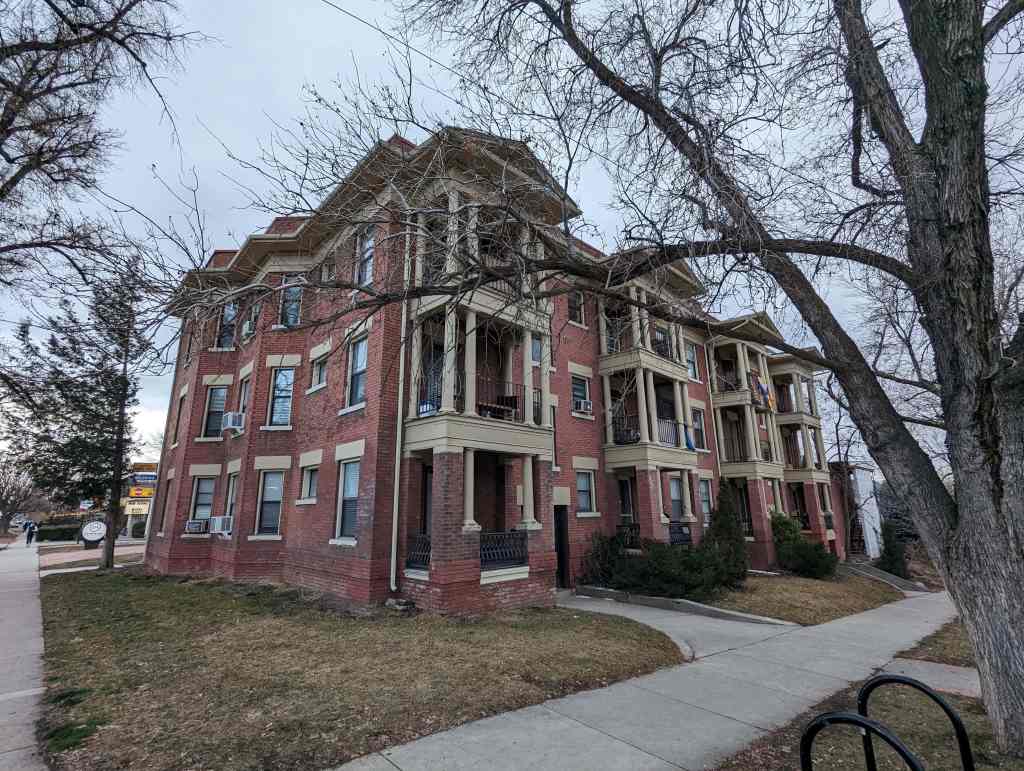
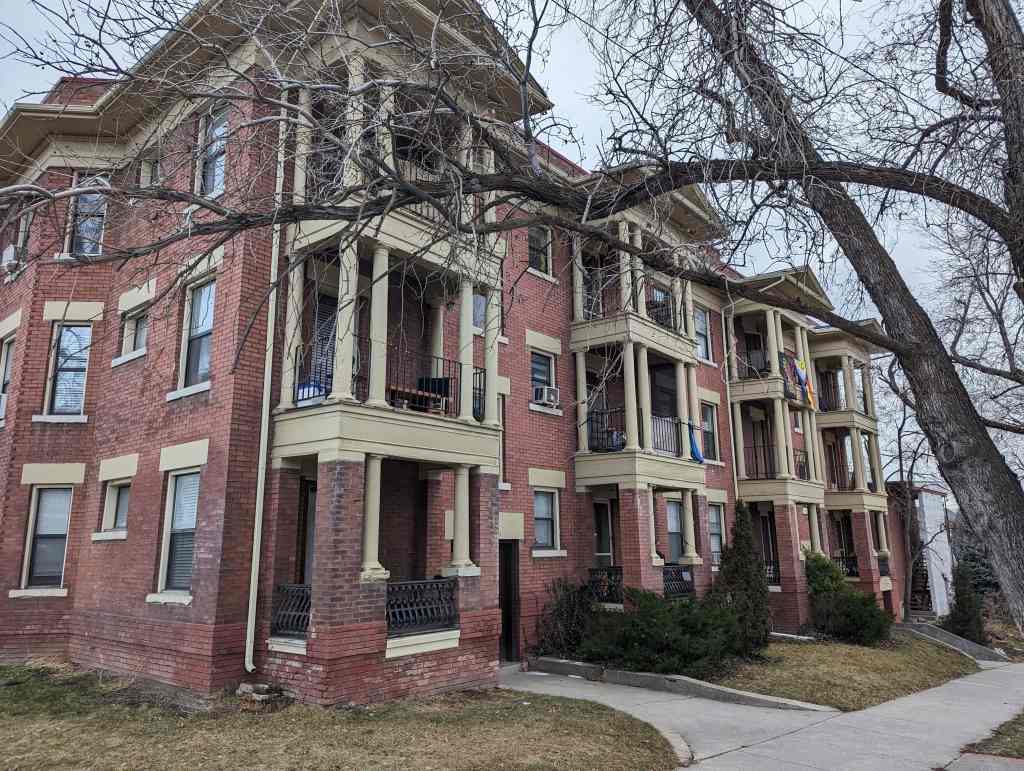
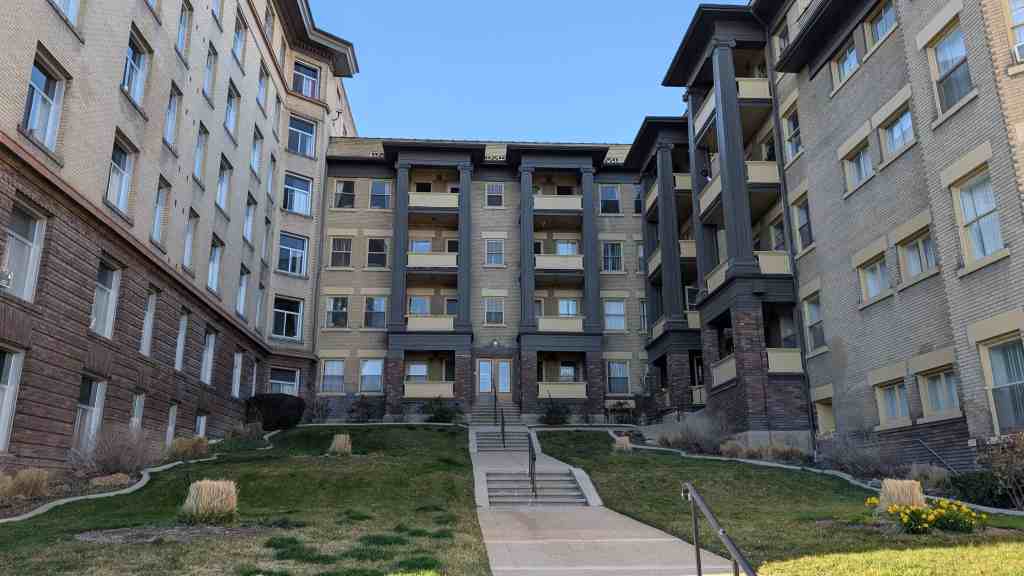
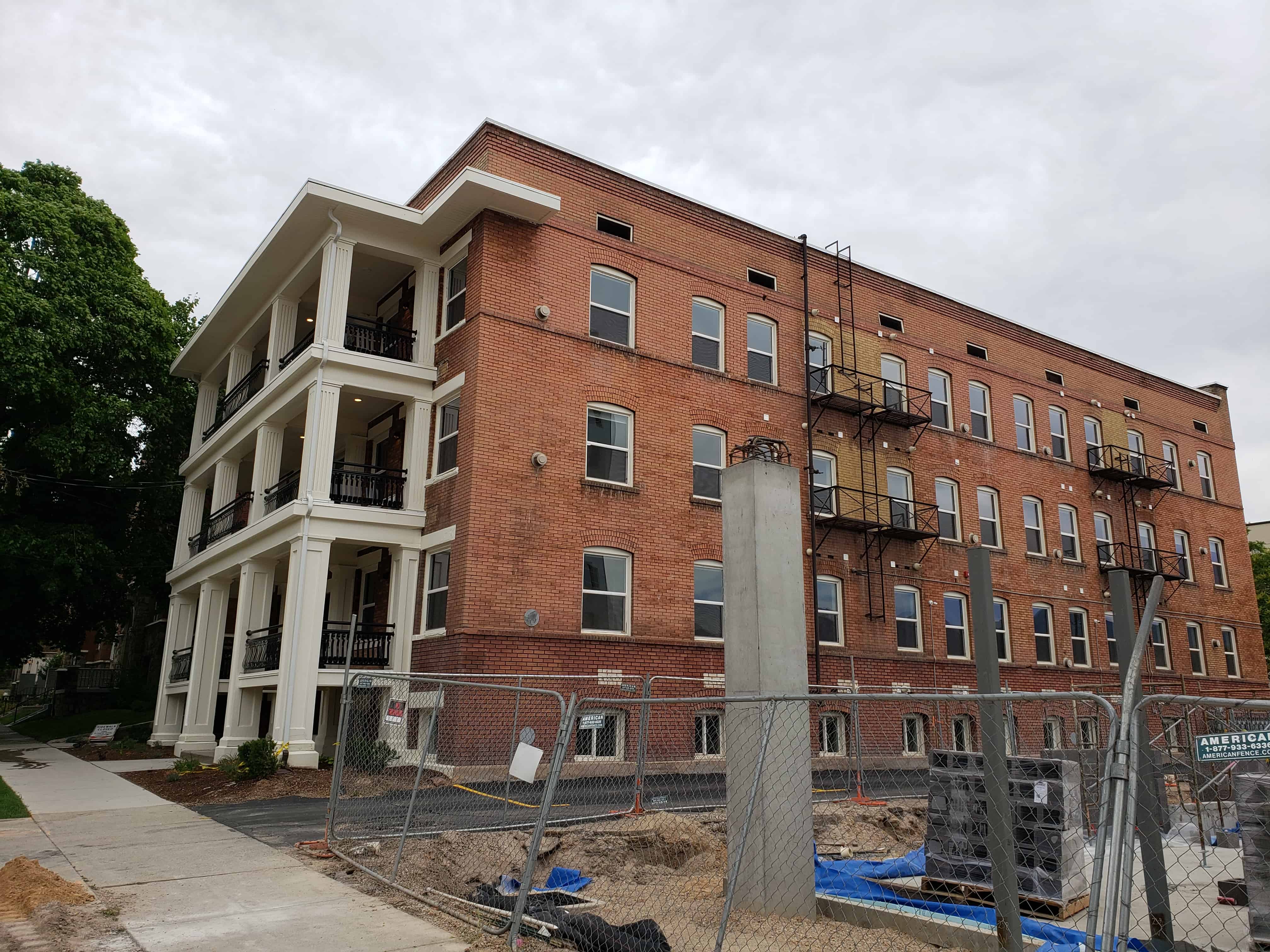
In 1938, Albert H. Walsh hired the Fullmer Bros. Construction Company to build this large, three-story brick apartment building, featuring 18 units. Albert Walsh was the founder of the A.H. Walsh Plumbing Company, and the company’s office building was located on the same block as the apartments. Mr. Walsh resided nearby at 1120 East 2nd Avenue. The apartment building retains its historic and architectural integrity and is a contributing resource within the Avenues Historic District.
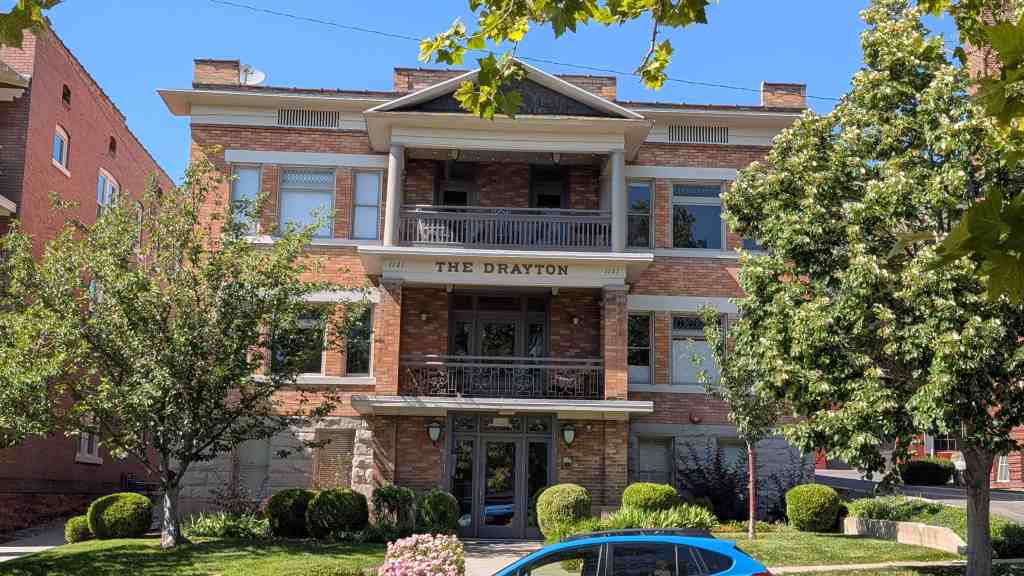
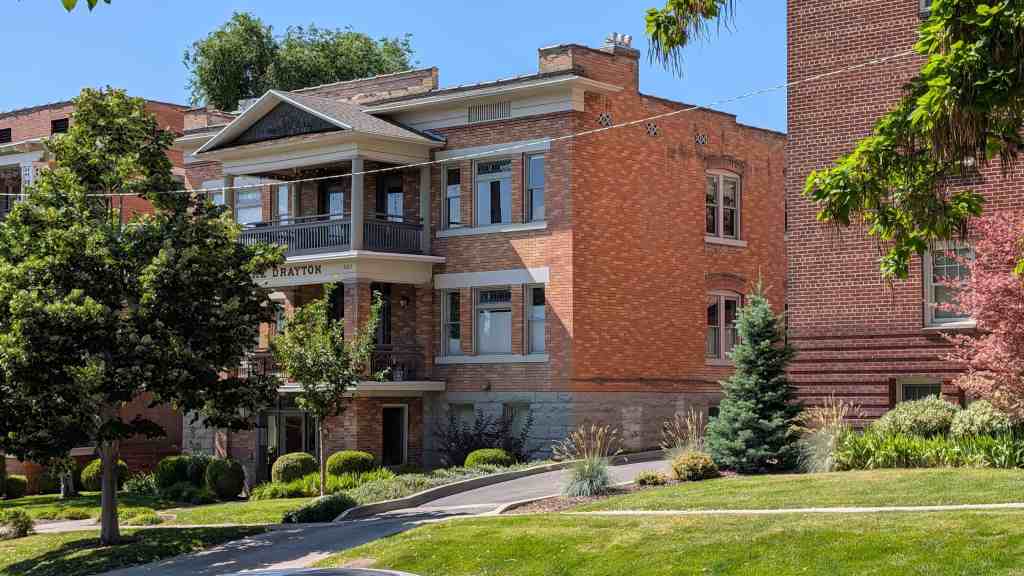
Constructed circa 1908, this three-story, brick apartment building was likely constructed by John H. Hilton and in 1916 was sold to Albert H. Walsh. Albert Walsh was the founder of the A.H. Walsh Plumbing Company. Mr. Walsh resided nearby at 1120 East 2nd Avenue and he owned the apartment building through 1950. The building was constructed at a time when an increasing number of multi-family structures were being built in the Avenues, transitioning away from single-family, owner-occupied residences. It features a prominent, centrally located pedimental bay for the front entry and large balconies.
Constructed circa 1913, this three-story, brick apartment building was constructed by Albert H. Walsh and named for his wife, Emma N. Walsh. Albert Walsh was the founder of the A.H. Walsh Plumbing Company. The building was built at a time when an increasing number of multi-family structures were being built in the Avenues, transitioning away from single-family, owner-occupied residences. Character defining features of the building include its centrally located stairs and central hallway, sandstone foundation, and its front porch with massive two-story Doric columns and decorative entablatures.
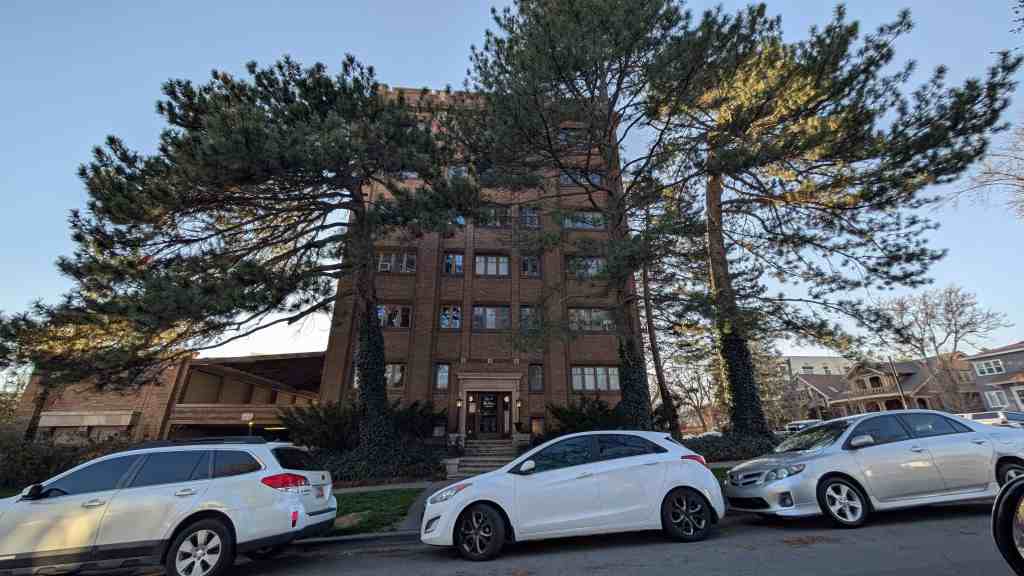
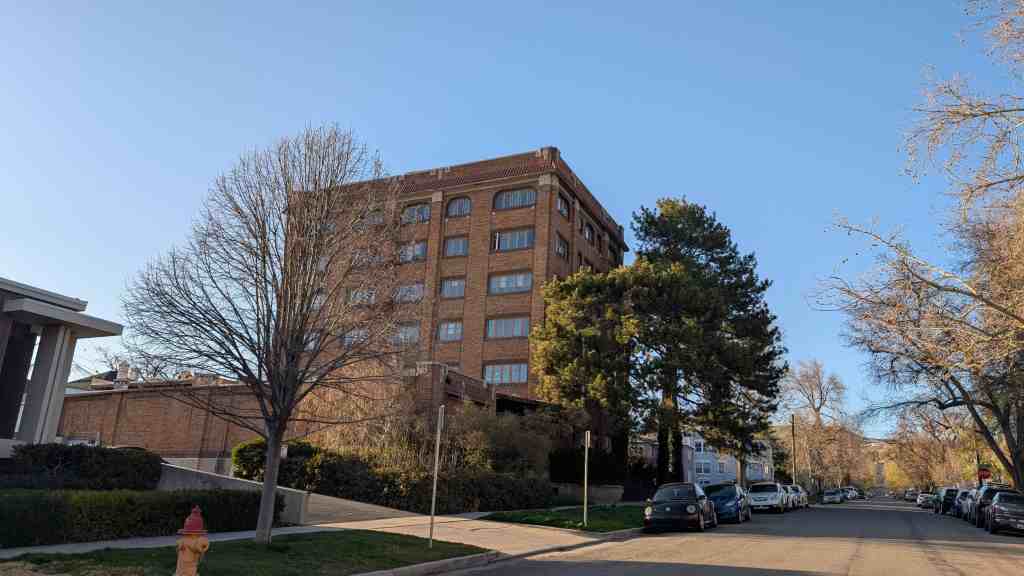
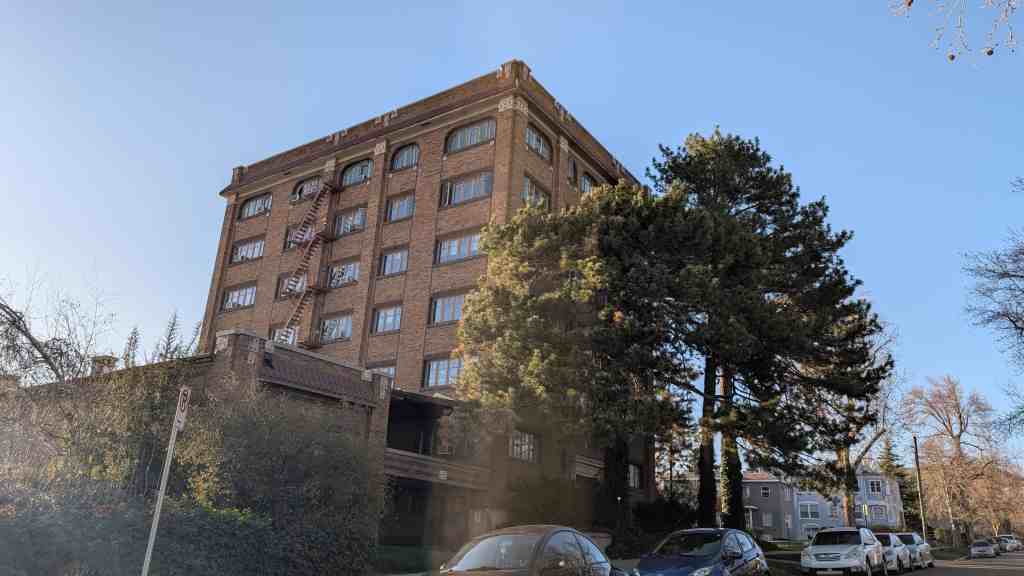
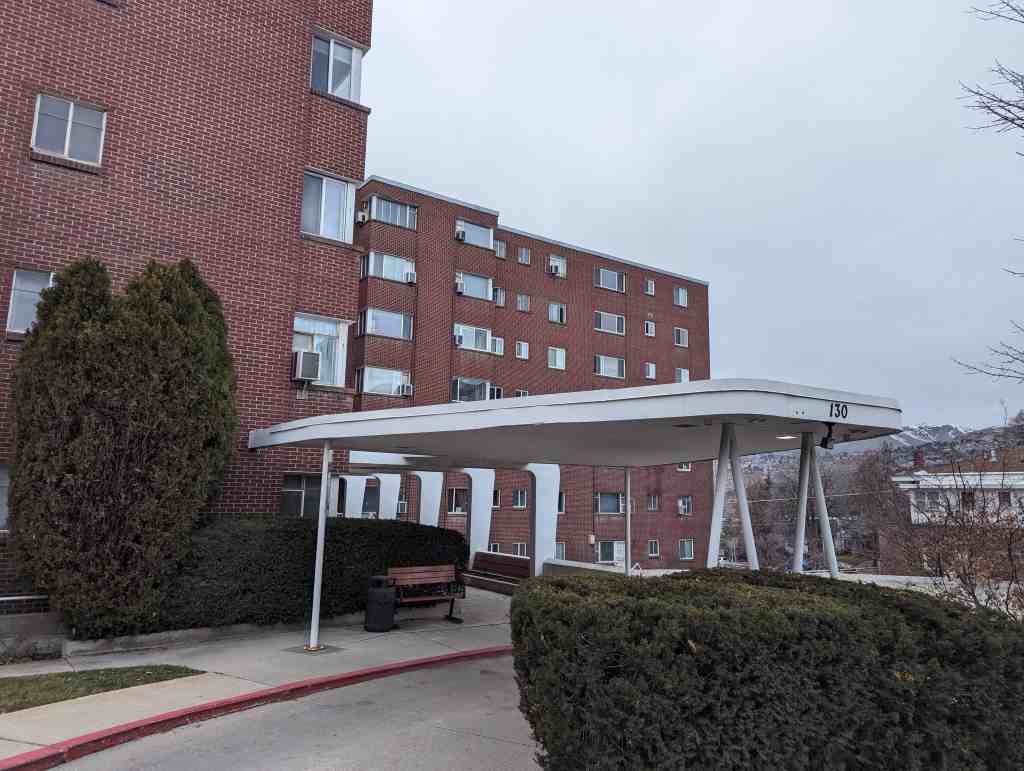
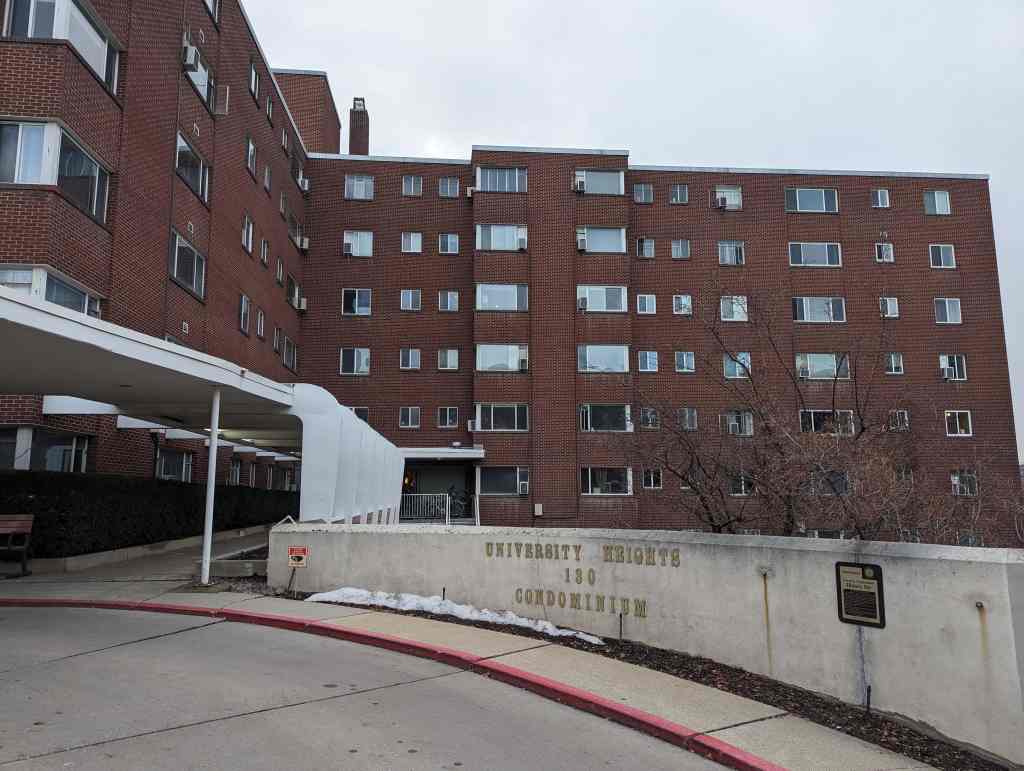
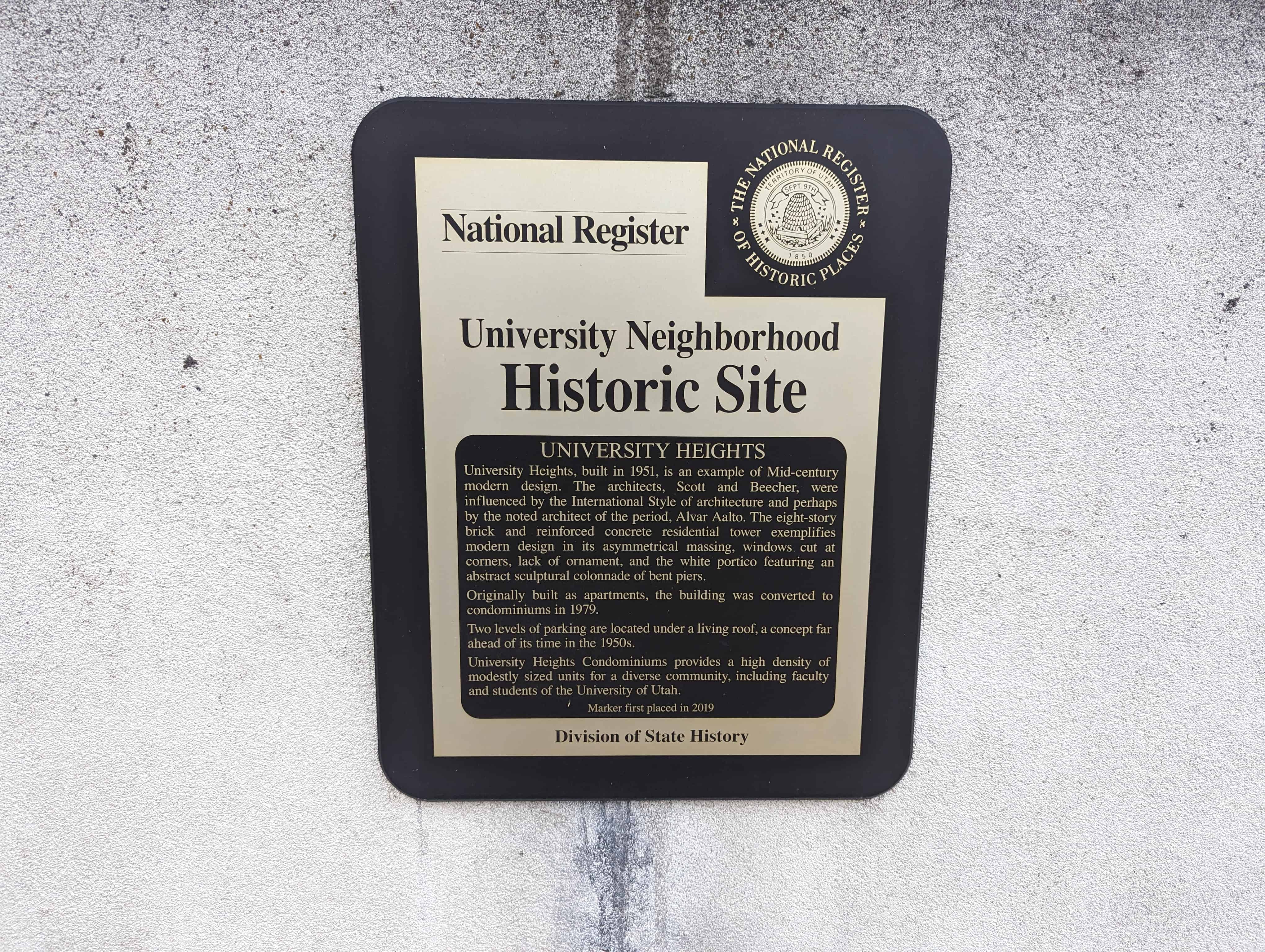
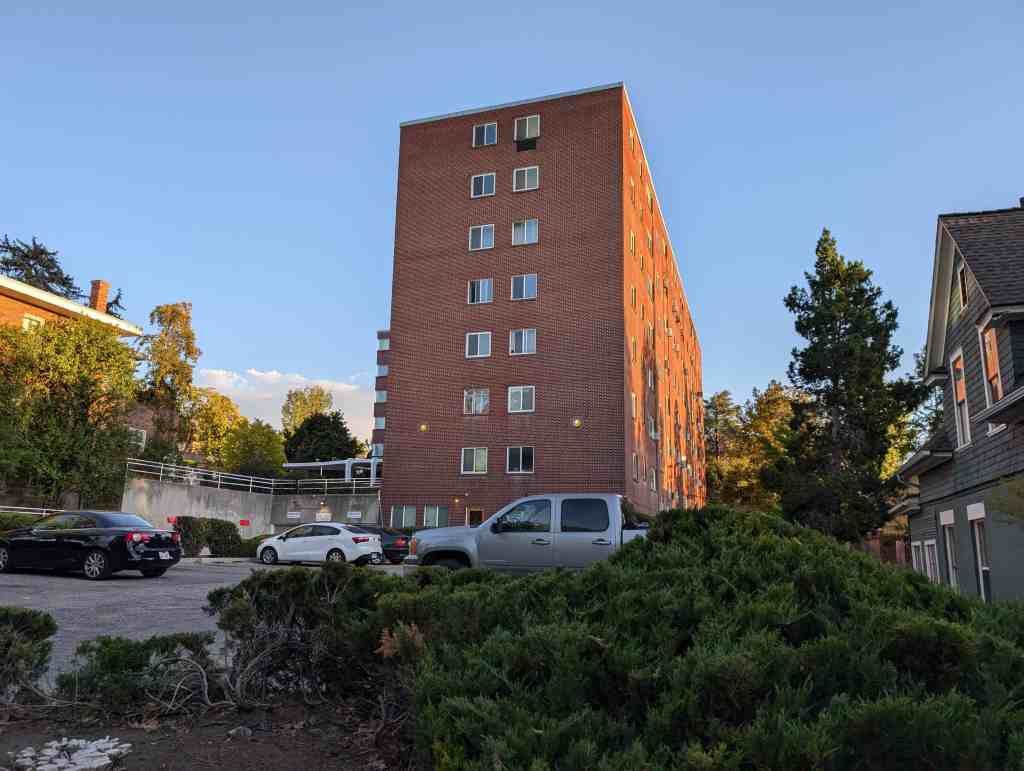
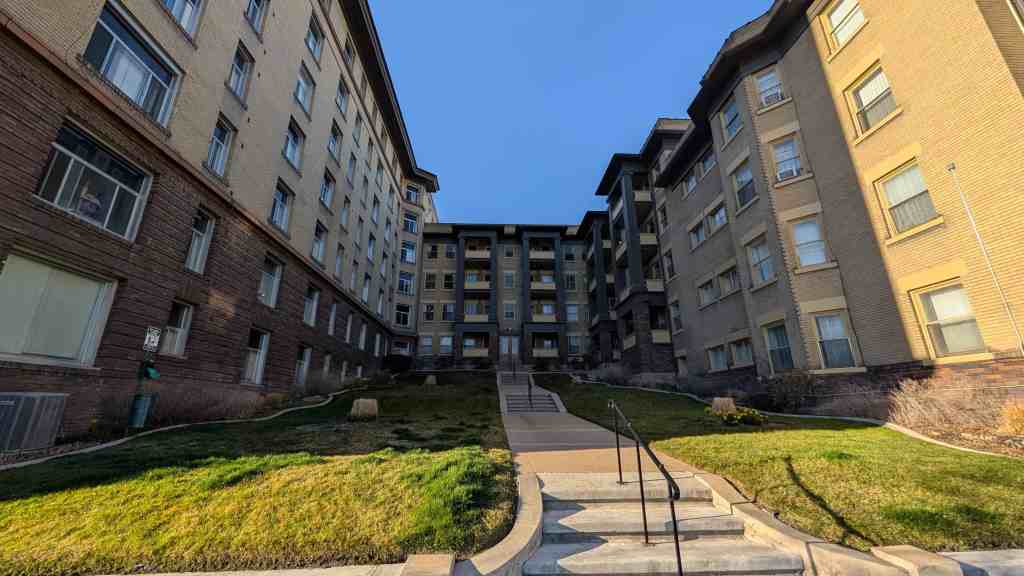
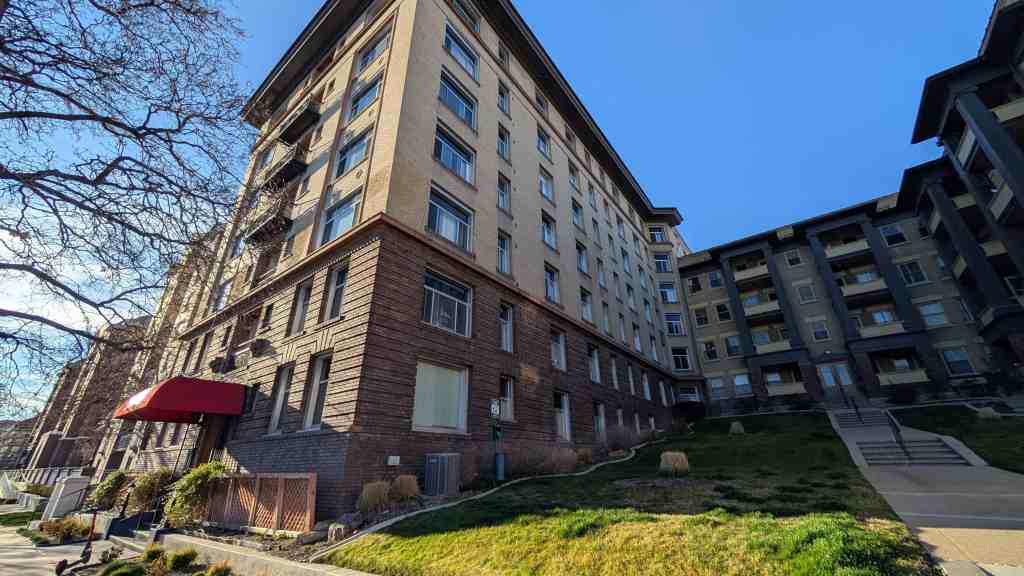
University Heights, built in 1951, is an example of Mid-century modern design. The architects, Scott and Beecher, were influenced by the International Style of architecture and perhaps by the noted architect of the period, Alvar Aalto. The eight-story brick and reinforced concrete residential tower exemplifies modern design in its asymmetrical massing, windows cut at corners, lack of ornament, and the white portico featuring an abstract sculptural colonnade of bent piers.
Originally built as apartments, the building was converted to condominiums in 1979.
Two levels of parking are located under a living roof, a concept far ahead of its time in the 1950s.
University Heights Condominiums provides a high density of modestly sized units for a diverse community, including faculty and students of the University of Utah.
Constructed in 1911, the Cluff Apartments is one of over 180 “urban apartments” built in Salt Lake City during the first three decades of the twentieth century, a period of unprecedented expansion and urbanization. Over 60 percent of those buildings are either listed or eligible for listing in the National Register. Urban apartments are significant under Criterion C as a distinct and important type of residential building in the city. Apartments are remarkably consistent with one another in terms of building plan, height, roof type, materials, and stylistic features. These and other characteristics mark them as a new and distinct type of early twentieth century residential building. Under Criterion A, urban apartments are significant for their association with the rapid urbanization of Salt Lake City during the 1890s-1930 period. The growth that took place during those decades spurred the construction of two opposing types of housing in the city: urban apartments and suburban homes. Suburban homes represent a rejection of urban conditions. Apartments, on the other hand, document the accommodation of builders and residents to the realities of crowded living conditions and high land values. They were a significant new housing option that emerged in response to the growth that transformed Salt Lake City into an urban center during the early twentieth century.
Located at 1268 East 200 South in Salt Lake City, Utah and added to the National Register of Historic Places (#89001739) on October 20, 1989.
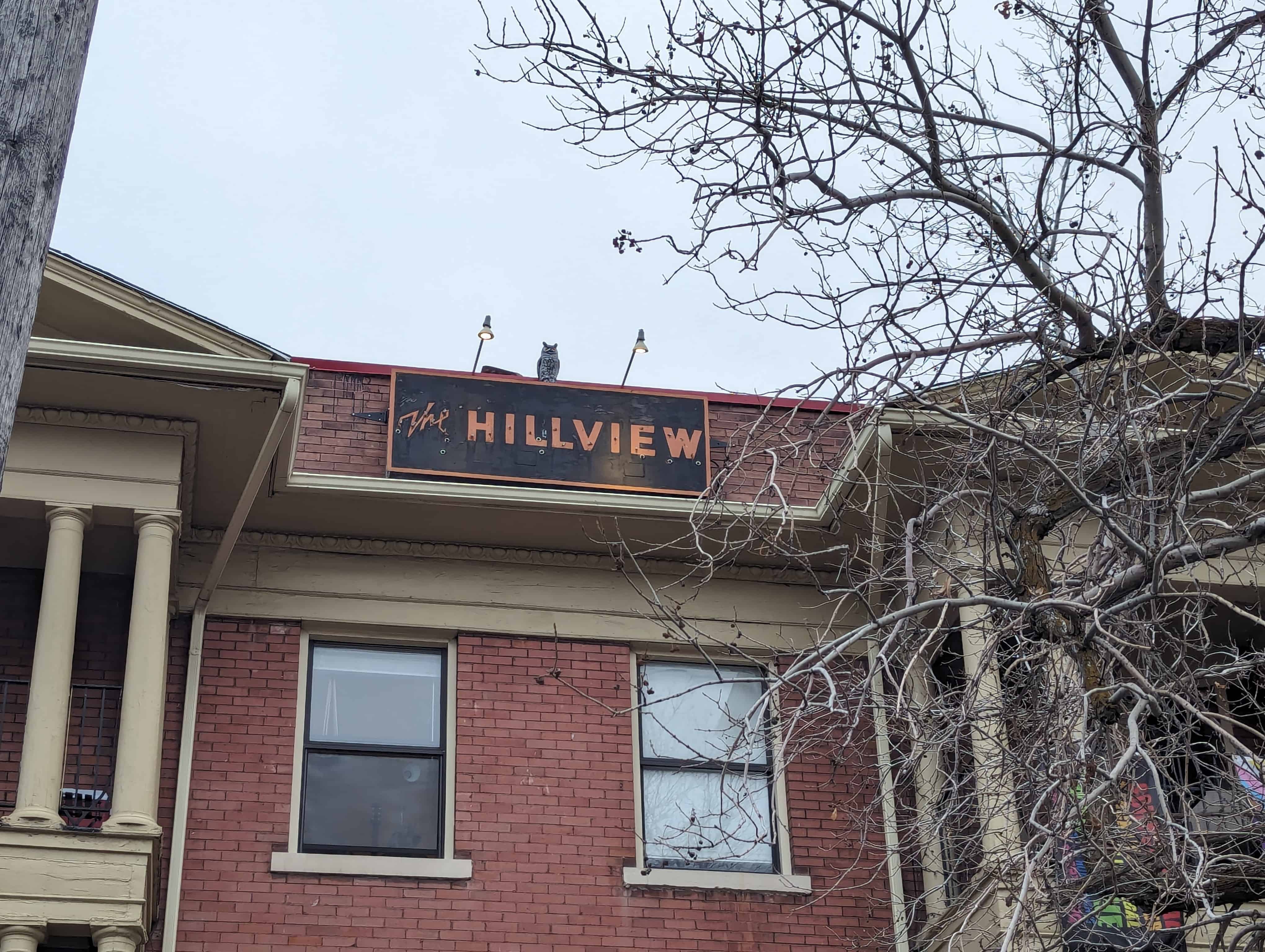
The building permit for the Cluff Apartments was issued on April 4, 1911, to Mrs. Ann Cluff. Estimated cost of the 14-unit building was $24,500. Ann Whipple Cluff was the wife of William W. Cluff, a local businessman. The Cluffs lived nearby at 1246 E. 200 South. William died in 1915, but Ann continued to own the apartment building until 1924, the last five years under the firm name of Cluff Investment Company. William H. and Jennie R. Bennett bought the building in 1924 and renamed it the Bennett Apartments in 1936. The building was renamed the Hillview Apartments in 1947.
In May 1911, the Salt Lake Tribune noted the construction progress of the building as follows. “The Cluff apartments on Thirteenth East street, near the University buildings, will be one of Salt Lake’s handsome buildings when completed. The exterior finish is of dark colored brick. It will offer modern living rooms to persons who are seeking the benches for places of residence. The first story of this building is completed and the workmen have started on the next.“
W.C.A. Vissing, the builder, was one of the most active developers of apartment buildings in Salt Lake City during the pre World War I period. W.C.A. “Andy” Vissing constructed at least 20 major apartment buildings in Salt Lake City during his career. Born in Denmark in 1874, he emigrated to the U.S. and Salt Lake City at the age of fourteen. He started in the construction business as a young man and continued until his death in 1936. He is credited as “one of the first local apartment house builders.” He constructed some of the largest apartments in the city, including the Hillcrest, Buckingham, Fairmont and Commander apartments. The first apartments he is known to have constructed were the LaFrance Apartments in 1905. That was also the first of several apartment projects in which he was involved with Covey Investment Company, another major developer and owner of apartments in Salt Lake City. The Cluff Apartments is very similar to the Princeton and Boulevard Apartments (100 South 900 East) which were also built by Vissing in 1913.
Description:
Constructed in 1911, the Cluff Apartments is a rectangular, three-story brick building with a brick foundation, parapet roof and modest Neo-Classical Revival/Colonial Revival styling. No significant alterations have been made to the building.
The Cluff is a rectangular building with its broad side serving as the principal façade. It is a variant of the “walk-up” type apartment building. The basic walk-up contains six units, is three stories in height, one apartment deep and two units in width across the façade. It has a central entrance/stairway with two apartments opening off each landing. That basic plan is doubled on the Cluff; in essence the building is two walk-up apartments with a common side wall. The façade is symmetrical with projecting, three-story front porches flanking each of the two entrances. Architectural details are primarily classical—porch columns and pediments and the egg-and–dart decorated cornice. On the rear there are frame service porches connected by open walkways and stairs. Successive “telescoping” bays along the sides of the building increase its overall width at the rear.
(from Preservation Utah’s walking tour) Covey-1909, David C. Dart, SLC Buckingham-1916 ,W. C. A. Vissing (builder), SLC
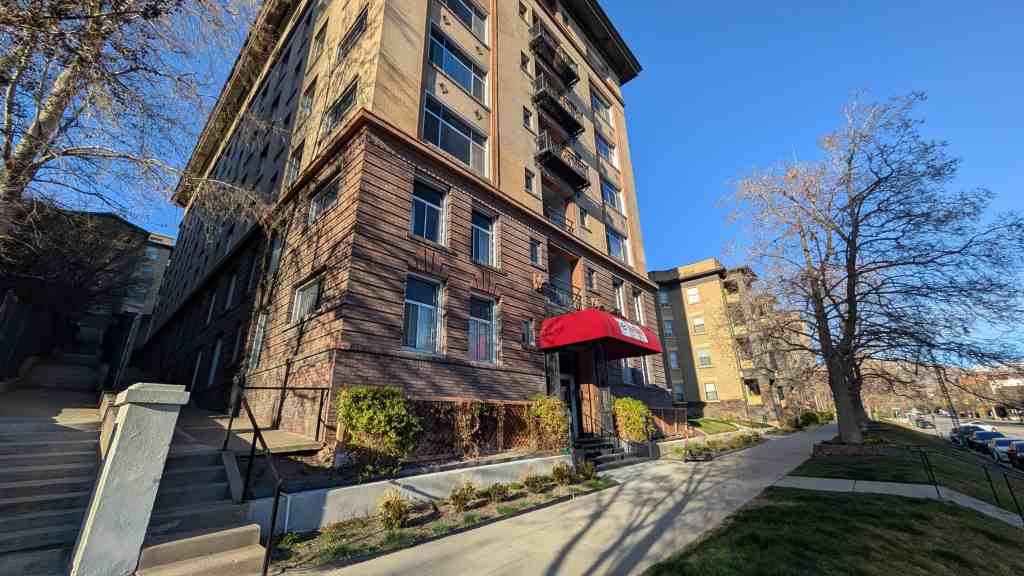
The Covey Investment Company, which built, owned, and managed many of the city’s early apartments, constructed both of these buildings. Completed in 1909, the seven-story Covey Apartments is one of Salt Lake’s few historic apartment buildings more than four stories tall. Because of its height, the Covey featured a rare luxury in early 20th-century Utah – a passenger elevator. Also note the tile ornaments dividing the upper stories and the indented porches with wrought iron railings.
The Covey Investment Company seems to have intended this “high rise” on prestigious South Temple to be its flagship apartment building. The company changed the name of the 1905 Covey Flats on 300 South to the La France Apartments so it could give the Covey name to this building.
The Buckingham Apartments, built in 1916, are more typical of the buildings constructed by the Covey Investment Company.
These “walk-up” apartments snake around two central courtyards, one opening to the street and one opening to the alley behind the building, allowing each tenant to have a front and back porch. The more humble Buckingham features much less architectural ornamentation than its upscale neighbor.
This complex predates its Los Gables neighbors by nearly two decades but both ended up on the register this year. It, too, is a 3 1/2-story brick building but in the Neoclassical Revival design. But what the Palace Apartments preserves is a piece of Salt Lake City’s rapid urban growth heading in the 1900s.
“The Palace Apartments is an early 20th-century example of an urban apartment block, one of 180 blocks that were built in Salt Lake City between the 1890s and the 1930s,” historians wrote. “The city’s residential growth in the late 19th and early 20th centuries is represented by two competing types of housing: suburban homes and urban apartment blocks.”
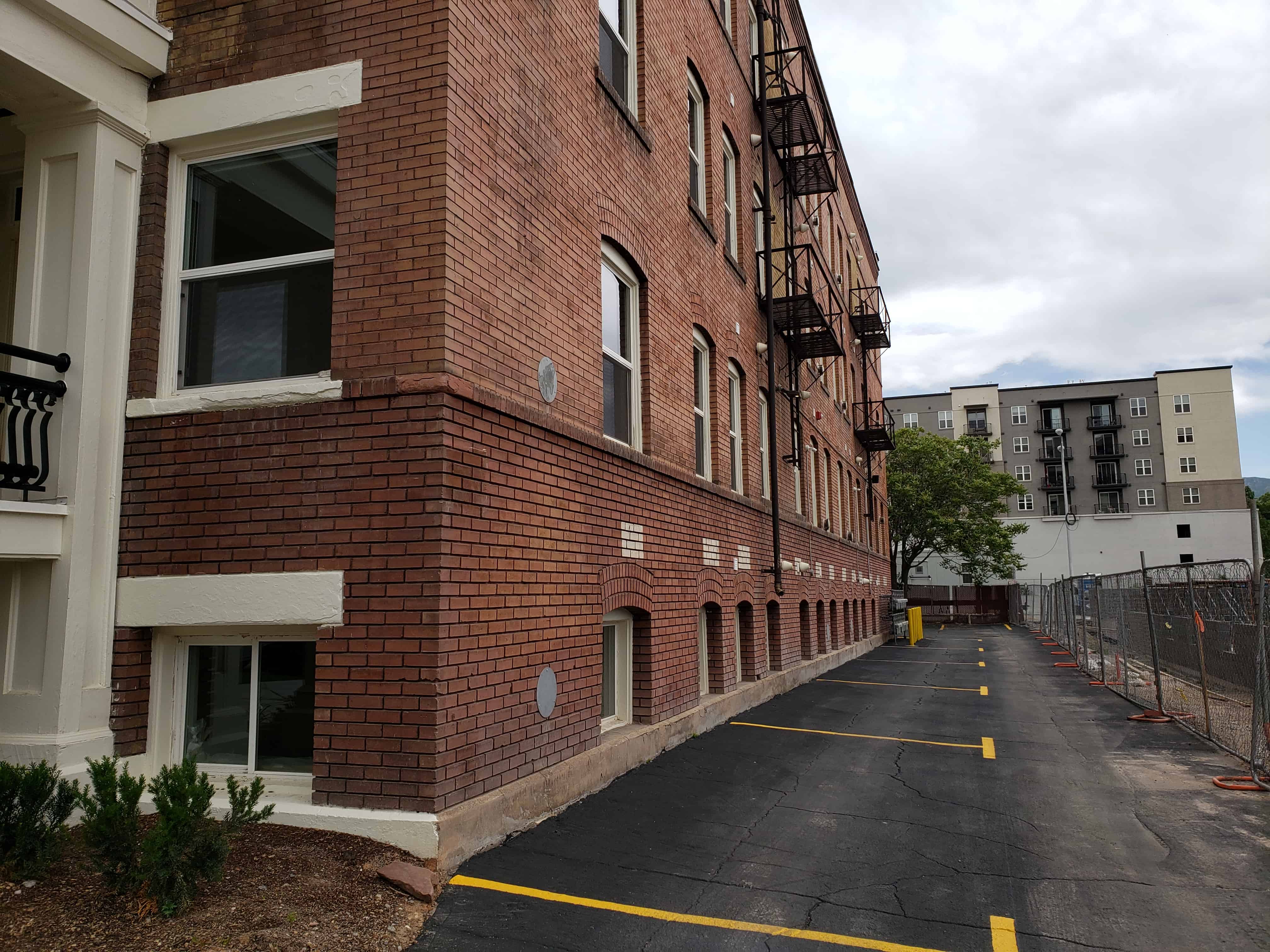
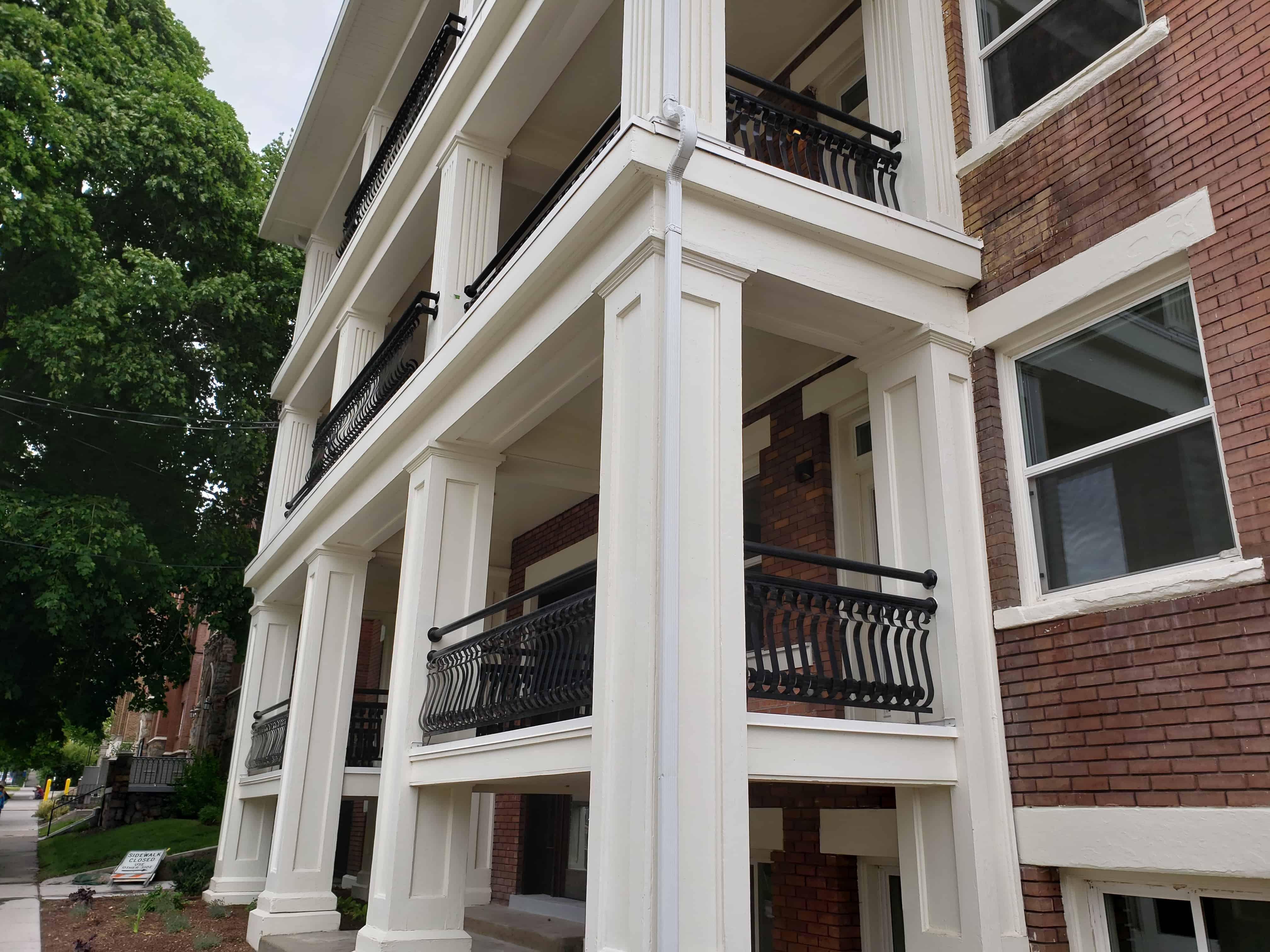
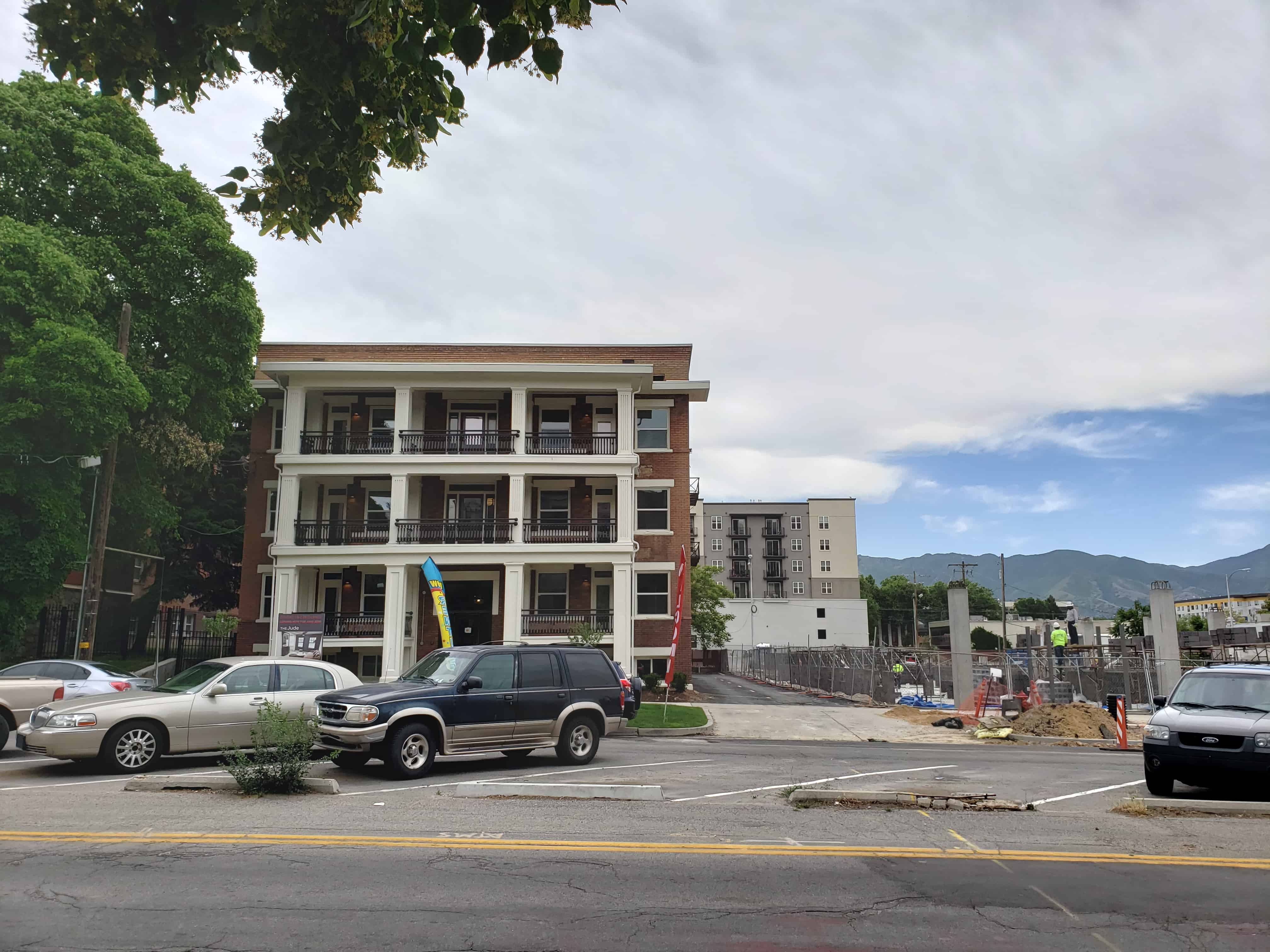
The building has stood for over a century now. Following years of neglect, historians wrote that “substantial renovations” were conducted last year. Now known as the Jude Apartments, the building is helping provide housing for the newest wave of Salt Lake City urban growth.