• About JacobBarlow.com
  • Cemeteries in Utah
  • D.U.P. Markers
  • Doors
  • Exploring Utah Email List
  • Geocaching
  • Historic Marker Map
  • Links
  • Movie/TV Show Filming Locations
  • Oldest in Utah
  • Other Travels
  • Photos Then and Now
  • S.U.P. Markers
  • U.P.T.L.A. Markers
  • Utah Cities and Places.
  • Utah Homes for Sale
  • Utah Treasure Hunt

JacobBarlow.com

~ Exploring with Jacob Barlow

JacobBarlow.com

Tag Archives: Historic Homes

James and Penninah Wrathall House

21 Thursday Dec 2023

Posted by Jacob Barlow in Uncategorized

≈ Leave a comment

Tags

Eastlake style, Grantsville, Historic Homes, NRHP, Queen Anne style, Tooele County, utah, Victorian Eclectic, Victorian Queen Anne style
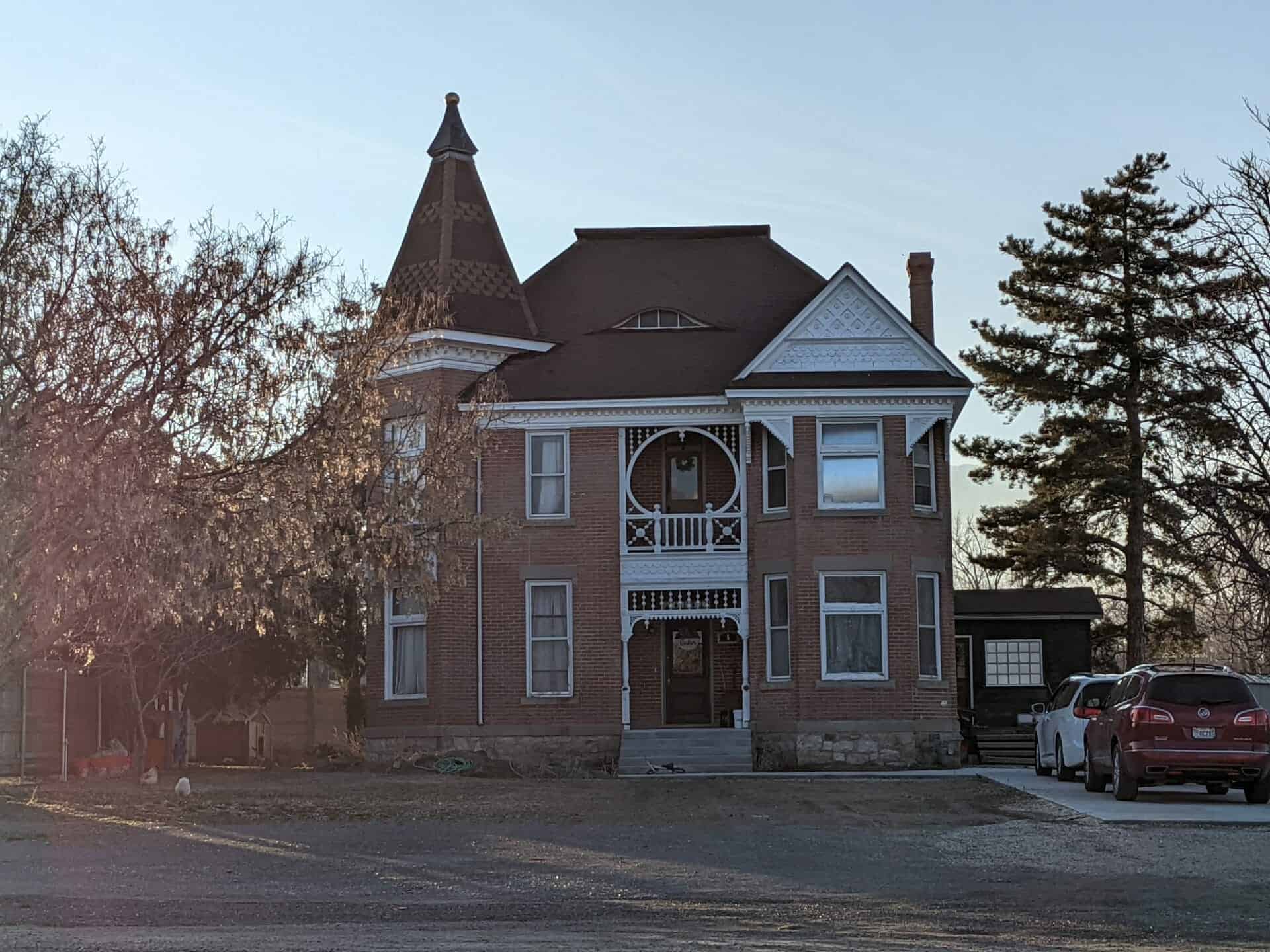
James and Penninah Wrathall House

The Wrathall House is a two-story central-block-with-projecting-bays type house. The house is constructed of brick with sandstone foundation, lintels and sills. The style and ornamentation is Queen Anne with an Eastlake style porch. The house has a wood shingle roof with the original decorative shingles on the turret roof. The house has a circa 1940s one-story frame addition at the northwest corner. The 0.84-acre lot includes two contributing outbuildings (a circa 1910 garage and a circa 1900 coop), and one non-contributing outbuilding (a circa 1980s shed). There is also a contributing structure, a circa 1950 metal Butler silo.

The James and Penninah Wrathall House, built in 1898, is located at 5 North Center Street in Grantsville, Utah and was added to the National Register of Historic Places (#05001629) on February 3, 2006.

Though technically a central-block-with-projecting-bays type house, the footprint of the building is contained within a roughly 40 by 40 foot square. The one-story addition is located in a niche at the northwest corner and extends 12 feet to the north. The house was constructed of brick with a facing of fired red brick and an adobe brick lining on the interior. The brick is laid in a running bond with flush mortar joints. The tan-colored sandstone foundation is rough-faced ashlar blocks with concave mortar. A smooth sandstone stringcourse is above the foundation at the water table. Similarly smooth sandstone blocks provide the lintels and sills from most of the windows. The house faces Center Street to the east. The facade features an octagonal bay to the north and a projecting square turret tower to the south. The centerpiece of the fa9ade is the entrance, which features Eastlake details (spools, spindles, lathe-turned, brackets, etc.) above the main floor entrance and on the second-story porch. The concrete deck and steps, and the wrought iron rail are later additions (circa 1930s-960s).

The Wrathall House has an imposing presence. The attic space under the central truncated pyramidal roof is nearly a story-high. The roof is covered in square-butt wood shingles with a small eyebrow dormer above the main entrance. The slender turret roof is higher than the main roof by ten to twelve feet. It is covered with wood in an alternating pattern offish-scale and square-butt shingles, and is capped metal. The octagonal bay has a simple-gable roof. The bay’s gable trim combines paterae within a weave of wood and a base offishscale shingles. Other ornamentation includes both fan-shaped and scroll-shaped brackets with knobs, and a dentilated cornice. The windows are original (the smaller windows are covered in storm windows, date unknown). The larger windows are fixed frame with transoms. The horizontal mullions are notched with a centered paterae. The tall narrow windows are one-over-one, double-hung wood sash. The front door is original with Victorian carved ornamentation. The exterior wood work is painted grey with dark green accents.

The secondary elevations are less elaborate. Several of the narrow windows on these elevations have been shortened or blocked (circa 1940s to 1970s). The north elevation features a second eyebrow dormer and a leaded and colored-glass window, which lights the staircase. There are corbelled brick chimneystacks on the north and south elevations. The south and east elevations are relatively plain and not easily visible due to the mature trees near the house. The circa 1940s addition at the northwest corner is a one-story frame structure covered in shiplap siding on a concrete foundation. The addition has a concrete stoop on the east side. There are doors on the east and west elevations. The east elevation door is half-glass (with multiple panes). The window also is a multi-pane wood sash window. The west door is at grade level.

( This was added to the National Register of Historic Places (#05001629) on February 3, 2006 and is located at 5 North Center Street in Grantsville, Utah )

On the interior, the house has approximately 2,700 square feet of space divided between the two floors. The full-height attic is expansive, but the basement is only 20 percent excavated. Though a central-block house, because it has a square footprint, the interior feels more like a foursquare. The central entrance has a foyer. The semi-open stair is on the north side. It features a ball and spindle balustrade, knobs, brackets, square newel posts, and a curved rail. At the stair landing, the stained glass window glows in colors of rose and gold. With the exception of the stair rail, the woodwork in the foyer has been painted white. The interior doors are all original with hopper window transoms. The door and window casings feature fluted stiles and paterae. The room in the octagonal bay is to the north. The parlor is on the south in the projecting turret tower. The parlor is the most intact room. The oak woodwork is in excellent condition. The room features an elaborate two-tier mantel featuring columns acanthus-leave capitals, a mirror inset, and a tile surround. The tall oak pocket doors lead to a large dining room in the southwest corner of the house. The kitchen is in the northwest corner. The house has a total of thirteen rooms with four bedrooms and a bath on the second floor. The interior was painted and re-papered in the 1950s.

The Wrathall House is on the south half of a 0.84-acre rectangular parcel. A 0.12-acre portion at the corner of Main and Center Streets was divided from the main property and a one-story commercial building (circa 1970s) sits right at the corner. There is a concrete sidewalk leading from Center Street to the main entrance. A wood fence at the rear separates the house from the Main Street property. The landscaping is overgrown and the mature trees near the house obscure views of the secondary elevations. For many years, two 100-year old evergreens obstructed the façade view, but these trees were cut down recently. North of the house is a large field where the outbuildings are located. They include a contributing wood garage with a simple gable roof. This building was built circa 1900 to 1910 and originally may have been an agricultural outbuilding. South and west of this building is a contributing shed or coop (circa 1910), which is partially dilapidated. There is also a non-contributing circa 1980 wood shed. The round metal Butler silo (circa 1950) is a contributing structure. The James and Penninah Wrathall House is in good condition and contributes to the historic resources of
Grantsville, Utah.

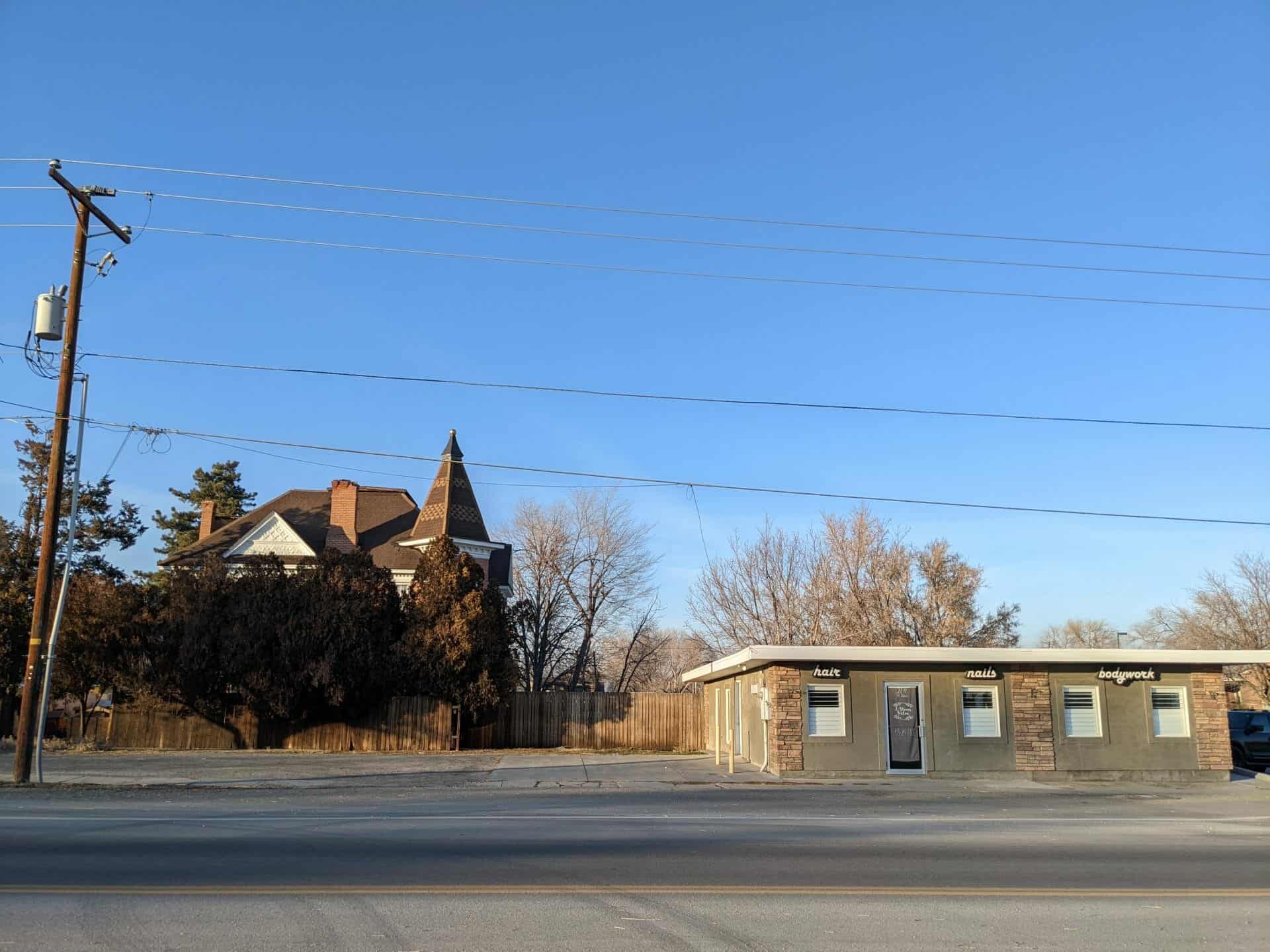
The James and Penninah Wrathall House, built in 1898, is significant under National Register Criteria A and C for its association with the development of Grantsville and its contribution to the architectural resources of the rural Utah community. The owners, James and Penninah Wrathall were prominent second-generation members of the community. The property is eligible within the Multiple Property Submission: Historic and Architectural Resources of Grantsville, Utah, 1850-1955. The history of the house spans all of the historic contexts: “Mormon Agricultural Village Period, 1867-1905,” “Impact of Technology and Transportation Period, 1905-1930,” and the “Economic Diversification Period, 1930-1955.” The Wrathall House is architecturally significant as an unusual and well-preserved example of the Victorian style known as Queen Anne. The design shows the influence of design books, particularly in the Queen Anne and Eastlake details, but the execution by local builder, Charles Z. Schaffer, is unique. The imposing residence is a landmark at the corner of Main and Center Streets. The Wrathall House is a contributing historic resource in Grantsville, Utah.

The community of Grantsville was settled on October 10, 1850, three years after the first settlement of the Salt Lake Valley by members of the Church of Jesus Christ of Latter-day Saints (LDS Church or Mormon Church). After several altercations with the nomadic Native Americans who camped in the area, the Grantsville area was settled and known as Willow Creek. In 1852 a town site was surveyed and in 1853, the town was renamed Grantsville in honor of George D. Grant, who led a company of the territorial militia to protect the settlement. In April of 1890, James L. Wrathall bought Lots 1 & 2 of the Grantsville survey’s Block 3 from fellow Grantsville pioneer John Eastham (1820-1893). At the time a small Victorian cottage was located in the southeast corner of Lot 1. The Wrathall family lived in the cottage while their substantial brick home was construction. The local newspaper pinpointed the construction year in an article dated November 25, 1898, which read: “Bishop Wrathal’s [sic] fine home is nearly completed, all of the latest modern design, and shows the skill and fine machanical [sic] labor of C. Z. Schaffer, the builder.”

James Leishman Wrathall was born in Grantsville on September 22, 1860. He was the son of prominent
Grantsville pioneers, James Wrathall (1828-1896) and Mary Leishman Marston (1822-1871), English
immigrants who came to Utah in 1850. On February 2,1882, James L. Wrathall married Penninah Hunter.
Penninah Susan Hunter was born in Grantsville on January 14, 1862. She was the daughter of Edward Hunter (1821-1892) and Mary Ann Whitesides (1825-1914), who were also English immigrants. James and Penninah had ten children, with the last two born after they moved into their new house.

James Wrathall’s early life was spent herding his father’s cattle and sheep on the plains of Tooele County. He saved and invested, eventually becoming the owner of several large herds of sheep and cattle. He also acquired over 4.000 acres of farm and ranchland. He raised hay and sugar beets. He had a large fruit orchard, which included apples and other small fruits. As a prosperous rancher and farmer, he had numerous business interests: North Willow Irrigation Company, president; Richville Milling Company (flour mill in Tooele), president; Utah-Idaho Sugar Company, stockholder; Consolidated Wagon & Machine Company, stockholder; etc. James Wrathall was a member of the Grantsville City Council. He also served on the Grantsville School Board for thirteen years and on the Tooele County Board of Education for seventeen years. He held numerous leadership positions in the LDS Church, including serving as Grantsville’s bishop between 1890 and 1906. A biographical sketch of James L. Wrathall written in 1919, began: “There is no name perhaps that figures more conspicuously and honorably in connection with the business development of Grantsville and Tooele County than does the name of Wrathall. James L. Wrathall is now extensively engaged in farming in this section of the state and he is also at the head of various important business enterprises which constitute a dominant factor in the general development and progress of the district in which he lives.”

An earlier biographic sketch, noted that “He makes his home in Grantsville, where he erected, in 1898, a
beautiful home of twelve rooms. The house is a two-story brick, and modern in every respect.” According to Lisa Miller, “The Wrathall house was known as one of the most elegant residences in Grantsville. Local
citizens still remember the rosettes that adorned the ceilings in the original parlor and dining room and a grand stairway that features a beautiful stained glass window. The house is also believed to be the first residence in Grantsville to have acquired electricity.” Hazel Johnson, the youngest daughter of James and Penninah, remembers the silverware (which she had to polish every Sunday) and the napkins had the family’s initials on them.

At the age of seventy-three, James L. Wrathall gathered his family around him at home and predicted his death. He died the following day, November 29, 1932. In addition to raising ten children, Penninah Wrathall served in the Relief Society and Primary organizations of the LDS Church. She also served as the president of her local Daughters of Utah Pioneers organization. Penninah Hunter Wrathall died on November 16, 1934.

A portion of the property (Lot 2) had been deeded to a son, Morris Y. Wrathall, in 1931. After Penninah’s
death, the remainder went to Irene Wrathall Page in 1936. Irene Page was listed as living with her parents on the 1930 census enumeration. Irene was born on February 13, 1890 in Grantsville. She married George W. Page in 1918. He died in 1936. It is not known how long Irene lived in the house, but she did rent it out for a few years. In 1944, she sold the property to her sister, Hazel Wrathall Johnson. Irene Page died in Missouri on April 5, 1973. Hazel Wrathall was born on July 18, 1905, the youngest child of James and Penninah. She married Milan Johnson on November 17, 1921. Milan “Mike” C. Johnson was born on October 5, 1903, in Grantsville. They had eight children. The Johnsons remodeled the house and restored portions of the downstairs in the 1950s. They lived in the home until their deaths. He died on September 22, 1978, and she died on August 24,1993. In 1994, ownership was transferred to their daughter, Janice Johnson Sommerfeld, and her husband Sigmund Sommerfeld, who are the current owners.

The Wrathall House is architecturally significant as an imposing and unique adaptation of the Queen Anne style. The Queen Anne style was popularized by the 19th century British architect, Richard Norman Shaw. It was the most picturesque of the various Victorian Eclectic style popular in America in the late 19th century. Variations of the style were popular in Utah between 1884 and 1905. Residential examples are characterized by their asymmetrical façade, irregular plans, and variety in materials. The most common house type for Queen Anne residences was the central block with projecting bays. The Wrathall House is an unusual example: it appears as a block mass (almost a foursquare) flanked by a turret and an octagonal bay. The house includes a variety of juxtaposed materials: rough-faced and smooth stone, brick, wood shingles and other ornamentation. The Eastlake-style porch was adapted from a style book written and illustrated by English architect, Charles Locke Eastlake. Most Eastlake homes were constructed entirely of wood frame and shingle, and lacked the variety of materials of the Queen Anne style. The Eastlake style was popular in Utah between 1880 and 1900, but because Utah builders preferred brick, there are very few pure examples of the style. In Utah, as in the case of the Wrathall House, the Eastlake style is most often found on porches and decorative gable cornices in combination with Queen Anne and other Victorian Eclectic styles.

The builder of the Wrathall House was Charles Zephaniah Shaffer. 8 He was born in Pennsylvania on May 13, 1843. He was living in Grantsville at the time of his marriage to Ellen Barrus in 1895. He was listed as a
“carpenter” in a 1900 business gazetteer. Charles Z. Shaffer is also known to have built the Alex and Mary
Alice Johnson House
at 5 West Main Street in Grantsville, listed on the National Register on December 13, 1995. The Johnson House was built in 1900, two years after the Wrathall House. Shaffer had probably gained confidence as a builder with his work on the Wrathall House. The Johnson House is a more exuberant expressive of the builder’s skill with extended bays and elaborate wrapping Eastlake porches, but it is also more typical than the Wrathall House. The Alex and Mary Alice Johnson House was listed on the National Register of Historic Places in 1996. It is not known whether Shaffer was responsible for other Queen Anne homes in the Grantsville area.9 Charles Z. Shaffer died in Grantsville on August 29,1904.
Johnson-Watson House

20 Wednesday Dec 2023

Posted by Jacob Barlow in Uncategorized

≈ 1 Comment

Tags

Historic Homes, NRHP, Sanpete County, Spring City, utah

Johnson-Watson House

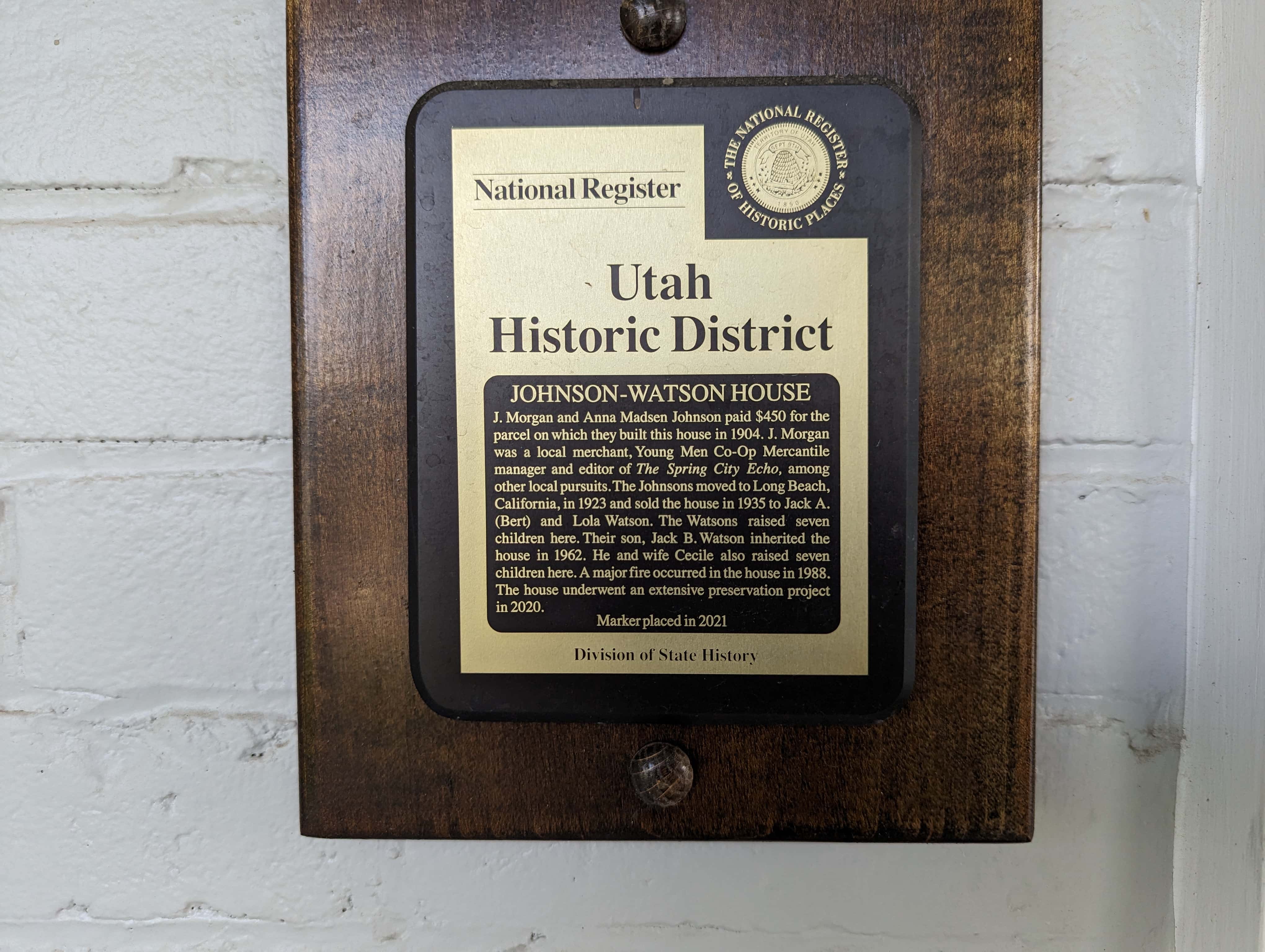
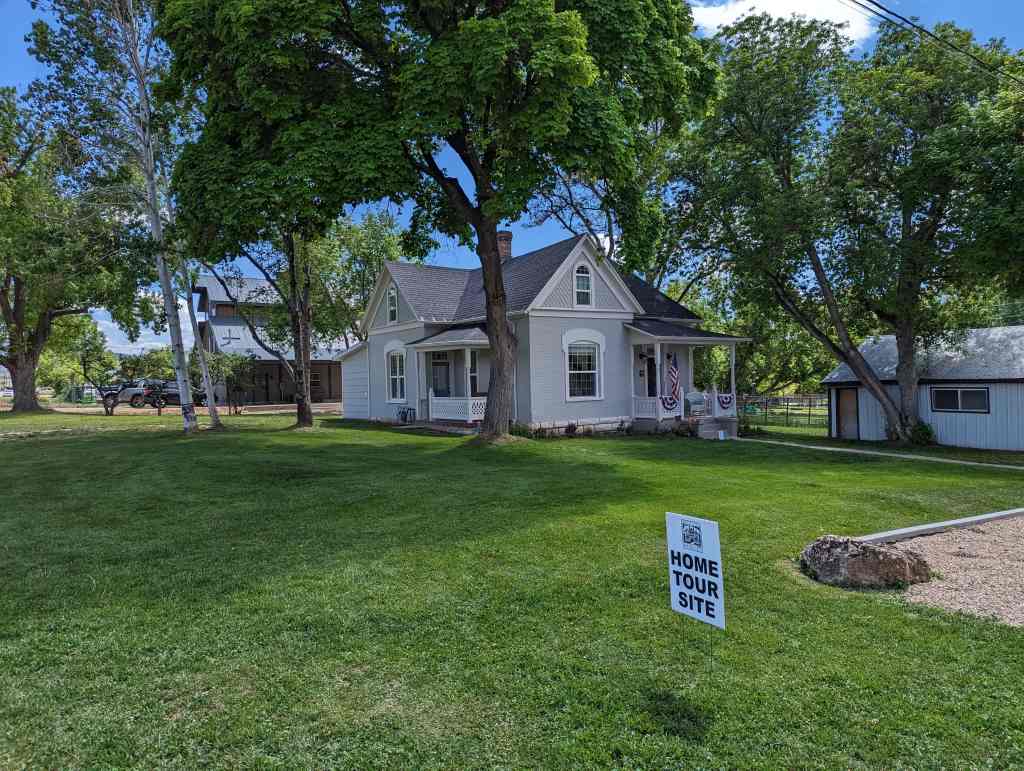
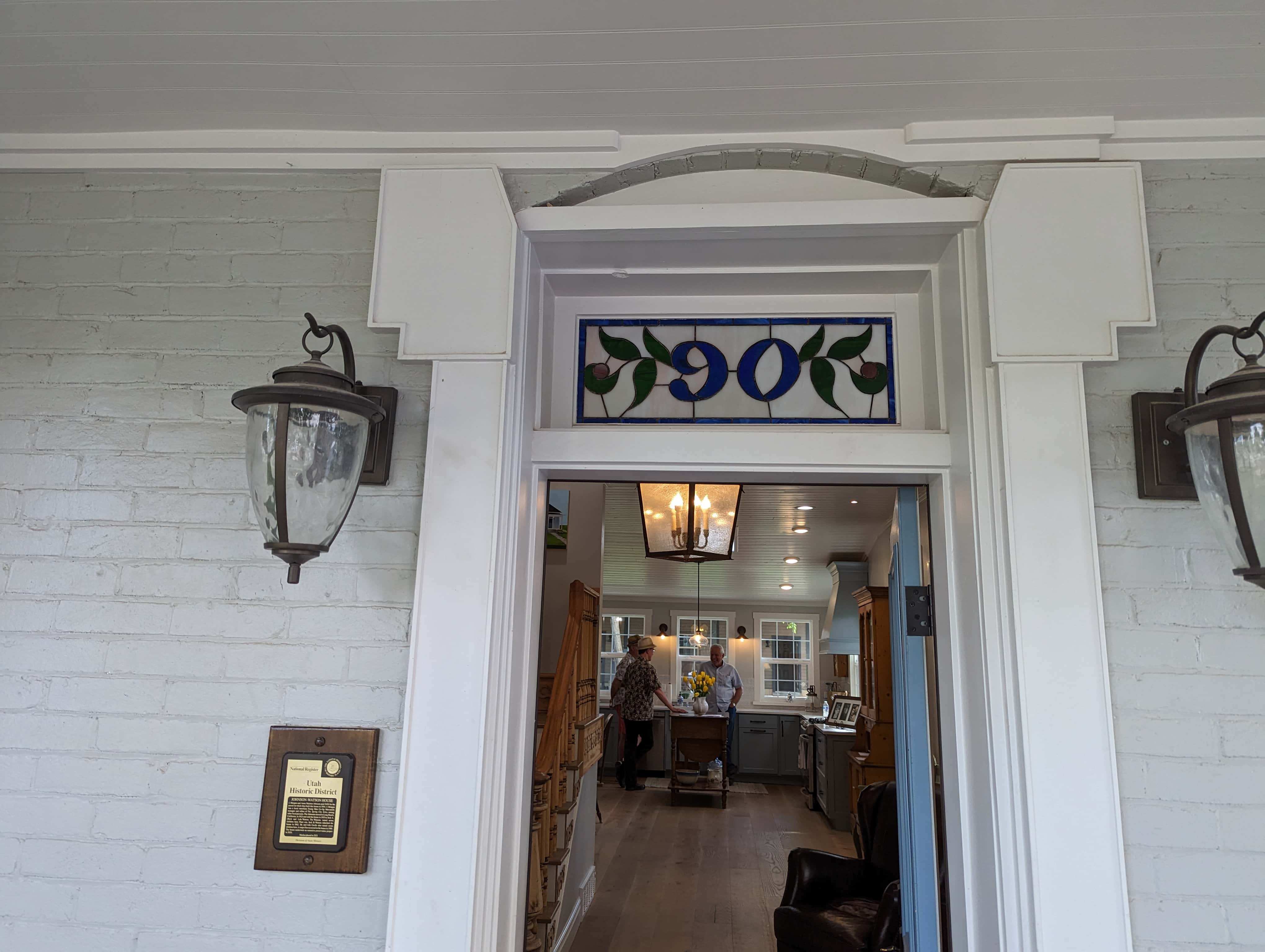
J. Morgan and Anna Madsen Johnson paid $450 for the parcel on which they built this house in 1904. J. Morgan was a local merchant, Young Men Co-Op Mercantile manager and editor of The Spring City Echo, among other local pursuits. The Johnsons moved to Long Beach, California, in 1923 and sold the house in 1935 to Jack A. (Bert) and Lola Watson. The Watsons raised seven children here. Their son, Jack B. Watson inherited the house in 1962. He and wife Cecile also raised seven children here. A major fire occurred in the house in 1988. The house underwent an extensive preservation project in 2020.

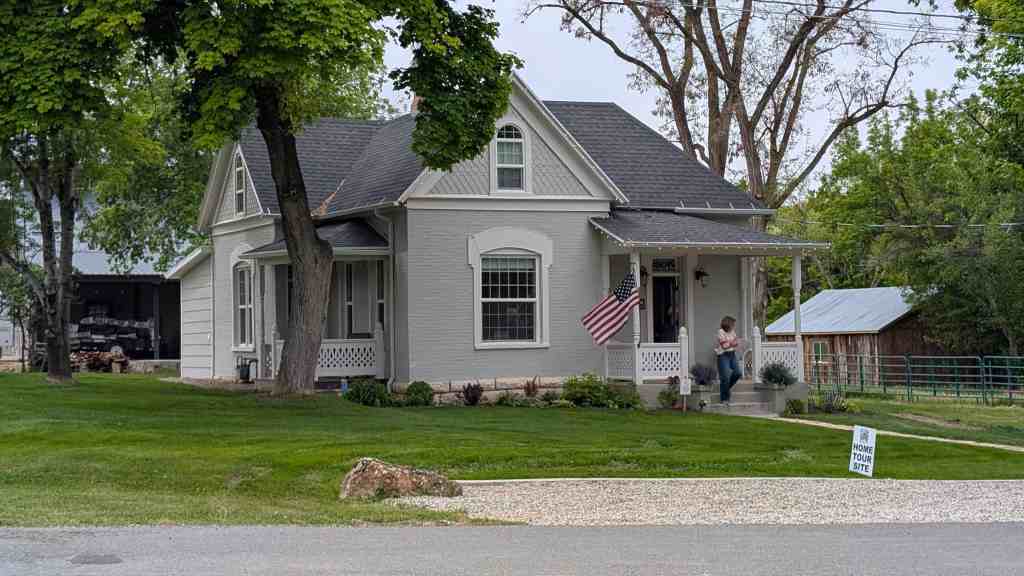
The above text is from the plaque on the home located at 90 East 100 South in Spring City, Utah. The below text is from the historic home tour (2023).

MORGAN JOHNSON/JACK WATSON HOME, 90 E. 100 S. 1904:
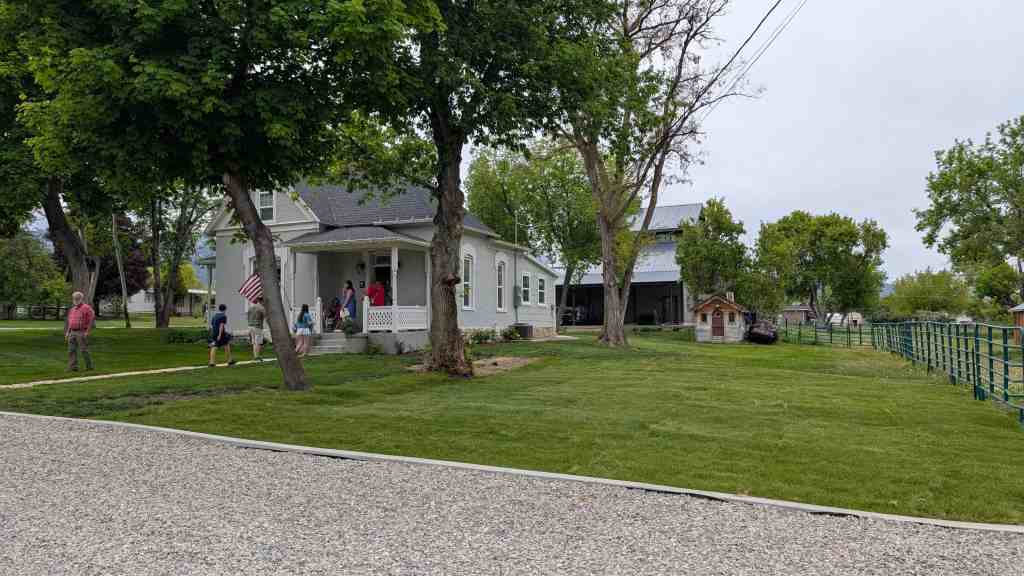
A pattern book “L” plan house. Built by J. Morgan Johnson who was the son of Judge Jacob Johnson. He published The Spring City Echo in 1897, a town newspaper which survived six months. The kitchen and living room suffered a fire in 1988. Purchased in 2020 and restored by its current owners. Owned by Tony and Liz Rudman.

This house was built for J Morgan Johnson, who started a town newspaper called “The Spring City Echo” in 1897. The paper survived for six months.*

Ezra Thompson and Mary Stevenson Clark House

19 Tuesday Dec 2023

Posted by Jacob Barlow in Uncategorized

≈ Leave a comment

Tags

Clark Lane National Historic District, Davis County, Farmington, Historic Homes, NRHP, utah

Ezra Thompson and Mary Stevenson Clark House

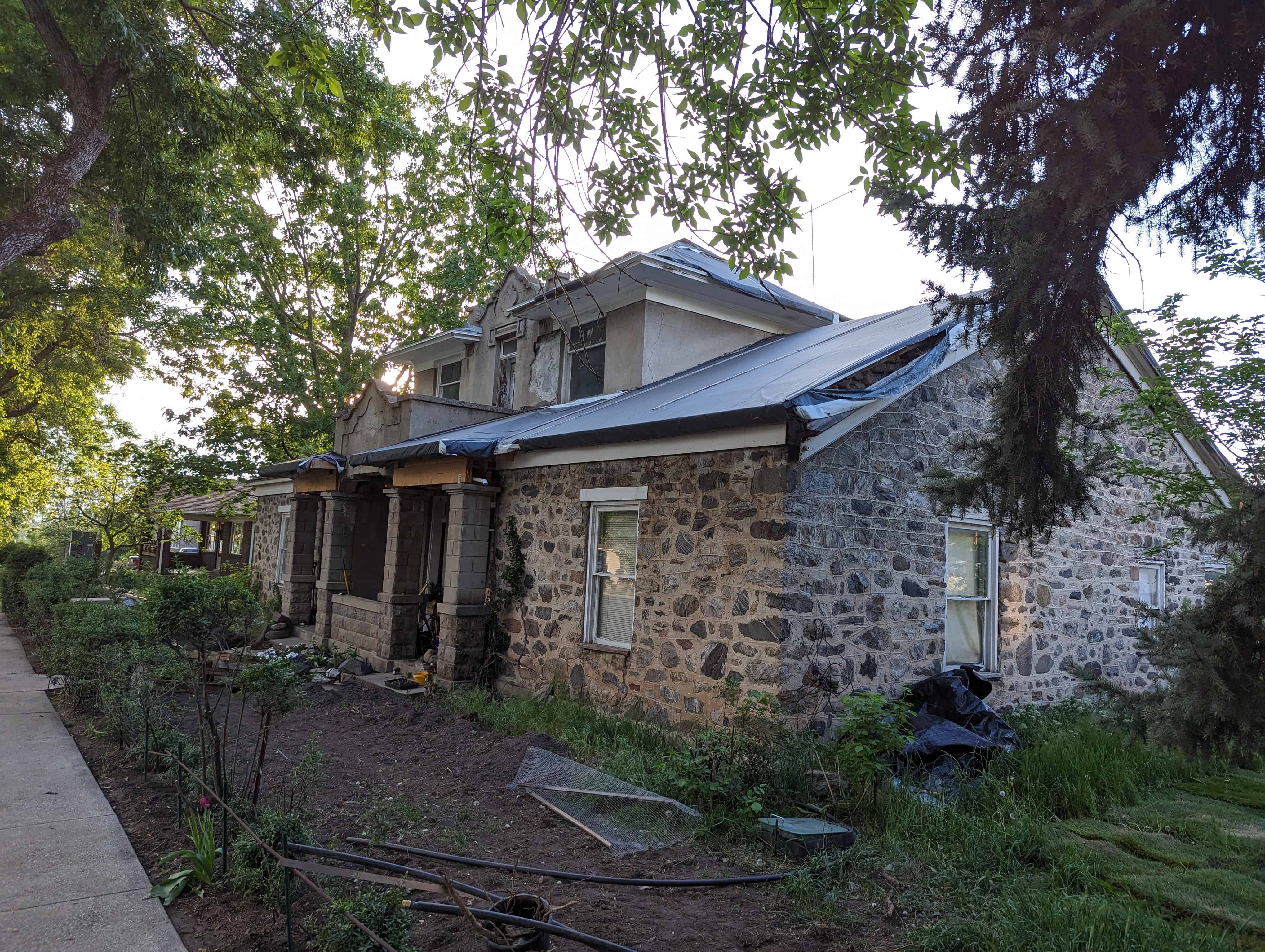
Devoted to the L.D.S. Church, Ezra Thompson Clark helped to establish three colonies, one in Bear Lake, Idaho; one in Iron County, Utah and one in Nevada. He also built the Grist Mill in Morgan, a flour mill and molasses mill and filled five preaching missions. He possessed many fine horses and could supply teams and carriages for transportation for the church. He provided teams of black oxen to help bring immigrants from the Missouri River to Utah and provided two teams of oxen and a wagon to carry the great granite blocks from Cottonwood Canyon for the Salt Lake Temple. He often furnished teams and wagons for church authorities in their trips through Northern Utah and Idaho. Often the President of the Church and the apostles were at this house where they were put up when passing through the area.*

Ezra Thompson Clark was a farmer of consumate skill and experience. When arriving in Farmington in 1848, he was given 35 acres by Brigham Young, which he saw grow to 700 acres before he died. He raised sugar cane, cattle, hay and grain. He had the first swarm of bees in Farmington. He founded the Davis County bank and was elected its first president in 1891. He was the Davis County treasurer and kept the county funds in a safe in his house.

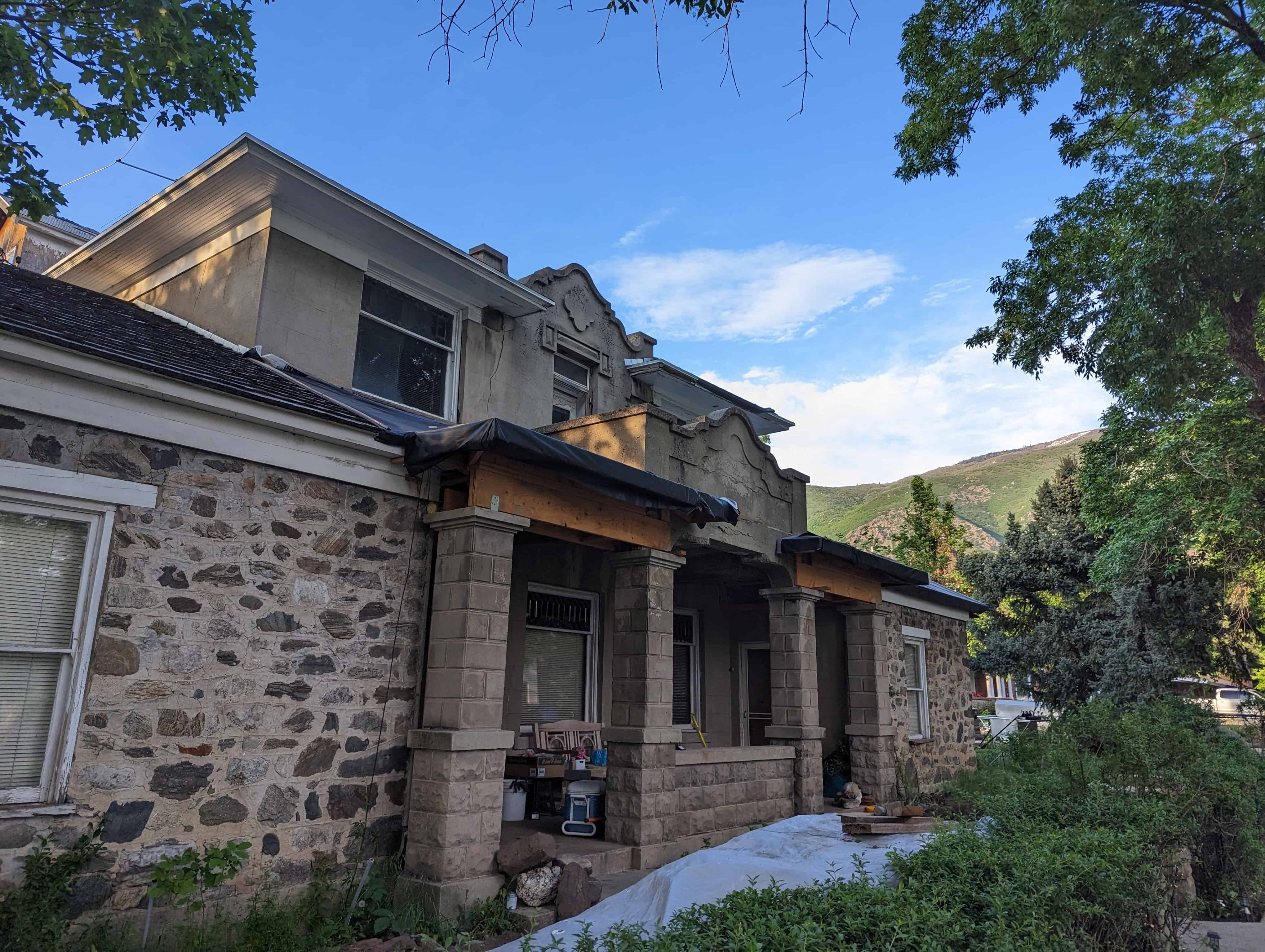
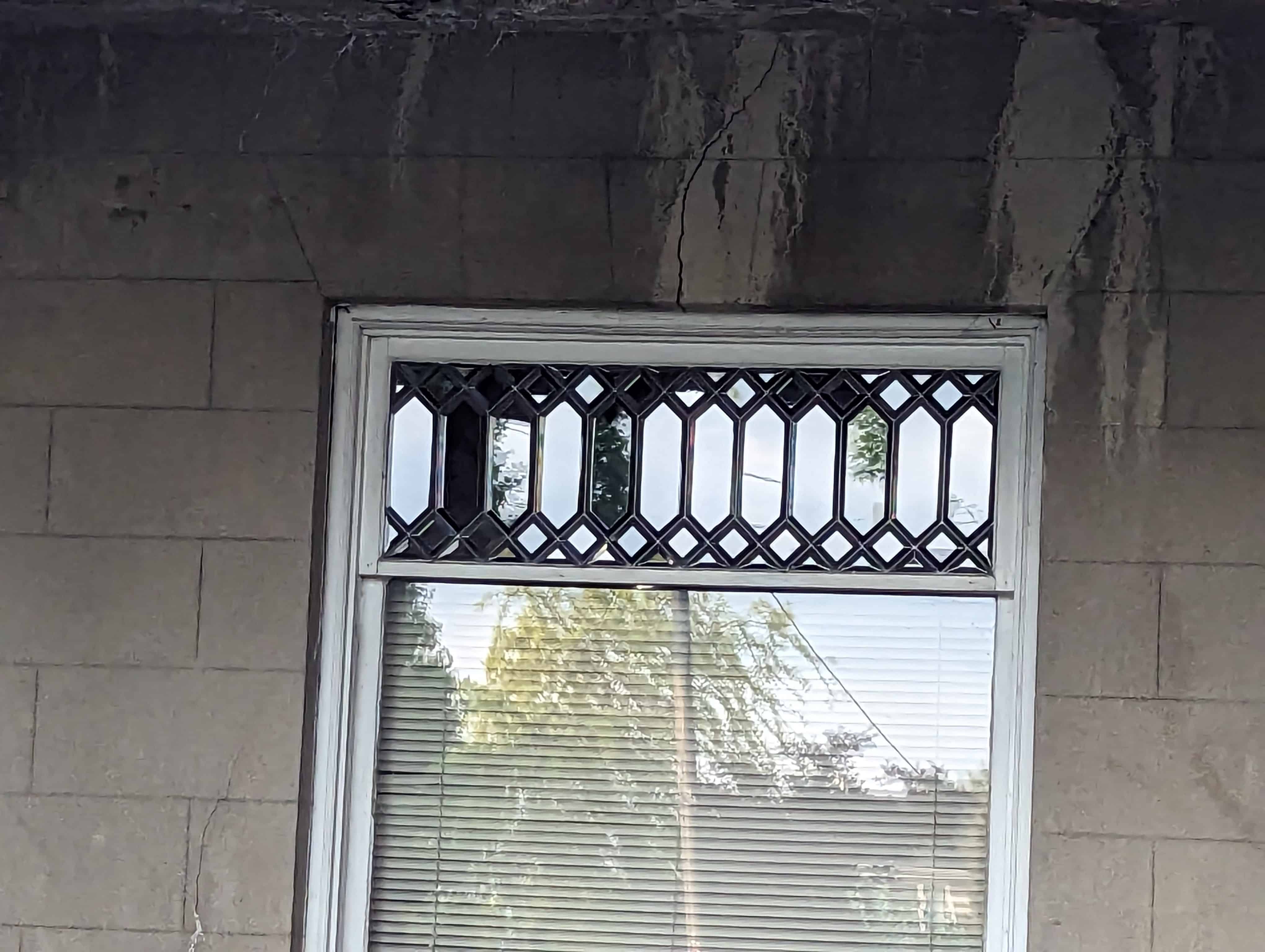
Built in 1856, this house has undergone a series of alterations throughout its existence. The original adobe structure was a two-story, single pile, side passage plan with a gable roof parallel to the street. The side passage plan in this form is not common in Farmington. The first alteration to the original structure, dating from 1857, consists of a one-story wing which was added to the west side of the original two story structure. The east wing was added in 1867. These wings, built with native field stone laid in a random rubble pattern, were placed to create a symmetrical massing on the main façade. The wings were staggered in front of the original main façade, thus creating a recessed entry which was covered by a wooden porch and balcony. Each wing was covered by a gable roof proportioned similar to the saltbox roof type. The next alteration consists of a major remodeling which occurred in 1914. In order to update its style and function, the original central portion was transformed to create a Mission Revival style house. Emanating from California, this style employed, among other elements, the use of plain stucco walls, curvilinear gables, and arcades, all of which are found in this example. The main porch is formed by four concrete block columns which support a hip roof which is features a curvilinear parapet which in turn forms the railing of a balcony. The upper roof, which was changed from a gable to a hip, is also graced by a curvilinear gable which complements the lower gable. Other 1914 alterations include the enlargement of window openings on the main and upper floors, and the addition of space at the rear of the house on both the main and upper levels. Windows on the main façade consist of large, fixed panels with decorative leaded art glass transoms on the main floor and single hung with decorative transoms on the upper level. No major alterations of the principle facades visible from the street have been executed since the completion of the 1914 remodel.
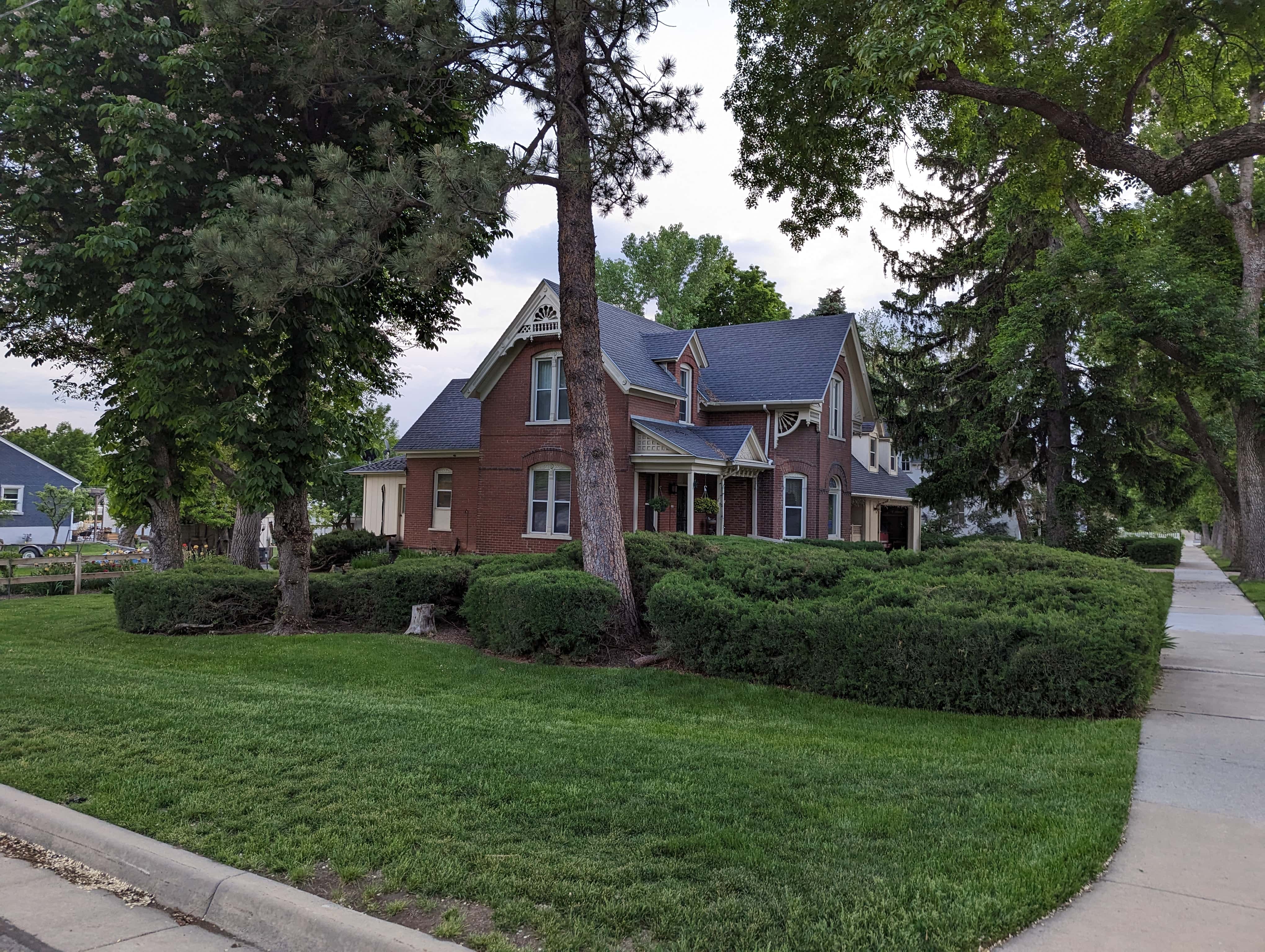
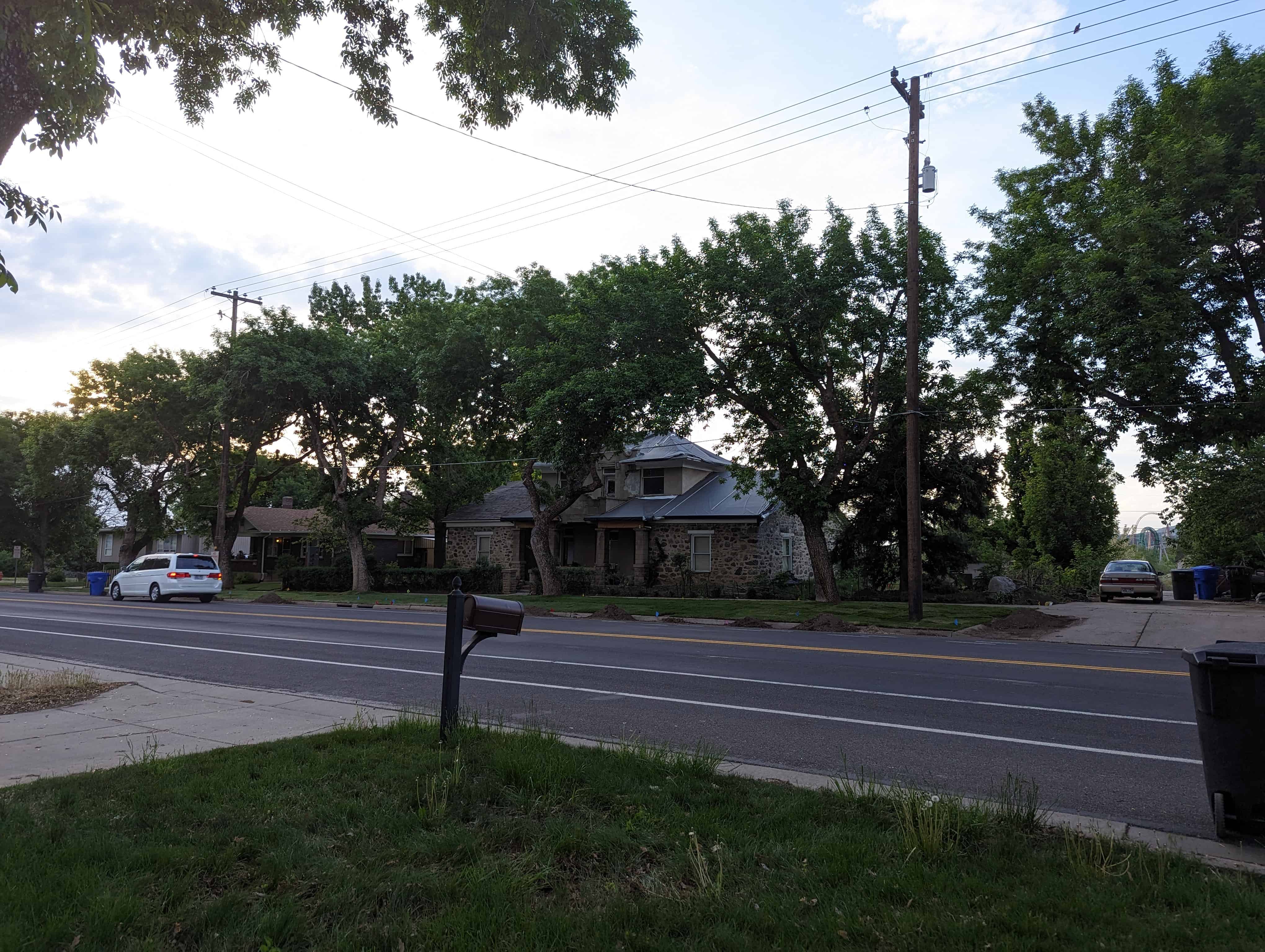
368 West State Street in Farmington, Utah in the Clark Lane National Historic District.

Hyrum Don Carlos Clark & Ann Eliza Porter Clark House

18 Monday Dec 2023

Posted by Jacob Barlow in Uncategorized

≈ Leave a comment

Tags

Clark Lane National Historic District, Davis County, Farmington, Historic Homes, NRHP, utah

Hyrum Don Carlos Clark & Ann Eliza Porter Clark House

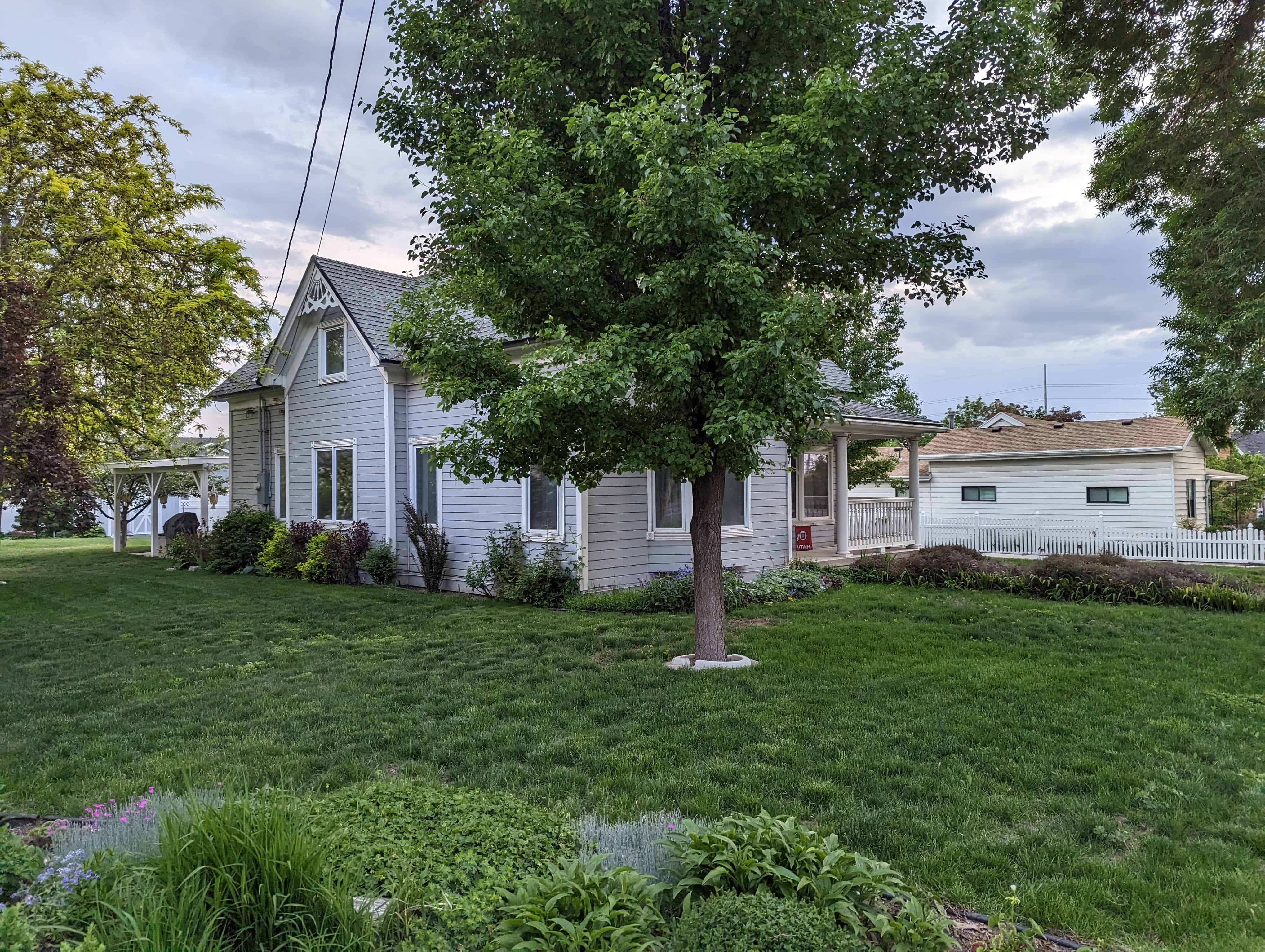
Wood-framed buildings of this age and older are very rare in Farmington, since nearly all historic buildings here were built of masonry. Hyrum Don Carlos Clark left Farmington in 1880 to seek his fortune, first in Idaho and then in the Star Valley of Wyoming. His wife, Ann Eliza Porter Clark, found the winters in Wyoming too rigorous and her health suffered. In 1908 Hyrum built this house, close by his family, for her. Victorian cottages such as this one became the basic middle-class house in the late 19th century. This simple “T” cottage is also evidence of the continued popularity of the cross-wing plan throughout the state of Utah at that time.

367 West State Street in Farmington, Utah in the Clark Lane National Historic District.

Joseph Smith Clark Home

17 Sunday Dec 2023

Posted by Jacob Barlow in Uncategorized

≈ Leave a comment

Tags

Clark Lane National Historic District, Davis County, Farmington, Historic Homes, NRHP, utah

Joseph Smith Clark Home

This house was built by Joseph Smith Clark, the son of Ezra Thompson and Mary Stevenson Clark. He went with his father and others to Bear Lake, Idaho in 1870 in response to a call from Brigham Young. There he helped survey and locate the town of Georgetown, to which he moved in 1876 and where he lived for 15 years. The Georgetown ranch was a source of beef cattle and dairy products for his father’s family, which followed the patriarchal order of family ownership in common; great herds of cattle frequently moved between Georgetown and Farmington under Joseph’s direction.*

In 1891 he moved back to Farmington where he was a member of the Farmington City Council, president of North Cottonwood Irrigation Co., and president of David County Bank. He was also commissioner for appraisal of inheritance taxes for Davis County and appraiser of damages to farm lands for Intermountain Smelter Co.

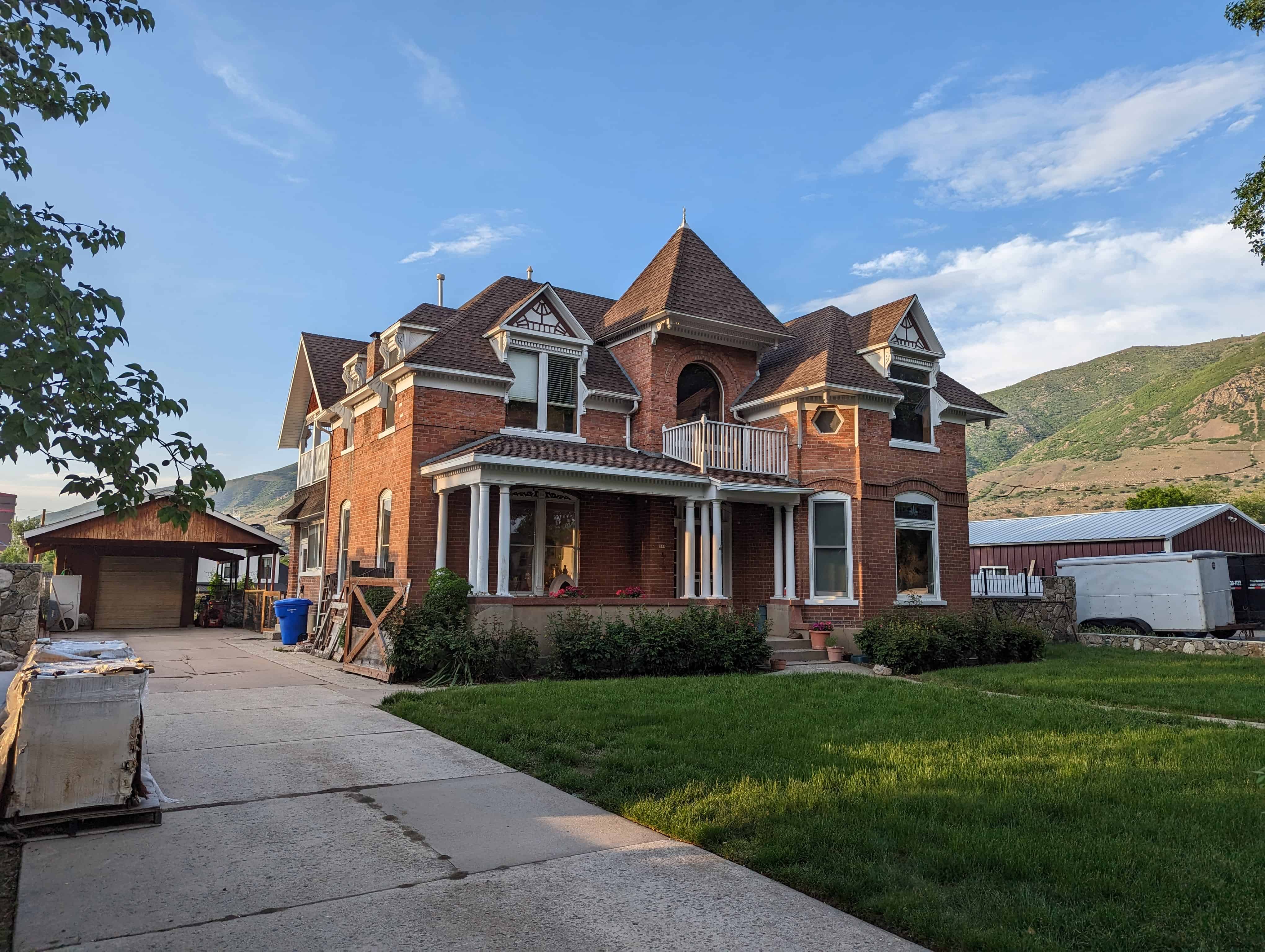
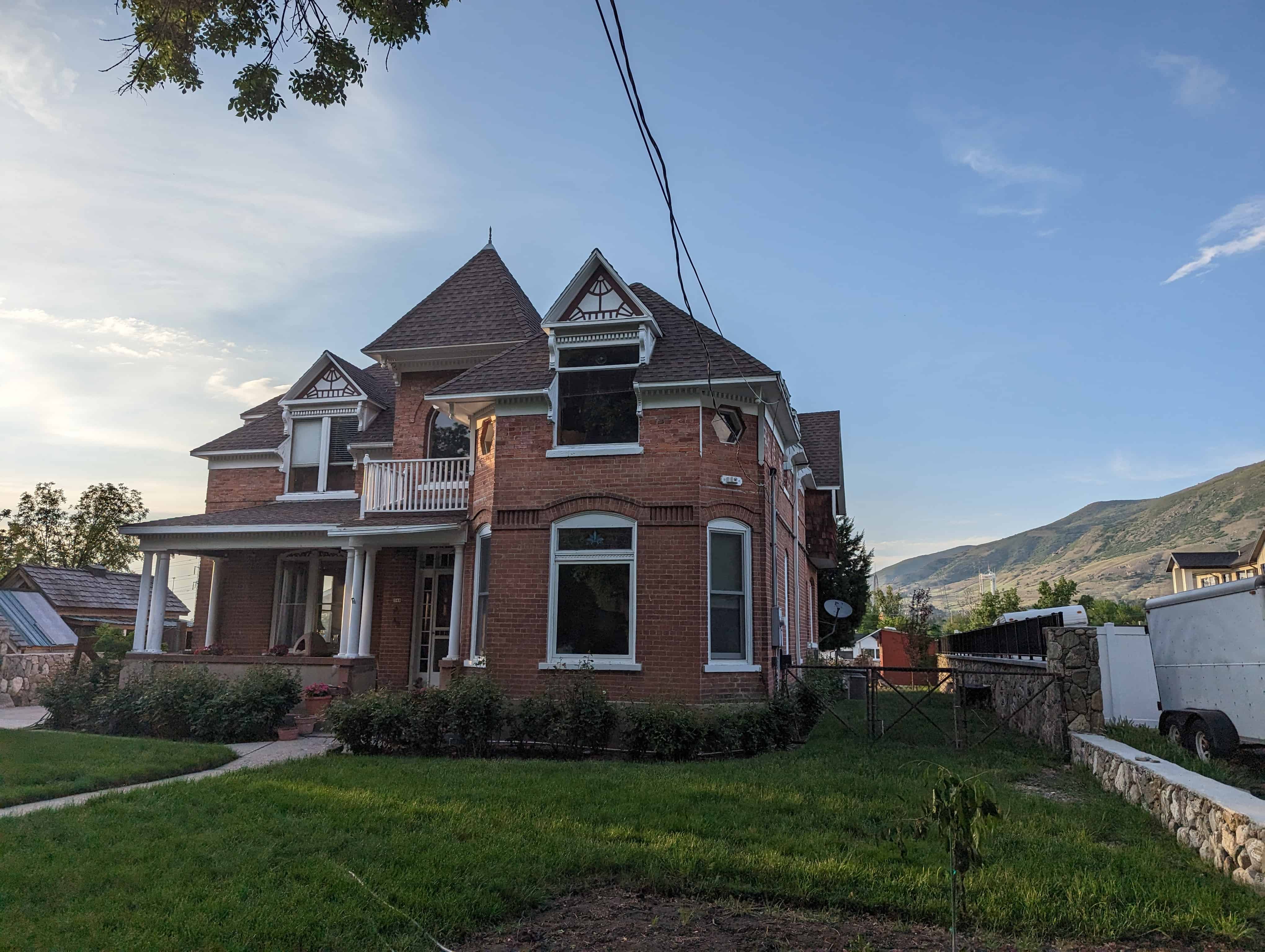
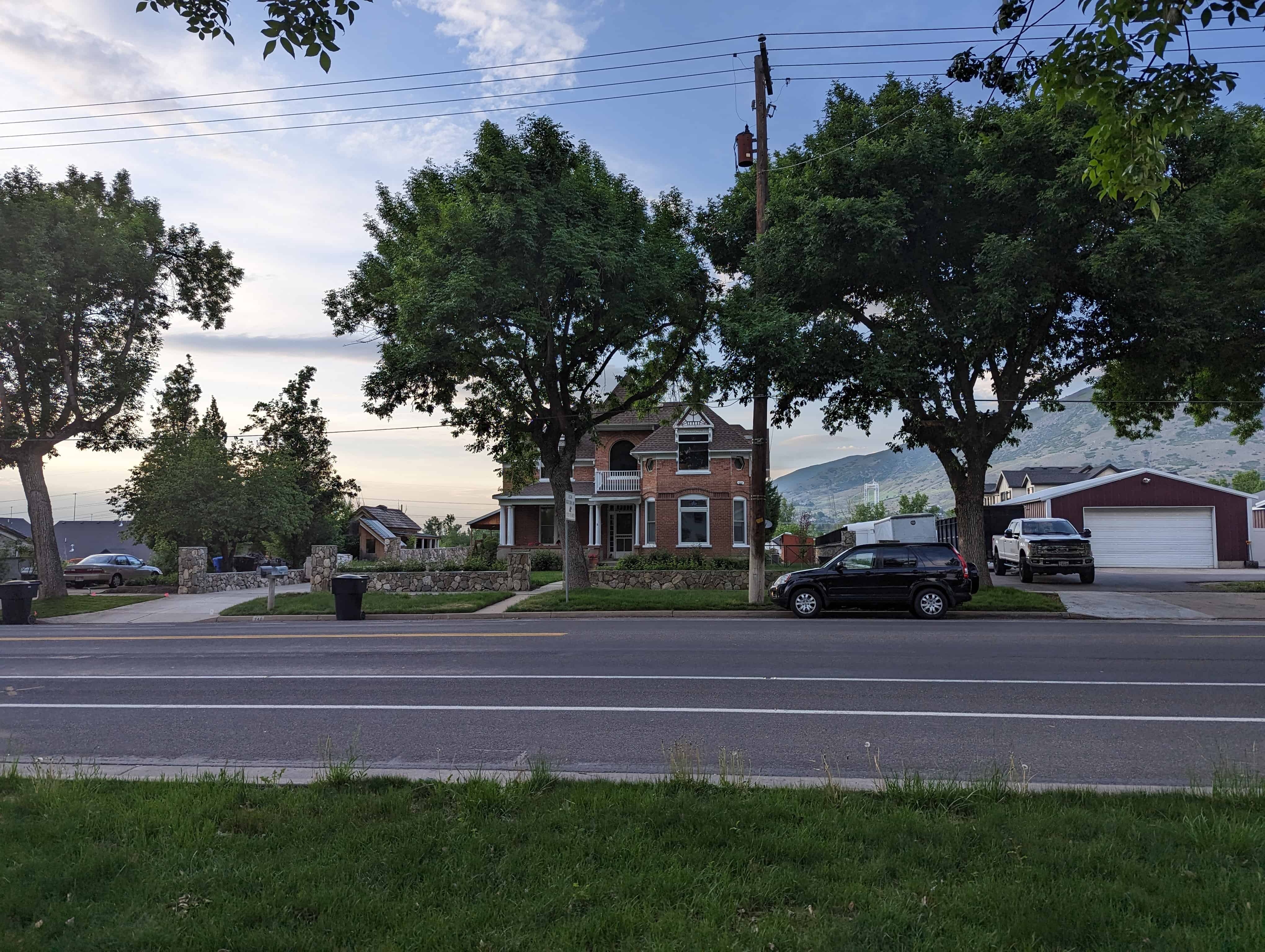
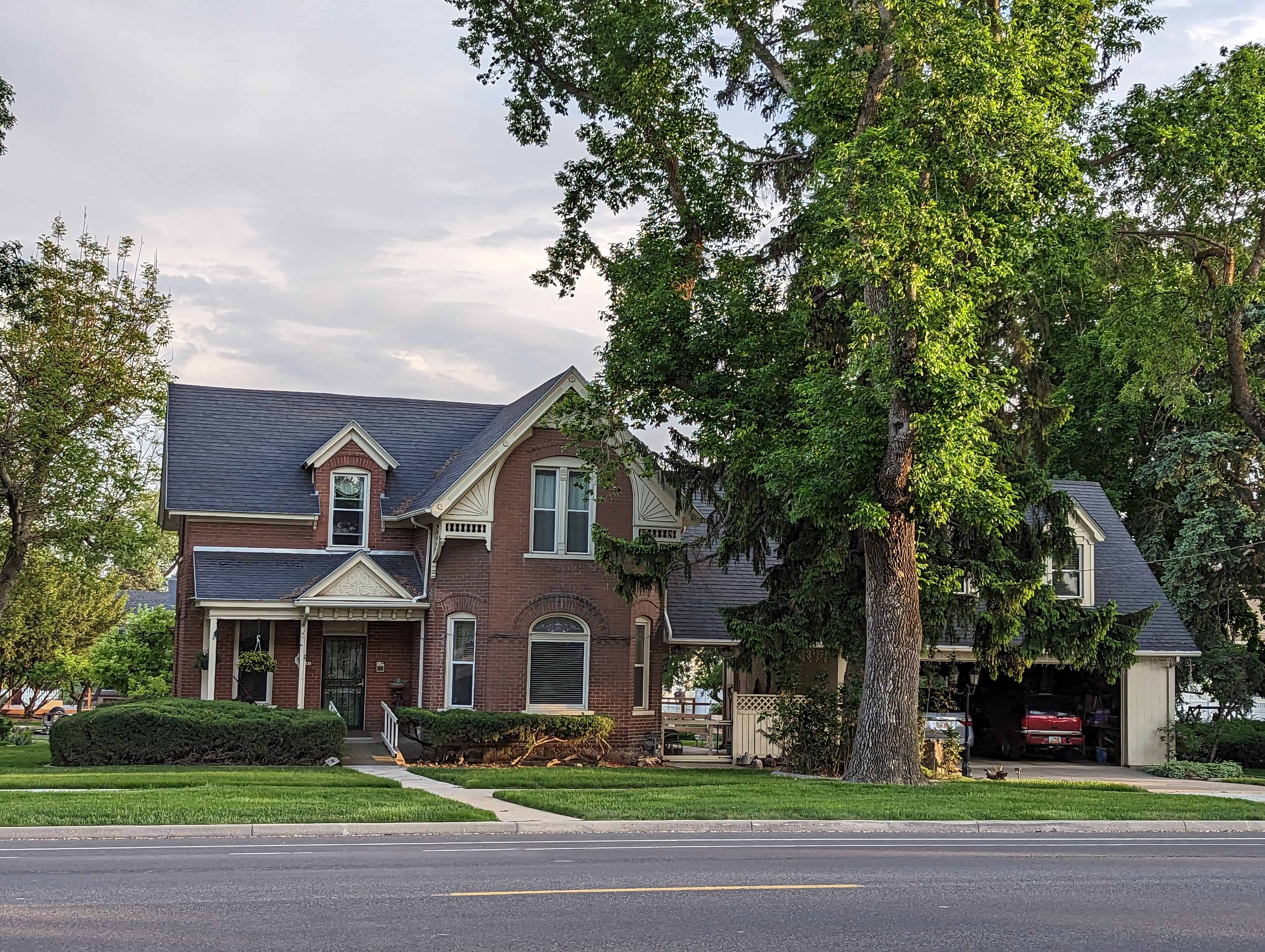
Built in 1895, the design of this one and a half story brick crosswing house, which has been influenced by the Queen Anne style, is the most elaborate of the district. Among the elements used to further enrich the Victorian design found on adjacent residences is an engaged corner tower at the junction of the projecting and flanking wings which form the main entry to the house. Capped by a steeply pitched pyramidal hip roof, the tower formed the centerpiece of a richly elaborated silhouette created by the tower, ornate dormers, and a tall decorative brick chimney. The tower was elaborated by an arched opening which opened onto an upper floor porch with a turned wood balustrade. The original main hip roof, which was punctuated by a continuous decorative sheet metal ridge cap, was pierced by two gable dormers on the main façade and two hip dormers on each side elevation. The dormers were embellished with carved inset panels, dentiled cornices, and scroll-cut brackets. The roof was detailed with a wide frieze and spindled corner brackets at the canted corners of the projecting wing. The original hip roof porch was supported by full height Tuscan columns. The exterior brick walls, which rest on a stone foundation, were pierced by one-over-one double-hung windows, paired in several locations, and by a fixed window with a leaded and stained glass transom in the main floor parlor. The window openings are articulated by segmental arched heads formed by soldier courses and projecting header courses. In 1919, the original upper floor and roof were destroyed by fire. The tower was removed and the roof was rebuilt with a bungalowstyle hip roof which excluded the dormers. In 1979, a restoration was undertaken whereby the 1917 roof was removed and replaced by the current construction which was based on historic photographs. The tower, porch, roof, and dormers were rebuilt to reflect the original massing, and original detailing.

340 West State Street in Farmington, Utah in the Clark Lane National Historic District.

Susan Leggett Clark House

16 Saturday Dec 2023

Posted by Jacob Barlow in Uncategorized

≈ Leave a comment

Tags

Clark Lane National Historic District, Davis County, Farmington, Historic Homes, NRHP, Porch Spandrels, utah

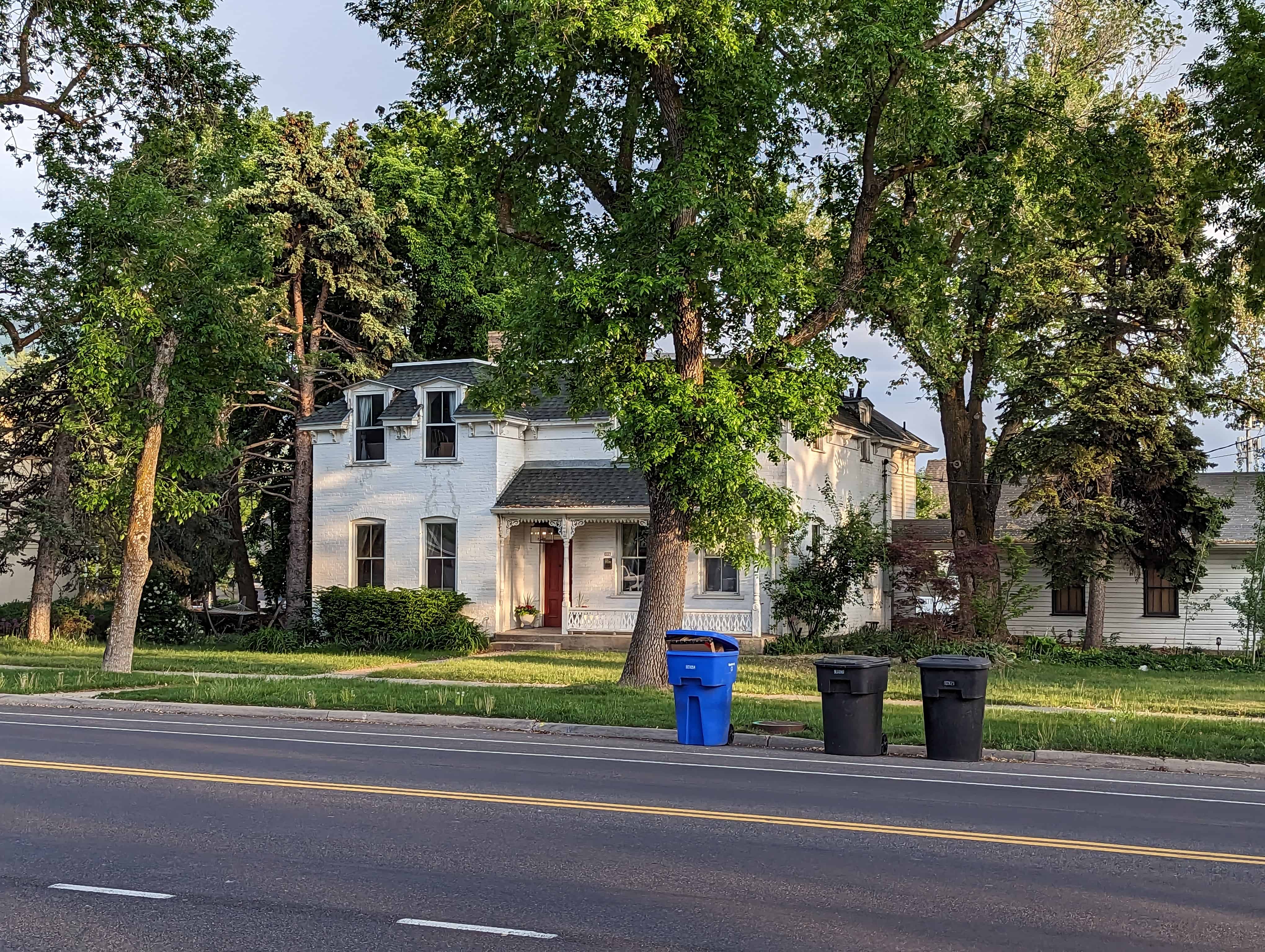
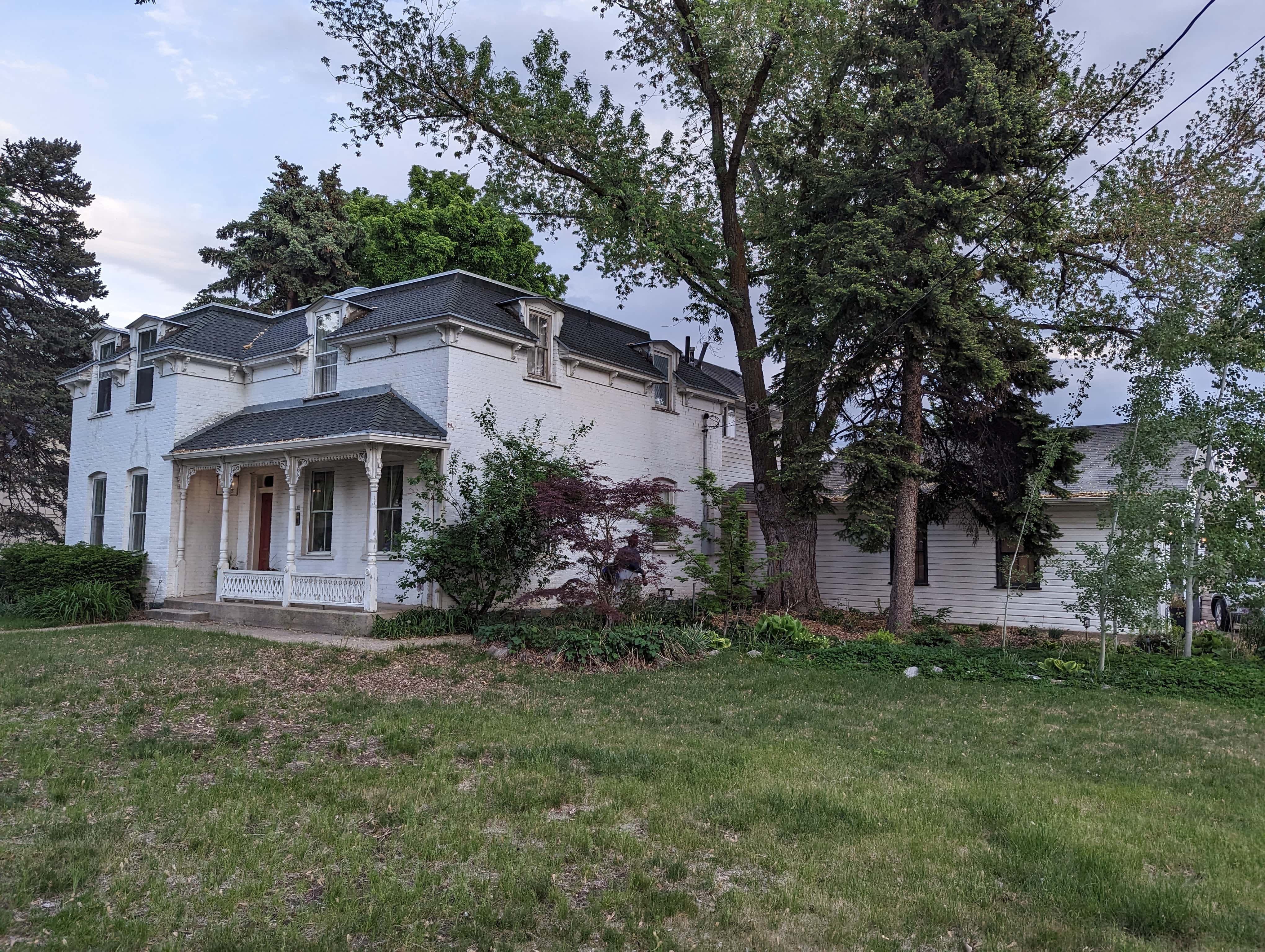
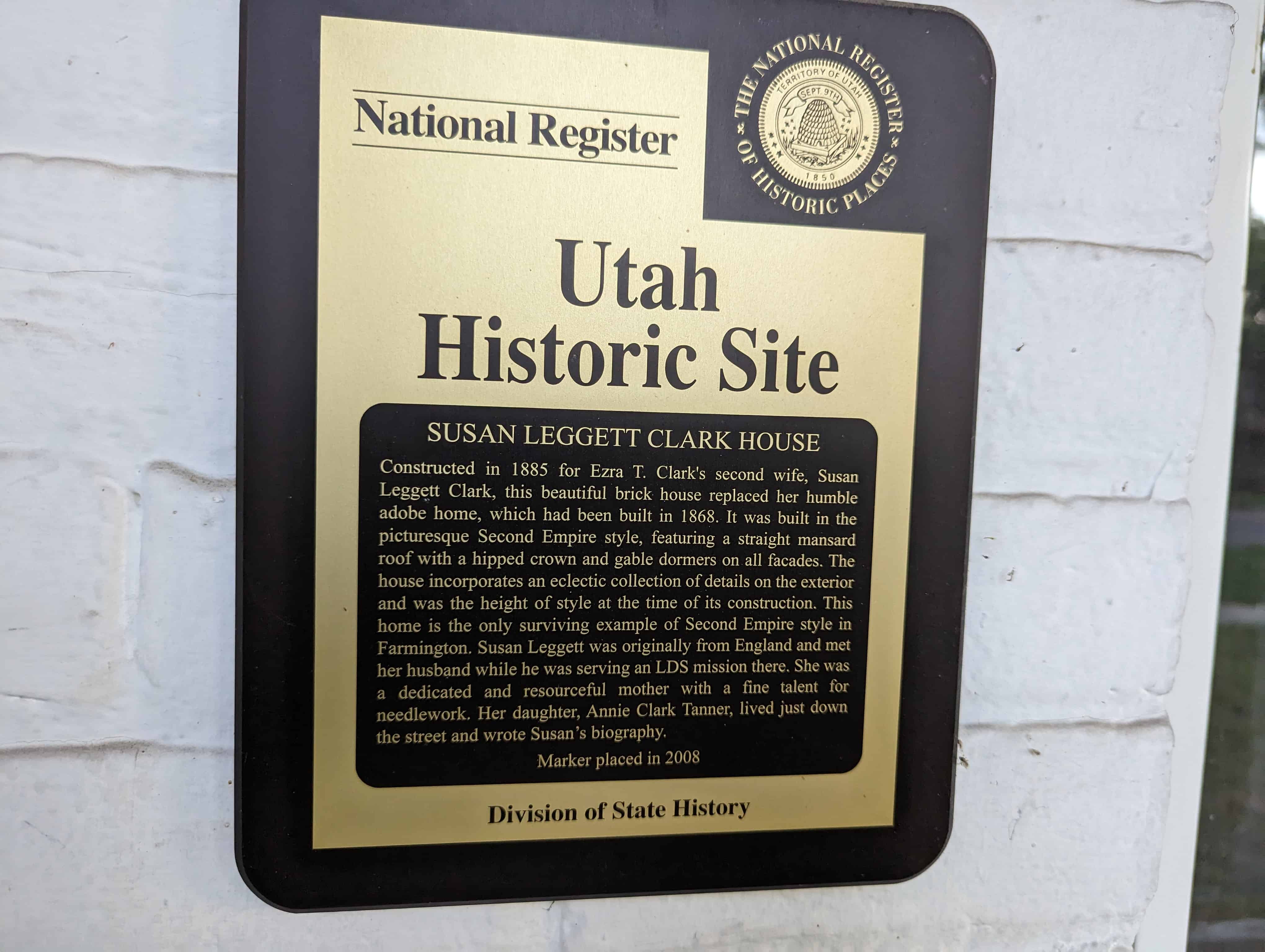
Susan Leggett Clark House

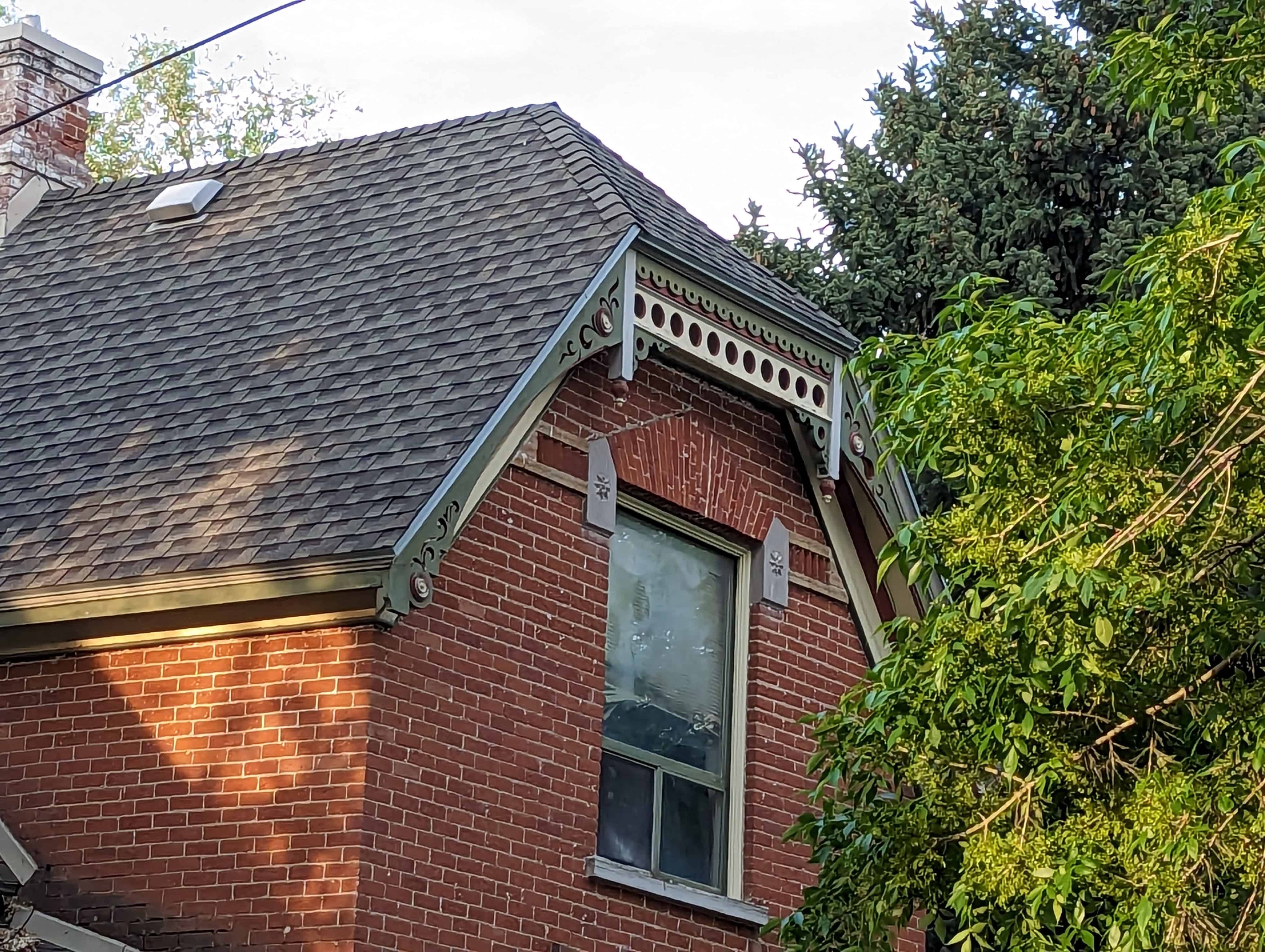
Constructed in 1885 for Ezra T. Clark’s second wife, Susan Leggett Clark, this beautiful brick house replaced her humble adobe home, which had been built in 1868. It was built in the picturesque Second Empire style, featuring a straight mansard roof with a hipped crown and gable dormers on all facades. The house incorporates an eclectic collection of details on the exterior and was the height of style at the time of its construction. This home is the only surviving example of Second Empire style in Farmington. Susan Leggett was originally from England and met her husband while he was serving an LDS mission there. She was a dedicated and resourceful mother with a fine talent for needlework. Her daughter, Annie Clark Tanner, lived just down the street and wrote Susan’s biography.

335 West State Street in Farmington, Utah in the Clark Lane National Historic District.

Peter Hansen House

16 Saturday Dec 2023

Posted by Jacob Barlow in Uncategorized

≈ 1 Comment

Tags

Historic Homes, NRHP, Sanpete County, Spring City, Spring City Historic District, utah

Peter Hansen House

This house was constructed c. 1898 by Peter Hansen on land that he had purchased from Peter M. Olsen. In 1901 the property was sold to Isaac P. Allred. Reid H. Allred, a well-known citizen in Central Utah, raised his family and died in this home. In addition to the wood-frame vernacular dwelling, the property also features a historic barn. The property retains its historic integrity and is a contributing resource within the Spring City Historic District.

Located at 94 West 100 North in Spring City, Utah.

Eugene Henry Clark & Sarah Ann Sessions Clark House

15 Friday Dec 2023

Posted by Jacob Barlow in Uncategorized

≈ Leave a comment

Tags

Clark Lane National Historic District, Davis County, Farmington, Historic Homes, NRHP, utah

Eugene Henry Clark & Sarah Ann Sessions Clark House

The original owners of this Victorian Eclectic house were descended from some of the earliest and most prominent LDS pioneers. Eugene Henry Clark was the sixth child of Ezra T. Clark and Susan Leggett Clark. Sarah Sessions was the daughter of Perrigrine Sessions, who founded the second settlement in Utah, now Bountiful City. This 12-story brick home was built around 1895. It combines a rich variety of elements from a number of Victorian-era architectural styles. Although the top story was destroyed by fire in the early 20th century, it was soon rebuilt. Throughout his life, Eugene Henry Clark farmed and raised livestock. This lovely home was known for having some of best gardens and fruit orchards in Farmington.

307 West State Street in Farmington, Utah in the Clark Lane National Historic District.

Annie Clark Tanner House

14 Thursday Dec 2023

Posted by Jacob Barlow in Uncategorized

≈ Leave a comment

Tags

Clark Lane National Historic District, Davis County, Farmington, Historic Homes, NRHP, utah

Annie Clark Tanner House

In 1901, Annie Clark Tanner, daughter of Ezra T. Clark and Susan Leggett Clark, arranged to have this Victorian Eclectic house built with money from her father. It replaced all but one room of an old adobe home on the same lot. She was 16 years into her polygamous marriage as second wife to Joseph Marion Tanner and had spent 10 years fleeing anti-polygamy persecution. Annie was grateful finally to settle near her beloved relatives. She oversaw the home’s design, hired the mason, and ordered all of the materials, including local fieldstone for the foundation and fired brick from Kaysville. Joseph, who eventually had five wives, lived elsewhere. He served a 3 1/2 – year mission overseas, and became a prominent LDS educator. As the couple gradually became estranged, Annie rented rooms to performers at Lagoon and, in 1911, took a lien to build a rental home to the east, and an addition to her home, which she divided and also rented. In 1913, Joseph formally abandoned Annie and six of their children (two had died in childhood; two had married). She then did housework for neighbors and worked as a midwife to pay for her children’s education. Six of her children graduated from college, including her youngest, Obert Clark “O.C.” Tanner, who was a U. of U. professor, wealthy entrepreneur and philanthropist. Annie wrote biographies of her mother and father. Her autobiography, “A Mormon Mother,” is considered a classic in Mormon literature.

291 West State Street in Farmington, Utah in the Clark Lane National Historic District.

Amasa Lyman Clark, Alice Steed Clark & Susan Duncan Clark House

13 Wednesday Dec 2023

Posted by Jacob Barlow in Uncategorized

≈ 1 Comment

Tags

Clark Lane National Historic District, Davis County, Farmington, Historic Homes, NRHP, utah

Amasa Lyman Clark, Alice Steed Clark & Susan Duncan Clark House

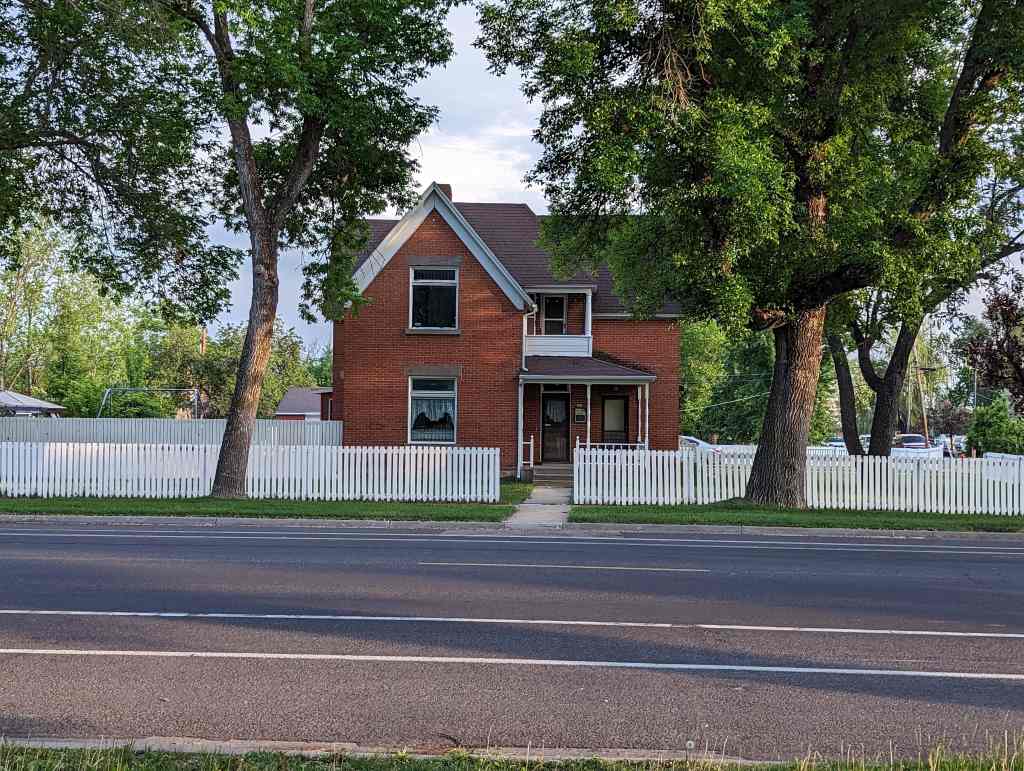
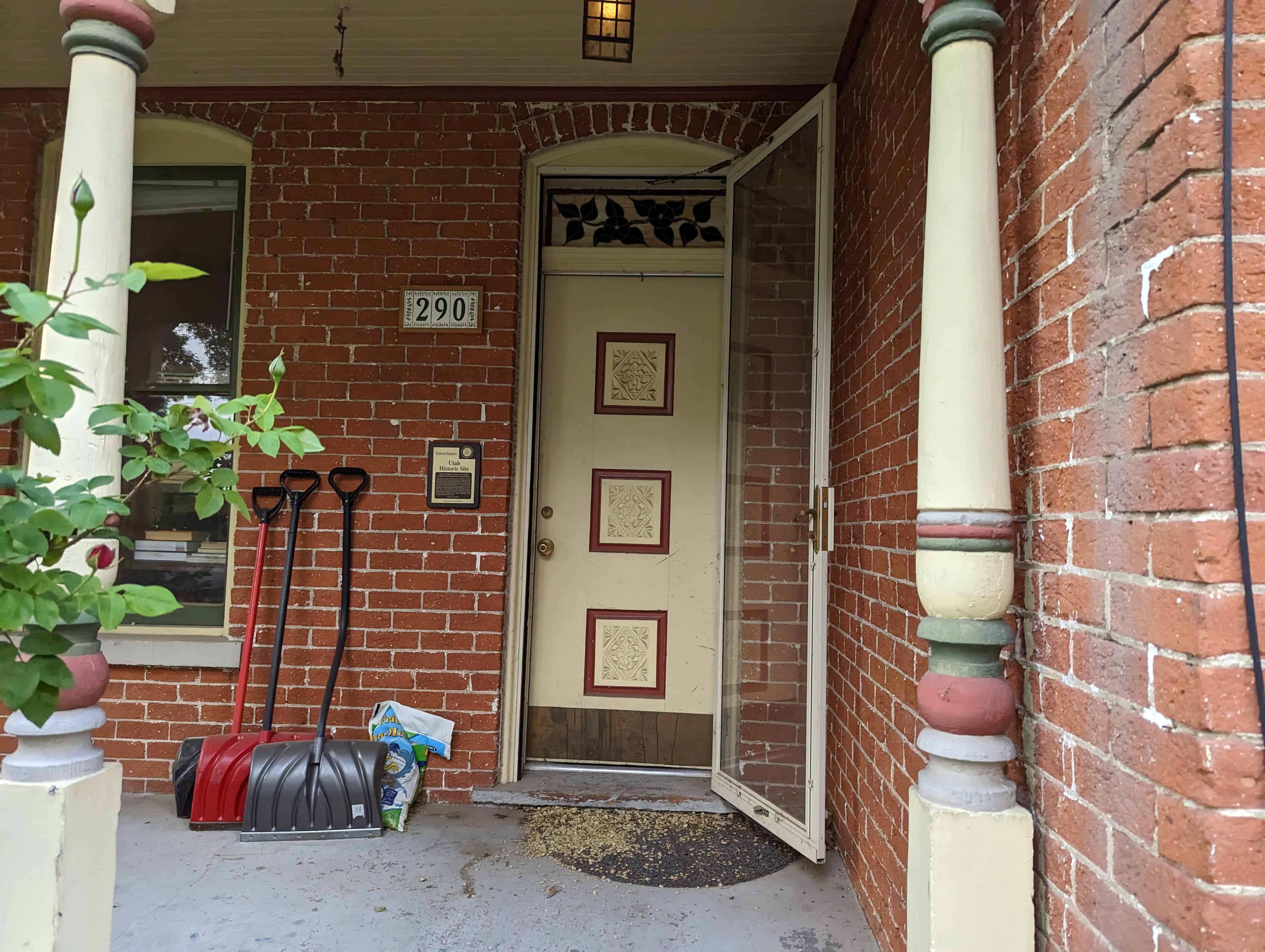
This brick, cross-wing “T”-form house was constructed in 1885 for Amasa Lyman Clark and Alice Steed Clark. It is influenced by the Queen Anne Victorian style. When Alice died in 1895 leaving three young sons, Amasa married Susan Duncan and lived with her here for the rest of his long life. Susan raised Alice’s boys, plus five children of her own, and wrote short stories and poems, many of which were published. Amasa served as the Davis County Bank cashier when his father, Ezra T. Clark, established it in 1892, and became bank president in 1945. He was mayor of Farmington 1908-1912, and during his administration electricity came to the city. It is said that this house was the first in Farmington to have running water from a tank mounted outside the kitchen window.

290 West State Street in Farmington, Utah in the Clark Lane National Historic District.

← Older posts
Newer posts →

Follow Jacob

Follow Jacob

Blog Stats

  • 2,061,889 hits

Social and Other Links

BarlowLinks.com

Recent Posts

  • Arthur Miles Home
  • Navajo Shadehouse Museum
  • Impossible Canyons
  • The Old Hurricane Bell
  • Goulds Shearing Corral

Archives

Loading Comments...