• About JacobBarlow.com
  • Cemeteries in Utah
  • D.U.P. Markers
  • Doors
  • Exploring Utah Email List
  • Geocaching
  • Historic Marker Map
  • Links
  • Movie/TV Show Filming Locations
  • Oldest in Utah
  • Other Travels
  • Photos Then and Now
  • S.U.P. Markers
  • U.P.T.L.A. Markers
  • Utah Cities and Places.
  • Utah Homes for Sale
  • Utah Treasure Hunt

JacobBarlow.com

~ Exploring with Jacob Barlow

JacobBarlow.com

Tag Archives: Historic Homes

Anni Clark Tanner Rental House

12 Tuesday Dec 2023

Posted by Jacob Barlow in Uncategorized

≈ Leave a comment

Tags

Clark Lane National Historic District, Davis County, Farmington, Historic Homes, NRHP, utah

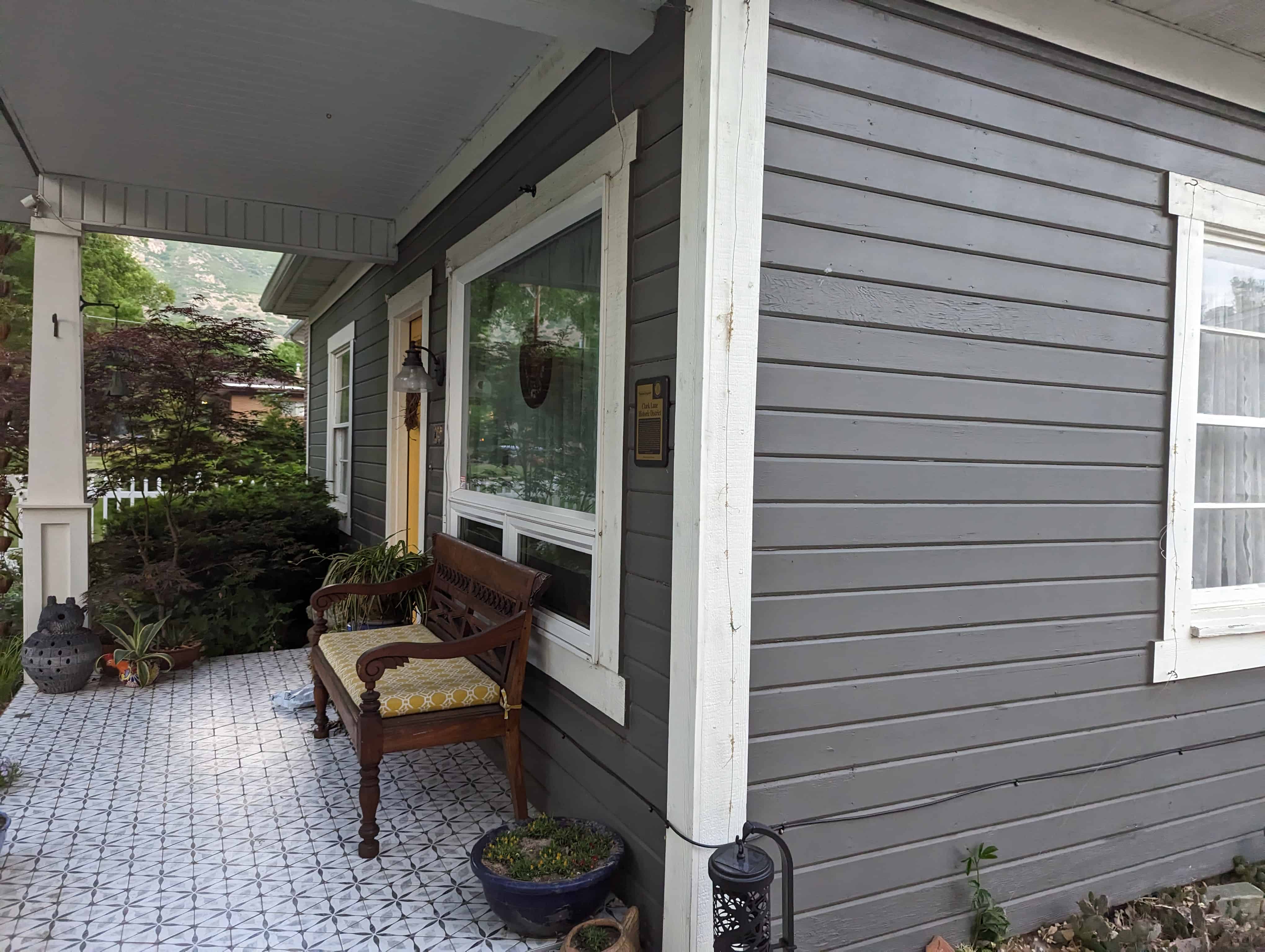
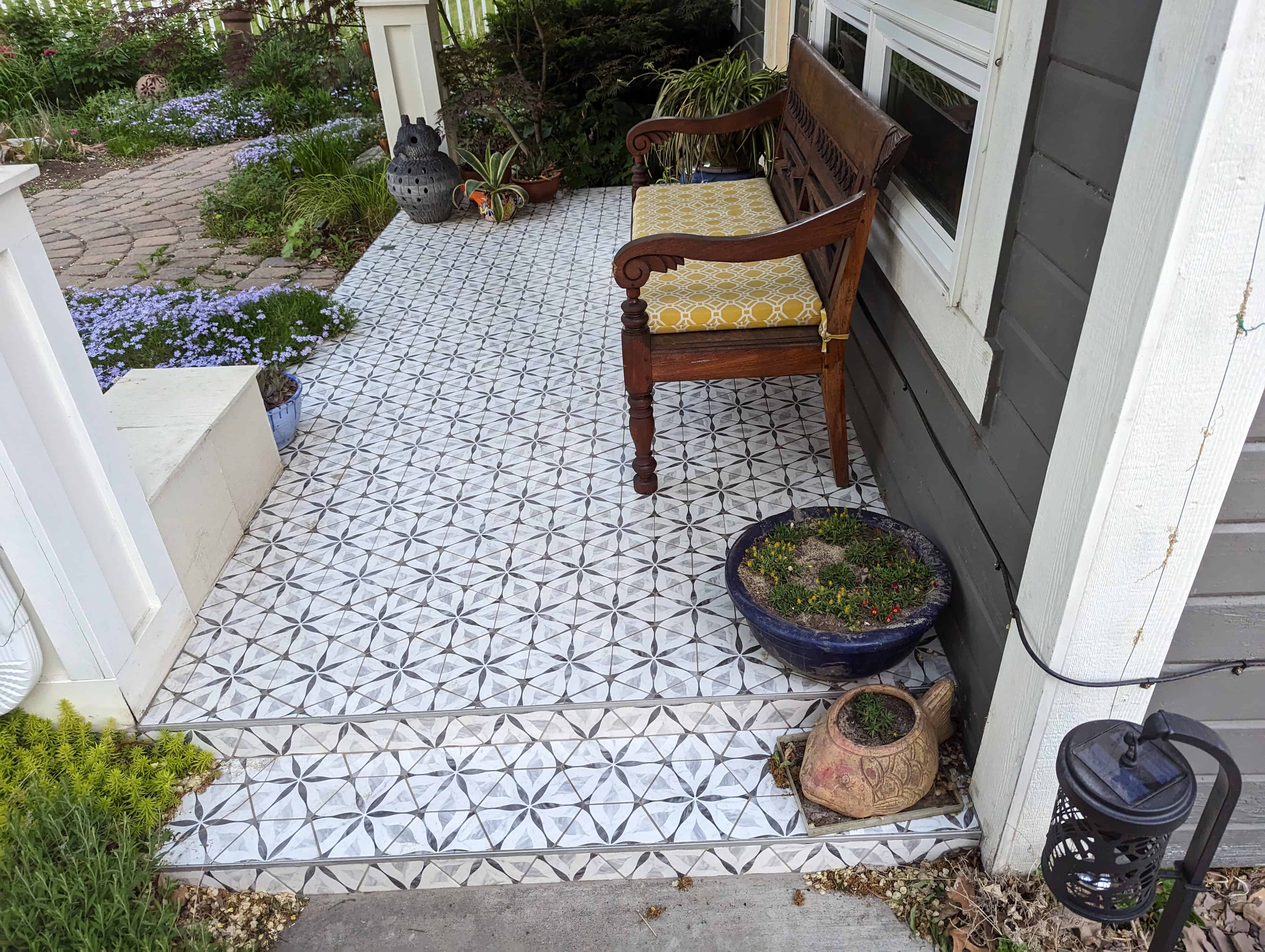
Anni Clark Tanner Rental House

This historic one-story, wood-clapboard bungalow, featuring a stone foundation, was built circa 1912 by Annie Clark Tanner for use as a rental home. Annie, the daughter of LDS pioneer Ezra T. Clark, had another house adjacent to this at 291 West State Street. Annie’s polygamous husband, Joseph Marion Tanner, had squandered most of her inheritance and asked her to sell her home at 291 West State to help finance his farm in Canada, but she refused. She built this rental house next door and rented rooms in the main house to famous orchestra musicians employed at Lagoon. She worked for neighbors, washing and scrubbing floors for fifteen cents an hour to help her children receive an education. Six of her children received a college education, including Obert Clark Tanner, founder of the O.C. Tanner jewelry company. The home retains its historic integrity and contributes to the Clark Lane Historic District.

269 West State Street in Farmington, Utah in the Clark Lane National Historic District.

Frank Thomas/Williams/Bradford Home

10 Sunday Dec 2023

Posted by Jacob Barlow in Uncategorized

≈ Leave a comment

Tags

Historic Homes, Icelandic, spanish fork, utah, utah county

Frank Thomas/Williams/Bradford Home

Built in 1903 by Sigurdur Thor Leifson, a ship’s carpenter in Iceland who moved to Spanish Fork.

87 North 200 East in Spanish Fork, Utah

Edward Franklin Clark & Inez Aureta Potter Clark House

10 Sunday Dec 2023

Posted by Jacob Barlow in Uncategorized

≈ 1 Comment

Tags

Clark Lane National Historic District, Historic Homes, NRHP, utah

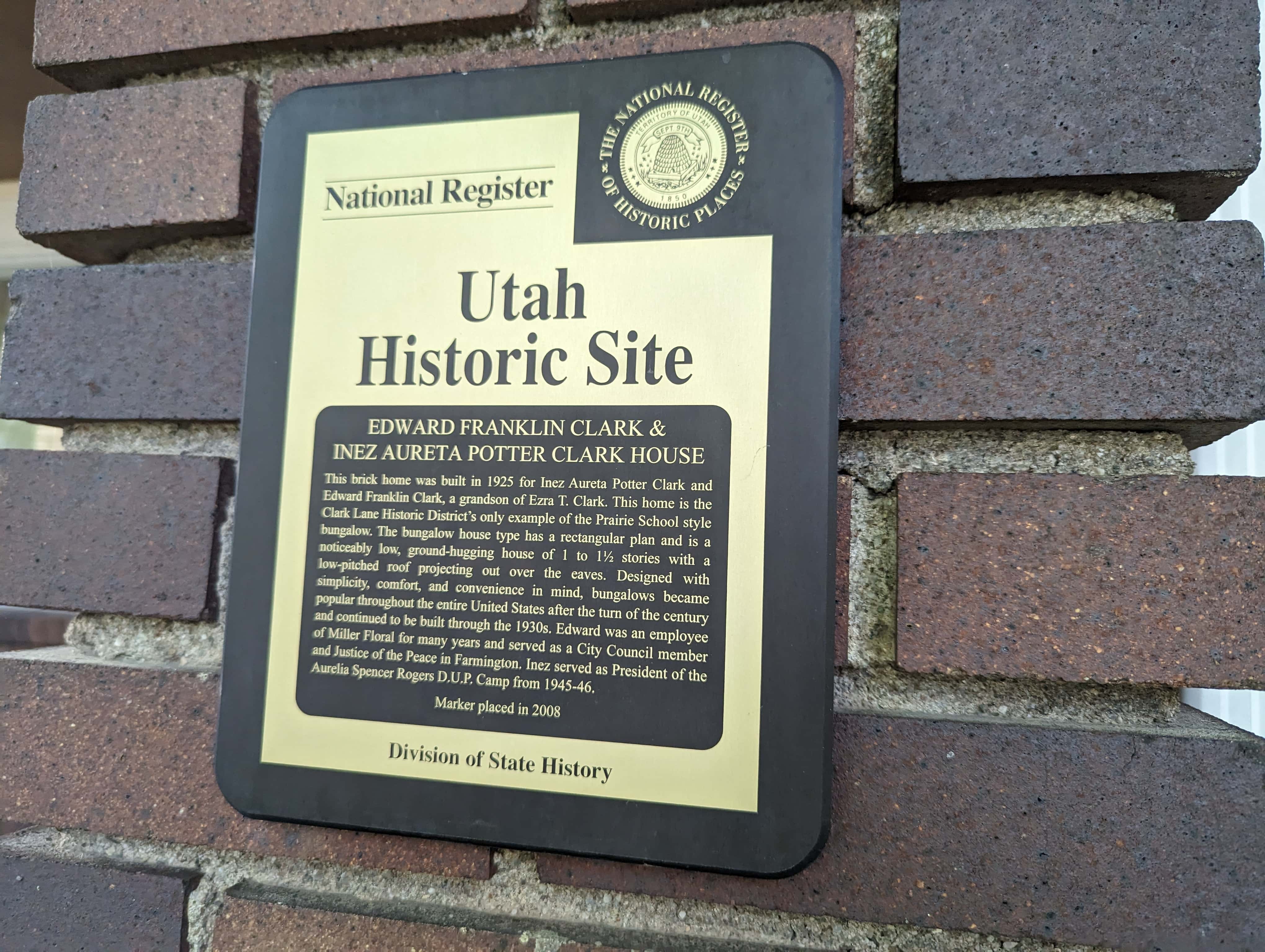
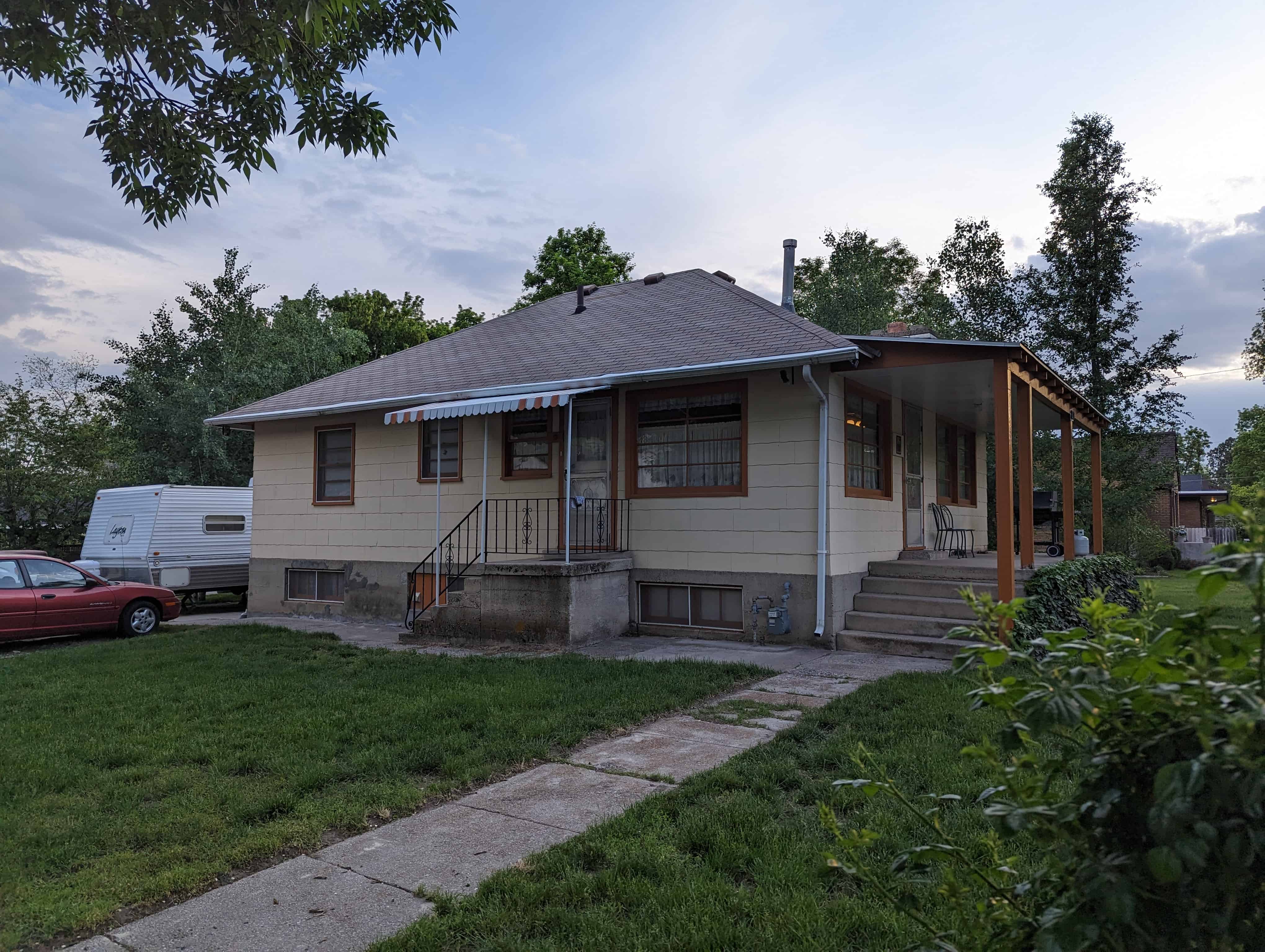
Edward Franklin Clark & Inez Aureta Potter Clark House

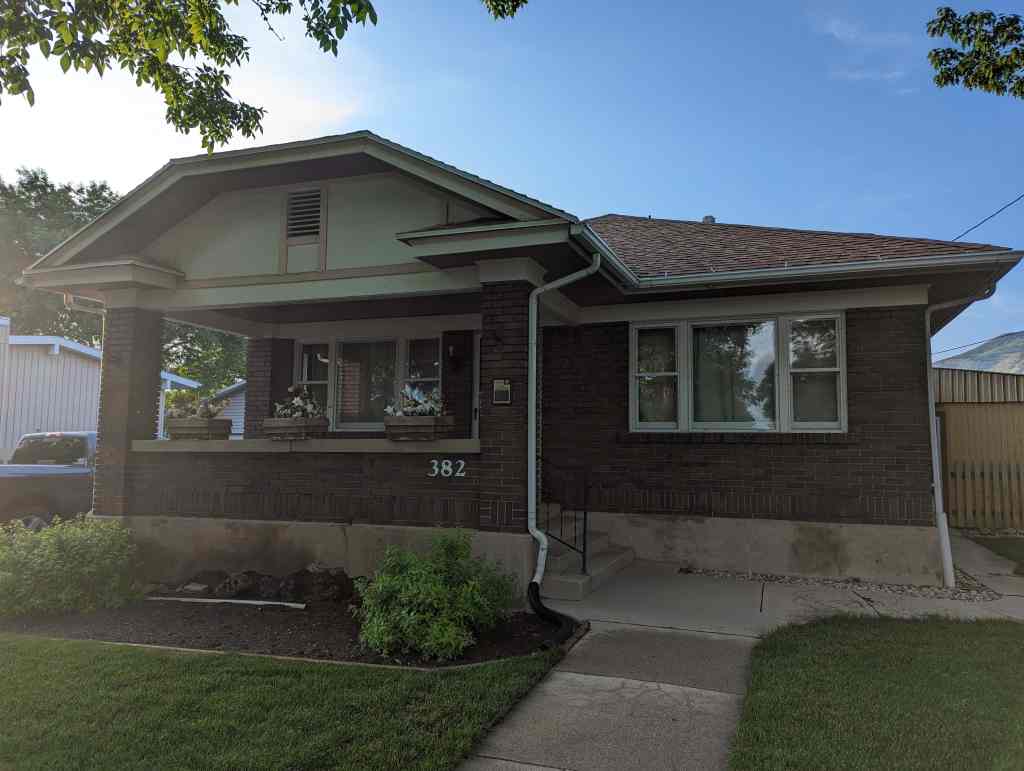
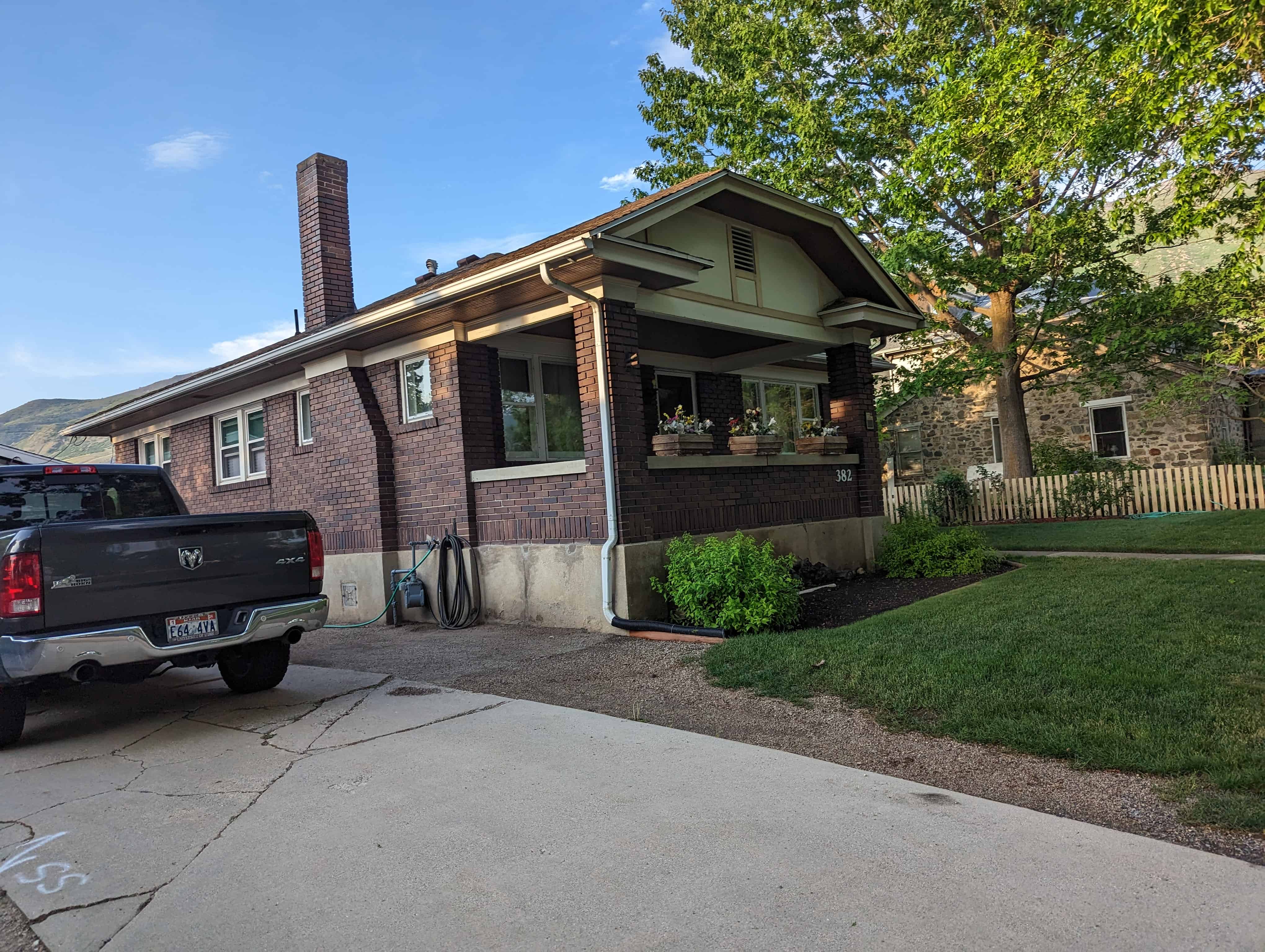
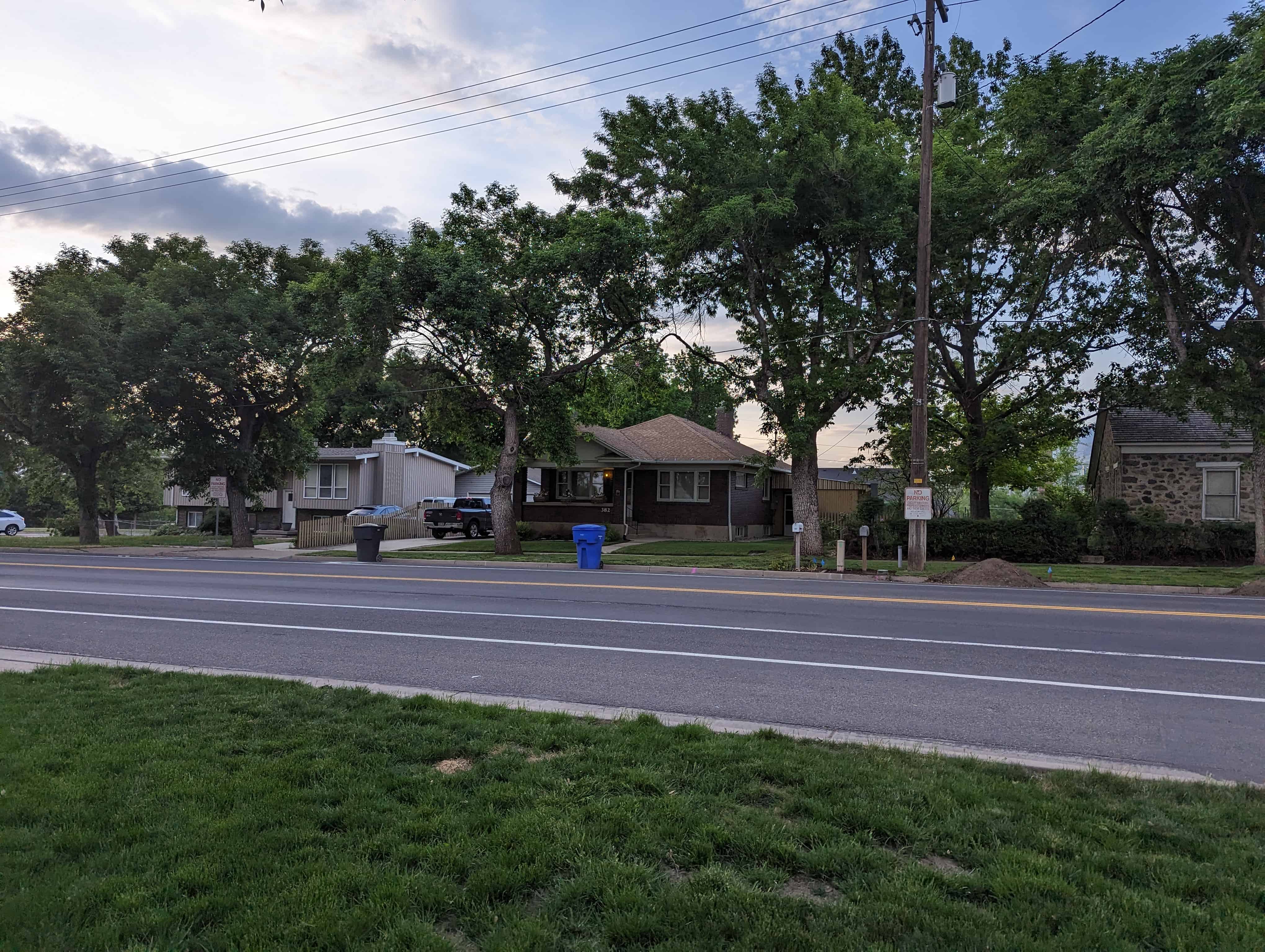
This brick home was built in 1925 for Inez Aureta Potter Clark and Edward Franklin Clark, a grandson of Ezra T. Clark. This home is the Clark Lane Historic District’s only example of the Prairie School style bungalow. The bungalow house type has a rectangular plan and is a noticeably low, ground-hugging house of 1 to 11⁄2 stories with a low-pitched roof projecting out over the eaves. Designed with simplicity, comfort, and convenience in mind, bungalows became popular throughout the entire United States after the turn of the century and continued to be built through the 1930s. Edward was an employee of Miller Floral for many years and served as a City Council member and Justice of the Peace in Farmington. Inez served as President of the Aurelia Spencer Rogers D.U.P. Camp from 1945-46.

382 West State Street in Farmington, Utah in the Clark Lane National Historic District.

Leavitt / Clark House

09 Saturday Dec 2023

Posted by Jacob Barlow in Uncategorized

≈ Leave a comment

Tags

Clark Lane National Historic District, Davis County, Farmington, Historic Homes, utah

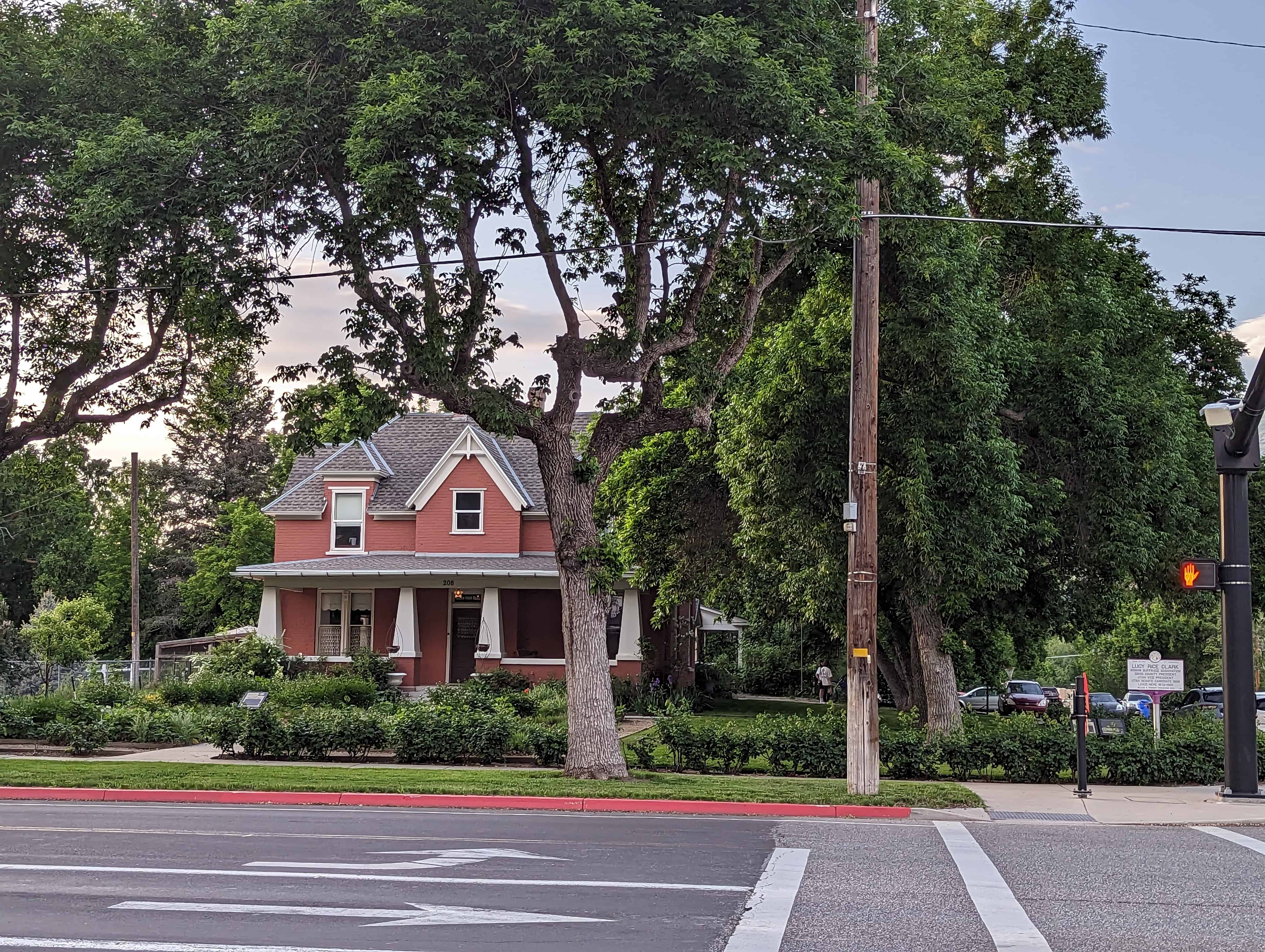
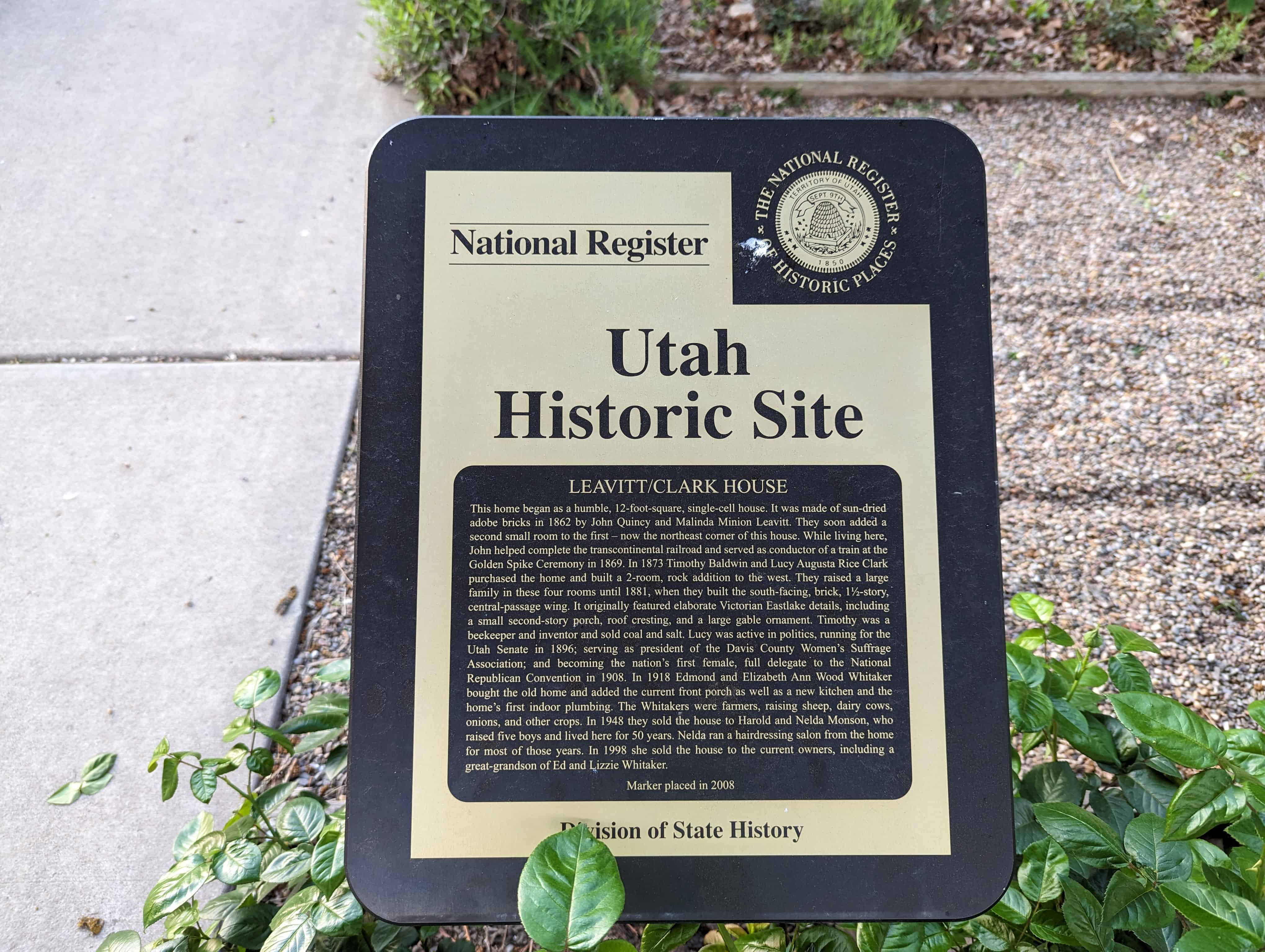
Leavitt / Clark House

This home began as a humble, 12-foot-square, single-cell house. It was made of sun-dried adobe bricks in 1862 by John Quincy and Malinda Minion Leavitt. They soon added a second small room to the first – now the northeast corner of this house. While living here, John helped complete the transcontinental railroad and served as conductor of a train at the Golden Spike Ceremony in 1869. In 1873 Timothy Baldwin and Lucy Augusta Rice Clark purchased the home and built a 2-room, rock addition to the west. They raised a large family in these four rooms until 1881, when they built the south-facing, brick, 12-story, central-passage wing. It originally featured elaborate Victorian Eastlake details, including a small second-story porch, roof cresting, and a large gable ornament. Timothy was a beekeeper and inventor and sold coal and salt. Lucy was active in politics, running for the Utah Senate in 1896; serving as president of the Davis County Women’s Suffrage Association; and becoming the nation’s first female, full delegate to the National Republican Convention in 1908. In 1918 Edmond and Elizabeth Ann Wood Whitaker bought the old home and added the current front porch as well as a new kitchen and the home’s first indoor plumbing. The Whitakers were farmers, raising sheep, dairy cows, onions, and other crops. In 1948 they sold the house to Harold and Nelda Monson, who raised five boys and lived here for 50 years. Nelda ran a hairdressing salon from the home for most of those years. In 1998 she sold the house to the current owners, including a great-grandson of Ed and Lizzie Whitaker.

Located at 208 West State Street in Farmington, Utah

Also located here are these historic markers:

  • Bamberger Railroad, Farmington Station
  • Clark Lane National Historic District
  • Lucy Rice Clark

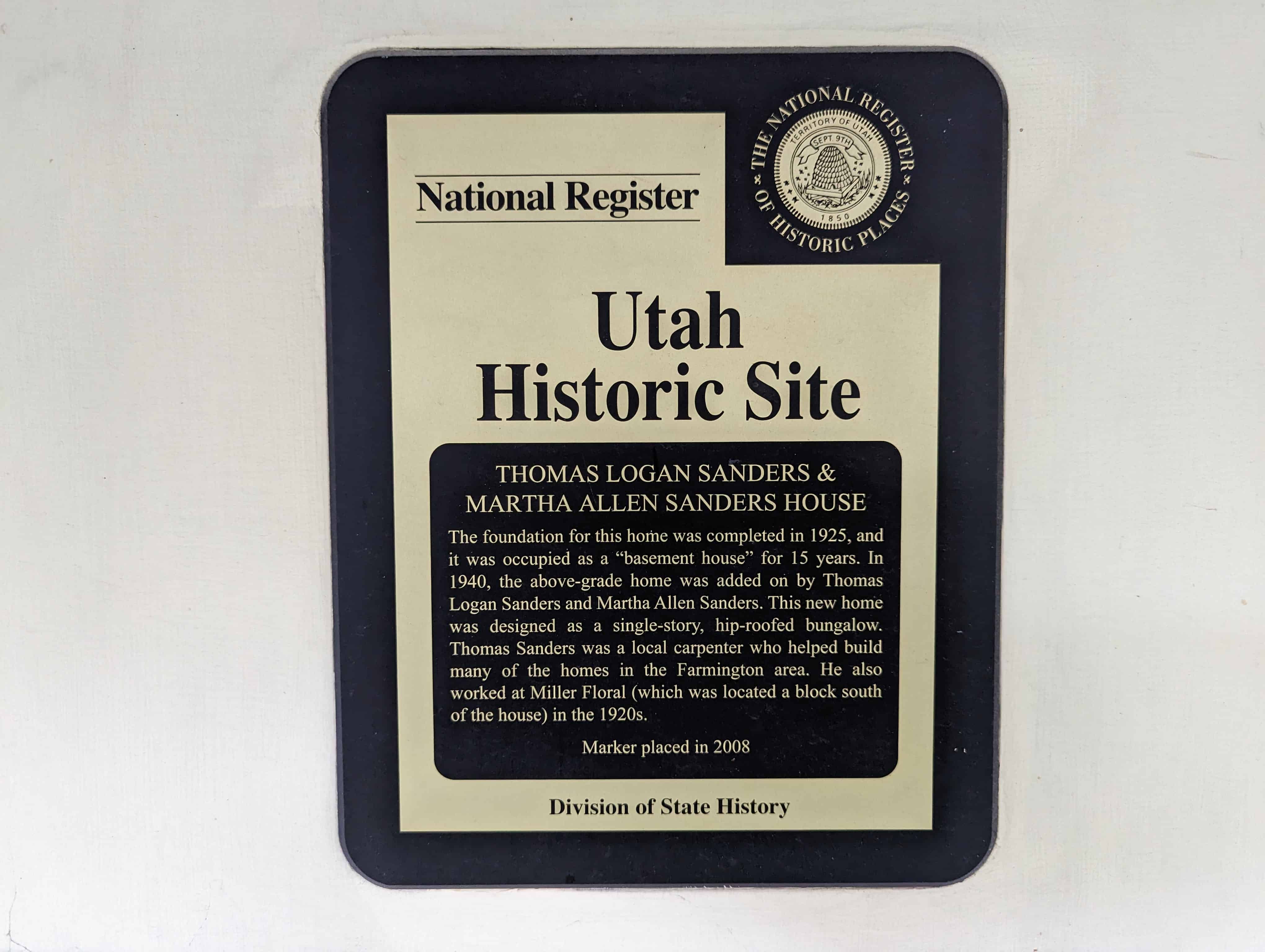
Thomas Logan Sanders & Martha Allen Sanders House

08 Friday Dec 2023

Posted by Jacob Barlow in Uncategorized

≈ Leave a comment

Tags

Clark Lane National Historic District, Davis County, Farmington, Historic Homes, NRHP, utah

Thomas Logan Sanders & Martha Allen Sanders House

The foundation for this home was completed in 1925, and it was occupied as a “basement house” for 15 years. In 1940, the above-grade home was added on by Thomas Logan Sanders and Martha Allen Sanders. This new home was designed as a single-story, hip-roofed bungalow.

Thomas Sanders was a local carpenter who helped build many of the homes in the Farmington area. He also worked at Miller Floral (which was located a block south of the house) in the 1920s.

207 West State Street in Farmington, Utah

John Patten House

08 Friday Dec 2023

Posted by Jacob Barlow in Uncategorized

≈ Leave a comment

Tags

Historic Homes, Manti, NRHP, oolite limestone, Sanpete County, utah

John Patten House

The two-story limestone home built by John Patten, Jr., c. 1854 is a well-preserved example of early vernacular Mormon architecture in Utah. Patten played a prominent role in the settlement of Manti, established in 1849 as one of the earliest of approximately 400 colonies in the “Mormon Corridor.”

Located at 84 West 300 N in Manti, Utah and added to the National Historic Register (#77001315) on August 22, 1977.

John Patten was born in Fairplay, Green County, Indiana, June 20, 1825. His family was among the earliest converts to the Church of Jesus Christ of Latter-day Saints (Mormon Church). As John grew up, he experienced the many persecutions of the Mormons in Missouri and in 1839 was among those to sign a covenant of protection and removal, authored by Brigham Young in response to an order of extermination by General Clark of Missouri. Patten came to Utah in 18SO and located in Manti, one of Utah’s oldest cities, where he assisted in building the first fort in 1852. He took an active part in the Walker and Black Hawk wars and was one of three witnesses to receive a treaty of peace and deed to Sanpete County from Arapine, Chief of the Ute Indians, May, 1855. Patten was prominent in civic activities, serving as a representative to the Territorial Legislature, Sheriff of the county and member of the City Council. He was married in Manti to Candace Smith who later died, leaving two sons and three daughters. He was married again to Emily, a widow and sister of his first wife. She had three sons and two daughters.

Patten was a farmer by occupation. He built the Patten Reservoir and Patten Ditch, an irrigation system still in use which runs water to farmland five miles north of Manti. Somewhat of an inventor, Patten is credited with constructing the first “go-devil,” a device used to lay off furrows for irrigation flow in farm fields. As a sideline, he also tried to develop a “perpetual motion” machine.

John Patten built his two-story limestone home c. 1854 after living next to the oolitic limestone quarry for a few years. The vernacular style home represents the earliest and most primitive form of stone masonry construction in pioneer Utah. The walls of the home were laid in coursed rubble using crude mud mortar, most of which has washed away. Local residents call this mode of construction “dry wall.” The two-over-two plan with dirt floor cellar also documents a typical early Mormon pioneer plan type. Although some alterations and small additions of brick and wood have been made, the John Patten Home is basically well-preserved. The home was lived in continuously until 1975 when it became a museum for the Daughters of the Utah Pioneers.

The John Patten Home is a primitive vernacular residence, constructed of native oolitic limestone and red pine in about 1854. The home has a 2/2 plan over a full basement cellar. The basement has a pressed dirt floor, contains two rooms and has access from an outside door on the west and from stairs under a trap door in the floor of the northern room above. The stone walls in the basement are exposed, as are the large split-log puncheons which support the first floor. In the northern basement room is a large stone table used for butchering and processing food.

Tuttle-Folsom House

08 Friday Dec 2023

Posted by Jacob Barlow in Uncategorized

≈ Leave a comment

Tags

Historic Homes, Manti, NRHP, oolite limestone, Sanpete County

Tuttle-Folsom House

Built in three compatible stages between the 1850’s and 1880’s, the Tuttle-Folsom Home was the residence of several of Manti’s and Utah’s significant historical figures. The original owner is unknown, but Luther T. Tuttle, the first known owner, was two term mayor of Manti and the mayor who received title to all of surveyed Manti from President U. S. Grant in 1872. Tuttle was also a leading merchant, banker, livestock raiser and served four terms as a territorial legislator. In 1880, Tuttle sold his home to William H. Folsom who had been called to Manti to be architect for the Manti Temple. While living in the home, Folsom designed other notable structures including tabernacles in Manti, Provo and Moroni, the Provo Opera House and many important residences. In 1890, John C. Witbeck, known for his development of the controversial Kofod or Ancient Mound wheat, purchased the home. He sold it in 1895 to John E. Metcalf, a prominent merchant and stockraiser who partitioned off some of the rooms and converted the home into an hotel known as “the Metcalf House.” The partitions were removed and the original plan restored by Mr. and Mrs. Clarence Miller, owners for 40 years prior to the recent purchase of the home by Historic Utah, Inc.

Built of native oolitic limestone, the home is in nearly original condition today and documents craftsmanship and design typical of early vernacular masonry architecture in Manti.

Located at 195 West 300 N in Manti, Utah and added to the National Historic Register (#77001316) on July 21, 1977.

A comparative study of Manti architecture and building technology indicates that the earliest portions of the Tuttle-Folsom home was constructed in the 1850’s, although no known records show original ownership or date of construction. Property records from 1872 show that when Luther T. Tuttle, then mayor of Manti, received title to Manti through a land patent from President Ulysses S. Grant, the home he deeded to himself is the Tuttle-Folsom home here discussed.

Luther T. Tuttle was born November 19, 1825 in New York City and came to Utah in October, 1847, as a member of the Mormon Battalion. After serving with the battalion, Tuttle engaged in fur trading as an agent for Peter A. Sharpey of the American Fur Company. A Mormon convert, Tuttle settled permanently in Manti, Utah, in 1863. Tuttle soon became a leading citizen. He was elected mayor for two terms (1867-1873) and became a prominent merchant, banker and sheepraiser. Upon arriving in Manti, Tuttle opened a general store under the firm name of Tuttle and Fox. After selling out to the local co-op, Tuttle entered the general merchandise and lumber business with Harrison Edwards. As the firm grew, it erected the Tuttle Block in 1894, a large two story commercial building with an iron front. In 1890 Tuttle organized and was president of the Manti Savings Bank. He also owned 3500 head of sheep and was a major stockholder in the Co-op Roller Mills.

In addition to being mayor of Manti, Tuttle served several terms on the Manti City Council and four terms on the Territorial Legislature. He was a prominent church man, holding a position on the High Council of the Sanpete Stake.

In 1880 Luther T. Tuttle sold his home to William H. Folsom who owned the home for the next ten years. Folsom, considered by many to be Utah’s most accomplished pioneer architect, came to Manti in 1877 to supervise construction of the Manti Temple. Folsom was born March 25, 1815 in Partsmough, New Hampshire, the third child of a carpenter. He learned carpentry from his father and worked on the Mormon temple in Nauvoo, Illinois, after accepting the Mormon faith in 1843. After a notable career in building, which saw Folsom construct the forty foot tall Corinthian columns for the territorial capitol in Omaha, the builder/architect moved to Salt Lake City. His significant achievements prior to moving to Manti included the Salt Lake Theatre (1860), Council House (1864, NR), Amussen’s Jewelry (1869, NR), Gardo House, Devereaux House addition (1874, NR), and Z.C.M.I Department Store (1875-1876, NR). He also worked on the tabernacle and temple on Temple Square (1867, 1852-1893 resp., NR)

Through the Manti Temple Association, Folsom, as superintendent, was acquainted with Luther Tuttle, the chairman. After living in the Manti Fort since 1877 Folsom purchased Tuttle’s home in 1880 and thereafter added the 2 story, 4 bedroom wing to accommodate two of his three polygamous families. While working on the Manti Temple (1879-1888, NR) Folsom also prepared plans for several local Mormon tabernacles, public buildings, and homes. Among his more noteworthy designs during his Manti period were the tabernacles in Moroni (1879), Manti (1878-1882, SR) and Provo (1882-1896, NR).

While in Manti, Folsom experienced much persecution as a result of his practice of polygamy. The addition to his home included a secret hiding place in the back of a closet under the stairs (hideout still intact). Once he had to flee from the county disguised as a prospector in order to avoid capture by federal marshals. Folsom was eventually captured and convicted of violating the Edmunds-Tucker Act and was forced to sell his Manti home in 1890 to pay the fine for his conviction.

John C. Witbeck next owned the home. Witbeck gained local fame through his involvement with Amasa Potter who reportedly discovered a stone box filled with ancient wheat, along with two skeletons of early Indians. The “Ancient Mound” wheat was planted and grew. With Witbeck, Potter distributed the wheat throughout the territory and, by one account, “it proved to be the best dry land wheat that they ever tried, and a greater yielder.” Although this story is challenged as being mythical, dry farming wheat bearing the name Kofod or Ancient Mound is still used locally. In 1895 Witbeck sold his home to John E. Metcalf.

John Metcalf was born in England in 1839. After joining the Mormon Church in 1849 he came to Utah with his family in 1853. John engaged in farming and stock raising before moving to Gunnison in 1876 where he operated the local co-op store. After serving as a Mormon missionary in the Southern states, Metcalf came to Manti in 1891. He leased the Temple House, a large hotel built to house men working on the temple. In 1895 Metcalf purchased the Tuttle-Folsom Home, naming it the Metcalf Hotel, and became its proprietor.

The Metcalf family sold the home to Mr. and Mrs. Clarence Miller, ranchers, who removed the extraneous partitions added by Metcalf. In 1976 the Tuttle-Folsom Home was purchased by Historic Utah, Inc., a private preservation association.

Architecturally, the Tuttle-Folsom Home is important for its documentation of pioneer craftsmanship and design. Due to its excellent state of preservation, early building technology in Utah can be appreciated in the home. The exposed puncheon beams, primitive stone cutting and painting, early 6 over 6 double-hung sash windows, porch, roof framing and low ceilings in the oldest part of the home attest to the limitations of pioneer construction methods in the 1850’s. The Folsom addition, however, with its high ceilings, plaster centerpieces and decorative trim, show the advances made in building by the 1880 f s.

Shomaker House

08 Friday Dec 2023

Posted by Jacob Barlow in Uncategorized

≈ Leave a comment

Tags

Historic Homes, Manti, NRHP, oolite limestone, Sanpete County, utah, Victorian Eclectic

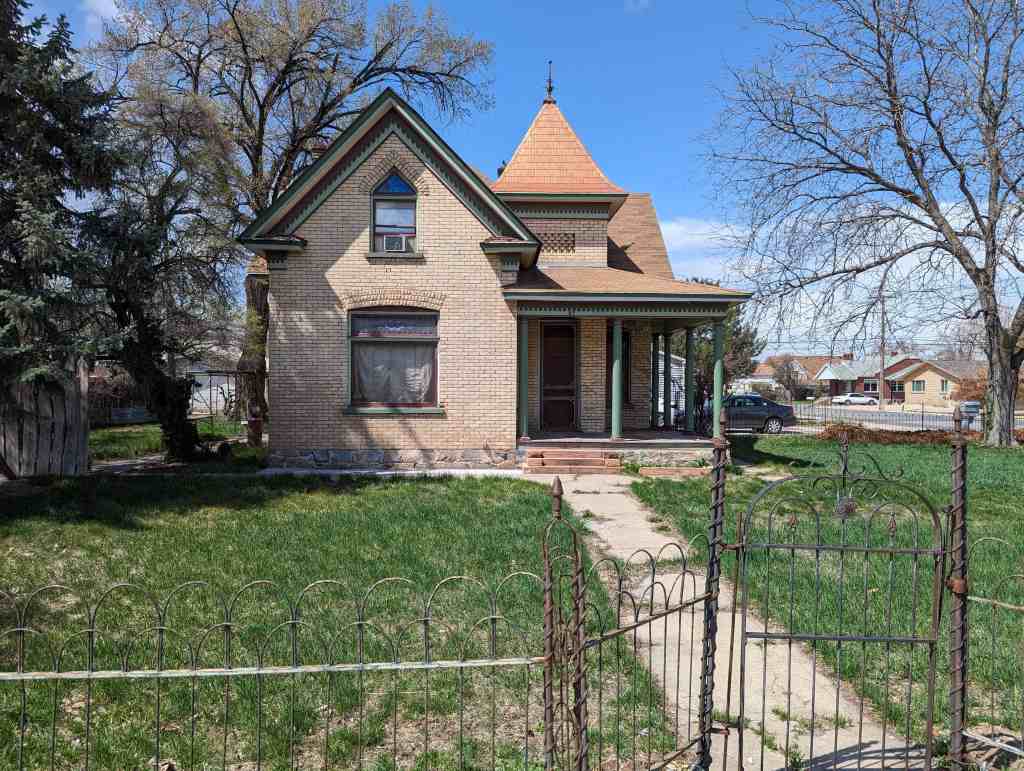
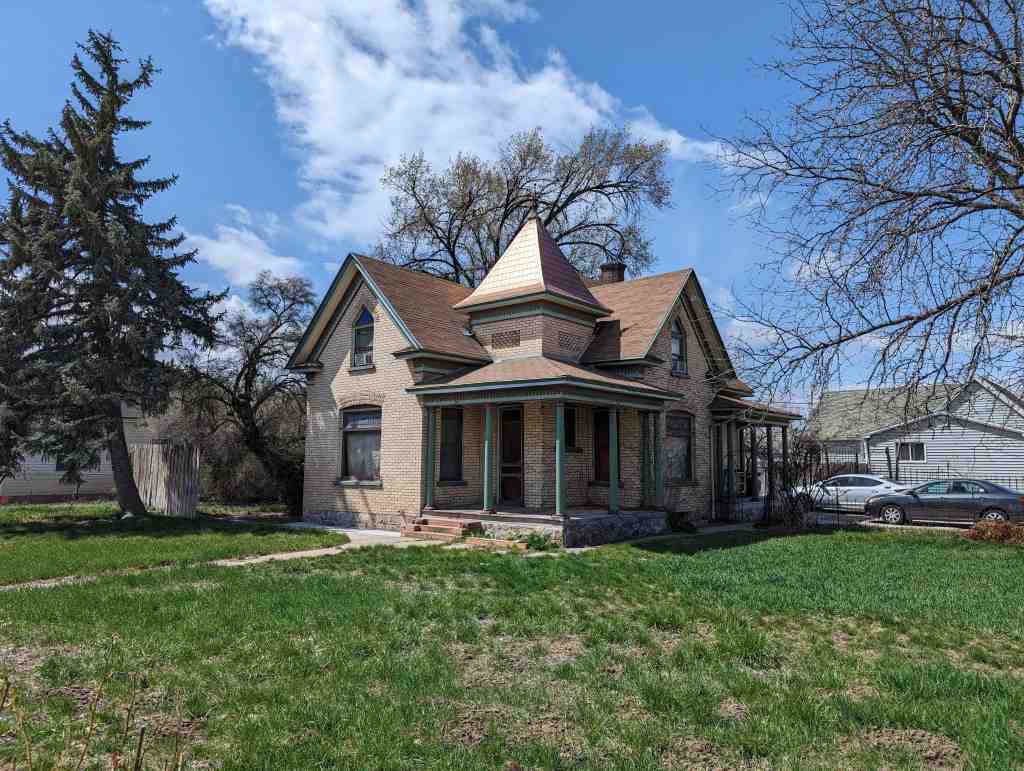
Shomaker House

This house was the first home in Manti to have electricity. It was built in 1851 by Ezra Shomaker. The east addition was added around 1900. Shomaker served as Manti mayor twice. the house was recently rescued from demolition and is being restored by Shannon and Jim Miller.

The house is the 2nd oldest home still standing on its original foundation in Utah (after the Fielding Garr Ranch House).

It is located at 194 West 400 North in Manti, Utah and was added to the National Historic Register (#14000864) on October 15, 2014.

The Ezra and Abigail Tuttle Shomaker House, is a 1½-story stone and brick house, located at 194 W. 400 North in Manti, Sanpete County, Utah. The Greek Revival and Victorian Eclectic-style house was built in three major phases between 1866 and 1895. The earliest section of the house is a 1½-story Greek Revival-style hall-parlor house built of cream-colored limestone circa 1866. Around 1880, a one-story stone ell was built on the rear. The final wing was built of brick circa 1895, and modified the floor plan to a double cross wing or H plan. The north porch was enclosed a few years later, and later rebuilt in 2010. The house is built on a stone foundation with some areas of newer concrete. The roof was resheathed with small grey fiberglass shingles in 2004. The Shomaker House sits on the southwest corner of a one-acre lot with new landscaping. The property includes a non-contributing altered stone garage, and a contributing group of small, connected agricultural structures. A non-contributing garage and workshop was built behind the house in 2007. The current owners, who purchased the house in 2002, have completed a substantial eight-year rehabilitation of the house. The 2003 to 2011 rehabilitation has reversed a considerable amount of damage and alteration to the property that occurred during in the 1980s and 1990s, and has modified the interior plan.

The Shomaker house faces west. The walls of the hall parlor (west wing) are built of a cream-colored oolite limestone laid in coursed ashlar. The blocks are finished to various lengths but trimmed to a uniform height to allow for even courses. The surface of the stones is only lightly tooled. The mortar was later replaced with a Portland cement mix, but the current owners have recently removed the concrete and replaced it with a lime-based mortar. The foot print of the west wing is approximately 36 feet by 19 feet. The ridgeline of the simple gable roof runs parallel to 200 West. The façade (west elevation) of the hall parlor is symmetrical with a full-width porch. The porch deck is a circa 1950s concrete replacement for the original wood deck. The porch roof is hipped and supported on square columns featuring paneled-box capitals and plinths. There are four full columns and two engaged columns with slender arched brackets between them. This Victorian Eclectic-style porch was probably added to the house circa 1895. A similar porch is found on the south elevation of the ell. The porch elements were rehabilitated and missing pieces replicated during the recent rehabilitation. The porch wood is painted white.

Around 1920, the front porch was altered to add a sleeping-porch dormer to the center of the façade.
The sleeping porch had screened windows and a shingled base. The screens were replaced with aluminum windows in the 1970s. During the recent rehabilitation, the heavily damaged dormer was retained, but rebuilt to be open with simpler style to complement the classical elements of the façade. The dormer is sheathed with narrow boards. It has a new door flanked by two double-hung windows. The pedimented dormer roof is supported by columns similar to the main porch, and a wood balustrade with simple square balusters runs between each of the columns. The west-facing principal façade is symmetrically composed, with a center door flanked by a pair of double-hung vinyl windows on the main floor with false muntins in a nine-over-nine pattern. The original wood casings were retained to frame the window openings. The limestone stone lintels and sills are dressed, and also serve as a decorative element for all the window openings.

Peter Hansen Home

08 Friday Dec 2023

Posted by Jacob Barlow in Uncategorized

≈ 1 Comment

Tags

Historic Homes, Manti, NRHP, Sanpete County, utah

Peter Hansen Home

This house is a one story brick example of a TYPE II pair-house. The house is three rooms wide and is unusual in that it has a symmetrical six-opening façade rather than the three-bay pattern normally employed on houses with this plan. There is a limestone foundation which supports the locally produced,
yellow brick walls. Decorative external features are non-existent and the house remains a straight-forward articulation of this vernacular type.

The Peter Hansen house in Manti is architecturally significant as an example of Scandinavian folk building in Utah. The house contributes historically to | the thematic nomination, “The Scandinavian-American Pair-house in Utah.”

Peter Hansen was born in Denmark and emigrated to Utah in the 1860s. Hansen was a brick mason who utilized his special skill in building his own house, probably about 1875. Brick was a rare construction material in Manti prior to the opening of the Jacobsen brickyard in the late 1880s. Hansen probably
fired his bricks in a kiln located on the property. In 1882, the house was sold to Sarah Bell Peacock for $500.

Located at 247 South 200 East in Manti, Utah and added to the National Register of Historic Places (#83003187) on February 1, 1983.

Poulsen-Hall House

08 Friday Dec 2023

Posted by Jacob Barlow in Uncategorized

≈ 1 Comment

Tags

Gothic, Greek Revival style, Historic Homes, Manti, NRHP, Sanpete County, Temple Form, utah

Poulsen-Hall House

Built in 1876.

Located at 90 South 100 East in Manti, Utah and added to the National Register of Historic Places (#11000235) on April 27, 2011.

← Older posts
Newer posts →

Follow Jacob

Follow Jacob

Blog Stats

  • 2,018,271 hits

Social and Other Links

BarlowLinks.com

Recent Posts

  • Blue Base – The Stand Filming Location
  • 926 E South Temple
  • 969 E South Temple
  • 1001 E South Temple
  • 211 W Truman Rd

Archives


Loading Comments...