• About JacobBarlow.com
  • Cemeteries in Utah
  • D.U.P. Markers
  • Doors
  • Exploring Utah Email List
  • Geocaching
  • Historic Marker Map
  • Links
  • Movie/TV Show Filming Locations
  • Oldest in Utah
  • Other Travels
  • Photos Then and Now
  • S.U.P. Markers
  • U.P.T.L.A. Markers
  • Utah Cities and Places.
  • Utah Homes for Sale
  • Utah Treasure Hunt

JacobBarlow.com

~ Exploring with Jacob Barlow

JacobBarlow.com

Tag Archives: Hyrum

Soren Hansen Castle

20 Saturday Dec 2025

Posted by Jacob Barlow in Uncategorized

≈ Leave a comment

Tags

Cache County, Hyrum, NRHP, utah

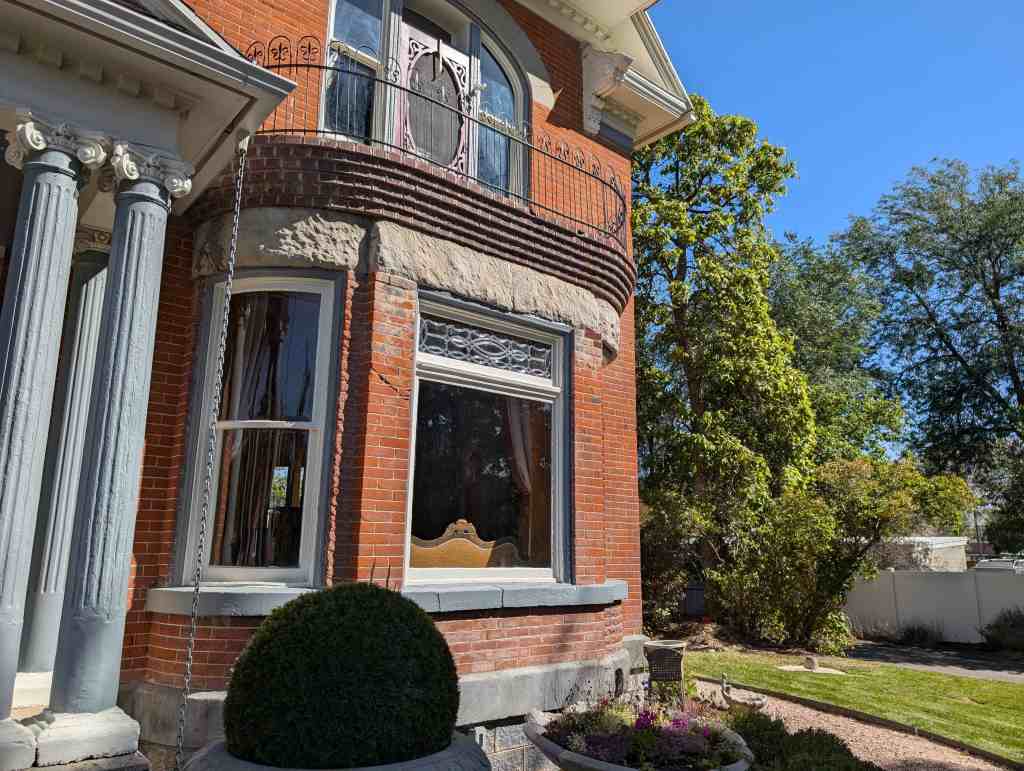
Soren Hansen Castle

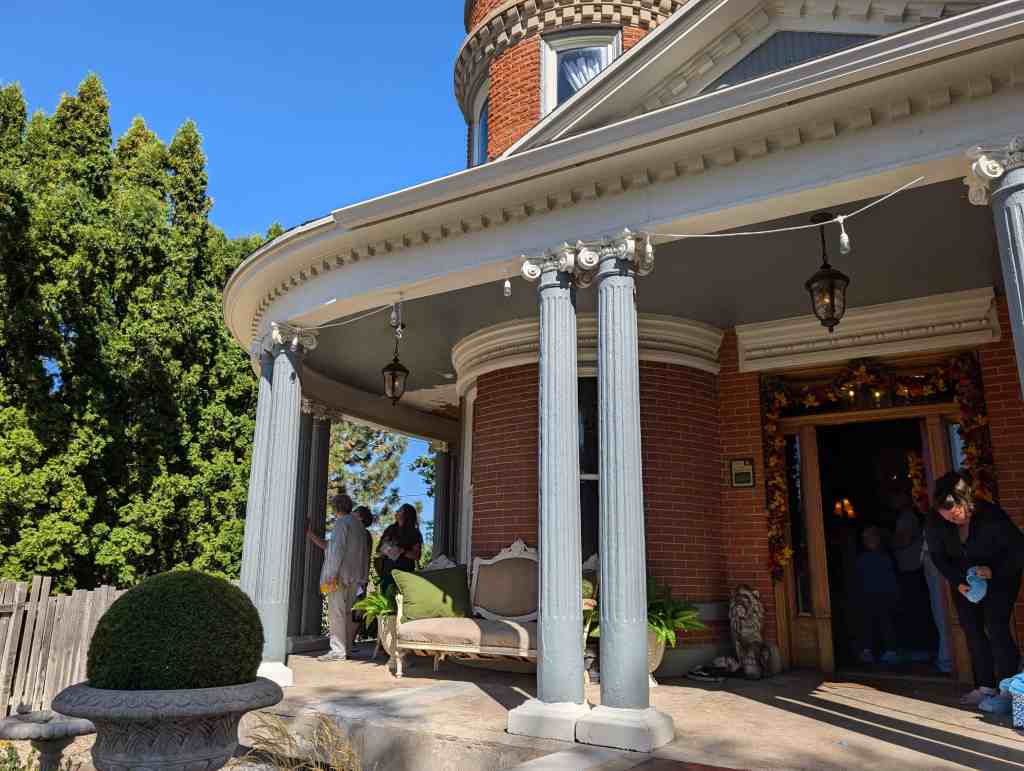
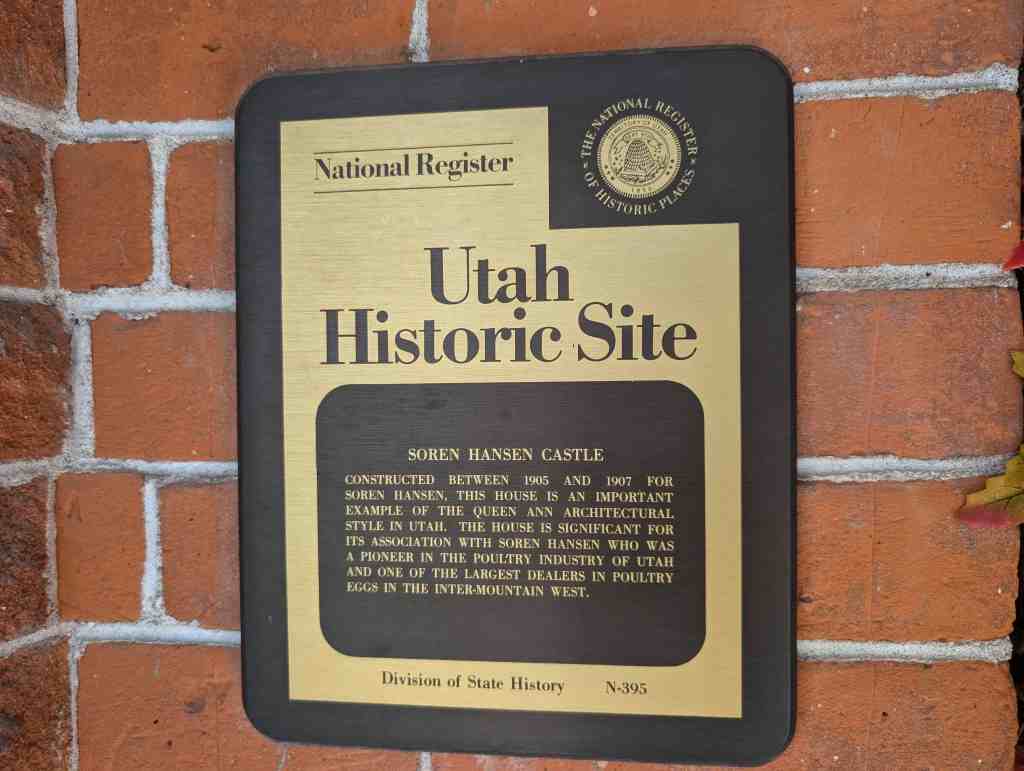
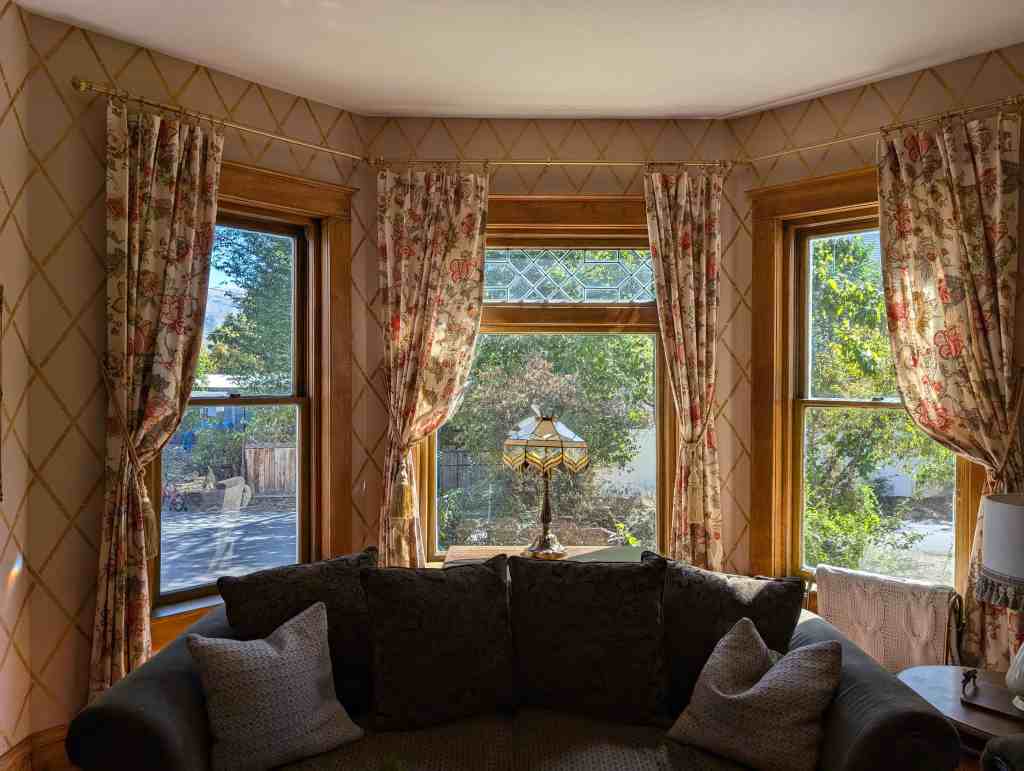
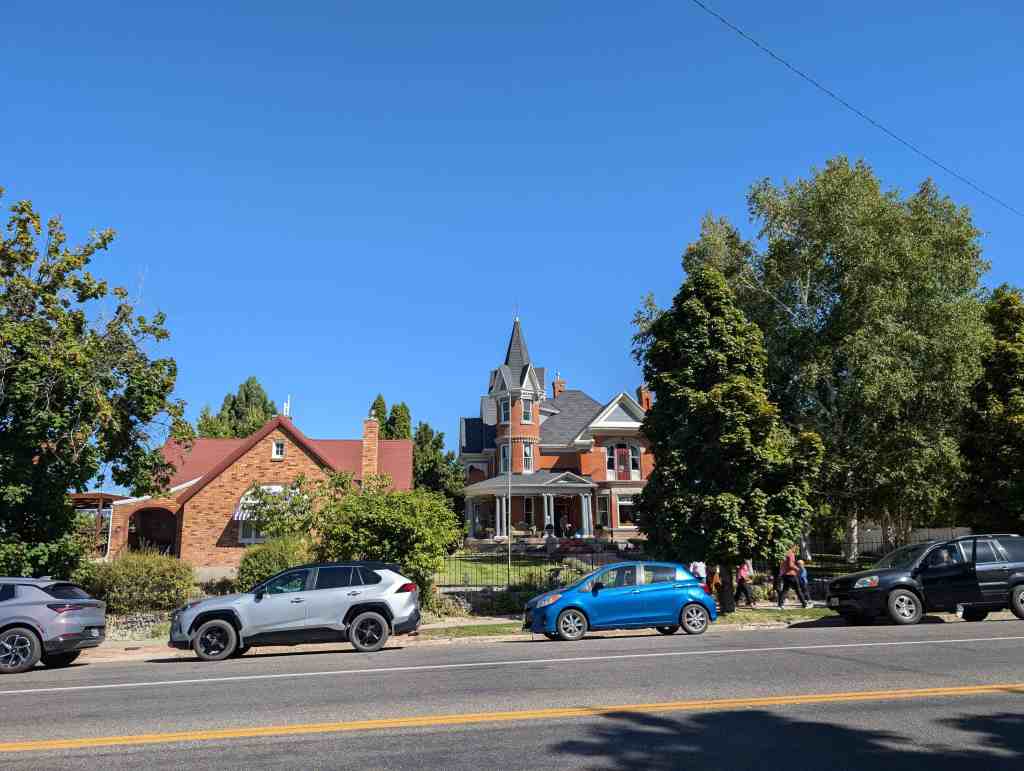
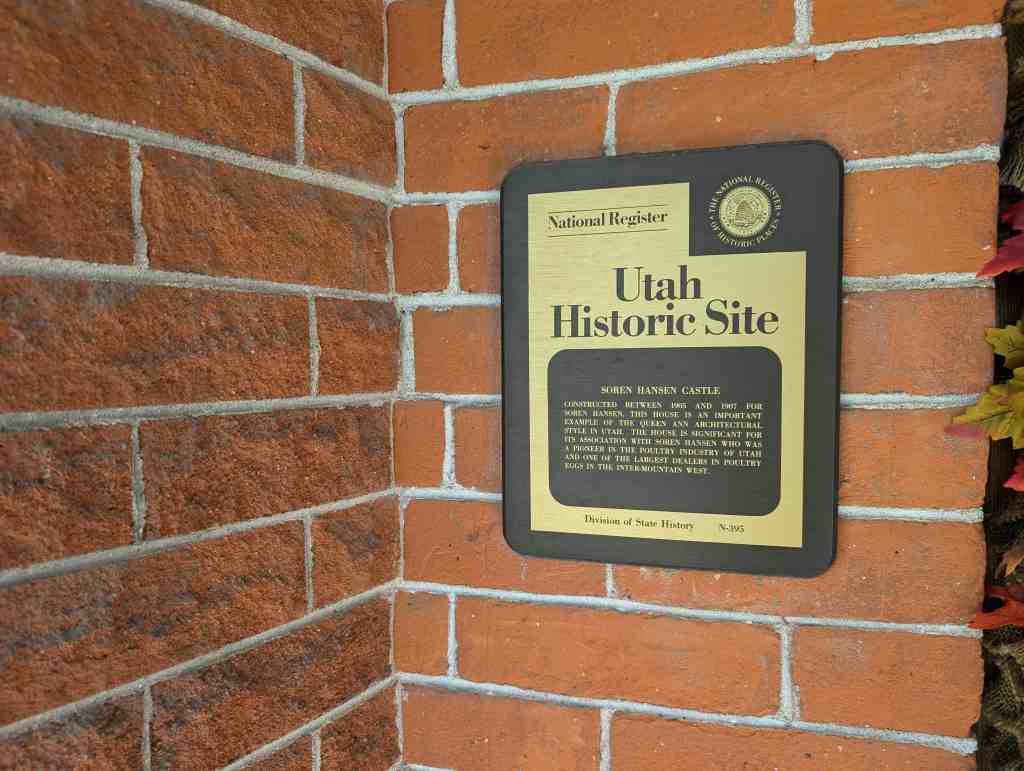
Constructed between 1905 and 1907 for Soren Hansen, this house is an important example of the Queen Ann Architectural Style in Utah. The house is significant for its association with Soren Hansen who was a pioneer in the poultry industry of Utah and one of the largest dealers in poultry eggs in the inter-mountain west.

166 West Main Street in Hyrum, Utah

In pioneer days, eggs were used almost as much as money as a medium of exchange. Profits were good. Soren Hansen built a cold storage plant where as many as 4,000 cases of eggs could be stored. One year he stored several carloads of eggs and within three weeks’ time he had resold them for a profit of about $22,000. One autumn evening in late 1880, Soren told his wife he was going to build her a new home using the profit from his eggs. Their log cabin was replaced by this $30,000 Queen Anne home. In 1907, when this home was built, he told his wife, “This is the house that eggs built.” It was placed on the National Register of Historic Places in 1971. Notice the detailed woodwork and the extensive use of it in this home.

“The House that Eggs built”
written by Soren Hanson Jr.’s son- Russell S. Hanson

Sometime between 1885 and 1890 father started in the egg business. He found it necessary to have some sort of storage facilities to store the eggs until he accumulated a wagon load to haul to Ogden. He built his first storage plant, which was nothing more than a cellar dug about five or six feet in the ground, with walls two to three feet thick filled with sawdust for insulation, and with a dirt roof. The cool air in the cellar permitted keeping the eggs for not more than sixty days. Undoubtedly the quality of the eggs when sold left much to be desired, but they were the best storage eggs available at that time.

The cellar storage was located about one hundred feet from the southwest corner of the large storage plant built some years later.

Despite the crudeness of this cellar storage plant, father continued to make good money selling his various products. In 1895 the egg business had become so good, and father prospered to such an the extent. that he decided too build a new and modern storage plant of a large enough capacity to carry the eggs from April, May, June, and July until the winter months, when the were sold to best advantage.

He took a trip back East and visited several plants. While there, he employed an architect to draw plans for his new building. He returned from the trip eager to start construction. Hyrum Hokenson, who had been buying chickens for father, was also a carpenter, and father put him in charge of construction. The new building was a large two-story structure about fifty feet wide by 120 feet in depth. It contained six rooms on the main floor. The first two rooms were uncooled. It was here that incoming eggs were unpacked and outgoing eggs were crated for shipment. The next two rooms were partially cooled and it was here that the candling of the eggs was done. Candling then was done in much the same manner as it is today except the light for the purpose was then supplied by kerosene lamps, while today and electric light is used. Through the candling process, it is easily determined whether the egg should be discarded because of defect, or held for storing.

The next two rooms were then called storage rooms. As I recall, they had a capacity of 4,000 cases of eggs. In the west end of these rooms were built huge ice tanks, which did the cooling. There were four of these–two in each room. They were five feet in diameter and thirty-two feet high. These tanks were kept filled with ice. If a lower temperature was desired in the storage rooms, hundred pound bags of coarse salt were poured over the ice. This made the ice melt faster and caused a lower temperature in the rooms.

We had large ice pond situated about one mile north of the cold storage on 2nd West Street. Here in the winter time the ice froze to a thickness of between eight and ten inches. This was cut with huge saws into cakes about twenty-four inches by thirty-six inches in size. It was then hauled to a large ice house adjoining the cold storage. It was stacked p in this building to a height of about twelve feet, until the building was filled. The ice was then covered with about ten inches of sawdust. This kept the ice from melting in the hot summer weather. The supply of ice was sufficient to maintain proper temperature in the cold storage until the next cutting season.

These huge cakes of ice were hoisted to the top of the building on a horse-drawn elevator. A child could lead the horse for this purpose as well as a man. We boys always had to lead the horse past the old “Rotten Egg Hole,” which stank to high heaven! Of course, the odor we had to endure was our own fault, as we were supposed to keep the rotten eggs in the deep hole covered with dirt.

To the south side of the cold storage plant, a salt house had been built. There was a second elevator on that side of the building for hoisting hundred pound bags of salt to the top of the building. We bought this coarse salt in train carload lots.

Just after the new cold storage plant had been finished, the first summer in fact, it was found that it was poorly insulated. The architect had asked that the hollow walls be filled with, of all things, sand. Sand is a conductor of heat, and an insulator. So, that fall if became necessary to “bleed” all the walls of sand, and fill them with sawdust, which is the perfect insulator.

On the north side of the storage there was a large “lean-to,” through which the wagons could be driven. This was built so that wagons coming in at night loaded with eggs, would be under cover until the next day.

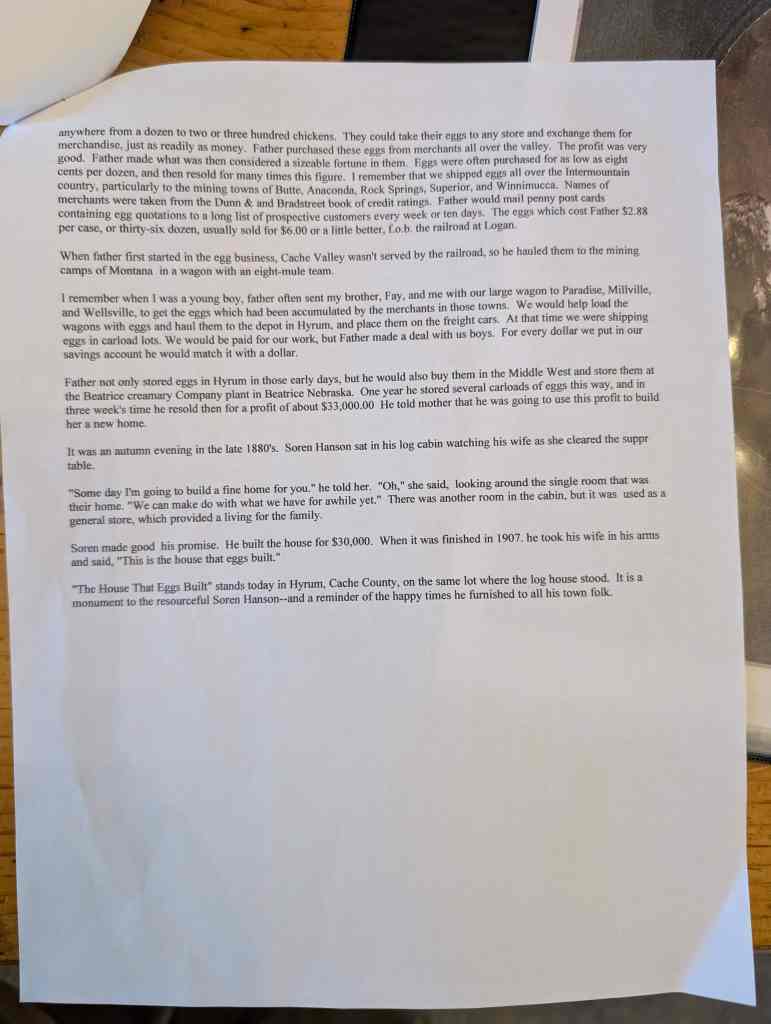
In pioneer days. eggs were used almost as much as money, as a medium of exchange. Farmers, as a rule, would have anywhere from a dozen to two or three hundred chickens. They could take their eggs to any store and exchange them for merchandise, just as readily as money. Father purchased these eggs from merchants all over the valley. The profit was very good. Father made what was then considered a sizeable fortune in them. Eggs were often purchased for as low as eight cents per dozen, and then resold for many times this figure. I remember that we shipped eggs all over the Intermountain country, particularly to the mining towns of Butte, Anaconda, Rock Springs, Superior, and Winnimucca. Names of merchants were taken from the Dunn & and Bradstreet book of credit ratings. Father would mail penny post cards containing egg quotations to a long list of prospective customers every week or ten days. The eggs which cost Father $2.88 per case, or thirty-six dozen, usually sold for $6.00 or a little better, f.o.b. the railroad at Logan.

When father first started in the egg business, Cache Valley wasn’t served by the railroad, so he hauled them to the mining camps of Montana in a wagon with an eight-mule team.

I remember when I was a young boy, father often sent my brother, Fay, and me with our large wagon to Paradise, Millville, and Wellsville, to get the eggs which had been accumulated by the merchants in those towns. We would help load the wagons with eggs and haul them to the depot in Hyrum, and place them on the freight cars. At that time we were shipping eggs in carload lots. We would be paid for our work, but Father made a deal with us boys. For every dollar we put in our savings account he would match it with a dollar.

Father not only stored eggs in Hyrum in those early days, but he would also buy them in the Middle West and store them at the Beatrice creamery Company plant in Beatrice Nebraska. One year he stored several carloads of eggs this way, and in three week’s time he resold then for a profit of about $33,000.00 He told mother that he was going to use this profit to build her a new home.

It was an autumn evening in the late 1880’s. Soren Hanson sat in his log cabin watching his wife as she cleared the supper table.

“Some day I’m going to build a fine home for you.” he told her. “Oh,” she said, looking around the single room that was their home. “We can make do with what we have for awhile yet.” There was another room in the cabin, but it was used as a general store, which provided a living for the family.

Soren made good his promise. He built the house for $30,000. When it was finished in 1907. he took his wife in his arms and said, “This is the house that eggs built.”

“The House That Eggs Built” stands today in Hyrum, Cache County, on the same lot where the log house stood. It is a monument to the resourceful Soren Hanson–and a reminder of the happy times he furnished to all his town folk.

“The Meeting House and the Mermaid”

Source: This story was told to me, David Barkdull, by Gloria Hansen Wright, grand-daughter of Soren
Hansen, in 2014.

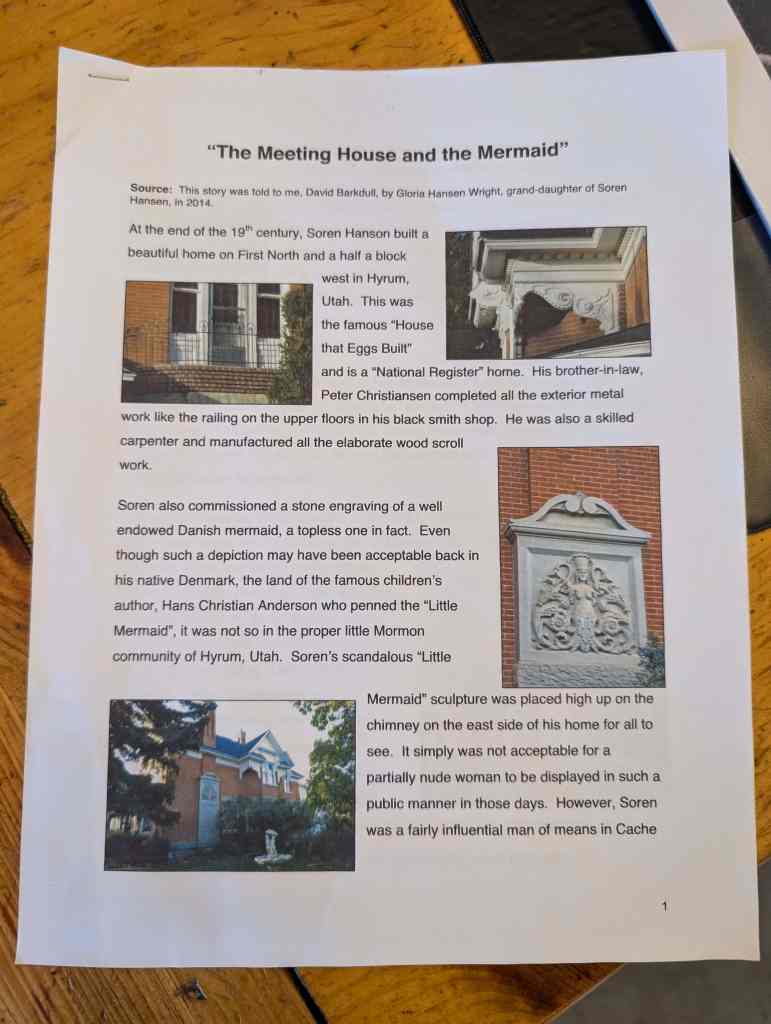
At the end of the 19th century, Soren Hanson built a beautiful home on First North and a half a block west in Hyrum, Utah. This was the famous “House that Eggs Built” and is a “National Register” home. His brother-in-law, Peter Christiansen completed all the exterior metal work like the railing on the upper floors in his black smith shop. He was also a skilled carpenter and manufactured all the elaborate wood scroll work.

Soren also commissioned a stone engraving of a well endowed Danish mermaid, a topless one in fact. Even though such a depiction may have been acceptable back in his native Denmark, the land of the famous children’s author, Hans Christian Anderson who penned the “Little Mermaid”, it was not so in the proper little Mormon community of Hyrum, Utah. Soren’s scandalous “Little Mermaid” sculpture was placed high up on the chimney on the east side of his home for all to see. It simply was not acceptable for a partially nude woman to be displayed in such a public manner in those days. However, Soren was a fairly influential man of means in Cache valley so there was little anyone was willing to do or say, particularly since they were beholden to his considerable community generosity of which they had all benefited.

While Soren had been baptized at age eight into the Mormon faith, he was not a regular church attending member in the traditional sense. However, he had always been supportive of his wife and family’s church participation, he had always been a full tithe payer, supported other worth-while church and community endeavors, and had a warm regard for the faith of his parents and family.

In 1901, the old Hyrum pioneer church had out grown its usefulness and needed replacing. It had been some 40 odd years since the founding of the town and it had outlived its usefulness. During these years, the people had prospered fairly well and so it was decided that a proper brick edifice would be built. Construction soon commenced.

As the church neared it’s completion, Soren and his wife Eva decided to have a dinner party in their home and invited a number of townspeople. Lars Peterson, who was Chairman of the finance committee for the construction of the new chapel also attended. Following the dinner, the group was visiting and Soren asked Lars how the construction of the church was coming. Lars replied, “Didn’t you know, we ran out of money and had to stop the job?” Surprised, Soren asked him how much it would take to complete the building and Lars told him it would be about $17,000. “Well, I suppose I can stand that much” Soren replied and he wrote a check for the full amount right there that night. And so the Hyrum First Ward’s brick church was completed a short time later.

This story is related by Victoria Olsen Hanson, wife of Russell Hanson. It is a true Christmas story about a real Santa Claus with a heart of gold.

In the early days when Hyrum was in its infancy, about 1900, a prosperous young business man of Hyrum was always doing kind deeds for others. He conceived the idea of giving a real Christmas party for all of the people of the town, men, women, and children.

In preparation for the party he sent to a wholesale merchandise house (he had been a merchant,) for hundreds of gifts, barrels of candy, peanuts and walnuts. Among the gifts were harmonicas, umbrellas, balls, books, gold watch chains, and even violins and gold watches. Each child in the community received a lunch basket which was filled with candy, nuts, and other gifts. The basket also contained an orange. This was one of the most exciting gifts because oranges in Utah in 1900 were rare indeed. The party was held in the Opera house which this young man had built some years previous. The party consisted of a program and dancing besides a visit by Santa Claus who passed out the gifts.

Christmas parties similar to this were given for a number of succeeding years and they were fondly remembered by all of the people in Hyrum–men, women and children alike. This man of whom I speak was Soren Hanson.

A story of these Christmas parties appeared in the Salt Lake Tribune and it concluded by saying, “If the vote of every man, woman, and child in Hyrum could elect a president that man would be Soren Hanson.”
To show their appreciation to Mr. Hanson’s kindness to them the children of Hyrum took up a collection of nickels, dimes, and pennies and purchased a sterling silver tea and coffee service which they presented to Mr. and Mrs. Hanson. On it were inscribed these words.
“To Mrs. and Mrs. Soren Hanson for their Kindness To Us The Children of Hyrum.”

(Note: Some years ago I saw this tea set at the home of Mona Zundell, daughter of Soren and Eva. Having pictured it in my mind for years as rather grand, I was disappointed to see that it was a simple, rather inexpensive set. Not sterling, But none-the-less, given in gratitude. -Gloria Gene Hanson Wright)
Hyrum City Square

10 Wednesday Aug 2022

Posted by Jacob Barlow in Uncategorized

≈ 1 Comment

Tags

Cache County, Hyrum, Parks, utah

Hyrum City Square in Hyrum, Utah

Related:

  • Civic Center
  • Great Fur Cache
  • Hyrum Smith
  • Pioneer Monument
  • Rock Meetinghouse Monument

Elite Hall

10 Sunday Jul 2022

Posted by Jacob Barlow in Uncategorized

≈ Leave a comment

Tags

Cache County, Historic Buildings, Hyrum, NRHP, utah

The Elite Hall dance hall, designed by architect K.C. Schaub and constructed in 1917, is significant for its association with community events in the city of Hyrum. Financed by the Hyrum Amusement Company, Elite Hall became the primary dancing and social events center in Hyrum, after replacing the 1889 Opera Hall, which was destroyed by fire in 1914. The building is also significant because it is one of only a couple of known remaining dance halls in the state with a spring-loaded dance floor. The springs provided extra bounce for the hundreds of dancers who would crowd the floor. Because Elite Hall had the only spring-loaded floor in northern Utah, the building attracted dancers from all over Cache County and northern Utah.

At the time of Elite Hall’s construction, commercial-type buildings typically displayed little ornamentation. However, modest Prairie School-style detailing adds character to this large structure. Prairie School elements are found in the large frieze that encircles the top of the building with bracket-like ornamentation. They are also found in the long vertical inset panels on the primary façade, which counter the frieze and add an element of height to the building. Elite Hall’s imposing presence on Main Street, its Prairie School-style detailing, and historical integrity combine to make it one of the most prominent buildings in town.

Located at 98 West Main Street in Hyrum, Utah and listed on the National Register of Historic Places (#03000736) on August 4, 2003.

Related:

  • Utah Social Halls, Opera Houses, and Amusement Halls

The Elite Hall dance hall, constructed in 1917, is significant under Criteria A and C. Under Criterion A it is significant for its association with community events in the small town of Hyrum, Utah. After replacing the opera hall (which was destroyed by fire in 1914), Elite Hall became the primary dancing and social events center in Hyrum. Also, because it had the only spring-loaded dance floor in northern Utah, the hall attracted dancers from all over Cache County and northern Utah. Because it is one of only two known remaining dance halls in the state with a spring-loaded floor, Elite Hall is also significant under Criterion C. 1 The hall’s imposing presence on Main Street, along with its Prairie School-style detailing and historical integrity combine to make it one of the most prominent commercial buildings in town. Elite Hall greatly contributes to the historical fabric of Hyrum, Utah.

The Elite Hall dance hall, constructed in 1917, is a large, two-story, two-part commercial-block building constructed of brick with a fairly large 70′ x 122′ footprint on a raised concrete foundation. Although the building is basically commercial in design there are elements that hint at the Prairie School style. The building is painted a light grey color and sits on the corner of a city lot with virtually no setback from the sidewalk on either side. A single-story commercial building abuts it on the east, but the majority of historical commercial buildings that accompanied it on the block have been razed or altered.

The south facing primary façade of Elite Hall is organized in a bilaterally symmetrical, tripartite fashion with the center section slightly stepped back from the two side sections. The centrally place entry area features a large, hipped-roof canopy, supported on two square stuccoed columns, that extends out over the sidewalk. The canopy is not historic and replaces an arched canopy that is visible in a 1946 photograph. The two inset entryways are comprised of two flanking sets of double doors. The half-glass doors feature three stacked, horizontal panes. The inset doorways allow for a ticket booth at right angles of each doorway. Above the entry on the second floor are two flanking sets of coupled windows. The windows feature a tall top pane over a shorter one that has been replaced with sliding windows. All windows on the building are similar to this and feature heavy concrete sills. On this center section, the fenestration and entry are surrounded by a projecting brick framework that corbels out to a cornice at the top of the panel. A small circular element is found at the top corners just inside the framework. Also, below each second story window is a smaller rectangular brick enframed panel, the same width as each window.

The projecting sections on each end of this façade are identical and are comprised of two sets of coupled windows, vertically placed one above the other. These are also set in a projecting brick framework corbels out at the top and also has the circular design elements. The windows are similar to those on the rest of the building. Dividing the top set of windows from the bottom is a projecting rectangular brick framework, like that in the center section. A prominent design feature is also found on these two sections, a long, narrow vertical inset panel that reaches from the center of the first-floor window to the top of the window above. At the bottom is a projecting brick sill. These elements, and other similar elements, provide a reference to the Prairie School style. Above the window panel and running along the south fa9ade to the west fa9ade is a wide, corbelled frieze that projects above the roof as a parapet. The only other decorative treatment on the building is a patterned element of the frieze in the form of small, projecting I and [-] shaped designs, located between projecting brick stringcourses and running along the south and west facades. All of the architectural embellishments are painted a contrasting dark grey color.

The south (secondary façade) is also a bilaterally symmetrical, tripartite arrangement; however, this façade is much wider and has no entryway. As on the main façade, the center section is book-ended by two projecting sections. The center section is much wider than the two end sections and has four windows (similar to those on the front of the building) on each level. Each of the projecting end sections features a set of coupled windows on each level. Flanking each window is a narrow vertical inset panel, similar to the larger ones on the front, only each one is the height of the window. The coupled window opening on the right side of this façade has been filled in with brick.

The north (rear) façade is a blank wall with two centrally placed doorways, one on each floor with the bottom one being raised. Separate metal stairways provide access to each entrance. Also visible on the left of this elevation is a square, brick chimney projecting from the northeast corner of the building. The east façade is partially obscured on the main level by the adjacent commercial building that covers part of the wall. This building extends back about half the length of Elite Hall. The visible portion of this façade features two windows, one on each level, just right of center. There is also a similar window left of center on the second level. Another set of windows at the far right of this elevation was bricked in at an unknown time.

The interior of the building is open to the ceiling with a circular mezzanine surrounding the dance floor at the second story. Surrounding the mezzanine is a more recent metal balustrade; also, the mezzanine floor has been new carpet. An interior stairway accesses the mezzanine at the front of the building with restrooms and some office space located here as well. The floor of the hall is maple-typical of gymnasiums. But what is not typical is that it is actually supported on a network of springs resting on the main floor. The spring-loaded floor was unique to this hall and provided more bounce for dancers. The portion of the floor supported by the springs sits in from the walls approximately four feet and is raised up a few inches. The perimeter floor is solid with benches located along the walls.

The building is surrounded by a concrete sidewalk on the south and west sides and has a large asphalt parking area behind and to the east. There is no landscaping or any natural feature on the property. However, because of its location in the commercial center of the city, there probably was no landscaping historically. The building retains its architectural integrity and is a prominent contributing historical resource in Hyrum, Utah.

In 1889 Soren Hansen began construction of an opera house in Hyrum. The opera house was to act as both a musical and theatrical venue as well as a dance hall on the upper level; general merchandise stores would occupy the lower level. The opera house became so popular that young people traveled from all over Cache Valley to attend dances there. Unfortunately, the building was destroyed by a fire in 1914, but almost immediately plans were made to build a new dance hall on the same site.

The Hyrum Amusement Company was formed in 1915 and purchased two parcels of land, the first in January of 1915 and the second in February of the same year. The company took a mortgage of $8,000 from the Deseret Saving Bank on November 11, 1915. Stock was then sold to roughly thirty different members of the community to help with the construction costs of the hall – the remaining $12,000 of the estimated $20,000 required to build hall was raised by selling these shares at $100 a piece. C.A Nielsen was elected president; CJ. Christiansen was elected vice-president, and Alfred Fallows elected secretary and treasurer of the company.

The construction of Elite Hall began in 1916 with AJ. Peterson as the construction supervisor; he was also responsible for design of the floor plan.5 K.C. Schaub, a well-known Utah architect who also designed the McCune School of music (Alfred & Elizabeth McCune Mansion, National Register listed in 1974) and the
Thomas Kearns Mansion (National Register listed in 1970), was the architect.6 Elite Hall was one of only a two known spring-loaded dance floors in Utah. The dance floor is actually a separate platform elevated off the main floor a few inches by springs. This causes the floor to move beneath ones feet giving the dancers an actual spring to their step. The building itself is constructed of a steel frame with brick veneer and has a footprint measuring 70 x 122 feet, making Elite Hall one of the largest dance halls in Utah. The size of the hall along with the spring floor made the hall even more popular than its predecessor had been.

Elite Hall opened on July 24, 1917, to a crowd estimated at 1400; 412 tickets were sold for the dance that was held that evening. Although the hall was popular and boasted great success, the Hyrum Amusement Company never turned a profit on the hall as they had initially hoped. After a few years the company found itself in financial trouble and eventually on the brink of bankruptcy. In 1924 Willard and Eugene Petersen (Willard already being a share holder) stepped in and offered to purchase the hall from the majority of the remaining shareholders. Willard and Eugene offered those shareholders who wished to remain to do so and possibly recoup some of their losses. Only two shareholders are known to have stayed, H.R. Adams and a Mr. Hanson. With Willard as the major stockholder the Hyrum Amusement Company ceased to exist anywhere except on paper, therefore there are no minutes recorded after August 16, 1916.

Willard then took on the task of managing Elite Hall full time. He booked bands to play and had the hall opened two to three nights a week for dancing, as well as roller-skating. Willard continued to run the hall until his wife, Kate, who was not fond of dancing, objected to the time he spent at the hall and insisted that he hire a different manager. Over time Willard became less and less involved in the management of the hall until he and his brother sold it. The Peterson’s sold Elite Hall to the city of Hyrum on December 29, 1934, for $5,000. The city has remained the owner and proprietor of the hall ever since. It now functions as a basketball court and still occasionally a dance hall.

Hyrum Smith

10 Sunday Jul 2022

Posted by Jacob Barlow in Uncategorized

≈ Leave a comment

Tags

Art, Cache County, Hyrum, Statues, utah

Hyrum Smith
Feb. 9, 1800 – June 27, 1844
In whose honor Hyrum City was named in 1860

By Matt Glenn, DJ Bawden, located in the City Square in Hyrum, Utah (about 59 West Main Street)

Hyrum, Utah

10 Sunday Jul 2022

Posted by Jacob Barlow in Uncategorized

≈ 6 Comments

Tags

Cache County, Hyrum, utah

Hyrum is one of a string of small communities in northern Utah’s Cache Valley and its history and economy are for the most part integrated with these communities. Hyrum was settled in 1860 and the residents, as with other Cache Valley settlements, depended on agriculture, particularly dairy cattle, for their subsistence. The cold, dry climate of this high mountain valley was good primarily for raising grain, field corn, and alfalfa, which was used for feeding livestock. Cache Valley was settled by members of the Church of Jesus Christ of Latter-day Saints (Mormon or LDS Church) who had come to the Utah Territory seeking refuge from persecution. As settlement of the Salt Lake Valley increased, Brigham Young directed settlers to colonize outlying areas to increase dominance over the region. The Cache Valley was one of the better areas for agricultural production because of its climate, and many of the small towns around the main city of Logan were all settled roughly the same time, from the late 1850s to early 1860s. The valley is still a primary agricultural area and produces the majority of dairy products for the state, although commercial and residential developments are encroaching on the agricultural land.

Related:

  • The Great Fur Cache
  • Elite Hall
  • Hyrum First Ward Meetinghouse
  • Hyrum Smith
  • Hyrum Stake Office/Tithing Office/U.S. Post Office
  • Main Street’s Rock Work
  • McBride Barn
  • Pioneer Monument
  • Rock Meetinghouse Monument
  • Soren Hansen Castle
  • Telephone Office
  • Hyrum posts sorted by address

The Great Fur Cache

08 Friday Jul 2022

Posted by Jacob Barlow in Uncategorized

≈ 1 Comment

Tags

Cache County, Historic Markers, Hyrum, SUP, UPTLA, utah

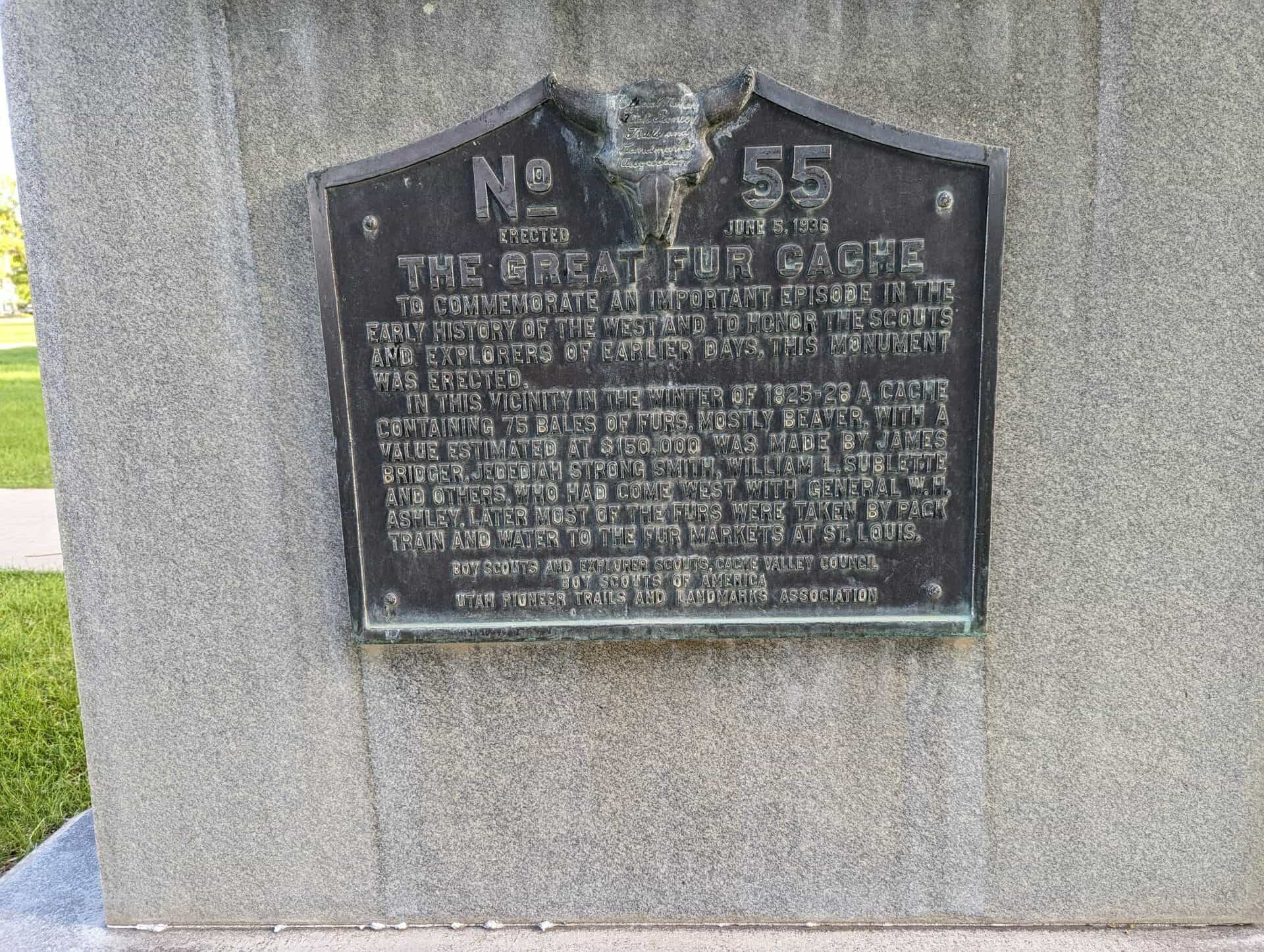
The Great Fur Cache

To commemorate an important episode in the early history of the west and to honor the scouts and explorers of earlier days, this monument was erected.

In this vicinity in the winter of 1825-26 a cache containing 75 bales of furs, mostly beaver, with a value estimated at $150,000 was made by James Bridger, Jedediah Strong Smith, William L. Sublette and others, who had come west with General W. H. Ashley. Later most of the furs were taken by pack train and water to the fur markets at St. Louis.

This is Utah Pioneer Trails and Landmarks Association historic marker #55, adopted by the Sons of Utah Pioneers and located at the City Square in Hyrum, Utah (about 59 West Main Street) and it was erected June 5, 1936.

Related:

  • Other UPTLA Historic Markers and Sons of Utah Pioneer Markers

Nibley, Utah

16 Monday May 2016

Posted by Jacob Barlow in Uncategorized

≈ Leave a comment

Tags

Cache County, Cache Valley, Hyrum, Logan, Nibley, utah

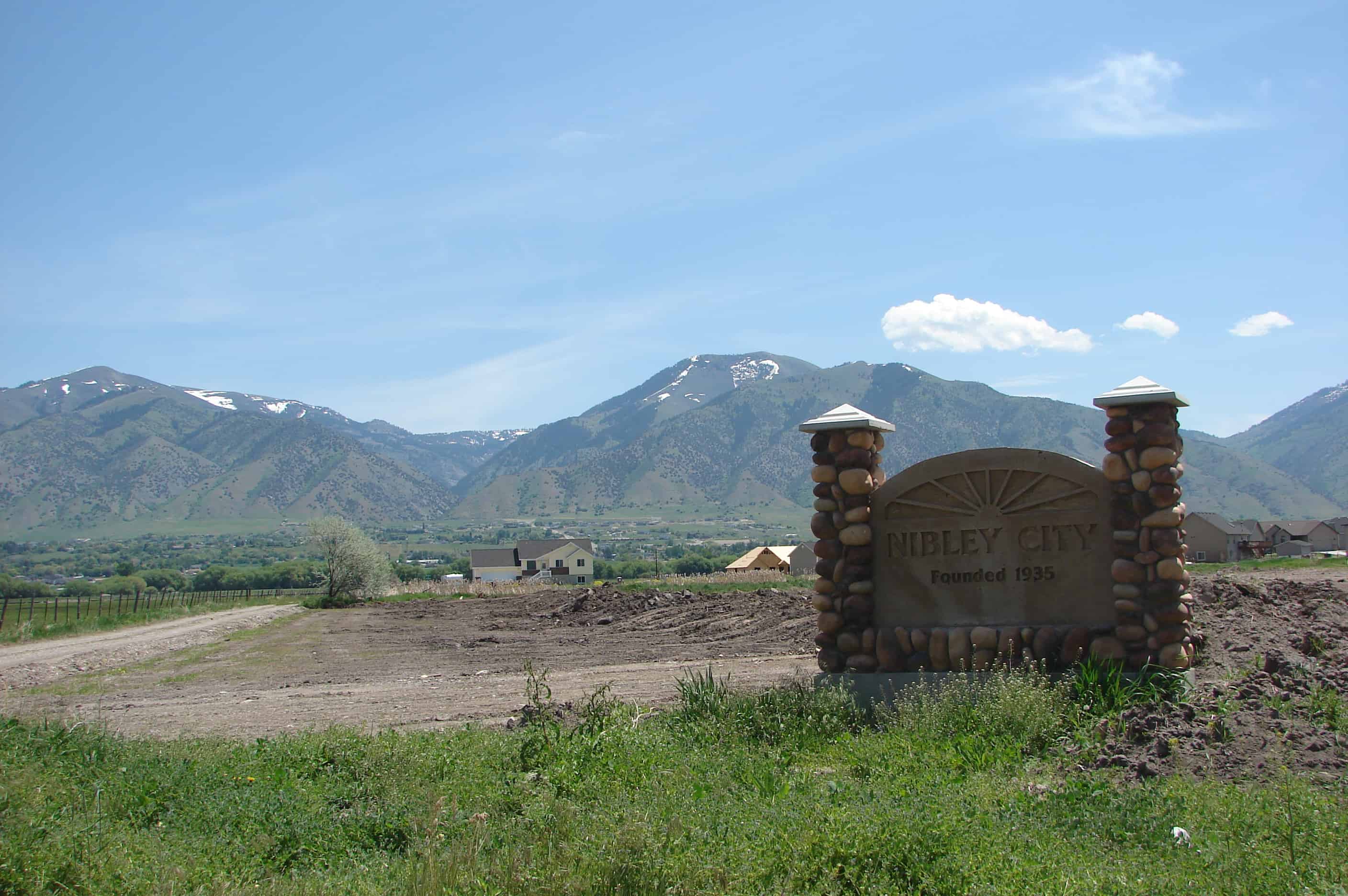
picture01june08-011

Nibley was named after Charles W. Nibley, a leader in The Church of Jesus Christ of Latter-day Saints.

Follow Jacob

Follow Jacob

Blog Stats

  • 2,008,664 hits

Social and Other Links

BarlowLinks.com

Recent Posts

  • Fort Douglas Commanders House
  • Herbert B. Maw Home
  • Marriner S. Eccles Home
  • William and Grace Ebaugh Home
  • Emma Thatcher Jeppeson Home

Archives


Loading Comments...