Traders, trappers and adventurers carved out the route known as the Old Spanish Trail. New Mexican traders on their way to California in the early 1800’s left behind many Spanish place names.
The 49’ers traveled here during the gold rush into California. One of the companies, lead by Jefferson Hunt traveled from Salt Lake City arriving here on October 27, 1849. Impatient and quarrelsome the company broke up near Enterprise, Utah. Some followed the Old Spanish Trail to California other drove southwesterly through remote desert regions and gave Death Valley its name.
John C. Fremont, an Army Topographer and explorer also came this way with a party in 1853-54 seeking a railroad route. The party almost perished before Fremont got provisions from Parowan, Utah. Fremont Canyon to the east bears his name.
Southern Utah Expedition of 1849 – Winter Trail in Fremont Canyon
Southern Utah Expedition of 1849
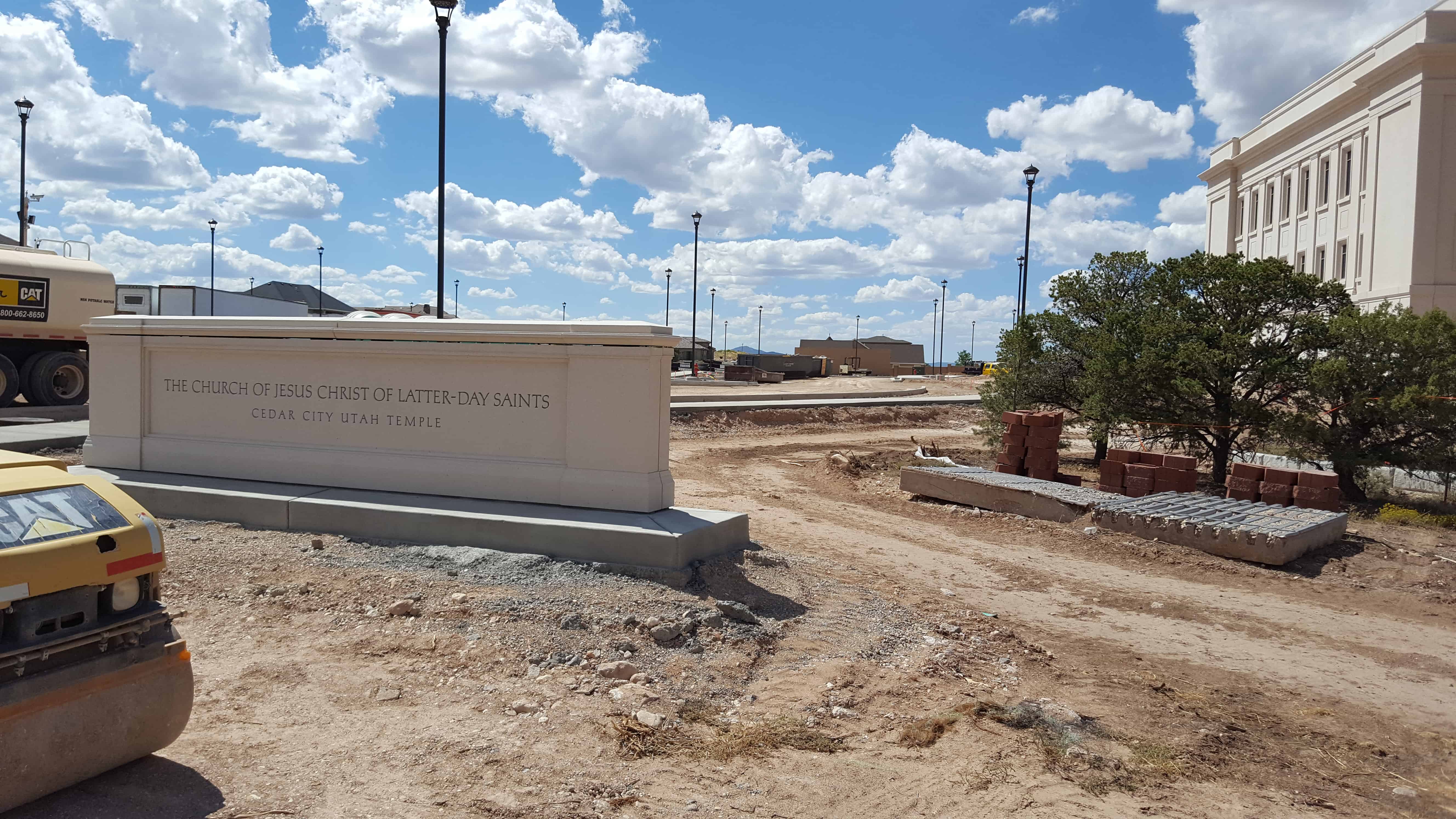
Realizing the limited resources for pioneer settlement in the Salt Lake Valley and surrounding settlements in 1849, and the potential of many more immigrants arriving in the next few years, Brigham Young began to search out possible new settlements. Based on reports of Jefferson Hunt, who had traveled through southern Utah in 1847 and 1848, one of the regions which seemed promising was the valleys along the Spanish Trail in southern Utah Territory. The November legislature authorized the establishment of the Southern Expedition to investigate such possibilities. The exploring party, which eventually consisted of fifty-five men, was led by Mormon Apostle Parley P. Pratt. This expedition and its subsequent report helped influence the creation of dozens of new communities in southern Utah. Among the first were the settlements of Parowan and Cedar City in 1851, in what would become Iron County. This is one of the four monuments which tell the story of this historic expedition. They are located at Iron Springs, Parowan Gap, Parowan, and Fremont Canyon.
Winter Trail in Fremont Canyon
Hazardous terrain and harsh winter conditions made early exploration of this area difficult. The Southern Utah Expedition led by Parley P. Pratt began facing ominous conditions on December 15, 1849, about ten miles south of present day Circleville, Utah. They hacked a road through snow up to two feet deep and over the mountains to the east in terrain surrounded by 9000-foot peaks and deep canyons. John Brown, a member of the expedition recorded:
“It was a great undertaking and a very hazardous one to cross so large a mountain at this season of the year. There was danger of being snowed under.”
At one of the camps in the canyon, John C. Armstrong and other members of the expedition carved their names in the cliffs where they remain to this day.
On December 23, the group found the wagon tracks of the Jefferson Hunt Party, who passed through this valley in late October on their way to California. Hunt’s party split up later and one group went on to become the infamous Death Valley Forty-niners. The Pratt expedition explored the area south of this site for two weeks and passed this spot again on their way back to Salt Lake City to report the results of their findings. The canyon east of this site was named “Summer’s Gate” by the Pratt expedition because of the mild snow conditions they encountered.
However, the canyon and the wash which heads south of this site bears the name of Fremont after the explorer, John C. Fremont. The citizens of Parowan rescued the Fremont party who came though this same canyon under similar conditions in February 1854.
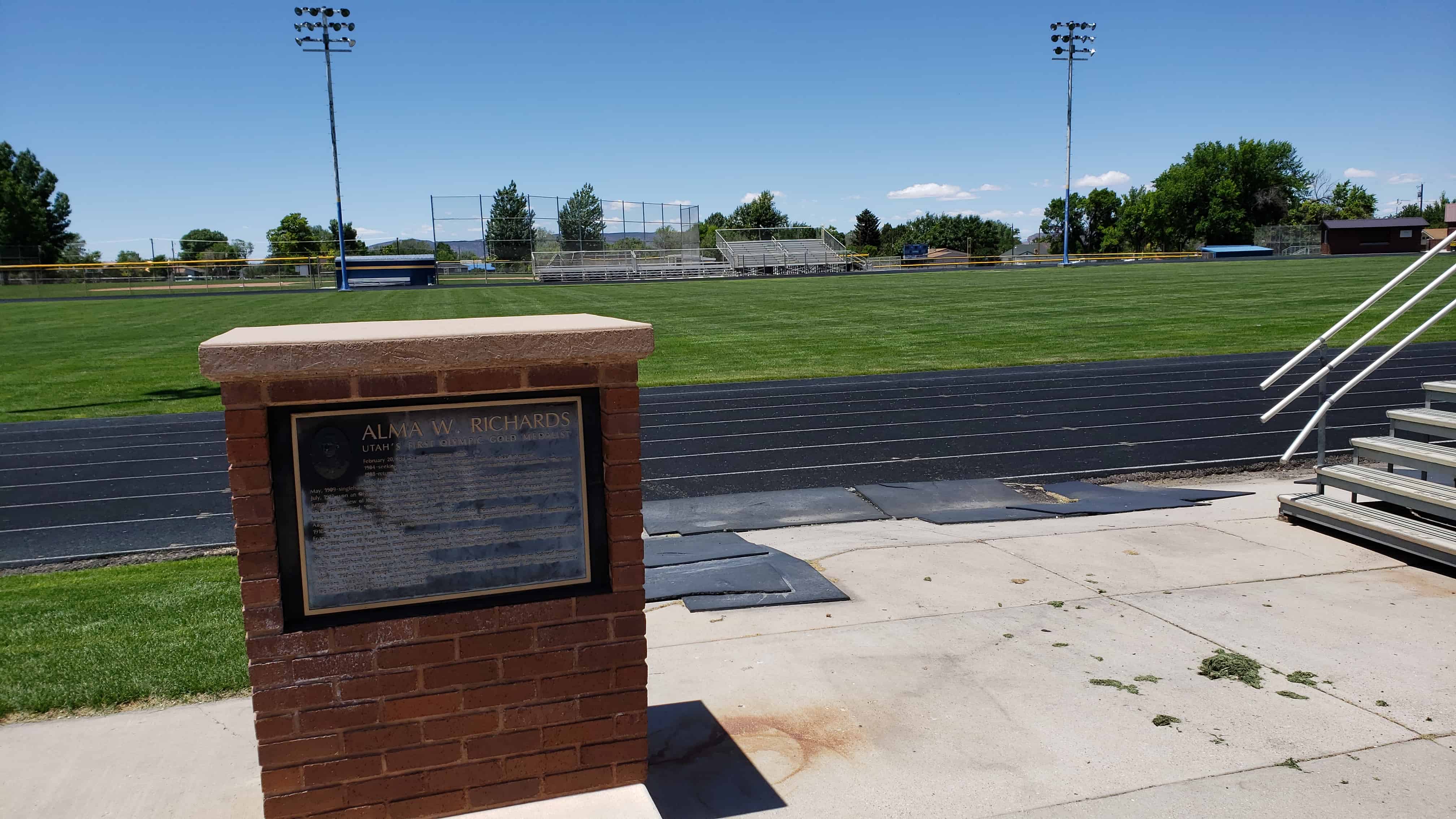
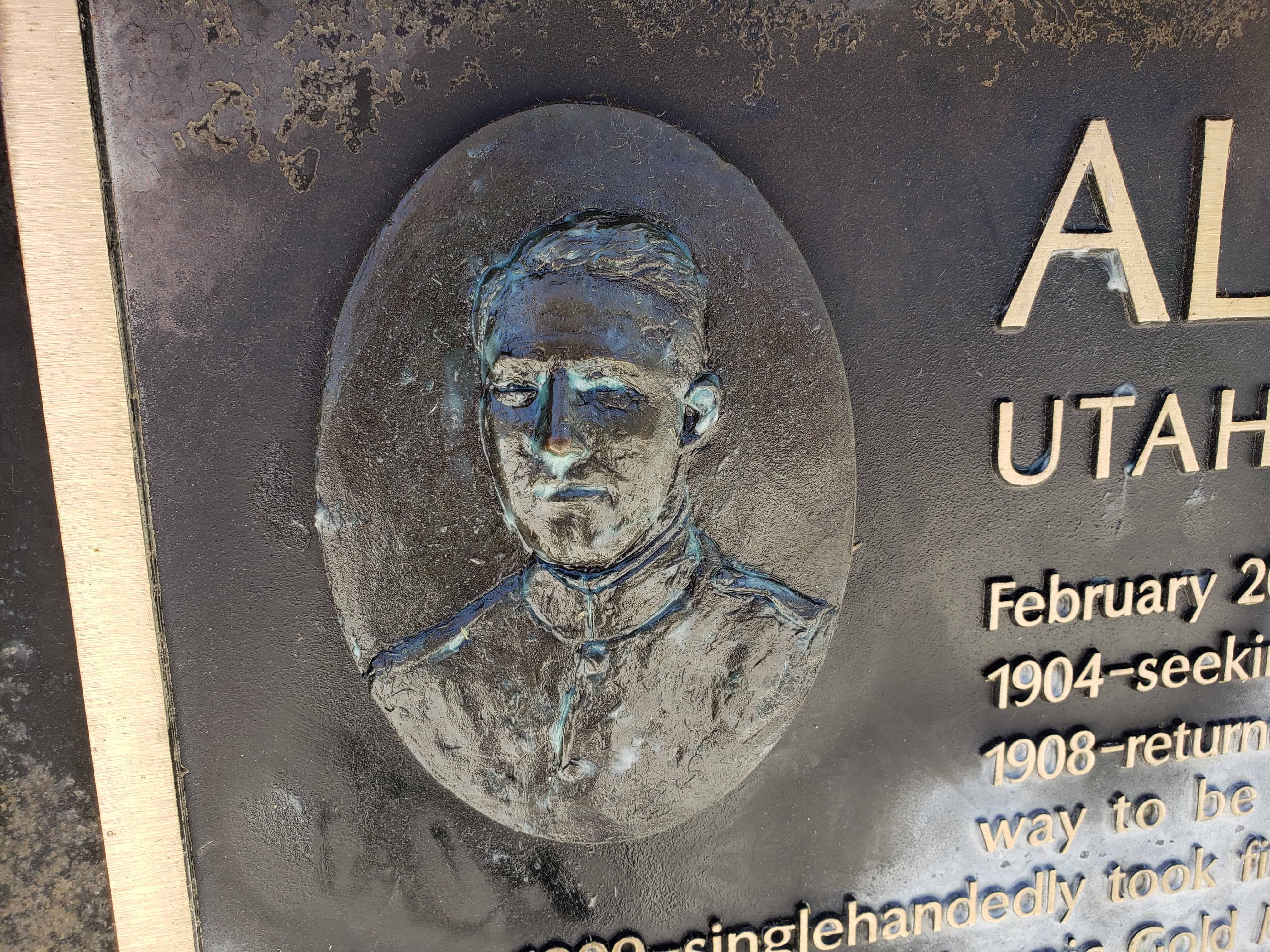
Alma W. Richards Utah’s First Olympic Gold Medalist
February 20, 1890 – born in Parowan, Utah.
1904 – seeing to be “free,” Richards dropped out of school at age 14.
1908 – returned to school through the influence of a teacher who admonished, “The only way to be truly free is to get an education.”
May, 1909 – singlehandedly took first in the state track meet, which included all of the high schools in Utah.
July, 1912 – won an Olympic Gold Medal in the high jump at Stockholm, Sweden. Just prior to his victorious jump, in full view of King Gustav and 22,000 noisy spectators, the humble farm boy dropped to his knees and silently prayed, “God, give me strength. And if it’s right that I should win, give me strength to do my best and set a good example all the days of my life.”
August 1915 – smashed Jim Thorpe’s Olympic world decathlon record by 1000 points.
1916-1919 – served in the US Army during WWI and was declared the greatest athlete in the US Expeditionary Forces by General John Pershing.
1913-1932 – won 55 Regional and National Track & Field Championships.
1924 – after achieving academic excellence and earning a law degree at USC, he chose to become a teacher so he could make a difference in young people’s lives. Richards taught briefly at Parowan High School and then in Southern California for 30 years.
1947 – named Utah Athlete of the Century.
April 3, 1963 – died in Orange, California. Richard’s last request was to be buried in his beloved Parowan.
Sincere thanks for the many private and public donations received for this monument.
Joe Zaleski – Eagle Scout Project 2001
Joe Zaleski raised the funds and organized the effort to have this monument built in time for the torch run through Parowan when the Olympic torch was on its way to Salt Lake City for the 2002 Winter Olympics.
N 37.84627 W 112.82885
A monument to Alma Richards, Utah’s first Olympic gold medalist.
This is a monument to Alma Richards, the first Utahn to ever win a Gold Medal in the modern Olympic games. Joe Zaleski raised the funds and organized the effort to have this monument built in time for the torch run through Parowan when the Olympic torch was on its way to Salt Lake City for the 2002 Winter Olympics.
The settlement was established as a railroad town in 1899 by the Utah and Nevada Railway. By 1905 it was on the Los Angeles and Salt Lake Railroad route between Salt Lake City and Southern California.
Newcastle is a small agricultural town west of Cedar City. The community had begun moving from the Pinto area and settled here. It was somewhat named for the castle-like cliffs nearby.
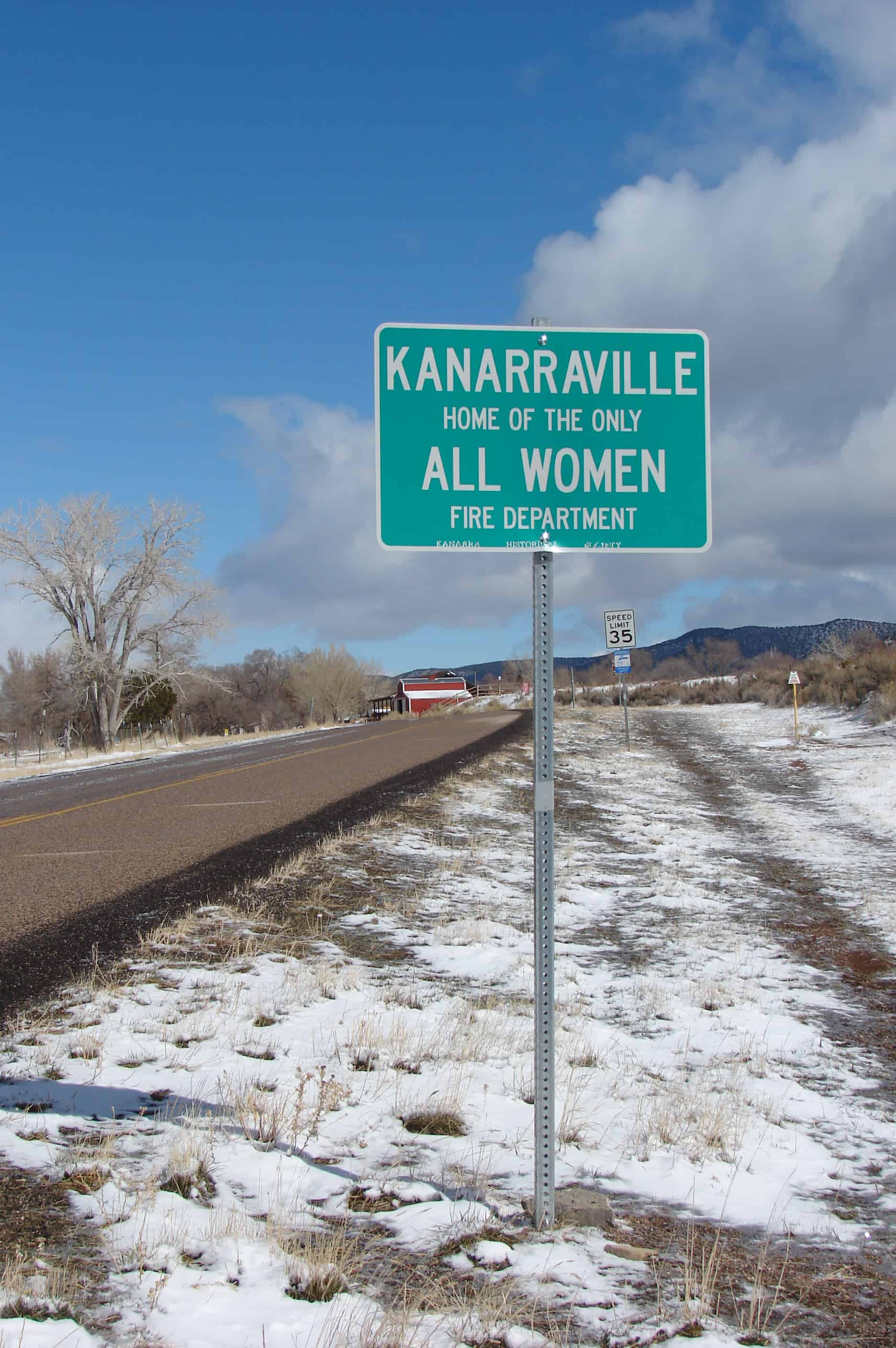
Kanarraville is the home of the only all women fire department.
The town may have acquired its name from either of two sources. The popular belief is that the name came from an Indian Chief, Kuanar, who resided along the creek. Another origin may have been from the kind of willows that grew along the creek, Kanarra Willows.