Built in 1903, the First National Bank of Morgan started with a capital stock of $25,000. It was remodeled in 1937 and 1956 but the 1936 vault door remains.
In 1972 assets reached $5,000,000 and in 1973 the bank moved to State Street.
is named after Jedediah Morgan Grant, a leader in The Church of Jesus Christ of Latter-day Saints. As of the 2010 census, the city population was 3,687. It is the county seat of Morgan County.
Devil’s Slide is an unusual geological formation located in Weber Canyon, Morgan County, Utah.
The sides of the slide are hard, weather-resistant limestone layers about 40 feet high, 25 feet apart, and several hundred feet in length. In between these two hard layers is a softer limestone that is slightly different in composition from the outer limestone layers. This middle layer is softer, which makes it more susceptible to weathering and erosion, thus forming the chute of the slide. Looking like a large playground slide fit only for the Devil, this site is a tilted remnant of sediments deposited in a sea that occupied Utah’s distant geologic past. Approximately 170 to 180 million years ago, a shallow sea originating from the north spread south and east over areas of what are now Montana, Wyoming, and Utah. This sea extended as far east as the present-day Colorado River and south into northern Arizona. Over millions of years, massive amounts of sediment accumulated and eventually formed layers of limestone and sandstone. In northern Utah, these rocks are known as the Twin Creek Formation and are approximately 2700 feet thick. About 75 million years ago, folding and faulting during a mountain- building episode tilted the Twin Creek rock layers to a near-vertical position. Subsequent erosion has exposed the near-vertical rock layers and created Devils Slide.*
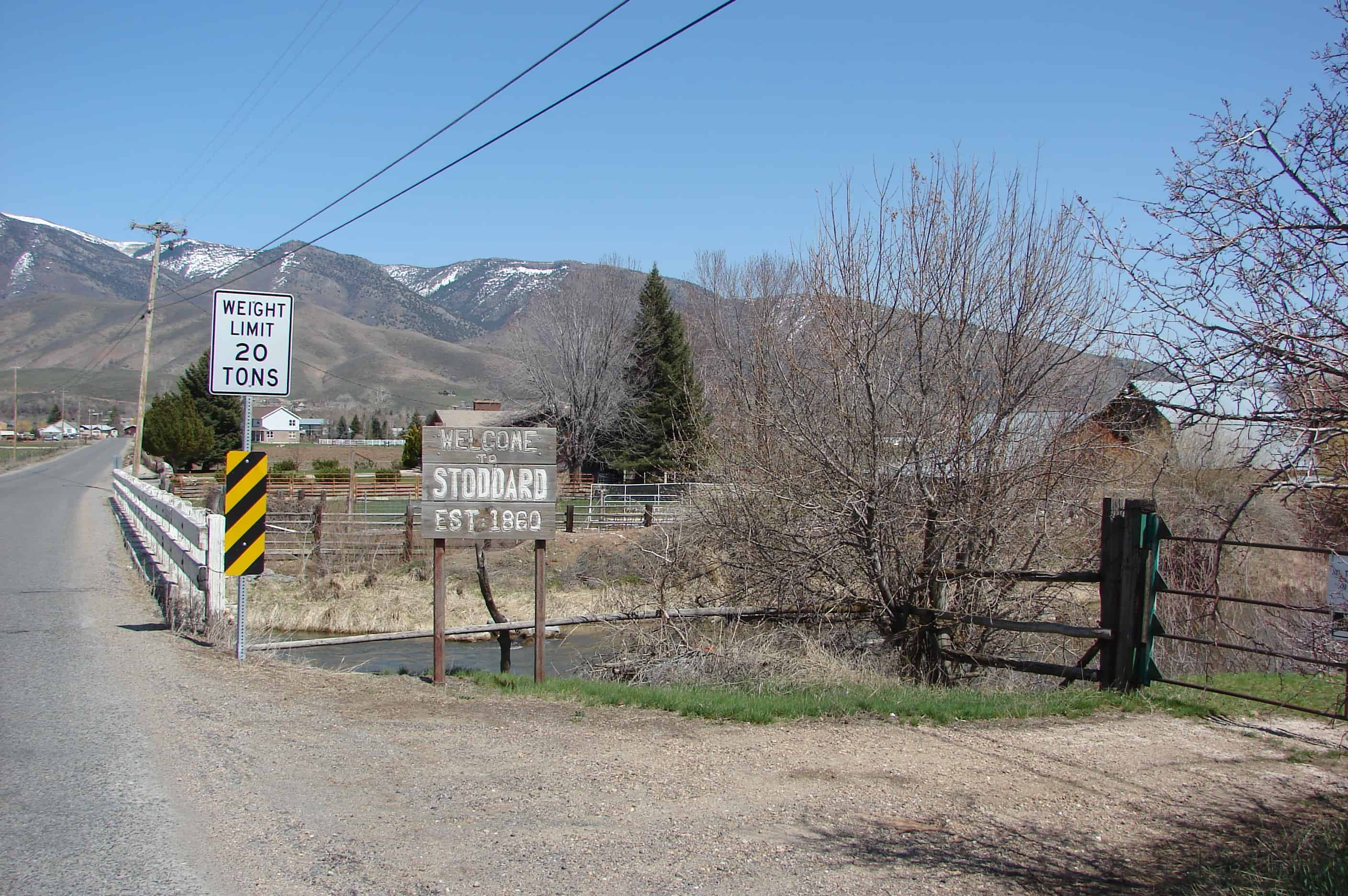
Stoddard is in the Morgan Valley three miles northwest of Morgan near I-80. This small agricultural community was settled in 1860 by the Judson L Stoddard family.
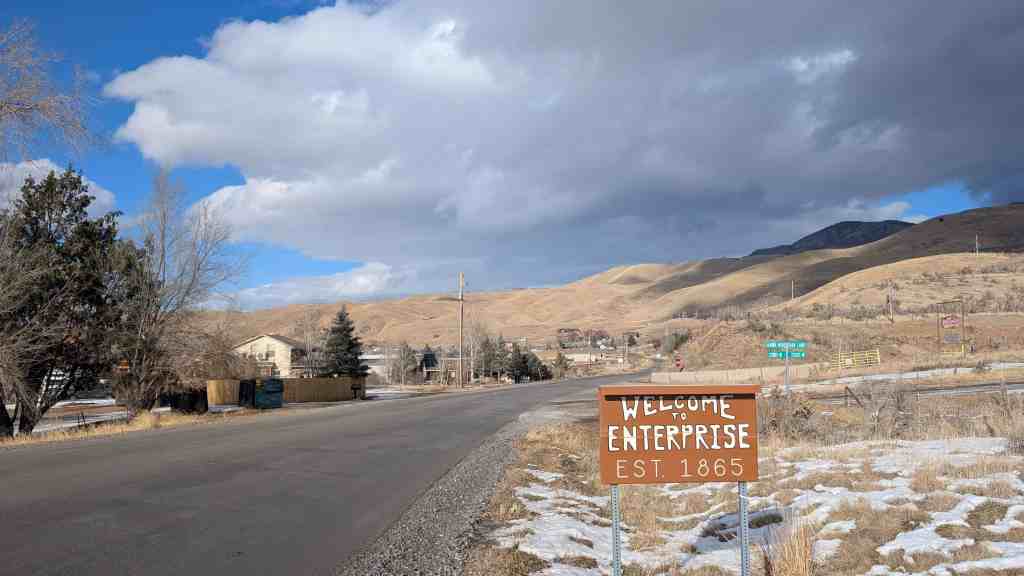
The first settlers in Enterprise were Henry and Stephen Hales, who arrived in 1861. They found fertile land on the bench, but little water for irrigation. They dug a 2-mile ditch from the Weber River to water their farmland. A canal company was organized in 1863 to irrigate the whole area, but Enterprise was short on water for many years as thieves diverted water upstream. The first schoolhouse was built in 1863. A townsite with official blocks was surveyed and laid out in 1865. A sawmill operated in Roswell Canyon in the 1870s. Although it was not an official census precinct, the 1880 census enumerated 81 residents in Enterprise.
(Not to be confused with Enterprise, Utah in Washington County)
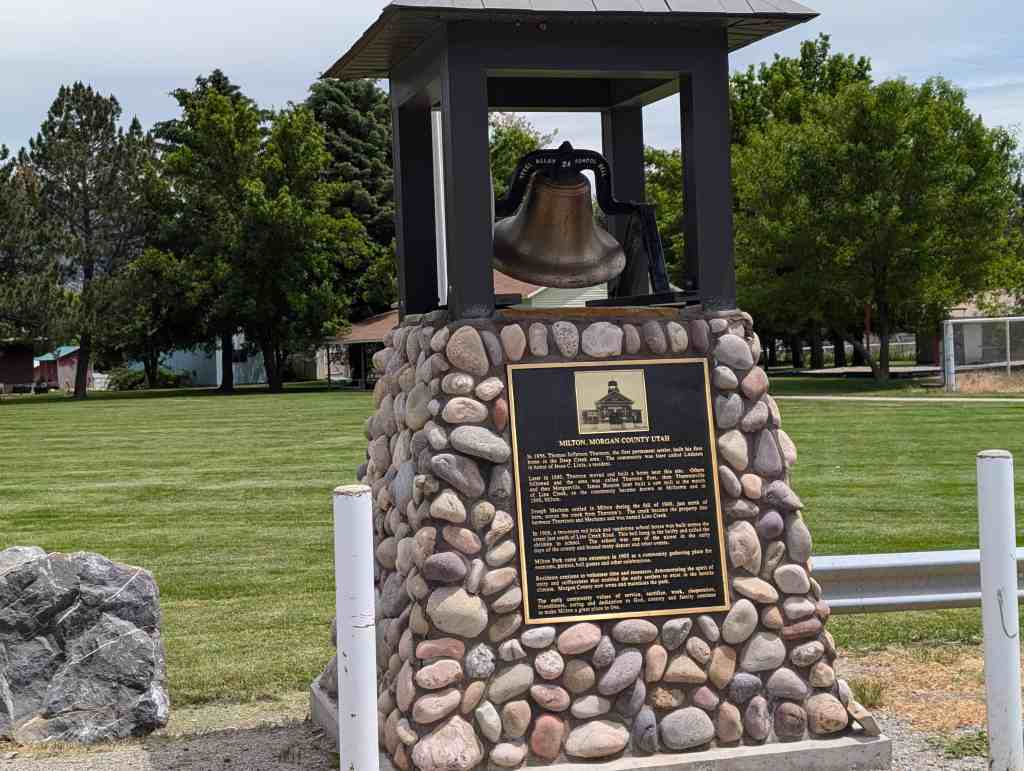
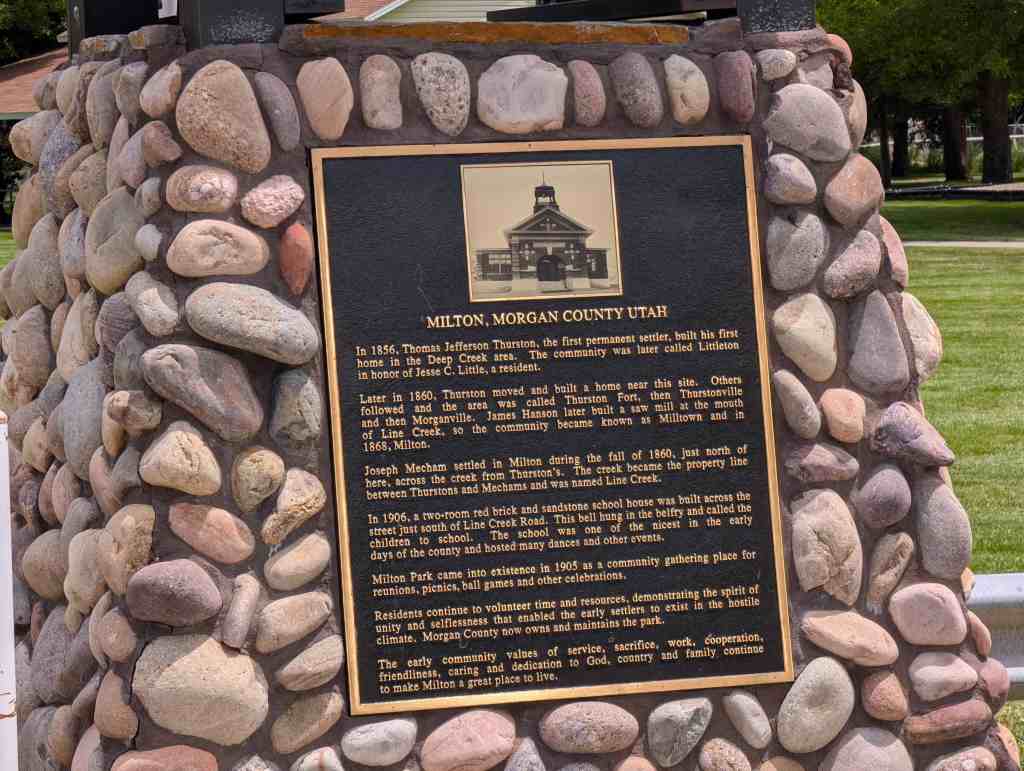
In 1856, Thomas Jefferson Thurston, the first permanent settler, built his first home in the Deep Creek area. The community was later called Littleton in honor of Jesse C. Little, a resident.
Later in 1860, Thurston moved and built a home near this site. Others followed and the area was called Thurston Fort, then Thurstonville and then Morganville. James Hanson later built a saw mill at the mouth of Line Creek, so the community became known as Milltown and in 1868, Milton.
Joseph Mecham settled in Milton during the fall of 1860, just north of here, across the creek from Thurston’s. The creek became the property line between Thurstons and Mechams and was named Line Creek.
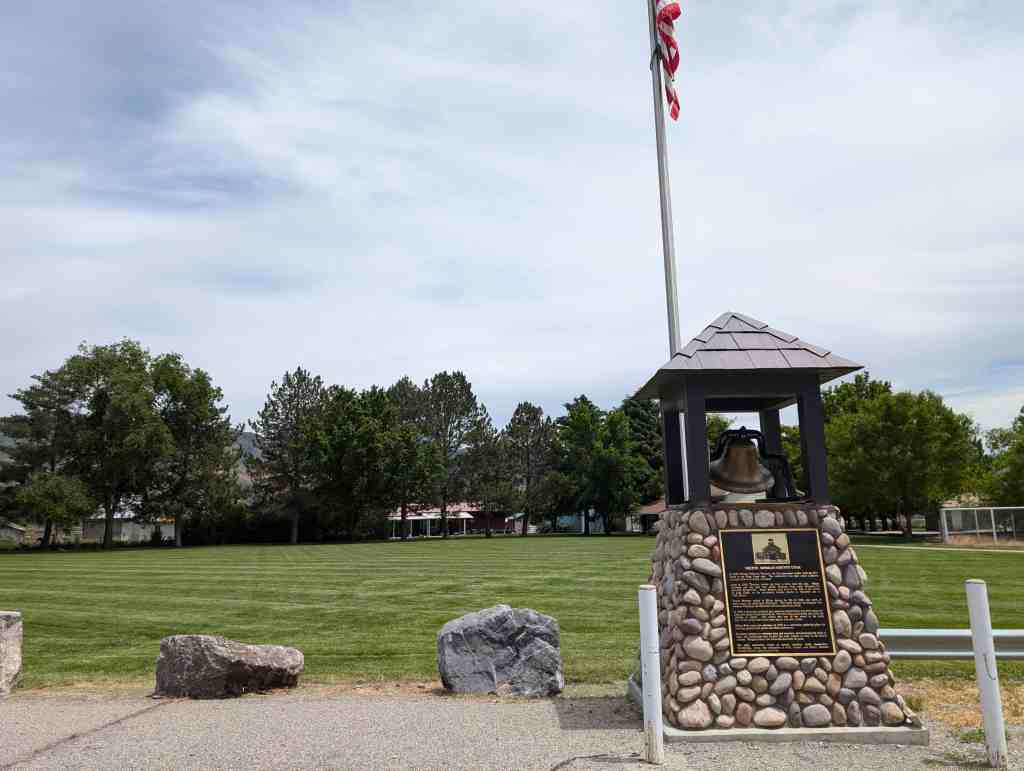
In 1906, a two-room red brick and sandstone school house was built across the street just south of Line Creek Road. This bell hung in the belfry and called the children to school. The school was one of the nicest in the early days of the county and hosted many dances and other events.
Milton Park came into existence in 1905 as a community gathering place for reunions, picnics, ball games and other celebrations.
Residents continue to volunteer time and resources, demonstrating the spirit of unity and selflessness that enabled the early settlers to exist in the hostile climate. Morgan County now owns and maintains the park.
The early community values of service, sacrifice, work, cooperation, friendliness, caring and dedication to God, country and family continue to make Milton a great place to live.
In 1867-68 a building used for church and school was erected. Morgan Stake, of the Church of Jesus Christ of Latter-day Saints, organized July 1877, in a bowery built for that purpose, Willard G. Smith, Stake President. In 1878 John K. Hall helped draw plans for the present $8,000 structure, built of blue limestone rock taken from Como Springs Quarry, George Criddle Jr., Henry Rock, Conrad Smith, Masons. First Conference held May 1882. Later, dedicated by President John Taylor.
This is Daughters of Utah Pioneers historic marker #375 located at 10 West Young Street in Morgan, Utah
In Pioneer days the block on which this building stands was used for all community out-door gatherings. On the northwest corner the first schoolhouse in South Morgan was built, when, in 1866, the people taxed themselves to erect the building. In 1885, on the south half of the block, the first City and County Court House was finished. It was used for dances, entertainments, home of Weber College, as well as City & County Building. This building was completed March 12, 1950 and was dediated (sic) April 26, 1953.
Porterville was settled by the members of the Porter family. Sanford Porter, Jr., while on duty as a scout in the winter of 1857-58, rode into a canyon so rocky and difficult to travel that he named it Hardscrabble. Here he found a stream of water and abundant timber, ideal for a sawmill. In 1859 the family hauled machinery and supplies over the Wasatch Mountains by pack mule and built the first sawmill in Morgan County. In 1860 Sanford, Sr., and Nancy Warriner Porter built a cabin five miles east of the mill and spent the first winter there. During the following two years, four sons, Chauncy, John, Sanford Jr., and Lyman built log homes and moved their families into the valley. For several years after the settlers came, Chief Washakie and his band of Shoshone Indians returned each fall to hunt, fish, dry meat, and pick berries. In 1853 English converts began to arrive. In 1864 a branch of The Church of Jesus Christ of Latter-day Saints was organized. When the railroad was built through Morgan County, the Porter mill furnished ties to lay the track from Echo to Devil’s Gate.*