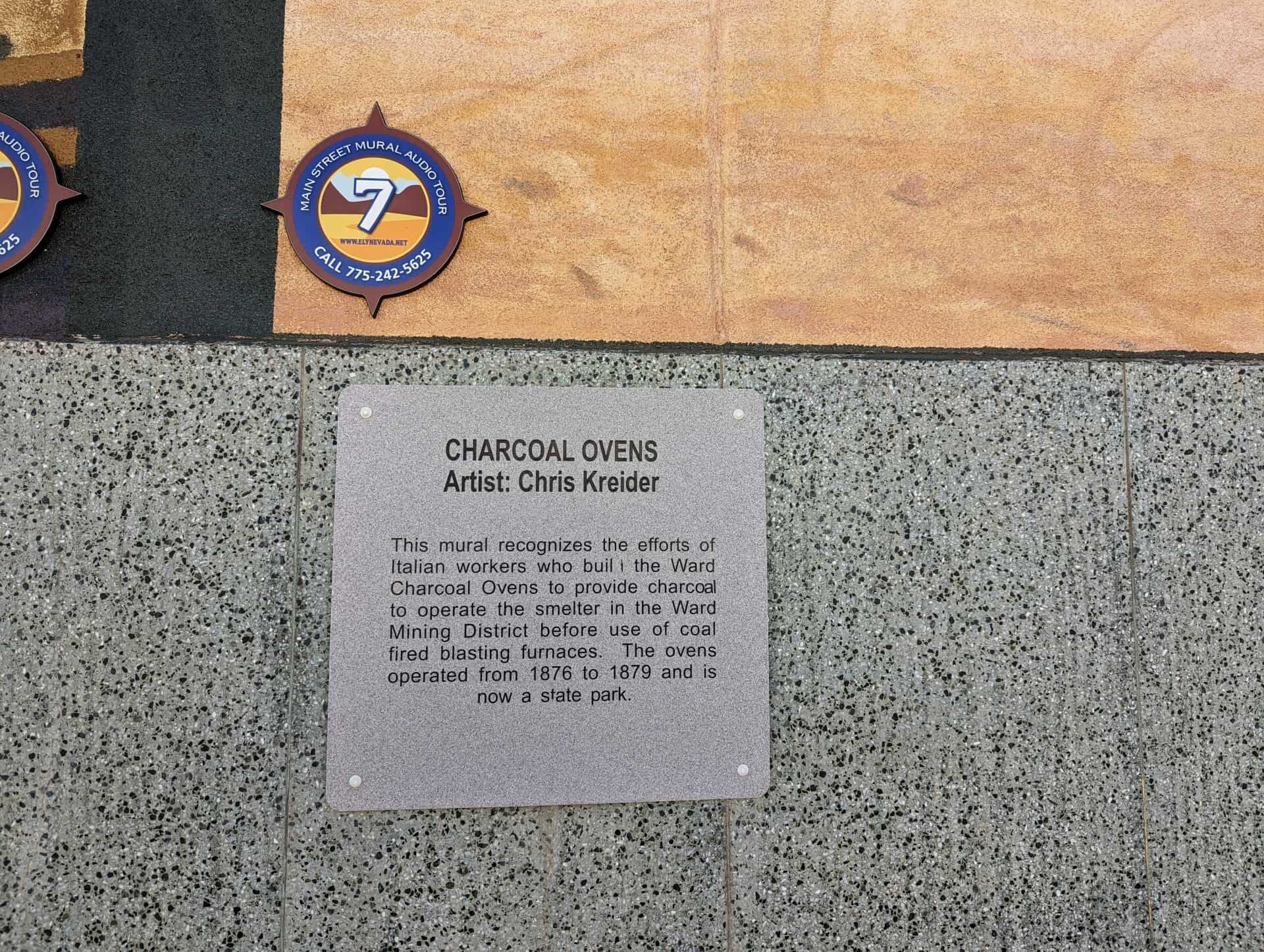
#7 – Charcoal Ovens Artist: Chris Kreider This mural recognizes the efforts of Italian workers who built the Ward Charcoal Ovens to provide charcoal to operate the smelter in the Ward Mining District before use of coal fired blast furnaces. The ovens operated from 1876 to 1879 and is now a state park.
#8 – Building the Railroad Artist: Chris Kreider This mural recognized the efforts of a second group of Italian workers who built the railroad that hauled ore from the mine and brought supplies to the local mining camp. This railroad was completed in 19906, linking White Pine County to the rest of the World. The First National Bank of Ely very generously contributed to these murals.
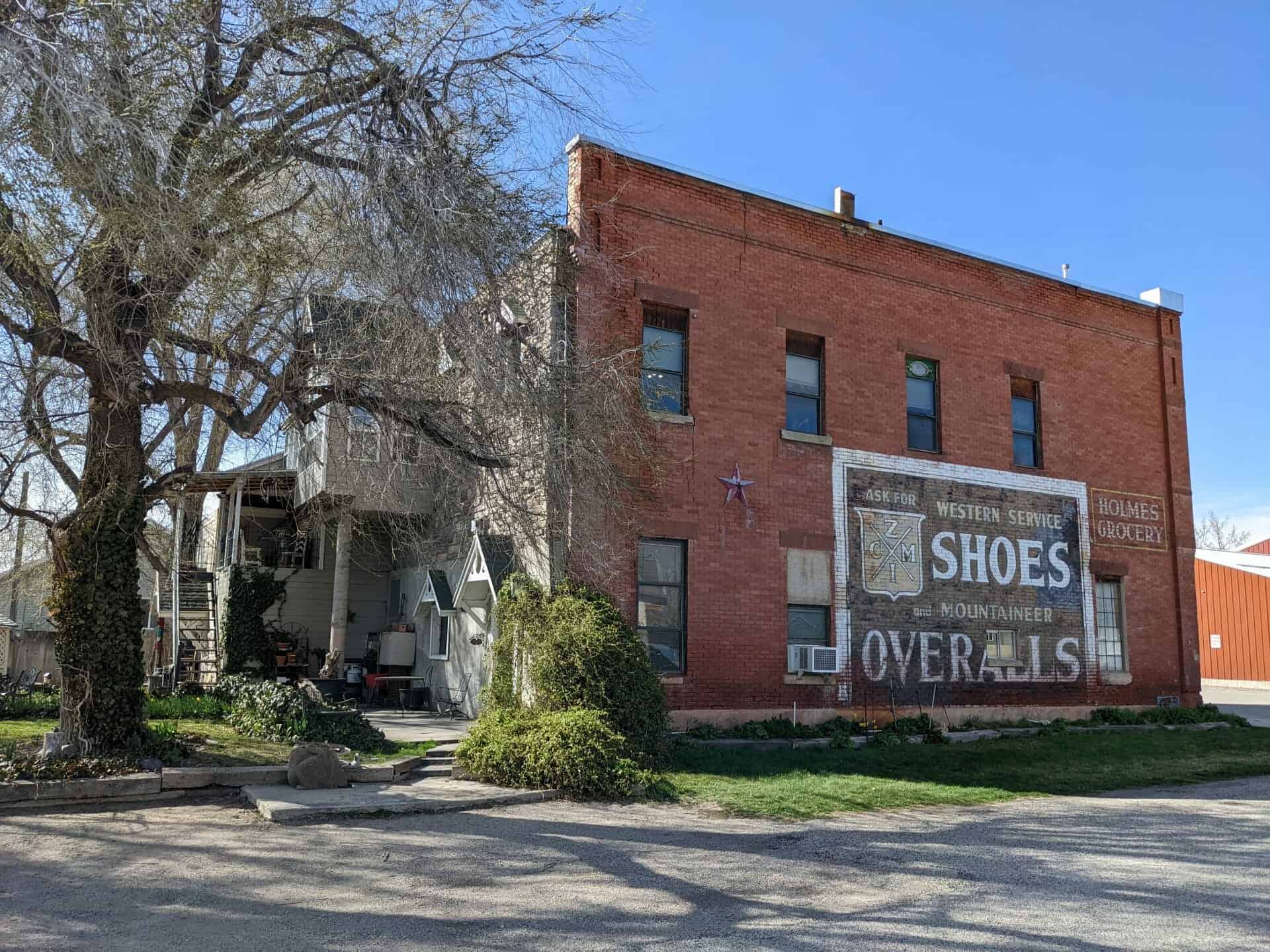
While visiting Ely, Nevada I noticed a lot of cool murals and most were part of a numbered series/tour. Below are links to the murals and other parts of the art/memorial series in Ely I have documented so far.
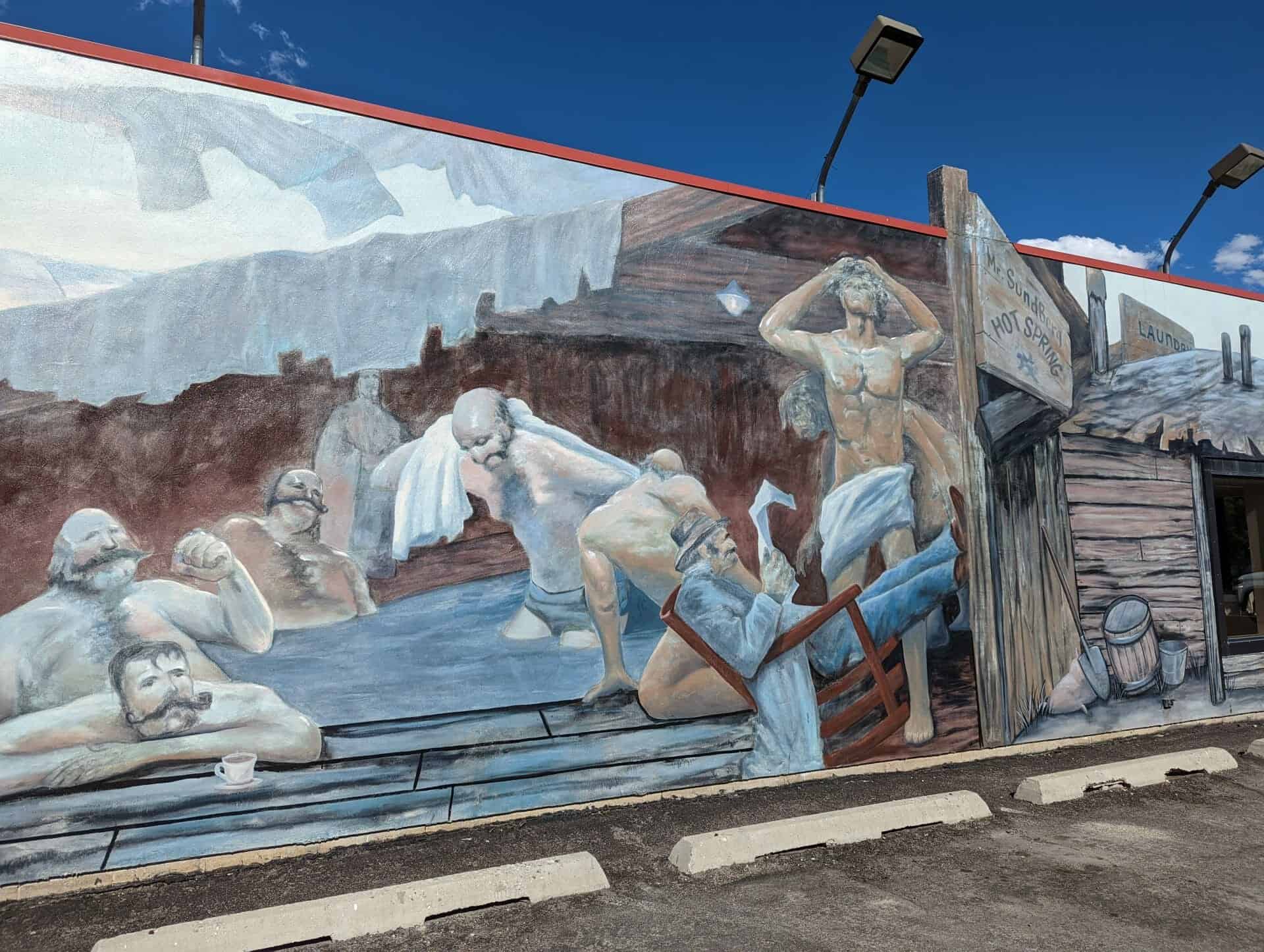
Cherry Creek became a thriving mining town with the rich veins at the Tea Cup and Exchequer mines in the late 1800’s. Named for the prolific chokecherry bushes surrounding the town, it became home to two Northern Europeans, Adolph and Elizabeth Sundberg. It was their early beginnings in Sweden and Denmark that led them to develop the natural geothermal springs with a swimming pool size hot tub and run Cherry Creek’s first and only health spa in the early 1900’s. Bachelor miners could visit and soak their aching muscles and socialize while Elizabeth did their laundry and prepare their meals.
A 20-stamp, 100 ton amalgamation mill moved into Cherry Creek from Hamilton in 1881. The transient population in Cherry Creek peaked at 6000 in 1882. The area included 28 saloons, a racetrack with a grandstand, stables and a miles long track. The town experienced several revivals and the Northern Nevada Railroad established a station three miles east of town.
In 1910, the latest revival of Cherry Creek faded and was not regained.
“This massive mural tells the story of the Cherry Creek mining town and hot springs 50 miles north of Ely. Established in 1872 with silver and gold mining claims, Cherry Creek reached its peak ten years later boasting 6,000 people, 28 saloons, a racetrack and stables. Artist Wei Luan depicts the Italian miners enjoying their baths while their clothes are being cleaned after a long day at the mine. Northern European immigrants, Adolph and Elizabeth Sundberg, depicted on the far right side of the wall moved to Cherry Creek in 1900 and made their living by working in the mine, running a saloon, cooking meals for miners, taking in laundry and running the Cherry Creek hot springs resort.”
The H. W. Davis Milinery Co., which built this building, was but one of many in Provo, but it was the largest and most long-lived.
In 1890 Henry W. Davis constructed a building to house the H. W. Davis Milinary Company. The Milliner was his wife, Rachel (H.W. was a horse trainer). The Davis family lived in the upper floor of the building. Their daughters, Maude, Vera, also became milliners and continued the business with their mother for many years.
The building was built as a milinary factory of two stories in the main section and a single story to the rear which was originally used as a dressmaking shop.
The Davis family lived on the second floor and it continued to the present as low-cost apartments.
The bracketed cornice is intact as are the segmented windows on the second level. The lower façade has been painted and covered with incompatible aluminum and wood overhang which distinguish the two businesses which occupy the first floor but do little to distinguish the building.