Tags
McConkie Ranch Petroglyphs
The Dry Fork Valley Petroglyphs are probably among the most photographed, well- publicized and best known examples of aboriginal rock art in the state of Utah and in the Western United States. The site was thoroughly photographed by Albert Reagan in 1931, who published his material in numerous journals (Reagan 1931, 1932, 1933). Frank Beckwith’s work also helped make the site famous, calling it the “best in the state” (Beckwith 1935:40). The site is considered to be the type site for the Vernal Style, attributed to the Fremont Culture, but it may be pre-Fremont. Wormington has the following comments on the petroglyphs in the Vernal area: “In Dry Fork Canyon, 8 miles from Vernal, Frank Beckwith found numerous pictographs (Beckwith, 1955). Two panels are shown in Fig. 59 (p. 145). The shape of the bodies, the elaborate necklaces and belts, the horned headdresses, and the lines below the eyes all suggest Fremont work. It is interesting to note the presence of two crownlike headdresses. The magnificent headdresses of flicker feathers found in Mantle’s Cave and a similar specimen reported from the Fremont area would probably be depicted in such a manner. The head carried by the individual in the lower panel is also of interest. It could be a mask, but masks are not likely to have necks. Perhaps, as Reagan and Beckwith have suggested, it represents a trophy head. The head in the upper panel is more mask-like.” (1955:145).
The evidence, however, does not clearly point to a specific Fremont cultural affiliation for this art style. The headdresses found in cave deposits noted above are probably associated with earlier Basketmaker components at the sites. In addition, the shield figures are found in a much wider area than that assigned to the Fremont Culture, as far north as Pictograph Cave in Montana. Many of the figures do closely resemble those found along the Fremont River, which are also generally ascribed to The Fremont Culture. Again, it should be noted that cave deposits adjacent to the panels in both Dry Fork and the Fremont River contain much cultural material that could be ascribed to an earlier Basketmaker II or III level of technology.
Thus, there is still considerable question regarding the exact dating, cultural affiliation, and meaning of this distinctive rock art. Nevertheless, there can be no question regarding its significance, aesthetic value, and importance for understanding the cultural affiliation of various prehistoric populations.

Located at 6228 McConkie Road in Vernal, Utah and added to the National Historic Register (#75001828) on September 25, 1975.

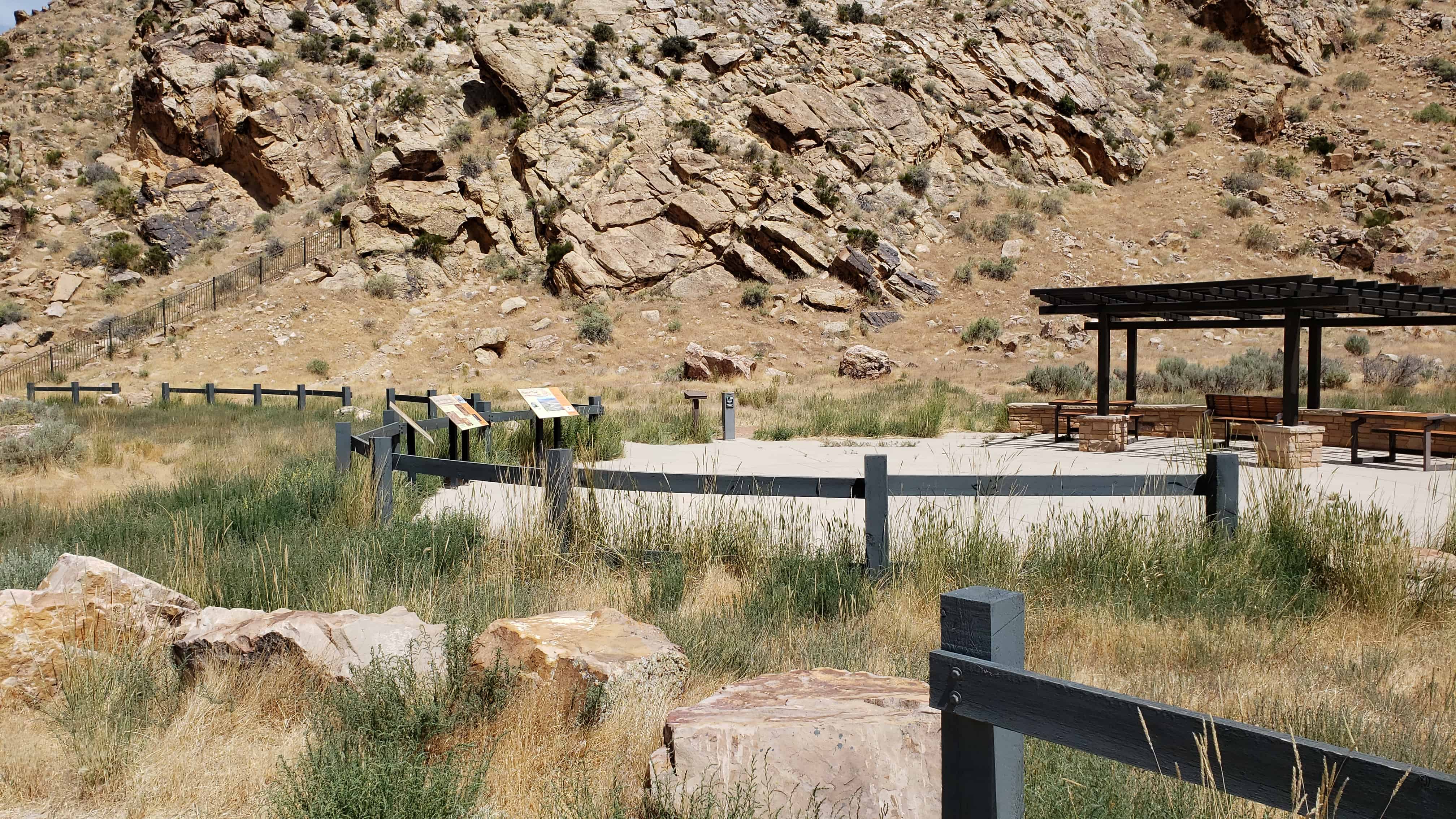
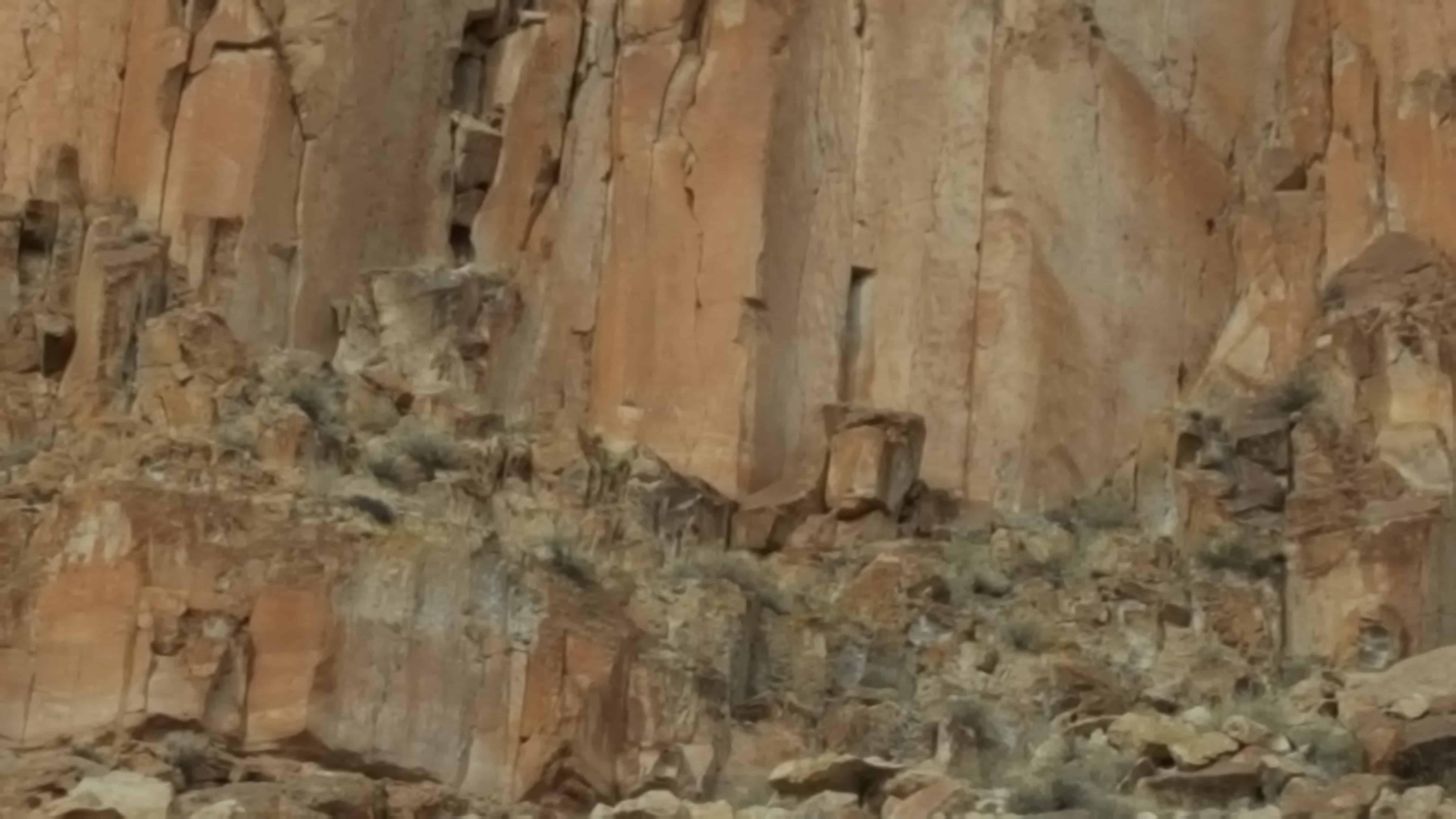
The site is located in Dry Fork Valley, a major tributary of Ashley Creek, a narrow valley with permanent water, approximately 8 miles northwest of Vernal. The site consists of numerous separate panels along the base of the yellow Navajo sandstone cliffs which form the north and east side of the Dry Fork Valley. The panels are scattered along the cliff for about 2 miles, with the greatest concentration behind the McConkie ranch house. There is a long talus slope below the cliff which is about 100 to 150 ft. high. The site overlooks the whole lower portion of the Dry Fork Valley.
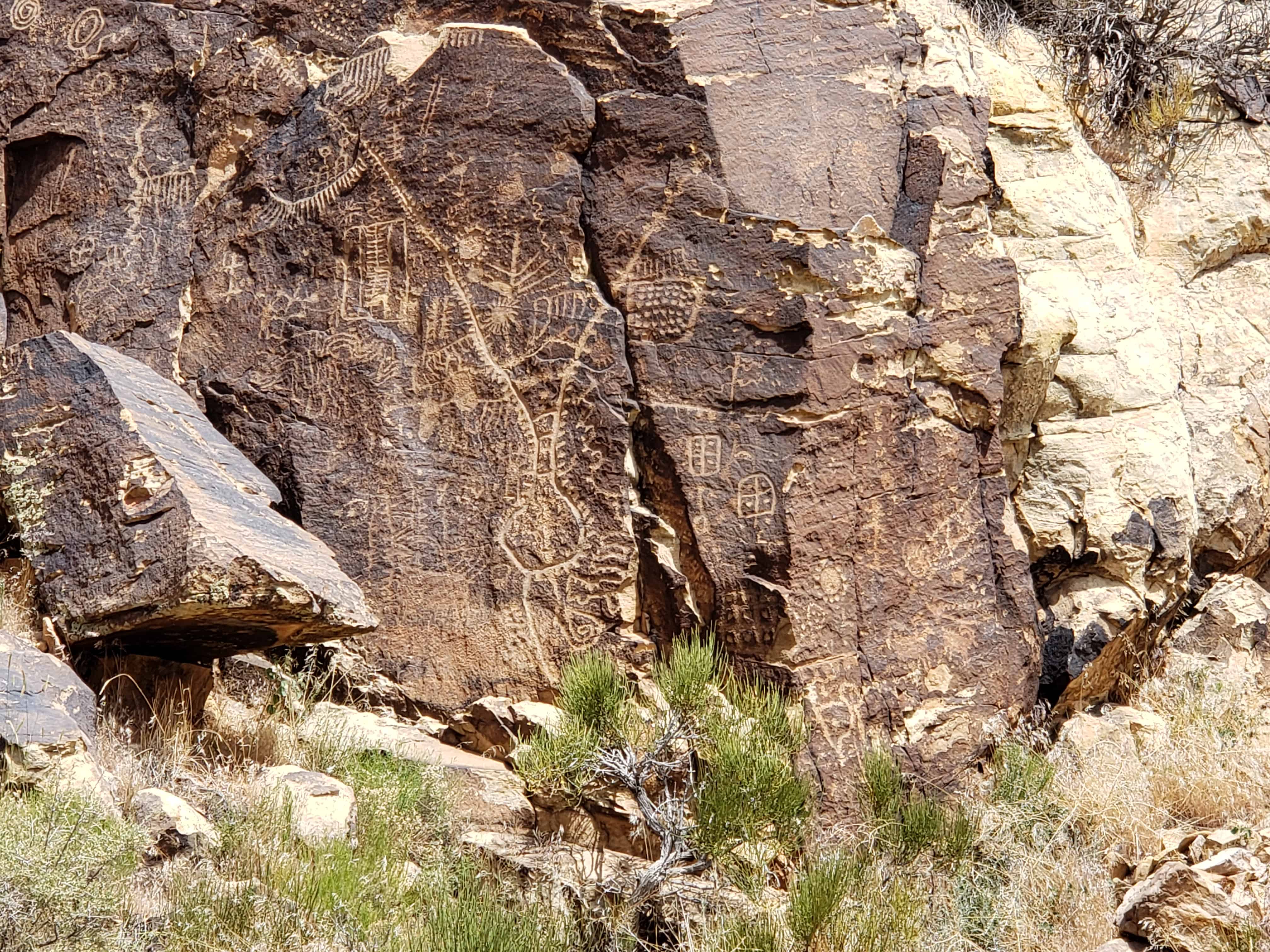
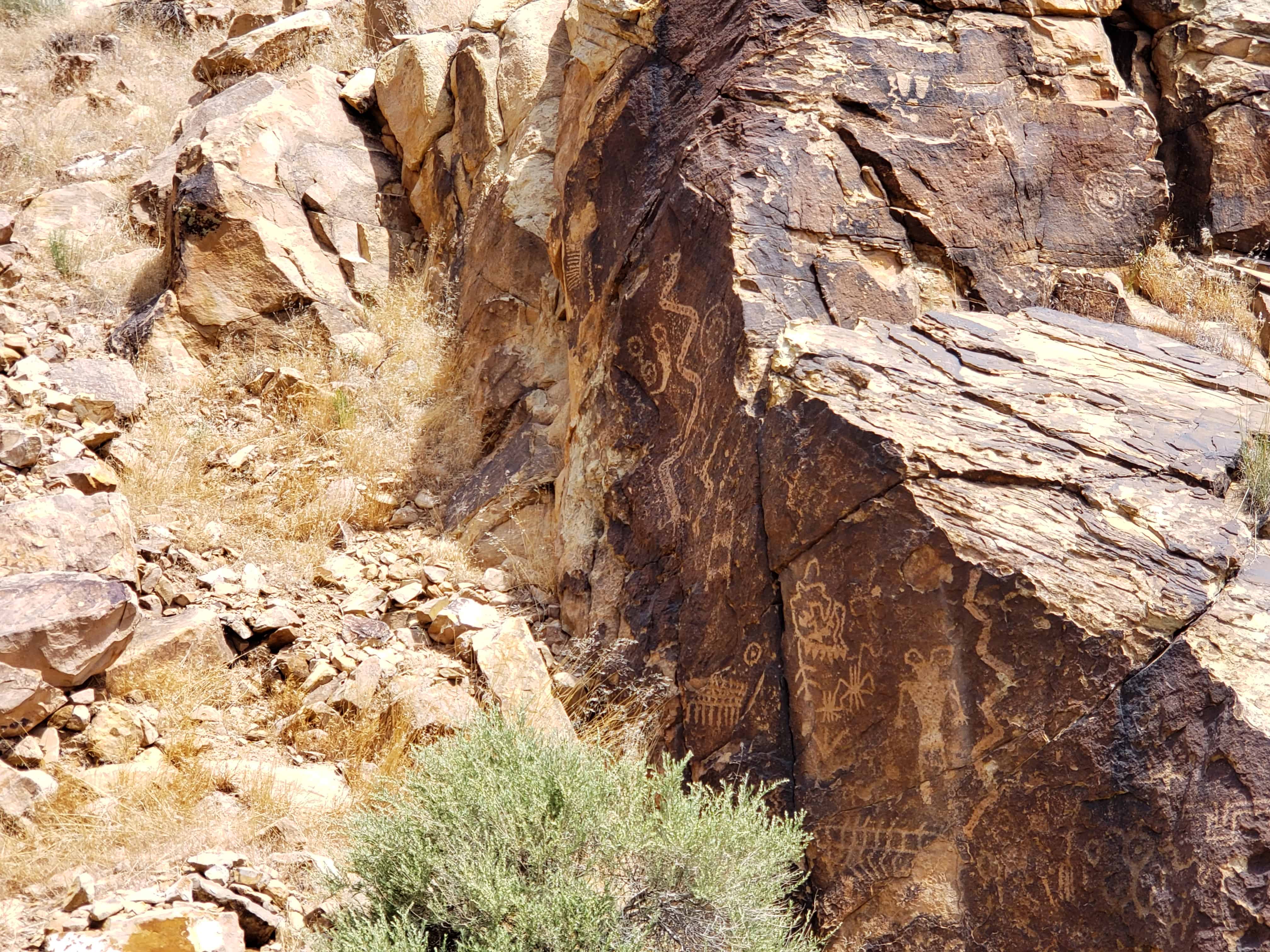
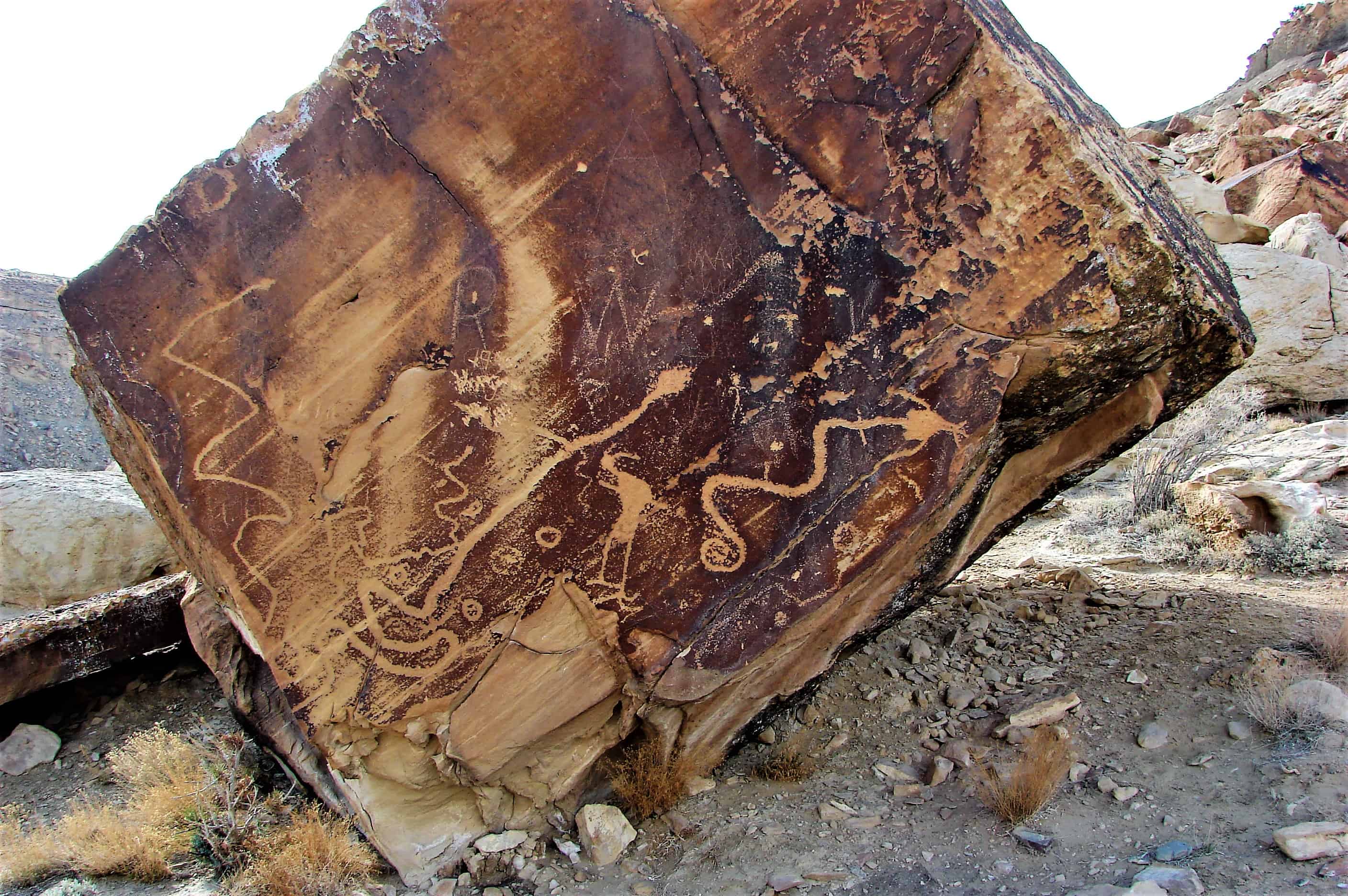
This site, one of the most well-known in the Western United States, is considered to be the type site of the Vernal Style. It is characterized by elaborate anthropomorphs, generally with trapezoidal bodies, headdresses, necklaces, earrings, kilts and other decorations. They commonly hold shields and masks, the latter have been interpreted by many as severed heads (Wormington 1955:145). By far, the main focus of the panels is on the elaborate anthropomorphs Every panel has several, and in many panels this is the only figure present. Animals are also present but they are insignificant, as are the occasional geometric designs. At least two of the panels show what are apparently bears, either “fighting” or “dancing” with the anthropomorphs. In general, the ornaments (necklaces, earrings, kilts, and headdresses) are more deeply carved than the anthropomorphs themselves. In several cases weathering has almost completely obliterated the figures except for these ornaments. Often, other anthropomorphs have been superimposed on these older figures. Red pigment is present on a few of the panels, but is badly faded. In some cases it was used to accentuate the carvings, on others if apparently represents all that remains of earlier pictographs.’ The panels resemble those in Nine Mile Canyon, to the south, in being small and scattered along the valley walls for a great distance.
During the I930’s, many of the panels were numbered by Albert Reagan and chalked in by Reagan or Frank Beckwith for identification and photographic purposes. Most of the chalking and numbers still remain. None of the panels appear to be marked by vandalism, and the site is very well protected by the McConkies who charge admission to the site and conduct tours. The site is presently visited by many hundreds of visitors each year and maps are available in Vernal giving directions to the site for tourists.