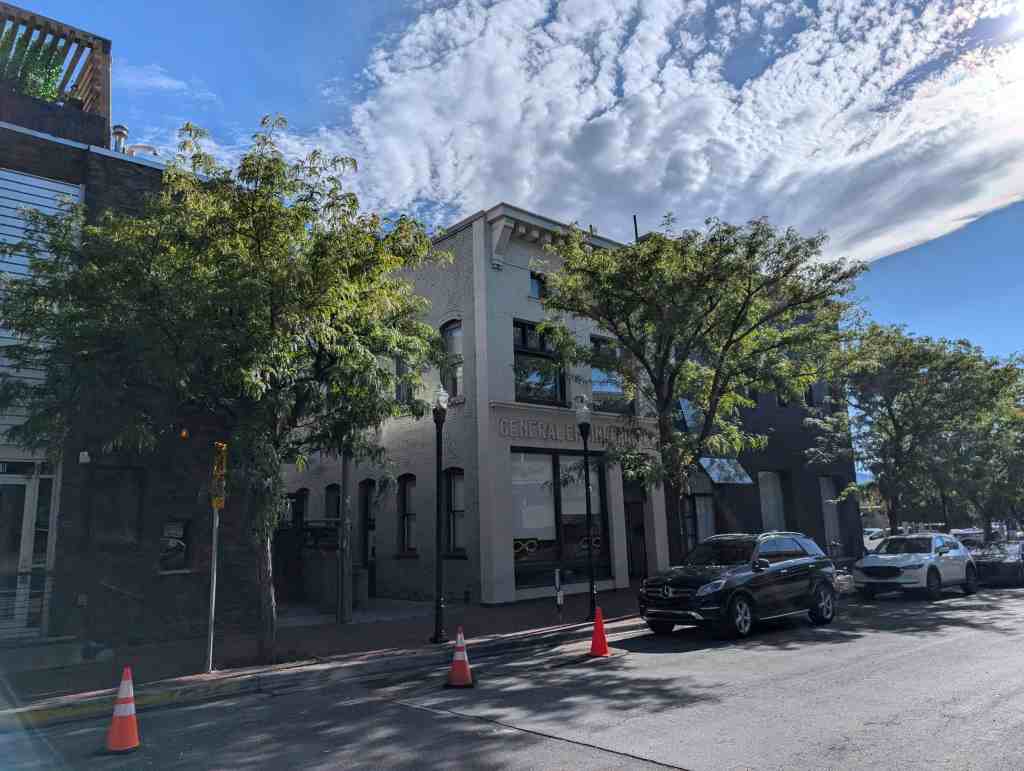
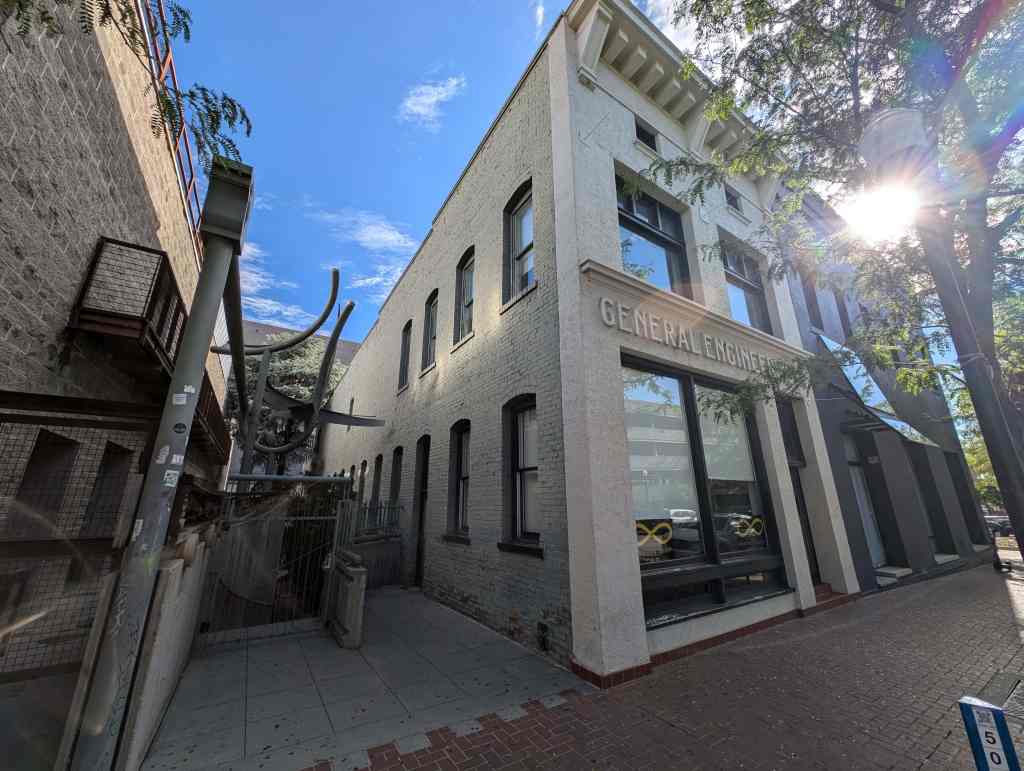
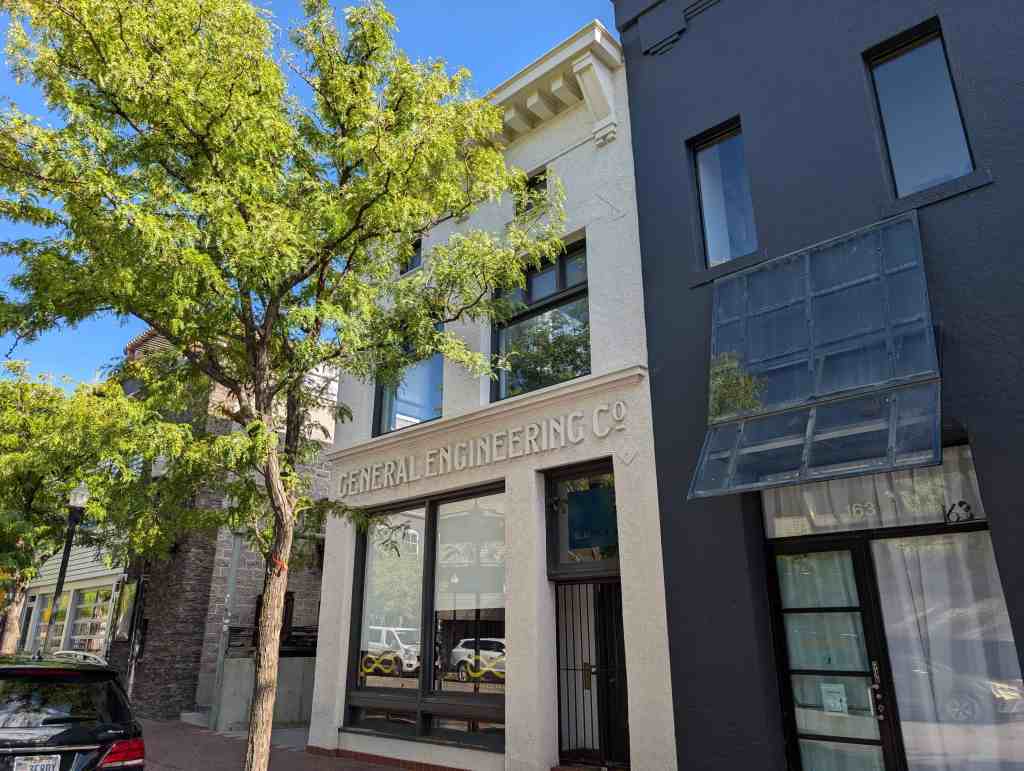
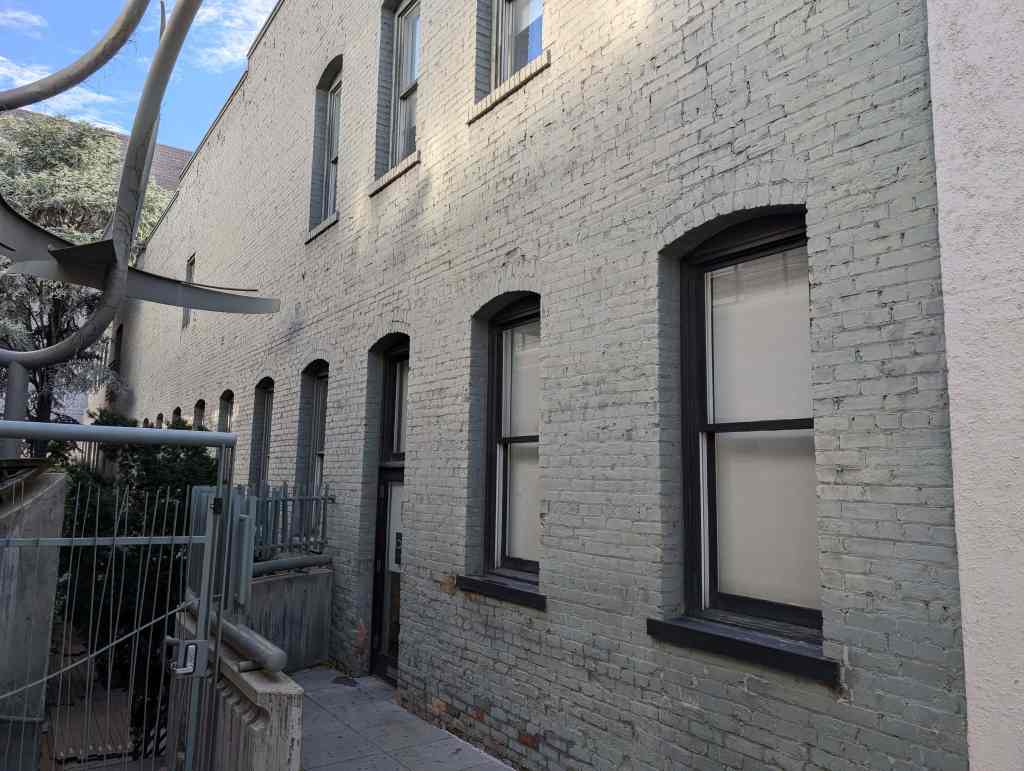
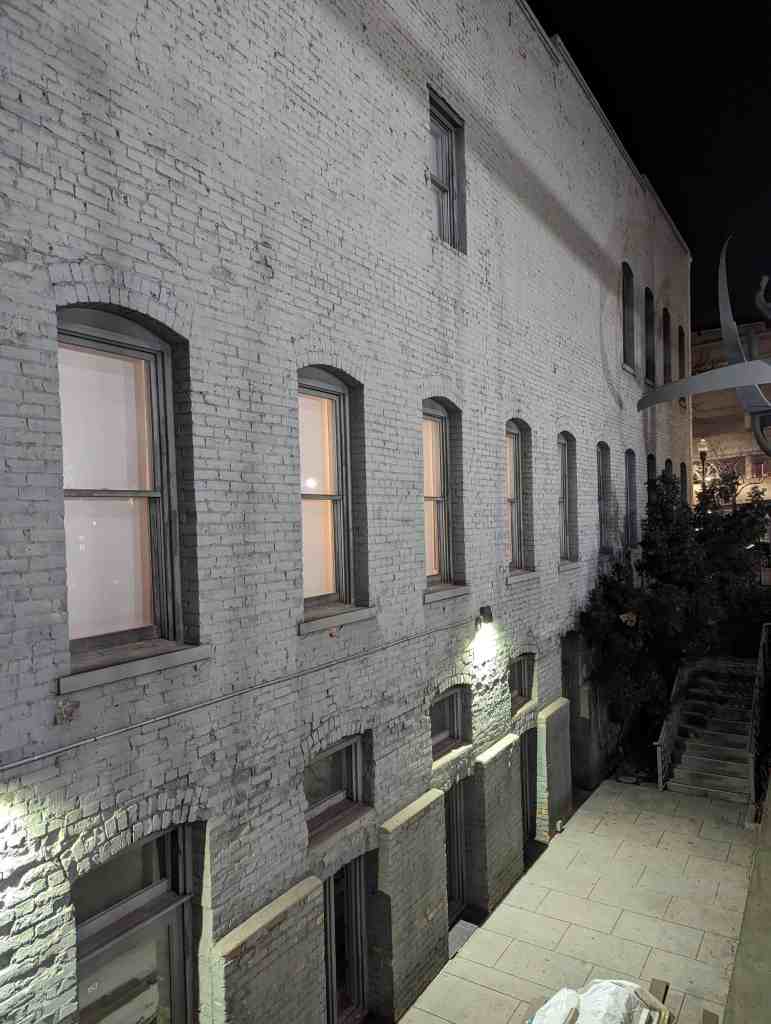
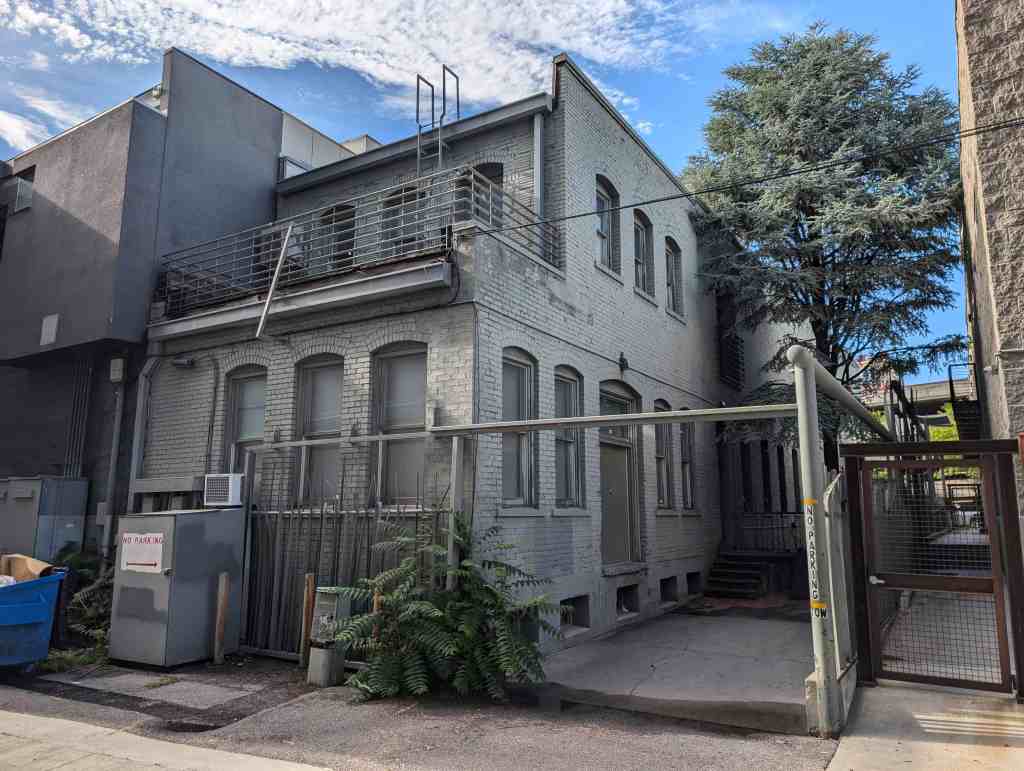
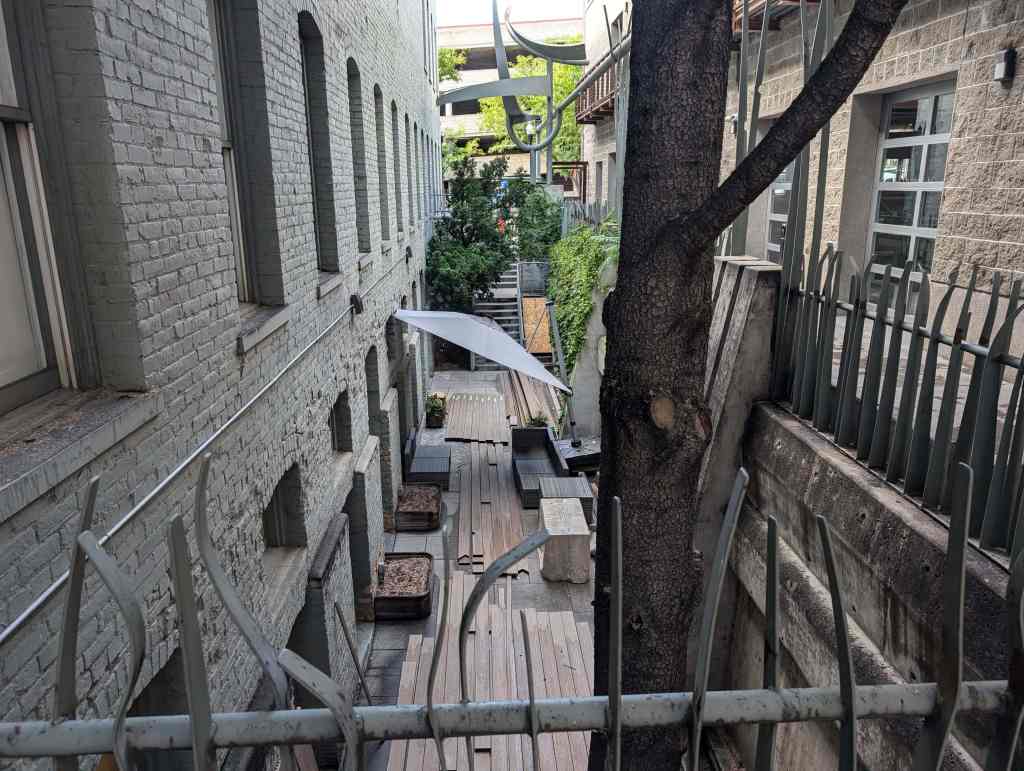
General Engineering Company Building 159 West Pierpont Avenue in Salt Lake City, Utah (National Register #80003922)
The significance of the General Engineering Company building lies in its close association with the company’s founder, John Michael Callow, a successful inventor and internationally recognized mining engineer and metallurgist. Callow not only worked and produced his inventions at this location, but he and his family lived on the premises for 26 years. The building symbolizes:; the importance to the western mining industry of John Michael Callow, who helped overcome many of the problems associated with low grade ore treatment and thus stimulated the growth and development of mining in areas previously considered economically marginal.
Callow was born in England, but moved to the United States in 1890. He gained his initial experience of western mining in mines and mills in San Juan County, Colorado. In 1900 Mr. Callow moved to SLC with his family, and remained a resident until he returned to England to retire in 1933. Callow is best known for originating the pneumatic flotation process in treating ores, although he was the holder of a total of 18 patents relating to innovations in mining technique. In 1912 he was responsible for the design and construction of the pioneering National Copper Company plant in Mullan, Idaho, which incorporated his flotation cells.
Callow was a prominent member of the American Institute of Mining and Metallurgical Engineers, which honored him in 1926 with its highest award for achievement…the Douglas Gold Medal Award. He was also a member of the Metallurgical Society of America and the Colorado Scientific Society.
The presence of the General Engineering Company building is not only a reminder of the work of Callow, but also of the great importance of mining and mining supported industries to the growth and development of Utah.
Thus, the buiding boasts of a unique past, mixing both the commercial-industrial and private residential environments. It is worthy of all efforts to preserve and restore its place in regional and national prominence.
The building is 22′ x 100′ with exposed brick facing on the east side and rear of the building, with a party wall on the west side, and a stucco finish on the front. On the façade of the building are the raised letters GENERAL ENGINEERING CO., in letters approximately 9″ high. The inside of the building consists of 3 floors, all of which have been cleared of partitions so as to accommodate the installation of modern conveniences and transformation to modern uses. The external appearance of the building is said to be the same as when first constructed.
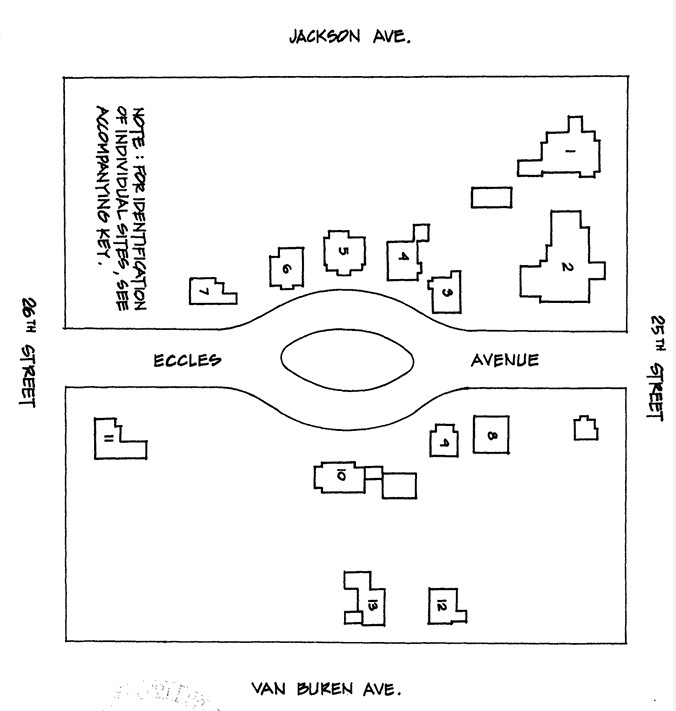
The Eccles Avenue Historic District is located in Ogden, Utah and is one of Utah’s Historic Districts, it was listed on the National Register of Historic Places (#76001840) on December 12, 1976. It is located between 25th Street and 26th Street and Van Buren Avenue and Jackson Avenue.
The below text is from the nomination form for the national register:
Historical Significance: The historical significance of the Eccles Avenue Historic District is found in the prominence of the families who lived within the district’s boundaries. The Eccles, Browning, Wattis, Kiesel, Houtz and other families whose names are associated with the district’s homes were prominent in the business, civic and cultural affairs of Utah. There are few families who have made a greater contribution to the economic development of the Far West than the David Eccles family. Through the principles of hard work, thrift, and complete independency from outside capital, David Eccles, who came to the United States destitute, founded fifty-four separate businesses and earned the reputation of Utah’s “Wealthiest Citizen.” After the death of David Eccles in 1912, his son Marriner carried on in the same tradition as his father. Yet the depression of the early 1930’s brought a complete change in the economic philosophy of Marriner Eccles. Called to Washington and appointed Governor of the Federal Reserve System by Franklin D. Roosevelt, Marriner became perhaps the strongest leader of a revolution which produced an economic philosophy based on deficit spending during times of depression and government interference to manipulate the economy. This was obviously foreign to the individualistic laissez faire beliefs of his father’s generation. Perhaps the Victorian mansion of David Eccles west of the subdivision, constructed without the modernistic Wrightian characteristics of the Eccles Subdivision area, is symbolic of the difference in economic philosophies of the two Eccles.
Architectural Significance: The Eccles Avenue District is architecturally significant due to its early development of a regional form of the Prairie Style in the western states. Frank Lloyd Wright, protege of Louis Sullivan, purported “Father of Modern Architecture,” was the originator and master of the Prairie Style. “We of the Middle West,” wrote Wright, “are living on the prairie. The prairie has a beauty of its own and we should recognize and accentuate this natural beauty, its quiet level. Hence, gently sloping roofs, low proportions, quiet sky lines, suppressed heavy-set chimneys and sheltering overhangs, low terraces and out-reaching walls sequestering private gardens.”
Wright’s works were influenced by extra-regional Japanese and pre-Columbian architecture, though Wright was reluctant to acknowledge these precursors. The first Prairie houses, the Bradley and Hickox houses at Kankakie, Illinois, were designed by Wright in 1900. His first masterpiece in the style was the Willits House, designed in 1901 at Highland Park, Illinois. The Robie House (Chicago, 1908), the Beachey House (Oak Park, 1906) and Alien House (Wichita, 1917) were other exceptional Wrightian Prairie houses.
Concurrent with Wright’s work were the designs of several other Prairie School architects, many of whom had worked with Wright, but one of whom rivaled Wright in the mode although several did build some fine houses. Architects who had direct links with Chicago as well as builders who were impressed by Wrightian illustrations in the “Inland Architect” and other magazines quickly spread the Prairie Style throughout the country. Utah seems to have been particularly impressed with the style and indeed led the Western U.S. in adopting the new progressive house form. Architects such as Taylor Wooley, Clifford Evans, Miles Miller, Pope and Burton, and Ware and Treganza introduced Prairie Style buildings to Utah as early as 1909. The LDS Church was the only American religious group to make major ecclesiastical utilization of the style. The Dooley Building (1894, by L. Sullivan) excepted, the first example of modern architecture in Utah was the LDS Park First Ward, recently nominated to the National Register.
While several Prairie buildings were erected in Salt Lake City, the major impact of the style was felt in Ogden where numerous LDS churches and the David Eccles Subdivision composed of homes designed by Eber Piers and Leslie Hodgson, employed Prairie School architecture in a strikingly inno- vative regional manner. Together, these buildings represent the initial inroad of this significant American architectural mode in the Intermountain West.
History: The settlement of Ogden dates back to 1845 when Miles Goodyear built a log cabin on the Weber River, two miles above the Ogden River confluence to serve as a supply station for California-bound emigrants. In November 1847, James Brown purchased the Goodyear holdings amounting to nearly 225 square miles for $1,950.
In the early spring of 1848, Brown and his family moved to the Goodyear cabin site. They were soon followed by other settlers. Originally called Brown’s fort or Brownsville by the Mormon settlers, the settlement was incorporated into the city of Ogden established in 1850 between the forks of the Weber and Ogden Rivers. Ogden grew rapidly, especially after the coming of the railroad in 1869, and by 1910 Utah’s second largest city had a population of approximately 27,000.
In 1910, construction began on the first homes located on Eccles Avenue. Although not all of the thirteen homes identified as part of the district belonged to members of the David Eccles family, seven did and the remaining six were originally owned by friends and business associates of David Eccles.
David Eccles life could have been the theme for a Horatio Alger novel. Born May 12, 1849, near Glasgow, Scotland, Eccles was forced to begin his business career at an early age when his father, a wood turner by trade, suffered almost a complete loss of sight from double cataracts on his eyes. Supplied with kitchen utensils made by his father and resin sticks used to ignite coal fires, the eleven year old David journied to neighboring towns to peddle his wares. In 1863, at the age of fourteen, David Eccles and his family emigrated to Utah with help from the LDS Church Perpetual Emigration Fund. After working in Utah and Oregon sawmills, and the Almy Wyoming coal mine, David took a contract in 1872 to supply logs to a portable sawmill. This venture led to further investment in the lumber industry first in Utah then Idaho, and by 1887 in Oregon. His success in the lumber industry made possible other investments in railroads, beet sugar refineries, food processing enterprises, construction, coal, land, livestock, banks, and insurance companies. After his death in 1912, his estate was valued at over six million dollars. During his business career he had founded 54 different enterprises. His biographer, Leonard Arrington wrote:
To a poorly educated person from a family with no savings or social status, the only way out of poverty was hard work and careful use of time and resources. Eccles therefore concentrated his efforts toward the goal of accumulation. He did not expend his energies in “church activities,” nor in striving for social recognition, nor in unproductive political debate, nor in the pursuit of pleasure. Every moment, every ounce of energy, every expenditure had to count toward the goal of accumulation and profit. This was not a driving preoccupation but a pattern of life he knew was right. He was neither tense nor humorless; he enjoyed his work and his endeavors to turn a profit. He worked with gusto, relished the attempt to make business succeed, found pleasure in investing in new enterprises. But he was careful, prudent, and shrewd. This was habitual with him and not just a “show” to induce a spirit of economy among his employees. David Eccles, pp. 126-127
In keeping with the standard set by prominent men of good standing in the Mormon Church before 1890 David Eccles married two women. His first wife and her family lived in Ogden and their home, now known as the Bertha Eccles Art Center has been listed on the National Register of Historic Places. It was for three of the older children of Bertha that David built homes on Eccles Avenue in 1911. The other children of Bertha and Ellen had homes of their own or were not married before the death of David in 1912 and therefore did not receive the same wedding presents.
The Eccles family continued to play a significant role in the economic history of Utah, the west, and the nation after the death of David Eccles.
Two separate companies, representing the two families, were organized. The Eccles Investment Company, which represented the interests of Ellen and her children, was managed by the oldest son Marriner Eccles. Although his economic philosophy came to differ greatly with that of his father, Marriner proved his father’s equal and expanded the families inheritance in a manner reminiscent of his father. Under Marriner’s direction, the Eccles Investment Company soon became much more successful than the David Eccles Company. In the settlement of the David Eccles estate, Bertha and her children received approximately 5/7’s of the estate while Ellen and her children only 2/7’s. This led to an apparent rivalry between the two family companies, at least in the eyes of Marriner. On one occasion Marriner visited David C. Eccles, his oldest half brother, to discuss a change in policies for the Oregon Lumber Company, in which both families had an interest. Marriner recounted the discussion in the following manner. “He [David] went on to say that he was getting sick and tired of my interference and he wished I would mind my own business. I was a damned nuisance, he said, and he didn’t want me to cause him anymore trouble. This was climaxed by an invitation to get out of his office at once.” (Eccles, Beckoning Frontiers, p. 46.)
Despite the strained business relations, personal and family relations between the Ogden and Logan group were much more tolerable. In 1923, when Marriner moved from Logan to Ogden, he purchased a house just west of Eccles Avenue. In 1922, Marriner Eccles and Marriner Browning, who lived at 2565 Eccles Avenue and was the nephew of the important Ogden gun manufacturer, John Moses Browning, pooled the Eccles and Browning family resources to form what became the first Security Bank of Utah. It was his experience in this enterprise which trained Marriner for his position as Governor of the Federal Reserve Board and the author of many major New Deal Banking Reforms. Marriner inherited an economic philosophy from his father in which the elder Eccles “…produced his own capital for all his ventures, saying that a business, like an individual, could remain free only if it kept out of debt, and that the west itself could remain free only if it kept out of debt to the East.” (Eccles, Beckoning Frontiers, p. 20.)
The Marriner Eccles home on Van Buren Street was originally one of three homes comprising the Wattis compound. The compound included the home of E.G. Wattis and two matching houses built on adjoining properties for his daughters, Mrs. E.R. Dumke and Mrs. Roscoe Gwilliam. E.O. Wattis, along with his brother William H. Wattis, were owners and business partners of David Eccles and later Marriner Eccles in the Utah Construction Company. The company was responsible for the construction of the Western Pacific Railroad line from Salt Lake City to Groville, California, in the first decade of the 20th Century. In the 1930 Ts the Utah Construction Company formed the nucleus of a six company consortium which built the Hoover Dam on the Lower Colorado River.
The Eccles Avenue Subdivision was created in 1909 by David Eccles who deeded lots to his family and selected other Ogden families. Two Ogden architects, Leslie O. Hodgson and Eber F. Piers, practiced independently but cooperated and coordinated their efforts in the planning and designing of the unique neighborhood. Each architect had previously been attracted to and enamored with the contemporary Prairie Style and the two determined to make the new residential style the dominating architectural theme of the project. The prairie-like setting of the subdivision was appropriate and the selected owners were pleased that the subdivision would have a certain unity and progressiveness designed into it to set it apart from surrounding neighborhoods and their eclectic architecture. Each architect designed approximately half of the significant structures and both proved capable of working within the chosen motif.
Leslie O. Hodgson was a native son of Utah, born in Salt Lake City on December 18, 1879. His father, Oliver Hodgson, a Mormon convert and Utah pioneer of 1850, was a leading builder and contractor in Salt Lake City and introduced his son, Leslie, to the architectural trade. Leslie studied architecture as a draftsman in the offices of two of Utah’s most prominent architects, Samuel C. Dallas and Richard K.A. Kletting. Hodgson then gained valuable exposure to modern residential trends as chief draftsman with the firm of Hebbard and Gill in San Diego, California. Irving Gill had worked in the Chicago office of Adler and Sullivan before moving to San Diego in 1893 and was undoubtedly acquainted with Frank Lloyd Wright who had also worked closely with Sullivan. Upon returning to Ogden to establish his own practice in 1905, Hodgson was well exercised in designing buildings in contemporary American styles. In 1906 Hodgson became the partner of Julius A. Smith, of Ogden. Young Eber F. Piers later became a draftsman for the firm. The firm of Smith and Hodgson was very prolific until its dissolution in 1910, the year the Eccles Subdivision began to materialize. During the initial year of Smith and Hodgson’s existence, the firm published a book, Architecture of Ogden; J.A. Smith and Leslie S. Hodgson, Architects, 1906-07.
The publication displayed photographs of the major works of the firm including Hotel Bigelow (now Ben Lomond Hotel), Peery’s Egyptian Theatre, Union Stock Yards, Elk’s Lodge, Washington School, Lorin Farr School, and numerous other public, commercial, religious and residential buildings. Many of Hodgson’s designs showed a flare for the Prairie Style. The Prairie Style residences designed by Hodgson in the Eccles Subdivision were those for James Canse (1914), John S. Houtz (1910), LeRoy Eccles, later Elijah A. Larkin house (1911), LeRoy Eccles, later Weber Club (1917), William Wright (1911), Hugh M. Rowe (1911), and Patrick Healy, Jr. (1920).
Leslie S. Hodgson was a versatile architect and designed comfortably in several styles. He worked with Neo-Classical Revival, Western Stick Style, Bungaloid and Modernistic (Art Deco) designs. He was the leader in introducing Art Deco to the Intermountain region. His Ogden City and County Building, Ogden High Schook, Regional Forest Service Administration Building, and Tribune Building remain the most significant monuments of the Modernistic Style in Utah. The Healy house on Eccles Avenue was a sensitive “Old English Cottage” design.
Hodgson also employed the Prairie Style in religious and commercial buildings, the LDS Deaf Branch and Nye Building being the best extant examples. Official architect for the Ogden School Board and architect for federal agencies during World War II, as well as for the Eccles and Scowcroft families and their vast financial empires, Hodgson obtained the largest and most prestigious design commissions of his day. As a consequence, much of the modern appearance of Ogden and northern Utah may be attributed to this significant architect. Hodgson served as President of the Utah Chapter of the American Institute of Architects. He died in Ogden the 26th of July, 1947.
Eber F. Piers had only recently entered the architectural profession when he began designing residences in the Eccles subdivision. Piers was not listed as an architect in Ogden business directories until 1910, the year of commencement of buildings in the subdivision. Piers designed homes for Edmund O. Wattis (1914), Mrs. Ruth Wattis Gwilliam (1917), Ezekiel Dumke (1917), Virginia Houtz Green (1914), Royal Eccles (1920), and Marriner Adams Browning (1914). Piersr homes were all completed after 1913, making him a latecomer to the project. Nevertheless, his designs were harmonious with Hodgson*s earlier works and were, in fact, more properly Wrightian or Prairie Style.
A comparison of the works of the two architects seems worthwhile. Hodgson’s homes, while essentially Prairie Style, were often heterogeneous in design. The Houtz residence has, in addition to Wrightian decorative vocabulary, classical brackets in large and small sets under the eaves of the porch, main roof and dormers.
The Week’s house is sheathed with clapboard on the first story and shingles on the second story^ making it the only all-wood residence on Eccles Avenue. The home is devoid of special decoration, is box-like in massing and is only mildly suggestive of Wrightian influence.
The home of LeRoy Eccles is one of the largest structures in the subdivision and later became the house for the Weber Club, a private Men’s Club. The building has Prairie Style features but again deviates from the norm with its tile roof, Tuscan columned front porch and porte cochere, and classically bracketed frieze. The art glass windows with Mediterranean scenes and Roman arched bays also reflect classicist ornamentation.
The William Wright house is a brick structure due south of and nearly identical in design to the Week’s residence. The home is unpretentious, straightforward and common in appearance.
The older LeRoy Eccles home, later the Elijah Larkin House, is one of the oldest and most eclectic residences in the district. It appears to be a hybrid mix of Neo-Classical Revival, Southern Colonial and perhaps Prairie Style. Due to its individualistic expression, the home seems out of character but does not distract from the district. Rather, it enhances the visual variety of the area and provides interesting contrast to buildings such as the Hugh M. Rowe home, the Hodgson design which most closely resembles a Wrightian Prairie Style dwelling.
The one home that definitely seems out of place is the Patrick Healy, Jr. residence, now the Real Estate Exchange Offices. The last home built in the subdivision, the Healy residence has been described by architect, John Piers (son of Eber Piers) in glowing terms: “The Healy home is a masterful work in the development of Old English (Cottage Style) architecture. The house has a high pitched roof punctuated by a series of dormer windows, successfully contrasted with a stucco base to form an attitude of restful domesticity. The rounded arches, the tapered brick chimney, and a canopied entrance door are remindful of an era of English Art Nouveau. This is one of the most sensitive designs in Ogden.”
It is apparent that while Hodgson set the general theme for architectural design in the Eccles Subdivision, he was not intent on copying Wright or following the Prairie Style theme to a fault. His interest seems to have been to provide beautiful, livable homes which, though varied in design, had a familial resemblance. It was left to Eber F. Piers to really give the subdivision its distinct Prairie Style flavor.
Piers approached the task of continuing the thread of Hodgson’s Prairie Style format with greater commitment to stylistic purity than his prede- cessor. None of Pier’s designs were greatly diluted or “enhanced” with Neo-Classical Revival or other alien details. His designs were characteristically Wrightian, featuring two storied, low-hip roofed masses with single- story wings, porches and carports reaching out in several directions, deep eaves, emphasis on the horizontal, (especially through brick banding), oblong chimneys, ribbon windows with wooden casements, 2/3 to 1/3 height relationship of ground story to second story, brick bottom stories and plaster upper stories, heavy rectangular piers supporting porch roofs and verandas, occasional prow roofs on smaller homes, etc. Piers was also fond of Wrightian pier ornamentation and used it tastefully. A few dormers which have been added since initial construction are the only intrusions upon Piers’ carefully conceived Prairie Style designs. Yet his homes were not purely imitative; they were unique in their own ways. The plans, for example, were not as open as Wright’s were. Cantilevered concrete construction and other technological features were not employed. Piers’ architecture met the needs of his clients, as did Hodgson’s. Their contribution was one of regional introduction and development of one of America’s important architectural movements.
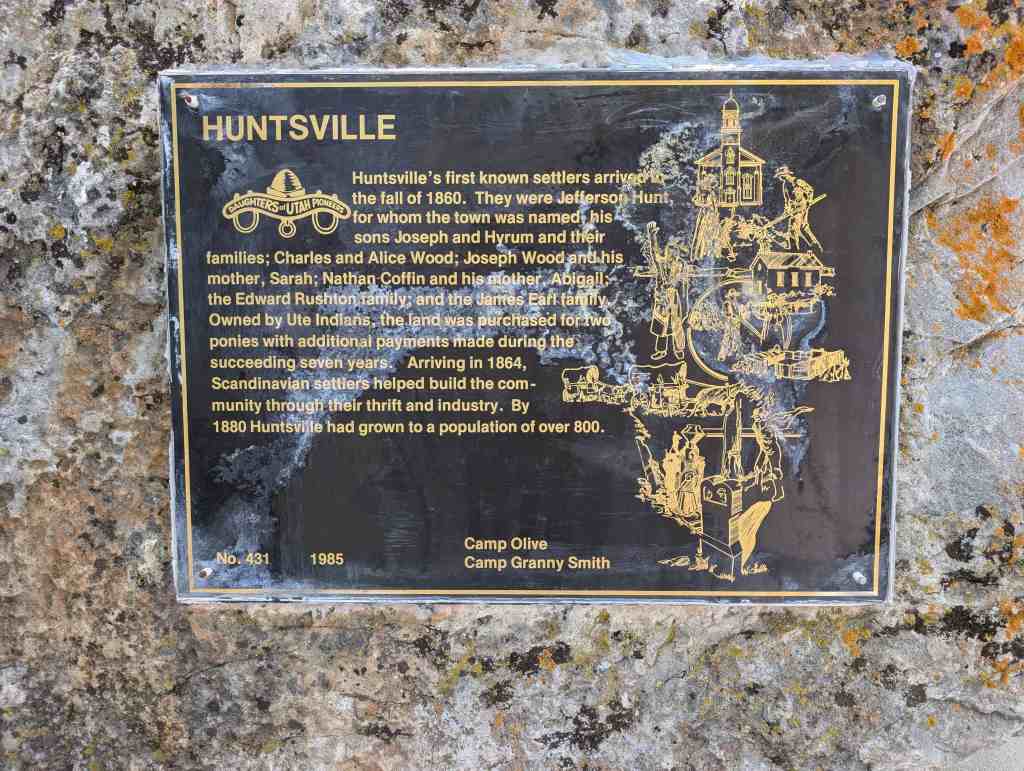
Huntsville’s first known settlers arrived the fall of 1860. They were Jefferson Hunt, for whom the town was named his sons Joseph and Hyrum and their families; Charles and Alice Wood; Joseph Wood and his mother, Sarah; Nathan Coffin and his mother, Abigail; the Edward Rushton family; and the James Earl family, Owned by Ute Indians, the land was purchased for two ponies with additional payments made during the succeeding seven years. Arriving in 1864, Scandinavian settlers helped build the community through their thrift and industry. By 1880 Huntsville had grown to a population of over 800.
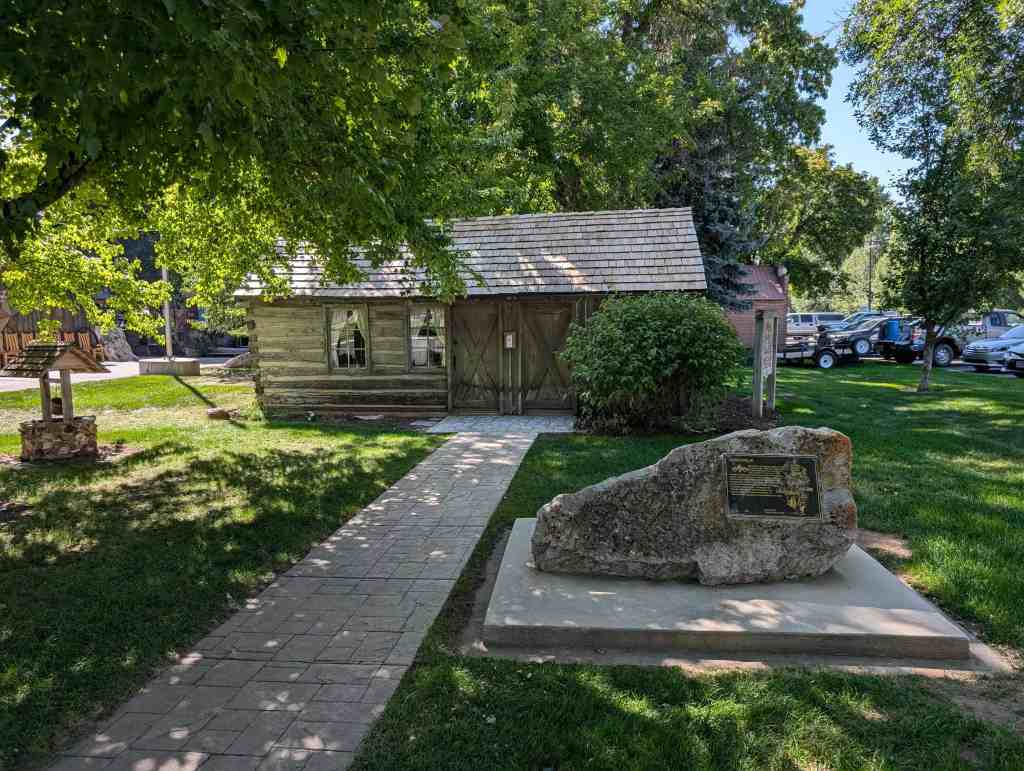
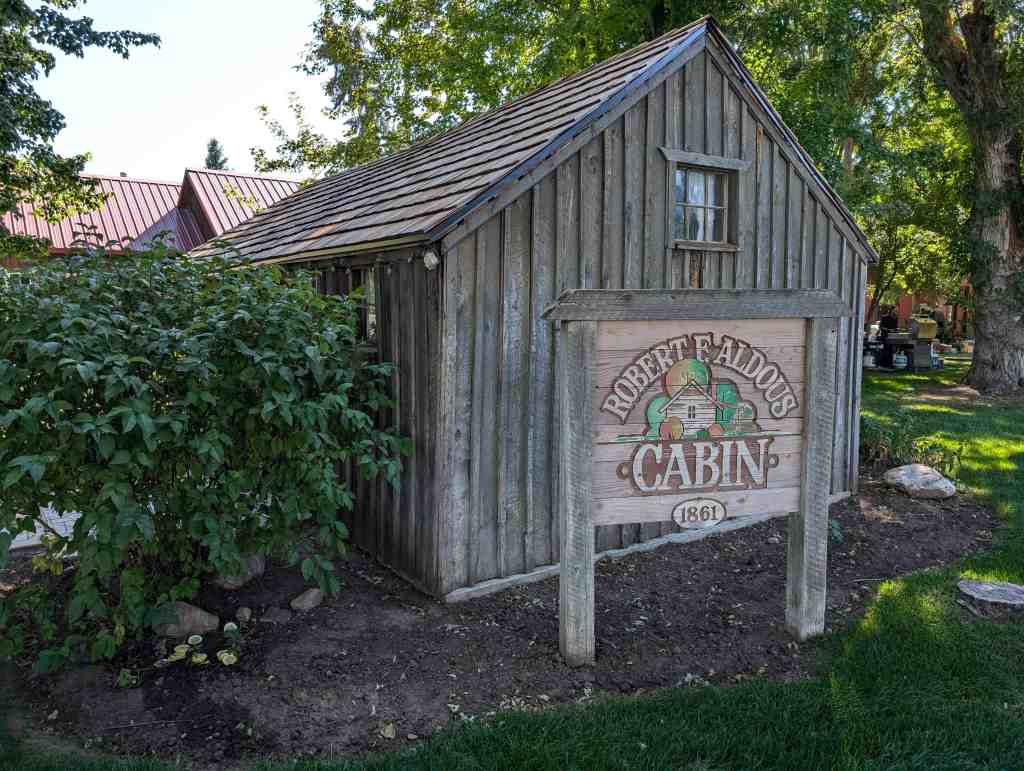
This is Daughters of Utah Pioneers historic marker #431, placed by the Camp Olive and Camp Granny Smith camps of the DUP in 1985 and located at the Robert F. Aldous Cabin at 205 South 7400 East in Huntsville, Utah
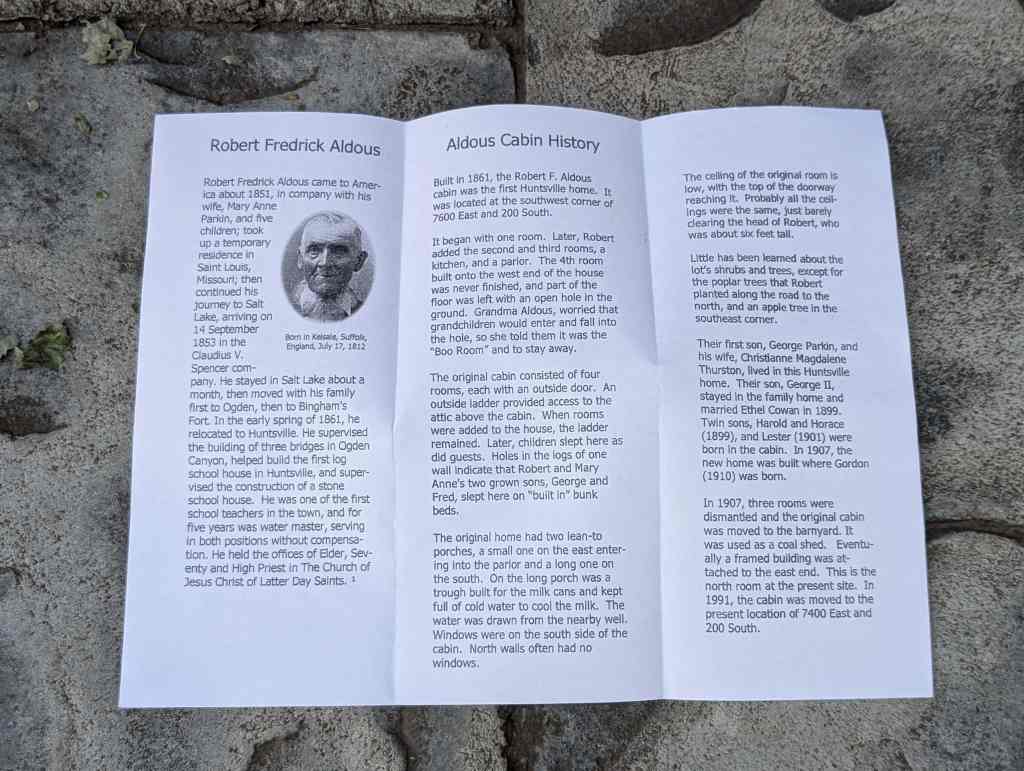
Robert Fredrick Aldous Born in Kelsale, Suffolk, England, July 17, 1812
Robert Fredrick Aldous came to America about 1851, in company with his wife, Mary Anne Parkin, and five children; took up a temporary residence in Saint Louis, Missouri; then continued his journey to Salt Lake, arriving on 14 September 1853 in the Claudius V. Spencer company. He stayed in Salt Lake about a month, then moved with his family first to Ogden, then to Bingham’s Fort. In the early spring of 1861, he relocated to Huntsville. He supervised the building of three bridges in Ogden Canyon, helped build the first log school house in Huntsville, and super- vised the construction of a stone school house. He was one of the first school teachers in the town, and for five years was water master, serving in both positions without compensation. He held the offices of Elder, Seventy and High Priest in The Church of Jesus Christ of Latter Day Saints.
Aldous Cabin History
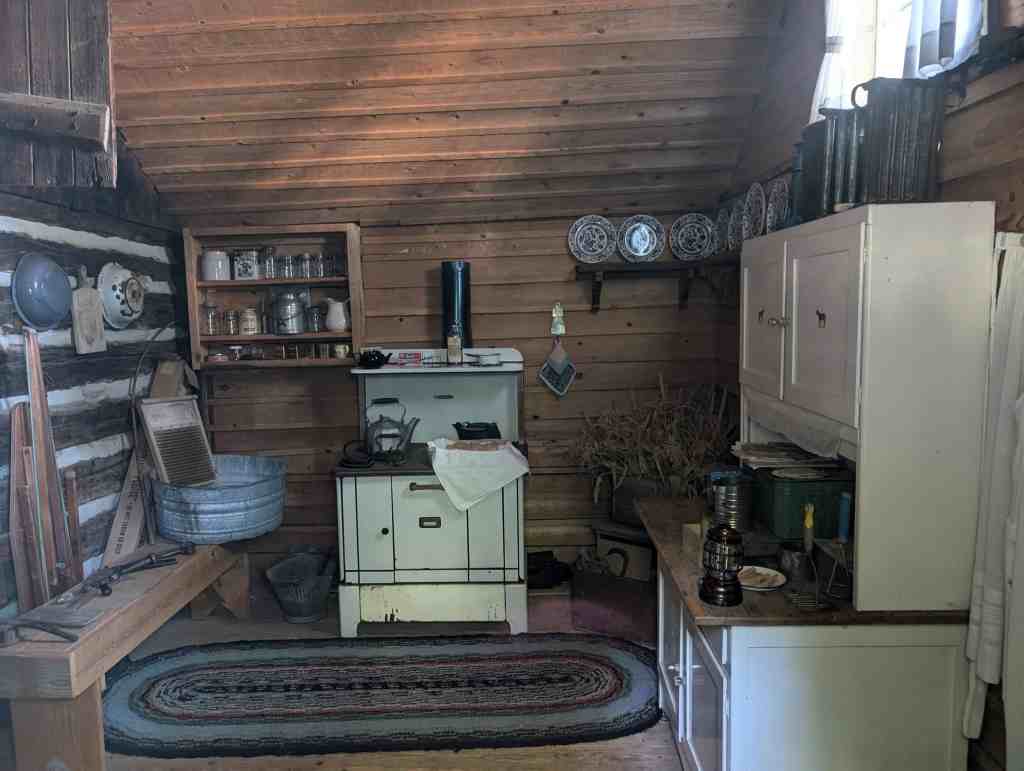
Built in 1861, the Robert F. Aldous cabin was the first Huntsville home. It was located at the southwest corner of 7600 East and 200 South.
It began with one room. Later, Robert added the second and third rooms, a kitchen, and a parlor. The 4th room built onto the west end of the house was never finished, and part of the floor was left with an open hole in the ground. Grandma Aldous, worried that grandchildren would enter and fall into the hole, so she told them it was the “Boo Room” and to stay away.
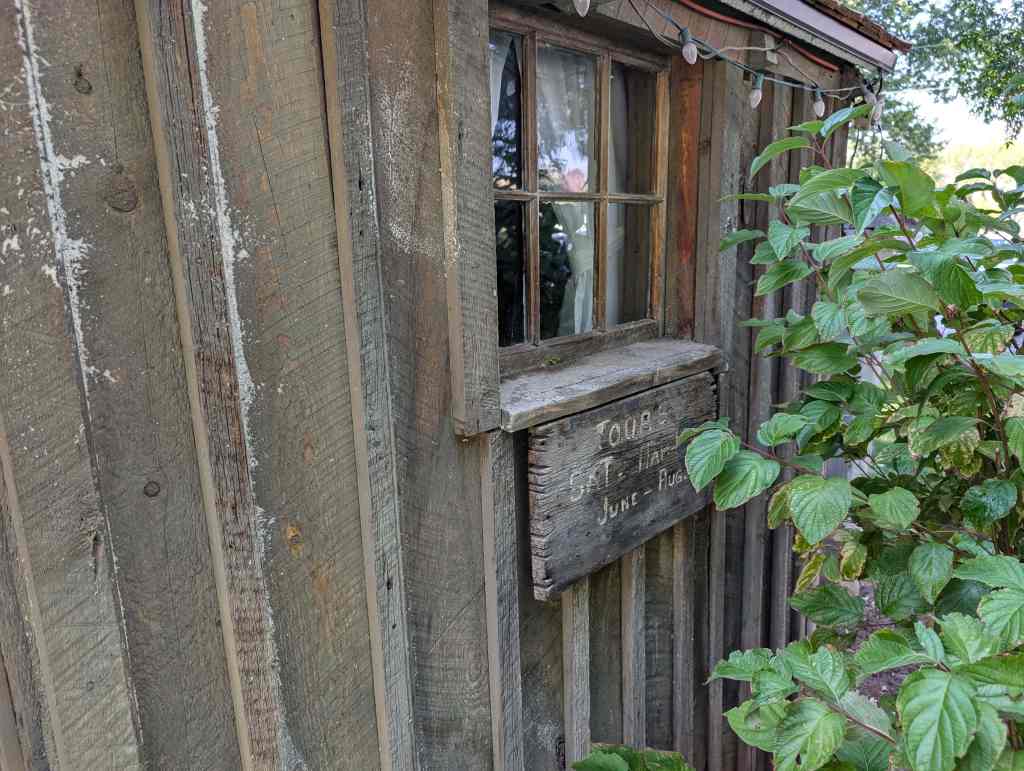
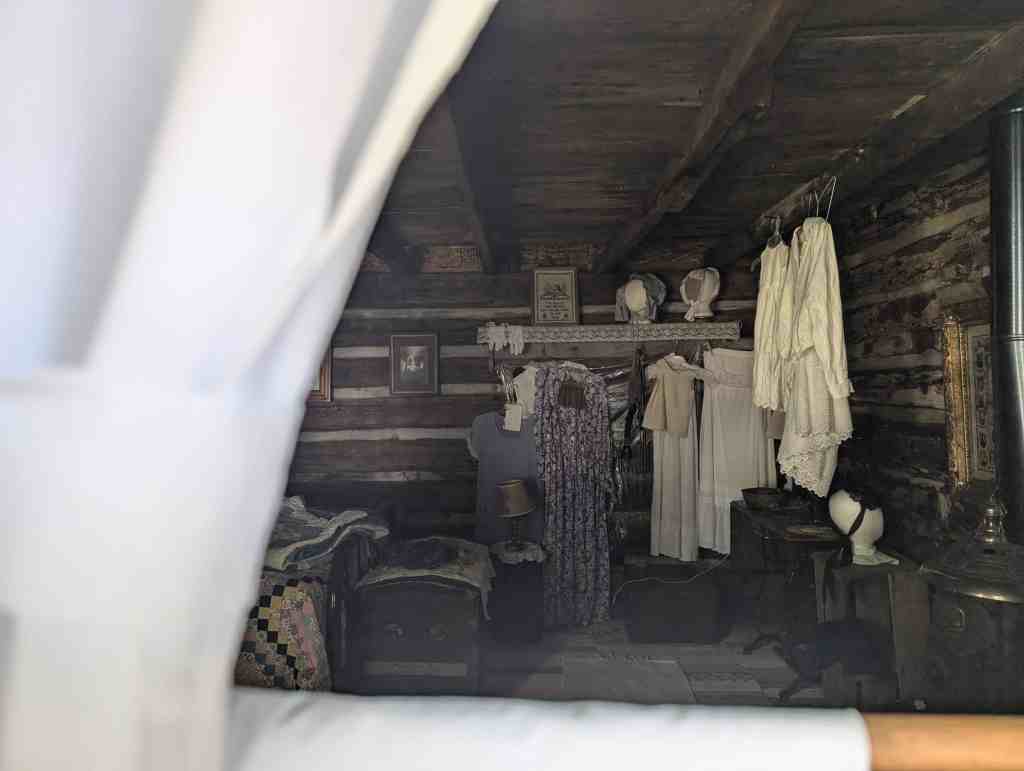
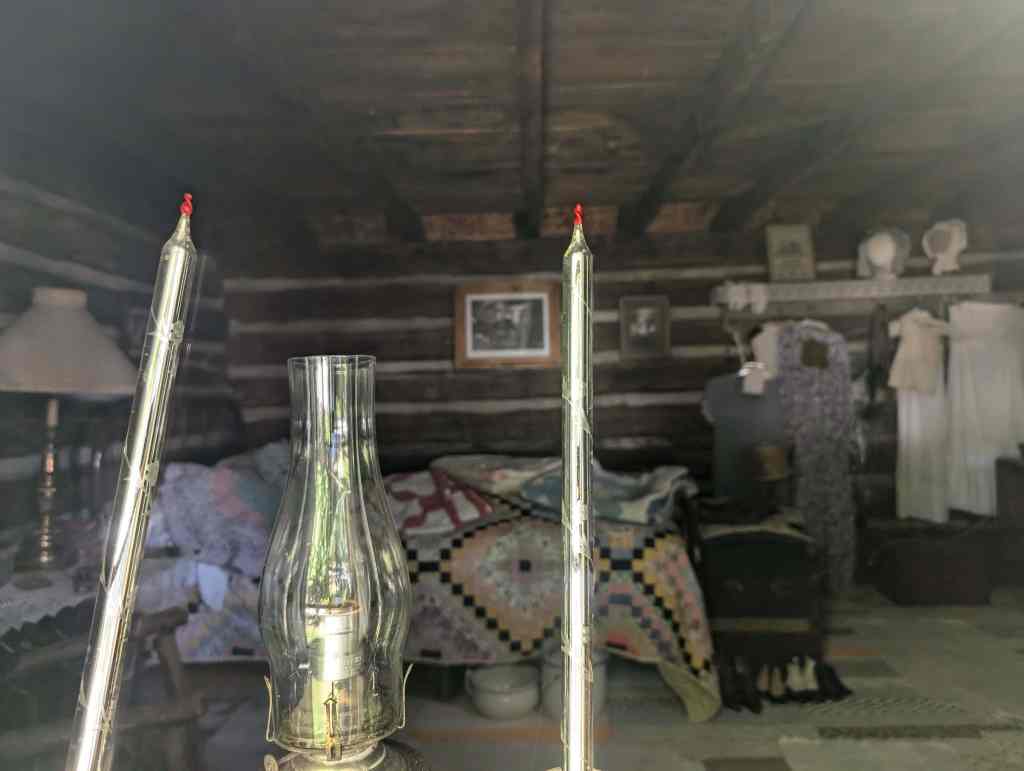
The original cabin consisted of four rooms, each with an outside door. An outside ladder provided access to the attic above the cabin. When rooms were added to the house, the ladder remained. Later, children slept here as did guests. Holes in the logs of one wall indicate that Robert and Mary Anne’s two grown sons, George and Fred, slept here on “built in” bunk beds.
The original home had two lean-to porches, a small one on the east entering into the parlor and a long one on the south. On the long porch was a trough built for the milk cans and kept full of cold water to cool the milk. The water was drawn from the nearby well. Windows were on the south side of the cabin. North walls often had no windows.
The ceiling of the original room is low, with the top of the doorway reaching it. Probably all the ceilings were the same, just barely clearing the head of Robert, who was about six feet tall.
Little has been learned about the lot’s shrubs and trees, except for the poplar trees that Robert planted along the road to the north, and an apple tree in the southeast corner.
Their first son, George Parkin, and his wife, Christianne Magdalene Thurston, lived in this Huntsville home. Their son, George II, stayed in the family home and married Ethel Cowan in 1899. Twin sons, Harold and Horace (1899), and Lester (1901) were born in the cabin. In 1907, the new home was built where Gordon (1910) was born.
In 1907, three rooms were dismantled and the original cabin was moved to the barnyard. It was used as a coal shed. Eventually a framed building was attached to the east end. This is the north room at the present site. In 1991, the cabin was moved to the present location of 7400 East and 200 South.
Located at 205 South 7400 East in Huntsville, Utah – also located here is D.U.P. #431.
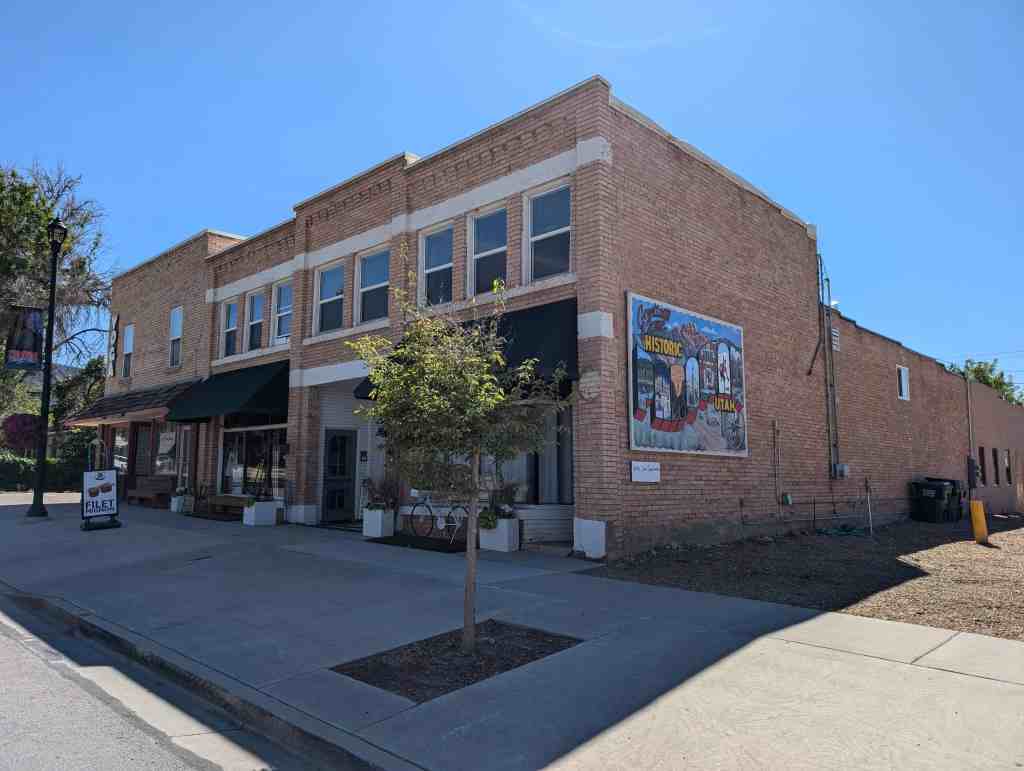
(from preservationutah) This 1915 commercial block located on Parowan’s Main Street originally housed the first Dodge dealership in southern Utah. The building also housed a telephone company and the printing rooms of the “Parowan Times” newspaper. The property later served as Parowan’s visitor’s center and a city workshop. When Parowan’s mayor, Mollie Halterman, purchased the property in 2020, however, this former Dodge dealership fell into extreme disrepair and became a dead spot in Parowan’s revitalizing downtown. Ms. Halterman’s efforts to remodel the Parowan Dodge building addressed not only the building’s aesthetic but also its structural deficiencies. The building received needed bracing, which allows all of its floors to provide badly needed commercial and residential space. The building’s ground-level storefront houses a high-end, locally-grown meat/butcher shop. A second dwelling upstairs provides a quant apartment that can accommodate a family of four. The entire building is multi-purpose and multi-functional and offers walkable access to schools, gyms, the city post office, drug and grocery stores, and other of Parowan’s amenities. Once a diamond in the rough, this building is now a polished gem that greatly contributes to Parowan’s placemaking while offering affordable commercial and residential space.
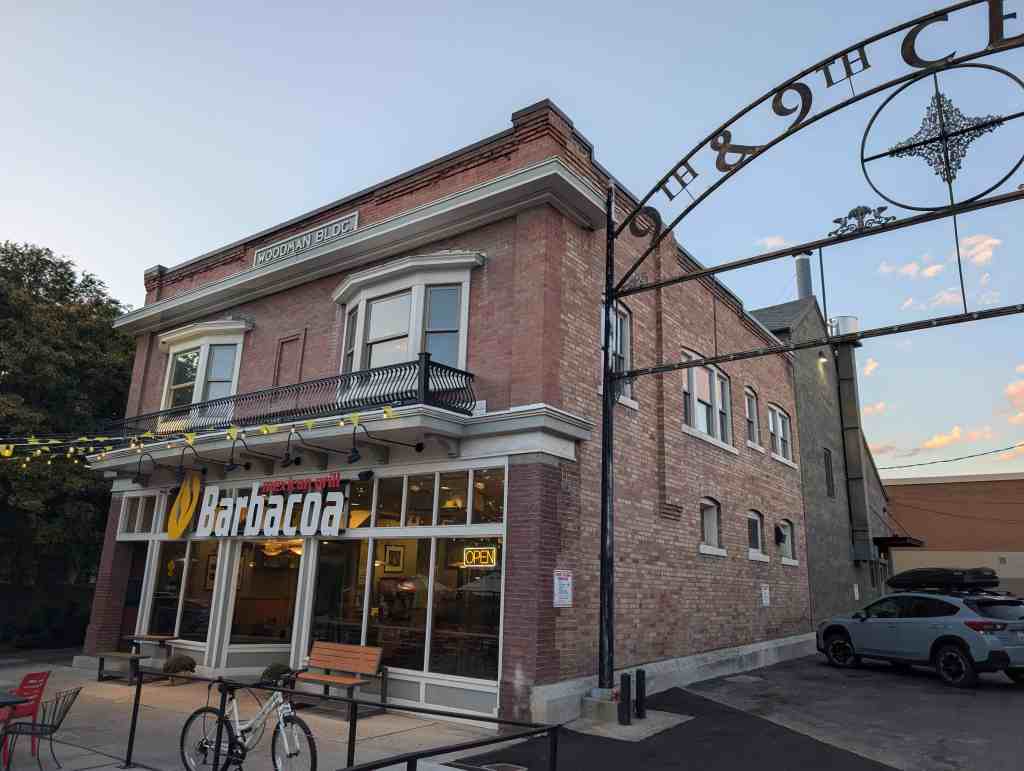
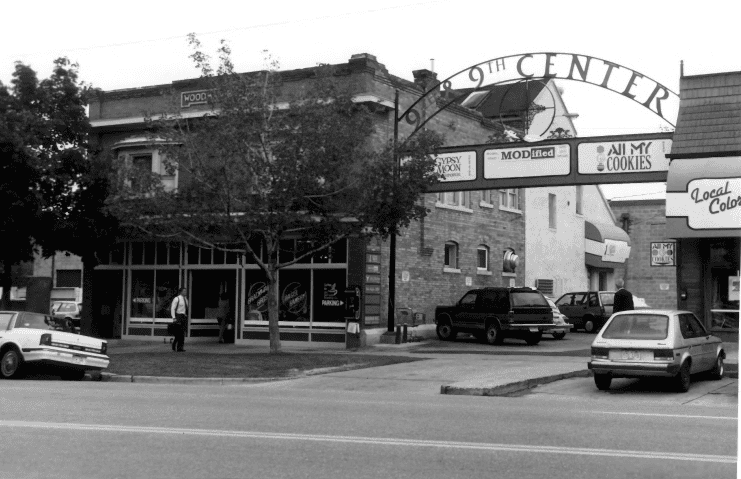
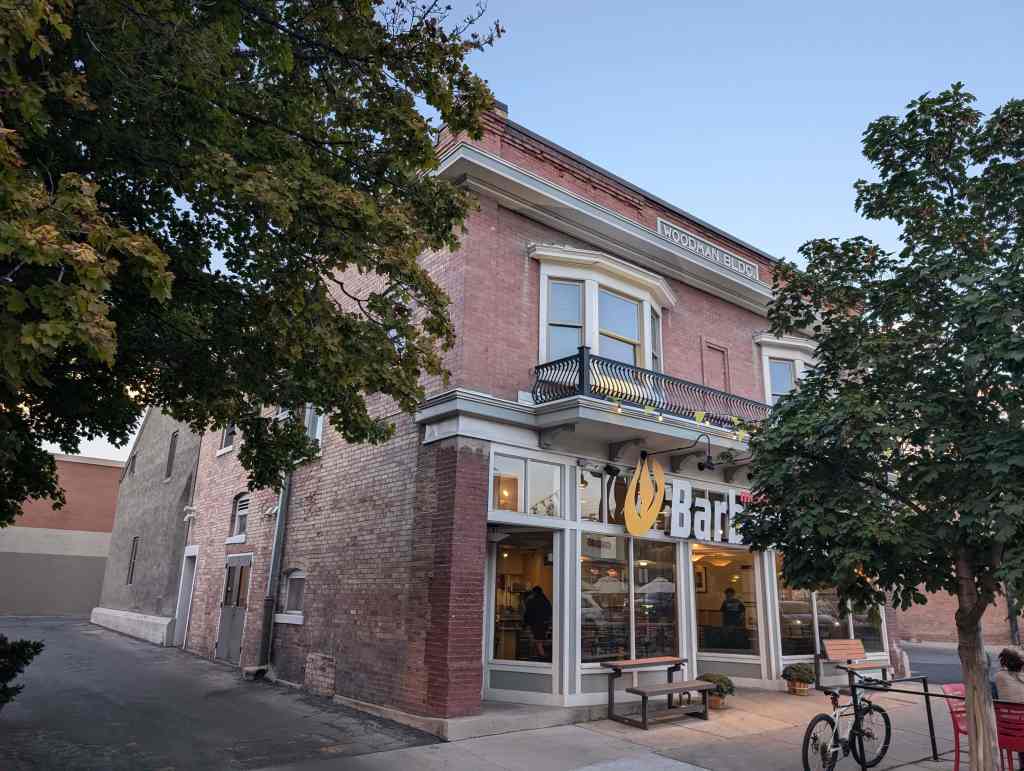
The Woodman Building is architecturally significant as a well-preserved example of moderate-sized, late-Victorian commercial architecture as employed in stores built throughout Salt Lake City before the age of large shopping facilities. This building type was rarely built outside of the urban center and represents early efforts to develop outlying commercial nodes as the city’s residential areas expanded after the turn of the center. The c. 1878 Lefler Mill, although altered, is a rare surviving example of mid-to-late-19th century mills and industrial architecture in the Salt Lake Valley — only a very few mills exist from this period in the city. Although added to in 1911 and converted to adaptive uses thereafter, the basic form and interior spaces of this vernacular structure remain apparent. The mill was the first of several small structures which eventually composed an early 20th century commercial node at the intersection of 900 South and 900 East. The scale and commercial activity of the early suburban corner continue to the present, with little modification having occurred after 1920. Of the dozen buildings erected along this intersection, the Lefler Mill is the oldest and the Woodman Building is the best preserved and most architecturally significant. Together, they present a structure of both historic and architectural significance.
Located at 859 East 900 South in the 9th and 9th neighborhood of Salt Lake City, Utah and added to the National Register of Historic Places (#92001687)
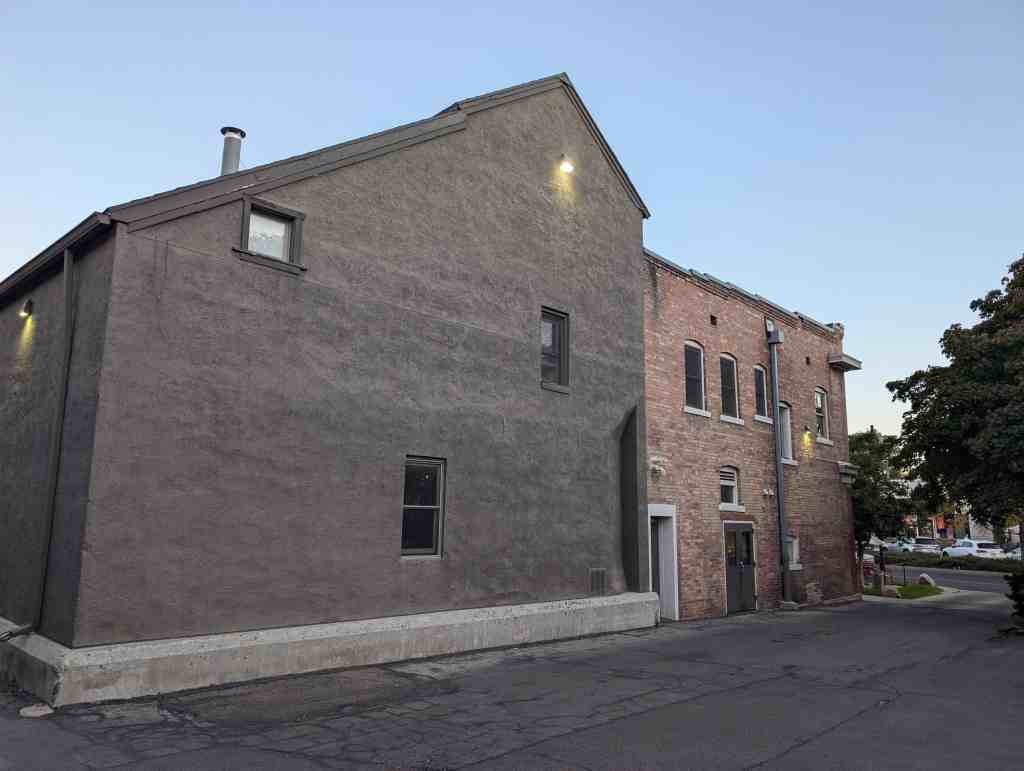
The Lefler-Woodman Building consists of two joined buildings: the c. 1878 Lefler Flour Mill and the 1911 Woodman Building, which was built on the front of the mill. The mill is an example of vernacular industrial architecture in late-19th century Utah, while the Woodman Building is representative of medium-sized, late Victorian commercial architecture built during the early 20th century.
The Lefler Mill is two stories tall and may have had a partial basement, plus the present open attic, when in operation as a flour mill. Each full story is twelve feet high. In section or profile, the building is a saltbox with the taller, gabled section in the front and the long shed-roofed section to the rear. The exterior walls are made of brick which has been stuccoed. Stucco also covers the original sandstone foundation. The stuccoing was done due to the deterioration and cracking of the foundation and walls. The mill has two windows on its west side and three windows and a door on its east side. Some window openings were covered when the stucco was installed. The tall, flat-arched openings, historically with three-over-one double hung windows, retain wood lintels and sills.
The mill has been converted to a retail store on its second floor and a single office on the first floor. Alterations include removal of the milling equipment, plastering of the walls and ceilings, adding a new stairway from the second floor store to the attic loft, new doors and repaired or modified windows. The original full-width front (south) porch was replaced c. 1898 by a large warehouse and loading dock. This addition was removed in about 1911 when the Woodman Building was built along the front masonry wall of the mill.
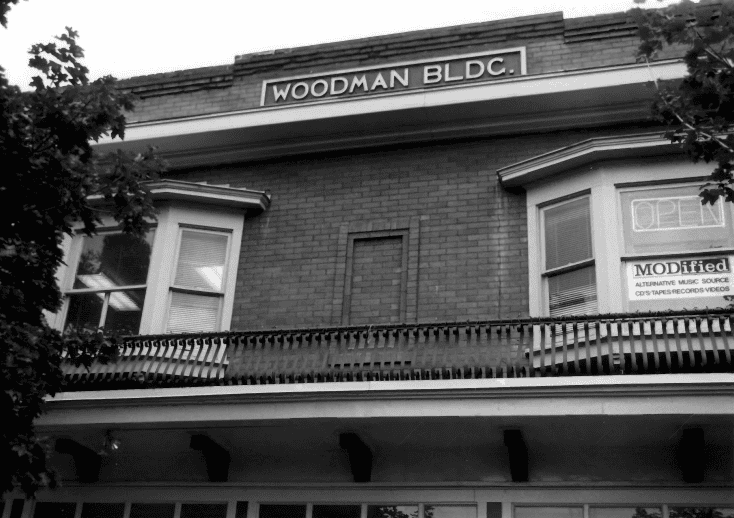
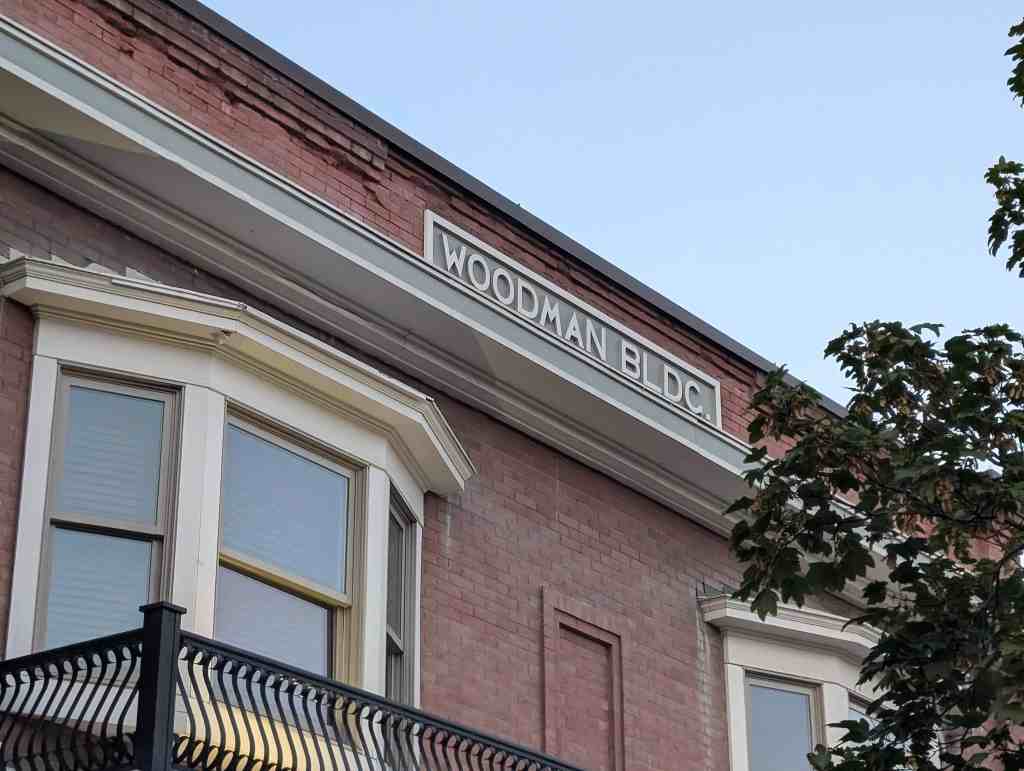
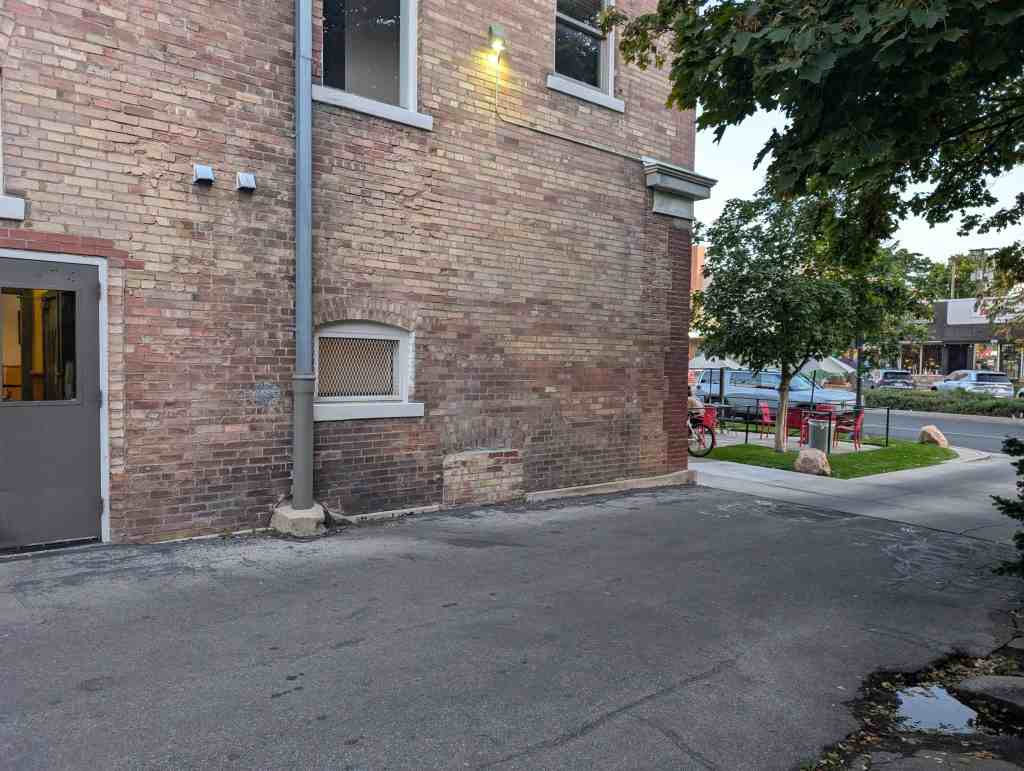
The Woodman Building is a two-part block with a rectangular floor plan. Its exterior walls are exposed red and tan brick and the roof is flat with brick parapets. The front facade faces south and features two bay windows with slanted sides and a stamped metal cornice in the upper level. Main level features include a central, recessed entry, large storefront windows, bulwark panels above the sidewalk and a transom window band below a projecting balcony located where a first story cornice might normally appear. The balcony has the appearance of being supported by large, ornamental brackets. The original balcony railing has metal newel posts and curved metal balusters. The main level façade has been restored to remove previously intrusive alterations, with the intent of returning this part of the façade to its original appearance. The upper part of the facades has never been altered. In the center of the front brick parapet is an inscription panel with the words “WOODMAN BLDG.” To remove white paint, the lower level brick piers have been lightly sandblasted, although the remainder of the masonry has been left unpainted and is in very good condition.
The interior of the Woodman Building has been slightly altered to accommodate new commercial uses. The main first story space, now occupied by a restaurant, remains tall and open with its wood floors, a walk-in cooler, and stairways to the upper floor and basement probably remaining as original features. The second story interior, originally built as a residence, retains its basic spatial layout. Original rooms, hallway, doors and trim are still mostly intact, though the spaces now house offices. The second floor hallway has been extended to the rear of the building to connect with a new stairway in the mill building. Overall, the three visible sides of the Woodman Building, including the front façade, are architecturally intact, as is much of the interior.
The beginning of the development of the “9th and 9th” intersection as a suburban commercial node began when John Marshall Lefler (also spelled Leffler) built his flour mill there in 1878 or 1879. Lefler (1837-1915) had come to Salt Lake City from his birthplace in western Canada in 1872. He was an experienced miller, having worked in a sawmill in Mill Creek Canyon, the Gordon Mill on State Street, the Crisman (later Husler’s) Mill, and the Pyper Mill in Sugar House. He was the last miller to operate the Chase Mill (listed in the National Register) located a few blocks to the west in what is now Liberty Park. Following the closing of that mill in c.1878-79, Lefler built this mill. Lefler was known as an efficient miller and his flour was popular with local bakery and restaurant owners.
Like most mills of the time, Lefler’s new mill was located away from the population and business centers of the valley. Unlike other mills which mostly relied on water power, Lefler’s mill was apparently powered only by a steam engine. The Chase Mill had been closed due to lack of water and Lefler knew that he could not rely on water in his new location only a few blocks from the abandoned mill. The new mill likely employed the older method of using burr grind stones, perhaps salvaged from the Chase Mill, until about 1888 when the mill was enlarged and a newer roller system was installed. For a year or two after that, it was known as the Liberty Park Roller Mills.
Among the few remaining mills in the Salt Lake Valley, the Lefler Mill clearly represents the development of industry on the then-current edge of more developed Salt Lake City. (Immediately south across 9th South was outside of the original plat, and was known as the “Big Field.”) Another example of an early flour mill is the Gardner Mill, built by Archibald Gardner in 1877 in West Jordan, about thirteen miles south and west of the Lefler Mill. The Gardner Mill (listed on the National Register) was a water-powered flour and grist mill which served the then-remote settlements in the south end of the Salt Lake Valley.
The location of the Lefler Mill proved to be well suited because in 1888, the Salt Lake and Fort Douglas Railroad, a small local railway, completed its line which passed in front of the mill with a spur branching off to the mill itself. In 1890, the first major, north/south streetcar line in the area was installed on 9th East, further encouraging the developing neighborhood commercial activity at the 9th South intersection. Additional commercial neighborhood nodes were developing during this broad period of growth and expansion in Salt Lake City near the turn of the century. Among these are the 13th East/2nd South area near the University of Utah, several nodes along South State Street, the smaller node at 9th East and 13th South, the later small commercial area at 15th East and 15th South, and the major commercial area in Sugarhouse (21st South and 11th East). Of these, the “9th and 9th” area best represents the commercial neighborhood nodes that developed to support new or expanding neighborhoods further from the city center.
In 1888, Lefler sold the mill to Creighton and Riega Haawkins, but stayed on as miller. Lefler and his family lived near the mill at 873 (and later 839) East 900 South from about 1878 to 1909. His son, William, helped operate the mill during most of that time. In 1893, when the mill was sold to Sylvester Vowles, the mill’s name was changed once again to the Utah Milling Company or Utah Roller Mills, which it remained until it closed down in about 1904.
In 1904, Alma F. Thornberg bought the building to house his business, the Thornberg Steam Carpet Cleaning Works, which operated there until 1923. However, in 1911 he sold the building to John A. and Frank H. Woodman, both miners and nephews of his wife, Lettie Higginbotham. In the same year, the Woodmans had the commercial building which bears their name constructed across the front of the old mill, removing the dock and warehouse addition to the mill in the process.
George S. Walker, a relatively unknown architect who practiced in the city only between 1911 and 1912, designed the building. Walker, who had come to Salt Lake City in 1902, had previously worked as a stone cutter at Walker Bros. Stone Company (his family’s business) and as a draftsman for the Oregon Short Line Railroad. He apparently left the area for California in about 1913. The building contractor was E. (Enoch?) Smith.
At the time the Woodman Building was constructed the residential neighborhoods of Salt Lake City had expanded outward in every direction from the early city plats. The area around 900 East and 900 South began to fill in, first with late Victorian houses and later with bungalows and period revival residences. As the neighborhood matured, the corner filled in with commercial buildings, a gas station, and a theater, most of which were constructed before 1920. These buildings remain, but only one of twelve of these per-1920 buildings is still architecturally intact.
Alma Thornberg continued as a tenant of the building after it was sold to the Woodmans. In addition to his carpet cleaning business in the mill, Thornberg used part of the Woodman Building for a new grocery store, the Sand Crest Meat and Grocery. Thornberg used the second floor as a residence for a few years before moving to 661 East 2100 South. Clarence E. Herrick took over operation of the grocery store in about 1915 and also lived in the second story apartment. In 1927, Herrick purchased the building and continued his grocery business there until 1938. This arrangement of the proprietor’s residence over the commercial area was relatively uncommon and further differentiates the Lefler-Woodman Building from both downtown commercial structures and the small scale, “mom and pop” commercial establishments that were occasionally built adjacent, or attached, to single family residences.
From 1938 to 1958, United Bakery occupied the building, but the Herrick family maintained ownership until 1979. Other occupants of the building around this time were Dunford Bakers (1959-71) and Stone Age Crafts (1975-82). The second floor of the Woodman Building was apparently rented out as apartments after the Herricks moved out in the 1930s. In 1980, Ardath M. Schwab, the current owner, purchased and renovated the building for restaurant, retail, and offices use.